Youth group threatens return to mass protests, sets deadline for Gyanesh Kumar to quit due to reports of meddling with voter lists.
By Al Jazeera Staff and Reuters
Published On 25 Sep 202625 Sep 2026
India’s ‘cockroach’ party youth movement has threatened to launch nationwide protests unless the country’s chief election officer does not resign by Saturday.
Founder of the Cockroach Janta Party (CJP), Abhijeet Dipke, announced on Friday that protests would begin in Mumbai on October 2 – if Gyanesh Kumar does not step down.
Recommended Stories
list of 4 itemsend of list
The CJP, a satirical outfit born on Instagram in May after India’s chief justice compared unemployed young Indians to “cockroaches” and “parasites”, has shaken the staunchly conservative government of Prime Minister Narendra Modi.
On Thursday, the group demanded that Kumar quit within 48 hours, following a newspaper report linking him to altered voter lists. Opposition parties say the lists have been manipulated to benefit Modi’s Bharatiya Janata Party (BJP).
“If Gyanesh Kumar does not resign by tomorrow, CJP will begin its nationwide protest from Mumbai on 2 October, and take it to cities across India,” Dipke posted on X.
“This Gandhi Jayanti let’s pledge to save democracy,” he added, referring to the October 2 holiday marking independence leader Mahatma Gandhi’s birthday.
CJP founder Abhijeet Dipke celebrates with supporters in New Delhi after the resignation of India’s Education Minister Dharmendra Pradhan, July 25, 2026 [Ritesh Shukla/Getty]
Report provokes political storm
On Wednesday, the Indian Express newspaper reported that two election commissioners had raised questions or voiced concern with Kumar at least 14 times in 10 months, mostly over the process of updating voter lists that began last year.
The main opposition Congress party announced protest marches on state election offices across India on Friday, demanding Kumar’s arrest, his removal and an independent review of decisions and voter-list changes made under him.
Opposition parties have long accused the commission of deleting the names of millions of voters without warning and adding new voters without verification to favour the BJP.
BJP leaders and supporters at a ‘Drug-Free Punjab’ march in Amritsar [File: Narinder Nanu/AFP]
Election panel rejects claims
The Election Commission of India said that “differing views and observations are a normal part of deliberation in any institution” and that all its actions were lawful.
The BJP has defended the commission, accusing the opposition of a smear campaign because it keeps losing elections.
“Neither the Election Commission of India nor any constitutional body in India is under dictatorial rule,” BJP spokesperson Sambit Patra said on Wednesday.
CJP-led protests in July forced the resignation of Modi’s education minister over exam-paper leaks, one of the prime minister’s biggest political setbacks since coming to power in 2014.
The police watchdog has said the Metropolitan Police’s professional standards unit should investigate the force’s handling of a case in which a man suspected of pushing a woman into the path of a bus on Putney Bridge was found dead.
The 44-year-old was under suspicion of being the jogger who pushed a woman into the path of a bus during a run on Putney Bridge in west London in May 2017.
The Met police made a mandatory referral to the Independent Office for Police Conduct (IOPC) following the banker’s death.
In a statement, the IOPC said: “After carefully considering the referral, we have decided that an investigation is required and that the Met’s Directorate of Professional Standards should conduct it.
“We have recommended the review considers matters including the necessity and proportionality of arrest, what engagement was there with the media and considerations made in relation to Mr Brandram’s welfare and the relevant policy.”
The police watchdog added that if the Met’s investigation did not find “any potential misconduct”, the final report must be submitted to the IOPC for review.
The family of Nicholas Brandram insisted in an interview with the BBC that he was not the so-called “Putney pusher”.
The Met previously said that it recognised the “strain that being subject to a police investigation” could cause.
The force said the investigation into the 2017 incident remained ongoing.
Tigray was cutoff from the world during the 2020-2022 civil war, which killed around 600,000 people.
Published On 25 Sep 202625 Sep 2026
Fears of a communications blackout in northern Ethiopia have increased as fighting flares between the federal military and forces from the Tigray region and their allies.
Telecom and internet networks were reported to have stopped working on Friday as the conflict threatened to develop across the country into a full-scale war.
Recommended Stories
list of 4 itemsend of list
The interruptions have provoked fears of a repeat of the communications blackout and supplies blockade during the 2020-2022 civil war in northern Ethiopia, when Tigray was largely cut off from the outside world.
Web monitor NetBlocks said it had detected an “internet disruption in northern Ethiopia corresponding to reports of a telecoms blackout in Tigray”.
The Reuters news agency reported that Tigray’s ruling party, the Tigray People’s Liberation Front, had ordered private operator Safaricom and state-owned Ethio telecom to cut off access to phone and internet networks in the region.
Full-scale war
A source said the restrictions may be part of a tactic to neutralise the advantage of government forces using battlefield drones.
Lower-level clashes between federal and Tigrayan forces have been ongoing for some time. However, fighting intensified this week across Tigray and later spread to the neighbouring Afar and Amhara regions, after seven armed groups announced they have formed an alliance.
The Ethiopian Peoples’ Forces Alliance for Survival has committed itself to removing the government of Prime Minister Abiy Ahmed.
The Tigray Army said the federal government had launched a “full-scale offensive” involving infantry, mechanised units and drones, and said its forces had begun what they called a defensive war to counter aggression by Abiy’s government.
The alliance forces have seized three airports and launched attacks against federal troops in Afar and Amhara.
The federal government has accused Eritrea of financially backing the TPLF and its allies, which leaders in the capital Asmara deny.
Abdisalam Balema, a member of the Tigray People’s Liberation Front’s (TPLF) central committee, told Al Jazeera that the situation has become a “full war”.
The outbreak of violence is the most serious escalation since the civil war in 2020-2022. During that conflict, which killed an estimated 600,000 people, the telecoms blackout and supplies blockade imposed on Tigray caused famine-like conditions for hundreds of thousands of people.
People in Tigray are reported to have rushed to stock up on basic supplies and withdraw cash.
The renewed fighting comes at an awkward moment for the United States, which only this month lifted sanctions on Ethiopia and Eritrea related to atrocities committed during the last civil war, saying the “national emergency… has expired”.
The conflict could also draw in neighbouring Eritrea, which fears landlocked Ethiopia is planning to invade it to gain access to the Red Sea.
People in Ceuta face harsh living conditions, overcrowding, limited aid, and alleged abuse while awaiting decisions about their future.
Ceuta, Spain – For more than a month, 21-year-old Anis Fadi, a university graduate and qualified accountant, has been sleeping in a makeshift shelter.
At the end of July, he crossed the border from Morocco to the Spanish enclave of Ceuta, on the North African coast, along with about 70,000 others.
Recommended Stories
list of 4 itemsend of list
At his migrant camp on Trampolin Beach, he queues for hours each day for food at a Red Cross centre.
“I don’t even have a tent,” he told Al Jazeera. “We make shelter with old pieces of wood, sticks from broken branches, and whatever else we find here.”
Anis Fadi, a 21-year-old graduate, believes Europe would offer him better employment opportunities than Morocco [Peter Smith/Al Jazeera]
When the wind blows, these makeshift shelters offer little protection, and soon the temperature will dip.
“There are a lot of people worse than me,” said Fadi.
The Spanish government estimates that between 6,000 and 10,000 who made the crossing remain stranded. Officials in Ceuta believe the figure is closer to 13,000 people.
Thousands of people remain stranded in Ceuta having crossed the border in July [Peter Smith/Al Jazeera]
About 5,000 – mostly women and children – have been given temporary accommodation by the authorities. The rest sleep outside.
Fadi said, as he waits for food in the heat, police officers with batons shout orders at the crowds.
“It’s a hard life here,” he said, but he does not regret leaving Morocco.
“Life was harder there for me. I didn’t see any future for myself.”
‘We are not criminals’
More than 100 people died in the crossing. Fadi said he swam for hours to reach Ceuta, believing it was a gateway to Europe, where he imagines a better life awaits.
He believes men like him who “have the skills … don’t have the chance”.
“We are not criminals,” he said, in response to the anti-migration rhetoric and protests that followed the crossing. “We just want to work.”
Right-wing European politicians have framed the Ceuta crossing as a threatening invasion.
Migrant children take toys at an industrial area in Ceuta, Spain, September 21, 2026 [Jon Nazca/Reuters]
In Spain, protests have erupted against the government’s handling of the crisis.
Ceuta is usually home to about 84,000 people. Its population almost doubled at the outset of this crisis. Though most have returned, the enclave has been struggling to cope with the pressure of hosting those who remain.
After a new temporary shelter opened up recently, offering space for about 1,700 people, it hit capacity within hours.
Claims of abuse
As humanitarian groups struggle to provide basic needs, Nolte Bauer, from Mission Lifeline International, said migrants also feel unsafe.
“Outside the official camps there is a lack of basic hygiene,” he said. “There is insufficient medical aid and the immediate danger of violence, especially at night.”
His organisation often receives reports of people being beaten.
Members of the Spanish NGO Medicos del Mundo (Doctors of the World) help injured migrants at an industrial area in Ceuta, Spain, September 21, 2026 [Jon Nazca/Reuters]
Several people interviewed by Al Jazeera said they had been abused by men in military or police uniforms. Some were wounded, with cuts to the head or bruising around the body.
“These are racist people, these soldiers,” one man who requested anonymity told Al Jazeera. “They found me sleeping and they started to hit me without any reason. They broke one of my hands; they wanted to break the other one. They also beat me on my knees.”
Some said they were afraid to go to hospital, fearing they could be deported, and instead sought help from aid groups. NGO volunteers told Al Jazeera they had treated wounded men.
People play with a ball surrounded by tents at the Trampolin Beach in Ceuta, Spain, September 19, 2026 [Jon Nazca/Reuters]
But Spanish authorities rejected any claims of abuse and discrimination, telling Al Jazeera that the police acts “with absolute respect for human rights”.
They say they are expanding accommodation and providing food and medical care while migrants are identified and their cases are processed.
The government has said the aim is to return to Morocco those who do not have a legal status to remain in Spain, while Ceuta’s leaders have repeatedly called on Madrid and Europe for more support.
Iran says it has put forward a plan to the United States to reopen the Strait of Hormuz within seven days, as Qatar passes messages between the two countries at the United Nations General Assembly in New York.
Speaking on the sidelines on Thursday, Iran’s Foreign Minister Abbas Araghchi said the timetable could begin as soon as Washington accepted the proposal.
Recommended Stories
list of 4 itemsend of list
Both sides have described the indirect contact facilitated by Qatar in New York positively, but neither has indicated any diplomatic breakthrough as the war approaches its seven-month mark.
Analysts have told Al Jazeera a firm peace deal remains unlikely, with Iran still wanting to follow the approach set out in an earlier agreement, which would give it and Oman a main role in managing the strait before moving on to discussing terms for a broader peace deal.
For its part, the US, which has claimed to be “in total control” of the Strait of Hormuz, wants Iran’s nuclear programme to be the subject of discussions straight away.
Iran has previously made clear that it will not engage with broader peace talks, including addressing the issue of its nuclear programme, until the US naval blockade of its ports in and around the Hormuz strait is lifted, sanctions are repealed and the US provides a guarantee of an end to strikes, among other conditions.
Here’s what we know.
What has Iran proposed?
Araghchi told reporters in New York that Iran had presented its plan to the US through intermediaries. “If certain conditions are met, the Strait of Hormuz would be open on the end of the seventh day and [peace] talks would restart,” he said.
He did not give details but said the proposal resembles the June 17 memorandum of understanding (MoU) signed by Iran and the US, which briefly eased the conflict before breaking down. “The moment they accept this plan, from the next day, this timetable can start, and after seven days, the strait will be open,” he said.
Under the June agreement, Iran undertook to allow ships to pass through the strait without paying tolls for 60 days – that was the period of time given for peace talks to take place. But the MoU left open what would happen after that period.
Araghchi did not say whether the same arrangement formed part of his new proposal. Nor did he spell out what Washington would have to do before the seven-day timetable began, how either side would verify those steps, or what rules would govern shipping once the strait reopened.
It is highly unlikely Iran would be offering to cede control of the Strait of Hormuz, analysts say.
Urban Coningham, a research fellow at the Royal United Services Institute, told Al Jazeera that Tehran is unlikely to receive the sanction relief it has previously demanded and, therefore, sees the strait as its primary ticket to helping it recover from the war economically.
“Hormuz is a clear Iranian red line,” he told Al Jazeera. “The Iranians will not get reparations for the war, so control of the strait is the only way they can recover economically. I cannot see them backing down from that.”
[Al Jazeera]
Why does the June agreement matter?
The MoU signed in June set out an immediate halt to military operations on all fronts, including in Lebanon, where Israel has launched strikes and occupied part of the country, and triggered a 60-day period for negotiations on a lasting peace settlement. It included US waivers for Iranian oil exports and provisions to restore maritime traffic through the strait.
It deferred other issues, including the future of Iran’s enriched uranium stockpile, to broader peace talks.
But the agreement unravelled the following month amid renewed confrontation over shipping routes through the strait.
Coningham told Al Jazeera that Iran’s latest proposal follows this earlier model: “Open the strait within seven days, then start talks on the nuclear file.”
But “the US does not want to compartmentalise the issues, it wants them discussed as one package”, he said.
How else does this new proposal place pressure on the US?
Coningham also sees a political calculation in making the offer publicly at the UN as Americans contend with high fuel prices. “By explicitly saying this may be the only chance before the midterms, Iran is putting pressure on Trump over oil and gas prices and the strait,” he said. “It is a tactic to put more pressure on the US.”
The strait, which runs between Iran and Oman, is a vital route for oil and gas exports from the Gulf. Disruption to shipping has driven up energy prices far beyond the region, giving both governments an economic reason to reach an agreement despite their differences.
With the US midterm elections approaching, a deal to get it reopened could give Trump a chance to bring down fuel prices before voters go to the polls – potentially giving the Republican Party a much-needed electoral boost before the midterms.
Trump has presented the electoral calculation differently, however. In his address to the General Assembly on Tuesday, he accused Iran of waiting to see how his Republican Party performs in November and predicted a deal would happen after the vote. He also threatened to “annihilate the Islamic Republic” if there was no agreement.
Trump claimed the election did not affect his own decision-making on Iran: “The only thing that does is that Iran will never have a nuclear weapon.”
That leaves an open question about whether the prospect of lower energy prices is enough to persuade his administration to accept Iran’s proposed order of talks. Coningham doubts it. “Trump is prepared for this to go on through the midterms,” he said. “The same problem remains where the proposal does not answer questions about the nuclear file.”
Where do broader US-Iran peace talks stand?
Araghchi met US envoy Steve Witkoff and Trump’s son-in-law Jared Kushner on Tuesday in talks mediated by Qatar. The Iranian foreign minister described the exchange as productive and said messages continued to pass between the sides.
US Secretary of State Marco Rubio said it would be wrong to describe the meeting as a major breakthrough, however.
Burcu Ozcelik, a senior research fellow for Middle East security, told Al Jazeera that the major blockage for Washington and Tehran is that each is making different assumptions about how much pressure they can exert on the other. The Trump administration is unlikely to revive the failed MoU, she said, because it assesses its naval blockade and tighter sanctions as working.
“The US appears to believe it can wait this out until Tehran is prepared to make meaningful concessions,” Ozcelik said.
“But Iran remains defiant despite indications that it is hurting economically.”
Ukraine claims it has recently regained about 125 sq. km. of territory near the town of Lyman in the eastern Donetsk region during what has been dubbed Operation Vivaldi. Rodion Kudryashov, a Ukrainian colonel and deputy commander of the Third Army Corps, offered some insights into this offensive and what made it different.
Though the operation is still ongoing, the success of Vivaldi began long before any troop movements, Kudryashov explained in an editorial he published in Ukrainian Pravda.
Ukraine is making advances near the town of Lyman, located in the Donetsk region. (Google Earth)
“After the Third Army Corps was formed, we changed the command system of its subordinate units,” he noted. “Some brigades came to the corps after very heavy fighting, with losses, manning problems and, most importantly, eroded trust in their leadership.”
Third Army Corps Commander Brig. Gen. Andriy Biletsky “then set out one of our key principles: a commander must be responsible for the entire cycle, from training a soldier to the result on the battlefield,” Kudryashov pointed out. “In some places that meant replacing a commander. In others it meant restructuring a staff or strengthening the NCO chain. In some cases we had to build, almost from scratch, processes that on paper should have been working long ago.”
At issue was changing the culture from a more rigid Soviet-era model, with a cumbersome chain of command, to a modern, more flexible one better suited for the current conflict.
“A modern commander has to handle an enormous flow of information and make decisions quickly,” the deputy commander proffered. “He has to understand what unmanned systems, logistics, reconnaissance and adjacent units can do, while not smothering initiative at lower levels with endless approvals. An army where every decision takes hours to travel up and down the chain loses to an army that makes the same trip in minutes.”
Once those changes were put in place, the Third Army Corps had to first stop Russian advances in the sector before it could move forward.
VIVALDI 🎼🎶
GoPro footage from Ukrainian assault troops who took part in the Vivaldi counteroffensive, which resulted in the liberation of five settlements in the Lyman direction. pic.twitter.com/2SVXSKlEX0
“When the corps took over its area of responsibility, our first task was not an offensive,” the officer said. “We had to stop the situation from deteriorating and stabilize the forward edge.”
“The enemy was pressing. In some sectors our combat formations were losing cohesion,” he underscored. “The Russians were actively using infiltration tactics: small groups seeped between positions, massed in our rear, threatened logistics and gradually eroded the defensive line.”
“We had to stabilize the forward edge and stop the infiltration,” Kudryashov said. “We had to rebuild command, put in commanders capable of making decisions, form new teams and reconstitute units. We had to set up the surveillance-and-strike system and sustain the front line. We had to stockpile ammunition, drones and other resources, understand the enemy, and plan the next step before the previous one was finished. Only after that could we move forward.”
By June, the corps was able to secure the front “in the sector from Borova to Lyman and eliminate the enemy’s infiltration zones,” Kudryashov continued. “That sounds less impressive than the word ‘offensive,’ but no offensive ever happens without it.”
“You cannot plan a complex operation if you don’t know where your forward edge will be tomorrow,” the deputy commander extrapolated. “You cannot build up forces if your logistics are constantly under threat. And you cannot form a strike group if your units are always forced to patch new breaches. So the first phase of ‘Vivaldi’ was not an advance at all. It was creating the conditions that made an advance possible in the first place.”
Once the front was stabilized, the next step was shaping the battlefield for the offensive. The corps’ unmanned systems units went to work against Russian logistics, striking a pipeline and depots. That forced the enemy to change its fuel and lubricant supply routes.
Ukraine’s 3rd Army Corps released new footage of search-and-strike operations on the Lyman front. FPV drone operators from the 60th Mechanized Brigade’s FATUM unit targeted Russian armored vehicles, a Grad multiple rocket launcher and personnel. #Ukrainepic.twitter.com/1iNG7z2N1c
“The operation also involved the corps’ brigades, its reconnaissance and unmanned units, and attached forces from the SSO (Special Operations Forces), GUR (Defense Intelligence) and DPSU (State Border Guard Service),” the deputy commander said. “To counter infiltration, a joint headquarters was set up to coordinate special and reconnaissance units at the tactical level under a single concept.”
“In my view, this is one of the main characteristics of modern war,” he further stated. “It is not 10 strong units that each fight well on their own. It is 10 different elements that start working as one system at the right moment.”
An interesting new detail from Ukraine’s 3rd Army Corps about Operation Vivaldi on the Lyman axis.
The Corps says Ukrainian forces carried out a flanking maneuver and, for the first time, airlifted unmanned ground vehicles behind Russian lines, while also suppressing Russian… https://t.co/ZEq8C75bN4pic.twitter.com/KgKcZ0Zs2P
The influential, Kremlin-connected Rybar Telegram channel has acknowledged Ukrainian gains in this sector.
“In the first half of summer, Russian units gradually advanced in Lyman,” Rybar wrote this morning. “However, in August, the enemy launched counterattacks and, by the first week of September, regained some positions, and also began attempts to recapture Shandryholovo and Zarechnoye.”
“The enemy did not inflict significant losses on Russian troops, as the concentration of units of the West group of forces in the salient remained relatively low,” Rybar added. “However, later, the UAF deployed reserves to launch an offensive towards Zherebets in order to align the front along the water barrier and return it to the configuration of the end of 2025.”
rybar now saying the 144th division is still falling back. the 3rd corps is still advancing and destroying an entire army group as they move. this is historic. pic.twitter.com/2jOa8KR9oA
Though the battle is still in flux, Kudryashov said there are lessons the rest of the Ukrainian military should heed.
“Winning one battle is not yet winning the war,” he said. “The enemy is learning too. He changes tactics, looks for weak spots and tries to scale what works for him.”
“So our task is to be faster, not only in physically moving forward but also in our ability to see, think, decide and put into practice what delivers results,” the deputy commander avowed. “And to do everything possible so that our soldiers pay the lowest possible price for every next kilometer of Ukrainian land.”
The Latest
On the battlefield, in addition to the gains Ukraine has made near Lyman, it has also largely been able to hold off Russian advances across the front lines. Here are some key takeaways from the latest Institute for the Study of War assessment of frontline operations:
Sumy: Russian forces recently conducted an infiltration mission east of Sumy City, and they continue to conduct glide bomb strikes against frontline settlements in northern Sumy Oblast to set conditions for future offensives.
Kharkiv: Russian forces continued offensive operations in northern Kharkiv Oblast and in the Borova, Kupyansk and Velykyi Burluk directions on Sept. 21 and 22 but did not advance.
Donetsk: Ukrainian forces reportedly continue counterattacks in the Lyman direction, including southeast of Lyman, as Russian forces are attempting to use redeployments to stabilize the area. Russian forces continued offensive operations east and southeast of Slovyansk near Rai-Oleksandrivka and toward Mykolaivka and Fedorivka Druha on Sept. 21 and 22 but did not advance. During this period, they also tried to advance in the Novopavlivka and Oleksandrivka directions but made no gains, as Ukrainian forces counterattacked in both areas.
Zaporizhia: Ukrainian forces recently advanced or maintained positions in western Zaporizhia Oblast.
Kherson: Neither Russian nor Ukrainian forces reported ground activity in the Kherson direction on September 22.
Russian Offensive Campaign Assessment, September 22, 2026: The Russian Ministry of Defense (MoD) falsely claimed that Russian forces have encircled Dobropillya — an intensification of the Kremlin’s cognitive warfare campaign alleging encirclements across various sectors of the… pic.twitter.com/yMoAcyVIme
In his speech to the U.N. General Assembly this afternoon, Ukrainian President Volodymyr Zelensky called for Russia to end its war and said it was paying a heavy price — and exacting a terrible toll — for little territorial gain.
“This ridiculous and never-ending war with Ukraine must be ended,” the Ukrainian leader urged. “I do not know a single world leader who would say otherwise. I do not know anyone who is openly for this war, except one man.”
He was referring to Russian President Vladimir Putin.
“Ladies and gentlemen, for almost five years now, Russian generals have been trying to carry out Putin’s crazy order to seize our eastern land, the Donetsk region,” Zelensky continued. “And just this year, from January through August, the Russian army lost 248,964 people on the battlefield in Ukraine in eight months. Twenty-one countries in the world have smaller populations… than the number of Russian troops lost in just eight months.”
‘Patient Zero’ Putin, Russia-Ukraine war & Trump: Zelensky addresses UN
“It’s madness, but they still keep going there to die because that is what Putin wants,” Zelensky suggested. “After losing so many people, Russia managed to capture just over 1,000 square kilometers of our land this year, and we have already liberated a significant part of it. Russia is a country that already has 17 million square kilometers of its own land without any Ukrainian territory, by the way. So to add another 1,000 square kilometers, Putin is paying with 248 people for every kilometer. Does anyone still think that he is reasonable? And moderate?”
“Russia’s leader, Patient Zero, the man from whom this war began and spread into the world, becoming the largest war in Europe since World War II, will inevitably leave this war,” Zelensky proffered. “But the longer Putin is able to wage war, the more evil he will leave behind in this world. Today, nothing in war works the same way it did, by the way, in 2022, except the courage of people.”
Russian missile and drone barrages have “caused damage, but they didn’t break us,” the president proclaimed. “We build our defense. What is really difficult for us now is Russian ballistic missiles and their new jet-powered Shaheds — Iranian technologies.”
Residential buildings stand against the backdrop of smoke from a Russian attack on Kyiv. (Photo by Bohdan Diev/Global Images Ukraine via Getty Images) Tatyana Kudel’s’ka
“Just imagine this: since the beginning of this year, Russia has already used more than 2,100 missiles of different types again against us, against Ukraine, our people and our children,” Zelensky stated. “More than 950 of them were ballistic missiles. In eight months of this year, Russia used 63,000 attack drones of different types against Ukraine, our people, and more than 7,700 of them were jet-powered Shaheds, truly destructive and very dangerous weapons. Just think about it. The Russians launch jet-powered Shaheds every hour, every hour, against our cities, our economy, our infrastructure. Our combat aircraft are fighting them 24/7, and this is part of Russia’s strategy to create a new threat every hour, to make life harder for the economy and to disrupt people’s lives, and to stop children from being able to study, to study at school.”
Speaking at the Sixth Summit of the International Crimea Platform in New York on Wednesday, Zelensky said the return of Crimea is a condition for any return to normal relations with Russia.
“Disrespect for international law began in 2014, when Russia entered Crimea,” the Ukrainian leader stated. “There can be no full return to normality without Crimea, the restoration of security, the protection of people and lives, the release of prisoners held by Russia, and a return to the fundamental principles of international law. Territorial integrity matters, state sovereignty matters, and human lives matter. And Russia must learn this.”
Участь Володимира Зеленського в шостому саміті міжнародної Кримської платформи
Tuesday, Zelensky met with U.S. President Donald Trump.
Among the topics of their three-hour meeting were a path to end the war and a renewed discussion about the licensing of Patriot air defense interceptors so they can be built in Ukraine. The country is struggling to defend against Russian ballistic missiles because of the dearth of these munitions.
“Just had a positive and productive meeting with President Trump on the sidelines of the UN General Assembly,” the Ukrainian leader stated on X. “Both the United States and Ukraine want this senseless Russian war to end before winter. We discussed possible de-escalation steps that could pave the way to diplomacy.”
“I am grateful that, in parallel with this, our teams continue to work on launching the production of Patriot interceptor missiles in Ukraine,” Zelensky noted. “This is exactly what will help protect lives if Russia rejects negotiations and continues to rely on ballistic terror against our people this winter and beyond. We also discussed other bilateral and multilateral issues, including the winter air defense package for Ukraine. Thank you to President Trump, his team, and all the American people for their support.”
I just had a positive and productive meeting with President Trump @POTUS at UNGA. Both the U.S. and Ukraine want to see this senseless Russian war ended before winter. We discussed potential de-escalatory steps that can open up the way to diplomacy. I am grateful that in the… pic.twitter.com/Ayvsj9It3m
— Volodymyr Zelenskyy / Володимир Зеленський (@ZelenskyyUa) September 22, 2026
For his part, Trump said negotiations about Patriots are ongoing but offered no commitments.
“We’re talking about that,” Trump stated. “We’ll be talking about that now. If you would have come in at the end, we would have had an answer. But we’ll be talking about that. I mean, we talk about it all the time. Very capable people, really amazingly capable people.”
This isn’t the first time the two leaders have talked about a Patriot licensing deal. The issue came up back in July. As we noted at the time, such a deal faces big challenges.
First of all, it could face bureaucratic and regulatory hurdles, like getting congressional approval. Major security concerns exist, not just by having license production of a very sensitive weapon in Ukraine but also having to do with whatever facility will perform the work, which would become a top target for Russia. Even if they got the clearance to move forward, delivery of new weapons will still take years due to the time it takes to build the facility and to source long-lead components.
Even Lockheed Martin, one of the world’s biggest arms makers, currently produces only about 650 PAC-3 MSE interceptors a year, or just shy of two per day. However, under a contract with the Pentagon inked in January, Lockheed is committed to boosting Patriot PAC-3 MSE annual production to 2,000 in the years to come.
You can read more about the headwinds a Patriot licensing deal would face, even if it were to come to fruition, in our initial story here.
A Patriot interceptor. (DOW) Department of Defense
Ukraine’s president also confirmed that “Kyiv is ready to agree to an energy truce on the condition that Russia does not attack its energy, electricity and heating infrastructure as well as its water supplies,” CNBC reported. “Trump has previously called on Ukraine to stop targeting Russian oil refineries with drone strikes, which he says are ‘hurting the world’ as fuel supply disruptions from the Ukraine and Iran wars propel U.S. diesel prices to a record high.”
Ukraine’s repeated attacks on Russian oil infrastructure is having a major impact.
“Russian refinery throughput fell to 3.8 mb/d, its lowest level in more than 20 years and roughly 30% below a year earlier,” according to a recent report by the International Energy Agency (IEA). “Reported gasoline output is down by 20% compared with 2025 levels, while diesel production is estimated to have fallen by nearly 30%, prompting the government to restrict fuel exports to protect domestic supplies.”
Amid the U.N. General Assembly meeting, strikes by both sides continued.
“At least 16 people were killed and 59 others injured in Russian attacks across Ukraine over the past day, as Russia launched several waves of ballistic missiles at Kyiv overnight,” the Kyiv Independent reported, citing local authorities.
“Two people were killed and eight others injured in Kyiv, where Russian ballistic missiles struck the capital in three waves overnight,” the publication added. “Residential buildings, a maternity hospital, energy, and logistics infrastructure were among the sites damaged, according to President Volodymyr Zelensky.”
“Russia launched 282 attack drones of various types overnight, including jet-powered drones, as well as Zircon anti-ship missiles and Iskander-M, S-400, and KN-23 ballistic missiles,” the news outlet stated, citing the Ukrainian Air Force. “Ukrainian air defenses shot down 227 aerial targets, including 219 drones, four Zircon missiles, three ballistic missiles, and one Banderol munition. Strikes were recorded at 13 locations, while debris from downed targets fell at 10 locations.”
A difficult night for Ukraine as Russia continued attacking our civilians, launching a ballistic missile attack on Kyiv, and attacking Kyiv and other Ukrainian regions with drones. The air raid alert in Kyiv was turned on at 3:28 a.m. and hasn’t turned off since.
Ukraine’s strikes on Russian energy infrastructure continued.
“Over the past 24 hours, two oil refineries were hit – one in Bashkortostan and one in the Samara region. There were also strikes in the Black Sea,” the Ukrainian Defense Ministry stated on X. “We are taking the war back to where it came from. We are bringing peace closer for Ukraine. I thank the units involved for their precision.”
I thank our warriors for the results they achieve every day in carrying out Ukraine’s long-range sanctions. Over the past 24 hours, two oil refineries were hit – one in Bashkortostan and one in the Samara region. There were also strikes in the Black Sea.
In an effort to defend against Ukrainian attacks, Russia continues to use netting to protect its energy facilities. You can see a recent example in the video below.
After more frequent Ukrainian strikes on Russian oil refineries and fuel depots, Moscow and the Moscow region decided to cover potential targets with anti-drone nets.
Finland’s President Alexander Stubband Zelensky this morning “signed an Agreement on Enhanced Defense and Security Cooperation under the Drone Deal format,” the Finnish Defense Ministry said in a statement. “It will enable defense materiel cooperation between the two countries.”
“The agreement will enable Finland and Ukraine to transfer technology and knowledge, pursue research, development and innovation cooperation and promote joint manufacturing and drone technology development between their industries,” the MoD stated. “Another objective is to simplify administrative processes, for example regarding the granting of export authorizations, to make the transfer of defense materiel and technologies between the two countries as efficient as possible.”
Finland and Ukraine take their defence cooperation to the next level
Today, we signed a drone deal with @ZelenskyyUa. The agreement enables, among other things, the joint production of defence materiel. Defence sector companies in Finland are ready, and the joint effort can now… pic.twitter.com/UUh2kZPPpk
With electronic warfare interfering with how drones controlled by radio frequencies operate, Ukraine is testing a new system of small radio beacons placed on the ground that allow drones to navigate without GNSS — including missions deep inside Russia. While many systems might not need this fix, some of the lower-end drones might.
Ukraine is testing and scaling this technology as part of a layered navigation system designed to keep drones autonomous in heavily jammed environments.
“The concept is quite simple,” the BBC wrote. “If the enemy jams the signal coming from above—specifically from GNSS (Global Navigation Satellite System) satellites, which determine the precise coordinates, speed, and time of any object on Earth—then specific points must be created to provide that same signal from below.”
The idea is to guide the drones by triangulating their location.
“To achieve this, special small devices—radio beacons—are either installed on the ground or air-dropped across a specific area. Their coordinates are known; thus, when a drone flies through the area, it receives coordinate data and signal transmission timing from several beacons. From there, it is a matter of basic geometry: the UAV calculates its own spatial position using data on the distance to the beacon and its altitude above the ground.”
GPS can be jammed. Ukrainian drones still need to fly.
A new beacon network is helping solve that problem.
Small radio beacons placed on the ground allow drones to navigate without GNSS or a constant communications link — including missions deep inside russia.
In the age of robots, uncrewed ground vehicles (UGVs) are playing a larger role in combat. The following video shows one UGV rescuing another one by pushing it back on its wheels.
A Ukrainian logistics UGV comes to the rescue of its overturned teammate, helping get the stranded ground robot back on its wheels. pic.twitter.com/q7d5I2tyOe
Israel footballer Sayed Abu Farchi was sent off for goal celebration mimicking shooting a gun in match against Austria.
Published On 25 Sep 202625 Sep 2026
Israel footballer Sayed Abu Farchi was sent off for his goal-scoring celebration when he used the corner flag to simulate a gun after equalizing against Austria in their UEFA Nations League late on Thursday.
The forward’s goal levelled the match 1-1 early in the second half at Raiffeisen Arena in Linz, Austria, his 55th minute header cancelling out Romano Schmid’s first-half penalty.
Recommended Stories
list of 4 itemsend of list
The 20-year-old then jogged to the corner, pulled out the corner flag, dropped his right knee to the grass and rested the pole on the back of his left hand before making a firing gesture.
It wasn’t immediately clear if Farchi, who plays his club football in Major League Soccer (MLS) in the United States, was about to simulate a pool cue shot or a weapon, but the action that followed left no one in doubt.
The referee promptly showed the Colorado Rapids forward a second yellow card, just four minutes after his first, leading to a red card.
Under the International Football Association Board Law 12, players can celebrate a goal as they wish, but their celebration “must not be excessive” and a player “must be cautioned for acting in a provocative, derisory or inflammatory way”.
Austria regained the lead in the 90th minute through Phillipp Mwene, who netted following a cross from Paul Wanner. Sasa Kalajdzic added a third goal in stoppage time with a close-range finish to seal a 3-1 win.
Israel’s participation in the Nations League has prompted fierce backlash from several other competing countries, including the Republic of Ireland, whose football association said its request to avoid future pairings with Israel had been rejected by UEFA.
A banner with the words “Free Palestine” was also displayed by Austrian fans close to the pitch during Thursday’s match.
Ireland face Israel on Sunday in a match to be hosted at a neutral venue – Nagyerdei Stadion in Debrecen, Hungary – before hosting the return fixture on October 4.
Al Jazeera has contacted UEFA and Colorado Rapids for a response to Farchi’s celebratory simulation.
‘Hit by the climate we didn’t warm, hit by the wars we didn’t start.’
Nepal’s Prime Minister Balendra Shah was applauded at the UN General Assembly, as he highlighted how the world is failing countries on the frontline of the climate crisis.
France is sending its military to protect key Yanbu oil terminal; Pakistan and Turkiye to hold military talks with Riyadh.
By Al Jazeera Staff, AP, DPA and Reuters
Published On 25 Sep 202625 Sep 2026
Saudi Arabia’s allies are rallying to support the country as the Houthi rebels step up attacks.
France confirmed on Friday that it is sending troops to guard the major oil terminal at Yanbu. Meanwhile, Saudi officials are meeting with peers from Pakistan and Turkiye to discuss options under their mutual defence pact.
Recommended Stories
list of 4 itemsend of list
French President Emmanuel Macron told broadcasters TF1 and France 2 that Paris is to send “soldiers, radars, and defence systems” to the Red Sea port of Yanbu.
“Not to involve ourselves in any conflict, but to protect the site,” he said.
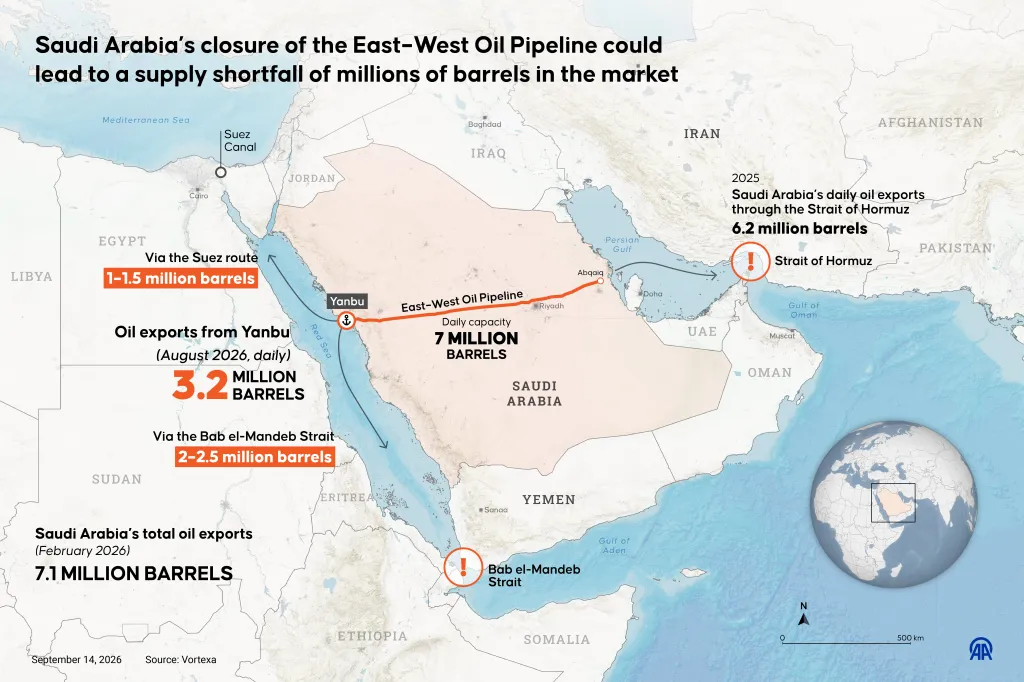
Yanbu hosts major oil storage and refining facilities and is connected by the East-West Pipeline, which can carry up to seven million barrels a day.
The Houthis, also known as Ansar Allah (supporters of God), have repeatedly fired missiles and drones into Saudi Arabia, disrupting oil flows from the world’s largest energy exporter.
On Thursday, the rebel group said it had struck the facilities of state oil firm Aramco in Yanbu, and a “sensitive target” in Riyadh. Saudi forces said they had intercepted six ballistic missiles. Authorities have not confirmed any damage.
The foreign ministers of Saudi Arabia, Pakistan and Turkiye met on Thursday to arrange an “urgent meeting” of their military chiefs of staff under the Mecca Joint Defence Agreement, which treats an attack on one member as an attack on all, the Saudi foreign ministry said in a statement.
They also condemned Houthi attacks that they claimed targeted Mecca and other civilian sites.
However, doubt persists over what action Turkiye and Pakistan might take under the pact, which is yet to be officially triggered. Both of the Saudi allies are heavily involved as mediators seeking to bring an end to the conflicts across the Middle East.
Saudi Arabia’s grand mufti called on soldiers to be ready to lay down their lives to fight the Houthis, according to the Saudi state news agency.
The Iran-aligned Houthis have been battling the Saudi-backed government of Yemen for more than a decade. That conflict has been rekindled amid Israel’s wars against the Iran-aligned Hamas group in Gaza and the Hezbollah group in Lebanon, and the United States war on Iran.
At the United Nations General Assembly in New York, Yemen’s Vice President Abdullah Abdulkader al-Alimi-Bawzer warned that the Houthis were using shipping security “as a tool for blackmail”.
“It is taking hostage the entire global economy,” he said.
The US has not renewed military involvement, but Saudi Foreign Minister Prince Faisal bin Farhan Al Saud said the kingdom was “continuing to work with our partners in the US”.
Saudi Foreign Minister Prince Faisal bin Farhan Al Saud in Istanbul, Turkiye [Burak Kara/Getty]
The Houthi targeting of Yanbu adds to the pressure on Saudi Arabia’s oil exports.
Earlier this month, the Houthis seized the Yemeni port of Mocha and several Red Sea islands, giving them significant control over the Bab al-Mandeb strait, which usually carries about 12 percent of global oil trade.
Strikes have also disrupted the operation of the East-West Pipeline linking Yanbu to export routes. Riyadh had been using it to export crude bypassing the Strait of Hormuz, which is restricted amid the Iran-US war.
However, the Houthis have now forced the Saudis to switch some exports back to Hormuz.
Brent crude rose more than 3 percent on Thursday, briefly topping $108 a barrel, before easing to $105.77 on Friday morning.
June Goh, a senior oil market analyst at Sparta Commodities in Singapore, said oil would likely stay above $100 a barrel as long as the war on Iran continued.
“With no clear resolution in sight, the gap in oil inventories globally is getting wider,” Goh told Al Jazeera.
New York Mayor Zohran Mamdani posted a video of himself planting an olive tree alongside Palestinian families from Gaza, hours after Israeli Prime Minister Benjamin Netanyahu accused him of anti-Semitism in his speech at the UN General Assembly.
Prime Minister Balendra Shah told the UN that world leaders must act on climate change.
Published On 25 Sep 202625 Sep 2026
Nepal’s Prime Minister Balendra Shah has appealed for action to combat the rising threat of climate change, calling the flood that devastated his country last month “a warning to the world”.
Shah made the comments during his address to the 81st Session of the United Nations General Assembly in New York on Thursday night. He told the gathering that the August disaster “was not just a local tragedy”, asking them the question, “Have you really heard that warning?”
Recommended Stories
list of 3 itemsend of list
Political leaders “have been negligent to translate those warnings in action at the speed and scale that the vulnerable people require,” he said.
An excavator clears mud from damaged houses following deadly flash floods and a mudslide, in Nuwakot district, Nepal, on September 21, 2026 [Navesh Chitrakar/Reuters]
At least 1,453 people died when a torrent of mud, rock and water struck northern Nepal and the China-Tibet border on August 26, triggered by a glacial collapse.
According to Nepal’s National Disaster Risk Reduction and Management Authority, 5,500 people were still missing and 13,795 had been rescued.
Researchers from the World Weather Attribution (WWA) group said in a report released last week that the disaster was not caused by a single extreme weather event, but rather a “compound crisis” shaped by long-term warming, glacier retreat, permafrost thaw and geological instability.
Shah said climate change was hurting people not responsible for the crisis but who “are paying a colossal price for it”.
He said Nepal contributed less than one-tenth of 1 percent of the heat-trapping gases behind climate change. About 99 percent of the country’s electricity comes from hydropower, and many workers were trapped in tunnels by the flooding.
“Our glaciers are retreating, our mountain slopes are becoming unstable, our rivers are becoming less predictable, and every major disaster threatens to erase years of development,” Shah said.
Nepal Prime Minister Balendra Shah addresses the 81st United Nations General Assembly at UN headquarters in New York City, US, on September 24, 2026 [Eduardo Munoz/Reuters]
Shah urged the international community to help bear the cost of helping Nepal adapt to climate change.
He proposed to create a ‘Himalaya Climate Resilience Mechanism’ which would include Nepal and neighbours India and China, and would allow them to share satellite data and expertise, monitor glacial lakes and strengthen joint early warning systems.
Nepal has asked the UN’s loss and damage fund for $20m in aid, the maximum allowed, but a tiny fraction of what it needs. A preliminary assessment by the government has placed the cost of the disaster at $5bn.
The fund, established in 2022 in the aftermath of catastrophic floods in Pakistan, has yet to make even its first disbursement, and observers see Nepal as a key test of its credibility.
Earlier this week, the United States pledged an additional $31m in new flood recovery support.
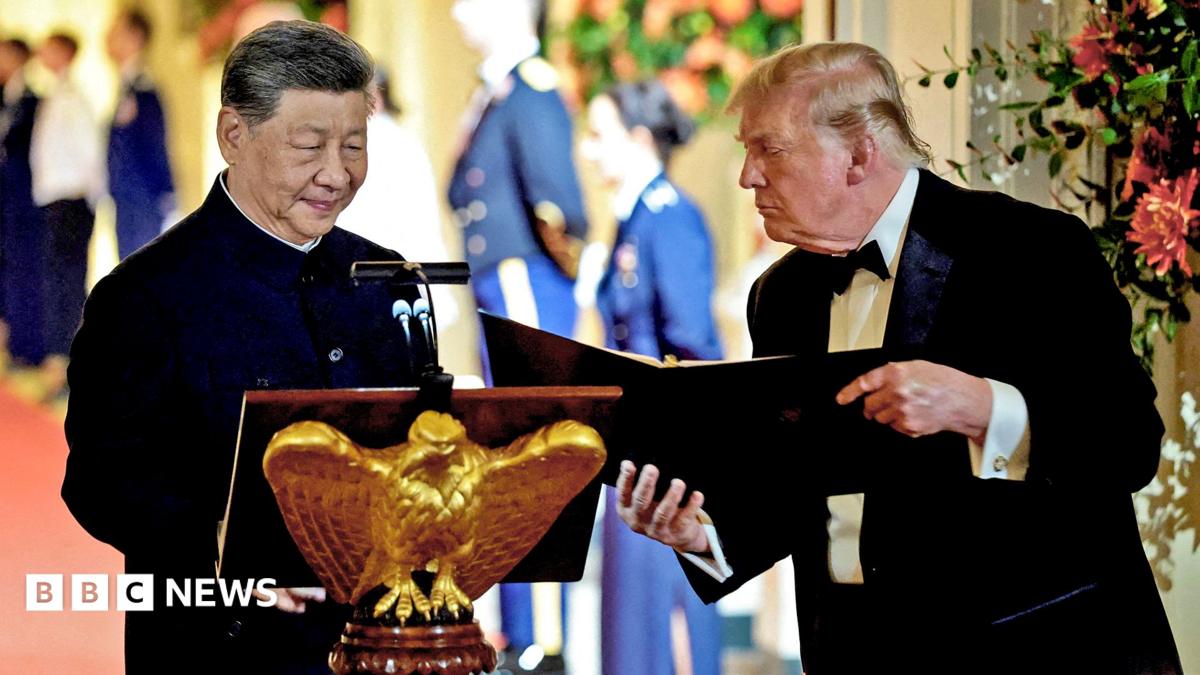
When the BBC entered the dining hall for the dinner, SpaceX CEO Elon Musk was standing over a table and appeared to be telling an entertaining story that had two others nearby barreled over with laughter.
Defence Secretary Pete Hegseth was at another table, with a serious look on his face. His wife is sat beside him, with Jared Kushner and White House chief of staff Monica Crowley nearby.
The White House invited scores of US officials, as well as conservative broadcasters, tech industry bosses, social media CEOs and other corporate executives.
Attendees included members of Trump’s cabinet, as well as family members like his children Ivanka, Eric and Tiffany.
Bosses from the tech industry in attendance included Apple’s Tim Cook, OpenAI’s Sam Altman, Google’s Sundar Pichai, Amazon’s Jeff Bezos and Nvidia’s Jensen Huang.
Both Cook and Huang were seated at the same table as Trump and Xi. As was Musk, who previously worked in Trump’s administration leading the effort to shrink government.
Other companies whose leaders were in attendance include General Motors, Visa, Paramount Skydance, ExxonMobil and more.
Social media mogul Mark Zuckerberg also attended, as well as Jeff Yaas, the American billionaire who owns a share of TikTok.
“Everybody wanted to be there,” Trump said ahead of the event. “I would say you have the entire tech world, the entire banking world, and a lot more.”
But one notable absence was Anthropic – one of the biggest and most valuable AI firms in the world. The BBC has asked Anthropic if it was invited, or if they chose not to be there.
Tokyo, Japan – Nearly eight years after moving to Japan for work, Abdul feels more accustomed to life in the East Asian country than in his native Bangladesh.
But as the Japanese government moves to tighten the rules for permanent residency and public sentiment towards immigrants sours, Abdul is reconsidering his future.
Recommended Stories
list of 4 itemsend of list
“I don’t know what the Japanese government will do in the future, if they’ll make things stricter again,” Abdul, a tech engineer who lives in northern Tokyo with his Bangladeshi wife, told Al Jazeera.
Abdul, who is preparing to apply for both permanent residency and citizenship, is aware of the possibility that he may soon have to leave.
“I have to be prepared if both of my applications are rejected,” said Abdul, who asked not to be identified by his real name.
“Right now, I am starting to look for opportunities outside of Japan.”
Under rules set to come into effect in phases from October 1, applicants for permanent residency will need to show that their annual household income exceeds the Japanese average – a stipulation that will be applied retroactively for applications submitted since April – and demonstrate Japanese-language proficiency.
Applicants will also be required to have a pension pot equivalent to 30 years of payouts.
In an announcement detailing the changes, Japan’s Immigration Services Agency stressed the need for foreigners to “live independently” and have “a stable life without the risk of becoming a burden”.
Sarah Nelkin stands outside the Kawasaki Branch Immigration Office in Kawasaki, Japan, on August 18, 2026 [Genevieve Mansfield/Al Jazeera]
Sarah Nelkin, an American who has lived in Japan for the last 14 years, is among the many long-term residents who fear they will not qualify under the new rules.
A lover of Japanese animation and video games, Nelkin first moved to Japan as a university student and has since built a career in the country’s bustling entertainment industry.
Like Abdul, Nelkin, who submitted an application for permanent residency shortly before the announcement of the changes, is anxious about what the future holds.
If her application is rejected, she plans to apply to become a Japanese citizen – which would mean giving up her US citizenship, as Japan does not recognise dual nationality.
“I’ve lived my entire adult life in Japan … I would rather not give up my American passport. My mother lives in the US, and I want to retain my citizenship for a lot of reasons, like visiting family,” Nelkin told Al Jazeera.
“But at this point, I might have to give up my American nationality.”
Risa Hagiwara, a professor of economics at Meikai University in Urayasu, Japan, said the changes reflect a shift towards a “selective and conditional” immigration policy that is in tension with Japan’s need for labour amid a shrinking population.
“Japan needs foreign workers because of labour shortages. But if the conditions for long-term settlement become substantially more difficult, this could potentially reduce Japan’s attractiveness to foreign workers who are considering Japan as a place to build their long-term lives,” Hagiwara told Al Jazeera.
Hot-button issue
Immigration has become an increasingly hot-button topic in historically homogenous Japan.
Japan’s foreign resident population remains small compared with developed peers such as the United Kingdom and France, where 10 to 15 percent of residents were born overseas.
But it has been growing fast, hitting a record 4.12 million people, or about 3 percent of the total population, as of the end of 2025, according to government data.
By some estimates, Japan’s foreign-born population could reach the OECD average of 10 percent by 2070.
Meanwhile, the number of Japanese nationals fell by more than 900,000 between January 2025 and 2026 amid the country’s rock-bottom birthrate, according to government figures.
Hagiwara said that Japan is at a crossroads as foreign-born residents play an increasingly important role in Japanese society.
“If Japan wants to rely on foreign workers to address labour shortages, it also needs to consider what happens after they come to Japan,” Hagiwara said.
“The question is increasingly not only ‘how many foreign workers does Japan need?’, but also ‘what kind of society does Japan want to build with the people who come here?’” she said.
Japan’s mooted immigration shake-up comes amid a broader rightward shift in the country’s politics.
While campaigning for the leadership of the conservative Liberal Democratic Party last year, Japanese Prime Minister Sanae Takaichi said the country should “reconsider, at least for now, policies that allow in people with completely different cultures and backgrounds”.
Takaichi’s subsequent coalition agreement with the right-wing Japan Innovation Party (JIP) pledged a firm stance against foreigners who break the rules, as well as steps to address “potential social friction” from a growing foreign population.
Japan’s far-right Sanseito party leader, Sohei Kamiya, shows his party’s election pledge during a news conference after Japan’s Prime Minister Sanae Takaichi dissolved the lower house of parliament, in Tokyo, January 23, 2026 [Issei Kato/Reuters]
At the same time, the far-right, anti-immigration Sanseito party has gained ground with its “Japan First” messaging, winning a record 15 seats at the most recent lower-house election to become the third-largest opposition party.
Public opinion has also moved against immigrants.
In a recent survey by the Institute of Social Science at the University of Tokyo, 56.3 percent of Japanese people said they opposed accepting more foreigners, up from 35.6 percent in 2024.
Nelkin and Abdul have both felt the change in sentiment.
“Before 2024, I never felt any discrimination against foreigners, but recently there has been a shift … especially online,” Abdul said.
Nelkin said peers have become outspoken in their dislike of foreigners.
“Even seemingly decent people are just saying racist stuff,” she said.
“I’ve worked for this country and specifically avoided breaking any rules, and they’re saying you are never enough,” she added. “That’s really hard.”
Israeli footballer Saied Abu Farchi has been sent off during a Nations League match after using a corner flag to mimic firing a rifle while celebrating his equaliser against Austria. Israel lost 3-1.
Pakistani security forces report ongoing cross-border fire in latest escalation in fighting between the neighbours.
Published On 25 Sep 202625 Sep 2026
Pakistan has foiled an “attempted Afghan aggression” on the Pakistan-Afghan border.
Pakistani security sources said several Afghan members of the Taliban were killed in an intermittent exchange of fire in the Gulistan area of the border on Friday and that fighting was ongoing.
Recommended Stories
list of 3 itemsend of list
There has been no official confirmation from either country involved.
The Afghan government said on Thursday that it would deliver an “appropriate response” to Pakistani air attacks on 10 locations in Afghanistan earlier in the day.
The strikes were in response to a “deliberate and unlawful incursion into Pakistan by drones” on Wednesday, Pakistani Information Minister Attaullah Tarar said on Thursday.
Tarar said in a post on his X account that Pakistan’s aerial and drone attacks hit “terrorist hideouts and support infrastructure including drone launching and storage sites”.
He also posted a video said to show the military strikes on the Afghan sites.
Afghanistan’s government spokesperson Zabihullah Mujahid said the air strikes targeted Kandahar, Paktia and Khost provinces.
Taliban officials denied that their government launched drones against Pakistan on Wednesday.
The air raids on Thursday were carried out amid growing tensions between the former allies over attacks by armed groups in Pakistan, which triggered their worst fighting in years in February.
Islamabad accuses Kabul of harbouring fighters who stage cross-border attacks, but Afghanistan’s government denies harbouring anti-Pakistani armed groups and says the attacks are Pakistan’s internal problem.
The escalation threatens mediation efforts by China, Turkiye, Qatar and Saudi Arabia to broker a lasting peace between the two neighbours.
In a live television interview Thursday night Paris time, French President Emmanuel Macron said he was sending an unspecified number of troops and equipment to the Saudi Arabia to protect the Yanbu energy hub, located on the Red Sea.
“This is the agreement we have finalized with the Saudis,” Macron explained. “We are going to send military resources, that is to say, soldiers, radar systems and defense systems, to protect this site — not to get us involved in any conflicts, but to protect this site.”
The French leader did not elaborate on the exact equipment he would send, how many troops, or when they would arrive. Nor did he address what would happen if French personnel were killed or injured or equipment damaged or destroyed. We have reached out to the French Embassy for further details. Based on his mention of radars and seeing that the threat to Saudi oil infrastructure is almost entirely from aerial attacks from drones and missiles, these will likely be air defense forces.
Nous agissons pour protéger nos compatriotes des conséquences de la crise au Moyen-Orient. Objectifs : sécuriser les approvisionnements et faire baisser les prix à la pompe. pic.twitter.com/kvrgHcV4E4
An infographic illustrating how Saudi Arabia has diverted oil from the Persian Gulf to the Red Sea. (Photo by Murat Usubali/Anadolu via Getty Images) Anadolu
Before Macron’s announcement on Thursday, the Houthis claimed they had carried out two more waves of attacks on Saudi targets, including one on the Saudi Aramco facility in Yanbu, “using a number of ballistic and cruise missiles, as well as drones.”
In addition, the Houthis claimed they struck Riyadh.
Earlier in the day, the Houthis said they struck “enemy command and control centers, operations rooms, weapon depots, missile launch platforms, and military sites belonging to Saudi-led enemy formations in Jizan,” a Red Sea port city.
“The Saudi-led military coalition in Yemen said on Thursday that it had shot down six ballistic missiles fired by the Iran-backed Houthi militia, in what appeared to be one of the largest cross-border attacks by the group since its conflict with Saudi Arabia [flared back up],” The New York Times reported.
The missiles were aimed at the Saudi cities of Taif and Yanbu, Maj. Gen. Turki al-Maliki, a spokesman for the Saudi-led coalition, claimed on X. “Escalations and violations by the terrorist Houthi militia will be dealt with firmly,” he stated, without specifying where the missiles were intercepted.
TWZ cannot independently verify any of these claims.
Today’s attacks are the latest in the escalating conflict between the Houthis and Saudi Arabia. Earlier this year, the Houthis imposed a blockade on the Bab al-Mandab Strait (BAM) and began striking Saudi ships in the southern part of the Red Sea as well as critical energy terminals on that body of water and Saudi refineries. Iranian proxies have also struck the vital East-West pipeline that carries oil to the Red Sea to bypass the Strait of Hormuz, where Iran vastly curtailed shipping after the launch of Operation Epic Fury. The East-West pipeline reportedly reopened after being shut down following a long-range drone attack.
The stark reality facing Macron is that if Saudi oil infrastructure and transport nodes near the Red Sea are destroyed or the pipeline that feeds it is shut down for months the last major oil lifeline from the region — and especially to Europe — will be closed off, sparking a deeper energy crisis.
Iran has already severely curtailed the flow of oil through the Strait of Hormuz since the U.S. and Israel attacked it on Feb. 28. The movement of oil has been further impeded by a U.S. blockade on Iranian ports. However, transits have been increasing as of late, thanks in large measure to U.S. military escorts that U.S. Central Command claims have allowed more than a billion barrels of crude to pass through the Strait of Hormuz. Still, the traffic is far below what it was before the war broke out.
Having both the Strait of Hormuz largely closed and energy exports out of the Red Sea shut down simultaneously is a nightmare scenario. By Thursday evening Eastern time, the per-barrel price of Brent crude oil shot up to nearly $107, according to OilPrice.com. It had fallen below $100 per barrel just two days earlier.
Given all this, the French president sought to offer reassurance about oil supplies, according to France 24.
“He said he had carried out ‘intense diplomatic activity,’ meeting in recent weeks with the leaders of Saudi Arabia, Iraq and Nigeria, all hydrocarbon suppliers, to ensure France keeps receiving the same volumes,” the publication noted.
“We have replenished gas stocks and also oil stocks” for the months ahead, the French president also said.
“Escalating tensions in the Gulf could have negative consequences here in the UK—such as rising prices, disruptions to energy supplies, and increased costs for British businesses,” the U.K. Defense Ministry (MoD) explained in announcing the deployment. “The Houthis pose a threat to stability in the Middle East; therefore, it is in the UK’s national interest—economically and in terms of security—that they do not succeed in their aims.”
“We unequivocally condemn Houthi attacks on Saudi Arabia, and our position is clear: both Saudi Arabia and the Yemeni government have the right to self-defense,” the ministry added.
The jet will operate from a U.K. air base in Cyprus and will begin air-to-air refueling operations in the coming days, the BBC reported.
A Royal Saudi Air Force Voyager aerial refueling jet. (Air Tanker)
The French and British deployments contrast decisions by the U.S. and other nations not to get involved with the Saudi-Houthi fight.
Last week, Trump turned down a direct plea from Saudi Crown Prince Mohammed bin Salman, the Kingdom’s de facto leader, to attack the Houthis. Meanwhile, Pakistan and Turkey, which signed the Mecca Joint Defense Agreement with Saudi Arabia, have yet to provide any direct military aid. The pact holds that an attack on one is considered an attack on all; however, it doesn’t stipulate exactly what actions should be taken.
The security situation in Yemen has drastically deteriorated since the launch of Epic Fury after the Houthis joined the U.S.-Iran conflict on the side of their major supporter.
The Houthis have been directly attacking Saudi Arabia over claims that the kingdom has imposed a blockade on them. Beyond that, the mostly dormant civil war between the Houthis and internationally recognized Yemeni government forces, backed by Saudi Arabia, reignited in the wake of operation Epic Fury. The Houthis have made large territorial gains in the renewed conflict, including capturing the port city of Mokha and two key islands in the Red Sea. This has strengthened the Houthi hold on the BAM. You can read more about that in our story here.
3. The Houthis have reportedly attempted to seize ROYG-controlled islands in the Red Sea from which Houthi fighters could launch attacks on international shipping. Houthi forces reportedly landed on the Hanish Islands in the southern Red Sea on the morning of September 10 after… pic.twitter.com/tiFPgNDOHZ
The civil war in Yemen erupted in 2014 and expanded a year later when a Saudi-led coalition joined forces with the government ousted by the Houthis. The fighting between Saudi-led forces and the Houthis largely abated after a tenuous ceasefire took hold in 2022. The Saudis held off on getting involved in the recent Red Sea conflict, which saw the U.S. and coalition warships duking it out with the Houthis and eventually led to a U.S.-led air campaign over Yemen. The United Kingdom was another significant player in that air campaign.
Meanwhile, exacerbating concerns about the flow of oil from the Red Sea, “a senior adviser to Iran’s supreme leader warned Thursday that Iranian forces and their Houthi allies in Yemen could respond to any new U.S. attacks by opening ‘a new front’ in its war with the U.S. by targeting energy supplies in the Red Sea,” CBS News reported.
The statements came after U.S. President Donald Trump on Wednesday once again threatened Iran.
“Will a deal be made with Iran that lets them rebuild and create a far greater country than it ever was before?” Trump asked rhetorically. “Or do I annihilate the Islamic Republic and do it quickly, never giving them a chance to kill and destroy people and countries again?”
Trump added that he believed he would make a peace deal with Iran after the upcoming U.S. midterm elections, which will decide the control of Congress.
The fact that France is sending forces to Saudi Arabia is an ominous development and another indication that the current spate of unrest that began with Epic Fury does not appear to show any signs of ending anytime soon.
The pact stipulates that an attack on one of the three countries is considered an attack on all of them.
Saudi Arabia, Turkiye and Pakistan have announced they are planning an urgent meeting of their chiefs of staff to discuss ways to support the kingdom under the Mecca Joint Defence Agreement.
The announcement followed a meeting on Thursday in New York between Saudi Foreign Minister Prince Faisal bin Farhan Al Saud, Pakistan’s Deputy Prime Minister and Foreign Minister Ishaq Dar and Turkish Foreign Minister Hakan Fidan, according to the Saudi Press Agency.
Recommended Stories
list of 4 itemsend of list
The statement did not say when the military chiefs would meet or what form of support could be considered.
Saudi Arabia, Turkiye and Pakistan signed the Mecca Joint Defence Agreement on August 7 to strengthen collective deterrence and expand defence cooperation.
The pact stipulates that an attack on one of the three countries is considered an attack on them all.
The three countries have since begun setting up mechanisms under the pact. Their foreign and defence ministers and military chiefs met in Istanbul on August 31 for the first meeting of the Strategic Political and Defence Committee, agreeing to establish a secretariat in Saudi Arabia and to deepen military cooperation.
Thursday’s foreign ministers’ meeting also condemned attacks targeting Mecca as well as civilian and economic facilities in Saudi Arabia, and it affirmed the kingdom’s right to defend itself under Article 51 of the UN Charter.
The diplomatic moves came as Saudi Arabia reported a fresh wave of attacks from Yemen.
Saudi Arabia said its air defences shot down six ballistic missiles launched towards Taif and Yanbu on Thursday.
Major-General Turki al-Malki, the coalition spokesman, said further Houthi escalation would be “dealt with firmly”. Saudi Civil Defence authorities had issued alerts in several areas before later saying the danger had passed.
The Houthis separately claimed missile and drone attacks on a “sensitive target” in Riyadh and Saudi Aramco facilities in Yanbu.
France has also offered to provide defensive support to Saudi Arabia. President Emmanuel Macron said Paris would send military assets to help protect Yanbu.
“We are going to send military assets, meaning soldiers, radars and defence systems to protect this site,” Macron said in an interview with TF1 on Thursday.
Yemen clashes drive rising casualties and displacement
The cross-border attacks have coincided with some of the heaviest fighting inside Yemen since hostilities escalated again.
Fighting across several fronts in Yemen killed at least 150 Houthi fighters and members of government-aligned forces in the 24 hours leading into Friday, according to an AFP news agency tally.
The toll compiled by AFP included 98 fighters on the government side and 52 from the Houthis, with clashes reported around the Kahboub Mountains and areas between Lahj and Taiz overlooking the Bab al-Mandeb strait.
The Houthis have also expanded their presence along Yemen’s Red Sea coast, including by taking the port city of Mocha and strategic islands. The gains have strengthened the group’s position around Bab al-Mandeb, one of the world’s busiest shipping corridors. About 12 percent of global trade normally passes through the waterway, according to AP.
Yemen’s internationally recognised government has urged greater international involvement, warning at the UN General Assembly that Houthi control around the strait poses a wider economic risk.
Vice President Abdullah Abdulkader Al Alimi-Bawzer accused the Houthis of using freedom of navigation as leverage, saying their actions were “taking hostage the entire global economy”.
The renewed fighting has forced more than 230,000 people from their homes since the beginning of September, according to UNHCR, as clashes spread across multiple front lines. The agency said the latest displacement has added to about 5.2 million people already internally displaced across Yemen.
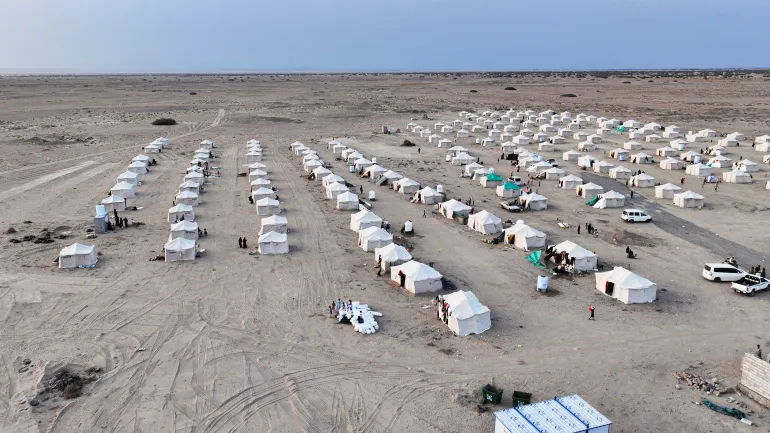
A drone view of a camp for internally displaced people, who fled fighting between the Houthis and government forces, erected near Aden, Yemen, September 19, 2026 [Stringer/Reuters]
UNHCR said families have been uprooted across governorates, including Hodeidah, Taiz, Lahj, Aden, Abyan, Marib, al-Dhalea and Shabwah, with many fleeing at short notice and leaving with few belongings.
Shelter, food, clean water, healthcare and protection services are among the most urgent needs, while host communities and displacement sites are becoming increasingly overstretched.
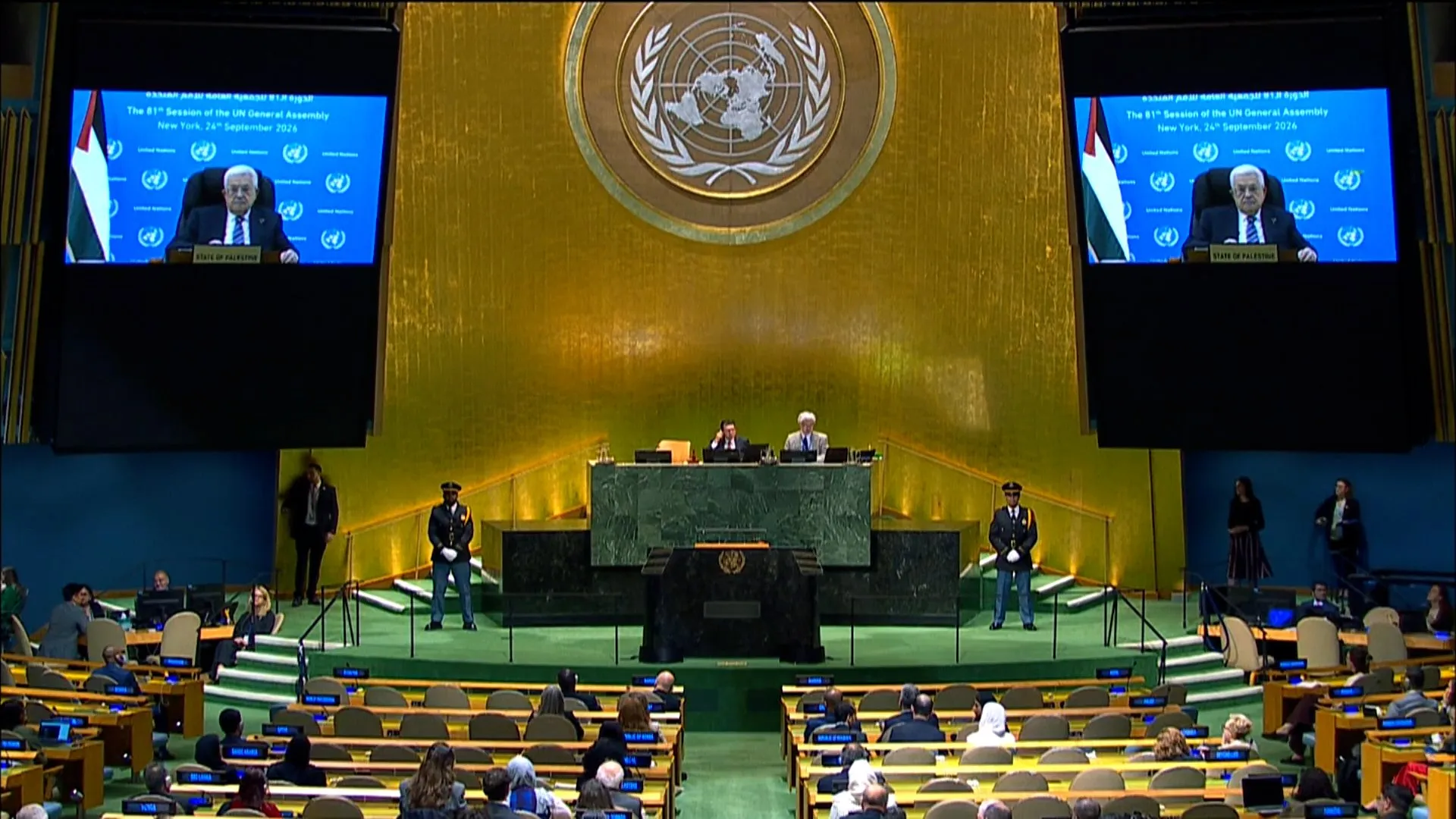
Israel’s Prime Minister addressed the UN General Assembly in person, despite having an International Criminal Court (ICC) arrest warrant issued against him. Palestinian President Abbas meanwhile was forced to address the Assembly virtually. Al Jazeera’s James Bays reports.
Rights groups accuse the UN of hosting a “war criminal” as delegations walked out during Netanyahu’s speech.
Published On 25 Sep 202625 Sep 2026
Police arrested about 100 protesters, including actors and politicians, outside the United Nations headquarters in New York, as demonstrators rallied against Israeli Prime Minister Benjamin Netanyahu ahead of his address to the UN General Assembly.
Among those arrested were Oscar-winning actor Susan Sarandon, Emmy winner Hannah Einbinder, Democratic congressional candidate Darializa Avila Chevalier and New York City Council member Chi Osse.
Recommended Stories
list of 3 itemsend of list
The protest, organised by the advocacy group Jewish Voice for Peace, drew about 200 people wearing identical white T-shirts printed with slogans including “Fund people not bombs”, “No war” and “Free Palestine”.
Protesters blocked traffic, and after police ordered them to leave over loudspeakers, some moved to the sidewalks. Officers then surrounded the protesters who remained seated on the pavement, chanting “Netanyahu go to hell”. The demonstrators were then escorted to police buses.
“What’s being done to Gaza, the obliteration of an entire society, in our name, with our tax dollars, this is our responsibility to speak out against, and Netanyahu has no right to use the platform of the United Nations to justify these atrocities,” said protester Manijeh Moradian, a 50-year-old university professor of Iranian and Jewish heritage.
Inside the UNGA, Netanyahu took the stage to defend Israel’s actions in the Middle East as he sought to counter growing international isolation ahead of Israel’s upcoming elections, while dozens of delegates streamed out of the hall.
Separately, pro-Palestine protesters gathered on the steps of the New York Public Library in Manhattan, waving Palestinian flags and carrying banners reading “New York rejects Zionism” and “Palestine deserves freedom”.
Rabbi Yitzchok Deutsch, a representative of Neturei Karta International, said Netanyahu was “using our religion, our identity, to justify all these crimes”.
Deutsch sent a message of gratitude to New York City Mayor Zohran Mamdani “for his courage to do whatever he can to arrest” Netanyahu.
Protester Melissa Zuniga questioned why Netanyahu was allowed to speak at the UN “when he has an international warrant for his arrest”.
Last week, NASA Administrator Jared Isaacman cryptically teased plans for a new high- and fast-flying X-plane with a silhouette of an aircraft that immediately drew comparisons to the famed SR-71 Blackbird as a backdrop. In our report, we looked at what it could mean, including the possibility of reviving the SR-71, or at least using it to inform or even cobble together a new airframe. Now it turns out that an SR-71 that had been on display at NASA’s Armstrong Flight Research Center for years is suspiciously missing.
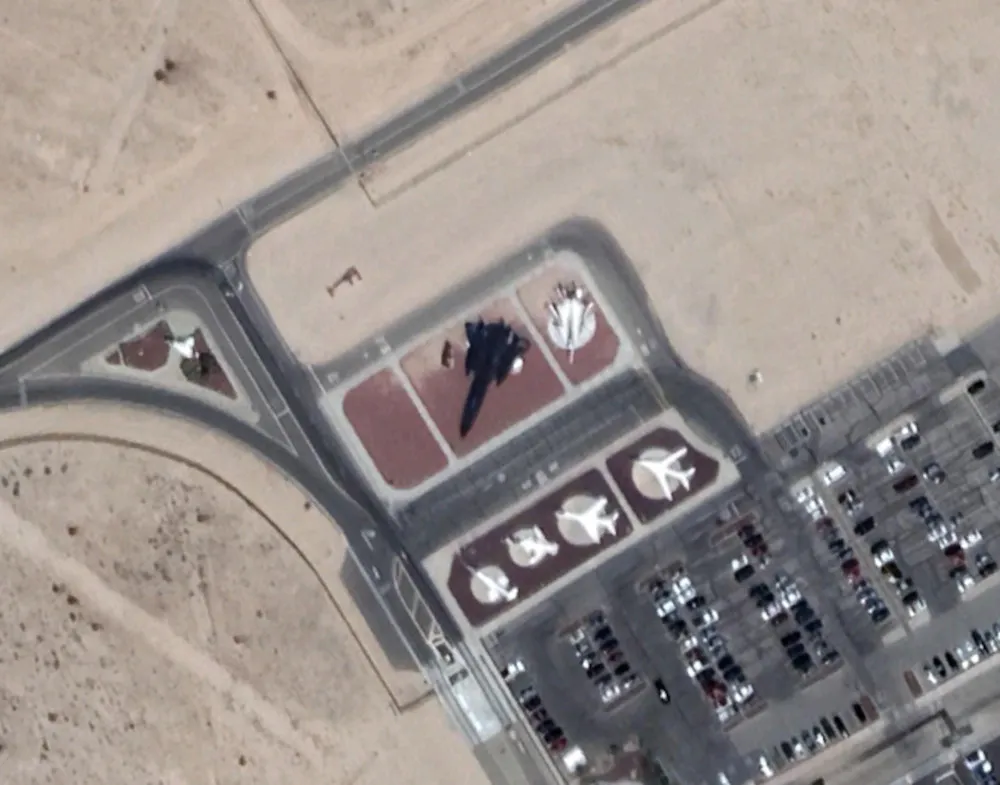
Steve Trimble, Aviation Week‘s defense editor and friend of TWZ, was first to report the disappearance of the former NASA SR-71, also known by the tail number 844, at Armstrong. That facility is collocated with Edwards Air Force Base in California. Trimble’s piece says that satellite imagery shows the jet has not been seen since at least May 17. The aircraft in question, which originally carried the U.S. Air Force serial number 61-7980, was the last Blackbird produced and the last one to fly, taking to the skies for the final time in 1999.
A satellite image taken in 2018 showing SR-71, tail number 844, on display outside of the Armstrong Flight Research Center in California. Google Earth
“The current disposition of the aircraft is unclear, but Aviation Week sources suggest that the aircraft was moved into a hangar earlier this year for an inspection,” according to the story. “The presentation and the disappearance of the display SR-71S with the 844 tail number for NASA raises the possibility of a return-to-flight program after a more than 26-year-long hiatus.”
Another look at SR-71 tail number 844 during its service with NASA. This picture was taken on October 31, 1997, during a flight in support of the NASA/Rocketdyne/Lockheed Martin Linear Aerospike SR-71 Experiment (LASRE). NASA
The presentation mentioned above is the one NASA’s Isaacman gave last week at the annual All-In Summit in Los Angeles, California, during which he shared the SR-71-esque silhouette.
“In the service of the first A [aeronautics] in NASA, we are rebuilding our X-plane fleet. The X-59 is researching quiet supersonic flight, but it’s just the beginning,” he said at that time. “As NASA recommits to flight test and works alongside industry to push the boundaries of airframe and propulsion design, it will not be long before NASA once again is flying as high and as fast as we had in decades past, and then even more.”
Isaacman has made expanding NASA’s X-plane fleets a top priority since taking charge of the agency last year.
“You sure that’s a Blackbird?” the NASA administrator said during a live interview that immediately followed his remarks after the image was brought up, but did not offer any further clarification.
NASA Administrator showed this image during a presentation last week while talking about plans for new X-planes. NASA
“NASA has a long history of building and flying experimental aircraft that push the boundaries of what is possible,” NASA told TWZ directly when asked for more information. “As Administrator Isaacman has said, we want to see more X-planes flying in the years ahead, developing the technologies that will allow us to fly higher, farther, and faster than we have in decades. We look forward to sharing more as those efforts progress.”
We have reached back out to NASA in light of Aviation Week‘s report.
“As for bringing a Blackbird back into operation for high-speed testing, which is now at the forefront of military aeronautics (and civilian to a lesser degree) after decades of being sidelined, that would be a very challenging operation. The SR-71s are long retired and have been placed in museums and other display areas. While the Pentagon could technically claw some of them back from their ‘on loan’ status, reconstituting even one of them would be a major undertaking as the entire support ecosystem that once sustained them has been gone for decades. Still, having a Mach 3+ capable jet for testing would be a highly relevant tool in a new age of high-speed flight exploration.”
“On the other hand, building a new test aircraft that aims higher and faster than the SR-71, but may be based on its ‘DNA,’ is certainly possible. Such an aircraft could leverage material science, avionics, flight controls, and engines that are seven decades more modern than its progenitor. Technology demonstrators in this class could also already exist in the classified domain. NASA could possibly assume ownership of one after the Pentagon declassifies it, as well.”
“Regardless of how such an exotic aircraft is obtained, one of the biggest differentiating factors could be that a NASA aircraft is piloted by a human onboard, instead of it being a drone, but an uncrewed aircraft is possible too.“
Aviation Week‘s report today notes that tail number 844 would probably be the best available candidate for returning to flight status. In addition to being the last produced and the last to fly, NASA previously upgraded it, including with “an automated digital flight and inlet control system to virtually eliminate the Blackbird’s problem of violent engine unstarts at high speed.” It has also been sitting in a controlled area in the Mojave Desert that is great for preservation.
SR-71 LASRE in Flight over California’s Mojave Desert
It is also worth pointing out here that Isaacman is personally aware of the time and resources it takes to reconstitute high-end vintage military aircraft. He founded private ‘red air’ aggressor firm Draken International, making him once the owner of the world’s largest private air force stocked with old jets. His own private collection includes a demilitarized, ex-Ukrainian two-seat MiG-29UB that he flies regularly. He has also been working to restore a former Royal Air Force swing-wing Panavia Tornado F2 interceptor, which would be the most complex private military jet flying, if or when it returned to working condition.
At the same time, the SR-71 is in a completely different category, having been the very definition of a high-demand, low-density asset even at the very peak of its service life with the Air Force. Only 32 of these jets were ever built, and they were notoriously complex and expensive to operate and maintain. The aircraft’s Pratt & Whitney J58 turbojets ran on JP-7 fuel that is no longer in regular production. After 9/11, the possibility was raised of returning a Blackbird to service to support the Global War on Terror, but doing so was projected to cost between $40 and $45 million – and that was just two years after 844’s last flight.
There is also a possibility, in line with Isaacman’s comments last week, that 844 could re-merge in a substantially different, reworked form. There is even the potential it could be retrofitted for uncrewed, or at least pilot-optional, flight. Any such conversion effort would also be a major undertaking, as would sustaining the resulting bespoke jet. As we noted earlier, NASA could also use the SR-71 at Edwards to help inform other future designs.
At the same time, maybe this is all a coincidence and the SR-71 in question is getting some other form of TLC, but its months-long absence is certainly a curious development in light of the current push for new X-planes under Isaacman’s leadership.
Flights operated by Iranian airlines to and from the UAE suspended as part of broader efforts to enforce US aviation sanctions on Iran.
Published On 25 Sep 202625 Sep 2026
The United Arab Emirates has halted flights operated by Iranian airlines, joining several other countries in adopting United States sanctions aimed at pressuring Tehran’s aviation sector.
On Thursday, a statement carried by the Emirati WAM news agency said, “The General Civil Aviation Authority announced the suspension of all flights operated by Iranian airlines to and from the UAE.”
Recommended Stories
list of 3 itemsend of list
It said the decision was “based on the US sanctions imposed on Iranian airlines preventing them from using airports around the world”.
The UAE has joined Oman, Iraq, Azerbaijan, Georgia and Turkmenistan in restricting or suspending access for Iranian airlines amid the new US sanctions threat.
Dubai, the UAE’s commercial hub, is a major destination for Iranian carriers, with multiple daily flights, a large Iranian community and close business links.
An Iran Airtour flight from Tehran to Dubai was cancelled shortly before its scheduled departure on Thursday morning, after tickets had already been issued, according to the AFP news agency.
The UAE, which was repeatedly hit by Iranian missiles and drones throughout the US-Israel war on Iran, suspended trade and financial exchanges with Iran last month.
On Wednesday, the UAE’s central bank blocked transactions involving Iran’s Bank Melli, claiming the financial institution had violated rules on money laundering, terrorism and arms proliferation.
The US Treasury announced sweeping sanctions on Iran’s aviation sector earlier this month, targeting 27 airlines and dozens of companies that support them. The measures aim to cut off Iran’s air links entirely, warning that any airport or company still servicing Iranian carriers risks being cut off from the US dollar system.
Iran’s Civil Aviation Organization spokesman Majid Akhavan said: “Diplomatic and aviation talks are under way to remove the restrictions and restore flights” to the UAE.
Akhavan added that Turkmenistan also turned back a flight from Tehran to Dushanbe on Thursday.
“Turkmenistan’s refusal to allow the Iranian aircraft to pass through its airspace meant the flight could not continue on its route and had to return,” Akhavan told the Iranian IRNA news agency.
Several smaller Iranian airlines continue flying to China and Armenia, both of which have resisted US pressure, while routes to Turkiye remain open for some carriers.
Luiz Inacio Lula da Silva is up 2 points, but that’s still within the poll’s margin of error.
Published On 25 Sep 202625 Sep 2026
Brazilian President Luiz Inacio Lula da Silva has maintained a two-percentage-point lead over Senator Flavio Bolsonaro, his main challenger, in a potential run-off ahead of October’s presidential election, a Datafolha poll has shown.
In poll results released Thursday, Lula would receive 47 percent of the vote compared with 45 percent for Bolsonaro in a simulated run-off. A previous Datafolha poll last week had Lula leading Bolsonaro by 46 percent to 44 percent.
The result also represents a technical tie as it falls within the poll’s margin of error of 2 percentage points.
In a first-round scenario, Lula leads with 40 percent of the vote, followed by Bolsonaro (36 percent), Augusto Cury (5 percent), Ronaldo Caiado (4 percent) and Renan Santos (3 percent).
The previous poll showed the leftist president with 39 percent against the right-wing senator’s 36 percent.
Senator Bolsonaro is the eldest son of former President Jair Bolsonaro, who is serving a 27-year prison sentence for attempting to overturn his 2022 election defeat to Lula.
Lula is seeking a fourth nonconsecutive term as Brazil’s president.
If no candidate wins more than 50 percent of valid votes in the first round, the two frontrunners advance to a run-off.
Datafolha surveyed 2,002 people between September 22 and 23.
Earlier this week, two other polls showed similar results.
A Quaest poll released on Monday showed Bolsonaro with 42 percent of voter support in a potential run-off, versus 41 percent for Lula.
Meanwhile, a BTG Pactual/Nexus poll has Lula receiving 46 percent of voter support, compared with 45 percent for Bolsonaro in a potential run-off.





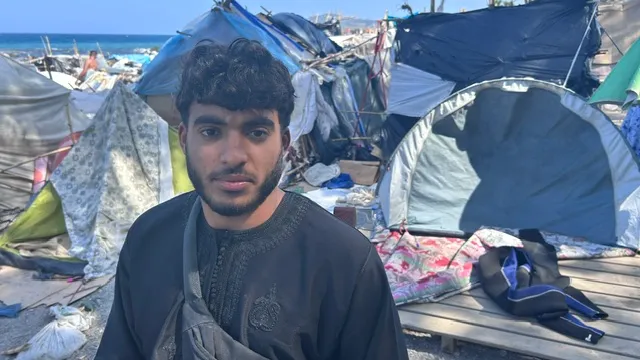


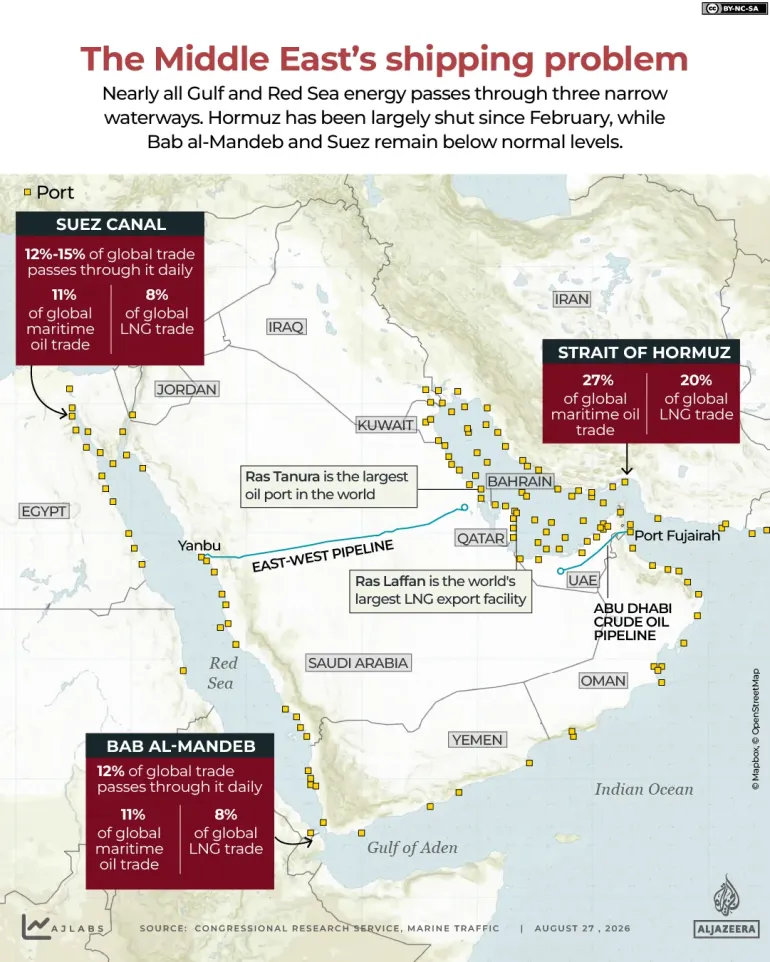
![[Al Jazeera]](https://i0.wp.com/occasionaldigest.com/wp-content/uploads/2026/09/INTERACTIVE-MIDDLE-EAST-iran-hormuz-shipping-aug-27-2026-1787815800-1788488337.webp?w=640&ssl=1)
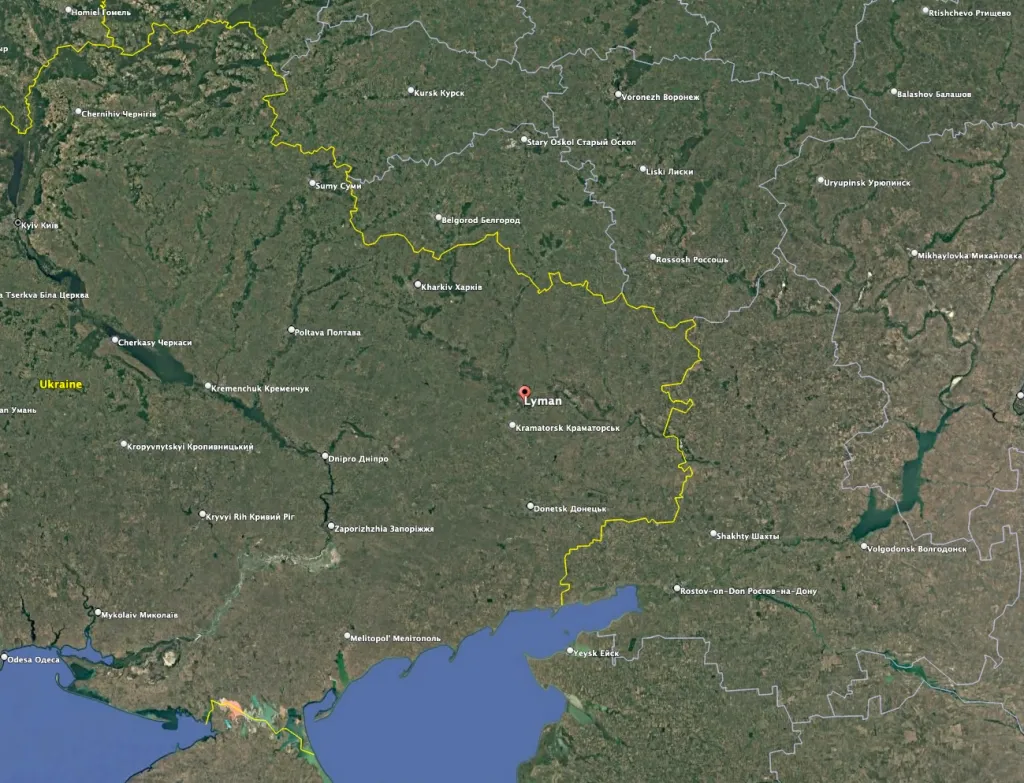


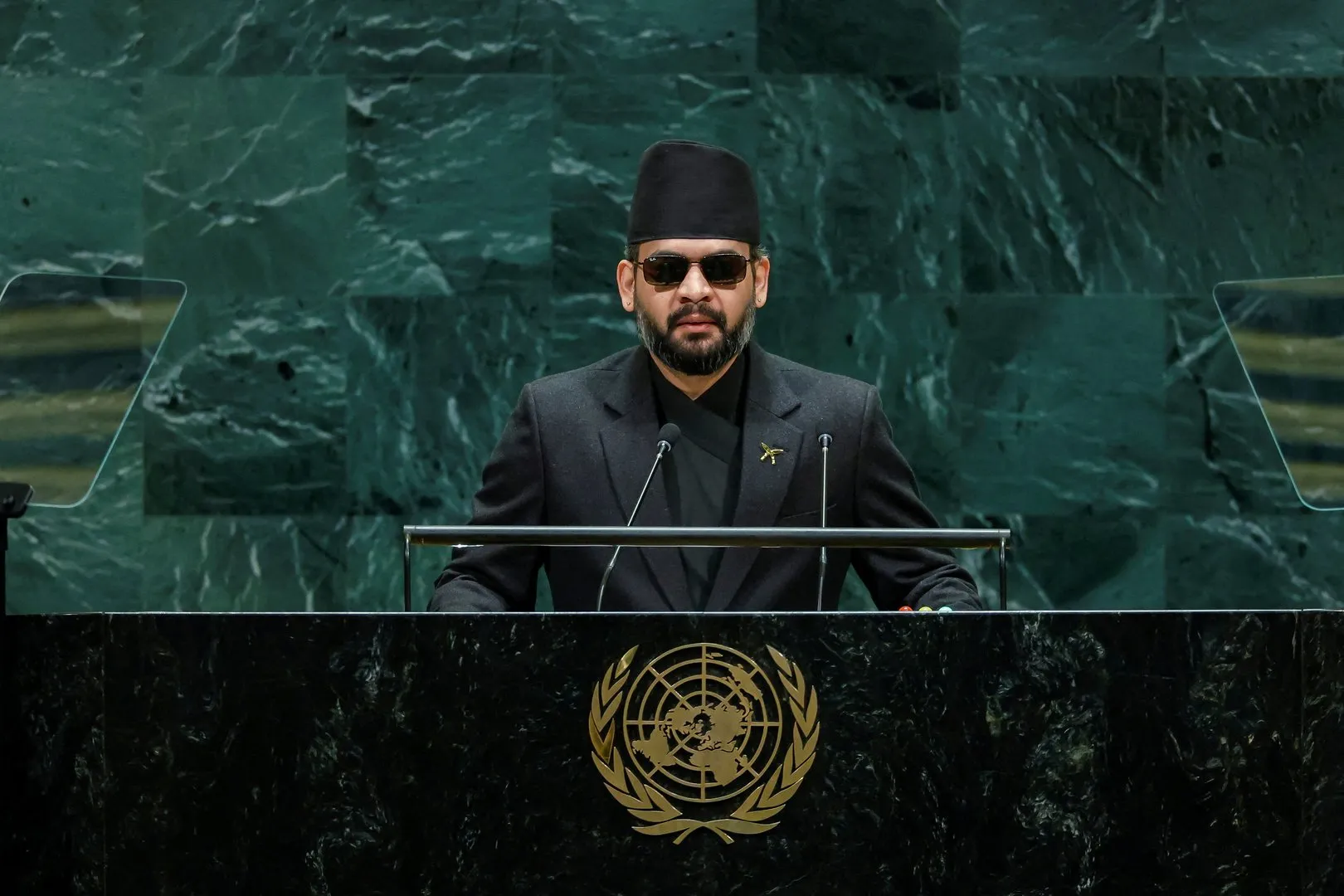
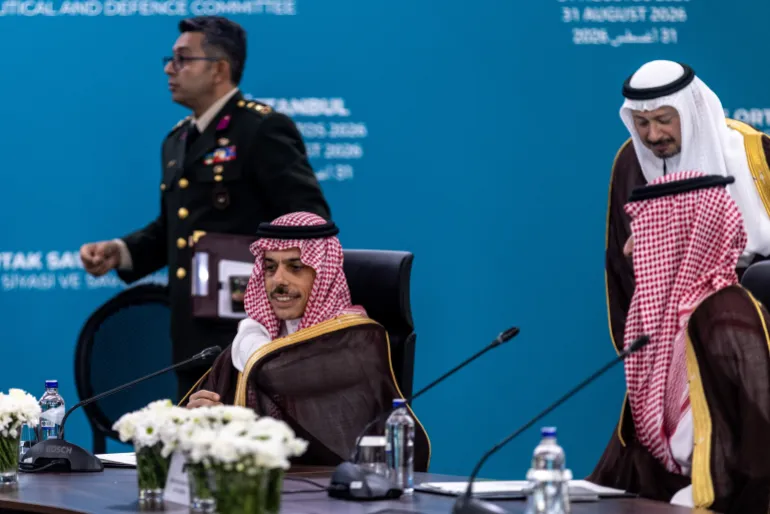


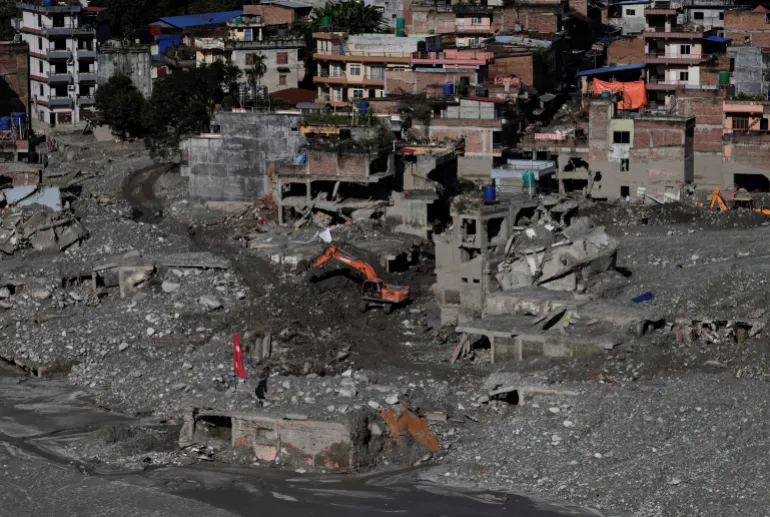
![An excavator clears mud from damaged houses following deadly flash floods and a mudslide, in Nuwakot district, Nepal, September 21, 2026 [Navesh Chitrakar/Reuters]](https://i0.wp.com/occasionaldigest.com/wp-content/uploads/2026/09/2026-09-25T021410Z_709369844_RC2ENNAUM1TN_RTRMADP_3_NEPAL-FLOODS-BALEN-UN-1790312192.jpg?w=640&ssl=1)
![Nepal Prime Minister Balendra Shah addresses the 81st United Nations General Assembly at UN headquarters in New York City, US, September 24, 2026 [Eduardo Munoz/Reuters]](https://i0.wp.com/occasionaldigest.com/wp-content/uploads/2026/09/2026-09-25T002524Z_1559668133_RC20QNACRCWK_RTRMADP_3_UN-ASSEMBLY-1790312740.jpg?w=640&ssl=1)