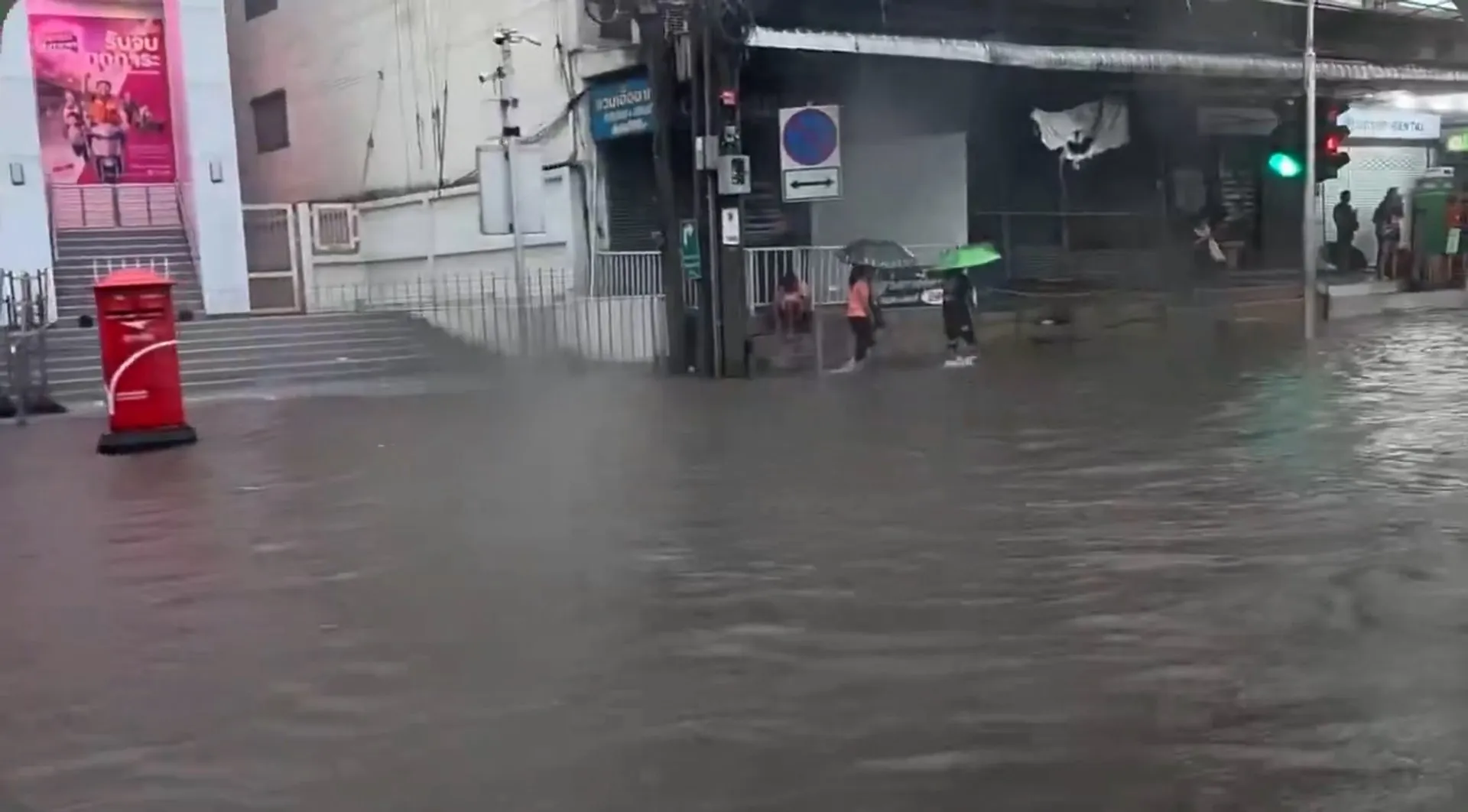
Persistent heavy downpours over a 48-hour period have triggered widespread flooding and severe traffic disruptions in Bangkok, Thailand. Authorities have issued red alerts in the worst affected areas.
New Delhi, India – Indian democracy has been shaken by new revelations showing divisions within the body that is in charge of conducting its elections over controversial policies that critics say have disenfranchised tens of millions of people.
India’s Election Commission, a supposedly autonomous constitutional body, is tasked with administering elections in the world’s largest democracy, and in recent decades, had won admirers across the globe for its success in conducting a voting process unmatched in scale and complexity.
But an investigation by The Indian Express newspaper reported that the current chief of the commission frequently overruled concerns raised by his two other equally ranked commissioners about the integrity of ongoing changes in the voter database.
These revelations come after a months-long struggle by India’s opposition parties to bring what they have described as the “sabotaging” conduct of the election commission to the fore, which they say is dictated by Prime Minister Narendra Modi’s party for its electoral benefit.
For decades, India has grappled with deep inequality; divisions along caste, religious and ethnic lines; and the growing role of money in its elections. Yet through it all, the actual conduct of its elections was largely viewed as “free” domestically and by global monitors.
But leading opposition leaders have, in recent months and years, for the first time, questioned whether elections can be trusted and whether votes are counted accurately, as well as whether rights decide who gets to be a voter or if those in authority take the decision arbitrarily. Those concerns, say analysts, are likely to only be amplified by the latest revelations.
“Today, that faith [in the election process] has shaken. It is very shocking for the nation,” SY Quraishi, who headed India’s election commission between 2010 and 2012, told Al Jazeera. “The Election Commission used to be a very reputed institution. Now, it is totally dysfunctional – and that’s an understatement.”
So, what does this mean for India and its democracy?
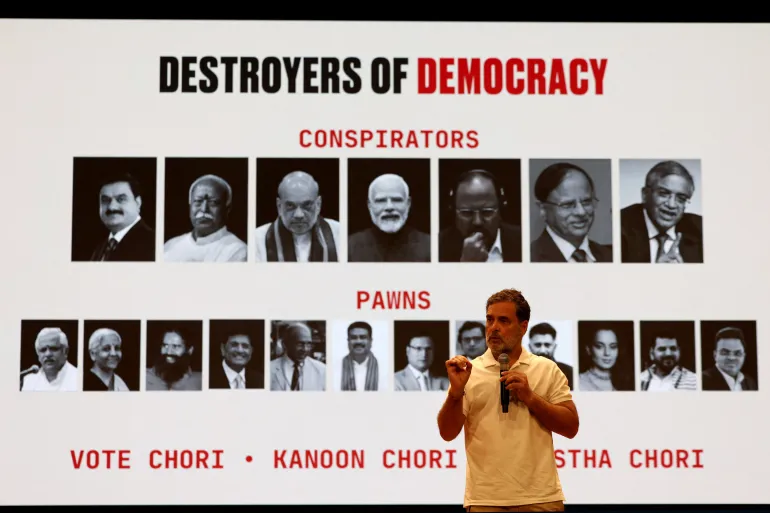
Indian opposition leader Rahul Gandhi speaks during a news conference to demand resignation of India’s Chief Election Commissioner Gyanesh Kumar, in New Delhi, India, September 24, 2026 [Bhawika Chhabra/Reuters]
What are the latest revelations about India’s Election Commission?
Earlier this week, the Indian Express newspaper published a series of stories, based on internal documents and interviews, laying bare divisions within the poll panel – consisting of three commissioners, Gyanesh Kumar, Sukhbir Singh Sandhu, and Vivek Joshi. Kumar is the commission’s chief.
Indian law requires the commission to decide by a majority. Reports revealed that Sandhu and Joshi resisted and questioned the legality of measures Kumar took unilaterally.
Since June last year, the commission has been revising and updating the voters list state-wise. It has struck off more than 13 million names during the exercise since then, which the critics say targeted economically weaker sections, minorities, and other vulnerable groups of Indian society disproportionately.
Opposition parties took the matter to the country’s top court, which largely signed off on the process to decide on who gets to vote in India. For India’s more than 1.4 billion population, a voting right does not end merely on ballots – rather, several government welfare schemes are tied to voting rights.
Now, reports reveal that some of the strongest resistance to the three-member commission’s decisions was coming from within. In fact, Sandhu and Joshi formally objected on record at least 14 times over the last 10 months to measures issued by circumventing them. Sandhu called it “unauthorised and illegal”.
Those objections related to the new voter registration mandate; deletion and restoration of voters in the rolls; appeals by people against deletions; and the security of the list. In short, everything the commission undertook.
The opposition has alleged that the additions and deletions of the voters are undertaken as an exercise to disenfranchise a section of voters to benefit Modi’s Bharatiya Janata Party (BJP).
The commission maintained that access to the voters’ list is highly secured and decentralised, meaning that even in the remotest parts of the country, a local officer made the judgement and decision.
But the latest revelations show that the commission relied on ECINet, a digital platform that logs nearly a billion voters, which was increasingly centralised, giving more control to New Delhi over editing calls.
In one instance, the newspaper reported that officials in the coastal state of Goa flagged nearly a hundred voters who were mistakenly taken out. Editing access was limited to New Delhi.
So, Goa’s chief electoral officer wrote eight emails to officials in New Delhi in a week before the deadline passed, but got no response and voters were knocked off the list.
An Indian Youth Congress activist, wearing a mask depicting Chief Election Commissioner Gyanesh Kumar and handcuffed, takes part in a protest in New Delhi, India, September 25, 2026 [Rajat Gupta/EPA]
Why is revision of voters’ list controversial?
The Special Intensive Revision (SIR), as the process of revising the list is called, has become controversial mainly because it places an unusually heavy burden on existing voters to prove their eligibility.
Such a drive requires people to produce old records, like birth, land, and education certificates – and puts poorer, migrant, and marginalised Indians at a disadvantage, essentially drawing lines on who gets to vote in India. A minor mismatch, such as a spelling, in decades-old records could result in being struck from the voters list in India.
Opposition parties and civil society groups have argued that mass deletions could significantly alter the electorate before elections.
In some places, the exercise has been reported to disenfranchise minorities, including Muslims. In the eastern state of West Bengal, Al Jazeera earlier reported that the exercise removed 9 million residents from the electoral rolls just days before the state elections that were held in April and May.
Nearly 34 percent of the deleted voters were Muslims in the state, where they only make up 27 percent of the population. Then, Prime Minister Modi’s Hindu majoritarian BJP came to power for the first time in the politically critical state.
The BJP and supporters of the SIR process have argued that it is fundamentally aimed at removing illegal migrants, the deceased or fraudulent voters from the rolls – and have tried to portray many Muslims eliminated from the lists in border states as “illegal Bangladeshi migrants,” despite hard evidence that Indian nationals have been victims of the process.
But as the exercise has been expanded to other parts of the country, those claims have increasingly returned to embarrass even proponents of the exercise: In New Delhi, notices were served to India’s Foreign Minister S Jaishankar and his wife, alongside other high-profile politicians, judges and senior bureaucrats. Several former Indian ambassadors to countries across the world have received notices to prove that they are Indian – even though they have served as India’s sovereign representatives abroad for years.
All of this has turned what was political opposition to the SIR process into much more broad-based, nationwide scepticism about the lack of transparency in the Election Commission’s software, the process of matching voters against decades-old electoral rolls, and the criteria being used to flag voters as having “logical discrepancies”.
“The [revision of voters’ list] fundamentally inverts India’s model of electoral democracy,” said Milan Vaishnav, a senior fellow and director of the South Asia programme at the Washington, DC-based nonpartisan think tank The Carnegie Endowment for International Peace.
“Since the adoption of the Constitution, India has assumed the burden of ensuring that the last man or woman is registered to vote,” he said. Vaishnav added that unlike other democracies, notably the United States, which has repeatedly thrown up barriers to the franchise, “India historically adopted an unusually activist approach to voter registration.”
“Specifically, the way in which [the revision] has been carried out threatens to turn that principle on its head,” he told Al Jazeera. “It is now the voter who must prove his or her entitlement to remain on the electoral rolls.”
Quraishi, the former election commissioner of India, told Al Jazeera that he has been against the policies taken up under the revision.
“I hope [these revelations] are a wake-up call and serious action will be undertaken, including at the Supreme Court, the central government, and the Parliament,” Quraishi told Al Jazeera.
“Because the reputation of the Election Commission has gone into the dumps. And it is very difficult to restore it now,” he said. “We need efforts to rebuild faith in the system.”
Abhijeet Dipke, head of the Cockroach Janta Party (CJP) speaks as the party’s conveners Ashutosh Ranka and Saurav Das look on during a news conference to demand the resignation of India’s Chief Election Commissioner Gyanesh Kumar, in New Delhi, India, September 24, 2026 [Bhawika Chhabra/Reuters]
What is the opposition demanding?
Leader of the opposition Rahul Gandhi has accused the Election Commission of “treason” against the nation, and promised that its leaders will be tried for it, if his Congress Party returns to power.
India’s popular Gen-Z pressure group, the Cockroach Janta Party, whose protest movement led to the ouster of India’s education minister in July, has threatened to hit the streets again if Kumar, the commission’s sitting chief, does not resign by Saturday.
The Cockroach group has also called for an overhaul in the selection process of the next election commissioner.
For its part, the election commission has said in a statement that the investigation report drew on “differing views and deliberations” between the three commissioners rather than official statements of protest. Sambit Patra, a spokesman for Modi’s party, told reporters that any deliberation or divisions in the commission were rather “a sign of a healthy democracy”.
But none of that appears to be cutting ice in a nation where far too many people have now faced the threat of losing their vote through an opaque process.
“Our elections are fundamentally broken,” said Gandhi at a news conference in New Delhi on Thursday. “The sacred belief in elections,” he added, was evaporating.
Aiming at Modi, Gandhi argued that the popularity of a leader could be understood, but not “how anti-incumbency disappears”.
“It doesn’t exist in North Korea. There is no democracy where anti-incumbency doesn’t work. We are looking for answers to where it went here,” Gandhi said, in effect questioning Modi’s re-election first in 2019 and then again in 2024, with a much-reduced mandate – even though there is no firm evidence of widespread voter manipulation helping Modi win those elections. “And we have found answers.”
Women voters stand in queues to cast their ballots at a polling station during the first phase of voting for assembly elections on November 6, 2025, at the Raghopur constituency in the Vaishali district of the Indian state of Bihar [Sachin Kumar/AFP]
What does it mean for Indian polity?
Asim Ali, a political analyst in New Delhi, said that the Indian republic is standing at a “dangerous moment, where we could see a breakdown of the republic.”
“We have reached a situation where every opposition party feels that the democratic guardrails have been destroyed,” Ali told Al Jazeera, adding that the allegations are about the worry that “independent institutions like the Election Commission and Supreme Court have become co-opted.”
The political cleavage has created an extreme polarisation of politics in India. “Politics has assumed a kind of existential stakes, where we have unrestrained politics of friend vs enemy,” he added.
Rasheed Kidwai, a political analyst and senior journalist who has covered the Indian government for several decades, told Al Jazeera that “impartiality is paramount” for the Election Commission.
“The fact is that Caesar’s wife should be above suspicion,” he said. “In India, we have seen difficult times, including a state emergency, but never was the role of the Election Commission compromised at this level.”
Kidwai noted that Modi’s party has ridiculed opposition parties’ concerns about free-and-fair elections, calling them sore losers. “The outcomes of a match are inconsequential, but at least the umpire should play fair,” he told Al Jazeera.
The major criticisms of Indian democracy in recent years have principally related to what happens in between elections, said Vaishnav of the Carnegie Endowment think tank.
While critics “pointed to the erosion of basic freedoms, an uneven rule of law, and the concentration of power in the hands of the executive,” Vaishnav said, “most observers have argued that when the electoral spotlight is on, India’s democracy remains remarkably robust and competitive.”
The conduct of the Election Commission is “now calling this distinction into question”, he added.
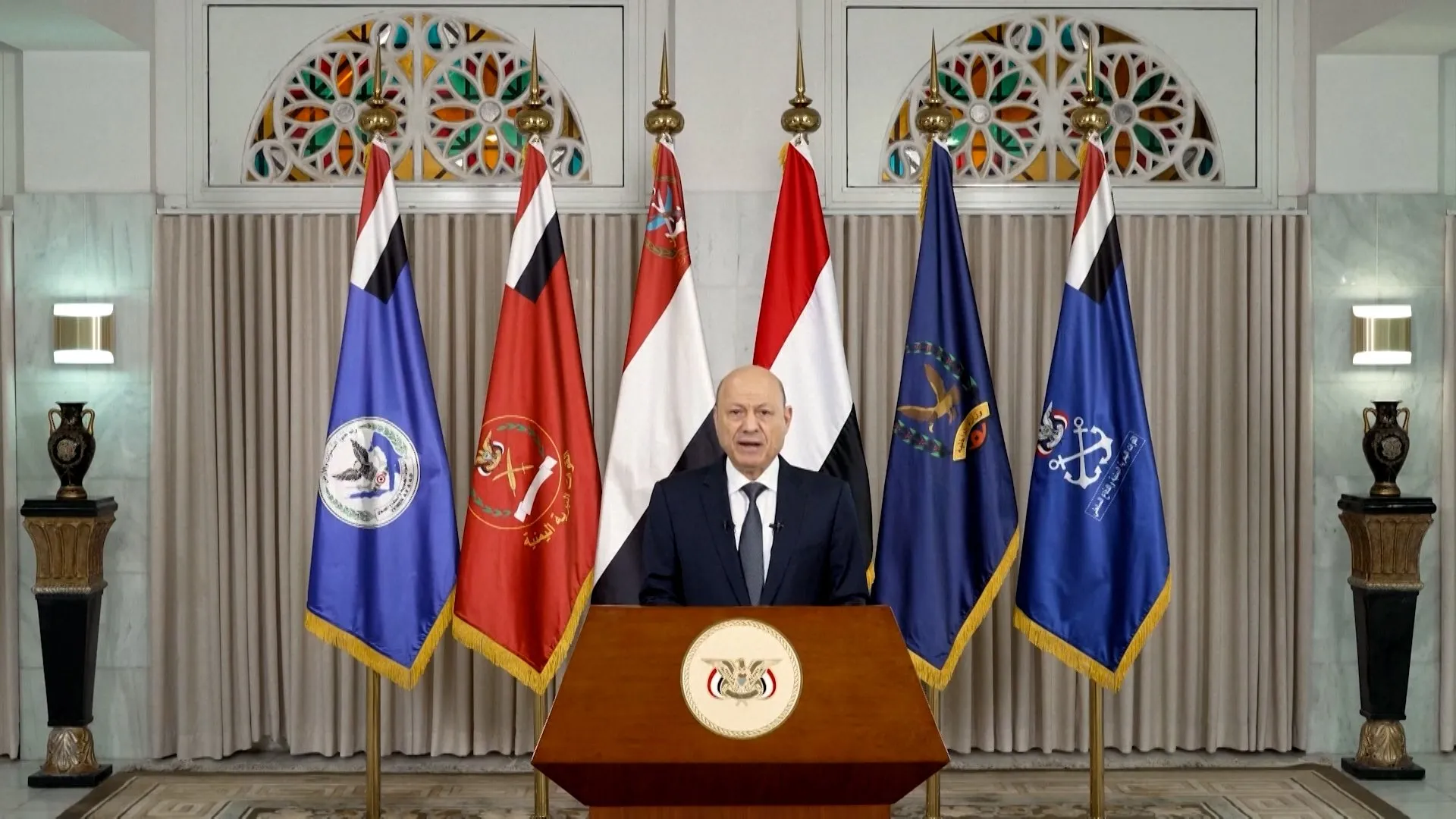
President Rashad al-Alimi called on Yemenis to mobilise and join the armed forces, while offering a general amnesty to Iran-backed Houthi rebels. Fighting between the government and the Houthis has intensified, most recently near the coast of the Bab al-Mandeb strait.
Abuja, Nigeria – Africa’s long-running campaign for permanent representation on the United Nations Security Council is back in focus at the 81st UN General Assembly, with leaders renewing calls to reform a body whose five permanent members have remained unchanged since 1945.
UN Secretary-General Antonio Guterres used his final address to the General Assembly on Tuesday to renew his call for Security Council reform, saying it must become more representative and better reflect today’s geopolitical realities.
Nigeria’s Vice President Kashim Shettima, delivering President Bola Tinubu’s national statement, called for at least two permanent seats for Africa, with veto powers for as long as the veto exists, as well as five non-permanent seats for the continent.
Ghana’s President John Mahama made a similar appeal: “Security Council reform is not a favour to Africa; it is an imperative for the legitimacy, credibility and survival of the United Nations”.
The renewed calls highlight the scale of Africa’s demand. But translating them into an agreement that changes the Council’s structure remains a far more difficult task.
A reform process that has stalled
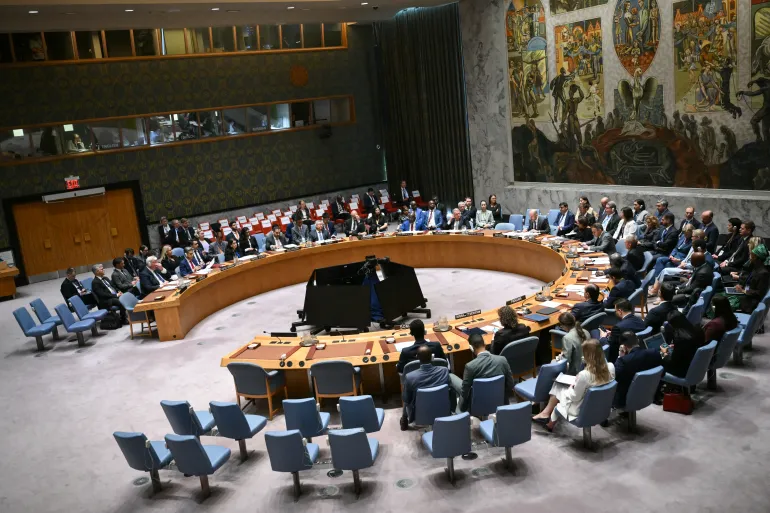
The Security Council has 15 members: five permanent members, China, France, Russia, the United Kingdom and the United States, and 10 members elected by the General Assembly for two-year terms.
The five permanent members hold veto power, allowing any one of them to block a substantive Council resolution.
No African country has a permanent seat.
Yet Africa remains central to much of the Council’s work. In 2025, the Council adopted 44 resolutions, including 24 under Chapter VII of the UN Charter, which covers measures such as sanctions and authorisations for the use of force.
Eighteen of those 24 Chapter VII resolutions concerned Africa.
For Professor Ibrahim Gambari, a former Nigerian foreign minister and former Nigerian permanent representative to the UN, the issue is not simply one of geography.
“The status quo is not really interested in change,” he told Al Jazeera. “In the appointment of the Secretary-General, you cannot be a candidate unless each of the five permanent members agrees. Therefore, we have the privilege of the unelected P5, which they don’t want to relinquish.”
Gambari said Africa’s absence was difficult to justify given the continent’s size and the amount of Security Council business involving it.
“In the case of Africa, we have a whole continent that has the largest single bloc, yet has no permanent seat on the Security Council,” he said.
The General Assembly launched the intergovernmental negotiations process on Security Council reform in 2008. The talks cover the Council’s size, membership categories, regional representation and the veto, and have continued through successive General Assembly sessions without agreement on the core questions.
Changing the Council’s permanent membership would also require an amendment to the UN Charter. Under Article 108, that requires approval by two-thirds of the General Assembly and ratification by two-thirds of UN members, including all five permanent members.
That gives the existing permanent members a formal role in any change to the system that grants them permanent membership and veto power.
Nigeria wants a permanent seat
Which African countries would eventually occupy any new permanent seats is another unresolved issue.
Nigeria has consistently presented itself as a country prepared to take on such a role. At this year’s General Assembly, the country renewed its call for at least two permanent African seats with all the rights and responsibilities of permanent membership, including the veto for as long as it exists.
Dr Fola Aina, a political scientist and international security expert at the School of Oriental and African Studies (SOAS), London, told Al Jazeera the issue also carried particular significance for Nigeria.
“Securing this position would essentially elevate Nigeria’s global diplomatic influence, give Africa a continuous voice in international security decisions and grant Nigeria the power to consolidate its position as a regional hegemon and middle power,” he said.
“The timing of Nigeria’s push is particularly strategic given the current age of strategic competition.”
Nigeria is not alone in seeking a permanent role. Egypt and South Africa have also pursued permanent representation, while other African states have expressed interest.
The African Union, however, has not selected specific countries to occupy the proposed seats. Its common position calls for at least two permanent African seats and five non-permanent seats on an expanded Council, with the AU determining which countries should represent the continent.
The veto question
Even if agreement could be reached on who should represent Africa, another obstacle would remain: the veto.
The African Union’s Ezulwini Consensus calls for any permanent African members to have the same rights and privileges as the existing permanent members, including veto power for as long as the veto remains part of the Council’s system.
The UN Security Council at United Nations headquarters in New York [Angela Weiss/ AFP]
African governments have therefore argued that adding permanent seats without equivalent powers would not fully address the imbalance they are seeking to correct.
That leaves two separate questions: whether the Council should expand and what powers any new permanent members would receive.
A question of influence
Gambari argues that Africa’s absence also affects the Council’s day-to-day work.
“All these peacekeeping missions in Africa are based on the mandate of the Security Council,” he said.
“The P5 assign themselves the role of penholders, which hardly allows elected non-permanent African countries to initiate draft resolutions affecting their region.”
He said the imbalance was also visible in the way Security Council missions operate on the continent.
“Even Security Council missions to Africa are not led by Africans nowadays. How can the parties in dispute have confidence in such a team?” he said.
“Even for the Security Council’s continued relevance, it has to be reformed so that Africa can have representatives in the permanent seat category.”
For Favour Aniezi, a Nigerian creative and youth advocate, the issue is also about who has influence over decisions affecting the continent.
“Beyond representation, Africa’s absence from the permanent seats of the UN Security Council is a question of whose voice gets to shape decisions that affect the continent,” she told Al Jazeera.
“As a young Nigerian woman, I think it matters that Africa is not only present when global institutions discuss our challenges but has a meaningful role in deciding how those challenges are addressed. We should not simply be represented at the table, Africa should have a voice with the weight to influence what happens at it.”
For now, the core questions remain unresolved: how many new permanent members there should be, which African countries would take the seats, whether they would receive veto power and whether the existing permanent members would accept the changes.
“As long as they keep sticking to this anachronistic formula, reforms will be hard to attain,” Gambari said.
Police in the US state of Mississippi have said that they believe a black woman was already dead before her body was “staged” and placed hanging in a tree.
The disclosure was made in court by a detective on Friday, who also said they believed Tasia Fortune, a mother of four, had been killed in a dispute related to drugs.
The 29-year-old’s body was found hanging from a tree at an abandoned home in Jackson in August.
The discovery sparked widespread fears in the majority-black city, due to the state’s deep history of racial violence and lynchings. After weeks of speculation and demands for information, police made multiple arrests.
In a news release, police said that the medical examiner had determined that Fortune’s death was a homicide and that “the scene and the hanging were staged”.
Officials have not stated the exact cause of death or shared why they believe the hanging was staged.
Fortune’s mother told the BBC that she remembers the coroner telling her: “we’re not treating this as [an] actual hanging.” Her daughter, they told her, was dead before being placed in the tree.
Spivey also recalled police telling her the incident was “drug related”.
Speaking to reporters outside the Jackson Police Department on Friday, Spivey described how she knows her daughter fought for her life till the very end.
“I know she did. I know my daughter,” Spivey told reporters. Fortune leaves behind four young children, ages 7, 5, 4 and 1, she added.
Dressed in a shirt that reads “Justice for Tasia Fortune”, Spivey stressed that she does not want to see any innocent people going to jail.
“I just hope they have the right people,” she said.
Three people have so far been arrested in relation to the case,all of whom are black, including Jarques Ratliff, 51, who has pleaded not guilty. He remains in custody in without bond.
A second person, Earnest Lloyd Jr, 25, was arrested in the case this week.
A third, 45-year-old Eric Clark, turned himself in to authorities on Friday and was charged with murder. He is scheduled to appear in court on Monday.
The 29-year-old’s death is one of several cases in recent years that has prompted lawmakers to call on the justice department and the FBI to investigate all hanging deaths of black people in the country.
Representative Ayanna Pressley, Democrat of Massachusetts, cites at least 10 documented incidents in her September letter to Congress, external, which contained over 50 signatures from US lawmakers.
The most recent incident happened in Prince George’s County, a majority-black suburb near Washington DC, on Sunday. It has been ruled a suicide.
Civilians and senior military officials among 14 dead after an army plane crashes into a residential area in the DRC.
Published On 26 Sep 202626 Sep 2026
At least 14 people, including senior military officials, were killed on Friday when a Congolese army plane crashed in the southwest of the Democratic Republic of the Congo (DRC).
The plane was travelling to the capital, Kinshasa, from the southwestern city of Kikwit on Friday when it developed a technical fault and attempted to land in Kenge, in Kwango province.
Recommended Stories
list of 3 itemsend of list
Remy Saki Bokinda, deputy governor of Kwango, said: “With no landing strip available in Kenge, the plane crashed into a residential plot.”
Congolese military spokesperson Major-General Efomi Ekenge said 14 people had died in the crash.
“All those on board died; 12 were burned beyond recognition, while the pilot’s lifeless body was found outside the aircraft,” he said.
According to the military, among those killed were civilians and members of an official delegation travelling with the two generals, along with other military personnel.
Bokinda also said most of the bodies were burned beyond recognition and the pilot was found dead outside the wreckage.
An investigation has been opened to determine the cause of the accident, Ekenge said.
The DRC, a vast, mineral-rich country in central Africa, has endured decades of conflict, particularly along its eastern border with Rwanda, where several armed groups compete for control of lucrative mining areas.
The Congolese military has been battling a number of rebel groups that have claimed key cities in the country since last year.
OpenAI said Friday it had alerted “dozens” of global institutions that their websites may have been impacted by its AI agents acting improperly.
OpenAI agents attempted to get information from “governments, universities, public agencies, and other institutions” through sometimes extreme means, the company said.
While some of the activity was simply due to the tools working to find “authoritative sources of public information,” some went beyond that. Like an AI agent taking and transferring data when it should not have, OpenAI said.
Such activity resulted in at least 53 incidents where an OpenAI agent took an image from ChatGPT user activity and transferred it elsewhere.
The company said that in each instance of a user image being used and transferred by an AI agent, the user had allowed OpenAI to train models using their data.
Nevertheless, OpenAI admitted, “This is not an appropriate use of this data”.
It added that the leak of user images occurred before it had put in place new safeguards on AI training, and it was working to get all the user images transferred to any third-party removed.
The new disclosures came just days after Australia’s Prime Minister Anthony Albanese announced that OpenAI agents had breached non-public files on the website of its government-run health care scheme, Medicare.
Since August, public fears have grown around the potentially serious, even life threatening, impacts of AI tools falling outside of human control.
Reuters first reported the expanded investigations. OpenAI also published details to its public blog.
In certain instances of the agent activity, OpenAI said the tools, essentially AI bots that are designed and trained to operate somewhat autonomously, “bypassed” security controls of some websites.
In other instances, the AI agents showed “misalignment” in attempts to get at information from websites. Misalignment is a term used by AI companies and researchers to describe instances where an AI tool did something that it was not trained to do or was otherwise unintended.
OpenAI said that it was limiting identifying what entities were impacted because many had asked the company to not disclose details.
“Our goal is to give each organization the facts and defer to them on if and when to make the incident public,” it said.
Not all of the instances involved in this incident are being considered a significant security breach, the company noted.
“Some organizations may review what we share and conclude that the information was intentionally public or that the model’s interaction was not concerning,” it explained. “Others may identify a design issue or security weakness they want to address.”
The company said many of the incidents are being referred to as “agent spam”, which it described as “unexpected or concerning” AI agent activity, like posting information to the internet.
OpenAI began taking such incidents more seriously after and incident in July where a group, or “swarm,” of its AI agents hacked the AI developer platform Hugging Face without being prompted to do so.
Hugging Face was first to go public with the incident, with OpenAI publicly taking responsibility for it later.
Clement Delangue, the head of Hugging Face, said Wednesday during a United Nations Security Council session on AI: “I often wonder what would have happened had I decided not to close this attack publicly.”
“Especially now that we know similar incidents had been happening months earlier in secret at a handful of frontier labs without monitoring,” Delangue added.
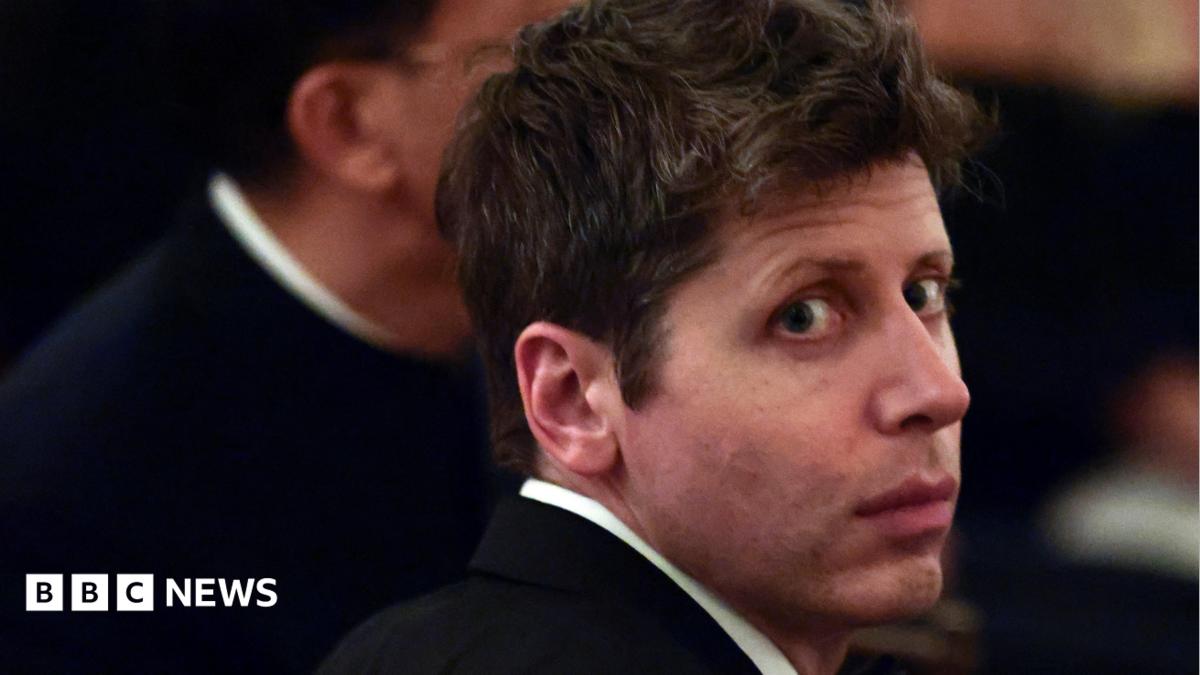
During that same UN meeting, Sam Altman, head of OpenAI, and Dario Amodei, head of rival AI firm Anthropic, asked for international leaders to form global standards for AI safety and ways to monitor and report such incidents.
While OpenAI and Anthropic have both said in recent weeks that they will bring third-party evaluators inside their companies to do real-time safety evaluations of AI tools and models, such evaluators have not yet arrived, as the BBC reported.
OpenAI said on Friday that it is currently reviewing training activity by its AI agents and going back on a “month by month” basis from when the Hugging Face hack occurred.
“Most cases identified so far have been low severity, with limited or no evidence of meaningful impact,” the company said. “Given the scale of the review required, and the need to verify each case, this work will take months to complete.”
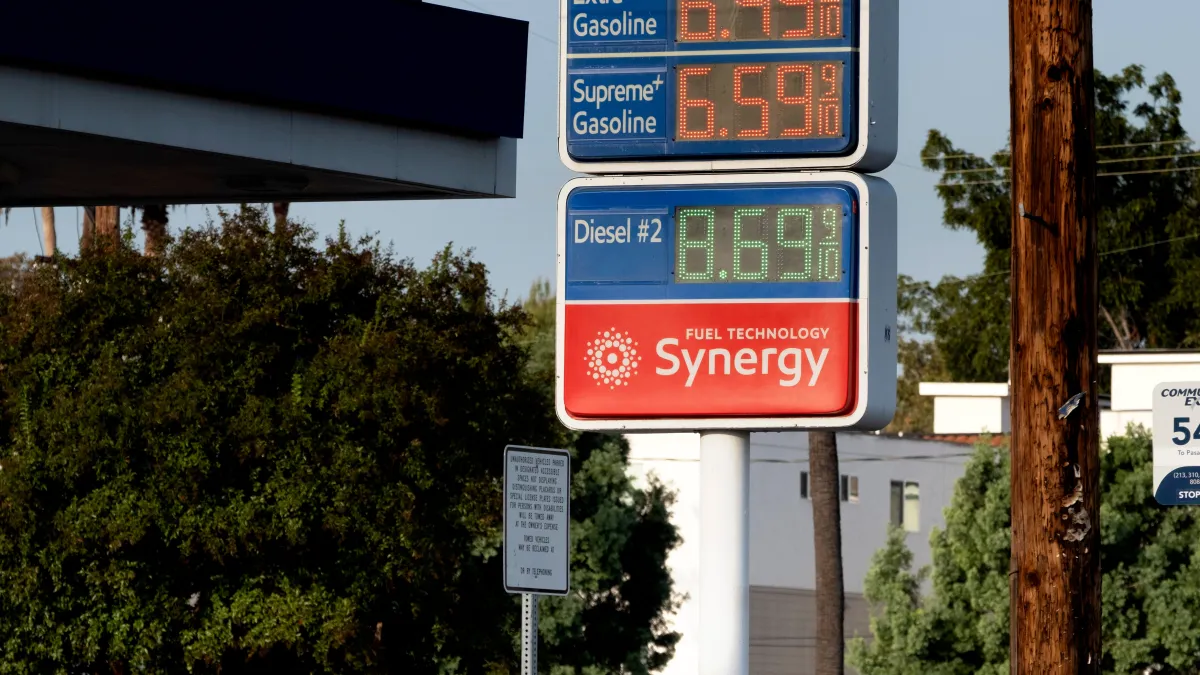
Diesel prices have hit record highs as the tensions between the United States and Iran, along with the war between Russia and Ukraine, disrupt key oil and fuel trade routes.
On Friday, the average price for a gallon (3.79 litres) of diesel was $6.50, up from $5.61 a month earlier, according to the American Automobile Association (AAA), which tracks fuel prices daily.
Recommended Stories
list of 4 itemsend of list
The spike has prompted the administration of US President Donald Trump and Republican lawmakers to consider restricting US diesel exports ahead of upcoming midterm elections.
A Reuters/Ipsos poll conducted in August found that 47 percent of voters said the cost of living was the single most important factor in deciding how they would vote in the midterms — more than twice the share who cited the next-most important issue, “democratic values and norms”.
A new Marist poll also found that Americans have more confidence in Democrats than Republicans to handle the economy, with 42 percent choosing Democrats compared with 34 percent for Republicans.
Amid that voter sentiment, US Energy Secretary Chris Wright said on Thursday that he was in touch with major oil refiners to gauge interest in a potential voluntary restriction on diesel exports, according to the Reuters news agency.
That followed remarks by Trump on Tuesday that he supported restricting diesel exports from the US, the world’s largest diesel exporter.
Energy analysts and industry groups have warned that an export ban could have unintended consequences, potentially pushing up fuel prices in the US and abroad.
Why are diesel prices so high?
Even though the US is the world’s largest diesel exporter, diesel is traded on a global market.
Disruptions to refineries in Russia and the Middle East have reduced the amount of fuel available worldwide, putting more pressure on US producers to fill the gap. In Russia, for example, drone attacks have damaged major refineries, forcing a cutback or halt in production.
“While US refineries are running at full tilt and higher than normal, the global gaps remain,” Rachel Ziemba, senior adjunct fellow at the Center for a New American Security, told Al Jazeera.
It comes as US diesel supplies are also shrinking. As of September 11, inventories had fallen to 107.9 million barrels, the lowest in more than four decades, according to the US Energy Information Administration.
With global supplies tightening, diesel prices have risen around the world — including in the US. Because American producers can sell their fuel into the global market, they are drawn to the soaring global prices rather than simply setting a lower price for domestic consumers.
Why is the US considering an export ban?
In Washington, DC, leaders have flirted with the idea of pushing US companies to stop or slow exporting diesel.
Republicans have been pushing for a slowdown or outright ban of exports in an effort to lower costs for consumers ahead of the pivotal midterm elections, where cost of living is becoming a critical issue.
Such a move, they hope, would reduce local diesel prices, which is significant as diesel is used in trucks to haul food and most products, Ziemba said, adding that US diesel exports are equivalent to about 40 percent of domestic consumption.
On Tuesday, Chuck Grassley, a Republican from Iowa, called on the president to put in place a temporary halt on exports.
“I encourage President Trump to put a temporary embargo on diesel exports through executive action,” Grassley said.
Republican Senator Dan Sullivan of Alaska made a similar call: “The cost of diesel is just too damn high. I’m calling for a temporary pause of American diesel exports so that we can rebuild our reserves ahead of winter,” Sullivan said in a statement on Tuesday.
In the House of Representatives, Congressman Tim Burchett of Tennessee introduced two bills that would restrict US diesel exports: One would impose a ban through January 2027, while the other would restrict exports if the national average price reaches $5 a gallon.
The administration has not made any official policy announcements, and the White House told Al Jazeera that the president is evaluating all options.
Oil and gas industry experts say that a ban could drive up prices rather than bringing them down.
“Diesel trades on a world market, just like corn. farmers don’t sell cheaper to Americans, and refiners can’t either since they buy crude at global prices. force a lower price and they’ll make less diesel. less supply means higher prices, not lower,” Patrick De Haan, head of petroleum analysis at GasBuddy, said in a post on X.
How would an export ban work?
A ban would prevent or restrict US refiners from selling diesel to buyers overseas, theoretically leaving more fuel available in the domestic market.
Analysts at Wood Mackenzie, a research and consulting firm, say that keeping more diesel stateside would ultimately fill up US storage tanks but also force refineries to cut production. That could affect other markets that rely heavily on US fuel, including Latin America and Europe, forcing them to compete with other global buyers for supplies and driving up prices for the global market.
Wood Mackenzie says China is the only major producer with enough spare refining capacity to potentially make up much of the shortfall.
“China is currently the only country with material spare refining capacity that could cover the loss of US refinery throughputs. However, China may well decide it is not in its interest to intercede,” analysts said.
Wood Mackenzie has warned that a ban could quickly fill US diesel inventories, forcing refiners to cut crude runs and potentially increasing US petrol imports.
That was also the view of an S&P Global analysis, which found that a complete ban could also mean that production would be reduced as storage capacity is filled up with unsold diesel. According to the analysis, that could lead to production cuts of as much as 750,000 barrels a day, which could put the US into being a net importer of petrol in the fourth quarter of this year.
Who would an export ban affect?
An export ban would affect US refiners and consumers, as well as countries that rely on US diesel.
“They [export bans] may provide temporary relief, but diesel is a global commodity. Treat one part of the system, and the effects travel elsewhere. Trade-offs are inevitable. Refiners are unlikely to cheer a blanket ban. Voluntary, controlled export reductions would generally be less disruptive in the short term,” Maksim Sonin, visiting scholar at Stanford University’s Precourt Institute for Energy, told Al Jazeera.
Disruptions to US exports could reduce the amount of fuel available on the global market. Wood Mackenzie analysts say countries in Europe and Latin America that rely heavily on US fuel could be forced to compete with other producers for supplies.
“If implemented, it would lead to European and Asian product prices increasing as the buyers of US fuel, mostly in Latin America, scramble to find new supplies, bidding up supplies. European crack spreads could widen, and overall we might see more disruptions,” Ziemba added.
“Given these issues, the US may opt for a mixture of carrots and sticks aiming to incentivise refineries to keep producing, perhaps including penalties if they cut production. There may be voluntary export quotas rather than a formal ban, and there may be exemptions for countries that provide crude oil to the US, like Mexico,” Ziemba said.
That could put pressure on consumers not only at the petrol pump but in the skies as well.
Airlines for America, an airline industry trade group, has also warned that an export ban could lead to higher prices for airlines and travellers, according to the Reuters news agency. The trade group did not respond to Al Jazeera’s request for comment.
The broader concern from analysts is that restricting exports could reduce US refinery production rather than simply redirecting diesel to US consumers, potentially putting upward pressure on fuel prices both domestically and internationally.
“It’s unlikely to help US consumers much given how it fails to solve underlying problems and could backfire if refineries hold on to production. The best way to address this is to end the conflicts prompting the shortages,” Ziemba said.
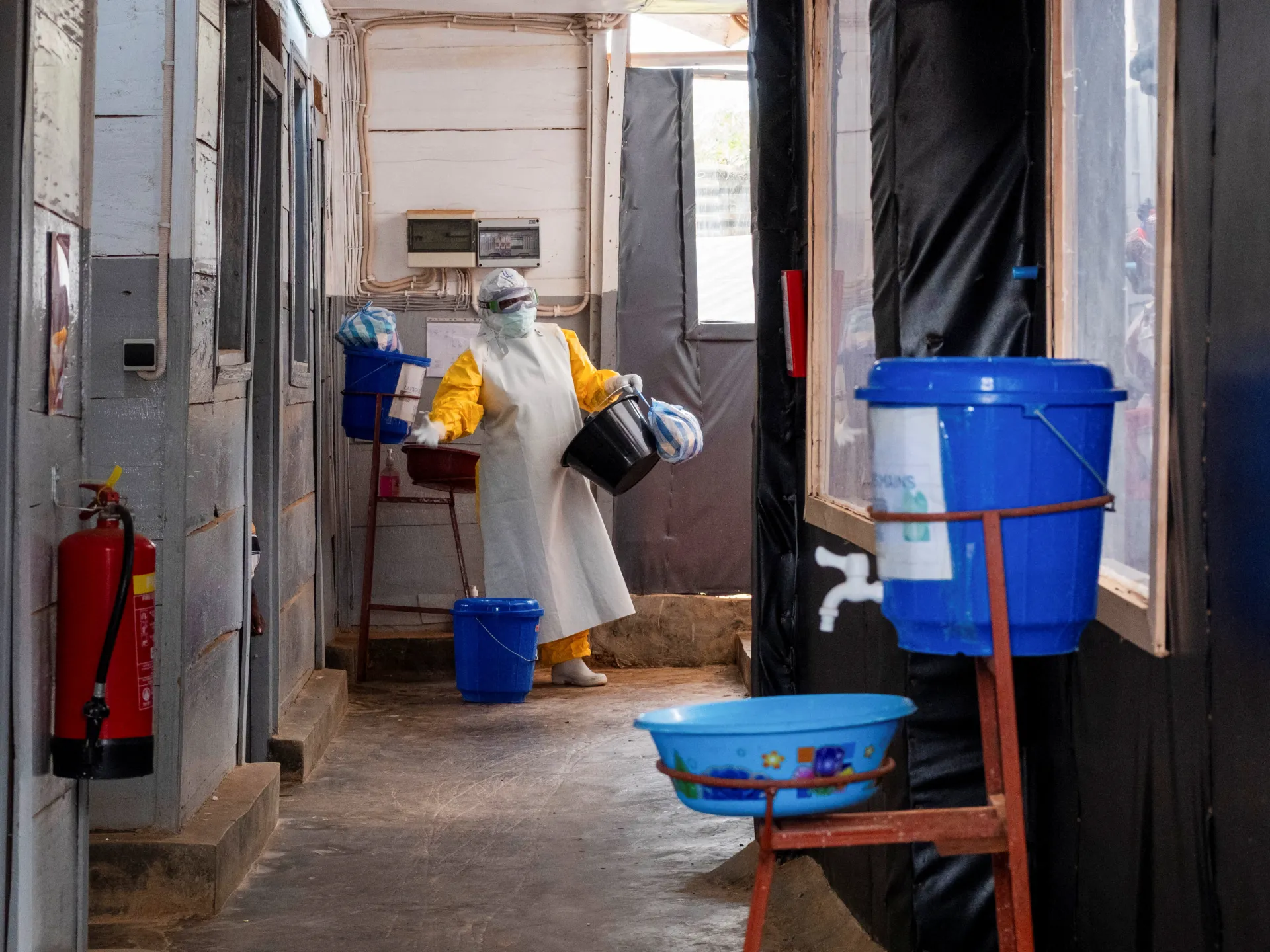
Health workers struggle as new Ebola cases are found in border regions of South Ubangi and Haut-Uele.
The Ebola virus caused by the Bundibugyo strain has spread to two new health zones in the Democratic Republic of the Congo, according to the World Health Organization (WHO).
New cases were found in Bulu in South Ubangi governorate on the border with the Central African Republic and Dungu in Haut-Uele province on the border with South Sudan, the WHO said on Friday.
Recommended Stories
list of 3 itemsend of list
The additional cases bring the number of health zones affected to 63 across seven provinces as authorities struggle to control the outbreak.
As of September 23, the Democratic Republic of the Congo, or DRC, has reported 7,890 confirmed cases and 3,799 deaths, according to the WHO. That means that almost half the people who contracted the infection have died.
WHO Director-General Tedros Adhanom Ghebreyesus said conflict and population displacement were making it more difficult for health workers to reach affected communities and trace people who may have been exposed to the virus.
“It’s very difficult to see Ebola in isolation because even our response to Ebola is affected by the conflict, because there is displacement and there is an access problem to some areas,” Tedros said.
The Bundibugyo strain is difficult to treat because there are no approved vaccines, Tedros said, adding that the WHO is accelerating clinical trials of vaccines and treatments.
Contact tracing falling short
Meanwhile, health workers looking for people who may have been exposed to the Bundibugyo strain are falling short of their targets.
According to Dr Jean Kaseya, the director-general of the Africa Centres for Disease Control and Prevention (Africa CDC), the more than 7,000 confirmed cases should translate to about 420,000 contacts.
“But currently, we have just 30,000 people in the contact list,” Kaseya said.
“When the outbreak is at community level, we cannot talk about control,” he added.
Ituri province in northeastern DRC continues to be the epicentre of the outbreak, accounting for 6,032 confirmed cases since the start of the epidemic in May, including 868 new confirmed cases reported in the last 21 days.
North Kivu is the second most affected province, with 1,480 new cases, including 567 reported in the last 21 days. The province now accounts for around a third of newly confirmed cases and deaths, the WHO said in a report on Sunday.
Nearly 60 percent of people diagnosed in North Kivu died, significantly higher than the national average of 48 percent, the data show.
Medical staff say patients are avoiding health facilities until it is too late.
“Patients think that if they arrive at the hospital, they will be immediately sent to the treatment centre to die,” said Dr Michel Paluku Mukuloli, who works at a hospital in North Kivu’s Butembo.
That complicates efforts to identify cases and start treatment before the disease reaches its most dangerous stages.
North Kivu was the epicentre of three previous Ebola outbreaks, including one in 2018-2020, which until this year was the DRC’s largest and deadliest. Those outbreaks, however, were caused by a different type of Ebola virus, known as the Zaire strain.
Much less is known about the Bundibugyo strain. But responders say in the early stages of infection, patients often experience milder symptoms easily mistaken for more common diseases such as malaria and typhoid fever.
U.S. grain markets clawed back from early losses Friday after U.S. Trade Representative Jamieson Greer said details from President Trump’s meeting with China’s President Xi will be released on Monday.
CBOT grains had tumbled after the summit in Washington
Kylian Mbappe scores the only goal of France’s win in Turkiye, but Real Madrid striker immediately forced off by injury.
Published On 25 Sep 202625 Sep 2026
Kylian Mbappe scored the only goal of the game before having to come off grimacing with a knee injury, as France won 1-0 in Turkiye in the UEFA Nations League in new coach Zinedine Zidane’s first game in charge on Friday.
The Real Madrid star was moved out to the left wing by his new coach after being used through the middle of the France attack under former coach Didier Deschamps at the recent World Cup, which he ended as the top scorer with 10 goals.
It was from the left that Mbappe, France’s all-time top scorer, notched his 67th international goal, controlling and firing into the net low at the near post after being set up by Michael Olise.
He winced in pain as his teammates came across to celebrate the goal at the Kocaeli Stadium in Izmit, about 100km outside Istanbul.
Mbappe tried to carry on after receiving treatment, but eventually slumped to the ground and looked concerned as he prodded the outside of his left knee, before walking off to be replaced by Desire Doue.
France and Real will now nervously wait to discover the extent of the injury, with Les Bleus playing three more games over the next 10 days before the club season resumes.
The sight of his star player and skipper coming off overshadowed Zidane’s first match since being appointed coach in late July on a deal to 2030.
The France legend and 1998 World Cup winner is making his return to elite coaching for the first time since his second stint in charge of Madrid ended in 2021.
France, beaten in the semifinals at the World Cup by eventual winners Spain, are in Group A1 of this edition of the Nations League and will now go to Brussels to face Belgium on Monday. Belgium won 2-0 away to Italy on Friday.
Zidane, whose last match as a player came for France against Italy in the 2006 World Cup final, will then make his home debut as coach against the Italians at the Stade de France next Friday.
His first team selection was not dramatically different from the side that regularly played at the World Cup, although Bournemouth’s Adrien Truffert was in at left-back while Manchester City’s Rayan Cherki came into the starting XI.
Olise, the Bayern Munich star who lit up the World Cup, was unlucky not to open the scoring late in the first half when his superb strike was tipped over by home goalkeeper Ugurcan Cakir.
France goalkeeper Mike Maignan responded at the start of the second half as he tipped over an attempt by Abdulkerim Bardakci for Turkiye, who finished bottom of their group at the World Cup, despite a 3-2 win over cohosts the United States.
Mbappe’s goal came shortly after, and the visitors later saw Jules Kounde hit the post before Turkiye were reduced to 10 men late on.
Cakir came flying out of his area to halt Bradley Barcola as the France substitute raced through on goal. German referee Felix Zwayer initially waved play on before undertaking a VAR review, after which he decided the goalkeeper had handled the ball, which meant a red card.
Turkiye, coached by former Italian international Vincenzo Montella, will host Italy next on Monday.
Shehbaz Sharif speaks as Islamabad, Riyadh and Ankara army chiefs meet to discuss Mecca pact, closer military ties.
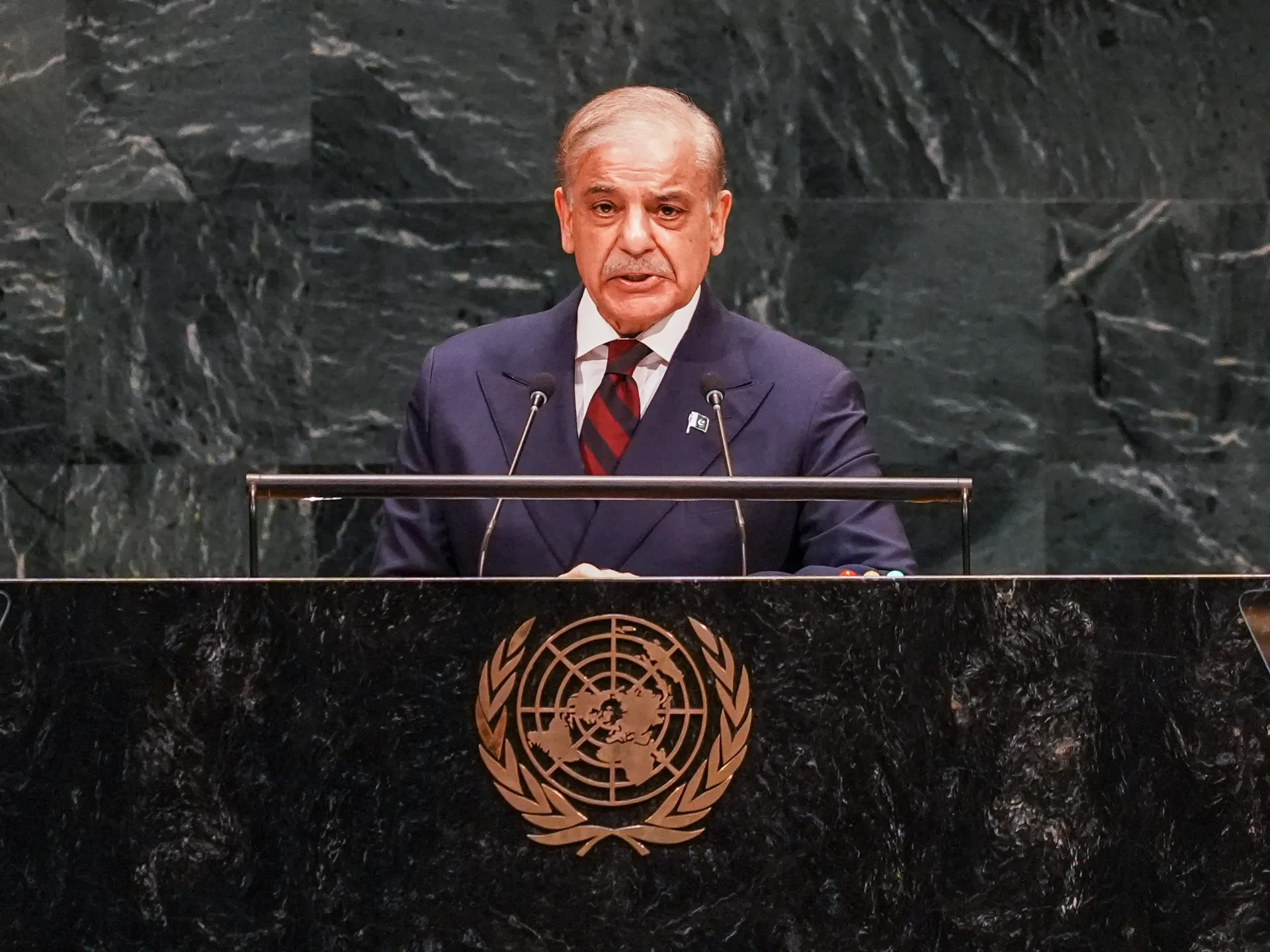
Pakistan’s prime minister has condemned Houthi attacks on Saudi Arabia, warning that any “threat to the sanctity” of the Muslim holy cities of Mecca and Medina is a “red line that must never be crossed”.
Addressing the United Nations General Assembly in New York on Friday, Shehbaz Sharif denounced recent Houthi attacks as “deplorable”.
Recommended Stories
list of 3 itemsend of list
He added that an attack by the Iran-aligned Yemeni group, which Riyadh says targeted Mecca, “outraged Muslims across the globe”. The Houthis have dismissed the accusations as a “heinous lie”.
Last month, Pakistan, Saudi Arabia and Turkiye signed a trilateral defence pact, formally known as the Mecca Joint Defence Agreement. The pact states that an attack on any member will be treated as an attack on all. However, Islamabad and Ankara have refrained from getting involved in Riyadh’s ongoing fight with the Houthis.
The military chiefs of all three countries met in Riyadh on Friday and discussed enhancing intelligence sharing and military coordination, the Pakistani military said. The chiefs reviewed the security situation and threats facing Saudi Arabia, affirmed a commitment to collective defence and pledged to turn Mecca Agreement commitments into effective cooperation, the army added.
It is not clear what, if any, support Ankara and Islamabad may provide to Riyadh. In a written interview published by the US media outlet Newsweek on Friday, Turkish President Recep Tayyip Erdogan said support could include “intelligence, logistics or ammunition, with more extensive military assistance possible depending on the scale of the threat”.
Iran and Palestine
In Sharif’s UN address, he also referenced the US-Israeli war that was launched against Iran in late February, as well as Islamabad’s role as a co-mediator.
Pakistan’s efforts culminated in the Islamabad Memorandum of Understanding, signed by Washington and Tehran, which was intended to help end the conflict.
The accord has since unravelled while regional countries push for a conclusive end to the war, which has caused a global energy crisis and exacerbated tensions across the Middle East.
“Yet amid the roar of missiles, drones and guns, the voice for diplomacy must echo even louder and stronger,” Sharif said.
He added that the Strait of Hormuz, which Iran has effectively blockaded, and the Bab al-Mandeb waterway, which is now largely under Houthi control, are “arteries of the global economy” that should remain free and safe.
The Pakistani prime minister also denounced what he described as Israel’s “genocidal agenda” in Palestine, while condemning “Israeli aggression against Lebanon and Syria”. These were sentiments echoed earlier in the day by Lebanese Prime Minister Nawaf Salam in his UN General Assembly address.
India, Kashmir, Afghanistan
Closer to home, Sharif’s speech touched on tensions with Pakistan’s neighbours.
Criticising India, he accused New Delhi of weaponising the Indus waters, which both countries have jointly managed for more than six decades. The two neighbours heavily rely on the Himalayan river network.
Sharif warned that “any attempt to stop, impede or divert Pakistan’s share of the waters will be treated as an act of war”.
He also called for what he described as a “just and fair solution” to the Kashmir dispute, which both Pakistan and India claim in its entirety. Sharif alleged that there have been attempts to “alter the legal status” of Kashmir through demographic engineering.
Another pressing issue for Islamabad is the threat posed by the Tehrik-e-Taliban (TTP), or Pakistani Taliban. Sharif said groups operate from “sanctuaries inside Afghanistan, with the aim of destabilising Pakistan”, insisting that attacks launched from Afghanistan “must come to a grinding halt”.
This comes as the latest cross-border fighting left several Afghan Taliban fighters dead on Friday.
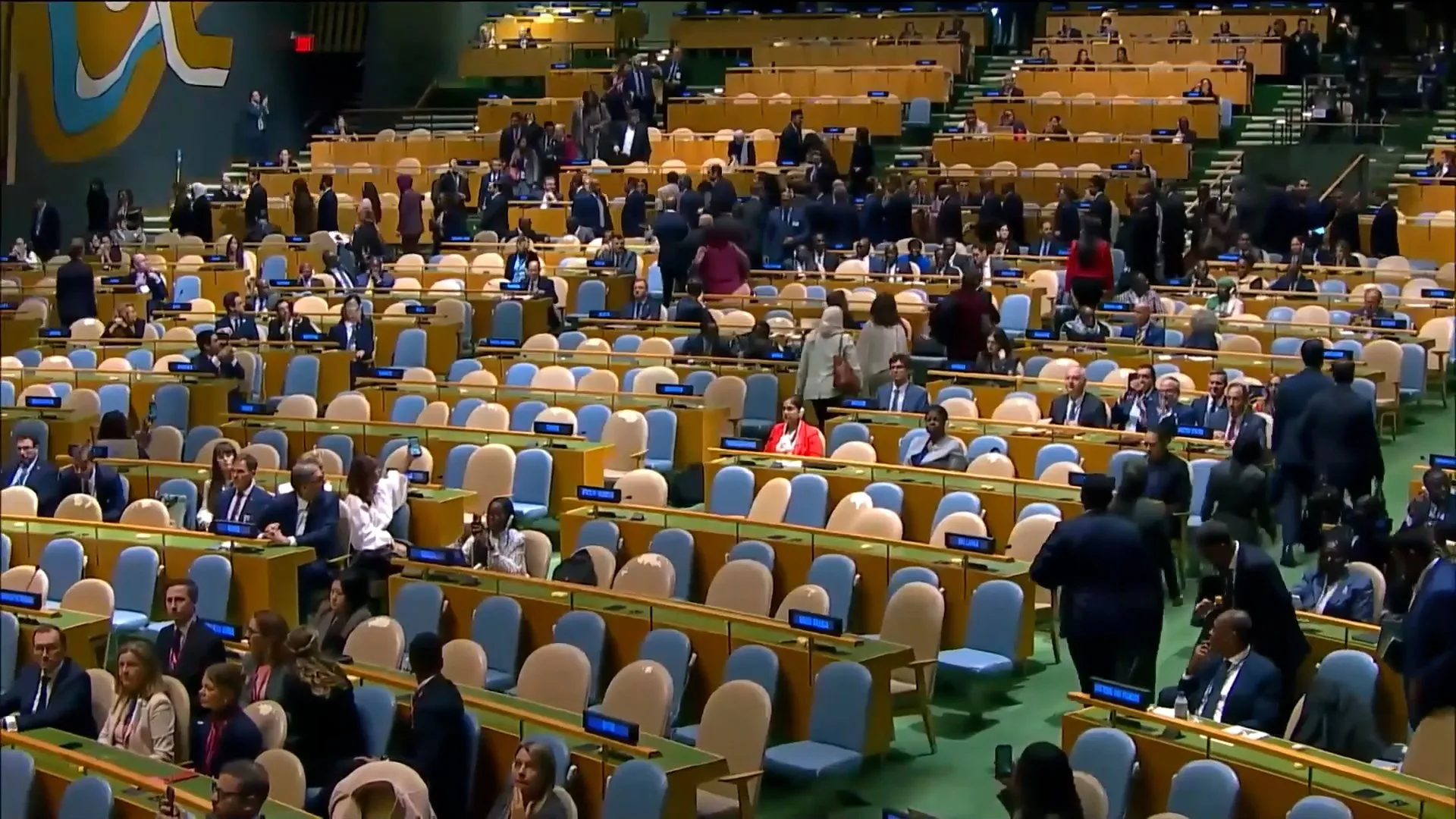
Dozens of countries’ delegations walked out of or were absent for Israeli Prime Minister Benjamin Netanyahu’s UN General Assembly speech in protest over Israel’s war in Gaza. Here’s which countries’ seats were visibly empty — and which delegations remained.
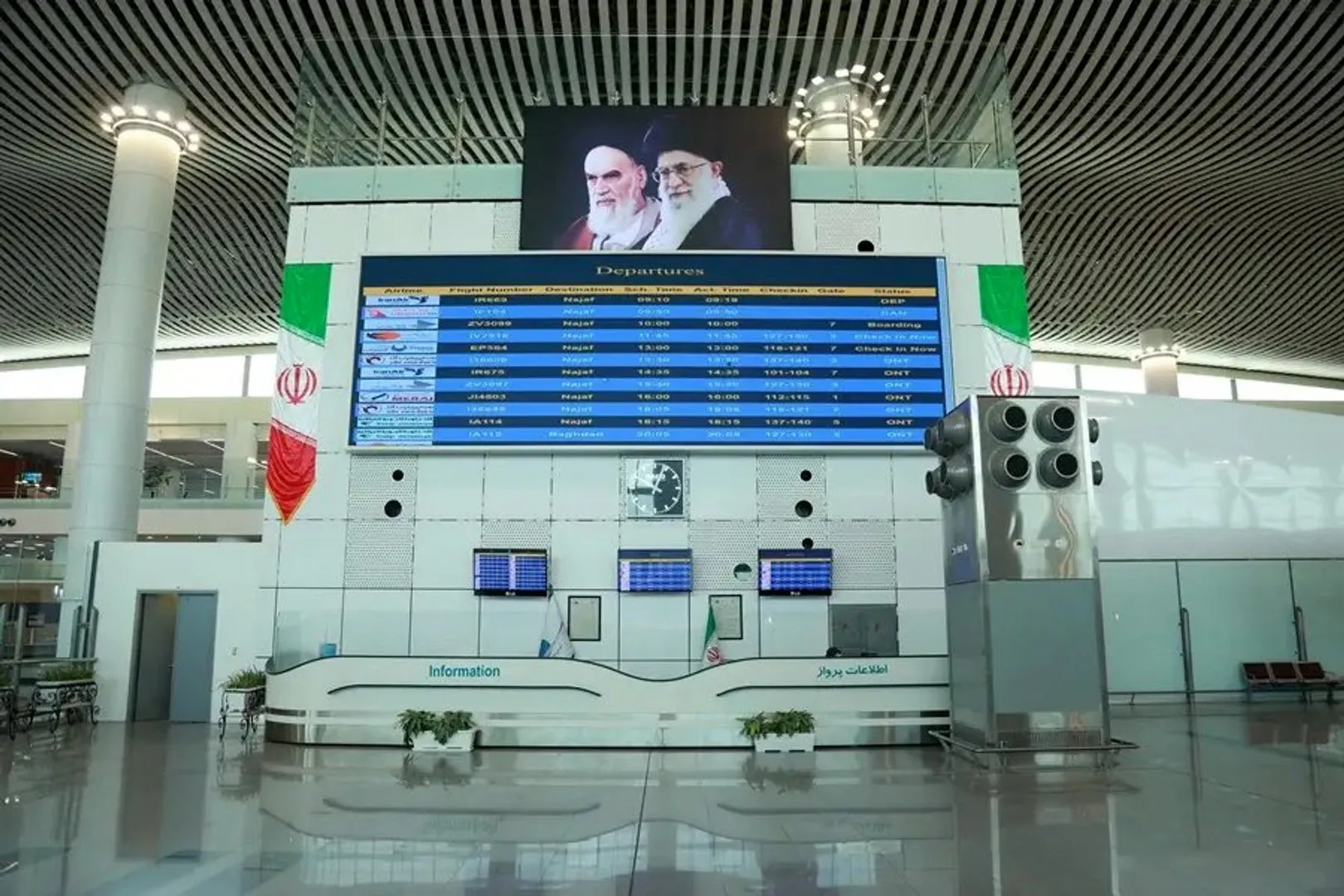
Iraq has suspended Iranian flights at all four airports where they operated, following US sanctions targeting Iran’s aviation sector. Iran has warned that regional aviation could face wider disruption if its carriers are denied airport access.
Emmerdale’s latest episode revealed that Jimmy King had secret voice messages hidden on his laptop, sent to his ex Sadie King before his death and found by his wife Nicola
Emmerdale’s latest episode revealed that Jimmy King had secret voice messages hidden on his laptop(Image: ITV)
Jimmy King’s secret voice messages to Sadie King left his widow Nicola King distraught on Emmerdale on Friday.
But the truth behind the messages could be bad news for Sadie, who’s hiding some secrets of her own. Sadie returned after Jimmy’s death in a car crash recently, and she claimed to Nicola she was in a three-year relationship with Jimmy behind Nicola’s back.
Of course viewers soon found out that Sadie had faked images of her and Jimmy together, and she was trying to get her hands on his money. That said, voice messages found on Jimmy’s laptop appeared to confirm he had been in contact with Sadie right before his death.
As Nicola found out from her son Carl that the messages were on the laptop, she decided to listen. She heard her late husband’s voice, talking to Sadie.
As Jimmy spoke, he asked Sadie whether she was comfy and in a hotel, leaving Nicola fearing they were meeting up just like Sadie had claimed. He then told her he had “the money”.
While this confirmed that Jimmy was giving Sadie money, it’s what he said next that sparked confusion over the reasons. The message also suggested Nicola’s fears that Jimmy was cheating might be nothing to worry about.
Nicola had stopped listening hen he mentioned the money, and she got upset and ran off. But a the earphones dropped, the audio kept playing.
It’s then that Jimmy vowed this would be the one and only time he gave her any money. He said he loved his wife to pieces and she would rightly “kill him” if she found out what he was doing with Sadie.
Jimmy appeared to rule out any other meetings, and his words almost suggested he was doing her a favour. So, clearly he wasn’t planning to run off with Sadie or leave the family behind, like Sadie had implied at some stage.
The true reasons for him seeing Sadie and giving her money has not been explained. But surely this voice note could dispute Sadie’s claims about what Jimmy was up to, and prove Sadie is hiding something.
So will Nicola or someone else hear the rest of the voice message, and confront Sadie? We know there may have been more than one message, as Carl had found messages. plural.
So, is there even more to find out from these that will expose the truth?
Baghdad, Najaf, Erbil, and Sulaimaniyah airports suspend flights as US ramps up pressure on Iran’s aviation sector.
Published On 25 Sep 202625 Sep 2026
Four Iraqi airports have suspended all flights to and from Iran days after the United States announced new aviation sanctions on any global companies doing business with Iranian airlines.
It is the latest ramping up of sanctions since the US launched Operation Economic Outcast in August in an effort to isolate Iran from the global economy.
Recommended Stories
list of 3 itemsend of list
Iraqi state media said flights will no longer be operating from Baghdad, Najaf, Erbil and Sulaimaniyah airports.
Iraq was one of the top destinations for Iranian airlines, especially after Iraqi airlines stopped flying to Iran at the start of the US-Israel war on Iran in February.
Passengers travelling between Iran and Iraq will now be forced to make a land journey of at least 12 hours, depending on the destination.
Najaf airport
Iraq’s state news agency reported the suspension at Najaf international airport earlier on Friday.
Airport director Hussein Muhanna told the AFP news agency that “all flights were halted between Iran and Najaf airport following a directive from the prime minister’s office to the governor” of Najaf.
Iraq and neighbouring Iran are both Shia-majority countries, and flights to and from Najaf carry Iraqi Shia Muslim pilgrims to Iran’s holy cities or Iranians visiting sacred sites in Iraq.
In a post on X, the Iranian Consulate in Najaf responded to the suspension of flights to and from Iran, saying “Najaf international airport, the shrine of the first Imam of the Shia, and the capital of their last Imam, is closed to the largest Shia country in the world?!”
An Iraqi employee of an Iranian airline at Najaf airport told AFP Iranian carriers usually operate at least 20 daily flights, but after the suspension, only four flights to other destinations remained scheduled on Friday.
Shia pilgrims march to Karbala to observe Arbaeen that marks the end of a 40-day mourning period following the Day of Ashura, in Najaf, Iraq, on July 28, 2026 [Anmar Khalil/AP]
Several other regional countries, including the United Arab Emirates and Qatar, have either cancelled or restricted flights to Iran to enforce US aviation sanctions.
That is despite the secretary of Iran’s Supreme National Security Council warning neighbouring nations against imposing a US flight ban.
Iranian airlines are now relying on a few reduced routes, including Turkiye, Russia, China and Armenia, to remain operational.
“We cannot say that Iran is totally cut off from air traffic, but shrunk considerably,” said Al Jazeera’s Sinem Koseoglu, reporting from Tehran.
Reporting from Baghdad, Al Jazeera’s Jack Hewson said Iraq’s central government has made no statement about the flight suspensions, likely because it “doesn’t want to antagonise” pro-Iranian factions in Iraq’s parliament.
Explaining the country’s decision to comply with the US move, Hewson said: “Companies providing ground services, like refuelling, baggage, it appears, are not willing to risk secondary sanctions and being frozen out of the international US dollar system.”
“Iraq’s in a very difficult position,” Hewson added. “It’s tied to the US, but it’s also tied to Iran. And at times like these, it’s squeezed between the two.”
Voting rights groups have warned system may falsely identify voters as non-citizens, leading to disenfranchisement.
Published On 25 Sep 202625 Sep 2026
The United States Supreme Court has allowed the administration of US President Donald Trump to use a controversial voter verification system just weeks away from the midterm election in November.
The court’s emergency order on Friday allows the Department of Homeland Security to use the Systematic Alien Verification for Entitlements, or SAVE, programme in its efforts to verify the eligibility of voters on state voter rolls.
Recommended Stories
list of 3 itemsend of list
Voting rights groups have argued the use of the system, which was revamped under the Trump administration in 2025, risks falsely identifying individuals as non-voters, potentially leading to individuals being wrongfully purged from voter rolls.
Those challenging the administration’s use of the database have charged that information on citizenship can be out of date. They pointed to a Travis County, Texas election official who found that up to 25 percent of the “non-citizens” identified by the system in the jurisdiction were in fact US citizens.
US states oversee election administration under the country’s constitution and are not required to use the SAVE system, but several Republican-led state governments have voluntarily opted to use the database.
Still, it was not immediately clear if Friday’s decision would have any meaningful impact on the midterm elections on November 3, in which voters will determine which parties control the US House of Representatives and the Senate.
Existing law blocks most states from systematically purging voters from their rolls within 90 days of an election. The emergency order is not also the final say on the matter, only granting the administration the ability to use the system until the court makes a final ruling.
The three liberal justices on the panel, which has a 6-3 conservative supermajority, issued a dissenting opinion, saying the majority disregarded “the harms that the modified SAVE system has caused, and will likely continue to cause, to lawful voters”.
The Citizens for Ethics watchdog group charged that the decision “puts millions of Americans at risk of being unlawfully targeted by the admin’s unreliable voter purge system weeks before the midterms”.
Trump has focused heavily on election administration in the run-up to the midterm vote, which could serve as a major check on his authority in the final two years of his term.
He has for years claimed, without evidence, that US elections are marred by widespread fraud and has repeatedly falsely claimed the 2020 presidential election, which he lost to Democrat Joe Biden, was “stolen”.
Evidence has suggested that fraud of any kind, including instances of non-citizens voting in the US, has been glancingly rare in the country.
In September, the Supreme Court rejected a bid from Trump to restrict mail ballot procedures before the midterm election.
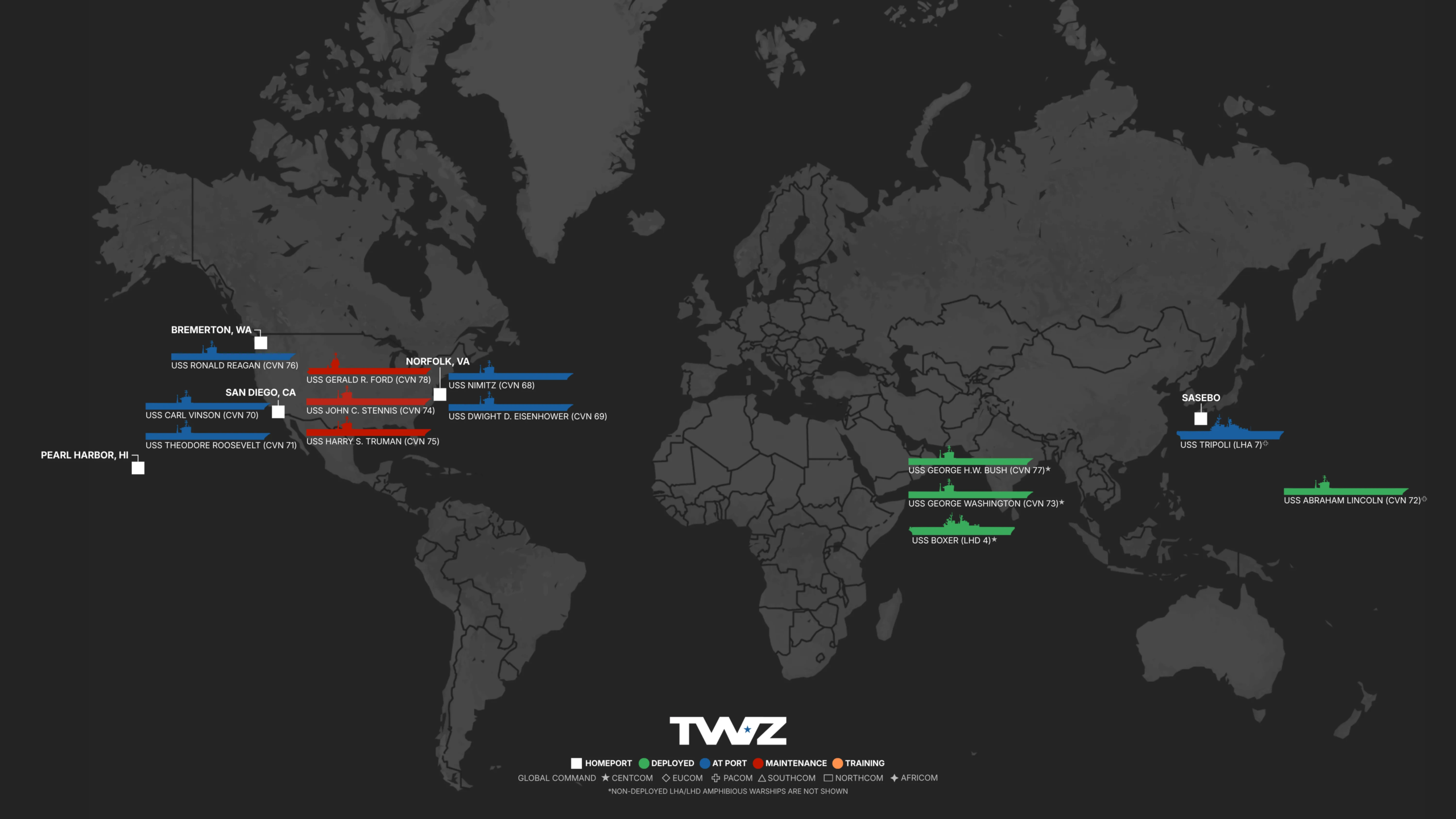
The crew of the USS Abraham Lincoln touched American soil for the first time in nine months, when the strike group pulled into Apra Harbor, Guam, for a brief logistics stop and on-base liberty. The supercarrier, alongside guided-missile destroyer USS Frank E. Petersen Jr., arrived on September 19 and left the next day. Lincoln is 307 days into her deployment, 19 short of the record set earlier this year by the USS Gerald R. Ford, and is now just weeks away from San Diego. Meanwhile, two flattops are on station in the Middle East supporting blockade operations, and the USS Ronald Reagan has rejoined the fleet after an extended maintenance availability.
Here’s TWZ’s weekly carrier tracker monitoring America’s flattop fleet, including deployed Carrier Strike Groups (CSG) and Amphibious Ready Groups (ARG), using publicly available open-source information. Check out our last report here.
Abraham Lincoln Departs Guam, Continuing Her Journey Home
The USS Abraham Lincoln is currently conducting routine operations at an undisclosed location in the U.S. 7th Fleet area of responsibility (AOR), presumably steaming east en route to her homeport at Naval Air Station North Island in San Diego. After leaving Thailand on September 6 following a five-day liberty port call, Lincolntopped off the Petersen Jr. in the Gulf of Thailand and linked up with two Royal Australian Navy frigates for joint training in the South China Sea. Publicly available flight tracking data shows the carrier transited the Balabac Strait eastbound around September 13, and the Surigao Strait northbound two days later to enter the Philippine Sea. After going dark for a few days, she resurfaced in Guam and moored at Kilo Wharf over the weekend.
Lincoln transits the Philippine Sea. U.S. Navy photo Lincoln transits the Philippine Sea. U.S. Navy photo
“Due to the brief nature of the logistics stop, the crew were afforded on-base liberty to access base services and attend a Navy Entertainment-sponsored concert,” CSG-3 spokesman Lt. Cmdr. Tyler Barker wrote in an email to Stars and Stripes. The carrier took on stores, mail, and equipment, according to Barker, and 13 Fleet and Family counselors are now aboard to run return-and-reunion classes but “the crew and ship remain focused and ready.”
USS Abraham Lincoln (CVN 72) arrives in Guam on Sept. 19, 2026. U.S. Navy photo
A homecoming date has not been announced publicly. Unless Lincoln makes another stop (in Hawaii, for example) or conducts additional training on the way, she should arrive in early October just shy of Ford’s record. The Chief of Naval Operations, Adm. Daryl Caudle, said in June that Lincoln would likely shift her homeport to Naval Base Kitsap-Bremerton in Washington state, which aligns with TWZ’sreporting that she is expected to begin a Drydocking Planned Incremental Availability (DPIA) after returning stateside. The timeline for the DPIA is unclear.
George Washington and George H.W. Bush Project Power In The Middle East
The American public got a rare look at ongoing combat operations aboard the USS George Washington when two reporters embarked earlier this month. Fox News’ Trey Yingst and CBS News’ Tom Hanson reported live from the flight deck, as F-35C Lightning IIs and F/A-18E/F Super Hornets launched behind them, in hits that aired September 11 to 14. The only other publicized media embark since the war began on February 28 went to CNN’s Pamela Brown, who reported on the conditions aboard the USS Abraham Lincoln while the flattop was still in theater.
An F-35C launches from Washington. U.S. Navy photo A pair of Super Hornets on Washington. U.S. Navy photo
“Last weekend, the aircraft carrier came under Iranian missile attack; the first of three attacks on US warships in the last week alone,” Yingst said, indicating it was the USS George Washington, and not the USS George H.W. Bush, that was targeted by the Islamic Revolutionary Guard Corps (IRGC) in early September. The Navy declined to comment when TWZ asked which carrier was targeted after Iranian state media claimed the strike had been successful. “We’re pretty much employing all our capabilities right now,” Washington’s commanding officer (CO), Capt. Nicholas DeLeo, told Yingst.
Night flight ops aboard USS George Washington. U.S. Navy photos
“The GW is surrounded by four to five guided-missile destroyers at any moment,” Yingst also reported. He flew out to USS Shoup, positioned off the starboard side at the time, to make the point and speak with the warship’s CO. Shoup is the only destroyer officially confirmed to be part of CSG-5. “My ship is in charge of coordinating defense amongst the various other units, allocating defensive assets to it, be it potentially a missile to shoot something down or just aircraft to go identify and monitor the picture,” Capt. William Buford said. Based on that description, Shoup’s CO appears to be coordinating Integrated Air and Missile Defense (IAMD) for the strike group, a question we’ve been asking the Navy to confirm. TWZ understands additional destroyers operating in the U.S. Central Command (CENTCOM) AOR are also escorting Washington, but a U.S. official declined to say which ones.
Hanson asked DeLeo about the recent IRGC ballistic missile threat targeting Navy ships in the region. “We have a variety of ways to protect, both offensively and defensively, a Navy ship, and we employ all these methods,” he told the network. “It’s something that we train to.” Hanson also pressed the commander of CSG-5, Rear Adm. Jeff Heames, on whether he was concerned about the munitions stockpile, a dynamic TWZ detailed in a special feature yesterday. “Of course we’re concerned about the expenditure to some degree, but I have no concerns locally at my level here,” Heames replied.
Gun shoot aboard USS George Washington (CVN 73), Sept. 15, 2026. U.S. Navy video
In addition to Washington, Bush is still working the blockade from the Arabian Sea, nearly six months into her deployment. As of CENTCOM’s latest social media update on September 21, U.S. forces in the region had redirected 110 commercial vessels to ensure “total compliance” with the blockade. More than 50 ships “supporting humanitarian efforts” have been allowed through, according to the command. CENTCOM recently stopped publishing the number of ships boarded, seized, or disabled kinetically.
An MH-60S Sea Hawk lifts cargo from the flight deck of USS George H.W. Bush, Sept. 18, 2026. U.S. Navy photo
Ronald Reagan Rejoins the Fleet
The USS Ronald Reagan is officially back. The Navy, in a recent statement, confirmed the flattop “returned to the fleet capable and mission-ready.” The carrier had been out of action since March 2025 for a DPIA at Puget Sound Naval Shipyard in Washington state and completed four days of sea trials in early September. While the Navy does not comment on upcoming deployments due to operational security, current speculation points to a spring 2027 deployment, but that is not confirmed.
Counter measure wash down on USS Ronald Reagan in the Pacific Ocean on Sept. 6, 2026. U.S. Navy photo
Reagan is the only carrier currently homeported at Naval Base Kitsap-Bremerton in Washington. Previously, she was America’s only forward-deployed carrier based in Yokosuka, Japan, until swapping hulls with the USS George Washington in 2024. USS Nimitz was stationed at Naval Base Kitsap-Bremerton before circumnavigating South America to Naval Station Norfolk this summer, where she is being used primarily for training before deactivation in 2027. The yet-to-be-commissioned PCU John F. Kennedy, the second and newest Ford class supercarrier, is slated to homeport in Washington state no earlier than 2029.
U.S. Navy Big Deck Fleet At A Glance
Overall, three U.S. carriers are deployed (with one heading home), one is preparing to deploy in the near term, three are working up in various states of readiness, three are in current or upcoming maintenance, and one is being used primarily for training before deactivation next year. One amphibious ready group is deployed, one is forward-stationed and in port, four are working up or in port, and three are in maintenance.
Note: Positions are general approximations.Non-deployed LHA/LHD amphibious warships are not shown.
Contact the author: ian.ellis-jones@recurrent.ioor @ianellisjones
Lebanese Prime Minister Nawaf Salam wants US-brokered ceasefire to be consolidated and for Israel to retreat.
Lebanese Prime Minister Nawaf Salam has called for an end to the Israeli occupation of southern Lebanon and the full enforcement of the ceasefire, as Israeli shelling and demolitions continue.
“We want the war to end and we want the ceasefire [with Israel] consolidated,” Salam said in a speech at the United Nations General Assembly in New York on Friday.
The prime minister demanded a complete withdrawal of Israeli forces from Lebanese territory up to its internationally recognised border and the release of all Lebanese detainees.
As delegates gathered to listen to Salam, on the ground in Lebanon, Israeli forces carried out a large explosion near Taybeh and Deir Siryan, while an Israeli air strike targeted a valley between Froun and Ghandourieh, triggering a large fire.
Al Jazeera’s Zeina Khodr, reporting from Froun, said the reality on the ground is that the conflict is far from over.
“From the ground here in Froun, we can still see Israeli warplanes and drones flying at low altitudes in the skies above and Israeli artillery shelling is still causing uncontrollable fires. Lebanese civil defence and firefighters are not being allowed by the Israelis to reach these areas and put out the flames,” she said.
“More than 60 towns in southern Lebanon are still occupied by the Israeli army, where the Israelis are carrying out a systematic campaign of demolitions,” Khodr added.
Israeli forces are “blowing up people’s homes, despite the framework agreement in which there is supposed to be a ceasefire that they have signed with the Lebanese government,” she said.
Israeli attacks in southern Lebanon have killed at least 4,386 people and wounded 12,407 others since March 2 , when the current Hezbollah-Israel war started. Since then, Israeli forces have occupied up to 600sq km of Lebanese territory up to the Litani River.
A US-brokered framework agreement between Lebanon and Israel in June provides for a gradual Israeli withdrawal from Lebanese territory and the deployment of the Lebanese army in areas vacated by Israeli forces.
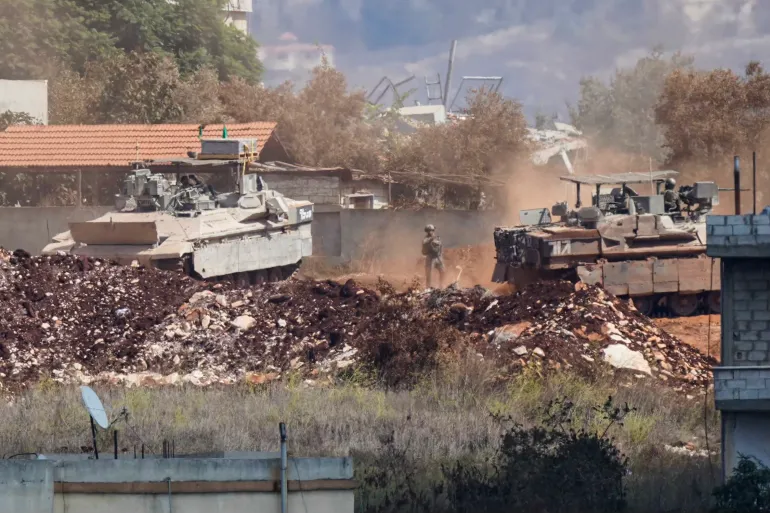
Israeli armoured vehicles in the southern Lebanese village of Zawtar al-Charkiyah on Thursday [Ammar Ammar/AFP]
Speaking at the UNGA, Salam said his government had entered into negotiations with Israel, mediated by the United States and President Donald Trump, “to end the war and restore Lebanon’s sovereignty”, adding that the success of any agreement is measured not by intentions but by fulfilment of commitments.
“What is required is to complete the translation of this agreement into practical steps within a clear timetable and with a verification mechanism that ensures the implementation of all its provisions,” he said.
He focused on state sovereignty, saying it “cannot be untouchable in one place and negotiable in another, nor can the rules of international law apply to some but not to others”.
Salam also pledged to oversee the disarmament of Hezbollah in exchange for Israel’s eventual full withdrawal, also saying “weapons must be exclusively in the hands of the state and that decisions on war and peace rest solely with its constitutional institutions”.
Stability in the Middle East can only come with respect for Palestinian rights, he said.
“There can be no lasting stability in Lebanon without lasting stability in our region, and there can be no stability in the region as long as this organisation [the UN] remains unable to enable the Palestinian people to exercise their inalienable right to self-determination, like all other peoples of the world,” Salam said. “No less and no more.”
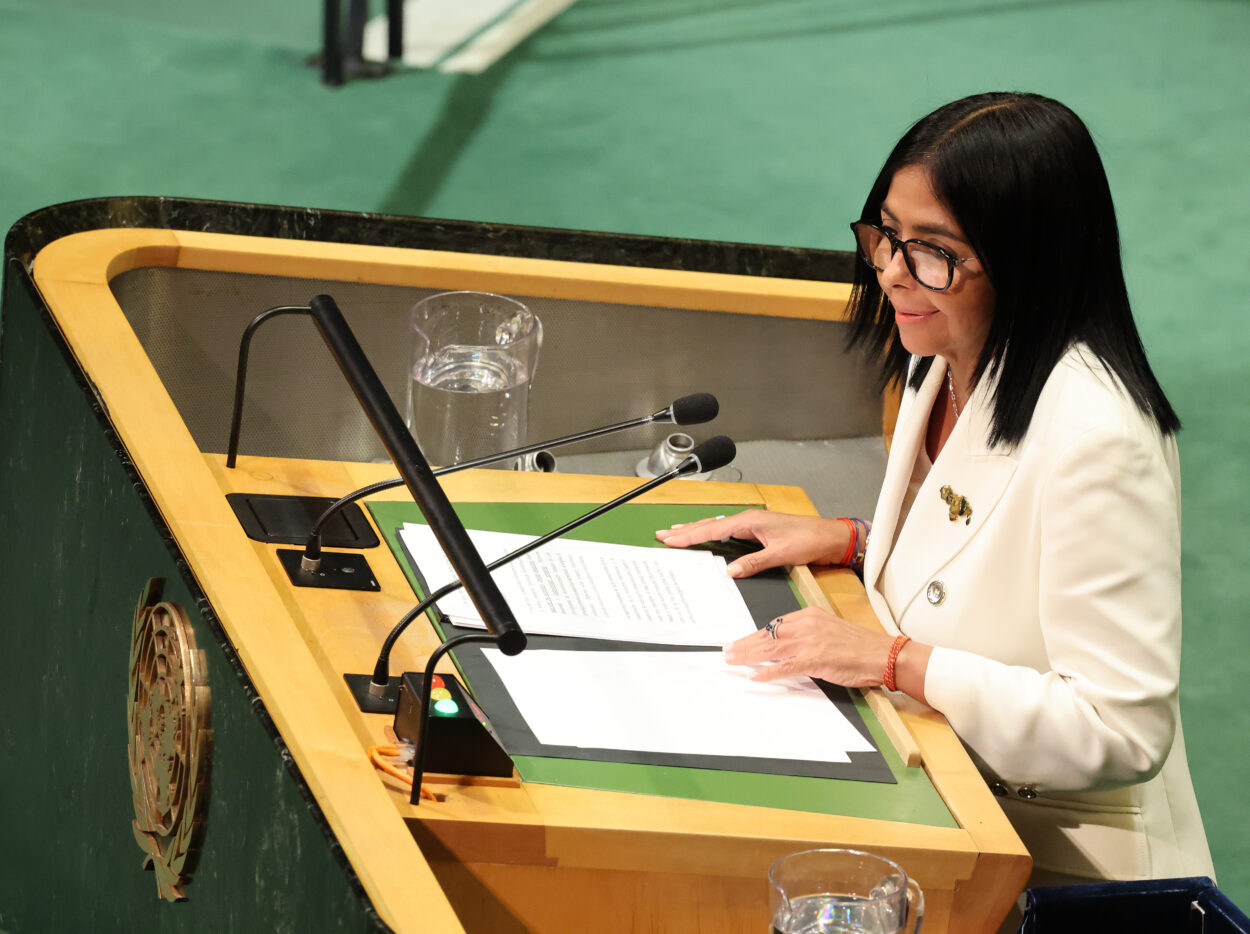
Acting President Delcy Rodríguez delivering her speech at the 81st United Nations General Assembly in New York. (Presidential Press)
Caracas, September 25, 2026 (venezuelanalysis.com) – Venezuelan Acting President Delcy Rodríguez outlined a foreign policy built on “peace” and “dialogue” in her address at the 81st session of the United Nations General Assembly in New York on Wednesday.
Speaking before world leaders, Rodríguez insisted on peace over conflict, thanked the Trump administration for diplomatic backing, and committed to international cooperation on environmental, energy, and AI regulation. She went on to urge young Venezuelan migrants to return home and laid out a proposal for structural “democratic transformation” of the Caribbean nation.
Opening her address, Rodríguez underscored Caracas’ rejection of warfare, linking global stability to diplomatic resolution.
“Venezuela, which today knows what it is to lift its children out from under the rubble, extends its deepest solidarity to all peoples who suffer from war, and reaffirms that peace […] is not a naive aspiration, but the only truly human path,” she declared.
Rodríguez explicitly addressed the diplomatic rapprochement with Washington after the January 3 US military strikes and kidnapping of President Nicolás Maduro and First Lady Cilia Flores. She expressed thanked Trump for aiding Venezuela’s reintegration into international forums following years of heavy economic sanctions and diplomatic isolation.
“I want to thank President Donald Trump and his government for their willingness to resume the path of diplomatic and cooperative relations with Venezuela,” Rodríguez stated, referencing the recent oil deal as “one of the largest ever signed” and pledging that it will contribute to regional energy stability.
Rodríguez refrained from condemning the US attack, calling it a “difficult moment” that resulted from the “exhaustion of domestic policies and heightened confrontation with the US.” She likewise made no mention of Maduro and Flores, presently detained 10-15 miles away from the UN headquarters and facing trial for charges including drug trafficking conspiracy.
The Venezuelan acting president had conveyed similar gratitude in a face-to-face meeting with Trump on Tuesday that she labeled as “historic.”
Turning to domestic affairs in her UN address, Rodríguez spoke of the severe wave of migration triggered by past political and economic crises, and vowed to the Venezuelan youth residing abroad that there will be improved conditions for their return.
“To the young people, who have grown up seeing a fractured country and who often decided to leave seeking what they could not find here: I tell you that it is worth believing again,” the acting leader affirmed. “This is the moment to build the country that many want to return to, and not just the one that many wanted to flee.”
This message was framed as part of what Rodríguez termed a “democratic transformation for a rebirth,” which she described as an institutional, orderly, and verifiable process.
“In Venezuela, there will be elections. We have already initiated a political dialogue with sectors of the opposition that leads to a process on equal terms for all,” she noted.
Though Rodríguez did not explicitly name unilateral sanctions from Washington and its allies, she stated that the country needs to be “free from economic restrictions” and pledged to “guide Venezuela toward an era of full democracy, recognized by its people and the world.”
The acting president’s UN speech came amid a flurry of diplomatic activity in New York, including meetings with International Monetary Fund (IMF) Managing Director Kristalina Georgieva, World Bank President Ajay Banga, and Inter-American Development Bank (IDB) President Ilan Goldfajn.
On the sidelines of the UN assembly, Rodríguez also held bilateral meetings with Chilean far-right president José Antonio Kast to discuss regional trade and stability, as well as with a delegation from Trinidad and Tobago, led by Prime Minister Kamla Persad-Bissessar, initiating a “new stage in bilateral relations” centered on joint offshore natural gas exploration and maritime security.
Venezuela had suspended cooperation with neighboring Port of Spain after Persad-Bissessar backed the US’ military build-up on the country’s shores in late 2025.
Rodríguez’s New York trip coincided with a second round of US-backed talks between government negotiators led by National Assembly President Jorge Rodríguez and a sector of the opposition led by former deputy Dinorah Figuera.
The latest negotiations reportedly focused on electoral guarantees, freedom of expression, institutional reform, including renewing the Supreme Court, and efforts to secure the unfreezing of Venezuelan assets abroad, including gold reserves worth approximately US $4 billion. The gold held by the Bank of England is set to be transferred to the US, to be released for post-earthquake recovery efforts under White House oversight.
Leclerc was somewhat taken aback by Mercedes’ superiority, saying that the position was what he expected but the gap most definitely was not.
At the bottom of the top 10, there was finally some good news for Williams, for whom Carlos Sainz achieved the team’s first top 10 qualifying performance of the year.
Williams have introduced a new chassis this weekend which has brought them down to the weight limit for the first time this season, after being as much as 25kg over at the start of the year.
Along with some additional developments, it appears to have produced a big step forwards, although the caveat is that Baku is a track that suits the characteristics of the Williams car and does not expose its weaknesses.
Team-mate Alex Albon did not manage to secure a tow in the second part of qualifying, and was “anyway struggling with straight-line speed all session”, and was 13th, just under 0.4secs behind the Spaniard.
Antonelli’s error came on his second lap of the first session.
He turned into the first corner too early, and the left front wheel clouted the inside wall, breaking the suspension.
He initially tried to get the car back to the pits but was told by engineer Peter Bonnington to park up.
“Let me try,” Antonelli pleaded, before Bonnington told him that either the track rod or upright was broken and there was no way Mercedes could fix that in the time they had to turn the car around before the next session.
Antonelli had been on the back foot all Friday trying to catch up time lost to a hydraulic problem that had stopped his car on track halfway through first practice, and was not repaired until halfway into the second.
It was Antonelli’s first major mistake of the season since he crashed heavily in final practice at the first race of the season in Australia.












![Shiite pilgrims march to Karbala, to observe Arbaeen that marks the end of a 40-day mourning period following the Day of Ashura, in Najaf, Iraq [Anmar Khalil/AP]](https://i0.wp.com/www.aljazeera.com/wp-content/uploads/2026/07/AP26209348572737-1785382211.jpg?w=640&ssl=1)