



Football fans speak about City’s charges as they face Liverpool | Football
Fans have been speaking to Al Jazeera as Liverpool face Manchester City at Anfield. It’s City’s first game since they were found guilty of serious financial breaches.
Published On 11 Oct 2026
At least five people missing as flash floods in Nepal sweep away houses | Climate Crisis News
Authorities urge villagers to move to safer places after a river bursts its banks in the central part of the country.
Published On 11 Oct 2026
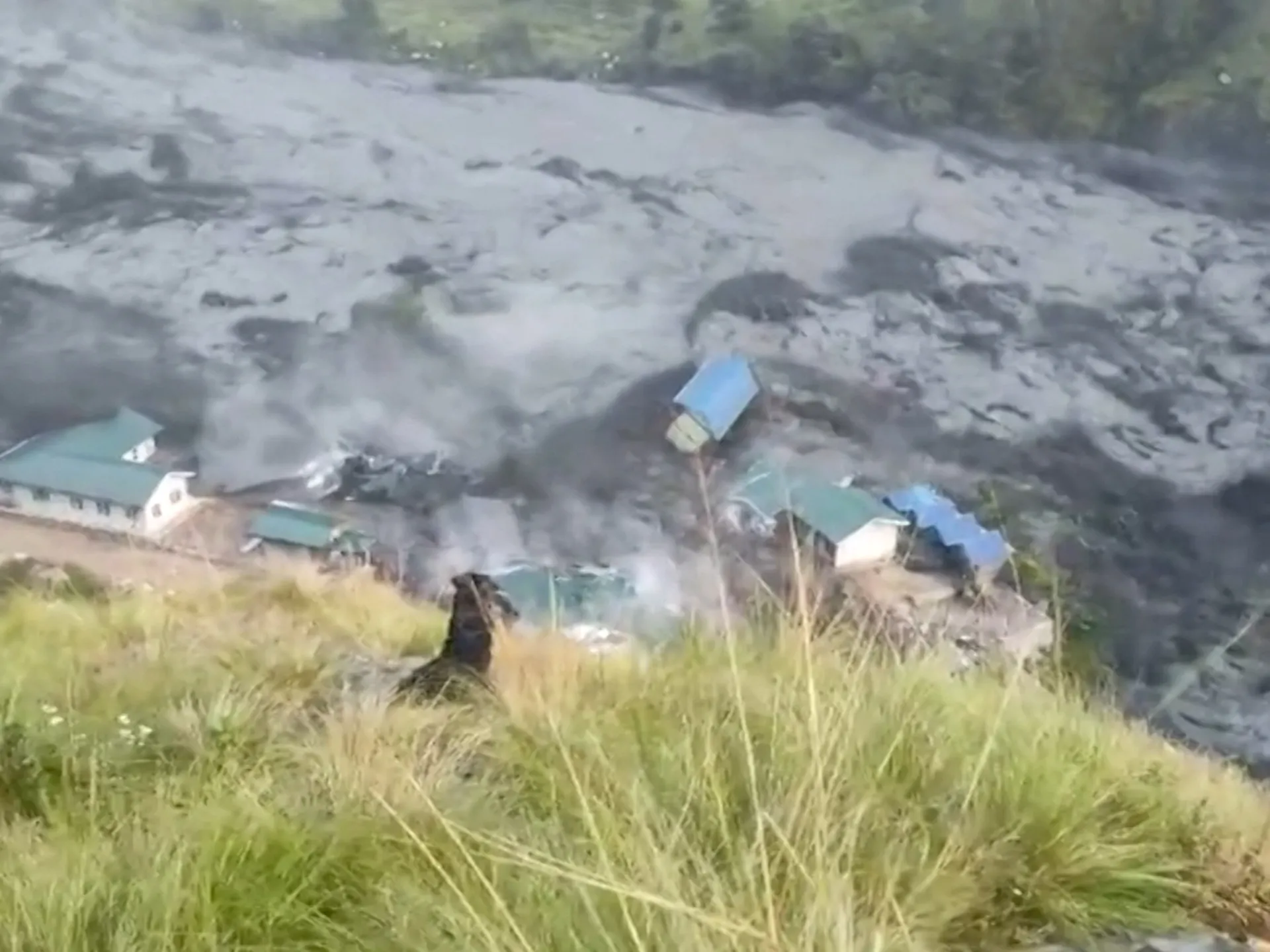
Flash floods have hit central Nepal, sweeping away houses and leaving at least five people missing, according to officials, weeks after devastating flooding in the country that killed hundreds.
A landslide in Chumnubri village in Gorkha district, about 100km (62 miles) west of Kathmandu, blocked the Budhi Gandaki River on Saturday, leading to downstream flooding, authorities said.
Recommended Stories
list of 4 itemsend of list
Two women and three men were unaccounted for, and there are no reports of casualties, said the National Disaster Risk Reduction and Management Authority (NDRRMA).
According to the agency, at least 82 people, including nine foreigners, have been rescued from the affected areas.
The flood swept away about a dozen houses and two suspension bridges and damaged a hydroelectric project camp, carrying some of the construction equipment away, authorities said.
A muddy torrent washed away a highway bridge connecting Gorkha with the neighbouring Dhading district, said NDRRMA Chief Executive Dharam Raj Uprety.
Evacuation order
The Budhi Gandaki is a tributary of the Trishuli River, downstream from another tributary where a glacier collapse caused a catastrophic flood in August that killed 1,457 people, with thousands still missing.
“We have asked villagers living along the riverbanks downstream to evacuate and remain safe,” said Dharmendra Kumar Mishra, Gorkha district’s most senior bureaucrat.
National disaster authorities alerted people living along the river in the Gorkha, Tanahun, Chitwan, East Nawalparasi and West Nawalparasi districts about the flood.
“Please help ensure that people in at-risk areas are moved to safe locations in time and assist search and rescue operations as needed,” the NDRRMA said in a social media post.
Officials said army and police rescue personnel had reached the area and were also monitoring the situation from a helicopter.
“The flood looked similar… It was very scary, and it still feels like a nightmare for us,” said local official Laxmi Gurung of Chumnubri rural municipality.
“Our house is gone, we have no electricity… but there have been no casualties.”
Heavy rainfall in late September also triggered floods and landslides, killing at least 21 people, according to the disaster agency.

‘Absolutely riveting’ BBC drama to end as creator says new series ‘will be the last’
Jimmy McGovern’s BAFTA-winning BBC drama is returning to screens with David Tennant and Siobhan Finneran leading the cast

The third series of Time is set to air on BBC One this October(Image: BBC)
Time returns tonight for its third but there’s some bad news for fans.
The wait is almost over for a brand new instalment of the gripping BBC drama which first began in 2021 and has featured the likes of Stephen Graham, Jodie Whittaker and Bella Ramsey.
Creator Jimmy McGovern explained that while the first series focused on a male prison and the second series was based on a female prison, he knew he wanted to focus on young offenders next, but didn’t have a story.
That was until he found a real-life story in his research about a mother going to see her son in a young offender institution, whom she hadn’t seen for years. Although she didn’t speak English and he didn’t speak her language, which Jimmy shares is Swahili, in their BBC story.
However, the creator has shared that the upcoming series, which will being on Sunday night (October 11) will be its last. Speaking to RadioTimes, he said: “There’s very little altruism involved with these stories. I do them because I love doing them, although I think this will be the last time. I have said that many a time before, though, because these are also stories I feel bound to tell.”
A synopsis for the third series of Time details that viewers will see two young offenders struggle through the terrifying first weeks and months of their incarceration. However, an unlikely friendship between them looks to shift the trajectory of their futures.
The description further reads: “Meanwhile, Prison Chaplain Marie-Louise (Siobhan Finneran) comes to the young offender institution having lost her faith.
When tragedy strikes in the prison, Marie-Louise clashes with veteran officer Bailey (David Tennant), a man in the midst of his own crisis. Bailey knows more about the circumstances that led to this major incident – but will he come clean before the guilt gets too much?”
Since the series first began five years ago, it’s been highly praised by viewers, with some hailing it as a masterpiece. On Rotten Tomatoes, one person has said: “Absolutely riveting drama, a must-watch from start to finish. Brilliantly acted and excellent plot.”
Meanwhile, on IMDb, another added: “I expected a mediocre show, but got a well-crafted masterpiece. In its two seasons, each with three episodes, ‘Time’ tells the stories of two people who are imprisoned for the first time and, in my opinion, it does this excellently” While a third wrote: “Serious, realistic and brutal. If you want to see something serious and realistic, this is for you.”
Also joining David Tennant and Siobhan Finneran in the third series will be Vinette Robinson, Jo Joyner, Daniel Ryan, Warren Brown, Louis McCartney, Ollie McNulty and Chukwubuikem Molokwu will star in the third series.
Time airs on Sunday, October 11 on BBC One at 9pm

Prep talk: Volunteers fill multiple roles to help high school teams succeed
High school sports programs are filled with dozens of volunteers — manning the snack bar, taking tickets, helping provide security, cleaning floors, carrying equipment and taking statistics.
On and on it goes.
One of the most entrusted volunteers in football is the cameraman. That person must film the entire game, whether from the press box or the sideline.
Bennett Rogers is in his first year as Palos Verdes High’s cameraman. He sits in the end zone and has a camera that goes up so high on a tripod that it could be waving a flag. His son coaches for Palos Verdes, so he volunteered to shoot the games.
His most important equipment is a portable, comfortable chair that lasts through four quarters.
“That’s the key for my age,” he said.
To all the moms and dads volunteering, you’re the unsung heroes. Just make sure you have a sturdy chair when taking video.
This is a daily look at the positive happenings in high school sports. To submit any news, please email eric.sondheimer@latimes.com.

Power bank fire forces plane to emergency land in India | Aviation
An IndiGo plane was forced to make an emergency landing after a passenger’s power bank reportedly caught fire, during a flight from New Delhi to Chennai. Passengers managed to extinguish the fire on board.
Published On 11 Oct 2026

U.S. Makes F-35 Push As Portugal Weighs F-16 Replacement
The United States is stepping up its campaign to sell Portugal the F-35. Speaking in Lisbon today, Secretary of State Marco Rubio said the United States would make Portugal a “very competitive” offer to replace its F-16 fleet. The development adds a high-level political push to an increasingly intense competition over the Portuguese Air Force’s next fighter.
Portuguese Foreign Minister Paulo Rangel said after meeting Rubio that Lisbon is seriously considering the American proposal, while emphasizing that other options remain under consideration.

“The Portuguese state will always decide in accordance with the national interest,” Rangel said at a news conference after the meeting. “There is one point that is also clear: we are seriously considering the F-35 proposal, just as we are considering others.”
Portugal currently operates 25 modernized F-16AM/BMs, including 21 single-seat F-16AMs and four two-seat F-16BMs, from Monte Real Air Base, or BA5. The Portuguese Air Force, known as the Força Aérea Portuguesa (FAP), has not yet formally launched a replacement competition, but the aging fleet is increasingly becoming the focus of attention in Lisbon.

Portugal acquired a total of 45 F-16A/B Block 15 aircraft through the Peace Atlantis I and II programs.
The first 20 aircraft were delivered beginning in 1994. These were new-build F-16A/B Block 15OCU aircraft, comprising 17 single-seat F-16As and three two-seat F-16Bs, and were used to equip Esquadra 201 “Falcões.”
A second batch followed in 1999, when Portugal received 25 former U.S. Air Force Block 15OCU aircraft. Twenty-one were F-16As and four were F-16Bs, with several intended as attrition replacements or spares. These aircraft had accumulated roughly 3,000 flight hours and underwent an extensive modernization program to bring them to the F-16AM/BM configuration. This means the aircraft are broadly comparable to the U.S. Air Force’s F-16C/D Block 50/52 fleet.
Esquadra 301 “Jaguares” finally became operational with its upgraded aircraft in 2005, while Esquadra 201 did not receive its upgraded F-16s until 2011.

Since then, the Portuguese Vipers have continued to receive incremental improvements. Their configuration has progressed through several mission-software standards, while the aircraft have been equipped with night-vision goggles, Joint Helmet-Mounted Cueing Systems (JHMCS), and advanced targeting and weapons capabilities.
Among the more important additions are Northrop Grumman Litening II targeting pods, and the ability to employ weapons including GBU-12 Paveway II laser-guided bombs, GBU-31 Joint Direct Attack Munitions (JDAM), and GBU-49 Enhanced Paveway II dual-mode weapons.

Twelve former Portuguese F-16s were transferred to Romania under a deal signed in 2013, with deliveries taking place in 2016 and 2017. Romania subsequently ordered five additional aircraft in 2019.
Structurally, the Portuguese F-16s could potentially remain in service into the mid-2040s. But maintaining their relevance against increasingly sophisticated air forces would require continued investment in avionics, sensors, communications, and self-protection systems.
The F-16AM/BM fleet continues to rely on the old AN/APG-66(V)2 pulse-Doppler radar. Replacing it with an active electronically scanned array (AESA) radar such as Northrop Grumman’s APG-83 would substantially improve detection and tracking performance, but would come at considerable cost.

Portugal faces a choice between continuing to invest in increasingly tired fourth-generation airframes or moving directly into the fifth generation.
Since the end of the Cold War, Portugal has become much more engaged in out-of-area operations and missions in support of NATO.
In the process, the Portuguese F-16 fleet has accumulated an impressive operational record.
The fighters have repeatedly deployed on NATO air-policing missions, including rotations to the Baltic States, Iceland, Romania, and Poland.

The F-35A would give Portugal a fifth-generation fighter built around low observability, sensor fusion, advanced electronic warfare, and networked operations.
The aircraft would also fit naturally into a NATO environment in which an increasing number of European air forces are adopting the F-35.
More than 900 F-35s are already in service or on order across Europe, according to previous comments by U.S. Ambassador to Portugal John Arrigo. Washington has repeatedly argued that joining that community would provide Portugal with a substantial interoperability advantage.

However, European competition includes the Eurofighter Typhoon, Dassault Rafale, and Saab Gripen E, with Airbus preparing an especially aggressive campaign for the Typhoon.
Airbus has said it intends to submit an unsolicited Eurofighter proposal to Portugal in late October or early November. That package is expected to encompass not just the aircraft, but financing, industrial participation and broader military cooperation.
Selecting the American stealth fighter deepens Lisbon’s military relationship with Washington at a time when European governments are wrestling with fundamental questions about their dependence on U.S. military capabilities.
Across the continent, uncertainty over Washington’s stance on NATO is encouraging European allies to examine ways of reducing their reliance on American military technology, even as those same countries continue to increase defense spending and purchase U.S. equipment.

If Washington can combine the F-35’s capability advantages with an attractive acquisition and sustainment package, Portugal could find itself facing a difficult choice between the strategic benefits of joining Europe’s growing F-35 fleet and the industrial and political advantages of selecting a European fighter.
The final decision on the replacement of the F-16 will also determine what combat jet spearheads the Portuguese Air Force for the next several decades.
Contact the author: thomas@thewarzone.com

Big Brother’s Twinks looks completely unrecognisable in unearthed snap
The new housemate has quickly become a frontrunner to win the ITV2 show

Twinks entered the Big Brother house just over a week ago as a late arrival(Image: ITV)
A Big Brother housemate looks almost unrecognisable in a snap taken before she found fame.
The ITV2 reality show originally welcomed 16 contestants into the famous house last month, but two new faces have just joined the chaos. East Londoner Twinks entered the house last Friday (October 2), alongside teaching assistant Catrin.
Fashion stylist Twinks has quickly become a fan favourite, although she struggled to bond with some of her co-stars straight away. She has quickly built a reputation for her eye-catching style and it seems to have started long before viewers met the reality star.
In a throwback snap shared by her close friend Louise O’Mahony, the Big Brother housemate is seen with pink hair, a far cry from her current blonde look.
The picture was posted by her fashion designer ‘best friend,’ whose designs have actually made it into the Big Brother house. Louise has revealed online that Twinks has been wearing outfits from her clothing brand on the show.
Louise also shared a sweet tribute about their friendship, writing on Instagram: “If you told me 13 years ago that Twinks would go into the BB house I honestly …wouldn’t be surprised.
“She has entered the Big Brother house as a new housemate of 2026!! Thank god frankly, because that house needs some sparkle and whimsy injected into it ASAP! Who better to bring the vibes back up than the Queen of charisma, curator of colour, the Party Princess!”
The heartfelt statement continued: “One of the last things she said to me was “I’ll do anything to make my friends laugh” well, here we are…Who knows what chaos might come in the next few weeks! For any friends and fans seeing this, she’s going to need us to get behind her, sing her praises in the comments and make sure she doesn’t get voted off in any public votes.”
Twinks was immune from nominations during her first week in the house, but housemates will be free to put her up for the public vote during the next nomination vote. She has so far been a popular with the likes of Rob, Harry, Pauline and Sam.
But she initially failed to win over Rochelle,57, and Philip,53, who were sceptical about the Londoner from the moment she walked into the house. And it seems Twinks already anticipated some tension with the “mature members of the house”.
Just before joining the show, she told ITV: “I’m apprehensive about meeting the more mature members of the house from what I’ve seen. We’ve got a lot of youngers in there and I tend to go into big sis, mummy mode with youngers. I’m surprised at the more mature members of the House.”
On the flip side, the 36-year-old knew who she would instantly click with. “I’m excited to meet Rob and Sam – I think that’s where you’ll find me. I’m a silly goose in high glam,” she said. “I really have no interest in talking shit behind people’s backs or being shouted at. I do not want to be shouted at. I just want to sing some show tunes!”
Big Brother continues tonight at 9pm on ITV2 and ITVX

Singapore Grand Prix result: Max Verstappen wins from Charles Leclerc with Kimi Antonelli third
Hamilton had started on the medium tyres while Verstappen and Leclerc chose the softs. Despite his theoretically more durable tyres, the Briton pitted on lap 18 to switch to the softs, while Leclerc waited until lap 24 to swap his softs for mediums.
Leclerc came out of the pits from his stop just ahead of Hamilton, who had stronger pace on his softer tyres.
Yet Ferrari chose not to order Leclerc to let Hamilton through to maximise his pace, a decision that was questioned by Hamilton from the car.
A virtual safety car was called on lap 39 and Leclerc and Antonelli, who had chased the Ferraris closely from the start from his fourth place on the grid, took the opportunity for a cheap pit stop – it takes 10 seconds less to stop under a safety car than under racing conditions.
Yet Hamilton, despite having older tyres, did not stop, a decision that promoted him to second behind Verstappen.
As Leclerc was catching Hamilton, the Briton was told he needed to stop again; he pushed back to suggest he try to go to the end, but was told they were six laps short to make it in terms of tyre life.
Leclerc soon caught Hamilton and passed him on lap 46 and set off after Verstappen, but could get no closer than 7.3 seconds to the Red Bull.
Hamilton never did stop, but as his tyres lost grip he fell back into the clutches of Norris and Antonelli.
A passing attempt by Norris on lap 54 with eight to go saw Hamilton run off track and take to the escape road at Turn One, but as he did, Antonelli grabbed the chance to pass the McLaren, and then Hamilton later on the same lap.
Norris followed him through, and now Hamilton fell back towards the second McLaren of Oscar Piastri, who passed him on the final lap after a resolute attempted defence from Hamilton.
It was Hamilton’s call not to stop and he apologised for it on the slowing down lap – but there remain a number of questions as to the choices made.
Russell’s fight back through the field took him up to seventh as he delayed his pit stop as long as possible.
But after dropping back to 10th behind Audi’s Nico Hulkenberg and Alpine’s Pierre Gasly, he passed Gasly after trailing him for 10 laps or so, but could not make it past Hulkenberg, who was himself chasing Racing Bulls’ Liam Lawson.
Red Bull’s Isack Hadjar took the final point in 10th after starting from the back.

Ethiopia, Eritrea ramp up rhetoric: Are they inching towards war? | Explainer News
Ethiopia and Eritrea have exchanged accusations of aggression at the United Nations, raising fears of a new conflict in the Horn of Africa region as fighting intensifies in Ethiopia’s northern Tigray region.
The diplomatic spat comes as Ethiopian troops and allied armed groups advanced across Tigray, where forces from Asmara have allegedly crossed the border to support rebels fighting the government forces.
The two neighbours, which fought a deadly border war between 1998 and 2000, were allies during Ethiopia’s devastating 2020-2022 Tigray war.
However, they have since been at loggerheads over the 2022 peace agreement that ended a two-year civil war between the government in Addis Ababa and Tigray rebels, and over Ethiopia’s demands for access to the Red Sea.
So, what did Eritrea and Ethiopia accuse each other of, and are they inching towards war?
What did Eritrea and Ethiopia say at the UN?
Eritrean troops had advanced as far as 60km (37 miles) into Tigray, Ethiopia told the UN Security Council on Friday, accusing its neighbour of violating its sovereignty.
In a letter, Ethiopian Foreign Minister Gedion Timothewos described the alleged incursion as “a blatant act of aggression that engages Ethiopia’s inherent right to self-defence”.
He invoked Article 51 of the UN Charter, which recognises a country’s right to self-defence, but did not specify what measures Ethiopia was taking.
Eritrea, which won independence from Ethiopia in 1993, rejected the accusations of incursions into Ethiopia, calling them a pretext for an Addis Ababa offensive.
![Members of the Ethiopian National Defense Force (ENDF) gather in front of Mekelle Alula Aba Nega International Airport after federal forces retook control of the facility in Mekelle, Ethiopia, October 6, 2026 [AFP]](https://i0.wp.com/occasionaldigest.com/wp-content/uploads/2026/10/AFP__20261006__D2CC4C4__v1__HighRes__EthiopiaTigrayConflictUnrest-1791393629.jpg?w=640&ssl=1)
Eritrean Foreign Minister Osman Saleh, in his own letter to the UN Security Council on Saturday, urged the body to condemn Ethiopia’s “deplorable declaration of war” and take “deterrent measures”.
He warned that an Ethiopian offensive would cause “huge devastation to the peoples of both countries and destabilise the whole region”.
The accusations come amid a broader dispute over access to the Red Sea.
Landlocked Ethiopia has repeatedly argued that securing direct sea access is essential, while Eritrea fears Addis Ababa intends to seize its port of Assab.
Ethiopian Prime Minister Abiy Ahmed reiterated on Monday that Ethiopia must have access to the Red Sea.
Hossamaldeen Ibrahim, an analyst at Bloomsbury Intelligence and Security Institute (BISI), said the narratives of both countries contain “verifiable elements”.
“The danger lies in the fact that each side now treats the other’s narrative as existential,” he told Al Jazeera.
Eritrea and Ethiopia fought a deadly border war from 1998 to 2000. Relations improved after Abiy came to power in 2018, but have soured again in recent years.
Professor Matthias Rompel from the Institute of Sociology at the Justus-Liebig-University Giessen in Germany, said that both sides have legitimate security concerns, but their accusations need to be distinguished from independently verified facts.
“Ethiopia’s allegations of Eritrean military incursions into Tigray… and …the scale of Eritrean involvement, and particularly allegations that Asmara is orchestrating the rebellion against Addis Ababa, remain difficult to substantiate independently,” he told Al Jazeera.
He added that the latest developments suggest that the confrontation is no longer merely about Tigray. “Ethiopia’s quest for Red Sea access, Eritrea’s concerns about sovereignty, and Egypt’s strategic rivalry with Ethiopia over the Nile are interconnected,” he said.
“The conflict, therefore, has the potential to destabilise the wider Horn of Africa, with repercussions for Sudan, Somalia and Red Sea security.”
What is the latest fighting about, and how is Eritrea allegedly involved?
Fighting escalated on September 23 when a rebel alliance, including the Tigray People’s Liberation Front (TPLF), launched attacks against Ethiopian government forces across Tigray, Amhara and Afar regions.
The rebels captured Tigray’s capital, Mekelle, and its airport before announcing their withdrawal on October 3. Government-allied forces subsequently entered the city.
In the latest on the battlefront, government and allied forces took Idaga Hamus early Friday and Abiy-Adi, in the Tembien area, on Thursday afternoon, according to Ermiyas Ababu, a commander of the government-allied Tigray Peace Force.
Residents, according to Reuters news agency, also reported the takeover of Idaga Hamus. Gebremedhin Kihishen, a business owner in Tembien, said government-allied forces controlled Abiy-Adi.
It was unclear from those accounts who held the towns immediately before the reported government advance or whether Eritrean troops were involved in the fighting.
Ermiyas previously reported Eritrean personnel entering Adigrat on Tuesday and Idaga Hamus on Wednesday, citing reports from his personnel. Al Jazeera was unable to independently verify the claims.
The Armed Conflict Location and Event Data Project (ACLED), a United States-based conflict monitor, reported that Eritrean troops crossed into Ethiopia near Zalambessa and came under Ethiopian drone attack while advancing towards Idaga Hamus. Eritrea has yet to comment on the development.
Addis Ababa accuses Asmara of financing, arming and directing armed groups, as well as deploying troops inside Tigray. Eritrea denies the allegations, which have not been independently verified.
The renewed fighting threatens to unravel the 2022 peace agreement.
That conflict began in November 2020 after months of tensions between Prime Minister Abiy Ahmed’s government and the TPLF, which had dominated Ethiopian politics for nearly three decades before Abiy took office in 2018.
Eritrea fought alongside Ethiopian federal forces against the TPLF, its longtime adversary. The war killed hundreds of thousands of people and was marked by allegations of massacres, sexual violence and widespread hunger.
The November 2022 Pretoria agreement ended major hostilities, but Eritrea was not a party to the deal. Relations between Addis Ababa and Asmara subsequently deteriorated.
Has Ethiopia sent troops north towards Eritrea?
Multiple media reports say Ethiopian government troops and allied militias entered Adigrat, a strategic city roughly 30km (19 miles) from the Eritrean border, on Saturday.
Three residents confirmed their presence to Reuters, while verified footage showed government-allied militia members walking through the city.
Associated Press news agency footage also showed Ethiopian military vehicles entering Adigrat as some residents welcomed the troops.
Government-allied forces have reported capturing Idaga Hamus and Abiy-Adi, while explosions and alleged drone strikes have been reported near Adigrat.
Are Ethiopia and Eritrea inching towards war?
Analysts warn that Ethiopia and Eritrea may already have moved beyond threats and into a dangerous phase of possible military confrontation.
BISI’s Ibrahim said the two countries have moved beyond “inching” towards war, noting that “The situation has entered a high-risk phase of limited but direct military confrontation with a real possibility of rapid escalation into interstate war.”
He warned that the severing of diplomatic ties removed the “last formal mechanism for crisis management”, while Ethiopian military advances towards the Eritrean border increased the risk of “miscalculation”.
Tom Gardner, a correspondent for The Economist, said the current tensions should be understood in the context of decades of hostility between the neighbours.
Their brief alliance during the 2020-2022 Tigray war was an exception and was driven by a shared hostility towards the TPLF, Gardner told Al Jazeera.
“The Ethiopian government’s strategic goal number one is access to the Red Sea, but also removing Eritrea’s government from the picture,” he noted.
“It’s very much looking like the most dangerous moment for the region since that 1998 to 2000 war.”
Rompel from Justus-Liebig-University Giessen said that the current situation is evolving. “The danger of a wider interstate conflict is real, and the situation has already moved beyond a purely diplomatic confrontation,” he said.
“The central danger is not necessarily that either government has decided to launch a full-scale war, but that military miscalculations, mutual distrust and domestic political pressures could trigger a further escalation neither side can easily control.
“A wider conflict is not inevitable, but the space for diplomatic de-escalation is rapidly narrowing,” he said.

Creating a ghost town: Lives in limbo behind Israeli gates and checkpoints | Occupied West Bank
Hebron, occupied West Bank – Badr al-Tamimi, 60, lives in Hebron’s Old City, where Israeli checkpoints, iron gates and road closures turn the simplest tasks into a dispiriting daily ordeal for Palestinian residents.
The situation goes beyond mere restrictions on movement. Israel has created a ghost town in parts of Hebron, where residents feel they are being driven out. This is most pronounced in an area known as H2, where Israel has complete control and Palestinians are subject to the dictates of the military.
Recommended Stories
list of 3 itemsend of list
A few days ago, Israeli authorities installed three iron gates across a 200-metre (656-foot) stretch of Hebron’s Old City – amounting to just 0.2 dunams (200 square metres) – as part of Israel’s apparent attempts to restrict Palestinians’ freedom to move around the city.
Hebron Mayor Yousef al-Jabari told Al Jazeera that one gate was erected on al-Zahid Road, the only route accessible to vehicles reaching the Old City entrance. A second was placed at the start of al-Shalala Street, which leads to shops connecting to the Bab al-Zawiya area in the city centre. A third towers over another section of al-Shalala Street, a thoroughfare used by pedestrians to access the shopping area.
They are part of a wider web of travel restrictions across the occupied West Bank, but Hebron, which has a strong settler presence, has suffered more than most Palestinian cities.
Approximately 40 percent of the 89 checkpoints in the West Bank and 11 percent of all 925 movement obstacles are located in the H2 area of Hebron, which is under tight Israeli control, according to the United Nations Office for the Coordination of Humanitarian Affairs (OCHA).
About 7,000 Palestinians in an area of Hebron where hundreds of settlers live are affected by the latest travel restrictions. Since October 2023, when the genocidal war on Gaza began, only Palestinians with specific identification numbers could enter this area. Checkpoints at the entrance to this zone are generally only open from 7am to 8pm.

Al-Tamimi, who lives in the al-Sheikh neighbourhood adjacent to the city’s famed Ibrahimi Mosque, owns a shop in the Old City.
Palestinians can be kept waiting for hours at the checkpoints, and the mood of a soldier manning one can decide the commute time of a Palestinian. Worshippers attempting to enter the Ibrahimi Mosque can be held up for hours by soldiers.
“They might allow a limited number of people to enter while others are forced to wait, whereas resident movement comes to a halt during incursions, Jewish holidays, and the associated security measures,” he added.
Repeated closures have paralysed economic activity in Hebron, making it increasingly difficult for shops and companies to do business.
“Our presence in the Old City is a matter of steadfastness, not the availability of the elements needed for economic life,” al-Tamimi said.
Even after Israel’s occupation of the city in 1967, Hebron was once a bustling city with lively shops and markets. Residents could move more freely between neighbourhoods, which helped with economic life in the city.
Things changed in 1994, the year of the Ibrahimi Mosque massacre, when a US-born Israeli settler murdered 29 Palestinian worshippers.
From that point, the Old City’s geography changed, becoming isolated from its surroundings, al-Tamimi said.
He points to Shuhada Street, once a vital artery for transport and commerce in the city before road closures and restrictions transformed the area’s reality.
“They committed the crime, yet they continue to punish us for it,” he said.
In 1997, the Hebron Protocol was signed between the Palestine Liberation Organization (PLO) and Israel, dividing the city into two zones: H1, which was under relative Palestinian jurisdiction, and H2 – an area which includes the Old City, the Ibrahimi Mosque, and illegal settlements – remained under Israeli security control.
Issa Amro, coordinator of the Youth Against Settlements group, said Israeli prohibitions intensified with the outbreak of the second Intifada in 2000 when Hebron became a centre of the uprising.
During this period, vast areas of the city were sealed off, shops were forced to close, and residents often remained confined to their homes or neighbourhoods.
Since Israel’s genocidal war on Gaza began on October 7, 2023, the number of checkpoints has risen to 32, while other obstacles impeding Palestinian movement now exceed 130.

The “closed zones”, designated by Israeli authorities as areas of military activity with restricted access to Palestinians, have expanded around the Ibrahimi Mosque and the illegal settlements that lie in the heart of the city.
“The movement restrictions are effectively holding residents as hostages,” Amro said.
Mayor al-Jabari said approximately 10,000 Palestinians in the Old City and the surrounding closed zones are affected by these measures.
Some parts of Hebron are inaccessible to vehicles, and Palestinian residents are subject to curfews two or three days a week, usually over the weekend.
He believes these restrictions are aimed at hindering Palestinians’ ability to return home and stifle life in parts of Hebron.
Meanwhile, Israeli authorities have helped settlers expand in the area, imposing a new suffocating reality for Palestinians in the city.
Al-Jabari said Israel’s current government could be doing this to curry favour with settlers ahead of this month’s election.
Control of Hebron, its Old City, and the Ibrahimi Mosque is a key issue for settlers, and politicians in this group occupy key posts in the Israeli government.
This has coincided with a concerted effort by Israeli authorities to cement the settler presence in and around the city.
“The seizure of buildings and land, along with the installation of gates, is a continuation of Israeli policies that have been in place for decades,” al-Jabari said.
“These include the closure of Shuhada Street and the shutting down of over 500 shops, as well as the establishment of settlement outposts and military positions within the Old City.”
He has seen more restrictions on Palestinians’ freedom of movement over the past month, measures that will undoubtedly appease settlers.
Hebron municipality has responded to this by filing lawsuits in Israeli courts, despite its scepticism about the impartiality of the judiciary.
With these measures continuing, life for Palestinians is getting worse, making work, life and education a daily struggle.
Israel cites the security situation as a pretext for erecting more checkpoints and iron gates in Hebron, but there are no such restrictions on settlers.
Since 2015, Israel has limited the number of Palestinian residents of closed zones who can pass through these checkpoints. Students and teachers frequently have their bags searched by Israeli soldiers or are detained.
Ayat al-Jabari, a 40-year-old science teacher, worked for a year at Qurtuba School, located near the closed Shuhada Street, before transferring to her current position at Al-Fayha School, near the Ibrahimi Mosque.
Although reaching Qurtuba School from her home should have been a five-minute journey, it often took an hour.
On her unsettling morning route through a nearby cemetery, often in darkness during the winter months, settlers and soldiers often appear in the graveyard to block the path of Palestinians or abuse them.
“Every day, I was forced to take a long route and walk through a cemetery to avoid passing the checkpoint, as I don’t hold a [special identification card] number. Even those who do hold numbers are sometimes forced to take this path to escape the soldiers’ moods,” she said.
After moving to Al-Fayha School, al-Jabari hoped her commute would improve, but the situation is no better than before.
“Whenever Jewish holidays arrive, these schools are closed because all the students live in areas subjected to a total lockdown, to the point where residents are even forbidden from opening their front doors,” she said.

Strictly Come Dancing 2026: Delta Goodrem sparks concern as fans spot problem
A quick recap of tonight’s dances:
Lacey danced a samba and the judges thought it was a strong dance but she needed to be a bit more out there. She scored 26.
Will danced a waltz. the judges thought he’d improved. As such, he cracked the mid-20s and went away with 25 from the panel.
Shaun went next, with a brief cameo from dad Ian Wright in the training video. Shaun did a quickstep that Craig said was “everything a quickstep shouldn’t be”. He scored the lowest of the night with 15.
Cach briefly held the top of the leaderboard after his Couple’s Choice. The judges, who gave him 31, said it was a joy to watch.
Jaime was next with a Viennese waltz. The judges felt she could have been better, but was still dancing nicely. They gave her 28. No one was prouder than her dad Ray Winstone, who left a video message.
Melanie’s charleston featured a cameo from Neil Jones. The judges were impressed with her personality, but less so with the dancing. She got 17.
Sarah used the school run to feul her paso doble anger and the judges were split on whether they enjoyed it or not. They gave her 20.
Delta soared to the top of the leaderboard with a salsa that scored 33, as she earned the first 9 of the series.
Lawrence failed to impress with his rumba, which only got 20, but did get a 5 from Craig, which Jowita was happy with.
Dani’s tango showed improvement and the judges rewarded her with 27.
Graeme’s jive brought a tear to Craig’s eye, as he reminde the judge of the late Len Goodman. he earned a 25.
John’s first latin number was a cha cha cha and failed to reach the heights of his week one foxtrot. He walked away with 20.
Bethany was next up with an American Smooth that Shirley thought was “extremely impressive”. She got 27.
And Tabby was last with an Argentine tango that fans thought should have topped the leaderboard. But she came in joint second with 31.

(Image: PA Wire)
The beautiful ‘Hamptons of Wales’ that’s next to one of the cheapest seaside towns with stays under £20
ONE coastal road in Wales which is nicknamed Millionaire’s Row has been compared to the Hamptons in New York.
The houses on the rocky headland have epic sea views – but it’s also right next to one of the cheapest seaside towns where you can book a room for less than £20.
Marine Drive on Great Orme, which is a headland on the north coast of Wales, and it’s considered one of the country’s most expensive streets.
Currently, a home called Plas Craig is on sale for £2.5million – perched high up on the cliff the five-bedroom house has incredible views of the coastline.
The Hamptons is a celebrity hotspot where stars like Beyonce and Jay-Z, and Sarah Jessica Parker and Matthew Broderick own homes.
While Great Orme isn’t home to any celebrities (that we know of) it was recently visited by Sigourney Weaver and Miles Teller to film a new movie called The Gorge.


Interestingly, Marine Drive is just minutes away from one Wales‘ most budget-friendly seaside resort’s Llandudno.
Hotels are super cheap , looking at dates in October, a one-night stay or two adults on the beachfront can be as little as £23pppn.
This is the case at the Hydro Hotel which is across the road from the beach and half-a-mile from the town centre.
The Marine Hotel which is also on the promenade can be booked from £32pppn in October.
This hotel also has an indoor swimming pool, restaurant, bar and it’s a very short walk from the door to the pier.
Staying at the local Travelodge can cost £19.50pn in November.

Llandudno itself is well-known for its beautiful promenade which has multi-coloured hotels and palm trees.
It also has two main beaches, North Shore which is the town’s main and busiest beach and then West Shore, considered its ‘quieter sister’.
Last year, Llandudno in Wales was also voted one of the most affordable places for a beach holiday and one of the best too by Which?.
One popular seaside activity is to ride the Great Orme Railway which heads along the Great Orme cliffside.
Return tickets for adults start from £11.25 with tickets for children (3-16) starting from £6.80.
For anyone wanting a more varied view of the hills and seascape, you can always head up on the cable cars, which are the longest in Britain.
Catch them from Happy Valley where they travel 679 feet up into the air all the way up to the summit of Great Orme.
By visitors, Llandudno has been called one of the “very best of British coastal resorts” to a “very grand old seaside town”.

Are markets open on Columbus/Indigenous Peoples' Day?
Are markets open on Columbus/Indigenous Peoples' Day?
Source link

A reporter on why the L.A. City Hall audio leak scandal should still matter
Do you remember what you were doing when the infamous L.A. City Hall racist audio leak scandal broke four years ago?
I always will: I was naked.
Sunday morning, Oct. 9, 2022, around 8 a.m., I was about to take a shower when I decided to check my cellphone one more time. Thank God I did: If I hadn’t, I would’ve been half an hour late on assisting in one of the most explosive stories ever to hit L.A. politics.
Via Slack, Times assistant managing editor Steve Clow asked if I could serve as a second set of ears on audio that my colleagues had unearthed involving four of the most powerful L.A. políticos at the time: City Council President Nury Martinez, Councilmembers Gil Cedillo and Kevin de León, and L.A. County Federation of Labor President Ron Herrera. I was still in my birthday suit (sorry for the visual, gentle readers, but I’m sworn to report the facts on this job) when I played the snippet Clow shared: Martinez describing the Black son of then-Councilmember Mike Bonin as “su negrito” — his darky.
I put on my shorts and told my wife I wouldn’t be helping at her restaurant that day.
Clow sent me more clips over the next hour, each crasser than the other — I remember gasping audibly at the part when the four were laughing as Martinez referred to Oaxacans as “ugly.” That morning, my colleagues Benjamin Oreskes, Dakota Smith, Julia Wick and David Zahniser published their first story on the fiasco, which turned out to be a secretly recorded conversation from a year earlier that someone had posted on Reddit just the day before.
The scandal quickly became a national sensation, with even then-President Joe Biden weighing in. L.A. wretched in collective disgust and demanded action, which definitely came: Martinez and Herrera quickly resigned, while Cedillo — who had already lost his reelection bid — would stay on until his bitter end, and De León wouldn’t leave until challenger Ysabel Jurado destroyed him in his 2024 reelection bid. The electoral repercussions of the audio leak can still be felt four years later in this election, as Nithya Raman stages a strong challenge against incumbent Karen Bass — a sentence no one would’ve believed in the fall of 2022, when Bass was on the cusp of winning her first term, and Raman was the lone democratic socialist on the council.
I would’ve figured the anniversary of something as titanic as all of the above would’ve sparked more commemorations than just my columna this week. Nope! L.A. has moved on to the point that Cedillo wasn’t booted from a group photo that included current District 9 council candidate Jose Ugarte, former Assemblymember Wendy Carrillo, former Mayor Antonio Villaraigosa and current Assemblymember Mark Gonzalez — because even Chicanosauruses can survive a political asteroid, I guess?
Having political leaders spew racist, homophobic nonsense now seems like the good ol’ days in an era where infernos destroy or stink up swaths of L.A., immigration agents terrorize immigrants from Westwood to the Eastside, and a spokesperson for a sitting American president denies that the commander in chief suggested Iran bomb the City of Angels, even though he said it during a campaign rally.
I shouldn’t really be surprised, I guess: L.A. infamously loves to forget its own history. But I would urge all you readers to read the great, Pulitzer Prize-winning coverage my colleagues did in the aftermath of the audio leak scandal, because it captured the city at its worst — but also its finest as residents fought back and demanded politicians do better.
Four years later, we can only hope this upcoming election shows more of the same.
The week’s biggest stories

Domenic Hix looks back as a large wave crashes on the shoreline in Laguna Beach on Friday.
(Allen J. Schaben / Los Angeles Times)
Tropical Storm Rachel in SoCal
California real estate
California crime
In memoriam
More news
Editor’s pick
More picks
Things to do

(Illustrations by Lindsey Made This; photograph by Charles Phoenix)
Today’s recipe

(Rebecca Peloquin / For The Times)
This recipe makes apple butter that is less sweet than most; use more sugar if you like, but don’t use less or there won’t be enough to properly preserve the pureed apples.
Photo of the day

(Stephanie Breijo / Los Angeles Times)
Games

Here’s today’s mini crossword, plus our other free, daily crossword puzzle, sudoku, word search and jigsaw games.
Have a great day, from the Essential California team
Jack Dolan, investigative reporter
Hugo Martín, assistant editor, fast break desk
Kevinisha Walker, multiplatform editor
Andrew Campa, weekend writer
Karim Doumar, head of newsletters
How can we make this newsletter more useful? Send comments to essentialcalifornia@latimes.com. Check our top stories, topics and the latest articles on latimes.com.

Derry City: Silverware trumps Europe for Duffy
Duffy scored both goals in Derry’s win at Eamonn Deacy Park to send his side into the final and was understandably emotional at the final whistle, aware that ” it was so importnat we got to the final this year”.
“It’s been a tough year all round,” he continued.
“Now we can get a real buzz around the town this month, build it up and get that good feeling back between us all. We’ve a brilliant day to look for ward to.”
Derry City’s form has imporved since Connolly’s appointment in August as they have removed any fears of relegation while reaching the cup final.
Duffy praised the impact of the former defender who he feels has liberated the team to express themselves on the pitch.
“He’s letting us play free-flowing football, encouraging all the defenders to try and play football as we’re all good players,” Duffy said.
“He wants us to take risks and we’re constantly doing that every day in training. Before matches he’s saying that if we lose the ball, that’s on him.
“He’s enclouraging us so much and it’s so enjoyable to play in. I think you can see that in these last few weeks were we are dominant and playing some nice football, but the main thing is players are digging in massively.
“You can see on the pitch it means everything to every player.”
India’s crackdown on youth protesters: What next? | Protests News
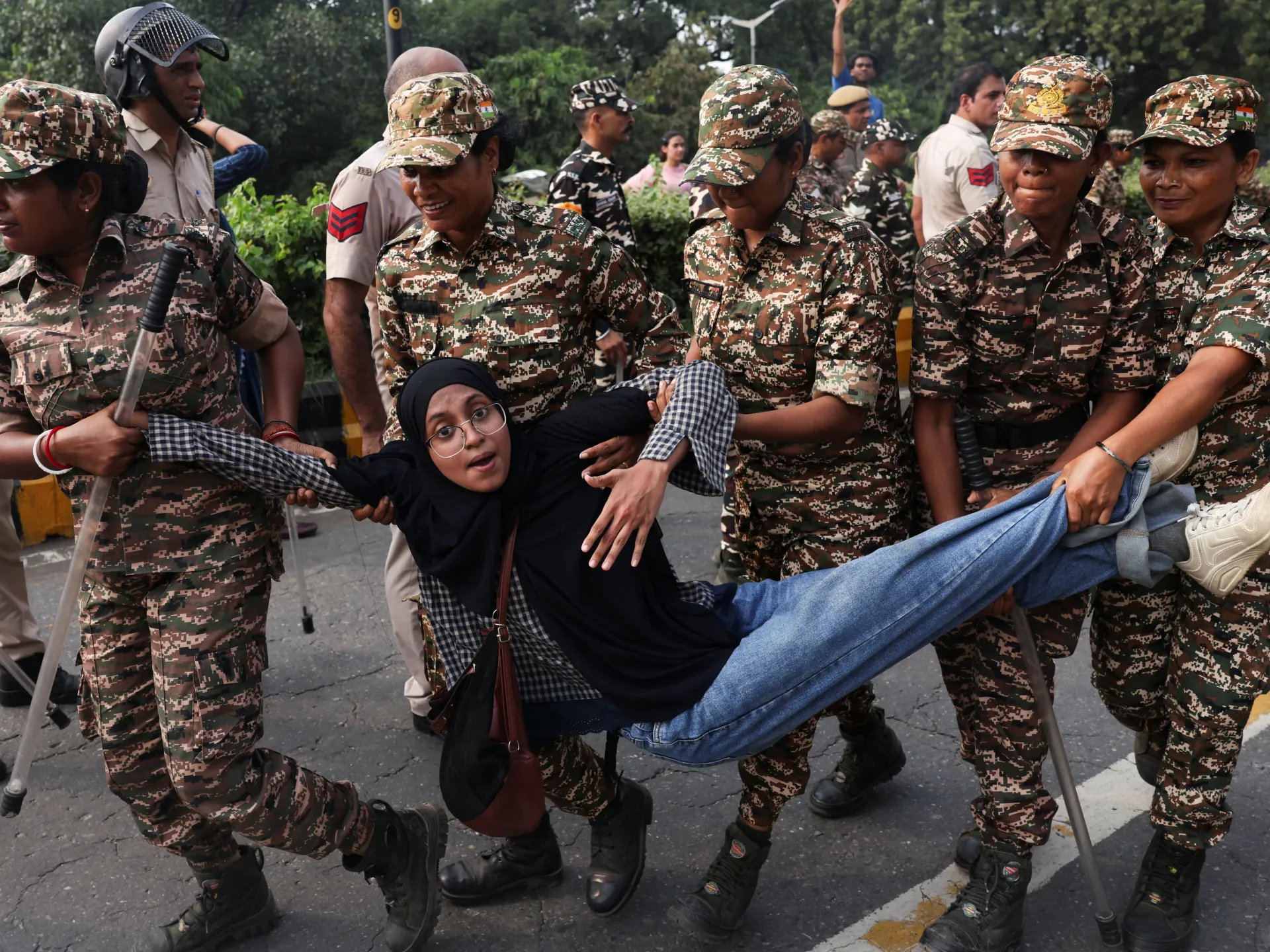
India’s capital is bracing for a second day of protests after thousands of people, including the leaders of the “cockroach” youth movement and opposition politicians, were detained amid a major crackdown on demonstrators.
Abhijeet Dipke, the Cockroach Janta Party (CJP) leader, called Prime Minister Narendra Modi a “bully” shortly after he was released on Sunday. Thousands of other protesters, some of whom are members of left-wing student groups, were released on Sunday after the Supreme Court called their detention “illegal”.
Recommended Stories
list of 3 itemsend of list
“Modi, as PM, is an embarrassment to India. Never has this country seen a bigger coward and bully,” Dipke said in a post on X.
The protesters are demanding that Chief Election Commissioner Gyanesh Kumar resign over a revision of voter lists that they say disproportionately benefits Prime Minister Modi’s governing Bharatiya Janata Party (BJP).
Millions of voters, including Muslims, have been deleted from the rolls in a process marred by technical errors and a perceived lack of transparency.
The protests erupted across several Indian cities after an investigation by the Indian Express newspaper found that two election commissioners objected to many of Kumar’s decisions. India’s Election Commission is a constitutional body with three members, and decisions are taken by majority.
What was the scale of the government crackdown?
Ahead of Saturday’s protests, the capital, New Delhi, was turned into a fortress with tens of thousands of police and paramilitary forces deployed, trains and metros suspended, and markets and major roads blocked, to prevent protesters from reaching Jantar Mantar – a designated protest site close to India’s parliament. Jantar Mantar was sealed off.
Jantar Mantar was the site of the July protest that led to the resignation of Education Minister Dharmesh Pradhan. That protest, also led by the CJP, was triggered by a string of exam paper leaks.
Security forces also set up checkpoints on major roads and entry points across the city of 20 million people, checked buses and inspected vehicles searching for protesters.
Barricades and concrete blocks disrupted traffic, while anti-riot vehicles equipped with tear-gas launchers guarded key routes.
More than 30,000 police and paramilitary personnel were deployed across the city, according to local media, and mobile internet services were suspended across several areas of the capital to stop people from online mobilisation efforts by the CJP and other youth groups.
Police detained CJP founder Dipke, as well as his associates, Saurav Das and Ashutosh Ranka, from an airplane upon arrival in New Delhi from Mumbai.
Dipke shared a video on his Instagram channel, showing a team of police officers entering the Air India plane after it landed. As they came closer, he said: “I have come to get arrested. I am not afraid of you guys.”
In another video shared by Ranka, Dipke said: “This is dictatorship”.
Delhi police also detained YouTuber Dhruv Rathee and Neha Bora, the national president of the All India Students’ Association (AISA), a leftist group affiliated with the Communist Party of India (Marxist-Leninist).
Some opposition politicians, as well as former chief ministers – Mamata Banerjee of West Bengal, Arvind Kejriwal of Delhi, and Pinarayi Vijayan of Kerala – were also detained, television channels showed.
Despite the unprecedented crackdown, small protests took place elsewhere in the city, including at the popular crafts market “Dilli Haat”. But police also ended up quashing these protests and detaining journalists trying to cover the demonstrations.
Besides New Delhi, some 600 people were also arrested in Mumbai, India’s financial hub, over the protests, according to the ANI news agency.
Have protesters been released?
On Sunday, police officials said all detainees had been released.
The CJP leaders were released on the condition that there would be ‘no breach of peace’ for a year.
Speaking to reporters at a press conference in New Delhi on Sunday afternoon after their release, Saurav Das, the group’s co-convenor, slammed the police for “arriving like mafia dons” and “abducting” them on their plane.
After his release, Rathee said he was “KIDNAPPED.”
Several journalists from news outlets, including Scroll.in, Newslaundry and others were detained. They have all since been released, but Newslaundry said some of their reporters’ media equipment was seized during the detention.
The Committee to Protect Journalists told Al Jazeera on Saturday that it was deeply concerned by reports of journalists being temporarily detained.
“Just as police personnel are doing their jobs, journalists are also doing theirs. A free and independent press is essential to democracy,” Kunal Majumder, the CPJ’s Asia Pacific programme coordinator, said.
How were detainees treated?
Aban Raza, a 37-year old visual artist based in New Delhi who was detained on Saturday, said the “entire experience has left her shocked and angry”.
“We are protesting for the right to vote. It affects all of us. So why is the police suspicious of us and treating us with so much aggression? This makes me angry,” she told Al Jazeera.
Together with three other protesters, including economist Jean Dreze, Raza managed to get close to Jantar Mantar on Saturday morning.
“As soon as we reached close enough to the protest site, we started unfurling our banners which called for the resignation of Election Commission chief Gyanesh Kumar and for free and fair elections. But within minutes, police officials approached us, began tearing our banners and dragging us towards a bus to detain us,” she told Al Jazeera.
“We tried to resist as the police dragged us inside the bus. Both my arms feel very sore today,” she said.
Raza says that some of those detained were not even protesters.
“They were people who had just been picked up whilst they were going about their day. One person was going to the Gurudwara, another was going to meet his wife and they got detained. Most of these people were working class people,” she said.
Raza, who was released on Saturday night, said she is going back to protest on Sunday.
Will the protests continue?
Youth leaders have struck a defiant note, pledging to keep up protests in New Delhi. Some members were detained on Sunday.
The group’s co-convenor Saurav Das, who was released from detention on Sunday, said in a post on X: “After Modi-Shah [Amit Shah, India’s home minister] turned Delhi into a fortress and unleashed what can only be described as a war against their own citizens, one thing has become abundantly clear: Gyanesh Kumar is at the very heart of this government’s survival.”
“But we the young generation will continue to demand accountability. We shall neither be intimidated nor silenced. We are not backing down. We are returning with full strength!” he added.
The CJP has also announced protests in other Indian cities including Mumbai for Sunday evening.
Meanwhile, Neha Bora, the national president of the All India Students’ Association, began a protest on Sunday afternoon in central Delhi.
“Our peaceful protest has started at RK Ashram. Join us here and stand with us!” she said on X.
But shortly afterwards, Bora and several others were detained.
Are India’s opposition parties backing the protests?
The INDIA Bloc – India’s opposition alliance led by the Indian National Congress – has participated in protests alongside the youth-led groups, demanding the resignation of Chief Election Commissioner Kumar.
The Bloc is expected to hold a protest on Monday in the capital.
“Yesterday, we held a comprehensive meeting with various leaders to prepare for this march,” Congress general secretary K C Venugopal told reporters on Saturday.
“Gyanesh must go. There will be no backing down,” he added.
Congress party leader and the leader of the opposition in parliament, Rahul Gandhi, has been spearheading a campaign against the election commissioner for months. He was briefly arrested last week over the election protest in New Delhi.
“Modi government has turned the ‘Mother of Democracy’ into a ‘Muzzled Democracy’!” Congress party president Mallikarjun Kharge posted on X.
“Detentions, arrests, jails, lathis [batons] and pellets cannot deter the people of India. Since the days of our freedom struggle, the youth have been at the forefront of shaping the nation’s destiny.”
Why is India’s government refusing to talk to the protesters?
The protests intensified after the Indian Express reported last month that two election commissioners had questioned Kumar’s revisions that removed roughly 130 million names from voter lists.
The BJP says that of the 130 million names deleted from voter lists, 28 million are dead, 63 million have relocated, 10 million are duplicates and 30 million could not be traced by officials.
The ruling party has also said its electoral success reflects Modi’s popularity and India’s economic growth, and accuses opposition parties of spreading misinformation.
But these protests have become a larger question of democracy and the right to dissent under the Modi government.
While the government had briefly engaged in talks with the youth groups during the July 2026 protests, it has taken a much more hardline stance against demands targeting constitutional and electoral authorities.
The BJP’s officials have also characterised the protests and online opposition as a concerted political effort to destabilise the government rather than highlight legitimate public grievances.
On Saturday, BJP spokesman Sambit Patra dismissed the demonstrators as “anarchic elements” and said that “their flop show has been completely demolished”.
“What is happening at Jantar Mantar, what you can see on TV and a few social media handles, is not India’s story. India is calm and going ahead under good governance,” he told reporters.
Critics and analysts interviewed by Al Jazeera argue that conceding to demands for the election chief’s resignation would validate opposition accusations of vote theft and project weakness for a prime minister sensitive to his political aura.
But Sanjay Kapoor, editor of Hard News Magazine and a political analyst, told Al Jazeera on Saturday that most people coming to the protests do not want Modi’s BJP to continue to govern.
“Modi’s government has begun to lose a lot of credibility at the moment,” he said.
“BJP is afraid that the ground has shifted dramatically against them and they would find it very difficult to come back to power.”
What has been the global reactions to the protests?
On Saturday, the United Nations Human Rights Office expressed concerns over mass detentions before and during the protests.
“We call on the authorities to ensure that the right to peaceful assembly is fully respected and fulfilled,” UN Human Rights spokesperson Thameen Al-Kheetan said in a statement.
He also urged authorities to engage in “meaningful dialogue” to address the “broadly held” concerns expressed.
Amnesty International told Al Jazeera that the detentions signal the Indian government’s desperate attempts to “suppress critical voices”, while Human Rights Watch said that “instead of addressing legitimate citizen concerns, institutions expected to uphold rights appear to be under the stranglehold of rising authoritarianism.”
The Indian mission to the UN in Geneva, however, called the global concerns “misplaced” and said they constitute “an unwarranted interference in the internal affairs of India”.
It stressed that the right to peaceful assembly was guaranteed by India’s Constitution.
“As in every democracy, Indian citizens exercise this right subject to reasonable restrictions in the interest of public order.”

Yandex: Ukraine strikes Russian data centre again despite Trump warning
Both Russia and Ukraine have stepped up attacks on infrastructure in recent months as the war between them continues into its fifth year following Russia’s full-scale invasion.
Kyiv said it is targeting places that help the revenue streams for Moscow’s war machine, and that the latest attacks could force Russia to divert its resources to repair the damage at Yandex.
Writing on Telegram, the company confirmed that its data centre in Vladimir was damaged and that operations had been “completely suspended,” although they were working to restore connectivity.
The other strikes against Yandex facilities were on Thursday in Sasovo and Friday in in Kaluga, south-west of Moscow, causing operations to be suspended.
The tech company – which also runs a food-ordering and taxi app used by tens of millions of people – said its data centres were critical for the normal operation of its services, and that it was “very difficult to predict” when they would be back online.
Meanwhile, Russian strikes on Ukraine have also continued through the weekend.
The State Emergency Service of Ukraine said six people were injured in Russian attacks overnight on four districts in its south-eastern Dnipropetrovsk region.
On Saturday, at least 20 people including four children were killed in Russian attacks on Zaporizhzhia, local officials confirmed.

L.A. artist’s plush art inspiration: lottery tickets, fried chicken
Textile artist Jane Jauregui is expanding the boundaries of what plush figures can be, thinking beyond that pile of mass-produced, branded stuffies huddled atop a twin bed, crammed inside a toy chest, or dangling from a backpack strap.
True, in the nearly two decades that she’s been creating plush figures, she’s produced charmingly minimalistic foxes, cats and buffalo fit for a nursery. However, her latest work has been anything but child’s play.

A plush fried chicken bucket is one of Jane Jauregui’s textile takes on beloved dishes.
She launched her “soft sculpture” company, STFD, in 2024 with the intention of transforming her inner thoughts into plush form — no matter how outside the box those ideas may be. After all, why bring yet another teddy bear into the world when you can dream up a stuffed paintbrush trailing a splash of brightly colored felt “paint,” or a striped bucket filled with faux fried chicken?

In this series, we highlight independent makers and artists, from glassblowers to fiber artists, who are creating original products in and around Los Angeles.
“It stands for Stuff That Feeds Delight,” Jauregui said of the brand’s acronymic name. “The newer things I’m working on are more like display items, but you can absolutely touch them,” she explained. “I just started playing more with the idea of decor, aging it up a little bit more, and playing with the idea of how we can really elevate it.”
Take, for example, a plate of longsilog, the traditional breakfast meal her Filipina grandmother used to make for her. Inside the converted garage of the same Van Nuys house where she was raised, Jauregui whipped up a playful sausage-riceball-fried egg combo using a sewing needle, felt, embroidery floss and sherpa fleece, rather than pots and pans.
Moved by memories of her grandfathers, she created a collection of stuffed felt cigarette butts, complete with simulated ash made by zigzagging stitches.
“My Thai and Filipino grandpas were chain-smokers,” she said. “They passed away, and I just started thinking a lot about what would represent them. Cigarettes immediately came to mind.”

Jane Jauregui’s home studio inside the converted garage of her childhood home.
Though she takes inspiration from her personal experiences, many of her plush figures strike a universal note. Most anyone born in the 20th century would take one look at her plush retro alarm clock radio and instinctively feel the urge to whack its elongated vinyl “snooze” button. The trompe l’oeil wood paneling (which she made by printing a wood-grain design directly onto dark brown fabric) and the red-tinted digital readout screen (the numbers are iron-on transfers) make it a dead ringer for those once-commonplace nightstand devices that predated smartphone alarms.
She first tried her hand at the craft about 18 years ago, after she and her husband, Sergio, couldn’t find the right gift for his newborn niece at famed New York City toy emporium FAO Schwarz.
“Everything was licensed, and I didn’t want any kind of IP [intellectual property],” she recalled. “I went home and said, ‘Well, I’m just going to sew something for her.’ Sergio was like, ‘But you don’t know how to sew, so that’s a little crazy.’ I said, ‘That’s OK, I’ll figure it out!’”


1. A plush hot dog. 2. An ashtray full of plush cigarettes, inspired by Jane Jauregui’s grandparents.
Fortunately, she had a leg up when it came to picking up the new skill. Her father, a retired clothing designer and patternmaker, had introduced her to the inner workings of the garment industry from a young age.
“My dad would have full-time work five days a week, so there wasn’t a lot of time for him to teach me,” she said. “But when he would take freelance work home, I would sit in this garage with him. He had a big table, and I would sit there and watch him sew. It was just really how we spent time together.
“When I decided to start making plush, I remembered little things he would do, like how to walk a pattern — which is making sure the pattern pieces are matching — or how he would move the ruler. I would remember all of those things and put my own spin on it.”

Artist Jane Jauregui eschews watercolors and acrylics, preferring to “paint with plush.”
She started by making simple shapes like a stuffed orange, pear and an eggplant, working her way up to the finalized baby gift: a stuffed whale. By 2009, she’d completed enough plush produce to start selling at local pop-up markets under the business name Janie XY. Sergio, an artist in his own right, even constructed her first booth to resemble a fruit stand. Her first hit item was a baby rattle shaped like a chicken drumstick that was sold wrapped in cellophane, much like a meat-counter purchase. This time, her muse was her own infant niece.
For the record:
11:27 a.m. Oct. 7, 2026An earlier version of this article said Jane Jauregui’s daughter is 4 years old. She is 5.
All the while, she was holding down a full-time job creating window displays for Forever 21. She continued to build her squeezable empire in her off-hours, even as she transferred to corporate jobs at Mattel and Disney (for which she’s now a consumer products design manager), and became a mother. Taking a page from her father, she’s made her at-home workspace accessible to her 5-year-old daughter.
“She’s in here all the time,” she said. “I let her touch everything. What’s fun about the medium is you can’t break it. You can get it dirty, but she knows what to do. She’s really mature about it. She loves to clean the sewing machine — she’ll go in with a pin and pick out all the lint, and she’ll think that was a good day’s work. We want her to feel like part of the work because she is a part of it.”

Jane Jauregui’s sewing machine, which her daughter likes to clean, in her home studio.
That said, Jauregui’s STFD creations aren’t necessarily made with the wee ones in mind. Consider her new pieces celebrating liquor stores, for which she converted items like lottery tickets and frothing beer cans into plush form.
“It’s something that we all take for granted,” she said of the ubiquitous neighborhood corner store. “You tend to turn your nose up at it, but it’s there for you all the time.”
She and her husband also pay homage to these unsung cultural hubs in the latest edition of their fledgling zine, which they’ve dubbed “a gallery you can hold.” Inside, photographs of the stuffed figures fill the pages, accompanied by written musings. (The one-of-a-kind featured items will also be available for purchase.) The series is the couple’s prescribed antidote to the social media doomscrolling they call “internet indigestion.”

Jane Jauregui’s goal for the plush items she makes in her studio? Delight.
She’s also planning to explore plush Thai food in honor of Grandma’s Thai Kitchen, the Van Nuys restaurant her mother owned and operated for years. After treks to downtown L.A.’s Fashion District to find just the right materials, she’ll mock up clever riffs on julienned ginger and cilantro leaves. For her, there’s ample delight in those little details.
“STFD is really about giving myself permission to just do things that make me happy,” she said.

How to get your working class origins into every conversation
MEETING someone new and middle-class? They may assume, seeing you in your Reiss suit, that you’re just like them when actually you’re better. Drop in these class markers:
Mention your dad was a roofer
It doesn’t matter what you’re discussing: Brexit, sushi, penguins or the novels of Elizabeth Strout, it’s relevant. It’s even better if you say ‘is’, suggesting he cannot afford to give up work even into his 60s. They don’t know he’s got his own firm and sits on his arse all day.
Explain your mum doesn’t get what you do
Unlikely, considering your job isn’t that hard to comprehend. It’s more a reflection of the fact she can’t understand why they pay you for that when you’re always pissing about at home. But it hints at the drama caused by your rise from a terraced house to the heights of digital services advisor.
Call school ‘the comprehensive’
Force it in even if it wasn’t in the school’s name. Act as though your perfectly pleasant state school was rife with guns, gangs and knife attacks. To be fair there was once a fight in the playground. Wait, no, a dog. There was a dog in the playground.
Emphasise your lack of learning
You wish you could understand the world like the well-educated – things like quinoa, financial instruments, the plays of Sarah Kane – but you can’t, because of your schooling. Admittedly that was because you skipped lessons to smoke, but surely that’s society’s fault? To this day, it’s hurtful how little you know about Molière’s comedies.
Exaggerate your accent
Even if your area doesn’t have a particularly charming rural accent, you can put on a general Cockney lilt, like a child in a 1950s film. Your attempt to deploy it at the garage for a lower rate on a new exhaust is unsuccessful. He must have gone to public school.
Punch them hard in the face
None of it working? Resort to violence, then explain that was how people communicated in the harsh cobbled streets where you grew up. A clip round the ear was affection, a punch was an expression of camaraderie and being knocked to the floor and stamped on was a warm embrace from a beloved grandparent. That should get it through to them.

I went on a cowboy holiday with world’s biggest outdoor rodeo, huge funfair and pickle pizzas
IT’S not my first rodeo, as the saying goes. Actually, it is though, so I thought why not make it the biggest in the world?
Like many Brits, I’ve a new-found obsession for country music, listening to songs on repeat from Luke Combs and Ella Langley and binge-watching Western drama Yellowstone on Netflix.
But it’s time to pull on my boots and hat for real — and it doesn’t get much more cowboy than the Calgary Stampede.
Once a niche show of Western and indigenous cultures, the Stampede has evolved into one of Canada’s largest festivals, attracting more than a million visitors each year.
Every summer, the Blue Sky City is taken over for ten days by the self- proclaimed “greatest outdoor show on Earth” — and tickets have just gone on sale for 2027.
As well as the world’s biggest outdoor rodeo, the Calgary Stampede has live music, fairground rides and a gut-busting feast of food and drink.


Boot heels click down every street and white cowboy hats bob past every window.
Rodeo director Kristina Barnes tells me: “This began as a last blast of the Wild West just as it was going away, and that’s what it continues to be. People come from all over the world to be here.”
Animals are the star of the show — the Alberta province has more cows than people — so the rodeo was top of my agenda at the festival.
Events including bronc and bull-riding, roping and barrel racing run every afternoon.
I watched as brave cowboys and girls clung doggedly to thrashing horses and bulls, or tried to lasso and tie calves in under eight seconds.
Later the crowds really got going and the beer flowed as the evening entertainment kicked off with chuckwagon racing.
This involves teams of four riders racing six horses and a wagon around the “half mile of hell” dirt loop.
And I got goosebumps when I watched the indigenous bareback relay event.
Here, athletic young riders leap from the ground on to their horses, thunder round a lap of the racetrack, dismount the moving horse and jump up on to a second horse, then repeat the feat for a third lap.
The crowd goes wild for the horses and riders, who wear barely any equipment — no boots, saddles or shirts.
If all this leaves you itching to get in the saddle yourself, the Boundary Ranch in Kananaskis sits an hour’s drive west of Calgary and offers hacking and trail rides suitable even for total beginners.
Kananaskis is in the foothills of the breathtaking Rocky Mountains, meaning the drive there was worth a day trip on its own.
That’s the other glorious thing about Calgary, it is the gateway to some of Canada’s most stunning landscapes in Banff, Jasper and Lake Louise, so a Stampede-based road trip practically plans itself.
At the ranch, I mounted my bay horse, Jake, for a group stroll through lush pine forest.
Jake turned out to have no respect for authority and a naughty habit of stopping to eat grass, but it was a pinch-me moment when we turned the final corner to a view of a huge snow-spotted mountain towering behind the trees.
If you are not one for riding, the city has enough going on to keep you entertained during the ten days of the Stampede.
Locals reckon the night-time party scene can compete with Nashville, the home of country music.
But it is not just that genre on offer. Big-name headliners this year included Rihanna’s rapper beau ASAP Rocky, punk-pop legends All Time Low and Canadian DJ Deadmau5.
Marquee stages are dotted around the city centre as well as in the Stampede grounds.
I was already a fan of young country star Bailey Zimmerman so seized the chance to see him on the festival’s biggest stage, Nashville North.
Music and drinking goes on into the early hours. And according to local legend, the city has a baby boom every spring, around nine months after the Stampede.
It’s also reportedly a great place to advertise if you’re a divorce lawyer . . .
It is also reportedly a great place to advertise if you are a divorce lawyer . . .
The late crowd is young and glamorous, with more skin on show but still heavy on the Western vibe with denim, boots and hats all-round.
But by day, the Stampede is more a family affair.
The Midway grounds, which sit at the heart of the festival, host a huge funfair with water slides, rollercoasters, a Ferris wheel and haunted house.
You’ll need some hearty grub to fuel the long days and the Stampede’s bonkers food scene is impossible, and foolish, to ignore.
There are more than 400 stands and if you can think it, you can probably order it.
Mad recipes included Oreos deep-fried in butter, moose pizza and Spam fries.
I tried loaded mac ’n’ cheese, ginger beef perogies (dumplings), a grilled cheese sandwich with spicy ramen noodles inside, churros in a pina-colada sundae, and a bison burger.
I can’t pick a favourite but I am gutted I couldn’t squeeze in the deep-fried pickle pizza.
On the last day we grabbed breakfast at one of the city’s 30-odd pop-ups, which give out free pancakes every morning through the Stampede.
It was set to be another 30C day in Canada’s sunniest city and a woman with a cowboy hat and guitar was standing on the roof singing Lainey Wilson song Country’s Cool Again.
Hot damn, she’s right.
GO: CALGARY
GETTING THERE: WestJet flies from Heathrow to Calgary from £415 return.
See westjet.com.
STAYING THERE: A 17-day motorhome holiday to Alberta, including two nights at a hotel in Edmonton, three nights at a hotel in Calgary and 12 days’ motorhome hire, plus two-day ticket to the Calgary Stampede, is from £1,630pp.
Flights extra.
Call 0333 234 0943 or see freedomdestinations.co.uk.
For more info, see visitcalgary.com.

How the GOP weaponized trans issues and left Democrats searching for a strategy
At the Republican Party’s midterm convention, President Trump said he would make his crusade against transgender rights a major campaign issue ahead of the Nov. 3 election — calling the message that “men should not be playing in women’s sports” one of his party’s “great sound bites of all time.”
During a recent campaign trip, Gov. Gavin Newsom, a longtime LGBTQ+ advocate and likely Democratic contender for president in 2028, stood by his remark last year that allowing transgender athletes to compete in girls’ sports is “deeply unfair,” saying, “I haven’t been able to figure out how to make it fair from my perspective.”
For the second election cycle in a row, the rights of transgender people have taken center stage politically, despite their accounting for only about 1% of the U.S. population and many voters identifying other issues as far more important — splitting Republicans and Democrats, but also Democrats among themselves and putting the party on the defensive.

Transgender athlete AB Hernandez, third from right, sits with other athletes at the CIF State Track Championship finals in Clovis on May 30, 2026.
(Tomas Ovalle / For The Times)
The politics are part of a much broader, international battle playing out in education, sports and the law, from local California classrooms and high school sports to the Olympic stage and the U.S. Supreme Court. Polling for years has shown most Americans oppose discrimination against transgender people, but also that a majority — including a substantial portion of Democrats — oppose transgender athletes participating in girls’ sports and children receiving gender-affirming care such as surgery or puberty blockers.
Republicans are pushing a well-funded message that transgender rights should be dismantled across the board, in healthcare, education, sports, the military and public spaces such as restrooms. Conservative mega-donors such as Elon Musk have spent millions amplifying that message in competitive races from Alaska to Ohio to Texas.
And to some degree, those tactics have worked. While many Democrats have ardently defended transgender rights, particularly in California, others in the party have sided with Republicans or softened their support.

Democratic Senate candidate James Talarico appears with Jeffrey Epstein abuse survivors in Dallas on Sept. 10.
(Anja Schlein / Dallas Morning News )
James Talarico, the Democratic U.S. Senate candidate in Texas, backpedaled from past votes by saying young transgender athletes shouldn’t be allowed to play “if it risks safety or fairness,” while others including Rob Sand, a candidate for Iowa governor, and Rep. Marcy Kaptur (D-Ohio) have said they shouldn’t play.
Such messaging has dismayed transgender people and their families, as well as LGBTQ+ rights groups who have been trying to refine Democratic messaging on trans issues since Vice President Kamala Harris — another longtime LGBTQ+ advocate from California — responded to Trump’s anti-trans attacks in 2024 with a message some considered muddled.
Imara Jones, a transgender journalist and founder of TransLash Media, a platform built to spotlight trans people’s own experiences, said the party’s conflicting messaging “underscores the degree to which the Republicans have actually successfully weaponized trans issues.”
“You’re seeing a really sharp political calculus among Democrats,” Jones said, with those “in tight races, where they need to have Republican votes,” bending one way, and others who “want to make a statement about principle” and defending LGBTQ+ rights moving in the other.
Many Democrats in California say they believe the issue is a moral one and that Democrats only hurt themselves by ceding ground on human rights.

A volunteer for Toni Atkins, the former president pro tempore of the California State Senate, is silhouetted holding a Pride flag at the Harvey Milk Coachella Valley Diversity Breakfast, at the Palm Springs Convention Center in Palm Springs Thursday, May 8, 2025.
(Allen J. Schaben / Los Angeles Times)
“The solution is not to be ambiguous, but to be firm that we support basic human rights and the basic humanity of trans people,” said state Sen. Scott Wiener (D-San Francisco), a leader on pro-LGBTQ+ legislation running to replace retiring Rep. Nancy Pelosi (D-San Francisco). “Then go on to talk about the big issues facing our country, like this illegal war, like the fact that Congress has done nothing to regulate AI, like the explosive cost of energy and child care and housing.”
A national conversation
Trump has signed executive orders to bar transgender athletes from competing in girls’ sports, prohibit federal funding for gender-affirming care for youth, oust transgender service members from the military and deny recognition of transgender and nonbinary identities on critical documents such as passports.
The Justice Department has sued California and other states over their trans-inclusive sports policies, and successfully threatened large hospitals into ending gender-affirming care programs. The Centers for Medicare and Medicaid Services barred federal Medicaid spending on gender-affirming medication or surgeries for minors.

Martin Makary, commissioner of the Food and Drug Administration, speaks at Health and Human Services headquarters in Washington on Dec. 18, 2025.
(Stefani Reynolds / Bloomberg)
Trump campaigned on such policies, and he and other Republicans clearly see them as helpful in the midterms. In his convention speech, Trump said he’s been surprised more Democrats haven’t abandoned transgender rights given polling showing a majority of Americans oppose transgender athletes in girls’ sports.
“They say it’s an 80/20 issue,” Trump said, in an apparent reference to a January 2025 New York Times/Ipsos poll that found 79% of respondents believed transgender athletes should not be allowed to compete in women’s sports. More recent polls have shown a smaller majority opposed.
The debate has prompted new bans on transgender athletes in college sports and in the Olympics and divided some of the most well-known professional women athletes in the world. It has also put transgender kids in California and elsewhere under an intense microscope — and on the receiving end of harassment from protesters who show up with loudspeakers to local track meets.

Demonstrators at a Rainbow Families Action march in Emeryville, Calif., on Dec. 8, 2025.
(Jessica Christian / San Francisco Chronicle )
Arne Johnson, a Bay Area father of a transgender child who helps run the advocacy group Rainbow Families Action, said being targeted by Republicans is scary, but watching Democrats “find ways to be more flexible about the rights of human beings” has been profoundly disappointing.
But he said he’s also been encouraged by some more recent polling showing Americans moving back toward the middle on transgender rights, which he believes is in part due to people being deluged with anti-trans ads getting frustrated that the political conversation isn’t focused on issues they care more about, like affordability and healthcare.
Ramiro Sarmiento, a spokesperson for the Human Rights Campaign, which has tracked at least $50 million in anti-trans political ads this cycle, agreed, saying, “MAGA wants to talk about trans kids because they’re losing the conversation voters actually care about.”
Conservative groups reject that framing. Many deny tht transgender people exist, while others say they are working to protect cisgender children or defend religious beliefs. They have also scoffed at Democrats who have changed their positions in the lead-up to the election, with the conservative American Principles Project accusing Talarico of only pretending to shift away from his “gender radicalism” on sports in order to win votes.
Allison Schuster, a White House spokesperson, said the Biden administration “spent four years pushing a radical agenda” of gender-affirming care for children, while Trump “pledged to restore common sense” and has since “delivered by consistently taking strong action to protect children from these dangerous, life-altering medical practices.”
The fight in California
In California, transgender athletes competing in youth sports has been raised as an issue in the governor’s race, where Republican hopeful Steve Hilton has rallied against their inclusion, and featured prominently in the races for the next state attorney general and the next state superintendent of public schools.

Transgender athlete AB Hernandez competes for Jurupa Valley High School at the 2025 CIF state track and field championships.
(Tomas Ovalle / For The Times)
Several Democrats running for Congress in the state have been criticized for their records on transgender rights, including San Diego City Councilmember Marni von Wilpert, who is seeking the redistricted congressional seat of departing Rep. Darrell Issa (R-Bonsall), as well as Reps. Adam Gray (D-Merced) and Derek Tran (D-Orange).
Christian Martinez, a National Republican Congressional Committee spokesperson, has accused Von Wilpert of having a “perverted agenda [that] pushes hormone treatments on kids,” and Gray of being “for they/them, not for Californians.”

Marni von Wilpert, a Democratic candidate for California’s 48th Congressional District, canvasses in a neighborhood Friday, May 29, 2026, in San Marcos, Calif.
(Gregory Bull / Associated Press)
California Atty. Gen. Rob Bonta’s office is fighting on multiple fronts to protect gender-affirming care and successfully rebuffed a Justice Department lawsuit over the state’s transgender sports policies. But pressure is coming not only from the Trump administration.
The California Interscholastic Federation, which oversees high school athletics, also revised its rules to ensure that transgender athletes in individual sports do not displace cisgender ones from rankings or medal podiums. And after local California teachers sued, the U.S. Supreme Court in March ruled against a controversial California student privacy law that precluded teachers from revealing a child’s interest in presenting in gender nonconforming ways in school to their parents if the child requested confidentiality, finding that the policy infringed on parents’ rights and the free exercise of religion.
Meanwhile, state lawmakers just passed at least a dozen measures aimed at bolstering LGBTQ+ rights, including by restoring an LGBTQ+ youth suicide and crisis hotline; helping discharged LGBTQ+ service members find housing and jobs; requiring California gender-affirming healthcare providers who are subpoenaed to inform Bonta’s office if they intend to respond; improving access to HIV prevention care and enhancing LGBTQ+ data privacy.
Newsom signed all those measures into law — his office said California “will not stand” for Trump’s “all-out assault on the LGBTQ community” — but vetoed a bill that would have barred future governors from allowing the extradition of abortion or gender-affirming care providers in California to states where such care is illegal, citing concerns about reduced executive discretion.
The 2026-27 state budget appropriated $66 million for gender-affirming care, including up to $30 million for underinsured patients in the Uncompensated Care Program, $26 million to assist organizations that provide such care and $10 million to cover care for poor children who lost it under the new Medicaid rules. Wiener called the latter a “short-term solution” that will protect kids while the state figures out a more permanent billing pathway under Medi-Cal.
A.W., a Bay Area mother of a transgender teenager who requested anonymity because she fears being targeted by the Trump administration, said her child’s gender-affirming care — a lifeline for him in recent years — was disrupted by the Medicaid rule change, and the state’s temporary fix was too little, too late.
A.W. said families like hers “shouldn’t have to make medical decisions based on politicians in Washington,” particularly for care so critical to her son and other kids. “If he had not had access to gender-affirming care, I don’t know where we would be,” she said. “It scares me to think about it.”
Times staff writer Dakota Smith contributed to this report.

High school football: Week 8 schedule
HIGH SCHOOL FOOTBALL
(Games at 7 p.m. unless noted)
MONDAY’S SCHEDULE
CITY SECTION
Northern League
Franklin at Eagle Rock
THURSDAY’S SCHEDULE
SOUTHERN SECTION
Alliance League
South El Monte vs. Alhambra at SoFi Stadium, 8:30 p.m.
Alpha League
San Juan Hills at Yorba Linda
Bay League
Palos Verdes at Mira Costa
Big West League
Corona Santiago at Corona
Eastvale Roosevelt at Riverside King
Norco at Corona Centennial
Bravo League
Tustin vs. Villa Park at SoFi Stadium, 5 p.m.
Delta League
Huntington Beach at Western
Desert Empire League
Shadow Hills at Palm Desert
Desert Sky League
Adelanto at Victor Valley
Barstow at Silverado
Epsilon League
Brea Olinda at Santa Ana Foothill
Golden League
Knight at Antelope Valley
Inland Valley League
Arlington at Hemet
Ivy League
Liberty at Rancho Christian
Orange Vista at Vista del Lago
Lambda League
Sonora at Santa Ana Calvary Chapel
Manzanita League
Nuview Bridge at Hamilton
Metro League
Bell Gardens at El Monte
Mojave River League
Oak Hills at Sultana
Montview League
Azusa at Hacienda Heights Wilson
Ontario at La Puente
Sierra Vista at Duarte
Mountain Pass League
San Jacinto at Elsinore
Omicron League
Garden Grove at Irvine University
Pioneer League
West Torrance at Torrance
River Valley League
Jurupa Valley at Rubidoux
Miller at Norte Vista
San Andreas League
Kaiser at Rim of the World
Sigma League
Costa Mesa at Rancho Alamitos
Sunbelt League
Valley View at Perris
Valle Vista League
Alta Loma at Diamond Ranch
Chino at San Dimas
Los Osos at Claremont
8-MAN
INTERSECTIONAL
Bakersfield Valley Oaks Charter vs. Milken at Birmingham, 5 p.m.
FRIDAY’S SCHEDULE
CITY SECTION
Central League
Hollywood at Contreras
Mendez at Bernstein
Roybal at Maywood CES
Coliseum League
King/Drew at Crenshaw
Washington Prep at Marquez
Eastern League
Bell at Legacy
Los Angeles Roosevelt at South East
South Gate at Garfield
East Valley League
Fulton at Arroyo
Monroe at San Valley Poly
North Hollywood at Grant
Verdugo Hills at Arleta
Exposition League
Manual Arts at Fremont
Marine League
Carson at Narbonne
Gardena at San Pedro
Metro League
Los Angeles Jordan at Hawkins
Rancho Dominguez at Locke
Northern League
Los Angeles Marshall at Lincoln
Los Angeles Wilson at Eagle Rock
Southern League
Belmont at West Adams
Diego Rivera at Torres
Valley Mission League
Granada Hills Kennedy at Canoga Park
Reseda at Van Nuys
San Fernando at Sylmar
Western League
Fairfax at Los Angeles University
Los Angeles Hamilton at Palisades
Westchester at Venice
West Valley League
El Camino Real at Chatsworth
Granada Hills at Birmingham
Taft at Cleveland
Nonleague
Santee at Angelou
SOUTHERN SECTION
Almont League
Montebello at San Gabriel
Alpha League
Los Alamitos at Edison
Mission Viejo at San Clemente
Angelus League
Cathedral at Bishop Montgomery
St. Paul at St. Francis
St. Pius X-St. Matthias Academy at Paraclete
Arroyo League
La Canada at Burbank
Monrovia at Muir
Baseline League
Damien at Upland
Rancho Cucamonga ar Etiwanda
Bay League
Redondo Union at Inglewood
Big West League
Chaparral at Murrieta Mesa
Great Oak at Temecula Valley
Vista Murrieta at Murrieta Valley
Boulder League
Gabrielino at South Pasadena
Bravo League
Corona del Mar at Capistrano Valley
La Habra vs. Crean Lutheran at SoFi Stadium, 8:30 p.m.
Boulder League
Burbank Burroughs at San Marino
Pasadena at Crescenta Valley
Camino Real League
Mary Star of the Sea at Cantwell-Sacred Heart
St. Genevieve at St. Bernard
St. Monica at Verbum Dei
Channel League
Moorpark at Thousand Oaks
Oak Park at Buena
Westlake at Ventura
Citrus Belt League
Cajon at Beaumont
Citrus Valley at Yucaipa
Redlands at Redlands East Valley
Citrus Coast League
Channel Islands at Del Sol
Grace at Carpinteria
Santa Clara at Nordhoff
Coast 101 League
Agoura at Camarillo
Calabasas at Oxnard
Conference 12 League
Mountain View at Keppel
Conejo Coast League
Rio Mesa at Santa Barbara
Cottonwood League
Vasquez at Riverside Prep
Webb at Riverside Notre Dame
Whittier Christian at Arrowhead Christian
Crest League
Glendale at Temple City
Hoover at Arcadia
Del Rey League
Alemany at Harvard-Westlake
La Salle at Salesian
St. Anthony at Crespi
Delta League
Dana Hills at Laguna Beach
Troy at El Modena
Desert Empire League
La Quinta at Palm Springs
Xavier Prep at Rancho Mirage
Desert Valley League
Coachella Valley at Desert Hot Springs
Yucca Valley at Banning
Epsilon League
Newport Harbor at Aliso Niguel
Tesoro at Trabuco Hills
Foothill League
Hart at Castaic
Saugus vs. West Ranch at Valencia
Valencia at Canyon Country Canyon
Foxtrot League
El Toro at Irvine
Orange at Beckman
Segerstrom at El Dorado
Gano League
Don Lugo at Montclair
Nogales at Walnut
Rowland at Chaffey
Gateway League
Cerritos at La Serna
Downey at La Mirada
Mayfair at Warren
Gold Coast League
Viewpoint at Rio Hondo Prep
Golden League
Eastside at Littlerock
Golden Valley League
Highland at Quartz Hill
Lancaster at Palmdale
Hacienda League
Los Altos at Covina
South Hills at Diamond Bar
West Covina at Baldwin Park
Hub City League
Compton Early College at Dominguez
Inland Valley League
Citrus Hills at Canyon Springs
Lakeside at Heritage
Iota League
La Palma Kennedy at Garden Grove Pacifica
Marina at Cypress
Northwood at Laguna Hills
Ironwood League
Cerritos Valley Christian at Aquinas
Village Christian at Capistrano Valley Christian
Western Christian at Heritage Christian
Kappa League
Anaheim Canyon at Esperanza
Fullerton at Portola
St. Margaret’s at Sunny Hills
Lambda League
Fountain Valley at Westminster
Placentia Valencia at Woodbridge
Manzanita League
Desert Chapel at St. Joseph Academy
Silver Valley at San Jacinto Valley Academy
Marmonte League
Newbury Park at Simi Valley
Oaks Christian at St. Bonaventure
Oxnard Pacifica at Bishop Diego
Mesquite League
Desert Christian Academy at Maranatha
Linfield Christian at Santa Rosa Academy
Metro League
El Rancho at Schurr
Mid-Cities League
Bellflower at Paramount
California at Gahr
Santa Fe at Norwalk
Miramonte League
Garey at Ganesha
Pomona at Bassett
Mission League
Bishop Amat at Sherman Oaks Notre Dame
Gardena Serra vs. Loyola a SoFi Stadium, 5 p.m.
Sierra Canyon at Chaminade
Mission Valley League
Rosemead at Arroyo
Mojave River League
Ridgecrest Burroughs at Apple Valley
Serrano at Hesperia
Moore League
Lakewood at Long Beach Wilson
Long Beach Cabrillo at Compton
Long Beach Jordan at Millikan
Mountain Valley League
La Sierra at San Bernardino
Mountain View League
Temescal Canyon at West Valley
Ocean League
Hawthorne at Beverly Hills
South Torrance at Lawndale
Omicron League
Buena Park at Santa Ana
Estancia at Los Amigos
Pioneer League
North Torrance at Culver City
Santa Monica at El Segundo
Rio Vista League
Firebaugh at Lynwood
Pioneer at Whittier
River Valley League
Pacific at Patriot
Ramona at Big Bear
San Andreas League
Colton at Rialto
Sierra League
Ayala at Bonita
Glendora at Charter Oak
Northview at Colony
Sigma League
Katella at Saddleback
Ocean View at Anaheim
605 League
Artesia at Glenn
Skyline League
Bloomington at Fontana
Carter at San Gorgonio
Indian Springs at Arroyo Valley
Sunbelt League
Hillcrest at Paloma Valley
Riverside North at Moreno Valley
Sunkist League
Jurupa Hills at Eisenhower
Summit at Grand Terrace
Sun Valley League
Indio at Desert Mirage
Twentynine Palms at Cathedral City
Tango League
Godinez at Garden Grove Santiago
La Quinta at Savanna
Loara at Santa Ana Valley
Tri-County League
Hueneme at San Marcos
Royal at Fillmore
Santa Paula at Dos Pueblos
Trinity League
JSerra vs. Orange Lutheran at Orange Coast College
Mater Dei vs. Servite at Cerritos College
Santa Margarita at St. John Bosco
INTERSECTIONAL
Brentwood at Jefferson
Carson City Sierra Lutheran (Nevada) at Trinity Classical Academy
California Lutheran at Francis Parker
8-MAN
CITY SECTION
City League
Animo Robinson at Stella
New Designs University Park at USC Hybrid, 3 p.m.
Valley League
East Valley at Valley Oaks CES
SOUTHERN SECTION
Agape League
Academy of Careers & Exploration at PAL Academy
Express League
Downey Calvary Chapel at Avalon
Vista Meridian at Southlands Christian
Freelance League
Malibu at Villanova Prep
Heritage League
Faith Baptist at Lancaster Baptist
Majestic League
Cornerstone Christian at United Christian Academy
Tri-Valley League
Flintridge Prep at Chadwick, 3 p.m.
INTERSECTIONAL
Bakersfield Legacy Christian Academy at Maricopa
Entrepreneur at Borego Springs
SATURDAY’S SCHEDULE
SOUTHERN SECTION
Ivy League
Rancho Verde at Riverside Poly
Manzanita League
California Military Institute at Temecula Prep
8-MAN
SOUTHERN SECTION
Agape League
Lucerne Valley at Hesperia Christian, 6 p.m.
Coast Valley League
Coast Union at San Luis Obispo Classical Academy, 6 p.m.
Express League
Downey Calvary Chapel at Avalon, 1 p.m.
Heritage League
Desert Christian at Santa Clarita Christian
Summit League
Calvary Baptist at River Springs
Tri-Valley League
Pasadena Poly at Thacher, 3:30 p.m.
Sage Hill at Cate, 2 p.m.