


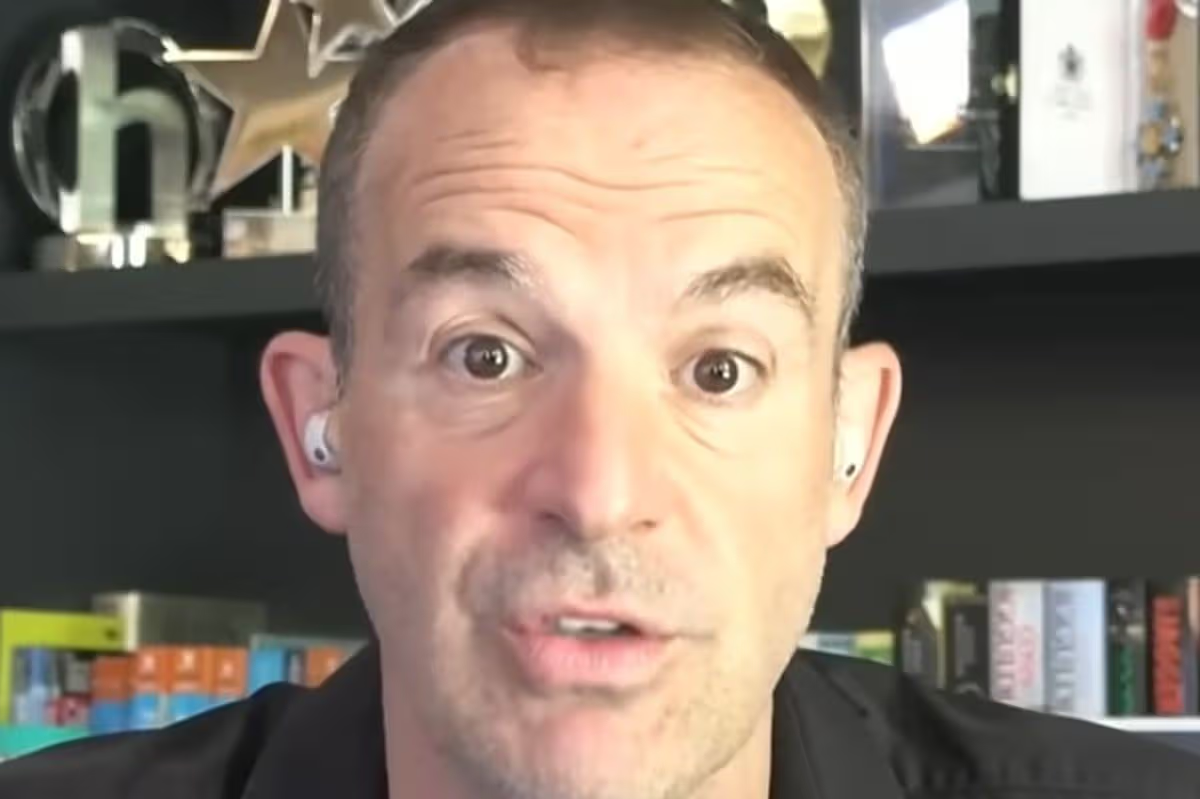
Martin Lewis issues ‘check now’ passport warning ahead of April 8
Money Saving Expert Martin Lewis urged Brits to check if they need to renew passports now

Martin Lewis has issued advice to UK travellers over their passports(Image: ITV screengrab)
Brits have been urged to “check now” or face being hit by costly passport fees come April. Next month is set to bring a hike in passport charges.
At present, a standard adult passport costs £94.50 when applying online. However, this is due to increase to £102 from 8th April. The price of a child’s passport will also climb from £61.50 to £66.50.
In an update on his Money Saving Expert (MSE) website, Martin Lewis implored people to check whether they require a new passport now, in order to sidestep the forthcoming fee increases. He said: “Rising by up to £17.50. 8 April.
“Check NOW if yours is due for renewal, there’s still time to get the lower rate.” Additional guidance on securing the best deal was also published elsewhere on MSE.
“If you need a new passport, it’s cheapest to apply online,” MSE said. “The only site you’ll ever need to go to is the GOV.UK website.
“It has options for getting your first passport, renewing an old one or getting one for your child. You can apply online, which is the cheapest option, or by paper at the Post Office.
“Last year, over seven million Brits saved by applying online.”
READ MORE: I used new EU airport entry system and it left me worried for summer travellersREAD MORE: HM Passport office warns Brits ‘you may not be able to travel’
How much are passport fees rising?
- Adult: takes up to three weeks to arrive – online cost now – £94.50, online cost from April 8 – £102, postal cost now – £107, postal cost from April 8 – £115.50
- Adult fast-track – arrives one week after appointment – online cost now – £178, online cost after April 8 – £178
- Adult ‘Premium’ – given at the appointment – online cost now – £222, online cost after April 8 – £239.50 Child – takes up to three weeks to arrive – online cost now – £61.50, online cost after April 8 – £66.50, postal cost now – £74, postal cost after April 8 – £80
- Child fast-track – arrives one week after appointment – online cost now – £145, online cost after April 8 – £145
It’s worth noting that there’s no child equivalent one-day service. Also, for all these types, you can pay £12 extra for a 54-page passport, which is “useful” for frequent travellers.
The Government website also cautions that no refund will be issued should you cancel your application or if you’re not entitled to a passport.
Burgundy passport
If you’re still in possession of a burgundy passport, there’s no need to panic – you won’t be required to renew it until closer to its expiry date, as they remain perfectly valid. MSE added: “Got a burgundy passport? Newly-issued UK passports have a blue cover, but you DON’T need to get a new passport straightaway – you can keep using your burgundy passport until it’s due for renewal. The blue passports will only be issued when you renew or apply for a new passport.
“Passports can take up to three weeks to be processed, so apply early. The Passport Office warns that renewing can take three weeks for both online and postal applications, so don’t leave it too late if you’re planning a trip.
“If you need a passport urgently, you’ll need to book an appointment at a passport office and pay online. Alternatively, call HM Passport Office (HMPO) on 0300 222 0000 to book an appointment and pay.” Responding to the price increase, the Home Office released a statement saying: “The new fees will help the Home Office to continue to move towards a system that meets its costs through those who use it, reducing reliance on funding from general taxation. The Government does not make any profit from the cost of passport applications.
“The fees contribute to the cost of processing passport applications, consular support overseas, including for lost or stolen passports, and the cost of processing British citizens at UK borders.”

Trump jokes, rants, talks price of pens as Iran war enters fifth week
During his first Cabinet meeting since launching the U.S. war on Iran, President Trump spent 10 minutes talking about the price of ceremonial White House pens — which he claimed to have brought down, from $1,000 to $5, by switching to his favored Sharpie brand.
Trump was trying to make the point during the Thursday meeting that he’s a great money saver. He seemed chipper, joking with the other leaders of his administration at the table.
Late Thursday, when asked on “The Five” on Fox News about whether Iranian people have access to basic necessities such as drinking water and food, Trump complimented the looks of Dana Perino, the Fox host who’d asked the question, compared to when he’d met her years before.
“Now I’m not allowed to say this, it’s the end of my political career, but you may be even better looking, OK?” Trump said. “You’re not allowed to say a woman’s beautiful anymore.”
He then talked about Iranian authorities killing protesters, but said he’d been pleased with them more recently because they had given him a “present” by allowing oil ships through the Strait of Hormuz.
Through both discussions, Trump maintained a flippant, casual tone — the same he has maintained since the war began a month ago, and a vast departure from that of past wartime presidents.
For weeks, Trump has batted away criticisms of the war campaign and questions about why it was justified and how long it will last. He has derided reporters for asking questions about tactics and whether he’ll deploy boots on the ground as inappropriate and foolish, and repeatedly met concerns about the human toll of the war by shrugging them off or changing the subject.
Meanwhile, his war has cost the U.S. billions of dollars and depleted its global reserves of critical weapons systems such as Tomahawk missiles, which cost millions of dollars each and are needed to maintain U.S. security around the world, according to the Washington Post.
Entering its fifth week, the war has badly disrupted markets, with U.S. stocks falling Friday as Wall Street approached the end of its fifth straight losing week — the longest such streak in nearly four years — and oil prices rising again.
Markets have fluctuated based on Trump’s changing messages on an end to the war, planned and then postponed strikes on Iran’s power plants, strikes on oil and gas infrastructure across the Middle East and Iran’s stranglehold on the Strait of Hormuz, through which a quarter of global oil usually passes.
Trump has talked in recent days about an impending deal to end the war, but so far it has not materialized, with Iran downplaying the seriousness of the negotiations. Iran instead appeared to be formalizing its hold on the strait, including by creating what amounts to a toll on ships seeking passage through the channel from its Islamic Revolutionary Guard Corps.
The number of U.S. deaths in the conflict has held steady for days — at 13 — but the war continues to exact a daily, devastating toll in the Middle East. In Iran, thousands of targets continued being hit, with the death toll ticking toward 2,000.
Speaking by video during a Human Rights Council meeting in Geneva on Friday, Iranian Foreign Minister Abbas Araghchi accused the United States and Israel of harboring a “clear intent to commit genocide” in Iran, claiming that more than 600 schools had been damaged or demolished and more than 1,000 students and teachers “martyred or wounded.”
The discussion related in part to a Feb. 28 strike on an elementary school in Minab that killed more than 165 people, most of them children, which evidence reportedly suggests was the work of the U.S. and which the U.S. says is under investigation.
Casualties also continued in Gulf nations allied with the U.S., where Iran continues to strike U.S. military installations and other infrastructure, and in Lebanon, which Israel has invaded and bombed relentlessly in its own war with the Iranian-aligned Hezbollah force.
And yet, Trump has bounced between speaking engagements and more formal meetings with an apparent lightness — seeming unbothered by the weight of the conflict and acting as if U.S. victory were already at hand.
“We’ve already won the war. Militarily we’ve totally won the war,” he told “The Five” on Thursday.
After Trump’s exchange with Perino, fellow host Greg Gutfeld began to change the topic, saying, “I’m debating whether to be serious or not serious.”
“Do you think Biden would do this interview? Can you imagine? You think Biden — Sleepy Joe — he would do it?” Trump said.
He called the war a “little bit of a detour” from what he said were his otherwise winning economic policies, and asserted again — without providing evidence — that Iran was on the cusp of having a nuclear weapon and would have used it to cause devastation across the Middle East and to the U.S. if the U.S. hadn’t struck first, including when it bombed Iran’s nuclear sites last summer.
“You can’t let a madman or you can’t let a mad ideology have a nuclear weapon,” Trump said.
He repeated his long-pushed lie that he won the 2020 election, and suggested his support among his MAGA base remains at 100%.
An AP-NORC poll this week found that most Americans believe that the U.S. military campaign in Iran has gone too far — including about a quarter of Republicans — and that many are worried about gas prices.
During his Cabinet meeting Thursday, Trump seemed supremely confident, but also aware that the conflict was far from settled.
He said that the U.S. was “extremely — really a lot — ahead of schedule” in its war effort, and that “the Iranian regime is now admitting to itself that they have been decisively defeated.” But he also said that “even now, we don’t know if there are any mines” in the Strait of Hormuz, despite the U.S. having wiped out Iran’s “mine droppers,” and acknowledged that “if you think there may be a mine, that’s a bad thought and it stops things up.”
He said the U.S. has “decimated” about 99% of Iranian capabilities, but “the problem with the strait” is that the remaining 1% threat “is unacceptable, because 1% is a missile going into the hull of a ship that cost $1 billion.”
“If we do a 99% decimation, that’s no good,” he said.
During “The Five” interview, Trump was also asked if the CIA had told him that Supreme Leader Ayatollah Mojtaba Khamenei — who took on the Iranian leadership role after his father, Supreme Leader Ayatollah Ali Khamenei, was killed in initial strikes — is gay, which would be a crime under Iranian law.
“Well they did say that, but I don’t know if it was only them. I think a lot of people are saying that. Which puts him off to a bad start in that particular country, you know?” Trump said, in a stunning acknowledgment of a previously rumored intelligence briefing.

Seeing double: Dodgers celebrate titles on a sparkling opening day
There were fireworks, there was a flyover, there was Will Ferrell screaming and Keith Williams Jr. crooning and four months of cheers unleashed by fans wearing championship belts and howling grins.
But the real stars of Thursday’s Dodger opening day show never made a sound.
They arrived silently at the end of the pregame ceremony, carefully held by two of the men who helped win them, lifted high for all those who so passionately longed for them.
They were the last two Commissioner’s Trophies, the back-to-back World Series championship trophies, the two symbols of the Dodgers domination held side by side in the afternoon sun.
Man, it was beautiful. Goodness, how they sparkled. Incredible, how they glowed.
It was almost as if they were powered by some electrical force, some sort of championship current running between them, lighting them up with a blinding power curated by the battered fingers of the two veterans who touched them.
Freddie Freeman, whose grand slam doomed the New York Yankees, held the 2024 trophy. Miguel Rojas, whose home run stunned the Toronto Blue Jays, held the 2025 trophy.
Together they brought the trophies to the dugout from center field while riding in the back of a blue convertible driven by Ferrell as part of an elaborate video skit.
It was the first time many had seen the hardware side by side, and, amid audible gasps, their power was unmistakable. The greatness of the Dodgers accomplishment came to life on a day when their new task became equally clear.
“Three-peat!” screamed one of the pregame musicians.
Welcome, Dodgers, to 2026.

While manager Dave Roberts downplayed the three-peat talk before the opening 8-2 victory over the Arizona Diamondbacks, you know it’s here, it’s there, it’s everywhere.
“At this moment, very minimal,” said Roberts when asked about the pressure. “…So yeah, hopefully we can keep that to a minimum throughout the season. But yeah, there’s obviously going to be a lot of talk about it.”
Thursday did nothing to dampen that talk. It was as if last season’s Game 7 against the Toronto Blue Jays was still being played. The Dodgers behaved like the exact same team with some of the same heroes.
The winning pitcher? Once again, it was Yoshinobu Yamamoto, who threw six solid innings with six strikeouts and no walks.
The game-changing play? Once again, it was Andy Pages, whose three-run home run in the fifth inning gave the Dodgers a lead they never lost.
The final big blow? Yep, Will Smith, whose two-run homer in the seventh inning clinched it.

Dodgers unveil the plaque for the 2025 World Series win.
(Ronaldo Bolanos / Los Angeles Times)
There was even a World Series star coming out of the bullpen, new cult hero Will Klein entering the game to the night’s loudest ovation and throwing a scoreless inning.
It’s as if the Dodgers have been on the same roll for four months…with no signs of slowing. This could be crazy. This already is crazy.
Other than the cool trophies and the Diamondbacks trampling, the most notable show Thursday was unwittingly staged by Dodger Stadium itself.
Your dutiful correspondent’s first impression of his favorite place on earth upon returning here for his 37th home opener wasn’t about the deep green or brilliant blue or enduring mountainscape.
It was, when did this place become Las Vegas?

-
Share via
Illuminated by the new grotesquely red Uniqlo Field billboard hanging high above center field, the stadium appears to have been transformed into something straight from NASCAR, advertisements filling every nook and cranny of the pavilion and beyond. There are giant billboards above the bullpens. There are scribbled ads on the bullpen walls. There are screaming displays for beer, soda and healthcare, the latter of which you will need if you heed too many of these ads.
The incessant sales pitches are buffeted by the usual deafening pounding music, which makes Vin Scully Avenue seem like Las Vegas Boulevard.
Was it always like this? It doesn’t seem like it. The Dodgers have always been relentless billboard salesmen, but since the arrival of Shohei Ohtani, they’ve become a global attraction with seemingly every major company on earth willing to pay for a piece of their success.
Fans will probably notice that the biggest difference this year is the $125-million sponsorship deal with Uniqlo, a Japanese apparel company that bought center field. Chavez Ravine is now officially known as Uniqlo Field at Dodger Stadium and, yeah, on Thursday it was awful hearing public address announcer Todd Leitz introduce it like that.
Not to worry, nobody in their right mind is ever going to call it that. Nonetheless, the whole atmosphere was weird and unsettling.
Still, it’s hard to blame the Dodgers. They’ve spent gobs of money building a two-time defending champion, and those bucks have got to come from somewhere.
You want Kyle Tucker? Live with the beer ad. You want a $1 billion rotation? Deal with the bank ad.

Dodgers Blake Snell, Kiké Hernandez, Roki Sasaki and Alex Call during player introductions before the game.
(Gina Ferazzi / Los Angeles Times)
Unlike many other teams that have made baseball a haven for cheapskates, the Dodgers invest much of their revenue back into the roster.
It’s not always pretty. It can be loud and distracting and obnoxious. But it works.
As night fell on a blessed blue Thursday, the Dodgers had won their eighth straight home opener. They did it with pitching, hitting, depth, and two of the prettiest pieces of jewelry you’ve ever seen.
It was a day to celebrate the completion of the most incredible two-year journey in franchise history.
It was also a day to realize that the journey has just begun.

UK airport reveals plans for first long-haul flights in 15 years
BRISTOL Airport has submitted plans to expand with thousands more flights and long-haul journeys.
Along with more passengers the terminal will be larger, there will be new shops, restaurants as well as an extended runway at the cost of £500million.
New plans have been submitted to North Somerset Council for Bristol Airport to extend its runway which will allow for long-haul flights.
The proposal revealed the airport had plans to reach “world cities within Europe and beyond”.
This includes a limited number of new flights to North America, the Middle East and Asia.
By the late 2030s, the expansion is hoping to increase passenger numbers too from 12million to 15million.


The amount of travellers that pass through Bristol Airport is currently 10.8million.
The increased take-offs and landings mean that there could be up to 100,000 flight movements a year- up from 85,990.
On the busiest days, there could be as many as 35 aircraft movements.
Bristol Airport added: “The plans would see around £500 million invested in improvements at the airport and local infrastructure.
“These include extending the runway to accommodate larger aircraft and increasing capacity of the terminal that includes a number of improvements to enhance the customer experience, including more space, a wider choice of retail and restaurants and the ability to walk onto aircraft without getting on a bus.”
Along with the extended runway are plans for a larger terminal with more space for a bigger immigration hall, baggage handling facilities, shops and restaurants.
Other improvements detailed in the plans include travelators, better public transport and the expansion of car hire facilities.
Chief executive Dave Lees said: “Our proposals deliver what customers have told us they want to see at their local airport.
“We will open up opportunities to visit places further afield and for businesses to expand into new international markets.”
Bristol Airport originally revealed its masterplan to expand last year with the ambitious plans taking it up to 2040.
There are currently 14 airlines operating from Bristol Airport which go to 115 destinations including Alicante, Majorca, Amsterdam, Edinburgh, Tenerife and Barcelona.
In 2024, Amsterdam was the most popular destination, followed by Alicante and Majorca.
Bristol Airport once offered flights as far as New York, operated by now-closed Continental Airlines.
However, these were scrapped back in 2010, with the longest route from the airport now just under six hours to Cape Verde.
Plus, another major UK airport launches 12 new routes to popular destinations with eight new airlines.
And this affordable African city to get massive new £960million airport expansion with space for 20million passengers.

European theme park with ‘barely any ride queues’ to open huge new land with water flume and rides
A GERMAN theme park is being completely transformed by a famous French theme park.
Parc Astérix in northern France, which is inspired by the iconic comic series of the same name, is taking over a destination in Germany.
Currently known as Belantis Park, located near major cities including Dresden and Berlin, the theme park will be completely rebranded by 2031.
And work has already begun with the first new land opening at the theme park this spring.
The new land called Idefix’ Adventure Land will be for families with children and is themed around Idefix the dog from the Astérix universe.
There will be four new attractions and while they are yet to be announced, renders of the land show a small flume-style ride, a drop tower, a wagon ride and a spinning chair ride.
Read more on travel inspo


And there are some reports that they will include the ‘Aerobix Flying Machine’, ‘Driving school Frischling’, ‘Idefix’s River Journey’ and ‘Soapbox derby’.
Renders also reveal a large adventure playground with climbing frames and slides.
There will also be a new restaurant, souvenir shop and character meet and greets.
The new land is the first part of the theme park’s transition into the Astérix and Obélix universe, with the park being completely rebranded Astérix Park Germany by 2031.
The next part of the transition – an expansion phase – is set for 2027, which includes a new family rollercoaster that will begin to be built this year.
Once fully complete, the theme park hopes to attract up to 900,000 visitors each year.
In the meantime, the park officially reopens for this year on March 28, however, the new land will not open then.
For those visiting the theme park before the new land opens, they can get a discount on another ticket if they want to return to see the new land.
Filip De Witte, Managing Director of Belantis, said: “At Belantis, we aim to create experiences where the whole family can enjoy thrilling adventures together.
“This year, we’ve lowered our admission prices to make it even easier for families to visit.
“At the same time, we’re expanding our offerings – from a new season pass and the Belantis app to a brand-new themed area opening later in the season.”
The park also has a new show called ‘Why do spiders spin webs?’ which is both educational and entertaining.
There’s also ‘Pirates on the Loose!’, which has been refreshed to include more music, show-fighting moments and interactions that mean audience members can train as a pirate or even discover a hidden treasure chest.
Existing rides include looping rollercoaster, a bobsled coaster and Fluch des Pharao which is a water ride inside a pyramid.
One recent visitor even noted: “There was hardly any queues when we got there, we went on a Sunday, the only time there was queues was in the evening from about 3-5pm.”
Tickets to the park cost €29 (£25.13) per person.
In other theme park news, here are nine of the best theme parks with something new in 2026 from multi-million lands to epic thrill rides.
Plus, a new £50million Minecraft theme park land is set to open in the UK and it will be the first in the world.

Meet the children left without parents under El Salvador’s emergency decree | Child Rights News
Mental health burdens
Ramirez is among the advocates who say children are suffering under the uncertainty and widespread detentions taking place in El Salvador.
In 2025, El Salvador had the highest incarceration rate in the world, with approximately 1.7 percent of its population in prison — roughly twice the rate of the next highest country, Cuba.
According to human rights organisations such as MOVIR, El Salvador’s youth are among the most seriously impacted by the downstream effects of mass incarceration, especially when their caregivers are imprisoned.
“There is a very grave situation with children,” said Ramirez. “There are many children who have been left without their parents, so those who used to provide for their basic needs are not there any more.”
As a result, experts say the affected children are experiencing psychological issues.
“Anxiety issues in these children have increased,” said a psychologist with Azul Originario, a nonprofit youth organisation based in San Salvador.
The psychologist often works with children whose parents have been abducted. She asked to remain anonymous for fear of reprisals, as NGO workers and critical voices have been intimidated, surveilled and, in some cases, arrested under El Salvador’s state of exception.
![Rosalina González, 59, mother of Jonathan and Mario, who were detained under the state of exception on February 19, 2025, during ademonstration on March 8 2026 in San Salvador, El Salvador [Euan Wallace/ Al Jazeera]](https://i0.wp.com/occasionaldigest.com/wp-content/uploads/2026/03/DSC00090-3-1774485050.jpg?w=640&ssl=1)
“Sometimes they don’t want to do any physical activity or any studying,” she said.
“They don’t want to spend time with other children or go outside. They’re afraid of authorities, because some of them experienced the authorities taking their parents away.”
At a recent demonstration near San Salvador’s Cuscatlan Park, several families echoed those observations.
Among them was Fatima Gomez, 47, whose adult son was arrested in 2022. He left behind two daughters, ages 10 and three.
With their mother working full-time, Gomez has been taking care of the children. But she has noticed the eldest daughter seems traumatised.
“When she sees soldiers and police, she starts crying and runs inside,” Gomez said of the 10-year-old. “She says they are going to take all of us, too.”
Gomez had gathered with a crowd of men and women to demand the release of their loved ones.
Clutched in Gomez’s hands is a blue printed poster, emblazoned with her son’s face and a single word: “innocent”.
It flutters in a rush of wind from the passing traffic.

Is Europe heading to an energy crisis? | US-Israel war on Iran
Europe is bracing for a supply crunch and a price shock as the Iran conflict drags on.
It diversified energy supplies, built LNG terminals and reduced its dependence on Russia.
Europe thought it had learned its lesson after the war in Ukraine.
But today it’s facing another energy shock.
And this time it may be even worse, as the war in Iran disrupts supply through the Strait of Hormuz.
It’s happening when EU gas reserves are unusually low.
That means Europe will be competing with Asia to fill its storage tanks, which might force the price of LNG even higher.
Electricity bills are climbing.
Industry is under pressure.
Governments are stepping in to cushion the blow.
Published On 27 Mar 2026

Dragons’ Den star Steven Bartlett rakes in staggering £10MILLION payday after money-spinning investment
DRAGONS Den star Steven Bartlett has banked a massive £10million from the sale of Huel.
Steven, 33, was one of the first investors in the meal replacement brand and first took a stake in 2017.
Now food giant Danone – which owns Activia and Actimel – has agreed to purchase Huel for £860m.
As a result, Steven – who hosts UK’s No1 podcast Diary Of A CEO, is laughing all the way to the bank.
A source said: “Steven really does have the Midas touch when it comes to investments.
“He was an early investor – and the biggest, earliest non-corporate investor in Huel.


“It’s safe to say he has made more than £10 million with Huel over the years – which is a, frankly, enormous sum.
“But it just goes to show what a canny investor he is.
“Of course, not all investments on new companies work out – but Steven’s track record is fantastic.
“He believes in new businesses and entrepreneurs and, on this occasion, his acumen has delivered big.”
Steven isn’t the only celebrity that’s seen more than just gym gains from the brand.
In 2022, Idris Elba and his wife Sabrina backed the brand with a £20m fundraiser.
Broadcaster Jonathan Ross and TALA’s Grace Beverley also hopped on the trend and invested.
Since then, Huel expanded its range to nutrition bars, health drinks and ready meals.
Huel is just the latest investment of Steven’s to deliver.
Perfect Ted – the matcha company he invested in – has become the most successful Dragons Den pitch ever; after it was valued at more than £140 million late last year.
Today, matcha has taken over an entire floor of his London office building.
Bartlett is also the host of Diary Of A CEO, one of the biggest Podcasts in the world – and the UK and Europe’s No1.
Earlier this year, Steven announced he was engaged to long-term partner Melanie Lopes, a French-Portuguese wellness influencer.

DOJ issues subpoenas in Paramount-Warner's $110B deal – Reuters
DOJ issues subpoenas in Paramount-Warner's $110B deal – Reuters
Source link

One of Spain’s prettiest coastal villages loved by celebs where former Corrie actress is on holiday
FORGET the white sand beaches of the Caribbean – actress Michelle Keegan has opted for a quiet and beautiful village in Majorca for her latest holiday.
The tiny destination is in the heart of the Tramuntana mountains, but is right next to the coast and is within walking distance to a little bay with clear waters.
We’ve all heard of Majorca, the Balearic Island loved by Brits gets over two million visitors every year.
Lots will flock to the capital of Palma, but there are so many other beautiful spots to explore – and Michelle Keegan is exploring it right now.
The former Coronation Street actress posted images of herself enjoying the Spanish sunshine on Instagram.
So what is there to do in the pretty village of Deià?


The coastal village has the best of both worlds as it’s tucked away in the mountains and is minutes from the coast.
To explore Deià, be prepared to take on a hill or two as visitors do comment on how steep the cobbled streets are, with the highest point being the church.
The roads are narrow too so your best bet to get around is taking a local taxi, walking or hiring a bike.
Just a short walk from the village is Cala Deià, a small pebbly cove that has crystal-clear waters and is popular for swimming and snorkelling.
One visitor said: “It is very rocky but absolutely gorgeous and great for swimming.”
Another added: “This cove is amazing – we are already ready to return.”
If you get peckish, there are cliffside restaurants including Ca’s Patró March and Can Lluc.
Deià is small, and it’s also very exclusive with some pricey hotels like La Residencia, A Belmond Hotel which was previously owned by Richard Branson.
Check out this Majorca hotel near a beautiful beach cove…

*If you click on a link in this box, we will earn affiliate revenue
Gavimar Cala Gran Costa Del Sur, Majorca
This hotel sits on Majorca’s Cala Gran Beach, a beautiful cove just a short drive away from the coastal town centre, with its trinket shops and relaxed bars. The hotel itself has all the activities and entertainment you’d expect, including bingo and live music – as well as some unique extras like mini golf and archery. Week-long breaks start from £478pp.
Back in the 1980s Richard Branson transformed the crumbling mansion into a luxury hotel – which he then sold in 2002.
The Belmond Hotel has pretty suites, a swimming pool and is surrounded by palm trees.
Luckily it’s not all luxury hotels. At Hostal Villa Verde which has simple rooms with enviable views, holidaymakers can book a stay from £60 per person per night.
There are lots of local restaurants to try too. One visitor recommended sitting on the terrace at Es Punt to try padrón peppers and patatas bravas.
Another is Restaurante Miró which has a beautiful patio area and visitors have said it’s a great place to watch the sunset.
If you want to explore Deià, head to Majorca’s capital of Palma and from there it’s a 40-minute drive.
Michelle has also shared snaps of her exploring the neighbouring destination of Valldemossa.
It’s another mountain village which sits around Real Cartuja, a huge palace and monastery.
Just like Deià, Valldemossa is considered one of the most beautiful towns and villages in the country.
Michelle and her husband, Mark Wright, are frequent visitors to the island and even have their own apartment in Majorca.
For more hidden gems in Majorca, check out these recommendations from locals including secret bars and cheap beach clubs.
And discover the waterpark hotel where Stacey Solomon went on holiday with Blue Flag beach and unique ice fountain.

Lionel Messi: Inter Miami name stand after Argentina great
Argentina great Lionel Messi has had a stand named after him by his current club Inter Miami.
The 38-year-old, widely regarded as one of the greatest players ever, signed for the MLS club in 2023 after a trophy-laden career in Europe with Barcelona and Paris St-Germain.
He has gone on to become the record goalscorer with 82 and record assist provider with 53 for the Florida club, who have taken the unusual step of honouring an active player in this fashion at their 26,700 capacity stadium.
Inter Miami said: “Traditionally, tributes look to the past. They are built from nostalgia. From memory. This one is different. This one is born from the present.
“From what is happening right now. From what you feel every time Leo steps on to the pitch.
“Recognising someone is not always about closing a chapter. Sometimes it is about realising you are witnessing something unique.”
It is the second time in recent history the Argentine, who captained his country to World Cup glory in 2022, has had a stand named after him with Newell’s Old Boys – where he played as a child – doing the same in June 2025., external
Last season Messi, who is an eight-time Ballon d’Or winner, became the first player in MLS history to win back-to-back Most Valuable Player awards.
Messi’s arrival at the club co-owned by former England captain David Beckham has raised the profile of the league and Inter Miami’s status, as well as delivering success in the form of the Leagues Cup, Supporters’ Shield and MLS Cup.

Lebanon faces ‘humanitarian catastrophe’ under Israeli assault: UN | Israel attacks Lebanon News
Displaced Lebanese families ‘living in constant fear’ under Israeli bombardment, warns UN Refugee Agency official.
Lebanon faces the threat of a “humanitarian catastrophe”, the United Nations Refugee Agency (UNHCR) has warned, as Israel expands its weeks-long bombardment and ground invasion of the country.
UNHCR’s Lebanon representative Karolina Lindholm Billing said on Friday that Israeli strikes and forced displacement orders have affected people living across the country – from southern Lebanon to the Bekaa Valley, the capital Beirut, and further north.
Recommended Stories
list of 3 itemsend of list
More than 1.2 million people have been forced from their homes since Israel’s intensified attacks against its northern neighbour began in early March, according to UN figures.
“The situation remains extremely worrying and the risk of a humanitarian catastrophe … is real,” Lindholm Billing told reporters during a briefing in Geneva.
She noted that, as displacement numbers continue to rise, Lebanon’s already overstretched shelter system is struggling to meet families’ needs.
“Just last week, there were strikes that hit central Beirut, including in densely populated neighbourhoods … where many people had tried to find safety in collective shelters,” Lindholm Billing said.
“The families are … living in constant fear, and the psychological toll, particularly on children, will last far beyond this current escalation.”
Israel launched intensified attacks across Lebanon after Hezbollah fired rockets towards Israeli territory following the February 28 assassination of Iranian Supreme Leader Ayatollah Ali Khamenei in the US-Israel war on Iran.
The Israeli military has carried out aerial and ground attacks across the country while issuing mass forced displacement orders for residents of the country’s south, as well as several suburbs of Beirut.
On Friday afternoon, the Israeli military said it had begun a wave of air strikes on Beirut. It also issued more forced displacement orders for several areas in the city’s southern suburbs, including the neighbourhoods of Haret Hreik and Burj al-Barajneh.
Hezbollah has continued to fire rockets into northern Israel and confront Israeli troops in southern Lebanon, with leader Naim Qassem stressing this week that the group had no plans to stop fighting “an enemy that occupies land and continues daily aggression”.
Israeli Prime Minister Benjamin Netanyahu also announced plans to expand the country’s ground invasion in southern Lebanon, saying the military would create “a larger buffer zone” in Lebanese territory.
Rights groups have condemned the expanded operation and warned that preventing Lebanese civilians from returning to their homes in the south may amount to the war crime of forced displacement.
“Israel’s tactics of mass expulsion in Lebanon raise serious risks of forced displacement,” Human Rights Watch said on Thursday. “Forced displacement and collective punishment are war crimes.”

The Israeli military’s destruction of civilian homes and several bridges linking southern Lebanon to the rest of the country has also fuelled concerns that Israel is trying to isolate the area.
During Friday’s news briefing, UNHCR’s Lindholm Billing noted that the destruction of the bridges has made accessing southern Lebanon “increasingly difficult”.
“The destruction of key bridges in the south has cut off entire districts … isolating over 150,000 people and severely limiting humanitarian access with essential items to reach them,” she said.
Reporting from Tyre in southern Lebanon on Friday afternoon, Al Jazeera’s Obaida Hitto also stressed that Israel’s forced evacuation orders are “causing a lot of panic” among residents.
“Evacuation orders are happening in areas that were previously thought to be safe,” he said, adding that the destruction and damage to bridges over the Litani River in the south has made the prospect of finding safety more difficult.
“This is putting the government in Beirut in a very difficult situation to try and respond to the humanitarian crisis quickly growing in the south of the country,” Hitto said.

Navy’s Drone Ship Plans Get Shaken Up Again
The U.S. Navy has unveiled a “marketplace” model for acquiring future fleets of uncrewed surface vessels (USV), which could be owned and/or operated by the service or contractors. The Navy is applying this approach first to the procurement of medium-sized designs, or MUSVs, which could be configured for a variety of missions with the help of containerized payloads. The new strategy, which supplants the Modular Surface Attack Craft (MASC) plan laid out just last year, and aims to cut down on lengthy prototyping requirements, is the latest in a series of Navy efforts to try to speed up the fielding of new USV capabilities at scale.
“The character of warfare is changing rapidly. The Department of the Navy is adapting its acquisition system to deliver capability to our warfighters faster,” Secretary of the Navy John Phelan wrote in a post on X this morning, marking the official roll-out of the new USV acquisition plan. “We are harnessing the talent and ingenuity of the American tech sector by launching a market competition for the Medium Unmanned Surface Vessel (MUSV) Family of Systems. This new approach will leverage private investment and accelerate the delivery of real capabilities to the Fleet. We will reward the companies who are able to deliver capability at the speed of relevance.”

“Our goal is to create a regular, recurring marketplace, not just for the MUSV, but for other classes of vessels, as well, over time, designed to match the growing demand for unmanned systems across a range of missions,” Rebecca Gassler, the Navy’s first-ever Portfolio Acquisition Executive for Robotic and Autonomous Systems (PAE RAS), also told TWZ and other outlets during a press call today. “This model that we’ve posted rewards demonstrated performance at sea, not just development, and is not another prototyping award. And it creates a direct path from what’s demonstrated on the water to putting those vessels into the fleet.”
The use of “marketplace” here should not be confused with how the U.S. Army is also now using that term to describe an actual online storefront-style system for ordering small uncrewed aerial systems. “I don’t know how many customers other than PAE RAS there are right now that actually have the funding to go buy or lease an MUSV,” Gassler said in response to a question about whether any kind of comparison between the two might be appropriate.
The Navy also posted a contracting notice regarding what it is now calling the Medium Unmanned Surface Vessel (MUSV) Family of Systems (FoS) program, specifically, online today. Potential offers only have another three weeks or so to submit proposals that involve designs that can be ‘on the water’ by the end of September, underscoring the service’s interest in already highly mature capabilities.
In terms of the actual uncrewed vessels the Navy is seeking through this effort, threshold requirements include a range of at least “2500 nm [nautical miles] at 25 knots while carrying a 25 MT [metric ton] load on the payload deck in NATO STANAG 4194 Sea State 4.” Per this NATO standard, Sea State 4 is characterized by wind speeds of 17 to 21 knots and wave heights between four and eight feet.
The MUSVs also need to be able to carry forty-foot equivalent units (FEU) containerized payloads and to refuel at sea at a rate of “2,000 gallons per minute of fuel through deck connections,” according to the contracting notice. We’ll come back to what might be in those payloads later on.
The Navy also wants designs that are “capable of fully autonomous operations both day and night in varying weather conditions complying with COLREGs [Convention on the International Regulations for Preventing Collisions at Sea], can prescribe keep out and keep in zones, and perform pre-defined behaviors,” per the notice. They also have to be “capable of restricting all Radio Frequency (RF) emissions when commanded while continuing to autonomously operate, perception system for autonomy has a passive mode with no RF emissions.”

In addition, the Navy has outlined a number of desired attributes, including “interfaces between C2, Perception, Machinery Control System, and Autonomy Control System software and hardware systems [that] conform to an open architecture standard with
Interface Control Documents (ICD)” and an overall “autonomous system solution [that] enables integration with third party applications, modular upgrades, and component-level interoperability.” The service is also interested in the ability of the MUSV to monitor “health and status and autonomously reports conditions to the offboard C2 station, providing situational awareness of the condition of the vessel to the operator.”
“Vessel can execute 5 days of pre-planned maneuvers without communication connection” and “vessel provides emergency stop functionality to the offboard operator,” defined as “the rapid shutdown of propulsion engines putting the USV into a drift,” are also on the desired attributes list. There are production and operational aspects the Navy is also interested in, such as the ability of a selected contractor to supply between five and 10 operational MUSVs by the end of Fiscal Year 2027 and designs that can be “nested five abeam when moored.”

“We believe a number of them [potential offers] will test on production representative, but not full production[-ready designs,] or they’ll test in [sic] surrogate boats, so that we can see the autonomy that they’re bringing, even if it’s not the full production vessel,” Gassler noted today. So, acceptance of a finalized design will include a requirement “to do the full endurance test again, and any additional mission profiles that we have gotten from the Fleet, we will test at the time. And then we will do a full regression test on the autonomy now that it has been connected into the production boat controls.”
Overall, many of the stated threshold requirements for the MUSV FoS are similar, if not identical, to what the Navy had previously outlined for the initial baseline MASC design. The MASC plan was a three-tier approach that also included larger and smaller types, all of which would be configurable for different missions using containerized systems.
At the same time, the new strategy laid out today “is a replacement for MASC, absolutely,” PAE RAS Gassler stressed. MASC “was tailored towards a very specific mission and a very specific ask from the Fleet, [and a] very specific quantity. And we have a much wider variety of requirements for these vessels and missions that they need to accomplish as part of the Golden fleet. And so this is a replacement for that.”
“So, I won’t talk about specifically what mission we’re going after now that kind of gets out of the unclassified realm, but know that we are looking at specific mission profiles,” Gassler added. “For example, some require more complexity in their autonomy features than others, and so when we put these vessels through their tests, those tests will be a superset of those requirements such that we understand they will meet each of those missions.”
“Honestly, inside you could have a sensor, you could have repair equipment for ships,” she also said, speaking more generally about containerized payloads. “You could have any number of payloads inside those, and you basically are able to just swap them on.”
It should be noted here that the Navy did say its initial focus for MASC was on Intelligence, Surveillance, Reconnaissance, and Targeting (IRS&T), Counter-ISR&T, and Information Operations missions. At the same time, the three-tier approach and focus on containerized systems had certainly pointed to additional missions, including surface-to-surface strike and electronic warfare, down the line. The Navy already has a containerized launcher capable of firing SM-6 multi-purpose missiles and Tomahawk land-attack cruise missiles that it has been working to field on crewed ships, as well as in a ground-based configuration. The Navy has test-fired that launcher from an optionally crewed ship in the past.
“As we look across how the Golden Fleet capability, or the Golden Fleet concept, has matured, and we look across where we could use these vessels as part of CNO’s [Chief of Naval Operations Adm. Daryl Caudle] tailored offsets and tailored forces, we bring ourselves to realize there’s a number of missions that we could immediately use these vessels for,” Gassler said. “That is, that is part of the strategy now, is that we will now have a scalable way to procure vessels that meet specific mission profiles.”
Adm. Caudle publicly announced that the Navy would be moving toward a more flexible deployment model using tailored force packages at the Surface Navy Association’s (SNA) annual conference in January. At that same event, he also laid out a new “Hedge Strategy” to try to better maximize Navy resources through a major overhaul of how existing forces are utilized and how new capabilities are acquired and fielded. You can read more about all of this here.
Last week, Caudle also rolled out another new initiative, the Containerized Capability Campaign Plan, which puts new emphasis on containerized weapons and other capabilities, specifically, as a means to help the Navy achieve these broader goals.

Perhaps the biggest change the Navy is hoping to see with its USV marketplace strategy is in the processes through which it acquires and fields USVs. This reflects a broader push by the service to shake up how it buys vessels, crewed and uncrewed, to try to avoid the kinds of serious setbacks that have plagued Navy shipbuilding programs in recent years.
From what Gassler said today, the MASC program had been progressing along largely traditional lines, with plans to issue contracts to multiple vendors for a prototyping phase ahead of choosing one or more designs for production. She made clear that the new strategy aims to skip the prototyping phase to the fullest extent possible.
“Industry has leaned forward and has built boats or has built the technology already,” leading to the assessment that “we no longer needed to go through the prototyping phase,” she said. “So this will allow us to test the capability on water and go straight into production. And that will save us approximately on the order of a year, and we will get capability to the fleets faster.”

“What we want to do is capitalize on that investment. So the marketplace will look for several things,” she added. Beyond the “technical design that meets the specifications,” the Navy is also “looking for a variety of business models. So in this case, the [MUSV FoS] solicitation asks for what does a government-owned, government-operated model look like, types of data, rights, things like that, as well as a contractor-owned, contractor-operated model.”
Then there’s “manufacturing readiness. When we go through a normal development program, you don’t consider that until much further into the life cycle of development. Here we’re considering it up front,” she continued. “So we’ll be looking at your staffing, the supply chain, and whether you’ve got any fragility in the supply chain. We’ll be looking at facilities and capacity. So if you say you can produce X number of boats per year, can we really see that in the laydown of your facility, or that of those who you’ve partnered with.”
Gassler says that vendors that successfully complete the on-water test requirements will receive a fixed-price payment as a “reward” to help foster competition. The Navy will then have the option of entering into a production or leasing agreement for the design in question.
With all this being said, as mentioned, this is not the first time the Navy has attempted to accelerate the acquisition and fielding of USV capabilities, especially when it comes to larger types. The service already has a number of smaller USVs with speed boat and jet ski-type designs in service today.
When it was rolled out last year, MASC was presented as finally offering a path forward after more than a decade of prototyping and experimentation efforts that have yet to lead to meaningful operational capabilities. As a prime example of how things have progressed previously, in January, the Navy triumphantly declared its intention to employ two MUSV-type vessels it has in inventory now – Sea Hunter and Seahawk – operationally. Sea Hunter has been sailing since 2016. The Navy acquired Seahawk in 2021.

Sea Hawk and Sea Hunter Participate in Unmanned Systems Exercise
With MASC, the Navy had also hoped to leverage those prior investments, including work that had been led by the Defense Advanced Research Projects Agency (DARPA) and the Defense Innovation Unit (DIU). DARPA’s ongoing No Manning Required Ship (NOMARS) program, which the Navy is also involved in, continues to be particularly relevant in terms of the new operational and production concepts it is seeking to prove out. The NOMARS test ship, the USX-1 Defiant, was designed to be a lower-cost and readily producible design capable of operating without humans ever being on board, as you can read more about here.

USX-1 Defiant At-Sea Overview – No Manning Required Ship (NOMARS)
Overall, as TWZ wrote back in July 2025 when the MASC plan broke cover:
“All of this comes as USVs have now long been seen as a key way for the Navy to bolster its surface fleets. Distributed fleets of USVs configured for strike and ISR missions, and capable of operating independently or in groups, as well as together with crewed warships, open a door to significant new operational possibilities. Members of the MASC family could also help reduce risks to crewed assets. Modular designs that can be readily configured and reconfigured for different missions using containerized payloads also present targeting challenges for opponents.“
…
“The United States’ worrisome and still-widening gap in shipbuilding capacity with chief global competitor China has also been putting new emphasis on USVs. The U.S. government has been trying to take steps to reverse this trend, including exploring the potential of leveraging foreign shipyards to produce more crewed warships, in recent years. In the meantime, the Navy’s traditional shipbuilding programs continue to be beset by delays and cost growth, on top of being expensive long-lead-time efforts, in general.“
The Navy is clearly hoping that it has found the right formula with its new marketplace strategy to finally get larger and more capable USVs into service.
Contact the author: joe@twz.com

The gaudy, gilded Trump aesthetic takes Washington, D.C.
More than a century after the Gilded Age, we have entered another: The gilded age of Trump.
A little over a year after President Trump was sworn into office for the second time, the country has borne witness to a striking aesthetic makeover of the White House and Washington, D.C. A week ago, when the Trump-packed Commission of Fine Arts approved a 24-karat commemorative coin stamped with Trump’s image, that makeover ascended to staggering new heights.
The coin, which breaks with the country’s longstanding tradition of not featuring a living person on its currency, joins a swiftly growing list of other Trumpian imprints on arts and culture, including architectural choices deemed gaudy and garish by experts and laypeople alike.
These include the conspicuous gilding of the Oval Office; the paved-over Rose Garden; the so-called Presidential Walk of Fame along the White House West Colonnade; the bulldozing of the East Wing and the plans for a $400 million, 90,000-square-foot ballroom that will dwarf the original building; a proposed 250-foot-tall “Triumphal Arch” to be constructed in Washington, D.C., on a roundabout near the Lincoln Memorial and Arlington National Cemetery; a desire to paint the Eisenhower Executive Office Building a glaring shade of white; the imminent creation of a Garden of American Heroes populated with more than 250 life-size statues of historical figures including pop-culture icons like Alex Trebek; the addition of Trump’s name to the John F. Kennedy Center for Performing Arts and the decision to close the beloved venue for a remodel that many fear will rival that of the East Wing.
That’s not to mention his crusade to erase a “woke” mentality from the Smithsonian Institution’s 21 museums by policing what kind of art can and cannot be displayed; his efforts to eradicate mentions of slavery in exhibits staged by the National Park Service; his face alongside George Washington’s on National Park Passes; and the many other places his face is draped on giant banners throughout the Capitol city.
Plenty of people are on guard against these changes. This week a coalition of eight cultural heritage and architectural organizations, including the National Trust for Historic Preservation and the American Institute of Architects, filed a lawsuit to require the Trump administration to comply with historic preservation laws and get congressional authorization before making any changes to the Kennedy Center.
“The Kennedy Center is not a personal project of any president. It is a national cultural monument built to honor John F. Kennedy and to serve the American people. Federal law requires transparency, expert review, and public participation before it can be fundamentally altered,” Rebecca Miller, executive director of the DC Preservation League, said in a statement.
The same could be said of the White House, the Smithsonian, the NPS and the United States Mint. But Trump doesn’t care about due process, congressional approval or the courts. Time and again he has shown his willingness to go it alone when making big decisions that affect not only America but the world. This includes his actions in Venezuela and Iran. But if he decides he wants to take the Kennedy Center “down to the steel,” as he once threatened, there isn’t really anything that can stop him.
The gilded age of Trump proves that the look of things really does affect how the country sees itself — and how it acts as a result of its new self-image. Golden gaudiness conjures thoughts of empire and imperial rule, but it is also unserious and incidental, bombastic and self-centered. The Trump aesthetic screams, “Me, me, mine!” A willingness to tear down historic structures without care for their symbolic meaning reveals an inability to learn from the past, a tendency that has proved frighteningly perilous.
Will the leader who rises after Trump tear down all that Trump has built? And even if they do, can the damage really be undone?
I’m Arts editor Jessica Gelt, keeping it small and simple for posterity. Here’s your arts and culture news for the week.
FRIDAY
Laura Aguilar
The late trailblazing photographer’s exploration of her queer Chicana identity against the natural backdrops of Southern California and the Southwest is on display in the exhibition “Body and Landscape.” More of the artist’s work will be on display starting Sept. 20 in “Laura Aguilar: Day of the Dead.”
Through Sept. 7. The Huntington, 1151 Oxford Road, San Marino. huntington.org

Cassandra Kulukundis holds the first-ever Oscar for casting for her work on “One Battle After Another” during the Academy Awards, March 15, 2026.
(Robert Gauthier/Los Angeles Times)
The Art of Casting
With Cassandra Kulukundis recently winning the first Oscar in the category for her work on Paul Thomas Anderson’s “One Battle After Another,” what better time to learn more about the subject? The academy’s video presentation goes inside the casting process with casting directors discussing their craft and includes previously unseen auditions and screen tests.
Through July 6. Academy Museum, 6067 Wilshire Blvd. academymuseum.org
Brahms & Beethoven
Uzbek pianist Behzod Abduraimov performs Beethoven’s “Piano Concerto No. 3” as Paavo Järvi conducts the L.A. Phil in Brahms’ “Second Symphony” and Schumann’s “Overture, Scherzo and Finale.”
8 p.m. Friday and Saturday; 2 p.m. Sunday. Walt Disney Concert Hall, 111 S. Grand Ave., downtown L.A. laphil.com

A performance of “Escape.”
(Traj George Simian)
Escape
Diavolo reprises this production featuring its trademark blend of dance, movement and storytelling as 22 artists challenge their abilities against a variety of architectural structures.
8 p.m. Fridays and Saturdays; 6 p.m. Sundays, through June 14. L’Espace Diavolo, 616 Moulton Ave. diavolo.org
Arshile Gorky: Horizon West
In the summer of 1941, the Armenian immigrant artist, his soon-to-be wife Agnes “Mougouch” Magruder and the artist and furniture designer Isamu Noguchi drove from New York City to L.A. Gorky was emerging as one of the most important figures in the nascent Abstract Expressionism movement, and his cross-country adventures had an enormous impact on his art, which is explored in depth in this exhibit. A selection of landscapes include Gorky’s rich, surrealistic paintings and drawings from before, during and after the life-changing trip. (Jessica Gelt)
Through April 25. Hauser & Wirth West Hollywood, 8980 Santa Monica Blvd. hauserwirth.com
A New Song: Langston Hughes in the West
The exhibition reveals Hughes’ time spent in California, Nevada and Mexico during the Great Depression, World War II and into the 1950s, when he produced significant work, including lectures, film scripts, plays and his first book of short stories.
Through Sept. 13. California African American Museum, 600 State Drive, Exposition Park. caamuseum.org
The White Album
Arthur Jafa’s 2018 30-minute experimental film, a social critique of whiteness, uses found and produced footage to demonstrate how the creative work of Black Americans has been co-opted by white culture throughout history.
Through Aug 30. UCLA Hammer Museum, 10899 Wilshire Blvd., Westwood. hammer.ucla.edu
SATURDAY

Akira Kurosawa’s “Seven Samurai,”starring Takashi Shimura, from left, Toshiro Mifune and Yoshio Inaba.
(Janus Films)
Darkness and Humanity: The Complete Akira Kurosawa
The 1954 classic “Seven Samurai,” starring Toshiro Mifune, kicks off this comprehensive retrospective of the great Japanese filmmaker’s work.
6 p.m. Saturday; series continues through May 30. Academy Museum, 6067 Wilshire Blvd. academymuseum.org
from rock to rock… aka how magnolia was taken for granite
Choreographer Jeremy Nedd’s exploration of the hidden poetry, virtuosic freedom and ownership features five performers examining “the Milly Rock,” a viral dance move.
8 p.m. UCLA Macgowan Hall, Freud Playhouse, 245 Charles E. Young Drive East. cap.ucla.edu
A Queer Arcana: Art, Magic, and Spirit On
The exhibition collects an intergenerational group of Queer artists whose work examines hidden and mystical knowledge to find sources of connection and transformation.
Through Oct. 18. Palm Springs Art Museum, 101 Museum Drive psmuseum.org
Ralph Steadman
More than 140 original artworks and ephemera, including sketchbooks, handwritten notes and personal photographs are included in “And Another Thing,” a traveling exhibition tracing six decades of the artist and illustrator’s career.
Through May 9 Torrance Art Museum, 3320 Civic Center Drive torranceartmuseum.com
Tonality
The vocal ensemble performs “Refuge/Requiem,” a program that includes Caroline Shaw’s 17th-century-influenced contemporary work “To the Hands,” and “1605 Requiem,” composed for the funeral rites of Empress María by Tomás Luis de Victoria. Presented with the Wallis.
7:30 p.m. All Saints’ Beverly Hills, 504 N. Camden Drive thewallis.org
SUNDAY
To Sleep With Anger
Written and directed by the protean Charles Burnett, this film does more than vividly illuminate South-Central’s rarely portrayed Black middle class. A deft domestic horror story, it’s a contemporary tale with a folkloric twist that has old friend Harry (Danny Glover) visiting a married couple and gradually revealing himself to be a trickster with trouble on his mind. With a terrific ensemble headed by Mary Alice and Paul Butler as the couple in question. (Kenneth Turan)
7 p.m. The 35mm screening includes a Q&A with the filmmaker and Ashley Clark, author of “The World of Black Film: A Journey Through Cinematic Blackness in 100 Films.” Beginning at 6 p.m. Clark will sign copies of the book. Billy Wilder Theater, UCLA Hammer Museum, 10899 Wilshire Blvd., Westwood. cinema.ucla.edu
TUESDAY
Philip Glass’ Cocteau Trilogy
Pianists and siblings Katia and Marielle Labèque perform the composer’s triptych inspired by the films of Jean Cocteau. Part of the LA Phil’s “Body and Sound” festival.
8 p.m. Walt Disney Concert Hall, 111 S. Grand Ave., downtown L.A. laphil.com
Mary Halvorson
The contemporary jazz musician, guitarist and composer and new quartet project Canis Major — featuring Dave Adewumi on trumpet, Henry Fraser on bass and Tomas Fujiwara on drums — perform an evening of music designed for deep listening and total immersion.
7 p.m. Getty Center, Harold M. Williams Auditorium, 1200 Getty Center Drive, L.A. getty.edu
Arts anywhere
New releases of arts-related media.

Album cover for “Evening Light: Raga Cycle I.”
(Cantaloupe Music)
Evening Light: Raga Cycle I
The first release of an eight-album series in which American composer and pianist Michael Harrison collaborates with a global assortment of artists combining Eastern and Western musical traditions. Each chapter represents three hours of day or night following the Indian raga time cycle. For “Evening Light,” Quebec-based Brazilian vocalist Ina Filip co-composed the music with Harrison. Also appearing on the album are American composer Elliot Cole on synthesizer, French composer Benoit Rolland on electro-acoustics and Bangladeshi tabla virtuoso Mir Naqibul Islam. Cantaloupe Music: download ($10).

Book jacket for “Stephen Sondheim: Art Isn’t Easy” by Daniel Okrent.
(Yale University Press)
Stephen Sondheim: Art Isn’t Easy
Part of Yale University Press’ Jewish Lives series, Daniel Okrent’s new biography of the award-winning composer-lyricist who took Broadway musicals to new heights “is a brisk, engaging read that avoids hagiography,” writes Julia M. Klein in a review for The Times. “Okrent highlights the emotional frailties that coexisted with the brilliance and generosity. He seeks to liberate Sondheim’s reputation from the encrustation of myth and to demystify his relationships, while offering a succinct analysis of his achievements. That’s a tall order for a compact book, especially given its subject’s long, complicated life. Okrent’s failings are, unsurprisingly, primarily those of omission.” Yale University Press: 320 pages, $35
Martha Graham Dance Company: We Are Our Times
A two-part documentary goes behind the scenes with the troupe as it prepares for its 100th anniversary celebration. Producer-directors Peter Schnall and Cyndee Readdean followed the dancers from rehearsal to premiere on a global tour, capturing their artistic routines and everyday lives.
Episode 1, “American Spirit,” 9 p.m. Friday; Episode 2, ““Athletes of God,” 9 p.m. April 3 on PBS. Streaming at pbs.org and on the PBS app.
Culture news and the SoCal scene

Pritzker Prize-winning architect Frank Gehry is photographed in May 2019 with a model of the Grand Avenue Project at his L.A. offices.
(Jay L. Clendenin / Los Angeles Times)
Can downtown L.A. still benefit from the vision of late-great architect Frank Gehry, who put so much time and energy into lifting the area up? Times classical music critic Mark Swed says yes in an optimistic column noting that, “So many plans Frank Gehry imagined for L.A. still remain. Gehry bequeathed blueprints and models, sketches and concepts, for his large and devoted team of younger architects and next-generation visionaries equipped to fabricate our way out of angst.” The time to build, Swed writes, is now.
Freelance writer Jane Horowitz got the skinny on the fifth edition of High Desert Art Fair, which arrives in Pioneertown this weekend, transforming “the rooms of the historic Pioneertown Motel into exhibition spaces for 20 galleries and publishers, while expanding into a broader mix of programming — something akin to a mini Coachella Valley Music & Arts Festival. This year’s edition includes an opening night party with a DJ set by street artist Shepard Fairey, panel discussions, guided meditation and even a sound bath.”

Monty Python” alum Eric Idle poses for a portrait at the Hollywood Pantages.
(Jason Armond / Los Angeles Times)
Malia Mendez sat down with British comedy legend Eric Idle to talk about his spoof musical “Spamalot,” which arrives at the Pantages more than a decade after its last stop at the stage. Over a margarita with a side of chef olives, Idle opened up to Mendez about “his earliest forays into comedy, his legendary run and subsequent break with his former ‘Monty Python’ castmates, and why ‘Spamalot’ arrives in L.A. at the perfect time.”
Times theater critic Charles McNulty headed to the Matrix Theatre to watch Rogue Machine’s production of Jackie Sibblies Drury’s Pulitzer Prize-winning 2018 drama “Fairview.” He writes that the play is “a shape-shifting work that eludes an audience’s assumptions at every turn,” and concludes that the new production “may struggle with the slipperiness of Drury’s writing.” The dramatic construction, however, is solid enough to withstand some of the overly broad strokes of the staging.”

Richard Neutra imagined his first Los Angeles project, the Jardinette Apartments, as a prototype for future garden apartment buildings.
(Myung J. Chun / Los Angeles Times)
Sam Lubell wrote a fascinating story about the painstaking rehabilitation of Modernist architect Richard Neutra’s first L.A. commission: the Jardinette Apartments in Hollywood. The building was hailed a structural and technical breakthrough when it opened in 1928, but it soon dropped from public view and sank into disrepair. The new owner spent more than $5 million on the historic preservation project and the complex may soon go on the market.
Enjoying this newsletter? Consider subscribing to the Los Angeles Times
Your support helps us deliver the news that matters most. Become a subscriber.

The Hammer Museum Gala on Oct. 8, 2022, in Los Angeles.
(Michelle Groskopf / For The Times)
The Hammer Museum has announced the honorees for its annual gala. They are artist Betye Saar and television creator Darren Star. The highly anticipated event, set to take place in the Hammer’s garden courtyard on May 2, aims to honor impactful artists while raising funds to support the museum’s exhibitions and public programs.
The 80th Ojai Music Festival, set to take place June 11-14, recently announced this season’s programming and artistic collaborators. Much of this year’s event will be devoted to unpacking and performing works that have been central to the 2026 festival’s music director‘s artistic life. “Esa-Pekka Salonen is one of the most vibrant and adventurous creative forces in our musical world,” said Executive Director Ara Guzelimian in a statement. “It has been an absolute joy to dream up programs together that focus on numerous personal dimensions — his work as composer and conductor, his rich associations with and remarkable history in Los Angeles, the formative influence of his teachers and the giant musical figures of 20th century music, his deep friendships with many peer composers, and his championing of a new generation of composers.”
Washington National Opera Artistic Director Francesca Zambello, who was instrumental in the company’s decision to leave the Kennedy Center after Trump’s takeover, was inducted into the Opera Hall of Fame at the OPERA America Salutes Awards Dinner on March 20, at the Plaza Hotel in New York City.
— Jessica Gelt
And last but not least
Stop the presses: That notorious Chevron gas station in Chinatown is charging $8.71 per gallon!

Paranovus announces 1-for-12 reverse share split; shares down
Paranovus announces 1-for-12 reverse share split; shares down
Source link
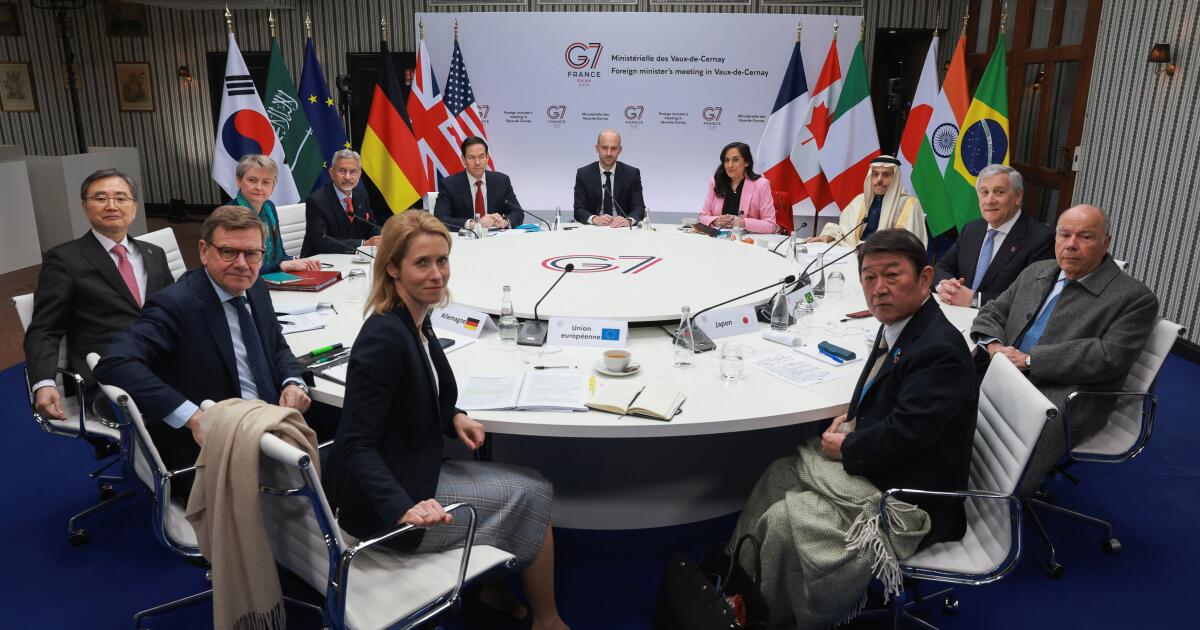
G7 meets on the Iran war as Rubio tries to sell U.S. strategy to skeptical allies insulted by Trump
VAUX-DE-CERNAY, France — Group of Seven foreign ministers met on Friday in France to discuss the Russia-Ukraine conflict, with deep divisions apparent over the U.S.-Israeli war with Iran, following President Trump’s repeated complaints that America’s allies have ignored or rejected requests for help in the military operation and in confronting Iran’s retaliatory attacks, including the closure of the Strait of Hormuz to most international shipping.
U.S. Secretary of State Marco Rubio joined his counterparts from the G7 just 24 hours after Trump’s latest round of insults lobbed at NATO and as instability in oil markets persisted with the Iran war entering its fourth week along with uncertainty over the status of potential negotiations to end the crisis.
Most of America’s closest allies have greeted the Iran war with deep skepticism, sentiments that were on display as the G7 foreign ministers met at a historic 12th-century abbey in Vaux-de-Cernay, outside Paris, even as they urged a diplomatic solution to resolve the situation.
As the diplomats gathered, France’s Minister of the Armed Forces Catherine Vautrin said the war in the Middle East “is not ours,” adding that the French position is strictly defensive.
“The aim is truly this diplomatic approach, which is the only one that can guarantee a return to peace,” she said on Europe 1 and CNews. “Many countries are concerned, and it is absolutely essential that we find a solution.”
British Foreign Secretary Yvette Cooper, meanwhile, said Britain also favored a diplomatic path, acknowledging differences with the United States. “We have taken the approach of supporting defensive action, but also we’ve taken a different approach on the offensive action that has taken place as part of this conflict,” she said.
Rubio already faced difficulties in trying to sell the U.S. strategy for the Iran conflict, but Trump’s vitriolic comments about NATO countries not stepping up to help the U.S. and Israel during a Cabinet meeting on Thursday will likely make it an even tougher task.
Of the G7 nations — besides the U.S. — Britain, Canada, France, Germany and Italy are members of the trans-Atlantic military alliance. Japan is the only one that is not.
“We are very disappointed with NATO because NATO has done absolutely nothing,” Trump said in comments echoed later by his top diplomat.
“Frankly, I think countries around the world, even those that are out there complaining about this a little bit, should actually be grateful that the United States has a president that’s willing to confront a threat like this,” Rubio said Thursday.
Rubio, who chatted briefly with Ukrainian Foreign Minister Andrii Sybiha, also still has work to do to smooth things over with allies like those in Europe that have faced criticism or outright threats from Trump and others in his Republican administration. The Europeans are still smarting over Trump’s earlier demands to take over Greenland from NATO ally Denmark and are concerned about U.S. support for Ukraine in its war with Russia. The conflict in the Middle East has added another point of tension.
“Today at the G7 I reiterated that President Trump is committed to reaching a ceasefire and negotiated settlement to the Russia-Ukraine war as soon as possible,” Rubio said in a post on X containing a photo of him meeting with his counterparts.
Shortly before leaving Washington Rubio told reporters he was not concerned about G7 unhappiness with the Iran war.
“I’m not there to make them happy,” he said. “I get along with all of them on a personal level, and we work with those governments very carefully, but the people I’m interested in making happy are the people of the United States. That’s who I work for. I don’t work for France or Germany or Japan.”
Trump has complained about lack of support from allies
Trump has complained that he has not been able to rally support behind his war of choice in Iran and that NATO and most other allies have rejected his calls to help secure the Strait of Hormuz, where Iran’s chokehold has disrupted oil shipments and pushed up energy prices.
“We’re there to protect NATO, to protect them from Russia. But they’re not there to protect us,” Trump said Thursday.
Before the U.S. leader’s comments, NATO Secretary-General Mark Rutte reiterated the increase in defense spending by alliance members — which Trump has urged — saying Europe and Canada had been “overreliant on U.S. military might” but a “shift in mindset” has taken hold.
Iran has long insisted that its nuclear program is peaceful, and its ambassador to the International Atomic Energy Agency has said that the United States and Israel’s “justification that Iran wants to develop nuclear weapons is simply a big lie.” The ambassador, Reza Najafi, has accused the U.S. and Israel of attacking ”Iran’s peaceful safeguarded nuclear facilities.”
G7 host France has been skeptical of the Iran war
France is hosting the G7 meeting near Versailles and has been highly skeptical of the war. Besides Vautrin’s comments on Friday, the chief of the French defense staff, Gen. Fabien Mandon, complained this week that U.S. allies had not been informed about the start of hostilities.
“They have just decided to intervene in the Near and Middle East without notifying us,” Mandon said, lamenting that the U.S. “is less and less predictable and doesn’t even bother to inform us when it decides to engage in military operations.”
However, 35 countries joined military talks hosted by Mandon on how to reopen the Strait of Hormuz “once the intensity of hostilities has sufficiently decreased,” France’s Defense Ministry said.
Rubio said that with Iran threatening global shipping, countries that care about international law “should step up and deal with it.”
Similar sentiments to Mandon’s have been expressed by other allies that also worry about the U.S. commitment to Ukraine as the Iran war closes in on four weeks.
“We must avoid further destabilization, secure our economic freedom and develop perspectives for an end of and the time after the hostilities,” German Foreign Minister Johann Wadephul said Thursday. “Our joint support for Ukraine … must not crumble now. That would be a strategic mistake with a view to Euro-Atlantic security.”
Lee writes for the Associated Press. AP writers Lorne Cook in Brussels, John Leicester in Paris and Geir Moulson in Berlin contributed to this report.

Redondo Union takes down No. 1 Mira Costa in boys volleyball
Redondo Union didn’t care that Mira Costa’s volleyball team was ranked No. 1 in California. This was their South Bay rival coming to their gym Thursday night, and anything can happen when a team digs deep and doesn’t fear losing.
The Sea Hawks (14-2) were aggressive from the outset and came away with a 27-25, 21-25, 25-22, 21-25, 15-13 victory.
“Chemistry,” setter Tommy Spalding said about the Sea Hawks’ triumph. He’s one of three players headed to MIT, and all three had big matches.
At one point on back-to-back plays, Carter Mirabal had a block and Vaughan Flaherty followed with a kill off an assist from Spalding. Chemistry.
JR Boice, a Long Beach State commit, was delivering kills, and Cash Essert’s serving and all-around play kept Mira Costa’s Mateo Fuerbringer looking frustrated. The Sea Hawks’ focus was on Fuerbringer, who came alive in the fifth set with six kills, but Redondo was able to come back from an 11-9 deficit.
It was only Mira Costa’s second loss in 25 matches. Redondo Union took over first place in the Bay League.
Baseball
Orange Lutheran 3, Jacksonville (Fla.) Trinity Christian 2: The Lancers advanced to the semifinals of the National High School Invitational in Cary, N.C., behind a walk-off single in the eighth inning by Andrew Felizzari. Brady Murrietta had tied the score with a squeeze bunt in the bottom of the seventh. CJ Weinstein had two doubles for the Lancers.
Venice (Fla.) 12, Harvard-Westlake 0: The Wolverines were limited to three hits at the National High School Invitational in Cary, N.C.
Casteel (Queen Creek, Ariz.) 3, St. John Bosco 2: The Braves suffered their first defeat in North Carolina. Jack Champlin threw five innings and also had two RBIs.
Chatsworth 6, Taft 3: Tony Del Rio Nava threw six innings and had two RBIs in the West Valley League win.
Granada Hills 4, El Camino Real 3: A two-run single by Nicholas Penaranda in the seventh inning keyed a three-run inning for the Highlanders in their West Valley League upset. JJ Saffie had three hits for ECR.
Cleveland 4, Birmingham 3: The Cavaliers pushed across a run in the top of the 10th inning to break a 3-3 tie in the West Valley League win. Joshua Pearlstein finished with three hits, including a home run.
Sun Valley Poly 4, San Fernando 2: Fabian Bravo gave up four hits in 6 2/3 innings for the Parrots, who are tied with Sylmar for first place in the Valley Mission League. Ray Pelayo struck out eight for San Fernando.
Verdugo Hills 15, Kennedy 1: Cutlor Fannon had two doubles and four RBIs in the five-inning win. Anthony Velasquez added two singles and four RBIs.
Westlake 9, Agoura 4: Jaxson Neckien hit a three-run home run to power the Warriors.
Thousand Oaks 7, Calabasas 5: Gavin Berigan, Jeff Adams and Cru Hopkins each had two hits for the Lancers.
Oaks Christian 11, Newbury Park 2: Dane Disney contributed three hits in the Marmonte League win. Carson Sheffer had two doubles and three RBIs.
Santa Monica 12, Simi Valley 4: Ryan Breslo and Johnny Recendez had two RBIs and a triple for Santa Monica. Ravi Chernack had three RBIs.
Dana Hills 7, Corona Santiago 0: Gavin Giese finished with eight strikeouts over six innings and gave up one hit for Dana Hills.
Softball
Sherman Oaks Notre Dame 10, Sierra Canyon 0: Kelsey Luderer contributed three hits and two RBIs while freshman Ainsley Jenkins threw five scoreless innings.
Chaminade 15, Louisville 2: Norah Pettersen had two hits and four RBIs.
Carson 10, San Pedro 0: Atiana Rodriguez finished with three hits, including a double and triple, and three RBIs.
Huntington Beach 6, El Modena 2: Willow Kellen had three hits for the Oilers.
Murrieta Mesa 15, Chaparral 0: It’s a 16-0 start for the Rams. Tatum Wolff hit two home runs.

‘Raising 10 red flags’: Is Israel’s army exhausted? | US-Israel war on Iran News
Israel’s Chief of Staff Lieutenant General Eyal Zamir issued a stark warning to the country’s cabinet this week: unless urgent measures are taken, the Israeli army is on the brink of collapse.
According to a report by Israel’s Channel 13 on Thursday, Zamir told ministers that he was “raising 10 red flags”, urging the government to move quickly on long-delayed legislation to alleviate the strain on its “exhausted” military.
The army has been overseeing what rights groups and the United Nations have determined is a genocide in Gaza, the de facto annexation of the occupied West Bank and numerous incursions into Lebanon and Syria.
Addressing ministers, Zamir stressed the need for a “conscription law, a reserve duty law, and a law to extend mandatory service”, adding that without these measures, “before long, the [Israeli military] will not be ready for its routine missions and the reserve system will not last”.
Israeli Prime Minister Benjamin Netanyahu has since said that plans will be made to extend mandatory military service. However, this is not the first time the alarm has been raised that the military is straining under the pressure of repeated operations, which have seen it involved in the killings of tens of thousands of civilians across the Middle East.
The first came as early as June 2024, just eight months into the genocidal war on Gaza, when France24 reported on shortfalls in troop numbers, exhaustion and a lack of supplies.
That situation has only worsened since.
So, how large was the army before October 2023, how active has it been and how has the current era of unprecedented regional aggression sapped the military’s reserves? Here is what we know.

How suited is the Israeli army to its country’s forever wars?
Not very.
Launched in 1948, the idea of an Israeli military made up of a relatively small standing army backed by a large reserve corps of mobilised citizenry was the plan from the outset in order to instil a narrative of social cohesion, national identity and shared responsibility within the new country’s populace. Reservists would move between civilian life and military service to achieve this.
Before the war on Gaza began on October 7, 2023, Israel’s standing army numbered just 100,000. This was immediately bolstered by calling up 300,000 reservists, pulling Israel’s “citizen soldiers” from their jobs and families to take part in the bombardment and ground invasion of Gaza in response to the Hamas-led assault on southern Israel.
Ultimately, this means that the majority of troops serving are reservists rather than career soldiers.
Where are Israeli troops now?
On March 1, the day after US-Israeli strikes on Iran began, Israel announced the mobilisation of another 100,000 reserve soldiers.
That was in addition to 50,000 reservists currently on duty as a result of the Gaza war.
At the time, military sources said the additional troops would bolster existing positions along the border with Lebanon, its frontier and occupied positions within Syria, as well as in the Gaza Strip and the occupied West Bank.
Additionally, Israel’s Home Front Command called up 20,000 reservists, primarily for search and rescue operations, with reinforcements also deployed to the Israeli Air Force, Navy and Intelligence Directorate.
Israel has since deployed “thousands” of those troops to take part in its invasion of southern Lebanon, which it resumed in response to rocket fire from Iranian ally Hezbollah on March 3.
Addressing the same security cabinet meeting as Zamir, Central Command chief Major General Avi Bluth told ministers that government policies in the occupied West Bank were also placing increasing pressure on the military’s already stretched manpower.
According to the report, Bluth told ministers that over the past year, the government has approved the construction of multiple illegal settlements in the Jordan Valley and elsewhere in the West Bank as part of a wider operation characterised by rights groups and more than 20 countries as Israel’s “effective annexation” of the occupied Palestinian territory.
Bluth added: “This is your policy, but it requires security and a full protection package, because the reality on the ground has completely changed – and that requires manpower.”
Are Israeli troops exhausted?
According to many of the army’s own members, particularly reservists, they are.
Speaking to the Ynet News outlet, which is typically supportive of Netanyahu and his ruling Likud party, one reservist told the newspaper in December of his decision not to report for duty.
“We have battles to fight at home,” he said, explaining his decision. “There are guys on the team who were fired from their jobs, others whose families are barely staying afloat, or who have been dragging out their studies for a very long time. This is a problem, a complexity that is hard to describe.”
Resentment of the apparent exemption offered to members of Israel’s ultra-religious Haredim community, whose refusal to enlist for service is often overlooked by politicians, is also growing, Israeli media reports.
Responding to Zamir’s comments to the security cabinet, Israel’s opposition leader, Yair Lapid, took to Twitter to address the government directly.
“The government must stop the cowardice, immediately halt all budgets to the Haredi draft dodgers,” he said of the extensive social benefits many in Israel’s ultra religious community rely upon. “Send the military police after the deserters, draft the Haredim without hesitation,” he said.
“The warning has been given. It’s on your heads. It’s in your hands. You cannot continue to abandon Israel’s security, in wartime, for petty politics.”
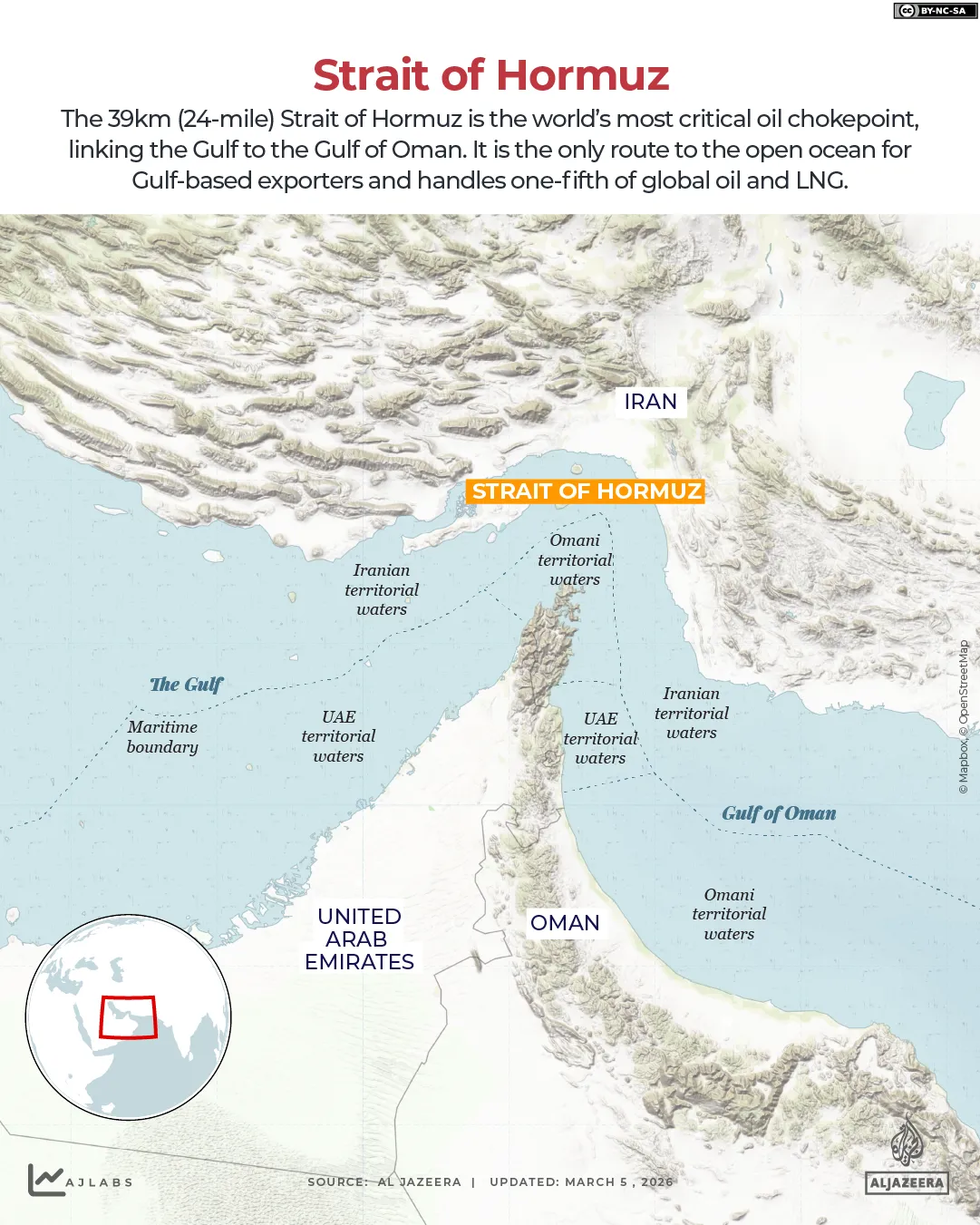
Saudi, UAE, Iraq: Can three pipelines help oil escape Strait of Hormuz? | US-Israel war on Iran News
As the United States-Israeli war on Iran enters its fourth week this weekend, pressure on oil and gas markets continues to mount due to severe disruption to shipping traffic through the Strait of Hormuz as well as attacks on and around key energy facilities in the Gulf.
In peacetime, 20 percent of the world’s oil and gas is shipped from producers in the Gulf through the Strait of Hormuz – the only route to the open ocean – including 20 million barrels of oil per day.
To bridge the shortage its closure has caused, countries in the Middle East are exploring alternative routes to get energy exports out.
In this explainer, we look at three major pipelines in the Middle East that producers may be pinning their hopes on, and whether they can fill the gap.
What has happened in the Strait of Hormuz?
On March 2 – two days after the US and Israel began strikes on Iran – Ebrahim Jabari, a senior adviser to the commander-in-chief of Iran’s Islamic Revolutionary Guard Corps (IRGC), announced that the strait was “closed”. If any vessels tried to pass through, he said, the IRGC and the navy would “set those ships ablaze”. Since then, traffic through the strait has plunged by more than 95 percent.
Iranian officials have most recently stated that the strait is not completely closed – except to ships belonging to the US, Israel and those who collaborate with them – but have also laid down new ground rules. Any vessel must secure Tehran’s approval to transit through the narrow waterway.
As a result, over the past fortnight, countries have been scrambling to do deals with Iran to secure safe passage and a few, mostly Indian, Pakistani and Chinese-flagged tankers have been allowed to pass.
On Thursday, Malaysian Prime Minister Anwar Ibrahim thanked Tehran for granting Malaysian vessels “early clearance” through the strait.
Meanwhile, about 2,000 ships flying the flags of other nations are stuck on either side of the strait.

Which oil pipelines could serve as alternate routes?
The only alternative to shipping oil is piping it across land or under the sea. Three oil pipelines could work as ways around the Strait of Hormuz, including:
Saudi Arabia’s East-West Pipeline
The East-West pipeline is also known as the Petroline and is operated by Saudi oil giant Aramco. Aramco is one of the world’s largest companies, with a market capitalisation exceeding $1.7 trillion and annual revenues of $480bn. The oil giant controls 12 percent of global oil production, with a capacity of more than 12 million bpd.
It is a 1,200km (745-mile) pipeline which runs from the Abqaiq oil processing centre close to the Gulf in Saudi Arabia to the Yanbu port on the Red Sea, on the other side of the country.
However, the pipeline does not have the capacity to fully make up for the Hormuz closure.
In 2024, about 20 million barrels per day (bpd) passed through the Strait of Hormuz, according to data from the United Nations. Crude oil and condensate made up 14 million bpd of this, while petroleum was the remaining 6 million bpd.
The East-West pipeline has the capacity of transporting up to 7 million bpd. On March 10, Aramco said about 5 million bpd could be made available for exports, while the rest could supply local refineries.
Since the US-Israeli war on Iran began at the end of February, Saudi Arabia has ramped up its oil flow through this pipeline. In January and February, an average of 770,000 bpd flowed through the pipeline, according to data from Kpler, a data and analytics company. By Tuesday this week, this had increased to an average of 2.9 million bpd.
However, using the Saudi pipeline still carries a risk.
The Houthis, an Iran-backed Yemeni armed group whose attacks on ships in the Red Sea caused global shipping chaos during Israel’s genocidal war in Gaza from 2023 to 2025, could target the Bab al-Mandeb Strait, which connects the Red Sea to the Gulf of Aden, and the Indian Ocean beyond.
An unnamed Houthi leader told the Reuters news agency that the Houthis remain ready to attack the Red Sea again in solidarity with Tehran, the agency reported on Thursday.
“We stand fully militarily ready with all options. As for other details having to do with determining zero hour they are left to leadership and we are monitoring and following up with the developments and will know when is the suitable time to move,” the Houthi leader said.
The Bab al-Mandeb is the southern outlet of the Red Sea, situated between Yemen on the Arabian Peninsula and Djibouti and Eritrea on the African coast.
It is one of the world’s most important routes for global seaborne commodity shipments, particularly crude oil and fuel from the Gulf bound for the Mediterranean via the Suez Canal or the SUMED pipeline on Egypt’s Red Sea coast, as well as commodities bound for Asia, including Russian oil.
The Bab al-Mandeb is 29km (18 miles) wide at its narrowest point, limiting traffic to two channels for inbound and outbound shipments.
Iran could open a new front in the Bab al-Mandeb Strait if attacks are carried out on Iranian territory or its islands, Iran’s semiofficial Tasnim cited an unnamed Iranian military source as saying on Wednesday.

UAE’s Abu Dhabi Crude Oil Pipeline
The Abu Dhabi Crude Oil Pipeline is also called the ADCOP or the Habshan-Fujairah pipeline.
The 380km pipeline runs from Habshan, an oil and gasfield in the southwestern area of Abu Dhabi, United Arab Emirates, to the port of Fujairah on the Gulf of Oman.
The pipeline, which became operational in 2012, has a capacity of about 1.5 million barrels per day (bpd). It is unclear how much is now being transported through the pipeline.
However, oil exports from Fujairah do appear to have risen in the past month despite the closure of the strait, averaging 1.62 million bpd in March compared with 1.17 million bpd in February, according to Kpler analyst Johannes Rauball, who spoke to Reuters.
Iraq-Turkiye Crude Oil Pipeline
The Iraq-Turkiye Crude Oil Pipeline, also called the Kirkuk-Ceyhan Pipeline, links Iraq to the Mediterranean coast of Turkiye.
The pipeline, which has the capacity of 1.6 million bpd, currently carries about 200,000bpd.
Iraq is among the top five global producers of oil and is the second largest within the Organization of the Petroleum Exporting Countries (OPEC), exceeding 4 million bpd.
Can these pipelines replace the Strait of Hormuz?
No. While these pipelines can take on some of the capacity of Hormuz, their combined capacity is only about 9 million bpd, compared with about 20 million bpd for the strait.
Additionally, these pipelines are land-based and within the range of Iranian missiles and drones, which makes them just as vulnerable to attacks and damage in the ongoing conflict as ships travelling through the strait. Throughout the war, energy infrastructure all over the Gulf has suffered strikes.
Are there other options?
Theoretically, oil can be transported on trucks, but this is costly, slow and inefficient.
A standard truck can carry anywhere between 100 to 700 barrels per day, depending on the number of trips. Hundreds of thousands of barrels would be needed to meet needs, requiring thousands of trucks, which could also be targeted in strikes.

UK’s busiest station to shut ALL weekend impacting major train & tube lines as Brits warned to ‘plan ahead’
BRITS are set to face major travel disruption as the UK’s busiest train station is set to close this weekend – affecting several train and tube lines.
Network Rail has confirmed commuters planning to use a busy London station might need to re-route.

It comes after it was announced that “vital maintenance, renewals, and repairs” will take place at the site across five days.
The closure at Liverpool Street Station will take place to improve roof drainage and track drainage, as well as vegetation management.
While most of the work has already been carried out, passengers have been told that Liverpool Street’s mainline station will experience its final closure on March 28 and March 29.
What lines will be affected?


The Elizabeth line will still be running, however, there will be no access to the main concourse. Commuters have been also been warned that there will be no Overground Weaver line trains operating this weekend.
Train operating company, Greater Anglia, stated on its website: “On both days, Liverpool Street Main Line station will be closed (including the concourse) to all Greater Anglia, Stansted Express, c2c, Elizabeth line and London Overground services.
“Greater Anglia services to/from Cambridge, Bishop’s Stortford, Hertford East and Stansted Airport will start/terminate at Stratford.”
They added: “On both days, Elizabeth line’s low level Liverpool Street station remains open however services will not run beyond Stratford due to closures on the Great Eastern mainline.
“On both days London Overground Weaver line services will not run between London Liverpool Street and Enfield Town/Cheshunt/Chingford.”
Commuters have been directed to use rail replacement buses where possible. The services will run between Seven Sisters and Enfield Town/Cheshunt and Hackney Downs and Chingford.
Officials have urged passengers to plan their journeys ahead of time. It comes as the station recorded a staggering 98 million entries and exits between April 2024 and March 2025.
Trish Ashton, TfL’s Director of Rail, said: “We’re sorry for any disruption caused by weekend engineering work impacting London Overground and Elizabeth line services during March.
“These planned works are essential to help keep our services safe and reliable. Customers are advised to ‘check before they travel’ using the TfL Go app or at TfL.gov.uk, and allow a little extra time for their journeys.”
You can also check the Network Rail website here for more information on planned works.

‘Palestine ’36’ review: Anti-colonialist drama has timely ripples
An uprising typically has a long parentage and, if effective enough, can leave behind many like-minded descendants. Such is the bracing air that Palestinian filmmaker Annemarie Jacir breathes into her historical drama “Palestine ’36” as she dramatizes the 1936-1939 Arab Revolt against occupying Britain’s increasingly punitive, underhanded rule, offering up a multifaceted rebellion tale with plenty of contemporary resonance.
That being said, Jacir’s fourth feature — packed as it is with storylines — could stand a bit more context and fewer of the expositional traps that big-cast sagas easily fall into. But the key element that grounds Jacir’s version of an old-fashioned epic (and helps it withstand its faults) is that we’re seeing a place rarely depicted with such sweep, detail and scope outside of biblical epics. It’s as if a long-disused history book’s pages have finally been opened, dust giving way to color and purpose.
Some of that breadth is seen at the beginning in some astonishing newsreel footage from the era, which segues into Jacir’s establishing story threads. We meet village-born Yusuf (newcomer Karim Daoud Anaya), an ambitious young man who moves restlessly between bustling Jerusalem, where he works for a wealthy, British-friendly Palestinian businessman (Dhafer L’Abidine) and his journalist wife (Yasmine Al Massri), and his rural home where villagers are routinely targeted by British authorities. If it isn’t vicious Capt. Wingate (Robert Aramayo) violently rooting out rebels and putting locals in pens, it’s outwardly friendly officials like the secretary who oversees new policies kinder to the increasing numbers of Jewish settlers than to those who have been farming the hills for ages.
The split widens when a labor strike becomes an armed revolt, with Jacir gamely tracking the hardening or shifting loyalties of both her peasant and well-to-do characters. The British, represented at the top by the casually imperious High Commissioner Wauchope (a perfectly cast Jeremy Irons), are decidedly the villains here as a colonial force quick to brutalize Palestinians for speaking up for themselves. Still, by forgoing any Jewish characters when there was already a burgeoning transplanted minority — all we see is a kibbutz being erected in the far distance — seems like too careful an avoidance of contextual reality.
As “Palestine ’36” eventually sacrifices focus on the many characters it has, one wishes Jacir had had the luxury of a classic epic’s standard third hour to build that complexity into a vivid resistance narrative. Wanting more from this material, though, feels better than not getting the opportunity to see it at all. As overdue tales of history go, “Palestine ‘36” (currently one of the last films with access to its real-world locations) is certainly more of a blunt instrument than a novelistic endeavor. But its broad strokes and rooted passions easily earn their place, and deserve to inspire more such stories.
‘Palestine ’36’
In Arabic and English, with subtitles
Not rated
Running time: 1 hour, 59 minutes
Playing: Opens Friday, March 27 at Laemmle Royal and Laemmle NoHo 7

Friday 27 March Armed Forces Day in Myanmar
This article examines the historical origins and cultural significance of Armed Forces Day in Myanmar. It describes how the nation, originally under British colonial rule, briefly aligned with Japanese forces during World War II in a failed pursuit of sovereignty. The text highlights the pivotal role of Aung San, who eventually led a military rebellion against Japan on March 27, 1945, to aid the Allied cause. Formerly known as Resistance Day, the holiday is now characterized by significant military parades held in the capital city of Naypyidaw. The source also places this event within a broader global news context, mentioning various international conflicts and contemporary environmental issues.