



Rangers: Club share issue will raise £16m for squad funds
Meanwhile, Rangers are attempting to schedule a meeting of Premiership clubs to discusss the use of video assistant referees (VAR), a discussion which may happen in the next fortnight.
Many clubs have publicly expressed concerns about VAR and the general state of refereeing in Scotland.
It’s believed that Rangers have not ruled out withdrawing their financial support of VAR but broadly they believe the system is here to stay.
They might even be prepared to invest more in the technology – for example extra cameras – if they had sufficient confidence that increased investment would lead to better quality decision-making.
When the meeting of clubs takes place there will be an emphasis on coming up with ways to improve the product and get better value for money.
Last month, Paraag Marathe, then the club’s vice-chairman as well as chairman of Leeds United, stood down after discussions with Uefa about multi-club ownership.
Another Rangers director at the time Gene Schneur, also left his role at Ibrox at that time. Neither will be replaced.
Cavenagh also offered his support for manager, Danny Rohl, ahead of the title run-in.
“We are three points off the lead, with seven matches to play,” he said.
“We have complete confidence in Danny, his staff, and our squad. We will approach each match as it comes, and fingers crossed, we will be at the top of the table after 38 matches.”
Memo: Classified documents at Mar-a-Lago related to Trump’s business
1 of 4 | President Donald Trump speaks in the Oval Office of the White House in Washington, D.C., on Tuesday. A Justice Department disclosure sent to members of Congress shows Trump had classified documents related to his personal business dealings stored at Mar-a-Lago after he left the presidency. File Photo by Graeme Sloan/UPI | License Photo
March 25 (UPI) — A 2023 Justice Department disclosure to Congress revealed that President Donald Trump had documents so secretive that only six people had received copies among classified documents he kept at his Mar-a-Lago estate in Florida after he left office.
The disclosure was part of former special counsel Jack Smith’s report on his investigation into Trump, which has not been made public. Elements of the report, though, were distributed to the House and Senate judiciary committees and subsequently made public this week as part of their own probes.
The disclosure detailed the types of documents Trump took with him to his home in Palm Beach after leaving office in 2020. Smith was appointed by former President Joe Biden to investigate the mishandled classified documents, resulting in 41 criminal counts against Trump. Trump-appointed U.S. District Judge Aileen Cannon dismissed the case in 2024 and recently ruled that Smith’s full report can’t be released publicly.
Rep. Jamie Raskin, D-Md., the ranking member of the House Judiciary Committee, sent a letter to Attorney General Pam Bondi on Tuesday questioning why the Justice Department is “fighting tooth and nail to gag Special Counsel Jack Smith and bury his report.” He said the Justice Department’s disclosure sent to the committee earlier this month included “cherry-picked” documents related to the investigation.
“You have, quite amazingly, missed the fact that some of the documents you provided include damning evidence about your boss’s conduct and may well violate the gag order your DOJ and Donald Trump demanded from Judge Aileen Cannon,” the letter read.
Raskin’s letter said that the Justice Department disclosure included information that Trump held documents at Mar-a-Lago that only six people in the government had access to and that other documents related to his business interests.
The disclosure also indicated that White House chief of staff Susie Wiles — then the CEO of Trump’s super PAC — said she observed Trump showing off a classified map to fellow passengers on his private plane.
“This glimpse into the trove of evidence behind the coverup release a president of the United States who may have sold out our national security to enrich himself,” Raskin wrote.

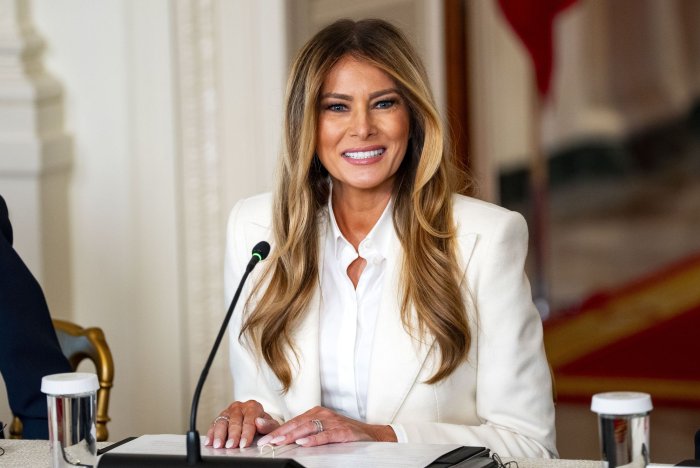
First lady Melania Trump speaks during the Fostering the Future Together Global Coalition Summit roundtable event in the East Room of the White House on Wednesday. Photo by Bonnie Cash/UPI | License Photo
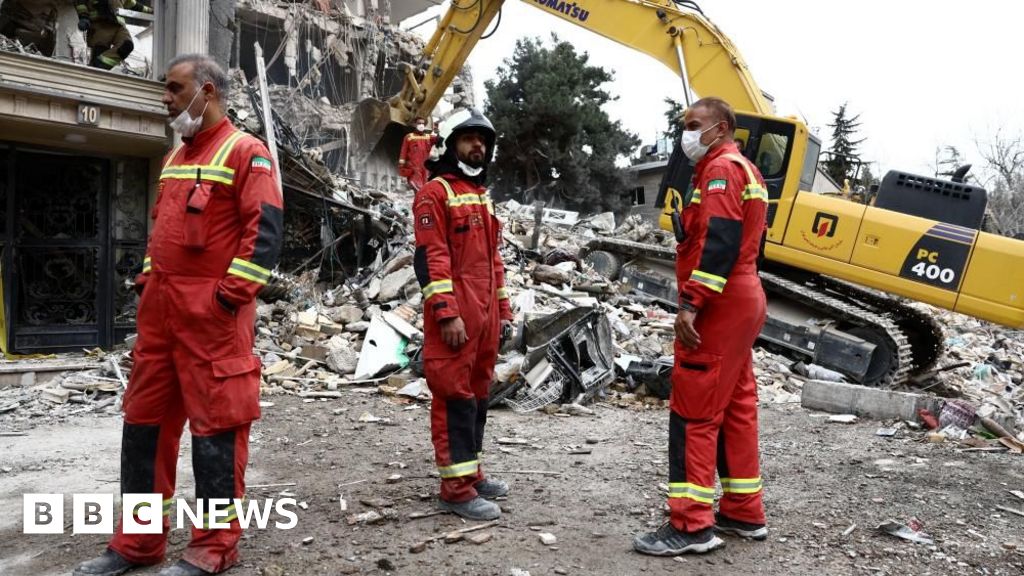
Iran rejects US 15-point peace plan, state media reports
The proposals request that Iran must “commit never to pursue nuclear weapons“, pledge to dismantle nuclear facilities and to hand over the enriched amounts of uranium it possesses to the International Atomic Energy Agency (IAEA), the UN nuclear watchdog, which is to monitor the issue going forward.

Who is Mr Charles in Daredevil Born Again season 2?
There’s a mysterious new character that fans are wondering about their true identity
The latest season of hit Marvel sequel series Daredevil Born Again has introduced a mysterious new villain.
While the show debuted last year, it quickly became a hit with fans and critics alike and succeeded in picking up where the Netflix version of the comic book character left off. It also meant that the character was now officially a part of the Marvel Cinematic Universe.
Its first season managed to score an impressive 87% on website Rotten Tomatoes and the premiere episode of the second season is streaming now on Disney+.
As episodes are released on a weekly basis, fans will see Mayor Wilson Fisk crush New York City underfoot as he hunts down public enemy number one, the Hell’s Kitchen vigilante known as Daredevil. But, beneath the horned mask, Matt Murdock will try to fight back from the shadows to tear down the Kingpin’s corrupt empire and redeem his home. Resist. Rebel. Rebuild.
The show sees most of the original cast return including Charlie Cox and Vincent D’Onofrio reprising their roles as Matt Murdock and Wilson Fisk respectively. Also returning are Wilson Bethel as Bullseye and Deborah Ann Woll as Karen.
One newcomer to the show though has already made an impact just one episode in. That is the currently mysterious Mr Charles, played by Matthew Lillard. Lillard is famed for his previous roles in the Scream franchise as well as Five Nights At Freddy’s, the Scooby Doo live-action films and Prime Video series Cross.
But who is his character Mr Charles? Is he in the original Marvel comics? Here’s all you need to know. Beware some mild spoilers for Daredevil Born Again season 2, episode 1.
Who is Mr Charles?
In the show, we meet Mr Charles as he watches developments in New York on the TV from Washington. Daredevil has just sunk the North Star ship which was secretly smuggling weapons for Wilson Fisk and his associates. Turns out, Mr Charles is a middle man for these associates.
As a result, he gets a phone call and agrees he needs to address the matter personally. He arrives at Fisk’s office on his own terms, seemingly one of the very few people unafraid of the Kingpin. In a reference that may have missed the average viewer, the name Miss de Fontaine is mentioned and confirmed to be Mr Charles’ boss.
This means he works for Contessa Valentina Allegra de Fontaine, played by Julia Louis-Dreyfus and seen in The Falcon and the Winter Soldier , Black Widow , Black Panther: Wakanda Forever , and Thunderbolts. So this Mr Charles works for the CIA but is assisting de Fontaine with illicit operations.
However, some fans believe that this name could be a cover for who the character really is. According to Screen Rant there is a character called Mr Charles in Marvel lore but he only appeared in one issue, outside any main storyline or continuity. The issue was published in 2013 and he was a Roxxon Corporation employee who was in charge if illegal oil drillings in the ocean.
Fans will just have to wait as the series continues to see who Mr Charles really is and what he is truly up to. There is always the chance that he is an original character created for the show.
Daredevil Born Again is streaming on Disney+.

The new Cotswolds hotel that’s like a private members club

MANY hotels claim to be big on wellness, but the recently-opened Cotswolds escape Hyll has mastered it.
Here’s everything you need to know.
Where is Hyll?
Buried deep in the Cotswolds countryside, near Chipping Campden and fancy members clubs like Soho Farmhouse, Hyll is undoubtedly as stylish as its plush neighbours – only you won’t need to sell out for an extortionate members fee.
Named after the old English word hill, meaning elevated piece of ground, rural views are pretty spectacular from this retreat’s high perch.
There’s a car park on site or the hotel can arrange transfers from the train station.
What’s it like?
Not just a hotel, Hyll is more of a sanctuary where guests are gently encouraged to switch off – whether that’s with a board game in front of a freshly-stoked fire or with a scenic stroll around the 60 acres of manicured grounds.


Views are just as gorgeous from within the Grade-II listed 14th century manor house thanks to its original stone frame, timber beams and framed artwork that wouldn’t look out of place in a French farmhouse.
What are the rooms like?
The 26 unique bedrooms (some in the main house and some in the courtyard) feel homely yet luxurious with plump feathered cushions, freestanding bathtubs and chic coffee table books.
If the strict colour palette of neutral browns and sandy tones doesn’t soothe you, a guided yoga nidra (a type of specific relaxation yoga) session sure will.
A series of wellness videos have been designed exclusively for hotel guests and are text to your phone ahead of bedtime.
What is there to eat and drink?
Eat in the dining room, living room, outside or wherever you please, thanks to the laid back “mi casa, su casa” ethos.
Dinner relies on local ingredients sourced from nearby farms, mills and distilleries.
Star dishes include Briar Hill Farm hogget served with salsa verde and baklava tart soaked in the hotel’s own honey.
Post dinner, retire to the marshmallow-like sofas next door with a book and signature cocktail – I liked the yuzu and plum sour, both tart and sweet.
Non-drinkers are catered for, too, with a decent selection of no and low cocktails including a sharp No-groni.
Breakfast is a farm-style mix of homemade granola and hot options like full English and scotch woodcock (scrambled eggs on toast, topped with salty anchovies) both on the menu.
Breakfast hampers can also be delivered straight to your bed.
What else is there to do?
Small books labelled ‘Do Nothing’ and ‘Do something’ are left on bedside tables with suggestions on how to fully embrace and unwind in the Cotswolds nature.
In-room massages can be booked on request and dogs are welcome in certain bedrooms and throughout living rooms and restaurants in the main house.
The essence of the place, in general, is to do very little.
I’d recommend just kicking back with a book – each of the three lounge areas are kitted out with bookshelves and artsy side tables covered in fiction and non-fictions reads that you can borrow for the duration of your stay.
Thanks to a partnership with Borzoi Books, these are refreshed on a monthly basis.
You can even arrange to take a book home with you, for a fee.
How much are rooms at Hyll?
Rooms cost from £210 per night including breakfast.
Is Hyll family friendly?
Kids are welcome but it’s not the most child-friendly of places.
Cost and additional child beds are available on request, however.
Is there access for guests with disabilities?
Although, staff are always on hand to help, Hyll is not the ideal place for wheelchair users.
Given the historic property is Grade II listed, a lift cannot be installed and therefore bedrooms are accessed via stairs.
Looking for a place to stay? For more hotel inspiration click here.

Iran dismisses Trump’s peace plan as ‘deceptive,’ as U.S. deploys more troops to Mideast
WASHINGTON — The Trump administration has offered Iran a 15-point ceasefire plan aimed at temporarily halting the war in the Middle East, as the Pentagon simultaneously orders thousands of Marines, paratroopers and a warship to the region.
The plan presented to Iranian leadership Tuesday broadly included a 30-day ceasefire and sanctions relief for Iran in exchange for a laundry list of U.S. demands, according to the Associated Press and other outlets.
But Iran dismissed the proposal Wednesday, criticizing the White House’s terms as “excessive” and out of step with reality, according to Iranian state-run media.
Those terms included limitations on Tehran’s missile stockpiles, and the permanent end to its nuclear program, its support for regional militias including Hezbollah, and of its blockade of the Strait of Hormuz, various outlets reported, citing Pakistani officials mediating the negotiations.
Several of those provisions have long been considered nonstarters for Iran, which sees its missile stockade and regional alliances as central to national security.
Iranian officials responded with defiance and skepticism.
“Iran will end the war when it decides to do so and when its own conditions are met,” an Iranian official told state media. “Not when Trump envisions its conclusion.”
The official outlined the Islamic Republic’s terms for ending the conflict, which included a halt to “aggression and assassinations,” an end to fighting on all fronts, enforceable guarantees that hostilities will not resume, compensation for war damages and a formal recognition of Iran’s sovereignty over the Strait of Hormuz.
Iranian Foreign Minister Abbas Araghchi has stated that Iran is not interested in a ceasefire but rather a comprehensive “end of war” on all fronts, including the lifting of sanctions and guarantees to allow Iran to pursue peaceful nuclear enrichment for energy and medical applications.
Iranian officials told state media that they believed the Trump administration’s diplomatic efforts were deceptive.
“You have reached a stage where you are negotiating with yourselves,” Iranian military spokesman Ebrahim Zolfaqari said in a televised address Wednesday. “Do not call your defeat an agreement.
Since the start of the conflict, Iranian leaders have voiced suspicion of any diplomatic talks with the Trump administration, pointing to prewar diplomatic efforts as evidence they were “tricked.” The Islamic Republic says it made clear in those talks that it had no interest in developing nuclear weapons, but Trump launched his military campaign nonetheless.
There have been conflicting media reports over Tehran’s exact position. Statements from Iranian officials and state-linked outlets have left open the possibility that elements of the proposal are still under review, while some reports frame the response as an outright refusal.
The Iranian response also conflicts with President Trump’s insistence that negotiations were progressing.
“We have had very, very strong talks,” he said Sunday in Florida. “We have points, major points of agreement. I would say almost all points of agreement will at some point very, very soon meet.”
Compounding the issue, Israel — which continues to carry out routine bombing campaigns over Iran — has stayed out of the talks.
Trump and Israeli Prime Minister Benjamin Netanyahu spoke about the peace deal in a phone call Tuesday. In a televised address, Netanyahu said that Trump “believes there is an opportunity” to realize U.S.-Israeli war objectives in an agreement “that will safeguard our vital interests.”
“At the same time, we continue to strike both in Iran and in Lebanon,” Netanyahu said. “We will safeguard our vital interests in any scenario.”
The negotiations are being facilitated by Pakistan, with support from Egypt and Turkey — countries that have pushed to contain a conflict that has killed more than 2,400 people, further destabilized the embattled region and disrupted global oil markets.
As Washington pursued a diplomatic end to the conflict, the Pentagon deployed an additional 2,000 troops from the 82nd Airborne Division to the Mideast. An additional 5,000 Marines and thousands of sailors are already en route to the region, where 50,000 more Marines are currently stationed.
House Speaker Mike Johnson (R-La.) told reporters on Wednesday that the deployment “sends a signal to Iran that they need to get their act together,” but denied any coming escalations by the American side. Johnson instead said that he believes “Operation Epic Fury is almost done.”
Now in its fourth week, the operation began with a series of intensive airstrikes that killed Iran’s Supreme Leader, Ali Khamenei, and dozens of other high-ranking officials. Since then, the U.S. and Israel have carried out over 9,000 strikes targeting Iranian military infrastructure and nuclear program.
Defense Secretary Pete Hegseth told reporters in the Oval Office Tuesday that while the president’s diplomatic envoys seek a peace deal, his department of war will continue to “negotiate with bombs.”
“The president has made it clear that you will not have a nuclear weapon. The War Department agrees,” Hegseth told reporters Tuesday in the Oval Office. “Our job is to ensure that, and so we’re keeping our hand on that throttle.”
Iranian retaliatory strikes have hit Gulf infrastructure and halted energy production and shipping in the region, spurring global fears of an enduring supply crunch. Meanwhile, Israel has expanded operations in Iran and sought to expand its borders into Lebanon.
Oil prices, which had surged above $120 per barrel earlier in the conflict, fell sharply this week on hopes that a ceasefire could ease supply woes.
In a statement Wednesday, U.N. Secretary-General António Guterres demanded an end to the fighting, which he said “has broken past limits even leaders thought imaginable.”
He specifically called on the U.S. and Israel to end the war, as “human suffering deepens, civilian casualties mount, and the global economic impact is increasingly devastating.”
Times staff writers Ana Ceballos, in Washington, D.C., and Nabih Bulos, in Beirut, contributed to this report.
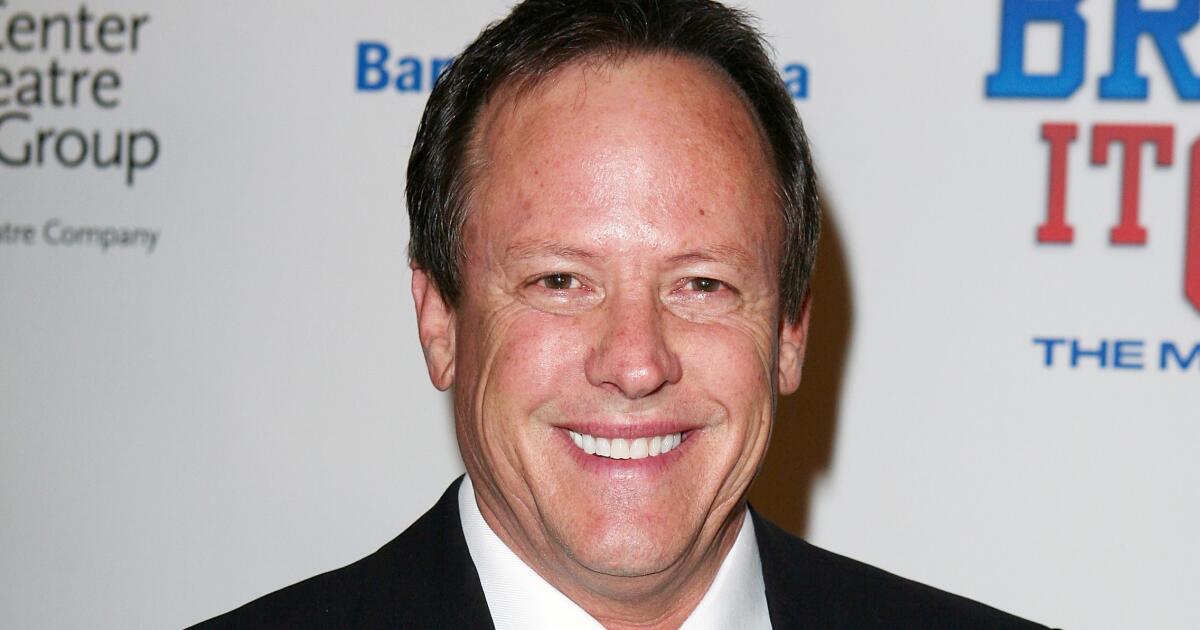
Jeff Webb, the ‘founder of modern cheerleading,’ dies at 76
Jeff Webb, known as the “founder of modern cheerleading” for his role in turning the activity into a competitive sport, died Thursday following “a tragic accident,” a family spokesperson said Tuesday. He was 76.
A former yell leader for the University of Oklahoma cheerleading squad, Webb went on to form several organizations — including Varsity Spirit, the Universal Cheerleaders Assn. and the International Cheer Union — that helped him reshape what was once largely a sideline activity into an International Olympic Committee-recognized sport that features elements of gymnastics, stunts and dance.
Cheer Daily reports that an email sent by Varsity Spirit president Bill Seely to the company’s community said that Webb fell while playing pickleball earlier this month and suffered a severe head injury.
Webb was buried in a private ceremony for family on Sunday. A larger celebration of life will be held at a later date.
“Our father was, at his core, a man of inexhaustible energy, and he poured that energy into everything he did, from revolutionizing cheerleading to his never-ending — and constantly growing — list of activities,” Webb’s children said in a statement.
An avid outdoorsman, Webb managed a farm and hunting lodge and enjoyed offshore fishing and boating. He was also a pilot, author, publisher and guitar player.
“He brought that same spirit of dedication and encouragement to being a father and grandfather,” his children added. “To most people he is a legendary entrepreneur — to us, he was our soccer coach and on-demand comedian, our mentor and father-daughter dance partner, our solace and our source of strength.
“He taught us by example that a life well lived contains balance, that seriousness and silliness are not in fact opposites, that focus and discipline do not and should not preclude care and kindness.”
Through his organizations, Webb established hundreds of cheerleading competitions — including national championships that have been broadcast on ESPN for decades — and training camps. He was a pioneer in the manufacturing and marketing of cheerleading apparel and equipment and also played a role in establishing safety guidelines for the sport.
“The founder of modern cheerleading, [Webb] spent his life building the sport he loved and advocating for young people everywhere,” the International Cheer Union wrote on Facebook. “Our thoughts are with his family, friends and the entire global cheer community.
Varsity Spirit wrote on Instagram: “Join us in honoring the life and legacy of Jeff Webb, founder of Varsity Spirit and modern cheerleading. His impact has built a community that will continue to inspire generations to come.”
The Varsity Spirit post included a tribute video that featured an audio clip of Webb discussing the instant he realized just how much of an impact his efforts had on the sport.
“I was at UCA High School Nationals, and I looked out there — everybody had a smile on their face,” Webb said. “People think this is a little corny, but I had this almost epiphany experience. And it was just this emotion that came over me. It was, how lucky am I? How fortunate have I been to be able to have this idea and to build on it and have fabulous people kind of hook their star to my vision and for us together to build this great thing?”
Webb is survived by his wife, Gina, and his children, Jeffery and Caroline, and two grandchildren.

Gulf oil spill sparks transparency concerns in Mexico

March 25 (UPI) — Environmental organization Oceana has accused the Mexican government of maintaining an opaque response to an oil spill that has affected at least 390 miles of coastline in the Gulf of Mexico.
The oil has largely impacted the southern part of Veracruz state and the northern part of Tabasco state since early March, with dozens of contaminated sites still not receiving attention.
The spill has lasted nearly three weeks without an identified cause or confirmed responsible parties, affects the southwestern Gulf of Mexico reef corridor, a key ecological area that stretches along the coast between both states.
President Claudia Sheinbaum said the Office of the Attorney General is investigating, with support from environmental and energy agencies, while an interdisciplinary team analyzes the causel.
Sheinbaum stated that the spill originated from a private vessel, not state-owned oil company Pemex.
Veracruz Gov. Rocío Nahle said she will meet with officials from Petroleos Mexicanos to evaluate the installation of containment barriers in coastal areas following requests from fishermen.
Nahle said cleanup efforts are intensifying and that specialized mesh barriers are being installed at strategic points along the coastline to contain residues, with plans to expand the work depending on marine current movements.
Oceana warned that the situation constitutes a “crisis of transparency and accountability,” noting that official information has been insufficient and contradictory compared to the scale of damage reported by coastal communities.
“The opacity surrounding this spill generates impunity. Without clarity on those responsible, the causes and the impacts, it is impossible for authorities to be held accountable and guarantee reparations,” said Renata Terrazas, the group’s executive director.
According to citizen reports and local organizations, at least 51 sites with the presence of oil have been identified along the coastline, while more than two dozen have not yet received attention.
Reports also indicate impacts on key ecosystems. At least 14 marine species have died, including sea turtles, manatees and various species of fish, and thee has been damage to coral reefs and lagoon systems on which fishing communities depend.
Greenpeace Mexico released an interactive map with real-time reports on the expansion of the spill, including citizen records of thick residues and their impact on wildlife and coastal ecosystems.
However, Veracruz governor downplayed the impact, saying in interviews that it involves “traces” or small “drops” of oil on beaches and asserting that reports of dead wildlife were false — an assessment that contrasts with reports from communities and environmental organizations.
Oceana called on the government to establish “transparent, agile and binding” interagency coordination mechanisms and to adopt structural measures to prevent the Gulf from facing another environmental crisis without responsible parties or clear information.
“The Gulf of Mexico and its communities cannot continue to be treated as an environmental sacrifice zone,” Terrazas said.

M1E3 Next-Gen Abrams Tank Production Could Begin Next Year
The U.S. Army says it hopes to see production of a finalized version of the next-generation M1E3 Abrams tank begin next year. The exact timeline will depend on the performance of early prototype tanks in testing by operational units, which is slated to kick off later this year.
Brent Ingraham, Assistant Secretary of the Army for Acquisition, Logistics, and Technology, discussed current plans for the M1E3 program with TWZ and other outlets at a media roundtable on the sidelines of the Association of the United States Army’s (AUSA) annual Global Force Symposium yesterday. The Army officially unveiled the first early prototype M1E3 at the Detroit Auto Show in January, which was delivered years ahead of the program’s original schedule.
“That will again be this summer, early fall,” Ingraham said when asked about the schedule for M1E3 early prototypes arriving at so-called Transformation In Contact (TIC) units. These are operational formations that have been given a test role as part of the Army’s larger TIC effort, which is intended to help accelerate the fielding of new and improved capabilities, as well as tactics, techniques, and procedures to go with them.

Beyond that, the central goal for the M1E3 program is “to get to production as fast as possible,” Ingraham continued.
The Army’s top acquisition official added that “it’s going to depend on how well they [the early prototypes] perform,” but that “hopefully” production of the new tanks will then start “in the next 12 months or so.”
It also remains to be seen how the M1E3’s configuration may evolve between now and production start. Whether the next-generation tanks will be entirely new production vehicles is also not entirely clear. The early prototype shown at the Detroit Auto Show featured a substantially reworked hull and now uncrewed turret, but that was clearly still derived from the configuration of the latest M1A2 System Enhancement Package Version 3 (SEPv3) Abram variant. Prime contractor General Dynamics Land Systems had previously rolled out an AbramsX next-generation demonstrator with a much more significantly evolved design.


AbramsX Technology Demonstrator on the Move
That being said, the M1E3 early prototype does differ in a host of other very important ways from the M1A2 SEPv3. At the top of that list is a new hybrid propulsion in place of the fuel-hungry gas turbine found on previous Abrams models. The new propulsion configuration includes a modified Caterpillar C13D six-cylinder diesel engine and an ACT1075LP transmission from SAPA. Army officials have previously said the M1E3 will be between 40 and 50 percent more fuel efficient compared to previous versions.
The M1E3 also has new lightweight tracks from American Rheinmetall and a hydropneumatic suspension system understood to have come from Horstman Group. In a post on X in January, the latter firm noted that switching “to external hydropneumatic suspension” helps “free up crew space by removing torsion bars,” but did not explicitly confirm its involvement in the program. A suspension system of this kind, which has been tested on Abrams in the past, also allows for the hull of the tank to be raised and lowered in ways that can help improve survivability and offer other operational benefits.
The M1E3’s crew configuration differs significantly from existing variants, as well. The next-generation tank’s turret is intended to be entirely remotely operated, with the truncated three-person crew (instead of the traditional four) moved down into the front of the hull. The loader role is eliminated, and an autolaoder is set to be utilized instead. Historically, the U.S. military, as well as many Western armed forces, have eschewed autoloaders in their tanks. Soviet and now Russian tank designs, along with Chinese ones, have more typically had this feature. In terms of the M1E3’s main gun, the Army otherwise looks to be sticking with the same 120mm smooth-bore type used on Abrams variants now.
Interestingly, what has been seen so far of the expected crew compartment for the M1E3 is also similar in many broad respects to the design of Russia’s T-14 Armata. Despite having made its public debut in 2015, the T-14 has, at best, seen very limited operational service. In addition, the M1E3’s driver will operate the tank via a controller that looks like one that might come with a video game console, which the Army has said is a deliberate choice.
“It now takes just 30 seconds to train a young soldier to drive that tank – something that used to take us days, even weeks,” Col. Ryan Howell, the program manager for the M1E3, told Fox News back in January in Detroit. “I’ll share a quote from one of the soldiers who helped us early in the process. When we first sat him down at the crew station, he was already in the process of transitioning out of the Army, but he was assisting us by informing key design decisions. He told us, ‘If I had known I could work on a platform like this, I would have stayed in the Army.’”
These various design elements are key to the Army meeting its goals for the overall weight of the M1E3. The service has previously said that it hopes the next-generation tank will tip the scales at around 60 tons. Weight creep has been a major issue for the Abrams since it first entered service in the 1980s, with the latest M1A2 SEPv3 variant coming in at 78 tons.
“This next-generation Abrams is designed to transform how armored units operate globally,” Michelle Link, the Army’s Deputy Capability Program Executive for Ground Combat Platforms, had said in a press release in January. “By streamlining its sustainment needs and increasing deployment speed, the M1E3 Abrams ensures faster movement from ports to the front lines, making it more agile and accessible in any environment.”
In terms of other capabilties, the M1E3 early prototype presented in Detroit had a Leonardo DRS Stabilized Sight System (S3), which features a mix of electro-optical and infrared cameras, and a remote weapon station (RWS) from EOS on top of the turret. The RWS was armed with a 40mm automatic grenade launcher, a 7.62x51mm machine gun, and a Javelin anti-tank guided missile. The M1E3’s complete armament package could still expand, including with the addition of launchers for loitering munitions.

The Army currently says the M1E3 will be fitted with a version of the Israeli-design Iron Fist active protection system (APS). The service is already fielding that APS, which it has now designated as the XM251, on the M2A4E1 variant of the Bradley infantry Fighting Vehicle. It is also expected to be integrated onto 8×8 Stryker wheeled light armored vehicles and the future replacement for the Bradley family, tentatively designated the XM30. Iron Fist’s prime contractor, Elbit Systems, notably just recently disclosed that the system has at least some capability to defeat incoming kamikaze drones, as well as anti-tank guided missiles and other infantry anti-armor. The Army is also now pursuing add-on passive anti-drone armor for existing Abrams tanks and other armored vehicles, which could make its way onto the M1E3.


Iron Fist APS | Active Protection System for Armored Vehicles
In Detroit, other cameras were seen positioned at various points around the M1E3’s hull and turret, providing the crew with what looks to be a distributed vision system. This would allow the crew to ‘see’ through the hull of the tank while sitting nestled under its armor with all the hatches sealed. The camera feeds could be integrated into a helmet-mounted system and paired with augmented reality to create an overlay with various important data.
The next-generation tank is also expected to feature a variety of other advanced systems, including new targeting capabilities and other onboard sensors, as well as a networked communications suite.
The Army clearly expects the M1E3’s design to further evolve, at least to some degree, based on Soldier feedback and other data collected during testing that will start later this year. Time will tell how different the final configuration is from the early prototype the service unveiled in January.
If the core design performs well and the program otherwise keeps to its aggressive schedule, production of the Army next main battle tank could well start next year.
Contact the author: joe@twz.com

‘Bait’ review: Riz Ahmed’s marvelous comedy centered around James Bond
Riz Ahmed has created and stars in a marvelous new series, “Bait,” premiering Wednesday on Prime Video. There are no worms in it, though viral video plays a part, and fame — the pursuit of which is a subject — is a lure.
But what’s in a name? A comedy by any other name would be as funny — if it was funny, and this one very much is, in a way that’s crazy and serious and human, built around a character in crisis who refuses to believe his life is out of control and is so invested in putting up a front that he’s begun to believe his own lies. Almost. It’s a series in which hallucinations, dreams, magical realism and memories, which punctuate and interfere with the “normal” business of the story, all amount the same thing, and in which the style of the filming shifts with the action.
Ahmad plays Shah Latif, a British Pakistani actor, who, owing to the exertions of his faithful, often frustrated agent, Felicia (Weruche Opia), is improbably auditioning to be the next James Bond. But he repeatedly forgets his line when his scene partner, a girl with a gun, asks, “Tell me, when it’s just you all alone, how do you live with yourself? Do you even know who you are?” establishing a theme. (The line he can’t recall: “I don’t live with myself, I live with whoever you need me to be.” Spies and actors!)
Leaving the audition, he contrives to be photographed by one of the paparazzi lurking outside, sniffing for a Bond scoop; his picture is published, which creates a stir and some racist blowback, culminating in a package thrown through the front window of his parents’ home. (It is not a window that opens.) What’s inside the package I’ll leave for you to discover, but it will play a part through the rest of the show.
The recurring question of who will be the next James Bond generates a lot of pop cultural heat in our world; just type “next James Bond” into your search engine of choice. At one point, you may recall, Idris Elba was regularly bruited as a potential 007, which occasioned enough anti-Black reaction that he officially took himself out of the unofficial running. It may have been on Ahmed’s mind here — Shah claims high purpose for his Bondean aspirations, that he wants “to show them that this too is what British looks like.”
On the one hand, Shah has had enough of a career to have been made into a “limited edition collectible action figure,” starred in a well-regarded but underseen small film, played “the translator in ‘Homeland’ series seven” and earned a rising star award from some French festival; on the other, he is, professionally speaking, no Idris Elba — not a nobody, but not too many rungs above it. (He’s not Dev Patel, either, with whom he’s repeatedly confused.)
At the top of the second episode, Shah is seemingly being interviewed on a podcast, “Sir Chatwick Stewart, with me, Sir Patrick Stewart” — played by the man himself, whom we hear but never see — about his ambitions, though it’s soon clear that Stewart is a mental projection, an inner critic and inquisitor. He’ll stick around through the series, offering barbed commentary and something like support: “If I humiliate you, it’s to save you from the bigger humiliation of remaining as you are.”
As a protagonist continually getting in his own way, Shah is a classic sort of comic character. He creates opportunities only to squander them; finds himself voiceless after forcing himself onstage at a black-tie gala or in an underground club (he was once a politically provocative MC). After a newsworthy mishap, his agent advises him to lie low, which is impossible for him to do; there is no itch he won’t scratch, and no good advice he’ll actually follow. Apart from a rival actor (Himesh Patel) he’s a protagonist without antagonists, excepting himself. He’s insufficiently grateful to the people he owes, and insufficiently apologetic to those he’s wronged.
Shah’s self-involvement will be challenged by ex-girlfriend Yasmin (Ritu Arya), encountered first by accident, then sought out — a writer, she has published an op-ed headlined, “No, Shah Latif, We Don’t Need a Brown Bond” — in which she accuses him of “exchanging his political art for vanilla distraction.” His family, whom he neglects to visit for months, includes warm-hearted cousin Zulfi (Guz Khan), who has started a Muslim ride share company; a no-nonsense sister (Aasiya Shah) — the name of her character is rendered as “Q” on IMDb and elsewhere, but in the series itself she’s called Ainy — doting mother Tahira (Sheeba Chaddha); and his skeptical father, Parvez (Sajid Hasan), who has not been keeping his doctor appointments and asks Shah, “What do you even do? I watch TV all day — you’re never on it.”
Appropriate to a character who lives for being onscreen, “Bait” plays with the language of film — gritty procedural, a burst of Bollywood, romantic comedy — though not necessarily to the usual ends. Frame-filling titles identify the London neighborhoods where the action takes place — Wembley, Kentish Town, Brick Lane, Ladbroke Grove — as Paris, Moscow and Mexico City might appear in an international thriller. The series is at once satirical and celebratory; “Bait” feels abundant, both in its presentation of a culture, which has the ring of documentary truth, and as a beautifully realized work of art.
Bond can wait.
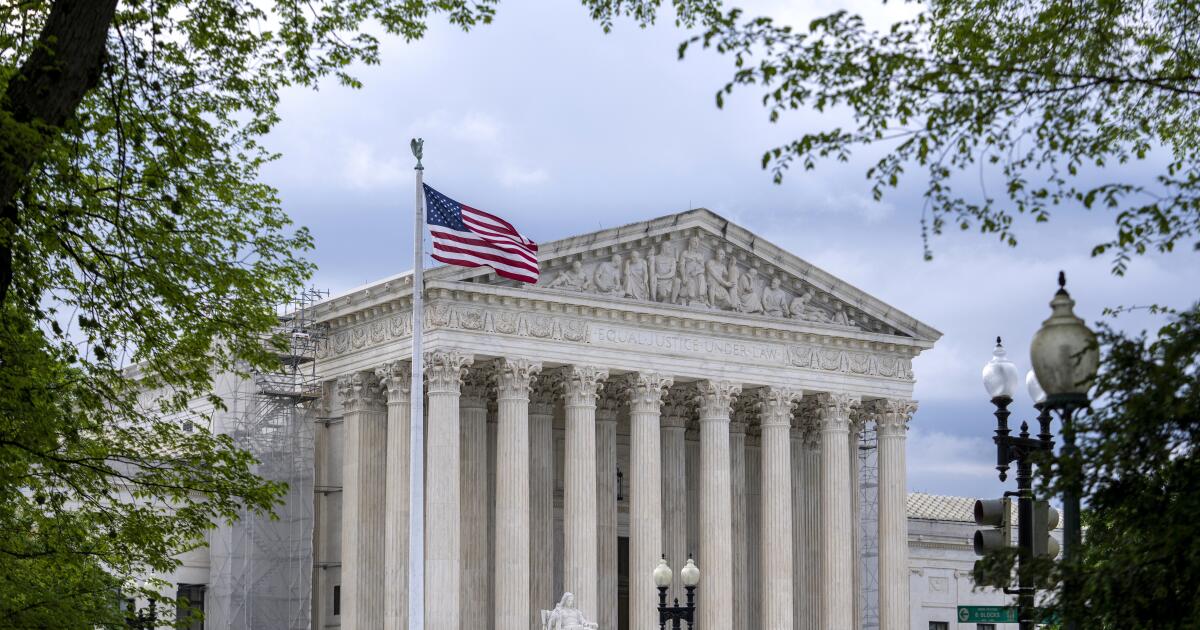
Supreme Court makes it harder for music and movie makers to sue for copyright infringement
WASHINGTON — The Supreme Court made it harder for music and movie makers to sue for online piracy, ruling Wednesday that internet providers are usually not liable for copyright infringement even if they know their users are downloading copyrighted works.
In a 9-0 decision, the justices threw out Sony’s lawsuit and a $1-billion verdict against Cox Cable for copyright infringement.
Lower courts upheld a jury’s verdict against Cox’s internet service for contributing to music piracy, which the company did little to stop.
Sony’s lawyers pointed to hundreds of thousands of instances of Cox customers sharing copyrighted works. Put on notice, Cox did little stop it, they said.
But the high court said that is not enough to establish liability for copyright infringement.
“Under our precedents, a company is not liable as a copyright infringer for merely providing a service to the general public with knowledge that it will be used by some to infringe copyrights,” Justice Clarence Thomas wrote for the court.
Two decades ago, the court sided with the music and motion picture producers and ruled against Grokster and Napster on the grounds their software was intended to share copyrighted music and movies.
But on Wednesday, the court said “contributory” copyright infringement did not extend to internet service providers based on the actions of some of their users
“Cox provided Internet service to its subscribers, but it did not intend for that service to be used to commit copyright infringement,” Thomas said. “Cox neither induced its users’ infringement nor provided a service tailored to infringement.”
In its defense, Cox argued that internet service providers could be bankrupted by huge lawsuits for copyright infringement, which they said they did not cause and could not prevent.
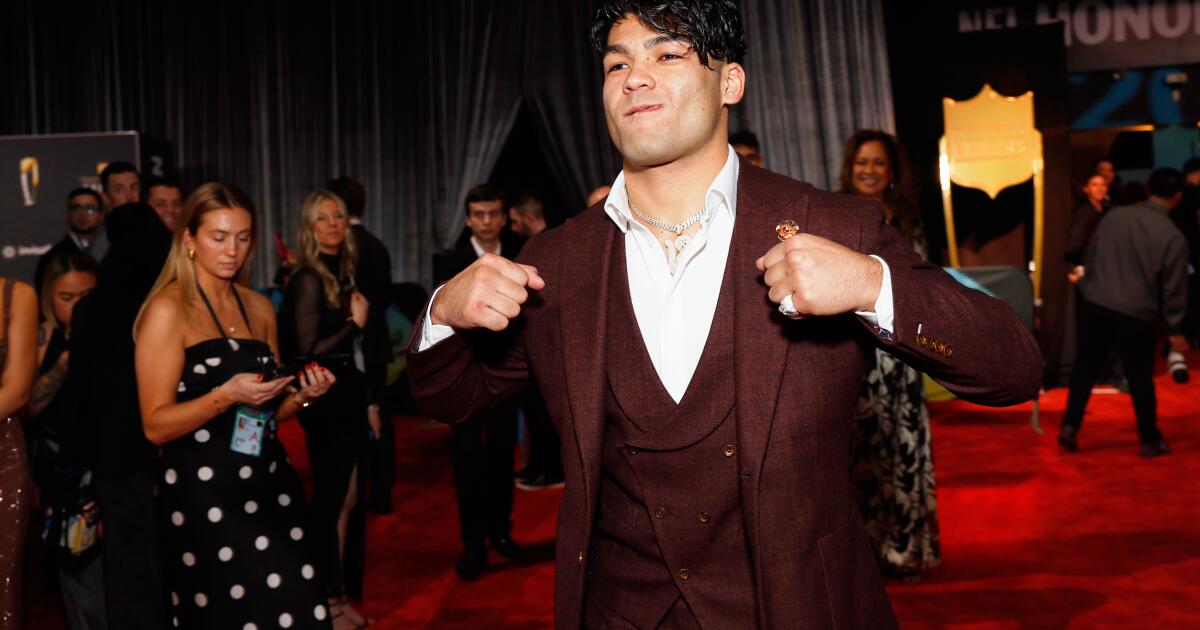
Puka Nacua denies woman’s claim that he made antisemitic comment
Puka Nacua has denied a woman’s claim that he made an antisemitic comment, says the Rams wide receiver’s attorney.
Madison Atiabi made the claim this week in an application for a temporary restraining order obtained by The Times.
Atiabi asserted in the court filing that during a group New Year’s Eve dinner, Nacua said “f— all the Jews … in a manner audible to [her] and others at the table.” Atiabi added that Nacua’s “vulgar, threatening, violent and harassing conduct” escalated as the evening progressed.
After dinner, Atiabi said she was in a car with Nacua and others when the Rams star bit her on the left shoulder, leaving a substantial bite mark that was photographed. Nacua also is alleged to have bitten the thumb of Atiabi’s friend “so forcefully that she screamed in pain,” according to the filing.
Nacua’s attorney, Levi McCathern, said he has spoken to witnesses — including other Rams players who were present — who didn’t hear Nacua make the antisemitic statement. He also said the bite was innocent “horseplay.”
“Puka denies these allegations in the strongest possible terms,” McCathern said. “We will pursue all available legal remedies in response to these false and damaging statements.”
The request for a temporary restraining order was denied by a Los Angeles Superior Court judicial officer and a hearing is scheduled for April 14.
“Our office was contacted with demands of millions of dollars in exchange for not publicizing these allegations,” McCathern told TMZ. “This is not a legitimate claim — it is blackmail.”
In December, Nacua apologized for an antisemitic gesture he made while appearing on a livestream with Adin Ross and N3on.
The livestreamers, with Nacua out of earshot, discussed whether Nacua would get in trouble if he performed a move that references an offensive stereotype about Jewish people. Ross is Jewish, but he often performs the move in his livestreams.
They suggested Nacua, who led the NFL with 129 receptions and was named an All-Pro in 2025, perform the gesture the next time he scored a touchdown.
“At the time, I had no idea this act was antisemitic in nature and perpetuated hateful stereotypes against Jewish people,” Nacua wrote in his post. “I deeply apologize to anyone who was offended by my actions as I do not stand for any form of racism, bigotry or hate of another group of people.”
The Rams distanced themselves from Nacua’s gesture in a statement.
“There is no place in this world for antisemitism as well as other forms of prejudice or hostility towards the Jewish people and people of any religion, ethnicity, or race,” the team said.

Iran calls US proposal to end war ‘maximalist, unreasonable’ | US-Israel war on Iran News
Published On 25 Mar 2026
A high-ranking diplomatic source has confirmed that Iran received a 15-point plan from the United States aimed at ending the US-Israeli war on the country.
But the source told Al Jazeera on Wednesday that Tehran described the US proposal as “extremely maximalist and unreasonable”.
“It is not beautiful even on paper,” the source added, calling the plan deceptive and misleading in its presentation.
The comments come as US President Donald Trump has claimed – despite Iranian denials – that negotiations are under way between Washington and Tehran to reach an agreement to end the nearly one-month conflict.
The source explained that Iran has a clear understanding of what conditions it requires for a ceasefire and what it will reject.
The source also stated that there have been no direct Iran-United States talks since the war began – however, messages have been exchanged through a number of mediators.
The response from Iran came hours after sources confirmed to Al Jazeera that Pakistan had shared the US’ ceasefire demands with Iran.
Mediators are pushing for possible in-person talks between the Iranians and the Americans, as early as Friday in Pakistan, Egyptian and Pakistani officials said on Wednesday.
According to Al Jazeera’s Osama Bin Javaid, Pakistan is in a unique position as a mediator because it has a Shia minority, and relatively good ties with Iran including cross-border trade.
It also has a defence agreement with Saudi Arabia, and a Sunni majority that is closely aligned with the Gulf states, he said. Pakistan’s military leader also has a relationship with Trump, Javaid added.
“So, all of this puts Pakistan in a unique position to act between these two sides: it has no US bases on its soil, so Iran cannot accuse it of being used by the United States, and it is a state that has historically tried to mend relations between these actors,” he said.
Egypt’s Foreign Minister Badr Abdelatty, meanwhile, said Cairo was ready to host any meetings related to Iran as long as it serves de-escalation.
Abdelatty said in a news conference that Egypt supported Trump’s initiative to negotiate with Iran.
On Iran’s response to the US plan, he said “we have to continue our efforts, it’s all about diplomacy and negotiations”.
Turkiye has also been been trying to position itself as a possible mediator, with Harun Armagan, a vice chairman for foreign affairs in Turkiye’s ruling AK Party, telling the Reuters news agency that Ankara has been “playing a role passing messages” between Tehran and Washington.
Iran counters with own conditions to end war
Iranian state television’s English-language broadcaster, Press TV, quoted an anonymous official also stating that Iran rejected the US ceasefire proposal.
“Iran will end the war when it decides to do so and when its own conditions are met,” Press TV quoted the official as saying.
The official offered Iran’s own five-point plan, which included a halt to killings of its officials, means to make sure no other war is waged against it, reparations for the war, the end of hostilities and Iran’s “exercise of sovereignty over the Strait of Hormuz”.
Earlier, two officials from Pakistan described the 15-point US proposal broadly, saying it addressed sanctions relief, a rollback of Iran’s nuclear program, limits on missiles and reopening the Strait of Hormuz, through which a fifth of the world’s oil is shipped.
An Egyptian official involved in the mediation efforts said the proposal also includes restrictions on Iran’s support for armed groups.
Israeli officials, who have been advocating for Trump to continue the war against Iran, were surprised by the submission of a ceasefire plan, the Associated Press news agency reported, citing an anonymous source.
Iran remains highly suspicious of the United States, which twice under the Trump administration has attacked during high-level diplomatic talks, including with the February 28 strikes that started the current war.
Iran’s rejection of the US proposal came as Israel launched air attacks on Tehran and Washington deployed paratroopers and more Marines to the region.
Iran, meanwhile, launched more attacks on Israel and Gulf Arab countries, including an assault that sparked a huge fire at Kuwait International Airport.

Iran, Nigeria, and Africa’s oil dependency | Oil and Gas
With the war on Iran disrupting the global supply of oil, could this be the moment Africa breaks its dependency on foreign energy?
Guests: Rolake Akinkugbe-Filani of EnergyInc Advisors and Cheta Nwanze of SBM Intelligence.
Published On 25 Mar 2026

Victoria Pedretti flexes her camp muscles in ‘Forbidden Fruits’
Victoria Pedretti was fresh out of Carnegie Mellon University’s School of Drama when she was cast in Mike Flanagan’s acclaimed 2018 horror series, “The Haunting of Hill House.”
In her breakout role as Nell Crain, the youngest and most sensitive of five adult siblings reckoning with wounds from a childhood summer spent in a cursed home, Pedretti became the undisputed heart of “Hill House,” anchoring the show with a spellbinding performance that christened her as a scream queen. Her subsequent appearances in “The Haunting of Bly Manor” and “You” were characterized by a similar dramatic intensity, solidifying her renown in the horror genre.
But in Pedretti’s new “Forbidden Fruits,” a horror-comedy directed by Meredith Alloway making her feature debut and produced by “Jennifer’s Body” screenwriter Diablo Cody, the actor shines in all-new soapy splendor.
Set in a Dallas shopping mall, “Forbidden Fruits” revolves around an elite clique of retail employees who run a witches’ coven out of the basement of their boho boutique Free Eden. Pedretti stars alongside Lili Reinhart, Lola Tung and Alexandra Shipp.

Victoria Pedretti in the movie “Forbidden Fruits.”
(Sabrina Lantos / Independent Film Company and Shudder)
Initially asked to look at both the roles of whimsigoth physics buff Fig and the bubbly yet emotionally complex Cherry, described by Alloway as a “Texas Brigitte Bardot,” Pedretti fell hard for the latter.
“She really popped off the page,” Pedretti, 31, says on a recent Zoom interview she takes while on a sandwich run in L.A. “I entered into this glorious flow state.”
“I can’t say I’ve had any experience quite like it, where I really didn’t spend a lot of time questioning myself,” the actor says. “She kind of took over.”
That confidence was perhaps the product of Pedretti performing in two stage plays before “Forbidden Fruits” — or maybe it was the nighttime filming schedule. Either way, Pedretti says she improvised constantly and always kept swinging until somebody said, “Cut.”
The result: Pedretti in Alloway’s instant cult classic is a laugh-out-loud-funny unending well of charm, packing humor into even her most routine dialogue. In her best quotable moments, she seamlessly infuses her sometimes shrill timbre with a dash of Southern drawl. One of her most iconic facial expressions in the film is already circulating as a reaction meme online.
“I was enjoying being in this character so much, I just wouldn’t stop,” Pedretti says, adding that Alloway, who was sensitive to cast members’ interpretations of their roles, supported experimentation.
Alloway praises the Philadelphia-born Pedretti for nailing Cherry’s comedic moments yet also grounding the character in a traumatic backstory — a balancing act the director knew she was capable of after watching “Hill House.”
“I saw her in that show and I was like, ‘Who is that?’” Alloway says. “She is magnificent and so raw. I didn’t feel like I was watching someone acting. I was worried for her.”
After later watching Pedretti nail her role in “You” as Love Quinn, a wealthy, charismatic chef who hides a psychopathic nature, Alloway was convinced of her star power.

Victoria Pedretti in the movie “You.”
(John P. Fleenor / Netflix)
Cody was most familiar with Pedretti’s performance in “You,” pegging the actor as an “intense brunet” that didn’t square at first with her interpretation of Cherry as an Anna Nicole Smith type.
“Then I see the movie and I’m like, oh my God, she has that fragility,” Cody recalls. “She has that humor. She has that sexuality. She has all of it.
“Victoria brought all of those layers and I’m really blown away by her,” the Oscar-winning “Juno” screenwriter adds.
Cody says she wasn’t surprised that the film drew such talent. From the moment Alloway and Lily Houghton, who wrote the play “Forbidden Fruits” is based on and cowrote the film’s screenplay, brought the material to Cody and her producing partner Mason Novick, she became obsessed.
“It feels spiritually like a film that I would want to be part of my body of work,” Cody says. She remembers being especially delighted by the echoes of “Jennifer’s Body” present in Alloway and Houghton’s screenplay.
“Jennifer’s Body” was widely considered a box-office flop and critical failure upon its release in 2009 — grossing only $31 million worldwide against a $16-million budget — but in recent years has enjoyed a reappraisal as a stealth-feminist essential, reclaimed by superfans.
“I don’t think that the world was ready for these kinds of themes,” Cody says of the movie’s ideas, including the cost of toxic femininity, the nuances of female friendship and the pervasiveness of the male gaze.
When it came to promoting “Jennifer’s Body,” the producer adds, “there was a huge emphasis on trying to market it to straight men, based on Megan [Fox] being attractive, and that was not at all the point of the film, so that was frustrating.” Conversely, “Forbidden Fruits” speaks intimately to the female experience and “doesn’t attempt to pander to any other demographic.”
“The current zeitgeist is a great place for a movie like this,” she says. “This movie is for the girls, gays and theys, as they say.”
Alloway, a trained actor who worked as a film journalist before moving into directing, was struck with a similar feeling when she first discovered Houghton’s play, right around the time she was consuming copious media about women criminals, such as Tori Telfer’s 2017 book “Lady Killers: Deadly Women Throughout History.”
“I was so entrenched in why women commit acts of crime,” Alloway said, adding that she was disappointed to find that revenge films on the subject still often revolved around men.
Picking up Houghton’s script, the director recalls feeling relieved. “Oh, this is just about women,” she says, her face brightening. “This is about women friendships, women being pitted against each other.”
In an early meeting with Houghton, Alloway told the playwright she’d like to bring a genre lens to “turn up the dial on the emotions that you feel reading the play and make them accessible to people who haven’t had these experiences — or validate people who have.”
Outside of the opportunity to work with so many other young women, Pedretti said she was drawn to “Forbidden Fruits” because of its use of style and tone.
“It asks a lot of people to try to step into a world like this one,” the actor says of the unabashedly histrionic screenplay. “And as nerve-racking as it may be to take that big swing, you gotta take the big swing.”

“She has that fragility,” says producer Diablo Cody of Pedretti. “She has that humor. She has that sexuality. She has all of it.”
(Evelyn Freja / For The Times)
And swing she does: Pedretti plays up Cherry’s emotional volatility, giving her a full-bodied form of expression. The actor even did her own onscreen makeup (as did Reinhart) and collaborated heavily with costume designer Sarah Millman on Cherry’s wardrobe and styling. Plus, she performed her first topless scene — in a sequence that doesn’t involve men or even sex.
“I’m really proud of the way we use nudity to show a certain kind of unspoken comfortability among women,” she continues. “I remember always getting such a thrill at the comfort level of a girl being like, ‘We’re going to the bathroom together,’ and to me, that is that moment.”
It’s a perfect example of a scene that doesn’t try to speak to anyone except those it’s specifically written for, and one that you only get with women at the helm of a production.
Reflecting on the agency she had to shape Cherry, Pedretti says she is more inspired to explore directorial projects of her own.
“I am so interested in protecting these spaces to be positive, creative experiences for everyone involved,” she says.
Whenever Pedretti does make her feature debut behind the camera (she’s already made a short or two), perhaps Cody will pick up the phone.
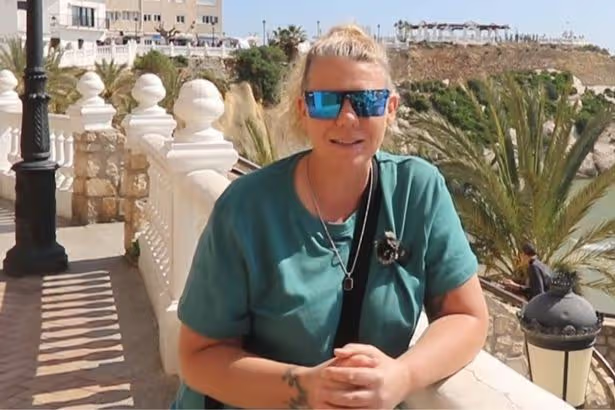
'I live in Benidorm and things will change dramatically in April after Easter'

Lucy Young has lived in Benidorm for over 20 years and shares insights on her YouTube channel – she’s warning British tourists that April will see stag and hen parties in full force after a busy Easter
Source link

‘I travelled world for 6 years but cold little UK beach town hits different’
Nate McFall has spent the past six years travelling the globe curating tourism content for social media, but he says a cold North East beach town is still one of his favourite places

A travel content creator has highlighted a North East town as one of his favourite places in the world(Image: palliki via Getty Images)
A globetrotter who has dedicated the last six years to travelling the world claims the finest destination he’s discovered is a “cold little beach town” in the North East of England.
Nate McFall, whose videos focus on highlighting unusual accommodation and travel adventures, posted on Instagram where he admitted there’s nowhere quite like home.
“I spent six years travelling the world, and yet somehow this is still one of my favourite places I have ever been,” he opened in a clip filmed on the shoreline. “I didn’t realise when I left, but this place shaped me in more ways than I can explain.”
While he may have visited Australia, New Zealand and South East Asia recently, Nate maintains this chilly North East coastal spot still “hits different” whenever he returns.
“It was actually here about eight years ago that I tried surfing for the first time,” he went on, displaying a photograph from the moment in 2018.
“It was cold – like properly cold – but something shifted in me that day because if I could surf in the freezing cold North Sea, what else is possible?”
Nate admitted that throughout his journeys he had been “chasing something” he’d already discovered.
“This is Tynemouth,” he revealed. “A small coastal town, but it’s full of life. Wherever you look, people are enjoying this place running along the seafront, swimming in the sea and surfing.”
Nate also pointed out the wealth of coffee shops dotted around the town, noting that at weekends, Tynemouth’s Victorian railway station “turns into a bustling market” of people selling “delicious food, crafts and handmade trinkets.”
The traveller also declared Tynemouth home to the “best chip shop in England”. He made his way back down towards the beach to show the reasons why.
“It’s served out of what is basically a shipping container [called The View],” he explained. “There’s a fresh sea breeze and with fishcake in hand, I top it off by looking at 1,000 year old ruins [Tynemouth Priory and Castle] right next to me.”
Nate concluded by stating he’s utterly convinced the UK possesses beauty that countless people fail to appreciate.
Enjoying a chilli fish empanada from Riley’s Fish Shack, he closed: “It’s proof that you don’t always need palm trees or plane tickets. Some of the most unreal places are right here on our doorstep.”
Writing in response, one Instagram user enthused: “I love this – I’m from Whitley Bay and am a wild swimmer so am always at the beach when I visit home. It’s such a special place.”
A second person declared: “Love Tynemouth and Riley’s fish shack, on a summers night as it gets a little chillier, sitting around one of the fire pits with friends is such a good way to finish a weekend.”
A third commented: “Love this. I am in New Zealand. So many beautiful places in the world. No country has the title of best place. Tynemouth looks cool. I will visit it now when I next visit UK.”
And a fourth person praised: “Thanks Nate. Spent many lovely days at Tynemouth as a child. Haven’t been back in 50 years since my family moved to Florida, USA. But still have fabulous memories. Thanks so much for reminding me.”

The Santorini-alternative Greek island that’s half the price has unspoiled beaches & cheap hotels
YOU can explore a Santorini-like island with whitewashed villages for a fraction of the price of the real deal.
Folegandros is an island in the Cyclades known for both pretty beaches and cheaper hotels than its sister island.
Unlike its neighbours Mykonos and Santorini, Folegandros doesn’t have an airport or huge hotels – the island didn’t even have electricity until 1974.
It’s been dubbed an ‘under-the-radar Greek island’ seeing much fewer visitors.
Santorini gets around 3.4million visitors each year, meanwhile Folegandros gets 50,000.
There’s still lots to see and visitors will find most of the island’s life in the main town of Chora of which is perched on a cliff around 200 metres high.


It’s where most of the shops, restaurants, cafes and tavernas are found.
Make sure to try Matsata, which is a handmade fresh pasta, which looks similar to tagliatelle, that was founded on Folegandros.
Usually it’s served with cooked meats like rooster, rabbit, or goat in a rich tomato sauce and topped with grated cheese.
For those who want the best island view, take the steep, winding path up to the Church of Panagia.
CNN listed Chora in their top seven most beautiful villages in Europe, writing: “Santorini’s streets sag with admirers.
“But on Folegandros, a nearby island, you’ll find similar architecture—streets paved in slate, whitewashed buildings decorated with colourful flowers, the occasional Greek Orthodox church with a bright blue dome—without the crowds.”
Being a Greek island in the Aegean Sea, Folegandros has plenty of beautiful beaches and has been praised for its “emerald-blue” waters.
Some of the island’s top ones include Katergo Beach which has white sands and blue waters.
Visitors have gone as far as to say it’s the “prettiest beach on Folegandros.”
Another is Livadaki Beach which most visitors access by boat rather than foot.
Its remote location means it is less busy than other beaches on the island and it’s said to be an ideal spot for snorkelling.
Agios Nikolaos Beach is family-friendly with a small bar and taverna on the shoreline.
Depending on the season, the average price of a hotel in Santorini varies but typically ranges from £143–£251 per night – but luxury stays can be as high as £1,000.
While Folegandros does have some luxe stays, there are some more affordable stays too.
The Beachfront Cycladic House can be booked from £74 per night on Booking.com.
The holiday home has a bedroom, a bathroom, a living room, a balcony and it’s just minutes’ walk away from multiple beaches.
Rooms at the Kallisti Hotel which is built in the style of a small village can be booked from £82 per night.
It has a swimming pool, bar, breakfast room and rooms with balconies with beautiful island views.
The easiest way for Brits to get to Folegandros is by a ferry from Athens which takes around four hours.
Brits can also fly from the UK to Athens in under four hours from as little as £22.
For more beautiful Greek islands, here are four better value islands where locals go on holiday with Santorini-like houses and secluded beaches.
And here are the alternative Greek islands that could save you £1,000 – including two spots everyone thinks are expensive.

5 tips for a safer, happier family drive this Easter

TRAVELLING by car over the Easter break can be a challenge.
As Brits across the nation hit the road to enjoy the school holiday, traffic can reach a peak – and so can frustration.
Although you can’t control potential jams, planning your route and choosing the best time to travel, as well as getting your car and the kids prepared beforehand, can help smooth out bumps along the way.
Run through the checklist below to help reduce last-minute mayhem, costly breakdowns and tears on long journeys.
Follow National Highways’ T.R.I.P. tips for hassle-free motoring.
Safe T.R.I.P. Checks
The most essential hack for a smooth ride is to make sure your car is ready for the road before leaving your driveway.
Taking a bit of time in the days leading up to your journey can potentially save hours of hassle and significant costs if your vehicle were to break down.
The checks every driver needs to perform are easy to remember with T.R.I.P.:
- TOP UP your fuel or battery charge, oil and screen wash
- REST with planned stops every two hours for at least 15 minutes
- INSPECT tyre pressure and tread before setting out, to make sure you can drive safely. See how
- PREPARE for all weather conditions
Running out of fuel and tyre issues are among the top causes of breakdowns and incidents on roads.
Taking the right precautions will help you get to your Easter break safely and on time – and the good news is that they only take a few minutes to complete.
For help with performing Safe T.R.I.P. Checks, head to the National Highways website for everything you need to get them right, including some handy how-to videos.
Care necessities
After ticking off your Safe T.R.I.P. Checks list, it’s time to make sure you have all your travel essentials to hand.
It might feel like you’re packing for a week on safari, but being prepared for any eventuality means you can enjoy your journey with less stress.
As well as the kids’ snacks and activities, keep coats handy even if the weather looks fine.
Other helpful kit includes travel pillows and blankets, a travel potty for little ones and a first aid kit.
Sunscreen and sunglasses are a must because car windows don’t fully protect us from UV rays and there may be glare from the sun.
If you’re travelling with more than one child, headphones can be a godsend, while a power bank will make sure they don’t run out of juice.
Finally, to keep things clean and tidy, think about packing a seat organiser, a carrier bag for rubbish, a change of clothes in case of accidents and a pack of wet wipes.
Break it up
Make sure the driver doesn’t get tired. As well as planned stops to give everyone the chance to stretch their legs, this means getting a good rest the night before.
When planning your journey, allow enough time for those breaks. Aim to stop every two hours for at least 15 minutes.
As a guide, a baby shouldn’t be in a car seat for longer than two hours at a stretch, while newborns and premature babies need a break every half hour.
Before heading out, try looking for rest spots on your route that will make the journey more interesting.
Twenty minutes at a farm shop, café or garden centre can be a great alternative to a service station.
Snack attack
There’s nothing worse than being stuck in bumper to bumper traffic with a gaggle of hungry kids on board. So make sure you have plenty of goodies to tide them over.
As well as treats, try to include some healthy choices so you don’t have to deal with a sugar crash.
Avoid grapes, which could be a choking hazard, and anything that could trigger car sickness such as greasy or rich foods and dairy products.
It’s important to bring plenty of water, especially on a warm day, so replenish those refillable bottles before hitting the road.
Play time
Entertainment and games on your journey will make getting there part of the fun.
Try trusted favourites like I-spy, 20 Questions or the Alphabet Game, listen to music or audiobooks, or download a film onto the kids’ devices before you leave home.
Sticker books or reusable window stickers are also a winner, while older children will enjoy car-friendly board and card games, like magnetic Ludo or Monopoly Deal.
Visit National Highways to learn more and get ready to
have a safe T.R.I.P.
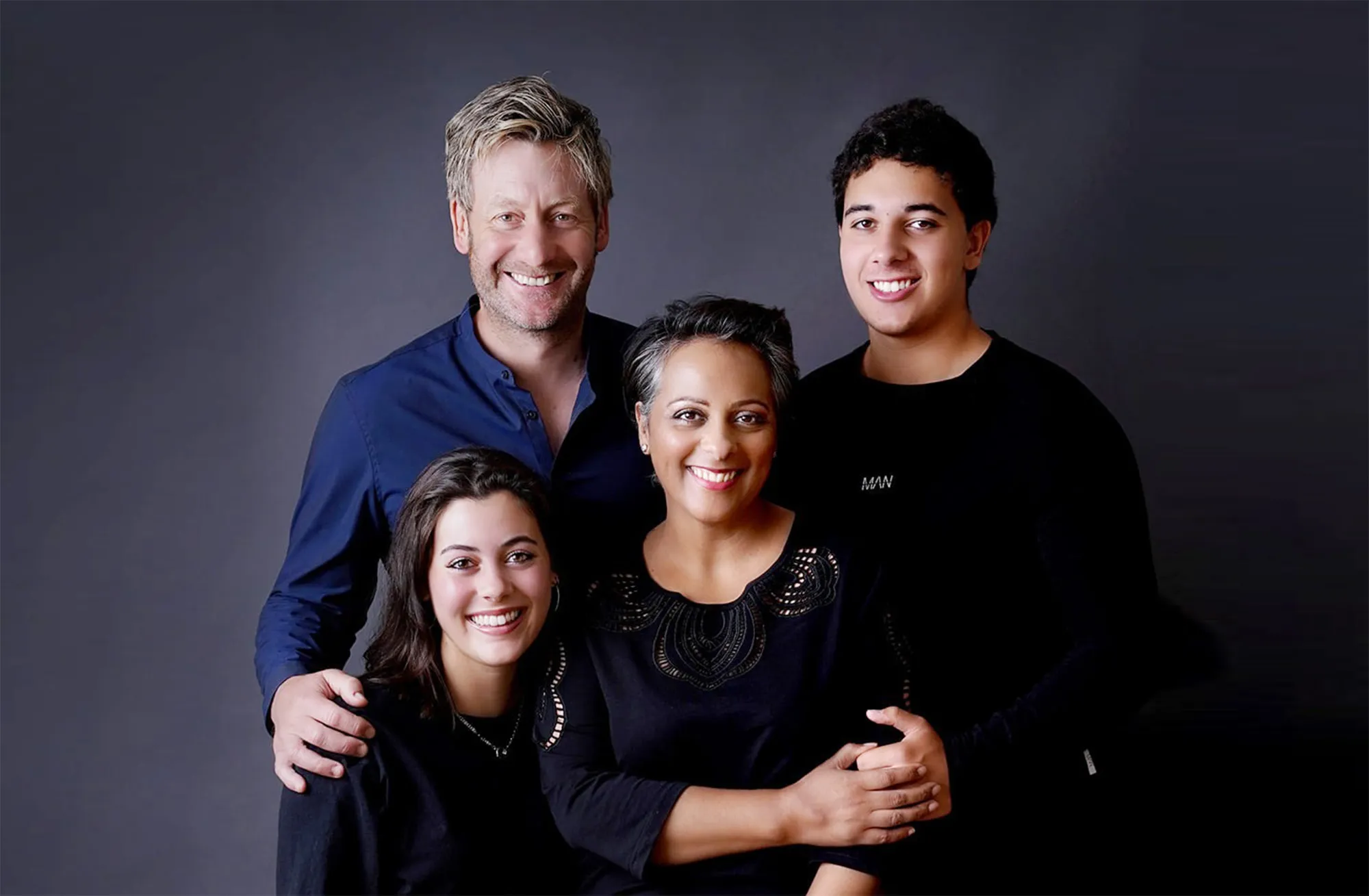
‘Four simple car checks could have saved our hols’

‘Four simple car checks could have saved our hols’
Source link

Lille clinches bid to host EU Customs Authority
Published on
Lille will host the European Custom Authority, a new decentralised agency tasked with supporting and coordinating national customs administrations across the bloc.

ADVERTISEMENT
ADVERTISEMENT
The decision was made on Wednesday in Brussels, after EU lawmakers from the European Parliament and the Council of the EU voted on the matter in three rounds.
“France is one of Europe’s leading customs nations, [considering] one in three parcels entering the EU passes through French territory,” Dutch MEP Dirk Gotink, rapporteur on the customs reform, said in a press statement.
“Lille’s strategic location at the crossroads of Europe makes it the natural hub for this authority,” the EU lawmaker continued.
Italy, with Rome as its candidate, was the runner-up in the voting rounds.
Other contenders included Belgium with Liège, Croatia with Zagreb, the Netherlands with The Hague, Poland with Warsaw, Portugal with Porto, Romania with Bucharest, and Spain with Málaga.
Customs management and trade have taken on renewed urgency after former US President Donald Trump imposed sweeping tariffs shortly after taking office.
Amid growing global trade uncertainty, the EU has stepped up engagement with international partners. This week, it signed a new agreement with Australia, while the EU–Mercosur deal is set to apply provisionally from 1 April.
The establishment of the new authority is part of the overall reform of the EU customs framework, with key negotiations expected to take place on Thursday.
The reform also aims to tackle the rising pressure from increased trade flows, fragmented national systems and the rapid rise of e-commerce.
The agency is expected to be set up in 2026 and could become operational in 2028 according to a draft schedule which is still be subject to significant changes.

Cotswolds ‘Golden Triangle’ has some of the UK’s prettiest towns
IF you’re planning a trip to the Cotswolds, one of the most popular areas is the ‘Golden Triangle’.
Not to be confused with the Indian Golden Triangle (covering New Delhi, Agra and Jaipur) the Golden Triangle of the Cotswolds covers three of the most popular towns.
In between these towns are the famous fancy attractions such as Soho Farmhouse and Daylesford organic farm shop.
The first town is Chipping Norton, which is where a number of famous celebs live.
Nicknamed the Chipping Norton set, this includes the Beckhams, Jeremy Clarkson and Kate Moss.
This is also where you will find Clarkson’s farm Diddly Squat although pop into The Chequers pub and you might pop into David Beckham.


Otherwise the town has the Chipping Norton lido, with two heated outdoor pools, as well as the National Trust owned Chastleton house.
The second location in the Cotswolds Golden Triangle is Stow-on-the-Wold.
Not only is it said to be one of the UK’s prettiest towns but it also claims to have the most photographed door.
A door of St Edward’s Church is rumoured to have inspired Lord of The Rings author J.R.R Tolkien’s book Doors Of Durin.
Stow-on-the-Wold is also home to The Porch House, one of the oldest inns in the country.
Dating back to 947AD, it is now a five star hotel.
And finally, the third place that makes up the Golden Triangle is Burford.
The small town’s main shops are found on one long hill, and they’re mainly independent sellers.
Try the Burford Sweet Shop for some sweet treats or Huffkins for some afternoon tea.
Otherwise the other celeb-heavy spot is Burford Garden Centre, often said to be one of the fancies garden centres in the UK.
Beyonce and Jay Z were rumoured to have been spotted there before.
While not in the Golden Triangle, the nearby town of Witney is home to one of the world’s best hotels called Estelle Manor.
Here’s another place called the “capital of the Cotswolds”.
And we spoke to a Cotswolds expert to get her top tips on how to visit on a budget.