



Kuwait airport hit by Iranian drone strikes | Conflict
Thick, black smoke rose from Kuwait International Airport Saturday after suspected Iranian drone strikes damaged radar systems and fuel storage facilities, state media said. No fatalities were reported. The airport has been repeatedly targeted since the US-Israeli war on Iran erupted.
Published On 28 Mar 2026
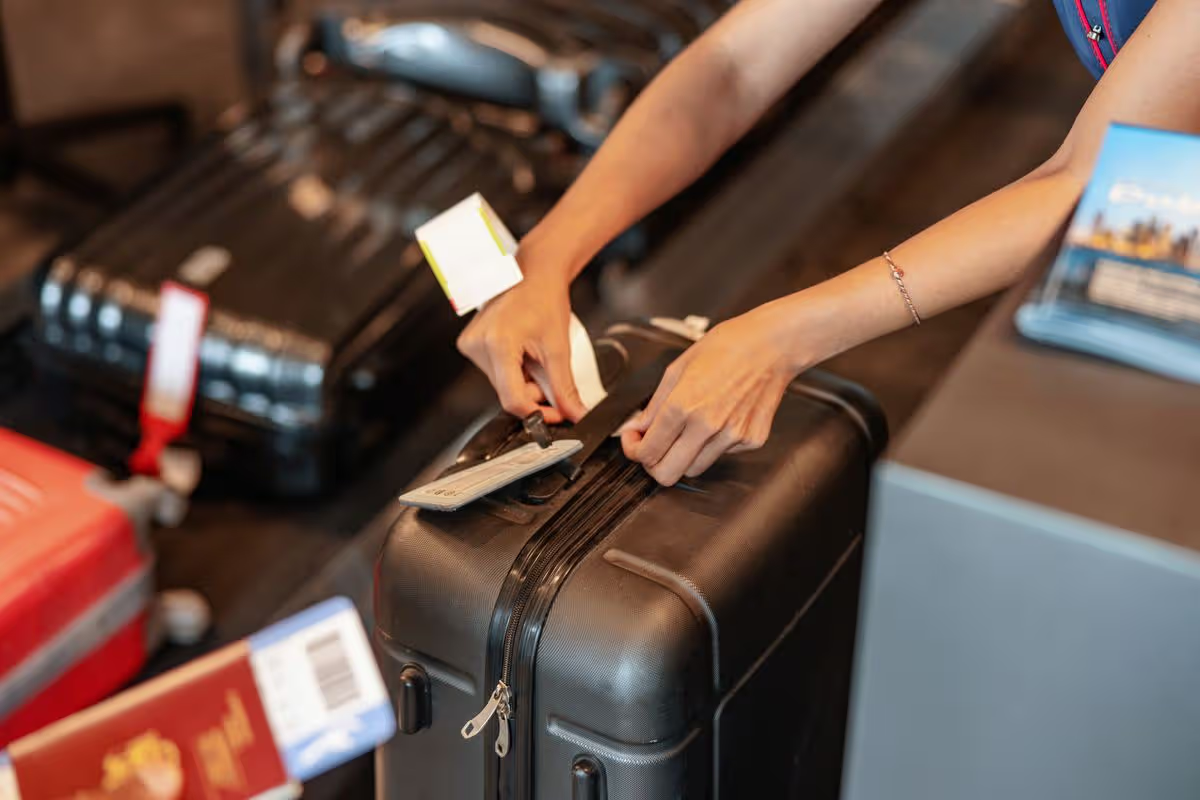
‘I work at an airport – you should never tie a ribbon to your luggage’
A ribbon may seem like the easy choice to help you find your bag among a sea of luggage, but one airport worker says there’s a reason why this hack isn’t recommended. Here’s what you can do instead.

This common hack can cause issues with your bags(Image: Getty Images)
If you were to rank the most stressful parts of flying, then finding your luggage at the carousel would no doubt come near the top.
You wait and wait for the luggage belt to start up, and once it does, there’s a huge rush of people grabbing their cases, many of which look strikingly similar. That’s why there are so many hacks out there to help you ensure your suitcase stands out from the dozens of others on the conveyor.
A common hack is to take a colourful piece of ribbon and tie it around a handle, which means when it’s coming down the belt, you can spot it among the other similarly coloured cases.
However, according to one airport worker, using this hack with ribbon, string, or any other dangly item could be a bad idea, and could even delay your luggage pickup even further.
John, who works at Dublin Airport, previously spoke to RSVPLive about why travellers should avoid the hack, saying: “Ribbons that people tie onto their suitcases to help identify them can cause issues with the bag being scanned in the baggage hall.
“If the bag can’t be scanned automatically it can end up in manual processing, which could mean your bag doesn’t make it to the flight”.
As well as interfering with scanning systems, ribbons and other items can also get stuck in the conveyor belt’s machinery, which means the entire carousel could automatically come to a stop, delaying everybody’s bags.
Old airline stickers and tags from previous flights can also cause issues according to John. Machines may not know which barcode to scan, causing delays, or it could even mean your luggage is sent to the wrong destination.
If you want to personalise your case to make it stand out from the crowd, use a colourful luggage strap, add some coloured tape around a handle, or add a distinctive sticker so you can spot it on the carousel.
Luggage covers are another option for checked bags. These covers slip over your suitcase and are available in bright colours and prints, or even personalised options. As a bonus, these covers can help to protect the exterior of your case from damage when being handled. You can also opt for waterproof covers, so if your luggage is left on a trolley in the rain or is close to a leak, the contents won’t be damaged.
READ MORE: Latest Portugal travel advice for Brits after Foreign Office updateREAD MORE: Coastal city with azure waters less than 3 hours from UK has £13 flights and 21C in April
Airport workers have also warned that the colour of the case that you choose is important. Black suitcases are the most common choice for travellers, but they’re the most likely to be lost or stolen .
Finding a black suitcase can also be incredibly difficult. Many lost property offices will be full of suitcases of the exact same type and colour, making it less likely you’ll be reunited with your bag.
Have a story you want to share? Email us at webtravel@reachplc.com

Arrest after car strikes 'multiple' pedestrians in Derby – police
Derbyshire police says that the incident occurred in the city’s centre at approximately 21:30 on Saturday.
Source link

Moroccan court jails rapper who has criticized ties with Israel
RABAT, Morocco — A Moroccan court sentenced a rapper known for his criticism of the country’s ties with Israel and accusations of government corruption to eight months in prison, the latest in a string of penalties against young musical artists.
Souhaib Qabli’s songs sharply criticize Morocco’s 2020 decision to normalize ties with Israel in an accord brokered by the first Trump administration. His lyrics also call out problems with public services and restrictions on freedom of speech, grievances also voiced by Morocco’s Gen Z protesters last year.
The judge ruled Thursday that Souhaib Qabli, a 23-year-old rapper, was guilty of insulting a constitutional body, his attorney Mohamed Taifi told the Associated Press. Qabli, who is a member of Al Adl Wal Ihsane, a banned but tolerated Islamist association, was also fined $106.
“The court did not clarify what it meant by a constitutional body. No specific party was identified in the case file, and there are many constitutional institutions,” Taifi said.
The attorney said that his client is appealing the verdict. He also said Qabli was cleared of other charges, including insulting public officials and disseminating false allegations.
Before the public hearing, dozens of supporters gathered outside the court in Taza, a city in north-central Morocco about 160 miles from the capital, Rabat, holding banners calling for Qabli’s release. Rights groups in the North African kingdom have described the case as a political measure aimed at curbing freedoms.
Qabli, known by the stage name L7assal, was arrested earlier this month and remained in custody until the court delivered its verdict. He was studying refrigeration and air conditioning at a vocational training institute in addition to his music career.
His attorney said that Qabli was questioned in court about his songs and social media posts. Qabli said he had no intent to insult any constitutional body and was expressing his views through his music.
His songs include “No to the Normalization,” referring to Morocco’s decision to normalize ties with Israel in the U.S.-brokered Abraham Accords in 2020, in exchange for Washington’s recognition of Morocco’s claim to the disputed Western Sahara territory.
The move was criticized by Morocco’s pro-Palestinian supporters and sparked large protests in several cities. While authorities allowed the rallies, they have arrested activists who criticized the decision.
Morocco’s constitution generally guarantees freedom of expression, and the country is seen as relatively moderate compared with others in the Middle East. Yet certain types of speech can trigger criminal charges, and Morocco has seen tightening restrictions on dissent, including against journalists and activists.
Double Loss of Confidence : Lucy Killea’s party resignation seems like grandstanding, with no real aim
State Sen. Lucy Killea’s decision to quit the Democratic Party and become an independent is not going to fool any Republicans in her largely GOP district.
But she may succeed in exacerbating the very cynicism toward politicians that she says prompted her to make the change.
In a scathing criticism of her colleagues, Killea said lawmakers “have lost the public’s confidence.” She’s right.
A recent Times Poll found that only 25% of San Diegans have confidence in local elected officials. She also pointed to the public’s deep dissatisfaction and resentment, and its view that the “Legislature is interested only in itself.”
Those are easy chords to strike. Too easy. The public has made its frustration known loudly and repeatedly in recent years.
Quitting the Democratic Party isn’t going to lessen the public fury, and it won’t reform the system.
Plus, Killea’s request for a change in state law to allow her to appear on the June, 1992, ballot as an independent–current law requires at least a year’s notice–smacks of the same self-serving politics of which she accuses her colleagues.
She is also guilty of some of the sins for which she castigated them. For instance, she criticized the Legislature for trying to “undo the will of the people” by going to court to overturn the initiative limiting legislative terms and cutting office budgets by 40%.
Yet, Killea is one of only two state senators who have failed to make the budget-reduction goals set by the Senate. She was supposed to cut $110,000 from her $869,000 budget, but has only cut about $65,000.
It’s hard to figure how leaving the Democratic Party will help Killea. She will lose the considerable Democratic financial support that helped her win in 1988.
And the way she is making her exit is winning her no new friends and probably earning the enmity of current allies. How can she help her constituents if she is frozen out of the system?
Her departure also weakens the already ailing Democratic Party. Republicans outnumber Democrats in the county 47.8% to 37.7%–almost 120,000 voters–and GOP registration is still on the rise.
If they lose much more strength, San Diego County Democrats run the risk of becoming an endangered species, as they already are in Orange County. And that could reduce debate on important policy issues, here and in Sacramento.
Killea’s frustrations with the current system, and the “old-boy network,” are understandable. The public may give a brief cheer to hear Killea express its sentiments on the Senate floor.
But Killea’s dramatic gesture is a hollow one that could do more damage than good.

Russo scores hat-trick as Arsenal beat Spurs
Striker Alessia Russo nets a first-half hat-trick as Arsenal beat north London rivals Tottenham 5-2 in front of a crowd of more than 46,000 fans at Emirates Stadium.
Source link

U.S. pressures Uruguay to break trade ties with China, minister says

Uruguay’s Minister of Economy and Finance Gabriel Oddone said the pressure by the United States to break trade ties with China is applied daily and channeled through different areas of the bilateral relationship. File Photo by Federico Gutierrez/EPA
March 27 (UPI) — Uruguayan Minister of Economy and Finance Gabriel Oddone said the United States is exerting “unimaginable” and “unsustainable” pressure on his South American country to break its trade relationship with China, according to remarks made at a private meeting.
The comments during a session with business leaders were reported by the local weekly Búsqueda.
With about 3.5 million inhabitants and a territory comparable to the state of Florida, Uruguay has had China as its main trading partner for more than 14 years, accounting for about 26% of its exports.
Oddone said the pressure is applied daily and channeled through different areas of the bilateral relationship.
According to attendees at the meeting with the Confederation of Business Chambers, the minister said that if Uruguay does not comply with Washington’s demands, its trade relationship with the administration of President Donald Trump “will not improve and could get worse.”
The remarks came Tuesday during a meeting at the Technological Laboratory of Uruguay, attended by more than 20 business representatives, along with the director of the Office of Planning and Budget, Rodrigo Arim.
The meeting lasted more than two hours and addressed economic and trade issues in a context described as “very complex.”
China is the main destination for key exports, such as beef, soybeans and cellulose. The pressure from the United States comes amid growing geopolitical rivalry between Washington and Beijing, which is affecting countries with trade ties to both powers.
According to attendees cited by Búsqueda, Oddone acknowledged that the government has “little room for maneuver” due to the fiscal situation inherited from the previous administration and internal differences within the ruling coalition over advancing economic reforms.
On the domestic front, the minister defended the country’s economic performance despite lower-than-expected growth.
Uruguay’s gross domestic product grew 1.8% in 2025, below the official projection of 2.6%, while analysts have already cut expectations for 2026 to around 1.6%.
Facing criticism from the private sector over the size and slow pace of the state, Oddone urged business leaders to also consider positive aspects.
“We should not only see the glass as half-empty,” he said, noting that the economy continues to grow despite an adverse international environment in which Uruguay is “swimming in dulce de leche,” a colloquial phrase interpreted as meaning it is difficult to move quickly.
The minister also ruled out improving competitiveness through a depreciation of the exchange rate.
“Uruguay is not going to become a cheap country,” he said, adding that improvements will come from microeconomic changes to reduce costs and streamline foreign trade.
Asked by Búsqueda, the minister declined to comment publicly on the meeting, as it was a private event. Some participants described it as useful, but with “mixed” feelings, while others said they valued explanations from the economic team.
At the close, Oddone adopted an optimistic tone.
“Believe me, we will do well,” he said, highlighting the country’s institutional and economic strengths to face an international scenario marked by trade tensions and regional slowdown.

‘US marines head to war’ and ‘We’ll stop antisocial media’


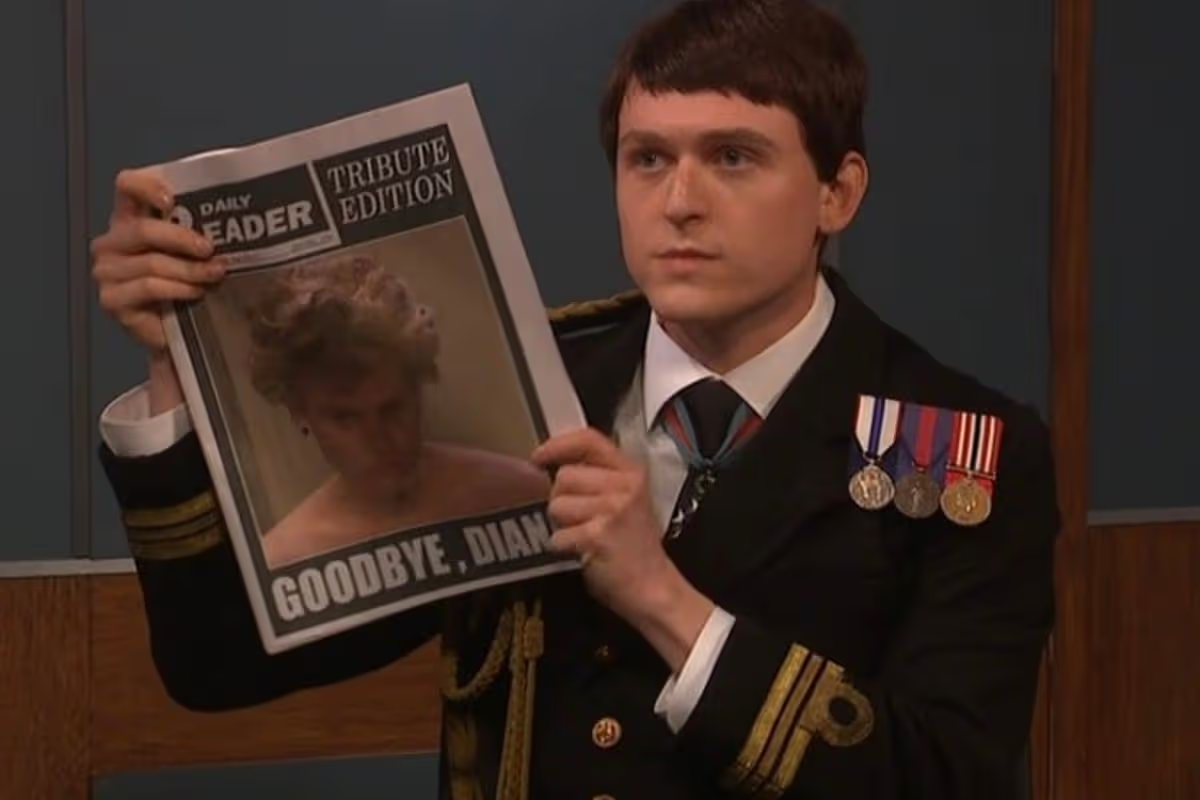
SNL UK skewers Andrew and Mandelson in sketch fans are calling ‘genius’
Today’s cold open showed Andrew, played by the comedian Jack Shep, taken into an office by MI5 in the wake of Princess Diana’s death in 1997.

Jack Shep appears as Prince Andrew in a sketch set in 1997
The former Prince Andrew, Sarah Ferguson and Peter Mandelson were skewered in tonight’s opening Saturday Night Live UK sketch. It saw Andrew, played by comedian Jack Shep, taken into an office by MI5 in the wake of Princess Diana’s death in 1997.
It was quickly hailed as “incredible” by fans. One wrote: “I fear it’s already genius.” Another said: “Oh god perfect cold open on Andrew.”
Agents sit him down and tell him: “No one knows better than us how charming, capable, fiercely intelligent and morally upstanding you are. You are a credit to princes everywhere. Since the death of Diana the public have turned on Prince Charles but still one day he will be King. We need to make him look good.”
Another added: “We have deduced that the only way to increase the likability of our future king is to decrease the likability of everyone around him.”
Andrew replies: “I see. Well, I love my brother, I love my country and I’m willing to do whatever it takes.” The agents tell him, passing him an enormous dossier: “We have prepared a 29 year plan.”
He is seen flicking through nervously, asking: “And you actually need me to do all of this stuff? Even the part about befriending a notorious paedophile? Before and after he is convicted? And there is absolutely no other way to make my brother look good?”
The Andrew character adds: “This all seems very high risk. Oh god, I’m sweating. Surely you can’t make everyone around Charles unlikeable. What about William? He’s so handsome.” The agents tell him: “We’re seeing to that.”
“And Harry?” asks Andrew. They tell him: “He’s going to marry a woman 98% of the UK public will find it impossible to have a normal conversation about.”
The Andrew character replies: “Goodness, this will kill mummy when the news comes out.” They tell him: “Turn to page 72, it will.”
Things go up a gear again when they say: “”Send in Agent Mandelson.” Larry Dean emerges as Peter Peter Mandelson with Emma Sidi as Sarah Ferguson, who have also been brought in to make Charles look good.
The agents tell Andrew: “Your Highness, if you’re ever in too deep, just say the code word and we’ll step in to save you.” When he asks what that is, he’s told: “Pizza Express, Woking.”
The second episode of Saturday Night Live UK was hosted by actor Jamie Dornan, following on from Tina Fey’s appearance in the debut.

Meet the Millennials who hire cottages to dress up as magical characters
More and more Gen Zs and Millennials are hiring UK holiday homes in order to dress up together, away from the scrutiny of their parents, partners and society at large

More and more Gen Zs and Millenials are dressing up on holiday(Image: Georgia Johnson)
“It’s difficult playing at your house. You’re trying to get in the mood to slay a vampire, and then someone’s boyfriend comes in to get a snack.”
It’s a problem we’ve all had. Or at least, those of us who are among the growing number of British Dungeons and Dragons players who are swapping sunbeds in Lanzarote for a cottage in the Lake District, and trading their piña colada for a couple of D4s and an orc costume.
Driven by “cosy crime” hits such as The Traitors and Agatha Christie adaptations, one in four Brits and half of Gen Z have booked a staycation specifically to host a murder mystery, games night, or TV-themed weekend with friends or family, according to an exclusive cottages.com study.
An early adopter of this trend is young Millennial Georgia Johnson, who has just celebrated a decade of leaving the boyfriends behind in London and heading to somewhere secluded to roll dice.
“We’ve been to Valencia twice, a place in Kent, a friend’s house in Bath and up to the Lake District,” the North London DnD player explained.
For Georgia and her costume-clad pals, getting away from it all really helps to set the mood.
“One time, we knew we were going to have a fortune telling, so we put out loads of tarot cards and dice and had a candlelit session,” she explained.
“Cottages.com has spooky castles and chapels you can stay in, and a button that shows you a nearby pub. Generally, you get up, DnD, have lunch at a pub, come back, more DnD, then around midnight it can get a bit silly and hazy. At the moment, we are playing Curse of Strahd, which is modelled on Dracula. We are hoping to go to Whitby to finish the game. We want candles lit and spooky music.”
For the uninitiated, it’d be easy to overlook the ubiquity of role-playing games like DnD, or consign them to the ‘80s fad bin’ only recently revived by a starring role in Stranger Things.
In fact, they’ve been growing in popularity for years and continue to reach new peaks. 52 years after its invention, DnD has 13.7 million active players. One study suggests that interest in tabletop role-playing games has increased by roughly 85% since 2020. This purple patch extends to Nottingham-based Warhammer, which was worth £4.7bn at the end of 2024.
For many gentler souls, such games are a fantastic way of expressing oneself creatively. Among Georgia’s clan is Ben, an office worker during the week who dons a moustache and becomes “officer of the post” Derbert Clifton-Brown at the weekend.
He is joined by creative Kash, who has purchased ears specifically designed for people of colour, and Oliver, who likes to paint himself green.
Before the crew started travelling to play, Georgia’s mum walked in on them in the act. “She said she would’ve rather found us having an orgy,” the 33-year-old said.
Another great RPG lover is James Mackenzie-Thorpe. Not only has he travelled across the UK to enjoy weekend sessions with his friends, but he has also brought dozens of DnDers to a unique tourist attraction.
“My first day working at Kents Caverns I heard some colleagues talking DnD. I asked if I could play, but there was no work group. Later on, I woke up from a dream and thought I should write an adventure set in the caves. So I wrote it and played it with a group of five, in the caves. It went really well. Then another group. Then we decided to do it for the public. Now, for three years, I’ve run DnD in the cave for the general public,” James explained.
Kents Caverns are a network of prehistoric caves in Torquay, Devon, that lie beneath the hotel that inspired Fawlty Towers. James takes tours by day and hosts quests by night.
And he puts a lot of effort into it, paying for maps to be professionally painted and bringing rechargeable lanterns to light up the skull-lined caves.
“It’s been a tremendous amount of fun. You never know what you’re going to get with each group. We’ve had people travelling from Cornwall and Somerset. One group had been playing with each other online during Covid. They had never met in real life before they came and played with me in the caves. They booked an Airbnb and stayed together,” he said.
For James, the real joy of DnD comes in seeing people express themselves freely, which traveling to a cottage or heading underground can help some do.
“We have a young member who has been four or five times to play in the caves. They’re non-binary and are just starting to come to terms with that. To see everyone really take that person in hand, to really help that person come out of their shell, it makes me really proud,” he said.
Americans, Yes, but World Citizens, Too
Daniel Terris is director of the International Center for Ethics, Justice and Public Life at Brandeis University
WALTHAM, Mass. — “Throughout my public career,” President Lyndon B. Johnson once said, “I have followed the personal philosophy that I am a free man, an American, a public servant and a member of my party, in that order always and only.”
In the wake of the Sept. 11 tragedies, Americans have shown their patriotic colors. But, as Johnson made clear, patriotism does not require us always to put our national identity first when considering the various roles we play in the world. Our commitment to country is always stronger when it complements and builds upon other commitments. In the 21st century, we should expand Johnson’s list to include our role as citizens of the world.
Americans, after all, are not only Americans. We also belong to a global community.
Americans tend to shy away from thinking of themselves as global citizens. For all our bravado, we are insecure about the depth and the power of our national identity. We worry that something essential to the American character will be lost if we dilute our national feeling with too much commitment to the international.
Global citizenship and patriotism need not compete. Indeed, the one is bound to enrich the other. If we think deeply about the United States and its place in the world, we are bound to think more creatively and more deeply about which aspects of our country matter most to us.
Here are four ways in which we might begin.
First, we can recognize that the sense of suffering, grief and fear we’ve felt so intensely in recent weeks is not uncommon around the globe. Violence on a catastrophic scale is a new experience for most Americans alive today, but it is all too familiar to many people around the world. We miss a vital opportunity for establishing strong bonds across oceans when we neglect to think of our losses as a part of a larger contemporary human tragedy.
Second, we might extend this sense of connection with the fears and passions of others by toning down the constant–and very public–celebration of our national destiny and greatness. It was natural for us to react in the immediate aftermath of tragedy with the swollen rhetoric of injured pride: Our enemies attacked us because we are so strong and so good, we will triumph because no national spirit matches our own, and other similar sentiments.
The time has come to scale back our self-righteousness. Our enemies never bought our assertions of American greatness. Our friends, however, even our closest allies, are beginning to resent our self-importance. Efforts to build a global coalition are bound to be more fruitful if we approach potential partners, not as a swaggering savior, but as fellow citizens of a world in peril.
Third, thinking of ourselves as global citizens can dissuade us from making the glib assumption, underlying one leading edge of patriotic fervor, that “American values” represent the pinnacle of political and cultural ideals. I agree with those who believe that freedom and equality have flourished in the United States to a much greater degree than they have in most other parts of the world. But since we argue among ourselves about the meaning, the priority and the implementation of these ideals at home, we should expect and welcome vigorous debates about the goals of human society in an international context. And we should respect the international organizations and institutions that embody those contested universal ideals. International courts have already played a significant role in helping the world come to terms with atrocities in the former Yugoslavia and in Rwanda. Americans have been reluctant to support a strong international justice system, but without one, we now lack a crucial element in the struggle against terrorism.
Fourth, and most important, we must recall the essential duty of any patriot: the task of careful, penetrating national self-criticism. This not a matter of tolerating dissent, which we already do reasonably well.
I am speaking of something grander than permitting expressions of outrage: I mean to suggest a collective effort to use the perspective of global identity to reflect on our values, our language and our actions. A consistent effort to see ourselves from outside ourselves paves the way for actions that are considered and collaborative.
The patriotism that emerges from this dialogue will not just be about flags and parades. If we take an active role in making and remaking American ideals and aspirations, if we talk candidly about our nation’s weaknesses, as well as its strengths, we will find it easier to persuade our friends abroad to join with us in causes that matter, and we will find it easier to sustain strong national feeling across the widest spectrum of the American public. That patriotism will flourish, because it is not something static, not something that has simply been handed to us. Global commitment will make America stronger, precisely because it will make us humbler.

USMNT has defense exposed in rout by Belgium
ATLANTA — Belgium blew out the United States 5-2 on Saturday in a World Cup warmup that exposed the Americans’ defensive difficulties, rallying from a late first-half deficit on two goals by Dodi Lukébakio and one each from Zeno Debast, Amadou Onana and Charles De Ketelaere.
Weston McKennie put the U.S. ahead in the 39th minute with his 12th international goal, his first in three years, but Debast and Onana began Belgium’s rally with their first international goals on a frustrating afternoon for Matt Turner, the former No. 1 American goalkeeper who made his first appearance since last June.
Debast scored in the 45th, Onana put the Red Devils ahead in the 53rd and De Ketelaere converted a penalty kick in the 59th after a hand ball by U.S. captain Tim Ream.
Lukébakio entered in the 62nd minute and beat Turner from long range in the 68th and 82nd minutes to build a 5-1 lead before a disappointed largely pro-American crowd of 66,867 at Mercedes-Benz Stadium, site of a World Cup semifinal in July.
Patrick Agyemang scored for the U.S. in the 87th after Ricardo Pepi took advantage of defensive misplay.
The U.S. lost a home game by three goals in which it scored the opening goal for the first time since an 8-1 defeat to England in 1959, according to Opta.
Belgium extended its unbeaten streak to 10 games and has won six straight against the U.S. since losing to the Americans at the initial World Cup in 1930.
The U.S. had entered with a five-game unbeaten streak that created optimism but was missing several injured regulars.
McKennie put the Americans ahead when he took advantage of Johnny Cardoso’s pick to cut in front of Nicolas Raskin and volley Antonee Robinson’s corner kick past Senne Lammens.
American players debuted jerseys with red and white stripes that resemble a waving flag.
With the roof closed in an air-conditioned stadium, fans booed the water breaks in the middle of each half — which will take place at each World Cup match.
Belgium was missing striker Romelu Lukaku, midfielders Leandro Trossard and Hans Vanaken and goalkeeper Thibaut Courtois because of injuries and fitness issues. The Red Devils play Mexico in Chicago on Tuesday.
Bank of America agrees to $72.5M settlement with Epstein survivors
Bank of America this week settled a class-action lawsuit brought by a victim of the deceased sex predator Jeffrey Epstein, pictured in a photo issued by the New York State Division of Criminal Justice while he was awaiting trial on charges of sex trafficking. Epstein was found dead in his cell in August 2019 before he could be brought to trial. File Photo by New York State Division of Criminal Justice/EPA-EFE
March 28 (UPI) — Bank of America reached a settlement with a survivor of deceased sex predator Jeffrey Epstein that will distribute $72.5 million to his victims.
The survivor, named in the case as “BOA Jane Doe,” and her attorneys told a federal judge on Friday that a settlement had been reached with the bank on a proposed class-action suit over Epstein’s decades of abuse and trafficking of women and teenage girls, The Charlotte Observer reported.
The suit alleged that the bank ignored signals of Epstein’s crimes by continuing to do business with him while he was committing his crimes.
Doe’s attorneys said they are aware of at least 60 women who were abused or trafficked by Epstein, however the settlement covers all women who experienced either at Epstein’s hands or those “connected to or otherwise associated” with him between June 30, 2008, and July 6, 2019, NBC News reported.
Bank of America, which is the largest bank in the United States, denied liability or wrongdoing in providing Epstein banking services but settled in order to avoid a trial.
“While we stand by our prior statements made in the filings in this case, including that Bank of America did not facilitate sex trafficking crimes, this resolution allows us to put this matter behind us and provides further closure for the plaintiffs,” the bank told The Observer and NBC in a statement.
With the settlement filed, a judge will still have to approve it at a hearing, which is scheduled for April 2.
Bank of America now joins JPMorgan, which settled for $290 million, and Deutsche Bank, which settled for $75 million, in paying what is thought to be more than 1,000 women that Epstein abused in his years-long scheme.

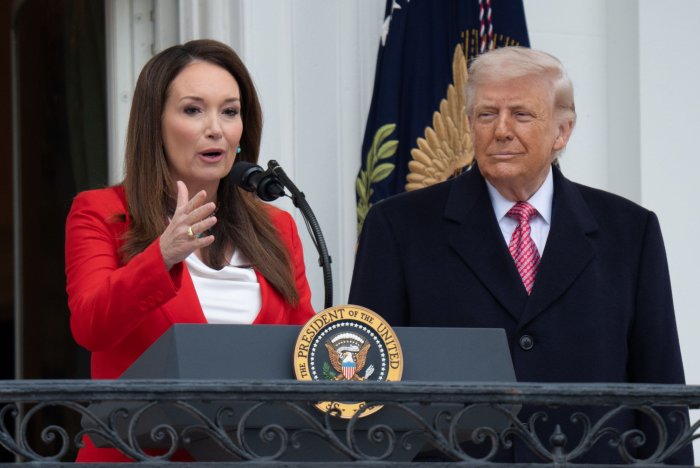
President Donald Trump stands with U.S. Secretary of Agriculture Brooke Rollins during an event celebrating farmers on the South Lawn of the White House on Friday. Photo by Aaron Schwartz/UPI | License Photo

As war on Iran enters second month, Yemen’s Houthis open new front | US-Israel war on Iran News
Yemen’s Houthis have attacked Israel for the first time, a month after US and Israeli forces began striking Iran, opening up a new front in a rapidly escalating conflict that has killed thousands of people, displaced millions and rattled the global economy.
The Houthis, who control much of northern Yemen, entered the fray on Saturday with two missile and drone attacks on Israel in the space of fewer than 24 hours. The Israeli army said the attacks were intercepted, but the Iran-aligned group pledged to continue fighting in support of “resistance fronts in Palestine, Lebanon, Iraq, and Iran”.
Recommended Stories
list of 3 itemsend of list
The Houthis had sat out of the hostilities until now, in contrast with their stance during Israel’s genocidal war on Gaza, when their attacks on shipping vessels in the Red Sea upended commercial traffic worth about $1 trillion a year.
Their widely anticipated involvement in the latest conflict comes just as Iran has throttled traffic through the Strait of Hormuz, a vital chokepoint for about a fifth of the world’s oil, raising fears that the Yemeni group will again disrupt Red Sea traffic by blocking the Bab al-Mandeb Strait.
Reporting from Yemen’s capital, Sanaa, Al Jazeera’s Yousef Mawry described Bab al-Mandeb as the group’s “ace”.
“They want to make Israel pay economically. They want to disrupt their trade routes. They want to disrupt the imports and exports in and out of Israel,” he said.
‘Civilians bearing brunt of war’
The Houthi attacks came after US Secretary of State Marco Rubio said that Washington expected to conclude its military operations against Iran within weeks, even as a new deployment of US Marines has begun to arrive in the region, so US President Donald Trump would have “maximum” flexibility to adjust the strategy as needed.
With no immediate diplomatic breakthrough in sight as both the US and Iran harden their positions, many fear that the US-Israel war on Iran, which started on February 28 and has since engulfed the region, will spiral out of control.
The US and Israel continued their bombardment over the past 24 hours, with the Israeli military claiming it had struck an Iranian research facility for naval weapons, while a series of loud explosions rattled Tehran as night fell on Saturday.
Iranian media said at least five people were killed in a US-Israeli attack on a residential unit in the northwestern city of Zanjan. In Tehran, authorities said the University of Science and Technology was the latest educational facility to be struck, prompting Iran’s Revolutionary Guard Corps (IRGC) to issue a threat against Israeli and US universities in the region.
Separately, Iran’s Fars news agency said a water reservoir in the city of Haftgel, located in western Khuzestan province, had also been attacked.
The Iranian Ministry of Health announced that 1,937 people have been killed since the start of the conflict, including 230 children. Iran’s Red Crescent Society said US-Israeli strikes had damaged more than 93,000 civilian properties.
“Civilians are bearing the brunt of this war,” Al Jazeera’s Mohamed Vall, reporting from Tehran, said.
Devastation in Lebanon
Meanwhile, Israel’s devastation of Lebanon continued apace, as the Lebanese Ministry of Health reported that 1,189 people had been killed in Israeli attacks since March 2.
The death toll has been mounting as Israeli troops have pushed further into the south, advancing towards the Litani River in their stated bid to wipe out Hezbollah and carve out a buffer zone along the lines of the “Gaza model”.
Among Saturday’s killings, an Israeli strike killed three journalists in southern Lebanon. In parallel, the Health Ministry announced that Israel had also killed nine paramedics, bringing the death toll among healthcare workers in the latest war to 51.
Lebanon’s Public Health Emergency Operations Centre said an Israeli attack on the town of al-Haniyah, in the Tyre district of southern Lebanon, killed at least seven people, including one child.
An Israeli air raid on the southern Lebanese town of Deir al-Zahrani killed a Lebanese soldier, Lebanon’s National News Agency reported.
Hezbollah, which attacked Israel amid a ceasefire that Israel kept violating in retaliation for the assassination of Iranian Supreme Leader Ali Khamenei, claimed dozens of operations against Israeli forces in the past 24 hours.
Mixed messages
Trump has threatened to hit Iranian power stations and other energy infrastructure if Tehran does not fully open the Strait of Hormuz. But he has extended the deadline he had imposed for this week, giving Iran another 10 days to respond.
With the US midterm elections coming up in November, the increasingly unpopular war is weighing heavily on the president’s Republican Party.
Trump’s envoy, Steve Witkoff, said on Friday that he believed Tehran would hold talks with Washington in the coming days. “We have a 15-point plan on the table. We expect the Iranians to respond. It could solve it all,” Witkoff said.
Pakistan, which has been a go-between between US and Iranian officials, will host foreign ministers from regional powers Saudi Arabia, Turkiye and Egypt in Islamabad for talks on the crisis.
Pakistan’s Minister of Foreign Affairs Ishaq Dar spoke with his Iranian counterpart, Abbas Araghchi, late on Saturday, urging “an end to all attacks and hostilities” in the region.
In a statement, the Ministry of Foreign Affairs said Dar had told Araghchi that Pakistan remains committed to supporting efforts aimed at restoring regional peace and stability.
Dar also announced that Iran had agreed to allow 20 Pakistani-flagged vessels to transit the Strait of Hormuz, calling it a meaningful step towards easing one of the worst energy crises in modern history.
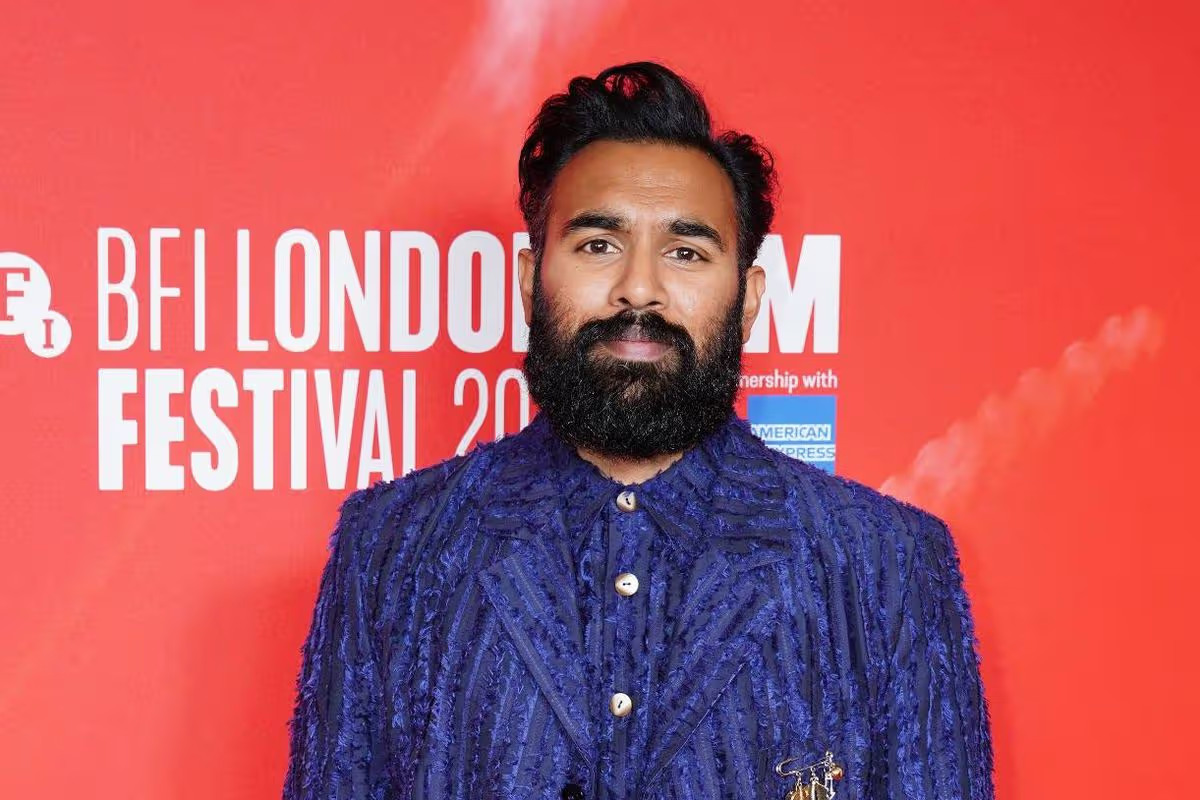
EastEnders icon Himesh Patel to star in X Files reboot after launching film career
The former EastEnders star has been cast in the reboot of The X Files, which has been greenlit by American streaming powerhouse Hulu

Himesh Patel has landed a major new TV role(Image: PA)
Former EastEnders star Himesh Patel has landed a significant role in the highly anticipated reboot of The X Files.
The 35-year-old, who first captured the nation’s hearts as a youngster on the popular BBC soap portraying Tamwar Masood in Albert Square, is now setting off on a completely different adventure.
He has been cast in Ryan Coogler’s reboot pilot of The X Files, which American streaming giant Hulu gave the go-ahead to last month. Himesh will appear alongside BAFTA-nominated actress Danielle Deadwyler, playing two ‘vastly different’ FBI agents.
Danielle, 43, boasts an impressive array of accolades, particularly for her compelling portrayal of Mamie Till-Mobley in Till. She was nominated for the Best Actress in a Leading Role award at the 2023 BAFTA Film and TV awards, reports OK!.
According to a logline by Variety, the reboot focuses on: “Two highly decorated but vastly different FBI agents (Deadwyler, Patel) form an unlikely bond when they are assigned to a long-shuttered division devoted to cases involving unexplained phenomena.”
The publication also confirms that both stars will portray entirely new characters, rather than reimagined versions of Fox Mulder and Dr. Dana Scully, according to the Daily Mail. David Duchovny and Gillian Anderson brought those iconic roles to life across 11 series.
Original creator Chris Carter is returning as executive producer, while Jennifer Yale (The Copenhagen Test) has been appointed as showrunner. Meanwhile, Coogler is scheduled to write, direct and produce, drawing inspiration from his mother’s fondness for the original series.
This marks another collaboration between Himesh and Danielle, having previously worked together on the 2021 miniseries Station Eleven.
Himesh left EastEnders in 2016 after his character ran away with then-girlfriend Nancy Carter. Two years later, he shot to international fame by securing the lead role in Yesterday, which became his breakthrough film.
In 2024, Himesh disclosed that struggling with acne while working on EastEnders as a teenager ‘felt like the worst thing in the world‘.
Speaking openly to British GQ Hype, the actor looked back on his remarkable career journey, including his early years on the legendary soap.
He told the publication: “I’ve been doing this since I was 16, When you’re a teenager and you have acne, it’s the worst thing in the world.
“But then when you’ve got acne in front of millions of people every week in EastEnders, it’s a whole other thing. ‘It was rough. You just kind of feel defective because you’re surrounded by actors. Everyone gets spots, but I just felt the pressure.”
The X-Files is available to stream on Disney+.

Sunday 29 March Boganda Day in Central African Republic
Barthélemy Boganda was a leading nationalist politician and the driving force in the creation of the Central African Republic in 1958.
Before his political career, Boganda had become the first African Roman Catholic priest in Ubangi-Shari, a French colony that is now part of the CAR. He became involved in politics and in 1946 he was elected to the French National Assembly, becoming the first representative of the CAR in the French government.
His strident anticolonial views led to him becoming disillusioned with the French political system and leaving the priesthood in 1949; and forming his own political party, the Social Evolution Movement of Black Africa.
Hugely popular, Boganda became the president of the Grand Council of French Equatorial Africa (which also included Chad, Gabon, and the French Congo) in 1957. His vision was for a pan-African movement to unite several African states.
Boganda became the first prime minister of the Central African Republic on 1 December 1958.
Barthélemy Boganda designed his country’s flag using the Pan-African colours and the colours of the French flag.
Newspapers weigh in on election; Obama loses support since 2008
Do newspaper endorsements for president still matter? Certainly not as much as they once did, but that doesn’t stop most newspapers (including this one) from exercising their 1st Amendment right to spout off about their choice of candidate, and it doesn’t stop the presidential campaigns from breathlessly reporting each and every endorsement as if it were handed down by the Oracle of Delphi.
So who’s winning the endorsement race?
That all depends on how you look at it.
According to Editor & Publisher, the longtime bible of the newspaper business, the tally as of Saturday was 112 for Republican Mitt Romney and 84 for President Obama. That list didn’t include papers from Sunday, when many delivered their endorsements, but it suggested a shift from 2008, when E&P;’s final tally showed daily newspapers — which historically have skewed Republican — endorsing Obama over Republican John McCain by a better than 3-2 margin, 296 to 180
The American Presidency Project at UC Santa Barbara has also been tracking endorsements, but it limits its list to the 100 largest newspapers. On average, they tend to have more liberal editorial pages, presumably reflecting their locations in Democratic-leaning big cities. As of Sunday, the project showed 33 endorsements for Obama and 27 for Romney. (Although most newspapers have issued their endorsements by now, a significant number are apparently waiting for the final week of the campaign.)
The tally reflects some notable gains for the GOP, however. According to the American Presidency Project, nine of the 100 top newspapers have switched sides from Obama to Romney since 2008, whereas only one went the other direction.
Among those abandoning the president was his Arlington Heights, Il., Daily Herald in his home state, which cast its lot — albeit a bit hesitantly– with Romney on Sunday.
“We believe that Barack Obama and Mitt Romney are good and decent men who care about the country,” the newspaper wrote. “We believe each possesses extraordinary skills and talent. But, philosophically, it is clear that one trusts government too much; the other appears to trust it too little.” The editorial went on to criticize “the tone of Obama’s relentless insinuations that wealthy Americans refuse to pay their fair share. That tone is divisive and damaging for the nation and for our economy. It creates villains and victims, and unfairly so.” That, it said, was, “ultimately, the point where we must break with him.”
The San Antonio Express-News was the only one of the big papers to go the other way. It had endorsed McCain in 2008. This year, it said that while Obama has “had his failings,” such as a failure to pursue immigration reform and to tackle the debt crisis, “These shortcomings … don’t justify a change in leadership, particularly when many of Mitt Romney’s proposals — such as an across-the-board 20 percent cut in taxes and the elimination of unspecified itemized deductions — invite skepticism.”
Concluded the Express-News: “No candidate has all the right policies — that includes Barack Obama. But having weathered the challenges of the last four years, we believe he is in a better position to guide the nation over the next four years — and has earned from voters the privilege to do so.”
It is probably in the nature of newspaper editorials to stop short of adulation and unbridled enthusiasm. That certainly is the case with virtually all the endorsements of Obama and Romney, very few of which are wholehearted.
The Chicago Tribune (owned by the Tribune Co., which also owns The Times) endorsed Obama, but its editorial page editors said, “On questions of economics and limited government, the Chicago Tribune has forged principles that put us closer to the challenger in this race, Republican Mitt Romney. We write with those principles clearly in our minds. Romney advocates less spending, less borrowing — overall, a less costly and less intrusive role for government in the lives of the governed.” So why not just endorse Romney? The Trib concluded that he had been “astonishingly willing to bend his views to the politics of the moment: on abortion, on immigration, on gun laws and, most famously, on healthcare.”
And several newspapers that did endorse Romney expressed the hope that, if elected, he would turn out to be the moderate Romney, not the “severe” conservative he presented himself to be in the Republican primaries.
“Let us stipulate,” said the Houston Chronicle, the largest newspaper to switch from Obama in 2008 to Romney this year. “The Mitt Romney we are endorsing is the Massachusetts moderate who worked successfully alongside an 88 percent Democratic majority in the state Legislature to produce what the Obama administration says became its model for national healthcare reform.”
Not everyone was so equivocal. The New York Post, never known for mincing words, did not choose this occasion to begin.
“Four frustratingly long years ago, a war-weary and economically battered America took a flier on a savior,” the Post wrote.
Next paragraph, in full: “It didn’t work out.”
Some newspapers that endorsed candidates in 2008 decided not to pick anyone this year. The Oregonian, in Portland, supported Obama four years ago, during a campaign in which he held one of his largest rallies in that city. The paper sounded a bit miffed this year when it said it wasn’t endorsing anyone this time around because the candidates hadn’t campaigned in Oregon. “The access and close observation that inform our endorsements for state and local offices and Congress do not apply in a national race; our CNN-level view of the presidential race is similar to everyone else’s,” the paper said.
The New York Times was the largest of the nation’s newspapers to endorse a candidate. It concluded Saturday that Obama “has formed sensible budget policies that are not dedicated to protecting the powerful, and has worked to save the social safety net to protect the powerless.” Romney, it said, “has gotten this far with a guile that allows him to say whatever he thinks an audience wants to hear. But he has tied himself to the ultraconservative forces that control the Republican Party and embraced their policies, including reckless budget cuts and 30-year-old, discredited trickle-down ideas.”
The two largest newspapers in the country, the Wall Street Journal and USA Today, do not usually issue formal endorsements, although the Journal has made no secret of its strong preference for Romney.
The Los Angels Times, for what it’s worth, endorsed Obama and followed up with an explanation from Editorial Page Editor Nick Goldberg of why the newspaper endorses anyone at all, given its mandate to be nonpartisan and unbiased in its news articles. The article contained one reminder of the historically less-than-awesome power wielded by newspaper endorsements: The Times’ first endorsement, in 1884, was for Republican James G. Blaine.
Remember him?
mitchell.landsberg@latimes.com
Twitter: @LATlands
Prep baseball: Orange Lutheran wins national tournament title
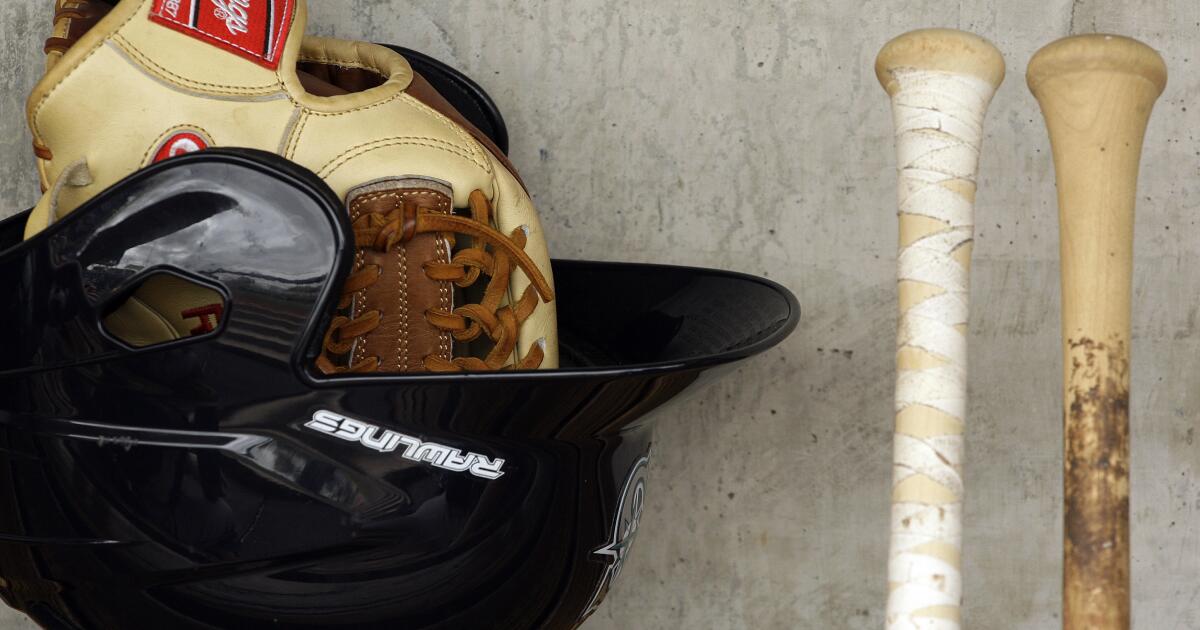
This week began with Orange Lutheran having played in only four baseball games while others had played in 10 or more. The Lancers were saving their best to come and it certainly showed when they won four consecutive games to capture the National High School Invitational on Saturday in Cary, N.C.
After needing consecutive walk-off hits to win in the quarterfinals and semifinals, Orange Lutheran (7-1) had more nerve-racking moments before knocking off defending champion Venice (Fla.) 7-6. In the bottom of the seventh, Venice put two runners on with two outs before Anthony Tomminelli got a strikeout to secure the win.
Orange Lutheran started fast with a two-run triple by CJ Weinstein in the first inning. Eric Zdunek finished with two hits and two RBIs while Brady Murrietta added two hits. The Lancers have about 24 hours to celebrate because next week they face St. John Bosco in a critical three-game series in the Trinity League.
Harvard-Westlake 10, Arizona Casteel 8: Jake Kim flexed his muscles for the second consecutive game, hitting a home run and double to finish with three RBIs. Ethan Price had a two-run double. Freshman Nate Englander had two hits and three RBIs.
Jacksonville (Fla.) Trinity Christian 5, St. John Bosco 0: The Braves return home from North Carolina with a 9-2 record and set to face Orange Lutheran this week in a three-game Trinity League series. Jack Champlin had two hits in the loss.
Aquinas 4, Gloucester 0: Eli Martinez threw the shutout with seven strikeouts.
Air strikes in Iraq kill three PMF fighters, two police | US-Israel war on Iran News
Ex-paramilitary group, set up to fight ISIL, but now integrated in Iraqi forces, blames US and Israel.

Published On 28 Mar 2026
Air strikes targeting Iraq’s Popular Mobilisation Forces (PMF) have killed three fighters and two Iraqi police, as the US-Israeli war on Iran continued to spill over Iraq’s eastern border.
An Iraqi security source told Al Jazeera that Saturday’s double-bombing of the PMF’s headquarters near northern Iraq’s Kirkuk Airport also wounded two other fighters and six Iraqi soldiers.
Recommended Stories
list of 3 itemsend of list
A statement from the ex-paramilitary coalition, which is now integrated into the regular Iraqi army, blamed the United States and Israel, saying that those killed had been “subjected to a treacherous Zionist-American” attack.
Separately, the Reuters news agency quoted security sources as saying that two members of the Iraqi police were killed in an air strike targeting the PMF in Mosul, about 105 miles (170km) northwest of Kirkuk.
Reporting from Baghdad, Al Jazeera’s Nicolas Haque said that Iraq was turning into an “expanding battleground” in the crisis, which began on February 28 with US-Israeli strikes on Iran and now threatens to engulf the region in a protracted conflict.
Since the war broke out, pro-Iran armed groups within the PMF, which was formed on the orders of Najaf-based Grand Ayatollah Ali Sistani in 2014 to fight ISIL (ISIS), have claimed responsibility for attacks on US interests in Iraq and beyond and have themselves been targeted.
Haque said the PMF takes its orders from Baghdad, but some factions are loyal to Tehran.
“That makes it very difficult for Baghdad to hold all of this together. Up until the war, the government successfully brought everybody around the table [and] was able to manage the different factions,” he said.
But as the war expands into Iraq, Baghdad has found itself “on a tightrope” between the US and Iran, said Haque.
“They can’t afford to turn their back on their biggest neighbour, Iran. Nor can they afford to turn their back on the United States,” he said, noting the economic and security ties between Baghdad and both countries.
Saturday also saw two drones targeting an airbase serving as a hub for US and coalition forces near Erbil airport in Iraq’s semi-autonomous Kurdish region. Haque said the US C-RAM air defence system was activated and intercepted the drones.
Iraq attacks ‘a worrying development’: Macron
In parallel, Kurdish news outlet Rudaw reported a drone attack on the house of Nechirvan Barzani, president of the Kurdish region, in the western town of Duhok.
Masrour Barzani, the prime minister of the Kurdistan Regional Government in northern Iraq, condemned “in the strongest terms” the assault.
“Once again, we call on the federal government to act on its responsibility, bring these outlaw criminals to justice, and curb the continued terrorist attacks carried out by these groups,” he said in a statement.
French President Emmanuel Macron said on X that he had spoken to Barzani, calling increased attacks in Iraq a “worrying development”.
In other developments, the Iraqi Ministry of Defence said on Saturday that a drone had crashed into the southern Majnoon oilfield “without detonating, causing no damage or injuries”.
Iran war live: Tehran warns US, Israeli universities; Houthis fire missiles | US-Israel war on Iran News
Live updatesLive updates,
Antiwar protesters rally in Tel Aviv and US cities, as attacks kill a family of four in Iran’s Bushehr province and damage a water facility in Khuzestan.

Published On 29 Mar 2026
Paul McCartney at the Fonda: a rock legend in thrilling close-up
Paul McCartney sauntered onto the stage of the Fonda Theatre, took in the 1,200 faces before him — “I can see the whites of your eyes,” he said — then offered up a brief history lesson about where we’d gathered Friday night.
The Fonda, he told us, opened 100 years ago; back then, he added, it was called the Music Box.
“Cool little place, innit?”
At 83, McCartney is well into his cool-little-place era.
Last year the rock legend played a string of concerts at New York’s tiny Bowery Ballroom while in town for “Saturday Night Live’s” 50th anniversary; a few months after that, he hit the Santa Barbara Bowl as a kind of warm-up for the latest leg of his Got Back world tour.

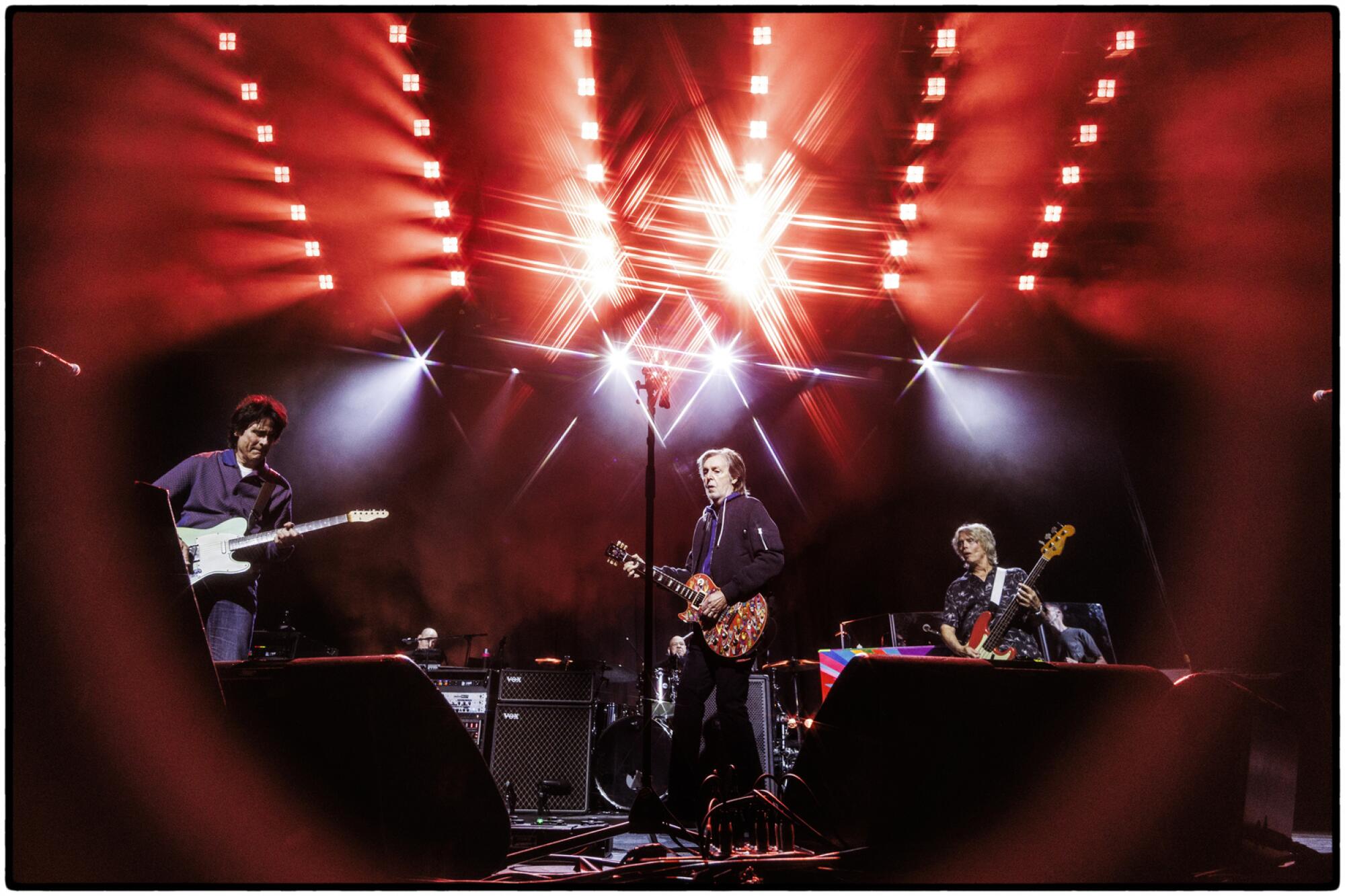
Paul McCartney and his band during sound check for Friday’s show.
(MJ Kim)
Friday’s underplay — the first of two instant sell-outs at the Fonda — came as McCartney is drumming up interest in a new studio album he’ll release in May. Outside the venue, a double-decker bus was parked with signage advertising the LP, which is called “The Boys of Dungeon Lane” after a road in his Liverpool hometown.
But that hardly seemed like the purpose of the show itself, which lasted about an hour and 40 minutes and didn’t even include a performance of the album’s lead single. The truth is that Sir Paul genuinely appears to get a kick out of these intimate gigs — out of standing right in front of a crowd and doing the magic trick that is a song like “Get Back” or “Jet” or “Got to Get You Into My Life.”
And why wouldn’t he?
If a Paul McCartney concert in an arena or a stadium is a finely honed spectacle of boomer nostalgia and industrial-strength charm, one of his shows in a club or a theater is a chance to play music, which after six and a half decades still clearly turns his wheels.
You wouldn’t say the shows remind McCartney that he’s a regular guy. (Those six and a half decades have made him anything but.) What they might do, though, is remind him why he became so widely adored — valuable self-knowledge for an artist whose great subject has always been the transformative power of love.
Here, as in Santa Barbara, he and his seven-piece band (which featured three horn players) did a pared-down version of the most recent Got Back set, opening with a killer one-two punch — “Help!” into “Coming Up” — that alone said plenty about McCartney’s range and endurance.
“Let Me Roll It” had a funky swagger, while “Getting Better” chugged with cheerful insistence; “I’ve Just Seen a Face” showed off the group’s crisp harmonies and “Lady Madonna” its tight rhythmic interplay. After “Let ’Em In,” McCartney asked his band member Brian Ray to show off the song’s all-important bass line: a single note plucked over and over and over again.

Friday’s show was the first of two at the Fonda.
(MJ Kim)
He did a few other comic bits, including a memory of Tony Bennett singing without a microphone as a way to demonstrate the excellent acoustics of a concert hall — the punch line was that he later saw Bennett do the same thing at the Beverly Hilton — and some gentle ribbing of the folks sitting up in the “posh seats” of the Fonda’s balcony. Among them, McCartney pointed out, was Morgan Neville, director of the recent “Man on the Run” documentary about McCartney’s life in the aftermath of the Beatles’ breakup.
He also noted that his wife, Nancy Shevell, was in the house and dedicated “My Valentine” to her; truth be told, that one was a bit dreary, as was “Now and Then,” the so-called last Beatles song released in 2023 using machine learning to complete a scratchy demo left behind by John Lennon.
“Thank you, John, for writing that lovely song,” McCartney said afterward, which made it a little harder not to like.
In any event, there were more classics to come, not least a buoyant “Ob-La-Di, Ob-La-Da” and a “Let It Be”/“Hey Jude” twofer that inspired such a lusty singalong that McCartney probably could’ve gotten away with lip-syncing if he’d wanted to.
But of course he didn’t want to — that was kind of the whole point.

Channel Springwatch and immerse yourself in a nature reserve
CHANNEL Springwatch and immerse yourself in a nature reserve, says writer Mia Lyndon.
THE PAD
You’ll be able to call kingfishers, cranes and thousands of other beautiful birds your neighbours here.
Tucked inside Slimbridge Wetland Centre, just half an hour’s drive south of Gloucester, are five shepherd’s huts, each with their own pond and mini wetland, and sleeping between two and four people.
We spotted rabbits and foxes from our snug digs among the 100 acres of lush landscape, plus every hut is kitted out with a vintage-style oven, waterfall shower (with excellent water pressure, FYI) and spacious decking.
Owl-shaped curtain hooks and a cuddly mallard doorstop only add to the charm.
EXPLORE
Make the most of your unlimited access to the wetland centre and feed wildfowl on Swan Lake, before bobbing along on an hour-long canoe tour, £10 per person, to get closer to diving ducks and water voles.


Or hunt down egrets, stalks and grass snakes with the help of friendly driver Chris on a Wildlife Safari – £5 per adult, £3.50 per child (wwt.org.uk).
Find yet more stunning views at Miserden Gardens and wander past elegant topiary, lush fruit trees and herds of roaming deer in this exquisite 17th-century walled garden. Entry costs £12 and under-16s are free (Miserden.org).
Meanwhile, thronging with vibrant indie stores, quaint Stroud is a short drive away.
Pop into the buzzy Malthouse Collective for two storeys of vintage clothes, hand-poured candles and fab local art (Themalthousecollective.co.uk), then hit Made In Stroud for pretty pottery and jewellery (Madeinstroud.co.uk).
Alongside a sweet miniature railway, Stroud’s Stratford Park is home to the Museum In The Park – check out local artefacts, oil paintings and even a Gloucestershire Stegosaur fossil. Entry is free (Museuminthepark.org.uk).
REFUEL
Hunker down with a tasty (and very generous) Full Monty English brekkie, £13, at The Tudor Arms, which sits beside the Gloucester And Sharpness Canal and is just a 10-minute stroll from your bed (Thetudorarms.co.uk).
For a laid-back yet impressive dinner, hike over to The George Inn for dishes such as succulent venison steak with chocolate and red wine sauce, £25, followed by tangy home-made blackcurrant and orange cheesecake, £7 (Quality-inns.co.uk).
Or gaze across rolling valleys at The Bell Inn at Selsley, while tucking into fluffy smoked Hereford cheese croquette, £19, and warming cinnamon milk pie, £9.
Don’t miss the Romanian Calusari white, £6.50 a glass – it’s zippy, fresh and absolutely delicious (Thebellinnselsley.com).
Elsewhere, there are cosy cafes aplenty in Stroud, but the irresistible ginger and date crumble cake, £3.90, at buzzy Woodruffs helps it reign supreme (Woodruffsorganiccafe.co.uk).
Book it
Stays for two at Warblers’ Meadow, Slimbridge, cost from £150 per night (wwt.org.uk/wetland-centres/slimbridge).