



How to Come to Terms With a Venezuelan Transition
The opposition delegation, comprising members of Primero Justicia and Voluntad Popular, sits opposite its regime counterparts during the latest round of talks. Source: Jorge Rodríguez via X.
In recent days, pressure regarding the timeline for political change has intensified, a sense of urgency that I both understand and share. To the long years of democratic struggle, we must add the dire economic and social conditions that afflict us. The urgency is real, and I share it.
This is why this sense of urgency is shared. We all want to reach democracy without any further delay. It is in no one’s interest to postpone political change. Whether one is sitting at the negotiating table, viewing it with suspicion, or opposing it entirely, we all want the same thing: to arrive at democracy as soon as possible.
Acknowledging this common ground is essential. To suggest that this shared goal divides us is untrue and undermines future stability; it is a strategic error. Who benefits from fracturing what unites us? Who gains from destroying the common ground we have built over the years?
Therefore, I believe our differences do not lie in our shared destination, but rather in the path that circumstances have allowed us to take toward it. This reflection is precisely what gives this article its title: “It’s a transition, not a revolution.”
The revolution that never was
For years, we worked toward a “clean slate.” Paradoxically, we dreamed of a revolution. We longed for the moment when chavismo would pack up its belongings and relinquish power. Perhaps this shared expectation stemmed from our tradition of seeking radical ruptures. For many reasons, we hoped that Maduro would simply fly away. But that did not happen.
Instead, on July 28, 2024, chavismo stole the election, subjected us to repression, and clung to power. We did everything in our power to defeat them, and it was not enough. We reached the absolute limit of democratic resilience and paid the price for fighting for our country. Then came January 3, 2026. On that day, a foreign military operation took Nicolás Maduro away, but left the Rodríguez faction behind. That is how it happened, and that is how it remains.
The Trump administration did what we either could not or would not do. Time will allow us to process the weight of that reality, and I do not intend to dwell on it here. For now, I will simply point out the obvious: the United States took risks, opened the door to a new political landscape, and became the most influential actor in the power equation. To put it plainly: they paid for the party, and now they are calling the tune.
The time for this “feast of bitter pills” has arrived, and we are discovering that swallowing them is far more difficult than we had imagined.
Perhaps some reader, channeling an inner Che Guevara, might accuse me of treason. Well, my dear rebellious reader, that is not the case. Acknowledging this reality is entirely compatible with a love for our country; it does not make me a sellout. The United States removed Maduro and opened the door to a transition toward democracy. It may not be the transition we dreamed of or planned for, but it is the one that is actually possible. What followed the dictator’s capture was not a revolution, but the beginning of a transition—a process of gradual, progressive change driven by institutional reforms and political consensus.
Unlike revolutions, which seek a radical break from the previous order, transitions do not start from scratch. Instead, they identify elements from the old regime that can survive and transform them to fit within the new democratic order that is being built. It is a matter of profound change without having to destroy everything, of transforming existing institutions to place them at the service of democracy. And that is what we are working on.
A feasible transition
Given this, the practical question is how to reconcile the genuine sense of urgency—which unites us—with the timeframes required for a transition. I do not have a definitive answer to this question. However, I would like to share three tasks that could contribute to the transition.
First, we must learn to swallow bitter pills.
For years, we were warned that, when the time came, we would face an extensive menu of pills—a metaphor for the unpopular measures, difficult concessions, and uncomfortable decisions that would inevitably come with a process of political change.
We listened, took note, and pressed on. Well, the time for this “feast of pills” has arrived, and we are discovering that swallowing them is far more difficult than we had imagined. Now, it is urgent that we learn how to do so—and, above all, that we create the conditions to ensure that every sacrifice is worth it.
I have no ready-made formulas for this task. Each person will have to find their own way to confront these contradictions, to process the inconveniences and the costs that must be borne. What is clear to me is that we must learn to do so without losing sight of the causes for which we have fought for so many years.
The nature of the political change now beginning to emerge demands a process of collective healing, one that will require both time and maturity.
Second, we must engage in civic education.
We need to take the time to speak to the nation and explain what is unfolding. We must also be capable of putting ourselves in the shoes of others, understanding that our distrust runs deep, nurtured by decades of deception, broken promises, and accumulated frustrations.
The leadership required at this moment must be democratic and empathetic, one willing to listen, understand, engage in dialogue, and build. More than thirty years of persecution and repression have left deep wounds in our national soul. The nature of the political change now beginning to emerge demands a process of collective healing, one that will require both time and maturity.
This process will not be resolved through staged photographs or superficial gestures. I am speaking of a profound, human, and authentic effort toward recognition, acceptance, and reparation—a task that allows us to rediscover one another as a society, take ownership of our history, and regain the trust necessary to build a shared future.
Third, we must offer certainty to everyone. Venezuelans do not lack patience; what we lack is the certainty needed to navigate the tunnel that lies ahead. We are capable of enduring sacrifices, but we need to know that these efforts will be worth it. If we can see that light at the end of the tunnel, we will have reason to remain patient and perseverant.
The certainties we can offer today must be built step by step—through actions, commitments, and results
Perhaps this is the most difficult challenge of all. Transitions toward democracy are inevitably marked by uncertainty and a lack of transparency. One need only read the memoirs or listen to the testimonies of those who lived through similar experiences to recognize ourselves in their dilemmas, contradictions, fears, and hopes. There is something profoundly human in those stories that feels familiar to us.
That is why political education, the building of consensus, and the gradual restoration of democratic dynamics are so important. They serve as ways to provide guidance amidst uncertainty, rebuild trust, and give meaning to the sacrifices we are called upon to make. The certainties we can offer today must be built step by step—through actions, commitments, and results that allow Venezuelans to recognize that we are moving toward democracy.
From desirable outcomes to real possibilities
One of our greatest challenges is to accept that the revolution we wanted to bring about for so many years was not to be, and that today we are facing a transition currently in the making. Its success will depend, in large part, on our ability to understand the nature of this process, to embrace reality—with all its possibilities and limitations—and to learn how to navigate the path that has opened up before us.
We will need to do so with intelligence, patience, generosity, and a sense of historical responsibility. Above all, we must act in unity, placing Venezuela above our differences. Because, in the end, that is what it is all about: seizing the opportunity we have to build the democracy for which we have fought so hard.
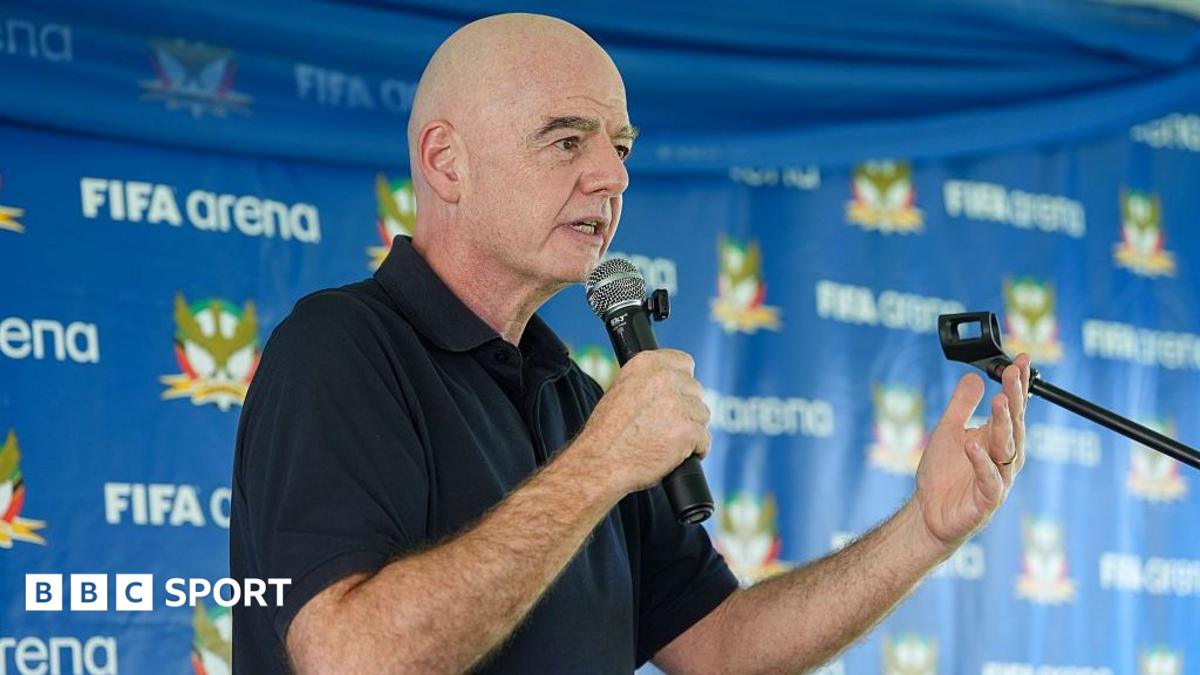
Gianni Infantino: Uefa gives Fifa deadline to release key documents
Uefa has posed a great number of questions about FFE.
“When was the idea of FFE first explored, by whom and with what objective?” Uefa asked. “Who within Fifa authorised the development of the project, and which members of the Fifa administration were involved?
“What concrete measures will Fifa put in place to ensure that the shortcomings identified in the FFE process cannot occur again in the future?”
Uefa requested information on whether Infantino would have held or expected to hold any position, role or function in FFE, either during or following his tenure as Fifa president.
The relationship with Joshua Kushner’s Thrive Capital was covered in detail, asking why an agreement granting exclusivity to the company was signed without prior consultation of the Fifa Council.
“Why was Thrive Capital selected as lead investor, without any competitive tendering process and under conditions of strict confidentiality, despite its links to the family of the recipient of the Fifa Peace Prize?” Uefa asked.
Kushner is the brother of Donald Trump’s son-in-law, while the US president was awarded the Peace Prize.
Uefa also requested answer about the award of the Peace Prize, specifically who decided to establish it, for what purpose, and who decided that Trump should receive it.
When the FFE plan was revealed in the days following the World Cup final, Infantino told the 211 member associations (MAs) they would receive $40m (£30m) if they backed it. He then set a deadline of 19 September for federations to accept his plans if they wanted to access an initial $20m (£15m).
However, once the scheme was abandoned, Uefa and Concacaf called on Fifa to pay at least $10m (£7.5m) from its cash reserves to each of the MAs and, last week, Infantino agreed, proposing to increase the amount of money handed out for football development across the world by $3.4bn (£2.6bn).
The releasing of cash from its reserves will result in double the level of planned distribution funding for MAs from 2027 to 2030, with $25m (£19m) available per member association.
“Why was substantially increased funding for MAs presented in connection with FFE and external investment, rather than being financed directly from Fifa’s own resources?” Uefa has asked.
“Given Fifa’s strong financial position, why was it considered necessary to seek investment from private investors? What financial or strategic advantages would such an arrangement have offered compared with funding football development directly from Fifa’s own resources, particularly in light of Fifa’s subsequent proposal to do precisely that on a substantially increased scale?”

Iran War backlash threatens Republican control of Congress | Elections
Barbara Leaf, former US Assistant Secretary of State for Near Eastern Affairs, tells Al Jazeera that public opposition to the war with Iran could threaten Republican control of Congress, as economic fallout fuels voter anger.
Published On 19 Oct 2026
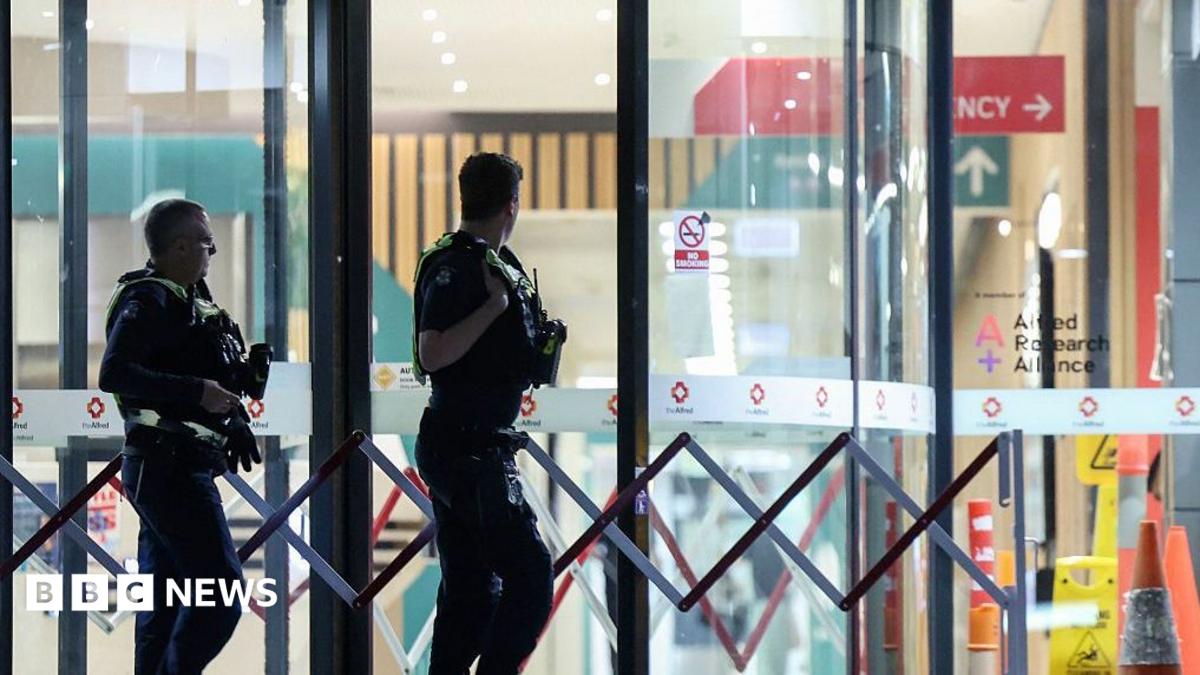
Warning signs over threats to Australian politicians were rising before MP hit by car
Earlier this year Albanese himself was evacuated from his official residence over a bomb threat. As of August, about 20 cases in which people were accused of making violent threats against him were winding their way through courts around the country.
In recent years, politicians here have been mailed bullets. Female MPs – and in some cases their children – have been threatened with sexual violence. A Jewish MP’s office has been firebombed, a Sydney mayor’s car has been torched and countless other politicians have had their workplaces vandalised.
Just last week Small Business Minister Anne Aly said she had received a wave of death threats after a politician from the opposition said she should be “shamed and stoned in the square” over a tax policy.
According to government statistics, there were 1,067 reports of “harassing and threatening behaviour” against “high office holders” in the year to June: an increase on last year.
“We tend to bury our head in the sand and say, ‘Not here’, but this has been happening now for well over a decade,” Josh Roose, a Deakin University Professor on violent extremism, tells the BBC.
Socioeconomic strain, growing mental health problems in the community, “grifters” who benefit politically or financially from whipping up further discontent, and a “carcinogenic” online environment are drivers of the trend, he says, which has dramatically escalated since the pandemic.
But the political class must also take responsibility for their role, he adds.
“We’ve seen a willingness to cross previously sacred terrain – you know, not targeting individuals, not targeting their families – but we now see that this is part and parcel of Australian political life.
“This is occurring at both ends of the political spectrum.”
And experts like him warn it is not just politicians who are vulnerable: it is members of the media, academics, court officials and other public figures too.

Pregnant Samie Elishi’s ex in talks for Love Island All Stars after villa star’s baby announcement
LOVE Island star Ciaran Davies has met with show bosses about a THIRD stint in the villa.
He won January’s All Stars’ series with Samie Elishi but they split three weeks later – and today the loved-up beauty announced she was pregnant with Aftersun panellist boyfriend Tyrique Hyde.
Ciaran has held talks about returning for 2027’s legends run in Cape Town, South Africa.
A source said: “It’s early days but bosses have met with Ciaran who is considering a third try at finding love.

“Execs have met with a variety of Islanders but the line-up won’t firm up until December.
“Obviously Samie has very much moved on and so has Ciaran and he hopes to find the same happiness too.”
Ciaran – a 23-year-old former surveyor from Pencoed, South Wales – was a runner-up on Love Island‘s 11th season, going on to win All Stars this year with Samie, following his second stint in the villa.
Tyrique appeared on Love Island during the summer of 2023, with Samie’s first appearance coming on the winter version the same year.
While they may not have been on the show together, he’d always admired her from afar and consistently named her as his top Islander.
Despite Samie being crowned All Stars champion with Ciaran earlier this year – they split three weeks after February 23rd’s glittering final, prompting Tyrique to make his move.
Six months on, and the couple are expecting a child.
Posting online, Samie shared a sweet video of her getting an ultrasound.
Tyrique and Samie could be seen sharing a kiss as they held the sonogram pictures of their little one.
They both beamed with joy as the song Forever My Lady played in the background.1
Reposting the announcement on his Instagram story, Tyrique wrote: “Don’t make a scene. Can’t wait for this next chapter.
“Love you @samieelishi.”
In late March, Samie was seen out on a date with Tyrique at the Baller League then in May they told fans how they were officially boyfriend and girlfriend – and now they’re happier than ever.
Samie is thought to be due to give birth in spring 2027.

Central Garden & Pet complements its portfolio with acquisition of 150-year old Burpee
Central Garden & Pet complements its portfolio with acquisition of 150-year old Burpee
Source link

Democrats gain ground with AAPI adults as trust in Republicans fades, AP-NORC/AAPI Data poll finds
WASHINGTON — Asian Americans, Native Hawaiians and Pacific Islander adults have become more disillusioned with President Trump and Republicans as the Nov. 3 midterm elections approach, according to a new AP-NORC/AAPI Data poll, giving Democrats a substantial edge on major issues like the economy and health care.
The survey, which was conducted from Sept. 8-15 by AAPI Data and The Associated Press-NORC Center for Public Affairs Research, reveals that Trump’s standing on the economy has fallen among AAPI adults over the course of his second term.
About one-quarter of AAPI adults approve of the way Trump is handling his job as president overall. Only about 2 in 10 approve of his performance on the economy, which the vast majority of AAPI adults see as one of the most important issues for the upcoming election.
But although AAPI adults trust Democrats more than Republicans on a wide range of issues, views of the Democratic Party itself are still split.
Rebecca Larocco, a 45-year-old Korean American in Corning, Iowa, voted for Trump in 2016 and is leaning Republican in the midterm elections. She approves of his immigration policies but is unsure about Trump’s handling of the economy as the Iran war continues to compound gas prices.
“Where I’m at, it’s went up almost $1.50 (a gallon),” she said. “I didn’t expect to go into war at all, that has been definitely unexpected and I’m not sure… I’m just hoping they’ll do what they’re saying and get our economy back on track, get immigration and crime lowered.”
The economy is a top issue for AAPI adults
The economy remains top of mind for an overwhelming majority of the AAPI adult population when they consider the midterms. With the ongoing Iran war affecting gas prices and other costs staying elevated, Americans overall are deeply pessimistic about the state of the economy and see it as a high priority for the midterms. That includes AAPI adults — according to the poll, about 9 in 10 rank the economy as one of the most important issues for the upcoming election, and about 8 in 10 say this about the cost of living.
The economy, the cost of living and healthcare dwarf other issues for AAPI adults. About 7 in 10 AAPI adults say healthcare is one of the most important issues for the election, while only about half say this about foreign policy, crime, immigration, election fairness or climate change.
At the same time, Trump’s economic approval among AAPI adults has dropped about 10 percentage points over the course of the year, and there are other signs his popularity has waned with this group. In late 2024, just after the election, about 4 in 10 AAPI adults had a “somewhat” or “very” favorable view of Trump. That’s fallen to about 3 in 10 now.
“What the data show is that any gains that he made not only during the 2024 election — there was a bit of a honeymoon period that Trump enjoyed after the election before Inauguration Day — that has now largely disappeared,” said Karthick Ramakrishnan, founder and executive director of AAPI Data.
Len Takahashi, 57, of Universal City, Texas, describes himself as conservative but voted for Democrats in the last three presidential elections and for Republicans in midterm elections. For this midterm election, he is simply open to candidates who prioritize the economy.
“I would like policies that look in the best interest of the American public,” said Takahashi, who is Japanese American. “That could be bringing down spending, a balanced budget of U.S. spending, bringing down inflation, working towards a more stable economy and, lastly, just a better atmosphere between the far left and far right.”
AAPIs trust Democrats more on most issues but are not entirely sold on the party
Democrats have gained at Republicans’ expense since Trump returned to the White House when it comes to AAPI adults’ trust in handling many key issues.
In a March 2025 poll, AAPI adults were evenly divided over which political party would better handle the economy and immigration. Now, Democrats have a roughly 20-percentage-point advantage on both issues.
Meanwhile, around two-thirds of AAPI adults have a “somewhat” or “very” unfavorable view of the GOP. Only about one-quarter have a “somewhat” or “very” favorable view.
But while trust in the Democrats on specific issues has increased, AAPI adults are ambivalent about the party as a whole. About half, 48%, of AAPI adults have a “somewhat” or “very” unfavorable impression of the Democratic Party, while 44% have a “somewhat” or “very” favorable impression.
A separate AP-NORC survey of registered voters in September found, similarly, that while voters in general are deeply dissatisfied with Trump and the GOP, few think either party is capable of solving important problems.
Louise Rider, 40, is a Democrat living in Chicago. She believes Democrats are better than Republicans across all issues but says she’s unhappy with how the party has governed.
“I don’t think the Democrats are doing great, I think they need a lot of change as a party,” she said. “It’s kind of a helpless feeling, that nothing will get done with both parties unless there’s major changes.”
Some Republicans still stand behind Trump. James Finley, 74, of Lenox, Massachusetts, said Trump deserves some understanding because he cannot bring down high prices overnight. When it comes to Republicans in general, Finley is a little more critical.
“They’ve had the majority for a couple of years,” said Finley, whose ancestry includes Japanese heritage. “I think they could have done a little bit more or maybe a lot more in terms of passing certain things that I wanted to pass.”
Still, he sticks to the party line and because “all I ever hear from Democrats is to get Trump,” Finley said.
AAPIs concerned about fair midterm elections
As the election approaches, many AAPI adults are worried about problems with misinformation, legal challenges to the results, and voter suppression. About half of AAPI adults say it’s a “major problem” in U.S. elections that people who are eligible are not allowed to vote, while about two-thirds see foreign government attempts to influence results as a “major” problem.
Looking ahead to the November election, about half of AAPI adults are “extremely” or “very” concerned about fake or false information about the candidates, and about half also feel this way about legal challenges to the election results.
Finley is unsure if the voting process can be tightly monitored to prevent undocumented or unregistered people from attempting to vote.
But Takahashi, the conservative from Texas, is worried that Trump will try to manipulate the election.
He’s concerned, he said, that Trump would amplify claims of “fraud in the election system” should the midterms not go in his favor. “(He’ll) make that a point to distract the American public,” he said.
Tang, Jiang and Sanders write for the Associated Press. Tang reported from Phoenix and Jiang from New York. The poll of 1,023 U.S. adults who are Asian American, Native Hawaiian and Pacific Islander was conducted Sept. 8-15, using a sample drawn from NORC’s probability-based Amplify AAPI Panel, designed to be representative of the Asian American, Native Hawaiian and Pacific Islander population. The margin of sampling error for all respondents is ±4.7 percentage points. This poll is part of an ongoing project exploring the views of Asian Americans, Native Hawaiians and Pacific Islanders, which are usually not highlighted in other surveys because of small sample sizes and lack of linguistic representation.

Long frustrated UCLA fans urge others to believe in Bob Chesney
UCLA football fans are accustomed to watching the Bruins struggle, so it took some time to believe new coach Bob Chesney really could back up his inspirational messages.
After a big road win against longtime nemesis Oregon, video posted online showed Chesney delivering a fiery speech to his team in the tunnel before facing the Ducks. He relayed the story of Hernán Cortes telling his crew to burn boats behind them so that there was no way out but forward. The Bruins, he said, had to burn the boats and fight through the Ducks.
“His speech before the Oregon game — where he talked about burning boats — that just fires you up. It makes me want to run through a wall,” said Brian Jacobsen, a 1987 UCLA graduate.
Jacobsen, 62, brought his family to Eugene to watch UCLA defeat Oregon for the first time since 2004 because he felt this team was special.

A fan with a UCLA themed Star Wars storm trooper mask dances during the Bruins’ win over Wisconsin at Rose Bowl on Saturday.
(Ronaldo Bolanos/Los Angeles Times)
UCLA fan Luis Flores, 54, grew up watching the Bruins and said he can’t recall feeling this excited about the team.
“It’s the culture and the way the coaches have these kids going the right direction. Where they are disciplined, they believe in [Bob] and they believe in the Bruins,” Flores said.
Jacobsen and Flores were among the 36,045 fans at the Rose Bowl Saturday during UCLA’s 17-7 win over Wisconsin. The Chesney train is picking up steam, but the Rose Bowl was still far from sold out Saturday.
Joel Fierberg, music director of the UCLA Alumni Band, has seen the football program’s highs and lows during his 30 years leading the band.
“There have been some up-and-down years, but I am excited for what’s been happening,” Fierberg said.
Fierberg values fans who have stayed with the Bruins through thick and thin, especially now that the program has given them wins to celebrate.
“There are a lot of fans, including a lot of my band [members], who are here every week regardless,” Fierberg said. “It’s always exciting for them, having lived through the difficult times, to have something to be excited about.”
UCLA fans haven’t seen this kind of dominance since the Bruins opened the 2022 season 6-0.
Jeremiah Calvillo, 15, said he remembers the Chip Kelly era, but he couldn’t be more excited about what this UCLA team has done for him.
“[Chesney] is a very good coach who is leading this program to better things,” Calvillo said.

UCLA running back Anthony Woods and quarterback Ty Dieffenbach celebrate after scoring a touchdown in the fourth quarter against Wisconsin at the Rose Bowl on Saturday.
(Ronaldo Bolanos/Los Angeles Times)
UCLA alum Garry Sakson enjoys seeing all the praise the Bruins have received on social media after beating Oregon in Eugene. Sakson attended as many games as possible during the Kelly era at UCLA.
“The mindset this team has is different,” Sakson said. “With Chesney, it’s the way he acts and carries himself.”
Fans are cautious about discussing UCLA’s chances of making the College Football Playoff, despite the Bruins becoming the last undefeated team in the Big Ten and SEC. That superstitious approach shows how quickly Chesney has raised expectations.
“I’m very optimistic about Chesney in his first year, but talking about the playoffs already is wild. Still, it’s amazing that we’re even in this position,” said 2009 UCLA alum Tim Dawson.
Dawson was a freshman when the Bruins started the 2005 season 8-0 and finished 10-2, during coach Karl Dorrell’s third year.
That season, the Bruins were known for their high-scoring offense and their ability to pull wins out, until they fell to Arizona in Week 9.
This season, the Bruins have a potent rushing game, a dynamic new starting quarterback and defense that has delivered explosive plays. Dawson said this feels different than the 2005 team because the defense is strong.
The players are proud of how quickly they shifted from going 3-9 last season to a 6-0 start.

Fans watch UCLA face Wisconsin at the Rose Bowl on Saturday.
(Ronaldo Bolanos/Los Angeles Times)
“Think the progress that we made from January, when we all arrived, till now is just out of this world,“ UCLA wide receiver Landon Ellis said. “It’ll be hard to look back into history and find teams that have turned it around this fast. So if you’re not all the way in, I don’t know what you are doing,”
Chesney said a bruising win over Wisconsin that shows UCLA can hold its own against brawny Big Ten terms should win over more fans unaccustomed to success.
“I think this win changes things a little bit,” Chesney said. “We won games in different ways, whether it be the offense or defense, but I think [Saturday] was a tough, physical game of football that you got to have a lot of pride in. And I think this should be the one that gives them a lot of confidence to understand just exactly what we are doing.”

Decision on Senegal’s AFCON final appeal to be made by end of November | Africa Cup of Nations
The Court of Arbitration for Sport will announce its verdict on the title after it was awarded to Morocco by CAF.
Published On 19 Oct 2026
A decision on Senegal’s appeal after being stripped of this year’s Africa Cup of Nations title will be made at the end of November, the Court of Arbitration for Sport (CAS) has confirmed.
“This process will require several weeks, with the CAS Award expected at the end of November 2026,” the court said in a statement on Monday.
Senegal are contesting the decision by the Confederation of African Football (CAF) to declare Morocco champions, despite Senegal beating the hosts 1-0 after extra time in January’s final in Rabat. Their arguments, plus those of Morocco and CAF, were heard by CAS in Lausanne on October 8.
At the time, CAS said it expected a decision within days but has now decided to issue a complete ruling, including legal grounds, known as a CAS Award.
Senegal walked off the pitch for 14 minutes after a penalty was awarded against them late in regulation time, with several players returning to the dressing room in protest before they resumed play.
Morocco missed the spot kick, sending the match into extra time, where Senegal scored the winner to secure victory.
However, they were stripped of the title two months later after CAF’s Appeal Board ruled that Senegal had forfeited the match by walking off the pitch, overturning the result and awarding a 3-0 victory to Morocco.
Senegal quickly followed with an appeal to CAS, which was lodged on March 25 but heard some six months later. The basis of their arguments is that the referee’s decision is final and he allowed the match to be completed.
“I know it’s a long wait for the fans, a few months after the final between Senegal and Morocco,” CAS Director General Matthieu Reeb said outside the hearing earlier this month.
“The facts are set, are clear and the discussions will be on some procedural issues and legal aspects,” he added.
The CAS panel is presided over by French sports law expert Gerald Simon, with the assistance of Italian international law professor Luigi Fumagalli and Hamburg-based lawyer and professor of law at the University of Zurich, Ulrich Haas.
CAS decisions are called awards and hold the same value as a national court judgement. CAS awards may be enforced by sports federations or state courts, depending on the circumstances.
How has the cost of living changed in France, Italy, Spain and Portugal? | Interactive News
Student protests in France are into their second month, escalating into demonstrations across Europe.
What began in September in France with pupils protesting against overcrowded classrooms and teacher shortages has grown into wider anger at the cost of living and planned cuts to public services.
Recommended Stories
list of 3 itemsend of list
Protesters in Albania, Belgium, Greece, Italy, Portugal and Spain have also taken to the streets over the lack of affordable housing, rising costs and failing public services – with many young people saying they no longer expect to be better off than their parents.
Facing their anger are leaders such as French President Emmanuel Macron, Italy’s Prime Minister Giorgia Meloni, Spain’s PM Pedro Sanchez and Portugal’s PM Luis Montenegro. Sanchez belongs to the left, Meloni to the right and Macron and Montenegro are conservative-leaning centrists. But while their politics vary, they all face mounting unrest because of soaring costs of living.
Are they out of touch with the experiences and sentiments of youth in their countries? Al Jazeera visualises how prices, wages, housing and education have changed in France, Italy, Spain and Portugal over the past 26 years, from when Macron, Meloni, Sanchez and Montenegro were in their 20s, much like many of the protesters angry with them.
How much more expensive is it compared to 2000?
The prices paid for everyday items such as food, energy, transport and bills have risen by between 59 and 78 percent since 2000 in France, Italy, Spain and Portugal, according to Eurostat – the European Union’s statistics agency. Its harmonised index of consumer prices (HICP) is the EU’s official measure of how much everyday goods and services cost.
Spain recorded the steepest increase at 78 percent, followed by Portugal at 71 percent, 68 percent in Italy and France at 59 percent.
That means goods and services that cost 100 euros ($112) in 2000 now cost about 178 euros ($200) in Spain, 171 euros ($192) in Portugal, 168 euros ($188) in Italy and 159 euros ($178) in France.
Prices rose by about 2 percent a year on average, but jumped in 2022, when annual inflation hit 8.7 percent in Italy, 8.3 percent in Spain, 8.1 percent in Portugal and 5.9 percent in France, the highest rate in all four countries since at least 2000.
The surge was driven mainly by energy costs, which soared after Russia’s invasion of Ukraine in February 2022. By October that year, eight months into the war, energy prices across the eurozone were almost 42 percent higher than a year earlier, and food prices were also rising sharply, according to Eurostat.
Between 2021 and 2023, prices increased by 12 to 15 per cent in the four countries. Wages failed to keep up, and because prices do not fall back once inflation eases, many households are still feeling the squeeze today.

How have salaries changed?
Once inflation is taken into account, the average full-time wage in Italy fell by almost 5 per cent between 2000 and 2025. Over the same period, real wages rose by 7 per cent in Spain, 11 per cent in France and 20 per cent in Portugal, according to OECD wage data adjusted with Eurostat’s price index.
In Spain most new jobs were in tourism and services, and were often seasonal and poorly paid, Jaime Velazquez, a journalist in Madrid, told Al Jazeera’s Inside Story.
Julius Fintelmann, cofounder and editor-in-chief of The European Correspondent, said ageing societies were squeezing out opportunities for younger workers, adding that the pay gap between older and younger workers has been widening across high-income economies for decades, so the promise that each generation would be better off than the last no longer holds.

How has the cost of housing changed?
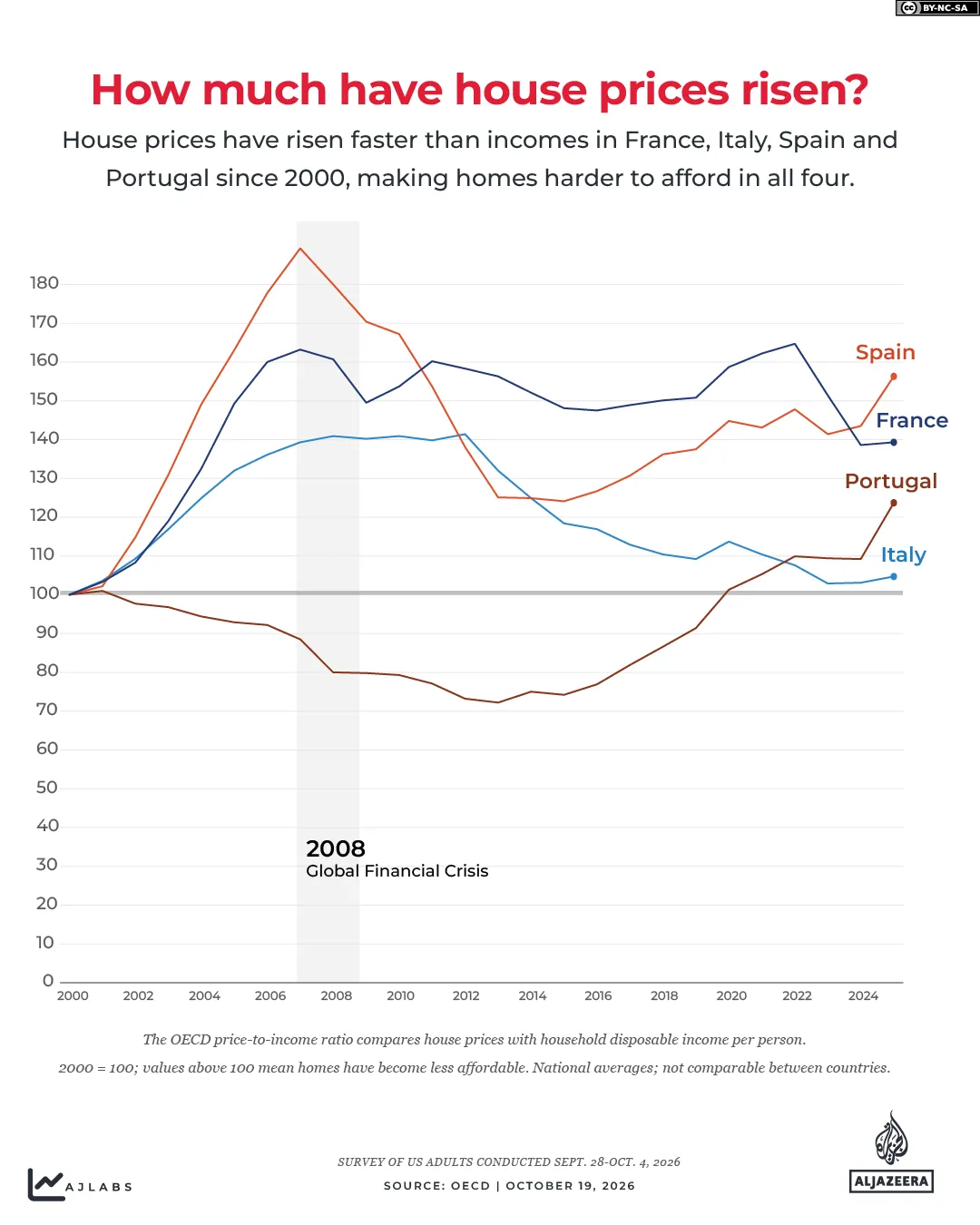
Housing has become harder to afford in all four countries since 2000, according to the OECD’s price-to-income ratio. It provides a broad picture of how house prices have changed relative to incomes over time. When prices rise faster than incomes, the ratio goes up, suggesting homes are becoming less affordable on average.
However, it doesn’t show which households or regions are hit hardest, does not account for mortgage and borrowing costs, and says nothing about the quality of the homes people are paying for.
Spain has seen the biggest change. Its price-to-income ratio is 56 per cent higher than in 2000, even after falling sharply following the 2008 financial crisis.
In France, the ratio is 39 per cent higher than in 2000, though it has eased slightly since peaking in 2022.
Italy is the exception where house prices have broadly kept pace with incomes, leaving the ratio just 5 per cent higher than in 2000.
Portugal has seen the sharpest change in recent years. Its price-to-income ratio fell steadily for 15 years after 2000, meaning homes became more affordable. But since 2015 the ratio has risen by 67 per cent.
The OECD publishes the price-to-income ratio with 2015 as its reference year. To compare it with the wage and price data in this article, which started in 2000, Al Jazeera has reset the figures so that 2000 = 100.

How has state expenditure on education changed?
Education has been at the heart of the unrest in France, where protests began because of overcrowded classrooms and teacher shortages. While in Belgium and Albania, demonstrators have rallied against the rising cost of education and access to universities.
According to the latest data from Eurostat, France’s public spending on education amounts to 5.1 per cent of its gross domestic product (GDP) compared to 5.6 per cent in 2000.
Italy spent 4.4 per cent of its GDP on education compared to 4 per cent in 2024, Spain spent 4.1 per cent in 2000 and the same in 2024. Portugal spent 4.8 per cent in 2000 and 4.3 per cent in 2024.

‘Disappointed’ Nick Knowles issues statement as DIY SOS rested after 25 years
Nick Knowles has spoken out after the news that DIY SOS was being rested by the BBC and whilst he is “disappointed,” he can understand the reasons behind the decision

Nick Knowles has admitted he is “disappointed” that DIY SOS has been rested by the BBC(Image: Daily Mirror)
Nick Knowles has admitted he is “disappointed” that DIY SOS has been rested. The TV star, 64, has fronted the BBC programme since it began in 1999 but it emerged at the end of last week that bosses had decided to pull the programme for now.
After 27 years, the BBC has admitted cost-cutting methods are behind the decision to bench the show for the foreseeable, and now former Strictly Come Dancing star Nick has spoken out on the matter.
He wrote on Instagram: “You may have already seen the news that DIY SOS is being put on ‘pause’. Of course, I’m disappointed not to be filming the show next year or again in the same format we know and love.
“But I do understand there’s no endless pot of money at the BBC and sometimes they have to make difficult decisions. Thank you for all the messages and comments over the weekend. It’s so clear you share my sentiment and deep love for this show.
To see more of the stories you love from The Mirror and to find them easily in Google then make us your preferred source. Free and easy-to-do, just click on the link here to find more from The Mirror at the top of your feed.
“For 26 years it’s been an honour and a privilege to be part of DIY SOS and I’ve loved nothing more than making it. What I always come back to is that it’s the people who are the beating heart of SOS. “
Nick used the rest of his lengthy post to reflect on the help that the programme has brought to thousands during its time on air, and thanked everyone who has been invoved.
“Over the years we’ve had thousands of tradespeople, suppliers and volunteers, all people trying to make their own living, who have shown up time and time again for the families who need it most. Kind, hardworking people and real working-class heroes coming together to build a better community. It really is the best of Britain and we need to see more of it on telly.
“I’ve always put my head above the parapet for tradespeople and this industry I love and I’ll keep doing that. But for now, I want to say thank you to every family for sharing their story with us over the last 26 years.
“To the volunteers, production team, purple shirts, commissioners and everyone watching at home, we couldn’t have done this without you. And to everyone who hasn’t seen the series yet, give it a watch. I promise your heart will be warmed.”
Despite initial reports that the programme had been cancelled entirely, the BBC were keen to stress that this is not the case.
A BBC Spokesperson said: “In light of the BBC’s savings challenges we have taken the decision to rest DIY SOS in 2027 and commission a new spin off show instead from producers South Shore. DIY SOS Rebuilt My Life (w/t) will revisit successes from the show’s past and expand the brand on the BBC in a more cost-effective way next year.”
The comments come after sources claimed the show was to be cancelled all together. A source told The Sun : “We were told it was being paused, but when we asked whether it would come back in 2028 or 2029 they couldn’t give us an answer.”
They went on: “It’s a disgusting outrage that a BBC show, which genuinely helps some of the neediest people in our country, is being shut down because it’s basically seen as ‘too expensive’.
“DIY SOS is one of the few shows on television that genuinely represents working-class people. Thousands of tradesmen and women offer their time, and often the materials, for free to people in need, even when they’re struggling to make ends meet themselves.”
Like this story? For more of the latest showbiz news and gossip, follow Mirror Celebs on TikTok , Snapchat , Instagram , Twitter , Facebook , YouTube and Threads .

FX weekly: Dollar weakens against major peers (DXY:)
The dollar index (DXY), which measures the greenback against a basket of major currencies, was last up 0.10% at $101.93 and remains up over 3.8% for the year to date.
Dollar weekly moves and key drivers:
Over the past week, the

Huge £500million indoor water resort with 33C beach, pools and 25 waterslides to get new ‘striking’ plaza

THE highly anticipated Therme attraction coming to Manchester has just announced some big changes.
The first-of-its-kind resort in the UK, has altered its £500million design – but it will still have indoor beaches, waterslides and relaxation zones.
According to reports, Therme has tweaked its layout to create a “more striking design”.
One of the new additions will be a public plaza which will link the resort and the Bridgewater Canal – and it’s adding a 53,000sq ft wellbeing garden.
In the updated plans, the two multi-storey car parks have also been removed to “create more open views”.
There will still be parking, but this has been relocated and the number of spaces has been reduced by around 100.
The new plan’s aim is to have better connections with local transport which includes the Metrolink station at the Trafford Centre.
Everything else about £500million Therme Manchester resort remains the same.
Inside the resort, visitors can expect a large-scale waterpark with more than 25 waterslides as well as a wave pool.
It will be heated to 33C and will have lots of spa and wellness facilities that will be split into three different zones these will eb called Play, Relax and Restore.
In the Play zone will be ‘next-generation’ water fun, a warm water pool, steam rooms, saunas as well as lounging and family dining experiences.
This zone will also have an outdoor beach.

The Relax zone which will be adults-only with a focus on “premium wellbeing experiences”.
It will also have well as indoor and outdoor pools, waterfall showers, mineral baths, steam rooms, saunas and casual dining.
Finally, in the Restore Zone – the second adults-only area – there will be “industry leading health, nutrition and wellbeing therapies”, “sauna rituals”, experience showers, wellbeing consultations and dining.
In August of this year, the Therme Group announced it had reached a milestone of 12 tower cranes being built.
It said the progress marked “the start of an exciting new phase of construction for Therme Manchester.”
The Therme Group also recently announced it would be teaming up with Marriott International.
In terms of booking, Marriott Bonvoy members will be offered exclusive travel and lodging packages linked directly to Therme destinations – which when it opens will include Manchester.
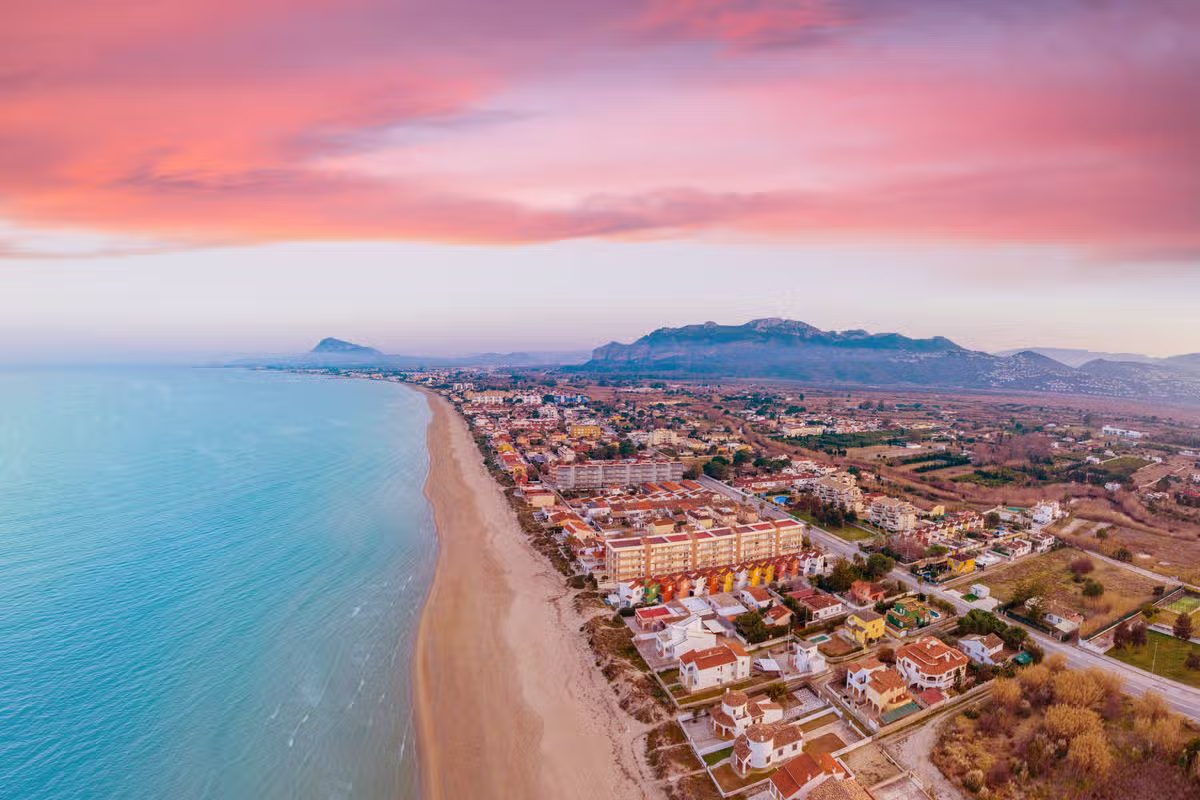
Spain ‘red zones’ map as eight areas remain under lockdown
Eight areas in Spain remain under lockdown as Storm Adam continues to wreak havoc

Eight Spanish areas are still in lockdown(Image: MEDITERRANEAN via Getty Images)
Eight areas in Spain remain under lockdown after restrictions were lifted for some 137 municipalities earlier on Monday, October 19.
Large swathes of the country were ordered to stay indoors as Storm Adam wreaked catastrophic havoc across eastern Spain. Initially, the emergency lockdown covered 78 municipalities in Valencia province and 67 in Alicante. However, according to the Olive Press: “Restrictions have ended for 137 of 145 municipalities, but eight towns in La Safor and La Marina Alta remain under lockdown.
“Please be aware that the following areas are still confined: Bellreguard, Daimús, Oliva, Xàbia, Pego, Miramar, Piles, and Els Poblets. Stay safe and always check local guidelines before travelling through these areas.”
Two fatalities have been confirmed, with a third potential victim of the storm discovered on Monday afternoon when Military Emergency Unit (UME) personnel uncovered the body of an elderly woman in her flood-ravaged home in Oliva, Valencia province. Authorities are yet to officially confirm whether the death was a direct result of drowning or natural causes.
According to the Majorca Daily Bulletin, rainfall totals surpassed 600 litres per square metre, rivers burst their banks and residents were left stranded on rooftops. Helicopters were deployed to rescue those trapped as torrential downpours swept through eastern Spain on Monday, triggering devastating floods that claimed at least two lives and prompted authorities to issue shelter-in-place orders for more than 800,000 residents.

California Proposition 4 election voter guide: Public campaign financing
p]:text-cms-story-body-color-text”>
The measure aims to tackle the cost of what it takes to run a campaign and to broaden the pool of people who could run for office without being tethered to any individual, group or special interest.
“The increasing costs of political campaigns can force candidates to rely on large contributions from wealthy donors and special interests, which can give those wealthy donors and special interests disproportionate influence over governmental decisions,” the measure states.
There have been several attempts to allow for public campaign financing in California. Five charter cities, including Los Angeles, and at least 14 other states already allow some version of it.
“This bill will restore control to local governments and the state by giving counties, districts, general law cities, and the state the same option that charter cities currently have to enact public financing of campaigns,” a Senate rules committee analysis states.

From West End shows to festivals & sold-out plays… top hacks to bag amazing UK experiences for a bargain

DO you love the theatre, gigs and stand-up but the prices make you wince?
You don’t need to spend a fortune though – as there are bags of secret loopholes and clever hacks to experience all sorts of culture, from Shakespearean plays to comedy gigs and arena concerts for virtually nothing.
Before you know it, you could be gushing to your mates about the “must-see” West End musical or cool band you saw – and you don’t even have to bankrupt yourself. Here’s how to get the best deals…
TodayTix
This app lets people book highly discounted last-minute tickets to West End and off-West End shows.
It operates worldwide, so if you are on holiday in New York you could pick up a Broadway bargain, too.
Our reporter saw the hit play The Book of Mormon for a knockdown price in the Big Apple, booking in the morning, and it was problem-free. But we’ve also taken advantage of their “rush tickets” and “digital lotteries”.
Rush tickets go on sale inside the app on the day, usually at 10am, and get you seats for a fraction of the price – typically £25 to £30.
Shows including The Devil Wears Prada and Harry Potter and the Cursed Child are included among the options.
Lottery tickets are picked from a pool – the most famous example is Hamilton, which usually sells out months in advance. People can “win” them for as little as £10.
Our reporter won £10 lottery tickets to see Orlando Bloom get his kit off in Killer Joe in the West End in 2018 via TodayTix – so it really works!
SeatFillers UK
This connects slow-filling productions and gigs with eager audience members… it’s win-win.
Called ‘papering’, it’s a technique theatre producers use to fill empty seats and create buzz.
However, while the app is free and used nationwide – you submit your county and where else you might like to watch things – we can’t actually tell you what could come up for grabs.
Because some audience members will have paid full price for tickets, you’re strictly forbidden from shouting out: “I’ve got a freebie!” so discretion is a must.
Central Tickets
If you can be discreet, then Central Tickets will be perfect for you. Like SeatFillers UK, it’s free to join and it works on the same principle.
You get tickets to gigs, the opera, dance, shows and comedy shows for between £4 and £15. It’s got a 4.9 out of 5 Trustpilot rating with more than 3,000 reviews.
The cash goes towards an admin fee – but they also raise money for NHS Charities Together.
The Audience Club
This costs £5 a year – or is free if you’re a Blue Light Card or Defence Privilege Card holder.
It’s largely London-based, but is perfect if you live in or near the capital or regularly visit and love the arts.
You can browse hundreds of shows, including West End ones. But it also offers quirky, niche plays – great if you love branching out a bit!
ShowFilmFirst
Founded in 2001, don’t let the name fool you – this isn’t just a movie seat-filler platform; they also offer theatre, comedy, music and days out.
Happily, it’s free to join and it’s not just London. You can find offers as far afield as Manchester, Birmingham, Bath, Cardiff, Glasgow, Edinburgh, Liverpool, Leeds, Bristol, Belfast, Nottingham, Brighton, Southampton and even more.
There’s only one catch – afterwards you have to fill out a quick survey… but that’s nothing for a free experience!
My Box Office
You can either choose a lifetime membership for £12.99 or an annual membership for £5. Once signed up, you’re offered seats through papering – usually paying an admin fee of around £1 to £5 per show.
They deliver access to more than 42,000 events, from burlesque to cabaret and even sports.
Tickets For Good
This initiative requires a small booking fee but gives free tickets to major events for NHS staff, contractors, students, teachers, education staff and charity staff.
It also gives tickets to volunteers and people associated with The Ticket Bank – those who might face barriers that make it trickier to access live events, for example, unpaid carers.
It operates across the UK, so people might see anything from West End musicals to stand-up comedy, and UK music festivals to live sporting events.
National Theatre Concessions
London’s National Theatre offers £10 tickets to 16–25-year-olds – and you don’t have to live in the capital. You can book online.
Additionally, every Friday the theatre issues a limited number of “friday rush” tickets for the subsequent week – even for sold-out shows!
With actors like Jodie Comer, Andrew Garfield, Benedict Cumberbatch, Jonny Lee Miller, Judi Dench, Ian McKellen, Andrew Scott and Hugh Jackman having trod the boards there, bargain tickets are a win.
Royal Shakespeare Company
If you’re Midlands-based, then a trip to Shakespeare’s birthplace, Stratford-upon-Avon, might be in order.
The RSC offers £10 tickets for 14–25-year-olds for shows performed there.
The discount is available on its website here. Not Bard going!
Festival ballots and free tickets
Live near a major UK festival? Then check if they run residents’ lotteries for free shows or heavily discounted tickets.
Our reporter snagged free tickets to see Skepta and The Streets thanks to a lotto win in Crystal Palace, London, and bagged cheap tickets to see Blondie, Iggy Pop and Noel Gallagher for the same reason.
But similar schemes exist if you live close in other parts of London, Sheffield, Winchester, Oxon, Dorset and Bucks.
You can similarly volunteer at many festivals and receive free tickets.
Occasionally this offer is emailed directly to local residents, as with above, but bigger charities also offer it for events like Glastonbury.
Writer Becky Pemberton told how her friend watched Glastonbury in 2022 for free, having volunteered.
Meanwhile, she enjoyed the event too as she helped out at a toasted cheese sandwich stand which she found out about through “word of mouth”.
She said: “I worked on a cheese toasty stand and got a free ticket for Glastonbury in 2022 (plus fed during shifts!).
“I did it by Pyramid Stage and saw Billie Eilish and Diana Ross. My friend also volunteered for the charity WaterAid and got in for free too. We’d meet up after our shifts and danced the night away into the early hours without having paid a penny!”
Visit WaterAid here and Oxfam here.
Sit in the audience at massive BBC shows like Strictly
This is all done by a random draw – but you might get lucky!
From Strictly to Bookclub, there are loads on offer and they come up all the time. Crucially, they take place all over the UK, with shows being filmed in Glasgow, Edinburgh, Cardiff, Leeds, London and Margate.
If you fancy your luck visit the Beeb’s site here.

Prep Rally: Which teams are on the verge of being in the Southern Section Division 1 playoffs?
Hi, and welcome to another edition of Prep Rally. I’m Eric Sondheimer. It’s week nine of the high school football season and time to see which teams are on the verge of being in the Southern Section Division 1 playoffs.
Division 1 contenders

Homer King Webb of unbeaten Sierra Canyon.
(Craig Weston / For The Times)
Barring late-season collapses or major upsets, the Southern Section Division 1 playoff teams are looking pretty easy to identify.
It starts with No. 1 Santa Margarita (8-0), which is in the driver’s seat to win the Trinity League championship after a 21-7 win over St. John Bosco last week. No. 2 Sierra Canyon (8-0) remains on a path to finish 10-0 and win the Mission League title.
After that, it’s St. John Bosco (6-2), Corona Centennial (5-3), Mater Dei (6-2), Orange Lutheran (5-3), San Clemente (7-0) and Mission Viejo (6-1). JSerra (4-4) and Servite (3-5) meet on Oct. 30 to decide what might be a final spot. Bishop Amat (7-1) is also in the picture with a game against Sierra Canyon on Oct. 30.
Does it really matter which teams make it? Maybe not the way Santa Margarita, the defending champion, is improving on a weekly basis similar to last season when the Eagles separated themselves and cruised to victory.
The Eagles have added receiver Grant Mosley, brother of Trent, to the offensive attack, and in his third game back against St. John Bosco, he showed off the Mosley family speed and big-play skills.
Sierra Canyon, of course, wants its chance to challenge the powers in the playoffs. With a dominant defensive line and the ability to run the ball, the Trailblazers certainly deserve respect. Centennial finally got back its best player, safety/kicker Jaden Walk-Green, so the Huskies will be dangerous come playoff time.

King/Drew players getting excited in the first half of a 39-6 win over Crenshaw.
(Nick Koza / For The Times)
King/Drew took a giant step toward winning its first Coliseum League championship with a 39-6 win over Crenshaw. Quarterback Gerald Torres completed 16 of 23 passes for 245 yards and three touchdowns. Damico Martin had six receptions for 123 yards and two touchdowns.
Cleveland (8-0) and Marshall (8-0) remained unbeaten in the City Section. The Cavaliers had two running backs rush for more than 100 yards in a win over Taft. Quarterback Nathaniel Cadet passed for 256 yards and two touchdowns and ran for two touchdowns in Marshall’s win over Lincoln.
Carson and San Pedro routed Narbonne and Gardena, respectively, setting up a Friday showdown at Carson to decide the Marine League championship.
Birmingham, with a new starting quarterback in former Sierra Canyon JV quarterback Delvin Young, rolled to a 32-8 win over Granada Hills. The Patriots will finish second in the West Valley League and could be an intriguing first-round matchup in the City Section Open Division playoffs.
Palisades picked up a huge win over Hamilton to move closer to a Western League title. Here’s the report.
In the Southern Section, the big upset was Capistrano Valley handing Corona del Mar its first defeat 21-17 in a Saturday game after the Norte Fire in San Clemente forced a change in days and also caused several games to be canceled, including San Clemente vs. Mission Viejo.
Here’s this week’s top 25 rankings by The Times.
Here’s top individual performances from this past week.
Here’s the Week 9 schedule.

JSerra quarterback Kate Meier reaches across the goal line for the winning touchdown an instant before her flag is pulled last season.
(Steve Galluzzo / For The Times)
The Southern Section flag football playoffs begin this week. Can anyone defeat unbeaten JSerra (24-0)?
The Lions are seeded No. 1 in the Open Division tournament and begin action Wednesday at home against Sierra Canyon, which happens to have former Orange Lutheran quarterback Makena Cook, who lost to JSerra in last year’s final.
There are seven divisions, with divisions 1 through 6 beginning Tuesday.
The JSerra passing duo of Kate Meier and Tessa Russell has been unstoppable. Seven points is the closest an opponent has gotten to JSerra, with Orange Lutheran losing 19-12 in a regular-season finale last week.
The City Section regular season doesn’t end until the day before Halloween. The big competition is in the Northern League, where Eagle Rock is 3-0 and L.A. Wilson is 3-1.
Here’s the final regular season top 10 flag football rankings from The Times.
Girls volleyball

Long Beach Poly sisters McKennah, left, and Ellie Iamaleava are two of eight siblings who have played volleyball.
(Steve Galluzzo / For The Times)
McKennah Iamaleava, the sister of UCLA quarterbacks Nico and Madden Iamaleava, has been a big-time player for Long Beach Poly entering this week’s playoffs. Here’s a profile.
Southern Section playoff pairings were released Friday.
Divisions 2-4-6-8-10 begin on Tuesday. Divisions 1-5-7-9-11 start on Wednesday. The finals for all divisions will be Nov. 7.
In Division 1, there will be pool play for the eight teams, with Mater Dei seeded No. 1 and Sierra Canyon No. 2.
Looking back: Joe Hillman

Former Hoover High and Indiana basketball player Joe Hillman speaking to the Glendale Quarterback Club.
(Eric Sondheimer / Los Angeles Times)
Former Hoover High basketball standout Joe Hillman averaged 41.3 points his senior year in 1984. Then he became an experiment — the first player west of the Mississippi River to play for coach Bob Knight at Indiana.
The rest is history. He won an NCAA championship in 1987 and got to tell lots of stories about Knight. He returned to the area last week.
Here’s a report on what Hillman said.
Prep talk
Every day, I write about something positive happening regarding high school sports. Here’s a couple of last week’s stories.

Former Fremont High and Cal State Dominguez basketball coach Dave Yanai is 83.
(Eric Sondheimer / Los Angeles Times)
Former Fremont High basketball coach Dave Yanai keeps enjoying basketball at the age of 83.
John McLellan, 13, a Redondo Beach teenager, is driving kart cars in Italy and competing against the best in the world for his level.
Southern California is full of future college and NFL officials starting out as high school officials.
Sophomore Matti Di Maggio of Dos Pueblos came home with a gold medal playing for the U15 national baseball team.
Notes . . .
At the Orange County cross-country championships, Trabuco Hills won the boys title and JSerra continued its domination in girls. The boys’ individual winner was Woodbridge’s Aidan Antonio in 14:10.4. The girls’ winner was Reese Holley of JSerra in 16:18.3…
At the Ventura County championships, Viggo Bortolin of Foothill Technology won the boys’ individual final in 15:15.1. Sabina Cruz of Westlake won the girls’ title in 17:67.2….

The peristyle end of the Los Angeles Memorial Coliseum.
(Melody Nishida)
The Memorial Coliseum will be the site for the Southern Section Division 1 championship football game Friday, Nov. 27. The Rose Bowl was used last season….
Former Crespi teammates De’Anthony Melton and Brandon Williams are having fun being teammates with the Golden State Warriors…..
Guard Josiah Nance of Sherman Oaks Notre Dame has committed to SMU, where former USC coach Andy Enfield is head coach….
Joseph Saenz is the new baseball coach at Wilmington Banning….
Junior Emilio Young of Mater Dei has committed to UCLA for baseball….
Receiver Gavin Honore of Mater Dei has committed to Oregon State….
From the archives: Aidan Chiles
Former Downey quarterback Aidan Chiles is the starting quarterback for Northwestern. He has passed for 1,398 yards and nine touchdowns. He signed with Oregon State, then transferred to Michigan State, then Northwestern.
Here’s a story from 2022 on Chiles beginning to receive recognition in high school.
Recommendations
From Substack, a story on San Mateo Serra’s long time football coach announcing he is staying indefinitely.
From Yahoo Sports, a story on a high school football coach in Oregon being fired for his team’s onside kicks in a game that wasn’t close.
From ESPN, a story on pro athletes coaching their sons and daughters in youth sports.
From Oaks Christian, a story on former Lions quarterback Nate Bennett at Baylor.
From the Los Angeles Times, a story on how a baseball coach led a tennis team to a JC championship.
Tweets you might have missed
Until next time….
Have a question, comment or something you’d like to see in a future Prep Rally newsletter? Email me at eric.sondheimer@latimes.com, and follow me on Twitter at @latsondheimer.
Did you get this newsletter forwarded to you? To sign up and get it in your inbox, click here.

Australian Member of Parliament critically injured after being hit by a car | Crime
Australian MP Dr. Helen Haines is in critical condition after being struck by a car outside her office building in Victoria. Police have arrested a 43-year-old man accused of carrying out the attack and discovered a knife in his vehicle.
Published On 19 Oct 2026

PSG vs Barcelona match will not be postponed despite protests: French PM | Football
Barcelona have arrived in Paris for the Champions League match at the Parc des Princes on Tuesday at 19:00 GMT.
Published On 19 Oct 2026
The upcoming UEFA Champions League match between Paris Saint-Germain (PSG) and Barcelona will not be postponed or cancelled despite the ongoing violent protests in France, the country’s Prime Minister Sebastien Lecornu has said.
Lecornu said on Monday he had asked regional authorities to impose “partial” and “localised” curfews in some cities to protect businesses after weekend demonstrations spilled over into some of the worst street violence in recent years.
He said a state of emergency could be imposed “if necessary”, adding that curfews were a better solution to the crisis over violent protests.
“I am absolutely determined to restore order,” Lecornu said at a news conference after a crisis meeting.
“A state of emergency is still a very serious measure, including in terms of its implementation. So if it is necessary, of course we could do it. As things stand, however, the issue of curfews, and the implementation of those curfews, seems better suited to the situation we may be facing.”
He did not say which cities would impose partial curfews nor what form they would take, although he ruled out imposing a full curfew across Paris.
“These curfews must be local and partial. It is out of the question to put all of Paris under curfew.”
At the same news conference, Interior Minister Laurent Nunez told reporters there were no plans to cancel the match.

PSG, the reigning European and French champions, will host the Spanish visitors at the Parc des Princes on Tuesday night.
The fate of the match, touted as the pick of the group-stage fixtures in European football’s premier club competition, has been under threat after days of protests across the French capital and beyond.
However, neither club has indicated that the violence will affect the fixture, as Barcelona were arrived across their northern border to Paris on Monday afternoon.
The match is scheduled to kick off at 19:00 GMT on Tuesday.
The weekend of riots and looting has not spared French clubs, such as Marseille and Lille. The Ligue 1 clubs said their shops were vandalised during the protests.
Marseille said in a statement on Monday the looters caused “significant damage” to its official store located on La Canebiere — the southern port city’s most famous avenue — which has been temporarily closed.
Up north, Lille’s city centre store “suffered extensive damage and widespread looting”, the club said, adding that the shop will remain closed until further notice.
Lille thanked “everyone who has offered their support over the past few hours — first and foremost, our store employees, but also the many passersby, whether supporters or not, who spontaneously stepped forward to offer their help, practical assistance and comfort”.

‘Masterpiece’ Cillian Murphy period drama leaving Netflix in matter of days
Fans say the Peaky Blinders star’s film is “totally absorbing yet disturbing”

Netflix says the film is leaving soon(Image: Netflix/BBC)
Time is running out to watch what some consider as the Peaky Blinder star’s best movie.
A |masterpiece” period drama starring Cillian Murphy is leaving Netflix in a matter of days. Small Things Like These was only just added to the platform earlier this year but fans will need to act fast before it is removed from the service.
The film is an adaptation of the award winning book of the same name, written by Claire Keegan. It was shortlisted for the prestigious Booker Prize in 2022 as well as the Rathbones Folio Prize, while it took home the Orwell Prize for political fiction in the same year.
Its big screen version came out in 2024, with Irish actor Murphy in the leading role. Although it was perhaps overlooked by some, as this was the same year the star picked up his Oscar for a very different period piece – Oppenheimer.
Like the novella, Small Things Like These takes place over Christmas in 1985, when devoted father and coal merchant Bill Furlong, played by Murphy, discovers startling secrets kept by the convent in his town, along with some shocking truths of his own.
The plot is inspired by the truth behind Ireland’s Magdalene laundries. These were asylums run by Roman Catholic institutions from the 1820s until 1996 which were supposed to reform “fallen young women.”
Netflix now lists a warning label on the title, that informs users it will be ‘leaving soon’. The streamer states that the last day to watch will be October 27, meaning at the time of writing, viewers have just a little over a week to catch it before it’s too late. It’s not yet known if it will became available on an alternative platform or service after this date.
Get Netflix free with Sky
This article contains affiliate links, we will receive a commission on any sales we generate from it. Learn more
Sky is giving away a free Netflix subscription with its new Sky Stream TV bundles, including the £15 Essential TV bundle. This lets members watch live and on-demand TV content without a satellite dish or aerial and includes hit shows like Stranger Things and The Last of Us.
Ensure our latest film stories always appear at the top of your Google Search by making us a Preferred Source. Click here to activate or add us as Preferred Source in your Google search settings
Despite the tough subject matter, the film received a positive response from viewers and critics alike, with Murphy often being singled out for his stellar acting performance. It holds a rare 94% fresh score on Rotten Tomatoes with many fans backing up the reviews.
One person posted online: “A masterpiece. Every shot is a masterpiece. The soundtrack is a masterpiece. Every performance is a masterpiece. The casting is beyond perfect. If possible, it’s even better than Claire Keegan’s short story.”
While some admitted they struggled with the slower pace of the film, many have suggested it is a must watch. One person said: “A hard to swallow, but fantastically acted, written, and directed film putting religion and its mafia laden tendencies at the forefront. Cillian continues to be a star, with a support cast of epic proportions. Based on a true and very sad story.”
A fourth penned: “Totally absorbing yet disturbing film, brilliantly led by an understated master class of acting by Cillian Murphy. The sudden ending leaves you literally crying out for more. A modern day masterpiece.”
Someone else added: “Following a read of the perfectly written book, I had to watch the film when I heard that Cillian Murphy was the star. He and the rest of the cast bring this extraordinary story to lives. Is there nothing he cannot do! Well worth a watch, it’s poignant from start to finish.”
Small Things Like These is streaming on Netflix

Standard Bank’s Rajesh Ramsundhar on Africa’s Growth in Payments and Trade

Produced in partnership with Standard Bank, this video features Rajesh Ramsundhar, Head of Investor Services & Financial Institutions, Corporate and Investment Banking at Standard Bank, speaking with Global Finance at Sibos.
Ramsundhar explains why Standard Bank is firmly bullish on Africa’s long-term growth runway; how payments and trade sit as the bank’s core transaction banking priorities; and how its technology agenda — building on the bank’s legacy of innovation, deploying technology to enter new markets, and applying data and AI to sharpen efficiency and client service — is positioning the bank for what comes next.
IN PARTNERSHIP WITH


UK seaside town loved by tourists dealt major blow after immediate closure
A five-star establishment has closed for good

The hotel is situated just a 10-minute walk from the iconic West Sands Beach(Image: Getty)
A popular Scottish seaside town has been dealt a devastating blow following the sudden closure of a prominent hotel. The firm behind the establishment recently collapsed into liquidation, forcing its immediate shutdown, with all members of staff confirmed to have lost their jobs.
The Kinnettles Hotel, a five-star boutique property nestled in the heart of St Andrews, Scotland, shut its doors for good in September after its parent company, Kinnettles Hotel Limited, went into liquidation.
The hotel’s on-site restaurant partner, Gidi Grill, was locked out of the building on September 23, with owner Mo Adeniyi claiming “the building was taken over by someone else, but we hadn’t been told”. He confirmed he was now on the hunt for new premises to relocate his West African and Afro-Caribbean restaurant.
The closure of the Kinnettles Hotel, situated just a 10-minute walk from the iconic West Sands Beach and the historic St Andrews Old Course golf links, left all 12 members of staff without work.
The broader Kinnettles portfolio, which includes Kinnettles Mansion in Guardbridge and Kinnettles Castle near Forfar, had previously been put up for sale for £15 million.
Callum Carmichael, a partner at FRP Advisory, has been appointed as liquidator of the company. He confirmed that the challenges facing the business had become “insurmountable”, reports the Express.
Ensure our latest travel stories always appear at the top of your Google Search by making us a Preferred Source. Click here to activate or add us as a Preferred Source in your Google search settings
Mr Carmichael told The Courier: “Kinnettles Hotel has been a well-established part of St Andrews’ hospitality sector, offering boutique accommodation in the heart of the town for many years.
“Despite its established presence, the challenges facing the business and many like it in Scotland’s hospitality sector ultimately proved insurmountable. Our focus is now on safeguarding the assets of the three companies and supporting those affected.”
Nestled at 127 North Street in the heart of St Andrews town centre, the Kinnettles Hotel featured 15 spacious bedrooms, a bar, spa, and an on-site restaurant.
The hotel had garnered a string of glowing reviews on TripAdvisor, with guests heaping praise on the accommodation, spa and facilities alike.
One wrote in July: “I genuinely don’t think I’ve ever had a better spa experience in my life. From the moment I arrived until the moment I left, every single detail was absolutely perfect.”
A second reviewer wrote in May: “I had an amazing experience at Kinnettles Hotel & Spa, truly one of the best I’ve had.”
A third posted in March: “My husband and I stayed for one night and used spa facilities and got a treatment each. First of all we were made to feel very welcomed when we entered the building , staff couldn’t do enough for us.
“The breakfast next morning was lovely but the best part was the spa facilities and the treatment it was absolutely fantastic and cant wait to go back again.”
Another visitor commented in March: “I can’t praise highly enough the Kinnettles Hotel and Spa, St Andrews. We arrived as guests and departed five days later as friends.”