



Egypt’s president urges Trump to stop war on Iran | Abdel Fattah el-Sisi News
“Nobody can stop the war in our region in the Gulf but you.” Egypt’s President Abdel Fattah el-Sisi has called on Trump to end the war on Iran, saying Washington holds decisive influence.
Published On 30 Mar 2026
Heavy rain, floods kill at least 45 people in Afghanistan, Pakistan | Weather News
At least 28 people are killed in Afghanistan and 17 in Pakistan after heavy rainfall causes severe flooding.

Published On 30 Mar 2026
Heavy rain that has caused severe flooding and landslides has killed at least 45 people in Afghanistan and Pakistan over the past five days, authorities say.
Afghanistan’s National Disaster Management Authority (ANDMA) said on Monday that 28 people have been killed in the floods and 49 injured with more than 100 homes destroyed.
Recommended Stories
list of 3 itemsend of list
Most of the deaths in Afghanistan were reported in central and eastern provinces, including Parwan, Maidan Wardak, Daikundi and Logar, according to ANDMA.
The authority added in a statement that weather conditions remained “unstable” in parts of the country and there is a continued risk of more rain and flooding in some areas.
“In total, 1,140 families have been affected,” ANDMA said.
Police spokesperson Sediqullah Seddiqi told the AFP news agency a 14-year-old boy died after being struck by lightning in the northwestern province of Badghis.
He added that in the same province, three people had drowned while trying to gather driftwood to be used for heating.
At the same time in Pakistan’s Khyber Pakhtunkhwa province, which shares a border with Afghanistan, 17 people were killed and 56 wounded, the Provincial Disaster Management Authority said.

Extreme weather
Heavy rainfall has continued to sweep across Afghanistan since Thursday, causing floods and landslides in multiple provinces.
The weather prompted the closure of several highways, according to officials in central and eastern Afghanistan. Further rains and storms are forecast for Tuesday.
Afghanistan’s National Disaster Management Authority has warned citizens to refrain from using “rivers and flooded streams, and follow the weather forecast seriously”.
In the central province of Daikundi, the local disaster management department said a five-year-old was killed when a roof collapsed. A woman was also killed in the same circumstances in the eastern province of Nangarhar, police spokesperson Sayed Tayeb Hamad said.
Afghanistan is vulnerable to extreme weather, particularly heavy rainfall and monsoon seasons, which trigger floods and landslides in remote areas with fragile infrastructure.
In January, flash floods and snowfall caused the deaths of at least 17 people and killed livestock.

Olivia Attwood and Pete Wicks talk Vegas wedding on new podcast
OLIVIA Attwood and Pete Wicks both love Las Vegas with Olivia even saying she’d like to get married there.
The podcast co-hosts and Towie alumni have been making headlines following their steamy kiss in London just weeks after Olivia revealed her marriage had ended.
TV star Olivia, 34, separated from Bradley Dack in January and since then she and Pete have seen their friendship “blossom into an unexpected romance”, pals have said.
They spoke about weddings and their ideal nuptials on their podcast the Sunday Roast with Olivia saying she would have her “next wedding” in the US casino city.
“We’re going to talk about stag dos because I’ve been invited on a stag do today in Vegas,” Pete began, with Olivia chiming in to add, “That’s an elite destination for a stag or anything.”
They both agreed they loved Las Vegas and Olivia declared, “I think that probably my next wedding will be in Vegas.”


But when Pete asked if he could come on the hen’s do for her next wedding, Olivia revealed she would not do another one and ended up crying at the one she had before marrying Bradley.
“This is like my hot take. So having been there, done that [I] got the T-shirt and the trauma, [and] I wouldn’t do a hen’s do again,” she said.
“I think they’re lame. Sorry, that’s really controversial… It was the only girls’ holiday that I’ve not really enjoyed.”
Olivia added: “I cried on the second day and there’s a lot of pressure and it feels that girls are difficult.”
While the pair continued to discuss weddings and their associated celebrations, they avoided talking about their public kiss.
The pair had previously insisted they were just friends but the snog proved they were a couple.
Last week a pal of Pete and Olivia confirmed: “They have been spending a lot of time together and an unexpected romance has blossomed from friendship.”
Olivia has also been in the news recently after it was revealed her wedding to Bradley was a sham.
The Love Island alum, 34, who has gone on to have major success by fronting several shows on ITV, documented her marriage to her now-ex Bradley in her show Olivia Marries Her Match.
In an episode that aired in August 2023, Olivia can be seen walking down the aisle to marry Bradley before the pair say their vows and tie the knot.
ITV bosses are now reportedly “stunned” to learn of the alleged sham marriage after we exclusively revealed her nuptials have been called into question.
Olivia and Bradley held their £200,000 ceremony for 80 guests at the five-star Bulgari hotel in London’s Knightsbridge in June 2023, two months before the episode aired.
She had even changed her name to Olivia Attwood-Dack, using that in her frequent appearances on ITV1’s Loose Women.
Yet the wedding has now been revealed to not be a legal marriage, as the union has not been logged with the General Register Office, the archive of all marriages and civil partnerships for England and Wales.
Olivia’s camp has claimed that the couple had planned to complete paperwork at a register office near their home in Cheshire six weeks after the wedding.
But they failed to ever sign anything as “Olivia uncovered a number of mistruths” and that her inability to trust Bradley “forced her hand in not being able to legally bind their union”.
Major UK holiday park reopens after huge £5m makeover AND you can stay with Hols from £9.50
A MAJOR holiday park has reopened after a huge £5million revamp with loads of brand new attractions, and what’s even better – you can stay there with The Sun’s new Hols from £9.50 campaign.
The refreshed resort has been unveiled at one of the UK’s top British beach destinations.

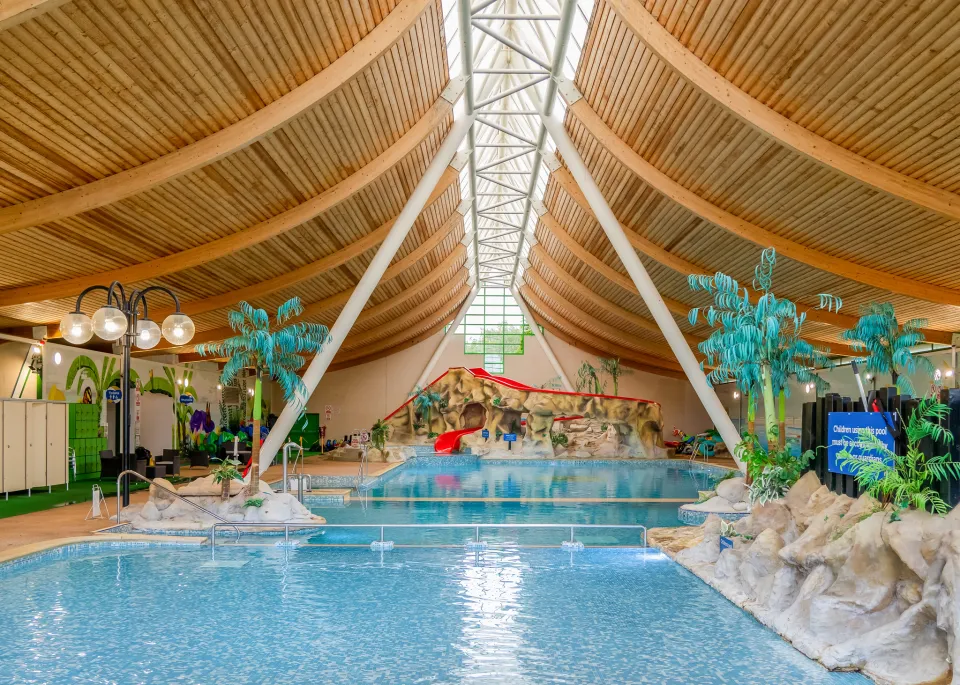
Vauxhall Holiday Park in Great Yarmouth has opened its doors to the public once more, boasting a new sports bar, darts and indoor adventure golf.
After a £5million cash injection, the holiday park has also been upgraded to include more kids’ play zones and high rope courses.
This means there is even more to tempt the whole family, from Bear Grylls escape rooms and a bingo hall, to the large indoor pool plus waterslides.
The freshly updated park will be included in the Hols from £9.50 restock TONIGHT, alongside thousands of other new holidays AND new holiday parks.


You can access these offers early by signing up to Sun Club for just £1.99 a month, where members gain automatic access onto the website one day earlier than everyone else, at just past midnight.
Once you’re a member, go to the Sun Club Offers hub and find the Hols From £9.50 page. Follow the link from the offers page, and you can book your break from midnight on Tuesday, March 31.
That’s a whole 24 hours headstart, as the Sun newspaper readers who are collecting tokens get access to the holidays on April 1.
Vauxhall Holiday park’s two to three room caravans sleep up to eight people, while the park also offers apartments and luxury lodges.
Great Yarmouth on Norfolk‘s east coast has long been one of the UK’s top beach resorts for holidaymakers seeking sand and sun.
The town boasts a soft sand beach known as ‘the golden mile’, with plenty of shops, cafes and restaurants within a short walking distance.
Smack-bang on the beachfront is Joyland, a historic amusement park with plenty of classic rides that are sure to fill you with nostalgia.
This colourful family theme park is perfect for little ones, home to mini rollercoasters and the award-winning Super Snails. The attraction is free to enter, with ride tokens costing £3 each.
For older kids, Great Yarmouth Pleasure Beach is sure to go down a treat with an exciting mix of white-knuckle thrills, child friendly rides and even a 4D cinema.
Undoubtedly the star of the show is a traditional wooden roller coaster, which first opened in 1932 and one of only two still standing in the UK.
All the ways to book a holiday from £9.50
There are five routes to book our Hols From £9.50
- Book online: Simply collect codewords printed in The Sun paper up until Wednesday, April 1. Then enter them at thesun.co.uk/holidays to unlock booking from April 1.
- Book with Sun Club: Join Sun Club at thesun.co.uk/club for £1.99 per month or £12 for the year. Go to the Sun Club Offers hub and click through to the Hols from £9.50 page. You do not need to collect any codewords or Sun Savers codes. Booking opens for Sun Club members on Tuesday, March 31.
- Book with Sun Savers: Download the Sun Savers app or register at sunsavers.co.uk. Then go to the ‘Offers’ section of Sun Savers and click ‘Start Collecting’ on the ‘Hols From £9.50’ page. Collect TWO Sun Savers codes from those printed at the bottom of the Sun Savers page in the newspaper up until April 1. Then enter or scan the codes on Sun Savers to unlock booking.
- Book by post: Collect TWO of the codewords printed in The Sun each day up until Wednesday, April 1. Cut the codeword out and send it back with the booking form – found in paper on April 1 or online at thesun.co.uk/holidays.
- Book with The Sun Digital Newspaper: Sign up to The Sun Digital Newspaper at thesun.co.uk/newspaper. Then download the Sun Savers app or sign up at sunsavers.co.uk, log in to Sun Savers with your Sun account details (the same email and password you use for your Digital Newspaper) and enjoy automatic access to Hols, without the need to collect Sun Savers codes daily. Booking opens on April 1.


Inside the fancy first class lounge at one of the UK’s best train stations
THE LNER first class lounge at London King’s Cross Station will reopen tomorrow after a plush makeover.
It’s the perfect place to relax with plenty of seating, private booths and complimentary food and drink.
LNER is the only passenger lounge at King’s Cross Station and it closed a few months ago for an upgrade.
It will reopen on March 31, 2026 with a brand-new look – and it’s very fancy.
Inside is an open plan area with dark red walls and pink coloured furnishings along with elegant lamps and little tables.
New to the lounge are six booths that have been designed to be private and are ticked away from the main lounge.


Each has charging ports, small desk and a lamp.
Anyone in the lounge can enjoy free food and drink which is available throughout the day.
In the morning, there’s a selection of pastries and in the afternoon there are cakes and muffins – and a range of biscuits and crisps.
There’s also fruit juices, tea and coffee.
Guests to the lounge can enjoy the snacks on the curved banquette seating, or nearby tables and chairs.
Thanks to the redesigning of the space, the capacity of the lounge has increased to 122.
Off the back of customer feedback, other additions include more luggage and storage areas and resigned the reception.
There are new screens too for platform information so customers shouldn’t miss their train – even if they’re relaxing in the lounge.
Colette Casey, Customer Experience Director at LNER, said: “The Lounge has been transformed into a modern, comfortable, relaxing area for our First Class customers to spend time in and enjoy before or after travelling with us, and we cannot wait to hear what they think of the changes.”
There is some disappointing news and that is that most travellers won’t be able to use the lounge as it’s only accessible to first-class LNER ticket holders.
But if you do have one of these tickets, then you can access the lounge from the ground floor located next to Waitrose.
Or head upstairs to the entrance on the mezzanine.
The lounge is open during the weekdays from 7am until 9.25pm.
Saturdays it’s open 8am to 8.15pm and 9am to 8.15pm on Sundays.
There’s also a free family zone with beach huts, a soft play area and a huge train set within London King’s Cross.
It’s right next to the Travel Centre and can be used by families who are booked onto trains departing the station – but it’s not limited to LNER customers.
Inside are four brightly-coloured beach huts complete with tabletop toys and games.
There’s a bespoke Hornby train set, keeping both big and little kids entertained.
And there’s a soft play area with a slide and a tiny black boulder doubling as a climbing frame.
Here’s another secret spot in London St Pancras…

Just opposite Kings Cross within St Pancras is somewhere else that you may not have stumbled upon – and you can get free drinks.
A hidden bar called the Booking Office 1869 is within the St Pancras Renaissance Hotel London.
Each day at 5:05pm, visitors can have a free drink.
According to a TikTok video posted by @thecuriouspixie: “A bill rings, a flame ignites and a bartender will perform a full rum punch ritual.”
This happens at 5:05pm because the hotel originally opened on May 5, 1873, but the booking office opened in 1869 – which is where the name comes from.
For more on trains – this could be the most glamorous train ride ever with a beautiful bar and onboard suites.
And here’s more on how the first ever direct trains from London to Switzerland are even closer to launching.

The new £379million attraction dedicated to chocolate opening in Europe with rides and hotels
A HUGE new multi-million attraction based on chocolate is opening in Europe.
Maison Cailler, in Broc, Switzerland, is the home to Switzerland’s oldest chocolate brand as well as being a museum.
And it has has revealed plans for a whole load of new experiences to expand the land.
One of the largest additions are the Cocoa Bean Greenhouses, which will have real cocoa trees for guests to learn about the processes of making of chocolate.
A new tasting hall and shop will become the Emporium, while a flying theatre like ride will let guests go on virtual flights throughout Switzerland.
Original parts of the factory dating back to 1898 are also being restored, with plans to open to the public for the first time as “chocolate theatres”.


And the current Atelier du Chocolate workshop is trippling in size to cope with the current demand.
Set to cost CHF400million (£379million), works could start this year with plans to open by 2030.
All of the new additions will turn the experience into a one-hour experience as long as six hours.
It hopes to more than double tourist numbers, from the current 500,000 to 1.2million a year.
Other plans include a new gondola connecting the attraction to the parking area, as well as new hotels.
President of the Gruyère-Chocolat Association behind the attraction, Olivier Quillet, emphasized that it wasn’t a theme park as they “wont have rollercoasters“.
Instead, he said: “We want to showcase the expertise, tradition, and heritage.
“From the moment they enter, visitors will be immersed in chocolate; they can taste it and watch it being crafted by master chocolatiers.”
Also in Switzerland is a Wonka-style chocolate attraction with a 30ft chocolate fountain.
In the mean time, here’s how to find the world’s oldest chocolate shop – and its easy to get to from the UK.
And of course there is the iconic Cadbury’s World, right in the UK.

World’s happiest country 2026 named with £17 flights from UK
Finland has been crowned the world’s happiest country for the ninth consecutive year in the World Happiness Report 2026, and it’s just three hours from the UK with direct flights from £17

Finland made the top spot for the ninth year running(Image: Miemo Penttinen – miemo.net via Getty Images)
The world’s happiest nation has been unveiled, and it’s just three hours from the UK with £17 flights available.
For the ninth year running, Finland, with its varied terrain and exceptional quality of life, has been crowned the happiest country of 2026. The Scandinavian nation claimed top spot in the World Happiness Report 2026, released by the Wellbeing Research Centre at the University of Oxford.
The findings emerged after a survey of approximately 100,000 individuals across 140 nations, with Finland singled out for freedom to make life choices, social support, and life expectancy. Additional factors thought to contribute to Finland’s satisfying way of life include its minimal crime levels, unpolluted environment, and work-life equilibrium, alongside its stunning natural splendour.
The Nordic nation boasts thousands of unspoilt lakes with sparkling waters and captivating woodlands that blanket over 70 per cent of the territory. The varied scenery is genuinely spectacular and undeniably elevates the standard of living for Finnish residents, providing abundant prospects for outdoor pursuits and wellness.
It’s not exclusively those residing in the nation who can discover its marvels. Finland has emerged as a sought-after holiday spot for visitors eager to observe the shimmering northern lights, trek through its remarkable landscape, or sample its extraordinary saunas, with over 3 million scattered throughout the country.
Whilst many associate Finland with its enchanting Lapland winter wonderland, particularly beloved during the festive season, the country is undoubtedly a year-round destination spanning its four distinct regions. From lakeside retreats to woodland escapes and seaside breaks.
Finland’s capital, Helsinki, makes for a perfect starting point for a pedestrian-friendly city break, boasting cutting-edge art galleries, legendary saunas, thriving eateries and stunning Nordic architecture. The city’s peninsula position, encircled by islands, provides convenient access to some of the nation’s finest natural attractions, from woodlands to islands and shorelines.
Direct flights to Helsinki in April start from £17 one-way, according to Skyscanner. Although you’ll need to layer up with temperatures hovering around 8C during spring, the city’s stunning scenery makes it well worth the journey, with countless walking routes through its peaceful, postcard-perfect landscapes.
Additionally, with an exceptionally strong sauna culture, you’re never far from a warming dip after a day’s exploration. Among Helsinki’s most sought-after destinations is Löyly, a striking waterfront sauna and dining venue, housed in a modern Nordic building with seaside panoramas.
Further notable Finnish destinations include Rovaniemi, celebrated as the Lapland gem, and Tampere, offering another stylish urban getaway. There’s also Kuopio for those seeking to retreat to the peaceful lakes, and Turku, famed for its historic castle and waterside dining establishments.
Beyond Finland, other Scandinavian nations, including Iceland, Denmark, Sweden, and Norway, also featured amongst the globe’s happiest countries. Meanwhile, Costa Rica, boasting its tropical climate, rainforests and beaches, secured fourth position, with European destinations commanding the list.
Top 10 happiest countries in the world 2026
- Finland
- Iceland
- Denmark
- Costa Rica
- Sweden
- Norway
- Netherlands
- Israel
- Luxembourg
- Switzerland
Do you have a travel story to share? Email webtravel@reachplc.com

Buchanan Poised at the Edge of Political Credibility Gap : Campaign: No matter what polls and receptive New Hampshire voters say, GOP pols insist he’s not electable.
NASHUA, N.H. — The problem for Patrick J. Buchanan, the silver-tongued Republican who would be President, is people like George Anthes.
“It seems that Pat Buchanan has truly caught fire,” says Anthes, the king of talk radio at station WMVU, introducing the candidate to a listening audience of flinty New Englanders. “There seems to be a change brewing.”
And so Buchanan begins his spiel: The national polls–three of five in August–that peg him No. 2 behind Senate Majority Leader Bob Dole of Kansas in the race for the GOP nomination. His recent endorsement by the Manchester Union Leader, the paper of record for New Hampshire’s hard-core conservatives. A credible showing in the recent Iowa straw poll–in his eyes, No. 3 with a bullet.
“We have crossed the threshold,” said a confident Buchanan, “of credibility and electability.”
Not so fast. Thirty minutes later, with the microphone off and the candidate heading quickly for the door, Anthes gets a little more honest. “I’d love to see Pat as President, but I have my doubts.” A pause. “He is picking up though.”
Well, sort of. Somehow, even when they suffer setbacks or fail to make headway in the polls, Texas Sen. Phil Gramm, ex-Tennessee Gov. Lamar Alexander and California Gov. Pete Wilson get taken seriously as potential nominees. Even when Buchanan is on a roll–like the one that fuels his hopes today–he is rarely accorded the same respect.
The reasons are plentiful. Buchanan rose to prominence as a commentator and author; although he ran for President in 1992, he has never won an elected office. He is an unabashed, uncompromising conservative, and thus a polarizing figure to many. And the disdain he does not hide for some in his own party has cut into his ability to raise money.
Buchanan and his followers are “outsiders, they’re populists,” said political analyst Kevin Phillips. “In terms of the Republican power elite, they’re not Buchananites. He could never be the nominee.”
Striving for Second
Buchanan, 56, is undeterred by such naysayers. And his quest, at least for now, is not to be No. 1, but to come in second in the early primaries and caucuses of 1996–a crucial three weeks, Buchanan contends, that will decide if he can raise the money to continue campaigning.
“I’ve got the resources to go three weeks,” said the candidate, who so far has raised about $3 million and spent an estimated $2.5 million. A bad showing in those crucial contests and contributions will dry up, leaving him at great disadvantage to his cushier competitors who have the money “to sustain the kinds of defeats I can’t.”
Indeed, as of June 30, in the most recent Federal Election Commission statistics available, Dole had raised $13.5 million and had $6.5 million cash on hand; Gramm had raised $16.8 million and had $7.3 million left.
Dole’s and Gramm’s years in public office have given them extensive lists of big-money campaign donors. Buchanan, on the other hand, appeals to ideologically inspired small donors and reports an average contribution of less than $40. “We are appealing to the grass-roots,” said K. B. Forbes, Buchanan’s deputy press secretary.
Buchanan is struggling mightily to claim the crown of true conservative in a crowded field of candidates, to fuse together the disaffected, the religious, the working class, Ross Perot voters, gun owners, the Christian Coalition. He is striving to be second.
“Dole might be ahead of me,” Buchanan contended, “but then the conservatives will say: ‘It’s Buchanan or Dole.’ If they say that, then I can beat Bob Dole.”
Hanging over the upbeat campaign for the past month was the ill health of Buchanan’s mother, Catherine, 83, who was injured in a fall. She died Monday, and Buchanan headed home from a campaign swing in the West.
One recent Sunday morning, he could be found striding into Washington’s National Airport, fresh from a hand-clapping, foot-stomping success at the Christian Coalition’s annual meeting. He was armed with a newspaper and briefcase, garbed in the politician’s standard-issue blue suit. He was headed to New Hampshire for three days of campaigning. No one paid a bit of attention.
This is the conservative made famous by his 1992 declaration of a cultural war “for the soul of America,” a battle that he will likely wage as long as he can breathe–and talk.
“Have you read that U.N. report?” he asked supporters at a Republican town hall meeting in New Hampshire later the same day. “They say there aren’t two sexes, there are five genders.”
He paused for laughter, warmed to his crowd and continued: “They started with heterosexual; I followed them there. They went on to homosexual; I was slowing down. They said transsexual, that’s the third one. I don’t understand the last two. I tell you this: God created man and woman, I don’t care what Bella Abzug says.”
In the circles Buchanan travels, that one always goes over well. So do his stands on affirmative action (against), abortion (vehemently against), the death penalty (oh, yes), the Department of Education (oh, no).
He would bury the North American Free Trade Agreement and erect an ideological wall around the nation to rival the actual wall he would build along the U.S. border with Mexico. No more foreign aid, no more global free trade. In Buchanan’s brand of economic nationalism, “we must stop sacrificing American jobs on the altar of transnational corporations.”
And he would tell the nation about his economic platform, unveiled in a recent Wall Street Journal essay, if only people would tear their attention away from his stand on social issues. His program, he contends, will make America “the enterprise zone for the entire industrialized Western world.”
The highlights: A flat tax on personal income. A flat tax for big corporations. A much lower tax for small ones. No more inheritance tax on family businesses and family farms. He will pay for the plan with a 10% tariff on Japanese imports and a 20% tariff on Chinese goods.
In New Hampshire, with its recent memory of economic privation, of local industries fleeing oversees, the Buchanan plan resonates.
Norma Moreau, 38, stands in front of Martha’s Exchange restaurant and brew pub here in Nashua, waiting for a friend so they can map out the future of her small-business career. Moreau said that she is likely to cast her ballot for Buchanan, even though she disagrees with his rock-solid stand against abortion. Everything else, she says, she likes–particularly the tariffs.
“I think there should be tariffs put on anything from another country,” said the owner of Imprints Ink, a struggling silk-screening firm. “We have to protect our own jobs. All we do is help other countries. Why don’t we take the money and help the United States?”
She has too many friends who have lost their jobs, run out of unemployment assistance, lost their homes. “It’s sad,” she said.
Familiar Territory
Buchanan used this New Hampshire despair, coupled with Republican anger at the 1991 tax increase shepherded by then-President George Bush, to garner an unimaginable 37% of the vote in the 1992 GOP primary here.
He still considers the region his, with its picket fences, clapboard houses, and guys named Charlie who wear shirts and ties when they go to work pumping gas at the local Shell station.
People here still smoke in restaurants; adults are not required to wear seat belts or motorcycle helmets. The state motto is, “Live Free or Die.”
At St. Marie Parish in industrial Manchester, where Buchanan took in Sunday Mass, the homily began with a tale about how burdensome laws in New York City required Mother Teresa to install an elevator for the handicapped in her refurbished community center. The result, according to the priest: She left.
“I notice Pat Buchanan is here,” said Father Marc Montminy to great applause. “Welcome in our midst.”
Charles M. Arlinghaus, executive director of New Hampshire’s Republican State Committee, contends that the race here is still wide open and that Buchanan still has a shot. “Anyone could win New Hampshire,” he said, “with a couple of exceptions I won’t name.”
Phillips concedes that Buchanan was underestimated in New Hampshire in 1992.
But the author of the American Political Report figures that a GOP presidential nomination for the conservative commentator and author is “unlikely.” Chances are, Phillips says, Buchanan will not even win 25% of the vote in the upcoming New Hampshire primary.
“I think 25% would be doing very well,” Phillips said. “It would probably put him second place, clearly put him third. He does have a chance of going that high. On the other hand, the chance of Pat lasting with a lot of pep into March is not very good. He doesn’t have the budget.”
But the lengthy race to choose a President is still in its very early stages, as was painfully evident as Buchanan campaigned in Concord Sept. 11.
Performing the mandatory New Hampshire dance of meet and greet the voters, he introduced himself to Bea McGinnis, 76, a loyal Republican, shook her hand and went on his way. And who does McGinnis like in the Republican race? “Well, you got Bill Wilson, running, right? He’s a Republican. And I like John over there,” she said, glancing at Buchanan’s receding back. “That’s his name, right?”
La Ganga reported this story while on assignment in New Hampshire.

Sky Sports TV picks: How they work & why they are headache for fans
Sky Sports has a position of dominance, with four of the five available TV packages.
It can combine its packs and make the system work as it sees fit.
Selections can be made in one package, but the time and day swapped with another.
This is how it can work.
Every team should be picked at least once. Arsenal and Tottenham are the only clubs who have not played on a Friday or Monday.
However, it does not necessarily mean Sky has not picked them in the slot.
Likewise, Everton have seven Friday or Monday games but two of those might be allocated to a different package.
When asked, Sky Sports and the Premier League would not discuss the breakdown of selections on a week-to-week basis.
But, as an illustration, BBC Sport can suggest how it could work from one weekend in January.
Let’s say Sky Sports picked Everton v Leeds as Saturday 17:30, and Bournemouth v Liverpool as Monday 20:00.
Liverpool could not play on the Monday because of the Champions League, so Sky Sports could swap the games.
Everton‘s game is on a Monday, but it was not picked for a Monday. So it may not count as part of the Monday allocation.
Sky Sports says the process involves so many bodies, including clubs and the police, that much of the decision-making is taken out of their hands.
The order of first, second and third-choice picks between Sky and TNT Sports can also have an influence.
It is clear that the five-appearance maximum is a just loose limit.
Supporters will simply see their club has been picked six, seven or eight times.
Manchester United will almost certainly be in Europe next season, so will join the band of clubs largely shielded from the Friday-Monday package.
But with at least eight Premier League clubs set to be in Europe, the issue is not going to go away.
If Tottenham stay in the Premier League they will go to the top of the list for Friday and Monday selection, given they have a large fan base and are viewed as a glamourous club.
Everton fans say the scenario is “damaging supporter accessibility, matchday experience, and long-term engagement”.
It seems unlikely to change next season.
Trump wants to ‘take Iran’s oil’: Can he, and what would that mean? | US-Israel war on Iran News
United States President Donald Trump said on Sunday that he wishes to “take the oil” in Iran, as the US-Israel war against Iran enters its second month.
On Monday, President Trump threatened to target Iran’s energy infrastructure, including oil wells, if Tehran does not reopen the Strait of Hormuz, which has been under a de facto Iranian blockade for weeks, triggering a global energy crisis.
The Trump administration has unveiled no clear goal behind its military campaign against Iran, one of the world’s biggest oil producers and under US sanctions for decades.
Here is more about what Trump says, how much oil Iran has, and whether Trump could take it.
What has Trump said about Iran’s oil?
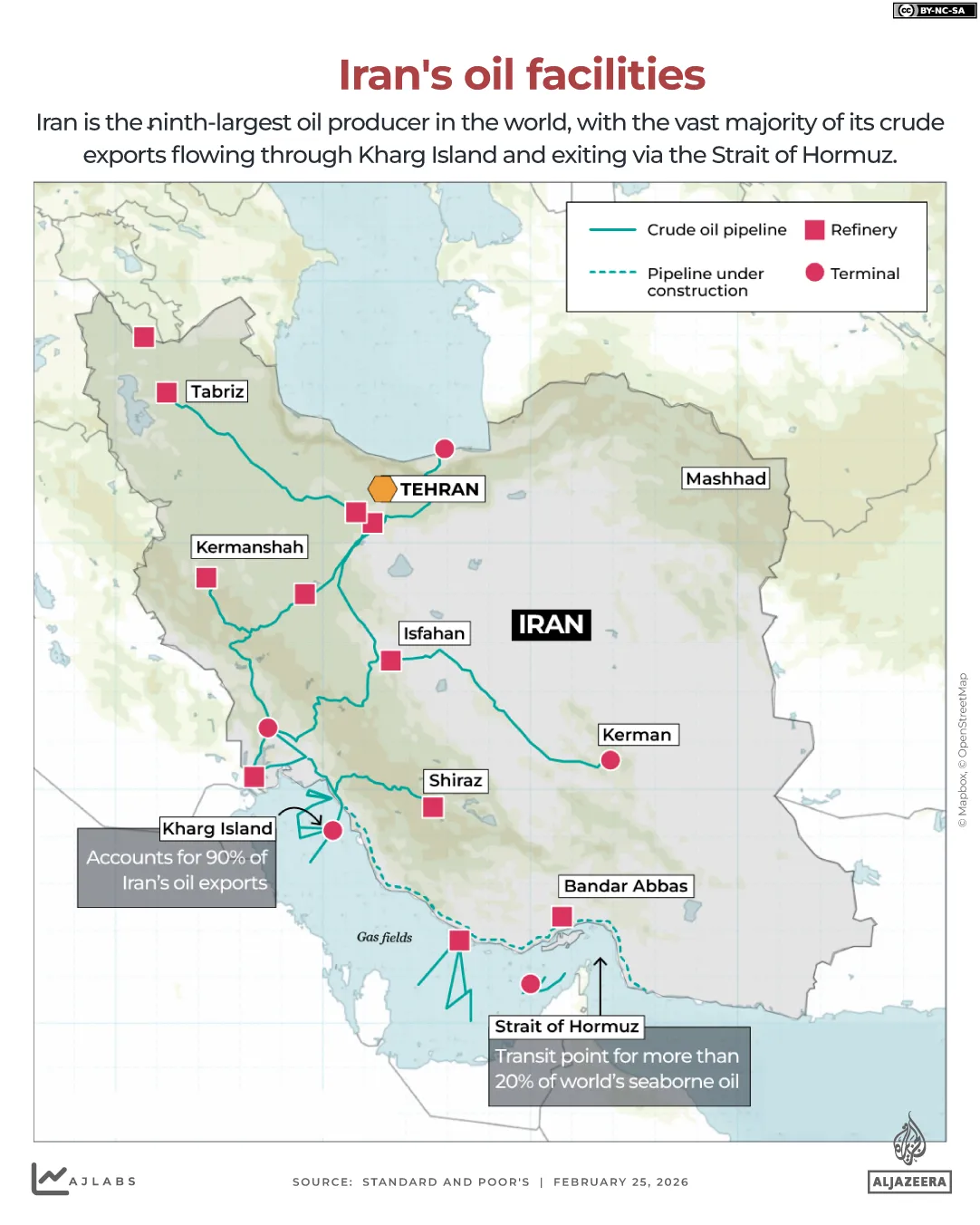
Trump told the Financial Times that his “preference would be to take the oil” in Iran and that US forces could seize Iran’s export hub at Kharg Island.
Kharg is a 22-square-kilometre (8.5-square-mile) coral outcrop in Iran’s Bushehr province. Closely guarded by the Islamic Revolutionary Guard Corps (IRGC), entry to the island is restricted to those with official security clearance.
Kharg processes 90 percent of Iran’s total oil exports, handling approximately 1.5 million barrels every day.
On March 14, Trump announced that the US Air Force had bombed Iranian military facilities on the island.
“For reasons of decency, I have chosen NOT to wipe out the Oil Infrastructure on the Island. However, should Iran, or anyone else, do anything to interfere with the Free and Safe Passage of Ships through the Strait of Hormuz, I will immediately reconsider this decision,” Trump wrote on Truth Social.
Critics say the Trump administration was emboldened by the success of its brazen military operation in January to abduct Venezuelan President Nicolas Maduro from Caracas. Washington says it is now in control of Venezuela’s oil exports.
Earlier this month, Trump claimed that 100 million barrels of Venezuelan oil had been brought to refineries in Houston, Texas in the US. He added that an additional 100 million barrels of Venezuelan oil were on the way.
Ties between Venezuela, which has the world’s largest proven reserves of crude oil, and Washington had deteriorated under former President Hugo Chavez, who decided to nationalise the oil sector. Relations collapsed further under Maduro, who succeeded Chavez in 2013. Venezuela’s current interim president, Delcy Rodriguez, has since opened the sector for private investment.
How much oil does Iran have?
Iran is one of the world’s biggest oil producers.
The country holds the world’s second-largest proven natural gas reserves and the third-largest crude oil reserves, according to the United States Energy Information Administration.
Iran holds around 24 percent of the Middle East’s and 12 percent of the world’s proven oil reserves, with about 157 billion barrels of proven crude oil.
It is the ninth-largest oil producer globally, and the fourth-largest within the Organization of the Petroleum Exporting Countries (OPEC), producing about 3.3 million barrels of crude oil per day.
Before the war, Iran was exporting around two million barrels of crude and refined fuel each day, though its exports dropped dramatically after Trump slapped sanctions on Iran in 2018 during his first term in power. The Iran nuclear deal signed under US President Barack Obama in 2015 – the Joint Comprehensive Plan of Action (JCPOA) – placed limits on Iran’s nuclear programme in exchange for sanctions relief in place for decades.
The US cut diplomatic ties with Iran after pro-Washington ruler Shah Mohammad Reza Pahlavi was toppled in the 1979 Islamic Revolution and the subsequent hostage crisis involving US citizens.
Can the US seize Iranian oil?
The Pentagon is preparing for limited ground operations in Iran, potentially including raids on Kharg Island and coastal sites near the Strait of Hormuz, according to US officials quoted by the Washington Post newspaper.
The plans, which fall short of a full invasion, could involve raids in special operations and by conventional infantry troops, the newspaper reported on Saturday.
However, even if the US invades or occupies Kharg Island, this would not give the US access to Iranian oil.
In order to access Iranian oil, the US would have to occupy Iran’s oil production sites and refineries. In essence, the US would need to occupy mainland Iran.

What would it mean if the US were to take Iranian oil?
In 2023, Iran’s gross domestic product (GDP) was around $457.5bn, according to World Bank data.
In the same year, Iran’s net oil export revenues were estimated at $53bn.
That export figure is equivalent to roughly 12 percent of Iran’s GDP, although export revenues and GDP are not directly comparable.
At the same time, if the US were to lift sanctions on Iranian oil after seizing it, it could lead to a flow of more Iranian oil into global markets, bringing down oil prices.
Iran is one of the most heavily sanctioned countries in the world. The US first imposed sanctions on Iran in November 1979, after Iranian students stormed its embassy in Tehran and took Americans hostage. The hostage crisis ended when dozens of US citizens were released after more than a year.
The US-Israeli war on Iran has sent global oil prices soaring. Benchmark Brent crude rose to more than 3 percent on Monday to $116 a barrel – the highest level in nearly two weeks. The oil price was about $65 per barrel before the war.
Has the US tried to interfere in Iranian oil before?
Yes; this is not the first time the US has shown an interest in Iranian oil.
In 1953, the government of Mohammad Mossadegh, Iran’s first democratically elected prime minister, was toppled in a CIA-orchestrated coup after he nationalised the British-controlled firm Anglo‑Iranian Oil Company (AIOC), the predecessor of modern-day BP.
Washington framed the operation – codenamed “Operation Ajax” – as a Cold War necessity to keep Iran and its energy reserves out of Soviet hands.
The coup restored and entrenched the shah’s rule, a turning point that still haunts Iran’s relationship with the West.
Neighbouring Iraq’s oil revenue is still effectively under US control more than two decades after the US invaded the Middle East nation. Iraq’s oil revenues are deposited into an account at the Federal Reserve Bank in the US before making it to Baghdad.

Brit lad books Airbnb stay in someone’s garage – and sums it up in 2 words
An Airbnb stay in someone’s garage doesn’t exactly sound like the height of luxury, but one British lad put it to the test and couldn’t believe what he saw when the shutter went up

(Image: Jam Press/@zacjonesliverpool)
If you tell someone you’ve booked a stay on Airbnb, most people will picture a pretty cottage or cosy flat. However for one UK holidaymaker, he actually booked out someone’s garage for an overnight stay.
Reviewer Zac Jones shared a video of his experience on TikTok, which has since garnered around 2.8million views, after he checked in for a stay at a garage in Bradford.
In the short clip Zac arrives for an evening check-in, standing outside the garage shutters. He phones up the owner who appears to open the shutter remotely. Instead of a grimy garage – which you’d rightfully expect to see – the shutters reveal a brick wall and front door.
Once inside, it turns out that Zac may have lucked out with what could be one of Britain’s plushest garages. He summed up his reaction in two words: “Pleasantly surprised”.
Instead of a car, storage boxes or a general mess that you’d find in most people’s homes, this garage has been decked out with modern flooring, and comes complete with a bed, bathroom with shower and toilet, a sofa, TV and even a fridge and microwave as reported by creatorzine.com.
Zac added: “Someone has put a lot of effort in. It’s got snacks, and tea and coffee-making facilities. Shout out to the owner of this place. This has been one of my most interesting check-ins in a while.”
As for keeping warm? The room appears to have all the modern comforts you’d need, including a radiator that Zac said was already on, with an extra plug-in radiator for those who might want extra warmth.
The garage in Bradford, West Yorkshire is available for £30 for a night. In the comments, overall people were fairly impressed with the offering. One person said: “For the price, it actually looks good.”
Another viewer added: “30 quid! “I’ve stayed in worse for 100.” A third agreed, describing the property as a “bargain”. However, a few pointed out that the garage doesn’t have windows which would leave them feeling a little closed in, with some questioning the planning permission that would have been obtained to build the room in the first place.
Of course if you are thinking of a stay in Bradford, there are plenty of other Airbnb stays you can book which are entire homes, and not a room in a garage. For a similar price to the £30-a-night garage stay, you can also find hotel rooms from £38 a night with Skyscanner.
Have you got a quirky stay or holiday story you want to share? Email us at webtravel@reachplc.com.

Rubio tells Al Jazeera that Strait of Hormuz to reopen ‘one way or another’ | News
United States Secretary of State Marco Rubio has told Al Jazeera that the Strait of Hormuz will “reopen one way or another” in the wake of the eventual end of the US-Israeli war with Iran.
The exclusive interview on Monday came as speculation has grown over a possible US troop deployment in Iran and as the effective closure of strait continues to roil global oil markets.
US boots on the ground would represent a new phase in the grinding conflict, which began on February 28 with US-Israeli strikes, even as US President Donald Trump has repeatedly said that the US was pursuing diplomacy with Iran.
Rubio again maintained there were “ongoing direct talks between parties in Iran and the United States, primarily conducted through intermediaries”.
Iran has repeatedly denied that talks were ongoing. Pakistan on Sunday said it would host direct talks “in the coming days for a comprehensive and lasting settlement of the ongoing conflict”.
Rubio added that Trump “has always preferred diplomacy and seeks to reach a resolution – something that could have been achieved earlier”.
The Trump administration had previously pursued indirect talks with Iran to curtail its nuclear programme. One round of talks was derailed last year with Israel’s 12-day war against Iran, which ended with US strikes on Iran’s nuclear facility.
A second round of diplomacy was underway when the US and Israel began the latest war.
Rubio again indicated the administration’s preference for regime change in Iran, which the US and Israel have so far been unable to achieve despite several high-profile assassinations, including the killing of Supreme Leader Ayatollah Ali Khamenei.
“We would welcome a scenario in which Iran is led by individuals with a different vision for the future, and if such an opportunity arises, we will seize it,” he said.
Nuclear and ballistic weapons
Speaking to Al Jazeera, Rubio further called on Iran to take “concrete steps” to end its nuclear programme and stop “manufacturing drones and missiles”.
He accused Iran of seeking nuclear weapons to “threaten and blackmail the world”, a claim Tehran has for years denied, maintaining its nuclear programme was only for civilian purposes.
On Monday, the Wall Street Journal reported Trump was considering a special forces operation to seize enriched uranium stored in Iran. Military experts have warned throughout the war that US and Israeli airstrikes alone would not be able to destroy Iran’s capabilities.
In a statement to Al Jazeera, White House press secretary Karoline Leavitt did not deny the report, but said: “It’s the job of the Pentagon to make preparations in order to give the Commander-in-Chief maximum optionality. It does not mean the President has made a decision.”
Rubio said Iran “must also cease sponsoring terrorism and halt the production of weapons that threaten its neighbours,” he said. “The short-range missiles launched by Iran serve only one purpose: to attack Saudi Arabia, the UAE, Qatar, Kuwait, and Bahrain.”
Turning to the Strait of Hormuz, which Iran has effectively closed to open traffic, Rubio voiced optimism it would be reopened when the conflict ends.
“The Strait of Hormuz will reopen one way or another once our military operation in Iran is over,” Rubio said. “The strait will reopen either with Iran’s consent or through an international coalition including the US.”
He threatened “severe consequences” if Iran closes the strait after the fighting ends.
The US has previously sought to raise a coalition to protect ships in the Strait of Hormuz, but has faced wariness from many traditional allies concerned over tacit entry into the conflict.
‘Our objectives in Iran are clear’
Rubio’s statements on Monday broadly reflected a list of demands put forth by Washington to end the war.
Iran has rejected the proposal, with Iranian President Masoud Pezeshkian releasing its own list of demands, including “recognising Iran’s legitimate rights, payment of reparations, and firm int’l guarantees against future aggression”.
For his part, Trump told the Financial Times in an interview published on Sunday that he hopes to “take the oil in Iran” including by possibly seizing the key export hub of Kharg Island.
“Maybe we take Kharg Island, maybe we don’t. We have a lot of options,” he added. “It would also mean we had to be there [on Kharg Island] for a while.”
The Trump administration has presented a carousel of objectives in the war, including degrading Iran’s military capability, preventing it from ever developing a nuclear weapon, and helping to foment regime change.
However, its endgame has remained unclear, with its final goals possibly diverging from Israel, which has pushed for more comprehensive regime change.
To date, at least 1,937 people have been killed in Iran since the war began, with at least 20 killed in Israel, 26 killed across the Gulf states and 13 US soldiers killed.
Rubio told Al Jazeera that the administration did not expect the war to drag on indefinitely.
“Our objectives in Iran are clear, and we will achieve them within weeks, not months,” he said.

Brook and Gia from MAFS Australia issue apologies as fans slam ‘disgusting’ behaviour
Married At First Sight Australia brides Brook and Gia have both issued public apologies on Instagram after viewer backlash over dinner party drama

Brook from Married at First Sight Australia issued a grovelling apology on Instagram(Image: Channel 4)
Married At First Sight Australia brides Brook and Gia have both issued extensive apologies online after viewers criticised their “vile” conduct during a fiery dinner party.
The duo clashed with several of their co-stars in awkward scenes which were broadcast on E4 on Thursday (March 26) evening, primarily targeting Alissa and Stella.
Numerous viewers expressed their disapproval on social media about how the disputes shouldn’t have been permitted to occur and both Gia and Brook have since spoken out and publicly apologised.
In response to the backlash, Brook accessed her Instagram page to release a statement, writing: “Last night and the past few episodes of Married at First Sight was an extremely difficult watch.
“What you saw last night was the worst version of myself and unfortunately Alissa and Stella were on the receiving end of that.”, reports OK!.
“I want to firstly sincerely apologise to Alissa and Stella for my words and the hurt that I have caused.
“My actions were appalling and not at all a reflection of the kindness and respect that you both deserve and I hope in time you can forgive me. I am truly sorry.
“To other couples in the experiment and audience who had to witness my behaviour, I am deeply sorry. Bullying should never be condoned and I am extremely embarrassed by the way that I acted.”
Brook continued to say that the dinner party was filmed in August last year and she’s since had time to reflect and learn from her actions.
She concluded: “This behaviour is not a reflection of who I am at my core and I hope that Australia will one day see this. I know trust is rebuilt through actions, not just words and I will continue doing the work to be better.
“I’m looking forward to moving on with my life with more kindness and hope that those watching will choose to do the same.”
Gia took to her Instagram Stories to express regret, penning: “I could speak on why I didn’t connect with Alissa, or things that were said and done to me, but two wrongs don’t make a right.
” Engaging in a cycle of dragging one another to deflect from our own behaviour is not something I want to participate in.
“I’m choosing to focus on growth. On being a better person. On working on my privately and being a present, loving mum. And a supportive partner. That is where my energy is going.
“To Alissa and Stella, I am genuinely sorry for the way I handled myself that night, and throughout the experiment. Regardless of what was said or heard, my delivery and my behaviour was appalling.
“I apologise for the disgusting language and the way I made you both feel. I am deeply sorry for the hurt I have caused you both, and I wish you nothing but peace moving forward.”
Married at First Sight Australia airs Monday to Thursday on E4 at 7.30pm

Popular English seaside city reveals £750,000 makeover of Victorian promenade closed for over a decade
ONE of the UK’s most popular seaside towns is undergoing a £750,000 revamp to its historic promenade.
Brighton has long been a popular destination for holidaymakers but its famous Victorian promenade has been partially closed to the public since 2012 following safety concerns.
Now, the promenade is expected to reopen this winter after an extensive restoration project.
Known as the Madeira Terrace, the historic promenade structure stretches 865metres-long with 151 large arches and was built between 1890 and 1897.
Parts of the cast iron railing decorations depict Poseidon – the Greek god of the sea – and Aphrodite – the goddess of love – as well.
The structure is also Grade II listed and thought to be the longest continuous cast-iron structure in the UK.
Read more on travel inspo

The first phase of the project includes restoring 28 of the arches between the Royal Crescent steps and Concorde 2, as well as installing a new lift.
The new lift will create step-free access to and from Madeira Drive.
Work on the lift has already begun with the next stage involving 20,000 bricks being placed around a frame that has been built.
Parts of the cast iron structure of Madeira Terrace have already been returned to the promenade after being sent to a specialist foundry for repairs.
The structure was originally built to create a sheltered promenade for Victorian tourists and was designed by Philip Lockwood – the same man behind the Bandstand, also known as the Birdcage, on Brighton seafront.
As wealthy visitors arrived by train, the terrace would allow them to promenade along the beach no matter the weather.
Over the decades it has become a key part of Brighton’s image as well as appearing in a number of productions such as films Wimbledon (2004) and TV series Dr Who.
Councillor Julie Cattell said: “We’re moving forward with very visible and eye-catching elements of the restoration, and I know residents and visitors are enjoying seeing the structure take shape.
“There has been huge interest in the work being done to create the lift and residents will continue to see real progress being made over the coming months.
“It is great that so many people are really captivated and engaged in this project – and have such goodwill towards the work being done.
“We know Madeira Terrace is a vital part of our city’s architectural heritage and is something people really care about.
“That is partly why we are taking a firm, heritage-led approach.
“Restoring the existing structure does take more time than simply replacing it – particularly with the testing required – but it is the correct approach.
“We’re determined to get this restoration right – and see Madeira Terrace once again become a thriving and important part of our iconic seafront.”
The renovations to the terrace are also part of a wider multi-million-pound project that will develop the area around the Brighton Centre – a conference and exhibition space where previously The Who, Queen and Bob Marley have performed.
Dubbed the Waterfront Project, work will expand Churchill Square shopping centre as well as establish a new conference centre and entertainment venue.
In 2024, plans were also submitted to widen the beach in Brighton’s neighbour – Hove.
The plans were later approved for the coastal defense works, which includes widening and adding new pebbles and groynes to the beach.
In other seaside news, here are seven great UK seaside towns with beachfront theme parks – and you can stay with Hols from £9.50.
Plus, our favourite beautiful British seaside towns with holiday parks you can book with £9.50 Hols.

Major cruise line cancels all sailings in April in ‘disappointing’ blow to customers
All impacted guests have been offered a full refund or a future cruise credit, and will be supported by the firm’s teams, who will provide rebooking options and assistance.

Celestyal Cruises’ Discovery vessel is currently docked in Dubai (stock)(Image: Supplied)
A major cruise line has cancelled all its April sailings as the impact of the Iran war on travel worsens.
Celestyal has confirmed the cancellation of all April 2026 departures as its ships wait to reposition to Athens, Greece.
The line’s fleet is currently positioned in the Arabian Gulf, with Celestyal Discovery in Dubai, UAE, and Celestyal Journey in Doha, Qatar. All guests and non-operational crew have been disembarked, while both vessels remain fully operational. The cruise line announced that staff and crew’s departure from the region will take place in accordance with safety guidance from the relevant authorities.
“Due to the ongoing situation in the Middle East, all sailings scheduled for April 2026 have been cancelled,” a statement from Celestyal read.
The next planned departures are:
• Celestyal Discovery – May 1, 2026 (3-night Iconic Greek Islands)
• Celestyal Journey – May 2, 2026 (7-night Heavenly Greece, Italy and Croatia)
Lee Haslett, chief commercial officer at Celestyal, said: “Our priority remains the safety and confidence of our guests, crew and partners. While we know this will be disappointing, taking this decision now provides greater clarity and flexibility for those affected. Our teams are working closely with guests and travel partners to support rebooking options and ensure a smooth transition, and we remain focused on returning to service in the Mediterranean as soon as it is safe to do so.”
All impacted guests have been offered a full refund or a future cruise credit, and will be supported by Celestyal’s teams, who will provide rebooking options and assistance.
READ MORE: European city with 6 of the best restaurants and the biggest theme park — not ParisREAD MORE: Southwest Airlines passengers slam new ‘fat tax’ policy as ‘discrimination’ and ‘stressful’
The news comes as senior figures from the energy, shipping and banking sectors prepare to meet Sir Keir Starmer as Donald Trump hinted the conflict with Iran could intensify.
Oil prices surged after the US president revealed he was weighing up a military operation to take control of Iran’s Kharg Island, a critical component of the country’s export infrastructure.
The Downing Street talks are expected to centre on Iran’s continued blockade of the Strait of Hormuz, which has severely disrupted a key shipping route for the oil and gas industry, as well as supplies of other goods such as fertiliser.
The gathering will include representatives from energy giants Shell and BP, shipping behemoth Maersk, maritime insurance specialist Lloyd’s of London, and banking heavyweights HSBC and Goldman Sachs.
Major General Richard Cantrill, the UK’s maritime operations commander, will also brief those in attendance on the latest developments in the region.
This follows the Royal Navy’s announcement that it is equipping the transport vessel RFA Lyme Bay with minehunting drones — a move widely understood to be aimed at giving ministers options for securing the strait once conditions allow.
Downing Street confirmed the purpose of the meeting was to hear directly from businesses and explore how the Government and private sector can join forces in tackling the ongoing conflict.
The No 10 summit is expected to be followed by a Cobra meeting on Tuesday, where senior ministers will assess the continuing economic damage caused by the war, Sir Keir has suggested. The summit follows Mr Trump’s comments that he could “take the oil in Iran” or potentially seize control of Kharg Island, the country’s main oil export hub.
Voters Reject Schwarzenegger’s Bid to Remake State Government
In a sharp repudiation of Gov. Arnold Schwarzenegger, voters rejected his most sweeping ballot proposals on Tuesday in an election that shattered his image as an agent of the popular will.
Voters turned down his proposals to curb state spending, redraw California’s political map and lengthen the time it takes teachers to get tenure.
With most of the votes counted, Californians were leaning against Proposition 75, his plan to require unions for public workers to get written consent from members before spending their dues money on politics.
The Republican governor had cast the four initiatives as central to his larger vision for restoring fiscal discipline to California and reforming its notoriously dysfunctional politics. The failure of Proposition 76, his spending restraints, and Proposition 77, his election district overhaul, represented a particularly sharp snub of the governor by California voters. It also threw into question his strategy of threatening lawmakers with statewide votes to get around them when they block his favored proposals.
On a Beverly Hills stage Tuesday night next to his wife, Maria Shriver, Schwarzenegger pledged “to find common ground” with his Democratic adversaries in Sacramento.
“The people of California are sick and tired of all the fighting, and they are sick and tired of all the negative TV ads,” he told supporters at the Beverly Hilton. He did not concede, saying instead that “in a couple of days the victories or the losses will be behind us.”
Dogging the governor, as it has for months, was the California Nurses Assn., which organized a luau at the Trader Vic’s in the same hotel. As Schwarzenegger’s defeats mounted, giddy nurses formed a conga line and danced around the room, singing, “We’re the mighty, mighty nurses.”
At labor’s election night party in Sacramento, union leaders were not in a forgiving mood, vowing revenge against the governor next year when he seeks reelection. They were particularly incensed that he had not given union members their due for what they believed to be a clean sweep of his agenda.
“He never apologized once for trashing every one of us,” said Mike Jimenez, president of the California Correctional Peace Officers Assn. “And I can tell you, tomorrow we’re not going to apologize for the way this election turned out. Tomorrow starts Round 2.”
California Teachers Assn. President Barbara Kerr told several hundred activists in the ballroom: “This governor wasted $50 million, and he does not have the courage to apologize to all of you for the trash he talked about you. He doesn’t have the courage to say he was wrong, that we’re the real heroes of California.”
For months, labor and its Democratic allies called Schwarzenegger’s agenda an assault on nurses, firefighters, teachers and other public employees. Labor’s $100-million campaign against the governor this year has battered his public image as he prepares to seek reelection in 2006.
Also on the ballot were four other initiatives. Voters were narrowly defeating Proposition 73, which would bar abortions for minors without parental notification. The state Republican Party promoted Schwarzenegger’s endorsement of the measure among evangelicals and other religious conservatives in a bid to boost turnout of voters who would back the rest of his agenda.
By a wide margin, voters also rejected rival measures on prescription-drug discounts. The pharmaceutical industry spent $80 million on a campaign to defeat Proposition 79, a labor and consumer-group proposal, and pass its own alternative, Proposition 78.
Voters also turned down Proposition 80, a complex measure to revamp rules governing the electricity industry. The initiative, sponsored by consumer advocates, tried to draw on public anger from the state’s 2000 energy crisis, but polls suggested that it confused voters.
Overall, the special election called by Schwarzenegger to win public validation of his agenda sparked a campaign that became the costliest in California’s history. All told, the yes and no campaigns on the eight initiatives spent more than $250 million.
Schwarzenegger put in $7.2 million of his own money. That brings his total personal spending on political endeavors to $25 million since he ran for governor in the 2003 recall race.
Former Gov. Pete Wilson, a political mentor to Schwarzenegger, watched returns with the governor at the Hilton. “It took courage to do it,” Wilson said of the special election. “Why run for office if you’re not going to do anything with it?”
But state Senate leader Don Perata, a Democrat from Oakland, said Tuesday night that Schwarzenegger had “sowed the seeds of his own demise” by taking on the full gamut of public workers, who make up more than half of the union members in California.
“He got a lot of really bad advice,” Perata said.
By the time voters started lining up at neighborhood polling places Tuesday morning, 2.2 million Californians had already cast their ballots by mail. The vote came after months of heavy television advertising, often with back-to-back spots prodding voters in opposite directions on the bewildering set of initiatives.
At a Rancho Palos Verdes polling station, David Berman, a 46-year-old doctor, captured the feeling of many fellow Democrats when he threw up his hands and declared the election pointless.
“It’s a waste of money,” he said.
In Baldwin Park, Renee Martinez, 50, spoke for the governor’s Republican loyalists, saying her goal Tuesday was “to back Arnold.”
“I’m his,” she said. “He tells you like it is, and I believe him.”
The election followed a steep political slide for Schwarzenegger. He sustained stratospheric popularity ratings in his first year as governor by maximizing his appeal as an outsider with a fresh take on the state capital. Facing a severe fiscal mess, he favored bipartisan compromise over pitched battles with Democrats and their union allies.
But late last year, he set in motion a cascade of political misfortunes by aligning himself more closely with the Republican Party, a costly move in a state that strongly favors Democrats.
He championed the reelection of President Bush, widely disliked in California, in a prime-time speech at the Republican National Convention in New York. Days before the divisive national election, he campaigned for Bush in Ohio, a crucial swing state.
In California, meanwhile, Schwarzenegger led the GOP push to wrest seats from Democrats in the Legislature, hoping to bolster his position there. Republicans failed to win any new seats, but the governor succeeded in antagonizing the Democrats who control both the Assembly and Senate.
In January, he deepened his troubles by taking on public-employee unions in his State of the State speech, further annoying the Democratic lawmakers who rely heavily on labor support. He demanded state spending limits and new districts for legislators, along with an overhaul of the state pension system. He threatened to call a special election if Democrats blocked his plans, saying voters would heed his call to “rise up” and reform Sacramento.
Further isolating himself, he went on to break his deal with educators to restore $2 billion taken from public schools to balance the previous year’s budget. At the same time, he kept his pledge not to raise income taxes, a popular stand with Republicans.
By winter’s end, unions had launched a punishing television ad campaign, pounding Schwarzenegger for breaking his promise on schools. The ads also exploited a bungle by the authors of the governor’s pension proposal: It would have denied survivor benefits to the families of firefighters and police officers killed in the line of duty. The governor abandoned it.
Personal missteps added to Schwarzenegger’s woes. He called Democratic lawmakers “girlie men” for bridling at spending cuts. When nurses heckled him, his response provided fodder for a scathing union television ad: “The special interests don’t like me in Sacramento, because I am always kicking their butts.”
To gain publicity as a champion bodybuilder and film star, Schwarzenegger had often made fun of people, but in politics the tactic backfired, said Laurence Leamer, author of “Fantastic: The Life of Arnold Schwarzenegger.”
“It began to turn against him, because his opponents were very, very shrewd and calculating in the way they exploited it,” Leamer said.
Unions made nurses, teachers and firefighters the face of their anti-Schwarzenegger campaign, which only intensified after lawmakers rejected his demands, leading him to call Tuesday’s special election. By last week, his job approval rating had dropped to 40% of likely voters in a Los Angeles Times poll, down from 69% a year earlier.
Schwarzenegger framed the election as a “sequel” to the recall, a package of proposals that would reform state politics and government.
But the centerpiece of his agenda, Proposition 76, offered political grist for the unions: It would have given more budget authority to the governor — a power grab by labor’s account — and make complex changes in the minimum school-spending rules that California voters approved in 1988.
His redistricting plan, Proposition 77, also faced an uphill fight, given California voters’ long history of rejecting plans to reshape the way political maps are drawn.
Schwarzenegger argued that state lawmakers should not be allowed to “pick their voters” by drawing district lines to protect incumbents.
Opponents countered that the governor’s plan to give the job to retired judges would put, for the most part, white elderly men in charge of drawing maps for an increasingly diverse state.
Schwarzenegger’s tenure proposal, Proposition 74, sparked fierce opposition from the California Teachers Assn., which put nearly $60 million into the fight. The governor said it was nearly impossible to get rid of bad teachers, such as one who showed an R-rated movie in the classroom. The union accused him of attacking the profession and jeopardizing the effort to relieve the state’s teacher shortage.
But his labor adversaries were most concerned about Proposition 75, the restraint on union campaign spending.
National union leaders flew to California in recent days to campaign against the measure, underscoring their fear that similar proposals in other states could further weaken organized labor, already torn by a schism in the national AFL-CIO.
“It’s a basic attack on workers in so many ways,” AFL-CIO President John Sweeney told reporters Tuesday in Los Angeles.
Unions have spent about $100 million on the campaign against Schwarzenegger’s ballot measures at a time of vigorous debate over how much money labor should devote to politics.
“We’re still doing what we need to do with collective bargaining and organizing new members, but it is definitely a drain on our treasury,” said J.J. Johnston, California area director of the Service Employees International Union.
Regardless of Tuesday’s results, Schwarzenegger sets out today on his yearlong quest for political recovery, both as governor and reelection candidate.
Other unpopular governors, such as Pete Wilson and Gray Davis, have overcome abysmal poll ratings to win second terms. Few strategists doubt Schwarzenegger’s capacity to do the same, and on Tuesday in Beverly Hills he seemed intent on pursuing the centrist path that worked for him in his early days as governor.
“I recognize we also need more bipartisan cooperation to make it all happen, and I promise I will deliver that,” he said.
Times staff writers Noam N. Levey, Dan Morain, Jordan Rau, Hemmy So and Kelly-Anne Suarez contributed to this report.
*
(BEGIN TEXT OF INFOBOX)
Past turnout
Fewer voters usually turn out for special elections than for regular elections. An exception occurred in 2003, when Gray Davis was recalled and Arnold Schwarzenegger was elected governor.
Turnout in previous statewide elections:
*–* *1962 78.73% *1966 79.20% *1970 76.19% **1973 47.62% *1974 64.11% *1978 70.41% **1979 37.38% *1982 69.78% *1986 59.35% *1990 58.61% **1993 36.37% *1994 60.45% *1998 57.59% *2002 50.57% **2003 61.20%
*–*
*Non-presidential general elections
**Special elections
Source: California secretary of state

Brits reveal why staycations are better than holidays abroad

BRITS’ favourite things about a staycation include shorter travel times, avoiding the airport – and proper pub lunches.
Supporting the local economy, the beautiful green countryside and taking scenic drives also featured in the top 30.

For 28 per cent, the stunning coastlines are the best thing about staying in the UK, with over a third (35 per cent) of Brits claiming they would prefer to holiday on home turf over going abroad.
Unsurprisingly, 78 per cent felt the weather could make or break a holiday in the UK.
Eurig Druce, managing director of Vauxhall, which commissioned the research of 2,000 adults, said: “The UK is such a wonderful place to holiday, and it’s been great finding out why people love it so much.
“Everyone has memories of holidaying in the UK from their childhood, and more than ever, Brits are choosing ‘staycations’ over going abroad, whether that be because of the beautiful scenery on our doorstep or the comfort of travelling in your own car.”
The study also found 62 per cent think the best type of staycation is a ’coastal getaway’, but 50 per cent also love a city break and 28 per cent enjoy camping or glamping.
With the south west of England considered the best place to get away for 21 per cent, followed by Scotland (15 per cent) and Wales (11 per cent).
The car is the most common mode of transport (80 per cent) for Brits going on holiday in the UK, with the average person travelling just under 206 miles.
It also emerged those polled, via OnePoll.com, are willing to spend an average of £391.11 per trip.
Although, 50 per cent said rising travel costs have made them more likely to holiday within the British borders.
The research also found 15 per cent have been asked by their children to be more environmentally friendly when planning their trips, and one in 10 (nine per cent) said sustainability is a priority for them when booking.
And of the electric vehicle drivers polled, 77 per cent said having charging points at their accommodation is important.
Eurig Druce from Vauxhall added: “The Grandland Electric has been designed with families in mind, with a spacious interior, large boot and an electric range of over 300 miles, making it the ideal vehicle for a ‘staycation.’
“Whether it is stunning coastlines, rural escapes or bustling city centres, the home nations have some fantastic places on offer for people to enjoy.”
THE TOP 30 THINGS BRITS LOVE ABOUT STAYCATIONS
1. Stunning coastlines
2. Shorter travel times
3. Visiting historical landmarks
4. Green countryside
5. Avoiding the airport experience
6. Woodland walks
7. Fish and chips
8. Learning more about the UK
9. Proper pub lunches
10. Taking scenic drives
11. Feeling refreshed
12. No luggage restrictions
13. Taking the dog
14. Full English breakfasts
15. Staying in unique places
16. Wildlife watching
17. Supporting local independent shops
18. Watching the sunset
19. Everything in a language you understand
20. Familiar shops and produce
21. Ice cream
22. Not having to worry about exchange rates
23. Live music
24. The people
25. Amusement arcades
26. Local festivals
27. Farmers’ markets and local produce
28. Proper tea
29. Trying regional dishes
30. Sleeping in without the guilt of missing the day


Quartet to miss Northern Ireland friendly in Wales
Ali McCann, Ruairi McConville, Paddy McNair and Bailey Peacock-Farrell will miss Northern Ireland’s friendly with Wales in Cardiff on Tuesday.
Source link

Monday 30 March Spiritual Baptist Day in Trinidad and Tobago
This article explores the history and significance of Spiritual Baptist Day in Trinidad and Tobago, a public holiday celebrated on March 30th. The faith originated from the Merikin community, consisting of formerly enslaved African Americans who relocated to the Caribbean following the War of 1812. The text describes how the religion blends Protestant Christian traditions with African rituals, characterized by energetic worship practices like singing and bell-ringing. For several decades, these practitioners faced legal persecution under colonial laws that banned their services, labeling them a public nuisance. Today, the holiday serves as a tribute to the community’s resilience and their eventual success in gaining religious freedom. The source …

Kenya’s former New York marathon champion Korir gets five-year doping ban | Athletics News
Korir tested positive for a drug that stimulates red blood cell production during out-of-competition tests.
Published On 30 Mar 2026
Kenya’s 2021 New York marathon champion Albert Korir has been banned for five years after he admitted using a banned performance-enhancing drug, the Athletics Integrity Unit (AIU) said.
The AIU said on Monday that Korir had received a one-year reduction from the original six-year suspension “based on an early admission and acceptance of the sanction”.
Korir, 32, tested positive for the synthetic form of erythropoietin (EPO) that stimulates red blood cell production during out-of-competition tests in Kenya in October 2025.
His five-year ban will run from January 8, 2026, the date he was provisionally suspended, until January 7, 2031.
Korir won the 2021 New York marathon in a time of 2hr 08min 22sec and came third in 2023 with a personal best time of 2:06:57.
He won the Ottawa marathon in 2019 and 2025.
Korir’s sanction comes nearly six months after compatriot Ruth Chepngetich, the current world marathon record holder was banned for three years after admitting the use of Hydrochlorothiazide (HCTZ), a banned diuretic used as a masking agent.
Kenya worked to clean up its image after a string of doping scandals around the 2016 Rio Olympics led to it being declared non-compliant by the World Anti-Doping Agency (WADA).
More than 140 Kenyan runners, mainly long-distance athletes, have been sanctioned for drugs offences since then.
In June 2024, Kenya handed out its first lifetime ban to marathon runner Beatrice Toroitich and a six-year ban to 10km record-holder Rhonex Kipruto.

Cardiff City damages claim over Emiliano Sala death dismissed
The club, which was claiming £104m in compensation, will now have to fork out about £400,000.
Source link

The ‘Ballet Reign’ YouTube channel brings Gen Z vibes to the art form
“Everyone is at least a dormant ballet nerd,” declares 22-year-old Eden Lim, while sitting for an interview in the suburban Dallas studio where she and her sister, Jordan, 24, film and edit their popular YouTube channel “Ballet Reign.”
Judging from the near-universal backlash to Timothée Chalamet’s recent bad-mouthing of ballet, Eden’s summation of the central tenet of their show may be true. With 67,000 subscribers in 166 countries and growing, the Lim sisters are mixing Gen Z humor and exuberance with astounding erudition to bring ballet to a new generation and fire up older, longtime fans.
With episode titles such as “Addictive Ballet Moments to Alter your Brain Chemistry” and promises like “This will increase your lifespan and double your morale,” they are on a mission to ensure that ballet not only survives but thrives.

-
Share via
Mirthfulness is the Lim sisters’ medium, but their message is serious. During each show, they parse video clips of great performances, often by explaining the history of the piece and giving detailed behind-the-scenes stories. They dissect the most famous pas de deux with trenchant insight and introduce their audience to the greatest dancers, including Natalia Osipova and Roberto Bolle. With signature, irrepressible enthusiasm, the sisters help viewers see precisely what makes the shows and dancers so extraordinary.

Eden, left, and Jordan Lim of YouTube channel “Ballet Reign” trained as professional dancers before deciding to focus on their show full time.
(Larsen & Talbert / For The Times)
A video clip featured in the “Addictive Ballet” episode shows New York City Ballet principal dancer Ashley Bouder launching herself into a jeté so high she seems to leave Earth’s gravity. In midair she manages to turn herself 180 degrees before being caught by her partner, despite her momentum seeming to drift into his arms like a feather blown by a breeze.
While watching the singular feat, Eden exclaims, “Call the news channels! We found a person who can actually levitate!”
Jordan says the goal is to make viewers feel equipped to say, “I understand what’s going on, and I can appreciate it, and I can appreciate that this was done well.”
“Ballet Reign” launched three years ago with modest hopes. The sisters sought a mere toehold in the YouTube universe, aiming for a narrow niche audience of fellow ballet fanatics (“ballet nerds”) ages 16 to 25. To their initial astonishment, they have attracted a far wider viewership spanning all ages, even followers who hitherto had only scant interest in ballet. They have drawn in many young children and older adults, with those 65 and up now their third-largest subscriber group.
The show has rapidly won acclaim from within and outside of the ballet world — perhaps because the depth and breadth of their knowledge makes it hard to shake the suspicion that they secretly are Ivy League professors.

The Lim sisters speak with sophistication about classic ballets and dancers they love — delivering their message through a whimsical show that has attracted fans of all ages.
(Larsen & Talbert / For The Times)
They comment with equal sophistication on ballet steps, choreography, history, musicology and the minute details of costume design. Eclectic references pop out of nowhere — a metaphor from quantum physics, an aside that the flute is the instrument whose sound is closest to a sine wave, that a serinette is an 18th century music box used to teach caged canaries to sing.
Even actual professors laud the show.
Nicolas Krusek routinely shows “Ballet Reign” episodes in his classes for adults on ballet history at Simon Fraser University in Vancouver. Krusek says what makes the show compelling “is the spirit of the videos, just the sense of joyousness and benevolence that they communicate, and a real sense of reverence for the art and the artists.”
John Meehan, a Vassar College professor of ballet and former principal dancer with American Ballet Theatre, calls their episode on Igor Stravinsky’s “The Firebird” ballet “amazing,” adding that it conveys at least as much information in much more palatable form than a “dry” university lecture.
Julie Cronshaw, director of the Highgate Ballet School in London, says even for learned, longtime balletomanes the show opens up a whole new realm of understanding and appreciation. For those weighed down by adult concerns, watching an episode leaves them feeling uplifted.
This is why Jordan believes “Ballet Reign” has attracted a significant older audience — and also because the sisters honor tradition.
“They’re looking at the content and saying, ‘These are pieces that I grew up watching. And these are the dancers that I adored when I was younger,’” Jordan says.
Eden says she hopes “it’s because our content, and the way we deliver it, is able to touch hearts.”

The Lim sisters keep a disciplined schedule, turning out polished, deftly produced episodes 52 weeks a year.
(Larsen & Talbert / For The Times)
The show also benefits from its high production values, with expertly edited clips from performances, clever blurbs of text and quirky cutaways to, say, a pole vaulter as an allusion to how high a dancer jumps.
Episodes generally begin the same way, with the sisters sitting behind a table with an old-fashioned radio-days microphone nicknamed “Mike-elangelo” between them. Eden kicks things off by announcing, “Ladies and gentlemen, this is Ballet Reign.”
A flash of superimposed text identifies them as “*Very certified*, extremely serious ballet experts.”
Jordan and Eden revel in each other’s company, finish each other’s sentences and play off each other with insightful or witty interjections.
“We grew up best friends from the beginning, and that’s never changed,” Jordan says.
They keep a disciplined, grueling schedule, turning out polished, deftly produced episodes 52 weeks a year.
Comments validating their efforts come in frequently. “You really helped me through a dark time,” reads one. Another notes, “I was going through a really difficult life transition and having your videos helped me get through.”
Jordan says, “That’s a sort of impact that I genuinely did not see coming.”
The sisters are openhearted and enjoy revealing ballet’s best-kept secrets, but they have kept a remarkably mysterious online profile. Until now, they have never even disclosed their last names, let alone anything about their background, education or experience.
There is also nearly nothing on the internet, and fans have long wondered about their credentials, including whether they are professional dancers themselves.
On the show the sisters certainly come across as if they were. Surprisingly, the answer is no — with an “almost” caveat.
The oldest of four siblings, Jordan and Eden spent nearly all of their childhood in Ottawa. From the time they were small the sisters beelined toward becoming professional ballet dancers. Jordan says when she was 4 she got up at the crack of dawn every day and put in a VHS tape of a ballet class that her mother, Mary Lim, had bought. With fierce determination, she performed tendus and relevés along with the older students on the tape.
Eden’s ballet fascination quickly followed. Mary says she soon realized she had no choice but to send them to ballet school.
“Obviously, if you look at a 4-year-old doing ballet at 7 a.m. every single day, you’re like, OK, let’s try lessons,” Jordan says.

Eden, left, and Jordan Lim of “Ballet Reign” are the oldest of four siblings and spent nearly all of their childhood in Ottawa before relocating to Texas to pursue their careers.
(Larsen & Talbert / For The Times)
By 2015, the girls needed a better ballet school than was available in Ottawa. Their parents packed up the family and moved to Dallas, where the pair enrolled in the Ballet Academy of Texas. Aside from ballet classes they were entirely homeschooled, but they had plenty of experience dancing in school performances, ballet competitions and with real companies.
Mary says the intent was “to give them an opportunity to move and carve their own path … We wanted them to find their passions.”
The moment the sisters had worked for all their lives arrived in 2020, when the time came to set off around the country — and the world — to audition for ballet companies. But the COVID-19 pandemic hit just as they got started, and almost everything in the ballet world shut down.
Jordan says the hiatus led them to reflect for the first time on whether their lifelong ambition was truly what they wanted. At the same time they groped for a way to put their passion for ballet to temporary use.
For years the sisters had fantasized, half-seriously, about having their own YouTube channel. Eden convinced an initially reluctant Jordan it was time to make the daydream real, and “Ballet Reign” premiered on Dec. 21, 2022.
The sisters say they convinced themselves they were using the show to take “a gap year” while waiting out the pandemic. As the first months passed, and their audience widened and sent glowing feedback, they began to realize they were having a big impact and touching lives. It dawned on them that this wasn’t just an interlude but their calling.
In an agonizing twist, just as the show had gotten underway, Jordan received word she had been accepted by a professional ballet company. She turned down the offer.
“It was one of the hardest decisions I’ve ever had to make,” Jordan says, but in retrospect the right one.