



Renoir, Cezanne, Matisse paintings stolen from Italian museum

March 30 (UPI) — Thieves made off with millions of dollars worth of paintings by Pierre-Auguste Renoir, Henri Matisse and Paul Cezanne in a heist last week at a private Italian museum, local authorities announced Monday.
The theft involved three paintings stolen from the Magnani-Rocca Foundation just south of Parma. The museum said the theft happened overnight March 22 into March 23.
The paintings were Les Poissons (The Fish) by Renoir, Still Life with Cherries by Cezanne and Odalisque on the Terrace by Matisse. All three artists were French
Renoir was a renowned leader of the Impressionist movement during the late 19th century, known for landscapes, figural paintings and still lifes. Cezanne, who worked around the same time as Renoir, was generally known as a Post-Impressionist whose interest in form and color would influence later Cubists and Fauves.
Working slightly later in the 19th century and early 20th century, Matisse was also considered a Post-Impressionist and an icon of the Fauvist movement.
All three artists were French.
“This is a loss that concerns the cultural heritage of all,” the foundation said in a statement posted to Facebook on Monday.
Italian public broadcaster Rai reported that the value of the three paintings was estimated to be just shy of $9 million, Sky News reported.
The museum said federal police were investigating the case.
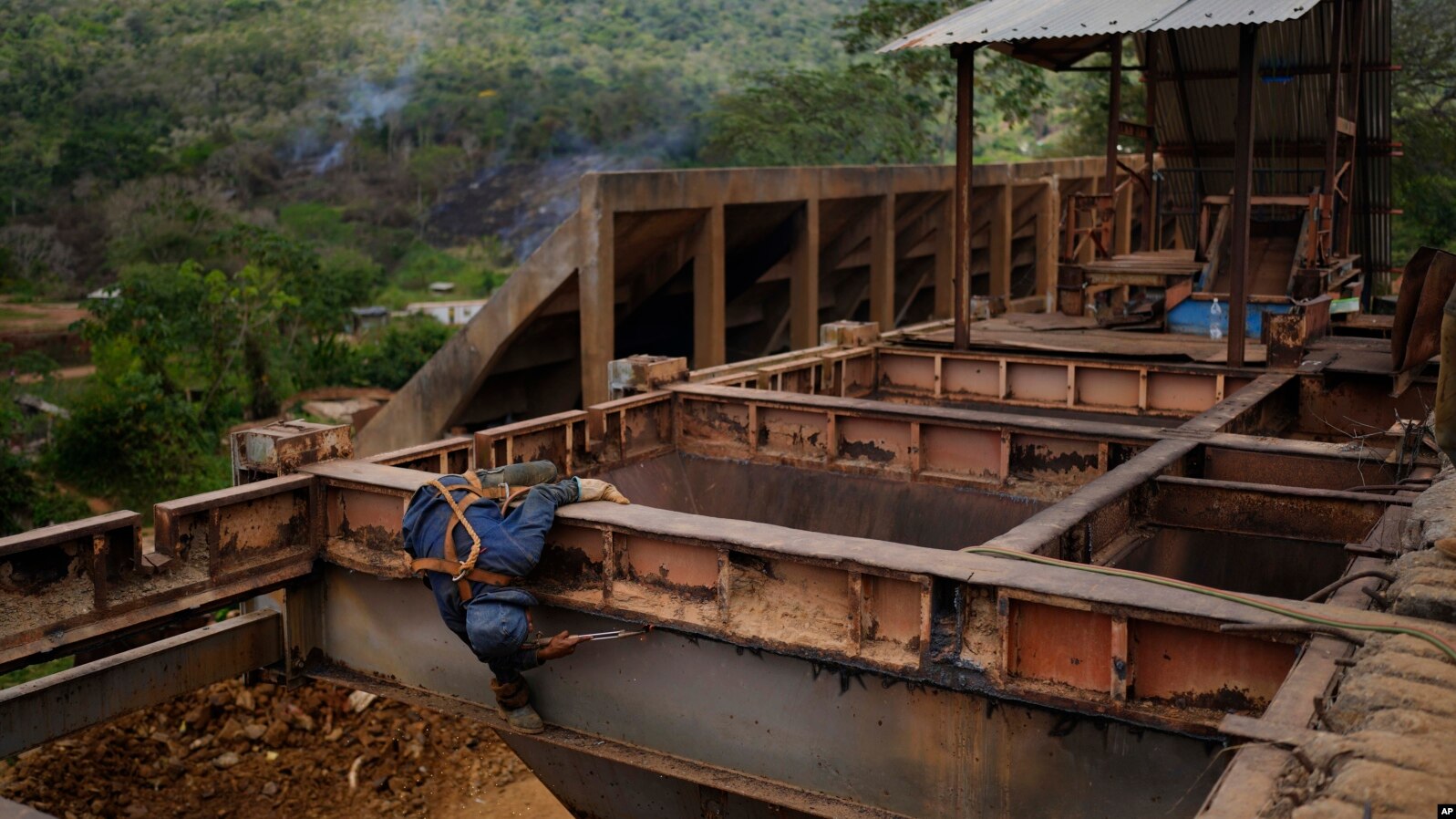
Trump Administration Issues New Licenses Opening Venezuela Mining to Western Firms
Venezuela contains extensive gold reserves in the east of the country. (AP)
Caracas, March 30, 2026 (venezuelanalysis.com) – The US Treasury Department has published three sanctions waivers related to the Venezuelan mining sector.
On Friday, the Treasury’s Office of Foreign Assets Control issued general licenses 51A (GL51A), 54 (GL54) and 55 (GL55) to authorize Western conglomerates’ dealings with Venezuelan minerals.
GL51A allows US entities to engage in operations to purchase, transport, and sell “Venezuelan-origin minerals, including gold.” However, it does not permit extraction or refining activities. The waiver replaced General License 51, which established conditions only for gold-related operations.
GL54 allows US entities to provide “goods, technology, software, or services” connected to mining activities in Venezuela. Finally, GL55 grants corporations permission to engage with Venezuelan state entities to negotiate contracts, but requires them to apply for a specific license before the contracts are enacted.
The latest US Treasury sanctions exemptions mirror recent licenses related to the Venezuelan energy industry, blocking transactions with entities from Cuba, China, Iran, North Korea, and Russia. They likewise mandate that all Venezuela-bound payments be made to a US Treasury-run account. Since January, the Trump administration has imposed control over Venezuelan oil exports, collecting revenues before disbursing a portion at its discretion to Caracas.
On Friday, Canadian conglomerate Roland Mineral Enterprises announced plans to “aggressively seek out and acquire interests in Venezuelan mineral properties.”
“Recent material events in Venezuela, including the new Draft Mining Law, make Venezuelan gold, silver and copper deposits and resources especially attractive for pioneering, transformative and rapidly adaptable resource companies like Roland Mineral Enterprises,” a press statement read.
Roland went on to disclose deals to access information on Venezuelan natural resource deposits and declare interest in gold projects such as Las Cristinas, estimated to contain over 14 million ounces of gold.
Western interest in Venezuelan minerals was boosted by a recent visit from US Interior Secretary Doug Burgum, who holds the natural resource portfolio. Burgum, accompanied by over 20 US and Canadian mining executives, held a meeting with Venezuelan Acting President Delcy Rodríguez and trumpeted the lucrative opportunities in the sector.
Burgum’s visit also saw US $100 million worth of gold bars shipped to the US in a deal involving Trafigura.
The negotiation of mining contracts remains contingent on an ongoing process to introduce new legislation. On March 9, the Venezuelan National Assembly preliminarily approved a new Organic Mining Law establishing favorable conditions and incentives for foreign capital.
Legislators have advanced in debating a second and updated version of the law, approving the first 55 of its 130 articles on Thursday. A final session is expected in early April. According to a draft of the latest version of the law seen by Venezuelanalysis, the bill establishes a new regulatory framework for mining at different scales, while also allowing private companies to take disputes to international arbitration.
The law expands conditions for private mining concessions, which can last up to twenty years and be renewed for two additional ten-year periods, and do not require National Assembly approval. Additionally, the executive can lower fiscal responsibilities for mining firms at its discretion. The law establishes 13 and 6 percent caps for royalties and a mining tax.
The law’s approval will repeal the current mining law, approved by the Hugo Chávez government in 1999, as well as a 2015 decree imposing state control over mining activities. Since 2015, the Nicolás Maduro administration looked to mining as a potential revenue source, particularly in the 112,000 square-kilometer Orinoco Mining Arc. Nevertheless, the sector was targeted by US sanctions, while the proliferation of irregular mining groups has generated environmental and human rights concerns.
Venezuela possesses vast proven reserves of gold, iron, and bauxite, as well as lesser quantities of copper and nickel. Analysts have also drawn attention to Venezuela’s significant reserves of coltan.
Venezuela’s mining reform follows a pro-business overhaul of the country’s Hydrocarbon Law. In recent weeks, Western energy giants Chevron, Eni, Repsol, and Shell have signed agreements for oil and gas exploration under the improved conditions of the new law. Acting President Rodríguez has touted the country’s reforms in lobbying foreign investors.
In parallel to oil and mining, Venezuelan authorities are also preparing to open the state-run electric sector to private capital. Acting President Rodríguez announced legislative reform plans, while a spokesman for the FEDECÁMARAS business lobby reported that Siemens and General Electric recently sent delegations to evaluate Venezuela’s electrical infrastructure.
Edited by Lucas Koerner in Fusagasugá, Colombia.

$157 billion in: Global streaming revenue tripled since 2020
Global streaming revenue surged to $150 billion last year, driven largely by an increase in prices by Netflix and other streamers, according to a new report.
In 2025, global streaming subscription revenue grew by 14%, reaching a total of over $157 billion, the report from Ampere Analysis found. In the last five years, revenue has tripled from the $50 billion seen in 2020.
Streamers continue to dominate the digital distribution market with rising monthly subscription fees , more consumers choosing subscriptions with ads, and platforms expanding their global reach.
“As the streaming market matures, the emphasis is no longer on pure subscriber growth but on extracting greater value from existing audiences,” said Lauren Liversedge, a senior analyst at Ampere Analysis. She noted that the growth is happening “particularly in the most competitive markets.”
Over the next five years, Ampere Analysis estimates subscription revenue will grow by another 29%, potentially reaching over $200 billion worldwide by 2030.
The U.S. is the largest driver of this revenue growth, as the country accounts for 50% of 2025’s global streaming subscription revenue, per Ampere Analysis. Netflix accounted for the largest revenue share in the U.S. at 14%. Last week, the company also announced a price hike, where its premium tier costs $27 a month. This marks the second time in a little over a year that the streaming service raised its fees.
“Our approach remains the same: We continue offering a range of prices and plans to meet a variety of needs, and as we deliver more value to our members we are updating our prices to enable us to reinvest in quality entertainment and improve their experience by updating our prices,” said a Netflix spokesperson in a statement.
It’s not the only streaming service to increase its prices, as Disney+, HBO Max and Apple TV made similar moves last year.
Recent data from Deloitte highlights some of the price sensitivity U.S. streaming audiences are experiencing. More than two-thirds of streaming subscribers are now opting for ads, marking a 20% increase from 2024.
That cost-conscious sentimentexpands beyond North America, reaching Western Europe, according to Ampere Analysis. The total revenue from ad tiers has risen rapidly across these markets over the past five years, up from less than 5% in 2020 to 28% in 2025.
But even as consumers demonstrate their willingness to pay less and watch ads, streaming platforms still benefit, making money from both subscription fees and advertising. When accounting for that ad revenue, streaming services generated closer to $177 billion in global revenue last year. Advertising is expected to become an even more important revenue stream for these companies, as ads alone could add $42 billion in annual revenue by 2030, per Ampere Analysis.

Krispy Kreme expects big returns from its refranchising efforts
Krispy Kreme expects big returns from its refranchising efforts
Source link
Trump says ‘serious’ talks are occurring, threatens strikes on Iran energy, water sites
WASHINGTON — President Trump threatened Monday to destroy vital Iranian energy and water infrastructure if a peace deal is not reached, as Tehran continued to deny negotiations were taking place and said it was preparing for a ground invasion following the arrival of thousands of American troops in the region.
If a ceasefire agreement is not reached quickly, the president said in a social media post, “We will conclude our lovely ‘stay’ in Iran by blowing up and completely obliterating all of their Electric Generating Plants, Oil Wells and Kharg Island (and possibly all desalinization plants!).”
The threats came within hours of the president insisting on Sunday night that diplomatic efforts would “probably” lead to a deal soon, and that Iran had allowed 20 more oil cargo ships to pass through the Strait of Hormuz as a “sign of respect.”
Trump said the United States is in “serious discussions with A NEW, AND MORE REASONABLE, REGIME in Iran” but offered no details.
Iran, however, continued to throw cold water on the negotiations Monday when Esmail Baghaei, the foreign ministry spokesperson, dismissed the Trump administration’s terms as “unrealistic, unreasonable and excessive.”
“I do not know how many people in the United States take American diplomacy claims seriously. Our mission is clear, unlike the other side, which constantly changes its position,” he said in comments carried by the semi-official Iranian agency Tasnim News.
Baghaei said that there have been no direct negotiations, but only messages through intermediaries stating that the U.S. wants to confer.
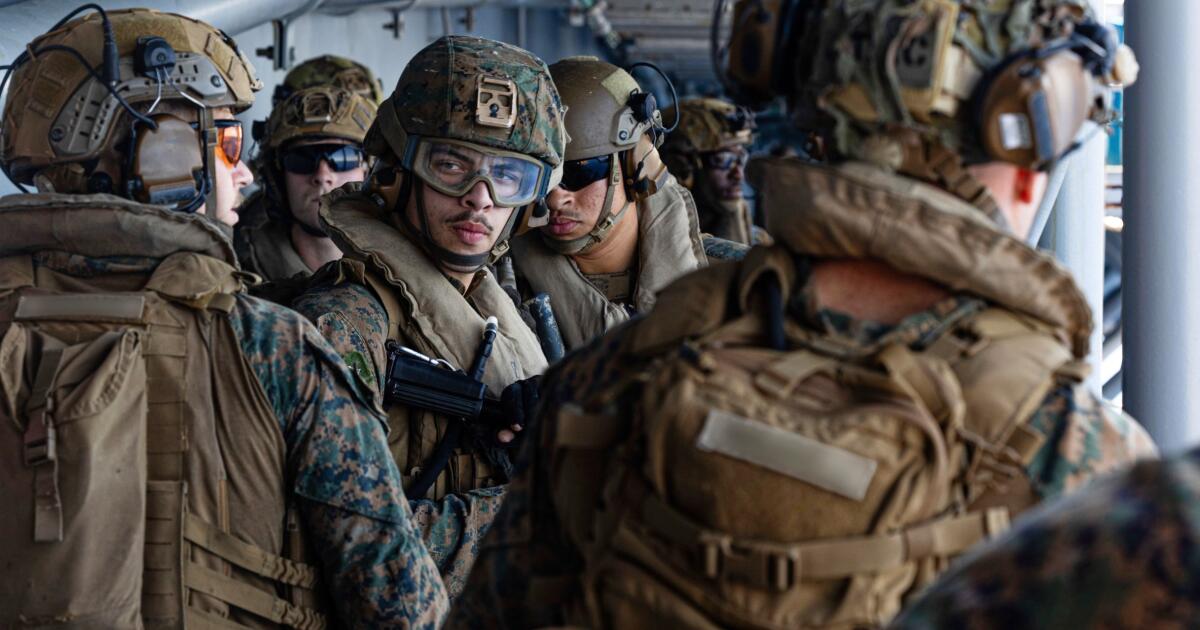
On Saturday, the USS Tripoli, a naval warship, arrived in the Middle East carrying about 3,500 sailors and Marines and a transport of fighter planes. Earlier this month, the San Diego-based USS Boxer and two warships from the 11th Marine Expeditionary Unit departed from Camp Pendleton to join the buildup of troops in the region.
The deployments have made Iranian diplomatic envoys even more dubious that American peace efforts are sincere.
“The enemy publicly sends messages of negotiation and dialogue while secretly planning a ground offensive. [They] are nothing more than a cover to hide preparations for a land invasion,” Iran’s top lawmaker, Mohammad Bagher Qalibaf, said in a statement Sunday.
He added that Iranian forces were waiting for the arrival of American troops on the ground to “set them on fire” and “punish their regional partners forever,” according to state media.
As officials in both Washington and Tehran strike increasingly hard lines, neighboring countries are desperate for a truce.
Egyptian President Abdel Fattah Sisi pleaded with Trump to stop the war during a speech at an Egyptian energy conference on Monday.
“I tell President Trump: Nobody can stop the war in our region in the gulf but you,” Sisi said.
“Please, Mr. President, please. Please help us stop the war. You are capable of doing so.”
Egypt, though not directly involved in the war, has contended with its repercussions on energy, fertilizer and food prices, not to mention disruptions to shipping income Cairo receives through the Suez Canal.
“Wealthy countries might be able to absorb this, but for middle-income and fragile economies, it could have a very, very severe impact on their stability,” Sisi said, noting that predictions of oil reaching $200 per barrel were “not an exaggeration.”
Egypt and Israel signed a peace treaty in 1979, which saw Israel return territory it seized during the 1967 war. Though the agreement is deeply unpopular with most Egyptians, it has held despite escalating tensions during Israel’s campaign against Hamas.
In December, the two nations formally announced a $35-billion agreement expanding Israel gas exports to Egypt. But the war with Iran has disrupted supplies, tripling the cost of imports, according to Egyptian officials.
Last week, the government ordered energy-saving measures for a one-month period, including early closing times for most commercial establishments as well as reductions in street lighting and allocations for government vehicles.
Jordan, another U.S. regional ally that is also energy-starved, took similar steps, enacting bans on air conditioning in government offices and private use of government vehicles.
Despite talks of negotiations, the fighting showed little sign of abating.
Trump’s call for peace followed a fresh round of U.S. and Israeli airstrikes on Iran Monday. Tehran retaliated by hitting a major water and power facility in Kuwait, and Saudi Arabia and the United Arab Emirates said they intercepted incoming Iranian missiles.
Two U.N. peacekeepers were killed on Monday when an “explosion of unknown origin” hit their vehicle near the village of Bani Hayyan, in south Lebanon.
The deaths mark the second fatal incident in two days involving the United Nations Interim Force in Lebanon, known as UNIFIL, a peacekeeping force established in 1978 and which later monitored cessation of hostilities between the two nations.
UNIFIL also reported a peacekeeper was killed Sunday night when a projectile exploded in a UNIFIL position.
“We do not know the origin of the projectile. We have launched an investigation to determine all of the circumstances,” a UNIFIL statement on Monday said.
Meanwhile, Israel continued its bombardment of Lebanon, hitting areas near the capital and in the country’s south. One strike targeted a Lebanese army checkpoint, killing a soldier, the Lebanese military said. Lebanese authorities said on Monday that the death toll since hostilities broke out between Hezbollah and Israel earlier this month continues to rise.
The Israeli military said one of its soldiers was killed in a Hezbollah anti-tank missile attack in southern Lebanon, which also wounded four other soldiers. Six soldiers have been killed since Israel restarted its campaign in Lebanon.
Hezbollah rockets also killed two civilians, according to Israeli health authorities.
Israel’s fire and rescue service said a fuel tanker and a building at the oil refinery in the northern city of Haifa were hit by debris from an intercepted missile, according to a report from Israeli daily the Times of Israel.
It was unclear whether the missile was launched by Iran, the Lebanese Shiite group Hezbollah or Yemen’s Houthi rebels.
Deaths from the conflict continue to rise, with 1,900 people killed in Iran, over 1,200 in Lebanon, 19 in Israel and 13 U.S. military members. Millions of people have been displaced from their homes in Iran and Lebanon.
Ceballos and Quinton reported from Washington, Bulos from Beirut.

Sean McVay hopes Puka Nacua will learn from off-field incidents
PHOENIX — Rams coach Sean McVay could not help repeating himself when asked about star receiver Puka Nacua.
“I trust this kid’s heart,” McVay said three times Monday at the NFL owners meetings.
But do the Rams trust Nacua, who has been at the center of several off-the-field situations, enough to break the bank with a massive extension?
Last week, a woman filed a civil lawsuit against Nacua, alleging that on New Year’s Eve he made an antisemitic statement during a group dinner and later bit her shoulder. Nacua’s attorney told The Times before the lawsuit was filed that Nacua “denies these allegations in the strongest possible terms,” and that Nacua would “pursue all available legal remedies in response to these false and damaging statements.”
Last season during a livestream, Nacua criticized NFL officials and made a gesture regarded as antisemitic. Nacua apologized, and the Rams and the NFL issued statements condemning antisemitism and discrimination. But after the Rams’ loss to the Seattle Seahawks, Nacua criticized officials in a social media post from the locker room. The NFL fined him $25,000.
Last week the Seahawks signed receiver Jaxon Smith-Njigba to a record-breaking extension that includes $120 million in guarantees, putting Nacua in line to possibly match or exceed that deal.
If Nacua’s off-the-field actions become a pattern that does not reflect well on the organization, are the Rams hesitant to invest in the 24-year-old star who led the NFL with 129 catches?
“The play on the field is amazing, and then with what the play has dictated and determined there is a responsibility in terms of representing all things not exclusive to just that,” McVay said. “He knows that, those are expectations and we are hopeful that … this will be an opportunity for him to learn and grow, and we are hopeful that he’s a Ram for a really long time.
“But he understands what the responsibility is, not exclusive to just the production on the field.”
Nacua was one of several topics McVay addressed during a 30-minute session with reporters.
With the return of quarterback Matthew Stafford, the reigning NFL most valuable player, and the addition of star cornerback Trent McDuffie and Jaylen Watson, the Rams are expected to be a favorite to play in Super Bowl LXI at SoFi Stadium.
The Rams traded for McDuffie, an All-Pro who won two Super Bowls with the Kansas City Chiefs, to a four-year extension that includes $100 million in guarantees, making him the highest-paid cornerback in NFL history.
McVay said McDuffie “can do a lot of things” that made Jalen Ramsey such a force when he helped the Rams win Super Bowl LVI.
“He’s rare,” McVay said of McDuffie. “And then he’s a rare human. … You can’t find anybody that doesn’t love this guy and what he represents.”
Like McDuffie, his former Chiefs teammate, Watson has played in three Super Bowls, winning two titles.
“He’s been in a lot of big-time atmospheres and environments,” McVay said of the 6-foot, 2-inch Watson, “and he’s got some of the length.”
McDuffie and Watson join a secondary that includes safety Quentin Lake, who signed an extension in January, and safety Kam Curl, who re-signed with the Rams this month.
The secondary was not the only position group the Rams considered remodeling.
McVay confirmed a report that the Rams explored trading receiver Davante Adams, who led the NFL with 14 touchdown catches.
“If we felt like it was best for our team, we would have done that,” McVay said, “but we didn’t think it was best for our team, so excited about being able to move forward with him.”
McVay said he spoke directly with Adams about the situation.
“I addressed what those conversations were even though they never really got too far but I did want to acknowledge it,” McVay said. “He’s a grown man, and I think he understood that this is a part of this business.”
McVay said he would “love” for Jimmy Garoppolo to return as Stafford’s backup. But Garoppolo remains a free agent.

Atlanta Falcons quarterback Kirk Cousins prepares to take a snap against the Rams in December.
(Danny Karnik / Associated Press)
“At this point, when there hasn’t been a decision, it feels less likely than likely, but I don’t want to rule that out,” McVay said of Garoppolo’s possible return for a third season with the Rams.
McVay said that he has communicated with Kirk Cousins and his agent about possibly signing with the Rams. McVay coached Cousins in the NFL with Washington.
“He’s a guy that I have familiarity with, history and a lot of reverence for because of the gratitude from our experiences together.”
Staff writer Steve Henson contributed to this report.
TSA begins getting back pay Monday, but it’s not permanent

March 30 (UPI) — Some employees of the Transportation Security Administration started getting back pay that they’re owed for the partial government shutdown Monday, easing long lines at airports.
“Most TSA employees received a retroactive paycheck today that included at least two full paychecks covering pay periods 4 and 5 today,” Department of Homeland Security Acting Assistant Secretary of Public Affairs Lauren Bis told USA Today on Monday. “A small population might see a slight delay due to a variety of reasons, including financial institution processing times or issues with their direct deposit. We are working aggressively with USDA’s National Finance Center to complete processing for the half paycheck they are owed from pay period 3 as soon as possible.”
“Working without pay forced more than 500 officers to leave TSA and thousands were forced to call out,” Bis added.
The funding lapse has lasted since Feb. 14, causing extreme delays at airports because some TSA workers quit or called out sick.
Democrats have refused to vote for any package that doesn’t rein in Immigration and Customs Enforcement and Border Patrol. On Friday, the Senate voted unanimously to pass a measure that would fund Homeland Security but not ICE and Border Patrol. But the House rejected it, saying it wouldn’t pass it if ICE isn’t included.
In response, President Donald Trump ordered that TSA workers get paid through other Homeland Security funding. That pay is temporary. Congress began a two-week recess on Friday. They return April 14.
Angela Grana, regional vice president of the union that represents TSA workers at 38 airports in the Rockies, told USA Today that she got paid for working 200 hours. She said the overtime and holiday hours she worked didn’t appear to have been counted properly, and that she believed she was taxed at a higher rate than usual because of the lump-sum payment.
“This is all back pay. That doesn’t tell me I’m going to get paid in the future,” she said.
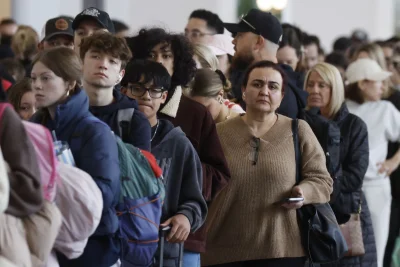
By late Monday morning, TSA lines were down to less than 30 minutes at most major airports, CNN reported.
George Bush Intercontinental Airport in Houston had 75-minute security lines before dawn Monday. Hours later, that number dropped to as low as 9 minutes.
At Hartsfield-Jackson Atlanta International Airport Monday, travelers waited 3 minutes.
About 500 workers, or about 0.82% of total personnel of 61,000, have quit since the partial shutdown began.
Atlanta TSA officer Aaron Barker told CNN he believes the number of agents will keep dropping.
“I do think that there’s going to be a mass exodus of officers,” Barker, the president of the American Federation of Government Employees Local 554, told CNN.
“Officers have gone into debt. Credit has been shot,” he said. “Officers have been evicted. Cars have been repossessed.”
“Back pay is not going to address [the] systemic issues,” he said. In the past five months, “We have been shut down 50% of the time.”
“This is a natural disaster that was caused by Congress,” said Johnny Jones, secretary-treasurer of the American Federation of Government Employees, which represents TSA workers.
“The vast majority are devastated,” he said. “My colleagues, they’re like, ‘Our finances are ruined.'”
The Systemic Failures of the Abuja-Kaduna Train
Panic came last for Mubarak Hassan* on the evening of March 28, 2022.
It’s been four years since the terrorist attack on the Abuja-Kaduna train, but the memories still echo. After one of his clients was arrested by the Nigeria Customs Service (NCS) for alleged forgery, Mubarak travelled to the Abuja Headquarters to process his administrative bail. He was supposed to return on the same day he finished the process, but decided to spend one more night.
“My client’s family friend, who also happened to be a lawyer, insisted that we catch up with the evening train,” he recalled. Tired and exhausted, Mubarak was sleeping on board when the sound of a blast reached him.
“The next thing I heard was a voice saying that we were under attack and we should turn off our phones and lie down, which we all did. At first, I did not panic. I was asking myself if it was real or maybe the train just shifted its position, and it was misinterpreted to be an attack,” he said.
His worst fears were confirmed five minutes later, after the first gunshot tore through the wind, hitting the body of the train. Everything was happening so fast that he was struggling to process it.
The attack on the train carrying 970 passengers happened at approximately 7:45 p.m. in Katari, Kaduna State, northwestern Nigeria. The terrorists used explosives to halt the train before firing and kidnapping passengers. This incident, which resulted in ten deaths, multiple injuries and kidnappings, later caused the Nigerian Railway Corporation (NRC) to pause its services.
“We started to hear the screams of passengers from other coaches and the footsteps of people heading towards our coach for safety, because the gunfire started from their side. Other people in our coach started to scream as well, but a man who identified as a Colonel with the Nigerian army said that our screams would draw the attention of the terrorists to us, so we tried to keep calm,” Mubarak told HumAngle.
Mubarak, like many others in the coach, started praying. Panic heightened as the terrorists reached the coach before them. Their voices echoed through the train as they asked people to keep quiet and lie down.
“We heard a gunshot, and one of them asked the other terrorist who shot someone why he did that in Hausa, and he said it was because the man was showing he wanted to survive more than anyone else by raising his head, but the other terrorist said no one should shoot again, they should just take people and leave.”
A few minutes passed before they started to hear other gunshots, and the man who said he was a colonel said some soldiers came to rescue them. When the soldiers arrived, they told them not to panic and asked them to check the other coaches for their relatives.
“Our coach was one of the safest, except for a medical doctor who was killed as a result of a stray bullet; no one else was shot. The first thing I saw when I stepped outside was the dead body of a man. Some other people were bleeding due to some injuries they sustained. We started helping the soldiers evacuate the passengers. The younger ones, like us, helped carry the children and elderly ones on their backs, after which the wounded ones were also moved,” he added.
They had to climb up a sloppy hill because of the train’s position. They rested for about 20 minutes before they trekked to the main road. The army later transported them to the 44 Hospital in Kaduna around 5:30 a.m. They were checked, and people like Mubarak, who sustained no injuries, were discharged by 6 a.m.
That was the last time Mubarak used the train.
But this attack is only one of many issues that eroded passengers’ trust and raised concerns over the years. Train stops in the middle of nowhere, derailments, ticket racketeering, and other issues continue to affect passengers. Despite these pending issues, the NRC increased the number of trips per day earlier this month in “response to growing passenger demand.”
This increase was what encouraged Sada Malumfashi, a journalist and researcher, to take the train again on March 12, something he had avoided recently due to the stress of trying to get a ticket for the single train ride per day. He didn’t expect to end up in an accident that day.
According to the NRC, the accident occurred when a rear locomotive made contact with a passenger coach due to a coupling issue, and no casualties were reported. The train arrived 38 minutes behind schedule due to the accident.
“We left on time around 7:15 a.m. It was a smooth ride at first. When we reached Jere, they made an announcement, but we couldn’t hear it from our coach. I drifted off to sleep but woke up to a banging noise. I fell off my seat, but I didn’t hit anything,” Sada said. “Due to the previous history of attacks, people were terrified, many were shouting, praying loudly, and panicking.
Sada assumed the train was going to derail, and he tried to hold onto whatever he could. “My second thought was that maybe it was a terrorist attack, I crouched waiting for gunshots just in case because I did some reporting on the last train attack that happened in 2022 and talking to people who were directly on that train gave me a front row seat to that experience and what they described was very similar to what was happening at the moment,” he said.
When he didn’t hear any gunshots, he got up and began checking his surroundings. The place was in disarray: luggage was on the floor, and things spilt from the cafe section at the end of their coach.
“I saw one of the workers lying on the floor, and his leg was bleeding. There was also a pregnant lady crying as she hit her stomach. Someone couldn’t stand up because he hit his back, and another person behind me was bleeding through his mouth,” he explained.
The incident happened about two to three minutes from Asham station on the Abuja-Kaduna corridor, so he walked to the station. Some military personnel arrived to check the accident, which gave passengers some comfort. After a while, a Hilux car, assumed to be from the NRC, came to check the accident.
“They didn’t communicate anything, but they took a look around. At that point, many passengers were out of the train and were hanging around outside. They turned on the engine, and we started moving again. It was a sombre trip back to Kubwa,” he said.
A long history of train glitches

It was one such stop that made Chidera Egbo’s first visit to northern Nigeria in December 2021 a journey wrapped in terror. After he was posted to Kaduna for his National Youth Service, he tried to get a direct car from Enugu, southeastern Nigeria, where he was based, but unfortunately, he could only get one to Abuja, where he was advised to take a train. He was excited as it was his first time on a train.
Things went well at first, and he started a conversation with the girl sitting next to him. “While we were chatting, we heard an explosive sound and the train started to slow down. People started to talk, but I couldn’t understand anything as they were mostly speaking their native tongue,” he said. He panicked along with them. The incident happened about 10 to 15 minutes away from the Kaduna station.
He noted that there were some armed security personnel on board that day. He remembered seeing some people lying on the floor, and he followed suit.
When the train stopped, he started to regret getting on it, and his fear worsened when someone said it was a terrorist attack. The lack of official clarification about what was happening also increased his panic. Even an hour after their supposed arrival time, no help was sent from the station. When the lights went out, a man in their coach suggested they lie down and shut off their phone lights because everyone assumed they were under attack. During that period, some passengers panicked, thinking they saw lights they believed were people approaching. They turned out to be distant static lights.
“There was zero reception, and I had no way of contacting people to let them know what was happening. After a while, they told us that help was coming from Abuja.” The lack of phone reception rattled many of the passengers, who were worried about their families back home and had no idea what was happening to them. Some passengers demanded information. Eventually, people started to lighten up when an NRC staff member announced that help would be arriving in about 30 to 40 minutes.
After a while, some people started demanding to be let out of the train due to the heat. It took hours for the help to arrive, and the train kept stopping as it was being pushed towards the Kaduna station. He didn’t make it to his destination till after 2 p.m.
The experience left him rattled. He now feels anxious every time he has to travel. “I don’t travel often, but when I do, I am always on edge and feel like I am going to be attacked,” he said.
Despite the impact of this incident, it was mostly not covered by the mainstream media.
For some people, like Rashida Idris*, stories like this make them sceptical about using the service. “ I always hear people say it gets faulty midway, and I prefer to use the car due to how inconvenient the train is. But then, on the 2nd of August 2025, my mum, older brother, and I decided to use the train to travel down to Abuja, and it turned out to be the worst decision we made that day,” she said. It started with a slight burning smell that worsened as the train moved on, then slowed and later stopped completely.
The train, which was supposed to leave at 7:00 a.m., didn’t arrive until 2:30 p.m, and they ended up missing the event for which they were travelling. Drinking water ran out on board, and the air conditioners stopped working, leaving people anxious and dehydrated in the heat.
“It was very chaotic, and we were very hungry and tired. The train just stopped mid-way, no explanation from them whatsoever,” she told HumAngle.
She hasn’t used the train again since that day.
Sometimes, these stops harm passengers, as in August 2025, when they caused a derailment en route to Kaduna. Khadija Zahradden, who was on that train, said a loud noise woke her up from a nap.
“The train started shaking, and there was a loud sound before it fell. Some parts of the train, like the coach I was in, were slanted, but it didn’t fall down completely. I remembered it was raining,” she said.
The passengers got off the train and began trekking to a nearby military camp. A lot of security personnel came over, including fire service and road safety officials. She recalled that a military aircraft was patrolling and left with some of the people.
“The military personnel also carried passengers to the closest bus stop, where we got cars to complete our trip,” she said.

Dysfunction, ticket racketeering
Bukar Hassan* was on the first-ever train ride on that route, and for the past few years, he has used it to shuttle between the two states. But now, the journey lacks enthusiasm, and his experience keeps worsening, with tickets becoming harder to obtain by the day.
“First, you have to know someone reliable whom you probably have to keep on your payroll in anticipation of a future occurrence. Usually, an NRC or TPS staff member guarantees an offline ticket,” Bukar said. “Where they are unable to secure one themselves, they look to a syndicate that has created jobs for itself through this channel. You pay double the price, and most times, the ticket is issued in another person’s name, and you probably have to do with what is available, not your preferred class of travel.” This causes the 62-year-old man major concern.
Apart from the barriers to getting tickets, technical breakdowns occasionally occur, and the experience is usually alarming, especially if the train stops in the middle of nowhere. The security concern is also a major issue for him, as are the stops, which affect his commitments, causing delays in scheduled meeting times and travel schedules.
This is also worsened by insufficient communication, leaving passengers to fill in the blanks when something happens.
“Passengers hardly know what the issues are and rely mostly on hearsay. In some cases, apologies are not even tendered,” he lamented, noting that the recent creation of a passenger’s forum has provided passengers with an avenue to lodge complaints.
HumAngle investigations reveal that when complaints are made, organisation staff respond promptly via the WhatsApp forum, but this has not reduced the number of issues plaguing travellers, and many people are unaware of this channel. A disabled passenger who spoke to HumAngle, but preferred not to be named, said the organisation is making efforts to make rides more accommodating for disabled passengers, with customer service representatives approaching them to discuss their needs. However, Bukar showed concern that the uncontrollable number of bag carriers on and off the train poses a security risk.
“Security personnel handling weapons on board in the midst of plenty, even though comforting, can easily be manhandled. Sometimes, desperate passengers board without tickets. This is a major concern as you are not sure who is a genuine traveller,” he said.
“There are too many ad hoc staff on board doing nothing but jumping up and down and making noise. Some are only waiting for the arrival to carry passengers’ bags. Thirdly, a single channel of buying tickets only is grossly inadequate. A more reliable, functional app should be available for passengers to buy tickets in advance. I personally do not see the rationale for restricting ticket purchases to only 48 hours. It does not make any business sense. These will actually be more efficient, and also reduce the offline business,” he added.
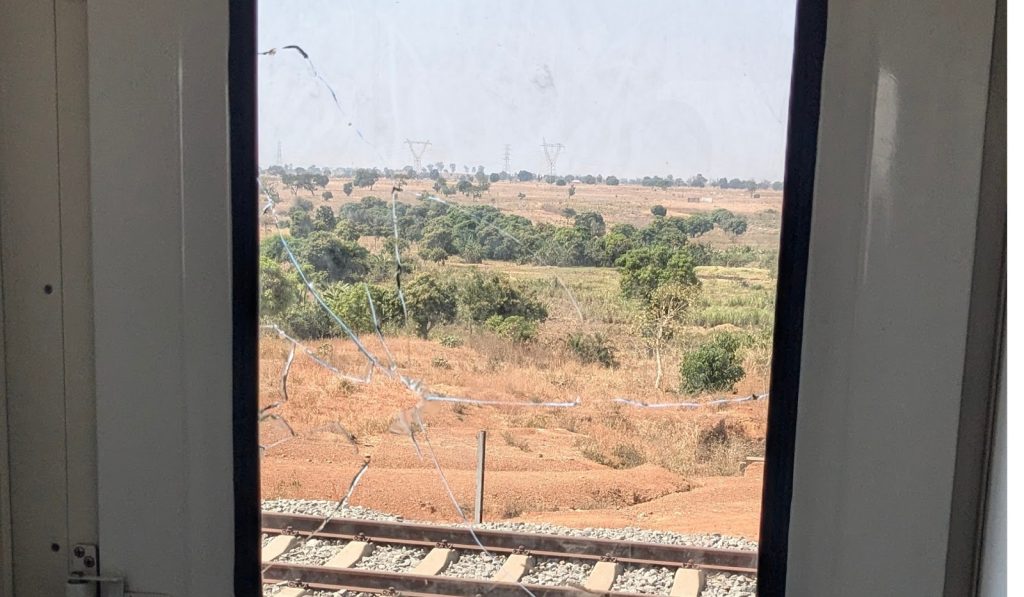
Bukar also noticed that, during trips, stones are sometimes thrown aboard by nearby communities. He thought the incident had eased over the years, but HumAngle investigations show that this problem still persists: on December 24 2025, a stone was thrown aboard, shattering a window, which almost hit a passenger with her baby.
Bukar continues to use that service, as the train is still the most convenient means of transportation for him at the moment.

Like Bukar, Hassan Yunus*, who travels twice or three times a month, depending on his schedule, faces a similar problem. His family lives in Kaduna, while he works in Abuja. He frequently uses the train, which he considers the easiest and fastest way to travel between the two cities.
“As a frequent passenger, I experience long stops quite a number of times, sometimes 30 minutes, sometimes an hour, depending on the cause, but the management and the operation team will work to resolve the situation. To me, the management is trying, just that they need to improve as a revenue-generating corporation,” he said.
He believes the biggest barrier travellers face is ticketing issues with the transport payment solutions. He thinks the issue is fueled by poor customer service and system downtime. This also affects passengers’ quality of life, as many would have to stay awake to buy a ticket in the middle of the night. In a few instances, he was wrongfully debited after booking a ticket, and the process to get a refund for the missing ticket is usually stressful.
Another passenger, Balarabe Bello*, says getting tickets from Abuja to Kaduna is often a struggle. “I often notice that sometimes they hold the servers, and you will struggle to get a ticket, especially the business class tickets. Even if you are on the app by 12:00 a.m. when tickets are supposed to be released, it just keeps loading, and you can’t buy them,” Balarabe said.
In such cases, most people will attempt to buy directly from the train station workers, and a business class ticket, which usually goes for ₦6500, can sell for ₦8500, and he had heard of people being sold tickets as high as ₦15,000.
“My mum travels often as she works in Kaduna, and she is always complaining of one issue or another, such as uncomfortable seats and other technical issues. One time when I was on it, the train stopped in the middle of nowhere for like 10 to 15 minutes as a result of a burning smell coming from under the train,” he said.
To confirm claims of ticket racketeering by passengers, a HumAngle reporter followed the process of purchasing tickets outside the official channel. We interacted with NRC officials selling tickets through the back door to desperate passengers, short-changing the government. We also found that some individuals who are not working in the ticketing office also profit from the existing dysfunction by charging passengers far above official rates. The back-door procedure is simple: you provide your full name, phone number, and National Identity Number (NIN), then pay extra for the tickets. Although there’s a website to purchase tickets, many passengers are unaware of it, leaving them with no option but to patronise the racketeers.

Halimat Akande* knew that getting tickets for the Kaduna-Abuja train could be a hassle, so she tried to buy tickets earlier for a Monday trip. She wanted to purchase two for herself and her mother at 5:00 a.m. on Saturday, but there weren’t any seats available.
“My mom contacted someone who claims to work there. He said we should pay ₦5,000 for each ticket,” she said, a claim HumAngle confirms to be true. The price for economy or standard tickets on the website ranges from ₦3,600 to ₦ 3,800, depending on the seating arrangement. This option is the most affordable means of transportation from Kaduna to Abuja, as even car rides cost ₦9,000.
The NRC official, whom Halimat contacted, had mistakenly bought Abuja-Kaduna train tickets instead of Kaduna-Abuja. He reassured her they would receive their proper tickets before their trip, asking them to arrive early on the travel date, as a worker from the Abuja station would hand them the tickets at the train station.
They arrived an hour before their trip. “We stayed outside as we couldn’t check in since we didn’t have a ticket. A man approached us and told us we were not supposed to be standing there, and if we didn’t have a ticket, we should get out of the station.” Halimat and her mother both felt embarrassed and left the station to prevent further discomfort.
When the man arrived, he asked them to wait a little longer, claiming he had their tickets ready. However, when he brought the tickets, both were registered under different names. She also noticed that one ticket was for the previous date, but he assured them it wouldn’t be a problem. After he spoke to some people, they were allowed to board with the one valid ticket.
The man said he would get her a valid ticket before the journey started, but he never did. “After we boarded, my mum sat down in the assigned seat, and I sat down in the then-empty seat beside her, but the original owner came, and I had to stand up. I kept moving to about four or five random seats, but the rightful owners came up to claim those seats,” she told HumAngle.
She met her colleague, who was in the same predicament when he came to claim her mother’s seat as his own; the details on his ticket matched hers exactly.
“He told me that he was even going to take the road, but someone called him to tell him they had gotten him a ticket, only to give him the same exact ticket my mother had, which further complicated the situation. I think he ended up standing for a while,” Halimat said. Eventually, her mother offered her a seat and tried to find an empty one on the train, but it took a while before they got one for Halimat.
She was nervous and anxious, even after she got a seat, especially during the ticket verification round that happens during the trip. When the man reached her, she switched off her phone and claimed the battery had died. Fortunately, he bought her story, and she was able to escape for a moment. But her anxiety remained as the man told her to charge her phone before he returned, which he never did.
“Even though I knew they couldn’t drop me while the train was in motion, I was worried they might report or arrest me because I had broken a rule.” The whole experience was terrible, and she started advising people not to buy tickets offline from station workers.
For Nabila Shehu*, her trip to Abuja on July 25 2025, took a turn for the worse when she arrived at the train station and discovered that the number of passengers exceeded the original arrangement.
“It seemed their server had issues that day, and some people were debited but didn’t get a ticket. Due to the high number of people that were affected, they just opened the train and asked us all to get in,” Nabila said.
She couldn’t get a ticket earlier and called someone at the train station, who promised to get her one, but due to the pending issue, he couldn’t process any tickets for her and her four children.
“We couldn’t get seats, but one of the staff members on board gave me his stool and also helped me get another. I couldn’t sit, and the children took turns,” she complained, noting that the trip was difficult and exhausting, as they arrived late. The air conditioner was barely working, she added, and the train was moving too slowly due to an overload. “It was a terrible experience, and I avoided the train when I was returning.”
However, when she used the train again in November, she encountered no issues.
HumAngle sent an email to the NRC seeking clarification on issues raised by passengers regarding dysfunction and ticket racketeering in the Abuja-Kaduna train operations. We have yet to receive a response. Meanwhile, the risks of travelling the 198km between Abuja and Kaduna remain high, as passengers are forced to choose between the road, which has been under construction for the past six years, and the train, despite ongoing problems.

Peter Purves: ‘Doctor Who is not a patch on what it was’
Doctor Who star Peter Purves is thrilled that fans will finally get to see two long lost Dalek-themed episodes from the 1960s on TV this Easter

Peter Purves played the Doctor’s assistant Steven Taylor in the 60s, see here with William Hartness and Maureen O’Brien
Doctor Who star Peter Purves is thrilled that fans will finally get to see two long lost Dalek-themed episodes from the 1960s on TV this Easter.
The actor and presenter, who played Tardis companion Steven Taylor, reckons the classic black and white series is far better than the rebooted modernised version. He said: “It was the golden era. I don’t think the show is a patch on what it was.”
The BBC is broadcasting two episodes from the story The Daleks’ Master Plan with the late William Hartnell as The Time Lord over the Easter holidays. The 12-part story originally went out in 1965 with more than nine million viewers tuning in to watch the wheeled exterminators try to take over Earth.
READ MORE: Zoe Ball and Amy Dowden shed tears over murder and tragedy in ‘exceptional’ BBC seriesREAD MORE: Nicola Sturgeon breaks down in tears over miscarriage in emotional TV moment
Ensure our latest headlines always appear at the top of your Google Search by making us a Preferred Source. Click here to activate or add us as your Preferred Source in your Google search settings.
But the Beeb then wiped the tapes – believing viewers no longer wanted black and white programmes – and the story has not been broadcast since. Over the years a handful of recordings of the missing instalments have been found and restored. But recently two more episodes – number one and number three – were discovered in a cardboard box in a collection of vintage films. They will finally be aired on BBC iPlayer some 61 years after their original broadcast.
The cast included Purves, who was an actor before he became a household name a few years later thanks to his role as a presenter on Blue Peter. He now claims that the sci-fi show, which launched in 1963, was in its prime back then even though the technology was basic and prompted jokes about wobbly scenery and monsters made from egg boxes.
Purves, 87, maintains that those early stories were more “intelligent” than they have been since the 21 st century reboot, featuring the likes of David Tennant, Jodie Whitakker and Ncuti Gatwa.
He said: “I was in it at a time when I think the show, technically, wasn’t very clever. The limitations were in the technology of the time. We didn’t do great sweeping magnificent film sequences.They were very short – we recorded as if it was live. We didn’t stop the tape even if a mistake was made.”
He said that the Tardis “disappearing and reappearing” was as good as the special effects got, at the time. “It was a very different show, but it was led by extremely good scripts,” he explained on The Chatterbox Redux Podcast,. “There are intelligent scripts. They worked on all sorts of levels. And I mean for me, that was the golden age. When they regenerated to Patrick and went to Jon Pertwee, I mean all things then became possible.”
He is less impressed with the modern version. “I mean the whole thing has become so technical and I don’t think it’s a patch on what it was.”
Peter stayed on the BBC show for a year and appeared in ten stories in total. Despite leaving Doctor Who in 1966, Peter revived his character Steven in 2014 for a long running series of audio adventures by Big Finish.
The company started to produce Who-themed stories when the BBC show was cancelled on TV in 1989. Over the years it has attracted a huge fan base as it has brought back many old faces including Tom Baker, Colin Baker, Bonnie Langford, Katy Manning, Sylvester McCoy and Paul McGann.
“I find the television stories less impressive than most of the stuff we’ve done on Big Finish,” he said. “I think there’s some great stories there. I think to my mind better than much of what’s gone on television. Television’s got consumed by the ability of technology to do wonderful things – but the substance is not there.”
Peter first appeared on Doctor Who playing a character called Morton Dill in a six part story in 1965 called The Chase, which also featured The Daleks. He impressed the show’s bosses, because three weeks later he re-appeared in the same story as an astronaut from the future called Steven Taylor, who ended up becoming The Time Lord’s new companion. He laughed: “I think I am the only person to have insulted The Daleks on screen and not been exterminated.”
Like this story? For more of the latest showbiz news and gossip, follow Mirror Celebs on TikTok, Snapchat, Instagram, Twitter, Facebook, YouTube and Threads.

Crypto weekly outflows bleed $414M: ETH hit the hardest—What Next?

marog-pixcells
Digital asset investment products saw outflows for the first time in five weeks, recording ~$414M, with total AuM falling to ~$129B. This flip from inflows to outflows reflected growing caution among investors due to the ongoing Iran conflict, as it could lead to higher inflation, reported by
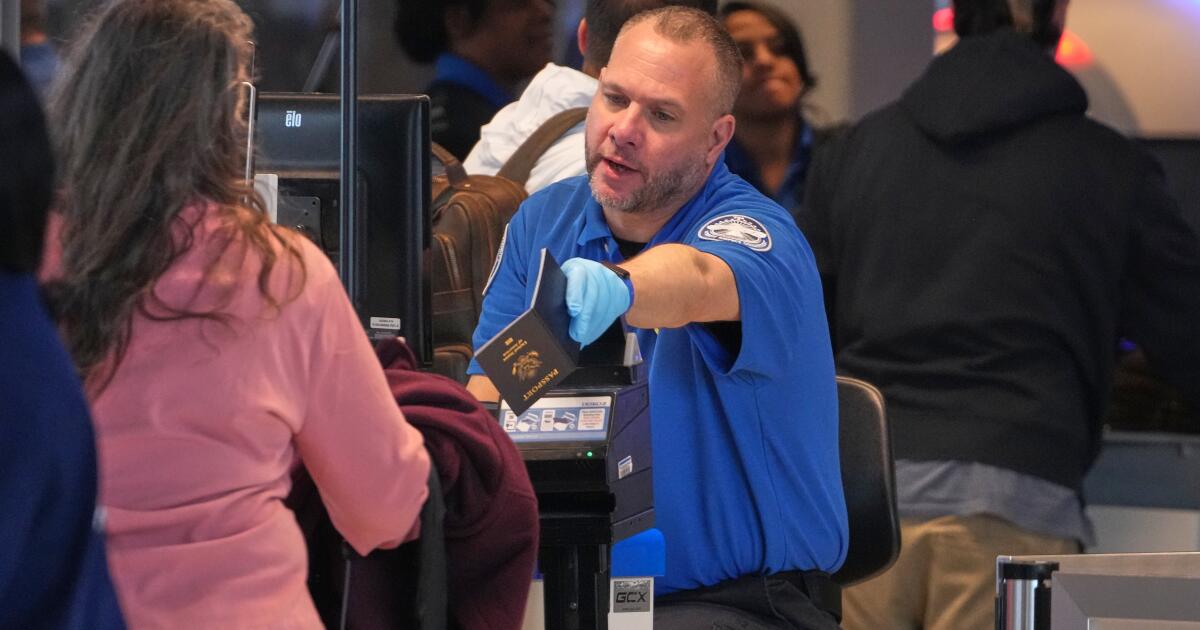
Some wait times at airport bottlenecks are easing with TSA paychecks promised
After weeks of chaos in U.S. airports, the Transportation Safety Administration said the first paychecks in weeks are being sent as early as Monday to its workers, giving the beleaguered aviation system a boost of optimism.
Wait times at some TSA security bottlenecks, such as the airport checkpoints in Atlanta and Houston, improved significantly Monday morning.
But how long it will take for long security lines to consistently return to normal — and how long federal immigration officers will stay in airports — remains unknown as the busy spring break travel season continues.
The DHS shutdown has resulted in not only travel delays but also warnings of airport closures as TSA workers missing paychecks stopped going to work. Those workers were just recovering financially since last fall’s extended government shutdown.
Wait times still pushed beyond two hours at New York’s LaGuardia Airport Monday morning. Baltimore-Washington International Airport had minimal wait-times Monday morning, but continued to advise travelers to arrive three hours before their scheduled departure.
President Trump on Friday ordered the Department of Homeland Security to pay TSA officers immediately to ease the lines plaguing airports. The move came after Trump rejected bipartisan congressional efforts to fund the TSA while negotiations continue with Democrats, who have refused to approve more funding without restraints on Trump’s immigration enforcement and mass deportation operations.
Democrats are demanding better identification for the officers, judicial warrants in some cases and for agents to refrain from conducting raids around schools, churches or other sensitive places. Republicans and the White House have been willing to negotiate on some points, but the sides have yet to reach a final agreement.
On Monday, there were few signs of progress on Capitol Hill, where the Senate held a short session without considering the House bill and resumed its two-week break. GOP Sen. John Hoeven of North Dakota said afterward that Senate Republicans are talking with Democrats and also the House as they try to find a way to funding DHS.
TSA employees had gone without pay since DHS funding lapsed in February. The department’s shutdown reached 44 days on Sunday, eclipsing the record 43-day shutdown last fall that affected all of the federal government.
The DHS shutdown has resulted in not only travel delays but also warnings of airport closures as TSA workers missing paychecks stopped going to work. Those workers had already endured the nation’s longest government shutdown last fall. Multiple airports experienced greater than 40% callout rates, and nearly 500 of the agency’s nearly 50,000 transportation security officers quit during the shutdown.
Trump deployed Immigration and Customs Enforcement agents to some airports a week ago to help with security as TSA callouts rose nationwide. How long they stay, White House border czar Tom Homan said, depends on how quickly TSA employees return to work. A TSA statement said the agency “has immediately begun the process of paying its workforce,” with paychecks arriving “as early as Monday.”
The overall absentee rate among TSA officers scheduled to work dipped slightly on Sunday, according to DHS. The highest were concentrated at major airports that have seen consistently elevated absences lately.
Those included BWI, both of Houston’s main airports; Louis Armstrong International Airport in New Orleans; Atlanta’s Hartsfield-Jackson International Airport; and John F. Kennedy International Airport in New York.
Funk and Seewer write for the Associated Press. AP reporters Rio Yamat in Las Vegas and Mary Clare Jalonick in Washington contributed to this report.

Here’s how to purchase tickets for 2028 Los Angeles Olympic Games
p]:text-cms-story-body-color-text clearfix”>
There’s a 12-ticket maximum for each fan across all sports and sessions, plus 12 tickets for soccer sessions that don’t count toward the general maximum. A four-ticket maximum per ceremony for the opening and closing ceremonies is included in the general limit. Each attendee, including children of any age, will need a ticket to attend.
Tickets included in hospitality packages sold by On Location, the official hospitality provider of the LA28 Games, will not count toward the general limit.

U.S. resumes embassy operations in Venezuela after 7 years

In a statement released Monday, the U.S. representative in Venezuela, Laura Dogu, confirmed that Washington “formally resumed operations” in Caracas, File Photo by Gustavo Amador/EPA
March 30 (UPI) — The United States has reopened its embassy in Caracas, Venezuela, after seven years, marking a concrete step toward restoring diplomatic relations between the two countries, according to an official statement released by the U.S. mission.
In that statement released Monday, the U.S. representative in Venezuela, Laura Dogu, confirmed that Washington “formally resumed operations” in Caracas, signaling the return of permanent diplomatic staff and the beginning of a new phase in bilateral relations.
The announcement comes weeks after a key symbolic gesture: the raising of the U.S. flag at the diplomatic compound on March 14, exactly seven years after it was lowered in 2019, when both countries broke relations.
Venezuelan media reported that the ceremony was led by Dogu, who said the act marked “a new era” in bilateral ties.
According to members of the diplomatic mission, the reactivation will allow resumption of key functions, such as engagement with political actors and civil society, outreach to the business sector and rebuilding facilities, with the aim of restoring consular services in the future.
The United States closed its embassy in Caracas in March 2019 amid Venezuela’s political crisis. Since then, diplomatic management had been handled through the United States External Office for Venezuela based in Bogotá.
Although the embassy has resumed operations, the full restoration of consular services and the appointment of an ambassador have not yet been announced, indicating the process remains in an initial phase.
The resumption of operations takes place in a context of gradual rapprochement between both governments after recent political changes in Venezuela and could have implications in areas such as energy, migration and trade relations.
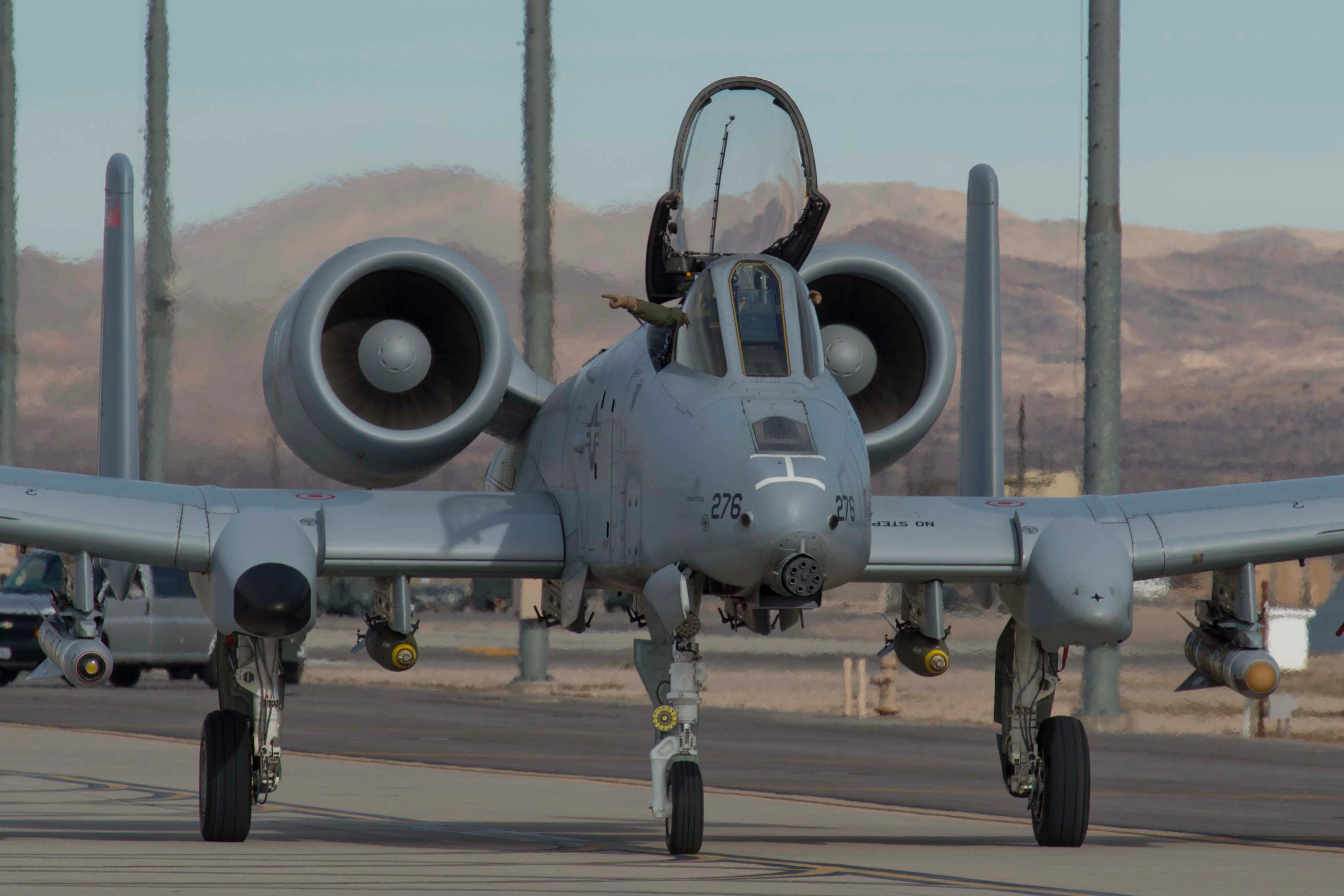
Dozens Of A-10 Warthogs Appear Poised To Join Epic Fury
With the iconic attack jet now in the twilight of its career, there are signs that the A-10C Warthog is set to deploy to the Middle East region for Operation Epic Fury. Such a deployment might well provide the combat swansong for the A-10, which the U.S. Air Force plans to retire for good by the end of the decade, if not sooner. The development comes as U.S. President Donald Trump ramps up his threats against Iran, including threatening to eliminate its civilian infrastructure and oil-producing capability.
Publicly available flight-tracking data today suggested that the Air Force was preparing to send a flight of A-10s across the Atlantic, with three KC-135 Stratotankers already airborne from RAF Mildenhall in England, apparently to meet TABOR 71, a flight of eight Warthogs headed in the opposite direction. Two of those jets were spares, according to unverified reports based on radio traffic.
Meanwhile, there are indications that as many as 20 A-10Cs have gathered at Portsmouth International Airport at Pease, New Hampshire, which is a standard jump-off point for a flight across to RAF Lakenheath in England, which has seen a major influx of U.S. combat jets in recent weeks.
Unconfirmed reports suggest these Warthogs are drawn from the 124th Fighter Wing of the Idaho Air National Guard at Gowen Field, and from the Michigan Air National Guard’s 127th Wing at Selfridge Air National Guard Base.

As we have discussed, A-10s are already helping dismantle Iran’s Navy, operating in the region in their long-standing, if often overlooked, maritime role. This is part of broader efforts by the U.S. military to find ways to reopen the critical waterway to normal maritime commerce, which has ground to a virtual halt in the face of Iranian attacks on shipping and its declaration that the strait is closed.
Above all else, A-10s have also been seen repeatedly attacking Iranian-backed militias in Iraq, operating in their best-known overland role.
Having more A-10s in theater would provide additional capability, were the U.S. military to occupy or blockade Iran’s strategically vital Kharg Island, a prospect that we have discussed in detail in the past. A-10s could also provide valuable close air support for commando raids deeper into Iran.

UPDATES:
A U.S. move against Kharg Island, as well as a potential commando raid to seize Iranian uranium, are two options apparently now on the table.
In his latest threat against Iran, President Donald Trump declared that the U.S. military will “obliterate” Iran’s Kharg Island if a deal is not reached shortly.
In a post on Truth Social, Trump today claimed the United States is in “serious discussions” with a “new and more reasonable regime” to end the war, but made direct threats against Kharg Island, as well as Iranian civilian infrastructure and oil-producing capability:
Great progress has been made but, if for any reason a deal is not shortly reached, which it probably will be, and if the Hormuz Strait is not immediately “Open for Business,” we will conclude our lovely “stay” in Iran by blowing up and completely obliterating all of their Electric Generating Plants, Oil Wells and Kharg Island (and possibly all desalinization plants!), which we have purposefully not yet “touched.”
In the same Truth Social post, Trump also raised the possibility of the United States declaring victory in the conflict without Iran reopening the Strait. This could come along with destroying much of Iran’s civilian infrastructure, including the Iranian people’s access to electricity and possibly clean drinking water.
Over the weekend, Trump said his “preference would be to take the oil” in Iran and that U.S. forces could seize the regime’s export hub on Kharg Island. Trump told the Financial Times that “my favourite thing is to take the oil in Iran, but some stupid people back in the US say: ‘why are you doing that?’” He also said: “Maybe we take Kharg Island, maybe we don’t. We have a lot of options.”
Over the weekend, the New York Times reported that around a hundred U.S. special operations forces have arrived in the Middle East, joining thousands of Marines and Army paratroopers already in the region.
“The commandos, including Army Rangers and Navy SEALs, have not yet been assigned specific missions,” the report stated, citing unnamed U.S. officials, although a mission to try to seize Kharg Island is certainly a possibility.
Trump confirmed to Caitlin Doornbos of the New York Post that U.S. officials are negotiating with Iranian parliamentary speaker Mohammad Bagher Ghalibaf. The U.S. leader added that he expected to “find out in about a week” whether he is someone America can truly work with.
On the nuclear issue, the Wall Street Journal is reporting that Trump is weighing up a military operation to extract nearly 1,000 pounds of uranium from Iran, citing unnamed U.S. officials.
TWZ had previously explored the possibility of U.S. and/or Israeli authorities launching a special operations ground raid to extract or otherwise neutralize Iran’s stockpile of enriched uranium. Given that this nuclear material is understood to be stored in deep underground bunkers, it is far from easy to achieve this objective from the air alone. Israel has demonstrated its ability and willingness to carry out complex raids on subterranean facilities, but any such operation would still face immense risks and uncertainties.
In related news, satellite imagery dating from last June was published over the weekend, suggesting that Iran might have moved at least some of its highly enriched uranium to a secure base to protect it from airstrikes.
Using Pakistan as a mediator, the United States provided Iran with a 15-point ceasefire proposal last week, including reopening the Strait of Hormuz — which carries around 20 percent of the world’s oil supply — and curbs on Iran’s nuclear programs. So far, Tehran has rejected the proposals. U.S. Secretary of State Marco Rubio also told Al Jazeera that another condition is that Iran must stop producing drones and missiles of the kinds used in combat in recent weeks.
For its part, Tehran wants an end to Israeli attacks on Iranian allies in the region as part of any negotiated deal. There are also suggestions that Iran is pushing for reparations for war damage and even the removal of U.S. military bases from the Middle East.
Speaking to journalists, Esmaeil Bagaei, an Iranian diplomat who is the current spokesperson for the Ministry of Foreign Affairs, said Iran had received messages via intermediaries indicating U.S. willingness to negotiate, but said that the American proposals were “unrealistic, illogical, and excessive.”
“Our position is clear. We are under military aggression. Therefore, all our efforts and strength are focused on defending ourselves,” Baghaei added.
Trump claims Iran will allow 20 oil tankers to pass through the Strait of Hormuz starting Monday morning and continuing over the next few days as a “present.”
“They gave us 10 [ships through the strait],” he said, in reference to earlier claims. “Now they’re giving 20…”
Trump added that Mohammad Bagher Ghalibaf, Iran’s parliamentary speaker, had authorised the additional tankers.
“He’s the one who authorised the ships to me,” Trump told the Financial Times. “Remember I said they’re giving me a present? And everyone said: ‘What’s the present? Bullshit.’ When they heard about that they kept their mouth shut and the negotiations are going very well.”
Scott Bessent, the U.S. Secretary of the Treasury, told Fox News today that “We are seeing more ships pass daily… but over time, the U.S. is going to retake control of the straits, and there will be freedom of navigation, whether through U.S. escorts or a multinational escort.”
The Economist reports that Iran, whose tankers continue to operate through the strait, is now earning nearly twice as much from oil sales each day as it did before the conflict began.
Based on information provided by U.S. government officials and Wall Street analysts, Bloomberg predicts that oil prices could continue to surge, up to unprecedeted $200 per barrel.
Elsewhere in the oil war, Iranian parliamentary speaker Mohammad Bagher Ghalibaf took to X to argue that pre-market statements from the White House or messages on the Truth channel are “often just a setup for profit-taking,” something that appeared to come true hours later.
The conflict expanded further over the weekend, bringing with it the prospect of additional disruption to commercial shipping, with the entry into the war of the Houthis in Yemen.
Houthi forces, close allies of Iran, said on Saturday they had fired a salvo of ballistic missiles at “sensitive Israeli military sites” and that they would continue military operations until the “aggression” came to an end on all fronts. Israel said today that it had intercepted two drones originating in Yemen.
There is now the risk that the Houthis could attempt to close the narrow Bab al-Mandab strait to maritime traffic. This would effectively close off the Red Sea to shipping, just as Iran has in effect shut the Strait of Hormuz.
The port in the northern Israeli city of Haifa was struck today, apparently by debris from an intercepted missile. Videos posted to social media showed part of the Bazan oil refinery there on fire. Israel’s fire and rescue service confirmed the incident, but there were no immediate reports of any casualties or damage to production facilities.
The Wall Street Journal is among those reporting that the oil refinery was hit by an Iranian missile.
The United Arab Emirates says its air defenses have intercepted 11 ballistic missiles and 27 drones launched from Iran today.
Overall, the defense ministry of the UAE says it has engaged 1,941 drones and 440 missiles since the war began.
“The Ministry of Defense affirmed that it remains fully prepared and ready to deal with any threats and will firmly confront anything that aims to undermine the security of the country, in a manner that ensures the protection of its sovereignty, security, and stability and safeguards its interests and national capabilities,” it said in a statement shared on social media.
Meanwhile, the Bahrain Defense Force (BDF) has also provided a tally of its air defense operations since the conflict began on February 28. The BDF says its air defense units have now intercepted and destroyed 398 drones and 182 missiles launched by Iran.
Oman’s port of Salalah was hit by a drone over the weekend, leaving one worker injured and causing minor damage to the facility. The Danish shipping firm Maersk announced today that operations at the port would restart from Tuesday.
Maersk said the damage was “limited” and that the port’s management would take “necessary measures” to progressively build up to full capacity.
Another ballistic missile launched from Iran has been shot down after it entered Turkish airspace. Turkey’s defense ministry confirmed that the missile had been brought down by undisclosed NATO air and missile defenses deployed in the eastern Mediterranean.
This is the fourth such incident since the start of the Iran war, following three earlier interceptions by NATO air defense systems earlier this month.
Footage has emerged showing a British Army air defense team shooting down an Iranian attack drone over the Middle East with a Martlet Lightweight Multirole Missile (LMM). At least four RAF Regiment gunners have received ace status, shooting down five or more drones, the U.K. Ministry of Defense has said. Traditionally, an aerial ace applies to a pilot who has shot down five or more crewed aircraft in air-to-air combat.
The Israeli Defense Forces (IDF) claims it has struck a university in Tehran run by Iran’s Revolutionary Guards Corps (IRGC), saying that the institution was used for advanced weapons research.
“In recent days, one of the IRGC’s central military infrastructure sites was struck, located within the compound of Imam Hossein University — the IRGC’s primary military academic institution, which also serves as an emergency asset for the regime’s military bodies,” an Israeli military statement said.
Iran’s Ministry of Energy also claims that attacks were made on electricity infrastructure in the Tehran province, parts of the city of Tehran, and Alborz province, leaving them without electricity.
On its second front, Israel has launched a new wave of strikes targeting Beirut’s southern suburbs — the first since Friday in the area, which is now largely deserted. Israel issued a warning for people in the Hezbollah stronghold to leave ahead of the latest strikes.
The Israeli military is also hitting targets in Lebanon’s south, one of which targeted an army checkpoint and killed a Lebanese soldier.
Lebanon was dragged into the conflict when the Iran-backed armed Hezbollah group began firing rockets at Israel on March 2, in revenge for the killing of Iran’s supreme leader at the start of the war.
Israel is conducting large-scale air strikes across Lebanon as well as a ground offensive in the south.
Spain has said it will not allow U.S. military aircraft involved in attacks on Iran to use its airspace.
“We don’t authorise either the use of military bases or the use of airspace for actions related to the war in Iran,” the country’s defense minister, Margarita Robles, told reporters in Madrid this morning.
Spanish newspaper El País reported the airspace closure, which forces U.S. military aircraft to bypass Spain other than in emergency situations, in which case the aircraft will be permitted to transit or land.
“We have denied the United States the use of the Rota and Morón bases for this illegal war. All flight plans involving operations in Iran have been rejected. All of them, including those for refuelling aircraft,” Spanish Prime Minister Pedro Sánchez said last week.
Morón Air Base near Seville serves as a key refueling and logistics hub for European and Middle Eastern operations by the U.S. Air Force. Naval Station Rota is another joint facility used by the U.S. Navy and also falls under Spanish sovereignty.
Israel apparently plans to invite the United States to relocate some of its bases in the region to Israel — and to establish new bases in the country — after the current conflict ends, Channel 12 reports, citing unnamed security sources.
The security establishment sees an opportunity to “reshape the map” of U.S. military positioning in the Middle East, the report says, given that US forces are already present here now and in light of evolving security challenges.
Iran’s Revolutionary Guards Corps (IRGC) has now confirmed the death of Alireza Tangsiri, the IRGC naval commander who was killed in an Israeli airstrike last Thursday, according to a statement by the guards being carried in Iranian media.
According to the United States, Tangsiri oversaw the IRGC Navy’s testing of cruise missiles and sat on the board of a company that developed armed drones. Tangsiri had reportedly been leading Iran’s successful effort to effectively close the Strait of Hormuz.
An Iraqi Air Force An-32 Cline turboprop transport was the victim of an apparent drone strike launched by Iran-backed militia. Last week, we reported on the apparent use of short-range kamikaze drones operated by militia to successfully target a U.S. military Black Hawk helicopter and a critical air defense radar at an American base in Iraq.
In a nod to Iranian attacks on high-end U.S. military hardware in the conflict, the nose of this Shahed-136 long-range one-way attack drone is marked with symbols denoting a U.S. Air Force E-3G Sentry radar plane — an incident you can read all about here, an AN/TPY-2 radar primarily associated with the Terminal High Altitude Area Defense (THAAD) anti-ballistic missile system, and an AN/MPQ-65 radar from a Patriot air defense system.
Contact the author: thomas@thewarzone.com

Coachella 2026: Ask our experts anything about the festival
The Coachella Valley Music and Arts Festival is nearly here and our team is already preparing for a weekend full of sunshine, music and Beliebers.
We’re headed to the 25th edition of the festival, which returns to the Empire Polo Club in Indio on April 10-12 and April 17-19 with Sabrina Carpenter, Justin Bieber, Karol G at the top of the bill.
Our crew heading to the desert has literally decades of experience covering the festival, giving us unique insight into one of the world’s most famous music festivals.
So tell us — what do you want to know about Coachella? And what do you want to see from our live coverage in the field?
Are you heading to Indio or celebrating Couch-ella (and its more affordable beverage options) at home? Do you have tried-and-true tips you tell anyone when Coachella comes up in conversation? We want to know about them.
Use the form below to submit your Coachella questions or tips. Check back for our answers, your tips and live updates from the festival’s first weekend at latimes.com/coachella.
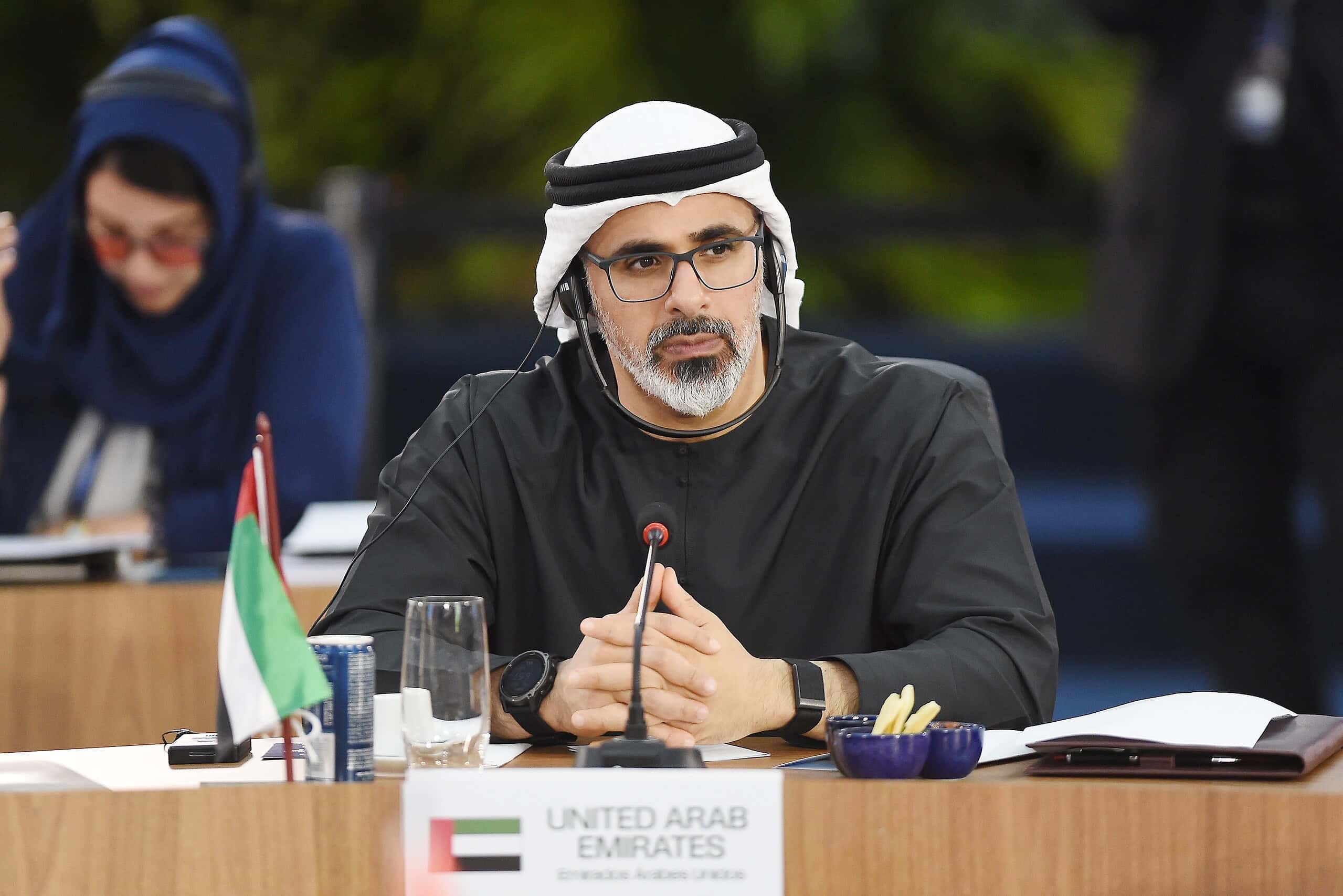
Abu Dhabi Power Play: L’Imad Emerges As $300 Billion Sovereign Force
Abu Dhabi consolidates ADQ into L’Imad, creating $300 billion sovereign powerhouse under crown prince as emirate centralizes control over strategic investments.
L’Imad, Abu Dhabi’s newest sovereign wealth fund, took over the assets of rival state-owned fund ADQ, a development that sees a greater role in the emirate’s investment strategy by the emirate’s crown prince Sheikh Khaled bin Mohammed bin Zayed, son of the UAE president Mohammed bin Zayed.
The consolidation signals Abu Dhabi’s intentions to leverage capital for adaptability and power projection. And placing L’Imad under the direct supervision of the Crown Prince is significant. According to Dubai brokerage firm Century Financial, “Abu Dhabi is treating its investment platform as a long-term project managed by top government leaders.”
Prior to the merger, ADQ held assets of $263 billion with major investments spanning airlines, energy, infrastructure, and healthcare. Following the transfer of ADQ’s assets, L’Imad will have around $300 billion in assets under management, according to data from Global SWF, a platform focusing on central banks, sovereign wealth funds and public pension funds.
ADQ was previously chaired by Sheikh Tahnoon bin Zayed, the UAE’s influential national security adviser. He chairs the emirate’s principal wealth fund Adia (Abu Dhabi Investment Authority) that oversees $1.18 trillion in assets under management.
L’Imad’s rapid ascendancy—formed last year—looks set to become an important investment vehicle under the chairmanship of the 44-year-old crown prince. In January, the Abu Dhabi media office said the emirate’s Supreme Council for Financial and Economic Affairs had passed a resolution consolidating the assets of L’Imad and ADQ “to create a sovereign investment powerhouse with a diversified asset base.”
The new entity includes 25 investment companies and platforms and over 250 group subsidiaries. Jassem Al-Zaabi—who is also chairman the emirate’s department of finance and vice chairman of the UAE central bank—was appointed managing director and chief executive. Meanwhile Mohamed al Suwaidi, ADQ’s first chief executive, has left to become executive chair of Abu Dhabi investment manager, Lunate.

New York City Marathon winner Albert Korir banned 5 years for doping
Kenyan distance runner Albert Korir has admitted to doping, prompting officials on Monday to ban him for five years.
Long a fixture at the New York Marathon, Korir tested positive for a blood-boosting substance in three separate samples taken in October while he was training to run in the New York Marathon on Nov. 2. He finished third in the race.
A verdict issued by the Athletics Integrity Unit said that Korir’s results since October will be disqualified, including that third-place finish in New York.
The three positive results provide “clear evidence of the athlete’s use of a prohibited substance on multiple occasions which is expressly identified in the definition of aggravating circumstances,” the verdict stated.
The punishment was reduced by one year because Korir, 32, admitted to taking a banned substance without requesting a hearing. He is banned until January 2031.
Korir will keep his 2021 New York Marathon title. He also was runner-up in 2019 and 2023, and finished third in 2024 in addition to 2025. His other first-place finishes came in the 2019 Houston Marathon, the 2017 Vienna Street Race and the 2019 and 2025 Ottawa Race Weekend.
Korir tested positive for Continuous Erythropoietin Receptor Activator (CERA), a long-acting agent that stimulates red blood cell production much like the banned substance EPO. It is used legally to treat anemia associated with chronic kidney disease and typically is administered once every two to three weeks.
The World Anti-Doping Agency said in October that Kenya had made “significant” progress in tackling doping but the country remains on probation while it seeks to improve its monitoring.
The action by WADA occurred after Kenyan runner Ruth Chepngetich, the world marathon record holder, was banned for three years after admitting the use of Hydrochlorothiazide (HCTZ), a banned diuretic used as a masking agent.

Egypt’s president urges Trump to stop war on Iran | Abdel Fattah el-Sisi News
“Nobody can stop the war in our region in the Gulf but you.” Egypt’s President Abdel Fattah el-Sisi has called on Trump to end the war on Iran, saying Washington holds decisive influence.
Published On 30 Mar 2026
Heavy rain, floods kill at least 45 people in Afghanistan, Pakistan | Weather News
At least 28 people are killed in Afghanistan and 17 in Pakistan after heavy rainfall causes severe flooding.

Published On 30 Mar 2026
Heavy rain that has caused severe flooding and landslides has killed at least 45 people in Afghanistan and Pakistan over the past five days, authorities say.
Afghanistan’s National Disaster Management Authority (ANDMA) said on Monday that 28 people have been killed in the floods and 49 injured with more than 100 homes destroyed.
Recommended Stories
list of 3 itemsend of list
Most of the deaths in Afghanistan were reported in central and eastern provinces, including Parwan, Maidan Wardak, Daikundi and Logar, according to ANDMA.
The authority added in a statement that weather conditions remained “unstable” in parts of the country and there is a continued risk of more rain and flooding in some areas.
“In total, 1,140 families have been affected,” ANDMA said.
Police spokesperson Sediqullah Seddiqi told the AFP news agency a 14-year-old boy died after being struck by lightning in the northwestern province of Badghis.
He added that in the same province, three people had drowned while trying to gather driftwood to be used for heating.
At the same time in Pakistan’s Khyber Pakhtunkhwa province, which shares a border with Afghanistan, 17 people were killed and 56 wounded, the Provincial Disaster Management Authority said.

Extreme weather
Heavy rainfall has continued to sweep across Afghanistan since Thursday, causing floods and landslides in multiple provinces.
The weather prompted the closure of several highways, according to officials in central and eastern Afghanistan. Further rains and storms are forecast for Tuesday.
Afghanistan’s National Disaster Management Authority has warned citizens to refrain from using “rivers and flooded streams, and follow the weather forecast seriously”.
In the central province of Daikundi, the local disaster management department said a five-year-old was killed when a roof collapsed. A woman was also killed in the same circumstances in the eastern province of Nangarhar, police spokesperson Sayed Tayeb Hamad said.
Afghanistan is vulnerable to extreme weather, particularly heavy rainfall and monsoon seasons, which trigger floods and landslides in remote areas with fragile infrastructure.
In January, flash floods and snowfall caused the deaths of at least 17 people and killed livestock.

Olivia Attwood and Pete Wicks talk Vegas wedding on new podcast
OLIVIA Attwood and Pete Wicks both love Las Vegas with Olivia even saying she’d like to get married there.
The podcast co-hosts and Towie alumni have been making headlines following their steamy kiss in London just weeks after Olivia revealed her marriage had ended.
TV star Olivia, 34, separated from Bradley Dack in January and since then she and Pete have seen their friendship “blossom into an unexpected romance”, pals have said.
They spoke about weddings and their ideal nuptials on their podcast the Sunday Roast with Olivia saying she would have her “next wedding” in the US casino city.
“We’re going to talk about stag dos because I’ve been invited on a stag do today in Vegas,” Pete began, with Olivia chiming in to add, “That’s an elite destination for a stag or anything.”
They both agreed they loved Las Vegas and Olivia declared, “I think that probably my next wedding will be in Vegas.”


But when Pete asked if he could come on the hen’s do for her next wedding, Olivia revealed she would not do another one and ended up crying at the one she had before marrying Bradley.
“This is like my hot take. So having been there, done that [I] got the T-shirt and the trauma, [and] I wouldn’t do a hen’s do again,” she said.
“I think they’re lame. Sorry, that’s really controversial… It was the only girls’ holiday that I’ve not really enjoyed.”
Olivia added: “I cried on the second day and there’s a lot of pressure and it feels that girls are difficult.”
While the pair continued to discuss weddings and their associated celebrations, they avoided talking about their public kiss.
The pair had previously insisted they were just friends but the snog proved they were a couple.
Last week a pal of Pete and Olivia confirmed: “They have been spending a lot of time together and an unexpected romance has blossomed from friendship.”
Olivia has also been in the news recently after it was revealed her wedding to Bradley was a sham.
The Love Island alum, 34, who has gone on to have major success by fronting several shows on ITV, documented her marriage to her now-ex Bradley in her show Olivia Marries Her Match.
In an episode that aired in August 2023, Olivia can be seen walking down the aisle to marry Bradley before the pair say their vows and tie the knot.
ITV bosses are now reportedly “stunned” to learn of the alleged sham marriage after we exclusively revealed her nuptials have been called into question.
Olivia and Bradley held their £200,000 ceremony for 80 guests at the five-star Bulgari hotel in London’s Knightsbridge in June 2023, two months before the episode aired.
She had even changed her name to Olivia Attwood-Dack, using that in her frequent appearances on ITV1’s Loose Women.
Yet the wedding has now been revealed to not be a legal marriage, as the union has not been logged with the General Register Office, the archive of all marriages and civil partnerships for England and Wales.
Olivia’s camp has claimed that the couple had planned to complete paperwork at a register office near their home in Cheshire six weeks after the wedding.
But they failed to ever sign anything as “Olivia uncovered a number of mistruths” and that her inability to trust Bradley “forced her hand in not being able to legally bind their union”.

Major UK holiday park reopens after huge £5m makeover AND you can stay with Hols from £9.50
A MAJOR holiday park has reopened after a huge £5million revamp with loads of brand new attractions, and what’s even better – you can stay there with The Sun’s new Hols from £9.50 campaign.
The refreshed resort has been unveiled at one of the UK’s top British beach destinations.

Vauxhall Holiday Park in Great Yarmouth has opened its doors to the public once more, boasting a new sports bar, darts and indoor adventure golf.
After a £5million cash injection, the holiday park has also been upgraded to include more kids’ play zones and high rope courses.
This means there is even more to tempt the whole family, from Bear Grylls escape rooms and a bingo hall, to the large indoor pool plus waterslides.
The freshly updated park will be included in the Hols from £9.50 restock TONIGHT, alongside thousands of other new holidays AND new holiday parks.


You can access these offers early by signing up to Sun Club for just £1.99 a month, where members gain automatic access onto the website one day earlier than everyone else, at just past midnight.
Once you’re a member, go to the Sun Club Offers hub and find the Hols From £9.50 page. Follow the link from the offers page, and you can book your break from midnight on Tuesday, March 31.
That’s a whole 24 hours headstart, as the Sun newspaper readers who are collecting tokens get access to the holidays on April 1.
Vauxhall Holiday park’s two to three room caravans sleep up to eight people, while the park also offers apartments and luxury lodges.
Great Yarmouth on Norfolk‘s east coast has long been one of the UK’s top beach resorts for holidaymakers seeking sand and sun.
The town boasts a soft sand beach known as ‘the golden mile’, with plenty of shops, cafes and restaurants within a short walking distance.
Smack-bang on the beachfront is Joyland, a historic amusement park with plenty of classic rides that are sure to fill you with nostalgia.
This colourful family theme park is perfect for little ones, home to mini rollercoasters and the award-winning Super Snails. The attraction is free to enter, with ride tokens costing £3 each.
For older kids, Great Yarmouth Pleasure Beach is sure to go down a treat with an exciting mix of white-knuckle thrills, child friendly rides and even a 4D cinema.
Undoubtedly the star of the show is a traditional wooden roller coaster, which first opened in 1932 and one of only two still standing in the UK.
All the ways to book a holiday from £9.50
There are five routes to book our Hols From £9.50
- Book online: Simply collect codewords printed in The Sun paper up until Wednesday, April 1. Then enter them at thesun.co.uk/holidays to unlock booking from April 1.
- Book with Sun Club: Join Sun Club at thesun.co.uk/club for £1.99 per month or £12 for the year. Go to the Sun Club Offers hub and click through to the Hols from £9.50 page. You do not need to collect any codewords or Sun Savers codes. Booking opens for Sun Club members on Tuesday, March 31.
- Book with Sun Savers: Download the Sun Savers app or register at sunsavers.co.uk. Then go to the ‘Offers’ section of Sun Savers and click ‘Start Collecting’ on the ‘Hols From £9.50’ page. Collect TWO Sun Savers codes from those printed at the bottom of the Sun Savers page in the newspaper up until April 1. Then enter or scan the codes on Sun Savers to unlock booking.
- Book by post: Collect TWO of the codewords printed in The Sun each day up until Wednesday, April 1. Cut the codeword out and send it back with the booking form – found in paper on April 1 or online at thesun.co.uk/holidays.
- Book with The Sun Digital Newspaper: Sign up to The Sun Digital Newspaper at thesun.co.uk/newspaper. Then download the Sun Savers app or sign up at sunsavers.co.uk, log in to Sun Savers with your Sun account details (the same email and password you use for your Digital Newspaper) and enjoy automatic access to Hols, without the need to collect Sun Savers codes daily. Booking opens on April 1.


Inside the fancy first class lounge at one of the UK’s best train stations
THE LNER first class lounge at London King’s Cross Station will reopen tomorrow after a plush makeover.
It’s the perfect place to relax with plenty of seating, private booths and complimentary food and drink.
LNER is the only passenger lounge at King’s Cross Station and it closed a few months ago for an upgrade.
It will reopen on March 31, 2026 with a brand-new look – and it’s very fancy.
Inside is an open plan area with dark red walls and pink coloured furnishings along with elegant lamps and little tables.
New to the lounge are six booths that have been designed to be private and are ticked away from the main lounge.


Each has charging ports, small desk and a lamp.
Anyone in the lounge can enjoy free food and drink which is available throughout the day.
In the morning, there’s a selection of pastries and in the afternoon there are cakes and muffins – and a range of biscuits and crisps.
There’s also fruit juices, tea and coffee.
Guests to the lounge can enjoy the snacks on the curved banquette seating, or nearby tables and chairs.
Thanks to the redesigning of the space, the capacity of the lounge has increased to 122.
Off the back of customer feedback, other additions include more luggage and storage areas and resigned the reception.
There are new screens too for platform information so customers shouldn’t miss their train – even if they’re relaxing in the lounge.
Colette Casey, Customer Experience Director at LNER, said: “The Lounge has been transformed into a modern, comfortable, relaxing area for our First Class customers to spend time in and enjoy before or after travelling with us, and we cannot wait to hear what they think of the changes.”
There is some disappointing news and that is that most travellers won’t be able to use the lounge as it’s only accessible to first-class LNER ticket holders.
But if you do have one of these tickets, then you can access the lounge from the ground floor located next to Waitrose.
Or head upstairs to the entrance on the mezzanine.
The lounge is open during the weekdays from 7am until 9.25pm.
Saturdays it’s open 8am to 8.15pm and 9am to 8.15pm on Sundays.
There’s also a free family zone with beach huts, a soft play area and a huge train set within London King’s Cross.
It’s right next to the Travel Centre and can be used by families who are booked onto trains departing the station – but it’s not limited to LNER customers.
Inside are four brightly-coloured beach huts complete with tabletop toys and games.
There’s a bespoke Hornby train set, keeping both big and little kids entertained.
And there’s a soft play area with a slide and a tiny black boulder doubling as a climbing frame.
Here’s another secret spot in London St Pancras…

Just opposite Kings Cross within St Pancras is somewhere else that you may not have stumbled upon – and you can get free drinks.
A hidden bar called the Booking Office 1869 is within the St Pancras Renaissance Hotel London.
Each day at 5:05pm, visitors can have a free drink.
According to a TikTok video posted by @thecuriouspixie: “A bill rings, a flame ignites and a bartender will perform a full rum punch ritual.”
This happens at 5:05pm because the hotel originally opened on May 5, 1873, but the booking office opened in 1869 – which is where the name comes from.
For more on trains – this could be the most glamorous train ride ever with a beautiful bar and onboard suites.
And here’s more on how the first ever direct trains from London to Switzerland are even closer to launching.