



Malcolm in the Middle star breaks 20-year silence with real reason he quit Hollywood
Malcolm in the Middle star Justin Berfield spent years playing older brother Reese in the beloved American sitcom and he has now given his first interview in almost 20 years ahead of its reboot

Malcolm (Frankie Muniz) with Reese (Justin Berfield) (Image: Carin Baer/FOX)
The actor who famously played Reese in Malcolm in the Middle has broken his silence after 20 years — and revealed the real reason he quit Hollywood.
Justin Berfield is back on our screens next month with the four-episode revival of the popular show that ended two decades ago. And he has now revealed why he has remained so quiet since then.
Speaking on The Joe Vulpis Podcast, Justin, now aged 40, was asked whether he had done any other podcast or interview since the sitcom ended.
He replied: “No, like podcasts weren’t a thing and I’ve always just said no because like I wasn’t working on anything. I’m just like a stay-at-home dad! So, why am I going to do a podcast?
“Because I’m just chilling at home with my kid. So unless I had something to talk about, I’m like, I don’t want to go on a podcast.”
He then explained that he has remained in the industry by working behind the camera as an onset producer and writer on various projects.
And he added: “I was just like, I don’t care (about going on podcasts). I’m enjoying my life. Unless I have something to talk about current. I don’t want to go back in time and talk Malcolm.”
However, he is now more than happy to talk about the beloved sitcom, given Hulu’s Malcolm in the Middle: Life’s Still Unfair is set to land on Disney+ in April.
The final episode of Malcolm aired in May 2006 and Justin revealed in the rare interview why he quit Hollywood soon after.
He said he moved to Colorado with his wife, Liza, after filming because he just wanted a change of scenery.
Giving an insight, he said: “Lots of fly fishing. I still miss it. I love it because I just loved being somewhere so secluded. I was still living in Denver so I was like in the city because I still like access to sports teams and good restaurants and things like that. So I wasn’t living in the mountains or anything like that, even though I went to visit them quite often.
“But I kind of separated from Hollywood and I just got to live somewhere else for once because I grew up here and I just wanted to live somewhere else.
“At that time I had no kids, so I was like, this is the perfect time to do this. So we lived there for three years and then we moved back to LA.”
He also revealed that he quit acting and was never “in demand” after the show.
However, he said he never had the intention of becoming the next Leonardo DiCaprio and that he has loved being a stay-at-home dad to his two children in recent years.
The new series of Malcolm in the Middle will see Justin return as the older brother of Malcolm, played by Frankie Muniz.
Malcolm’s other brother, Francis, played by Christopher Masterson, is also set to return, as are Bryan Cranston and Jane Kaczmarek who play parents Hal and Lois.
And asked what it was like being back on set with his old colleagues, Justin said it felt like no time had passed at all.
He added: “It felt like a really, just a really long hiatus. When we were filming the show, you’d film for like eight months and then you’d take like two, three months off, and then kind of go back and do some things again and start seeing everyone, and that was like your year for seven years straight.
“And then we did this, it was obviously like 20 years since we’d seen each other for most of us. And you just kind of, it felt like time stopped, like we just got right back into it.”
The synopsis to the upcoming revival reads: “After shielding himself and his daughter from his family for over a decade, Malcolm is dragged back into their orbit when Hal and Lois demand his presence at their 40th anniversary party.”
Malcolm in the Middle: Life’s Not Fair arrives on Disney+ on April 10

Oil remains above $110 as markets once again grapple with uncertainty over Trump’s next move
Investors remain wary, as the Wall Street Journal report came on the same day the US president threatened to destroy Iran’s key oil export hub and desalination plants unless it accepts a deal, while also suggesting that diplomacy was making progress.

ADVERTISEMENT
ADVERTISEMENT
The news comes as governments around the world scramble to implement measures to ease the burden of surging fuel prices while also seeking to conserve energy, with around one-fifth of global crude oil and gas passing through the waterway.
The Wall Street Journal, citing administration officials, said Trump and his aides had concluded that a mission to reopen the waterway would extend beyond his four- to six-week timeline. It added that he had decided to focus on targeting Iran’s missiles and navy, before seeking to pressure the country diplomatically to reopen the Strait.
Further fuelling concerns, a drone struck a Kuwaiti oil tanker in Dubai waters, causing a fire on Tuesday morning. Dubai authorities said the blaze had already been extinguished, but concerns about a potential oil spill remain.
Maritime traffic disruptions in the Strait of Hormuz, through which roughly a fifth of the world’s oil normally passes, remain a key pressure point for global energy supplies. US Secretary of State Marco Rubio said Trump has “options available” in response to Tehran’s threats to control the strait, after Iran was reported to have effectively created a “toll booth” there.
Both major oil benchmarks fell on Tuesday, though West Texas Intermediate and Brent crude remained well above $100 a barrel. At 7 a.m. CET, the international benchmark Brent was trading at nearly $113, while WTI crude was above $102 a barrel.
Most equity markets in Asia rose briefly, but by this point Tokyo’s Nikkei 225 was down 1.3%, South Korea’s Kospi had fallen 3.3%, Hong Kong’s Hang Seng had shed 0.5%, and the Shanghai Composite index was down 0.4%.
US futures were up between 0.6% and 0.8%.
In other early Tuesday trading, gold and silver prices rose. Gold was up 0.7% at $4,587.80 an ounce, while silver climbed 2.4% to $72.25 per ounce.
The US dollar stood at 159.61 Japanese yen, down from 159.71 yen. The euro was trading at $1.1472, up from $1.1465.

High school baseball and softball: Monday’s scores
BASEBALL
CITY SECTION
Cleveland 6, South Gate 1
Collins Family 13, Alliance Ouchi 6
Gardena 11, King/Drew 5
Palisades 2, San Fernando 1
SOUTHERN SECTION
Arcadia 5, El Dorado 4
Bethel Christian 1, Norton Science 0
Calabasas 9, Stockton Lincoln 2
Canyon Country Canyon 18, de Toledo 0
Cathedral 1, St. Monica 0
Cerritos Valley Christian 6, Schurr 2
Chadwick 25, Army-Navy 1
Citrus Hill 8, Indio 2
Cornerstone Christian 10, California Lutheran 0
Corona Centennial 6, Aquinas 3
Cypress 7, Damien 2
Desert Mirage 13, Packinghouse Christian 2
Downey Calvary Chapel 11, Southlands Christian 4
Duarte 4, Sierra Vista 3
Foothill Tech 8, Channel Islands 1
Ganesha 4, Garden Grove Pacifica 1
Glendora 13, Portola 4
Jurupa Valley 16, Adelanto 5
Kaiser 5, Temescal Canyon 4
Linfield Christian 8, Anaheim Canyon 6
Littlerock 4, Vasquez 4
Magnolia 7, Los Amigos 1
Montclair 8, Baldwin Park 5
Newbury Park 10, Thousand Oaks 9
Norco 10, Riverside King 0
Northwood 2, Chico 1
Paraclete 3, Castaic 2
Rancho Christian 11, Hemet 0
Rancho Mirage 11, Xavier Prep 1
San Jacinto Valley Academy 5, Temecula Prep 4
San Marino 5, Montebello 0
Santa Ana Foothill 7, Charter Oak 3
Santa Barbara 5, Eastvale Roosevelt 4
Santa Fe 7, Orange 1
Santa Margarita 1, Mayer Dei 0
Savanna 13, Garden Grove Santiago 0
Servite 5, JSerra 4
Shadow Hills 6, Palm Springs 3
Shalhevet 12, Valley Torah 0
Sherman Oaks Notre Dame 7, Corona Santiago 4
St. Paul 10, Irvine 1
Temecula Valley 3, Yorba Linda 0
Tustin 5, Woodbridge 1
West Covina 10, Edgewood 3
Westlake 11, Oaks Christian 5
Westminster 11, Godinez 2
Whitney 4, St. Pius X-St. Matthias Academy 3
INTERSECTIONAL
Alhambra 2, Berkeley St. Mary’s 0
Bell 9, Escondido 1
Brentwood 16, Crawford 1
Calabasas 9, Stockton Lincoln 2
Campbell Hall 9, Arleta 1
Castle Park 6, Verdugo Hills 5
Chatsworth 11, Golden Valley 8
Chula Vista Mater Dei 15, LA Roosevelt 4
Concord De La Salle 6, Bishop Amat 0
Corona 12, Chicago Mt. Carmel 2
Fallbrook 13, South Pasadena 3
La Palma Kennedy 15, El Cajon Valley 2
Las Vegas Southeast Career Tech 3, Sun Valley Poly 1
Legacy 13, San Francisco Washington 1
Loyalton 13, Portola 2
Moorpark 5, Oceanside 0
Mountain Ridge 1, Villa Park 0
Palo Verde Valley 4, North Hollywood 3
Phoenix Brophy College Prep 14, Arrowhead Christian 13
Ramona 3, Calexico 2
Santa Maria 10, San Luis Obispo Classical Academy 0
South Hills 4, Poway 1
Tucson Salpointe Catholic 10, St. Bernard 0
Whitney 4, St. Pius X-St. Matthias Academy 3
Wilmington Banning 6, Durango 1
Windward 10, Kearny 0
SOFTBALL
SOUTHERN SECTION
Baldwin Park 21, Gabrielino 9
Calabasas 13, Channel Islands 8
Cornerstone Christian 12, California Lutheran 8
Long Beach Poly 21, Long Beach Cabrillo 1
Los Amigos 10, Santa Ana Valley 0
Mayfair 7, Norwalk 3
Millikan 17, Long Beach Jordan 0
Newbury Park 12, Oxnard Pacifica 7
Rancho Cucamonga 10, Temescal Canyon 4
Redondo Union 4, El Segundo 3
Shadow Hills 12, Palm Springs 0
Sierra Vista 2, Duarte 0
St. Paul 8, La Serna 4
Temecula Prep 13, San Jacinto Valley Academy 0
Western Christian 12, Claremont 11
Wiseburn-Da Vinci 10, Bishop Montgomery 7
Yorba Linda 16, Placentia Valencia 0
INTERSECTIONAL
Alhambra 15, Rancho Cotate
Atascadero 8, Corcoran 7
Chico 8, Durham 5
Lompoc 5, Mission College Prep 4
Santa Maria St. Joseph 11, Arroyo Grande 1

What can nations do to make up for the ongoing energy shortfall? | US-Israel war on Iran
The Middle East conflict has cut off 20 percent of the world’s fuel supply. Countries are scrambling for alternatives.
The disruption in the Strait of Hormuz has cut access to one-fifth of the world’s oil and gas supply, leaving many countries scrambling for alternatives.
So what can they rely on to make up for the shortfall in a quick time?
Many Asian countries are turning to coal, reopening shuttered plants and expanding production.
Policymakers say immediate energy needs supplant environmental concerns.
Others are hoping to turn to renewables. Solar power is now the cheapest form of electricity in many parts of the world. But renewables, especially wind, have faced hostility from the Trump administration.
Published On 31 Mar 2026
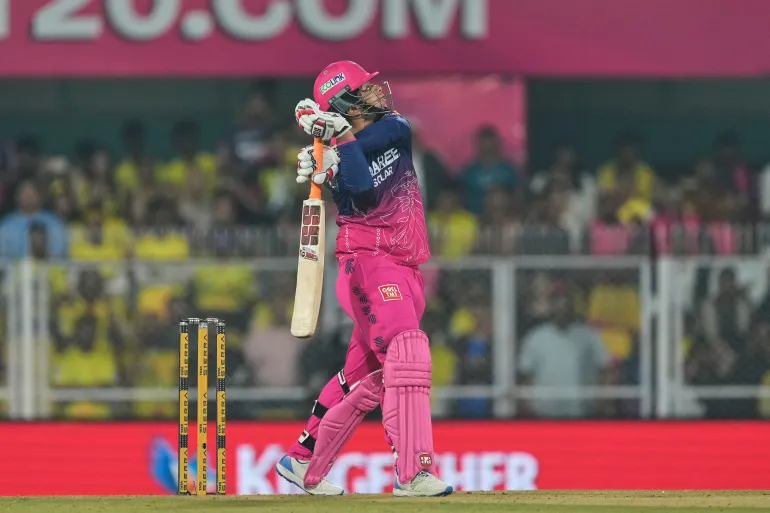
15-year-old Vaibhav Sooryavanshi scores 15-ball fifty for Rajasthan Royals | Cricket News
Indian teenage prodigy smashes his third IPL half century as Rajasthan routed Chennai Super Kings in the IPL.
Published On 31 Mar 2026
Days after turning 15, Rajasthan Royals opener Vaibhav Sooryavanshi found a perfect way to celebrate, tearing to a 15-ball half-century in a commanding eight-wicket victory over Chennai Super Kings in the Indian Premier League (IPL) on Monday.
Sooryavanshi, who lit up his debut season with a 35-ball hundred against Gujarat Titans last year, took only 15 balls to smash his first fifty of the season – the third fifty-plus score of his eight-match IPL career so far.
Recommended Stories
list of 4 itemsend of list
Alongside fellow opener and India batter Yashasvi Jaiswal, Sooryavanshi tore into the Chennai attack in the powerplay, leading the team to 74 without loss.
Sooryavanshi was dismissed for 52 after 17 balls, including five sixes and four fours, after sharing a blistering 75-run stand with Jaiswal. Rajasthan sealed victory in just 12.1 overs after chasing down a victory target of 128.
“I think of defending, but the plan was to decide the game in the powerplay as we’d restricted them to a low score,” Sooryavanshi said.
“If the bowlers had bowled well in the powerplay then the game might have turned their way, but we went all out in the powerplay.”
The Under-19 World Cup winner credited Rajasthan coach Kumar Sangakkara and staff for backing his attacking instincts.
“They told me to read the situation well and back my game,” he added.
Rajasthan’s quick chase followed a brilliant bowling effort. Their attack reduced Chennai to 41-4 at the end of the powerplay, putting the visitors firmly on the back foot before they were dismissed for 127 in 19.4 overs.
South Africa pace bowler Nandre Burger led the charge with figures of 2-26 and was named player of the match, while Jofra Archer and Ravindra Jadeja also took two wickets apiece.
Rajasthan will next face the Gujarat Titans in Ahmedabad on Saturday, while Chennai host Punjab Kings on Friday.

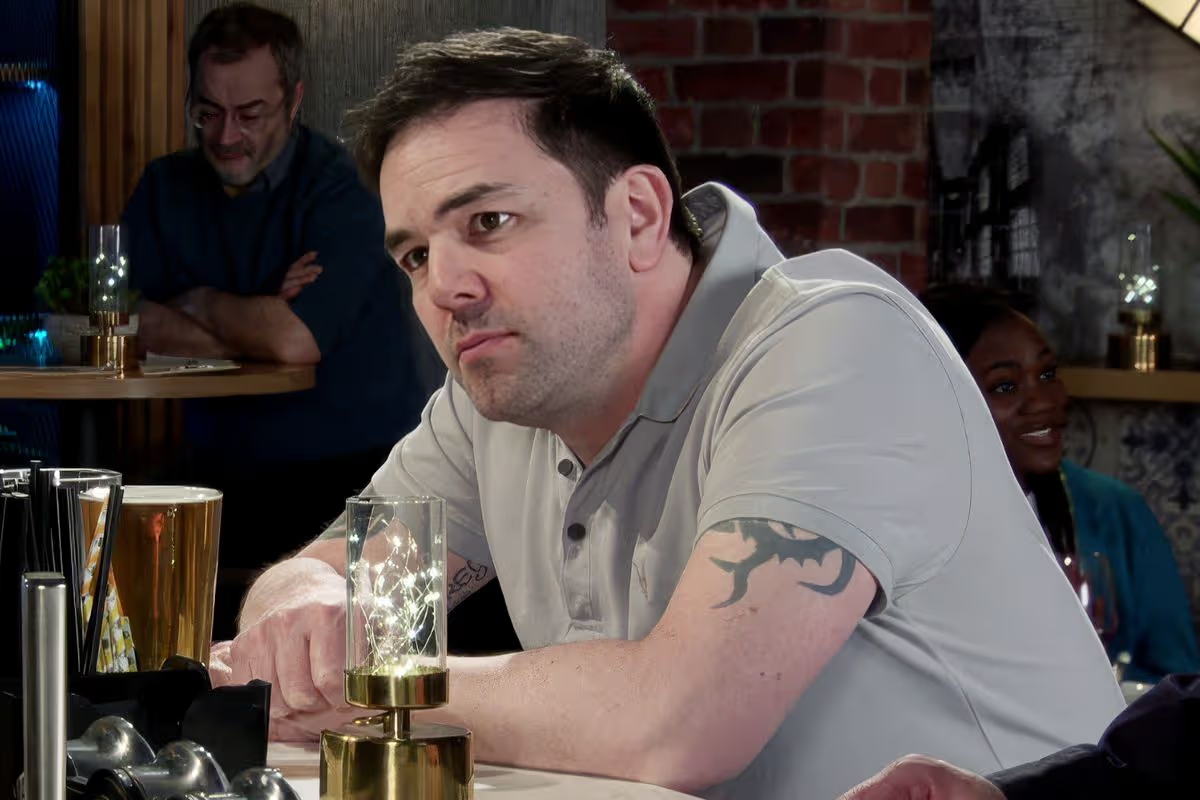
Coronation Street newcomer ‘absolutely gutted’ over storyline as twist sparks heartache
Coronation Street newcomer Ben Driscoll will be left ‘absolutely devastated’ in the fallout to a sickening plot, while another bombshell leads to him hitting the bottle

Coronation Street newcomer Ben Driscoll will be left ‘absolutely devastated’ in the fallout to a sickening plot(Image: ITV)
It’s a tough time ahead for the Driscolls on Coronation Street, especially newcomer Ben.
Actor Aaron McCusker who has played him since October has spilled on two big moments ahead for his character. Ben will be left “devastated” in the fallout to his teenage son Will Driscoll’s grooming ordeal.
But Ben will also be left blindsided about a DNA twist that sparks heartache for him, tearing apart his relationship with his mother Maggie. It’s not yet clear if Ben will find out his real father is former character Jim McDonald, but we do know that Ben learns the man he thought was his father actually wasn’t.
Actor Aaron teased of what is ahead: “Ben and Maggie are having a row and in the heat of the argument, Maggie says something that just doesn’t make sense to Ben. Maggie tries to backtrack and pretends she didn’t know what she was saying but Ben won’t let it go.
READ MORE: Coronation Street’s Maggie vows to take down Megan amid DNA bombshellREAD MORE: Emmerdale icon says ‘good things come to an end’ after 17 years on soap amid big shake-up
“It’s digging at him, why did she say that, and he just needles at her till eventually she says right here’s the truth. Maggie’s also being blackmailed by Ben’s ex Melanie who knows the truth from Ben’s brother who witnessed things, and is using this to try to force Maggie to convince Ben to let Will go live with her.
“Eventually it all just gets too much for Maggie and she makes the decision to tell Ben herself. Then the truth comes tumbling out.” On the impact of the paternity news, Aaron went on: “He’s stunned and he’s also livid, made worse by the fact he can’t go back and talk to the man who he always thought was his dad because he’s dead.
“He also finds out that Alan knew he wasn’t Ben’s dad and still stuck by Maggie and that endears him to Alan even more. He has a huge argument with Maggie then he goes straight out to the bar and gets stuck into the whiskeys.”
Aaron hinted that it could be it for Maggie and Ben. He said: “Let’s be honest he’s forgiven his mum for quite a lot already! He threw her out of the house on Christmas Day, then let her back in.
“He sits back 50% of the time and lets her get away with how she treats Eva and he does realise that she was a single mother and sacrificed a lot to bring him and Fin up. But maybe it will go a different way this time, I think it will take a while to get over this but time’s a healer so I hope in the end they will be alright.”
He then discussed the plot involving Ben’s son Will, who has been sexually abused by his athletics coach Megan Walsh. With Will still manipulated into believing they are in a relationship, and with Megan pregnant with his child, ben is left blaming himself.
Aaron explains: “He’s absolutely gutted, he’s been through a stage of blaming himself, maybe he’s been too wrapped up in the move to Weatherfield, been stuck in the middle of the war between Maggie and Eva, focusing on his two other kids and it just slid by him. He’s disappointed in himself and he’s going out of his way now to try to make things better but with a teenage son it’s not easy and he’s going to have to work hard to repair the relationship.”
Coronation Street airs weeknights at 8:30pm on ITV1 and ITV X. * Follow Mirror Celebs and TV on TikTok , Snapchat , Instagram , Twitter , Facebook , YouTube and Threads .

Caliber converts $15.9M preferred equity into common stock (CWD:NASDAQ)
- Caliber (CWD) said that an institutional investor converted about $15.9M of its Series B perpetual convertible preferred equity into common stock.
- The investor converted 15,868 preferred shares, originally issued at $1,000 each, into 63,472 common shares at a $250 per share conversion price.
- The company said the move removes $15.9M of preferred equity from its balance sheet and replaces it with common equity, thereby reducing capital senior to common shareholders and streamlining its capitalization, while overall shareholder equity remains unchanged.

Wales on rails: a car-free break in Carmarthenshire | Public transport trips
Sit on the left when you catch the train from Swansea to Carmarthen, and you can watch huge sandy estuaries unspool outside the window. There’s a curlew standing by the water, an egret-haunted pool in the wetlands, and a boardwalk along the foreshore, part of the 870-mile Wales Coast Path. It has been a six-hour, four-train journey to get here from Essex, but I’ll soon be on foot.
Carmarthenshire has picturesque railways, a network of buses, and some epic long-distance paths, so it makes for an ideal car-free break. The 13-mile Tywi Valley Path (officially opening in time for Easter) will link Abergwili near Carmarthen and Ffairfach near Llandeilo, helping walkers and cyclists access some lovely scenery. I’m visiting just before Saint David’s Day, and there are daffodils everywhere. Carmarthenshire offers a quintessentially Welsh experience, packed with castles, cockles and cawl (stew).
As I set off from Ferryside station, there’s a view of the ruined 12th-century Llansteffan Castle across the estuary. The Three Rivers hotel and spa, where I’m due to stay tonight, is 10 minutes into my walk. I drop off my bag and press on, feeling buoyant. I’m heading for Kidwelly, five miles from Ferryside along a hilly, inland stretch of coast path.
I’m soon winding down through mossy, snowdrop-beaded woods, where primroses glimmer in banks of ferns and bluebells are sprouting. When I walk up to the lane above, sudden sunshine lights the distant sea, and the veiny salt marsh is fretted with silver. Offshore winds have trimmed the trees slantwise, neat as a fresh fade from a stylish barber. The paths are still boggy in places, and there are no other walkers until the final, tarmacked half-mile, where teal and redshank pipe from the mud-banked River Gwendraeth.
Kidwelly Castle (£8.50 adults, £5.90 kids) is a maze of wall walks, spiral stairs and cavernous towers with views across sepia reed beds. Gwenllian, who led a Welsh army against the Normans in the 12th century, fought her final battle nearby. Newest among Kidwelly’s pubs and cafes, Y Barbican opened in November 2025; it offers armchairs and freshly made cakes – worth the uphill walk from the castle.
There’s a regular train service between Kidwelly and Ferryside, but bus 198 runs directly back to my hotel, where I head to the spa. A mural by the pool, painted by owner Jackie Cavill, mirrors the view outside: hilltop Llansteffan Castle, framed by gulls and oystercatchers. Through the windows, the sun sets behind a tall Scots pine.
The next morning, I stroll to the station along the low-tide beach. Wintering ducks and geese gather on seaweed-blanketed sandbanks. Today’s destination is the 230-hectare National Botanic Garden of Wales (NBGW), where car-free visitors get 50% off entry (full price £19 adults, £10 kids). It’s an hour or so’s cycle from Carmarthen, mostly on route 47 of the UK’s National Cycle Network. Brompton bikes are available to hire at Carmarthen bus station, but the drizzle is becoming torrential …
Bus 279 runs four times a week from Carmarthen to NBGW, and there’s one due in an hour. Cash-only Pantri Blakeman, up some stairs opposite the bus station, is a great place to wait. There’s a daffs-and-dragons frieze around the walls and a menu offering cockles and bacon on toast with laverbread and leek cawl.
The landscaped grounds of NBGW are cheerful, even in the pouring rain, with blossom, birdsong and thousands of spring bulbs. In the Tropical House, there are banana palms, bugle plants and bright flamingo lilies. Outside, dunnocks hop around heavy-headed hellebores and bullfinches feast on lakeside buds. Several sparrows chirrup noisily from the olives in the world’s largest single-span glasshouse. Designed by Foster + Partners, the Great Glasshouse houses more than 1,000 species of Mediterranean plant, soft fronds of scarlet honey myrtle, yellow-flowered cassia and fresh-scented Christmas heather among them. I just have time for a mustardy rarebit in the cafe before heading back to the bus.
The rain has stopped when I get off near Abergwili and walk the last bit of the Tywi Valley Path, a traffic-free, well-kept stretch of road alongside a former railway track. It leads to the Bishop’s Park, where the oxbow lake and ornamental evergreens attract siskins, goldcrests, grebes and slate-blue nuthatches. The old bishop’s palace is home to Carmarthenshire Museum (free). In Carmarthen, two miles west, I’m staying in the delightfully time-warped Falcon hotel. Close to the bus station, it offers cockles au gratin for dinner and cheese-and-leek sausages with a veggie breakfast.
The next morning, I take bus 280 through green countryside to the colourful market town of Llandeilo, near the eastern end of the Tywi Valley Path. There are views of wooded Merlin’s Hill, topped with an iron age fort, and the dramatic ruins of Castell Dryslwyn (free).
Castell Dinefwr (free), in the sprawling Dinefwr park next to Llandeilo, was once home to Lord Rhys, whose peaceful rule led to a flowering of Welsh music and poetry. I drop in to Pitchfork & Provision in Llandeilo, then head through bluebell woods to the hidden Llandyfeisant church, half overgrown with ivy, and the atmospheric castle ruins, on a wooded hill above the River Tywi.
The estate’s 18th-century owners landscaped the park with trees and waterways. A boardwalk among ferns and catkins leads to little waterfalls, slopes of pungent wild garlic, and a bird hide overlooking the lake. I stop to warm up in the National Trust cafe at Newton House (£12 adults, £6 kids), with a garden full of tulips. The guy in the cafe hands out Saint David’s Day postcards with a recipe for Welsh cakes.
Back at Pitchfork & Provision, the owner Rachel Mabbitt tells me how the business has expanded from a bakery, founded with a friend during lockdown, to include a popular cafe and deli. A perfectly cooked bowl of vegetable cawl comes with tangy Pitchfork cheddar, and the bara brith (spiced tea bread) is gooey and delicious. It’s a 10-minute walk to Llandeilo station, where trains on the scenic Heart of Wales line stop five times a day (twice on Sundays). The railway rolls towards Swansea past hilly woods, soft reed beds and the winding River Loughor.
The trip was supported by Discover Carmarthenshire. Some transport was provided by Great Western Railway (advance tickets from Swansea to Carmarthen start at £8.10; £39.50 from London Paddington). Accommodation was provided by Three Rivers hotel and spa (B&B doubles from £120) and Falcon hotel and restaurant (B&B doubles from £110)

Ducks fall in overtime to revenge-minded Maple Leafs
John Tavares redirected a shot from Morgan Rielly into the net with five seconds left in overtime to lift the Toronto Maple Leafs to a 5-4 come-from-behind victory over the Ducks in a fight-marred game Monday night.
The Leafs overcame a 3-1 deficit with three goals in the third period, including Rielly’s snap shot from the high slot that beat Ducks goalie Ville Husso stick-side to give Toronto a 4-3 lead with three minutes left in regulation.
But Leo Carlsson, who hobbled to the locker room after taking a hard hit and falling to the ice in the first minute of the third, gathered a loose puck near the left circle and flicked a shot past Toronto goalie Anthony Stolarz to make it 4-4 with 1:39 left.
Tavares added a first-period goal, and Stolarz stopped 28 of 32 shots for Toronto, which took the ice about 1½ hours after general manager Brad Treliving was fired near the end of his third season, with the Maple Leafs on the verge of being eliminated from the playoffs for the first time in a decade.
Carlsson and Cutter Gauthier scored in the first 10 minutes, and John Carlson scored his first goal for the Ducks. Gauthier, who leads the Pacific Division-leading Ducks with 38 goals and 65 points, suffered an upper-body injury on a cross-check late in the first and did not return. Husso had 22 saves.
Ducks captain Radko Gudas, slowed by a lower-body injury, insisted on playing in the rematch of a March 12 game in which his knee-on-knee hit on Auston Matthews led to a season-ending injury for the Toronto captain and a five-game suspension for Gudas.

It took three seconds for the Leafs to exact some revenge, Toronto forward Max Domi and Gudas dropping the gloves and exchanging punches as soon as the puck dropped.
That set the tone for a hard-hitting game that featured a combined 85 penalty minutes, numerous scuffles and game misconducts incurred by Toronto’s Michael Pezzetta and Domi in the second.
Up next for Ducks: at San José on Wednesday.

Children in Gaza reenact a funeral procession during play | Gaza
A video published by a Palestinian content creator shows a group of children carefully lifting their doll on a stretcher to reenact a funeral as they play together in a displacement camp in Gaza.
Published On 31 Mar 2026
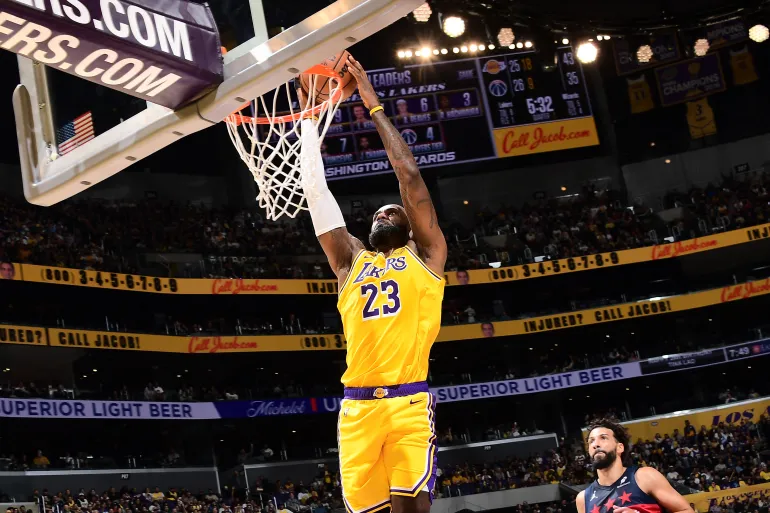
LeBron James records triple-double as Lakers dominate Wizards | Basketball News
Led by James’s 125th regular-season triple-double, the LA Lakers destroyed the Washington Wizards for their 49th regular season victory.
Published On 31 Mar 2026
LeBron James had 21 points, 12 assists and 10 rebounds, Austin Reaves added 19 points and nine assists, and the Los Angeles Lakers rolled to a 120-101 win over the Washington Wizards on Monday night.
It was James’s 1,228th career victory, including the playoffs, to tie Kareem Abdul-Jabbar for most in NBA history.
Recommended Stories
list of 3 itemsend of list
With star guard Luka Doncic serving a one-game suspension after getting called for his 16th technical foul of the season against Brooklyn on Friday, an energised James led the Lakers to their 12th win in the past 13 games, attacking the rim from the start, including throwing down two emphatic two-handed dunks set up by Reaves in the first quarter.
Luke Kennard and Jaxson Hayes each had 19 points off the bench, Deandre Ayton chipped in with 12, and the Lakers improved to 7-6 without Doncic in the lineup this season.
Los Angeles would have clinched a playoff berth and the Pacific Division title with the win and a Phoenix loss, but the Suns’ 131-105 victory over Memphis delayed the formality of securing a fourth straight trip to the postseason.
Will Riley led the Wizards with 20 points, and Justin Champagnie had 18 as they lost for the 19th time in 20 games.
Washington was actually ahead by one point after the first quarter, but Hayes had the final five in an 11-0 flurry early that gave Los Angeles a lead they would not relinquish again. The Lakers closed the half on a 38-13 run and took a 21-point lead back to the locker room.
James helped quiet the Wizards for good after they cut the deficit to 10 late in the third, finishing with his third triple-double of the season and 125th in the regular season of his 23-year career.


Coronation Street spoilers: New motives ‘give away’ who dies as Carl exposes Theo
New motives look set to be revealed on Coronation Street next week that could give away which of the five potential victims is killed off in April, with one killer possibly exposed

New motives look set to be revealed on Coronation Street next week that could give away which of the five potential victims is killed off(Image: ITV)
Spoilers for next week on Coronation Street could tease which character dies in the murder plot in April, as there’s new motives and new confessions.
Fans know that either Jodie Ramsey, Maggie Driscoll, Megan Walsh, Carl Webster or Theo Silverton will be brutally murdered in a dark episode next month. While moments on screen have proven why each of them is a worthy candidate for the grim death twist, new spoilers could make one character a front runner.
Next week, one character’s killer secret could finally be exposed by another villain. While all five potential victims take centre stage and are causing drama, there’s one villain in particular that could see his dark actions come to light very soon, and it could give away that Theo is the one who dies.
Spoilers for next week reveal that, Ben who’s facing drama with his ex-wife, suffers a dizzy spell, and his mum Maggie wants to call an ambulance, but Ben insists he’s fine. When he demands the truth about his dad, Maggie finally admits that Alan wasn’t his real father, but she doesn’t say who is.
READ MORE: Emmerdale icon says ‘good things come to an end’ after 17 years on soap amid big shake-upREAD MORE: EastEnders favourite left ‘broken’ over ’emotional’ baby twist in labour plot
Will Maggie be forced to reveal all when a situation between Amy and Ollie leaves her panicked? Ben tells his mum he wants nothing to do with her. Elsewhere, Kevin reveals Debbie has won her prison appeal, but she soon goes missing.
Carl soon finds her, and asks for £10,000 to pay off his debt to Fiona. Ronnie’s suspicious and calls Fiona, but will she back Carl’s claim? Later in the week, Debbie sparks concern at the hotel when she offends Tracy and Mary’s customer.
Will offers Sam an apology over the Megan situation, and Sam reluctantly shakes his hand but it’s clear he still doesn’t trust him. He tells Hope he’s been looking into grooming cases, as Toyah urges him to stop worrying about Megan and Will.
Soon a clash between Sam and Will leaves their loved ones rowing too, but is Will really to blame? When a paranoid Sam spots Megan and Will at the precinct he rushes to get someone, only for Will to claim he’s been at the pub all morning.
Also next week, Jodie pulls a sickie at work to spend the day with David, while Tim prepares to confront Trisha over their past. Lisa announces her divorce from Becky has come through, and as they celebrate they ask Jodie to look after baby Connie.
Meanwhile, Sarah shares her concern for Todd, leading to her meeting with Theo’s ex Danielle to ask if Theo was ever violent towards her. The incident leaves Theo furious, and he tells Todd their moving to Belfast in a matter of days.
Finally next week, Abi suggests to Summer that Debbie might not have been driving the car on the night of the crash. When Summer asks Debbie if Carl was driving, she panics and ends up injuring herself.
After a scan, Debbie learns she’s deteriorated after her dementia diagnosis. As for Summer, she’s told by Carl that if she wants to know who killed Billy she needs to stop pointing the finger at him and look closer to home.
So does this final spoiler make it clear that Theo will finally be exposed for killing Billy? Will this lead to residents finding out the truth and then taking revenge?
Coronation Street airs weeknights at 8:30pm on ITV1 and ITV X. * Follow Mirror Celebs and TV on TikTok , Snapchat , Instagram , Twitter , Facebook , YouTube and Threads .

Mixed signals for Japan: Jobless rate eases to 2.6% despite retail and industrial contraction
Mixed signals for Japan: Jobless rate eases to 2.6% despite retail and industrial contraction
Source link

Wales v Northern Ireland: The match nobody wants
Wales host Northern Ireland in a friendly on Tuesday, a match that nobody wants.
The fixture is having to take place because both teams lost their World Cup play-off semi-finals on Thursday, against Bosnia-Herzegovina and Italy respectively.
So, while the winners of those ties face each other in Zenica for a place at this summer’s tournament in the United States, Canada and Mexico, the losers must meet in Cardiff.
The game will provide fringe players with a chance to impress their bosses, Craig Bellamy and Michael O’Neill, who are understandably keen to stress the value of this encounter.
But for the fans and anyone else associated with these teams, this is a tough sell.
“For the supporters, it’s a complete dead rubber. It is one of the most ridiculous things I’ve ever heard – it’s pointless,” was the blunt assessment from former Northern Ireland midfielder Chris Brunt.
The reality, however, is that international football’s governing bodies have decreed the game must go ahead, whether anyone likes it or not.
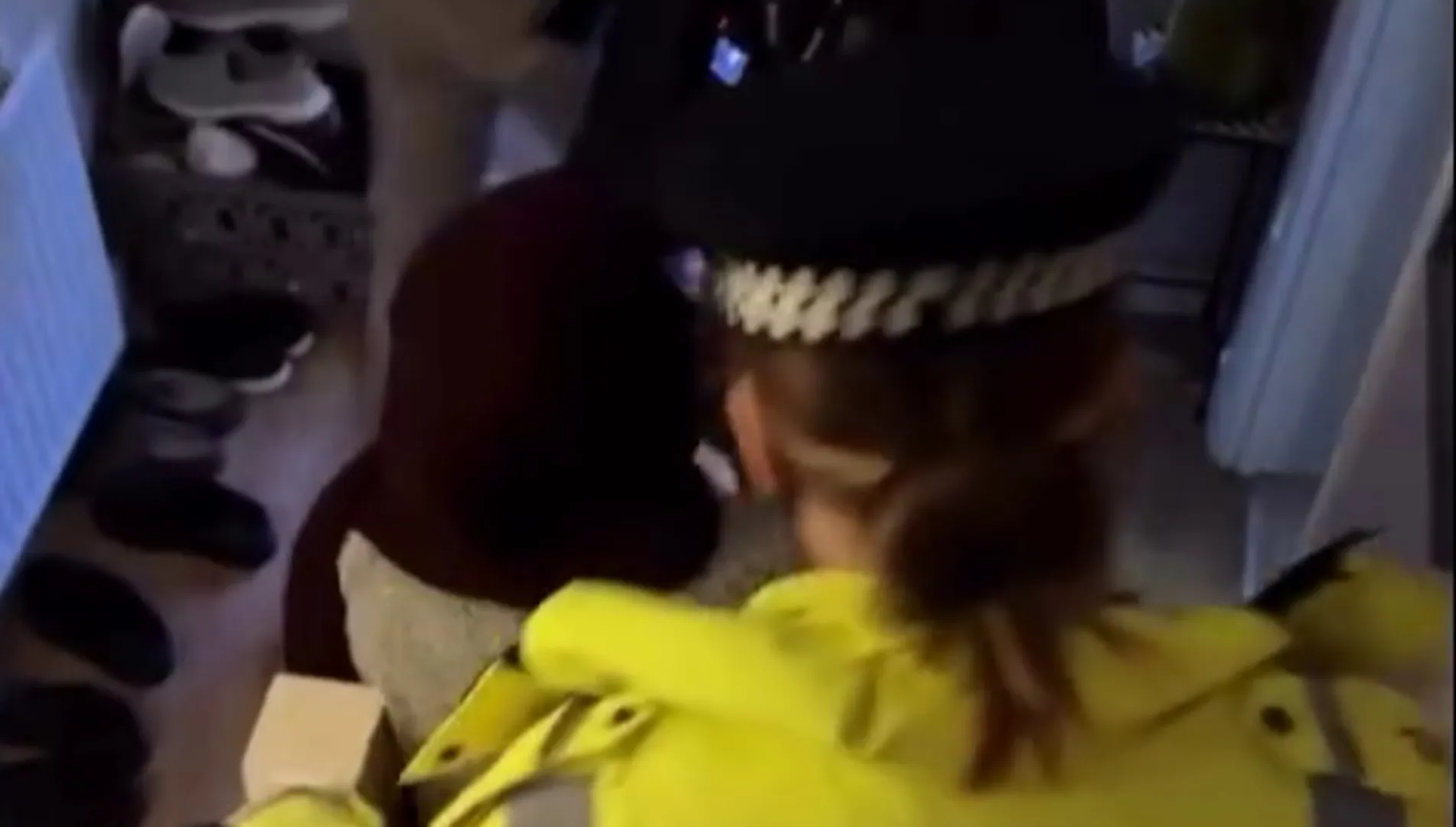
UK pro-Palestine activist arrested weeks after being released on bail | Conflict
UK pro-Palestine activist Qesser Zuhrah has been arrested on terrorism charges after being released on bail last month. Video shows masked officers taking her from her home at dawn over what supporters say was an Instagram story.
Published On 31 Mar 2026
'I sent eight letters': Drivers hope for payout from car finance redress scheme
Millions of motorists could be entitled to compensation with the financial regulator setting out how to apply
Source link

Stone Roses legend Mani’s son Gene slams tribute gig to late bassist as his uncle’s plans for show cause family rift
IT’S being billed as a huge tribute concert to Gary ‘Mani’ Mounfield, who died in November.
But I’m told the “Manichester” event in honour of the Stone Roses bassist, organised by his brother Greg, has caused a rift in the family.
The concert will see musicians including Zak Starkey, Baz Fratelli from The Fratellis, John Mcclure from Reverend And The Makers and Simone Butler from Primal Scream come together at Manchester’s Diecast in May.
Cast are also lined up to perform, along with Mick Rossi from Slaughter & The Dogs and Stone Roses guitarist Aziz Ibrahim.
But while the concert was believed to have the full support of Mani’s family, which includes his twin sons Gene and George, insiders say not everyone is in agreement.
A source said: “Mani’s legacy and celebrating that is so important to so many people.


“But not everyone related to him is happy about this concert.
“Even his young son Gene has voiced his concerns on social media.
“It is all very messy and is spilling over into the public domain.
“This is not what Mani would have wanted. His twin boys were everything to him.”
Greg confirmed earlier this month that he was organising the tribute concert, and said there were hopes of snaring Noel and Liam Gallagher to perform, as well as Johnny Marr.
He said: “I think it will be brilliant.
“With the names already in the hat, and the names we’re yet to announce, it’s a worthy thing, a tribute to our kid, a Mancunian legend, and I know he’d love it.
“He would be absolutely buzzing about it.”
Mani, who was best known for his work with Stone Roses and Primal Scream, died at home in Manchester aged 63.
Noel and Liam made an on-stage dedication to him during their Oasis ’25 Live reunion tour, while rock icons including Stone Roses singer Ian Brown turned out to pay their respects at his funeral.
As a fan of Mani, I hope this can be resolved quickly and without further upset.
LITTLE BRIT OF FAMILY TIME
BRITNEY SPEARS is being supported by her sons following her arrest for driving under the influence – and it’s about time too.
For years, the Circus singer was deserted by her boys – who she has with ex-husband Kevin Federline.
But it seems they are back in her life and bringing a smile to her face.
She shared a video on Instagram on a boat with Sean and Jayden, during a getaway, including a shot of them smiling together.
Britney wrote: “Thank you guys for all your support… Spending time with family and friends is such a blessing!”
AITCH FIZZES MUSIC
HE was flying high after his stint in I’m A Celebrity last year.
But now Aitch is facing another trial, and it could be just as gruesome.
I’m told the Strike Me A Pose rapper is embroiled in a legal row over his Syps drinks brand with two former directors of the company.
Aitch, real name Harrison Armstrong, created Syps back in 2023 with businessmen David Olusegun and Alexander El-Nemer – with the trio proudly showing off their fizzy, flavoured water at events across the UK.
But I’m told that partnership is now well and truly over, with David and Alexander resigning as directors.
A source said: “Harrison has fallen out with David and Alexander and it seems there is no going back.
“They’re in a full-blown legal dispute and it’s all in the hands of their lawyers.
“The three created the brand together so it could get messy.
“Harrison is still working on the brand and is running things with his manager.
“How quickly this is going to get resolved is the question. One thing is for sure though, Harrison wants it dealt with so he can move on.”
TAMER ROLE FOR HARDMAN ACTOR
TAMER HASSAN is swapping punch-ups for pull-ons after landing a major new deal with sportswear giant Reebok.
The hardman actor has filmed an advert for a bold campaign inspired by Robin Hood, of all people.
It sees Tamer playing a cheeky “friendly villain” who nicks sports kits before handing them out to kids.
He is joined by UK rapper K-Trap, and starry cameos from
Gary Oldman, Laila Morse and Lisa Maffia.
An insider said: “Tamer is genuinely thrilled to be part of something revitalised and forward-thinking.
“Reebok is part of the culture, and seeing it evolve with fresh energy in 2026 makes this really exciting.”
The retro-style campaign is also a nod to 2005 British crime flick The Business, which starred Tamer alongside Danny Dyer.
Filmed at a secret North London location, the advert is set to drop later this month and marks the start of a huge year for the actor.
He’s gearing up for the premiere of Rise Of The Footsoldier: Retribution at Cannes in May, ahead of its UK cinema release this summer.
From the big screen to the high street, it sounds like Tamer has a lot going for him right now.
TEARY NIGHT FOR ELLIE’S WOLF PACK
WOLF ALICE had an emotional night headlining the final evening of the Teenage Cancer Trust’s concert series – with frontwoman Ellie Rowsell breaking down in tears.
The group debuted two new songs, Hit The Sky and Gospel Oak, and towards the end of the latter, her voice broke and she became teary.
She asked the band to restart the track from the beginning of the final verse and was then hugged by guitarist Joff Oddie and bassist Theo Ellis.
Later, Theo admitted that performing in London’s Royal Albert Hall for the charity concert was making him emotional, too.
He said: “These are my best friends. It’s unbearable how much I want to cry all the time in this gaff.”
They deservedly picked up the British Group gong at the Brit Awards last month following the success of their fourth studio album, The Clearing – one of the best British albums of 2025.
If you’re yet to see them, make sure you make it to one of the festivals they’re playing across the UK this summer.
BENSON SWOON
BENSON BOONE got his fans hot under the collar while cooking up this tour announcement.
He whipped off his top, cracked eggs with his biceps and showed off his rippling muscles as he added ingredients to a bowl while baking a cake.
It was eventually topped with the poster for his new Wanted Man tour.
I have to applaud him for the sexy and hilarious snippet posted on Instagram, but it’s a sea change from 12 months ago when he told Rolling Stone magazine that he didn’t want to rely on his body to sell shows.
He told the mag: “I definitely remember there was a time where I would take my shirt off because I didn’t know what else to do.
“I don’t want to rely on my physical form to be the primary driver of my shows.”
It’s a good job he’s had a fair few hits.
YOU BOOTY, KATYA
STRICTLY’S Katya Jones looked the part – and had the footwear to match – when she strutted in to watch the opening night of musical Kinky Boots.
And she was in for a real treat.
With glitter, tinsel, red leather and high heels, this latest production of the hit show is a dazzling spectacle, the likes of which the West End has rarely seen.
Fellow Strictly star Johannes Radebe is mind-blowing as drag queen Lola, above, proving his singing voice and stage charisma are almost as brilliant as his dancing.
But playing the perfect straight man is X Factor winner Matt Cardle as Charlie Price, who inherits his father’s ailing shoe factory in Northampton and comes up with a plan to save it by making footwear for Lola and her fellow artistes.
Fun, feel-good and unforgettable, everyone should try these Kinky Boots for size.

Pentagon calls report on Hegseth BlackRock defense fund bets before Iran war as ‘false and fabricated’

Im Yeongsik/iStock via Getty Images
A broker for U.S. Defense Secretary Pete Hegseth sought to make a large investment in major defense firms in the lead-up to the Iran war, according to the Financial Times. The Pentagon has dismissed the report.
The FT reported Tuesday that
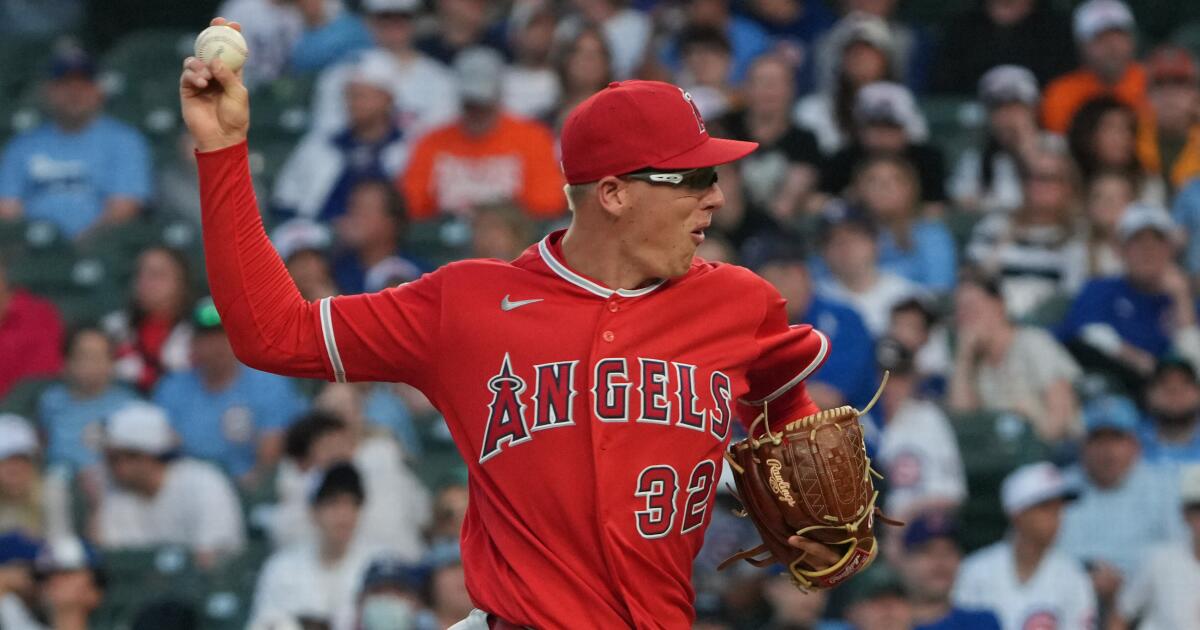
Ryan Johnson struggles to hold back Chicago Cubs in Angels’ loss
CHICAGO — Edward Cabrera pitched six shutout innings, Ian Happ hit a solo homer and the Chicago Cubs beat the Angels 7-2 on Monday night.
Cabrera gave up one hit and walked one in his Chicago debut, delighting the crowd of 36,702 on a picturesque night at Wrigley Field. The 6-foot-5 right-hander was acquired in a January trade with Miami.
Carson Kelly and Moisés Ballesteros each drove in two runs for the Cubs (2-2) in the opener of a three-game series.
Yoán Moncada hit a two-run homer for the Angels (2-3) in their third consecutive loss. Ryan Johnson (0-1) yielded six runs and seven hits over 3⅓ innings in his first career start.
Angels star Mike Trout went 0 for 4 with two strikeouts after collecting six hits and walking seven times over the first four games of the season.
Johnson struggled with his control in the first, walking the bases loaded. Pete Crow-Armstrong reached on an 11-pitch walk ahead of Nico Hoerner’s sacrifice fly. Kelly made it 3-0 with a two-out fly ball that landed just out of the reach of a lunging Trout in shallow right-center for a two-run single.
The Cubs added three more in the third. Happ extended his homer streak to three games, and Ballesteros grounded a two-run single into right field.
Cabrera (1-0) struck out five while throwing 80 pitches, 49 for strikes. Colin Rea worked three innings for his first save of the season, striking out Moncada with two runners on for the final out.

Iran war live: Kuwaiti oil tanker hit in Dubai port; 3 UN troops killed | US-Israel war on Iran News
Live updatesLive updates,
Leaders of Saudi Arabia, Qatar and Jordan meet in Jeddah as US-Israeli attacks on Iran continue, and Iranian counterattacks hit Gulf nations.
Published On 31 Mar 2026
Pentagon denies that Hegseth’s broker sought investment before Iran war | Business and Economy News
US Department of Defense demands retraction of report alleging broker sought multimillion-dollar investment for Hegseth.

Published On 31 Mar 2026
The United States Department of Defense has demanded the retraction of a newspaper report alleging that a broker for defence chief Pete Hegseth attempted to make a large investment in weapons companies in the run-up to the war on Iran.
Pentagon spokesman Sean Parnell demanded the “immediate” retraction on Monday after The Financial Times reported that a wealth manager for the defence secretary contacted BlackRock about making a multimillion-dollar investment in a defence-related fund in the weeks leading up to the war.
Recommended Stories
list of 4 itemsend of list
Hegseth’s broker at Morgan Stanley ultimately did not go ahead with the investment in the exchange-traded fund, whose holdings include Lockheed Martin and Northrop Grumman, because it was not yet available for purchase at the time, The Financial Times reported, citing three unnamed sources.
“This allegation is entirely false and fabricated. Neither Secretary Hegseth nor any of his representatives approached BlackRock about any such investment,” Parnell said in a post on social media.
“This is yet another baseless, dishonest smear designed to mislead the public.”
Hegseth and his department “remain unwavering in their commitment to the highest standards of ethics and strict adherence to all applicable laws and regulations,” Parnell said.
Al Jazeera could not independently confirm the Financial Times report.
The Defense Department did not immediately respond to a request for comment sent outside of usual business hours.
The Financial Times and Morgan Stanley also did not immediately respond to inquiries.
BlackRock declined to comment.
The report comes amid scrutiny of well-timed trades in financial and prediction markets that have fuelled speculation that figures with insider knowledge may be profiting off of US President Donald Trump’s war plans.
While The Financial Times reported that the attempted investment by Hesgeth’s broker did not go ahead, the defence chief would not have made money on such a purchase in the month since the war began.
While the iShares Defense Industrials Active ETF has risen more than 25 percent over the past year, it has fallen nearly 13 percent since the US and Israel launched strikes on Iran on February 28.

Iconic 80s band reveal they’ve quit performing live
A MAJOR band from the eighties have revealed that they won’t be performing live on stage again.
It comes nearly two years after the group sparked reunion rumours when they met up together in New York after attending the Brit Awards.
Erasure were responsible for some utterly iconic tunes back in their day, many of which have stood the test of time.
But now they’ve revealed that they have already performed their final gig.
Speaking to The New Cue newsletter, Erasure’s Vince Clarke spoke about the decision to stop touring and how it wasn’t an easy choice.
Vince was asked: “What’s the bravest career decision you’ve ever made?,” in an interview with the outlet.


To which Vince responded: “To stop touring.”
He then continued to explain the reasoning behind the decision in more depth.
Vince elaborated: “What happened was [Erasure singer] Andy Bell and myself, we did these fan shows before Christmas and they were great but…
“It’s difficult to explain… the simple answer would be is I just don’t want to be really old and going onstage!
“I just don’t want to do it anymore.”
Vince and Andy sent fans rushing to conclusions of a reunion years ago after posting a vague post online with the caption: “plotting and planning.”
The news thrilled fans on X, who immediately started speculating what they had up their sleeves.
“Let’s GO! Gotta see Erasure again live soon, it’s been way too long!” wrote one fan.
“So thrilled you two are still working together all these years later,” said a second.
A third noted: “New album? Would kill for a follow up to Erasure”
Erasure released their debut album Wonderland in 1985, and in the following year they broke into the UK charts with their single, Sometimes.
Since that time, they have released a staggering 19 albums, with their last being 2022’s Day-Glo.
They won Best British Group at the 1989 Brit Awards, with other hit tracks including A Little Respect, Always, Chains of Love and Breath of Life.
Andy went on to have a successful solo career, while Vince Clarke had previously been a founding member of two more iconic bands, Depeche Mode and Yazoo.