



Lola Young is recovering after addiction woes led to collapse
British singer-songwriter Lola Young is opening up about the “breaking point” that steered her toward recovery.
The “Messy” hitmaker told Rolling Stone in a recent interview that she was grateful that she fainted onstage late last year, and framed the scary ordeal as a wake-up call. “What do you call that? Like, a breaking point which allowed me to then be able to be here today, allowed me to be better for my fans, better for the future, and better for myself,” she told the outlet.
In September, the Grammy winner collapsed onstage during a performance at the All Things Go Music Festival in New York City. Following the health scare — which drew speculation and worry from fans who’d watched the viral video of Young stumbling and dropping her microphone before falling backward — Young canceled the remainder of her tour, which included a 21-stop North American run.
The tour, in support of her third album, “I’m Only F— Myself,” was expected to conclude with two dates at the Hollywood Palladium in December. Instead, she spent two months seeking holistic addiction treatment in a facility that prioritizes psychotherapy. She’s now attending 12-step meetings and working with a sponsor.
When announcing that she would have to nix forthcoming performances to prioritize her health, Young told fans on social media that she was “going away for a while” and apologized, writing, “I love this job and I never take my commitments and audience for granted so I’m sorry to those who will be disappointed by this. … I really hope you’ll give me a second chance … once I’ve had some time to work on myself and come back stronger.”
Young told Rolling Stone that, naturally, some folks were really angry that she’d canceled her tour. “[I]t was a decision that I had to make, and it was sad that I had to do that. What else was I going to do, die? That was the reality of where my addiction was heading.”
This wasn’t the first health incident for Young, who is known for her chart-topping breakout hit, “Messy.” The budding megastar performed at the Coachella Valley Music & Arts Festival in 2025, and during her Weekend 1 performance, she struggled to get through. The heat lingered around 100 degrees, and while Young danced and sang, she began to visibly gag and retch before running off the stage and asking for a bucket.
The acclaimed artist has been candid about her struggles with cocaine and alcohol addiction and often explores those struggles in her lyrics. In the song “d£aler,” a bouncy goodbye letter to her drug dealer, she sings about spending the day trying to be sober but feeling miserable nonetheless: “I wanna get away, far from here / Pack my bags, my drugs, and disappear.” … “Pack my bags and tell my dealer I’ll miss him.”
Young also sat down with the Times UK and said that she didn’t want to say too much but confirmed that she was in recovery for drug addiction. “But what I would say is that recovery is an ongoing process. I’m not the finished article, but I’m doing a hell of a lot better.”

3 FBI agents fired after investigating Trump file class action suit alleging ‘retribution campaign’
WASHINGTON — Three fired FBI agents sued on Tuesday to try to get their jobs back, saying in a class-action lawsuit that they were illegally punished for their participation in an investigation into President Trump’s efforts to overturn his 2020 election defeat.
The federal lawsuit adds to the mounting list of court challenges to a personnel purge by FBI Director Kash Patel that over the last year has resulted in the ousters of dozens of agents, either because of their involvement in investigations related to Trump or because they were perceived as insufficiently loyal to the Republican president’s agenda.
The lawsuit in federal court in Washington was technically filed on behalf of just three agents but may have much broader implications given that its request for class-action status could open the door for agents fired since the start of the Trump administration to get their jobs back.
The three agents — Michelle Ball, Jamie Garman and Blaire Toleman — were fired last October and November in what they say was a “retribution campaign” targeting them for their work on the investigation into Trump. The agents had between eight and 14 years of “exemplary and unblemished” service in the FBI and expected to spend the remainder of their careers at the bureau but were abruptly fired without cause and without being given a chance to respond, the lawsuit says.
“Serving the American people as FBI agents was the highest honor of our lives,” they said in a statement. “We took an oath to uphold the Constitution, followed the facts wherever they led and never compromised our integrity. Our removal from federal service — without due process and based on a false perception of political bias — is a profound injustice that raises serious concerns about political interference in federal law enforcement.”
Trump’s indictment
The investigation the agents worked on culminated in a 2023 indictment from special counsel Jack Smith that accused Trump of illegally scheming to undo the results of the presidential election he lost to Democrat Joe Biden in 2020. Smith ultimately abandoned that case, along with a separate one accusing Trump of illegally retaining classified records at his Mar-a-Lago estate in Palm Beach, Fla., after Trump won back the White House in 2024, citing Justice Department legal opinions that prohibit the federal indictments of sitting presidents.
The lawsuit notes that the firings followed the release by Sen. Chuck Grassley, the Republican chair of the Senate Judiciary Committee, of documents about the election investigation — known as Arctic Frost — that he said had come from within the FBI. Those records included files showing that Smith’s team had subpoenaed several days of phone records of some Republican lawmakers, an investigative step that angered Trump allies inside Congress.
The complaint names as defendants Patel and Atty. Gen. Pam Bondi, accusing them of having orchestrated the firings despite being “personally embroiled” either as witnesses or attorneys in some of the legal troubles Trump has faced.
Patel, for instance, was subpoenaed to appear before a federal grand jury investigating Trump’s retention of classified documents at Mar-a-Lago and had his phone records subpoenaed, while Bondi was part of the legal team that represented Trump at his first impeachment trial, which resulted in his acquittal.
“And now, by virtue of presidential appointment to the pinnacle of federal law enforcement, Defendants are abusing their positions to claim victories that eluded them on the merits,” the lawsuit states.
Spokespeople for the FBI and the Justice Department declined to comment on the ongoing litigation. Patel and Bondi have said the fired agents and prosecutors who worked on Smith’s team were responsible for weaponizing federal law enforcement, a claim that was also asserted in their termination letters but that the plaintiffs call defamatory and baseless.
Fired agents call for ‘fundamental constitutional protections’
Dan Eisenberg, a lawyer for the agents, said in a statement that his clients were fired without any investigation, notice of charges or chance to be heard.
“This lawsuit seeks to reaffirm fundamental constitutional protections for FBI employees, ensuring they can perform their duties without fear or favor. We all benefit when law enforcement officers’ only loyalty is to facts and the truth,” said Eisenberg, who is with the firm of Emery Celli Brinckerhoff Abady Ward & Maazel.
The lawsuit asks for the agents to be reinstated to their positions and for a court declaration affirming that their rights had been violated. It also seeks to represent a class of at least 50 agents who have been terminated since Jan. 20, 2025, or will be. Those agents also stand to recover their jobs in the event the case is successful and the requested class-action status is granted.
Others have been fired too
Other fired employees who have sued include agents who were photographed kneeling during a racial justice protest in 2020; an agent trainee who displayed an LGBTQ+ flag at his workspace; and a group of senior officials, including the former acting director of the FBI, who were terminated last summer.
The firings have continued, with Patel last month pushing out a group of agents in the Washington field office who had been involved in investigating Trump’s hoarding of classified documents. Trump has insisted he was entitled to keep the documents when he left the White House and has claimed without evidence that he had declassified them.
Tucker writes for the Associated Press.

Six stars who will not be playing at the 2026 World Cup in Canada, USA & Mexico
One of the greatest strikers of the past 15 years – Poland’s Robert Lewandowski – is among the big names who will not be playing at the 2026 World Cup in Canada, the United States and Mexico.
The 37-year-old Barcelona striker, who has scored 89 goals for his country, was not able to inspire his side as they lost 3-2 in Stockholm against Sweden in Tuesday’s play-off final.
Lewandowski, who won the German Bundesliga title on 10 occasions – twice with Borussia Dortmund and then in eight successive seasons with Bayern Munich, before winning La Liga twice with Barca – may have played in his last major international tournament.
We have taken a look at six players who have missed out on qualifying for this summer’s finals.

Hegseth lifts Army suspension of Kid Rock flyby pilots

March 31 (UPI) — Secretary of Defense Pete Hegseth announced Tuesday that helicopter pilots who conducted a flyby of musician Kid Rock‘s Nashville estate over the weekend would not be punished, an abrupt reversal of the U.S. Army’s decision to suspend the Apache helicopter crews amid review of their conduct.
“@USArmy pilots suspension LIFTED,” Hegseth said on X. “No punishment. No investigation.
“Carry on, patriots,” he said.
He also thanked Rock, whose real name is Robert James Ritchie, a vocal ally of President Donald Trump.
“You’re a disgrace,” Adam Kinzinger, a former Republican House of Representative from Illinois and a retired U.S. Air Force and Air National Guard officer, said in an expletive-laced statement responding to Hegseth’s announcement, in which he called the defense secretary an “unqualified clown.”
Rock published a pair of videos to social media on Saturday showing him cheering on a pair of Apache helicopters flying by and hovering near his Nashville estate, which he has called “The Southern White House.”
“This is a level of respect that [expletive] for brains Governor of California will never know,” Rock wrote in the caption to the videos. “God bless America and all those who have made the ultimate sacrifice to defend her.”
After the videos went viral, the U.S. Army announced Monday that it was conducting an administrative review of the incident.
Army spokesman Maj. Montrell Russell confirmed Tuesday that two Apache helicopters from the 101st Combat Aviation Brigade at Fort Campbell, Ky., located about 60 miles north of Nashville, had conducted a flight in the Nashville area that has attracted media and the public’s attention.
“The personnel involved have been suspended from flight duties while the Army reviews the circumstances surrounding the mission, including compliance with relevant [Federal Aviation Administration] regulations, aviation safety protocols and approval requirements,” Russell said in a statement.
Hegseth offered no explanation for the reversal, which came not long after Trump told reporters at the White House that he had not seen the video.
Asked what he thought of the crews’ suspension, Trump said, “Well, they probably shouldn’t have been doing it.”
“Yes, you’re not supposed to be playing games, right? I’d take a look at it,” he said.
“They like Kid Rock. I like Kid Rock. Maybe they were trying to defend him. I don’t know.”
Rock has long been a vocal supporter of Trump and has appeared at the White House and in a recent Health and Human Services Department promotional video where he is seen working out bare-chested with HHS Secretary Robert F. Kennedy.
He has also lashed out at Trump’s critics, notably California Gov. Gavin Newsom.

New EA-37B Compass Call Electronic Warfare Jets Cross Atlantic, Middle East Next? (Updated)
A pair of the U.S. Air Force’s new EA-37B Compass Call electronic warfare jets have touched down at RAF Mildenhall in England, from where they could move forward and join America’s growing aerial armada in the Middle East.
Last night, open-source flight trackers began to track the progress of the two jets — tail numbers 19-1587 and 17-5579 — that were flying with the callsigns AXIS41 and AXIS43. Photos of the aircraft arriving at Mildenhall were provided to TWZ by g.lockaviation.

This could become the EA-37B’s first operational deployment, but we cannot say that for certain at this time. One of the EA-37Bs was in Europe earlier this year to introduce airmen to the platform, but it was not yet operational. You can read more about that here.
It is worth bearing in mind that, during Operation Desert Storm in 1991, a pair of E-8 Joint STARS surveillance aircraft were also deployed, but were operated by civilian crews. The same could be the case here, or at least mixed crews.
The 55th Wing at Offutt Air Force Base, which operates the Compass Calls, declined to provide TWZ with a comment, deferring us to CENTCOM, which could not immediately comment.

The Air Force plans to acquire 10 EA-37Bs to replace its aging and steadily shrinking fleet of turboprop-powered EC-130H Compass Call planes, of which only four are still in service. Two are deployed to the Middle East for Operation Epic Fury. There have been some unconfirmed reports that these aircraft may have been damaged in the attack on Prince Sultan Air Base that saw an E-3 destroyed. Losing EC-130H capability in the region could have very well prompted an emergency deployment of EA-37Bs, even ahead of their planned entry into full operational availability. But we cannot confirm that is the case at this time.

Electromagnetic warfare, evolved
The new aircraft are designed to provide critical standoff jamming support against enemy communications systems, including hostile air defense systems.
As we have pointed out, even improvised systems cobbled together by Iranian-backed Houthi militants in Yemen, as well as their hodgepodge of other air defenses, have shown their ability to challenge even the most advanced fighters in the U.S. inventory. Iran’s capabilities, while now in a deeply degraded state, are more advanced and already seem to have had some success in targeting U.S. military aircraft, while others have faced close calls.
At the same time, while air defenses are certainly part of the equation, simply keeping the Iranian military from communicating and (further) disrupting their already fractured command-and-control infrastructure is a highly significant capability to bring to bear.
The EA-37B also has an important intelligence, surveillance, and reconnaissance (ISR) function, given its ability to spot, track, and geolocate various types of emitters.
This aircraft, which represents the cutting edge in U.S. electronic warfare capabilities, would be highly important for any ground operation, helping to protect troops put in harms way, should this come to pass.
We will have to wait and see if the EA-37Bs make the leap to the CENTCOM area of responsibility. If they do, it will be something of a baptism by fire for America’s new Compass Call.
A full deep-dive into the various capabilities of the EA-37B can be found in this interview with top executives from the two co-primes that are working on the electronic attack aircraft program.
UPDATES:
Our coverage for the day has concluded.
UPDATE: 5:38 PM EST –
CENTCOM spokesman Capt. Tim Hawkins provided us with the latest casualty figures for Epic Fury.
There have been 348 troops wounded, six seriously and 315 have returned to duty. There have been 13 troops killed.
Trump told reporters at the White House that the U.S. military will soon depart from the Strait of Hormuz.
“We’ll be leaving very soon,” he proclaimed. “What happens [there] we’ll have nothing to do with.
CNN said top administration officials acknowledge that the U.S. cannot swiftly end the war within the Trump-imposed four to six week timeline and keep the Strait of Hormuz.
Secretary of State Marco Rubio reiterated the Trump administration’s rationale for going to war with Iran, stating “we were on the verge of having an Iran that had so many missiles and so many drones that nobody could do anything about their nuclear weapons program…”
It appears that USS Tulsa and USS Santa Barbara, a pair of U.S. Navy Independence class Littoral Combat Ships (LCS) configured for minesweeping, remain in the Pacific.
According to open-source researcher MT Anderson, satellite imagery shows vessels moored alongside each other at Sembawang Shipyard in Singapore. As we have previously noted, ships remain thousands of miles away from their primary assigned operating area in the Middle East, where the conflict with Iran grinds on. That despite concerns that the Strait of Hormuz could be mined.
Iran released new video of its Eagle 44 underground airbase showing it still has some aircraft. As TWZ editor-in-chief Tyler Rogoway notes in a post on X, low-resolution satellite imagery from March 16 shows relatively little damage at the site. However, things may have changed since then and the site may have been it. Regardless, it doesn’t matter if Eagle 44 only has jets, which wouldn’t last very long even if they got off the ground. However, if the facility were stuffed with missiles, that would be a concern. You can read more about Eagle 44 here.
UPDATE: 4:06 PM EST –
In a brief exchange during an interview with NBC News Tuesday afternoon, Trump hinted that Epic Fury might be drawing to a close.
“We’re doing great,” Trump told the network. “And it’s coming to an end.”
He offered no further details.
The U.K. is sending more troops and Sky Sabre air defense systems to the Middle East to defend against Iranian attacks. This will bring the total number of UK personnel in the Gulf and Cyprus to around 1,000, the BBC noted.
“On a trip to the Gulf nations, Defense Secretary John Healey said extra air defence teams and systems would be deployed to Saudi Arabia, Bahrain and Kuwait while the use of Typhoon jets in Qatar will be extended,” the outlet added. “My message to Gulf partners is: Britain’s best will help you defend your skies.”
Iran’s foreign minister Abbas Araghchi told Al Jazeera that his country is exchanging messages with the U.S. either directly or through friends in the region.
But that doesn’t mean there are peace talks with Washington, Araghchi posited.
“I receive messages from [U.S. envoy Steve] Witkoff directly, as before, and this does not mean that we are in negotiations,” he told the news outlet.
Araghchi added that Iran has no “faith that negotiations with the U.S. will yield any results. The Trust level is zero.”
Netanyahu said that as a result of constant Israeli attacks on Iran, “sooner or later, it will end up falling.”
The Israeli leader also said “we are working on transforming Israel into a super nation in the region and globally.”
The IRGC confirmed the killing of another Iranian leader, this time Jamshid Eshaghi, head of budget and financial affairs for the Iranian Armed Forces General Staff. He was killed in a missile strike in Tehran on an unspecified date, according to the IRGC.
Eshaghi played a key role in evading oil sanctions and financing the group’s missile projects, according to Ariel Oseran, senior Middle East correspondent for Israel’sI24 News in a post on X.
The State Department said it is “tracking reports of threats against locations where American citizens gather” in Saudi Arabia. ”We advise U.S. citizens that hotels and other gathering points including U.S. businesses and U.S. educational institutions may be potential targets.”
UPDATE 12:46 PM EST –
The Navy released video today of the aircraft carrier USS George H.W. Bush departing for deployment. As we previously noted, the carrier is reportedly heading to the Middle East region. The Bush will likely replace the aircraft carrier USS Gerald R. Ford, which left the region and is undergoing repairs in Croatia after a fire.
Israeli Prime Minister Benjamin Netanyahu hinted at something on Tuesday that at one time was unthinkable – a military alliance with Saudi Arabia and other Arab nations.
According to Israeli media, “Netanyahu told ministers at a cabinet meeting that new alliances are being formed with leaders of Arab countries who ‘are talking about fighting together on our side,’” The Times of Israel reported.
“In the past, I had secret conversations with Arab leaders,” Netanyahu reportedly said. “I told them, ‘As soon as Iran can, it will conquer you and overthrow your kingdoms.’ Back then, they didn’t really internalize things. Today they understand.”
Lebanon has informed the United Nations in a letter that it has outlawed Hezbollah’s military wing. Beirut’s letter, dated a few weeks ago but made public today, also mentioned the Lebanese government’s March 2 decision to ban all military activity by the group.
Hegseth not only validated Trump’s idea to move forward with plans to attack Iran, he also downplayed the inherent risks of the conflict spiraling out of control, according to CNN.
Poland has no intention of shipping any Patriot batteries to the Middle East despite a request from the U.S. to do so, says Polish Defense Minister Władysław Kosiniak-Kamysz.
“Our Patriot batteries and their armament are used to protect Polish skies and NATO’s eastern flank,” he stated on X. “Nothing is changing in this regard, and we are not planning to relocate them anywhere! Our allies know full well and understand how important the tasks we have here are. Poland’s security is an absolute priority.”
The Islamic Revolutionary Guard Corps (IRGC) has threatened to strike 18 U.S. technology and defense-related companies operating in the Middle East, Israel’s I24 News reported. The IRGC warned the action could begin as early as tomorrow night if Iran’s senior commanders are targeted.
“In a statement, the IRGC urged employees of the listed firms to evacuate immediately, and advised nearby residents to leave surrounding areas, describing the companies as ‘terrorist’ entities allegedly supporting US and Israeli operations against Iran,” the publication added.
U.S. President Donald Trump said today that countries should be prepared to go to the Strait of Hormuz and “take” fuel themselves, urging them to show greater resolve. Writing on Truth Social, he argued that nations would need to “learn how to fight for yourselves,” adding that the United States would no longer step in to assist, particularly after what he described as their refusal to support efforts to topple Iran’s leadership.
Trump suggested that countries facing shortages could instead purchase jet fuel from the United States, where supplies are abundant. He added that Iran had effectively been “decimated” and concluded by telling nations to secure their own oil.
In a press conference today, U.S. Secretary of War Pete Hegseth stressed that Operation Epic Fury would conclude “on our terms” and that the United States remains committed to shaping the outcome of the conflict according to its own objectives.
The next days of the Iran war will be “decisive,” Pentagon chief Hegseth said at his first news conference in nearly two weeks. He adds: “We have more and more options, and they have less… in only one month, we set the terms, the upcoming days will be decisive. Iran knows that, and there’s almost nothing they can militarily do about it.”
The war secretary reaffirmed that the option of some kind of ground campaign has not been ruled out. Hegseth said that “maybe negotiations will work,” but he was unwilling to commit one way or the other when asked about the potential for American boots on the ground.
Hegseth continued:
“You can’t fight and win a war if you tell your adversary what you are willing to do or what you are not willing to do, to include boots on the ground. Our adversary right now thinks there are 15 different ways we could come at them with boots on the ground, and guess what? There are. And so if we needed to, we could execute those options on behalf of the president of the United States and this department.”
“Or maybe we don’t have to use them at all. Maybe negotiations work, or maybe there’s a different approach. But the point is to be unpredictable in that you certainly do not let anybody know what you’re willing to do or not do.”
Hegseth went on to argue that recent events have exposed the level of support the United States can expect from its allies, suggesting that their responses have fallen short. According to Hegseth, while the missiles in question do not threaten the United States directly but rather its allies, requests for assistance — or even basic overflight access — have often been met with hesitation or obstacles.
Hegseth also confirmed that he had briefly visited the U.S. Central Command region recently.
He concluded by warning that an alliance loses its meaning if member countries are unwilling to stand together when it matters most.
When it comes to overflight access, France has apparently joined Spain in denying U.S. military access to their airspace for taking part in attacks on Iran. In a statement, Trump slammed France for refusing to let U.S. military aircraft carrying military supplies operate in its airspace.
In other France-related news, Israel has apparently stopped defense exports to the European country, citing “hostile attitude,” sources told The Jerusalem Post.
Meanwhile, Italy confirmed that it denied permission for U.S. military aircraft to land at Sigonella Air Base in Sicily last week, before heading to the Middle East; this was due to Washington having not sought prior authorization from the government in Rome, Reuters reports. A source at the Italian defense ministry told The Guardian that “some US bombers” had been due to land at Sigonella en route to the Middle East. Otherwise, U.S. military aircraft continue to operate from Italian airbases as a matter of course, the defense ministry confirmed.
Gen. Dan Caine, the Chairman of the Joint Chiefs of Staff, has said the U.S. military is delivering precision strikes against manufacturing nodes “deep within Iran.”
He says around 11,000 targets have been hit in the past 30 days. The U.S. military “continues to assert dominance over the Iranian Navy,” he added.
Caine added that more than 150 ships have been “taken out.”
An underground missile storage facility in Sofeh, in Isfahan province, appears to be among the hardened facilities targeted in recent strikes. Earlier accounts suggested that the target was an Iranian underground missile base, but that seems to be refuted by the geolocation of the imagery available.
Videos purporting to show the aftermath of the strikes include multiple secondary explosions, suggesting that bunker-busting munitions managed to penetrate the vaults and then detonate the missiles stored there. As we have described in the past, a key vulnerability of Iranian subterranean installations is the risk that even a single weapon penetrating their hardened exterior by any means could have absolutely catastrophic results.
Officials familiar with U.S. and Western intelligence assessments say the U.S.-Israeli war on Iran has fractured the Iranian government, making it harder for the country to make decisions or coordinate large-scale retaliatory attacks, The New York Times reports.
Since the conflict began four weeks ago, several dozen Iranian leaders and their deputies have been killed. Survivors face significant communication challenges and are unable to meet in person, fearing that their calls could be intercepted by the United States or Israel and lead to airstrikes.
Although Iran’s security and military agencies remain operational, the government’s capacity to develop new strategies or policies has been significantly weakened.
Iranian state media reported yesterday that a parliamentary committee has approved a plan to impose tolls on ships passing through the Strait of Hormuz.
According to a Telegram post by the Fars News Agency, the strait would remain closed to vessels from the United States, Israel, and countries involved in sanctions against Iran. The report added that Iran would play a “sovereign” role in enforcing the new system.
The proposal, which has been backed by Iran’s parliament security committee, would still require agreement from other countries bordering the strait. Details on the level of the proposed tolls have not been disclosed.
Meanwhile, as you can read about in our previous coverage, President Trump warned that if no agreement is reached with Iran — including reopening the Strait of Hormuz shipping route — the U.S. military forces would destroy “all of their Electric Generating Plants, Oil Wells and Kharg Island (and possibly all desalinization plants!).”
More information on the proposed toll arrangement emerged today, including the surprising suggestion that Oman is slated to help shape the legal framework. This was reported by Fars and later picked up by Bloomberg, but has yet to be independently verified. Oman has strong relations with the United States, including extensive security cooperation. Oman also plays a key role as a regional mediator, particularly between the United States and Iran.
A pair of container ships operated by the Chinese shipping giant Cosco have successfully transited the Strait of Hormuz and exited the Gulf, according to ship-tracking data.
The vessels, CSCL Indian Ocean and CSCL Arctic Ocean, sailed near the Iranian-controlled island of Larak and are now heading toward Port Klang in Malaysia.
While Iran has largely restricted traffic through the key waterway, it appears to be permitting limited passage for ships from countries it considers “non-hostile,” including Thailand, China, Pakistan, and India.
Iran struck a fully laden crude oil tanker anchored in the port of Dubai, setting it on fire and damaging its hull in what marks the latest attack on commercial shipping in the Gulf and the Strait of Hormuz during the conflict.
Authorities in Dubai said the drone strike on the Al Salmi tanker sparked a blaze that was brought under control early Tuesday, several hours after the incident was first reported. They later confirmed that no oil spill had occurred.
Iran is reportedly pushing the Houthis to prepare for a renewed campaign against Red Sea shipping, contingent upon any further escalation by the United States in the conflict with Iran. This was reported by Bloomberg, citing European officials familiar with the matter.
An Israeli military spokesperson has said the country is ready to continue its offensive against Iran for an extended period. According to Reuters, Lt. Col. Nadav Shoshani told reporters that Israel is prepared for “weeks” more of fighting in the conflict, which began on February 28 when joint U.S.-Israeli airstrikes killed Iran’s supreme leader, Ali Khamenei. He emphasized that while the final decision rests with political leaders, “we are prepared to keep operating for weeks to come. We have the targets for that, the munitions for that, the manpower for that, and it’s up to the leadership to decide”.
His remarks follow comments from Israeli Prime Minister Benjamin Netanyahu, who said the campaign was “definitely beyond the halfway point,” later clarifying that he was referring to progress in terms of “missions” rather than “not necessarily in terms of time.”

In a televised interview, Netanyahu has claimed that Iran has tried to kill President Trump twice, although he did not provide a timeline for when these attempts were made or how. “They’re still trying to kill him,” the Israeli leader added.
The Israeli military claimed today that all of its critical and essential pre-war targets in Iran will have been destroyed by Wednesday.
This represents the complete elimination of the top two priority categories of pre-war targets and is part of the broader campaign in which the IDF has destroyed roughly 60 to 70 percent of all designated targets within the Islamic Republic.
“Critical” targets include those posing an immediate threat to Israel, such as ballistic missile facilities, as well as key sites central to the objectives of the campaign, including the few remaining nuclear-related installations.
On the topic of nuclear-related targets, President Trump disclosed today that he considers that Iran’s nuclear facilities are buried so deeply that it would be difficult to raid them to secure their enriched uranium stockpiles.
“I don’t even think about it. I just know that, you know, that’s so deeply buried it’s gonna be very hard for anybody,” Trump told CBS News.
TWZ has previously explored the possibility of U.S. and/or Israeli authorities launching a special operations ground raid to extract or otherwise neutralize Iran’s stockpile of enriched uranium. While noting that it is far from easy to achieve this objective from the air alone, it is also true that Israel has demonstrated its ability and willingness to carry out complex raids on subterranean facilities in the past. Nevertheless, any such operation would still face immense risks and uncertainties.
Four Israeli soldiers have been killed during fighting in southern Lebanon, the Israeli military said on Tuesday, as its forces continue to clash with the Iran-backed Hezbollah.
In a statement, the military identified three soldiers from the same battalion who “fell during combat,” while a separate statement said a fourth soldier, whose name has not yet been released, was also killed in the same incident, according to Agence France-Presse.
The military added that another soldier was seriously injured, while a reservist sustained moderate wounds.
Saudi Arabia’s defence ministry has said it intercepted and destroyed 10 drones in recent hours, along with eight missiles targeting the Riyadh area and the country’s eastern region.
The United Arab Emirates says its air defenses engaged eight ballistic missiles, four cruise missiles, and 36 drones launched from Iran earlier today.
Furthermore, Kuwait reported that its air defences were responding to hostile missile and drone attacks. Neither country specified the origin of the projectiles.
Gulf partners of the United States, especially Saudi Arabia and the United Arab Emirates, are pressing President Trump to keep up military operations against Iran, asserting that Tehran has not been sufficiently weakened by the month‑long U.S.‑led bombing campaign, according to U.S., Gulf, and Israeli officials, AP reports.
A recent video released by U.S. Central Command includes footage of attacks on pickup trucks configured to launch drones, including Shahed-136 one-way attack drones.
NPR has reported that the Iranian strike on Saudi Arabia’s Prince Sultan Air Base last week damaged two U.S. Air Force E-3G Sentry AWACS aircraft. Previously, we had gotten confirmation that one aircraft was entirely destroyed. The extent of the damage to the other is unclear.
Ukraine’s president, Volodymyr Zelensky, has claimed that Ukrainian intelligence had information that a Russian spy satellite had photographed the base three times before the attack, with targeting data provided to Iran. While that may be true, commercially available satellite imagery over the same period also revealed the likely position of the E-3s at the base.
A video circulating on social media appears to show an Iranian ballistic missile maneuvering to evade an Israeli interceptor. If verified, this would not be the first occasion that we have seen evidence of more advanced types of Iranian missiles still being fired at Israel and eluding air defenses. We have seen multiple occasions where Iranian maneuverable reentry vehicles (MaRVs) have been able to pierce interceptor barrages during the terminal stage.
At least some of the aircrews of the three U.S. Air Force F-15E Strike Eagles that were shot down in a friendly-fire incident by Kuwaiti air defenses are still flying missions in Epic Fury, Secretary of War Pete Hegseth has confirmed. “Admiral Cooper noted this morning that the three Air Force captains who were shot down by Kuwaiti friendly fire early in the fight never left the theater. All dropped bombs over Tehran last night.”
Contact the author: thomas@thewarzone.com
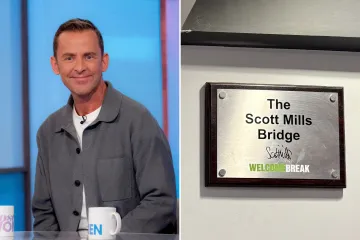
BBC chiefs KNEW Scott Mills was being quizzed by cops over ‘sex offences against boy under 16’
BBC bosses were tonight urged to say why they kept Scott Mills on air while he was probed for sex offences with a boy under 16, only to fire him seven years later.
The Beeb also remain tight-lipped over what changed since their original decision not to act — knowing the star, 53, had been quizzed under caution between 2018 and 2019.
The allegations are reported to relate to events between 1997 and 2000, when Mills was in his 20s.
At the weekend, he was sacked as the £360,000-a-year host of Radio 2’s Breakfast Show following a second probe.
Broadcasters and MPs demanded answers over the latest of multiple scandals to rock the corporation in recent years.
TV presenter Piers Morgan said: “I don’t understand. He was investigated by police 10yrs ago over alleged offences 25+ years ago, but no action was taken and case was closed.


“Now he gets instantly fired over same thing? The BBC needs to explain why, surely?”
Insiders have claimed the BBC moved swiftly over Mills following criticism they were slow to act over shamed newsreader Huw Edwards.
Discussing the cases yesterday Radio 2 host Jeremy Vine said: “There is a thought here they decided to treat Scott how they wish they’d treated Huw. Which would be a bit unfair would it not?
“Regarding the inconsistency here, we were told Huw Edwards couldn’t be sacked because he was in a fragile mental state, everything I have read about Scott’s history today goes back to his own anxiety and depression and everything else but there doesn’t seem to be the same break cut for him.”
Tory Shadow Crime Minister Matt Vickers told The Sun: “This pattern of failure by the BBC is letting the public down whilst the institution continues to protect its own reputation over addressing serious internal concerns.
“Time and again, the public are asked to place their trust in an institution that too often seems unwilling to come clean when it matters most.
“For a broadcaster funded by the public and serving audiences of all ages, any failure to act on safeguarding concerns is unacceptable.”
Mills joined Radio 1 in 1998. Allegations about him were first reported to Hampshire Police by a third party in 2012.
The force logged the details and later passed on information to the Met’s Operation Winter Key.
In December 2016 Winter Key cops launched an investigation.
At that time, Mills was the Drivetime DJ for Radio 1 and hosted the Official Chart Show, which has a target age range of 15-plus.
Mills was interviewed under caution in July 2018 and denied the claims against him.
In March that year The Sun on Sunday revealed how an investigation was being carried out into an unnamed radio presenter.
A file was submitted to the Crown Prosecution Service, which ruled there was insufficient evidence to charge. The investigation was then closed in May 2019.
BBC bosses, including Ben Cooper, the then-controller of Radio 1 and 1Xtra, chose not to take Mills off air despite the investigation.
A source said: “The BBC knew Scott had been questioned by police, he told them.
“Scott said he denied the allegations that had been made against him. Ben stood by Scott and allowed him to continue working while the police investigated.
“Given how serious the complaint was, it raises questions about why the BBC decided to keep him on air on Radio 1 — whose target audience is teenagers — rather than removing him while the police continued the investigation.”
Mr Cooper left his position as the controller of Radio 1 in 2020 after nine years.
Yesterday the Met issued a new statement and confirmed: “In December 2016, the Met began an investigation following a referral from another police force.
“The investigation related to allegations of serious sexual offences against a teenage boy. These were reported to have taken place between 1997 and 2000.
“As part of these enquiries, a man who was in his 40s at the time of the interview, was questioned by police under caution in July 2018.
“A full file of evidence was submitted to the Crown Prosecution Service, who determined the evidential threshold had not been met to bring charges.
“Following this advice, the investigation was closed in May 2019.”
The Sun understands the BBC launched its latest probe after the complaint was raised with the corporation again.
A source said: “The BBC’s second probe into this saw them speaking to Scott, as well as individuals with knowledge of Scott’s dealings with the police in 2018.
“Whatever they discovered this time around clearly was treated more seriously, or given more credence than when it was first discussed with Scott in 2018, as this time they decided to sack him.”
KEY MOMENTS IN COPS’ INVESTIGATION
1997-2000:
The alleged incidents take place, with Mills joining BBC Radio 1 in 1998.
DECEMBER 2016:
The Metropolitan Police start looking into claims regarding Mills.
JULY 2018:
Mills is questioned under caution by police about historical serious sexual offences against a teenage boy.
He tells the BBC about the investigation and denies the allegation.
MAY 2019:
The investigation ends as the CPS decide there is not enough evidence to charge.
OCTOBER 2022:
He joins BBC Radio 2, taking over the afternoon slot from Steve Wright.
JANUARY 2025:
Mills takes over as new Radio 2 Breakfast Show host after Zoe Ball stepped down — calling the role his “dream job”.
MARCH 24 2026:
He signs off “See you tomorrow,” in his slot only to be taken off air the following day.
MARCH 25 2026:
An investigation begins at BBC into the 2016 complaint.
MARCH 30 2026:
The BBC announce Mills is sacked and no longer works for the BBC.
MARCH 31 2026:
Metropolitan Police confirm the boy at the centre of the investigation was under 16 at time of the alleged offences.
APRIL 1 2026:
Insiders tell The Sun the BBC was aware of the investigation in 2018 after Mills told them about it and denied the allegations.
Insiders at the BBC also pointed to Channel 5’s documentary, Power: The Downfall of Huw Edwards, as a possible reason for the complainant to contact the BBC.
The 90-minute film, screened last week, saw Martin Clunes take on the role of convicted paedophile Edwards, who pleaded guilty in 2024 to three counts of making indecent images of children.
It came after The Sun revealed Edwards paid a teenager thousands of pounds for explicit images.
The source added: “With the timing of the Huw film it makes sense why the person at the centre of the original (Mills) complaint may have decided to speak to the BBC again.
“Many in the BBC are saying the timing doesn’t feel like a coincidence.
“The drama showed actions do have consequences.” Separately, The Telegraph reported former BBC presenter Anna Brees contacted the Beeb in May 2025 to say she had received information about alleged “inappropriate communications” involving Mills.
She also asked whether the BBC had ever received any “formal or informal complaints” about Mills “relating to safeguarding, inappropriate conduct or harassment” and whether it had ever conducted an internal investigation into him.
She did not receive a response. The BBC admitted her information “should have been followed up and we should have asked further questions”.
There is no suggestion the inquiries by Ms Brees related to the same alleged victim whose complaint to the police led to Mills being questioned in 2018.
BBC bosses were left with “no choice” but to sack Mills after being passed compelling new information, it was claimed last night.
The Mirror reported the fresh details are different to the claims probed by police in 2016 but relate to the same complainant.
Mills, who is married to Sam Vaughan and lives in London, is understood not to have spoken to colleagues or pals since being axed.
The BBC have removed him from a Race Across The World podcast and pulled scenes he filmed for EastEnders.
Yesterday charity Neuroblastoma UK dropped him as a patron. Dermot O’Leary who hosts the Saturday morning Breakfast Show, said yesterday: “This was a shock to everyone. It came from nowhere.”
Gary Davies is sitting in for Mills today and tomorrow before OJ Borg takes on the Breakfast Show on Bank Holiday Friday and Monday.
Insiders said the BBC were now discussing who would take over the Breakfast Show – which in the latest round of Rajar figures in February revealed Mills had 6.5million listeners.
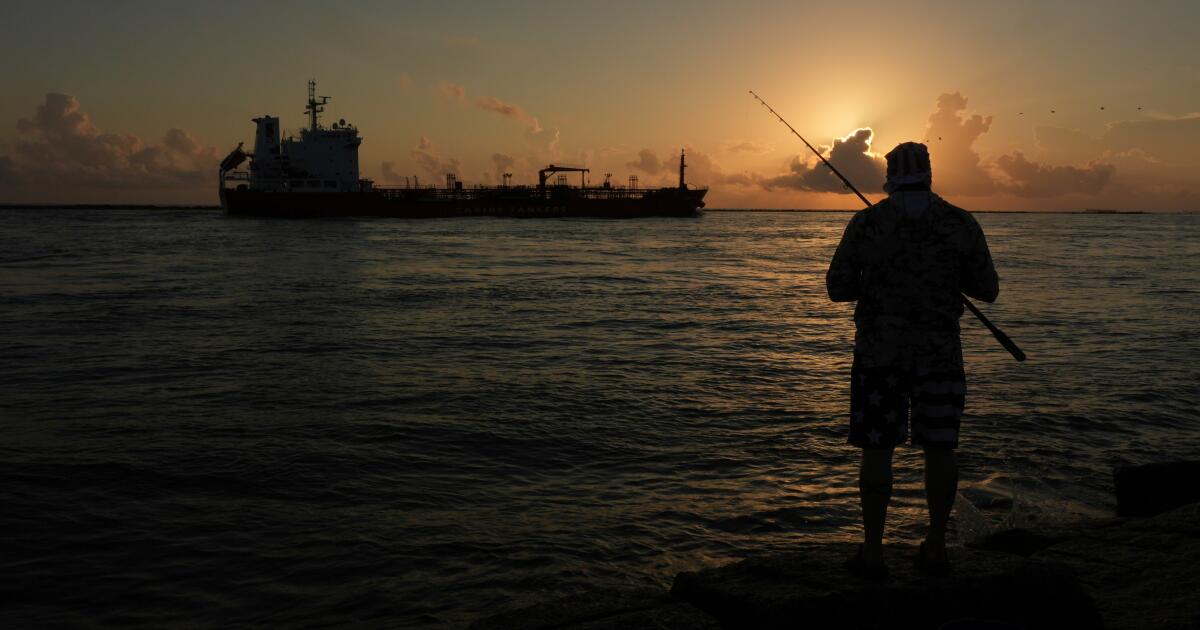
U.S. exempts oil, gas drilling in gulf from endangered species rules
The Trump administration on Tuesday exempted oil and gas drilling in the Gulf of Mexico from the Endangered Species Act after Defense Secretary Pete Hegseth said environmentalists’ lawsuits against the industry threatened to hobble domestic energy supplies as the U.S. wages war against Iran.
Critics said the move by the government’s Endangered Species Committee could doom a rare whale species and harm other marine life. Nicknamed the “God Squad” by groups that say it can decide a species’ fate, the committee comprises several Trump administration officials and is chaired by Interior Secretary Doug Burgum.
It met Tuesday for the first time in more than three decades amid global oil shocks and soaring energy prices brought on by the Iran war. The U.S. pumps more oil than any other nation, but that hasn’t insulated it from spiking prices: The national average for a gallon of gasoline topped $4 on Tuesday for the first time since 2022.
“Disruptions to Gulf oil production doesn’t hurt just us, it benefits our adversaries,” Hegseth told the committee. “We cannot allow our own rules to weaken our standing and strengthen those who wish to harm us. When development in the Gulf is chilled, we are prevented from producing the energy we need as a country and as a department.”
Environmental groups sought unsuccessfully to block Tuesday’s meeting and pledged to challenge the exemption. They say the exemption would speed the extinction of the rare Rice’s whale, which is found exclusively in the Gulf of Mexico. Government biologists say only about 50 of the animals remain.
“If Trump is successful here, he could be the first person in history to knowingly extirpate a species from the face of the Earth. That’s how precarious the condition of the Rice’s whale is,” said Patrick Parenteau, emeritus professor of law at Vermont Law School.
President Trump has made increased fossil fuel production a central focus of his second term. He wants to open new areas of the gulf off the Florida coast to drilling and has proposed sweeping rollbacks of environmental regulations disliked by industry.
Hegseth had notified Burgum on March 13 that an Endangered Species Act exemption for oil and gas drilling in the gulf was “necessary for reasons of national security.”
Hegseth told committee members Tuesday that Iran’s efforts to block shipping through the world’s busiest oil route, the Strait of Hormuz, underscored the national security imperative of having robust domestic oil production. He said the energy industry is under threat from pending litigation from environmental groups challenging government approvals for drilling.
Industry observers said the Endangered Species Act exemption could have significant implications for energy companies by streamlining approvals of new projects and impeding opponents’ ability to derail drilling plans.
“Serial litigation from activist groups targeting a lawful, well-regulated industry should not be allowed to indefinitely obstruct projects of clear national importance,” said Erik Milito with the National Ocean Industries Assn., which represents offshore developers.
The Gulf of Mexico is one of the nation’s top oil regions, producing 2 million barrels a day. It accounts for almost 15% of crude pumped annually in the U.S., plus a small share of domestic natural gas production.
But the gulf also has been the scene of environmental disasters such as BP’s Deepwater Horizon blowout in 2010, which killed 11 workers and spilled 134 million gallons of oil. A spill in the gulf earlier this month spread 373 miles, contaminating at least six species and polluting seven protected natural reserves.
The Trump administration in mid-March approved BP’s new $5-billion ultra-deepwater drilling project in the Gulf of Mexico.
A 2025 National Marine Fisheries Service analysis determined the gulf oil and gas program was likely to harm several species of whales, sea turtles and gulf sturgeon that face potential harm from ship strikes, oil spills and other impacts.
The Endangered Species Committee was established in 1978 as a way to exempt projects from the Endangered Species Act, which makes it illegal to harm or kill species on a protected list, if no alternative would provide the same economic benefits in a region or if it was in the nation’s best interest.
Before this week, the panel had convened just three times in its 53-year history and issued only two exemptions. The first was in 1979 to allow construction on a dam on the Platte River in Wyoming, home to the whooping crane. It last met in 1992, allowing logging in northern spotted owl habitats in Oregon. That exemption request was later withdrawn.
Its latest meeting follows a federal judge’s ruling on Monday that struck down attempts during Trump’s first term to weaken rules regarding endangered species.
The panel’s members include the secretaries of Agriculture, Interior and the Army, the chairperson of the Council of Economic Advisors, and the administrators of both the Environmental Protection Agency and the National Oceanic and Atmospheric Administration. They all voted in favor of Hegseth’s request for an exemption.
Brown writes for the Associated Press.
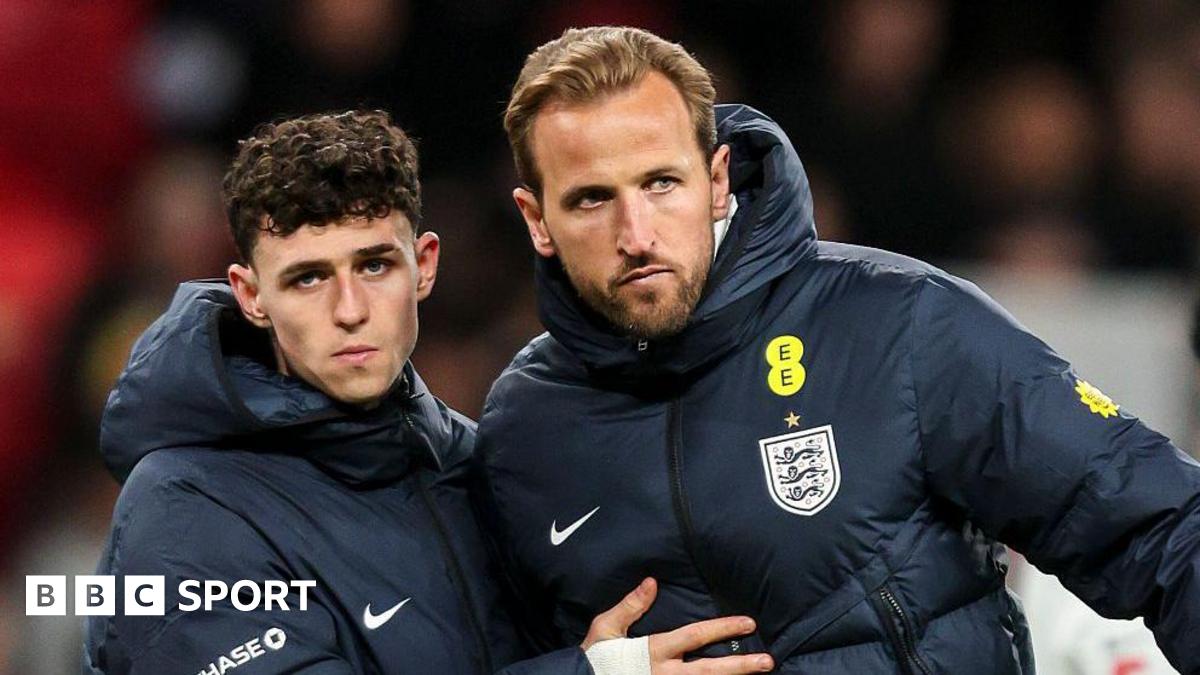
England 0-1 Japan: A failed experiment as Tuchel gets grim glimpse of life without Harry Kane
Former England goalkeeper Paul Robinson, at Wembley for BBC Radio 5 Live, said: “This is the exact situation no England fan wants. We’ve talked about it for over a season with this World Cup coming up. What do England do without Harry Kane?
“This is what England and Thomas Tuchel do not want. He doesn’t have an answer to this question. Hence why we’re seeing this new formation again, with the interchange and false nine.
“We’ve spoken about Dominic Calvert-Lewin, Dominic Solanke, Ollie Watkins. Nobody stuck their arm up and said, ‘I’ll be his replacement’. that’s why we’re seeing this.”
Robinson added: “It was a very disappointing evening for Thomas Tuchel. The experiment that he tried in the first half with the front four clearly didn’t work.
“It didn’t take him long in the second half to change it. You do give England credit because when those changes were made there was a lot more cohesion.
“The one area that Thomas Tuchel has got a problem is if there is a problem with Harry Kane. If that happens, then England have a real problem after watching that.”
Tuchel answered the question about an over-reliance on Kane, saying: “Well, why would Argentina not rely on Lionel Messi, or Portugal not rely on Cristiano Ronaldo? This is totally normal. Key figures left camp for us and we saw that a bit.
“We lacked a punch in the last 20 metres in both matches. We encouraged the players. It was difficult for us.”
Kane’s potential absence is an immediate concern, leaving Tuchel short of viable alternatives when he needs them most, especially given these two toothless performances without him.
English strikers are suddenly a malaise.
Only 10 English strikers have appeared in the Premier League in the current campaign, with Chelsea’s 22-year-old Liam Delap the only one aged under 26.
Brighton’s Danny Welbeck, who turns 35 at the end of the month, might just have had a good international break by not being involved.
Welbeck and Calvert-Lewin are the only English strikers to have scored 10 or more Premier League goals this season – with 43 scored by English strikers.
It’s a far cry from the first season of the Premier League era in 1992-93, when 20 English strikers passed the 10-goal mark.
In recent years, however, what was already a steep decline has fallen off a cliff. Last season, only 67 goals were scored by English strikers, less than half the number in 2020-21.
Kane’s departure from Tottenham for Germany has played a part, of course, but he left for Bayern in 2023 and English strikers still scored 96 goals in 2023-24.
The cupboard is bare, underscoring just how indispensable Kane is.
This was a sobering night for England and Tuchel. This performance demonstrated that they simple cannot live without Harry Kane.

South Korea proposes $7.1B relief budget amid inflation, oil shock

Data provided by the Ministry of Economy and Finance. Graphic by Asia Today and translated by UPI
March 31 (Asia Today) — South Korea’s Ministry of the Interior and Safety proposed a 9.52 trillion won ($7.1 billion) supplementary budget on Monday to ease the impact of high oil prices and inflation driven by instability in the Middle East.
The plan includes direct cash payments ranging from 100,000 won to 600,000 won ($75 to $450) per person for low- and middle-income households, along with increased funding for local governments and youth employment programs.
The proposal was approved at a Cabinet meeting and will be submitted to the National Assembly for review.
At the center of the package is a 4.82 trillion won ($3.6 billion) relief program targeting the bottom 70% of income earners. Payments will vary depending on region and socioeconomic status.
Residents in the Seoul metropolitan area would receive 100,000 won ($75), while those outside the capital region would receive 150,000 won ($112). People living in areas facing population decline would receive between 200,000 won and 250,000 won ($150 to $187).
Additional support is aimed at vulnerable groups. Single-parent households and those in the near-poor category would receive 450,000 won ($337), rising to as much as 500,000 won ($375) for those outside the capital region. Recipients of basic livelihood assistance would receive 550,000 won ($412), or up to 600,000 won ($450) with regional adjustments.
The government estimates the program will cover about 32.56 million people in the bottom 70% income bracket, along with 360,000 near-poor and single-parent households and 2.85 million recipients of basic livelihood benefits.
Details such as eligibility criteria, payment timing and methods will be finalized through interagency consultations and announced separately.
The ministry also set aside 19.5 billion won ($14.5 million) for youth work experience programs, focusing on sectors such as caregiving, culture and environmental services. Officials said the initiative is designed to support young people facing increased employment uncertainty amid global economic volatility.
An additional 4.67 trillion won ($3.5 billion) in local government grants is included to help regional authorities respond quickly to local economic conditions and fund projects aimed at stabilizing livelihoods and boosting economic activity.
Interior and Safety Minister Yoon Ho-joong said the relief payments were structured to provide greater support to regions and populations facing deeper economic hardship.
“With growing external uncertainties, including the conflict in the Middle East, we will work closely with the National Assembly to ensure this budget serves as a stabilizing force for people affected by rising fuel costs and inflation,” Yoon said.
— Reported by Asia Today; translated by UPI
© Asia Today. Unauthorized reproduction or redistribution prohibited.
Original Korean report: https://www.asiatoday.co.kr/kn/view.php?key=20260331010009533
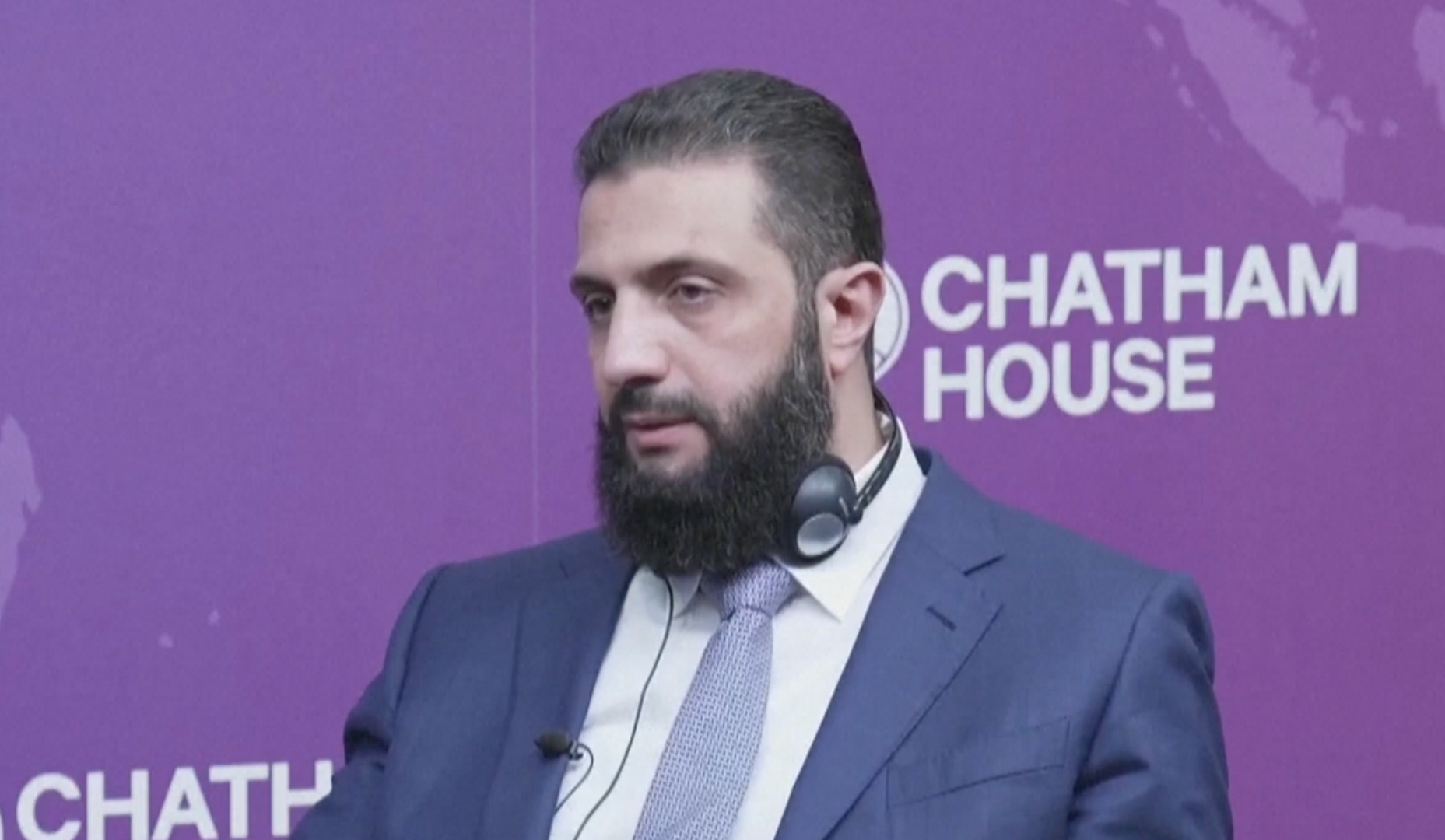
Al-Sharaa says Syria to stay out of war on Iran unless attacked | US-Israel war on Iran
’14 years of war is enough for Syria’: Syrian President Ahmed al-Sharaa says Syria will remain outside the US-Israeli war on Iran unless it is directly targeted. His comments come as fighting continues across the region for a 31st day.
Published On 1 Apr 2026

‘Summer House’s’ Amanda Batula and West Wilson make it official
Amanda Batula and West Wilson weren’t being coy — not “purposely” anyway.
The stars of the Bravo reality series “Summer House” — where a group of friends spend their summer weekends in the Hamptons and drama ensues — were just letting the romance percolate. And now they’re making it official.
The pair shared statements on their Instagram stories that they “wanted to provide some clarity” as rumors swirled about their status.
“It was never our intention to purposely hide anything. Given the complicated relationship dynamics involved and the scrutiny that comes with being on a reality show, we need a little space to process things privately before speaking on it,” the couple wrote. “We’ve shown up for each other as friends over the years, through all the highs and lows, and what’s developed recently was the last thing either of us expected.”
Over the course of the series, which debuted in 2017, relationships have become intertwined.
Wilson dated fellow “Summer House” co-star Ciara Miller, a close friend of Batula, in 2023.
And Batula was married to series co-star Kyle Cooke. In January, she announced their split, writing on an Instagram story that the couple had decided to “mutually and amicably” end their relationship. They married in 2021 and documented their struggles on “Summer House,” including when Cooke cheated on Batula in 2019, and spent the night at a fan’s apartment in 2025.
The pair explained that they chose to wait to publicly announce their relationship “to take time to understand” what they felt.
“Our connection grew out of a genuine, long-standing friendship, which made it especially important for us to approach this with care,” they wrote. “We also recognize that this has had an impact beyond just us and never wanted our actions to cause any hurt or be perceived as careless.”
Wilson previously insisted that Batula was just his “home girl” on an episode of “Watch What Happens Live With Andy Cohen.”
“We were just hanging out in New York. She’s single, I gotta show her the streets a little bit,” Wilson said on Friday. “But if it’s not clear, that’s a very important person to me, and I care about her a lot.”
While on “Watch What Happens” in early March, Cooke said he found the rumors about Batula and Wilson “ outrageous,” and that he didn’t think “there’s any merit to it.” Although he denied the rumors, he still voiced his support for Batula.
“It would certainly catch me by surprise and feel a little reckless. And I think I’d probably be the last person people would be worried about,” Cooke said. “But if it made Amanda happy, I think I just would have to vote ‘yay.’”

Schumer had a plan to win back the Senate. But some Democrats aren’t on board
WASHINGTON — Democrats’ hopes of reclaiming the U.S. Senate are colliding with a fight within their own party.
In Maine, Senate Minority Leader Chuck Schumer has thrown his weight behind Gov. Janet Mills in a crucial race, but some of his Senate colleagues are backing insurgent candidate Graham Platner in a rebuke of his strategic vision. A similar dynamic is playing out in other battlegrounds, including Michigan and Minnesota, where progressive senators are endorsing non-establishment candidates.
At stake is more than any single race. Democrats are fighting over whether the party’s traditional playbook still works in a country that elected Donald Trump for a second time — and whether leaders like Schumer should remain in charge.
“Clearly there’s a disagreement of strategy here,” said New Mexico Sen. Martin Heinrich, who has endorsed Platner.
He added that “the business-as-usual calculation for what is going to be successful in a given election cycle does not necessarily, in my view, meet the moment.”
The divide reflects a Democratic base frustrated after the last presidential election, when President Biden ran for a second term despite widespread concerns about his age. He dropped out and endorsed Vice President Kamala Harris, who lost to Trump.
Nan Whaley, a Democratic strategist in Ohio who ran for governor four years ago, said the debate is no longer about progressive or moderate.
“It’s really about, who do you trust? Establishment or not establishment?” she said. “And frankly, the establishment hasn’t given us a lot to trust these past few years.”
‘A rebuke of Schumer’
In Maine, Schumer and the Democratic Senatorial Campaign Committee have backed Mills, a 78-year-old moderate in her second term.
Platner, a veteran and oyster farmer, quickly won the backing of Sen. Bernie Sanders (I-Vt.), just days after launching his campaign. His bid has since gained momentum despite scrutiny over past controversial comments and a tattoo resembling a Nazi symbol.
In recent weeks, Heinrich, Arizona Sen. Ruben Gallego and Massachusetts Sen. Elizabeth Warren have endorsed Platner as he builds support on Capitol Hill. Heinrich and Rhode Island Sen. Sheldon Whitehouse held a fundraiser for him, too.
Gallego, a first-term senator who won a battleground race in 2024, downplayed the endorsements as a broader critique of party leadership.
“Senate leadership didn’t back me at the beginning. So I didn’t take that as a critique,” Gallego said.
Michigan also has a contentious primary, with three high-profile candidates. State Sen. Mallory McMorrow has said she would not support Schumer as the caucus leader if Democrats regain the majority, and she’s been endorsed by four senators.
Abdul El-Sayed, running further to the left, has been endorsed by Sanders and has also run on an anti-establishment platform.
U.S. Rep. Haley Stevens has aligned with establishment figures, working with a former executive director of the Democratic campaign committee and securing support from two senators.
Democratic strategist Lis Smith said the endorsements in races like Maine and Michigan are “as much as a rebuke of Schumer as it is an endorsement of these candidates.”
“It’s pretty uncommon for sitting senators to endorse against the Senate leader,” Smith said. “Senators are reading the tea leaves and are getting feedback from the grassroots that they are dissatisfied with Schumer’s performance as leader.”
In Minnesota, an open-seat race has similarly emerged as a test of the party’s direction. Rep. Angie Craig is seen as the centrist candidate in the primary, with endorsements from House Democratic Leader Hakeem Jeffries and Rep. Nancy Pelosi. Lt. Gov. Peggy Flanagan, the more progressive candidate, has been backed by Sanders, Warren and others, including Minnesota Sen. Tina Smith, who is vacating the seat.
“She understands that right now what we need are fierce fighters, people who are willing to stand up to the status quo,” Smith said in her endorsement.
‘The election may impact’ Schumer’s time as leader
Some tensions trace to March 2025, when Schumer voted with Republicans to end a government shutdown, drawing backlash from Democrats who argued he did not push hard enough against Trump’s agenda.
Later that year, Democrats held firm in a record-long shutdown fight, helping regain some ground with activists and progressives. But divisions resurfaced when a group of moderates ultimately sided with Republicans, fueling renewed frustration with party leadership even as Schumer opposed the move.
Since he became Senate leader in 2017, Schumer’s record in elections has been mixed. He led Democrats back to the majority in 2020 and expanded it in 2022 but lost ground in both 2018 and 2024.
“Leader Schumer’s North Star is taking back the Senate and is pursuing a path to do just that,” said Allison Biasotti, a spokesperson for Schumer.
He’s recruited high-profile candidates this year in tough Senate races, such as Alaska, Ohio and North Carolina. Maeve Coyle, communications director for the campaign committee, said Schumer “created a path to win a Democratic Senate majority this cycle” with the recruitment.
“Senate Democrats overperformed in the last four election cycles and in 2026, we will win seats and flip the majority,” she added.
David Axelrod, who served as a top strategist for President Obama, said that being Senate leader is never easy, and that Schumer “has been under fire for some time, particularly from progressives in the party.”
Schumer’s time as leader, Axelrod added, is likely directly linked to the outcome of the 2026 midterms.
“There’s questions as to whether he’ll run in 2028. There’s even questions as to whether he might be challenged as leader,” he said. “I think the results of this election may impact that.”
For now, Schumer’s caucus is tentatively standing behind him. None have explicitly called for him to step aside. But discontent has lingered, with some openly questioning whether the party needs a new direction.
“How people did politics in the 1990s is going to feel different than in the 2020s,” said Heinrich.
Cappelletti writes for the Associated Press.

Ivory Coast 1-0 Scotland: ‘Scotland fans can fret – but they need to keep perspective too’
The booing, though. Silly, but also deeply annoying for the players, you’d imagine.
They tried to play progressive football against Ivory Coast, but they were undone too often by their own wastefulness, lack of accuracy, and a shortage of the kind of explosiveness and cleverness that Ben Gannon-Doak gives them on his best days.
The hope is that Gannon-Doak continues his recovery and is flying come Boston. The hope, too, is that Scott McTominay and John McGinn and the other totems of this team find their very best stuff on the biggest stage.
That’s a lot to hope for. The alternative is to mope and boo and there’s no future in that.
Scotland had 14 shots to Ivory Coast’s 12 and four on target to their opponents’ three. They created difficulties for a team that went through their entire World Cup qualifying campaign without conceding a goal.
Clarke’s side will never be as ruthless as they were against Denmark on that famous night at Hampden – an overhead kick from McTominay, a world-class finish from Tierney, a miracle from halfway from Kenny McLean.
Lawrence Shankland’s goal was a tap-in, but he admits Lewis Ferguson’s corner was probably going in anyway, before he made sure.
There was a freakishness about the four goals and the whole occasion. Reality is hitting home again now.
Scotland have to get back to what has brought them joy in the recent past – huge tempo, dangerous deliveries from wide, a flooding of an opponent’s penalty box, a creation of chaos, a flick-on, a ricochet, a breaking ball launched into a net.
They need McTominay and McGinn and Ryan Christie crashing into penalty areas and finishing.
They need Andy Roberton on one side and Gannon-Doak on the other whipping in crosses that spark mayhem.
As a central striker, Clarke has who he has. None of them are Harry Kane. The star quality lies elsewhere in this team. They all need to step up.
A second friendly defeat in four days was no calamity since it came on the back of an admirable performance, unworthy of booing.
Be fretful, be anxious, be a quivering wreck about what might be in America, but keep perspective, too. Scotland are there and they have a chance to do what none of their exalted predecessors have done.
Whoever’s booing them now must be the type of character that smiles at themself in the mirror in the morning, just to get it over with.

Inside the UK’s largest holiday park has massive indoor pool and over 2,000 caravans and lodges
The park is considered the largest in the UK, and among the biggest in Europe, and it’s packed with activities and things for kids to do, perfect for a last-minute Easter or half-term break

The holiday park enjoys direct beach access(Image: Parkdean)
Holiday parks can be a great choice for families. Staying in a caravan or lodge means you get more space than the average hotel room, and just steps away from your accommodation you can enjoy the park’s entertainment and activities.
If you like a holiday park with a lively atmosphere and plenty to do, then there’s one option that could be perfect for your family break. Widely considered to be the largest holiday park in the UK, Trecco Bay Holiday Park in Porthcawl, South Wales, has over 2,000 caravans and lodges in its beachfront park, and it’s also among the largest in Europe.
Guests can choose from a wide range of two to four-bedroom caravans and lodges with a variety of accommodation grades from Bronze to Prestige. There are even pet-friendly options for those who want to bring their dog along to join in the fun. All accommodation includes a living area, a fully-equipped kitchen, and separate bedroom areas. You can check availability and book via Parkdean’s website.
The park has a large indoor pool complex, which includes a waterslide, and outside, you’ll find a wet play zone complete with shoots and water guns that opens in the warmer months. Families can book activities such as Aqua Paddlers, which allow kids to race around the pool, and Aqua Jets, which help you dive and swim under the water.
A high-ropes course is a fun way to balance and swing through the tree tops, or you can hire Family Karts and zip around the park together. There’s also an adventure playground, amusement arcade, soft play, plus kids’ clubs to keep little ones entertained.
While you can choose to stay in and cook in your caravan, the park has lots of restaurants, bars, and takeaways if you feel like a night off. Guests can enjoy a Burger King or Papa John’s, or family favourites at the Boathouse. There’s an Indian menu at Tandoori Kitchen, and American-style cuisine at Thunderbird Chicken among the many dining options.
Trecco Bay sits on a sandy beach, and some accommodation has sea views. This Blue Flag beach is just steps from the park and has lifeguards during peak periods, so kids can paddle and swim in the clear waters. The promenade is the perfect place for coastal walks, and you can even walk along the Wales Coast Path to nearby Porthcawl for a day trip.
The park has a 4.2 star rating on Google, with one recent review saying: “Lots of activities for the kids! High ropes, climbing wall and sport activities are great choices! Pool was fab.” However, one negative review said: “We left a day early. I had booked three nights, but we left the next morning because of the filth and the strong smell. With the cold weather, we had to open the windows because the smell was awful.”
Porthcawl has classic seaside town vibes, and here you’ll find more beaches, a charming local museum, a historic lighthouse, and a high street with independent shops and colourful terraced houses. If you’d rather stay closer to the town, there are B&Bs available such as Olivia House Guest House And Hotel which has a quirky interior, and the beachfront Seabank Hotel.
Have a story you want to share? Email us at webtravel@reachplc.com

Judge temporarily halts Trump’s $400m White House ballroom project | Donald Trump News
District Judge Richard Leon says construction has to stop until Congress provides statutory authorisation.
Published On 1 Apr 2026
A judge has ruled that US President Donald Trump cannot proceed with his planned $400m ballroom on the site of the White House’s demolished East Wing without approval from Congress.
District Judge Richard Leon on Tuesday granted a request for a preliminary injunction filed by the National Trust for Historic Preservation, which sued after alleging Trump had exceeded his authority by razing the historic East Wing and launching construction on the new building.
Recommended Stories
list of 2 itemsend of list
“I have concluded that the National Trust is likely to succeed on the merits because no statute comes close to giving the President the authority he claims to have,” Leon, an appointee of former Republican President George W Bush, wrote in the ruling.
“The President of the United States is the steward of the White House for future generations of First Families. He is not, however, the owner!” he said. “Unless and until Congress blesses this project through statutory authorization, construction has to stop!”
Leon said the order does not affect “construction necessary to ensure the safety and security of the White House”.
His ruling keeps the 90,000 square-foot (8,360 square-metre) ballroom project on hold while the lawsuit continues.
The judge said he was pausing his order for 14 days to allow the Trump administration to appeal. Hours later, the Justice Department filed an appeal at the Washington, DC-based US Court of Appeals for the District of Columbia Circuit.

Carol Quillen, president and CEO of the National Trust, welcomed Leon’s ruling.
“This is a win for the American people on a project that forever impacts one of the most beloved and iconic places in our nation,” Quillen said in a statement.
In a social media post, Trump called the National Trust a group of left-wing “lunatics” and said his ballroom is “under budget, ahead of schedule, being built at no cost to the Taxpayer, and will be the finest Building of its kind anywhere in the World”.
The Republican has championed the ballroom as a defining addition to the White House and a lasting symbol of his presidency.

F-35 Crashes In The Nevada Test And Training Range Complex (Updated)

An F-35 crashed in the Nevada Test and Training Range in Southern Nevada. The pilot ejected and is reportedly safe after sustaining only minor injuries.
According to KSNV News 3, “The U.S. military is searching for a pilot who had to eject from an aircraft over Southern Nevada on Tuesday, sources tell News 3… The aircraft reported trouble maneuvering around noon, according to sources.” The outlet subsequently reported that the pilot was found in good condition.
TWZ has reached out to Creech AFB and Nellis AFB for more information. We will update this post as we find out more.
UPDATE: 5:24pm EST—
We have now gotten a statement from the 57th Wing at Nellis AFB (the range complex falls under the installation’s command). We now know the F-35 that was lost was based out of Nellis. F-35s are major tenants of the base, for weapons tests and tactics development tasks and aggressor duties, and visiting F-35s frequent the base for training and exercises. The statement reads:
An F-35 from Nellis AFB crashed north of Las Vegas today. The incident occurred approximately 25 miles northeast of Indian Springs, Nevada, within the controlled airspace and restricted federal property of the Nevada Test & Training Range.
Emergency responders are on-scene and there is no impact to populated areas. The pilot is safe and being treated for minor injuries. The safety of our personnel and the community remain our top priority.
We will provide additional information as it becomes available.
Contact the author: Tyler@twz.com

Sister of Hollywood star Vanessa Hudgens leaves little to the imagination in plunging lace bodysuit
HOLLYWOOD actress Vanessa Hudgens’ sister was keen to make a bold impression with her latest selfie.
The influencer sister of Vanessa, Stella, left little to the imagination as she showed off her very full bust in a lacy bodysuit.
Stella’s plunging number featured a translucent design that made sure all eyes were on her.
The glam star’s hips were also on show thanks to the bodysuit number which showed off her snatched waistline.
Stella struck a variety of poses for her Instagram upload which included her appearing to playfully writhe around her seat as she enjoyed a few cocktails at a bar.
In one shot, she manovered her arms to squeeze her chest as well as flashing a model-like post with her hand behind her head in another.
Read More on Vanessa Hudgens


Stella’s fans were quick to react to the jaw-dropping selfies.
One fan wrote: “Baddest ever.”
Another added: “My heart just stopped.”
A third went on to state: “Hot as hell.”
Before a fourth wrote: “Them hips don’t lieeeee babyyyy.”
Stella is best known for her online career as a social media influencer as well as being a regular live-streamer.
She has broadcast her life on Twitch since 2022 as well as hosting her own podcast, That’s Crazy, as she aims to follow in her sister’s famous footsteps.
Stella has also attempted to carve out an acting career with minor appearances in a number of films since 2016.
Vanessa is best known for her roles in the High School Musical franchise.
She has since held a number of high-profile acting roles as well as a successful music career.

Nike anticipates Q4 revenue down 2% to 4% as it targets finishing ‘Win Now’ actions by year-end (NYSE:NKE)
Earnings Call Insights: NIKE, Inc. (NKE) Q3 fiscal 2026
Management View
-
“Last quarter, we said we were in the middle innings of our comeback. Since then, we have continued to take meaningful actions to improve the health, quality and foundation of our business.” (CEO, President & Director Elliott
Seeking Alpha’s Disclaimer: This article was automatically generated by an AI tool based on content available on the Seeking Alpha website, and has not been curated or reviewed by humans. Due to inherent limitations in using AI-based tools, the accuracy, completeness, or timeliness of such articles cannot be guaranteed. This article is intended for informational purposes only. Seeking Alpha does not take account of your objectives or your financial situation and does not offer any personalized investment advice. Seeking Alpha is not a licensed securities dealer, broker or US investment adviser or investment bank.
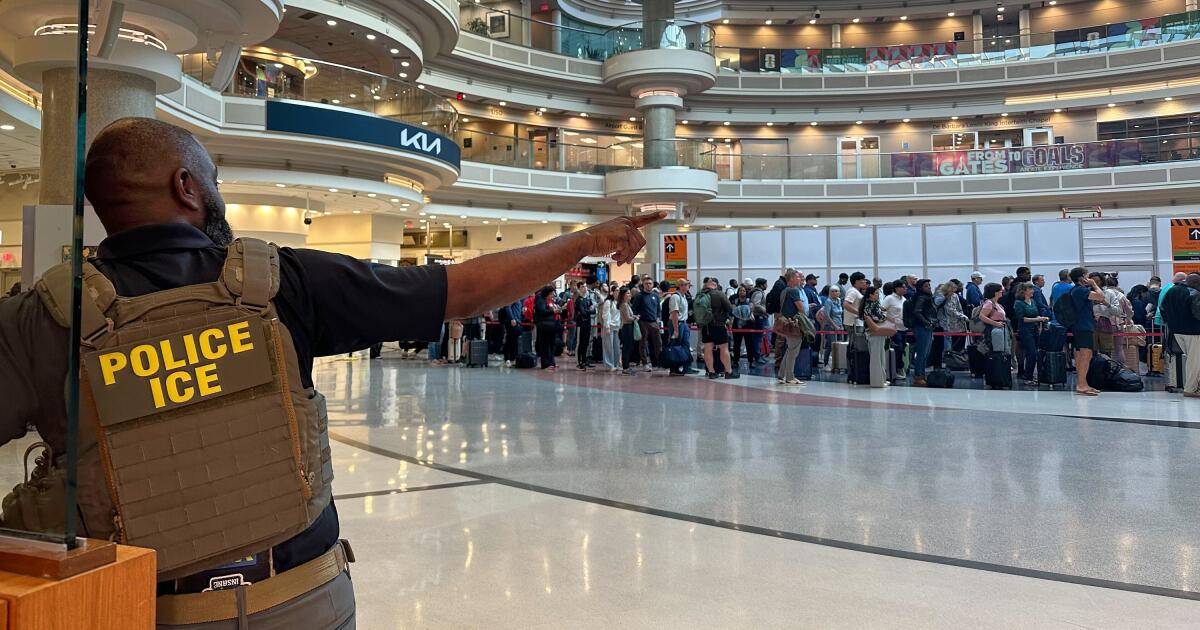
Georgia proposal could take DNA swabs from immigrants in custody for minor offenses
ATLANTA — Over the past three decades, the collection of DNA from convicted criminals has become standard in the U.S. justice system, and many states now also swab people arrested for serious crimes.
Legislation awaiting a final vote in Georgia would take that a step further by collecting DNA from people charged with less serious misdemeanors — but only if federal immigration authorities want them detained. That could include immigrants not ultimately deported.
If enacted, Georgia’s measure would make it the third state to single out immigrants believed to be in the U.S. illegally for the collection of genetic material that wouldn’t be taken from others. Florida passed a similar law in 2023. And Oklahoma in 2009 authorized DNA collection from immigrants in the U.S. illegally, though it remains subject to funding.
The new legislation comes as President Trump’s administration seeks to expand its use of DNA and biometrics in immigration enforcement as it carries out a plan to deport millions of people from the U.S.
“It is one example of something we are seeing across the landscape, which is government actors at all levels vacuuming up DNA in all available contexts,” said Stevie Glaberson, director of research and advocacy at the Center on Privacy and Technology at Georgetown University law school.
Immigrant DNA collection has grown in recent years
The FBI launched the National DNA Index System in 1998 to compile DNA samples submitted by federal, state and local authorities. It’s grown in size and scope and now contains more than 26 million DNA profiles, many from people convicted of crimes.
A federal law enacted 20 years ago allowed the attorney general to expand DNA collection to people arrested and to noncitizens detained under federal authority. But because of exceptions authorized by federal officials, few immigrants had their DNA collected.
That changed in 2020, during Trump’s first term, when a new Department of Justice rule took away much of that discretion. Over the next five years, the Department of Homeland Security added the DNA profiles of more than 2.6 million detainees to the national database, according to an analysis by the Center on Privacy and Technology.
The department did not answer questions from the Associated Press about the percentage of detained immigrants whose DNA has been collected during Trump’s second term.
But the department is looking to expand its authority. A proposed rule would allow it to collect DNA, including from U.S. citizens, to determine family relationships in immigrant benefit cases.
States don’t typically collect DNA for misdemeanor arrests
Though many states collect DNA from people arrested for felonies, just 10 states collect it from people arrested for certain misdemeanors, such as sex offenses, and none collect it for all misdemeanor arrests, according to an AP analysis of data compiled by the Boise State University Department of Criminal Justice.
But under the Florida and Oklahoma laws, any arrest could lead to DNA collection for immigrants subject to federal detainer requests. Officials in the Florida Department of Law Enforcement and Oklahoma State Bureau of Investigation did not respond to questions about whether those laws are being used.
The Georgia legislation would require DNA collection from immigrants facing any misdemeanor or felony charges if U.S. Immigration and Customs Enforcement has issued a detainer request but has not picked up the person within 48 hours.
Georgia state Sen. Tim Bearden, a Republican sponsoring the bill, described the measure as a means of solving crimes.
“Technology is changing quickly, and DNA is one of those things that help us tremendously when we’re trying to make sure to bring justice to victims in this state and across this country,” Bearden said at a March hearing.
The Department of Homeland Security said in a statement that “partnerships with law enforcement are critical to having the resources we need to arrest criminal illegal aliens across the country.”
Could a broken tail light lead to a DNA swab?
A 2024 Georgia law mandates that local law enforcement cooperate with federal authorities to identify and detain immigrants in the U.S. illegally, or else lose state funding. This year’s legislation would build upon that.
Some legal experts say it could result in DNA collections from immigrants taken into custody for minor violations. Traffic offenses that are penalized as civil violations in some states are considered misdemeanors in Georgia, making them subject to the new law, said Mazie Lynn Guertin, executive director and policy advocate with the Georgia Assn. of Criminal Defense Lawyers.
“We don’t think that swabbing a person who’s committed a traffic violation is a boon for public safety,” Guertin said. “The correlation between a broken tail light and a crime that’s solvable with DNA is pretty attenuated in most cases.”
People subject to federal immigration detainer requests aren’t necessarily undocumented or deportable, because they may later prove their legal presence, said Kyle Gomez-Leineweber, director of policy for Common Cause Georgia. But such people could have their DNA collected under the Georgia legislation.
“What this really does is it creates a two-tiered system where some of the DNA would be collected based off of the perception of an individual’s immigration status,” said Gomez-Leineweber.
Legal experts raise questions about constitutional rights
The U.S. Supreme Court in 2013 upheld a Maryland law allowing DNA to be collected from people charged — but not yet convicted — of certain serious crimes. That law allows DNA to be added to a database after it’s determined there is probable cause to detain someone, provided it’s deleted if the person is not ultimately convicted.
The Maryland case often is cited as justification for an expansion of DNA collection. But some immigrant advocates question whether civil immigration detainers meet the probable cause threshold to make DNA collection acceptable under the U.S. Constitution’s Fourth Amendment protection against unreasonable searches and seizures.
“There doesn’t appear to be any kind of meaningful justification for states to step in to require the collection of DNA — of genetic material — from noncitizens in their custody who have merely been accused of a crime, even a low-level crime,” said Jorge Loweree, managing director of the American Immigration Council. “It seems like this is just an effort to increase the surveillance of noncitizens.”
Kramon and Lieb write for the Associated Press. Lieb reported from Jefferson City, Mo.

Spanish Football Federation condemns racist chanting
The Spanish Football Federation (RFEF) has condemned anti-Muslim chants which were heard during the first half of Spain’s 0-0 draw with Egypt in Barcelona on Tuesday.
At half-time, a message warning fans against xenophobic remarks and singing was displayed on the screen at the RCDE Stadium with the stadium announcer also reading out a similar request.
The message was then repeated early in the second half, leading to whistles from some sections of the crowd.
“The RFEF stands against racism in football and condemns any act of violence inside stadiums,” they posted on social media.
The behaviour was also condemned by Spain coach Luis de la Fuente.
“It’s intolerable,” he said. “Violent people use football to carve out a space for themselves.
“They must be removed from society, identified, and kept as far away as possible.”
Tuesday’s game was due to be played in Qatar but was moved to the home of La Liga side Espanyol due to the war in the Middle East.
De la Fuente made 10 changes from Friday’s 3-0 friendly win over Serbia with Barcelona winger Lamine Yamal the only player to keep his place while Egypt were without injured Liverpool striker Mohamed Salah.
The result also saw Spain, one of the co-hosts of the next World Cup in 2030, lose their top place in the world rankings.

Wednesday 1 April Fools Day around the world
The origins of the customs of the day are shrouded in mystery. Some scholars believe it is likely to be a relic of festivities held to mark the vernal equinox. These celebrations of the first days of spring began on 25 March and ended on 2 April. Certainly, there is some evidence to suggest that 1 April was observed as a general festival in pagan Britain.
More commonly, the customs are associated with the switch to the Gregorian calendar in France during the sixteenth century.
Historically, many parts of the world celebrated 1 April as New Year’s Day – due to its relationship with the start of Spring.
France was one of the first countries to adopt 1 January as their official New Year’s Day, by decree of Charles IX in 1564. This was before the 1582 adoption of the Gregorian calendar.
The gifts and traditions which had been the feature of the 1st of April switched to January 1st. However, many people either refused to accept the change or did not hear about the news for several years. Those who still celebrated April 1 were seen as ‘fools’ by the general populace, and fair game to be the butt of pranks and tricks were known as a “poisson d’avril” or “April fish.”
The traditions spread to England and Scotland in the eighteenth century and was brought to the American colonies by both the English and French.
Italy’s ‘alternative to Rome’ that’s cheaper and has no tourists
If you want to experience the Italian charm, cuisine and history without facing major crowds, swap Rome for a hidden gem on the southeastern heel of the country.

In Lecce, explore the historic buildings, churches and the archaeological amphitheatre that was discovered in the early 1900s
Rome is one of the most popular travel destinations on Earth, thanks to its history, architecture, weather and style.
But for those of us who are tired of navigating hordes of tourists to catch a glimpse of the Fontana di Trevi or queuing up for the best restaurants, there is an alternative.
The southeastern tip of Italy is home to the comune of Lecce, rich in baroque architecture and with the same historical charm that draws millions to the Capital.
Nicknamed the ‘Florence of the South’ for its characteristic style, Lecce has a rich history that is still tangible today in the form of places such as the Church of the Holy Cross (Chiesa di Santa Croce), built in 1353 and completed in 1695, and the Church of Saints Niccolo’ and Cataldo, initially built in 1180.
You’ll also find convents, the Column of St. Oronzo – built to mark the end of the plague – a major Roman-era amphitheatre, three archaeological museums, and Lecce’s own Arc de Triomphe (Arco di Trionfo), said to stand over St. Giusto’s tomb.
READ MORE: UK travel firm goes bust as holidays cancelled and no refunds givenREAD MORE: Beautiful seaside city is ‘best kept secret’ in Spain with £20 flights from the UK
You’ll also find an imposing castle – Il Castello di Carlo V – in which tourists can enjoy cultural tours and seasonal events, originally built by Charles V in the 1500s.
If you like to experience a city by strolling around it, you’re spoiled for choice of where to go in Lecce. The city centre is full of sandstone-coloured grand piazzas, – the biggest one is Piazza del Duomo – ruins and ornate baroque buildings that sit in preserved Roman roads.
Visitors also enjoy the southern Italian tradition of the evening passeggiata, when families stroll at dusk to mark the end of the workday.
It is a city rooted in its artisanal culture, with olive oil and wine being Lecce’s main exports. That reflects in the local food and produce, making local eats accessible and fresh. For a truly authentic taste of Lecce, visit Mercato di Piazza Libertini, the lively central market.
You can also enjoy wine tours, cooking classes, and sample peppery olive oil, known for converting doubters into enthusiasts.
Other delicacies include pasticciotto – pastries filled with custard, ricotta, or, in Lecce, vanilla. You’ll easily find them at the multiple bakeries spread across the centre, with reviewers highlighting Pasticceria Natale and Caffè Alvino.
And if you manage to explore the entire place and still have time to spare, guides recommend taking a bus to the nearby beaches of San Cataldo, Porto Cesareo or Punta Prosciutto, reachable in as little as 40 minutes.
To enjoy optimal weather in Lecce, avoid June, July and August – as temperatures can easily go above 40C – but don’t worry about any other month, as temperatures range from 14C to 28C year-round. Avoiding grey skies is easy, as it doesn’t usually rain more than a week per month, but you’ll have the best luck in May, September, and October.
When looking for a place to stay, many like to enjoy Lecce while dwelling in scenic villas that offer a luxurious experience for a slightly higher price – from around £415 a night. If you’re budgeting, you can still have a great experience at local hotels for around £60 per night.
Overall, Lecce is more affordable than Italy’s major destinations but offers the same rich atmosphere, culture, and cuisine.
To reach Lecce, fly from London to Brindisi Airport, a journey of about three hours. From Brindisi, Lecce is approximately 30 minutes away by straightforward bus or car rides that can be booked in advance.
Once you get to the city, you’ll be able to comfortably reach most sites on foot, but public buses are available to help tourists navigate as well as reach neighbouring towns.
Return flights between London Stansted and Brindisi can cost as little as £30 per person during the milder seasons. If flying from London City Airport or Gatwick, fares typically start at £200.
If you’re already planning a trip to Italy, Lecce is a good day-trip option, as frequent trains connect Lecce with major Italian cities, making access easy.