



Israeli shelling continues as Lebanon’s PM demands withdrawal in UN speech | Israel attacks Lebanon News
Lebanese Prime Minister Nawaf Salam wants US-brokered ceasefire to be consolidated and for Israel to retreat.
Lebanese Prime Minister Nawaf Salam has called for an end to the Israeli occupation of southern Lebanon and the full enforcement of the ceasefire, as Israeli shelling and demolitions continue.
“We want the war to end and we want the ceasefire [with Israel] consolidated,” Salam said in a speech at the United Nations General Assembly in New York on Friday.
The prime minister demanded a complete withdrawal of Israeli forces from Lebanese territory up to its internationally recognised border and the release of all Lebanese detainees.
As delegates gathered to listen to Salam, on the ground in Lebanon, Israeli forces carried out a large explosion near Taybeh and Deir Siryan, while an Israeli air strike targeted a valley between Froun and Ghandourieh, triggering a large fire.
Al Jazeera’s Zeina Khodr, reporting from Froun, said the reality on the ground is that the conflict is far from over.
“From the ground here in Froun, we can still see Israeli warplanes and drones flying at low altitudes in the skies above and Israeli artillery shelling is still causing uncontrollable fires. Lebanese civil defence and firefighters are not being allowed by the Israelis to reach these areas and put out the flames,” she said.
“More than 60 towns in southern Lebanon are still occupied by the Israeli army, where the Israelis are carrying out a systematic campaign of demolitions,” Khodr added.
Israeli forces are “blowing up people’s homes, despite the framework agreement in which there is supposed to be a ceasefire that they have signed with the Lebanese government,” she said.
Israeli attacks in southern Lebanon have killed at least 4,386 people and wounded 12,407 others since March 2 , when the current Hezbollah-Israel war started. Since then, Israeli forces have occupied up to 600sq km of Lebanese territory up to the Litani River.
A US-brokered framework agreement between Lebanon and Israel in June provides for a gradual Israeli withdrawal from Lebanese territory and the deployment of the Lebanese army in areas vacated by Israeli forces.

Speaking at the UNGA, Salam said his government had entered into negotiations with Israel, mediated by the United States and President Donald Trump, “to end the war and restore Lebanon’s sovereignty”, adding that the success of any agreement is measured not by intentions but by fulfilment of commitments.
“What is required is to complete the translation of this agreement into practical steps within a clear timetable and with a verification mechanism that ensures the implementation of all its provisions,” he said.
He focused on state sovereignty, saying it “cannot be untouchable in one place and negotiable in another, nor can the rules of international law apply to some but not to others”.
Salam also pledged to oversee the disarmament of Hezbollah in exchange for Israel’s eventual full withdrawal, also saying “weapons must be exclusively in the hands of the state and that decisions on war and peace rest solely with its constitutional institutions”.
Stability in the Middle East can only come with respect for Palestinian rights, he said.
“There can be no lasting stability in Lebanon without lasting stability in our region, and there can be no stability in the region as long as this organisation [the UN] remains unable to enable the Palestinian people to exercise their inalienable right to self-determination, like all other peoples of the world,” Salam said. “No less and no more.”
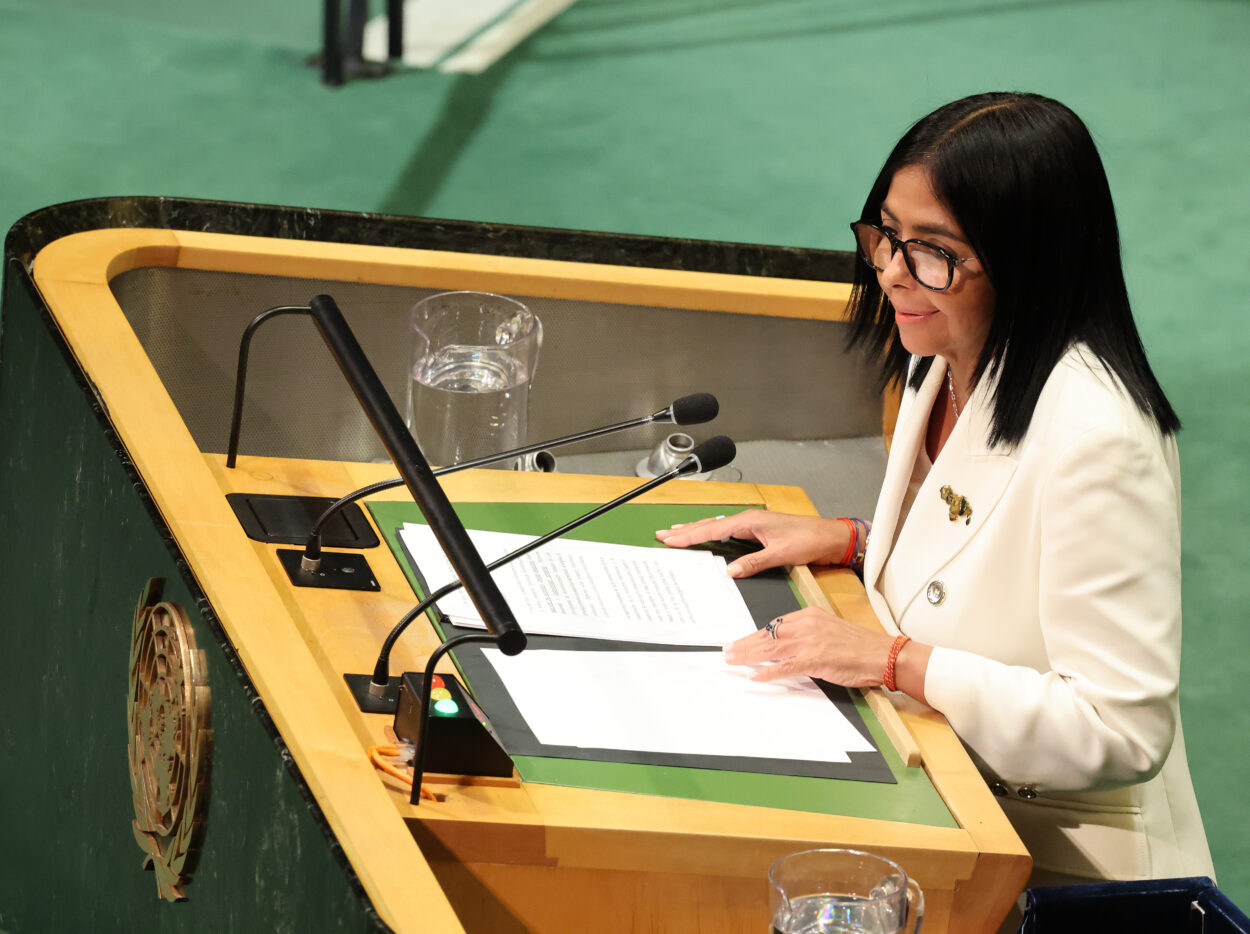
Venezuela: Rodríguez Touts Peace and Dialogue, Pledges Elections in UN Address
Acting President Delcy Rodríguez delivering her speech at the 81st United Nations General Assembly in New York. (Presidential Press)
Caracas, September 25, 2026 (venezuelanalysis.com) – Venezuelan Acting President Delcy Rodríguez outlined a foreign policy built on “peace” and “dialogue” in her address at the 81st session of the United Nations General Assembly in New York on Wednesday.
Speaking before world leaders, Rodríguez insisted on peace over conflict, thanked the Trump administration for diplomatic backing, and committed to international cooperation on environmental, energy, and AI regulation. She went on to urge young Venezuelan migrants to return home and laid out a proposal for structural “democratic transformation” of the Caribbean nation.
Opening her address, Rodríguez underscored Caracas’ rejection of warfare, linking global stability to diplomatic resolution.
“Venezuela, which today knows what it is to lift its children out from under the rubble, extends its deepest solidarity to all peoples who suffer from war, and reaffirms that peace […] is not a naive aspiration, but the only truly human path,” she declared.
Rodríguez explicitly addressed the diplomatic rapprochement with Washington after the January 3 US military strikes and kidnapping of President Nicolás Maduro and First Lady Cilia Flores. She expressed thanked Trump for aiding Venezuela’s reintegration into international forums following years of heavy economic sanctions and diplomatic isolation.
“I want to thank President Donald Trump and his government for their willingness to resume the path of diplomatic and cooperative relations with Venezuela,” Rodríguez stated, referencing the recent oil deal as “one of the largest ever signed” and pledging that it will contribute to regional energy stability.
Rodríguez refrained from condemning the US attack, calling it a “difficult moment” that resulted from the “exhaustion of domestic policies and heightened confrontation with the US.” She likewise made no mention of Maduro and Flores, presently detained 10-15 miles away from the UN headquarters and facing trial for charges including drug trafficking conspiracy.
The Venezuelan acting president had conveyed similar gratitude in a face-to-face meeting with Trump on Tuesday that she labeled as “historic.”
Turning to domestic affairs in her UN address, Rodríguez spoke of the severe wave of migration triggered by past political and economic crises, and vowed to the Venezuelan youth residing abroad that there will be improved conditions for their return.
“To the young people, who have grown up seeing a fractured country and who often decided to leave seeking what they could not find here: I tell you that it is worth believing again,” the acting leader affirmed. “This is the moment to build the country that many want to return to, and not just the one that many wanted to flee.”
This message was framed as part of what Rodríguez termed a “democratic transformation for a rebirth,” which she described as an institutional, orderly, and verifiable process.
“In Venezuela, there will be elections. We have already initiated a political dialogue with sectors of the opposition that leads to a process on equal terms for all,” she noted.
Though Rodríguez did not explicitly name unilateral sanctions from Washington and its allies, she stated that the country needs to be “free from economic restrictions” and pledged to “guide Venezuela toward an era of full democracy, recognized by its people and the world.”
The acting president’s UN speech came amid a flurry of diplomatic activity in New York, including meetings with International Monetary Fund (IMF) Managing Director Kristalina Georgieva, World Bank President Ajay Banga, and Inter-American Development Bank (IDB) President Ilan Goldfajn.
On the sidelines of the UN assembly, Rodríguez also held bilateral meetings with Chilean far-right president José Antonio Kast to discuss regional trade and stability, as well as with a delegation from Trinidad and Tobago, led by Prime Minister Kamla Persad-Bissessar, initiating a “new stage in bilateral relations” centered on joint offshore natural gas exploration and maritime security.
Venezuela had suspended cooperation with neighboring Port of Spain after Persad-Bissessar backed the US’ military build-up on the country’s shores in late 2025.
Rodríguez’s New York trip coincided with a second round of US-backed talks between government negotiators led by National Assembly President Jorge Rodríguez and a sector of the opposition led by former deputy Dinorah Figuera.
The latest negotiations reportedly focused on electoral guarantees, freedom of expression, institutional reform, including renewing the Supreme Court, and efforts to secure the unfreezing of Venezuelan assets abroad, including gold reserves worth approximately US $4 billion. The gold held by the Bank of England is set to be transferred to the US, to be released for post-earthquake recovery efforts under White House oversight.
Edited by Ricardo Vaz in Lisbon, Portugal.

Taylor Swift ‘The Life of a Showgirl: The Encore’: 4 new songs, ranked
“You only need to find one person in this entire world who doesn’t find you completely insufferable.”
That’s the wisdom Taylor Swift dispenses near the end of “Cleveland!,” one of four new songs on a newly expanded edition of “The Life of a Showgirl,” and if that exclamation point doesn’t tell you she’s found that person then I don’t know what would.
Released Thursday night, almost exactly a year after the original album came out, “The Life of a Showgirl: The Encore” tacks four bonus songs onto the blockbuster 2025 LP that set a new record for the biggest opening week of all time even as it drew the harshest reviews of her career. It also follows Swift’s high-profile wedding in July — her husband, the NFL star Travis Kelce, grew up in Cleveland Heights — and comes just as Grammy voters are about to decide on nominations for February’s awards ceremony, where “The Life of a Showgirl” is eligible for Swift’s eighth album of the year nod. (In case you haven’t been keeping track, that would tie her with Frank Sinatra for the most in Recording Academy history.)
In a statement ahead of “The Encore’s” release, Swift said she’d taken a trip to Sweden to celebrate “Showgirl’s” success with Max Martin and Shellback, her two principal collaborators on the album. “Really we just wanted to reflect and take in how grateful we were for the moment we were in,” she wrote, “but there was a studio there and we did what we do when we feel anything at all: We wrote more songs.”
Here are the four “Encore” tracks, ranked from worst to best.
4. ‘Cleveland!’
The exclamation point really is hilarious. (No shots at Cleveland.) I kind of dig the airy jangle-pop production, which reminds me a bit of “Ruin the Friendship,” by far the best song on the original “Showgirl.” But writing about her and Kelce’s romance as a bulwark against all the hate she receives as a rich and powerful pop star feels pretty uninspired, at least as rendered here. “The taste of me is acquired, but it’s his favorite dish”? Alas, no.
3. ‘Patient Zero’
“Encore’s” lead single — with a splashy music video set to premiere during Sunday night’s MTV Video Music Awards — has Swift fielding a phone call from a woman who’s dating one of the singer’s exes and could use a little advice. (“I’ve gotta be honest — I’ve been expecting your call,” Swift tells her.) That’s a rich premise, and I like the way the unexpected fiddle lick scrapes against the glossy synths. Again, though, the lyrics lack the emotional sophistication with which she once would have told a story like this one. And the song’s central image — a guy with a “devil on his shoulder under his halo” — is downright awkward.
2. ‘Pink Clouding’
OK, now we’re getting somewhere. This shimmering electro-pop number takes its title, as I just learned, from a term used among people experiencing addiction to describe the temporary euphoria one might feel in the early stages of recovery. (Recall that Swift wrote “Lavender Haze” a few years ago after hearing the phrase on “Mad Men.”) Here she’s looking back with regret at a relationship that she can see now was clearly a rebound: “You met me at a cursed time / I told you I was fine / And you were so good / That’s why you haunt me like you should.”
1. ‘Babylon’
Look, I’m not crazy about “liberated libertine.” And “Love is ice upon the ladder that you need to climb”? It’s giving Airbnb wall art. But man, oh man, does Swift finally tap into something deep in “Encore’s” closer: a trembling acoustic-guitar ditty about someone who’s realized only too late what they let slip away. Listen for yourself to hear how she sings it — this is a beautifully tender vocal performance — but the verse about the all-but-abandoned young mom sneaking into the bathroom to call her mom is an absolute killer. Taylor Swift: good songwriter!

Justices uphold Trump’s expanded data checks to spot noncitizens who registered to vote
WASHINGTON — The Supreme Court on Friday upheld President Trump’s expanded use of government data to spot non-citizens who are registered to vote.
The justices granted an emergency appeal from Trump’s lawyers and set aside a judge’s order that blocked use of this data on the grounds it was error-prone, particularly for naturalized citizens.
Justices Ketanji Brown Jackson, Sonia Sotomayor and Elena Kagan dissented.
The decision will aid states that seek to scrub their voter rolls and remove those who are not citizens.
Several Republican-led states including Texas and Florida supported the administration’s appeal.
The use of the new database “allowed Texas to more efficiently, promptly, and economically ensure the accuracy of its voter rolls,” the state said. It was “able to run its entire list of 18 million voters” through the expanded system of checks “in bulk and for no cost.”
It’s not clear the decision will have much impact in California and other Democratic-led states. It is likely to have a limited impact in the month ahead because the law forbids states from purging their voter rolls in the 90 days prior to an election.
The court, in an unsigned opinion, said the law supported use of the data.
“The federal Government has an obligation to respond to requests from state and local election officials seeking to verify the citizenship of voters,” the court said. “The order below prevents the federal government from using the program it believes is best suited to the task.”
The administration said the Department of Homeland Security can respond to more than 1 million requests per day to check if a person appears to be a citizen or not based on Social Security records and other data files.
If not, state or county election officials may require these suspect voters to furnish proof of their citizenship.
However, states and local election boards are not required to conduct these searches. The administration also said its data reports are not final proof of citizenship.
Upholding these data searches “would not require states, candidates, parties, or voters to do anything,” Solicitor Gen. D. John Sauer told the court. “It would simply make available to states additional information. … States that wish to use that information in the course of ensuring that only eligible citizens cast ballots this November should be free to do so.”
In dissent, Jackson said the court’s order creates the “risk that states might cancel the voter registrations of at least some recently naturalized citizens or force such persons to provide proof of citizenship before voting.”
The new system of voter checks is based on the 40-year-old Systematic Alien Verification for Entitlements, or SAVE, that was created by Congress. Then, the goal was to check if applicants were entitled to receive federal benefits.
Last year, Trump issued an executive order directing Homeland Security to expand the reach of SAVE to provide states “access to appropriate systems for verifying the citizenship or immigration status of individuals registering to vote or who are already registered to vote.”
It is a federal crime for non-citizens to register and vote.
Trump has long maintained that non-citizens are voting, but he has had little evidence to support that claim.
Voting rights advocates sued, contending the new “mass verification” system was not authorized by Congress and relied on data that is protected as private under the law.
In June, U.S. District Judge Sparkle Sooknanan, a Biden appointee, agreed and blocked use of the expanded searches. The administration has “trampled on the privacy rights of American citizens in a manner that threatens the sacred right to vote,” she said.
On Sept. 4, the U.S. court of appeals by a 2-1 vote refused to overturn her ruling, prompting the administration’s fast-track appeal.
The voting rights advocates, led by the League of Women Voters, had urged the court to stand aside.
“The government has recklessly created an error-laden master citizenship database that endangers millions of Americans’ privacy and voting rights,” they said.
The data searches are flawed, they argued, because they “only reflect a person’s citizenship status when they applied for a Social Security number. That status does not automatically update if the person later naturalizes.”
Texas admitted that the mass checks yield “some inaccurate information.” It said 2,724 people were cited as “potential non-citizens” among its 18 million registered voters.
In response, county officials had to check further to confirm the citizenship of these voters, the state said.
Last week, the Supreme Court dealt Trump a defeat when it blocked use of his proposed postal rules that could have prevented millions of voters from casting ballots by mail.
In a brief order, the court said Trump’s claims of power over states and their voting were “unlikely to succeed.”
But in the case of the expanded data files, the court said the law appears to favor the administration.

Prep talk: Davey Harris of Windward is headed to San Diego State
Coach DJ Gay started 120 games during his playing days at San Diego State, so when his star guard at Windward High, Davey Harris, announced he had committed to San Diego State, Gay couldn’t have been more pleased.
“That’s the least I could do for everything the school has done for me,” Gay said. “I think San Diego State is going to be a great place playing in the new Pac-12.”
Harris has grown to 6 feet 6 and is only scratching the surface of his ability because he missed his first two years of high school with an injury.
“I truly believe the sky is the limit,” Gay said.
This is a daily look at the positive happenings in high school sports. To submit any news, please email eric.sondheimer@latimes.com.

LIVE: Turkiye vs France – UEFA Nations League
Follow the updates, with build-up, predictions, team news and lineups, from our live text commentary stream coverage.
Source link

Azerbaijan Grand Prix: Russell takes pole as Antonelli out after hitting wall
Leclerc was somewhat taken aback by Mercedes’ superiority, saying that the position was what he expected but the gap most definitely was not.
At the bottom of the top 10, there was finally some good news for Williams, for whom Carlos Sainz achieved the team’s first top 10 qualifying performance of the year.
Williams have introduced a new chassis this weekend which has brought them down to the weight limit for the first time this season, after being as much as 25kg over at the start of the year.
Along with some additional developments, it appears to have produced a big step forwards, although the caveat is that Baku is a track that suits the characteristics of the Williams car and does not expose its weaknesses.
Team-mate Alex Albon did not manage to secure a tow in the second part of qualifying, and was “anyway struggling with straight-line speed all session”, and was 13th, just under 0.4secs behind the Spaniard.
Antonelli’s error came on his second lap of the first session.
He turned into the first corner too early, and the left front wheel clouted the inside wall, breaking the suspension.
He initially tried to get the car back to the pits but was told by engineer Peter Bonnington to park up.
“Let me try,” Antonelli pleaded, before Bonnington told him that either the track rod or upright was broken and there was no way Mercedes could fix that in the time they had to turn the car around before the next session.
Antonelli had been on the back foot all Friday trying to catch up time lost to a hydraulic problem that had stopped his car on track halfway through first practice, and was not repaired until halfway into the second.
It was Antonelli’s first major mistake of the season since he crashed heavily in final practice at the first race of the season in Australia.

Big Brother’s Chelsey dealt devastating blow hours before live eviction show
Big Brother housemate Chelsey has “become one of the shortest-priced contestants in history in eviction betting”

Bookies have revealed there’s a 95% chance Chelsey will be evicted from Big Brother tonight(Image: ITV)
The second housemate to be evicted from the Big Brother house will be revealed tonight.
Hosts AJ Odudu and Will Best will share the name of the contestant who has received the most public votes during Friday’s (September 25) live eviction show.
Chelsey and Pauline are both at risk of being sent packing and according to the bookies, the odds “do not look good” for one of the housemates.
Bookmaker Coral makes Chelsey 1-20 to be evicted from the Big Brother house this evening. Those odds indicate there is a 95% chance she will lose the public vote. Pauline is 8-1 to depart.
Coral’s John Hill: “The odds do not look good for Chelsey. We think there is a 95% chance she will be evicted this evening, making her one of the shortest-priced contestants in history in our Big Brother eviction betting.”
Pauline had the most votes with six housemates nominating her; Chelsey, Charlotte, Omar, Frankie, Rochelle and Philip and Sam, Harry, Pauline, Johanne and Rob nominated Chelsey, leaving her with five votes.
Millie became the first housemate to be evicted from this year’s series last Friday (September 18) after facing a public vote alongside fellow housemates Pauline and Rochelle.
Speaking after her eviction, Millie admitted she was surprised by the result, telling presenters AJ and Will: “I am actually quite shocked, I’m not going to lie but do you know what, I had the best time and I love absolutely everyone in there.”
She added: “I could hear the reaction from out here, and Rochelle doesn’t want to be in there. It’s a mix of everything, but I’ve made friends for life in there. So I’m happy.”
Since her exit, Millie has appeared on spin-off show Big Brother: The Group Chat, where she revealed her very honest opinion housemates Omar and Rhianna’s romance.
When hosts GK Barry and Kate Lawler asked Millie if she was a fan of the pair, she instantly replied: “No, I’m not.” She was then asked if she thought their romance was for convenience as there was no one else in the house.
She said: “100%. Number one, [Rhianna] she’s a very boring person herself. And I think the only way she knows she’ll get kept in is if she hooks up with someone. I genuinely think that’s what it is.”
Kate then asked if Rhianna was playing a game with Omar and Millie replied: “She is playing it 100% because she is not interested in Omar at all. When I was watching and I watched them kissing under the covers, I was like, ‘Sorry, what? Make it make sense’.”
Omar and Rhianna are not the only housemates sparking up a romance in the house. Nominated housemate Chelsey has also been getting to know Lynx leaving fans moaning “This is not Love Island“.
Big Brother continues tonight on ITV2 and ITVX at 9pm

World’s 100 best cities revealed and four in the UK make the list including historic capital with hilltop castles
WHAT makes a city the best in the world? Well, there are lots of factors that go into it, according to Oxford Economics which has just named the top 100.
Looking at subjects like governance and quality of life, it has created the Global Cities Index 2026 and four UK cities have made the cut, with one coming in second place.
It might be a surprise to some, but London was named second best city in the world – only beaten by New York City.
Oxford Economics made their decision on the factors of economics, human capital, quality of life, environment and governance.
Talking about the city, Oxford Economics said: “London remains one of the clearest examples of a truly global city.
“Its influence extends across business, science and technology, education, and the arts, giving it a reach that few other cities can equal.”


It named its top strengths with its universities, large GDP size and low emissions.
It’s not the first time London has been named one of the world’s best cities – earlier this year it was named THE best city by Tripadvisor.
Almost as many as 80,000 people visit every day to see its historic landmarks like Big Ben, the Tower of London, St. Paul’s Cathedral and Tower Bridge.
Or its more modern ones like the London Eye, The Shard and the Sky Garden.
And if you want some ideas on what to do in the capital for all ages, Sun Travel has some recommendations for you from its attractions to rooftop bars and free things to do.
The next UK city in the top 100 is Edinburgh in Scotland which came 71st on the list.

The historic city has cobbled streets – one of which being the Royal Mile which is considered one of the most beautiful in the world.
Edinburgh also has around 385 pubs, plenty of cafes, independent shops and of course it’s hilltop castle.
Another activity that lots of visitors embark on during a trip to Edinburgh is the hike up to Arthur’s Seat.
The extinct volcano is the highest peak in Holyrood Park just east of the city and you can see across the whole city from above.
Coming in at number 90 on the list is the city of Manchester – it was also named one of the world’s up-and-coming cities.
The publication described the city as “booming” thanks to its “productivity growth”.
It was also praised for its “thriving cultural scene” thanks to its two football clubs, Manchester City and Manchester United – as well as Co Op Live and AO Arena which both hold live events.
For more on what to do in Manchester, one local has lots of recommendations like exploring Warehouse Project for seeing live bands or DJs and stopping by the bars on Canal Street.
Just about making the list is the city of Cambridge which placed in 100th position.
The city in the East of England is most famous for its prestigious university which is often ranked as being one of the best in the world.
Popular activities include exploring the historic colleges, punting along the River Cam and exploring the shops and its many pubs.
One of which, The Eagle, is where Francis Crick and James Watson burst in to announce they discovered the DNA.
Other cities that deserve a mention are Dublin in Ireland which came in at number six.
It’s is largely known around the world for its lively nightlife, but it also has world-class museums, restaurants and historical sites.
Also in the top 10 were Paris and Zurich, as well as Tokyo in Japan and American cities, Seattle, San Francisco and San Jose.
Within the top 100, Europe represents almost half with 44 cities, a lot also belong in North America with its 34 cities making the list.
There are the top 100 cities according to Oxford Economics…

- New York City, USA
- London, UK
- Paris, France
- Seattle, USA
- San Francisco, USA
- Dublin, Ireland
- Boston, USA
- San Jose, USA
- Tokyo, Japan
- Zurich, Switzerland
- Oslo, Norway
- Los Angeles, USA
- Sydney, Australia
- Washington DC, USA
- Stockholm, Sweden
- Melbourne, Australia
- Dallas, USA
- Copenhagen, Denmark
- Munich, Germany
- Toronto, Canada
- Amsterdam, the Netherlands
- Berlin, Germany
- Geneva, Switzerland
- Vancouver, Canada
- Brussels, Belgium
- Helsinki, Finland
- Luxembourg City, Luxembourg
- Houston, USA
- Singapore, Singapore
- Madrid, Spain
- Atlanta, USA
- Denver, USA
- Minneapolis, USA
- Tel Aviv, Israel
- Vienna, Austria
- Brisbane, Australia
- San Diego, USA
- Seoul, South Korea
- Hamburg, Germany
- Bergen, Norway
- Phoenix, USA
- Dubai, UAE
- Basel, Switzerland
- Perth, Australia
- Canberra, Australia
- Austin, USA
- Chicago, USA
- Taipei, Taiwan
- Bern, Switzerland
- Riyadh, Saudi Arabia
- Prague, Czechia
- Miami, USA
- Portland, USA
- Utrecht, the Netherlands
- Gothenburg, Sweden
- Philadelphia, USA
- Antwerp, Belgium
- Lausanne, Switzerland
- Salt Lake City, USA
- Auckland, New Zealand
- Warsaw, Poland
- Montreal, Canada
- Frankfurt am Main, Germany
- Istanbul, Turkey
- Kuala Lumpur, Malaysia
- Nashville, USA
- Rotterdam, the Netherlands
- Ghent, Belgium
- Calgary, Canada
- Adelaide, Australia
- Edinburgh, UK
- Barcelona, Spain
- Charlotte, USA
- The Hague, the Netherlands
- Wellington, New Zealand
- Aarhus, Denmark
- Malmo, Sweden
- Gold Coast, Australia
- Baltimore, USA
- Eindhoven, the Netherlands
- Orlando, USA
- Colombus, USA
- Osaka-Kyoto, Japan
- Abu Dhabi, UAE
- Raleigh, USA
- Milan, Italy
- Hong Kong, China
- Lyon, France
- Las Vegas, USA
- Manchester, UK
- Reykjavik, Iceland
- Tampa, USA
- Shenzhen, China
- Riverside, USA
- Madison, USA
- Christchurch, New Zealand
- Stuttgart, Germany
- Düsseldorf, Germany
- Linz, Austria
- Cambridge, UK

Pope Leo XIV affirms need for media to cover public figures when asked about Trump ban
ABOARD THE PAPAL PLANE — Pope Leo XIV told journalists they were welcome to report on him, as he responded to the Trump administration’s attempt to bar U.S. media from the White House and affirmed the importance of journalists covering public figures.
Leo spoke to reporters Friday on his way to France for a four-day visit. Asked by a CNN reporter about the Trump administration’s attempt to bar CNN and other reporters, Leo said the media was welcome on his plane.
“I am very happy that here, you are all welcome,” he said. Good media coverage is important, he said, and equally important “that we have it all the way around, for everyone”
CNN, MS NOW and Politico were back at the White House on Thursday after a judge handed them a reprieve from President Trump’s ban, but the extraordinary showdown between him and outlets whose coverage he dislikes continued.
On a high-profile day when Chinese leader Xi Jinping was visiting Washington and attending a state dinner, no major American network was airing live coverage, and both CNN and MS NOW said their journalists were denied access to Xi’s state dinner arrival.
The American pope has long affirmed the need for free and independent press, a point he made in one of his first audiences as pope. Speaking to journalists who covered the 2025 conclave that elected him, Leo called for the release of imprisoned journalists and affirmed the “precious gift of free speech and the press.”
That said, since the COVID-19 pandemic, independent media have been prevented from covering photo opportunities inside the pope’s private studio when heads of state visit. Additionally, many of the pope’s private audiences with other groups and individuals are closed to non-Vatican press.
Leo had opposed Trump on the war
Leo’s airborne comments about Trump followed his April back-and-forth over the American president’s criticism of his opposition to the Iran war. Leo’s position won him points with some Parisans opposed to Trump’s policies who came out in droves to celebrate the first official state visit by a pope in 18 years.
“He dared, at his level, to oppose the American president,” said retiree Thierry Marien, who lined up hours early to grab a spot on the popemobile route to Notre Dame cathedral, where Leo was to celebrate vespers later Friday. “Not because he is opposed to the American president but because he’s opposed to countries where we can see there’s a risk of their political systems becoming a bit more dictatorial and there are already enough of those in the world.”
“I appreciated that he did that. He could quite easily have said to himself, ‘In my situation, I won’t criticize any heads of state,’” he said.
Leo took further distance from the Trump administration policies later Friday by making a lengthy visit to UNESCO, the U.N. cultural and educational agency, from which the U.S. has withdrawn as part of its retreat from the international organization.
Leo, who has championed multilateral diplomacy, toured the UNESCO grounds inside and out, greeted its employees and received a guided tour of some of its art collections. He then delivered a speech on the values UNESCO espouses to promote peace through culture and education.
Leo apologizes to reporters
Also on the flight Friday, Leo also apologized for missing an opportunity to speak with the press the last time he traveled internationally, when his Iberia charter broke down in Spain’s Canary Islands and he returned home solo on the king’s private jet, skipping his traditional airborne press conference.
More than 70 reporters and the Vatican delegation waited for several hours at the airport for a replacement plane to arrive. Leo addressed the media’s disappointment when he came to the back of the plane to greet reporters.
“A special mention I would like to make for those of you who were traveling with me when we returned to Rome from Spain,” he said. “I want to apologize personally for an incident, that I had nothing to do with, but which I know left a number of you unhappy with the fact that we couldn’t have the flight back together back to Rome.”
In other comments to reporters, Leo said he believed his alma mater Villanova would be the fan favorite when the Augustinian university plays the Catholic University of Notre Dame’s basketball team in Rome on Nov. 1.
“They tell me that the people coming to the match, 90% are Villanova and 10% Notre Dame, so the voice of the people of God will be very strong on the Villanova side,” Leo said.
Winfield writes for the Associated Press.

The Sports Report: Important season for Lakers Rob Pelinka and JJ Redick
Season on the brink for Pelinka, Redick
From Bill Plaschke: They mentioned “The Odyssey,” they talked about “Lord of the Rings,” they referenced “The Hobbit,” they cited the hero’s journey, they predicted a season filled with mythological tales of triumph.
What they didn’t promise was that their Lakers’ team would contend for a championship.
What they couldn’t mention was what will happen to them if they don’t.
The bard Rob Pelinka? Off with your head!
The soothsayer JJ Redick? Drawn and quartered!
In their annual pre-training camp news conference at their practice facility Thursday, Pelinka and Redick talked about fictional characters perhaps because the reality is too grim for words.
Their jobs are on the line with a rebuilding team that might not be good enough to save them, and no amount of cute Gandalf references can change that.
Lakers’ new era opens with a thanks for the LeBron James era
Dodgers lose to Padres
From Kevin Baxter: The Dodgers didn’t win Thursday. But they got something far more valuable before they even took the field for their 4-2 loss to the San Diego Padres.
With the Atlanta Braves’ loss to the Cincinnati Reds earlier in the day, the Dodgers clinched the second seed in the National League playoffs and the first-round bye that goes with it. That means the Dodgers will get five days off next week to prepare for their playoff opener, a godsend for a bruised and bloodied team that has stumbled to the finish of the regular season.
“I think we all know why it’s important,” first baseman Freddie Freeman said of the break. “There’s a lot of us kind of limping toward the end here, a lot of aches and pains this year.”
For the Padres (89-70), the victory was important because it clinched a wild-card berth and a franchise-record third consecutive trip to the postseason.
In addition to Freeman, who has been hobbled all month by a sore right knee, the Dodgers are rushing to get designated hitter Shohei Ohtani, starting pitcher Blake Snell and closer Edwin Díaz healthy.
Shaikin: For the Dodgers, the varsity will take it from here
Angels defeat Athletics
Christian Moore hit a two-run double and had three RBIs, Bryce Teodosio drove in two runs, and the Angels beat the Seattle Mariners 6-4 on Thursday night.
Moore’s RBI single in the second gave the Angels a 1-0 lead, and Teodosio’s one-run groundout pulled the Angels within 3-2 in the fifth before Zach Neto drove in the tying run.
Moore plated two more runs in the sixth with a double to put the Angels back on top for good, 5-4. Teodosio capped the scoring with an RBI single in the eighth.
Nneka Ogwumike stars in final game
From Marisa Ingemi: The Sparks’ season was mere seconds away from ending on a high note. Then, the Golden State Valkyries scored 13 consecutive points late in the fourth quarter to dissolve a double-digits Sparks lead.
Sparks star Nneka Ogwumike concluded her WNBA career with 17 points and 15 rebounds in the 76-75 loss to the Valkyries. Her double-double was her 19th this season, which set a Sparks single-season record.
Immediately after the game, the Sparks announced that they would name their new practice facility in El Segundo after Ogwumike, who retires as the Sparks’ all-time leading scorer.
The loss itself mattered little. The Sparks were eliminated from postseason contention nearly a month ago after beginning with championship aspirations. In one of their most disappointing seasons to date because of the expectations attached, the Sparks go into the offseason trying to put the pieces together again
Aaron Donald wants to earn his spot
From Gary Klein: Aaron Donald is still earning his spot.
In his mind, anyway.
During defensive line drills, the Future Hall of Famer continues to go third — even when groups are split — rather than lead.
“Earning my keep right now,” Donald said after Rams practice Thursday. “I’m a guy that likes to work and earn everything I get.”
Donald, 35, has one game under his belt after returning from a two-year retirement to rejoin the team that selected the three-time NFL defensive player of the year in the first round of the 2014 NFL draft.
Donald played 33 snaps in the Rams’ 28-6 victory over the New York Giants on Monday. He made three tackles, including one for a loss.
This day in sports history
1866 — Jerome Park, named for its founder Leonard Jerome, opens in the Bronx in New York. Jerome, seeking to emulate the British racing system, also establishes the American Jockey Club, precursor to the present Jockey Club, formed in 1894.
1920 — Molly Bjurstedt Mallory wins her fifth title in six years with a two-set victory over Marion Zinderstein in the U.S. Lawn Tennis Assn. championships.
1926 — Walter Hagen wins his third straight and fourth overall PGA Championship. Hagen beats Leo Diegel 4 and 3 in the championship match at Salisbury Golf Links in Westbury, N.Y.
1949 — Louise Suggs wins the U.S. Women’s Open by 14 strokes over Babe Didrikson Zaharias.
1962 — Sonny Liston knocks out Floyd Patterson at 2:06 of the first round at Comiskey Park in Chicago to win the world heavyweight title.
1966 — Gloria Ehret wins the LPGA Championship by three strokes over four-time champion Micke Wright.
1982 — Ricky Edwards rushes for 177 yards and four touchdowns to help Northwestern end its 34-game losing streak in a 31-6 victory over Northern Illinois.
1988 — Americans sweep the medals in the long jump at the Seoul Olympics; Carl Lewis wins his second gold of the Games with leap of 8.72m ahead of teammates Mike Powell & Larry Myricks.
1988 — Super swimmer Matt Biondi wins his fifth gold medal of the Seoul Olympics anchoring the victorious American 4 x 100m medley relay team.
1994 — Oliver McCall scores a major upset by stopping Lennox Lewis 31 seconds into the second round to capture the WBC heavyweight title in London.
1995 — Jerry Rice has 181 yards receiving in San Francisco’s 27-24 loss to Detroit. It’s his 51st 100-yard game, which breaks Don Maynard’s NFL record.
1997 — WNBA announces it will add Detroit & Washington, D.C. franchises.
2000 — American basketball player Vince Carter jumps over 7 foot 2 Frédéric Weis in 2000 Summer Olympics, known in France as “le dunk de la mort” (the dunk of death).
2004 — Bobby Seck of Hofstra throws eight touchdown passes to tie an Atlantic 10 mark and set a school record in the Pride’s 62-43 victory over Rhode Island.
2005 — Fernando Alonso becomes Formula One’s youngest champion by finishing third in the Brazilian Grand Prix. Alonso, 24, a six-time winner in his third full season in Formula One, ends Michael Schumacher’s five-year hold on the title.
2010 — Collingwood and St. Kilda plays to a 68-68 tie, the first in an Australian Rules football grand final since 1977, setting up a rematch to decide the league title.
2011 — The Detroit Lions snap a 13-game losing streak with a 26-23 victory over the Minnesota Vikings. The Lions, who won in the Metrodome for the first time since 1997, are 3-0 for the first time since 1980.
2013 — Skipper Jimmy Spithill and Oracle Team USA win the America’s Cup with one of the greatest comebacks in sports history to keep the oldest trophy in international sports in the United States. Spithill steers Oracle’s space-age, 72-foot catamaran to its eighth straight victory, speeding past Dean Barker and Emirates Team New Zealand in the winner-take-all Race 19 on San Francisco Bay. All but defeated a week ago, the 34-year-old Australian and his international crew twice rallies from seven-point deficits to win 9-8.
2016 — Rory McIlroy rallies to enter a three-man playoff and win the FedEx Cup. After trailing by three shots with three holes to play in the Tour Championship, McIlroy holes a 15-foot birdie putt on the fourth extra hole to win the playoff and claim the $10 million FedEx Cup bonus.
2022 — Laver Cup Men’s Tennis, London: Team World sweeps final day for 13-8 victory over Team Europe; tournament marks retirement of Roger Federer.
Compiled by the Associated Press
This day in baseball history
1941 — Pete Reiser’s homer and Whitlow Wyatt’s five-hitter helped Brooklyn beat the Boston Braves 6-0 and clinch the Dodgers’ first pennant in 21 years.
1955 — Detroit’s Al Kaline, at the age of 20, became the youngest player to win a batting title, finishing his second season with a .340 average. Ty Cobb was one day older when he won the crown, batting .350 in 1907, also playing for Detroit.
1956 — Sal Maglie of the Brooklyn Dodgers pitched a 5-0 no-hitter against the Philadelphia Phillies.
1960 — The New York Yankees clinched manager Casey Stengel’s 10th and last American League pennant with a 4-3 victory over Boston.
1965 — Satchel Paige, at 60, became the oldest player in the majors, taking the mound for Kansas City and pitching three scoreless innings over the Boston Red Sox. He gave up one hit, to Carl Yastrzemski.
1965 — Willie Mays, who hit 51 home runs in 1955, joined Ralph Kiner as only the National Leaguers to have more than one 50-home run season.
1974 — Dr. Frank Jobe transplanted a tendon from Tommy John’s right wrist to the Dodger pitcher’s left elbow. The revolutionary ulnar collateral ligament reconstruction allowed John to win an additional 164 games, more than half of his career total of 288 victories.
1980 — Oakland’s Brian Kingman lost his 20th game when the A’s were defeated by the Chicago White Sox 6-4. Kingman was the first pitcher to lose 20 games with a winning team since Dolf Luque went 13-23 for the 1922 Cincinnati Reds.
1984 — Rusty Staub of the Mets became the second player to hit homers as a teenager and past his 40th birthday. Staub’s game-winning home run off Larry Anderson to give the Mets a 6-4 victory over Philadelphia at Shea Stadium. Ty Cobb was the other major leaguer to accomplish the feat.
1987 — San Diego’s Benito Santiago set a modern major league record for rookies by hitting safely in his 27th consecutive game in a 5-3 loss to the Dodgers.
1998 — The New York Yankees set the AL record for wins with their 112th, beating Tampa Bay 6-1 to break the victory mark held by the 1954 Cleveland Indians.
2001 — Richie Sexson and Jeromy Burnitz became the first teammates to hit three home runs apiece in a game as Milwaukee defeated Arizona 9-4.
2003 — Toronto’s Carlos Delgado became the sixth player to homer in four straight at-bats in one game as the Blue Jays beat the Tampa Bay Devil Rays 10-8 at SkyDome. Delgado tied the game at 8-8 in the eighth with his fourth homer, a solo shot off Lance Carter.
2007 — Prince Fielder, at 23 years, 139 days old, became the youngest major league player to hit 50 home runs in a season, connecting twice in Milwaukee’s 9-1 rout of St. Louis.
2013 — The New York Yankees failed to make the playoffs for only the second time in 19 years, getting mathematically eliminated during their 8-3 loss to Tampa Bay.
2016 — Jose Fernandez, 24, ace right-hander for the Miami Marlins, was killed in a boating accident.
2017 — Aaron Judge broke Mark McGwire’s major league record for home runs by a rookie, hitting a pair for the second straight day to raise his total to 50 and lead the New York Yankees over the Kansas City Royals 11-3.
2018 — Max Scherzer became the 17th pitcher since 1900 to strike out 300 batters in a season, reaching that milestone by fanning 10 in seven innings during Washington’s 9-4 win over Miami.
Compiled by the Associated Press
Until next time…
That concludes today’s newsletter. If you have any feedback, ideas for improvement or things you’d like to see, email me at houston.mitchell@latimes.com. To get this newsletter in your inbox, click here.

China swimmer makes Asian Games history as Thai sprinter wins track 100m | Athletics
Published On 25 Sep 2026
Towering teenager Zhang Zhanshuo became the first swimmer in history to win seven golds at a single Asian Games, while on the track, Thai sprinter Puripol Boonson powered to victory in the 100m.
China’s Zhang, 19, scorched to the men’s 400m freestyle title in the pool in Tokyo on Friday in a Games-record three minutes and 41.28 seconds.
He sat on the lane divider after the race and slowly counted off on his fingers all seven medals he had won.
Zhang also won individual golds in the 200m, 800m and 1,500m freestyle events, as well as three relays.
He said, after wrapping up a scintillating campaign, that it had been the “perfect week”.
“I think the most important thing is to stay grounded and focused, because the Asian Games are not my ultimate goal,” said Zhang, who stands 198cm (six feet, six inches).
With the Los Angeles Olympics less than two years away, China won 30 of the 42 golds in the pool this week.
Their 13-year-old phenomenon Yu Zidi was the undoubted superstar, taking home three individual golds and all in Games-record times.
Not to be outdone, Japan’s 17-year-old Shin Ohashi shattered the men’s 200m breaststroke world record on Thursday.
Swimming, equestrian and diving are taking place in Tokyo, but the city of Nagoya and the wider Aichi prefecture are the main Games host.
The men’s and women’s 100m sprints, the blue riband events in track and field, took place in front of rows of empty seats in Nagoya.
China’s Chen Yujie streaked to a comfortable victory in the women’s final in a Games-record 11.06 seconds.
The men’s was won by 20-year-old Puripol, who burst out of the pack in the final quarter of the race to win in 9.90 seconds, breaking his Games record from earlier in the evening.
It was Thailand’s first men’s 100m gold medal since Suchart Jairsuraparp on home soil at the 1978 Bangkok Games.
‘Today was a miracle for me’
On the last evening of gymnastics, Carlos Yulo won the men’s vault for his second gold of the Games.
The double Olympic champion won floor gold on Thursday to complete his collection of major titles.
“I can’t believe it,” the Filipino said.
“In this whole Asian Games, I felt really stressed, but at the same time, I enjoyed what I did today. I really did my part.
“Today was really a miracle for me.”
There’s little time to celebrate, however, with the world championships next month.
South Korea edged China 85-80 in the semifinals of the women’s basketball, and will face hosts Japan for gold.
China had their giant centre Zhang Ziyu, 19, but it was not enough.
Zhang Ziyu stands 223cm (seven feet, four inches) and scored 22 points.
“She was tough to guard,” said South Korea’s Kang Lee-seul.
“We couldn’t defend her, but we focused on fast breaks and shooting more three-pointers.”
North Korea’s women were again in record-setting form on the weightlifting dais.
Oh Kwang Ok set three world records on her way to women’s 57kg bodyweight class gold.
Oh lifted 104kg in the snatch and 134kg in the clean and jerk for a 238kg total – all world records to add to the two golds North Korea’s women won in the 49kg and 53kg classes this week.
North Korea has won four gold medals and two silvers in the six weightlifting events contested so far.

One of Europe’s busiest railway stations to close for ‘vital’ works with Eurostar trains cancelled
ONE train station that sees over 167,000 passengers each day will completely close next week.
Due to essential works, no trains will run to or from Amsterdam Centraal on October 3 – this includes Eurostar services to and from St Pancras.
The train station that serves the city of Amsterdam in the Netherlands is about to undergo ‘vital’ rail works.
As a result it will be closed for one full day on October 3 with schedules significantly reduced on the two following days between October 4-5.
The upgrades include connecting new tracks around Amsterdam Centraal to the rail network.
ProRail’s construction manager Wai Ko explained: “We are adapting the station step by step so that there will be more space for passengers and trains in the future.


“Over the weekend of October 3, together with contractor Dura Vermeer, we will connect track 11a to the rail network. We will also disconnect track 14a.
“That involves a great deal of visible work, such as physically joining the tracks, as well as a great deal of work that passengers never see.”
Other works taking place will be ‘invisible’, held within the signalling systems in technical rooms and at the traffic-control center.
It’s likely to cause major disruption over the weekend considering that Amsterdam Centraal is the second-busiest railway station in the Netherlands and one of the busiest in Europe.
As a result of the engineering works, Eurostar has said that there will be no trains between St Pancras and Amsterdam between October 3-5.
On its website, Eurostar apologised for the disruption.
On Saturdays there are typically three direct Eurostar routes to Amsterdam Centraal and 15 indirect routes from London St Pancras.
There are also the same number of services between Amsterdam and London.
On Sundays there are usually four direct routes and nine indirect journeys with the same from Amsterdam to London.
Eurostar usually has five direct Amsterdam services on Monday and nine indirect services – on the return are typically five direct trains and six indirect.
Eurostar’s services to Rotterdam will remain unaffected.
If you were due to travel to Amsterdam on these dates – these are the options provided by Eurostar…

Eurostar has provided the following options for those affected by Amsterdam Centraal’s closure between October 3-5…
• Use your ticket to get on or off your train at the station before or after your cancelled stop if your planned journey is only partially disrupted.
• Exchange your booking for free to travel in the same travel class at a different time or date. It only takes a minute to rearrange your trip.
• Cancel your booking and claim an e-voucher. You will have 12 months from the date of your disrupted journey to redeem it on eurostar.com.
• Cancel your booking and get a refund. You’ll receive a refund for the value of your ticket but not for any booking or exchange fees. We’ll process your request within 28 days.
You have three months from the date you were due to travel to claim your preferred option.

I found the UK’s best autumn staycation spot used for new Sense & Sensibility film with award-winning pubs & £40pp hotel
JANE Austen knew what she was doing when she wrote her books in atmospheric locations.
And with a new movie based on her novel Sense & Sensibility coming out this weekend, the locations in the film are the perfect destination for a staycation.
I have visited Dartmoor National Park more times than I can count, including the spots used in the film – and I stand by that it is the best staycation spot in England.
The National Park spans 368 square miles and to put that into perspective, its around nine times the size of the City of Paris.
In fact, Dartmoor is so huge you could spend a whole week exploring it and you could still come back again and see new things.
But you won’t see skyscrapers and massive roads here – instead, rolling hills meet meandering rivers with winding country roads running alongside them.
Read more on travel inspo


The new Sense & Sensibility film starring Daisy Edgar-Jones as Elinor Dashwood and Esmé Creed-Miles as Marianne Dashwood, used the rugged and windswept landscapes of Dartmoor extensively to film scenes of the movie.
One location used was Gutter Tor – a large granite rock pile that makes for the ideal walk.
There is a small car park not too far away and after exploring the tor, head to Ditsworthy Warren House, just south of the tor, which was also used in film and it already featured in Steven Spielberg‘s film War Horse.
As a child and still now as an adult, I love searching for letterboxes on Dartmoor – a traditional hobby box with a rubber stamp inside and a visitor book.

Obviously some are harder to find than others and while I haven’t found one at Gutter Tor, there are three officials ones in the area.
It is a great activity for kids, like the ultimate hide and seek.
You will usually find them in the crevices of the granite rocks, or even under some that are light enough to move.
Another spot the new blockbuster used as a filming spot was Princetown, which is one of the National Park’s villages.
The small village is home to the famous Dartmoor Prison, made entirely out of granite.
Many myths and folklore about Dartmoor originate at this prison and are usually about escaped prisoners.
I’d really recommend heading to the Dartmoor Prison Museum to learn more about the 200-year-old building.
And if you want to hear more about the folklore, book onto a Heart of Dartmoor Guided Walk, based in Princetown.
For half a day (£40pp) or a full-day (£70pp) visitors head off on walks across open moorland and tracks with a guide who will share local folklore, history and hidden features.
Pop into Dartmoor Brewery’s shop as well and pick up some of their famous Jail Ales which have won numerous awards over the past few years.
The ales all come from the brewery next door, which is England‘s highest brewery at 446.5 metres above sea level.
If you want to sit and enjoy a pint in a pub, then pop into the Plume of Feathers or the Prince of Wales.
The final Dartmoor filming spot was Tavistock – a historic market town on the edge of the National Park.
Known as the original home of the cream tea, it is well worth spending a day exploring.
The World Heritage status town is home to loads of independent shops, a famous pannier market and an award-winning farmers market.
The town has a heap of restaurants, pubs and cafes as well and if you want to extend your stay then book into the Cornish Arms for a night, costing from £124 per night.
Dartmoor has more to explore than just these filming spots though…
One of the most popular spots to visit – with good reason – is Haytor.
The towering tor at the edge of the moors provides the ideal walk for those who enjoy being outside but don’t want anything too rigorous.
By Haytor is also The Moorland Hotel, with stunning gardens and a large restaurant serving delicious comfort food.
Staying here is the perfect base to explore the National Park and what makes it even better is that it costs from just £80 per night – so £40 per person per night, with breakfast included.
And across the moors you will find more than 70 pubs in total, many of which have won awards for either their drinks or food.
For example, head to The Chagford Inn, which is recognised as a leading West Country gastropub and focuses on farm-to-table menus.
Also in Chagford, drop into the Three Crowns which is the Gold Winner for Pub of the Year at the Visit Devon Tourism Awards and a Devon Life Food and Drink Awards finalist.
Another fun family spot – that is free to visit – is Dartmeet.
Here you can go for a dip in the river, head over a traditional clapper bridge and venture across giant stepping stones that span the river.
If all of this wasn’t enough, Dartmoor is actually the only place in England you can wild camp for free.
So, get your tent out and you’ll have free accommodation too.

The Evolving Role Of Ukraine’s Artillery In The Age Of Drones
It’s stunning to comprehend how much has changed since Russia began its invasion of Ukraine. The conflict quickly turned into one dominated by artillery, with both sides scrambling to source shells wherever possible. Drones have since replaced tubed artillery as the ‘king of battle’ along the front, but cannons still have an important place on the battlefield. The commander of a new combined drone-artillery brigade offered some fresh insights into how his guns are now being deployed to achieve effects that drones still can’t provide.
As we have frequently documented, the ubiquity of drones has changed the nature of combat, especially when it comes to artillery. Not only can drones hold artillery positions at risk, many are cheaper than shells and easier to produce at scale. Most types are also precision guided munitions capable of hitting moving targets with pinpoint accuracy and can also provide battlefield surveillance. However, they are not a panacea, especially amid the cat-and-mouse game of electronic warfare countermeasures and improving kinetic and passive defenses.
In a recent interview with the Ukrainian Oboronka news outlet, Lt. Col. Vitalii Korniienko, commander of the 7th Artillery Brigade, talked about the changing nature of artillery warfare. Korniienko, whose unit is part of the Ukrainian National Guard, explained what is being done to keep his array of domestically produced Bogdana 155mm systems, donated weapons like M777 howitzers, remaining Soviet-era 2S7 Pion 203mm self-propelled howitzers and other guns, relevant. Here are some takeaways from that discussion.
How The Game Changed
“Guns used to be massed at positions to create an ‘artillery wall’ and a barrage of fire,” the lieutenant colonel said. “That practice is gone now. So, how effective is artillery today? We can create an artillery barrage, but what is the point of mindlessly churning up the earth? I’d rather send 20 FPV drones to destroy the target. The cost of that mission is $20,000.”

“Alternatively, I could fire 200 shells, but the cost would be astronomical,” he pointed out. “Plus, if we fired 100 shells from a gun in a single day, it likely wouldn’t survive until evening. The sky is full of drones; every shot gives away the position, leading to detection and an attempt to dismantle it using every available means. Nowadays, a typical mission involves a series of up to 10 shots. First, 3–5 shells for ranging, followed by fire on the target. That’s a minimum of five shells, with each costing at least $2,000.”
What Does The Drone-Artillery Brigade Do Differently?
“It is a concept of ours that was approved: combining artillery and drones within a single brigade,” Korniienko said. “Drones take out enemy artillery and logistics, while our guns provide cover for the infantry, destroy targets, and pin the enemy down in their dugouts. This way, we mitigate the limitations of both systems and boost overall effectiveness.”

“Our primary operations are focused within the corps’ area of responsibility—targeting positions 10 kilometers deep or farther behind enemy lines. Of course, we will also engage closer targets if requested by the brigade holding the defense. In addition, we are shifting logistics tasks from pickup trucks to ground-based robotic systems. They are already transporting ammunition to drone and artillery positions, as well as food and fuel for generators.”
What Artillery Can Do That Drones Can’t
“Let’s be honest: 95% of strikes right now are carried out by drones,” Korniienko explained. “Yet, we cannot simply abandon artillery. The focus of our operations has shifted from merely striking the enemy to destroying, suppressing, and halting the actions of assault groups and armored columns—and the need for that remains as critical as ever. There are tasks that only artillery can handle.”
“For instance, we currently have several enemy targets in the Kupyansk sector that drones cannot reach due to electronic warfare (EW) interference, while slow fiber-optic drones are simply shot down,” the officer noted. “What do we do? We call in artillery. Nothing affects its shells. Fog, strong winds, snow, or headwinds—it makes no difference to artillery; it will operate regardless.”
Preparing Artillery For The Modern Battlefield
“At the beginning, both we and the Russians might have had two or three guns at a single position,” Korniienko proffered. “The enemy was doing this as late as 2023. Then it tapered off, because if you deployed six guns, an hour later they’d be gone. No one drives out into an open field anymore. Today, a gun wouldn’t even make it to the position without being spotted.”

As a result, the artillery crew’s deployment “is prepared in advance,” the officer stated. “First, anti-aircraft drone teams ‘clear’ the sky above the site of enemy reconnaissance assets. The position itself is a fully underground-dugout caponier with well-camouflaged access routes. We put a lot of effort into ensuring the artillery doesn’t get destroyed. Losing a gun is a huge blow to us.”
Short Range Versus Long Range Shells
“There is currently an ongoing debate about phasing out ‘short’ shells and switching entirely to long-range variants,” the officer stated. “This is intended to protect artillery from drone strikes.”
“What exactly is a ‘short’ shell, and should we stop using it?” he asked rhetorically. “The M107 155mm round is what is known as a ‘short’ shell. It is inexpensive and mass-produced; all our allies—and even our own country—manufacture it. We have sufficient stocks of them for combat operations. While accurate, its range is limited to 14–18 km, depending on the propellant used.”

Long-range options “include the M795 and its foreign equivalents,” Korniienko explained. “These are longer, heavier, and significantly more expensive. With high-quality propellant, they can reach 30 km, or even further if equipped with a base-bleed unit. However, both these shells and the necessary propellants are in short supply.”

“I do not believe abandoning the M107 is the right move,” the officer suggested. “Long-range shells cause faster barrel wear and compromise position concealment; firing a long-range charge produces a massive burst of flame from the muzzle—visible for kilometers at dusk or dawn.” “Besides,” he added, “18 km is a respectable range. If the gun is positioned 15 km back, it still has a 3-km margin to spare. That is sufficient for engaging frontline infantry. In my view, the ideal mix for most brigades would be 60% long-range shells and 40% standard M107 rounds.”
Big Versus Small Guns
“I operated 105mm guns in the Serebryanka area, on the Kharkiv axis,” Korniienko noted. “Based on intercepted communications, the enemy thought it was a mortar and searched for it within a five-to-six-kilometer range. But the howitzer was positioned eight or nine kilometers away and fired out to 10–12 kilometers.”
“There is almost no muzzle flash, just a bit of dust,” he added. “The shell arrives, and the enemy doesn’t even hear the sound of the shot. It’s compact and lightweight—you can transport it on a pickup truck. So yes, it would be useful.”

“I’d also like to see the development of 203mm artillery; why move away from that caliber?” the officer wondered aloud. “Our ‘Pion’ systems fire a massive 100-kilogram shell capable of punching through at least two floors of a building or a bunker. And it’s reasonably accurate, too. You wouldn’t want to be on the receiving end when guns like that are firing at you. Overall, I believe we need competition. Right now, the ‘Bogdana’ is evolving under wartime conditions, which is good. But in a few years, momentum could stall. They might just keep producing the same system without significant upgrades because there’s no incentive to innovate. Yet, the nature of war doesn’t stand still.”
Wary Of Asian Shells
“We have a wide range of shells from different countries, and the ones coming from the West are fine,” Korniienko said. “However, their counterparts produced in certain Asian countries… the quality is frankly poor.”
“What is wrong with them?” queried Korniienko, who did not name the country in question. “On paper, the shell weight is listed as 46 kilograms, but when we weigh them, we find 46.9 or 45.4 kg. And that half-kilogram difference—give or take—has a huge impact on where the shell lands.”
As a result, “we no longer trust the standard firing tables provided with the shells; instead, we compile our own for each manufacturer. We weigh every batch and sort them by weight so that the difference between the ‘piles’ is minimal, ensuring a reasonably tight grouping. I can’t afford to make a mistake that causes a shell to land 2 kilometers off-target—right where our infantry guys are positioned. I should add that our artillerymen are actually wary of shells from one specific country. There have been instances where they tore off the muzzle brake or even caused the barrel to burst. A barrel burst is a disaster.”
Homegrown Is The Best
Korniienko said his unit was one of the first to test the Bogdana system, adding that he prefers it to other guns.
“We tested them and provided feedback to the manufacturer, which was then used to refine the design,” he explained. “It is a solid gun now, and it is my preferred choice. It might not be the absolute best, but I am very satisfied with the support and service.”
“If there’s a breakdown, the gun is back in position within a day or two,” he pointed out. “For instance, a gun broke down today, and we needed a repair team from the manufacturer. I know I’ll have it fixed by the day after tomorrow. They arrive in the morning, and by midday, the gun is ready. Then it takes another day or two to get it back to the position. That is very fast.”
That’s a very different experience than what he sees with donated weapons like the U.S.-made M777.

“As for the Western partners helping us—we are deeply grateful,” the officer avowed. “However, by the time you actually receive a part—say, a sensor—the gun might have been sitting idle for six months. And you can’t try to fix it yourself, because that would void the warranty.”
While artillery may no longer be the reigning weapon of war, as far as Ukraine is concerned, it has not been relegated to the dustbin of history yet either.
Contact the author: howard@twz.com
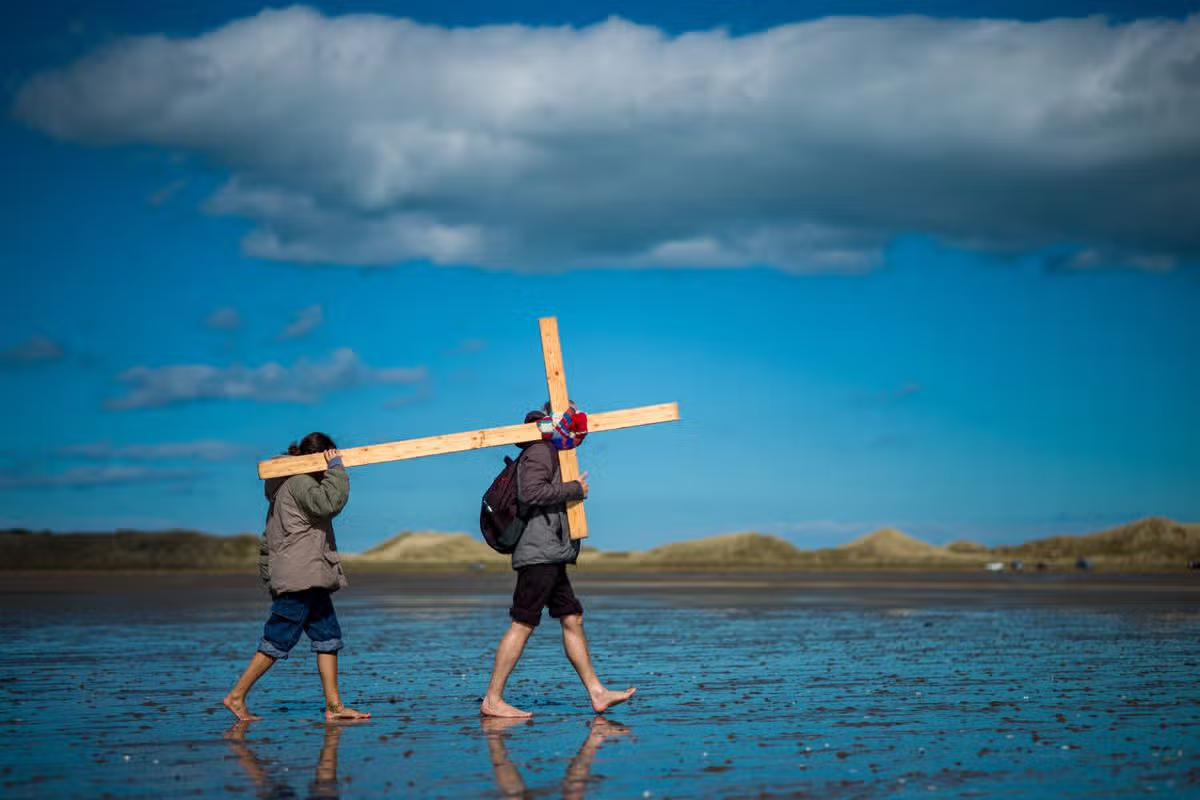
Stunning Northumberland walk named as one of the world’s top experiences
St Cuthbert’s Way now ranks alongside the Darjeeling Himalayan Railway and France’s scenic Route Napoleon as the ‘Best in Travel’ for Lonely Planet guide.

The traditional Good Friday Pilgrimage to Holy Island in 2024(Image: Getty Images)
A 62-mile walking route to England’s Holy Island has been named as one of the world’s top experiences in the ‘travel bible’ Lonely Planet.
St Cuthbert’s Way now ranks alongside the Darjeeling Himalayan Railway and France’s scenic Route Napoleon as the ‘Best in Travel’.
The list also highlights lesser-known destinations like Quebec and Veneto, and cities such as Dessau in Germany, Šibenik in Croatia, León in Spain and Rabat in Morocco.
St Cuthbert’s Way covers 100km from Melrose in the Scottish Borders through some of the most peaceful countryside in the UK to Lindisfarne in Northumberland.
The BBC featured “The Road to Holy Island’ in a series earlier this year, including sections of St Cuthbert’s Way. It featured celebrities Patsy Kensit, Ashley Banjo, Hermione Norris and Jayne Middlemiss.
Lonely Planet recommends its “moorlands” and “ghostly hillforts” and village pubs. The walk officially opened in the summer of 1996. It begins in Melrose where St Cuthbert started his religious life in 650 AD and makes its way through the Eildon hills, past Jedburgh to Morebattle and Town Yetholm.
From there it crosses the border into England passing through Wooler before ending up on Holy Island off the Northumberland coast where St Cuthbert was first laid to rest.
Most people walk it from west to east as that follows the chronology of the saint’s life and also benefits from having the prevailing wind at your back.
It is described as enjoying an “ever-changing variety of scenery and spectacular views” and can be “easily completed” in four to six days.
The walk offers dramatic views of the countryside of southern Scotland and northern England, and an area identified as the most peaceful in the UK.
It ends with a ‘bit of a bang’ at Lindisfarne, famous for its causeway, castle and beautiful views. St Cuthbert is recognised as one of the world’s earliest wildlife conservationists. He was born in 635 AD and, after a “divine vision,” the young shepherd entered the monastery in Melrose.
A decade later, the town was struck by the plague and afterwards, he helped victims throughout the countryside and was reported to have performed many miracles.
He transferred to Lindisfarne in 664 but, described as a “hermit by nature,” retired to Inner Farne in 676. His efforts to protect birds led to his recognition as one of the earliest wildlife conservationists.
Andrew Fox, Chair of Visit Northumberland, said: “We are thrilled to see Northumberland featured in Lonely Planet’s Best in Travel 2027.
This recognition shines a global spotlight not only on St Cuthbert’s Way, but on the wider range of world-class experiences that make Northumberland such a distinctive destination.
“St Cuthbert’s Way perfectly captures the growing demand for more meaningful travel experiences.
Whether visitors come to walk, reflect, explore our coast and countryside, discover our historic sites or simply slow down and reconnect with nature, Northumberland offers an unforgettable journey and a genuine sense of place.”
The Lonely Planets top places and experiences in Europe are:
Places
- Veneto, Italy
- Dessau, Germany
- Swedish Riviera (Skanör-Falsterbo), Sweden
- Šibenik, Croatia
- León, Spain
Experiences
- Road-trip through history on the Route Napoléon, France
- Sail the Aeolian Islands, Sicily
- Walk St Cuthbert’s Way to Lindisfarne, United Kingdom
- Dive into an unexpected underwater world, Greece
- Be wowed by wonderful Killary Fjord, Co Galway, Ireland

Supermodel Claudia Schiffer, 56, shows off her age-defying looks as she strips down to tiny bikinis on holiday
CLAUDIA Schiffer showed off her age-defying looks as she stripped down to tiny bikinis on her luxury break away.
The OG supermodel, 56, looked timeless as she teased fans with a slew of sexy holiday snaps which saw her show off her enviable physique.
Claudia captioned the photos from her sun-soaked Grecian vacation with: “An endless summer.”
In one photo the model was seen showing off the body that made her famous in a sexy bikini, with a beautiful sunset background behind her.
In another stunning snap, Claudia was seen posing in another two-piece, this time in front of an idyllic ocean.
Other bikini shots saw her showcasing her toned figure as she got out of the sea after a dip.


During her heyday in the 90s, and along with the likes of Naomi Campbell and Kate Moss, Claudia helped to launch the world of supermodels.
The blonde bombshell was first scouted aged just 17 while partying in a Dusseldorf nightclub with a pal.
Previously speaking about this moment that changed her life, she told Elle magazine: “I thought they were making a mistake and would find out I was the wrong girl and send me home once I arrived in Paris.”
Soon, Claudia was one of the most in-demand models on the ’90s catwalks, modelling for Chanel, Versace and Yves Saint Laurent and fronting an ad campaign for Guess Jeans.
During her career, the sexy star has appeared on more than 1,000 magazine covers.
After quitting the catwalk to focus on starting a family, she soon welcomed Caspar, now 23, Clementine, 21, and Cosima, 16, with her English filmmaker husband, Matthew Vaughn, 55.
The family live in Coldham Hall, a 14-bedroom haunted Tudor mansion in Suffolk.

Wall Street rises as focus remains on Treasuries and U.S.-Iran relations
Wall Street rises as focus remains on Treasuries and U.S.-Iran relations
Source link
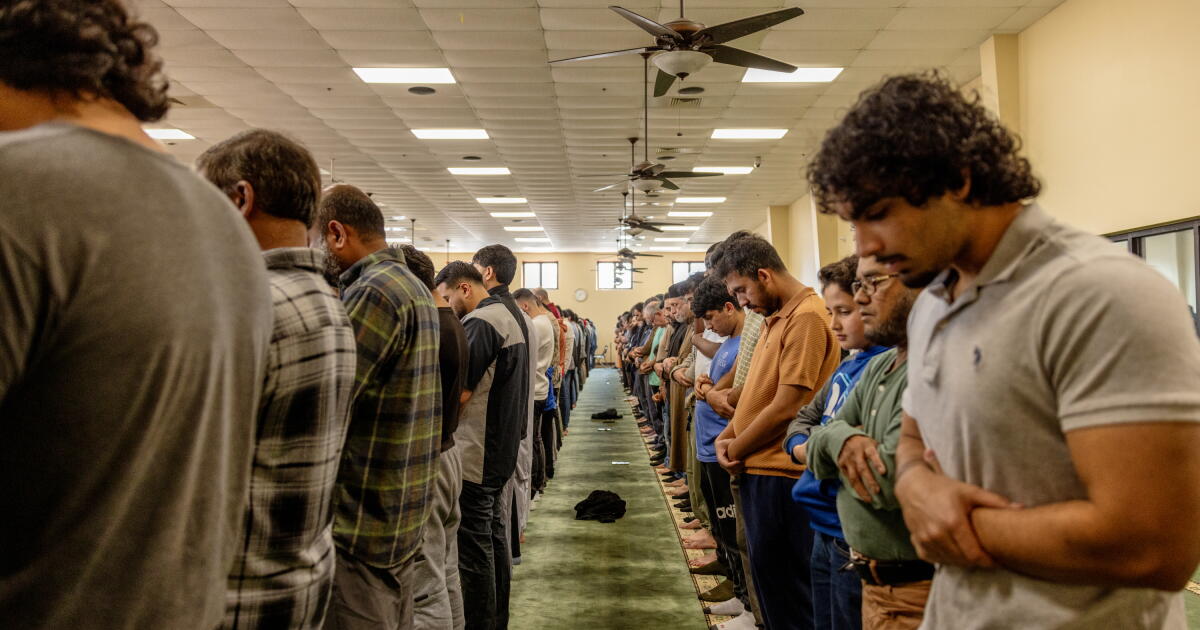
Muslim Americans push back as Republican politicians stoke anti-Sharia rhetoric ahead of election
NEW YORK — Some of the loudest cheers for Sen. Ted Cruz at the Republicans’ recent midterm convention in Dallas came after the Texas politician targeted Muslim Americans and their faith’s religious code.
“Sharia law has no place in America,” said Cruz. “We need to stand together and stop it now.”
Texas Gov. Greg Abbott chimed in moments later, vowing to “fully ban Sharia law in Texas.”
Muslim American civic leaders and scholars — in Texas and other states — are responding forcefully to this latest surge in anti-Sharia rhetoric that dates back more than 15 years.
They passionately defend Sharia — the way it’s practiced in the United States — as positive guidance that has elements in common with the codes of other faiths, such as the Ten Commandments and the collective body of Jewish law derived from the Torah. They rebut the claims of GOP critics that Sharia is a coercive code that threatens the U.S. Constitution and judicial system.
Though there are multiple interpretations of Sharia, its essence is to serve as a code for how Muslims should live and worship — covering such matters as prayer, pilgrimages, fasting, charitable donations and personal virtue.
Among the most energetic of Sharia’s defenders is Illinois-based Sabeel Ahmed, director of an outreach project called GainPeace. He travels widely around the U.S., with a recent focus on Texas, speaking at mosque-sponsored workshops and open houses.
“Sharia is often misunderstood,” Ahmed posted on Instagram after a midsummer visit to Plano, Texas. “Many people think Sharia is only about punishments, but in Islam it is Allah’s guidance for living with faith, justice, mercy, and responsibility.”
Ahmed attributes the durability of anti-Sharia vitriol to politicians and social-media influencers who want to rile up their voting base or their followers.
“They gain popularity by saying it,” he told The Associated Press. “It’s the job of the Muslims to educate what is the proper meaning of the word Sharia. We cannot be angry or hateful.”
Sharia’s role varies significantly among Muslim nations
Among those appalled by the anti-Sharia surge in the U.S. is Abdullahi Ahmed An-Na’im, a Sudanese-born Islamic scholar who taught for many years at Emory University School of Law in Atlanta. He is a longtime critic of the relatively small number of governments in Muslim nations that coercively enforce Sharia, saying Muslims are better off in secular states where their religious observance is a matter of free choice.
An-Na’im says he and other Muslim Americans embrace Sharia willingly as a core part of their identity, even as they also embrace American values.
The demonization of their beliefs displays “a shocking ignorance of what Sharia means,” An-Na’im said. “It’s a total dehumanization of the other, the rejection of their right to be human.”
The rhetoric is similarly dramatic among Sharia’s opponents — epitomized by the two U.S. representatives from Texas, Republicans Keith Self and Chip Roy — who co-founded the Sharia-Free America Caucus in Congress.
“Sharia is a direct threat to our Constitution and Western values and seeks to replace our legal system and erode our basic freedoms,” Roy said earlier this year. “Our immigration system must be prepared to confront this challenge and defend our Judeo-Christian values.”
By last count, the caucus had more than 60 members. All of them are Republicans, and its members have introduced several anti-Sharia bills since the caucus was formed last December. None of those measures have been successful.
The Council on American-Islamic Relations, or CAIR, has designated the caucus as an anti-Muslim hate group.
“The bigoted rhetoric used by this caucus resembles the hatred that anti-Catholic politicians once unleashed against Irish Americans,” said CAIR research and advocacy director Corey Saylor.
“Islam is an American faith, present for over 250 years,” he added. “No one who wrote the Constitution or enforced it since has empowered these legislators to pick which religions get to exist in America.”
Texas has been a battleground for Sharia disputes
There has been substantive anti-Sharia action in Texas. In August, Attorney General Ken Paxton demanded documents from the Dallas-based Islamic Tribunal, which provides religious guidance to Muslims.
Paxton said in a news release that the investigation by his office sought to determine if the tribunal was engaged in illegal activity, such as acting as a court, applying foreign laws that conflict with Texas or federal law, or issuing rulings that imply government authority.
“This is America, and we will not be governed by sharia law,” Paxton said.
The Islamic Tribunal subsequently updated its website with a “ Clarification of Mission and Activities,” stressing that its guidance “complements, and never replaces, the legal, social, and professional services available in American society.”
“The Tribunal does not function as a court of law and does not issue legally binding judgments,” it said. “Our role is limited to mediation and religious arbitration requested by members of the Muslim community in matters related to faith, family guidance, and internal religious affairs.”
Any matters requiring legal enforcement are referred directly to the Texas judicial system, said the tribunal, which likened its work to the services provided by Jewish Beth Din courts and Catholic ecclesiastical tribunals.
Sharia defenders seek to broaden understanding of its essence
Asma Uddin, a professor at Michigan State University’s College of Law, has argued in her writings that many American politicians are depicting ordinary Muslim religious practices — such as prayer, choice of apparel, family counseling and mosque attendance — as evidence of a political danger.
In an interview with the AP, Uddin depicted the current wave of anti-Sharia rhetoric as fearmongering by politicians who view the issue as advantageous for them.
“When politicians use this, it’s giving them exactly what they’re looking for,” she said. “They’re looking for a scapegoat … and this gets people riled up.”
Sabeel Ahmed, who has made three outreach trips to Texas so far this year, plans a trip to Houston in a few weeks for another mosque open-house. He’s also working on a book to be mailed to Christian clergy across the U.S., seeking to broaden their understanding of Sharia and other Islamic practices.
“Islam is not to be feared,” Ahmed said. “People should meet a Muslim, go to the mosque, reach out to us. Let’s emphasize the commonalities we have.”
Crary writes for the Associated Press.
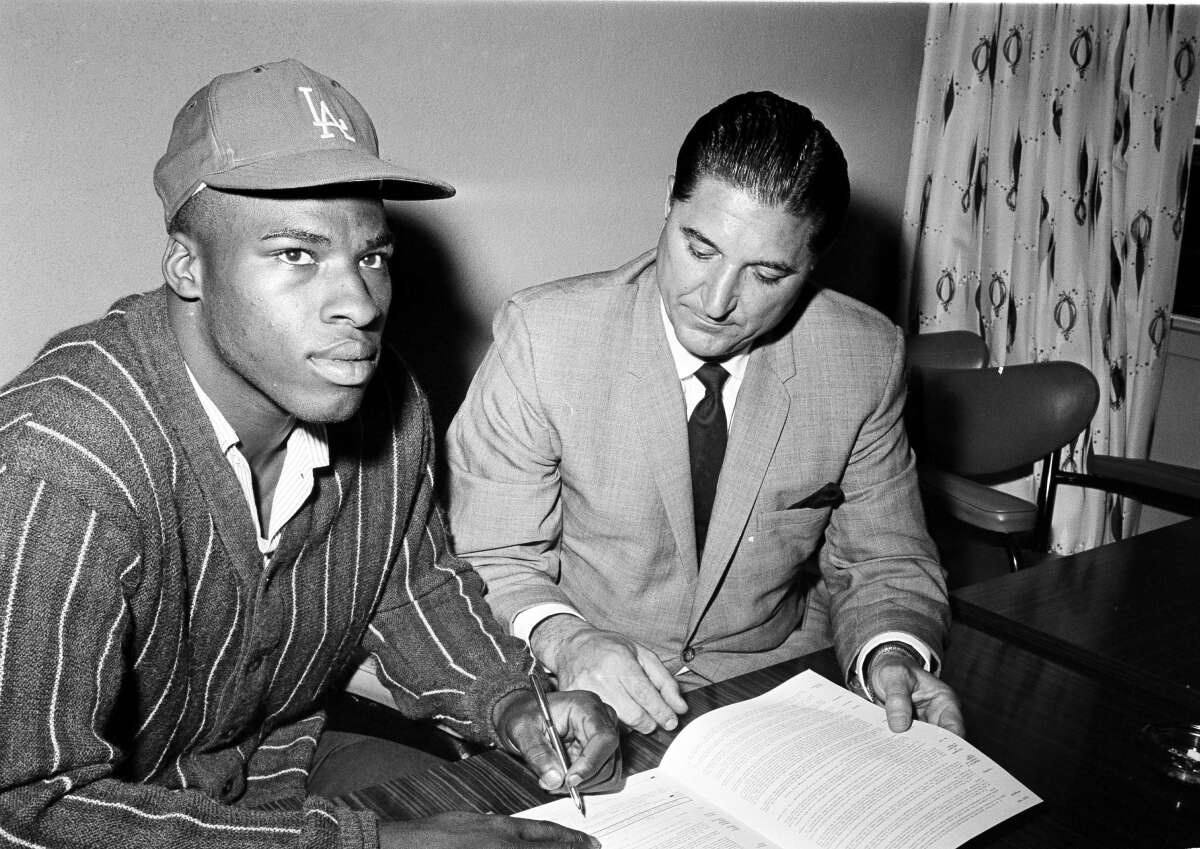
Dodgers Dugout: A look at how NL postseason teams have fared against each other
Hi, and welcome to another edition of Dodgers Dugout. My name is Houston Mitchell. I was reading my Bible, and baseball was mentioned almost immediately. “In the big inning, God created the heavens and the earth.”
The postseason awaits
There are still three games left in the season, but let’s jump ahead and talk about the postseason a bit. We will have more in the run-up to the NLDS next week. The good news is the Dodgers have clinched a first-round bye and will open the postseason on Saturday, Oct. 3. The NLDS is best-of-five on a 2-2-1 format, so the Dodgers will host Games 1 and 2, and if necessary, Game 5.
Who will they play? The winner of the series between the No. 3 seed (Atlanta) and the No. 6 seed, which has yet to be determined. There are four teams vying for the three wild-card spots.
Should the Dodgers fear any one team more than the others this postseason? Let’s see how they have fared against all the other potential postseason teams. In fact, let’s see how all the postseason teams have fared against each other.
Dodgers
vs. Arizona, 6-7 (-5 run differential)
vs. Atlanta, 1-5 (-11)
vs. Chicago, 2-4 (+2)
vs. Milwaukee, 3-4 (+2)
vs. Philadelphia. 4-2 (+11)
vs. San Diego, 8-5 (+19)
Total, 23-27, (+18)
Arizona
vs. Dodgers, 7-5 (+5)
vs. Atlanta, 4-3 (-8)
vs. Chicago, 2-4 (-11)
vs. Milwaukee, 2-4 (-22)
vs. Philadelphia. 3-3 (-5)
vs. San Diego, 5-5 (+5)
Total, 18-19, (+25)
Atlanta
vs. Dodgers, 5-1 (+11)
vs. Arizona, 3-4 (+8)
vs. Chicago, 3-3 (-1)
vs. Milwaukee, 3-3 (-5)
vs. Philadelphia. 9-4 (+23)
vs. San Diego, 3-4 (-7)
Total, 26-19 (+29)
Chicago
vs. Dodgers, 4-2 (-2)
vs. Arizona, 4-2 (+11)
vs. Atlanta, 3-3 (+1)
vs. Milwaukee, 4-9 (-9)
vs. Philadelphia. 6-1 (+22)
vs. San Diego, 5-1 (+27)
Total, 26-18, (+50)
Milwaukee
vs. Dodgers, 4-3 (-2)
vs. Arizona, 4-2 (+22)
vs. Atlanta, 3-3 (+5)
vs. Chicago, 9-4 (+9)
vs. Philadelphia, 4-2 (+14)
vs. San Diego, 2-4 (-5)
Total, 25-18, (+43)
Philadelphia
vs. Dodgers, 2-4 (-11)
vs. Arizona, 3-3 (+5)
vs. Atlanta, 4-9 (-23)
vs. Chicago, 1-6 (-22)
vs. Milwaukee, 2-4 (-14)
vs. San Diego, 6-0 (+11)
Total, 18-26, (-54)
San Diego
vs. Dodgers, 5-8 (-19)
vs. Arizona, 5-5 (-5)
vs. Atlanta, 4-3 (+7)
vs. Chicago, 1-5 (-27)
vs. Milwaukee, 4-2 (+5)
vs. Philadelphia, 0-6 (-11)
Total, 19-29, (-50)
This serves as a basic guideline for you. We would really have to dig deep to find hidden meanings here, since a lot depends on who started for each team. Philadelphia started the season poorly, fired their manager, named Don Mattingly manager and turned things around. So, when did these teams face the Phillies? I could do that for every team, but I can just hear people closing the newsletter and deleting it if I get too far into the weeds. Just as an example, San Diego is 0-6 against the Phillies, but were outscored by only 11 runs, while the Dodgers have losing records against Chicago and Milwaukee, but outscored both teams. And every Dodger fan from that era can tell you that the Mets were 10-1 against the Dodgers in the regular season in 1988, but lost to them in the playoffs.
But, stuff like this is fun. And remember when stats were sometimes just for fun, and not every stat had to look at launch angles and elevation rates?
The postseason roster?
The final position player spot on the postseason roster will be very interesting. Does it go to Josue De Paula, who hit .323/.500/.581 with three doubles, one triple, one homer and seven RBIs in 42 plate appearances. He also walked an impressive 11 times while striking out only five times.
He is back in the minors now, but the Dodgers can bring him back for the postseason, as long as he is replacing an injured player, such as Dalton Rushing. They would need to petition the Commissioner’s Office to allow it, but that kind of petition has never been denied in the past.
Of course, De Paula is blocked at DH, left field and right field now that Kyle Tucker and Teoscar Hernández are hitting better. But he did seem to bring a shot of energy to the team, as if he reminded them “Hey, this is supposed to be fun.”
Does the final spot go to Rushing? I don’t see how, because he can’t play in the field right now because of his elbow injury.
Does it go to Hyeseong Kim? His name was brought up this week by Dave Roberts, because Kim brings speed, versatility and good defense. He could be this season’s Justin Dean, appearing in almost every game and never hitting.
And the bullpen? If you have Yoshinobu Yamamoto, Tarik Skubal, Tyler Glasnow and Blake Snell in the rotation, that means Roki Sasaki goes to the bullpen. Does Justin Wrobleski get a bullpen spot? What about Emmet Sheehan, who has pitched great in his return (one earned run in 17 innings, giving up six hits and walking three while striking out 24)? Do you need all three of them in the bullpen in anticipation of the inevitable injury to Snell and Glasnow? We’ll know more about Snell when he starts Saturday.
Can Yamamoto pitch in every postseason game?
A lot of questions, no answers yet.
Forgotten Dodger: Willie Crawford

Willie Crawford, 17, who hit .444 for Fremont High, signs a $100,000 deal with the Dodgers in 1964 as Al Campanis watches.
(Associated Press)
We won’t go quite as far back in time for this one as the previous ones.
Willie Crawford is one of those guys who was good at a lot of things but not great at anything, and those types of players tend to be overlooked. But you need players like that every year in order to win.
Crawford first played for L.A. as a 17-year-old in 1964 and had his best season in 1973, when he hit .295/.396/.453 with 14 homers and 66 RBIs. He was solid defensively, playing more shallow than most right fielders to cut down on bloop singles and relying on his speed to catch any balls hit over him.
“He was big and powerful, and he could hit a ball as far as anybody. Boy, was he something,” Tommy Lasorda once said of Crawford, who the Dodgers signed out of Fremont High. Crawford was signed out of high school for $100,000, and the rules at the time said if you signed for at least that much, you had to stay on the major league roster for a season, which hampered his development. In 1965, the 19-year-old Crawford got a World Series ring for being on the Dodgers roster, but he batted only 27 times in the regular season. He had a pinch-hit single in Game 1 of that series.
In his first four seasons as a Dodger, he played in 72 games.
He was a productive player for many years and retired after the 1977 season. Crawford died of kidney disease at age 57 in 2004. You can read more about him here.
The postseason race
Here are the postseason seedings as of Thursday’s games. The three division winners get the top three seeds, followed by the three teams with the best records. The top two division winners get a first-round bye. Milwaukee and the Dodgers have clinched division titles and first-round byes.
Division leaders
1. Milwaukee, 100-59
2. Dodgers, 97-62
3. Atlanta, 93-66
Wild cards
1. San Diego, 89-70
2. Chicago, 88-71
3. Philadelphia, 87-72
4. Arizona, 85-74
Mikwaukee has clinched the No. 1 seed and home-field advantage throughout the postseason. The Dodgers have clinched the No. 2 seed and the Braves the No. 3 seed.
The Padres and Cubs have clinched wild-card spots. If the season ended today, Atlanta would host Philadelphia in one best-of-three wild-card round, with the winner taking on the Dodgers. The Padres would host the Cubs in the other wild-card round, with the winner playing Milwaukee.
If there is a three-way tie for the three wild-card spots, then advanced calculus is involved and I was told there would be no math. You can read the complete tiebreaker rules here.
In their final three games of the season, the Padres host the Diamondbacks, Philadelphia hosts Tampa Bay and Chicago plays at Boston.
Five of the six teams in the AL have been decided, with Tampa Bay and Cleveland clinching the top two seedings and the first-round bye. The third seed will be the AL West champion, either Texas or Houston (no relation), who are both 79-80. The Astros have the tiebreaker advantage. The three wild-card teams are the Yankees, Boston and the Chicago White Sox, in that order.
The Cat Man is back
Reports of the demise of Tony Gonsolin were greatly exaggerated. He’s back in the majors.
Gonsolin was an All-Star with the Dodgers in 2022, finishing the season 16-1 with a 2.14 ERA. He was having a mediocre 2023 before he was shut down and had Tommy John surgery. After missing the 2024 season, he came back in 2025, made seven starts and had internal brace surgery on his elbow. The Dodgers let him go. He was busy rehabbing his arm for the last year, and finally the Kansas City Royals decided to give him a chance. They sent him to the minors in August, and called him up to the majors this week.
He came in for a relief appearance on Tuesday and, after pitching two scoreless innings, gave up five runs and four hits, with two walks, ending the outing on a sour note.
“Essentially, I’m trying out for next year,” Gonsolin told reporters before the game. “It has been a while since I’ve thrown before this many fans. Just looking forward to the excitement and the adrenaline.”
These names seem familiar
This will be the final time this feature runs this season. It will be back next season. How many names will have joined it then? How notable players who were with the Dodgers the last few seasons are doing with their new teams (through Wednesday). Click on the player’s name to be taken to their full stats page:
Anthony Banda, Twins: 2-0, 4.46 ERA, 2 saves, 34.1 IP, 31 hits, 15 walks, 33 K’s, 95 ERA+, out for the season
Cody Bellinger, Yankees: .268/.343/.436, 533 PA’s, 25 doubles, 3 triples, 17 homers, 73 RBIs, 117 OPS+
Walker Buehler, Padres: 9-6, 4.56 ERA, 150.1 IP, 145 hits, 56 walks, 128 K’s, 89 ERA+
Mike Busch, Cubs: .241/.353/.396, 695 PA’s, 27 doubles, 2 triples, 20 homers, 77 RBIs, 107 OPS+
Michael Conforto, Cubs: .243/.336/.479, 301 PA’s, 16 doubles, 15 homers, 44 RBIs, 122 OPS+
Justin Dean, Cubs: .375/.500/.625, 10 PA’s, 1 triple, 3 RBIs, 209 OPS+, in the minors
Caleb Ferguson, Cardinals: 1-0, 5.18 ERA, 1 save, 33 IP, 37 hits, 19 walks, 31 K’s, 81 ERA+, released by Cardinals
Jack Flaherty, Tigers: 3-8, 4.59 ERA, 86.1 IP, 80 hits, 42 walks, 102 K’s, 92 ERA+, on the IL
Tony Gonsolin, Royals: 0-0, 16.88 ERA, 2.2 IP. 4 hits, 3 walks, 5 K’s, 28 ERA+
Kenley Jansen, Tigers: 4-6, 3.27 ERA, 21 saves, 44 IP, 24 hits, 23 walks, 49 K’s, 129 ERA+
Craig Kimbrel, Royals: 1-5, 4.50 ERA, 1 save, 46 IP, 40 hits, 22 walks, 40 K’s, 94 ERA+
Gavin Lux, Rays: spent all season on the IL
Dustin May, Brewers: 7-9, 4.67 ERA, 142.2 IP, 139 hits, 49 walks, 139 K’s, 85 ERA+
Zach McKinstry, Tigers: .201/.287/.296, 418 PA’s, 15 doubles, 4 triples, 4 homers, 26 RBIs, 64 OPS+
James Outman, Tigers: .172/.235/.318, 157 PA’s, 4 doubles, 2 triples, 5 homers, 17 RBIs, 54 OPS+, in the minors
Joc Pederson, Rangers: .235/.329/.487, 432 PA’s, 12 doubles, 2 triples, 26 homers, 53 RBIs, 134 OPS+
Luke Raley, Mariners: .225/.284/.439, 287 PA’s, 9 doubles, 1 triple, 15 homers, 39 RBIs, 105 OPS+, on the IL
Corey Seager, Rangers: .226/.315/.417, 419 PA’s, 16 doubles, 18 homers, 47 RBIs, 112 OPS+
Justin Turner, Tijuana (Mexican League): .295/.395/.469, 263 PA’s, 21 doubles, 6 homers, 28 RBIs. Tijuana won the Mexican League title.
Trea Turner, Phillies: .241/.298/.380, 682 PA’s, 28 doubles, 1 triple, 19 homers, 58 RBIs, 80 OPS+
Miguel Vargas, White Sox: .251/.362/.479, 689 PA’s, 31 doubles, 1 triple, 33 homers, 90 RBIs, 135 OPS+
Kirby Yates, Pirates: 2-5, 3.32 ERA, 3 saves, 40.2 IP, 32 hits, 17 walks, 48 K’s, 127 ERA+
Up next
Friday: Dodgers (*Tarik Skubal, 11-7, 2.85 ERA [4-2, 2.95 ERA with Dodgers]) at San Francisco (Yunior Marte, 0-1, 4.66 ERA), 7:15 p.m., SportsNet LA, AM 570, KTNQ 1020
Saturday: Dodgers (*Blake Snell, 4-1, 1.86 ERA) at San Francisco (*Matt Wilkinson, 1-3, 3.65 ERA), 7:15 p.m., SportsNet LA, AM 570, KTNQ 1020
Sunday: Dodgers (TBD) at San Francisco (TBD), 12:05 p.m., SportsNet LA, AM 570, KTNQ 1020
All times Pacific
*-left-handed
In case you missed it
Shaikin: For the Dodgers, the varsity will take it from here
Dodgers’ Dalton Rushing will have chance to make case for postseason roster spot
The Dodgers’ Josue De Paula can hit. Now he’s out to prove he can play defense, too
Dodger Stadium has a botanic garden tour. Meet the man entrusted with making it a draw
Shaikin: Frank McCourt fired him as Dodgers GM. For Dan Evans, and for Montreal, a second chance?
Swanson: Dodgers have no choice. They must hope Tyler Glasnow can trust himself in the playoffs
And finally
Vin Scully calls Clayton Kershaw‘s no-hitter. Watch and listen here.
Until next time …
Have a comment or something you’d like to see in a future Dodgers newsletter? Email me at houston.mitchell@latimes.com. To get this newsletter in your inbox, click here.

India’s ‘cockroach’ movement demands election chief’s resignation | Politics News
Youth group threatens return to mass protests, sets deadline for Gyanesh Kumar to quit due to reports of meddling with voter lists.
Published On 25 Sep 2026
India’s ‘cockroach’ party youth movement has threatened to launch nationwide protests unless the country’s chief election officer does not resign by Saturday.
Founder of the Cockroach Janta Party (CJP), Abhijeet Dipke, announced on Friday that protests would begin in Mumbai on October 2 – if Gyanesh Kumar does not step down.
Recommended Stories
list of 4 itemsend of list
The CJP, a satirical outfit born on Instagram in May after India’s chief justice compared unemployed young Indians to “cockroaches” and “parasites”, has shaken the staunchly conservative government of Prime Minister Narendra Modi.
On Thursday, the group demanded that Kumar quit within 48 hours, following a newspaper report linking him to altered voter lists. Opposition parties say the lists have been manipulated to benefit Modi’s Bharatiya Janata Party (BJP).
“If Gyanesh Kumar does not resign by tomorrow, CJP will begin its nationwide protest from Mumbai on 2 October, and take it to cities across India,” Dipke posted on X.
“This Gandhi Jayanti let’s pledge to save democracy,” he added, referring to the October 2 holiday marking independence leader Mahatma Gandhi’s birthday.

Report provokes political storm
On Wednesday, the Indian Express newspaper reported that two election commissioners had raised questions or voiced concern with Kumar at least 14 times in 10 months, mostly over the process of updating voter lists that began last year.
The main opposition Congress party announced protest marches on state election offices across India on Friday, demanding Kumar’s arrest, his removal and an independent review of decisions and voter-list changes made under him.
Opposition parties have long accused the commission of deleting the names of millions of voters without warning and adding new voters without verification to favour the BJP.

Election panel rejects claims
The Election Commission of India said that “differing views and observations are a normal part of deliberation in any institution” and that all its actions were lawful.
The BJP has defended the commission, accusing the opposition of a smear campaign because it keeps losing elections.
“Neither the Election Commission of India nor any constitutional body in India is under dictatorial rule,” BJP spokesperson Sambit Patra said on Wednesday.
CJP-led protests in July forced the resignation of Modi’s education minister over exam-paper leaks, one of the prime minister’s biggest political setbacks since coming to power in 2014.
Met should probe handling of ‘Putney Pusher’ suspect death, says IOPC
The police watchdog has said the Metropolitan Police’s professional standards unit should investigate the force’s handling of a case in which a man suspected of pushing a woman into the path of a bus on Putney Bridge was found dead.
Nicholas Brandram was found dead at his London home on 15 September. His family said he took his own life after the “immense pressure” of a police investigation.
The 44-year-old was under suspicion of being the jogger who pushed a woman into the path of a bus during a run on Putney Bridge in west London in May 2017.
The Met police made a mandatory referral to the Independent Office for Police Conduct (IOPC) following the banker’s death.
In a statement, the IOPC said: “After carefully considering the referral, we have decided that an investigation is required and that the Met’s Directorate of Professional Standards should conduct it.
“We have recommended the review considers matters including the necessity and proportionality of arrest, what engagement was there with the media and considerations made in relation to Mr Brandram’s welfare and the relevant policy.”
The police watchdog added that if the Met’s investigation did not find “any potential misconduct”, the final report must be submitted to the IOPC for review.
The family of Nicholas Brandram insisted in an interview with the BBC that he was not the so-called “Putney pusher”.
The Met previously said that it recognised the “strain that being subject to a police investigation” could cause.
The force said the investigation into the 2017 incident remained ongoing.
Listen to the best of BBC Radio London on Sounds and follow BBC London on Facebook, external, X, external and Instagram, external. Send your story ideas to hello.bbclondon@bbc.co.uk, external