



‘Heel’ review: This isn’t your everyday family of kidnappers
The movie is called “Heel” and its frenetic opening — a flash-cut glimpse of young, handsome, swaggeringly cruel Tommy (Anson Boon) in drug-fueled party mode — seems enough to explain the title. The next time we see him, though, he’s neck-shackled in the basement of a remote English estate. What follows in Polish filmmaker Jan Komasa’s blackly comic, unnerving thriller is clearly meant to evoke “Heel’s” more obedience-minded reading.
And who would be harshing this hooligan’s buzz with a case of reform-minded abduction? An eerily isolated, rules-driven nuclear family: mild-mannered, soft-spoken Chris (Stephen Graham), haunted Catherine (Andrea Riseborough) and polite son Jonathan (Kit Rakusen). They all may as well have sprung from the combined neo-gothic conjurings of Edward Gorey and Harold Pinter. Under Komasa’s direction, the mix of fractured fable and terroristic morality play in Bartek Bartosik’s screenplay is absurd but potent, giving “Heel” enough psychologically twisted juju to nearly always feel like more than the sum of its parts.
Our first glimpse of Tommy chained up, pleading to be let go, is through the eyes of a young Macedonian refugee, Katrina (Monika Frajczyk), being given a tour of the large countryside manor where she’s just been hired by Chris for twice-a-week housework. Katrina, like us, is rightly horrified but she’s in her own bind: undocumented, saved by Chris from the streets, with her signature on a confidentiality agreement and a deportation threat hanging over her. She’s hardly in a position to do much more than accept what’s going on as a grimmer version of her own dead-end predicament.
And yet what’s readily apparent is that this weird, fragile, insular family is genuinely keen on folding Tommy into their lives. They’re also convinced of their unorthodox methods, which hinge on reinforcement and reward. Tommy seems receptive, too, with each invitation to participate in his abductors’ togetherness (meals, movie nights, a picnic). This is when “Heel” is at its most alluringly queasy, a dark commentary on all families as institutions inherently built on confinement and emotional blackmail. (It’s no coincidence one of the movie’s executive producers is Jerzy Skolimowski, who made his own pointed kidnapping allegory with “Moonlighting.”)
Everyone’s broken, so the collective strength of the cast in keeping us on our toes about where this is all headed is a huge plus. The wiry Boon doles out his brash character’s reserves of vulnerability to stunning effect — Tommy is a difficult part and Boon knows how to make it revealing and suspenseful. Graham’s tweaked, sensitive patriarch is tantalizingly far from the heartbreaking dad of “Adolescence” and the gloriously oddball Riseborough makes the most of her faint-voiced mom’s severity. Frajczyk and Rakusen are also pitch-perfect.
Last year Komasa had another family-centered thriller with “Anniversary,” a movie about politics corrupting a happy home. But we know that equation already. “Heel” is Tolstoy’s happy-family maxim cooked in a mad scientist’s lab. While it sometimes shows its seams as an idea movie, its elegant disturbia has a boldness, recalling that great mind-game ’60s era that gave us “TheServant,” “The Collector,” and the early psychological freak-outs of Komasa’s countryman, Roman Polanski.
‘Heel’
Not rated
Running time: 1 hour, 50 minutes
Playing: Opens Friday, March 6 at Laemmle NoHo 7

Amazon slashes ‘absolutely perfect’ underseat cabin bag to £19 – it meets Ryanair’s new luggage rules

SHOPPERS are flocking to Amazon to snag a sleek underseat cabin bag that’s been slashed in cost just in time for the holiday season.
Originally £29.99, the budget-friendly Taygeer Underseat Cabin Bag has now been dropped in price.

Taygeer Underseat Cabin Bag, from £18.99 (was £29.99)
Discounts on these handy backpack vary across depending on colour – you can pick up the black model for £22.79, but that drops to £18.99 if you have Amazon Prime membership.
It looks like a solid choice for anybody flying with budget airlines, where luggage rules are strict and some unlucky travellers get stung with extra fees at the terminal gate.
In a massive win for travellers, Ryanair has changed its free hand luggage rules.
Now, free personal bag allowance has been upped from 40x20x25cm to 40x30x20cm – that’s a 20% increase and an extra 4 litres of space.
Small wonder so many Amazon shoppers are dashing to pick up this rucksack after that price drop.
It is specifically designed to meet those new dimensions while offering a suitcase-style, 180-degree opening that makes packing all your bits an absolute breeze.
Despite its compact size, the bag is packed with features like a built-in wet pocket for toiletries, plus a separate shoe pouch.
You can also pick it up at sizes designed for Easyjet and Lufthansa flights.
The bag has racked up over 6,000 five-star reviews on Amazon, with customers heaping praise on its practicality and quality.
“This is perfect!” one delighted shopper wrote.
“[It] passed the Ryanair bag stand with ease, thanks to the suitcase-like design and all the pockets kept everything separated. 10/10!”
Another shopper shared: “I had room to fit my Kindle, headphones, passports, purse, snacks, and a few other essentials just in the front compartment.
“The larger compartment fit a change of clothes and shoes!”
A third fan added: “Perfect overhead luggage bag, good quality and easy to carry.
“The padding on the back and shoulders make it comfortable no matter the weight.”


For some tried-and-tested luggage recommendations, head to our best suitcases round-up.
Getting football fever? A budget airline has just announced it’s launching flights from the UK to the US for the World Cup this summer.
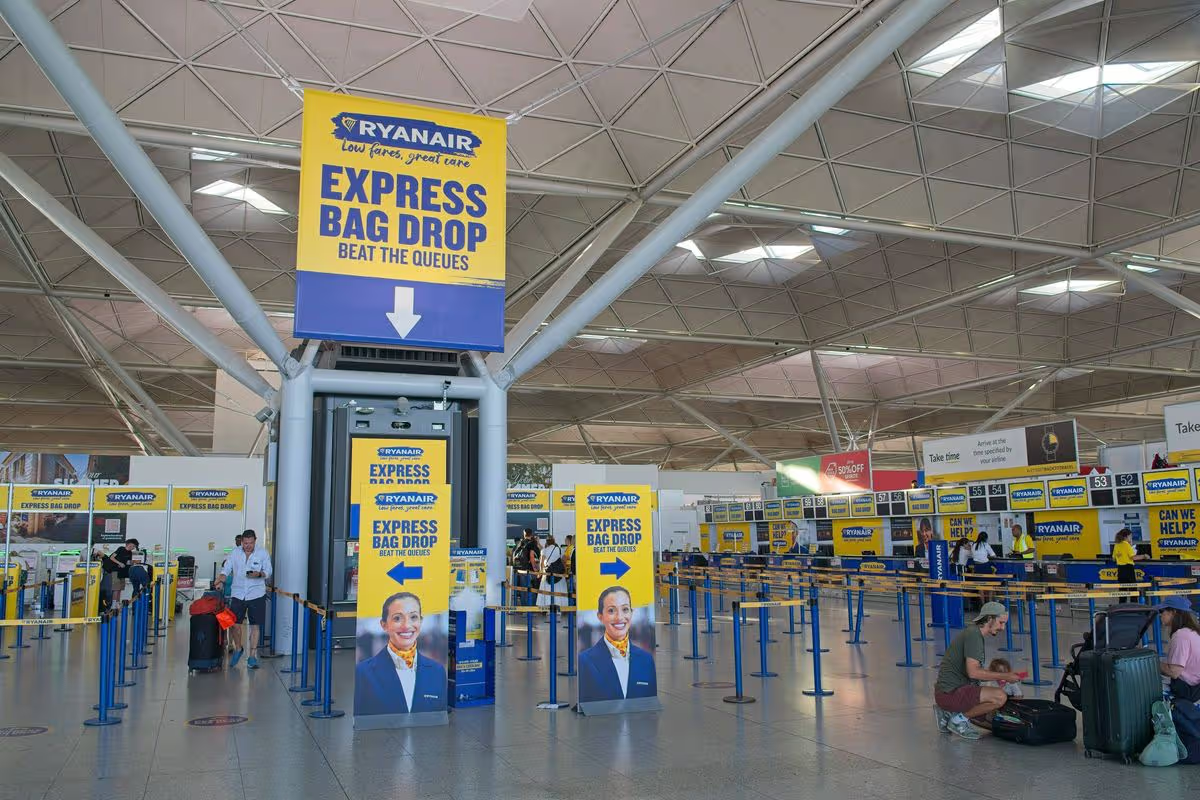
Ryanair passengers told to take cardboard boxes on flights
Ryanair passengers have been told to pack a cardboard box in their hand luggage

Ryanair increased its cabin bag allowance in 2025(Image: Nuria Gonzalez Sanchez via Getty Images)
Ryanair passengers have been advised to slip a piece of cardboard into their hand luggage following an announcement the airline made last summer. The budget airline increased its ‘personal bag’ size by 20% in response to new EU regulations.
As of September 2025, passengers travelling on a basic fare can bring a larger bag on board, measuring up to 40cm x 30cm x 20cm, without incurring additional charges. The bag must weigh less than 10kg and fit under the seat in front of you.
With the new bag dimensions now in effect, packing expert Tom Schott from Schott Packaging is cautioning travellers against a potentially costly mistake, as he believes the increased allowance might tempt people to overpack their bags. Tom said: “The new dimension is a game-changer, but only if you use it wisely.
“The mistake is to simply cram more in. The real victory for passengers is using that volume to pack with structure. A well-packed bag is a compliant bag.”
One of Tom’s many tips to avoid this is to pack some cardboard. He explained: “Soft bags lose volume. A lightweight, snug-fitting cardboard box inside your bag provides a rigid frame, allowing you to use every corner and prevent the bulge that attracts gate staff.”
He also suggests using sealable bags to maximise space, organising items into smaller compartments, and protecting valuables. Tom added: “Place a small, sturdy box in the centre of your bag, cushioned by clothes.
“This creates a crush-proof zone for chargers, adapters, and toiletries, preventing damage and leaks.”
Holidaymakers are also advised to “pre-plan your bag”, with Tom recommending you arrange all your belongings on the floor within a 40cm x 30cm outline beforehand, as this “provides a real-world view of what fits and helps you assemble your packed modules logically and quickly.”
Tom went on to say: “These aren’t just clever tricks, but core principles of efficient packing. By applying them, you can confidently pack that extra outfit and still breeze through the boarding gate”.

El Camino Real baseball defeats San Fernando on walk-off balk
Two top City Section baseball teams, El Camino Real and San Fernando, faced off Friday in a pitcher’s duel that went eight innings.
Senior Ray Pelayo of San Fernando kept throwing strikes, keeping El Camino Real off balance for 7⅔ scoreless innings with eight strikeouts and one walk. But then came a balk that scored the winning run in El Camino Real’s 1-0 victory.
Hudson December threw six scoreless innings for El Camino Real and Andrew Katzman struck out three in two scoreless innings.
South Torrance 4, El Segundo 3: In a battle of unbeaten Pioneer League teams, South Torrance (6-0) received a walk-off single from Owen Rhodes in the bottom of the seventh. El Segundo tied it 3-3 in the top of the seventh on a two-out, three-run home run by Chase Mattoon. Issac Orozco struck out nine in five innings and also homered for the Spartans.
Crespi 3, Saugus 2: Justin Kim had two RBIs for the Celts.
Sylmar 7, Legacy 1: Rickee Luevano threw a two-hitter with nine strikeouts.
Sierra Canyon 12, West Ranch 1: Isaias Tirado hit a three-run home run and four pitchers combined to give up five hits.
Mater Dei 15, Rockwall-Heath (Texas) 1: Ezekiel Lara had three hits and five RBIs in Texas. Earlier, the Monarchs gave up seven runs in the third inning of an 8-1 loss to Rockwall-Heath.
St. John Bosco 1, Gahr 0: Star closer Jack Champlin got a strikeout to end the game, finishing two shutout innings of relief. Champlin drove in the game’s only run with an RBI double in the sixth inning. Julian Garcia struck out six with no walks in five innings for St. John Bosco.
San Juan Hills 11, Cypress 0: Garrett Gandolfo threw five scoreless innings with seven strikeouts and Clay Riggs contributed three RBIs for San Juan Hills.
Santa Margarita 1, Damien 0: Warren Gravely IV had the only RBI in the Eagles’ win. Tyler Unter struck out six in five shutout innings.
Garfield 9, Cleveland 7: Omar Martinez had three hits and Victor Alvarez drove in three runs for Garfield. Joshua Pearlstein finished with three hits for Cleveland.
Palos Verdes 8, West Torrance 0: Kai Van Scoyoc struck out nine in five innings and Asher Friedman had a home run and a double for Palos Verdes.
Valencia 12, Chatsworth 0: An eight-run second inning helped lead the Vikings to a five-inning win.
Bishop Amat 13, Gardena Serra 2: Joaquin Ortiz finished with three hits and four RBIs.
Corona Centennial 19, Eastvale Roosevelt 3: Devin Bishop and Emiliano Castaneda each hit home runs for Centennial. Ethan Miller had a double and triple.
Servite 6, Anaheim Canyon 1: Mickey Cabral went three for four and Cole Grothues struck out three in 2⅓ innings of scoreless relief.
Corona Santiago 5, Crean Lutheran 4: Jonathan Thorton delivered three hits and two RBIs for the Sharks.
Fullerton 1, Chaparral 0: Garrett Wrightman threw four innings of scoreless relief and Caleb Brown had an RBI double in the third inning for Fullerton.
Edison 11, Tesoro 7: Ben Wilson hit a grand slam and finished with five RBIs for Edison.
El Dorado 10, Granada Hills 4: Lorenzo Favela hit a three-run home run to lead El Dorado.
Ayala 7, San Dimas 1: Caleb Trugman struck out nine with zero walks in a complete game.
Loyola 14, Venice 1: Wyatt Clougherty had three hits and Luca Marucci contributed three RBIs for Loyola.
Softball
JSerra 2, Norco 0: In Arizona, the Lions knocked off No. 1-ranked Norco behind Liliana Escobar, who struck out 13 in six innings.
Norco 5, Torrance 0: Coral Williams struck out 10 in six innings. Leighton Gray and Rae Logue hit home runs.
Garden Grove Pacifica 4, Anaheim Canyon 2: Natalia Amezquita had a two-run single for Pacifica, which later defeated Orange Lutheran 6-2.
Orange Lutheran 7, Perry 1: Mia Scott had four RBIs for the Lancers.
Sherman Oaks Notre Dame 15, Culver City 0: Ellayne Tellez-Perez had three hits and five RBIs.

Middle East crisis boosts energy opportunities for Argentina

Brent Crude oil was trading at about $93 Friday as prices continue to rise largely because of oil tanker disruption in the Strait of Hormuz. File Photo by Guillaume Horcajuelo/EPA
March 6 (UPI) — The military escalation in the Middle East has shaken global energy markets and put Latin America on alert. The rise in oil prices opens an uncertain scenario if the conflict drags on, but it also generates expectations among the region’s exporting countries.
In that context, Argentina is following the crisis with caution, but also with interest. A more expensive barrel of oil can translate into higher export revenues, which is important for an economy that seeks to increase foreign currency inflows and strengthen its fiscal accounts.
Attention is focused on Vaca Muerta, one of the world’s largest reserves of unconventional oil and gas. The field is in the Neuquén Basin in Argentine Patagonia, and has become the country’s main energy bet.
From there, companies and analysts are closely watching every signal coming from the Middle East. In the sector, a cautious attitude prevails, summed up in the logic of wait and see.
According to data from consulting firm Gas Energy Latin America, the price of a barrel rose from about $64 to nearly $76 after the escalation of the conflict. The jump of around $12 benefits countries that sell crude abroad. Brent Crude was trading at about $93 on Friday as prices continue to rise largely because of oil tanker disruption in the Strait of Hormuz.
Álvaro Ríos Roca, former hydrocarbons minister of Bolivia and director and founder of the firm, told UPI that many Latin American countries depend on selling raw materials such as oil, minerals or agricultural products.
He said these countries earn money mainly from those resources because they do not produce or export much science or technology.
For that reason, when the price of oil rises, countries that produce it earn more money and the state also receives more taxes. That money helps them maintain their public finances, which are often weak.
In this scenario, the analyst identified three clear beneficiaries: Brazil, Guyana and Argentina. All three export more oil than they import, so the price increase is directly reflected in their revenues.
Even so, Ríos Roca believes Argentina has an advantage within the region.
“Argentina has the best prospects in oil and gas. Its exports will continue growing because the international market is demanding more energy,” he said.
Part of that expectation is explained by energy projects already underway. One of them is a mid-scale liquefied natural gas initiative led by Pan American Energy that aims to begin exports in the second half of 2027.
In parallel, another larger project promoted by YPF plans to start large-scale sales between 2030 and 2031. Both projects aim to turn Argentina into a significant exporter of natural gas in the global market.
The situation is different in Brazil. The country exports large volumes of oil, but does not have the same capacity to export gas. Much of the gas it produces is reinjected into oil fields to maintain the pressure that allows crude extraction to continue. Another portion is used in the domestic market.
Argentina, by contrast, bases its production on a technique known as hydraulic fracturing, or fracking. This involves injecting water, sand and chemicals at high pressure to fracture deep rock and release oil and gas trapped underground. It is the same system that fueled the U.S. energy boom over the past decade.
For now, the analyst believes oil prices will continue to be shaped by developments in the Middle East conflict.
“I don’t think it will reach $100. On the other hand, if the crisis eases in the coming weeks, the price could stabilize near $70 per barrel,” Ríos Roca estimated.
Daniel Dreizzen, former secretary of energy planning of Argentina, agrees that rising prices benefit all producing countries.
“Export revenues could increase by about 20%, in line with the rise in oil,” he told UPI.
Deizzen also pointed to a key factor in Argentina’s case: The country’s refining capacity is practically at its limit. That means any additional oil produced will be destined for international markets.
“Argentina cannot refine much more. So the extra crude is exported,” he said.
That scenario also benefits oil companies, which sell the same product at a higher price. If the domestic market follows the so-called “export parity,” internal prices tend to align with international ones. That improves profitability and may encourage new investments in the energy sector.
While some countries gain from the new scenario, others face a more complex outlook. That is the case of Mexico.
According to Ríos Roca, Mexican production will continue declining due to a lack of investment. State-owned Petróleos Mexicanos, or Pemex, carries heavy debt with contractors and has little room to finance new exploration projects.
“Mexico had very strong production for decades, but it has been in decline for years. Even Venezuela now has better prospects,” he said. In Venezuela’s case, some analysts see a possible return of international investment, which could reactivate part of its energy industry.
In contrast, several Latin American countries would be on the losing side if high prices persist. Net energy importers such as Central American countries, as well as Bolivia, Paraguay, Uruguay and Chile, will have to pay more for the fuel they consume. The same applies to many Caribbean economies, where energy costs have a direct impact on inflation and growth.
Beyond the current situation, analysts agree on a global trend: demand for natural gas will continue growing.
“There is no decarbonization of the planet without natural gas,” Ríos Roca said. In that context, liquefied natural gas trade is expanding rapidly and opening opportunities for new exporters.
Argentina seeks to position itself in that market through LNG projects being developed around Vaca Muerta. The same trend could also emerge in Venezuela, where initiatives to export gas in the coming years are under evaluation.
However, the immediate direction of the energy market largely depends on what happens in the Middle East. Both analysts concurred that the key factor is not only the duration of the conflict, but also the damage that oil and transport facilities may suffer.
“Productive infrastructure is being destroyed amid the attacks,” Ríos Roca said. If those facilities are seriously damaged, the effects on the market could last much longer than the conflict itself. In that case, the impact on oil prices would be deeper and more prolonged.

Beautiful UK holidays for Easter that will leave you feeling like you're actually abroad

Brits who may be put off travelling over the next few weeks due to the events in the Middle East can still enjoy plenty of beautiful locations that will leave you feeling like you’re abroad
Source link

Rebuilding after War – HumAngle

Christie Garba is a 38-year-old mother of seven who lives in Billiri, Gombe State, in Nigeria’s North East. She lived in Yobe State with her family before the Boko Haram insurgency hit the region. At that time, attacks had happened in nearby places, and they had not reached her community directly.
Christie and her family had stayed about four months after the attacks started, but as the violence escalated, the soldiers warned residents that the situation had become too dangerous to remain. The curfews that followed made everyday life almost impossible.
In this episode of VOV, we tell the story of how Christie and her family moved to Gombe State and how she survived starting a new business.
Reported and scripted by Sabiqah Bello
Voice acting by Rukayya Saeed
Multimedia editor is Anthony Asemota
Executive producer is Ahmad Salkida
Christie Garba, a 38-year-old mother of seven, relocated from Yobe State to Billiri, Gombe State in Nigeria due to the Boko Haram insurgency. Initially, her community was indirectly impacted, but the increasing violence and subsequent military curfews forced her family to move to ensure their safety.
Despite the challenges, Christie successfully established a new business in Gombe State, showing resilience and adaptability in the face of adversity.
Her story highlights the impact of regional conflict and the determination required to rebuild and sustain a livelihood in new environments.

BBC doctor says ‘hay fever’ could be incurable condition after 2 patients get shock
Appearing on BBC Morning Live, Dr Punam Krishan gave exact time people should have cough for before getting it checked

BBC Morning Live’s, Dr Punam Krishan said people often put COPD symptoms down to just ageing(Image: BBC)
A BBC doctor has said that this week, two patients came to her with a cough, and it turned out to be a disease with no cure. Appearing on BBC Morning Live, Dr Punam Krishan was speaking out about a chronic condition which 1.7 million suffer from – but hundreds of thousands more have without knowing.
And she explained exactly how long people should have a cough for before they get it checked out properly. Host Nick Knowles raised how a viewer had asked about COPD and cures he’d seen online, which claim it can be sorted out in 7-14 days. Because the weather has changed, people are also experiencing hayfever, and symptoms like a lingering cough or wheezing can be easy to dismiss.
Dr Punam said: “Over the last few years, I’ve been seeing more and more patients coming through to me and saying, ‘Look, I’ve seen this on social media or I’ve tried this’ and it has the potential to cause harm as well and there is a lot of misinformation and it can be really hard and you can see why adverts like this can be so appealing if you are somebody who’s living with COPD.
“So, for anyone who doesn’t know what that stands for, it stands for chronic obstructive pulmonary disease. It’s a term that we use to describe lung conditions that really make your breathing difficult. Now, the thing is if you do come across anything online, you’re not sure about it, always go to a trusted medical source.
“So, the NHS website’s a great place to start. Medical experts, speak to your doctor or your pharmacist before trying anything. Unfortunately, when it comes to COPD, it is a progressive lung condition, which means it can worsen over time. So, sadly, there isn’t a cure. Certainly, nothing over 7 to 14 days that’s going to make a difference.”
Dr Punam said the illness is often missed or just put down to ageing. She said: “Around 1.7 million people in the UK are currently living with COPD, but we believe that number is actually a lot higher. And that’s because the symptoms can develop over a long period of time and they tend to develop slowly . So, people tend to dismiss them or put it off to maybe it’s because I’m getting older. Maybe it’s because I’m unfit. COPD tends to be diagnosed when you’re like middle-aged or older adults, but it can affect anybody earlier as well.”
She said smoking is one of the most common causes. The two main problems within COPD are emphysema and chronic bronchitis. She added: “And what’s really happening in the lungs during that is that it causes inflammation. It causes narrowing of the airways. It causes scarring. It affects the tiny air sacs in our lungs whose job it is to transfer oxygen into the bloodstream so that we can breathe properly. So of course, if those are damaged, it really does impact you long term.”
She said people should not ignore coughs – and gave an exact time people should get it checked out. Dr Punam said: “A lot of people do just sit on it and dismiss it. The earlier you get it diagnosed, the better it is because there are lots of things that we can do to support the symptoms.
“So, if you have a new cough that is persisting, I would say the rule of thumb is four to six weeks. If something is persisting beyond that time, it’s not going away. You don’t know why you’ve got it, so have a chat with your doctor because we can investigate that to look at the root cause, but don’t just dismiss it. Anything more than four weeks, a cough that you just don’t know why it’s there, get it looked at.”
Nick asked: “We’ve had hay fever as we’ve been hearing this week already this year. Is that a complication?” Dr Punam said: “Well, it is. Just this week, actually, I had two patients who have COPD who came in because they felt that their hay fever had started affecting them.
“The thing is a quarter of people that have got COPD will be sensitive to pollen. We’re loving spring – it’s around the corner. But with that, of course, pollen counts rise and if you’re sensitive to that, it can affect your breathing. So often I find people with COPD can get misdiagnosed, or maybe it’s just a flare-up of the condition or a chest infection, but actually, if you’re coughing a lot more, if you’re producing a lot more phlegm, you’re congested, now is the time.”

Galaxy’s Champions Cup foe may be short 10 players due to visa woes
The State Department has denied visas for members of a Jamaican soccer team scheduled to play the Galaxy on Wednesday in the round of 16 of the CONCACAF Champions Cup, raising concerns that the Trump administration could bar players from traveling to the U.S. for this summer’s World Cup as well.
A CONCACAF source with knowledge of the issue not authorized to discuss it publicly said the organization was aware of the problem and working with the team to appeal the decision. The Champions Cup is the most prestigious club tournament in CONCACAF, the 41-nation FIFA confederation that governs soccer in North America, Central America and the Caribbean.
Mount Pleasant FA, champion of last year’s CONCACAF Caribbean Cup and runner-up in the last two Jamaican Premier League tournaments, is playing in the Champions Cup for the first time. The team has six Haitian players on its roster, and Haiti is one of 19 countries whose citizens have been banned from entering the U.S by the Trump administration. Citizens from an additional 20 countries faced partial restrictions.
“This decision raises serious concern about the administration’s willingness to abide by its own agreement and statements regarding the issuance of visas for the World Cup,” said David J. Bier, director of immigration studies at the Cato Institute. “The President’s proclamation clearly exempts athletes and necessary support personnel for ‘major sporting events.’ But apparently, this exception is not being applied in all cases.”
The State Department has the ability, under the Presidential Proclamation exception, to grant entry to “athletes, coaches and essential support staff” from any country traveling to the U.S. for “the World Cup, Olympics or other major sporting event as determined by the secretary of state.”
Despite that, eight members of Cuba’s delegation to the World Baseball Classic — among them federation president Juan Reinaldo Pérez Pardo and pitching coach Pedro Luis Lazo — had their visa requests denied. Under the Trump administration’s rules, Cuban citizens are subject to the same travel restrictions as Haitians.
However, Haiti and Jamaica were able to play in last summer’s Gold Cup soccer tournament in the U.S. without issue. The State Department did not respond to requests for comment.
The CONCACAF source said the confederation hopes to reach an agreement with the State Department but added that Mount Pleasant’s game with the Galaxy will go forward either way. The club, which is scheduled to depart Sunday, told a Jamaican newspaper that up to 10 players have been denied visas and coming to Los Angeles without them would require it to rely on seven or eight players from the team’s youth academy to fill out the roster.
“We don’t want to just show up for the game, we want to be able to compete, but we are not being given the opportunity to be at our best,” Paul Christie, the team’s sporting director, told the Jamaica Observer.
The teams will meet in the second and deciding leg of the two-game playoff March 19 at National Stadium in Kingston, Jamaica. Mount Pleasant is expected to be at full strength for that game.
The State Department’s approach to the visa requests for the Cuban baseball delegation and Jamaican soccer team raise questions about how the Trump administration will handle visa requests ahead of this summer’s World Cup. Four tournament qualifiers are impacted by the administration’s travel restrictions, with citizens of Iran — a country with which the U.S. is at war — and Haiti facing a total ban, and those from Senegal and Ivory Coast subject to severe restrictions.
Members of Iran’s delegation were refused entry to the U.S. for December’s World Cup draw in Washington, during which FIFA president Gianni Infantino presented President Trump with the FIFA Peace Prize. And last summer, Senegal’s women’s basketball team was forced to cancel a 10-day training camp in the U.S. when visa requests for five players, six staff members and a ministerial delegation were rejected.
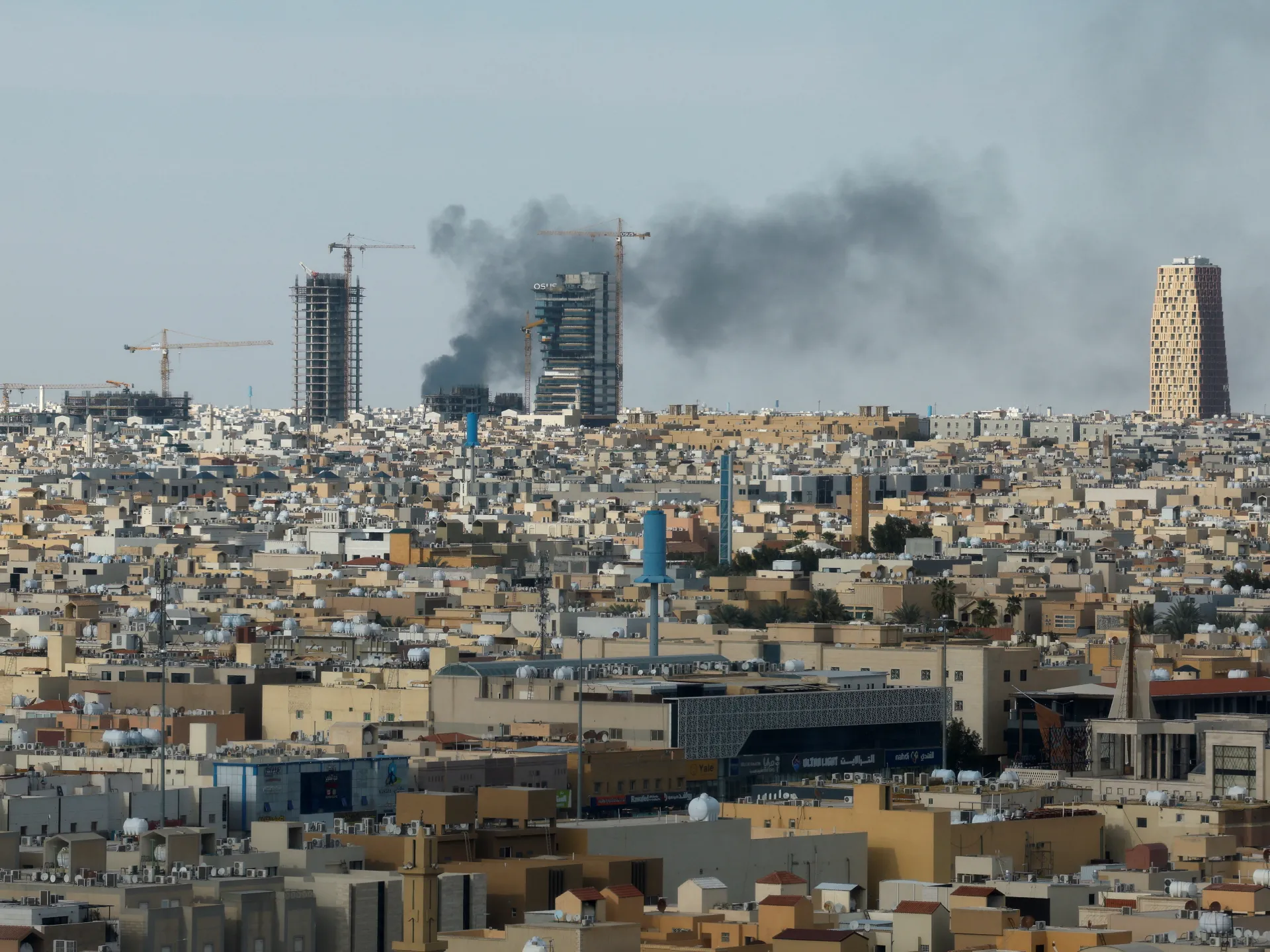
Iran’s legal case for striking the Gulf collapses under scrutiny | Israel-Iran conflict
The Gulf states have spent years trying to broker peace between Iran and the West: Qatar brokered nuclear talks, Oman provided back-channel diplomacy, and Saudi Arabia maintained direct dialogue with Iran through 2024 and into 2025. Iran attacked them anyway. The idea that the Gulf states have a responsibility, a moral one, to protect Iran from the consequences of its actions because of good neighbourliness is now grotesque in context. Iran did not return good neighbourliness. Iran returned ballistic missiles.
Iran’s position is based on three propositions. First, that Iran acted in lawful self-defence pursuant to Article 51 of the UN Charter; that host countries relinquished territorial sovereignty by allowing US military bases on their territory; and that the definition of aggression in Resolution 3314 justifies the attack on those bases as lawful military objectives. Each of these propositions is legally flawed, factually skewed, and tactically wrong. Collectively, they add up to a legal argument that, if accepted, would ensure that the Gulf is permanently destabilised, the basic principles of international law are destroyed, and, in a curious twist, the very security threats that Iran is reacting to are reinforced.
The self-defence claim does not meet the required legal threshold
The UN Charter, in Article 51, permits the use of force only in self-defence against an “armed attack”, and this term is not defined by reference to the state invoking it. The International Court of Justice, in cases such as Military and Paramilitary Activities in and against Nicaragua (Nicaragua v. United States) (1986) and Oil Platforms (Iran v. United States) (2003), has interpreted the requirement of an “armed attack” under Article 51 of the UN Charter restrictively. The Court distinguished between the most grave forms of the use of force, which qualify as armed attacks triggering the right of self-defence, and less grave uses of force that do not. Accordingly, not every use of force, such as minor incidents or limited military activities, amounts to an armed attack. In this light, the mere presence of foreign military bases in Gulf states, maintained for decades under defence agreements with host governments, would not in itself constitute an armed attack against Iran.
Necessity and proportionality are also part of customary international law, requiring that self-defence be necessary and proportional. Iran has not demonstrated either. Targeting the territory of other sovereign Arab states in response to the policy decisions of the United States is neither necessary, since diplomatic and United Nations avenues are still available, nor proportional, since it imposes military consequences on states that are not a party to any conflict with Iran.
Critically, Article 51 also has a mandatory procedural element, in that any state employing self-defence is immediately required to notify the Security Council. Iran has consistently evaded this requirement in each of its escalatory actions. While this may seem to be a minor element, it is in fact the means by which the international community is able to verify and check self-defence claims. A state that evades this requirement is not employing Article 51. It is exploiting the language of Article 51.
Iran’s reading of Resolution 3314 is a fundamental distortion
The provision of Article 3(f) of the Annex to United Nations General Assembly Resolution 3314 (XXIX) (1974) states that an act of aggression includes the “action of a State in allowing its territory, which it has placed at the disposal of another State, to be used by that other State for perpetrating an act of aggression against a third State”. Iran could rely on this provision to hold the Gulf states that host United States military bases liable for any act of aggression committed from their territories against Iran. Nevertheless, the mere presence of military bases is not sufficient to hold them to be lawful military objectives; this will depend on their actual contribution to military activities against Iran based on the rules of international humanitarian law.
Thus, such an Iranian reading would be wrong on three distinct legal grounds.
First, Resolution 3314 is definitional in nature. The resolution was adopted to assist the Security Council in determining when aggression has taken place, not to confer upon states the unilateral power to punish states deemed to have committed aggression through the use of force. The resolution itself, in Article 2, asserts the power of the Security Council to make the determination of what constitutes aggression. The self-application of Article 3(f) of the resolution is therefore bypassed altogether.
Second, Article 3(f) speaks of the active launching of an attack, not the passive hosting of a military base. The legal distinction is fundamental. A state, in signing a defence treaty with another and hosting the latter’s troops on its soil, is engaging in a measure of sovereignty. A state, actively launching, coordinating, or enabling military strikes against a third party, is engaged in a different matter altogether. Iran has not credibly shown this latter case. The presence of US troops or bases in the Gulf has been a fact for decades, and this has not constituted armed aggression against Iran under any legal standard.
Third, even if Article 3(f) were applicable, the appropriate course would be to bring the matter to the Security Council, not to launch unilateral military strikes. General Assembly resolutions do not override the Charter. Iran cannot rely upon a non-binding resolution defining terms to override the Chapter VII requirements for the use of force or the clear criteria of Article 51.
Sovereignty cannot be dictated by a neighbour’s strategic preferences
Iran, in invoking the principle of good neighbourliness, asks the Arab Gulf states to deny the United States basing rights. Good neighbourliness is a two-way principle, and it does not allow for interference in the internal affairs of other states, certainly not interference in the decisions of other states simply because they are deemed inconvenient to the interfering state. All UN states possess the inherent right to conclude defence treaties with whomever they choose, and this is so regardless of the opinion of their neighbours.
The asymmetry of Iran’s position is striking and self-disqualifying. Iran itself has active military relationships with Russia and China. Iran arms, finances, trains, and supports the activities of non-state military actors in Lebanon, Syria, Iraq, and Yemen. The Islamic Revolutionary Guard Corps Quds Force operates openly in various states, and this has been extensively documented in United Nations Panels of Experts reports, as well as other international monitoring reports. According to the standards that Iran applies to the Gulf states, any state that hosts the activities of the IRGC, the transfer of Iranian arms, or the coordination of Iranian proxies on its soil would be engaging in aggression against third parties. Iran will not accept this principle when it is applied to itself. A legal principle that is unacceptable to the party to whom it would be applied is not a legal principle at all; it is a political tool.
A doctrine that defeats Iran’s own strategic interests
From the perspective of international relations theory, Iran’s position follows the logic of offensive realism, which seeks to remove the external balancing architecture of regional neighbours by claiming it to be hostile in nature. However, this approach is empirically self-defeating.
Under balance of threat theory, states react to offensive capability, geographic proximity, and aggressive intentions. Iran’s doctrine, in asserting the right to strike any state that hosts forces it perceives as a threat, drives each and every threat variable to maximum levels for each and every state in the region. The obvious consequence, evident in the data, is that the states in the region and external powers are becoming more, rather than less, securely integrated. The Fifth Fleet’s permanent base in Bahrain, the UAE’s negotiations over F-35s, Saudi Arabia’s deployments of THAADs, and Qatar’s expansion of the Al Udeid base are reactions to Iran’s escalation, not causes of it.
From the perspective of constructivism, the legitimacy of a legal argument is also partly based on the normative credibility of the state that presents the argument. The record of Iran’s compliance with IAEA regulations, including the enrichment of uranium to a purity level of 60 percent or more in 2023–2024, interference with inspections, the removal of monitoring cameras, and the overall violation of the non-proliferation regime, has undermined the credibility of the state significantly. A state that is itself a violator of the legal regime cannot claim the role of a law-abiding state seeking protection under the norms of the legal regime.
Iran’s legal rationale was always theoretically wrong. What has occurred since February 28, 2026, has made Iran’s actions morally and politically wrong. Iran did not simply target US military assets. The reality of the situation is now documented and undeniable. Ballistic missiles and drones were launched against Gulf states in the opening days of the conflict. This marked the first time one actor had simultaneously attacked all six GCC states. Iran escalated its attacks in deliberate stages. Day 1: Iranian missiles were fired against military bases. Day 2: Iranian missiles were fired against civilian infrastructure and airports. Day 3: Iranian missiles were fired against the energy sector. Days 3 and 4: The US Embassy in Riyadh was attacked by Iran. International airports in Dubai, Abu Dhabi, and Kuwait were attacked by Iranian missiles, resulting in the suspension of flights throughout the region. Videos from Bahrain documented an Iranian Shahed drone attacking an apartment building. This is not self-defence. This is the collective punishment of sovereign nations that went to extraordinary lengths to avoid the conflict.
The rationale provided by Iran falls flat when one considers the actions Iran itself took. Its doctrine held that only targets involved in the preparation or launch of an attack against Iran were legitimate targets. Civilian airports are not military bases. Hotels in Palm Jumeirah are not military command centres. An apartment complex in Manama is not a weapons storage facility. By Iran’s own stated legal rationale, none of these targets was legitimate, yet they were attacked. This was not a legal doctrine at all; it was a pretext for coercion, and the conduct of war revealed this to be the case.
The views expressed in this article are the author’s own and do not necessarily reflect Al Jazeera’s editorial stance.

World’s longest flight is over 12,000 miles as passengers in their seats for 29 hours
The mammoth journey is now flown twice a week and spans three continents

The longest route in the world takes 29 hours(Image: VCG via Getty Images)
The world’s longest flight record was set last year with the launch of a new 29-hour route. It is now the longest in the world, spanning almost 20,000km, which is 12,427 miles.
The route is so long that the plane even needs to stop off to refuel. Passengers are in their seats for over a day as the plane travels from Shanghai, China, to Buenos Aires, Argentina.
It is flown twice a week by China Eastern Airlines. Due to the distance, the plane stops at Auckland Airport, New Zealand, to refuel.
Staff also get swapped around whilst at the stop, yet the passengers carry on. At almost 20,000km, the route is used to ship supplies between China, New Zealand and South America, as well as passengers.
It was launched on December 4 last year. The route from China to Argentina takes more than 25 hours, while the return leg takes an additional four.
Ensure our latest lifestyle and travel stories always appear at the top of your Google Search by making us a Preferred Source. Click here to activate or add us as your Preferred Source in your Google search settings.
“This new route fills the gap in direct flights between Shanghai and major South American cities,” China Eastern Airlines said at the time of the first flight.
“It opens a ‘southbound corridor’ connecting opposite ends of the Pacific and reshapes air travel between three continents.” The staggering journey sees passengers board a jumbo 316-seat Boeing 777-300ER.
Before the launch of the route last year, the quickest available journey from Shanghai to Buenos Aires took 31 hours. It involved non-direct flights with a layover.
It is a popular route, as more than 55,000 people born in China live in the South American country, according to data from Simply Flying.
Data also showed that 96,000 passengers flew between China and Buenos Aires in the 12 months to September 2025, before the new route existed.
The flight has set the record for the longest commercial flight route in the world, yet it can’t secure the world’s longest direct flight route title because it makes a stop.
The title of the longest non-stop flight is currently held by Singapore Airlines. It takes 19 hours to travel from Singapore to New York.
However, it isn’t set to hold the record for long as Qantas is set to launch a new non-stop route next year. It is planning a 22-hour nonstop flight from Sydney, Australia, to London in 2027.
Thanks to a 20,000-litre fuel tank, the plane wouldn’t need to stop to refuel. It will travel 10,573 miles and has been labelled “the final frontier of long-haul travel” by Qantas.
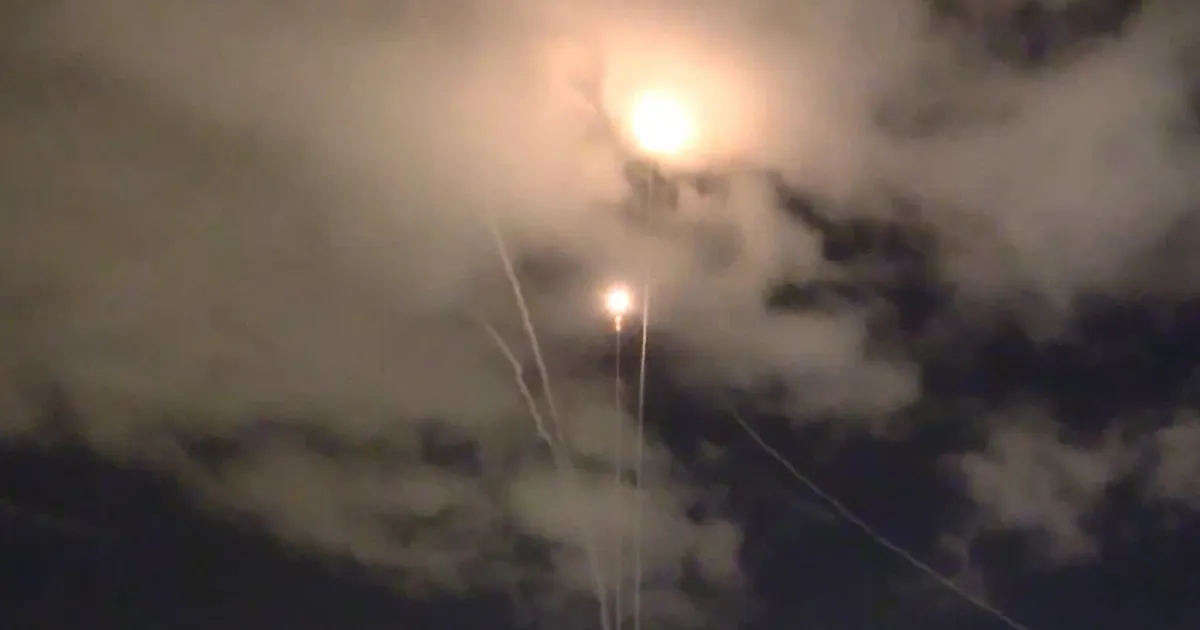
Iranian missiles over Tel Aviv prompt sirens, interceptor launches | Israel-Iran conflict
Witness videos captured Iranian projectiles soaring over Tel Aviv as sirens blared and Israeli interceptors launched. Residents could be heard shouting as one of the missiles appeared to break apart into dozens of smaller projectiles.
Published On 7 Mar 2026

Netflix adds every series of ‘one of the best things on TV’ to platform
Netflix has added the acclaimed thriller series to its collection, eleven years after the TV show finished up, with all seven seasons now available to binge

Netflix has added the acclaimed thriller series to its collection, eleven years after the TV show finished up, with all seven seasons now available to binge(Image: Channel 5)
Netflix has welcomed a gripping thriller to its library, more than a decade after the television series wrapped up. The streaming giant revealed to subscribers that every season of The Mentalist, headlined by Simon Baker, would be landing on the platform.
Having arrived on Netflix on Sunday, March 1, long-time devotees of the programme can now devour all episodes at their leisure. For enthusiasts of police procedurals searching for their next marathon-worthy series, there are seven full seasons to explore.
Should you be new to the programme, viewers follow the journey of independent consultant for the California Bureau of Investigation, Patrick Jane (Baker). Jane has built a name for himself through unorthodox and unusual investigative techniques, combined with a disregard for standard procedure. Oh, and he also claimed to be a psychic.
Whilst the “psychic” element may be bogus, Jane possesses razor-sharp observational abilities and an exceptional understanding of human psychology to crack cases, reports the Express.
Beyond collaborating on investigations with law enforcement, he exploits his connections within the CBI to track down the mysterious serial killer Red John, who brutally killed his wife and daughter – a storyline forming the backbone of much of the series. Yet his quest for justice isn’t always straightforward.
The debut season appeared to split critics, though it’s lauded for featuring “all of the key components of the perfect crime investigation series,” according to the Pittsburgh Post-Gazette.
The final series, which broadcast in 2015, achieved an 83 per cent overall score on Rotten Tomatoes. Jeff Jensen wrote for Entertainment Weekly about the concluding season: “That hard-working bunch earned their party. I think the show honored the fans who stuck with it and by it. On a personal note:
“My late wife-who loved The Mentalist, who turned me onto the show, who found the show easy to forgive and enjoy after the disappointment of the Red John denouement-would have been very pleased.
“I enjoyed it on her behalf and chose to take the story’s conclusions, as easy and sentimental as they may have been, as a challenge to hope and optimism for a better tomorrow. Jane and Lisbon, thank you for that gift.”
Darragh McManus wrote for The Guardian: “Funny, thoughtful and intricately plotted, The Mentalist is one of the best things to appear on TV in a long time.”
Ensure our latest headlines always appear at the top of your Google Search by making us a Preferred Source. Click here to activate or add us as your Preferred Source in your Google search settings.

CSU Bakersfield coach Kevin Mays faces sex trafficking charges
A pimp whose sex worker allegedly advertised on social media that she was willing to be anything from “arm candy” for a party to a “no strings attached girlfriend” has been charged with a slew of criminal charges in Kern County Superior Court.
The alleged pimp, Kevin Mays, was an assistant men’s basketball coach and former player at Cal State Bakersfield.
Mays faces 11 charges, including pimping, possession of automatic firearms and high-capacity magazines, and possession of methamphetamine and marijuana with intent to sell. An investigation by the Bakersfield Police Department also led to separate charges citing Mays for possession of more than 600 images of youth or child pornography and distribution of obscene matter involving someone younger than 18.
Mays, who was arrested in September 2025, is being held without bail. He has pleaded not guilty, and a preliminary hearing is scheduled for March 13 .
The case, first reported by Shwetha Surendran of ESPN, has upended the athletic department at CSU Bakersfield. Longtime basketball coach Rod Barnes and athletic director Kyle Condor have left their jobs, and Condor filed a lawsuit against the school alleging wrongful termination, according to court documents obtained by The Times.
CSU Bakersfield officials said the allegations against Mays did not involve a student. Nevertheless, the school formed a commission to examine the athletic program and recommend changes.
“When CSU Bakersfield received an anonymous report in August of 2025 that a member of our coaching staff was engaged in human trafficking, we took immediate action in notifying university police and the Bakersfield Police Department,” the school wrote in a statement. “Both agencies launched investigations that resulted in an arrest within days. Shortly after, the university terminated the coach.
“But the nature of the allegations devastated our campus community. We seized the opportunity to strengthen education and prevention efforts around human trafficking. To that end, we consulted with a local human trafficking expert and offered training and education focused on awareness and prevention for our campus community.”
Police said the alleged victim is 23. In the advertisement she posted last summer, she stated that she charged $300 for a half hour and $500 for 60 minutes. Authorities conducted a sting operation in September, arranging to meet her in a hotel room that Mays rented.
In an interview with police after the operation, she referred to Mays as her boyfriend and said he paid for her travel accommodations in Oregon, Washington and Nevada in addition to California.
Those locations were listed in an anonymous email to Barnes last fall titled “IMPORTANT MESSAGE 911 911.”
“HE IS TRAFFICKING A GIRL BY THE NAME OF [redacted],” the email read, according to police records. “HE HAS BEEN TRAFFICKING THIS GIRL SINCE MAY.”
Barnes turned over the email to university police, who attempted to contact the sender and received a subsequent email, according to ESPN. The tipster claimed to have known the alleged victim and Mays through previous travel for sex work. The person said Mays presented himself as a professional gambler and allegedly threatened to take away the tipster’s child if the person exposed his activities.
Mays, who was born in Queens, N.Y., attended high school at St. John’s Military Academy in Delafield, Wis., and played at Odessa Community College in Odessa, Texas, before transferring to CSU Bakersfield ahead of the 2014-2015 season.
“We are excited about signing Kevin as he fits our culture,” Barnes said of Mays at the time.
A year later, as a senior forward, Mays helped CSU Bakersfield to a 24-10 record and scored 14 points and grabbed eight rebounds in the Roadrunners’ first-round NCAA tournament loss to Oklahoma. He later returned to the school as a player-development coordinator.
In his application for the player-development position in 2019, Mays wrote that he was motivated by helping players improve on and off the court, according to school records obtained by ESPN.
“I gained lots of experience dealing with learning to lead young men and help them navigate the Division I experience in a successful manner,” Mays wrote. “CSUB helped me tremendously, and I look forward to giving back.”
Barnes was Mays’ coach, and he hired his former player last fall, paying him $3,000 a month. Now, Mays is in jail awaiting trial and Barnes is unemployed.
“The safety and well-being of our students and all CSU Bakersfield community members remain our highest priority,” the school said in its statement. “This work is sustained every day by the dedication of our faculty, staff and students. Their commitment to one another and to our shared values strengthens the culture of care and accountability we strive to build at CSUB.”
FBI investigates suspicious breach of its networks
The FBI is investigating a breach into unclassified but significant networks that may have granted access to information about ongoing investigations and persons of interest. File Photo by Sascha Steinbach/EPA
March 6 (UPI) — The Federal Bureau of Investigation is investigating what it calls a “suspicious” breach of networks containing information of ongoing investigations, though details of them have not been revealed.
The cybersecurity incident on a network used for wiretaps and intelligence surveillance warrants was confirmed Thursday by CBS News, CNN and Politico.
Investigators declined to offer more information on who was behind the breach or what may have been accessed during what the FBI called “abnormal log information” in mid-February.
The Bureau alerted Congress about the breach this week.
“The FBI identified and addressed suspicious activities on FBI networks and we have leveraged all technical capabilities to respond,” the bureau said.
The FBI, in its alert to Congress, said that the breach included efforts at “leveraging a commercial Internet Service Provider vendor’s infrastructure” in order to access the bureau’s networks.
The White House, FBI, National Security Agency and Cybersecurity and Infrastructure Agency are investigating the breach, noting to lawmakers that the system accessed in the hack contains information on targets of law enforcement investigations and it appears to have been “sophisticated.”
There have been reports that China is allegedly behind the breach, however a request for comment from UPI on Friday night about the reports had not been responded to by publication time.
“The affected system is unclassified and contains law enforcement sensitive information, including returns from legal process, such as pen register and trap and surveillance service returns, and personally identifiable information pertaining to subjects of FBI investigations,” the notice to Congress reportedly reads.
The breach has been compared to the 2024 Salt Typhoon breach that nabbed communications records for millions of people in the United States, including those of top level federal officials.
Salt Typhoon, a Chinese hacking group that is believed to be sponsored by China’s government, that year accessed a wide range of U.S. communications companies and U.S. government systems.

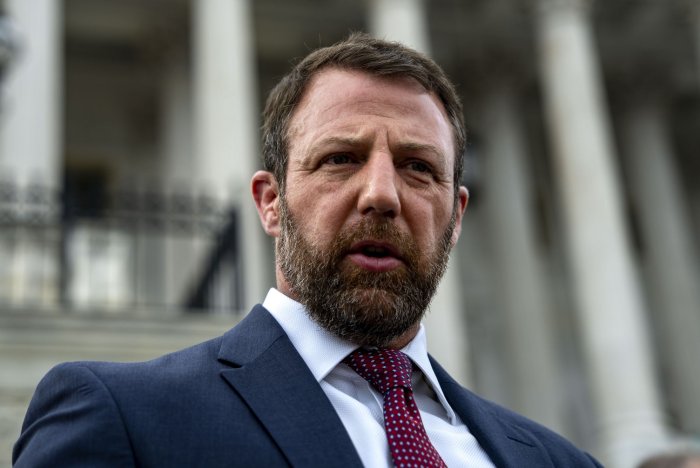
Sen. Markwayne Mullin, R-Okla., speaks to the press outside the U.S. Capitol on Thursday. Earlier today, President Donald Trump announced Mullin would replace Kristi Noem as Secretary of the Department of Homeland Security. Photo by Bonnie Cash/UPI | License Photo
Iran war is latest threat to a global economy rattled by Trump | Business and Economy News
As the United States and Israel’s war on Iran unfolds over the coming days and weeks, the scale of the fallout for the global economy will be measured at the petrol pump.
The biggest threat the conflict poses to global economic health lies in rising energy prices.
Recommended Stories
list of 4 itemsend of list
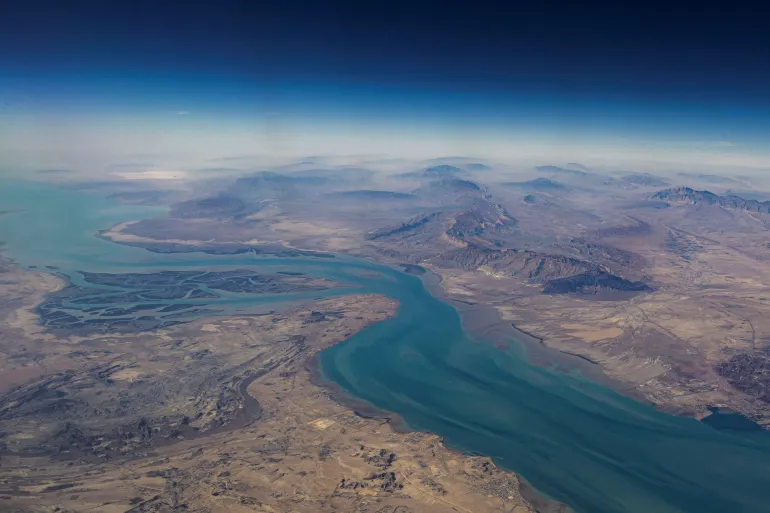
Iran’s effective closure of the Strait of Hormuz and Iranian attacks on key energy production facilities in Qatar and Saudi Arabia have paralysed a substantial chunk of the world’s energy supply.
For a global economy already rattled by US President Donald Trump’s tariffs and what many see as his unravelling of the post-World War II order, much now depends on how long the disruption lasts.
A sustained surge in energy prices would drive up the cost of everyday goods.
Central banks would then likely raise borrowing costs to curb inflation, dampening consumer spending and dragging down economic growth.
“It’s really a question on how long the disruption of flows through the Strait of Hormuz lasts and whether there will be destruction of physical assets,” said Anne-Sophie Corbeau, an analyst at Columbia University’s Center on Global Energy Policy.
“For the moment, the market is pricing a short disruption and no destruction. But that may change in the future. We simply do not know right now how this whole crisis ends.”

While Iran’s threats to shipping have halted traffic through the Strait of Hormuz, the conduit for one-fifth of the world’s oil, crude prices have seen relatively modest gains so far.
Brent crude hovered about $84 a barrel on Friday morning, US time, up about 15 percent compared with pre-conflict prices.
That gain pales in comparison with past crises.
During the 1973-74 oil embargo led by OPEC’s Arab members, prices quadrupled in just three months.
Since then, the world’s dependence on Middle Eastern oil has declined substantially.
Today, the US is the biggest producer globally, producing some 13 million barrels a day, more than Iran, Iraq and the UAE combined, according to the US Energy Information Administration.
But if supply disruptions extend beyond a few weeks, oil prices could rise precipitously.
Storage capacity constraints
The seven oil-producing Gulf nations – Bahrain, Kuwait, Oman, Qatar, Saudi Arabia and the UAE – are likely to run out of crude oil storage capacity in less than a month if the Strait of Hormuz remains closed, according to an analysis by JPMorgan Chase.
With storage capacity depleted, producers would be forced to cut production.
“While there will be some capacities elsewhere, and some options to use pipelines rather than shipping, it is incredibly difficult to replace the sheer volume as we are talking about an average of 20 million barrels of oil per day that usually cross the Strait of Hormuz,” said Sarah Schiffling, a supply chains expert at the Hanken School of Economics in Helsinki.
“This important maritime chokepoint provides very significant leverage in the global economy.”
This week, Goldman Sachs analysts estimated that global oil prices will likely hit $100 a barrel – a threshold not seen since Russia’s 2022 invasion of Ukraine – if shipping through the waterway stays at the current reduced levels for five weeks.
In an interview published by The Financial Times on Friday, Qatar’s energy minister Saad al-Kaabi warned that producers in the region could halt production within days and that oil could soar as high as $150 a barrel.
Such increases would reverberate through the global economy.
The International Monetary Fund has estimated that global economic growth is reduced by 0.15 percent for every 10 percent rise in oil prices.
The pain would not be spread evenly.
About 80 percent of the oil shipped through the strait goes to Asia.
India, Japan, South Korea and the Philippines, which are all highly dependent on foreign energy imports, would be among the economies most vulnerable to spikes in the cost of necessities such as food and fuel.
“The effect would be felt in Asia and Europe in particular,” said Lutz Kilian, an economist at the Federal Reserve Bank of Dallas.
“Some countries, such as China, have ample oil reserves to help weather a temporary outage, while others do not.”
Liquefied natural gas (LNG), which is also shipped through the strait and has fewer alternative suppliers outside the region than crude oil, has already seen much steeper price rises.
European prices of LNG surged by as much as 50 percent on Monday after state-run QatarEnergy, which ships about one-fifth of global supply through the waterway, announced a halt to production following drone attacks blamed on Iran.
“Gas will be more impacted because the market was still relatively tight and stocks are low in Europe as we are at the end of winter; also, there is no replacement for the LNG lost,” Corbeau said.

Prolonged uncertainty
With US President Donald Trump signalling that he intends to continue the assault on Iran for at least several more weeks, the extent to which Tehran is willing – or able – to keep the strait closed will be critical to the global economy.
At least nine commercial vessels have been targeted in attacks in or near the strait since the start of the conflict, prompting multiple insurance firms to cancel coverage for vessels in the Gulf.
While traffic through the strait has not halted, it is down about 90 percent compared with normal levels, according to ship tracker MarineTraffic.
“The uncertainty itself is probably the most dangerous part. Supply chains hate uncertainty,” Schiffling said.
“It is possible to plan for almost anything, but not knowing what will happen makes it really challenging to adapt operations.”
On Wednesday, Trump said he had ordered the US International Development Finance Corporation to start insuring shipping lines in the region in order to keep trade flowing.
Trump also said the US Navy could begin escorting vessels through the strait if necessary.
“As long as Israel and the US are able to suppress Iranian drone and missile attacks in the strait to the point that the bulk of the oil tankers gets through, and as long as the United States provides back-up insurance for shippers and their cargo, the global economy may make it through this war without a recession,” Kilian said.
“On the other hand, if there is a severe disruption of oil traffic, the economic costs will grow the longer the disruption lasts.”

BBC boss says they ‘profoundly regret’ broadcast of BAFTA racial slur
The BBC’s director-general has issued a statement of regret after a moment when John Davidson, who has Tourette’s Syndrome, shouted the N-word during the BAFTAs was broadcast

BBC boss says they ‘profoundly regret’ broadcast of BAFTA racial slur(Image: BANG Showbiz)
The BBC’s outgoing director-general Tim Davie has said the corportation “profoundly regrets” that a racial slur was broadcast during the time-delayed coverage of the BAFTA Film Awards on BBC One.
During the BAFTAs, which were aired on 22 February, John Davidson, who has Tourette’s Syndrome, involuntarily shouted several slurs and offensive comments at guests and presenters.
This included the N-Word, which was shouted at Michael B. Jordan and Delroy Lindo as they presented the award for Best Visual Effects, which made it into the live broadcast, despite the show airing hours after it was recorded. Davidson has coprolalia, a form of Tourette’s where vocal tics include expletive and offensive remarks.
READ MORE: Beloved BBC drama This Life celebrates 30th anniversary but where are the cast now?READ MORE: Furious Baftas host Alan Cummings slams BBC over ‘s***show’ saying ‘we were let down’
Ensure our latest headlines always appear at the top of your Google Search by making us a Preferred Source. Click here to activate or add us as your Preferred Source in your Google search settings.
In a letter to the chairwoman of the Culture, Media and Sport Committee, Dame Caroline Dinenage, Davie said: “I’d like to make clear: although the racial slur was symptomatic of a disability and an involuntary tic, it should never have been broadcast. It was a genuine mistake, and we take full responsibility for our error.”
Davie also responded to questions about why the incident was not edited out of the broadcast. He said: “Although this is the subject of ongoing review, our initial evidence gathering has found that no one in the on-site broadcast truck heard this when they were watching the live feed.
“Because no one in the broadcast truck was aware it was on the live feed, there was therefore no editorial decision made to leave the language in.”
Davidson has said he is “deeply mortified” by what happened at the BAFTAs. In a statement released on 23 February, he said: “I wanted to thank BAFTA and everyone involved in the awards last night for their support and understanding and for inviting me to attend the broadcast.
“I was heartened by the round of applause that followed this announcement and felt welcomed and understood in an environment that would normally be impossible for me.”
Referencing an announcement made by show host Alan Cumming explaining Davidson’s condition to the audiences there and at home, he added: “In addition to the announcement by Alan Cumming, the BBC and BAFTA, I can only add that I am, and always have been, deeply mortified if anyone considers my involuntary tics to be intentional or to carry any meaning.
“I was in attendance to celebrate the film of my life, I Swear, which, more than any film or TV documentary, explains the origins, condition, traits, and manifestations of Tourette’s Syndrome. I have spent my life trying to support and empower the Tourette’s community and to teach empathy, kindness, and understanding from others, and I will continue to do so. I chose to leave the auditorium early in the ceremony as I was aware of the distress my tics were causing.”
His team added that Davidson reached out to the Sinners team to apologise directly to Jordan and Lindo. Lindo said he and Jordan “did what they had to do” during the incident but wished “someone from BAFTA spoke to us afterward”.
BAFTA released a statement in which they said: “At the BAFTA Film Awards last night our guests heard very offensive language that carries incomparable trauma and pain for so many. We want to acknowledge the harm this has caused, address what happened and apologise to all.
“One of our guests, John Davidson MBE, has Tourette Syndrome and has devoted his life to educating and campaigning for better understanding of this condition. Tourette Syndrome causes involuntary verbal tics, that the individual has no control over. Such tics are in no way a reflection of an individual’s beliefs and are not intentional. John Davidson is an executive producer of the BAFTA nominated film, I Swear, which is based on his life experience.
“We take the duty of care to all our guests very seriously and start from a position of inclusion. We took measures to make those in attendance aware of the tics, announcing to the audience before the ceremony began, and throughout, that John was in the room and that they may hear strong language, involuntary noises or movements during the ceremony.
“Early in the ceremony a loud tic in the form of a profoundly offensive term was heard by many people in the room. Michael B. Jordan and Delroy Lindo were on stage at the time, and we apologise unreservedly to them, and to all those impacted. We would like to thank Michael and Delroy for their incredible dignity and professionalism.
“During the ceremony, John chose to leave the auditorium and watch the rest of the ceremony from a screen, and we would like to thank him for his dignity and consideration of others, on what should have been a night of celebration for him.
“We take full responsibility for putting our guests in a very difficult situation and we apologise to all. We will learn from this, and keep inclusion at the core of all we do, maintaining our belief in film and storytelling as a critical conduit for compassion and empathy.”
For more of the latest showbiz news and gossip, follow Mirror Celebs on TikTok , Snapchat , Instagram , Twitter , Facebook , YouTube and Threads .

Clippers rookie Yanic Konan Niederhauser to miss rest of season
Yanic Konan Niederhauser tore a ligament in his right foot, putting an early end to his rookie season with the Clippers.
The 7-foot Swiss center was injured Wednesday night in a 130-107 win against the Indiana Pacers. Niederhauser was diagnosed with a Lisfranc injury in his right foot and will require surgery, the team said. The injury involves damage to the ligaments or bones in the middle of the foot.
Niederhauser averaged 4.3 points and 2.9 rebounds in 41 games. After being selected 30th in last year’s NBA draft, he began the season in the G League, but after the Clippers traded Ivica Zubac last month, he was earning more minutes.
In his last five games, Niederhauser was shooting 52% from the field and averaging 8.2 points and 6.2 rebounds while playing 18 minutes a game.
New cache of Epstein files released Friday with Trump accusations
March 6 (UPI) — The Department of Justice released new FBI documents Thursday that describe several interviews with a woman who accused President Donald Trump of sexually abusing her when she was a young teen.
The pages had been withheld from the other documents from the late convicted sex offender Jeffrey Epstein.
Officials said they were held back because they mistakenly believed they were duplicates.
The 16 pages of notes describe three interviews that the FBI conducted in 2019 with the woman, who said she was sexually abused by Epstein and Trump when she was between the ages of 13 years and 15 years in the 1980s.
There are also two pages from an intake form that document the initial call to the FBI from a friend who reported the woman’s claims.
Epstein died by suicide in jail in 2019.
The House Oversight Committee voted Wednesday to subpoena U.S. Attorney General Pam Bondi to testify on the Justice Department’s handling of the Epstein files, which are legally required to be released to the public.
The Justice Department posted on X that it identified about a dozen other documents that were “incorrectly coded as duplicative.”
Federal prosecutors in Florida also determined that five prosecution memos that had been labeled privileged could be redacted and released.
NPR reported that it conducted an investigation that found 53 pages that appeared to be missing from the public release database.
There are still 37 pages missing, NPR said, including notes from the interviews, a law enforcement report and license records.
Democrats on the House Oversight Committee said in a statement that they applauded the release of the interviews but still criticized the department for its handling.
“But let’s be clear — this White House cover-up is ongoing. Millions of pages still remain concealed from the public and our committee,” said Sara Guerrero, spokesperson for Oversight Democrats.
White House press secretary Karoline Leavitt said in a statement to NPR Friday that Trump has been “totally exonerated by the release of the Epstein files.”
“These are completely baseless accusations, backed by zero credible evidence, from a sadly disturbed woman who has an extensive criminal history,” Leavitt wrote to NPR.
“The total baselessness of these accusations is also supported by the obvious fact that Joe Biden‘s department of justice knew about them for four years and did nothing with them — because they knew President Trump did absolutely nothing wrong. As we have said countless times, President Trump has been totally exonerated by the release of the Epstein Files,” she wrote.
Sen. Markwayne Mullin, R-Okla., speaks to the press outside the U.S. Capitol on Thursday. Earlier today, President Donald Trump announced Mullin would replace Kristi Noem as Secretary of the Department of Homeland Security. Photo by Bonnie Cash/UPI | License Photo

Saturday 7 March Nuzul Al-Quran around the world
The Prophet Muhammad was in a cave on Mount Hira, close to Mecca, when the angel Gabriel appeared and revealed the first five lines of Surh Al-Alaq (chapter 96 of the Qur’an).
Following this first revelation, Muhammad received many revelations of holy text for the rest of his life ( a further twenty three years).
The revelations were recorded by scribes and after the death of Muhammad, they compiled them in texts. The version of these texts that became the Qur’an was established by Caliph Uthman.
Cuba announces fifth death after shootout with Florida-tagged speedboat | Gun Violence News
The government in Havana has claimed that the 10 people on board the speedboat had planned to unleash terrorism in Cuba.
Published On 7 Mar 2026
The government of Cuba has announced that a fifth person died as a consequence of a fatal shootout last month involving a Florida-flagged speedboat that allegedly opened fire on soldiers off the island nation’s north coast.
The island’s Ministry of Interior said late on Thursday in a statement that Roberto Alvarez Avila died on March 4 as a result of his injuries.
Recommended Stories
list of 3 itemsend of list
It added that the remaining injured detainees “continue to receive specialised medical care according to their health status”.
On February 26, authorities in Cuba said that Cuban soldiers confronted a speedboat carrying 10 people as the vessel approached the island and opened fire on the troops.
They said the passengers were armed Cubans living in the United States who were trying to infiltrate the island and “unleash terrorism”. Cuba said its soldiers killed four people and wounded six others.
“The statements made by the detainees themselves, together with a series of investigative procedures, reinforce the evidence against them,” the Cuban Interior Ministry said in its statement.
It added that “new elements are being obtained that establish the involvement of other individuals based in the US”.
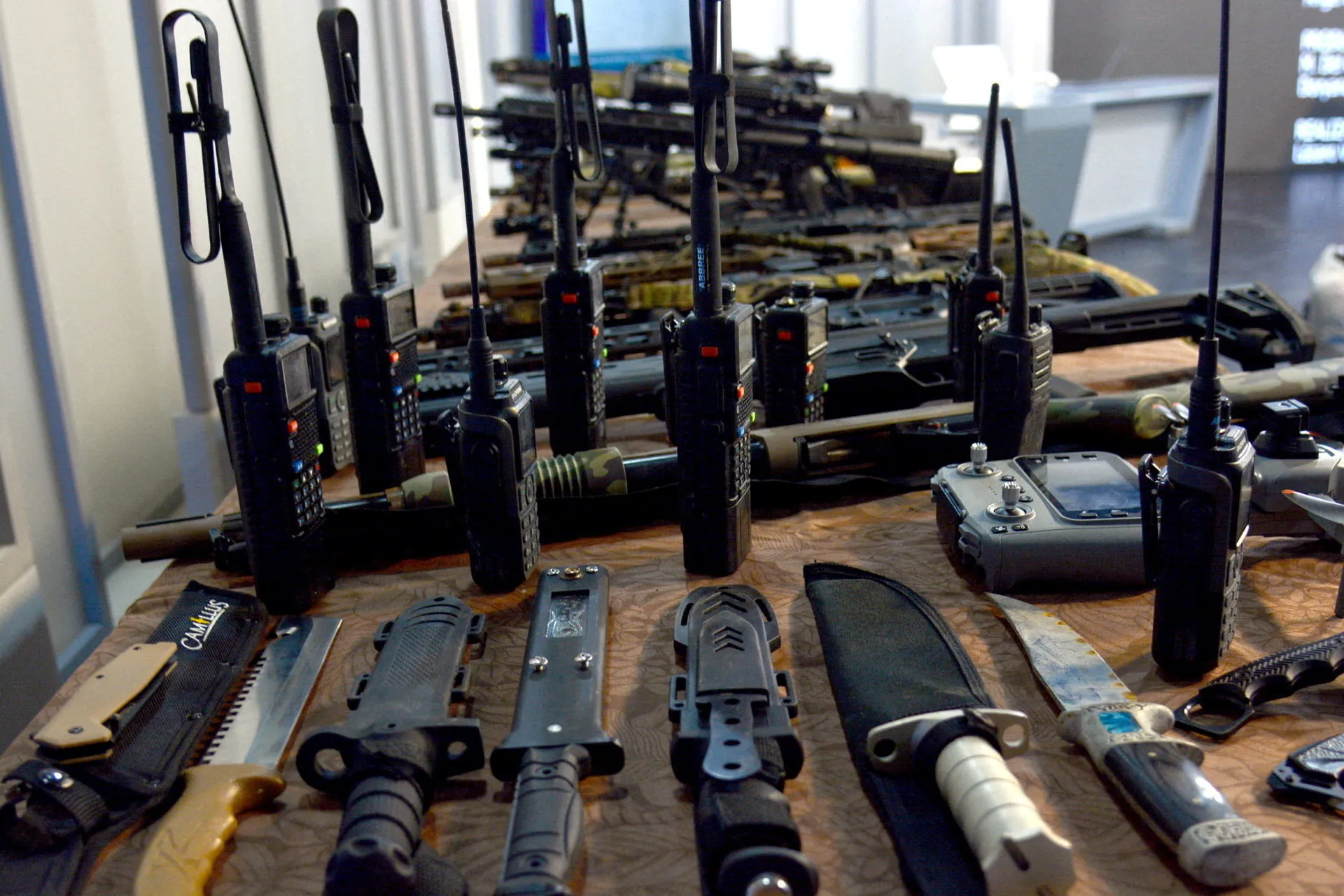
Earlier this week, Cuba said it had filed terrorism charges against six suspects who were on the speedboat. The government also unveiled items it claimed to have found on the boat, including a dozen high-powered weapons, more than 12,800 pieces of ammunition and 11 pistols.
Cuban authorities have provided few details about the shooting, but they said the boat was roughly 1.6 kilometres (1 mile) northeast of Cayo Falcones, off the country’s north coast.
They also provided the boat’s registration number, but The Associated Press news agency was unable to readily verify the details because boat registrations are not public in the state of Florida.
The shooting threatened to increase tensions between US President Donald Trump and Cuban authorities.
The island’s economy was, until recently, largely kept economically afloat by Venezuela’s oil, which is now in doubt after a US military operation abducted and deposed former Venezuelan President Nicolas Maduro.

‘Hoppers’ review: A robotic beaver and a threatened glade in Pixar’s triumph
“Pond rules” dictate that if an animal is hungry, the creature that’s about to become a meal should accept its fate. That’s the first lesson that Mabel (voiced by Piper Curda), an idealistic university student whose mind is transferred into the body of a robotic beaver, learns while interacting with wildlife as one of their own in Pixar’s inventive “Hoppers.” In typical human fashion (we love to meddle with nature), Mabel ends up breaking that directive by saving a “fellow” beaver, the slumberous Loaf (Eduardo Franco), attracting unwanted attention that leads her to a wacky group of characters who will transform her rigid young worldview.
For his second feature, Daniel Chong, best known for creating the popular “We Bare Bears” series for Cartoon Network, has unleashed a hilariously unexpected and outrageous crowd-pleaser with “Hoppers.” Recently, I bemoaned that a movie like Sony’s “Goat” stood as further proof that talking-animal animated films had mostly run their course. Chong and screenwriter Jesse Andrews swiftly push back on that read with this environmentalist tale in defense of people who stand up for something, even when it seems no one is willing to stand beside them.
“Hoppers” is Pixar by way of a creator, Chong, whose career isn’t exclusively tied to the studio. That’s likely why his movie is more daring in its humor and tone, bringing a refreshing infusion of mischief to Pixar while maintaining the genuine emotional gravitas that has endeared the company to audiences for over 30 years.
Why is Mabel’s psyche roaming around inside a fake beaver à la “Avatar”? After discovering that this technology has been developed by one of her professors, Mabel thinks it could be the answer to saving the local forest glade where self-aggrandizing mayor Jerry (Jon Hamm) wants to build a highway. Mabel’s grandmother instilled in her an appreciation for nature as a reminder that she’s part of something greater than herself. Collecting signatures isn’t yielding results to stop construction, so, to the dismay of the scientists in charge, Mabel hops into the human-made mammal to learn from the creatures themselves why they’ve left the glade, giving Jerry carte blanche to destroy their home.
The poignancy-to-comedy ratio is precisely calibrated. Sharp gags, whether visual or in superbly timed lines of dialogue often laced with irony, work on multiple levels. A few moments like an accidental death or the wild introduction of an aquatic character are so wonderfully out of left field they make one’s head spin. That also goes for instances late in Mabel’s adventure in which “Hoppers” steps into amusingly creepy terrain, paying homage to the horror genre. These impish touches involve a wicked caterpillar (Dave Franco) whose mother, the Insect Queen, is voiced by acting royalty Meryl Streep. Each group of animals has its own ruler.
Since most scenes occur in the forest glade, the artists at Pixar have created strikingly rendered settings which, while aiming for photorealism, also have a fantastical glow to them, highlighting the inherent magic of nature. That such a seemingly commonplace location is elevated to feel mesmerizing speaks to how animation can make the mundane anew. That’s on top of how the rotund beavers in “Hoppers” have been conceived for maximum cuteness. One of them, Mabel’s guide through this ecosystem, is the disarmingly adorable King George (Bobby Moynihan), who wears a tiny crown (Where did he get it? No one knows) and rules over all mammals with a gentle hand.
Mabel’s friendship with King George, who doesn’t know she is human, becomes the movie’s heartstring-pulling core. The jovial royal believes he can persuade Jerry to change course. Mabel, conversely, doesn’t think Jerry will listen. Her cynicism and King George’s sincere faith in others clash. Among Mabel’s non-furry pals, Tom Lizard (Tom Law) becomes a scene-stealer. (The crazy-eyed, eloquent reptile first became an online sensation as part of a post-credits scene in “Elio.”)
Chong and his team include a minuscule but brilliant detail that illustrates how character design can have major narrative impact: When the animals are speaking among themselves, their eyes are large and expressive, full of life. But when the film takes the perspective of a human looking at the forest dwellers, their eyes appear small and dark, almost nondescript. It’s a subtly visual symbol for how we often fail to gaze at others with understanding.
There are many heavy hitters still to come, but “Hoppers” feels like the first great animated movie of the year. At a time when our right to protest is under siege, this sci-fi yarn exalts the way an individual’s conviction can plant seeds of change, leading to a stronger sense of community. Neither simplistically optimistic nor preachy, “Hoppers” smuggles timely ideas inside a rodent body. Pond rules would probably call that a beaver victory.
‘Hoppers’
Rated: PG, for action/peril, some scary images and mild language
Running time: 1 hour, 45 minutes
Playing: Opens Friday, March 6 in wide release