



Joshua Jackson: James Van Der Beek was ‘a real man who showed up’
Joshua Jackson says he knows he was “really just a footnote” in James Van Der Beek’s life, despite the “amazing” time they spent together as stars of the series “Dawson’s Creek.”
The star of “The Affair” is reflecting publicly for the first time about his former castmate, who died Feb. 11 at age 48 after a battle with colorectal cancer.
The time they shared on set was “formational” for them, Jackson said on “Today.” When the “Dawson’s Creek” pilot aired in January 1998, he was 19 and Van Der Beek was almost 21, playing characters who were 15.
“I know both of us look back on that time with great fondness, but I will also say that I know that I’m really just a footnote in what he actually accomplished in his life.”
Jackson spoke with great respect for his friend, who he said “became what we used to just call a good man, a man of the kind of belief, the kind of faith that allowed him to face the impossible with grace, an unbelievable partner and husband, just a real man who showed up for his family and a beautiful, kind, curious, interested, dedicated father.”
On the one hand, the 47-year-old said, “that’s beautiful.” On the other, “The tragedy of that loss for his family is enormous.”
Since Jackson and Van Der Beek played Pacey Witter and Dawson Leery three decades ago, both men had kids of their own — a 5-year-old daughter for Jackson, born during the pandemic with ex-wife Jodie Turner-Smith, and six kids for Van Der Beek with second wife Kimberly Brook. The latter couple’s children — two boys and four girls, ranging in age from 4 to 15 — were what Van Der Beek said changed everything for him.
“Your life becomes shared, and your joys become shared joys in a really beautiful way that expands your level of circuitry out to other people instead of just keeping it all for your own gratification,” the actor told “Good Morning America” in May 2023. “And the lessons, they keep on coming. It’s the craziest, craziest thing I’ve ever done, and it’s the thing that’s made me happiest.”
Knowing his colleague’s love for his family, Jackson said on “Today” that “for me as a father now, I think the enormity of that tragedy hits me in a very different way than just as a colleague, so I think the processing [of Van Der Beek’s death] is ongoing.”
The “Little Fires Everywhere” actor was on the morning show Tuesday to bring attention to colorectal cancer screenings.
Van Der Beek’s diagnosis, which went public in November 2024, was among the factors prompting Jackson to get involved with drugmaker AstraZeneca’s “Get Body Checked Against Cancer” campaign, which takes a lighter approach to a serious subject — cancer screening — through a partnership with Jackson, the National Hockey League and the Philadelphia Flyers’ furry orange mascot, Gritty.
“It is … true, the earlier you find something,” said “The Mighty Ducks” actor, “the better your possible outcomes are.”

I live in Britain’s best smallest city that ‘invented tourism’
IF YOU told me there was a place that had the streets of Paris but in England, I wouldn’t believe you.
But there is, and after years of living in London, New York and Los Angeles, I decided to move back to the storied cosmopolis that is Canterbury.
Canterbury has just been named the best small city in the UK by The Telegraph, and it isn’t hard to see why.
With a wealth of glorious green spaces, museums, ‘traditional meets trendy’ pubs, inviting restaurants and unique shops, the UNESCO World Heritage Site city in The Garden of England leaves me with a grateful heart.
I first fell in love with its cobbled, meandering streets and willowy riverbank walks as a student at the university here in the 1990s, where I met my husband.
When we finally decided it was time to bring our family home to the UK after two decades living in the US, there was only one place on our list.
Read more on travel inspo
And three years after our return, I still get a buzz walking past the hodgepodge of medieval taverns and churches immortalised in the novels of one of the city’s biggest fans, Charles Dickens.
Here’s my insider guide to get the best out of this glorious city, whether you’re coming for the day or a week.
Canterbury technically invented tourism when it started making the most of the martyrdom of Saint Thomas Becket, who was murdered in the cathedral in 1170, encouraging people to travel to the site for miracles and blessings, and stay for the fine ale and feasts.
Today, the UK’s oldest cathedral and the Mother Church of the worldwide Anglican community, is still a beautiful place to spend a peaceful few hours.
You can admire the breathtaking stained-glass windows, gawp at the tombs of The Black Prince and Henry IV, or explore the wildflower gardens that surround the Gothic cloisters.
And with the first female archbishop in the cathedral’s 1400-year history being enthroned this month, there’s never been a more meaningful time to visit.
Tickets start from £18 per person and include exhibitions, mini talks and activity trails.
Under 18s can go free when accompanied by one paying adult (max two children per adult).
Social media had recently been alive with comparisons between Canterbury and Paris, thanks to both cities’ abundance of pavement cafes and tree-lined streets.
The cities are only being 177 miles apart and my car even picks up French radio stations.
“For me, Canterbury feels like a tiny English version of a Paris arrondissement… a storybook full of historic wonders,” agreed my friend Marie, a Parisian who has called Canterbury home for the last five years.
“I fell in love with its quirky tea rooms, independent boutiques, traditional
pubs and cathedral bells.
“Plus, this place has really friendly locals, who are way more welcoming and laid-back than the people you will find in most French cities!”
For the best of France right here in England, wander The King’s Mile and pop to local gourmands for sweet treats, including Madame Oiseau Chocolatiers for handmade truffles.
Or head into Café Turquoise for delicately fragrant macaroons, and there’s A. T. Patisserie as well, which has inventive eclairs that make your mouth scream hallelujah.
Our shopping definitely compares in originality to the greatest global metropolises.
From the rare gems waiting to be discovered in the infamously wonky and haunted Crooked House Bookshop (where every penny made goes to support a local charity, Catching Lives), to the made-and-glazed-onsite teapots designed by a husband-and-wife team in Canterbury Pottery.
Another spot worth exploring is The Goods Shed – an indoor farmer’s market which boasts farm-fresh soups and stews.
Thanks to Canterbury having the UK’s biggest student-to-resident ratio, the vintage shops are abundant and full of quirky finds.
Check out the Cathedral Quarter’s Superstore, Retro Remix and Karma too.
You’ll leave with a head full of history and a bag full of pre-loved treasures for much less than you’d pay in a bigger city.
Spring is the perfect time to visit, thanks to its plethora of free parks and gardens.
Toddler’s Cove is an action-packed mecca for the under-eight-year-olds, which is just along from Westgate Gardens, with its award-winning flower displays and views of 12th-century towers – the oldest surviving gateway in the country.
Inside the towers is now a museum, escape room and a kid-friendly restaurant called The Pound (don’t miss the spicy chicken
sandwich).
Entrance to the old gaol (jail) museum is free with every meal.
After people-watching on the patio, walk past the controversial new statue of a drowning Ophelia (Shakespeare was inspired to write her character after being transfixed with a similar local scandal).
It is next to The Guildhall – where a young Mozart performed – which houses a great coffee shop.
You can also jump onboard a chauffeured punt for a dreamy historic tour
along the River Stour.
Back on dry land, head to local boy Orlando Bloom’s favourite restaurant, Café des Amies, which serves the best Tex-Mex I’ve ever tasted (and I lived in Austin for seven years).
If you’re up for more action, rent your own paddleboard or kayak from Canoe Wild for a sunset paddle along the river to gaze upon the resident beavers (from £40 per person).
The brand-new Canterbury Tales Experience is a state-of-the-art interactive, immersive journey through the stories of Geoffrey Chaucer – with holograms and actors, sounds and smells of the 13th century.
The experience ends up in a pub too, where you can meet the Father of English Literature himself.
A family ticket for two adults, three kids costs £60.
Other cultural must-dos include the Roman Museum, which gives a family
friendly insight into life in Roman Britain, built around the remains of an original Roman
Another option is Town House, which is complete with stunning mosaics (Adults, £11; children £5.50) and the free Beaney House of Art & Knowledge, which hosts workshops, art shows and exhibitions for all ages throughout the year.
It is also the home of a few of Canterbury’s most beloved fictional characters, including Rupert the Bear and Bagpuss.
For more cities to explore in the UK, here’s the UK’s smallest city with a pretty high street and 26 nearby beaches.
Plus, our expert picks for UK staycation trips to banish post-summer blues – including free hidden gems for kids & £1.50 meals.

Australia grants asylum to 5 members of Iranian women’s soccer team
Five players who defected from the Iranian women’s soccer team after the team’s final match in the Asian Women’s Cup in Australia were granted asylum Tuesday.
Police assisted the women in leaving their hotel and placed them in a safe house. There, they met with Australian home affairs minister Tony Burke and their humanitarian visas were processed.
At least seven players left the hotel, according to Raha Pourbakhsh, a journalist for Iran International TV. Families of at least three of the five players granted asylum had been threatened, Pourbakhsh told CNN. At least two other players who left the hotel haven’t been located.
According to an X post by Reza Pahlavi, son of the deposed Shah of Iran, the players who “successfully sought refuge in Australia” are Fatemeh Pasandideh, Zahra Ghanbari, Zahra Sarbali, Atefeh Ramazanzadeh, and Mona Hamoudi.
Pahlavi warned in a separate post that the women would face “dire consequences” if they return to Iran.
“I don’t want to begin to imagine how difficult that decision is for each of the individual women, but certainly last night it was joy, it was relief,” Burke said.
Burke said the asylum offer was extended to all 26 players and the coaching staff, but the team left Australia for Iran on Tuesday, Ten Network News reported. It was unclear whether anyone besides the seven players who had left the team hotel had defected.
The team remained silent during the Iranian national anthem before their first Asian Cup match a week ago, which was interpreted as a protest against the regime. They saluted and quietly mouthed words to the anthem before a match against Australia after pushback from the Iranian government and accusations of treason.
Australia assisted the women, who apparently fear persecution at home. Following the United States-Israeli strikes on Iran and retaliation in the Middle East, Iranian state television labeled the soccer team “wartime traitors” and alluded to repercussions upon their return to the country.
Protesters converged near the bus transporting the team after its final match Sunday night, shouting “save our girls” and carrying the Iranian Lion flag used before the 1979 Islamic Revolution. Today, the flag is a symbol of resistance against the current regime.
Iran is now under the rule of Mojtaba Khamenei, a new hardline supreme leader. Khamenei is the son of Ayatollah Ali Khamenei, the 86-year-old leader who was killed on the first day of U.S. and Israeli attacks.
President Trump, in a statement Monday on Truth Social, said the United States would grant the Iranian players asylum if Australia did not. Trump posted a second time, saying he had spoken to Australian Prime Minister Anthony Albanese and that five players had “already been taken care of” and that “the rest are on their way.”
However, Iranian first Vice President Mohammad Reza Aref objected to the involvement of Trump and Australia, saying: “Iran welcomes its children with open arms and the government guarantees their security. No one has the right to interfere in the family affairs of the Iranian nation and play the role of a nanny who is kinder than a mother.”
Australian Foreign Minister Penny Wong told ABC that her country sides with the men and women of Iran.
“For Australians to see [Iranian players] in Australia and the Matildas swapping jerseys with them was, I think, a very evocative moment,” Wong said. “We know this regime has brutally oppressed many Iranian women and we stand in solidarity with the men and women of Iran, particularly Iranian women and girls.”

Villagers on Príncipe, the ‘African Galapagos’, to be paid for protecting the ecosystem | Sao Tome and Principe
At the crumbling colonial farm buildings in Porto Real, agricultural worker Kimilson Lima, 43, has signed the agreement and he’s happy. “With this money we can have a proper floor in the house,” he said. “And an inside toilet.”
Lima is part of a ground-breaking experiment on the West African island of Príncipe, where villagers who agree to follow an environmental protection code will reap a quarterly dividend. To date nearly 3,000 have joined the Faya Foundation’s project, more than 60% of the adult population. The first payment of €816 (£708) has just been delivered, a large amount of money on the island. “This will be truly transformative, both for nature and for the people,” said the president of the self-governing region, Felipe Nascimento.
The special nature of Príncipe’s flora and fauna has been known since the 20-mile-long island was stumbled upon by Portuguese navigators in 1471. Uninhabited and separated from the African mainland by over 160 miles of ocean, both Príncipe and its larger southern neighbour, São Tomé, had evolved unique rainforests where giant land snails and crabs were among the top predators. Even now, new species are still being discovered, leading to the nickname “African Galapagos”.
The Portuguese started a cacao plantation economy, but after independence in 1975, that business fell apart. On Príncipe, the descendants of slaves and labourers from Angola and Cabo Verde became tight-knit communities of subsistence farmers, camping out in the increasingly decrepit colonial-era buildings. For the occasional visitor, it was picturesque, but problems were mounting for residents who were being pushed deeper into unexplored parts of the island, cutting trees and foraging.
Then, in 2010, South African billionaire Mark Shuttleworth arrived, looking for somewhere to build a house, an idea that was soon replaced by a philanthropic urge to help. One former plantation house was converted into a hotel with locals retrained as staff, but Shuttleworth did not stop there. His quest was to fund the type of sustainable development that also protected and improved the environment. “The normal path to development for Príncipe would be to cut down forest and grow ‘fair trade’ peppercorns,” Shuttleworth said. “But we want to reward them as stewards of their precious environment.”
That dream has now reached fruition, much to the surprise of local sceptics. “They’ve been let down in the past,” says Faya project CEO, Jorge Alcobia. “They didn’t expect us to keep our promises.”
There is still, however, a learning process about how to help the environment. “We have to explain that it’s not free money,” said Alcobia, “Dividends are reduced, for example, if there’s unauthorised tree-felling.” Faya is funding school improvements, organising the moribund cacao business, and giving financial advice. “A lot of people here have no bank account and little experience of handling money.”
So far, however, all the money comes from Shuttleworth’s fortune, a past and future commitment that totals about £87m. Among the developments is a new village, home to Clara Gomes and her daughter. “My money is going on a new kitchen and training in carpentry,” she said.
Her neighbour, Edmundo, is selling cacao to the project. “I had no one to buy it before,” he said. “I’m hoping they might take vanilla next.” He has signed up for the dividend, but others remain sceptical. “It’s a monopoly,” shouted a bystander, “Is that good? And what if everyone buys motorbikes and chainsaws?”
For one man, years spent foraging in the forest have now blossomed into a career as wildlife guide. Yodiney dos Santos now leads scientific expeditions into the forest, discovering several new species, including a previously unknown owl. He knows only too well how fragile this environment is. “My ancestors came here from Angola,” he said. “And, for food, they brought the edible West African snail, which then escaped. Now those snails are pushing out the endemic Príncipe snails.”
This unique social experiment will be watched closely. “If it’s successful,” said Shuttleworth, “I hope other irreplaceable ecosystems might benefit from the idea at scale.”

US defence chief ends Iran war briefing with prayer for troops | US-Israel war on Iran
Secretary of War Pete Hegseth recited a prayer for US troops attacking Iran, asking for strength and protection, during a Pentagon briefing. American and Israeli officials have been criticised for pushing rhetoric suggesting that the campaign against Iran is a religious war.
Published On 10 Mar 2026

Israeli air strike targets building in south Lebanon | Israel attacks Lebanon News
An Israeli air strike has heavily damaged a building in southern Lebanon’s Tyre district.
An Israeli air strike has heavily damaged a building in southern Lebanon’s Tyre district as Israeli forces continue to attack across the area. The army says it is targeting Hezbollah military infrastructure and has warned residents south of the Litani river to leave.
Published On 10 Mar 2026

‘Intriguing’ crime drama that Death in Paradise fans ‘watch on repeat every day’
EXCLUSIVE: A beloved crime drama is set to return for a third season next week, with a host of “incredible” guest stars

‘Intriguing’ crime drama that Death in Paradise fans ‘watch on repeat every day’(Image: UKTV/Robbie Gray)
Fans of Death in Paradise are being urged to watch a “cosy” crime drama with a distinctive premise.
Death in Paradise creator Robert Thorogood’s English-set mystery series, The Marlow Murder Club, follows three amateur detectives as they solve crimes in the tranquil riverside town of Marlow.
Judith Potts (Samantha Bond), a retired archaeologist, establishes a club alongside professional dog walker Suzie Harris (Jo Martin) and vicar’s wife Becks Starling (Cara Horgan). Their discoveries eventually earn them positions as civilian advisers under Detective Sergeant Tanika Malik (Natalie Dew).
The trio are poised to return for a third series next week (March 18), which will be presented in a three-story structure, featuring an adaptation of Thorogood’s third Marlow novel, The Queen of Poisons.
Now firmly embedded within newly promoted DI Malik’s crime-solving operation, Judith, Suzie and Becks are back, applying their unorthodox techniques to a series of high-profile murders. However, it quickly becomes apparent to the amateur investigators that their enquiries may strike closer to home than ever before, reports the Express.
The synopsis reveals: “From the sudden death of the kindest man in Marlow, the town’s beloved Mayor, to a celebrity chef found dead at the launch of his cookbook with half the town in attendance, the team will be working under the watchful eye of the Marlow community.”
“They’ll also be called to an eerie manor house in the middle of nowhere, where they’ll face a case intrinsically linked to Becks’ past that could threaten the future of their roles as civilian advisors. Judith, Suzie and Becks will have to pull closer together than ever to catch these killers.”
Since launching in 2024, The Marlow Murder Club has established itself as a beloved staple amongst mystery fans. Speaking exclusively to the Mirror, leading actress Jo Martin, who portrays Suzie, has shared her thoughts on why the programme connects with audiences so profoundly.
“People love murder, don’t ask me why. And the fact that this isn’t this gruesome, you know, dead women everywhere, mutilated. It’s a cosy crime drama, and it’s beautifully shot as well,” she explained.
“You can sit back and feel like [you’re having] a cup of drinking chocolate, you know? It’s like that. It’s like toasting some marshmallows and watching this. You’re in safe hands. It’s a great formula and it works.
“I think people have bought into the characters as well. And the fact that there aren’t many shows where you’ve got, you know, three, four women leading the show. We’re not the wife of, or the friend of, or the dead body – we are leading the show, and we’re all women of a particular age.”
Jo continued: “It’s intergenerational, which is always very interesting, you know… I think it’s wonderful.”
Alongside the returning main cast, series three will welcome an impressive array of guest stars throughout its six episodes. The stellar line-up includes Nigel Harman, Peter Davison, Jacqueline Boatswain, Sarah Alexander, Tony Gardner, Jason Merrells, Harry Enfield, Cherie Lunghi, Adrian Lukis, and Alastair Mackenzie.
Additionally, Hugh Quarshie reprises his role as Professor Darius Gifford, a prospective romantic interest for Judith.
Discussing the significance of embracing their guest performers, Jo explained: “If you’re coming on as a guest, it’s really hard to enter this family… [We want] to make [them feel] a part of it, so they can do their best work. So, yeah, we love it, welcoming new people.”
The actress also described her excitement upon meeting comedy icon Harry Enfield. She recalled: “We’ve had some great artists this season. It’s been amazing. I’m a huge fan of Harry Enfield… When he was on set, we’re all like, ‘Oh God, when can I ask for a selfie? When’s it going to be cool to get a selfie with Harry Enfield?’ Yeah, it’s incredible.”
With only two episodes remaining in the current series of Death in Paradise, audiences may be seeking a new series to satisfy their appetite. This “intriguing” programme that fans “watch on repeat every day” could prove the ideal escape into the realm of murder mysteries, minus the blood and violence.
The Marlow Murder Club returns to U and U&DRAMA on Wednesday, March 18 at 8pm
For the latest showbiz, TV, movie and streaming news, go to the new Everything Gossip website

Six-day Easter shutdown on UK’s busiest railway to throw thousands of journeys into chaos next month
RAIL passengers commuting over the Easter period can expect major disruptions to services.
The UK’s biggest intercity line will be closed for six consecutive days early next month.

Engineering work has been planned for the busy route, which carries over 75 million passengers a year, from Good Friday (April 3) to Wednesday, April 8.
There will be no west coast mainline services between London Euston and Milton Keynes on these dates, with services between Preston and Lancaster halted on Easter weekend (Saturday, April 4 and Sunday, April 5).
The upgrade works are part of a wider £400 million project, which will see improvements to the line’s reliability as well as repairs to tracks.
Jake Kelly, Network Rail’s regional director for the north-west and central region spoke to the Guardian about the latest upgrade.
“The four-day period at Easter gives us a valuable opportunity to complete projects that simply can’t be delivered during a normal weekend,” he said.
“This ensures we maximise the time our teams are out working on the tracks.”
While the north London neighbourhood of Willesden, north London will see new tracks laid, there will also be repairs and upgrades at Harrow and Wealdstone station.
And a historic bridge in Ledburn, Buckinghamshire, which gained international notriety in the Great Train Robbery, is also scheduled for upgrades over Easter.
Kelly added that Network Rail is working hard “to keep as much of the network open as possible while carrying out these vital upgrades”.
Avanti West Coast will run services between Preston and Carlisle via the Settle-Carlisle line over the Easter period, while Anglo-Scottish services will be diverted via Dumfries and Kilmarnock between Good Friday and Easter Monday.
Network Rail has advised passengers to check before they travel on these dates.
Over 270 other upgrade projects are planned for various rail routes over the Easter period this year.

Holidaymakers say ‘really handy’ under £15 Amazon travel gadget is ‘brilliant for packing’
The ORICO small power strip is smaller than a mobile phone and features a wrap-around design that can fit into any package suitcase

The travel plug is perfect for hotels, using on trains, or in busy cafes without taking up multiple sockets(Image: Amazon)
For anyone who regularly travels, be it for work or pleasure, they’ll know the familiar frustration of arriving at a hotel room to discover there are barely any plug sockets – and the ones that do exist are often hidden behind beds, miles away from a mirror or in awkward corners. With most people now travelling with multiple devices, from phones and smartwatches to tablets, cameras and laptops, an extension cable has become a travel essential, and we’ve found one on offer for under £15.
For a limited time, the ORICO Travel Extension Lead has been reduced from £21.99 to £14.99 in the Amazon spring sale. Designed specifically with travel in mind, the small power strip is roughly the size of a smartphone and features a wrap-around cable so it packs neatly into a suitcase or hand luggage without taking up valuable space.
Despite its compact design, it still manages to offer plenty of charging options. The device includes two traditional plug sockets alongside two USB-A ports and a USB-C port, allowing travellers to power up to five gadgets at once. That means you can charge your phone, laptop, camera and other devices from a single wall socket without needing multiple adapters, especially if travelling abroad.
READ MORE:
One feature shoppers have praised is how flat it is, meaning it can fit into tighter spaces than traditional plugs. The staggered socket layout also prevents one plug from blocking another, making it easier to use every available port.
Safety features have also been built into the design, including protection against overheating, overcharging and short circuits, while the extension cord itself uses thick copper wiring designed to handle higher currents. The casing is also flame-retardant, adding an extra layer of reassurance when charging multiple devices overnight.
Orico Travel Extension Lead
ORICO small power strip is smaller than a mobile phone and features a wrap-around design that can fit into any package suitcase.
For travellers looking for alternatives, there are a few other compact charging solutions worth considering. The Anker Tower Extension Lead is another popular option, offering a similar combination of standard plug and USB ports. However, this is more expensive at £29.99.
Meanwhile, the Belkin 8-Outlet Surge Protector Power Strip is £39.99 down from £44.99, with room for 12 plugs plus 2 USB-C ports – though no USB-A ports on this particular design.
Shoppers who have already bought the ORICO extension lead say it’s become a go-to travel accessory thanks to its size and practicality. One reviewer said: “Great travel pack! Comes with a really handy tie to keep the wires nice and neat. Two USB ports and two plugs, really good to charge all your devices on the move.”
Another wrote: “Very convenient and compact! I love how this wraps up perfectly for travel or for my work bag. I have had no issues with it, and all the ports work well. I use this to charge my MacBook Pro.”
Of course, not every experience has been perfect. One reviewer said their extension lead stopped working after several trips, though they added that the company rectified the issue. They said: “Bought it in July for travel use but stopped working in November after about four trips. Update: After posting my review, the company reached out and offered a refund or replacement.”
One said it was ‘brilliant for packing for holiday’, adding: “Took up little space. Had USB ports for all devices.”
Another shopper commented: “ It’s the best for travelling. My kids travel and I bought one for each of them. It also makes a good gift. Something people don’t think about but need. Most people have multiple devices to plug in and having one power strip is awesome! It is also the perfect size.”
Whether it’s the train station, airport, holiday home or busy cafe, this nifty extension cable has become essential for many who need plenty of power on the go, without needing to sit right next to a socket. Shoppers can find the deal here.
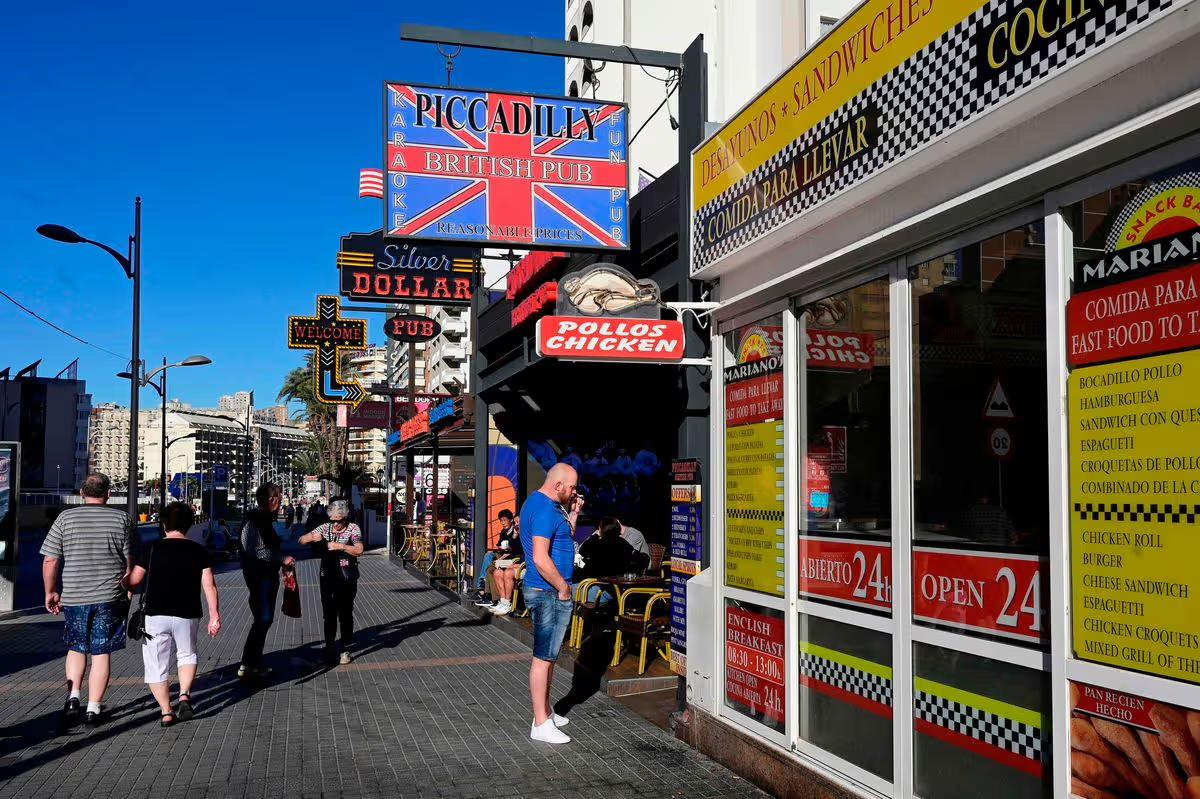
Brit floored by price after ordering fish and chips from Benidorm chippy
Harry Poulton, who moved to the Alicante region from the UK, visited the Duke of Wellington pub and Ray’s Chippy in Benidorm to find out if they serve the best fish and chips in the city

A Brit living in Benidorm has delivered his verdict on fish and chips in the Spanish resort (stock)(Image: JOSE JORDAN/AFP via Getty Images)
A Brit living in Benidorm has voiced his astonishment at the cost of fish and chips in the popular holiday spot after popping into a takeaway in the Spanish tourism hotspot. Harry Poulton, who provides travel tips and insights into the Alicante region, paid a visit to the Duke of Wellington pub in the Costa Blanca resort, which also houses Ray’s Chippy.
“I’m here to find out if this really is the best fish and chips in the whole of Benidorm,” he kicked off in a TikTok video. Settling down, Harry chose cod and chips, served with a pot of curry sauce and a can of Coca-Cola to wash it down.
Once his meal arrived, he complimented the waitress, saying it looked “absolutely amazing” before tucking in.
Sprinkling salt on the chips and dunking one in the curry sauce, Harry expressed his delight: “Oh, proper chip shop fries. It’s really nice. You can’t beat a chip shop fry, can you?”
Turning his attention to the fish, meanwhile, Harry, who selected the smaller option from the menu, described it as looking “gorgeous” before taking a bite.
“That is amazing,” he proclaimed. “Super crunchy – the batter is really nice and it’s proper fresh. Really, really tasty – it’s absolutely gorgeous.”
Harry headed to the till to pay the bill afterwards which, at €13.50 (£11.69), he hailed as an “absolute bargain”.
On TripAdvisor, The Duke of Wellington and Ray’s Chippy boasts a rating of 3.8 out of five based on 289 reviews.
Reacting to Harry’s post, one TikTok user commented: “Great place, we go every time we are in Benidorm.”
A second visitor praised: “Very good when we both went. 10/10 Good prices too.”
While a third recommended: “You should try Gwen’s Bar in La Cala on a Friday tea time. Their fish and chips are unbelievable.”
Harry also offered guidance to Brits heading to Benidorm while the Cheltenham Festival is taking place back home. The annual horse racing spectacular is being held at Cheltenham Racecourse from today (March 10) through to Friday.
“It’s a little bit cloudy here at the moment,” Harry cautioned those planning to watch the races while abroad. “It’s quite cold as well – currently just 13 degrees and it looks there is more rain and wind on the way.”
He concluded by urging those travelling to the Costa Blanca this week to pack jumpers and jackets alongside summer clothing. “You know what Benidorm is like,” he remarked. “Cloudy one minute, but blue skies the next. It’s good to be prepared.”

Major airport in popular African holiday destination reveals plans for massive £743million makeover
A MEDITERRANEAN destination nicknamed ‘the land of jasmine’ will soon have an even bigger airport with space for millions more passengers.
Plans have been revealed to expand and modernise Tunis-Carthage International Airport in Tunisia, Africa as it aims to quadruple its passenger numbers in just five years.
The airport – which is the 10th busiest in Africa – will undergo a major £743million makeover over the next five years.
The country’s Transport Ministry shared that the plans will include building a new passenger terminal as well as the existing terminal being renovated.
Between the two terminals, the Transport Ministry aims to increase passenger numbers from five million people per year to 18.5million passengers by 2031.
There will also be a new technical building and the air traffic control tower will be upgraded.
Read more on travel inspo


Some reports suggest that the broader project will involve adding VIP lounges as well.
In addition, the Transport Ministry hopes that it will improve connectivity placing Tunisia as a gateway to the Mediterranean with links to Africa, Europe and emerging destinations.
The upgrade could also pave the way for new airline partnerships and flight routes.
News of the makeover follows original plans for building a new airport being put on hold.
Known as ‘the land of jasmine’ for its use of jasmine flowers in festivals, cultural traditions and perfumes, Tunisia takes about three hours to fly to from the UK.
And flights in April are as cheap as £30 one-way.
The capital and main city to visit is Tunis.
The Sun’s Deputy Digital TV Editor Jill Robinson recently visited the city and said: “Winding my way through narrow streets, the smell of jasmine and mint tea fills the air as I pass craftsmen, locals doing their shopping and an abundance of cats.
“It would have been easy to think I was in the souks of Marrakech, but I’m in Tunis, the capital of Tunisia.
“While its Medina is not as chaotic as its Moroccan counterpart, the historic streets bustle with locals selling their wares as tourists like me squeeze through.
“From traditional clothing to jewellery, perfume to sweet treats, there’s any amount of treasures to be found just as long as you’re prepared to haggle.
“The Medina was built around the big mosque — nicknamed the Olive Tree Mosque due to the trees there in the 8th century — but it is also home to 100 smaller mosques.
“While Tunisia is an Islamic country, its history and influences are vast — including Arab, Andalucian, Turkish and Berber — and are visible to see as you take in the colourful arched doorways, former palaces and humble homes.
“On a day trip from my hotel, I learned about the rich culture of Tunis and the ancient ruins of Carthage, whose most famous son Hannibal (of elephants fame) became one of history’s most celebrated generals and took on the might of the Roman Empire in the Second Punic War.”
If you fancy a beach day, head to La Marsa where you will find a number of calm beaches, with cosy cafes and crystal clear waters.
Nearby, you can also head to the blue-and-white village of Sidi Bou Said, which sits on a clifftop and is often compared to Santorini in Greece.
There’s Djerba Island as well, which is loved for its sandy beaches and vibrant nightlife.
The temperature can reach up to 20C in March and 22C in April, making it the ideal destination to grab a bit of warmth while the UK remains around 10C.
Nouvelair Tunisie offers direct flights from London Gatwick to Tunis-Carthage Airport and Tunisair offers direct flights from both London Heathrow and Gatwick Airports.
In other airport news, a closed UK airport reveals latest plans to finally reopen after 12 years.
Plus, a major UK airport is getting a new £30million upgrade with more shops, seating and even a ‘hidden speakeasy bar’.
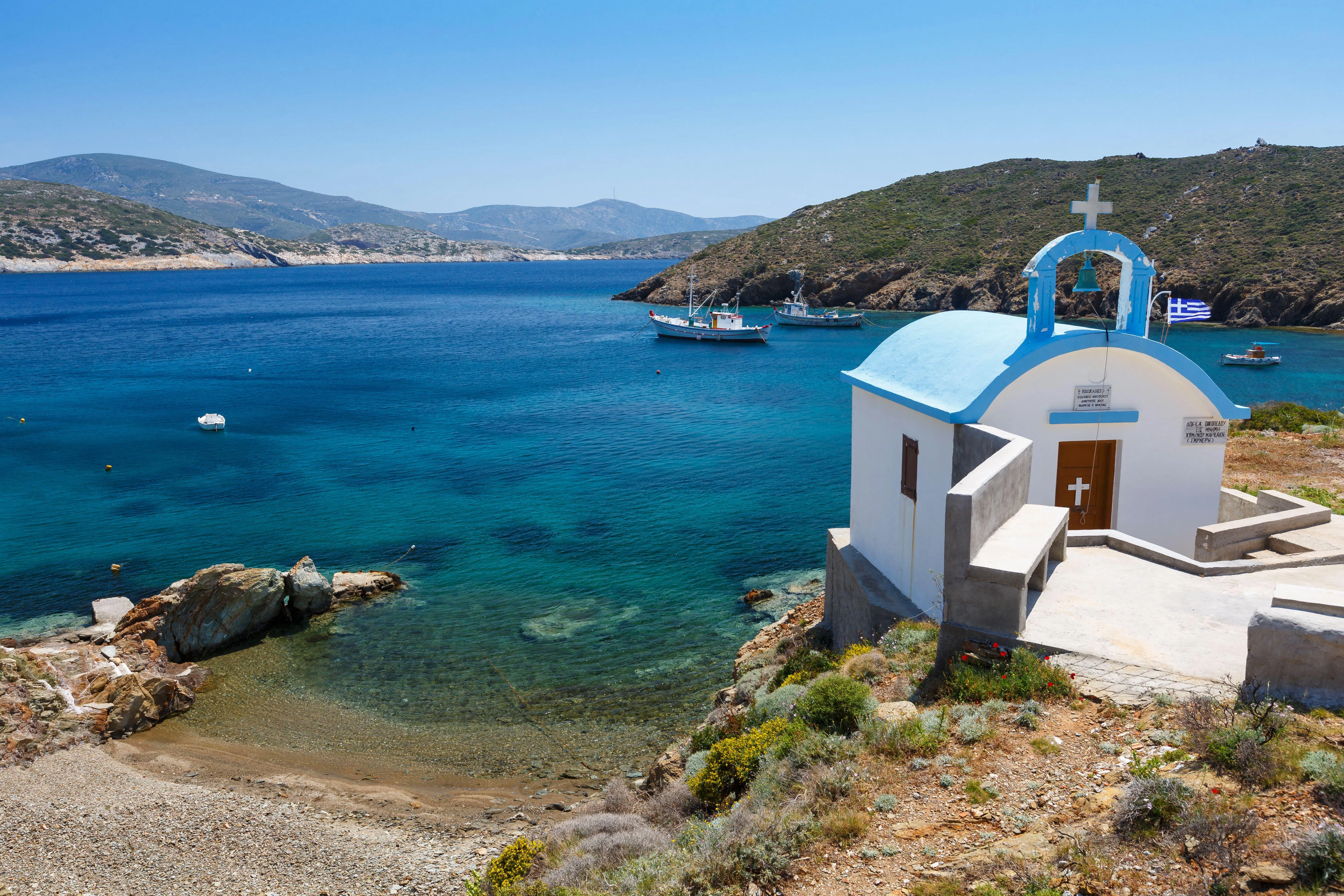
TUI expert reveals how to save hundreds on the same holiday

IF you’re planning your next holiday but you’re on a strict budget, the experts have stepped in to help you save hundreds.
TUI‘s Commercial Director, Chris Logan – who has worked there for 17 years – as shared some of his top tricks to shave hundreds of pounds off your holidays.
One of those is forgetting that Saturday departure.
He explained: “Mid‑week departures offer a sweet spot of value and convenience for travellers.”
“Flying midweek, especially Monday to Wednesday, could save you hundreds on the exact same holiday.
” For example, this week there’s a deal for a 7-night all-inclusive stay at the 4T TUI Suneo Kenzi Europa in Agadir, Morocco for just £523pp.


“Travelling on May 4 (Monday) instead of May 3 (Sunday) currently saves you nearly £300 per person.”
Not only that, but travelling just a month out of the busy season can save you loads.
He continued: “May and September offer gorgeous weather without the peak prices.
“You’ll get balmy temperatures upwards of 20 degrees in destinations like the Canaries and Greece but pay a fraction of the cost.”
When it comes to what board you want to book, he also advises not always going for the all-inclusive.
He explained: “If you’re not a big drinker, you don’t need to splash out on all-inclusive.
“Half board could work out as much better value for money.
“And if you love exploring local restaurants and heading into town for dinner, self-catering or bed and breakfast are your best bets.”
He added: “The best hack is to always scroll down on our holiday pages – there’s a calendar that breaks down prices by departure date, so you can instantly see which days are cheapest.”
Otherwise TUI has a secret “under £500” page for all holidays that are less than that, if you don’t mind where you travel to,
Chris finished by saying: “The ‘Holidays under £500‘ page brings together all the best deals in one place – you can filter by your local airport, star rating and board type.
“It’s how customers can find some incredible deals for five-star hotels for under £500.”
One of the cheapest deals we found was seven nights in Greece in May for just £265 each.
Otherwise there are a number of five star holiday packages in Spain, Bulgaria and Tunisia that just come under £500 each.
Chris says his inside advice could save holidaymakers huge amounts on their next trip – but his hacks come with a warning: “Bargain hunters really need to act fast – my biggest tip is to lock in your next trip asap to secure the best rates, as the deals are constantly updating and changing.”

UK’s ‘best cities for a spring day out’ from seaside towns to countryside spots
As we inch closer to spring, the best UK destinations for a day out have been revealed, thanks to their sprawling gardens, historic landmarks and charming riverside walks

The best UK destinations for a Spring escape have been revealed(Image: Getty Images)
The UK boasts stunning cities that provide a perfect day out, especially as we edge closer to spring, with the prospect of brighter days and milder weather.
Organising a day out, whether it’s with your partner, family, or on your own, can occasionally feel daunting. Some destinations are just around the corner, others require a road trip, and many can be reached by train, which only enhances their appeal as we get to relax before arriving.
In an effort to help Brits make the most of the sunnier weather and the magnificent locations the UK has to offer, LNER has revealed the ‘UK’s best spring days out’ that can be reached by train, reports the Express.
To identify the best UK destination for a day out during spring, the train operator examined historical weather data, the proportion of green and blue spaces, land and woodland, and the number of walking trails available in each area. From Norwich, Colchester and Plymouth, here are the UK destinations that could be the ideal getaway during spring.
READ MORE: ‘I moved from London to Liverpool and 1 city is far superior to live in’READ MORE: ‘I sold everything and moved to Spain – it halved my bills’
Dundee
Recognised as one of the sunniest cities in Scotland, Dundee tops the LNER list. One of its standout attractions is the University of Dundee Botanic Garden, featuring beautiful gardens that flourish in spring, along with water gardens and glasshouses brimming with tropical plants.
There’s also the Dundee Law landmark that offers a steady climb where you’ll be rewarded with views across Dundee and the River Tay, and the over 400-acre park, Camperdown Country Park – perfect for a picnic! Or perhaps a trip to the V&A Dundee is more your cup of tea to explore Scotland’s design museum.
Maidstone
Kent’s largest town, Maidstone, is, somewhat surprisingly, among the destinations LNER suggests visiting. This is largely thanks to its Mote Park, which boasts expansive green spaces and a peaceful lake. It provides waterside walks, pedal boat hire, plus climbing walls and high ropes – perfect for keeping youngsters occupied.
Telford
This delightful Shropshire town truly comes into its own during springtime when over 170,000 daffodils burst into bloom at Telford Town Park, which also features 450 acres of green space, gardens, and lakes. LNER highlighted that guests can pick up a coffee and enjoy a leisurely walk whilst taking in the vibrant colours that transform the park.
Aberdeen
This Scottish port city has plenty to discover on a day trip, from its seaside panoramas and period architecture to the Cruickshank Botanic Garden in Old Aberdeen. The park covers 4.5 hectares and includes rose gardens, water features, and tree-lined pathways.
There’s also one of Scotland’s most cherished gardens, Duthie Park, to explore, alongside the impressive St Machar’s Cathedral. However, a visit to Aberdeen wouldn’t be complete without experiencing its breathtaking coastlines at Greyhope Bay, where bottlenose dolphins can occasionally be seen.
Edinburgh
It comes as no shock that the beloved capital of Edinburgh has secured its place on the LNER list, given its wealth of attractions and beautiful landscapes that come alive with colour throughout spring. There’s the famous Edinburgh Castle, Arthur’s Seat offering sweeping views across the city, the Royal Botanic Garden and Princes Street Gardens.
For those wanting to delve deeper into its past, there are the Georgian House and Lauriston Castle. The Union Canal is also an ideal location to discover the tucked-away corners of the city, whether strolling along the waterfront or cycling along the dedicated path.
Lincoln
The East Midlands city boasts plenty to discover during a spring day out, from Lincoln Castle and Hartsholme Country Park to the Whisby Nature Park. However, Lincoln Arboretum is unquestionably a highlight, with its refurbished gardens, fountains, duck pond and play area, all paying tribute to its Victorian heritage.
Norwich
The vibrant city of Norwich is another destination absolutely worth visiting, whether for a day trip or weekend getaway. The Cathedral Close has been praised as ‘one of the best places to spend your spring day out’ with its magnolia trees, daffodils and verdant lawns coming into bloom beneath the city’s medieval skyline.
There’s also the opportunity to take in panoramic views across the city and explore the hilltop landscapes surrounding the Norman keep.
Colchester
The UK city is distinctive for its Roman Walls, described as the ‘longest and best-preserved town walls in Britain’. There is a circular route stretching back almost 2,000 years, providing a picturesque spring walk amongst the ancient stonework, with Castle Park the ideal spot to stop for a picnic.
Ipswich
Characterised by LNER as ‘slow and scenic’, the Suffolk town boasts low rainfall and the ‘highest spring sunshine hours’. It’s home to a waterfront that sparkles in the sunshine, where there are cafés and bars to savour a drink or lunch outdoors, or to simply observe the activity of the harbour.
Plymouth
Last but not least is the Devon port city, with The Hoe overlooking Plymouth Sound as its most recognisable landmark. This makes an excellent starting point for a day in Plymouth, with its expansive lawns and seafront promenade providing the ideal spring walk, before treating yourself to an ice cream or scaling Smeaton’s Tower.
For further information or to book your spring day trip, you can visit the LNER website.
Do you have a travel story to share? Email webtravel@reachplc. com

‘Tunnel of Death’ where breathing is ‘painful’ and there are no lights
It’s filled with thick exhaust fumes and lacking proper lighting or ventilation

World’s darkest tunnel connecting 2 major cities where breathing is painful(Image: Getty)
The Anzob Tunnel in Tajikistan, Asia, also known as the “Tunnel of Death,” is regarded as the darkest and most treacherous tunnel on the planet. Situated on the M34 highway at an elevation of 2,700 metres in the Tajikistan mountains, the 5km tunnel lacks lighting or ventilation systems.
The pitch-black tunnel is shrouded in dense smoke, making breathing “hard and painful due to the thick mixture of exhaust gases”, according to specialists at Dangerous Roads.
The frightening underpass features massive potholes and lacks adequate lighting and ventilation, rendering it exceptionally hazardous.
The Anzob Tunnel links Dushanbe, the nation’s capital, and Khujand, the country’s second-largest city, and was constructed in 2006 to accommodate heavy traffic, reports the Express.
There are also no traffic signals to manage the thousands of vehicles passing through it daily; instead, just complete darkness.
The tunnel underwent partial renovation in 2018, with drainage systems installed and potholes repaired, but it still requires substantial improvement, according to specialists.
Dangerous Roads stated: “The tunnel is dark and dangerous with hardly any lights inside, and it’s suffocating as there’s no ventilation but one fan.”
“Locals have shared stories of a number of people dying inside it due to traffic jams that leave people trapped, where they succumbed to carbon monoxide. The poisonous air in the tunnel is barely shifted by one solitary fan somewhere in the middle of the tunnel, which gives some, but not sufficient, movement to the air.
“Expect huge, axle-snapping potholes threatening to swallow up the car, along with flooding that almost turns them into tunnel ponds. Your whole SUV can submerge if you drive in the wrong place.
“There are no road markings, so driving on the left or the right are optional, with the middle being the common choice.
“Halfway along the tunnel, water floods the road as a result of an engineering fault. Oncoming cars and trucks emerge in the darkness with headlights flashing for the other drivers to get out of their way.”
One visitor detailed their experience on Tripadvisor, writing: “We went through this tunnel twice with no ill effects other than fear!”
“The traffic was two-way, and the darkness and lack of ventilation were scary, but we survived. The drive was scenic and fabulous and well worth the risk.”

These lawmakers were shaped by combat after 9/11. Now they’re grappling with a new Mideast war
WASHINGTON — As Congress responds to President Trump’s attack on Iran, lawmakers who served on the front lines of Iraq and Afghanistan are making their voices heard in a war debate that has taken on intensely personal meaning.
Many admit mixed feelings, taking satisfaction in seeing vengeance taken on the leadership of an Iranian regime that has targeted U.S. service members for decades, yet fearful that another generation of soldiers could soon face the same combat experiences that they did.
“Do I take gratification? You know there’s the Marine side of me: Yeah, of course,” said Arizona Democratic Sen. Ruben Gallego, whose company suffered some of the heaviest losses on the U.S. side during the Iraq War. “I know they killed a lot of American soldiers, American Marines. But do I also understand that I have a responsibility not to let my lust for revenge drive my country into another war?”
Experiences in the post 9/11 wars are also coloring the decisions of the Trump administration, given that top officials, including Vice President JD Vance and Defense Secretary Pete Hegseth, were once deployed to Iraq.
Gallego, like others on Capitol Hill, leaned heavily on his firsthand experience of fighting in the wars after the Sept. 11, 2001, attacks as he assessed the Iran conflict. Lawmakers wore bracelets etched with the names of friends killed in battle, told stories of coming under attack from Iran-backed militant groups and reflected on their own life-changing injuries suffered during combat.
Veteran lawmakers are wary of war
While the initial votes on Iran saw Congress divide mostly along party lines, with Republicans backing Trump’s actions and Democrats warning of an extended conflict, veterans in both parties share deep reservations about entering the conflict.
“As somebody who knows a lot of friends that didn’t come home and a lot of Gold Star families, that’s why the week before the attack, I was actually one of the ones that was talking about caution and why we needed to avoid at all costs getting into another long, drawn-out Middle Eastern war,” said Republican Rep. Eli Crane of Arizona, a former Navy SEAL who left college to enlist the week after the Sept. 11 attacks.
Crane said his concerns were partially assuaged by briefings from the Trump administration that indicated to him the president is not planning a drawn-out war. He voted against a war powers resolution that would have halted attacks on Iran unless Trump got congressional approval.
But Crane said wars are never straightforward. “I’ve been on military operations that did not go to plan many times, and so I understand the nature,” he said, adding that he was calling for the Trump administration to approach the conflict with “humility and caution.”
Gallego and other Democrats worried that it was too late for that approach. They paid tribute to the six U.S. military members who were killed in a drone strike in Kuwait and worried that there could soon be more American casualties. A seventh service member died on Sunday from wounds suffered during a March 1 attack in Saudi Arabia.
“War is dirty, and mistakes happen,” Gallego said. The longer the conflict drags on, he added, the greater the chance there will be for U.S. military members to be killed. He experienced that firsthand in Iraq when friends would be killed by seemingly random shots from enemy combatants.
Still, many Republicans argued that it was necessary to attack Iran to stop a regime that for decades has helped train and arm militant groups throughout the Middle East. Republican Rep. Brian Mast, who chairs the House Foreign Affairs Committee, led the debate on the House floor against the war powers resolution.
Mast, who served as an Army bomb disposal expert, now uses prosthetic legs after receiving catastrophic injuries from an improvised explosive device in Afghanistan. “Me especially, many of my other colleagues, no one wants to see our military go into combat or war,” he said.
Then he added, “But Iran’s terror, which has caused the deaths of thousands of Americans, it has to stop.”
Trying to push soldiers to forefront of war debate
Important questions loom for Congress as the conflict with Iran unfolds and spreads to other parts of the Middle East. The price of the operation is already likely running into the billions of dollars, likely forcing the Trump administration to soon seek billions in funding from Congress. The outbreak of war has also scrambled global alliances and the future of U.S. foreign policy.
Shadowing it all is the potential of another drawn-out conflict. Lawmakers said they owe it to their fallen comrades to ensure that doesn’t happen.
“To me, it’s to speak out. It’s to say another generation should not go fight in an open-ended, ill-conceived regime change war in the Middle East,” said Democratic Rep. Pat Ryan, his hand moving to a bracelet etched with the names of friends who were killed during his two Army combat tours in Iraq.
Others remembered how frustrated they became with Washington during their service, especially as soldiers tried to fight with insufficiently armored vehicles and not enough troops.
“I know what it was like to be on the very end of the receiving line of the decisions made in Washington,” said Democratic Rep. Jason Crow, who entered the Army as a private before being promoted to a captain and deployed to both Iraq and Afghanistan.
Crow said that front-line soldiers often suffered “because people stopped asking tough questions. People stopped being held accountable. Congress stopped voting on it.”
Another veteran, Democratic Sen. Tammy Duckworth of Illinois, said that was one of the reasons she sought a congressional seat in the first place. As a Blackhawk helicopter pilot with the Illinois National Guard, Duckworth lost her legs when her helicopter was hit by a rocket-propelled grenade in Iraq.
“I ran for Congress so that when the drums of war started beating once again, I’d be in a position to make sure that our elected officials fully considered the true cost of the war,” she said. “Not just in dollars and cents but in human lives.”
Groves writes for the Associated Press.
With U.S. at war with Iran, political upheaval could hit World Cup
Twelve days ago the U.S., a World Cup host country, launched a full-scale bombing campaign against Iran, a country that has qualified to play in the tournament. That’s never happened before.
Five days later, that same World Cup host began military operations inside the borders of Ecuador, another World Cup qualifier, half a world away. That’s never happened before either.
With the tournament scheduled to kick off in three months, those events have soccer scholar Jonathan Wilson questioning whether it’s wise for the World Cup to go on at all.
“It seems to me, for each passing day, it’s less and less likely that the World Cup can happen,” he said.
That take seems unduly alarmist said David Goldblatt, a British sportswriter and sociologist who is a visiting professor at Pitzer College in Claremont. Anything short of a full-scale war inside the U.S. would not be enough to pull the plug on the tournament now, he said. Especially with FIFA expecting revenues of as much as $11 billion.
“I mean, it’s not a good look,” Goldblatt conceded. “And certainly when set against FIFA’s official pronouncements on its role in encouraging world peace and cosmopolitan celebrations of a universal humanity, none of that sits terribly easily.
“But in terms of actually running the World Cup, I don’t think it’s going to make very much difference at all.”
However, with the Trump administration open to engaging in more international conflicts, there’s little doubt this World Cup, the largest and most complex in history, will also be the most political in history as well.
Complicating things further is the fact the current conflict in the Middle East hasn’t been limited to just the U.S. and Iran. Iranian missiles have hit both Qatar and Saudi Arabia, among other countries, and Jordan has fired on U.S. assets.
Those three countries are World Cup qualifiers as well.
The fate of a soccer tournament pales in importance to the death and destruction the conflagration in the Middle East has produced, of course. But the need for unity is the very reason there’s a World Cup in the first place.
When French soccer administrator Jules Rimet founded the tournament 96 years ago, he believed soccer could be a tool for international peace. And in the early years of the tournament, Rimet, FIFA’s longest-serving president and a talented diplomat, was able to limit the impact of geopolitics on the World Cup, watering down Mussolini’s influence on the 1934 World Cup, for example, and steering the 1938 tournament away from Hitler’s Germany.
FIFA President Gianni Infantino has taken a far different approach, courting President Donald Trump’s support despite his growing number of global conflicts.
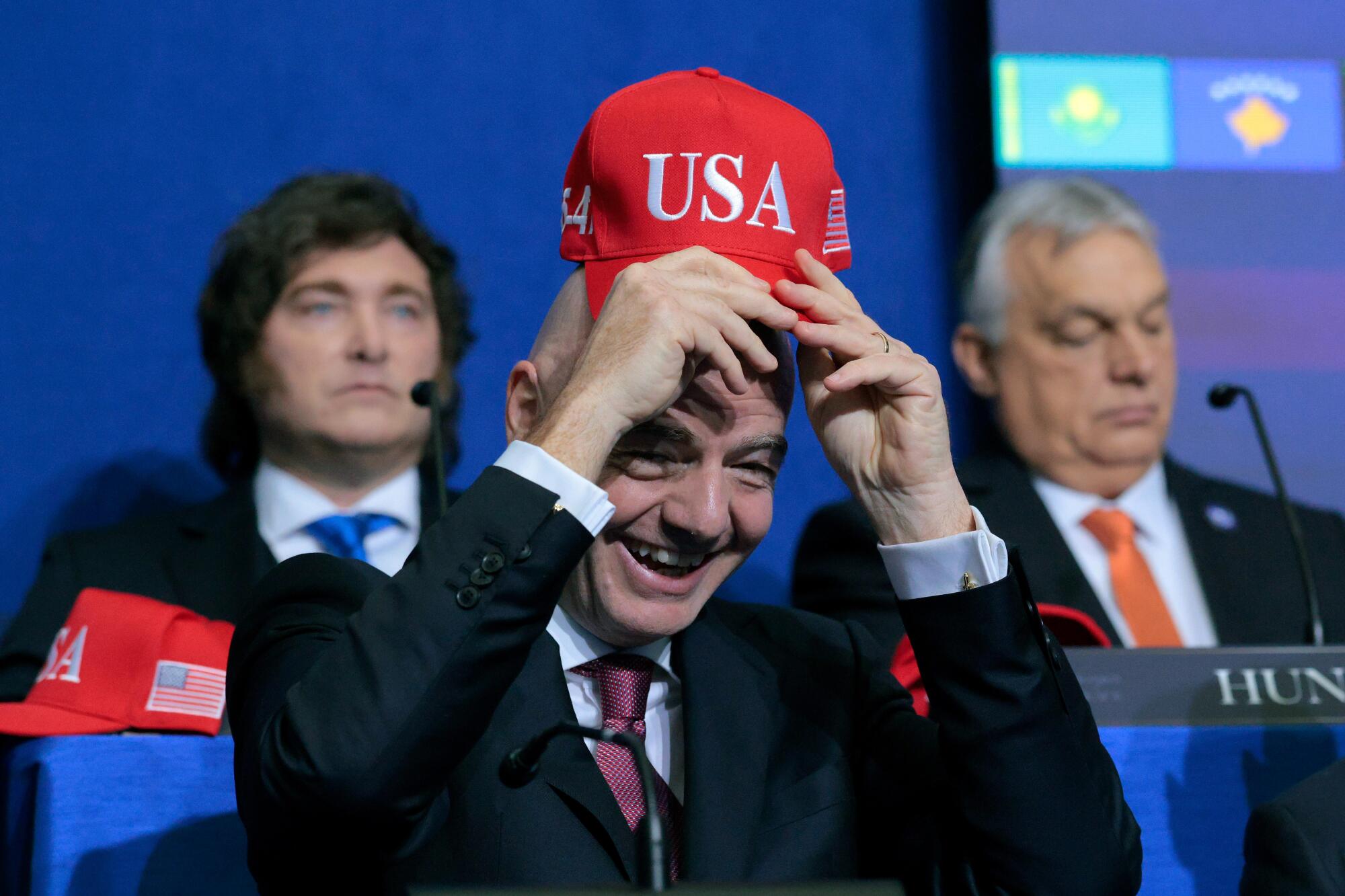
A week before bombs began falling on Iran, Infantino appeared at the inaugural meeting of Trump’s Board of Peace wearing a red cap with ‘USA’ on the front and the numbers ‘45-47’ — a reference to Trump’s non-consecutive presidencies. That act was so blatantly partisan, IOC president Kirsty Coventry said her organization would investigate whether Infantino, an IOC member, breached the terms of the group’s charter, which requires members to act independent of political interests.

FIFA president Gianni Infantino holds up a USA hat as he attends the inaugural meeting for the Board of Peace at the Institute of Peace in Washington on Feb. 19.
(Chip Somodevilla / Getty Images)
“Infantino has absolutely breached every FIFA protocol on neutrality,” said Wilson, author of “The Power and Glory: The History of the World Cup.”
“Absolute neutrality is always impossible and not desirable, but it has clearly gone way, way, way beyond. The peace prize looked grotesque at the time. It looks even worse now. And I can’t see how the future will look kindly on Infantino. I think Infantino has to some extent legitimized Trump.”
This is hardly new behavior from Infantino, who had close relationships with Vladimir Putin ahead of the 2018 tournament played in Russia and Qatar’s leaders ahead of the 2022 tournament despite their well-known human rights violations.
The list of countries Infantino is asking to overlook poor relations with the country hosting the majority of World Cup games this summer is growing.
Consider that Denmark, which administers Greenland, an autonomous territory Trump has also threatened to invade, can qualify for the tournament in a European playoff that will take place later this month. Then there’s World Cup qualifiers Haiti, Ivory Coast and Senegal, who aren’t at war with the U.S. but whose citizens have been banned from entering the country to cheer for their teams. That completely contradicts a promise from Infantino, who said “everybody will be welcome” at the 2026 World Cup.
“If I had a crystal ball I could tell you now what is going to happen,” Heimo Schirgi, the World Cup chief operating officer for FIFA, said Monday. “But obviously the situation is developing. It’s changing day by day and we are monitoring closely. [But] the World Cup will go on right? The World Cup is too big and we hope that everyone can participate that has qualified.”
Goldblatt, the Pitzer professor, said Infantino’s action are understandable since he has few cards to play against Trump.

President Trump speaks as he receives the FIFA Peace Prize as FIFA president Gianni Infantino applauds on Dec. 5 the Kennedy Center in Washington.
(Patrick Smith / Getty Images)
“What’s Infantino going to do? What levers can you pull?” he asked. “You can threaten to take it away. That’s not happening. Moral admonishment? Who’s going to take that from FIFA? It is a farcical idea that anybody thinks that the president of FIFA has any kind of collective moral authority or any role as a spokesperson for the progressive part of the world.
“They may fantasize that this is the case. But it is morally and politically absurd that any of us should expect that of these people. So if you are Infantino and that is the case, you know what works with Trump? What works is flattery. So of course he’s gone down that path.”
The games, Goldblatt said, will go on even if bombs are still falling. And that may not be an entirely bad thing.
“Football’s a great distraction. That’s partly why it’s so popular,” he said. “It will be virtually impossible, if the war continues, for that not to be a central element of like, the meaning and the purpose of what we’re all doing here.
“How we’ll feel and what it will look like, I don’t know. It will be very strange. Football is unpredictable and extraordinary. Something will happen that will warm our souls.”
⚽ You have read the latest installment of On Soccer with Kevin Baxter. The weekly column takes you behind the scenes and shines a spotlight on unique stories. Listen to Baxter on this week’s episode of the “Corner of the Galaxy” podcast.

Protesters block Iran’s women’s football team bus en route to airport | Newsfeed
Protesters blocked a bus carrying Iran’s women’s football team outside a hotel in Australia after five players slipped away to seek asylum duing the Women’s Asian Cup. They say the remaining players could face danger if forced to return to Iran after staying silent during the national anthem.
Published On 10 Mar 2026

Kremlin Says Putin’s Iran Mediation Proposals Remain on Table
Vladimir Putin has presented multiple proposals to mediate the conflict in Iran, according to the Kremlin. Kremlin spokesman Dmitry Peskov said on Tuesday that the proposals are “still on the table,” emphasizing Russia’s readiness to help reduce tensions.
Peskov noted that any diplomatic solution requires coordination across multiple parties and agreements, signaling that Moscow intends to play a careful, measured role rather than rushing into mediation. This framing underscores Russia’s attempt to position itself as a credible intermediary while retaining influence over the conflict’s trajectory.
Recent Putin-Trump Contact
The remarks came after a phone call between Putin and Donald Trump on Monday, in which Putin reportedly offered options to end the Iran war quickly. Trump publicly said that Putin “wants to be helpful,” but added that resolving the Ukraine conflict would be an even more useful contribution.
The exchange highlights how Russia’s involvement in Iran is intertwined with its broader geopolitical interests, particularly in Europe and the Middle East. Moscow’s dual focus on positioning as a mediator and protecting its strategic priorities in Ukraine illustrates its careful diplomatic balancing act.
Russia-Iran Relations and Strategic Calculations
Russia maintains a strategic partnership with Iran, which provides it leverage in regional energy and security affairs. While Moscow has condemned U.S. and Israel military actions against Iran, it has also economically benefited from the resulting surge in oil prices.
Reports that Russia may have shared targeting intelligence with Tehran have drawn scrutiny, although Peskov declined to confirm or deny them. By avoiding direct comment, Russia preserves operational flexibility and manages international perceptions, allowing it to maintain influence with Iran while publicly projecting a mediating stance.
Analytical Perspective: Mediation Amid Strategic Interests
Russia’s position reflects a calculated effort to balance diplomacy and national interest. Keeping mediation proposals publicly “on the table” serves several purposes:
- Diplomatic Leverage: By signaling willingness to mediate, Russia positions itself as a necessary interlocutor for any resolution, increasing its bargaining power with both the U.S. and Iran.
- Strategic Buffering: Moscow preserves its ties with Tehran, protecting a partner in the Middle East while benefiting from higher oil prices amid global supply shocks.
- Geopolitical Messaging: The Kremlin is communicating to the West that Russia can influence outcomes in the Middle East, reinforcing its image as a global power capable of shaping crises beyond its immediate borders.
This approach highlights a broader Russian strategy: maintain engagement in multiple theaters simultaneously Ukraine, Iran, and energy markets while avoiding overt entanglement that could provoke direct confrontation with the U.S. or NATO.
Conclusion: Patient Diplomacy as a Strategic Tool
Moscow’s emphasis on patience and coordination indicates that Russia is playing the long game, using mediation as a tool to expand influence rather than as a purely humanitarian effort. Analysts suggest that this approach allows Russia to extract maximum strategic advantage, balancing its regional partnerships, energy interests, and global standing, while leaving room to maneuver depending on how the Iran conflict evolves.
Russia’s dual role as both potential mediator and strategic partner to Tehran exemplifies the complex interplay of diplomacy, energy politics, and military calculation in the Middle East.
With information from Reuters.

Noah Cyrus goes braless in daring shredded gown as she reunites with mom Tish after nasty family feud

NOAH Cyrus made sure she turned heads when she went braless in a daring shredded gown as she reunited with her mom Tish after their nasty family feud.
Things previously took a turn in the mother-daughter relationship when it was reported that Noah, 26, had been seeing actor Dominic Purcell, 56, before her mom Tish, 58, married him.
Things got so bad, that Noah was reportedly “banned” by her mom from her wedding to the Prison Break actor.
But two years later, and things appear to be back on track for the pair as they were seen posing on the red carpet at a glitzy bash.
Noah made a dramatic statement in her shredded dress.
The star had also ditched her bra for the premiere of Reminders of Him at the Hollywood Legion Theater.
Noah was there to promote her new track Light Over the Hill, which she wrote for the film.
Tish, who is also the mom of Miley Cyrus, 33, was seen supporting her daughter at the event, proving that their relationship is back on track.
The ex-wife of Billy Ray Cyrus looked chic in her off-the-shoulder black sweater and black pants.
It’s Noah and Tish’s first outing together following reports of a fallout over actor Dominic.
Most read in Entertainment
Tish married the TV star in the summer of 2023 – a year after her divorce from country star Billy Ray
But Noah was reportedly “banned from the wedding” over fears she might “cause a scene”.
“Tish didn’t invite Noah to her wedding because she thought it would cause a scene and drama,” an insider told Entertainment Tonight.
“It’s also been an adjustment for Noah in general for her parents to be divorced.”
It was then claimed that Noah had actually been “seeing” Dominic before her mom started a romance with him.
The actor, who is 30 years Noah’s senior, started dating her mother Tish in 2022.
“Noah was [seeing] Dominic when Tish started pursuing him,” a source told Us Weekly.
The source also said that Tish was aware of the situation before deciding to pursue him.
“The turmoil between Noah and Tish goes far beyond [what people think],” said the source.
“Noah is very distraught over Tish stealing Dominic from her.”
Tish shares Noah, Miley, and sons Trace and Braison with ex-husband Billy Ray, 64.
The country star is now in a relationship with model Elizabeth Hurley, 60.
Meanwhile, Tish and Billy were married for nearly 30 years before their shock 2022 split.

British Airways cancels hundreds of flights ‘until later this year’ with major cities impacted
The scale of the disruption to aviation caused by the US and Israeli attack on Iran has been enormous. Of the 38,193 flights that were scheduled to fly out or into the Middle East since February 28, 21,915 have been cancelled

BA has cancelled flights to several Middle Eastern cities (Image: AFP via Getty Images)
British Airways has cancelled hundreds of flights to countries across the Middle East as the war in Iran rages.
This afternoon, the UK’s flag carrier announced it would reduce its flight schedule across the region and cancel flights to certain cities. BA bosses have decided to ground all flights to Abu Dhabi in the United Arab Emirates until “later this year”.
Although the airline hasn’t said how many services have been cancelled, given its daily services to Abu Dhabi prior to the war, the total number of flights grounded comfortably stretches into the hundreds.
“Due to the continuing uncertainty of the situation in the Middle East and airspace instability, we’ve had to temporarily reduce our flying schedule in the region. We’ve cancelled all flights to and from Amman, Bahrain, Doha, Dubai and Tel Aviv until later this month and to and from Abu Dhabi until later this year. We’re keeping the situation under constant review and are in touch with our customers to offer them a range of options,” the statement from BA reads.
READ MORE: US military has ‘lost’ six nuclear bombs and there are fears they could fall into enemy handsREAD MORE: Iran war travel expert Simon Calder issues Emirates ‘flights will be resuming’ update
“We have limited seats remaining on our repatriation flights from Oman (Muscat) to London Heathrow on 11 and 12 March for customers with an existing booking. Following these dates, the flights will pause due to reduced demand but will be kept under continuous review.”
The scale of the disruption to aviation caused by the US and Israeli attack on Iran has been enormous. Of the 38,193 flights that were scheduled to fly out or into the Middle East since February 28, 21,915 have been cancelled. The latest figures show that most routes are getting back to close to normal. Of the 4,783 flights scheduled for today, 1,107 were or are expected to be cancelled.
If you are due to fly from or to the Middle East in the coming days, make sure you check your airline’s website for instructions and the Foreign Office website for the latest advice.
What have the airlines said?
- Aegean Airlines – Greece’s largest carrier cancelled flights to Tel Aviv until March 20; Beirut, Erbil and Baghdad until March 25; Dubai and Abu Dhabi until March 19; and Riyadh until March 14.
- Air France–KLM – Air France cancelled flights to Tel Aviv and Beirut through March 13, and to Dubai and Riyadh until March 12. KLM suspended flights to Dubai, Riyadh and Dammam until March 10, and to Tel Aviv for the rest of the winter season.
- Cathay Pacific – Cancelled all flights to and from Dubai and Riyadh until March 31.
- Delta – Cancelled flights from New York to Tel Aviv until March 22 and from Tel Aviv to New York until March 23.
- Emirates – Operating a reduced flight schedule but expects to return to full operations within days, depending on airspace availability and operational requirements.
- Etihad Airways – Resumed a limited commercial flight schedule between Abu Dhabi and several key destinations.
- Iberia Express cancelled all flights to and from Tel Aviv through March 10.
- Lufthansa Group – Lufthansa, Austrian Airlines, Swiss and Brussels Airlines suspended Tel Aviv flights through April 2 and Beirut flights through March 28. Flights to Tehran are suspended until April 30, and to Amman, Erbil, Dammam, Dubai and Abu Dhabi until March 15.
- Norwegian Air – Now plans to start flights to Tel Aviv and Beirut on June 15, instead of the previously scheduled April 1 and April 4.
- Qatar Airways – Operating a limited schedule to and from Doha, with some flights resuming from March 9 following temporary authorisation from Qatar’s civil aviation authority.
- Saudia Airlines – Suspended flights to Amman, Kuwait, Abu Dhabi, Doha and Bahrain until March 10, and to Moscow and Peshawar until March 15. Limited operations to Dubai have resumed.
- Wizz Air – Suspended flights to Israel until March 29, and flights from mainland Europe to Dubai, Abu Dhabi, Amman and Jeddah until mid-September.
British Airways announces major update on UK rescue flights from Middle East

Thousands of Brits were left stranded following the outbreak of the Middle East conflict but now British Airways has announced it will suspend its daily rescue flights from Muscat
Source link

Saudi Arabia Appoints Al-Saif As Vision 2030 Faces Reality Check
Saudi Arabia’s fixation with megaprojects may be giving way to more pragmatic initiatives better aligned with investor appetite.
The urgent need for foreign investment crystallized last month when a royal decree replaced veteran cabinet member and investment minister Khalid Al-Falih amid broader funding concerns over the kingdom’s signature Vision 2030 development framework.
Foreign investment amounted to just 2.1% of GDP last year, according to Capital Economics. That’s well below the government’s Vision 2030 target. The research firm also forecasts government debt will balloon to 40% of GDP next year. That’s up from just over 30% last year and above consensus.
Vision 2030, which now appears to be under review, represents Crown Prince Mohammed bin Salman’s blueprint for diversifying an economy still heavily reliant on hydrocarbon revenues.
Replacing Al-Falih is Fahad Al-Saif, sometimes also referred to as Fahad bin Abduljalil Al-Saif, a former HSBC banker.
Until his appointment, Al-Saif held various positions at the Public Investment Fund (PIF), Saudi Arabia’s $1.15 trillion flagship sovereign wealth fund. He was also instrumental in overhauling the kingdom’s capital-raising capabilities. Earlier, he played a role in roadshows aimed at mustering investor support for Saudi bond sales.
But the government’s recent signaling suggests Al-Saif will preside over a period of relative austerity while attempting to maintain investor support for a rolling set of reforms. His stewardship is likely to face an early test as policymakers’ attention is focusing on future foreign investment initiatives.
Recent reports imply that the government will soon announce a streamlined set of priorities and a pivot away from nosebleed-inducing megaprojects such as The Line, a 170-kilometer, multibillion-dollar planned smart city that makes up a segment of the ambitious Neom development.
Posts on social media have broadly welcomed Al-Saif’s appointment, variously describing him as a safe pair of hands fit to carry out a shift towards more mundane revenue-generating projects.