



Samsung joins U.S. Navy project as Korean shipbuilders expand

The christening ceremony of South Korea’s 500th liquid natural gas carrier for export at Samsung Heavy Industries Co. on the southeastern Geoje Island, South Korea. File. Photo by YONHAP / EPA
April 1 (Asia Today) — Samsung Heavy Industries has joined a U.S. Navy vessel development project, marking another step forward for South Korea’s shipbuilding industry in the American defense market following similar moves by Hanwha.
Samsung Heavy Industries said Wednesday it has begun conceptual design work for the Navy’s Next-Generation Logistics Support Ship program in partnership with U.S. shipbuilder General Dynamics NASSCO and Korean engineering firm DSEC. The project is scheduled to run through March 2027.
The program involves developing small, highly maneuverable vessels to support the Navy’s distributed maritime operations strategy, which emphasizes dispersed forces and flexible logistics. More than 13 ships are expected to be built under the initiative.
Samsung Heavy Industries will focus on hull design and technical support, using a 400-meter test tank at its research facility to improve efficiency and performance.
The announcement follows a move by Hanwha’s shipbuilding unit, which recently confirmed its participation in a separate U.S. Navy program. Industry analysts say a broader Korea-U.S. shipbuilding cooperation framework is beginning to take shape as major South Korean companies expand their presence in U.S. defense projects.
A company official said the NGLS program will serve as a foundation for expanding cooperation with the U.S. partner shipyard and accelerating efforts to secure tangible results in the American market.
In parallel with the design project, Samsung Heavy Industries is preparing to bid jointly with a U.S. shipyard for maintenance, repair and overhaul contracts. The company is also pursuing certification under the Navy’s ship repair agreement program, which would allow it to compete for future maintenance work.
The company is further strengthening collaboration in advanced manufacturing technologies, including artificial intelligence-based automation and robotics, through a research center established with San Diego State University. Plans include expanding cooperation to build a shipbuilding supply chain in the United States and train skilled workers.
The latest developments suggest South Korea’s shipbuilders are moving beyond commercial vessels into defense-related projects in the United States, broadening their global footprint and deepening bilateral industrial ties.
— Reported by Asia Today; translated by UPI
© Asia Today. Unauthorized reproduction or redistribution prohibited.
Original Korean report: https://www.asiatoday.co.kr/kn/view.php?key=20260401010000142
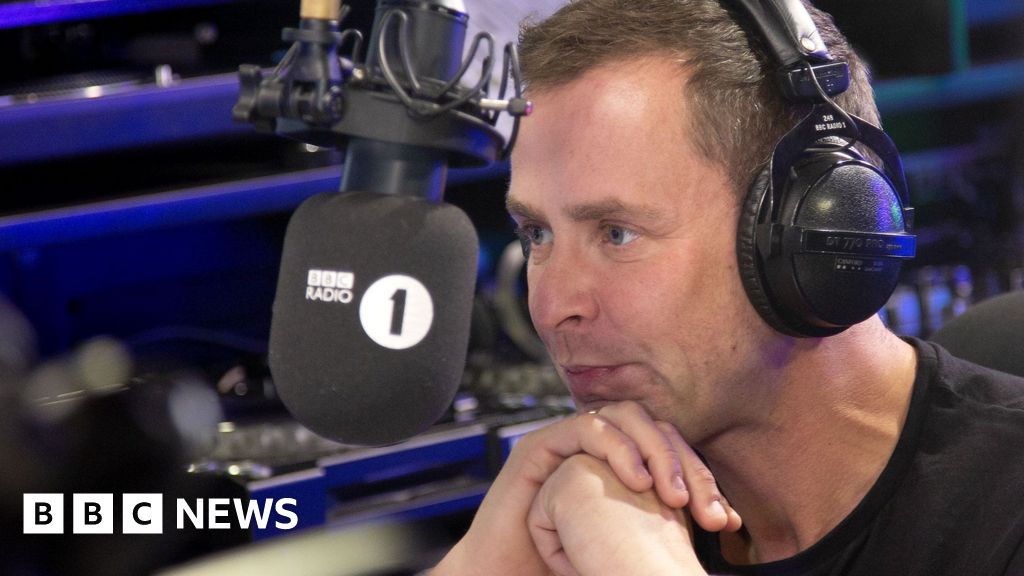
BBC sacked Scott Mills after learning alleged victim in police investigation was under 16
It comes as Mills released a statement saying he had “fully cooperated and responded” with the police investigation in 2018.
Source link
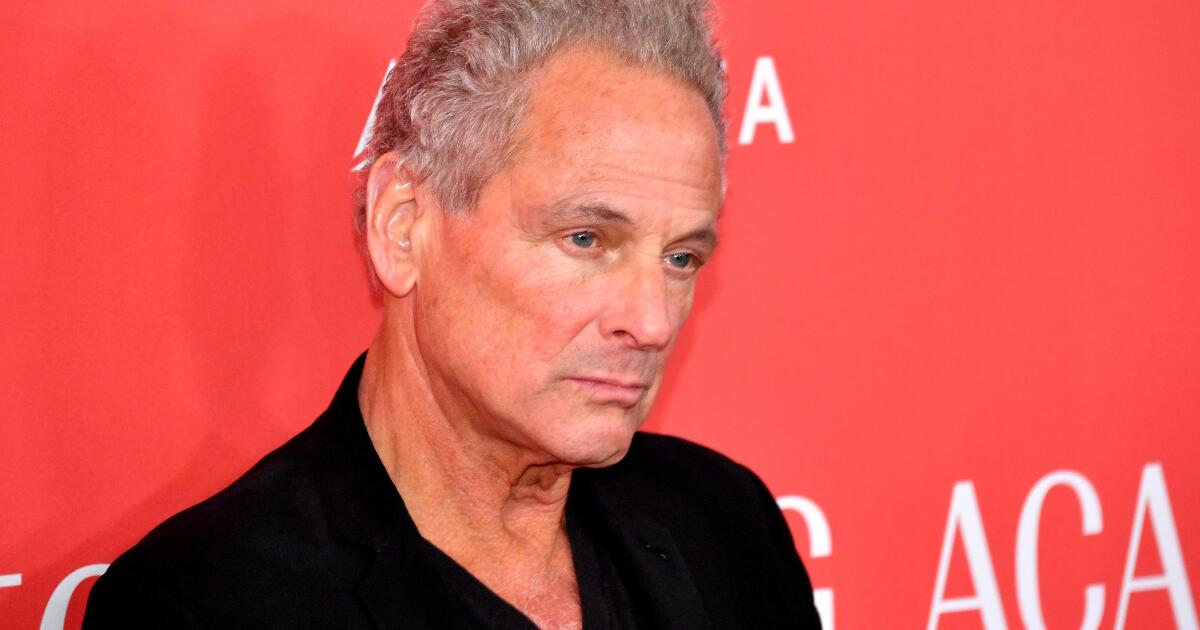
Lindsey Buckingham of Fleetwood Mac attacked in Santa Monica
Rock and Roll Hall of Famer Lindsey Buckingham was attacked by a woman in Santa Monica on Wednesday morning.
The Los Angeles Police Department confirmed that a woman with a history of stalking Buckingham, 76, tossed an unknown substance toward the former Fleetwood Mac guitarist and vocalist from a container as he entered a building for an appointment. According to law enforcement, Buckingham was not harmed; the woman is known to the musician and had been the subject of prior action with the LAPD threat management unit.
Police believe the woman found out when and where Buckingham had scheduled his appointment. She was not apprehended Wednesday morning, but an arrest was expected soon.
Santa Monica police and the LAPD are investigating the incident.
Representatives for Buckingham have not responded to a request for comment.
In December 2024, Buckingham filed a request for a restraining order against Michelle Dick, who was 53 at the time of that filing. Los Angeles County Superior Court Judge Elizabeth Scully granted the order, which mandates that Dick stay at least 100 yards away from Buckingham, his wife and his son. She was also ordered not to harass or attempt to make contact with him in any way.
In 2018, Buckingham split with Fleetwood Mac and a legal battle over lost wages with his former band ensued. Then, in February 2019, Buckingham suffered a heart attack and had to undergo triple bypass surgery. During the process, the insertion of a breathing tube damaged his vocal cords, leaving him questioning whether he would ever be able to sing again, he told The Times in 2021.
He spent much of the pandemic focusing on his recovery.
“I’ll tell you what: Between the Fleetwood Mac stuff and the heart attack, it’s all been humbling,” Buckingham said. “I’ve never suffered from a lack of confidence, and sometimes could get carried away with that in the process of leading the band. But everything has pulled me in a little bit. I’m not as aggressive a person as I was before, which is probably not a bad thing. It made me look around more — and become less self-involved, hopefully.”
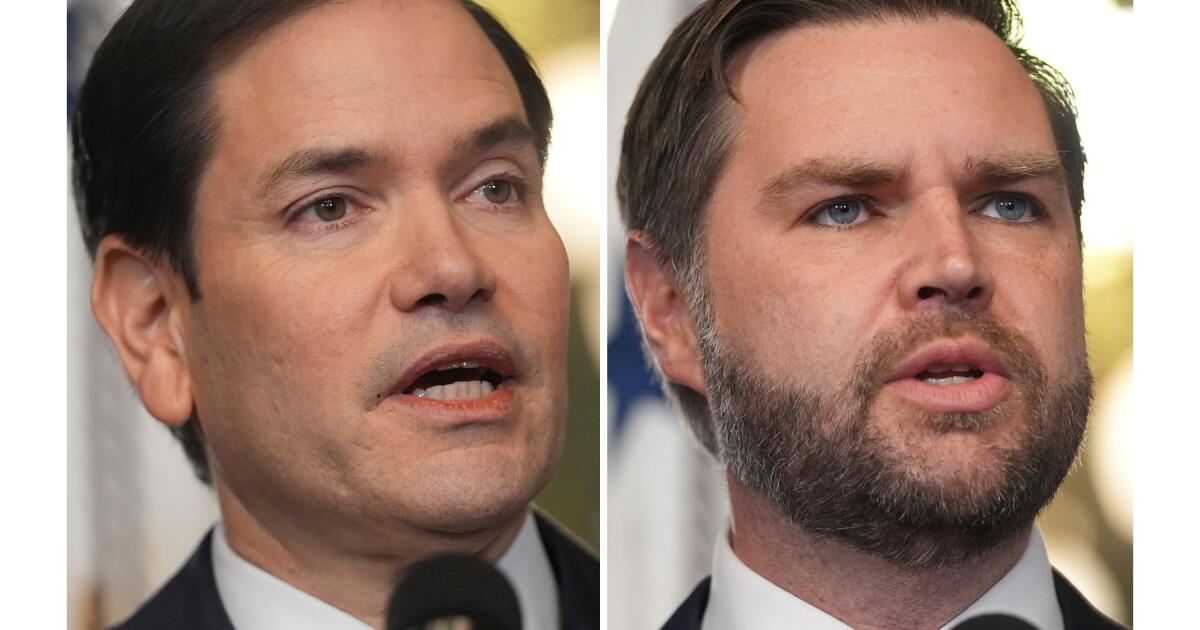
Rubio’s and Vance’s differing postures on Iran war highlight their challenges ahead of 2028 election
WASHINGTON — As President Trump assembled his Cabinet last week, he asked Secretary of State Marco Rubio and Vice President JD Vance to give an update on the Iran war.
Rubio, known for his hawkish views, gave an impassioned defense of the war, calling it “a favor” to the United States and the world.
Vance, who has long pushed for restraint in U.S. military intervention overseas, was more sedate. He said that the U.S. now has “options” it didn’t have a year ago and that it is important Iran does not get a nuclear weapon — before redirecting his remarks toward wishing the troops a happy Easter.
The exchange was a distillation of their diverging postures toward the war that their boss has launched in Iran. And it comes as some would-be Republican presidential candidates begin quietly courting officials in key states like New Hampshire in the early stages of the GOP’s next nomination fight.
With Vance and Rubio seen as the party’s strongest potential candidates in a 2028 primary, the two have to balance their roles in the Trump administration with their future political plans.
“It’s very obvious from the way that Rubio talks about Iran and the way that Vance talks about Iran that they are of different casts of mind,” said Curt Mills, the executive director of “The American Conservative” magazine and a vocal critic of the war. The Cabinet meeting episode was telling, he said, because it seemed as though Vance, discussing Easter, was “literally trying to talk about anything else other than the war.”
The White House addressed the Rubio-Vance relationship on Wednesday in an unsolicited statement after the initial publication of this article.
“President Trump has full confidence in both Vice President Vance and Secretary Rubio, who continue to be trusted voices within the administration,” said White House spokesperson Anna Kelly. “He values both the vice president and the secretary’s opinions and wealth of expertise.”
It’s too soon to forecast how Republican voters might feel about the war next spring, when the 2028 contest is expected to begin in earnest, but the risks for both Vance and Rubio are acute. Rubio’s full-throated support for the war could come back to haunt him depending on how the conflict develops. Vance, meanwhile, would risk accusations of disloyalty if he were to stray too far from Trump, but struggles to square an appearance of support for the war with his past comments.
Vance, who served in the Marines in the Iraq war, has said that Iran cannot have a nuclear weapon, but he’s long been skeptical of foreign military interventions.
Trump seemed to allude that Vance may have held onto that position in private discussions about Iran, telling reporters that Vance was “philosophically a little bit different than me” at the outset of the conflict.
“I think he was maybe less enthusiastic about going, but he was quite enthusiastic,” Trump said.
Though Vance has been careful in how he speaks about the war, what he’s not saying has been conspicuous. On a March 13 trip to North Carolina, he was twice asked by reporters if he had concerns about the conflict. Each time, he said it was important that Trump could have conversations with advisers “without his team then running their mouths to the American media.”
A few days later at the White House, when Vance was again asked if he had concerns, he accused the reporter of “trying to drive a wedge between members of the administration, between me and the president.”
For Rubio, long before he became the country’s chief diplomat, he voiced support for muscular foreign policy and American intervention abroad.
Days into the war, he told reporters that it was “a wise decision” for Trump to launch the operation, that there “absolutely was an imminent threat” from Iran and that the operation “needed to happen.”
State Department spokesperson Tommy Pigott pointed to last week’s Cabinet meeting as evidence that “the entire administration is in lockstep behind President Trump.”
“Secretary Rubio is proud to be on the team implementing President Trump’s policies, and he has a great relationship, both professionally and personally, with the entire team,” Pigott said.
Fractures are emerging in the GOP
The apparent split between Rubio and Vance on the Iran war is emblematic of the divide starting to cleave within the Republican Party. A recent survey from The Associated Press-NORC Center for Public Affairs Research found some divisions within the GOP on Iran, with about half of Republicans saying the U.S. military action has been “about right.” Relatively few Republicans, about 2 in 10, say military action has not gone far enough, while about one-quarter say it’s gone too far.
While some conservatives have described the war as a betrayal, many other Republicans have cheered on the president’s actions.
Alice Swanson, a 62-year-old who attended Vance’s event in North Carolina, said she wants Vance and Rubio to run together in 2028 but favors the vice president.
“I think he fully believes and supports exactly what his convictions are,” Swanson said.
Swanson acknowledged, nonetheless, that Vance has been an outspoken opponent of interventionist policy but has been quieter on the subject since the war. “I can see both sides,” Swanson said after expressing full support for Trump’s decisions.
Tracy Brill, a 62-year-old from Rocky Mount, spoke highly of Rubio, but declared, “I love JD Vance.”
She made it clear she sides with the president, calling the course he’s taken “spot on.” But she defended the vice president if he seems at odds with his past statements, noting politicians do it frequently. “They’ve all changed their positions at one point or another,” she said.
However, Joe Ropar, attending the Conservative Political Action Conference last week, said Rubio’s unequivocal support for the Iran war helped crystallize his preference for the secretary of state for 2028.
“I’m not looking at JD Vance for president, and it’s for stuff like that,” said Ropar, a 72-year-old retired military contractor from McKinney, Texas. “I don’t 100% trust him.”
Benjamin Williams, of Austin, Texas, said at CPAC that both Trump and Vance are “tied to this war.” The 25-year-old marketing specialist for Young Americans for Liberty is looking elsewhere for a candidate.
The political risks might not be known until the field fills out
Whether the war becomes a political problem for Vance and Rubio depends on who ultimately enters the GOP’s next presidential primary.
While Vance and Rubio are currently considered the overwhelming front-runners, former New Hampshire Gov. Chris Sununu expects a half dozen high-profile Republicans to enter the contest.
Sununu and former RNC Committeewoman Juliana Bergeron told The Associated Press that multiple Republican presidential prospects have reached out to them in recent weeks to discuss the political landscape in the state that traditionally hosts the opening presidential primary; they declined to name them.
Republican strategist Jim Merrill, a top New Hampshire adviser for Rubio’s 2016 presidential bid, predicted that Iran would become a flashpoint in 2028 — just as the Iraq war was for Democrats in 2004 and 2008.
“If for some reason things don’t go as anticipated, there will be contrasts drawn,” he said.
Still, Sununu is doubtful that Iran would become a meaningful dividing line in a prospective Vance-Rubio matchup given their status as prominent members of the Trump administration. Both will likely take credit if the conflict ends well, and both would look bad if it does not, he predicted.
“They’re tied together with the success or failure of Iran. It doesn’t really separate one versus the other, at least I don’t think that’s how the electorate will see it,” Sununu said.
Price and Peoples write for the Associated Press. Peoples reported from New York. AP writers Matthew Lee in Washington, Bill Barrow in Rocky Mount, N.C., and Thomas Beaumont in Grapevine, Texas, contributed to this report.

Football gossip: Stones, Tonali, Silva, Kofane, Rashford, Kounde, Dumfries
Everton are monitoring John Stones’ contract situation at Manchester City, Sandro Tonali’s representatives contact Real Madrid, while Barcelona lead the race to sign Bernardo Silva.
England midfielder John Stones is not expected to be offered a new deal by Manchester City, with the 31-year-old’s former club Everton among those monitoring his situation. (Talksport), external
Sandro Tonali’s representatives have made contact with Real Madrid as part of a widening search for the 25-year-old’s next club, while Manchester City are also interested in signing the Newcastle and Italy midfielder. (Teamtalk), external
Barcelona are leading the race to sign 31-year-old Manchester City and Portugal midfielder Bernardo Silva on a free transfer this summer. (Sun), external
Arsenal are monitoring 19-year-old Bayer Leverkusen and Cameroon forward Christian Kofane, with the German club wanting up to £60m for a summer transfer. (Florian Plettenberg), external
Barcelona’s £26m option to buy on-loan England forward Marcus Rashford, 28, expired in March, meaning the Spanish club must now negotiate a transfer fee with Manchester United. (Cadena SER – in Spanish), external
Manchester City, Liverpool and Chelsea are keeping tabs on 27-year-old Barcelona and France defender Jules Kounde. (Mundo Deportivo – in Spanish), external
Inter Milan and Netherlands right-back Denzel Dumfries, 29, has been offered to Premier League clubs including Liverpool, Manchester City, Manchester United, Chelsea, Tottenham and Newcastle United. (Teamtalk), external
Manchester United are interested in 23-year-old Benfica and Sweden defender Samuel Dahl, and have sent scouts to watch him more than 10 times this season. (Record via SportWitness), external
Celta Vigo want 21-year-old Spanish midfielder Fer Lopez to remain at the club after his loan from Wolves expires at the end of the season. (Faro de Vigo via SportWitness), external
Roberto de Zerbi wants to sign Juventus and Italy midfielder Manuel Locatelli, 28, for Tottenham in the summer. (Calciomercato – in Italian), external
Manchester United and Liverpool are pursuing a move for 19-year-old Ivory Coast and RB Leipzig winger Yan Diomande. (Sportsboom), external
Judge rules Trump not immune for Jan. 6 actions, Georgia phone call
April 1 (UPI) — A federal judge ruled that a civil suit against President Donald Trump for his actions on Jan. 6, 2021, can continue.
District Court Judge Amit Mehta ruled Tuesday that Trump’s speech on the Ellipse in Washington, D.C., on Jan. 6 was not covered by the Supreme Court‘s immunity ruling, meaning it could not be considered a core presidential act.
The suit was brought by several Democratic lawmakers and Oakland, Calif., Mayor Barbara J. Lee. The American Civil Liberties Union is also helping with the case.
“President Trump has not shown that the Speech reasonably can be understood as falling within the outer perimeter of his Presidential duties,” Mehta wrote in his decision. “The content of the Ellipse Speech confirms that it is not covered by official-acts immunity.”
Trump has tried to get the case thrown out by claiming presidential immunity for his actions on that day and in the weeks before it.
But Mehta said, “Nearly all the individuals who ran the nuts and bolts of the operation [the Jan. 6 rally] were former Campaign officials, paid staff or consultants, who had concluded their formal work for the Campaign within the 60 days prior to January 6. In fact, on January 4, the President met with [Katrina] Pierson, still a senior campaign advisor only four days prior, in the White House to discuss the Rally’s production elements and speaker list. She — not White House officials — communicated the President’s wishes back to Rally organizers.”
Mehta also declared that Trump’s phone call to Georgia Secretary of State Brad Raffensperger asking him to “find” more votes “can only reasonably be viewed as the act of an office-seeker” and was an effort “to alter the outcome of Georgia’s election, not those of an incumbent President acting in his official capacity.”
Joseph Sellers, an attorney for the plaintiffs, said he welcomed the ruling.
“We’re very pleased that the court recognized that President Trump cannot avoid accountability for his conduct on Jan. 6, 2021,” Sellers said in an interview with Politico. “This decision, if it holds up, is going to pave the way to a trial in federal district court on these claims.”
In a statement, Trump’s legal team disputed the judge’s conclusion.
“The facts show that on January 6, 2021, President Trump was acting on behalf of the American people, carrying out his official duties as President of the United States,” Politico reported the statement said. “President Trump will continue to fight back against the Democrat Witch Hoaxes and keep delivering historic results for the American People.”
“Donald Trump thinks he can get away with murder,” Rep. Eric Swalwell, D-Calif., one of the plaintiffs, said in a statement.
“This lawsuit is long overdue for his hand in the destruction of our Capitol and the attack on our democracy on January 6. This case is for my colleagues, the brave Capitol Police officers, Americans everywhere, and the future of our nation. Those who incited and fueled the violence must be held responsible. I’m thankful that we will get some accountability and some measure of closure from that dark day. And that finally, the truth will come to light. We deserve it,” Swalwell said.

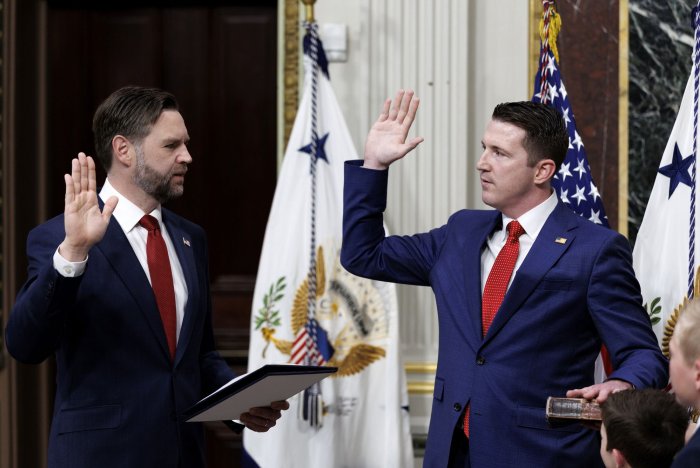
Vice President JD Vance swears in Colin McDonald as assistant attorney general for national fraud enforcement in the Eisenhower Executive Office Building on Wednesday. Pool Photo by Will Oliver/UPI | License Photo

Memorial honours Indonesian UN peacekeeper killed in Lebanon | Israel attacks Lebanon
Families and colleagues held a memorial for UN peacekeeper Farizal Rhomadhon, one of three Indonesian soldiers killed within 24 hours of each other in Lebanon.
Published On 1 Apr 2026

WGA staff union loses healthcare benefits amid strike
After seven weeks on strike, members of the Writers Guild Staff Union are losing their healthcare.
The staff typically has access to the same plan offered to the Writers Guild members through the Producer-Writers Guild of America Health Plan. Employees represented by the staff union earn coverage on a month-to-month basis if they worked 31 hours per week the previous month. But since the group — which includes over 100 workers across legal, communications and residuals departments — has been on strike, they are no longer eligible.
The staff union wrote on social media that it learned about the coverage loss through an online portal “just hours before this goes into effect.”
“This puts children, spouses and their own employees into a further state of crisis. We are in week seven of our strike. This is just the latest attempt by WGAW to bust our union and break our strike,” the union wrote in the Instagram post.
WGA West confirmed employees who receive health coverage on a month-to-month basis are no longer eligible for it as of April 1. The guild said in a statement that striking employees can elect COBRA continuation coverage if they want to be covered in April and that they “cannot make contributions on behalf of staff employees who did not work in March and have no earnings.”
The work stoppage was first called on Feb. 17, after the staff union alleged that management had no intention to reach an agreement on the pending contract. Negotiations between the WGA and its staff union started last September.
The staff union strike has also coincided with the WGA’s ongoing contract talks with Hollywood’s major film and TV studios. Their members’ current contract is set to expire on May 1. The guild hopes to improve its members’ healthcare plans, increase streaming residuals and expand AI protections. This is the first time the labor group has sat down with the Alliance of Motion Picture and Television Producers, since both WGA and SAG-AFTRA went on a historic strike in 2023.
Last week, the staffers sent a complete collective bargaining agreement to the union’s management, which they said was “designed to bring this strike to a resolution.” Key sticking points in the negotiations include seniority-based layoffs and promotions, as well as the right to strike mid-term in the contract.
WGA wrote in a statement that it has “negotiated a contract with the staff union that offers generous economic improvements and workplace protections that are among the best for any union staff in Los Angeles.”
Judge rules that HUD effort to change criteria for homeless funding is unlawful
A federal judge in Rhode Island ruled on Tuesday that the Trump administration’s effort to dramatically change the criteria to get tens of millions of dollars in funding to aid homeless people was unlawful.
Several nonprofits filed a lawsuit last year accusing the U.S. Department of Housing and Urban Development of changing the rules for receiving $75 million to build housing for homeless families and individuals. The plaintiffs accused the Trump administration of issuing a new Notice of Funding Opportunity, or NOFO, for the Continuum of Care program to better align with its social policies.
U.S District Judge Mary McElroy, nominated by President Trump, said the department’s “slapdash imposition of political whims” was unlawful and she ordered it to scrap the new policy.
“Once again, this Court is faced with a case in which an executive agency has made a last-minute decision to make major, disruptive changes to grants within its purview, all for the express purpose of accomplishing the current administration’s policy objectives,” McElroy said in her ruling that the NOFO violated the Administrative Procedure Act, a law governing how federal agencies develop and issue regulations.
A spokesperson for HUD did not immediately respond to a request for comment.
Advocates for plaintiffs welcomed the ruling.
“For more than three decades, the federal government has supported housing providers and communities through HUD’s programs to help people experiencing homelessness move into stable housing,” Skye Perryman, president and chief executive of Democracy Forward, co-counsel for the plaintiffs, said in a statement. “We are pleased that the court has stopped the Trump-Vance administration from holding life-saving funding hostage to a political agenda.”
Ann Oliva, chief executive of the National Alliance to End Homelessness, said the ruling was “a victory for people across this nation who have overcome homelessness and stabilized in HUD’s permanent housing programs.”
“Today’s news reinforces a fundamental truth: that the work to end homelessness is not partisan, and never should be interfered with for political means,” Oliva said in a statement.
Plaintiffs argued the Trump administration was aiming to upend polices in place for decades to satisfy its political considerations, including whether jurisdictions “support sanctuary protections, harm reduction practices, or inclusive policies for transgender people.”
The Alliance and the Women’s Development Corporation argued that HUD lacked the authority to make the changes, adding that the new award process was “shockingly unlawful” and would “irreparably injure qualified applicants for these funds and the communities they serve.”
In its court filings, HUD argued the new criteria was an effort “to ensure the availability of funding to protect our Nation’s most vulnerable individuals and families from the trauma of homelessness while simultaneously promoting self-sufficiency.”
“Defendants acted reasonably and prudently because the NOFO conditions, focusing on public safety, cooperation with law enforcement and prohibitions on illegal drug use, are sufficiently related to the funding goals of self-sufficiency and reduction of trauma,” HUD wrote.
Casey writes for the Associated Press.

Englands Harry Brook and Jacob Bethell reprimanded over conduct on tour of New Zealand
Brook was fined and given a final warning over his conduct following the incident. But that only came to light more than two months later, after the final Test against Australia in Sydney.
In January, 27-year-old Brook said supporters have “every right to be annoyed” with his behaviour as he issued a public apology.
But he also stated he was on his own when the bouncer “clocked ” him and only later admitted other players had been present. He explained he had lied about that because he had been trying to protect his team-mates from further scrutiny.
It also emerged the Cricket Regulator was looking into the matter.
England’s players were widely criticised for their off-field behaviour during the Ashes, including claims of excessive drinking during a mid-series break in the coastal resort of Noosa.
Tongue, 28, told BBC Sport earlier this week he had learned from what had happened in the New Zealand capital and is “just trying to focus on the cricket now”.
During a meeting at Lord’s to discuss the findings of a review of the tour last week, England’s managing director Rob Key said there is not an “easy fix” to cricket’s relationship with alcohol.

April’s first full moon, the ‘pink moon’ to be visible
April 1 (UPI) — April’s full pink moon, the first full moon of spring, will be visible Wednesday night.
Peak viewing will be around 10:11 p.m. Wednesday.
Despite the colorful name, the moon will appear in its normal gray cast. It’s hued name is a tribute to the early bloom of Phlox subulata, a wildflower species native to eastern North America. It’s also known as the Paschal Moon because it happens after the spring equinox, according to the Old Farmer’s Almanac. It’s also known as the Breaking Ice Moon and the Budding Moon of Plants and Shrubs.
The next full moon will be on May 1 and is known as the Flower Moon. There will be two full moons in May, a phenomenon commonly known as a “blue moon.”
The moon may still appear full on Thursday, Noah Petro, chief of NASA’s planetary geology, geophysics and geochemistry laboratory at Goddard Space Flight Center in Greenbelt, Md., told CNN. He suggests finding a place to view the moon away from trees and buildings. The darker the environment, the more you can enjoy the event, he said.
Indigenous peoples call April’s full moon different names, including “kawohni,” meaning flower moon to the Cherokee; “kwiyamuyaw,” meaning moon of windbreak to the Hopi; and “tabehatawi,” meaning frog moon to the Assiniboine, CNN reported.
NASA’s Artemis II launch could also happen Wednesday evening, giving the astronauts a special view of the pink moon.
“When you look at this full moon, the crew may be on their way. They may have just launched,” Petro told CNN. “This will be the last full moon in the pre-Artemis II era, and it will look different not only to the four crew members but to all of us who journey along with them.”

NASA’s Space Launch System rocket emerges on Saturday morning from the Vehicle Assembly Building to start its journey to Launch Complex 39B at the Kennedy Space Center in Florida. Photo by Joe Marino/UPI | License Photo

Iran authorities await war ‘victory’ as supporters mark 1979 anniversary | US-Israel war on Iran News
Tehran, Iran – Government supporters have taken to the streets in Iran to celebrate the anniversary of a referendum nearly half a century ago that solidified the Islamic Republic’s hold on power, even as the United States and Israel continued their attacks on the country.
President Masoud Pezeshkian and Foreign Minister Abbas Araghchi were among officials who joined pro-establishment rallies on the streets of Tehran on Tuesday night to mark Islamic Republic Day, when the nascent theocratic system in 1979 announced it had garnered 98.2 percent of the popular vote shortly after an Islamic revolution.
Recommended Stories
list of 3 itemsend of list
Shortly after and in the early hours of Wednesday morning, Washington bombed the site of the former US embassy in Tehran, in an apparent move tied to the symbolism of Islamic Republic Day. Footage from state media showed destruction and debris and smoke in the area, which is guarded by the Islamic Revolutionary Guard Corps (IRGC).
On Wednesday afternoon, authorities hoisted what they said was Iran’s tallest and heaviest flag at 150 metres (492 feet) and 300kg (660 pounds) in an area of downtown Tehran.
Festivities began on Tuesday night, and more gatherings are expected on Wednesday night, as political, military and religious leaders say followers must ensure security on the streets, backed by armed forces, to fend off any local dissent and incitement towards regime change from opponents.
Araghchi, Tehran’s top diplomat, who told Al Jazeera in an interview on Tuesday that he has been exchanging messages with Washington but has not responded to requests for negotiations, told state television that he joined supporters to “gain spirit” and encouragement. The president was seen taking selfie photos with people on the streets while flanked by masked bodyguards.
Hassan Khomeini, the son of Ruhollah Khomeini, who led the 1979 revolution and became the first supreme leader before his death in 1989, said it was incumbent upon them from an Islamic standpoint to remain on the streets every night until the war is over, no matter how long it takes.

“The enemy might make a thousand plots in order to cut off our communication, but our trenches are the mosques, alleys, squares and streets,” he said.
People shown by state media in various cities chanted “Death to America” and “Death to Israel” in addition to a series of religious slogans.
The authorities issued calls to action for people to participate in group marches while waving flags. Religious singers and eulogists also performed religious songs that drew on the influence of revered figures in Shia Islam.
The paramilitary Basij forces of the IRGC, as well as other armed forces, patrolled the streets and set up checkpoints and roadblocks across the city.
But they were not the only forces present.
Hamid al-Hosseini, a senior clerical and paramilitary figure affiliated with the IRGC and Iraq’s Hashd al-Shaabi, also known as the Popular Mobilisation Forces (PMF) of Iran-aligned fighters, confirmed that Iraqi nationals were widely situated on the streets of the Iranian capital.
While surrounded by those attending state-run festivities in downtown Tehran, he told the IRGC-linked Tasnim news agency that Iraqi “mokebs” or religious food and services stations are now located around “various squares” in order to “offer a little help to the Iranian people and learn resilience from them”.
This comes days after Hashd al-Shaabi fighters, while wearing military attire and in some cases, clerical turbans, proudly marched the streets of cities in southwestern Iran’s Khuzestan in dozens of pick-up trucks while delivering what they called “humanitarian assistance”. Pezeshkian later thanked them in a post online.
There were reports that they had already been spotted in Tehran, but there was no official confirmation from Iranian authorities. Opponents and human rights organisations have for years accused the Islamic Republic of systematically using fighters from Iraq and other aligned armed forces to crack down against local dissent, a claim the authorities have rejected.
‘We are waiting for you’
The Iranian state has remained defiant as Washington signals that it may soon deploy thousands of soldiers to the country.
Amid speculation that a ground fight could be aimed at occupying parts of Iran’s southern islands on the Strait of Hormuz, taking over oil and gas facilities, or even extracting highly enriched uranium from bombed nuclear facilities, Tehran says its defences are prepared.
Ahmad Reza Pourdastan, the head of the Iranian army’s research centre, said the armed forces have been drilling for the scenario of a US invasion since 2001, so any aggression will be met with “heavy casualties”.
The general staff of the Iranian armed forces and the Khatam al-Anbiya Central Headquarters of the IRGC, which manage the war, said Islamic Republic Day represents “fighting arrogance in order to realise the goals of independence, freedom and religious democracy”.
The armed forces will “make the enemies of the glorious nation of our dear country regret what they have done and be humiliated,” they said.
The police force added in a separate statement that the Islamic Republic “is on the verge of securing ultimate victory for the forces of good versus evil”.

Tasnim released a video that said, “Come close,” and “We are waiting for you,” in Farsi, English, Hebrew, and Arabic. The IRGC-linked Fars news agency showed footage of pro-state demonstrators calling for more missile strikes across the region.
The US and Israel again targeted Iran’s top steel manufacturing companies in a move that could cost thousands of jobs and deal another major blow to civilians living under economic malaise caused by a mix of local mismanagement and harsh US sanctions. Other attacks this week hit civilian nuclear sites, a university, and military installations, while also impacting a number of civilian homes.
Surviving the blackout
Iranians continue to be concerned about a highly uncertain future while battling an unprecedented near-total internet shutdown that has left them in the dark for over a month, aside from the news disseminated by state media.
“I simply cannot afford to buy VPNs [virtual private networks] any more,” said a resident of Tehran, who said they had so far spent nearly $300 for VPN access, more than two-months salary for minimum wage workers, while being squeezed by an inflation rate of more than 70 percent.
“I’ve purchased many proxies since the start of the war, and most of the connections were cut within hours or days. I’m tired of overspending money that I need for meat and eggs on something that should be available as a basic human right,” he said.
He told Al Jazeera that two of the anonymous online vendors he had paid money to for VPN access turned out to be scammers, with the lengthy digital blackout creating a profitable black market.
Some of the vendors have been apprehended and their servers taken offline by Iranian authorities, who have also said that they are actively pursuing anyone using contraband Starlink satellite internet in connection with national security charges. State television said on Wednesday that Starlink infrastructure in the region is among Tehran’s “legitimate”.
National security and espionage charges are also being levied against anyone who is found to have committed acts of dissent, including taking videos of missile impact sites. That could entail confiscation of assets and execution, the judiciary has warned.
The Fars news agency on Wednesday released footage of “confessions” from more arrested Iranians, including a young sobbing girl with a blurred-out face, who said she had cheered US President Donald Trump and Israeli Prime Minister Benjamin Netanyahu for attacking Iran in a clip released online, as she believed the war would help overthrow the Islamic Republic.
Amid the state-imposed information blackout, some Iranians have devised their own early warning systems, which include phone calls and text messages from people in the northern or western provinces.
“They hear the jets flying over first, so they warn us, and in many cases, we take cover and hear those jets completing their bombing runs over Tehran within minutes,” another resident of the capital said.

Who Wants to Be a Millionaire gets seventh jackpot winner after a six-year wait
And there might be an eighth one too – with bosses staying tight-lipped on how many take the £1million this time around

Jeremy Clarkson is going to be thrilled with the drama on the quiz during its 36th run
Who Wants to Be a Millionaire is to get its seventh UK jackpot winner in the new series – and the eighth could also follow as TWO contestants make it all the way to the the £1million prize question.
While one player will definitely triumph, producers are not yet revealing what happens the second time. ITV bosses have promised that the 36th series, which starts later this month, will be one of the most dramatic ever seen.
Only six players have previously taken home the life-changing £1million prize – starting with Judith Keppel 26 years ago in 2000. She was followed by David Edwards and Robert Brydges the following year, Pat Gibson in 2004 and Ingram Wilcox in 2006. Donald Fear then became the sixth winner in the ITV show’s history in 2020, after an agonisingly long gap of 14 years.
READ MORE: Sarah Everard’s murder to be turned into BBC drama by team behind Jimmy Savile dramaREAD MORE: The four urgent Scott Mills questions that the BBC needs to answer
The revelation means the upcoming series, which starts on ITV later this month, is guaranteed to contain highs – but there will also be lows. One contestant will lose £186,000 with a single answer – one of the biggest losses in the show’s history.
One insider said: “The new series will see not one but two contestants make it all the way to the £1million question – putting them just one answer away from the big prize. One of them definitely takes it home.. But does the other one? Viewers will have to watch to find out. And the tension in series 36 will be off the scale as one player also gambles a huge amount – and loses.”
Bosses are not revealing where the wins – and the big loss – will come during the run. Hosted by former Top Gear presenter Jeremy Clarkson, the nail-biting new series will again see contestants attempt to climb the Million Pound Money Ladder, using their four lifelines – Ask the Audience, 50:50, Ask the Host and Phone a Friend.
Clarkson said: “I think this may be my favourite series so far. Seeing two people get to the £1 million question was extraordinary. When they’re sitting there on that final question the tension in the studio is incredible, you can really feel it. Can’t wait for people to watch it.”
Last year one contestant broke the record for the biggest amount ever lost on the show. Nicholas Bennett, a data analyst from London’s West Hampstead, got all the way to the £500k question without using a single lifeline – leaving host Clarkson hugely impressed.
But things then took a turn for the worse on the £1million quesion. As he approached the previous one, worth half a million pounds, the host told him that he seemed “quite relaxed”, to which Nicholas responded: “It’s not relaxed inside my head.”
He was asked: “Which of these long-running US sitcoms had the most episodes? a) The Big Bang Theory b) Friends c) The Office or d) Seinfeld. Unsure of the answer, he asked the audience who thought it was Friends – but only 37% – so not wanting to take chances , he used 50/50, which left The Big Bang Theory and The Office (which meant the audience was wrong). At this point, he felt that he knew it was The Big Bang Theory – and he was right.
But then came the £1million question. Clarkson asked: “Which of these words, each coined by a famous writer, was derived from the title of a fairytale about three princes? a) Pandemonium b) Serendipity c) Utopia or d) Yahoo.”
After mulling for some time – and asking a friend, who didn’t know – Nicholas decided that the answer was “yahoo”. But sadly for him, the computer then revealed the answer to be serendipity, coined by Horace Walpole from The Three Princes of Serendip.
As Clarkson admitted he’d be “sobbing on the floor” if he’d just lost £375,000, Nicholas took it on the chin, saying philosophically: ”I’ve still got £125,000.”
Like this story? For more of the latest showbiz news and gossip, follow Mirror Celebs on TikTok, Snapchat, Instagram, Twitter, Facebook, YouTube and Threads.
From TMZ to Trump, pressure grows to bring Congress back during partial shutdown
WASHINGTON — TMZ built its brand tracking celebrities. Now it’s turning its attention to Congress, chasing down paparazzi-style shots of lawmakers on break from Washington during a record-long partial government shutdown.
Videos and photos posted by the tabloid website showing lawmakers in airports, Las Vegas and even Disney World have racked up millions of views and fueled a growing backlash. With travel disruptions persisting and some federal workers going without pay, pressure is mounting on Congress to cut short its regularly scheduled recess.
Beyond TMZ, President Trump also wants lawmakers to come back, even hinting he might invoke rarely used powers to call Congress into session.
Still, it’s not clear what a return would accomplish, with the 45-day partial government shutdown at a deeper impasse than ever. The Senate reached a bipartisan funding deal last week, but House Speaker Mike Johnson rejected it, and House Republicans passed their own version before heading for the exits.
“I’m not sure that we’d come,” Democratic Sen. Chris Coons said Monday when asked about members being called back. “And I’m not sure that there would be any difference from what’s happened so far.”
On recess — and on camera
As lawmakers headed out of Washington last week, the celebrity-gossip outlet TMZ put out a call.
“TMZ is on the hunt for photos of politicians on vacay as TSA officers suffer!” the outlet said in a social media post.
The focus from TMZ — an outlet known more for capturing unflattering footage of celebrities than digging into the nuances of federal policy — was the latest example of how politics is being fueled by viral images and populist sentiment.
Videos quickly followed, showing senators moving through airports — often attempting to shield themselves from cameras — with provocative headlines layered on top. The clips racked up millions of views.
The outlet didn’t stop there. Photos of lawmakers on vacation soon followed, including viral images of Republican Sen. Lindsey Graham at Disney World with captions such as: “Lindsey Graham lives it up at Disney World during the partial government shutdown!”
Graham said that he had been in Florida for a meeting with Trump administration officials and had made a stop at Disney World with a friend. He also blamed Democrats for the shutdown.
Another widely shared post showed Democratic Rep. Robert Garcia in Las Vegas.
“Actually I don’t mind what TMZ is doing here,” Garcia posted in response, adding that he was visiting his father. “Like I said a few days ago, Speaker Mike Johnson should have never sent us all home.”
The effort grew out of frustration, said TMZ executive producer Harvey Levin, after the outlet interviewed a TSA worker struggling due to missed paychecks during the shutdown.
“It outraged us so much we wanted to use our platforms to show how Congress — Dems AND Republicans — have betrayed us,” Levin said in a statement.
He added that lawmakers shouldn’t expect the coverage to end anytime soon.
“Several months ago we decided to amp up our presence and our voice,” Levin said. “We now have a producer and a photog circulating in the Capitol, showing the intersection between politics and pop culture.”
Pressure mounts on Congress to return
The backlash playing out online is fueling other pressure as well. Trump has called on Congress to return. He spoke with Senate Majority Leader John Thune on Sunday and Monday, and White House press secretary Karoline Leavitt said he has urged leadership to cancel recess “repeatedly.”
“He’ll host a big Easter dinner here at the White House if Congress will come back,” she added.
So far, Republican leadership has not blinked, raising questions about how much pressure Trump will ultimately apply — and whether he would be willing to concede ground to Democrats to end the shutdown.
Unions are adding to that pressure.
“To leave Washington while tens of thousands of workers are going without pay shows a clear lack of respect for the essential employees tasked with keeping our nation safe,” said Hydrick Thomas, president of the American Federation of Government Employees TSA Council 100.
Although vacation snapshots have stirred outrage, recess is also an opportunity for lawmakers to reconnect with constituents back home. Some hold town hall events. Others go on trips abroad, such as joining a delegation to Taiwan.
Why the funding impasse won’t be easy to solve
Even if lawmakers return to Washington, there isn’t an easy way out of the funding impasse.
Senators already labored for weeks to try to find agreement on Democrats’ demand that any funding for the Department of Homeland Security come with restrictions on how federal immigration agents conduct enforcement. In vote after failed vote, Democrats showed they wouldn’t budge.
As the partial government shutdown extended to the longest in U.S. history, the Senate settled on a last-ditch effort to fund most of DHS while leaving out money for Immigration and Customs Enforcement and U.S. Border Patrol.
But that deal was rejected by Johnson in the House, who instead pushed through a bill to extend DHS funding on a party-line vote. The collapse of the bipartisan agreement has soured the mood for negotiations and left lawmakers pointing fingers.
“There’s no point in calling us back because that was the result of a conscious choice by the Republican majority,” said Coons, a Delaware Democrat.
Johnson, a Louisiana Republican, told Fox News on Tuesday that the House can come back “on a moment’s notice,” but “the Senate has to do their job and help us on this heavy lift.”
But Thune, a South Dakota Republican, has been clear that he sees no way to get a DHS funding bill through the Senate with its 60-vote threshold for advancing legislation, known as the filibuster.
Still, Thune is coming under renewed pressure to find a way past the funding impasse — with calls from Trump and some conservatives to get rid of the filibuster.
That’s unlikely to work either because of a handful of Republican senators who have made it clear they won’t vote to change the Senate’s rules. Still, Trump told reporters Sunday night that, “They should terminate the filibuster and they should vote.”
Sen. Mike Lee, a Utah Republican, agreed. He said on social media that he thinks one of the only options for the Senate is to “nuke the filibuster and pass everything.”
“Inaction is unacceptable,” he added.
Cappelletti and Groves write for the Associated Press. AP writer Mary Clare Jalonick contributed to this report.
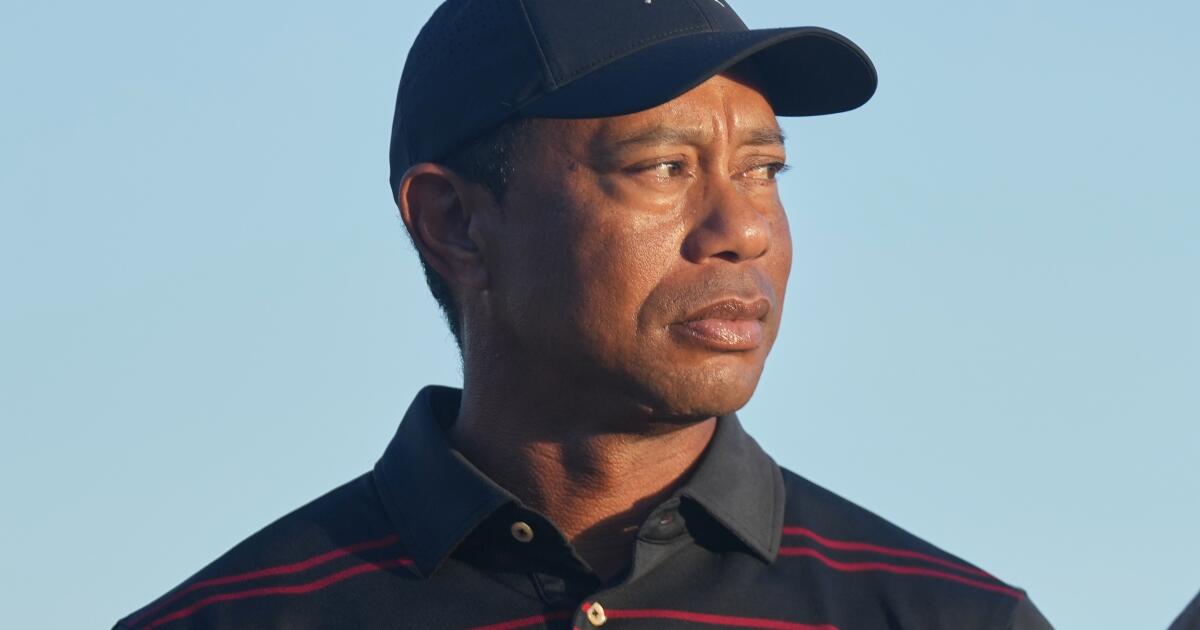
Tiger Woods pleads not guilty to DUI, says he will ‘seek treatment’
Shortly after his attorney entered a plea of not guilty, Tiger Woods announced he will seek treatment “to prioritize my well-being and work toward lasting recovery.”
The golf legend was arrested Friday on suspicion of DUI with property damage and refusal to submit to a urinalysis stemming from a rollover crash near his home on Jupiter Island, Fla. Hydrocodone pills were found in his pocket and a sheriff’s deputy noted in the arrest affidavit that Woods had bloodshot eyes and dilated pupils and was “sweating profusely” while performing field sobriety tests.
Attorney Douglas Duncan appeared in Martin County, Fla., court Tuesday, waived arraignment on Woods’ behalf, entered not guilty pleas on the two misdemeanor charges and requested a trial by jury.
Hours later, Woods posted a statement to his social media accounts:
“I know and understand the seriousness of the situation I find myself in today. I am stepping away for a period of time to seek treatment and focus on my health. This is necessary in order for me to prioritize my well-being and work toward lasting recovery.
“I’m committed to taking the time needed to return to a healthier, stronger, and more focused place, both personally and professionally. I appreciate your understanding and support, and ask for privacy for my family, loved ones and myself at this time.”
Although he hadn’t committed to playing, Woods had been toying with returning to competition for the first time since 2024 at next week’s Masters at Augusta National Golf Club, where he has won five championships.
Now he won’t even make an appearance, let alone play. Woods was scheduled to attend the opening of “The Patch,” a municipal golf course in Augusta that he helped redesign. He also was expected to attend the annual Champions Dinner on April 7.
“Augusta National Golf Club and the Masters Tournament fully support Tiger Woods as he focuses on his well-being,” Masters chairman Fred Ridley said in a statement. “Although Tiger will not be joining us in person next week, his presence will be felt here in Augusta.”
Woods, 50, last competed on the PGA Tour in July 2024 when he missed the cut at the Open Championship, posting an 8-over 79 and 6-over 77 at Royal Troon. It marked his third consecutive missed cut in a major that year.
Widely considered the greatest golfer of all time, Woods has amassed 82 PGA Tour wins, including 15 majors. He has competed sporadically the last four years because of injuries, but has become an increasingly important figure off the course, serving as chairman of the PGA Tour’s Future Competition Committee and serving on the tour’s Enterprises Board, Policy Board and Player Advisory Council.
When arrested Friday, Woods was asked if he had any medical conditions. He replied that he has had seven back surgeries and at least 20 leg operations.
He also has had several car accidents.
Around Thanksgiving 2009, a report that Woods had been in a car accident near his home erupted into a major scandal involving allegations of affairs. It resulted in Woods’ divorce from Elin Nordegren, the mother of his children.
In 2021, Woods was seriously injured in a rollover crash near Rancho Palos Verdes the morning after the Genesis Invitational, which he hosted at Riviera Country Club. He had to be extricated from the wreckage of the Genesis GV80 SUV that he was driving
Woods underwent “a long surgical procedure” on his lower right leg and ankle, according to a statement he released. Doctors inserted a rod into his leg and placed screws into his foot and ankle.

Bolivia alleges fuel sabotage tied to international criminal network

Bilivan consumers have felt the impact of contaminated gasoline. More than 10,000 vehicle owners, including long-distance transport operators and private drivers, have reported severe engine damage. File Photo by Luis Gandarilas/EPA
April 1 (UPI) — Bolivia’s government, led by President Rodrigo Paz, said it has uncovered an international criminal network responsible for sabotaging and adulterating imported fuel shipments that entered the country over the past five months.
Interior Minister Marco Antonio Oviedo told a news conference Tuesday that at least 150 million liters of gasoline and diesel were tampered with, citing an official investigation that identified a scheme involving fuel theft and contamination with water and oil in Chilean territory.
Authorities said the operation targeted tanker trucks transporting fuel to Bolivia, particularly in northern Chilean cities. In those locations, part of the fuel was allegedly siphoned off and replaced with a mixture of water and oil, according to local broadcaster Unitel.
President Paz said the adulteration began around October.
Investigators believe the network operated mainly in Chile, with additional links and operational hubs in Paraguay and Argentina. The direct economic loss to the Bolivian state is estimated at $150 million, excluding indirect costs linked to transport disruptions.
Consumers also have felt the impact. More than 10,000 vehicle owners, including long-distance transport operators and private drivers, have reported severe engine damage.
“We are facing an attack against the assets of Bolivian families,” Paz said, adding that the government will pursue legal mechanisms to compensate those affected, according to local newspaper El Deber.
Bolivia’s landlocked status makes transporting fuel from Chile critical to its energy supply chain. The country relies on Chilean ports such as Arica, Iquique and Mejillones to receive international shipments of crude oil and refined products.
After a virtual meeting Tuesday, Paz and Chilean President José Antonio Kast agreed on a joint roadmap to dismantle the transnational organized crime network behind the fuel adulteration, according to Bolivia’s state-run broadcaster BTV.
As an immediate response, Bolivia announced tighter controls at facilities operated by state energy company Yacimientos Petrolíferos Fiscales Bolivianos, known as YPFB, and the National Hydrocarbons Agency. Authorities will implement mandatory laboratory testing at production sites and border checkpoints.
Civil society groups have called for accountability as the investigation continues, urging authorities to prosecute those responsible abroad and to address potential internal failures that allowed the sabotage to go undetected for months.
The crisis comes as Bolivia faces a severe fuel supply shortage. After a structural decline in domestic hydrocarbon production, which fell about 44% between 2014 and 2024, the country shifted from a net exporter to a heavily import-dependent market. Bolivia now imports about 90% of the diesel and 50% of the gasoline it consumes.
The situation has worsened since 2023 due to a shortage of foreign currency, particularly U.S. dollars, complicating payments to international suppliers and contributing to intermittent shortages and partial disruptions in transport and productive sectors.
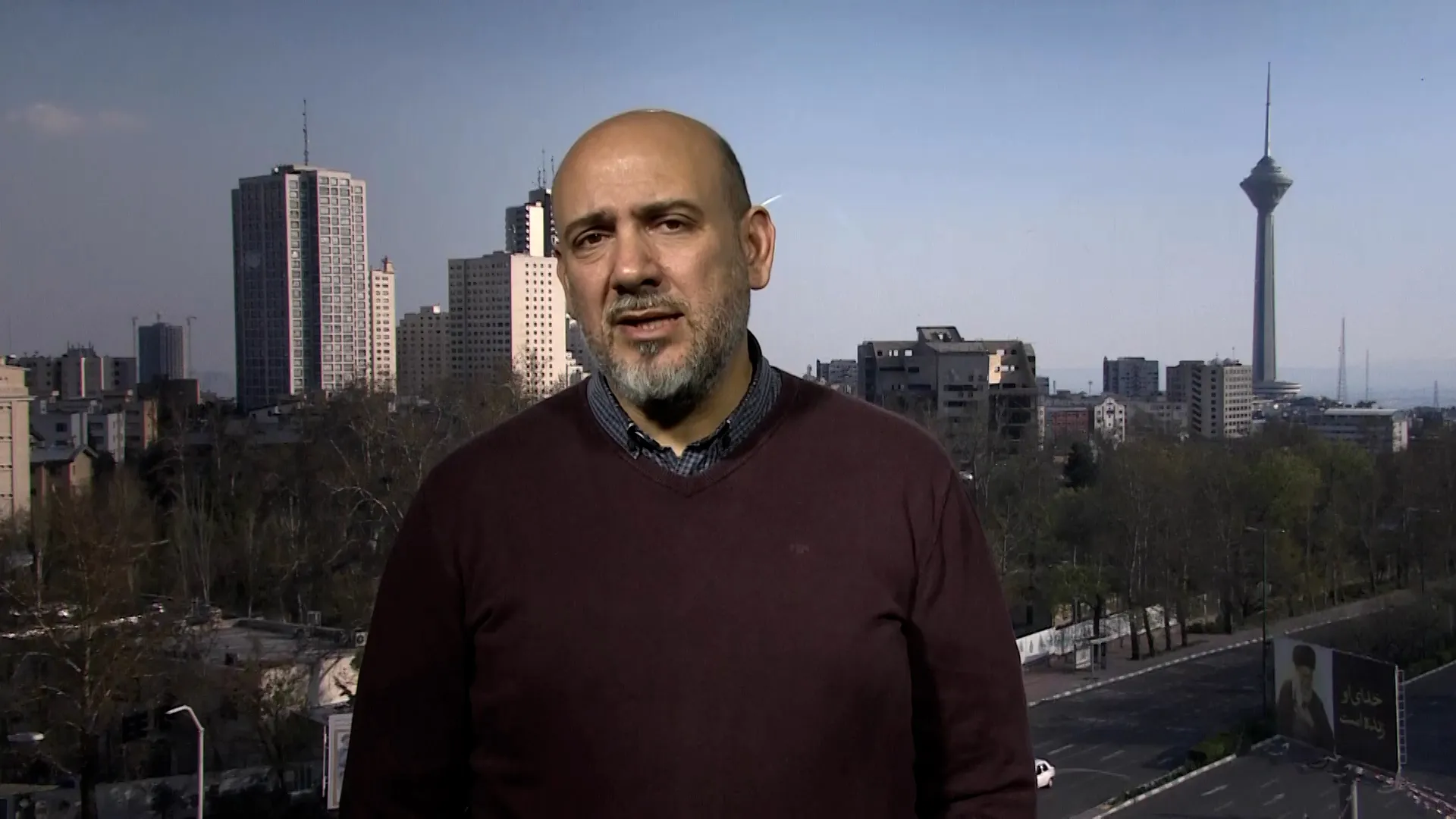
Iranian officials ‘laugh’ at Trump’s claim Iran wants a ceasefire | US-Israel war on Iran
A senior Iranian official has laughed in response to US President Donald Trump’s claim that Iran’s president has asked for a ceasefire, Al Jazeera’s Ali Hashem says Trump’s comments come a day after Iran’s foreign minister said his country was not looking for a ceasefire.
Published On 1 Apr 2026

Netflix series ‘better than The Handmaid’s Tale’ branded a ‘rare gem’
The Brazilian dystopian thriller has been hailed a ‘rare gem’ and ‘masterpiece’ by fans

Netflix series 3% should be on your radar if you love thrillers(Image: GETTY)
The concluding series of the universally loved dystopian thriller, The Handmaid’s Tale, has been over for some time, leaving devotees hunting for their next television fixation.
Fans of thrillers are similarly captivated by a relatively obscure dystopian series titled 3%, showcasing a young ensemble and situated within an intriguing offshore community.
This Netflix offering from 2020 has accumulated numerous glowing reviews since its debut, with audiences declaring it “Tremendously Underrated”.
One IMDb critique states: “I was really surprised by the fact that this show is really unknown. It is a great TV series that definitely deserves more recognition.”
Another subscriber commented: “Cinematically and visually stunning, a political, Hunger Games-esque storyline with believable acting, and I thought very interesting, lifelike characters. The script is intelligent, the characters are strong, and the interaction is elegant in its simplicity and natural air”, reports the Express.
The narrative of this Brazilian thriller revolves around merely 3% of the population inhabiting luxury on an island, while the remaining citizens endure poverty on the mainland. Upon turning 20, ordinary people are given a single opportunity to join the elite 3% through a brutal competition dubbed ‘the process’.
Deliberately ruthless and potentially lethal to contestants, the competition concludes with most candidates returning to deprived circumstances – sometimes too incapacitated to even carry on.
While the series hails from Portugal, numerous English-speaking audiences have been captivated by the programme, eagerly watching every episode through subtitles or dubbed versions.
One enthusiast even labelled the show a “rare gem”.
They remarked: “3% is one of those rare shows that only gets better and better as it goes. Season 3, so far, is shaping up to be the most enthralling season yet, which, let me tell you, is absolutely saying something!”
“The world continues to be fleshed out, and the already quite complex characters are only getting more interesting. Do yourself a favour; watch at least to episode three before you pass judgement. You won’t regret it!”
Another viewer commented: “This is truly an outstanding dystopian/post-apocalyptic series. The acting, the shots, the pace, the character development, the storyline… Everything is on point! Seasons 1, 2 and 4 were, for me, all riveting.”
Boasting a Brazilian ensemble, the performers in this production are relatively unfamiliar but deliver an “outstanding” showing, according to audiences.
João Miguel portrays Ezequiel in the series, the Process’s leader, alongside Bianca Comparato, who appears as Michele Santana, and Michel Gomes as Fernando Carvalho. Reflecting on the performances in 3%, one viewer commented: “I watched this out of boredom, but boy, was I glad that I did. It totally caught me off guard by how wonderful this show was. It is intelligent, futuristic, and well acted; all in all, absolutely amazing.”
Whether you’re eager to discover what all the fuss is about, or simply on the lookout for something to watch after completing The Handmaid’s Tale, 3% is currently available to stream on Netflix.

North Carolina’s electoral future may hinge on rural Black voters who feel ignored by Democrats
NASHVILLE, N.C. — Ricky Brinkley has lived in rural North Carolina nearly all of his 65 years, and he likes it “out in the county,” past the street lights and bustle of the small towns that carpet the landscape.
But the former truck driver can feel left out when elections roll around in this battleground state.
“People don’t come out like they should and ask you how you feel about things,” Brinkley said while he manned the counter at his daughter’s beauty supply store down the street from the Nashville courthouse. “You want somebody to vote, but you don’t want to do nothing to get the vote. No, it don’t work that way.”
Brinkley is among the rural Black residents who Democrats have often failed to mobilize as they try to dent Republican advantages here. It’s an urgent demographic puzzle for the party, which is normally strong with Black voters but tends to fall short in rural areas.
Success could help former Gov. Roy Cooper win a hotly contested U.S. Senate race this year and tilt the balance of power in Washington. It could also reshape presidential elections, providing Democrats with a wider path to the White House.
“People want to look at the word ‘rural’ in North Carolina and equate it to the word ‘white,’” said state party chair Anderson Clayton, a 28-year-old who won her job three years ago promising to expand the party beyond cities. “In my vision of a Democratic Party, when you talk about reaching out to rural voters, you are talking about rural Black voters.”
The Rev. James Gailliard, a former state lawmaker who leads a large Black congregation in Rocky Mount, put it even more bluntly.
“You don’t win this state in Durham,” Gailliard said. “You win it in the east.”
It’s about more than Cooper’s Senate bid
North Carolina is known for the university-heavy Research Triangle that includes Durham, Raleigh and Chapel Hill, along with Charlotte’s banking hub. But it also includes large swaths of small towns and rural areas where Democrats have lost ground in recent decades.
That’s not just because of white voters realigning with Republicans. It’s also because Black voters who lean Democratic don’t vote as often as their urban counterparts. Those rural Black voters are concentrated east of the triangle, extending along winding state highways through small towns, flatlands and farmland toward the Atlantic coastline.
Cooper, 68, won two terms as governor and four terms as state attorney general. However, Republicans control the state courts and the legislature, and they’ve redrawn the congressional map to expand their advantage in the U.S. House. Donald Trump carried the state for Republicans all three times he ran for the White House.
A native of rural Nash County, Cooper already in recent months held roundtable sessions with Black farmers, business owners and civic leaders in eastern North Carolina, along with students from North Carolina A&T University, a historically Black school that draws students from across the state. His campaign promises a statewide organizing effort before November.
Gailliard wants a more intentional effort
But Gailliard wants more.
The founding pastor at Word Tabernacle Church, Gailliard was among the Black state lawmakers who lost seats after Republican-led redistricting. He said regaining ground will require neighborhood-level organizing and investment from national Democrats, something he struggled to get from Kamala Harris’ 2024 presidential campaign.
“I couldn’t get any traction,” Gailliard recalled. “I begged them to bring her to Rocky Mount. I said, ‘Listen, Rocky Mount is the gateway to the East. If we crack Rocky Mount, we’ve cracked the East.’ Could not convince them to come. Two weeks later, guess who’s in Rocky Mount? Donald Trump.”
The Harris campaign sent former President Bill Clinton to the area instead.
Gailliard said Cooper needs people like him to get elected.
“Roy is a great friend, and I’m gonna run my butt off to help him in every way, but I’m not banking on his coattails,” Gailliard said. “I’m going to do the opposite. I’m going to grow coattails for him.”
The state party tries to fill gaps
Clayton, the state party chair, said the national party and its donors haven’t prioritized North Carolina early enough in recent cycles.
She said she’s relied mostly on local money to finance 25 full-time staffers, more than three times what the state party had heading into the 2022 midterms.
Bertie County Democratic chairwoman Camille Taylor, whose hometown of Powellsville has fewer than 200 residents, said she’s felt the shift.
She speaks regularly with a field organizer in nearby Greenville, the city closest to the northeastern counties with large proportions of Black residents. But she said it’s especially difficult to persuade rural voters to care about voting beyond the presidency, even though she tells them “these are the races and the people that you’re going to interact with more.”
Democrats have recruited candidates in all 170 legislative districts — two are Democratic-aligned independents — and every U.S. House district. State Supreme Court Justice Anita Earls, a noted civil rights attorney and Black woman, is running statewide for reelection.
Gailliard said he’s identified a few hundred nonprofits, neighborhood associations and other groups that can do issue-orientated work in his district as the election approaches. He wants to match each of them to specific precincts, routing money for them to reach voters and persuade them to vote.
He wants volunteers to get training from Democratic and left-leaning organizations rather than have the outsiders themselves knocking on rural Black voters’ doors.
“We can’t have 21-year-old recent college graduates from Utah knocking doors at $22 an hour in the hood,” Gailliard said. “That just does not work. They’re not a trusted messenger.”
Marginal voting changes add up
About 2 in 10 North Carolina voters in the 2024 and 2020 presidential elections were Black, according to AP VoteCast, as well as in the 2022 Senate election.
Roughly 4 in 10 Black voters in North Carolina’s last presidential election said they live in small towns or rural communities, similar to the share who said they live in the suburbs. Only about one-quarter reported living in urban areas.
Small shifts in persuasion matter, particularly when races are close. In 2008, Barack Obama became the last Democratic presidential candidate to win North Carolina, by a margin of just 14,000 votes out of 4.3 million votes cast.
Voter turnout between the 2020 and 2024 elections declined more in North Carolina counties that have larger Black populations.
Counties where Black voters make up about 30% to 40% of the electorate saw the biggest drop, with turnout falling by more than 3 percentage points. Counties with smaller Black populations saw more modest declines of about 1 percentage point. Overall, turnout remains higher in counties with fewer Black voters.
An old Cooper schoolmate just wants to be asked
Gailliard said Democrats cannot underestimate how much it means for someone to simply get asked for their vote.
“Black and rural voters are not transactional,” he said. “They are relational.”
Back in Nashville at the beauty supply store, Brinkley agreed.
“You get to be a big wheel, and you can forget where you came from,” Brinkley said. “I ain’t gonna say Roy forgot. He’s a hometown guy, so to speak, but I don’t expect to see him out here walking.”
Brinkley made it clear that if he votes, it would be for Cooper and other Democrats — but only if he votes.
“I could. I could. I may vote,” he said. “There’s just so much going on.”
Barrow and Sweedler write for the Associated Press. Sweedler reported from Washington. AP journalist Linley Sanders in Washington contributed to this report.

NBA Europe: Billion-dollar bids made for franchises in proposed league
The NBA has received several billion-dollar bids for teams in the proposed European league, BBC Sport understands.
Initial plans for ‘NBA Europe’ are for 10 to 12 franchises that would stay in the league on an annual basis.
It is understood multiple bids worth between $500m and $1bn (£375m to £750m) have been made, while there are also several above the billion-dollar mark.
Europe’s best teams currently compete in the EuroLeague, which was started by basketball’s international governing body Fiba but has been run by Euroleague Basketball since 2000.
Mark Tatum, the NBA’s deputy commissioner and chief operating officer, said the NBA had “received significant interest from a range of prospective teams”.
The league is expected to be made up of new franchises, current basketball teams and football clubs who may or may not already have associated basketball teams.
More than a dozen existing teams have been in talks with the NBA, including some EuroLeague teams, sources said.
BBC Sport has contacted EuroLeague for comment.
Reports have previously said that EuroLeague has concerns about the new venture, threatening legal action against the NBA should clubs break existing agreements to take part in the new competition.
With a current working title of NBA Europe, the plan is to launch the new league as soon as the 2027-28 season.
As many as 16 teams across the continent could be involved, with a team from both London and Manchester expected to feature.
Tatum said: “The level of engagement and the scale of the bids reflect the marketplace’s belief in our proposed model and the enormous, untapped potential for European basketball.
“We will now review the bids in more detail and shortlist the partners who share our vision and commitment to accelerating the growth of the game across the continent.”

Famous seaside town pier scraps entry fees until 2029
HEADING to a seaside pier during the summer is a staple part of a UK staycation – and one popular pier will have free entry for the next three years.
Bournemouth Pier has announced that it is scrapping its entry fees until at least the end of October 2029.
The announcement is part of a move to encourage people to visit the pier, supporting the local economy and tourism in the region.
In a post on Instagram, the pier commented: “No toll. No barriers. Just the pier, as it should be.
“We’ve teamed up with BCP [Bournemouth, Christchurch and Poole] Council to keep Bournemouth Pier open and accessible for everyone, indefinitely.
“After a hugely positive first year, the toll suspension isn’t just staying… it’s becoming part of the future.
Read more on travel inspo


“More visitors, more energy, more reasons to spend time by the sea.”
The post added that there will be “pop-ups landing throughout the year” as well.
The pier can be found on Bournemouth Beach, which features golden sand and stretches for seven miles.
On the pier, there are a number of different attractions including RockReef – an indoor climbing centre at the end of the pier, that has 28 themed walls of different difficulties, costing from £20 per session.
There’s also PierZip – the world’s first pier-to-shore zip line – which costs £27 per person.
These aren’t the only adrenaline-based activities visitors can get stuck into…
Kids can have a go at the aerial course, suspended six metres above the ground, costing £11.50 per person.
And they can venture into the Piercave, which features three tunnels to crawl through and a large ball pit.
It also costs £11.50 per person.
Or they could try the Leap of Faith or drop down the Vertical Slide.
A two-hour session including the climbing, aerial course, Piercave, Vertical Slide and Leap of Faith costs £36 per person.
After burning energy at the different attractions, visitors can grab something to eat at Key West Restaurant where you can pizza costs as little as £14.95 or a cream tea will set you back £9.50.
If you just need a caffeine fix, then you can opt for Coffee Reef, where you can pick up a latte, cappuccino or flat white for £4.50.
There’s also a news and gift shop as well as a beach shop selling seaside essentials such as buckets and spades.
The pier is also a 10 to 15-minute walk from Bournemouth town centre.
Many people have taken to social media to express their excitement for the news.
One person said: “Love this! The right decision.”
The pier previously announced in April last year that it was temporarily suspending the entry fee for 2025, to make it more accessible to the local community.
Since the entry fee was scrapped, the pier has seen more visitors and engagement.
According to the Bournemouth Echo, Sarah Hunter, Managing Director of Adventure Attractions, said: “Increasing accessibility to the pier has always been our ambition, and the response over the past year has been incredibly positive.
“Continuing the toll suspension allows us to build on that momentum and ensure the pier remains a place everyone can enjoy, all year round.”
The entry fee will be suspended until the end of the current pier operator’s term, which includes 2026, 2027, 2028 and up to the end of October 2029.
Our favourite UK hotels
*If you click on a link in this box, we will earn affiliate revenue.
Margate House, Kent
This stylish boutique hotel is in a seaside townhouse, a short walk from Margate’s coolest bars and restaurants. Decked out with plush velvet sofas, candles flickering and striking independent art, inside feels like a warm welcome home. Rooms are stunning, especially the ones that give you a glimpse of the sea.
The Alan, Manchester
The Alan looks extremely grand, being built into a beautiful Grade II listed building. Spread across six floors, with 137 rooms, each one looks like a fancy design magazine. From the concrete coffee tables to the pink plastered walls, the industrial-inspired designs perfectly replicate the history of the city.
The Queen at Chester Hotel
This historic hotel has welcomed the likes of Charles Dickens and Lillie Langtry through its doors. Rooms have richly-patterned carpets with super soft bed linen and premium toiletries in the bathroom. Go for a superior room for extra goodies including bathrobes and snack boxes.
The University Arms Hotel, Cambridge
This Cambridge hotel is in the ideal spot, within walking distance to bars, shops and hotspots like the university colleges and Parker’s Piece. The inside couldn’t be prettier, with huge stained glass windows, grand chandeliers, and rooms with enormous clawfoot bath tubs.
In other UK seaside news, a popular English city has revealed a £750,000 makeover of its Victorian promenade, which has been closed for over a decade.
Plus, here are our favourite old-fashioned English seaside resorts – with quaint promenades and retro beach huts.

Our favourite UK Easter weekend breaks for Gen Z, millennials, families and empty nesters across the UK
THE Easter weekend is nearly here and whether or not you have kids, you are probably wanting to make the most of the four-day weekend.
Whether you want to escape crowds of families or just discover something new away from your hometown, the Sun Travel team has recommendations for every generation and every type of person.
Gen Z
Gen Z Travel Reporter, Jenna Stevens is used to jet-setting off around Europe and further afield, but when it comes to doing things in the UK for Easter, her first recommendation is to head to Norwich.
She said: “The artsy city of Norwich in Norfolk was just voted the best place to live in the UK, and in my opinion, it’s one of the best spots for a city break, too.
“This city moves at a slower pace, split up by the River Wensum’s scenic canals, gardens, Tudor buildings and bookshops that give it a quaint feel.
“Norwich is full of easy-going creatives and young people who prefer a chill pint by a waterside pub than a groggy night out clubbing.
Read more on travel inspo


“My top spots are the Red Lion Bishopgate, which juts out over the water, and the Playhouse Bar with a colourful beer garden and affordable pints.”
And instead of just heading shopping, Jenna recommends strolling the city’s cobbled streets to “dip into vintage shops and grab a new jacket or pair of shoes”.
She added: “Visiting during Easter means flowers at the Plantation Garden will be in full bloom, plus it’s the perfect time for literature and history walks (yes – that’s what Gen-Z are into nowadays).”
Alternatively, Jenna recommends heading to Cornwall for a dip in the sea.
She said: “Cornwall really is a crowd-pleaser UK destination for all ages.
“My dad loves a coastal walk and a pint of local ale in a pub steeped in history, whilst I seek out cider and beer festivals and the best beaches for watersports.
“One of my top Easter holiday activities would be to have a go at surfing.
“April is the prime time to shake off the cold and make use of the increasingly sunny days to grab a wetsuit and head out into the water.
“Newquay is the surf capital of the UK, so there’s no better place to try it – whether it’s your first time or your fiftieth.
“Fistral beach has prime waves that reach 6-8ft, but don’t worry if you’re a beginner like me; there’s plenty of classes for first-timers.
“Escape Surf School have been teaching beginner classes for over 20 years, and they start at £43pp for a group lesson.
“There’s also Hibiscus Surf School, which was Europe’s first women-only school, where sessions start at £35pp.”
Millennial
Having travelled to more than 50 countries, Deputy Travel Editor Kara Godfrey has had her fair share of memorable travel experiences.
But when it comes to Easter, the UK holds some real gems for her.
She said: “Living in Kent, I love the trail along the White Cliffs of Dover, which if you can brave the blustering winds, has some of the most beautiful views in the UK.
“The circular National Trust route is just over three miles, so you can easily do it in less than two hours.
“Then end with a cuppa and cake at Mrs Knotts Tearoom or grab a pint at The Coastguard Pub which has a great pub garden at the front.”
But coastal country walks aren’t for everyone, so if you prefer something a bit more bustling, Kara suggests to head to Manchester.
She said: “Manchester is one of my favourite cities – and one you will always have a good time at.
“And by this, I mean embracing your inner child with a day of games and experiences.
“Start at Chaos Karts, an indoor race track (£30pp) where you can pretend you are in Mario Kart, before grabbing some Barbie-esque skates to whizz around Archie’s Atomic (£8.50).
“End the evening at NQ64, a gaming bar with all the old classic machines and some very fun themed cocktails, before a stint at K2, a karaoke bar open until 4am (£10pp).
“Followed by some chips and gravy of course…”
Families
Having a seven-year-old son, Head of Travel (Digital) Caroline McGuire knows exactly what makes a good family day out.
Having tried and tested tons of spots across the UK, Caroline recommends dropping by The Outernet in central London.
She said: “When it comes to free attractions, few are as popular in my house as The Outernet next to London’s Tottenham Court Road station.
“Now, my son and I will make a 25-minute detour to spend even 20
minutes there, whenever we’re in central London.
“The huge, multi-screened space screens artist-made short films
throughout the day, and you can walk in from the street and spend as
little or as much time there as you want.
“With screens covering the sides and ceiling, you really do feel like
you are inside the films.
“Yes, you wouldn’t spend the whole day there, but the British Museum is
a short walk away, as is the walled playground Coram’s Fields.”
But if you are looking for a getaway and don’t want to head into the city, Caroline suggests booking into Haven Hopton Holiday Park in Norfolk.
She said: “[It] is routinely named the best Haven site in the country by visitors, with 4/5 star rating on TripAdvisor.
“It was the first holiday park I ever went to, and it still ranks as my No.1.
“The park has direct access to a lovely sandy beach, which is one of its more best-loved features, but it also has stacks of indoor activities in case the weather forgets to play ball.
“There are two indoor pools, arcades, a climbing wall and a good-sized soft play, as well as some excellent evening entertainment.
“If you fancy going off-site, then it is a short drive away from Pettitts Animal Adventure Park, Pleasurewood Hills Theme Park and the Norfolk Broads.”
Or if you are just looking for a day full of fun, head to Paultons Theme Park in Hampshire.
Caroline said: “With a child under eight, Paultons Theme Park is easily my favourite theme park in the UK.
“Specifically because nearly all of the rides have been designed for younger children – so he can go on everything.
“It is best-known for Peppa Pig World, but there is so much more to the park than that.
“With several different lands, including a £12million new Viking land opening in May this year.
“At last year’s UK Theme Park awards, Paultons bagged ten gongs
including the coveted Theme Park Of The Year.
“I’d have to agree with that gong, thanks to many key factors.
“Incredibly short queues for rides, incredible customer service (employees all cheerful), the cleanliness (bathrooms spotless), and the attention to detail.
“For example, the fact that they don’t charge for parking, unlike
several other big theme parks, and that they have leaflets at the
entrance telling you all of the events that are on that day.
“It’s a family-run business and that really shows.”
Empty Nest
Head of Travel at The Sun, Lisa Minot, is an expert in all things travel having been travelling both the UK and the world for decades.
And when it comes to spend Easter in the UK, she recommends “enjoying the mellow sounds of jazz from a floating platform in London’s St Katharine’s Dock while sipping a free glass of English sparkling wine“.
She said: “Sessions on Saturday evening of the Easter weekend (April 4) catch the golden hour when the yacht lights twinkle across the Marina and Sunday afternoon will be a relaxed affair with performances Olivia Swann, Jamie Safir and Flo Moore.
“Tickets are from £27.50 and include a glass of fizz and light bites, as well as blankets to snuggle under if the weather turns.”
Our favourite UK holiday parks
*If you click on a link in this box, we will earn affiliate revenue.
Park Holidays UK Sand le Mere, Yorkshire
This holiday park in Yorkshire is a thriving family resort, just steps from Tunstall Beach. Entertainment is what this resort does best, with costume character performances, Link-up Bingo and cabaret shows. Accommodation ranges from fully-equipped Gold Caravans to Platinum Lodges with sun decks and luxury bedding.
St Ives Bay Beach Resort, Cornwall
This beachfront resort in St Ives, Cornwall is a true beach bum’s paradise – whether you want to laze out on the sand, or take to the waves for some surfing. Activities include disc golf, a Nerf challenge and an outdoor cinema, as well as indoor activities for the colder months like karaoke, bingo and DJ sets.
Billing Aquadrome Holiday Park, Northampton
This holiday park has loads of unique activities on offer, including TikTok dance classes, alpaca feeding, a pump track for BMX riding, and taking a ride on the resort’s very own miniature railway. Throw in bug hotel and den building, pond dipping, survival skills workshops and a lake for paddleboard and pedalo hire, and you’ve got yourself an action-packed park.
Parkdean Resorts Camber Sands, Sussex
This beachfront resort is a classic family favourite. If you’re not up to swimming in the sea, there’s four fantastic pools here, as well as water flumes, underwater jets, inflatable jet skis and kayak races. Plus if you’ve got any little fans of Paw Patrol or Milkshake!, you’ll be glad to know there’s Milkshake! Mornings and Paw Patrol Mighty Missions to keep your tots entertained.
Alternatively, Lisa suggests “making the most of the spring delights of Herefordshire with their new Roasts and Rambles guide that teams up great walks with excellent country pubs along the route”.
She added: “There are more than 60 curated trails to choose from that can see you discover everything from wild mountain ponies to romantic castle ruins, ancient caves and tranquil rivers – all with cosy country pubs along the way for a well-earned pint and classic pub grub.”
For more ideas on what to do this Easter, here are the best UK family days out from £10 to completely free this the Easter holidays.
Plus, 10 of the most affordable English seaside towns for Easter holidays with £1 rides, £2 pints and mega cheap hotels.