



Insanity of March Madness – Los Angeles Times
Don’t blame the beleaguered voter for the record-low statewide turnout of 34% of registered voters in Tuesday’s primary election. Don’t call the stay-at-homes lazy or berate them for failing to do their duty. Don’t wonder why the patriotism stirred by Sept. 11 didn’t translate into an energized electorate.
The truth is, for many Californians, there were just too many reasons not to vote. The lack of hot contests on the Democratic ballot resulted in dismal turnouts of 23% in heavily Democratic Los Angeles County and 27% in San Francisco. The confusing rules of the primary had been changed again as to who could vote for which slate of candidates.
The campaign was overshadowed first by the Super Bowl and then by the Winter Olympic Games. When the political ads finally got the public’s attention, their constant carping and attacks surely turned off many voters. On election day some locales, including Los Angeles, were plagued with the failure of some polling places to open on time, ballots that weren’t delivered and voting locations that were changed or yanked.
The real culprit, however, was the ridiculously early primary date, more than eight months before the Nov. 5 general election. Many Californians didn’t even realize an election was coming up.
The Legislature and governor should make sure this doesn’t happen again. Lawmakers need to take a close look at SB 1975, by Sen. Ross Johnson (R-Irvine), a bill that would move the primary for state and local candidates to the second Tuesday in September every election year while maintaining a separate presidential primary in March.
The idea is to enable California to have a rational primary date while retaining some clout in the choosing of the presidential candidates. More discussion is in order about whether September balloting would allow enough time for an informative general election campaign. However, nine states have August primaries, and 10, including New York, vote on the second Tuesday in September, the day Johnson has proposed. A cheaper proposal would be for the state to stop playing presidential primary leapfrog for ever-earlier dates and move all primaries back to June.
Election officials struggle to make it convenient for Californians to vote, but the process remains complex and confusing. “It felt more like doing your taxes,” one expert said. The first step toward rationality is getting rid of this March madness.
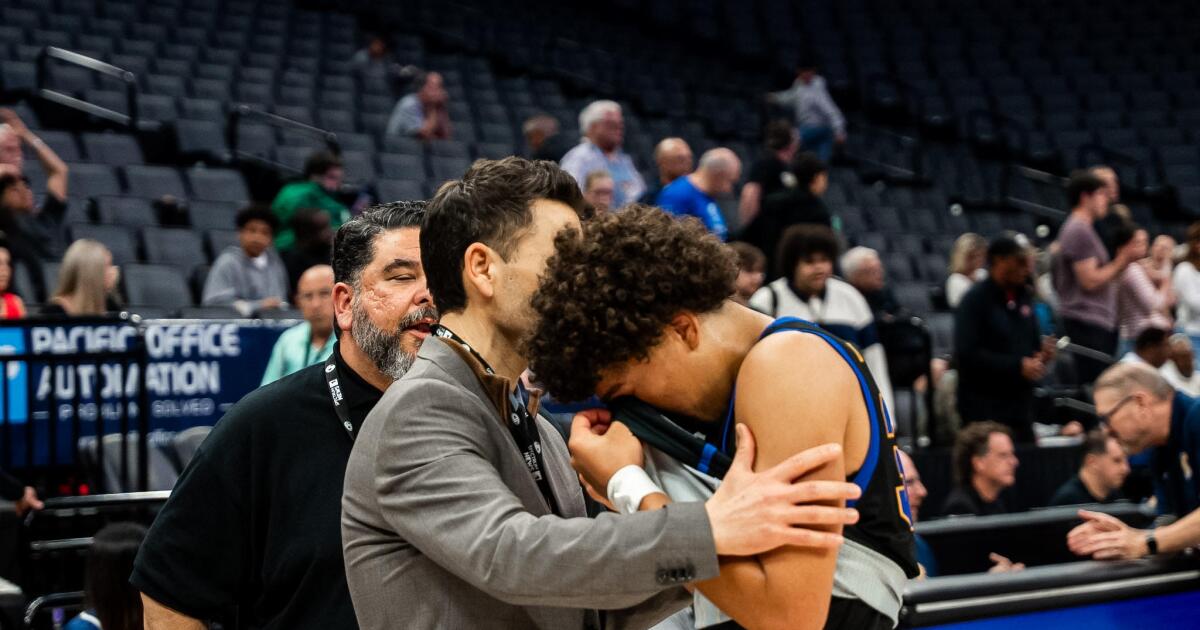
San Juan Hills loses Division IV boys’ basketball state final on last-second free throws
SACRAMENTO — Heartbreaking loss.
That’s the only way to describe what San Juan Hills players, coaches and fans were feeling on Saturday at Golden 1 Center when Alex Osterloh made two of three free throws with 0.3 seconds left to give Atherton Sacred Heart Prep a 47-45 victory in the Division IV state boys’ basketball championship game.
Osterloh was fouled at the top of the key by Kellen Owens with the scored tied.
“I’m pretty sure I was fouled,” Osterloh said.
San Juan Hills had earlier lost the ball on a turnover, its 19th of the game, surrendering its chance to take the lead.
“It was a tough ending,” San Juan Hills coach Jason Efstathiou said. “We turned over the ball too much. Nineteen is insane. Ultimately we didn’t do a good enough job handling pressure.”
San Juan Hills (22-14) came back from a 12-point deficit in the second quarter to take a four-point lead in the fourth quarter.
Garrett Brehmer finished with 17 points while Rocco Jensen had 10 points and eight rebounds for San Juan Hills. Osterloh scored 15 points and Pat Bala had 13.
“There’s a little distaste,” Efstathiou said, “but at the same time we got to be here.”

Thousands in Madrid protest ‘forgotten’ Gaza, warn Iran war may spiral into | Protests
Thousands rallied in central Madrid calling for an end to the war involving the United States, Israel and Iran, with protesters warning the conflict could escalate into a global war.
Published On 14 Mar 2026
Real Madrid beat Elche to pressure Barcelona for La Liga title | Football News
Federico Valverde scores his fifth goal in three games as Real Madrid beat Elche to move one point behind Barcelona.

Published On 14 Mar 2026
Federico Valverde hit the back of the net, and the headlines, once again for Real Madrid as they beat Elche 4-1 in La Liga, but it was Arda Guler’s last-gasp strike from inside his own half that captured imaginations.
Midfielder Valvrder netted his fifth goal in three games for Los Blancos, having scored a hat-trick in midweek against Manchester City, with a curling effort from the edge of the box just before half-time on Saturday.
Recommended Stories
list of 4 itemsend of list
It doubled his side’s lead after Antonio Rudiger volleyed home the opener in the 39th minute, following a scramble in the box from a Real corner.
Dean Huijsen was the unlikely player furthest forward to head home Real’s third in the 66th minute, but the defender was left unmarked in the box, where he remained after another corner that Elche had effectively failed to clear.
Even a late own goal by Manuel Angel could not dampen Los Blancos’ spirits, especially when Arda Guler went on to net what will surely be the goal of the season from inside his own half.
The 21-year-old Turkey midfielder spotted Elche goalkeeper Matías Dituro off his line and didn’t hesitate to launch a long lob with his left foot that sailed over the hapless ’keeper and bounced once before settling into the net.
The Santiago Bernabeu stadium erupted in applause for the memorable goal that came with the victory beyond doubt in the 89th minute.
Güler joined Madrid from Fenerbache in 2023. He has scored four goals this season, when he has gained more playing time after the exit of veteran Luka Modric.
The win moves Real to within a point of leaders Barcelona, who can restore their four-point advantage when they play Sevilla on Sunday.
The game had been a nervy affair at Bernabeu Stadium until Rudiger’s opener settled the Madrid crowd.
The victory marks a third straight win for Real, who had lost two on the bounce in the league prior to the current run, and parted company with their coach Xabi Alonso in January.
Interim coach Alvaro Arbeloa, also a former Real player, could not have asked for a better week, with one of the best performances of the season produced in Wednesday’s win against City in the UEFA Champions League.
Arbeloa’s side take a 3-0 advantage to Manchester for the return leg on Tuesday, and with the La Liga race tightening, what was looking like a nightmare season could still end with the two most coveted titles for Madrid.
Elche, who were promoted to La Liga last season, remain mired in a relegation scrap, just a point above third-bottom Mallorca, who entertain Espanyol on Sunday.

Hollywood made me feel so ugly and depressed I thought about boob job, says Rachel Weisz as she reveals dark side of LA
SHE is an Oscar-winner married to a former James Bond, but Rachel Weisz says Hollywood made her feel so ugly she considered having plastic surgery.
When the British beauty first went there in the Nineties, she contemplated a nose job, boob job or liposuction to get noticed and boost her career.
Rachel, now 56 and one of the world’s most sought-after stars, said: “I went into quite a major depression.
“I was watching so many daytime TV shows. And then I would get in my car and drive to these auditions while listening to the radio.
“I feel sick now when I listen to the radio, all these commercials for different car dealers.
“I just felt like the world was so desperate and lonely and sad and people were trying to sell cars and no one wanted to buy them.
Read more on Rachel Weisz


“People are very focused on their own thing. In LA unless you’ve just won an Oscar or you’re ‘Mr Studio Head’, no one talks to you. Even at parties. I was at this big Hollywood party, and no one looked.
“Everyone is blinkered and they just kind of scan the room for anyone important. LA makes you feel ugly. Because if you’re an actress, no one pays you any attention.
“And you immediately start thinking, ‘God, I must have a nose job. Or, I must get that boob job, or I must get that lipo’, whatever it is.”
For Rachel, who started her career with bit-parts on Inspector Morse and whose new thriller Vladimir was released on Netflix on March 5, real success and happiness came when she turned her back on the glitz and glamour of Los Angeles.
She decided to split her time between London, where she grew up, and New York with her then-partner, director Darren Aronofsky, and their son Henry, now 19.
Rachel, who has been married to 007 actor Daniel Craig since 2011, told Index mag: “There’s not much room for eccentricity in Hollywood, and eccentricity is what’s sexy in people.
“I think London’s sexy because it’s so full of eccentrics.”
The actress’s breakthrough came in 1999 when she landed the role of feisty librarian Evelyn Carnahan in blockbuster The Mummy.
By 2006 her A-list status was cemented when she won the Best Supporting Actress Oscar for The Constant Gardener.
She went on to star in 2009’s The Lovely Bones and 2015’s Youth, as well as 2021 Marvel film Black Widow.
Now Vladimir sees her as married college professor M, whose life spirals into a steamy, all-consuming obsession with her younger colleague, played by One Day and White Lotus star Leo Woodall.
The series is based on the book of the same name by Julia May Jonas, which Rachel describes as a brilliant piece of writing.
She added of the character she plays: “I deeply empathise with her and understand her. But I left her when I got home.
“She’s like a projection of what a viewer might want to live out.”
Rachel and Daniel, who officially ended his 15-year stint as James Bond with No Time To Die in 2021, were friends for years before falling for each other in 2010 while filming thriller Dream House.
Within months they secretly wed in New York and went on to have daughter Grace, now seven. They split their time between Brooklyn in New York and Primrose Hill in North London.
But the couple deliberately choose not to do films together.
Rachel said: “I think we really love our private life as a life, as a family, and then we go to work separately.
“It means we can alternate, so I can stay home with the family while he works. We can swap out. If we’re both doing something at the same time, it’s probably less ideal.”
Rachel grew up in Hampstead, North London, with dad George, a Hungarian-Jewish mechanical engineer, and mum Edith, who originated from Austria and was a teacher-turned-psychotherapist.
The star started modelling at 14 and studied English at Cambridge University, with her parents hoping she would choose a more traditional career.
Rachel told the Sunday Sitdown With Willie Geist podcast: “They were just the kind of parents who were like, ‘You’ve got to get a degree, like you have to go to college’, which in the end I did.
“They wanted me to have a fall-back, so I could be a teacher . . . that would be a really good job.
“My parents would be really happy if I was a teacher. My dad was very sceptical about my career choice. I think he wasn’t very impressed by what I was doing.
“He was my harshest critic for a very long time. I think he only, after a good 15 years, was like, ‘OK, yeah’.
“He was tough — yeah, he was tough, in a good way. He was always honest, he didn’t make it nice. He’d take things apart and say, ‘I didn’t understand what you were doing,’ or, ‘That was a bit wooden’.”
But winning her Oscar changed everything.
Rachel said: “That definitely changed my life. Maybe my dad was like, ‘OK, all right, you were OK’.
“He would never be more over the top than that.”
And that Oscar meant she had the freedom to choose the roles she truly wanted, just like the one in Vladimir.
She said: “In the beginning of my career, I just did whatever job I got so I could pay the rent. I wasn’t picky.
“Now I’m in this luxurious position where I can choose things. It’s really about the character and writing, if it appeals to me or if it seems it would be interesting to pretend that story.
“I was never the kind of kid that got on the table and did a tap dance and a song. I wasn’t the star of the school plays or anything. I was actually really shy.
“I think a lot of actors, when I meet them as grown-ups, they go, ‘I was really shy too’.
“I think I’m just a daydreamer. I think storytelling is, in a way, daydreaming, but putting your daydreams into writing and getting people to embody them.
“I think my daydreaming skills have just come into it, I get paid for it.”
Despite now being praised for her stylish looks, ranging from velvet trouser suits to Valentino haute couture, walking the red carpet still makes Rachel nervous even today.
She said: “I don’t think any actress would say doing the red carpet is not terrifying. The way to get through it is to pretend.
“It’s a fantasy, like walking into a fantasy world. These people, they transform you, and that is fun.
“What you see on the red carpet is not a character that has anything to say.
“I used to be very shy, and in a way that was what was so great about the idea of acting. You can hide the real you behind that character.”
But after years of struggling with fame, Rachel says she has finally learned to be content with exactly where she is in life.
She said: “Someone once said to me when I was younger, ‘Never think the best party is somewhere else’. You know that feeling of being somewhere and thinking you should go somewhere better?
“You can’t do that. Wherever you are is the right place to be.”
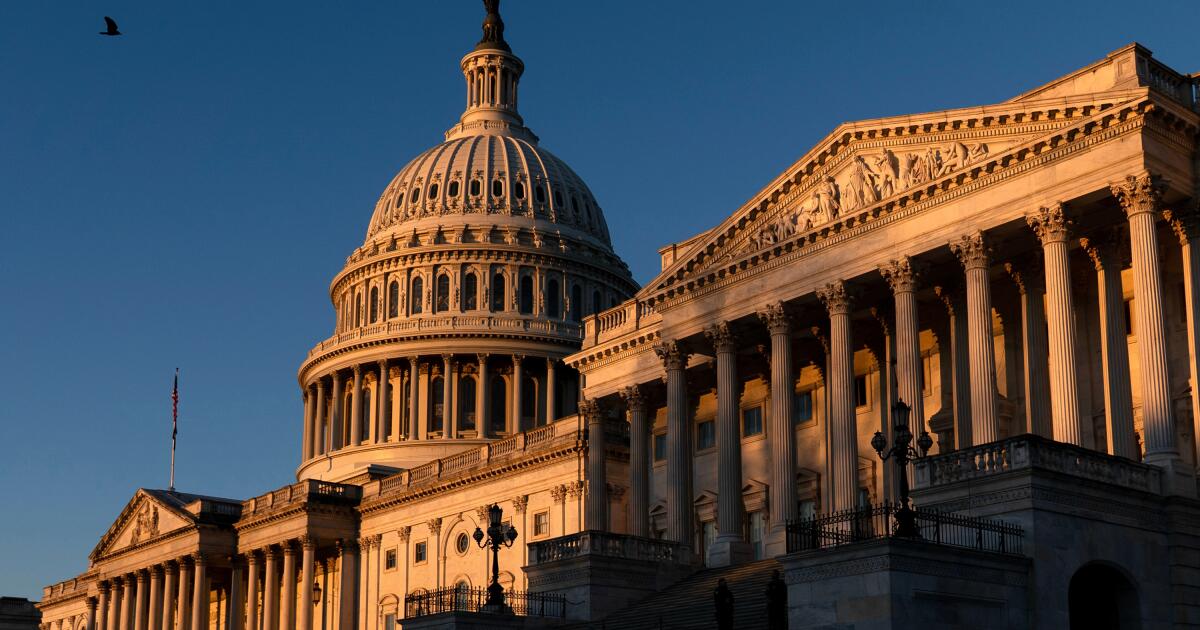
Anti-Muslim rhetoric rises among Republicans; GOP leaders silent
WASHINGTON — Anti-Muslim rhetoric from some Republicans in Congress intensified this week against the backdrop of the Iran war, with several lawmakers — including one who said that “Muslims don’t belong in American society” — drawing condemnation from Democrats but little response from GOP leaders.
The derogatory language has been percolating among Republican officials for months, often prominent when criticizing New York Mayor Zohran Mamdani, who is Muslim. But against the backdrop of the Iran war, a country with an overwhelmingly Muslim population, and attacks at a synagogue in Michigan and a college in Virginia, the tone sharpened this week.
“The enemy is inside our gates,” Sen. Tommy Tuberville of Alabama wrote Thursday in response to a photo of Mamdani sitting on the ground during an iftar dinner at New York City Hall. The photo was juxtaposed with a picture of the Sept. 11 attacks.
Hours later, Tuberville added: “To be clear, I didn’t ‘suggest’ Islamists are the enemy. I said it plainly.”
The rhetoric intensified Friday as GOP lawmakers responded to the attacks in Michigan and Virginia by urging a halt to all immigration into the United States. Some singled out Muslims specifically.
For many Muslims, it’s a political moment that carries echoes from the early 2000s, when the Sept. 11 attacks and the Afghanistan and Iraq wars generated hostility toward Muslim communities in the United States, often accompanied by discrimination and racist violence.
“When members of Congress speak, it’s not just words,” said Iman Awad, the national director for policy and advocacy for the Muslim American advocacy group Emgage Action. “It shapes public perception. It legitimizes prejudice.”
GOP rhetoric targeting Muslims spreads online
Rep. Andy Ogles (R-Tenn.) in his social media post stated flatly that Muslims don’t belong in the United States. He stood behind it after criticism mounted, later writing that “paperwork doesn’t magically make you American” and that “Muslims are unable to assimilate; they all have to go back.”
Asked about Ogles’ post Tuesday, House Speaker Mike Johnson (R-La.) said he had spoken to members “about our tone and our message and what we say.” He said Ogles used “different language than I would use,” but added that he believes the issue raised by the comments is “serious.”
“There’s a lot of energy in the country, and a lot of popular sentiment that the demand to impose sharia law in America is a serious problem,” Johnson said. “That’s what animates this.”
Sharia is a religious framework that guides many Muslims’ moral and spiritual conduct. References to “sharia law” have often been invoked by officials to suggest Muslims are attempting to impose religious practices on communities in the United States.
Many Republicans point to a Muslim-centered planned community near Dallas as proof of “sharia law” — though the developers have denied the allegations and said they are being targeted only because they are Muslim.
With Johnson not condemning Ogles’ remarks — or recent comments from Rep. Randy Fine (R-Fla.) that “the choice between dogs and Muslims is not a difficult one” — the anti-Muslim rhetoric grew louder. After the photo circulated of Mamdani at the iftar dinner, several Republicans responded with critical posts.
Democrats broadly condemned the Republican messages. Sen. Chuck Schumer of New York, the leader of Senate Democrats, called Tuberville’s post “mindless hate.”
“Islamophobic hate like this is fundamentally un-American and we must confront and overcome it whenever it rears its ugly head,” Schumer said.
Mamdani — in response to Tuberville’s post that “the enemy is inside our gates” — said: “Let there be as much outrage from politicians in Washington when kids go hungry as there is when I break bread with New Yorkers.”
Attacks in Michigan and Virginia spark more rhetoric
Federal officials identified a man who rammed his vehicle into a hallway at Temple Israel in West Bloomfield Township, Mich., this week as a naturalized citizen born in Lebanon. Officials have said that the man — who was killed by security guards at the temple — had lost four family members in an Israeli airstrike in Lebanon during the ongoing war in the Middle East, just after sunset as they were having their fast-breaking meal during the Muslim holy month of Ramadan.
In Virginia, Mohamed Bailor Jalloh opened fire in a classroom at Old Dominion University before ROTC students subdued and killed him. Court documents showed that he had served time for attempting to aid the militant group Islamic State and was released less than two years ago.
Some Republican lawmakers claimed vindication for their views. Others pushed for legislation. Rep. Tom Emmer of Minnesota, the House Republican whip, said that “the security of our nation hinges on our ability to denaturalize and deport terrorists.”
Rep. Riley M. Moore (R-W.Va.) said he would introduce a bill to denaturalize and deport any naturalized citizen who “commits an act of terrorism, plots to commit an act of terrorism, joins a terrorist organization or otherwise aids and abets terrorism against the American people.”
Similar rhetoric and policy efforts have surfaced before and stoked controversy. Protesters connected to demonstrations in recent years over the Israel-Hamas war were arrested and targeted by authorities, including former Columbia University graduate student Mahmoud Khalil, a Palestinian activist the government has sought to detain and deport.
Mamdani responds
Middle East conflicts bringing domestic tensions is nothing new. With the war in Gaza, both Muslim and Jewish communities have faced faith-based discrimination and attacks.
Mamdani said the posts invoking the 9/11 attacks are problematic not just because of the words, but because of “the actions that often accompany them.”
“I think too of the smaller indignities, the indignities that many New Yorkers face, but that Muslims are expected to face in silence,” the mayor said. “Of the exhaustion of having to explain yourself to those who are not interested in understanding. Of the men who introduce themselves by their given name only to be called Muhammad for years on end.”
The stark silence from Republican leaders, including President Trump, reflects a broader change in the party. After the Sept. 11 attacks in 2001, Republican President George W. Bush visited the Islamic Center of Washington to explicitly warn against Muslim discrimination.
“America counts millions of Muslims amongst our citizens, and Muslims make an incredibly valuable contribution to our country,” Bush said during the visit, adding: “They need to be treated with respect. In our anger and emotion, our fellow Americans must treat each other with respect.
“Those who feel like they can intimidate our fellow citizens to take out their anger don’t represent the best of America, they represent the worst of humankind, and they should be ashamed of that kind of behavior,” Bush said.
Cappelletti writes for the Associated Press.

Chelsea 0-1 Newcastle United: Liam Rosenoir post-match interview
Chelsea manager Liam Rosenoir says his team’s huddle in the centre circle of the pitch is a “show of respect” to each other rather than to annoy the opposition, after referee Paul Tierney disrupts the pre-match ritual in Chelsea’s 1-0 defeat to Newcastle.
MATCH REPORT: Premier League – Chelsea 0-1 Newcastle
Available to UK users only.

Trump: Affected countries to help open Strait of Hormuz back up
March 14 (UPI) — President Donald Trump on Saturday said that a coalition of nations affected by Iran choking off the Strait of Hormuz will send warships to open it back up.
Trump said that although the United States and Israel have “destroyed 100% of Iran’s military capability” in its war in Iran, its attempt to close the strait — by attacking ships and possibly laying mines along the shipping route — is affecting global trade.
Iran started to limit traffic in the strait since the war started two weeks ago and on Thursday, Iran’s new supreme leader, Mojaba Khamenei, said it would remain closed as a tactic to pressure the United States and Israel to end their attacks on the country.
The Strait of Hormuz is a significant global trading route, and sees roughly 20% of the global oil and fuel supply pass through it every day.
“Many countries, especially those who are affected by Iran’s attempted closure of the Hormuz Strait, will be sending War Ships, in conjunction with the United States of America, to keep the Strait open and safe,” Trump said in a post on Truth Social, Axios and The Guardian reported.
“Hopefully China, France, Japan, South Korea, the UK, and others, that are affected by this artificial constraint, will send Ships to the area so that the Hormuz Strait will no longer be a threat by a Nation that has been totally decapitated,” Trump said.
On Friday, several news organizations confirmed with the Department of Defense that the USS Tripoli, an amphibious assault ship that was operating in the Philippine Sea, is headed to the Middle East.
The Tripoli brings with it 2,500 Marines of the 31st Marine Expeditionary Group, along with 2,500 more sailors, after U.S. Central Command requested additional military options for the conflict.
The 31st MEU can conduct ground operations, which the Trump administration has not ruled out in Iran, but Joint Chiefs of Staff Chair Gen. Dan Caines told reporters at a press conference that the Pentagon plans to go after Iran’s mine-laying capability and its ability to attack commercial vessels.

An Iranian man raises a portrait of new supreme leader Mojtaba Khamenei during a rally on Revolution Street in Tehran on March 9, 2026. Photo by Hossein Esmaeili/UPI | License Photo
US-Israeli strike kills 15 at Isfahan factory, Iranian media says | US-Israel war on Iran News
Iranian media report the deaths in central Iran as Tehran launches new missile salvoes at Israeli targets.

Published On 14 Mar 2026
A missile strike on an industrial area of the central Iranian city of Isfahan has killed at least 15 people, with workers having been inside a factory at the time of the attack, Iranian media reports.
The strike hit a factory producing heating and cooling equipment on Saturday, a working day in Iran, according to the semi-official Fars news agency, which attributed the attack to US and Israeli forces.
Recommended Stories
list of 3 itemsend of list
It came on the 15th day of a conflict that Iran’s Ministry of Health says has now killed at least 1,444 people and wounded more than 18,500 since the US-Israeli attacks began on February 28.
Cities across Iran have been repeatedly targeted following the onset of hostilities.
On March 8, shelling damaged Russia’s consulate in Isfahan, injuring staff, with Moscow calling the strike a “blatant violation” of international conventions.
Iran’s Ministry of Culture said on Saturday that 56 museums and historic sites had been damaged, including Naqsh-e Jahan Square, a 17th-century centrepiece of Isfahan, and the UNESCO-listed Golestan Palace in Tehran.
UNESCO said it was “deeply concerned,” noting that four of Iran’s 29 World Heritage Sites had been affected.
Separately on Saturday, Iran’s army confirmed that Brigadier General Abdullah Jalali-Nasab had been killed in an Israeli attack, saying he was “martyred while defending the country”.
Earlier, US forces also struck Kharg Island, which handles roughly 90 percent of Iran’s crude exports, though a regional official said operations were continuing normally, and there were no casualties.
US President Donald Trump had previously threatened to target the island’s oil infrastructure if Tehran continued to disrupt the Strait of Hormuz.
Any prospect of negotiations appears remote. The Trump administration has rebuffed regional efforts to broker a ceasefire, with a senior White House official telling the Reuters news agency the president is focused on pressing ahead.
“He’s not interested in that right now, and we’re going to continue with the mission unabated,” the official said.
Iran has equally ruled out talks while the attacks continue, Reuters reported, citing an anonymous Iranian official.
Iranian Minister of Foreign Affairs Abbas Araghchi struck a defiant tone on Saturday, saying the US security framework in the region had “proven to be full of holes” and calling on neighbours to “expel foreign aggressors”.
Israeli Minister of Defence Israel Katz said the war was entering a “decisive phase”, which would “continue as long as necessary”.
Iran launched new missile salvoes at Israel on Saturday, with explosions heard over Jerusalem, according to reporters from the AFP news agency.
Six waves of missiles, some carrying cluster bomb warheads, struck wide areas of the country, the Israeli army said. In Eilat, a cluster munition impact injured three people, including a 12-year-old boy, according to The Times of Israel.
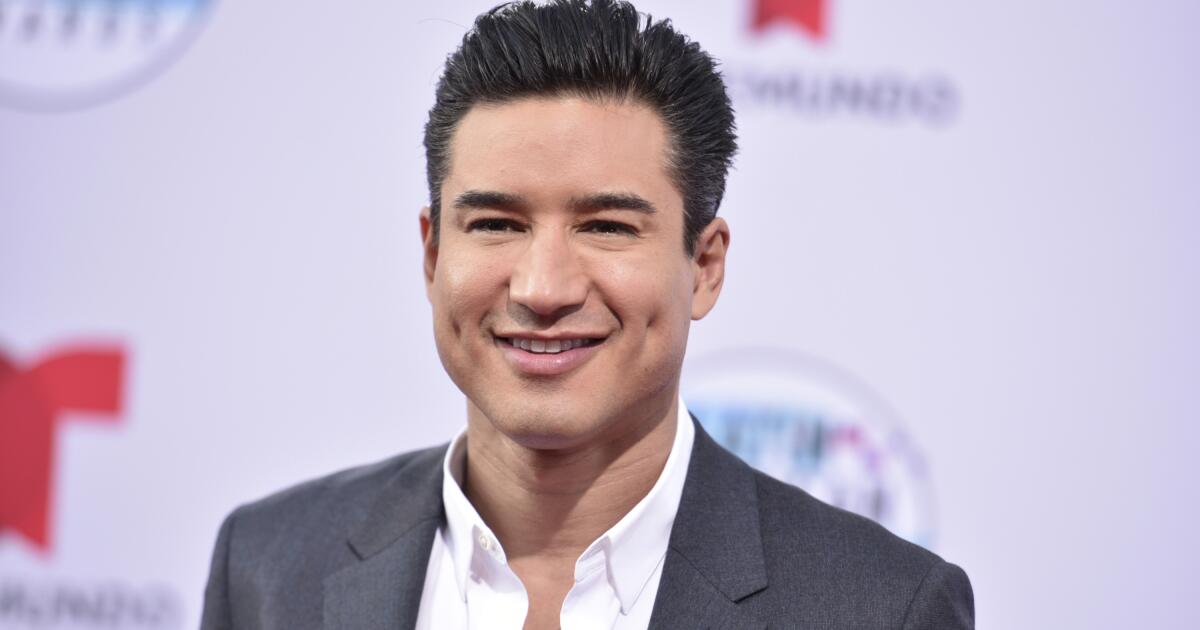
NBC’s ‘Access Hollywood’ is canceled as daytime TV audiences shrink
NBCUniversal is cutting “Access Hollywood” and several other of its daytime talk shows, effectively ending its first-run syndication business as daytime television atrophies.
The company confirmed that “Access Hollywood,” and its counterpart “Access Live,” will be coming to an end in September. The shows, produced in Los Angeles, are currently hosted by Mario Lopez, Kit Hoover, Scott Evans and Zuri Hall.
Talk shows “Karamo” and “The Steve Wilkos Show,” produced out of NBC’s facility in Stamford, Conn., are also shutting down. The programs have already completed their production for the season and will run through the summer.
NBC previously announced that “The Kelly Clarkson Show” is also ending later this year after seven seasons.
“The Steve Wilkos Show” ran for 19 seasons. The host is a former bouncer for “The Jerry Springer Show.”
Francis Berwick, chairman of Bravo and Peacock unscripted, said in a statement that the company will continue to distribute library episodes of its talk programs and network shows such as “Law & Order.” But NBCU’s days of launching series for daytime and the hour before prime time are over.
“NBCUniversal is making changes to our first-run syndication division to better align with the programming preferences of local stations,” Berwick said. “The company will remain active in the distribution of our existing program library and other off-network titles, while winding down production of our first-run shows.”
“Access Hollywood” was first launched by NBC in 1996 as a competitor to CBS Media Ventures’ “Entertainment Tonight.”
First-run syndication allows producers to sell TV shows to stations on a market-by-market basis, instead of distributing them through a single network. This model was a major success for talk show staples such as Oprah Winfrey and Ellen DeGeneres.
But streaming has pulled viewers away from traditional television, as viewers can watch their favorite shows and movies anytime on demand. The audience levels needed to generate enough ad revenue to support first-run programming in daytime no longer exists.
Many TV stations are filling their hours with more local news as daytime talk goes away.

Judge halts termination of deportation protections for Somali immigrants
BOSTON — A U.S. court ruling in Massachusetts has temporarily paused the looming termination of Temporary Protected Status for immigrants from Somalia.
U.S. District Judge Allison D. Burroughs’ ruling Friday said there would be “weighty” consequences if Somalia’s TPS designation were allowed to expire Tuesday. Advocates filed an emergency motion in federal court seeking to pause the termination after the Trump administration promised to end the designation last month during an immigration crackdown in Minneapolis, where many Somalis live.
“Over one thousand people will face ‘a myriad of grave risks,’ including detention and deportation, physical violence if removed to Somalia, and forced separation from family members,” the ruling said.
Burroughs said implementing an administrative stay and deferring ruling on the postponement gives both sides time to file briefs on the emergency motion.
“While the stay is in effect, the termination shall be null, void, and of no legal effect,” the ruling said, noting that those with TPS status or pending applications will retain rights including eligibility for work authorization and protection against deportation and detention.
In a statement, the U.S. Department of Homeland Security said the ruling is the latest example of a judge preventing Trump from “restoring integrity” to the U.S. immigration system.
“Temporary means temporary,” the statement said. “Country conditions in Somalia have improved to the point that it no longer meets the law’s requirement for Temporary Protected Status. Allowing Somali nationals to remain temporarily in the United States is contrary to our national interests. The Trump administration is putting Americans first.”
Representatives of the plaintiffs fighting the termination said in a statement that even though the order is temporary and “many battles lie ahead,” they are “heartened by the interim protection today’s order affords all Somali people in the U.S. who have TPS or pending TPS applications.”

Ducks fail to score in loss to the Sentators
OTTAWA — Linus Ullmark made 23 saves for his second shutout of the season and the Ottawa Senators blanked the Ducks 2-0 on Saturday.
Michael Amadio and Thomas Chabot scored for Ottawa. Shane Pinto had two assists. It was the 14th shutout of Ullmark’s career. The Senators have won four of five.
Ville Husso stopped 27 shots for the Ducks.
Nick Cousins won a battle along the boards, which sprung Pinto down the ice. Pinto fed Amadio on a 2-on-1 and he made no mistake, beating Husso short-side 3:54 into the second period.
At the 9:21 mark of the second period, the Senators capitalized on a turnover. Pinto intercepted a pass and found Chabot in the high slot for his seventh goal of the season and second career short-handed score.
Anaheim challenged for goaltender interference but was unsuccessful.
Warren Foegele had a couple of chances from close range in the opening period, but just couldn’t settle a bouncing puck.
Husso then stopped Amadio on a short-handed 2-on-1 breakaway.
Amadio later drew a penalty, but Husso made a big glove save on Tim Stutzle on the Senators’ power play.
Up next: Ducks: at Montreal on Sunday; Senators: host San Jose Sharks on Sunday.

Arsenal beat Everton as Dowman makes Premier League history | Football News
Arsenal beat Everton 2-0 in a nervy match in the Premier League as they continue their pursuit of the title.
Published On 14 Mar 2026
Max Dowman, a 16-year-old Arsenal winger, became the Premier League’s youngest goalscorer with a remarkable stoppage-time strike in his team’s 2-0 win over Everton.
Dowman collected the ball midway in his own half, dribbled around two Everton players and raced clear unchallenged from the halfway line to tap into an empty net, with Everton goalkeeper Jordan Pickford stranded upfield having gone forward for a corner.
Recommended Stories
list of 4 itemsend of list
An English football prodigy, Dowman — at 16 years, 73 days — was playing just his third Premier League match after two previous substitute appearances at the start of the season.
He broke the record of former Everton player James Vaughan, who was 16 years, 270 days when he scored against Crystal Palace in 2005.
In November, Dowman became the youngest player in Champions League history at 15 years, 308 days when he entered as a second-half substitute against Slavia Prague.
Dowman is still in school. He was 14 when he was asked by Arsenal manager Mikel Arteta to train with the senior team in December last year, and he starred on the club’s preseason tour of Asia in matches against AC Milan and Newcastle.
To abide by Premier League regulations for players under 18, Dowman has to change into his Arsenal kit for training sessions and matches in a separate locker room from his senior teammates.
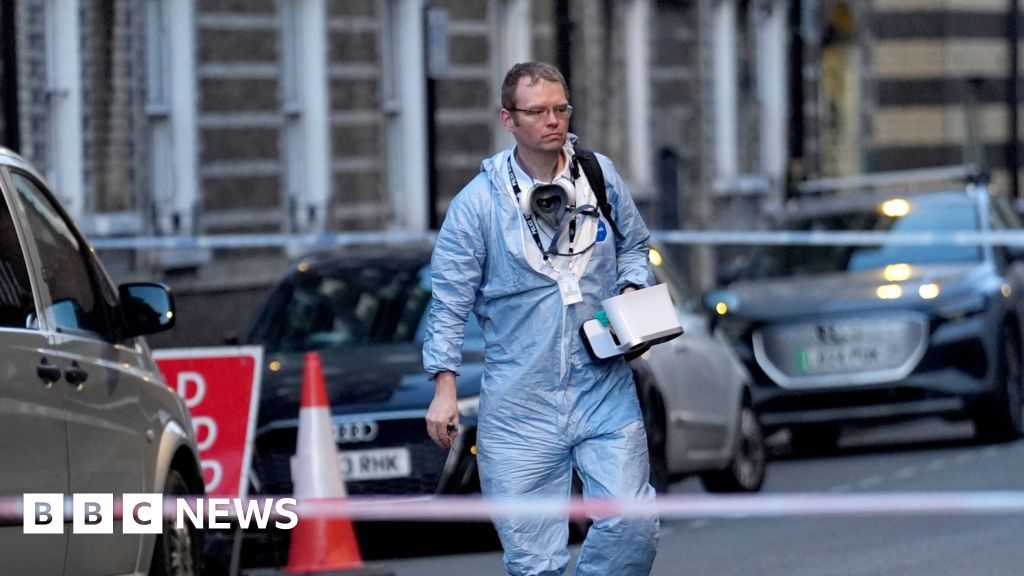
Murder investigation launched after baby's death
A 43-year-old woman was arrested at the scene on suspicion of murder and remains in police custody.
Source link
Oscars fashion: What every winner wore since 2000

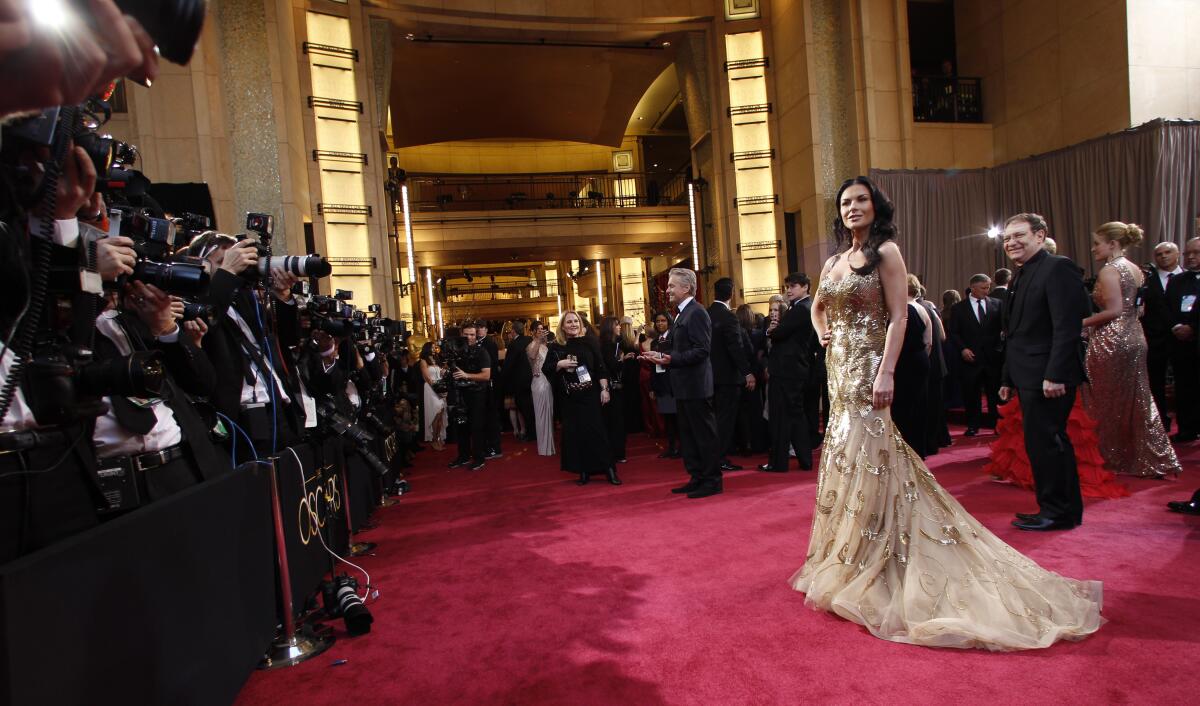
Catherine Zeta-Jones arrives on the red carpet at the 85th Academy Awards in 2013.
(Wally Skalij / Los Angeles Times)
The red carpet at the Oscars is the epitome of Hollywood glitz and glamour. We combed through our archives for photos of the Academy Awards since 2000 — from arrivals of the biggest stars to backstage candids to winners clutching their awards — to compile this trip down the Oscars’ memory lane.
So what do winners wear? Take a look at our collection below and you’ll see some of the best dressed stars through the years, including Lupita Nyong’o’s custom pale blue Prada gown in 2014 and Emma Stone’s gold Givenchy flapper-style dress in 2017. Around the dawn of the millennium, Halle Berry made a statement with an Elie Saab dress that had a sheer top with embroidered flowers when she won in 2002 while Reese Witherspoon went vintage with a beaded dress from Dior in 2006.
As we wait to see what the stars are wearing Sunday on the 98th Oscars red carpet, take a look at how Oscar fashion has evolved in the 21st century with photos of those who took home trophies for lead actress, lead actor, supporting actress and supporting actor.
2025

Mikey Madison shows off her leading actress Oscar for her role in “Anora” at the 97th Academy Awards.
(Jason Armond / Los Angeles Times)

Adrien Brody walks the red carpet at the 97th Academy Awards. He won the leading actor Oscar for “The Brutalist.”
(Allen J. Schaben / Los Angeles Times)

Zoe Saldaña accepts the supporting actress Oscar at the 2025 Academy Awards for “Emilia Perez.”
(Myung J. Chun / Los Angeles Times)

Kieran Culkin poses with his Oscar for “A Real Pain” at the 97th Academy Awards.
(Jason Armond / Los Angeles Times)
2024

Emma Stone won her second leading actress Oscar, for “Poor Things,” at the 96th Academy Awards.
(Myung J. Chun / Los Angeles Times)

Cillian Murphy accepts the leading actor Oscar for “Oppenheimer” at the 96th Academy Awards.
(Myung J. Chun / Los Angeles Times)

Da’Vine Joy Randolph won the supporting actress Oscar at the 96th Academy Awards.
(Myung J. Chun / Los Angeles Times)

Robert Downey Jr. poses on the red carpet at the 96th Academy Awards before winning the supporting actor Oscar for “Oppenheimer.”
(Christina House / Los Angeles Times)
2023

Michelle Yeoh, who won the leading actress Oscar for “Everything Everywhere All at Once,” arrives at the Governors Ball following the 95th Academy Awards.
(Jay L. Clendenin / Los Angeles Times)

Brendan Fraser clutches his Oscar backstage at the 95th Academy Awards at the Dolby Theatre.
(Robert Gauthier / Los Angeles Times)

Jamie Lee Curtis, the supporting actress winner for “Everything Everywhere All at Once,” cries as she holds her Oscar backstage.
(Robert Gauthier / Los Angeles Times)

Ke Huy Quan stands atop the engraving station after getting his Oscar for supporting actor engraved.
(Jay L. Clendenin / Los Angeles Times)
2022

Jessica Chastain arrives at the 94th Academy Awards before winning the Oscar for lead actress.
(Jay L. Clendenin / Los Angeles Times)

Will Smith and Jada Pinkett Smith pose on the red carpet at the 2022 Oscars. Smith won the leading actor award later that night after slapping Chris Rock during the show.
(Jay L. Clendenin / Los Angeles Times)

Ariana DeBose holds her Oscar for supporting actress backstage.
(Robert Gauthier/Los Angeles Times)

Troy Kotsur accepts the supporting actor award for “CODA” from Youn Yuh-jung.
(Myung Chun / Los Angeles Times)
2021
The 2021 Oscars had a modified format without a red carpet due to the COVID-19 pandemic.
2020

Renée Zellweger shows off her Oscar for lead actress for “Judy.”
(Allen J. Schaben / Los Angeles Times)

Joaquin Phoenix arrives at the 92nd Academy Awards. He won for lead actor for his role in “Joker.”
(Jay L. Clendenin / Los Angeles Times)

Laura Dern, winner of the supporting actress Oscar for “Marriage Story,” shows off her hardware.
(Allen J. Schaben / Los Angeles Times)

Brad Pitt wins the supporting actor Oscar for his role as Cliff Booth in “Once Upon a Time … in Hollywood.”
(Allen J. Schaben / Los Angeles Times)
2019

Olivia Colman wins the lead actress Oscar for “The Favourite.”
(Robert Gauthier / Los Angeles Times)

Rami Malek, winner for lead actor for “Bohemian Rhapsody,” poses in the photo room at the 91st Academy Awards.
(Allen J. Schaben / Los Angeles Times)

Regina King arrives at the Academy Awards, where she won for supporting actress in “If Beale Street Could Talk.”
(Jay L. Clendenin / Los Angeles Times)

Amatus Sami-Karim and Mahershala Ali pose at the 91st Academy Awards, where Ali won the supporting actor Oscar for “Green Book.”
(Jay L. Clendenin / Los Angeles Times)
2018

Frances McDormand was victorious for her role in “Three Billboards Outside Ebbing, Missouri.”
( Allen J. Schaben / Los Angeles Times)

Gary Oldman tightly grips his Oscar for lead actor.
(Allen J. Schaben / Los Angeles Times)

Allison Janney, winner of the supporting actress Oscar for “I, Tonya,” poses for photos.
(Allen J. Schaben / Los Angeles Times)

Sam Rockwell and Leslie Bibb pose on the red carpet at the 90th Academy Awards. Rockwell won for his role as troubled police officer Jason Dixon in “Three Billboards Outside Ebbing, Missouri.”
(Jay L. Clendenin / Los Angeles Times)
2017

Emma Stone delivers a touching acceptance speech after winning lead actress for her role in “La La Land.”
(Al Seib / Los Angeles Times)

Casey Affleck holds up his Oscar for lead actor for “Manchester by the Sea.”
(Marcus Yam / Los Angeles Times)

Viola Davis smiles backstage after winning the Oscar for supporting actress for “Fences.”
(Al Seib / Los Angeles Times)

Mahershala Ali arrives at the Oscars, where he won for his performance in “Moonlight.”
(Allen J. Schaben / Los Angeles Times)
2016

Brie Larson won the lead actress Oscar for her role in the drama “Room.”
(Jay L. Clendenin / Los Angeles Times)

Leonardo DiCaprio wins his first Oscar ever for “The Revenant.”
(Robert Gauthier / Los Angeles Times)

Alicia Vikander is Belle of the ball at the Oscars, where she won for supporting actress in “The Danish Girl.”
(Jay L. Clendenin / Los Angeles Times)

Mark Rylance walks backstage after picking up the supporting actor Oscar for “Bridge of Spies.”
(Al Seib / Los Angeles Times)
2015

Julianne Moore shows off her lead actress trophy.
(Allen J. Schaben / Los Angeles Times)

Eddie Redmayne arrives at the 87th Academy Awards, where he won gold for “The Theory of Everything.”
(Jay L. Clendenin / Los Angeles Times)

Patricia Arquette poses on the red carpet. The actress won an Oscar for her role in “Boyhood.”
(Jay L. Clendenin / Los Angeles Times)

J.K. Simmons holds his supporting actor Oscar for the movie “Whiplash.”
(Allen J. Schaben / Los Angeles Times)
2014

Matthew McConaughey accepts the lead actor award for “Dallas Buyers Club.”
(Robert Gauthier / Los Angeles Times)

Cate Blanchett stuns on the red carpet before picking up the lead actress Oscar for “Blue Jasmine.”
(Wally Skalij / Los Angeles Times)

Jared Leto arrives at the 86th Academy Awards, where he won for his role in “Dallas Buyers Club.”
(Jay L. Clendenin / Los Angeles Times)

Lupita Nyong’o twirls her dress on the red carpet at the Oscars, where she won for her feature film debut in “12 Years a Slave.”
(Wally Skalij / Los Angeles Times)
2013

Daniel Day-Lewis and Meryl Streep walk offstage at the 85th Academy Awards after Day-Lewis’ lead actor win.
(Al Seib / Los Angeles Times)

Jennifer Lawrence holds up her Oscar after her win for “Silver Linings Playbook.”
(Lawrence K. Ho / Los Angeles Times)

Christoph Waltz gives an acceptance speech after winning for supporting actor.
(Robert Gauthier / Los Angeles Times)

Anne Hathaway wins for supporting actress at the 85th Academy Awards.
(Robert Gauthier / Los Angeles Times)
2012

Jean Dujardin cheers after his Oscar win for lead actor at the 84th Academy Awards.
(Robert Gauthier / Los Angeles Times)

Meryl Streep holds up her Oscar for lead actress for “The Iron Lady.”
(Allen J. Schaben / Los Angeles Times)

Christopher Plummer examines his Oscar for supporting actor.
(Al Seib / Los Angeles Times)

Octavia Spencer cries as she accepts her Oscar for supporting actress.
(Robert Gauthier / Los Angeles Times)
2011

Colin Firth is photographed with his Oscar at the Governors Ball following his win for “The King’s Speech.”
(Gary Friedman / Los Angeles Times)

Natalie Portman arrives in style to the Oscars, where she won for her role in “Black Swan.”
(Liz O. Baylen / Los Angeles Times)

Christian Bale accepts his award for supporting actor during the 83rd Academy Awards.
(Robert Gauthier / Los Angeles Times)

Melissa Leo poses on the red carpet before her win for supporting actress.
(Kirk McKoy / Los Angeles Times)
2010

Jeff Bridges cheers after receiving the lead actor Oscar.
(Robert Gauthier / Los Angeles Times)

Sandra Bullock arrives at the 82nd Annual Academy Awards before winning an Oscar for her role in “The Blind Side.”
(Kirk McKoy / Los Angeles Times)

Mo’Nique receives an Oscar for her role in “Precious” during the 82nd Annual Academy Awards.
(Robert Gauthier / Los Angeles Times)

Christoph Waltz accepts his award for supporting actor during the 82nd Academy Awards.
(Robert Gauthier / Los Angeles Times)
2009

Sean Penn accepts the lead actor Oscar for his role in “Milk” during the 81st Academy Awards.
(Mark Boster / Los Angeles Times)

Kate Winslet stands backstage after her win for lead actress at the 81st Academy Awards.
(Al Seib / Los Angeles Times)

Sally Bell, Kim and Kate Ledger accept the Oscar for supporting actor awarded to Heath Ledger at the 81st Academy Awards.
(Mark Boster/Los Angeles Times)

Penelope Cruz receives her Oscar at the 81st Academy Awards for her role in “Vicky Cristina Barcelona.”
(Mark Boster / Los Angeles Times)
2008

Forest Whitaker escorts Marion Cotillard off stage after presenting her with the Oscar for lead actress at the 80th Academy Awards.
(Al Seib / Los Angeles Times)

Presenter Helen Mirren joins Daniel Day–Lewis backstage after his win for lead actor at the 80th Academy Awards.
(Lawrence K. Ho / Los Angeles Times)

Tilda Swinton accepts the supporting actress Oscar for her role in “Michael Clayton” at the 80th Academy Awards.
(Al Seib / Los Angeles Times)

Javier Bardem celebrates with the cast of “No Country for Old Men” after the film’s win for best picture and his victory for lead actor.
(Wally Skalij / Los Angeles Times)
2007

Helen Mirren accepts the Oscar for lead actress for her role in “The Queen.”
(Al Seib / Los Angeles Times)

Forest Whitaker accepts the leading actor Oscar for his role in “The Last King of Scotland.”
(Al Seib / Los Angeles Times)

Jennifer Hudson exits the stage with her Oscar after winning for supporting actress during the 79th Academy Awards.
(Al Seib / Los Angeles Times)

Rachel Weisz wipes lipstick off of supporting actor winner Alan Arkin’s cheek while walking offstage.
(Al Seib / Los Angeles Times)
2006

Reese Witherspoon arrives at the 78th Academy Awards, where she took home an Oscar for lead actress in “Walk the Line.”
(Al Seib / Los Angeles Times)

Philip Seymour Hoffman accepts the Oscar for lead actor for his role in “Capote” at the 78th Academy Awards.
(Mark Boster / Los Angeles Times)

Rachel Weisz accepts the supporting actress Oscar for her role in “The Constant Gardener.”
(Mark Boster / Los Angeles Times)

George Clooney greets fans at the 78th Academy Awards, where he took home the supporting actor Oscar.
(Al Seib / Los Angeles Times)
2005

Morgan Freeman, Cate Blanchett, Hilary Swank and Jamie Foxx pose with Oscar statuettes at the 77th Academy Awards.
(Ken Hively / Los Angeles Times)

Jamie Foxx and daughter Corinne arrive at the 77th Academy Awards.
(Béatrice de Géa / Los Angeles Times)

Hilary Swank arrives at the 77th Academy Awards, where she would win an Oscar for lead actress in “Million Dollar Baby.”
(Robert Gauthier / Los Angeles Times)

Morgan Freeman arrives at the 77th Academy Awards with his daughter, Morgana.
(Robert Gauthier / Los Angeles Times)

Cate Blanchett arrives at the Academy Awards, where she won an Oscar for her role in “The Aviator.”
(Béatrice de Géa / Los Angeles Times)
2004

Charlize Theron, Sean Penn, Rénee Zellweger and Tim Robbins pose with their Oscars at the 76th Academy Awards.
(Francine Orr / Los Angeles Times)

Charlize Theron, wearing Tom Ford for Gucci, arrives at the 76th Academy Awards.
(Myung J. Chun / Los Angeles Times)

Sean Penn accepts the leading actor Oscar for his role in “Mystic River.”
(Brian van der Brug / Los Angeles Times)

Actress Renée Zellweger poses with her Oscar for supporting actress for her role in “Cold Mountain” at the 76th Academy Awards.
(Francine Orr / Los Angeles Times)

Tim Robbins, his then-partner Susan Sarandon and their son flash peace signs as they arrive at the 75th Academy Awards.
(Robert Gauthier / Los Angeles Times)
2003

Adrien Brody, Nicole Kidman, Catherine Zeta-Jones and Chris Cooper prepare to pose with their Oscars at the 75th Academy Awards.
(Richard Hartog / Los Angeles Times)

Adrien Brody reacts to his Oscar win for “The Pianist.”
(Brian van der Brug / Los Angeles Times)

Nicole Kidman accepts the leading actress Oscar at the 75th Academy Awards.
(Brian van der Brug / Los Angeles Times)

Chris Cooper points to the camera after winning an Oscar for supporting actor for “Adaptation.”
(Anacleto Rapping / Los Angeles Times)

Catherine Zeta–Jones accepts the leading actress award at the 75th Academy Awards.
(Brian van der Brug / Los Angeles Times)
2002

Denzel Washington wins the leading actor Oscar for his role in “Training Day.”
(Ken Hively / Los Angeles Times)

Halle Berry arrives at the 74th Academy Awards, where she won an Oscar for her role in “Monster’s Ball.”
(Kevin P. Casey / Los Angeles Times)

Supporting actress Jennifer Connelly and supporting actor Jim Broadbent smile at the 74th Academy Awards.
(Don Kelsen / Los Angeles Times)

Jennifer Connelly accepts her Oscar for her role in “A Beautiful Mind.”
(Ken Hively / Los Angeles Times)
2001

Benicio del Toro, Marcia Gay Harden, Julia Roberts and Russell Crowe pose with their Oscars during the 73rd Academy Awards.
(Ken Hively / Los Angeles Times)

Russell Crowe wins an Oscar for his work on the film “Gladiator” during the 73rd annual Academy Awards.
(Al Seib / Los Angeles Times)

Julia Roberts celebrates after winning the leading actress Oscar at the 73rd Academy Awards.
(Al Seib / Los Angeles Times)

Benicio Del Toro clinches his fist after accepting the supporting actor Oscar for his role in “Traffic.”
(Al Seib / Los Angeles Times)

Marcia Gay Harden accepts her supporting actress Oscar at the 73rd Academy Awards.
(Al Seib / Los Angeles Times)
2000

Michael Caine, Angelina Jolie, Hilary Swank and Kevin Spacey smile backstage at the 72nd Academy Awards.
(Ken Hively / Los Angeles Times)

Kevin Spacey poses with his leading actor award for his role in “American Beauty.”
(Ken Hively / Los Angeles Times)

Hilary Swank accepts her Oscar for her role in “Boys Don’t Cry.”
(Robert Gauthier / Los Angeles Times)

Michael Caine accepts the Oscar for supporting actor during the 72nd Academy Awards.
(Robert Gauthier/ Los Angeles Times)

Angelina Jolie kisses her Oscar for supporting actress during the 72nd Academy Awards.
(Ken Hively / Los Angeles Times)
8 convicted on terror charges in shooting at Texas ICE site
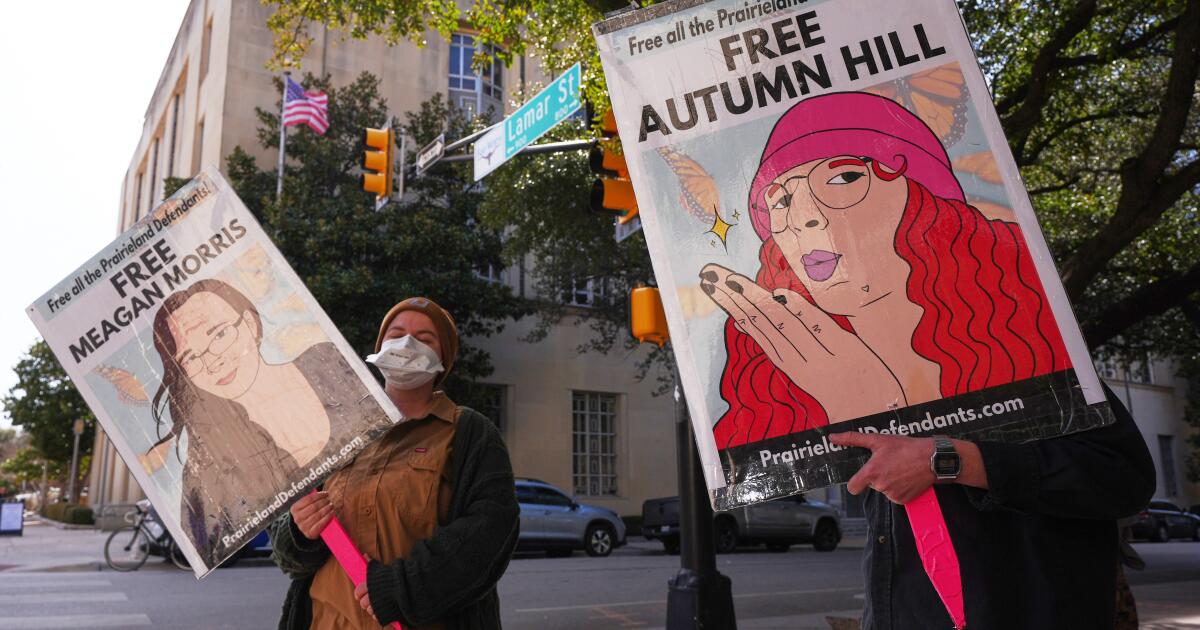
DALLAS — A federal jury Friday convicted nine people — eight on terrorism charges — over a shooting at a Texas immigration facility that federal prosecutors tied to antifa, the decentralized far-left movement that has become a target of the Trump administration.
One person was also found guilty of attempted murder after prosecutors say he opened fire last summer outside the Prairieland Detention Center outside Fort Worth, wounding a police officer. The Justice Department called the violence an attack plotted by antifa operatives, but attorneys for the accused denied that characterization, saying there were no antifa associations and that there was merely a demonstration with fireworks before gunshots broke out.
U.S. District Judge Mark Pittman, an appointee of President Trump, presided over the nearly three-week trial in Fort Worth. It was closely followed by legal experts and critics who called the proceedings a test of the lengths the government can go to punish protesters.
FBI Director Kash Patel had said the case was the first time charges of providing material support to terrorists had targeted people accused of being antifa members.
“Today’s verdict on terrorism charges will not be the last as the Trump administration systematically dismantles Antifa and finally halts their violence on America’s streets,” U.S. Atty. Gen. Pam Bondi said in a statement.
Short for “anti-fascists,” antifa is not an organization but rather an umbrella term for far-left militant groups that confront or resist neo-Nazis and white supremacists at demonstrations.
Protesters denied having antifa ties
Defense attorneys told jurors that there was no plan for violence on July 4 outside the facility in Alvarado.
Of the nine defendants on trial, eight faced the charge of providing material support to terrorists, among other charges. The ninth defendant, Daniel Sanchez Estrada, was charged with corruptly concealing a document and conspiracy to conceal documents. He was found guilty of both.
Sanchez Estrada’s attorney, Christopher Weinbel, said he can’t believe jurors “came to this conclusion.” Weinbel said his client had deployed as a member of the U.S. Army several times and he’d hoped what he sacrificed for the country “meant something.”
“But I feel like it turned its back on justice with this. … The U.S. lost today with this verdict,” Weinbel said.
Prosecutor Shawn Smith told jurors during closing arguments that the group’s actions — including bringing firearms and first aid kits and wearing body armor — were all signs of nefarious intent. He said they practiced “antifa tactics” and were “obsessed with operational security.”
Attorneys for the defendants have said that there was no planned ambush and that protesters who brought firearms did so for their own protection — in a state with very lenient gun laws.
A test of 1st Amendment rights
The terrorism charges followed Trump’s order last fall to designate antifa as a domestic terrorist organization. Those charges did not require a tie to any organization, and there is no domestic equivalent to the State Department’s list of foreign terrorist organizations. That’s in part because organizations operating within the United States are protected by broad 1st Amendment rights.
Critics of the Justice Department’s case have said the outcome could have wide-reaching effects on protests.
“That opposition is something that the government wants to squash, so a case like this helps the government kind of see how far they can go in criminalizing constitutionally protected protests and also helps them kind of intimidate, increase the fear, hoping that folks in other cities then will think twice over protesting,” said Suzanne Adely, interim president of the National Lawyers Guild, a progressive legal group.
Trial focused on shots fired
Attorneys for the defendants have said most protesters began leaving when two guards from the center came outside. That was before any shots were fired.
Prosecutors said Benjamin Song, a former Marine Corps reservist, yelled, “Get to the rifles,” and opened fire, striking one police officer who had just pulled up to the center.
Though it was Song who opened fire, prosecutors charged several other protesters with attempted murder of an officer and discharging a firearm, but they were found not guilty. The prosecution had argued that from the group’s planning, it was foreseeable to those others that a shooting could happen.
The officer who was shot, Alvarado Police Lt. Thomas Gross, testified that when responding to the scene he saw a person clad in all-black with their face covered and carrying a rifle. He told jurors he was shot with a round that went into his shoulder and out of his neck.
Song’s attorney, Phillip Hayes, told jurors during closing arguments that there wasn’t a call to arms before Gross arrived on the scene and “aggressively” pulled out his firearm. Hayes suggested that Song’s shots were “suppressive fire” and that a ricochet bullet hit the officer.
Leading up to the trial, several people pleaded guilty to providing material support to terrorists after being accused of supporting antifa. They face up to 15 years in prison at sentencing.
Some of them testified for the prosecution, including Seth Sikes, who said he went to the detention center because he wanted to bring some joy to those held inside.
“I felt like I was doing the right thing,” he said.
Stengle writes for the Associated Press. AP writer Jim Vertuno in Austin, Texas, contributed to this report.
Palisades off the mark in second half of loss to Faith Christian
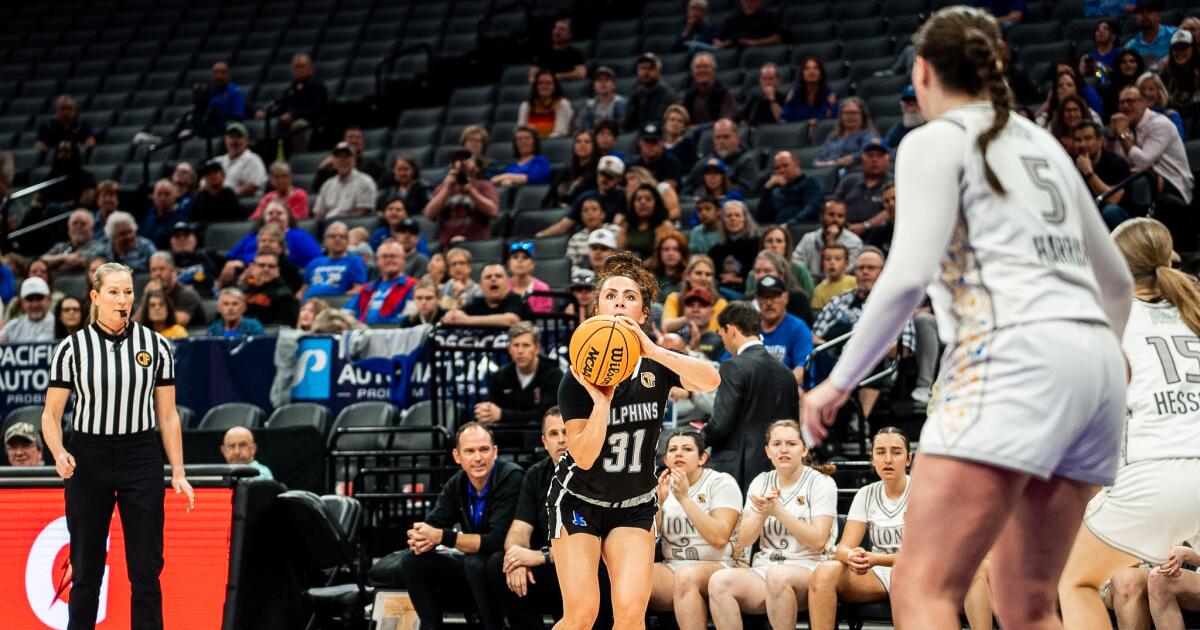
SACRAMENTO — Senior Ayla Teegardin of Palisades held her head high on Saturday morning. A 51-37 loss to Yuba City Faith Christian in the state Division IV girls basketball final at Golden 1 Center couldn’t lessen the inspiring backstory of how she and her Dolphin teammates had already won by making it to the final despite all the trial and tribulations of the Palisades Fire that destroyed a community in January 2025.
Teegardin lost her home, spent three months in a hotel and battled to regain her teenage life.
“I struggled with a lot of anxiety coming into games,” she recalled.
Basketball and teammates kept her focused. This season has been another challenging time with practices at night and at middle schools until the high school gym was finally re-opened at the end of January.
“That traumatic situation has brought everyone closer,” first-year coach Lebre Merritt said.
On Saturday, Palisades (16-14) fought Faith Christian (34-1) to almost a draw at halftime, trailing 29-26. But the Dolphins scored only 11 points in the second half and had no answer for Long Beach State-bound Lauren Harris, who came in as the nation’s career three-point scoring leader while averaging 31.2 points this season. She finished with 26 points, 16 rebounds, five assists, three blocks and two steals. She made a half-court shot at the end of the first quarter.
Elly Tierney of Palisades did her best on offense with 15 points and six rebounds. Teegardin finished with three points and six rebounds. Only three players scored the entire game for Faith Christian.
The Dolphins outrebounded Faith Christian 43-33 but made only 15 of 63 shots.
Trump administration threatens news outlets over critical coverage of Iran | US-Israel war on Iran News
The administration of President Donald Trump has warned that news outlets could have their broadcasting licences revoked over critical reporting on the war against Iran, accusing the media of “distortions”.
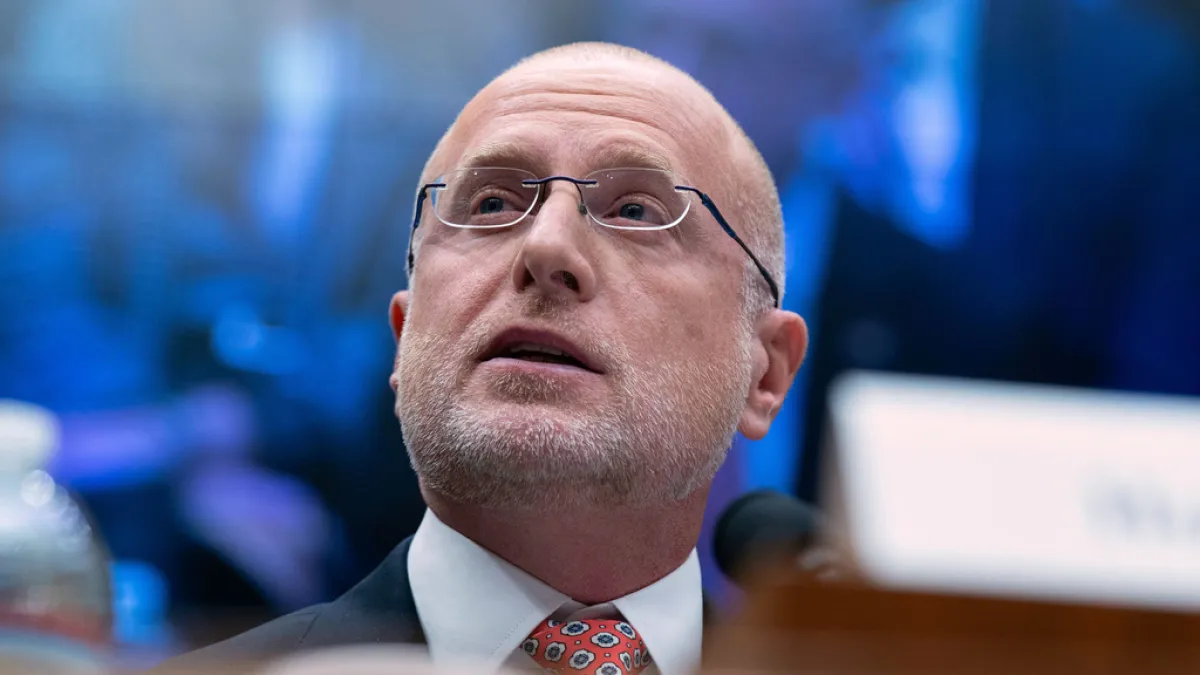
Federal Communications Commission Chairman Brendan Carr said in a social media post on Saturday that broadcasters must “operate in the public interest”, or else lose their licences.
Recommended Stories
list of 3 itemsend of list
“Broadcasters that are running hoaxes and news distortions — also known as the fake news — have a chance now to correct course before their license renewals come up,” Carr wrote.
The warning was the latest apparent threat from Carr, who has repeatedly attracted scrutiny for statements that appear to pressure broadcasters to conform with Trump priorities.
Last year, for instance, Carr called on the channel ABC and its distributors to “find ways to change conduct, to take action” on comedian Jimmy Kimmel, whose late-night show had been critical of the president.
“We can do this the easy way or the hard way,” Carr said of Kimmel on a podcast. ABC temporarily suspended Kimmel’s show in the aftermath of those comments.
Carr’s latest statement prompted swift condemnation from politicians and free-speech advocates, who likened his remarks to censorship.
“This is a clear directive to provide positive war coverage or else licenses may not be renewed,” Senator Brian Schatz of Hawaii wrote.
“This is worse than the comedian stuff, and by a lot. The stakes here are much higher. He’s not talking about late night shows, he’s talking about how a war is covered.”
Aaron Terr, the director of public advocacy at the Foundation of Individual Rights and Expression (FIRE), likewise denounced Carr for seeking to silence negative war coverage.
“The First Amendment doesn’t allow the government to censor information about the war it’s waging,” Terr said.
Trump denounces war coverage
Carr’s latest statement came in response to a social media post from Trump, accusing the “fake news media” of reporting that US refuelling planes had been struck in an Iranian attack in Saudi Arabia.
“The base was hit a few days ago, but the planes were not ‘struck’ or ‘destroyed’,” Trump said in a Truth Social post. “Four of the five had virtually no damage, and are already back in service.”
He added that reporting to the contrary was intentionally misleading. “Lowlife ‘Papers’ and Media actually want us to lose the War,” he wrote.
The president and his allies have faced accusations that they use the power of the state to penalise dissent and critical news coverage, raising concerns about press freedom.
Polling shows that the war, launched by the US and Israel on February 28, is largely unpopular in the US.
A recent Quinnipiac poll found that 53 percent of voters oppose the military action against Iran, including 89 percent of Democrats and 60 percent of independent voters.
The war has also been condemned by legal experts as a clear violation of international law, which prohibits unprovoked attacks.
Trump, however, has offered shifting rationales as to why he believes Iran posed an imminent threat to US security.
He has also asserted that the war is proceeding successfully, despite ongoing Iranian attacks on US forces across the region and the shutdown of the Strait of Hormuz, a key trade artery.
“We’ve won. Let me tell you, we’ve won,” he told a rally this week in Kentucky. “In the first hour, it was over.”
His administration, meanwhile, has blamed the news media for turning public opinion against the war.
“Yet some in this crew, in the press, just can’t stop,” Secretary of Defense Pete Hegseth said during a briefing on Friday.
A former Fox News host, Hegseth called for “patriotic” reporters to write more optimistic headlines instead. He denounced TV banners that read, for example, “Mideast war intensifies.”
“What should the banner read instead? How about ‘Iran increasingly desperate’? Because they are. They know it, and so do you, if it can be admitted,” Hegseth said.
He criticised the news outlet CNN, in particular, for a report asserting that the Trump administration had underestimated the chances of Iran closing the Strait of Hormuz.
Hegseth quipped that he hoped a prospective deal would soon place CNN under the control of David Ellison, son of close Trump ally and tech executive Larry Ellison.
“The sooner David Ellison takes over that network, the better,” he added.
Six killed in attacks on Ukraine as EU extends sanctions against Russians | Russia-Ukraine war News
EU maintains pressure after slamming US for lifting sanctions on Russian oil exports as Middle East war bites.
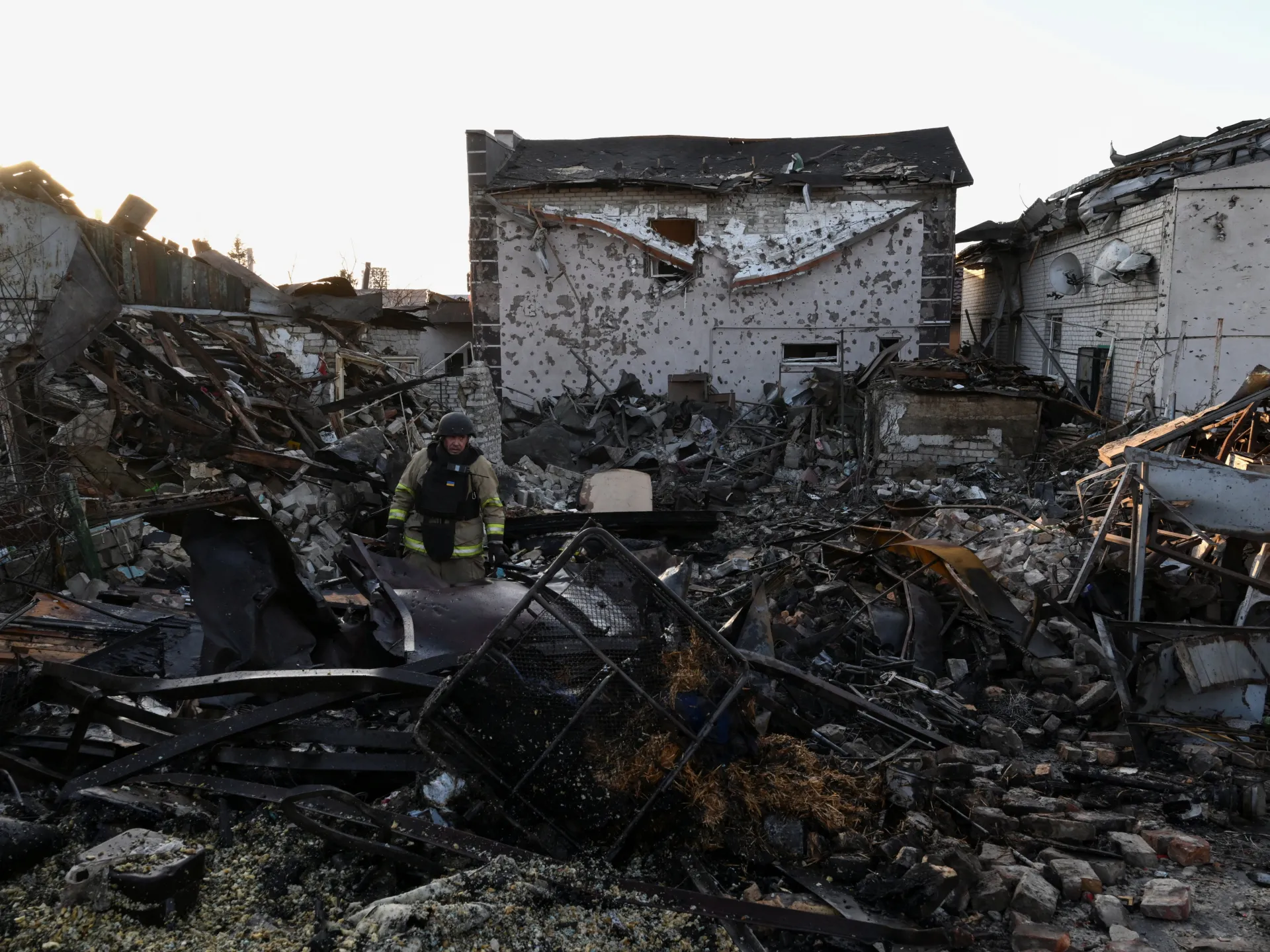
The European Union has voted to renew sanctions against individuals and entities supporting Russia’s war on Ukraine, as Russian forces continued to target Ukrainian energy infrastructure, killing six people in the Zaporizhia and Kyiv regions.
The EU Council announced that the bloc’s 27 member states had agreed on Saturday to extend sanctions targeting some 2,600 individuals and entities with measures like travel restrictions and asset freezes until September 15, breaking an earlier deadlock caused by Hungary and Slovakia’s opposition to the move.
Recommended Stories
list of 3 itemsend of list
The extension of sanctions came one day after EU Council chief Antonio Costa slammed the United States for lifting sanctions on Russian oil exports, saying on X that weakening restrictions increased “Russian resources to wage the war of aggression against Ukraine”, with a knock-on impact on European security.
The measure was announced as Russia hammered Ukraine with missiles and drones on Saturday, killing five people and injuring 15 in the Kyiv region surrounding the capital, according to regional military administrator Mykola Kalashnyk.
The city of Zaporizhzhia was also hit by Russian-guided bombs, killing one person and injuring three, said the governor of the southeastern region, Ivan Fedorov. Photos posted online showed parts of buildings reduced to rubble.
Ukraine’s President Volodymyr Zelenskyy said Russia’s main target was energy infrastructure outside the capital Kyiv, but that the Sumy, Kharkiv, Dnipro and Mykolaiv regions were also targeted in an attack that included about 430 drones and 68 missiles, most of which were downed by air defences.
Russia’s winter attacks on Ukraine have left swaths of major cities without power or heating, as Moscow’s troops continue their offensive amid demands Kyiv cede more territory in the east. Ukraine’s Energy Ministry said on Saturday that consumers in six regions were without electricity.
Ukraine’s forces have targeted Russian strategic infrastructure such as oil refineries, depots and terminals in long-range strikes. On Saturday, Ukraine’s military said that it had struck the Afipsky oil refinery and Port Kavkaz in Russia’s southern Krasnodar region.
Putin ‘exploiting’ Middle East distraction
Saturday’s fighting came as the Iran conflict has distracted international attention from a US-backed peace push in the four-year war, which Kyiv says Moscow has no interest in ending.
Belgium’s Prime Minister Bart De Wever called on Saturday for the EU to be mandated by its member states to negotiate with Russia as it became apparent amid spiking oil prices caused by the Iran war that the US was easing pressure on Russian President Vladimir Putin.
“Since we are not capable of threatening Putin by sending weapons to Ukraine, and we cannot choke him economically without the support of the United States, there is only one method left: making a deal,” he told the Belgian newspaper L’Echo.
EU chief diplomat Kaja Kallas has said in the past that the bloc must first reach an agreement on what is expected from Russia before directly approaching Putin, formulating its own “maximalist demands”.
However, the bloc’s inability to reach a common position was highlighted during the EU Council’s recent deliberations on extending sanctions.
Hungary and Slovakia, which have been sparring with Ukraine over blocked Russian oil flows through the Druzhba pipeline, had earlier opposed the extension of the restrictions, reportedly calling for some Russian oligarchs to be removed from the list of offenders.
Reacting earlier this week to soaring oil prices caused by the war in Iran, Hungarian Prime Minister Viktor Orban urged the EU to suspend sanctions on Russian energy.
Posting on X, Zelenskyy said, “Russia will try to exploit the war in the Middle East to cause even greater destruction here in Europe, in Ukraine.”
Juergen Habermas, influential German philosopher, dies at 96
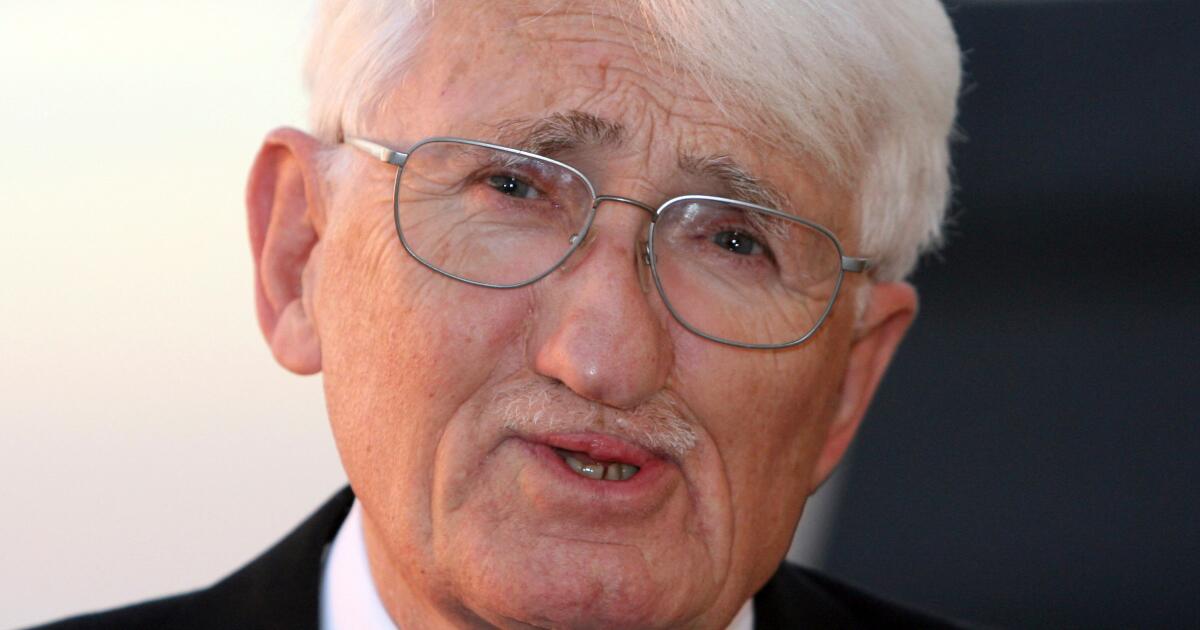
BERLIN — Juergen Habermas, whose work on communication, rationality and sociology made him one of the world’s most influential philosophers and a key intellectual figure in his native Germany, has died. He was 96.
Habermas’ publisher, Suhrkamp, said he died on Saturday in Starnberg, near Munich.
German Chancellor Friedrich Merz said that “Germany and Europe have lost one of the most significant thinkers of our time.”
Merz said that “his sociological and philosophical work had an impact on generations of researchers and thinkers.” He praised “Habermas’ intellectual forcefulness and his liberality” and said in a statement that “his voice will be missed.”
Habermas frequently weighed in on political matters over several decades. His extensive writing crossed the boundaries of academic and philosophical disciplines, providing a vision of modern society and social interaction. His best-known works included the two-volume “Theory of Communicative Action.”
Habermas, who was 15 at the time of Nazi Germany’s defeat, later recalled the dawn of a new era in 1945 and his coming to terms with the reality of Nazi crimes as something without which he wouldn’t have found his way into philosophy and social theory. He recalled that “you saw suddenly that it was a politically criminal system in which you had lived.”
He had an ambivalent relationship with the left-wing student movement of the late 1960s in Germany and beyond, engaging with it but also warning at the time against the danger of what he called “left-wing fascism” — a reaction to a firebrand speech by a student leader that he later said was “slightly out of place.” He would later recognize the movement as having driven a “fundamental liberalization” of German society.
In the 1980s, Habermas was a prominent figure in the so-called Historians’ Dispute, in which Berlin historian Ernst Nolte and others called for a new perspective on the Third Reich and German identity. They tended to compare what happened under Adolf Hitler to atrocities carried out by other governments, such as the deaths of millions in the Soviet Union under Josef Stalin. Habermas and other opponents contended that the conservative historians were trying to lessen the magnitude of Nazi crimes through such comparisons.
Habermas supported the rise to power of center-left Chancellor Gerhard Schroeder in 1998. He was critical of the “technocratic” approach and perceived lack of political vision of Schroeder’s conservative successor, Angela Merkel, complaining in 2016 of the paralyzing effects on public opinion of “the foam blanket of Merkel’s policy of sending people to sleep.”
He was particularly critical of the “limited interest” shown by German politicians, business leaders and media in “shaping a politically effective Europe.” In 2017, he praised newly elected French President Emmanuel Macron for laying out of plans for European reform, saying that “the way he speaks about Europe makes a difference.”
Habermas was born on June 18, 1929, in Duesseldorf and grew up in nearby Gummersbach, where his father headed the local chamber of commerce. He became a member of the Deutsches Jungvolk, a section of the Hitler Youth for younger boys, at 10.
He was born with a cleft palate that required repeated operations as a child, an experience that helped inform his later thinking about language.
Habermas said he had experienced the importance of spoken language as “a layer of commonality without which we as individuals cannot exist” and recalled struggling to make himself understood. He also spoke of the “superiority of the written word,” and said that “the written form conceals the flaws of the oral.”
His wife, Ute Habermas-Wesselhoeft, died last year. The couple had three children: Tilmann; Rebekka, who died in 2023; and Judith.
Moulson writes for the Associated Press.
Republican bill poses a burden for many U.S. voters
COLUMBUS, Ohio — Joshua Bogdan was born and raised in the United States. The only time the New Hampshire resident has left the country was for a day and a half in seventh grade, when he went to Canada to see Niagara Falls.
Even so, that did not mean proving his U.S. citizenship in last fall’s local elections was easy.
The 31-year-old arrived at his voting place in Portsmouth and handed the poll worker his driver’s license, just as he had done in other towns when arriving to vote. She said that would no longer do.
The poll worker said that under the state’s new proof-of-citizenship law, which took effect for the first time during town elections in 2025, Bogdan would need a passport or his birth certificate because he had moved and needed to re-register at his new address. A scramble ensued, turning the voting process that he had always found fun and invigorating into a nerve-racking game of beat the clock.
“I didn’t know that anything had officially changed walking in there,” he said. “And then being told that I had to provide a passport that I’ve never had or a birth certificate that’s usually tucked away somewhere safe just to cast my vote — which I’ve done before — it was frustrating.”
Noncitizen voting is rare
Bogdan’s experience in New Hampshire is a glimpse into the future for potentially millions of voters across the country. That is if Republican voting legislation being pushed aggressively by President Trump passes Congress and a “show your papers” law is put in place in time for the November midterm elections.
The Safeguard American Voter Eligibility, or SAVE America Act, cleared the House last month on a mostly party-line basis. Republicans say it would improve election integrity. Trump has called its safeguards common sense. Democrats and voting rights advocates call it a clear act of voter suppression. The bill is scheduled to come up for debate and voting in the Senate next week.
Republican messaging has mostly highlighted a less divisive provision in the bill that would require voters to show a photo ID. But the mandate for people to provide documentary proof of citizenship to register to vote in federal elections is likely to have the most wide-ranging consequences. Noncitizens already are prohibited from voting in federal elections, and it is not allowed by any state. Cases where it occurs are rare and harshly punished.
Obtaining the necessary documents under the SAVE Act is not as easy as it might sound. A similar effort was tried in Kansas a decade ago and turned into a debacle that eventually was blocked by the courts after more than 30,000 eligible citizens were prevented from registering.
Qualifying documents, with caveats
Rebekah Caruthers, president and chief executive at the Fair Elections Center, said the legislation’s strict documentation requirements could move the U.S. “in the opposite direction” of representative democracy.
“If this bill passes, it would deny millions of eligible Americans their fundamental freedom to vote,” she said in an email. “This includes millions of people who make up your communities, including married women, people of color and voters who live in rural areas.”
The list of qualifying documents in the SAVE Act for proving citizenship appears long, but many of them come with qualifiers.
Under the bill, a Real ID-compliant driver’s license would have to indicate that “the applicant is a citizen,” but not all do. Only five states — Michigan, Minnesota, New York, Vermont and Washington — offer the type of enhanced Real IDs that explicitly indicate U.S. citizenship.
Standard driver’s licenses, generally available to both citizens and noncitizens, often do not include a citizenship indicator. Some states, including Ohio, have recently added them.
The stipulations continue, buried in the fine print.
While military ID cards are listed as qualifying documents under the act, they will not suffice on their own. The bill says a military ID must be accompanied by a military “record of service” that indicates the person’s birthplace was in the U.S.
A DD214, the current standard-issue certificate of release or discharge for all military service branches, does not fulfill that requirement. According to the Pentagon, that document lists only where someone lived at points of entry and discharge and a person’s current home of record. It does not list where someone was born.
Passport requires time and money
For most provisions, the SAVE Act contains no phase-in period that would give voters and local election offices time to adjust. If passed by Congress and signed by Trump, its documentary proof-of-citizenship mandate would apply immediately, meaning it would be in place for this year’s midterm elections.
That could lead to a rush to obtain documents by those who want to register or need to reregister. A 2025 University of Maryland study estimates that 21.3 million Americans who are eligible to vote do not possess or have easy access to documents to prove their citizenship, including nearly 10% of Democrats, 7% of Republicans and 14% of people unaffiliated with either major party.
A passport would most effectively meet the requirement, but only about half of American adults have one, according to the State Department. The SAVE Act requires the passport to be current; an expired one does not count.
Obtaining a passport in time for a looming voter registration deadline is another potential hurdle.
Workers who process passports had layoffs at the State Department reversed, but just last month the department forbid passport processing at certain public libraries that had long helped relieve pressure at the department. Government libraries, post offices, county clerks and others still provide the service.
It takes four weeks to six weeks to get a passport, according to the department’s website, excluding mailing time. A new passport costs $165 for adults and renewals cost $130, while the photo costs $10 or $20 more. The turnaround time can be sped up to two weeks or three weeks for an additional $60 — and for even faster processing, add $22 more. The fully expedited process for a new passport would cost at least $257, a significant burden for many voters.
Birth and marriage certificates
A birth certificate may be a quicker and cheaper choice for most people, but there are twists.
The SAVE Act requires a certified birth certificate issued by a state, local government or tribal government. What does not appear to qualify is the certificate signed by the doctor that many new parents are given in the hospital when their child is born. It provides information similar to a certified birth certificate, but would not meet the letter of the federal legislation.
Like passports, birth certificates can sometimes take weeks to obtain. Those who live near their birthplaces can visit the local vital statistics office, but staffing shortages and escalating demand for Real IDs have caused significant backlogs in some states. In New York, the waiting period for certified copies is four months, the state said. Average processing times for online certificate requests vary widely by state, from as few as three days to 12 weeks or longer.
People whose birth certificates don’t match their current IDs — mostly women who changed their names when they married — would probably need additional documentation to register to vote under the bill. A 2023 Pew Research Center survey found about 80% of women in opposite-sex marriages in the U.S. take their husband’s last name.
Notably, the SAVE Act does not provide any money to help states and local governments implement the changes or promote them to voters.
For Bogdan, that was part of the problem when New Hampshire’s proof-of-citizenship law took effect. People who have voted elsewhere in the state are not required to show proof of citizenship in their new towns if poll workers confirm their registration history. But Bogdan said workers at his polling place did not seem to know that or try to look up the information.
He eventually was able to cast his ballot because, by luck, he had recently retrieved his birth certificate from his parents’ house more than an hour away so he could apply for a Real ID. But he said government notices to voters would help prevent possible disenfranchisement.
“Young voters like myself don’t always carry around our birth certificate, Social Security card, all that important stuff, because it’s not used ever or very often,” he said. “And so all those young kids who are going to go out and try and vote will be held back from that.”
Smyth writes for the Associated Press.

Sunderland 0-1 Brighton: Fabian Hurzeler post-match interview
Brighton manager Fabian Hurzeler believes his side “controlled the game” in a “deserved” win as they beat Sunderland 1-0 at the Stadium of Light to move up to 10th in the Premier League.
MATCH REPORT: Premier League – Sunderland 0-1 Brighton
Available to UK users only.