


Hong Kong conglomerate says Panama Canal ports seized by authorities | International Trade News
CK Hutchison says the Panamanian government has taken ‘administrative and operational control’ of its two ports on the canal.
Published On 24 Feb 2026
The government of Panama has seized control of two ports on either end of the Panama Canal from a Hong Kong conglomerate following a recent ruling by the country’s Supreme Court.
Hong Kong’s CK Hutchison said on Tuesday that Panama’s government had “made direct physical entry into the terminals at Balboa and Cristobal” and assumed “administrative and operational control” over the two ports on the Panama Canal.
Recommended Stories
list of 4 itemsend of list
The company said the “unlawful” takeover reflects the culmination of a campaign by the Panamanian state against its subsidiary, Panama Ports, following the Supreme Court ruling last month.
According to a government decree, the Panama Maritime Authority has been authorised to occupy the ports for “reasons of urgent social interest”, according to The Associated Press (AP) news agency.
The maritime authority also has the right to take over port property, including computer systems and cranes, according to the decree.
The state takeover marks the latest twist in a yearlong saga for CK Hutchison, which has been caught in a three-way fight between China, the United States, and Panama following US President Donald Trump’s return to the White House last year.
Starting in December 2024, Trump began to allege that the Panama Canal was being operated by China and promised to “take it back” – using military force if necessary – as part of a greater effort to reassert US dominance over the Western Hemisphere.
Last month, Panama’s Supreme Court ruled that CK Hutchison’s concession to operate the two ports was “unconstitutional” despite the company renewing its concession in 2021 for another 25 years.
The Chinese government’s Hong Kong and Macao Affairs Office (HKMAO) weighed in on the controversy, describing the ruling as “absurd” and “shameful”, while warning that the Latin American country would pay “heavy prices both politically and economically”.
Panama’s President Jose Raul Mulino responded, saying he “strongly” rejected China’s threat against his country and that Panama was a country that upholds the rule of law “and respects the decisions of the judiciary, which is independent of the central government”.
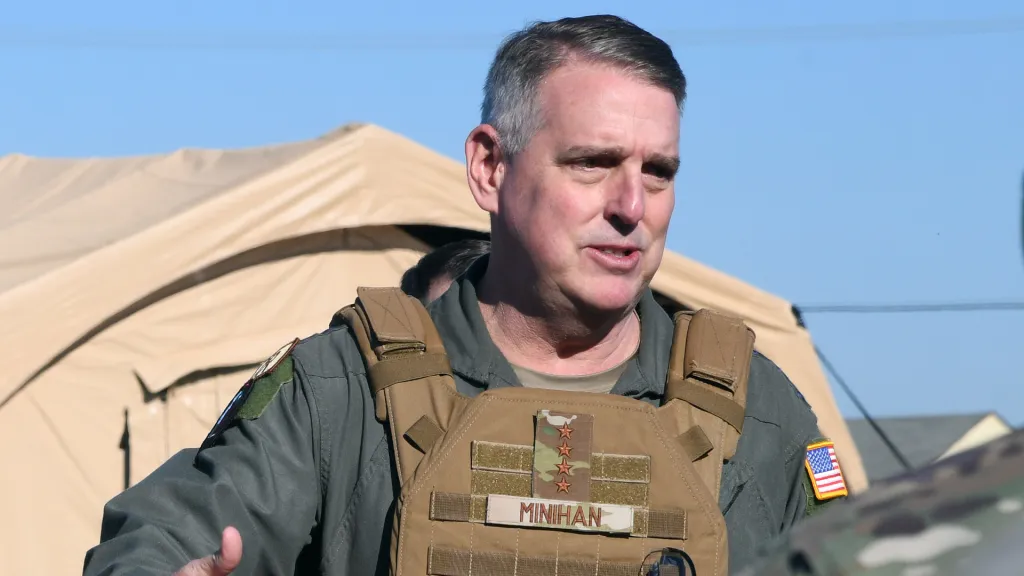
Straight Talk On State Of U.S. Airlift Capabilities From General Who Ran Air Mobility Command
The U.S. buildup of forces in the Middle East ahead of a possible attack on Iran relies very heavily on the performance of the U.S. Air Force Air Mobility Command (AMC). Hundreds of its cargo jets and aerial refueling tankers have moved materiel into theater and helped tactical jets, radar planes and other aircraft deploy across oceans to places like Muwaffaq Salti Air Base in Jordan, among many other locations. At the same time, the current crisis in the Middle East pales in comparison to the massive spike in demand for airborne logistics that would occur during a Pacific fight against China. Regardless, ever greater demand is being placed on an increasingly aging AMC fleet.
Few people know the nuts and bolts of AMC and its mission better than Michael “Mini” Minihan, a retired Air Force general who led the command from October 2021 to November 2024. In a 45-minute interview, Minihan offered his insights on that and a whole host of other topics. They include the current crisis and its airlift demands, challenges from China, future airframes, arming airlifters and refuelers, the connectivity issues he championed, AI and the leaked memo that put a cap on his career.

Since retiring, Minihan serves as a strategic advisor and board member to defense and technology companies, non-profits, and think tanks while continuing to write and speak on leadership, national security, and the future of air mobility and global power projection.
Some of the questions and answers have been edited for clarity.
Q: The C-17 Globemaster III heavy lifters have been supporting one crisis after another it seems. Have the hours accumulated faster on those airframes? What do you think should replace them and when?
A: All the things I was concerned about while I was in uniform, I remain concerned about right now. The options on the table are service life extension programs [SLEP] that the C-17 is already a candidate for. There was talk late last year about the KC-135 Stratotanker receiving another [SLEP]. You know, those types of things are concerning to me. At the end of the day, I think this nation needs to pay for the Air Force it needs, and the Air Force that it needs has a modern, capable mobility fleet. It’s not just old stuff that keeps getting patched up to get older. That’s the reality. So I’m concerned.

Q: Right now, a massive buildup is underway in the Middle East. AMC is doing the heavy lifting there as always. But in a crisis in the Pacific, would we have enough airlift aircraft to support moving quick enough across that vast theater, especially to respond to an invasion of Taiwan?
A: What you’re talking about is always a concern, regardless of the scenario. The reality is that America relies on the mobility fleet to project its power… So there’s not any scenario, even in the day-to-day competition, where you’re happy with the supply-demand intersection. So I think that we’ve got to work on capacity, certainly out of the entire mobility fleet, when it comes to the airlift and the air refueling. And then if you overlay that in contested environments, the concern gets bigger.

Q: Considering how long it has taken to build up forces in the Middle East, where tankers and cargo jets are flying over uncontested airspace, how concerned are you about being able to project enough power over long distances to protect Taiwan from an attack by China?
A: The alarm that I had when I was active duty exists today… So the reason I’m a civilian right now is because I was ringing the bell on the exact questions that you’re asking right now and that concern still remains. The reality is against a China or against a Russia, they’re going to challenge you in all domains, from great distances. They absolutely understand that the mobility fleet is America’s capability to project power quickly. So there’s going to be a focus on it. But once again, you’re describing concerns that I had and expressed when I was active duty, and I still have those same concerns.

Inside Taiwan’s Strategy to Counter a Chinese Invasion | WSJ
Q: What response did you receive when you expressed those concerns in a memo that was leaked to the public in 2023?
A: Well, I’m a civilian right now.
Q: Is that the reason why?
A: The leak created antibodies that would want me in another job. That memo was getting after all the things that you’re asking about right now. It was getting after capability and capacity. It was getting after readiness. It was getting after explode into theater. It was getting after the mobility fleet being able to do what it’s asked to do, despite being extremely vulnerable, despite it being extremely antiquated – all those things.

I believe that the Chief of Staff of the Air Force [Gen. Kenneth S. Wilsbach] now is focused on modernization and readiness. Those were 100% things that I was championing very early. And I think those things exist now, and I think we need to continue to put pressure on [those things] to get the resourcing, to get not just the Air Force, but America’s mobility fleet, to the capability and capacity that it needs to be at, so that we can not have concerns about China and not have concern about [deploying] to Europe when needed.
Q: Were you fired over the memo?
A: I was not fired. I thought for two weeks that I was going to be fired, but I was thankfully allowed to serve out the rest of my command tour. But I was asked to retire.

Q: What were the biggest lessons learned by Mobility Guardian and our readiness to meet the challenge China poses in the Pacific?
A: We’ve got to explode into theater very quickly. We’ve got to be able to explode into theater in numbers and volumes and challenges that we’ve not experienced in any of the modern…operations. We’ve got to put the entire joint force in place. We’ve got to do it quick enough that it gives an enormous deterrent value and also be able to provide that decisive victory, should it get to that.
We’ve got to transition from a deploy to an employ phase very quickly. So that’s establishing hubs and spokes. And then the last thing I’ll say – this is about maneuver. We have got to maneuver at a tempo required to win. So we got to put America’s unique and amazing capabilities in a position of advantage, and then once they’re in that position of advantage, we’ve got to be lethal, and that requires logistics, sustainment, supply maneuver, all the things that have to come together in the joint force to be lethal have to be there, and we need to work extremely hard to do that.
So Mobility Guardian was really a rehearsal, and we demonstrated that we couldn’t explode into theater. We demonstrated that we could go from deploy to employ. But we also learned some hard lessons, and to get it to the scale and the volume of the tempo that we needed to be, we’ve got work to do.

Mobility Guardian 2023
Q: What were some of these lessons?
A: The lessons are connectivity. You probably heard me say that a bunch both in uniform and out of uniform, but connectivity became my number one thing. I testified before the House Readiness Committee on that. I came up with a concept called 25% of the fleet by 2025, but the reality is that the car I rented right now driving from the airport to my hotel room has more connectivity in it than the overwhelming majority of the mobility fleet. So connectivity matters.
We’ve got to operate at a tempo required to win, which means we need to do extremely long missions. We need to have exquisite situational awareness. We need to understand the changing dynamic of the operational environment. When it comes to red forces, blue forces, threats, priority receivers, priority users. We’ve got diffuse information and logistic priorities across services, so there’s almost an unlimited amount of lessons learned. And then command relationships matter as well as command and control. All those things matter too. So plenty of lessons learned. I don’t think any of those are surprising. I think they’re accounted for in the Air Force’s readiness and modernization. But we also need to get resources so that we can be the Air Force this country needs.

(Master Sgt. Lauren Kmiec photo) Master Sgt. Lauren Kmiec
Q: How would you peg our overall readiness, realistically, to confront China in the Pacific militarily?
A: We’re ready. I like the way that [IndoPacific Command leader] Adm. [Sam] Paparo uses it. He says we’re ready, but he’ll never admit to being ready enough. This is kind of like the coaches that you love to play for – they are never satisfied. I would broaden it beyond readiness. I would say readiness, integration and agility of the joint force is what matters. And as ready, integrated and agile as we are, we need to be more. And those things have a deterrent value in themselves, and they’re also the essentials to decisive victory. So China enjoys positional advantage, but America enjoys extreme warfighting capabilities that can always get better, and it starts with readiness, integration and agility. We want to get to the point where we’re so ready that they don’t want to take us on.
Q; What were the three biggest problems you faced in your job and how did you go about solving them? Were you successful?
A: The three biggest problems I faced during my command tour at Air Mobility Command was resourcing, resourcing and resourcing – articulating the state of the mobility platforms and securing the resources necessary to get them on step to where they need to be. And so I said resourcing three times, and I mean it.

This is all about money. You can say everything you want. You can say all the things are important. You can say ‘you’re right, General Minihan, we agree with you,’ but if it’s not followed up with resourcing, then it’s meaningless, you know? So at the end of the day, this is all about resourcing. Can we decide to be the Air Force, the joint military that puts the resourcing behind what it means to decisively defeat a near peer adversary? Or do we wait until another December 7, or another September 11 event to finally get all the things pulled together that we need to pull together. So I get it. This is expensive.
We’ve got a chance of a century right now, I believe, with this administration. When you line up the executive orders, when you line up the acquisition reform, when you look up the possibility of a $1.5 trillion defense budget, you know those things come together means that we can move faster and move differently than we’ve ever done but we’ve got to be ready to do it.
We can’t apply all the opportunities over the same template of how we acquire, how we take risk, how we get our warfighters the things that they need and expect a different outcome at the end of the day. The overall statement for this, and this is big into problem statements. If I were to describe the problem statement we’re trying to solve is, can we get critical war-winning capabilities to our warfighters faster than China? At the end of the day, if we can answer yes to that question, then we’re going to be okay. If it’s a maybe or a no, then we’re going to have some significant concerns moving forward.

Trump Calls For Massive Increase To Defense Spending: $1.5 Trillion For 2027
Q: Were you successful in your efforts to solve those problems?
A: Was I successful? I would say I was successful at ringing the bell. I needed three more years to get it across the line. And I’m not comparing myself to a Gen. [Curtis E.] LeMay or a Gen. [Wilbur L.] Creech, but those two [Major Command] MAJCOM commanders – who are the fathers of the modern strategic bomber force and the father of the modern fighter force – were both MAJCOM commanders for over six years. So if I had to give myself a grade, I would say me and my teams were A-plus for effort and articulation and at the end of the day, getting the system to react quickly within three years proved extremely challenging.
Q: What was your grade for that?
A: It’s to be determined. You know, the money process takes a little time. I think there’s money for connectivity coming up in the current and the next few years, which is a great sign and a big change. If I were to grade it for what I wanted, I would have given myself a C, but I think it’s a higher grade than that, due to the circumstances, due to the realities of the budgeting and the resourcing process.
Q: What are the three biggest problems facing current interim AMC Commander Lt. Gen. Rebecca Sonkiss (formerly deputy AMC commander until Gen. John D. Lamontagne was named Air Force Vice Chief of Staff earlier this month).
A: The problems are getting resourcing across the line. Can you deliver them? Money. You know, at the end of the day, MAJCOMs don’t have the money to get the things that they need and under the current process. So how do you affect the organizations and entities above you, so that you can align the resourcing to do the things that it needs to do, and the timelines that you need to do it when that’s always a challenge for everybody.

Air Mobility Command (AMC) Change of Command Ceremony – Scott AFB
But if you’re asking what [Lamontagne] needs to worry about…if you look at the first Iran operation, if you look at the Venezuela operation, whatever is going to happen over the next short-term future for the Middle East, you can walk away saying, ‘we’re just fine.’ You can walk away saying, ‘Hey, we can project power over long distances. We can impose America’s will. We can do the things that our president and our nation asked us to do.’ And that’s right, you can do it under those circumstances.
The courage of the joint team is phenomenal. The capability of the joint team is phenomenal, but it does not compare to what will happen in a near-peer fight in the Pacific or in Europe. We are going to be contested from long distances in all domains, and the fleet that we have now is not going to be successful in that environment unless we take quick action and fix things.

Q: There is a lot of hype around Rapid Dragon and giving the airlift community a ‘shooter’ role. But in a major conflict, won’t the fleet be tasked to the max just with its core logistics mission? Do we need more airframes to really do the Rapid Dragon concept justice?
A: I hear this one a lot. So here’s the reality. I’ve got to carry the missile, the bomb anyway. Okay, I’m not trying to be Global Strike. I’m not trying to be a fighter. I’m not trying to compete with capabilities that are legit and high-end when it comes to delivering kinetic effects. But if I have to carry it anyway, and there’s an ability for C-130s, C-17s and other airlift platforms, why would you not want that capability?
So I’m not saying it can go into the high-threat areas or the medium-threat areas. I’m not saying that it needs to be a primary mission. But let’s really look at the thing – at the entire process here. I’ve got to carry that stuff anyways, so I am either gonna stop and drop it off for someone else to shoot, or I could have the ability to do it. If a combatant commander needs a demand signal, there’s a ton of C-130s. Our foreign partners and allies operate them. These aren’t complex systems. The munitions already exist. It’s essentially air-dropping it out of the airplane. And I think it has enormous viability in the Pacific. It can service medium- to low-[threat] targets all day long that need servicing and free up the other sets to get after the high-end threat environments where they need to be focused. So I think it’s something we need to consider.

Rapid Dragon
Q: That segues nicely to my next question. What are the biggest threats China poses to our tankers and airlifters during a time of war?
A: The ability to get out of town by dropping electrical grids and navigation signals. This is true for all the platforms. This is why I say we’ll be contested at great distances in all domains. Critical infrastructure matters and getting out of town – we already talked about what it means to explode into theater. So it’d be silly to think that they’re going to not take a very inexpensive way to disrupt our ability to do that. And then, the farther you get to the threat, regardless of which way you’re heading around the ocean, you know is going to increase their ability to reach out with long-range effects and stop mobility.
If you stop one tanker, you stop six fighters. That sounds like a good return on investment if you’re an adversary trying to prevent us from projecting power. I don’t think I’m saying anything I haven’t said before, and I don’t think I’m saying anything that’s inconsistent with others [are saying] about what the real environment is going to look like.
They’re students of us. They have unimpeded access to our critical infrastructure for a decade or more, and we’re going to expect them to call in on their investment and impose a cost on us a great distance.
Q: Is there any particular Chinese system or munition that worries you the most?
A: What worries me the most? I’m worried, just like I was in uniform, about the multi-domain aspect for which they’re going to go after us. I’m worrying about how those all come together. Certainly, without connectivity in the mobility fleet, it’s hard for mobility aircraft to understand where the threats are, especially the kinetic threats. So our ability to understand if you’re in a threat ring or a dynamic threat environment is extremely handicapped. And certainly the kinetic ones are of the biggest concern. Like they are in any war.
Q: We have seen interest from the DoW in multiple fronts on how to give our existing tankers better defenses, from better situational awareness to giving them mini interceptors to pairing them with [collaborative combat aircraft] CCA-like companions. What do you think the best cocktail of solutions is here?
A: The single biggest contributor to survivability in a big airplane is connectivity. The biggest contributor is not having a 12-hour-old Intel brief that you’re relying on to get you through the mission. So real-world updates, real-time updates, just like our fighters and our bombers enjoy. Battle management that gets after maneuver and not just kill chain. Those things matter.
If you were to ask me what I would want most when it comes to survivability, it would be connectivity that gives me the situational awareness to let our young crews – our captains, our lieutenants, our NCO – go out there and make great decisions as they’re operating under delegated authorities. Connectivity matters most. No doubt. Connectivity is why I put the priority on it when I was in uniform, because it’s the single biggest contributor to survivability. I just don’t think because of the size of these airplanes, in the maturity of the threat, that we’re going to be able to rely on traditional means of survivability.

Q: What about mini interceptors, or pairing these aircraft with CCA-like companions? Would that work?
A: I mean, I love it. The whole concept we came up with, the next-generation air lift [NGAL] and next-generation air refueling systems [NGAS]. I definitely see a role for CCA beyond just loyal wingman to fighter. So we can do this with everything from a CCA version of a tanker. We can do it with a stealth version of a tanker. I don’t think we need huge numbers of those. We can do stealth-like characteristics, like blended wing.
We can certainly have aircraft that are multirole, both cargo and air refueling. And so then you can have a lot of tankers that look like the tankers that we have now, the ability for small CCA and drones and other things to do electronic warfare and spoof and jam and other things like that are all on the table in my book and things that we should be exploring.

Q: What about a stealth tanker? Would we be able to afford it? Has adapting the B-21 Raider stealth bomber been looked at? What are your thoughts on that?
A: I think that we’ve got to have a family approach to air refueling, and that’s where the NGAS concept came up. It’s hard for me to believe, to think that you’re going to be able, in a highly contested environment, to get our highest capabilities into the high-threat environments without having some sort of stealth-like CCA air refueling capability. I don’t think we need big numbers of them. I understand completely that they’re expensive, but we’ve got to work through that process, and we’re doing it with NGAS. So everything I’m telling you, I’ve said for years, and I’ve got a lot on the record out there that’s getting after the questions you’re asking, and I’ve not changed since I got out of uniform.

The announcement by Northrop Grumman, the partnership with Embraer gets after this. If you go tackle that announcement, it gets after creating a family-of-systems approach to the problem, as opposed to we’re just going to field one piece of the problem at a time. We’re not going to work the integration in advance. We’re not going to work the readiness in advance. We’re not going to work the agility in advance, and I was happy to see in that announcement that they’re approaching the problem differently, because that’s the kind of approach I think we need to be successful.
Q: Have you looked at adapting the B-21 for this kind of stealth tanker role?
A: I don’t know what they’re looking at adapting, but I think there’s eloquence in the solutions that exist and that they’re working on, and then broadening their missions to beyond just the original intent for which they were designed. So I think that there’s great value in looking at those opportunities.

Q: What about an Agile Combat Employment (ACE) tanker capable of supporting small numbers of fighters from forward airfields? The KC-390 is being pitched for such a role. Do we need smaller tankers capable of operating from shorter fields?
A: We need a family of tankers that can address all the warfighter needs in all the warfighter environments. So we need tankers that look a lot like the ones we have now, that can handle the low-threat environments. We need tankers that can push into the medium-threat environments and service the big volume offloads in the abundant amount of receivers that will be out there. We need tankers that can operate in a medium- to high-threat with blended wing and stealth characteristics. And then we need stealth like tankers that can go into a higher-threat environment, as well as unmanned and CCA.

I believe there’s room in the Air Force for all in that capability. Let’s be clear, it’s what the kinetic force needs, you know. So the strike force and the bomber force are [fifth-generation] fifth-gen and [sixth-generation] sixth-gen, and yet we still operate a mobility force that’s on its best day, 2.5 Gen and in some cases, second generation. So we’ve got to catch up, not because of ego, but because of capability. At the end of the day, this is about equilibrium of the enabling force to actually do what it needs to do, so that the strike force can carry out its missions in all environments. That’s what needs to happen.
Q: Is there money to do that? Is there a will from higher headquarters and then the administration to make that happen?
A: Well, there needs to be. Like I said, I think the opportunity is here with this administration. Its executive orders, its acquisition reform, and the possibility of a significant increase in the budget. But this gets back to, are we going to pay for the Air Force that this country needs? It’s been under-invested in, especially in mobility, and we need to ensure that this president and every future president, when they call on the Air Force to support the joint force, to project America’s power to serve the national interests and impose our will when needed, that we need to develop these kind of things. We have to do this if we want to be the Air Force that this country needs.

Q: Have you talked to anybody in the current administration or the current Department of War about this, and what’s your sense of the interest there?
A: I think the conversation is turning where it needs to go. I have not talked to the current administration about this specifically, but I think there’s an appreciation, when you line up the talking points that align the priorities of where the department is going, I think that there is 100% alignment with what my priorities were when I was in uniform, what my priorities are now that I’m out of uniform, with the priorities of where this administration is going.
I realize it’s still hard. I realize there are still challenges. I realize there are no easy answers to any of this, and I realize that there’s more to modernization and readiness than just the mobility fleet. And I also realize that these are the things that we need to do.
Q: Low-end drones are a big problem, especially for big airplanes sitting idle on the ground. What do you think should be done to defend our airlift assets against lower-end drones?
A: Just like everyone else, I watched the [Operation Spider Web] attack that Ukraine carried out on Russia’s strategic forces. And the only thing that surprised me about that is that people were surprised and that it took so long for them to do it. This is a real threat. It gets down to air base defense. It’s something that we championed in Air Mobility Command during my time there, because of the drone incursions that were happening over multiple Air Mobility Command bases and multiple Air Mobility Command missions. So this isn’t a surprise to me.
This is going to have to be a joint solution, and I know the Army is working very hard on this, but there’s also going to have to be a capability of the Air Force and wings that are deploying to be able to do this on their own as well. So no easy answers here.
I feel like we’re behind, but catching up. I think it nests nicely into the Golden Dome opportunity as well. But you know, you gotta be able to handle everything from the low-cost drones all the way up to the highest capability missiles that could attack the homeland. This all fits in a spectrum of threats that we need to be concerned about.

Q: You brought up drone incursions. When and where did they happen and was the source ever found?
A: The incursions took place in late 2021 and early 2022 for Joint Base Andrews in Maryland and constantly at Joint Base McGuire-Dix-Lakehurst in New Jersey throughout my command. I’m not tracking that the source of those incursions was identified. It doesn’t mean that they weren’t. To my knowledge they weren’t. But, you know, at the end of the day, if you can’t control the airspace, including the airspace that drones are using, that’s a problem. It doesn’t matter if you’re in garrison or deployed. We’ve got to have the ability to defend at a greater capability than we have.
Q: How are the C-5M Galaxy cargo jets doing? Are readiness rates improving? Will we need a direct replacement of something its size when their time finally comes to head to the boneyard? Was the M upgrade program successful?
A: I’m a year and a half out of the conversation. The last data point I got was from U.S. Transportation Command (TRANSCOM) commander Gen. [Randall] Reed‘s congressional testimony, where he said that the mission reliability rate, I believe, had fallen to 46%. So, if that’s true, then it’s still an enormous concern. I don’t know any part of your life where you tolerate a critical capability operating less than half the time when you need it. So C-5s are an enormous concern for me.
I think there are options out there when it comes to large-volume aircraft that exist, that are being worked now, that can help us get capability quickly. And then I think there are concepts out there, like the commercialization of the C-5 fleet, that need to be taken seriously as well and apply commercial standards, commercial supply chain to increase the readiness of it. And between a combination of those two, I think that you can sustain what America needs to project large volume lift, but also get much higher than a 46% mission reliability rate.

Q: Do you see the need for a similar sized cargo aircraft to replace the C-5 when it’s finally time for them to retire?
A: I do. I think building large, colossal aircraft is one of the hardest things to do on the planet, when you think about it. I need someone to help fact check me on this, but I don’t think more than 250 large aircraft have ever been built. You know, when you include the Hughes aircraft, include the C-5, include the Russian Antonovs, the fleet has been small because it’s hard. At the same time, it does things that nothing else can do. You don’t have to condemn your cargo to sea lift only. You can move things very quickly – large volume things, critical capabilities. And so we need to have this capability.
But I don’t see the Air Force buying C-5 replacements. I see them transitioning C-5s to a different model, like commercialization. And I see the manufacturer of a large aircraft that can handle the volume being in the CRAF [Civil Reserve Air Fleet], and being a service concept that can get America the stuff we need when we need it. As opposed to developing another C-5 replacement, in addition to what’s going to have to eventually replace the C-5…
Q: Was the M upgrade on the C-5 successful?
A: I wasn’t there for when it was done, but … I would love to see what the original predictions were. When you spend all that money on that airplane and then still have a 46% mission reliability rate, it sounds like it is still challenged, like it used to be.

Q: Why hasn’t the Air Force gone big into uncrewed smaller logistics aircraft like China has? Especially considering dispersed ops in the Pacific?
A: Aviation right now is at a point of affordability and simplicity that we have got to distribute capability down to more tactical levels and have less centralization. Drones, automated aircraft 3,000 pounds or less, need to be a part of that equation. They need to be a part of the equation.
I am a big fan of drones…The problem we’re trying to solve is getting winning capabilities to our warfighters faster than China. That’s what we need to be focused on. We have got to be infatuated with automation and connectivity. We have to be infatuated with drones and automated aircraft from small to medium to large capabilities.

China’s unmanned transport aircraft completes maiden test flight
The biggest question I hear about why people don’t want small- and medium-capability is because they’re concerned about who commands and controls it and in my mind, that’s the point. You don’t have to command and control it. This is like a distributed maneuver pool, like a Jeep used to be in the Army. It’s inexpensive, it’s easy to operate, and we give it to maneuvering commanders in the field. We get TRANSCOM and Air Mobility Command out of the command and control of it. We let commanders determine their own priorities and service them, and then all we have to do is integrate them into the critical capabilities that Air Mobility, Command and TRANSCOM provide. You know those and we actually free up more of their assets to do that strategic and operational lift, as opposed to always having to get down into the capabilities that can be served by something much smaller. Does that make sense?
Q: Yes. Single pilot tanker operations, what’s your final thought on that?
A: Final thought on that is, we need to do more of it. I’m not saying we need to do more testing, but when it comes to automation, when it comes to concepts, when it comes to the tempo, the things we’re going to be required to do, we have to set ourselves up to be successful in an extremely deadly and demanding operational environment.
And to think that we’re going to apply the old dogma over this new operational environment, it’s just going to put us in a really challenging place to be successful in. So single tanker pilot ops made a comment on autonomy. It made a comment on what we need to do to win in the Pacific. It made a comment on risk taking, and it made a comment on, I think, a command team that understood how to apply real concepts over real problems and come out with an informed way forward. So there was a larger message than just single pilots in tankers.

Q: Finally, how did you see the rise of AI influencing AMC and how do you see it being used by the command in the future?
A: I’m a big fan of AI as long as commanders maintain the risk and the priority settings. You know I tried hard to get AI incorporated in Air Mobility Command, but the entire ecosystem wasn’t ready to have that conversation yet. I think AI and data are its own domain.
Like other domains we’re going to need supremacy and superiority in it. We’re going to need to fight for it and fight from it. It’s going to benefit from the other domains, but I think disproportionately it’s going to benefit the other domains. More so our ability to sense and seize opportunity, our ability to simplify, our ability to reduce variables, our ability to gain decision advantage, our ability to make better decisions, quicker, at a higher tempo than the adversary. I think all those things are AI- and data-oriented, and I’m still not certain that we see it that way. We have got to get first mover advantage in the AI domain, and that’s going to take some work. I think that we’re starting to get there, but I think we have a long way to go on it.

Boeing KC-46A Tanker Refuels Military Aircraft Using 3D
Q: Why do you think that there’s been such resistance to AI?
A: I’m not certain most people actually use it. It’s new. Certainly there’s a newness to it. But at the end of the day, this is about data. Can you trust the data? It really flips the script, if you think about it as its own domain, because then you understand the magnitude of its importance, and you understand that this is about decision making and trust, and that you’re actually not off-shooting that to the machine to do. That you’re asking the machine and the AI to reduce variables and increase simplicity.
Then you really think about, how does a commander be able to set priorities, set risk tolerances, adjust those as required, and then, at the end of the day, this is about better decision making. I think that there’s a complexity to this that just needs to play out a bit, but I know one thing, I don’t think our adversaries are downplaying AI and data as a domain. I think that they’re 100% embracing it, and I think we need to do the same. And of course, it’s American ingenuity. We’ll get better at it and dominate.
Q: Any final thoughts you want to share? Any questions I didn’t ask?
A: No, I appreciate the opportunity here. I think that the Air Force has it right when it comes to modernization and readiness. I think that the Air Force has it right, and we need to have the resourcing to be their Air Force that this country needs. I think mobility has a longer way to go than most within the Air Force. So I continue to champion that. Those things I cared about in uniform, I care about out of uniform, and I didn’t wait to retire to have an opinion on these things. So I want to be the generation of Americans that gets this straight before we get slapped like we did on December 7th and September 11th. Let’s not wait till we get slapped to get the act together. Let’s go now hard, because our sons and daughters deserve it.
Contact the author: howard@thewarzone.com

The Voice Kids star, 19, killed in horror hit-and-run while crossing road as cops hunt driver who fled the scene

A TEEN singer who starred on The Voice Kids has been killed after she was struck by a hit-and-run driver who fled the scene.
Nicole Valeria Vargas Gomez, 19, died in the horror crash in Quindio, Colombia.

She appeared on Colombia’s edition of The Voice Kids in 2019.
William Andres Paipa, 40, also died in the collision.
Cops said the pair were crossing the road when an unidentified vehicle smashed into them out of nowhere.
The impact threw them through the air onto the opposite side of the road.
Local police confirmed that the driver did not stop the help William and Nicole, but fled the scene.
They are now hunting down the vehicle which caused the deadly crash.
Nicole was studying Business Administration student at the University of Quindío.
The university said in a statment: “Nicole was a young woman committed to her academic training and to the cultural life of our alma mater.
Most read in Entertainment
“From the classrooms and also from the stages, she left her mark through her discipline, sensitivity and deep love for art.
“As a member of Coranto, she always carried the name of the University of Quindio with honour to every meeting and performance.”

15 notes, quotes and things to know ahead of USC spring football
Welcome back to the Times of Troy newsletter, where we’ve got a jam-packed edition for you this week. USC beat reporters were given the chance to talk to assistants we don’t often get access to during the season. So this week, we’re going to empty the notebook, with 15 notes, quotes and other things you should know ahead of USC’s spring football session.
1. Jayden Maiava has taken “a huge leadership jump” from last season. That’s according to offensive coordinator Luke Huard, who said the quarterback has been meeting with young wideouts, setting up group chats, watching film and working with them at walk-throughs. There will be a lot on his shoulders with such a young receiving corps.
2. Freshman quarterback Jonas Williams is “pretty developed” from a physical standpoint. The athleticism also is obvious when you watch him on tape. The question is how quickly can he get up to speed mentally? Huard said Williams ran a “very multiple” offense that asked a lot of its quarterbacks. So that’s a good sign. But with Husan Longstreet gone, USC is starting from square one again at backup quarterback. Sam Huard is still an option, but this wasn’t necessarily what USC planned.
3. Huard addressed Longstreet’s exit and how plans at quarterback change on a whim nowadays. Huard’s tone, which can’t really be detected in the quote, suggested he wasn’t exactly thrilled about the situation. (Huard, after all, spent a lot of time and energy getting Longstreet to USC.) This is part of what he said: “We are going to recruit guys that are going to represent USC at an elite level and give us an opportunity to win and compete for national championships. So for us, it’s identifying those guys that USC is important to ‘em. They want to truly be here. They want to stay and develop.”
4. Don’t be shocked if a freshman running back makes an impression, even with a clear top two in the backfield. Deshonne Redeaux and Shahn Alston earned raves from running backs coach Anthony Jones — and are very different. Alston is the bigger power back, while Jones called Redeaux “a jack of all trades.” Jones said Redeaux is already a solid blocker and even can line up in the slot as a receiver if need be.
5. What’s the next step look like for King Miller? “Hopefully, King 2.0,” Jones said, with a laugh. Miller’s main goal in the offseason has been “transforming his body,” Jones added. And if Miller can maintain his breakaway speed while adding strength, the sophomore running back could be bound for an even bigger year than he had in 2025.
6. Sophomore receiver Tanook Hines is working on his route running. Hines’ athleticism was clearly off the charts in his debut season. But there’s still plenty to polish in his game. Receivers coach Dennis Simmons said that’s the next step for him as he takes the reins as the Trojans’ No. 1 wideout. This offseason is a crucial one for Hines.
7. Zach Williams will move to slot receiver. Could that mean more opportunity? Williams didn’t make much of a splash last season, largely because of injury, but when he left Utah, then-coach Kyle Whittingham said he would’ve been the Utes’ top receiver the next season. Williams has talent. And with the move inside, he finally could get the opportunity too.
8. The rest of USC’s receiving corps is very young. I expect that means we’ll see a lot of sets with Hines, Williams and N.C. State transfer Terrell Anderson at first. But freshmen Boobie Feaster and Kayden Dixon-Wyatt no doubt will get their chances to change that. Redshirt freshman Corey Simms turned heads in camp last fall and could be primed for a step forward too.
9. The competition at tight end is wide open. Lake McRee is off to the NFL. Walker Lyons transferred. “Who’s going to fill all those snaps?” tight ends coach Chad Savage asked. “Those are a lot of snaps that have gotta be replaced.” Savage mentioned that Wisconsin transfer Hunter Ashcraft would be a part of that equation. Redshirt freshman Taniela Tupou had begun to impress by the end of last season as well.
10. That said, freshman Mark Bowman might make a serious push to start. When I asked Savage about where Bowman was most developed, he said Bowman was “pretty complete” already. Remember, he still should be in high school at this point. Of course, it’ll take time for him to adjust to the physicality and blocking of college football. But I suspect that won’t take long. “In terms of being a natural pass-catcher, route runner, being explosive,” Savage said, “he can do all that.”
11. Savage had a chance to leave for another opportunity. He chose to stay and was promoted accordingly. The Trojans’ new pass game coordinator called working at USC “a dream come true.” He added, “There’s so much growth for me to happen here at USC. … I’m a West Coast guy.” That’s good news, considering he might be one of the best recruiters in college football.
12. Offensive line coach Zach Hanson said USC’s front was “nowhere near where we need to be” last season. The unit actually overachieved, considering its circumstances, but he feels there’s “a lot of room for growth.” I agree. This group will look a lot different in the fall than it did last season, with some linemen starting at new positions. Hanson believes the added competition will lead to a big leap for the line. I tend to agree.
13. Tobias Raymond will take reps at center in the spring. It has been the plan for a while that eventually Raymond would try his hand at center, as coaches see that as his best chance to stick in the NFL. It’s not out of the question that he could play there full time, assuming another linemen steps in.
14. Five-star freshman Keenyi Pepe will start off working at right tackle. Can he win the job in Year 1? He’ll have Justin Taunauu, last year’s starter, as well as young returners like Elijah Vaikona and Aaron Dunn to compete with, but Pepe is further developed than the usual freshman. “A lot is just God-given talent,” Hanson said. “The Lord blessed him with unbelievable gifts.”
15. New coordinator Gary Patterson famously split his 4-2-5 defense into two calls. One for the front seven, one for the defensive backs. But that could play out differently at USC, he said. Patterson’s plan is to use pieces of USC’s old scheme under D’Anton Lynn and “add another scheme to it.” Sometimes that’ll mean just one call for the whole defense, other times he’ll plan to deploy a double call. With slower offenses in the Big Ten, that approach could work quite well.

USC’s Laura Williams looks to pass after getting a rebound.
(Gina Ferazzi/Los Angeles Times)
—The USC men are in serious danger of missing March. It’s not just that the Trojans lost to No. 10 Illinois. They were blown out by the Illini, who then lost to UCLA three nights later. It’s not just that USC lost to Oregon, either. It’s how they lost to Oregon, a team that had lost 11 of 12, by letting the Ducks go on a stunning 7-0 run in the final minute. This version of USC doesn’t deserve to be in the tournament. But I do believe this team has the talent to be a tournament team and it’s not out of the question that it could win two of the next four, win a couple of games in the Big Ten tournament and sneak in. That climb is just a really steep one after Saturday.
—Laura Williams’ emergence as a reliable rebounder and rim protector is a big deal. All season long, Lindsay Gottlieb has been content to rely on a rotating group at the five. USC has been able to get by for most of the season, but come March, it’ll help to have someone who can do what Williams did against Wisconsin, when the redshirt freshman reeled in 14 rebounds and blocked four shots.
—What a start to the season for USC baseball. After leading a combined no-hitter the previous week, Grant Govel threw six scoreless innings, gave up just one hit and struck out 11 in a win over Rice. That was after No. 1 pitcher Mason Edwards pitched a shutout the night before. The Trojans are surging to start Andy Stankiewicz’s third season as coach, and if the pitching continues to be this good, USC could be on the brink of a breakthrough campaign.
Olympic sports spotlight
USC beach volleyball opened its season on a hot streak in Honolulu with four straight wins, including a victory over No. 2 Stanford, only to trip up twice on the final day of the Outrigger Duke Kahanamoku Beach Classic. That one of those losses came to No. 1 UCLA, which USC won’t face again until April 4, made it an especially tough way to end the weekend.
But the season is young, and there’s no reason to doubt that Dain Blanton will have USC in the mix to win a national title when the rivals meet again.
What I’m Watching This Week

Jason Segel in “Shrinking.”
(Apple TV+)
It’s shocking that it took until this show’s third season for it to get a mention in this space, but “Shrinking” is back, and there is no show on TV that I find more life-affirming.
Jason Segel stars as Jimmy, a therapist working through grief after the sudden death of his wife. That might sound heavy — and, sure, it is sometimes — but it’s also hilarious, optimistic and heartwarming. Few shows these days can make you both laugh out loud and tear up in the same episode. This is one of them.
The second season was a revelation. And so far, I’m hopeful that Season 3 will be a worthy follow-up.
In case you missed it
Fourth-quarter drought dooms USC vs. No. 10 Ohio State despite Jazzy Davidson’s 32 points
USC men’s basketball team fumbles late lead, suffers devastating loss to Oregon
Star freshman Jazzy Davidson gives USC a scare as it wins sixth straight
USC men come unraveled in blowout loss to Illinois
Until next time …
That concludes today’s newsletter. If you have any feedback, ideas for improvement or things you’d like to see, email me at ryan.kartje@latimes.com, and follow me on X at @Ryan_Kartje. To get this newsletter in your inbox, click here.

Ex-President Yoon appeals life sentence over insurrection conviction

Former President Yoon Suk Yeol on Tuesday appealed his life sentence over his insurrection conviction from his failed bid to impose martial law.
The appeal was filed by his lawyers five days after a court sentenced Yoon to life in prison for leading an insurrection when he briefly imposed martial law on Dec. 3, 2024.
“We think we have a responsibility to clearly point out the problems with this decision for not only court records but for future historical records,” the lawyers said in a notice to the press.
“We will not be silent about the special counsel’s overzealous indictment and the contradictory decision of the court of first instance premised on it, as well as its political background,” they added.
The Seoul Central District Court delivered the ruling last Thursday, saying Yoon aimed to cripple the National Assembly by sending troops to the compound after declaring martial law, meeting the definition of an insurrection as stipulated by the Constitution.
It also said the former president planned the crime personally and in a leading role, incurring an enormous social cost, but hardly expressed an apology.
Seven other defendants received their first verdicts alongside Yoon, including former Defense Minister Kim Yong-hyun, former National Police Agency chief Cho Ji-ho and former Seoul Metropolitan Police Agency chief Kim Bong-sik.
The former defense minister was sentenced to 30 years in prison, while Cho was given 12 years and the former Seoul police chief 10 years for their roles in the martial law bid.
Yoon was earlier sentenced to five years in prison in a separate trial on charges that include his alleged obstruction of investigators’ attempt to detain him last year.
Copyright (c) Yonhap News Agency prohibits its content from being redistributed or reprinted without consent, and forbids the content from being learned and used by artificial intelligence systems.

Where tourists seldom tread, part 20: three UK towns that feel like home | England holidays
The last in this series of underexplored, overlooked, bypassed towns revisits three places loosely linked to somewhere I’ve lived at different stages of my life. Relocating is grand-scale vacationing, as there are a few months when the new place feels like a holiday destination – fresh, strange, not filtered and tainted by habit or prejudice. Going back years later is part-pilgrimage, part-funeral.
Harrow
The lexicon of suburbia – commuting, dormitory, cul-de-sac, privet hedge – resonates with not seeing. In densely peopled north-west London, you have to dig – with eyes, books and boots – to find the occluded past.
In a 767 charter, Harrow is Gumeninga hergae, the “heathen temple of the Gumeningas [tribe]”. The small hill – pronounced on old sketches – was a natural spot for practising worship; harrows are found all over England. Later it was part of the archbishop of Canterbury’s estate and by Domesday had 70 ploughlands, 117 households and 102 villagers, two cottagers, three knights, two slaves and a priest – a sizeable place for 1086.
Trees outnumbered people. The medieval manor boasted a 100-hectare (250-acre) deer park in Pinner. The name of Harrow Weald derives from the Old English for woodland, a reference to the Forest of Middlesex that once stretched from Houndsditch in the City of London, through Highgate and Mill Hill, to these outer reaches. It provided pannage (autumn feeding) for 20,000 pigs.
During the 16th and 17th centuries, Harrow attracted gentry, who could easily reach court and parliament by coach and four. The wealthy landowner John Lyon founded Harrow school by royal charter in 1572.
On an 1868 map, Harrow on the Hill is a mere scattering of houses surrounded by parks, groves and school fields. The only nearby railway line is the London and North Western, arrowing away to Birmingham and Crewe. In 1930, there was enough greenery and wildlife to inspire Harrovian Tom Harrisson (later involved in the Mass-Observation project) to publish Birds of the Harrow District.
Metro-land would, by the 1950s, submerge the hill and its environs in housing, lasso it to London, spawn North, West and South Harrows and other subdistricts, and provide suburban living for more than 200,000 people. A more populous, less planned version of this greeted me when I moved there in the summer of 1987, to travel, as Betjeman puts it, “Smoothly from Harrow” on the Metropolitan line “fasts” to a dreary office job in Blackfriars.
Knowing, now, a little about this lost town’s historical layers helps explain the still tangible sacrificial feel of the place, the amorphous sensation of inhabiting a populous nowhere.
Things to see and do: walk section 9 of the Capital Ring; Headstone Manor Museum; Zoroastrian Centre (former Ace Cinema).
Clitheroe
I recommend a slow approach to Clitheroe, to take in the setting. A walk into town allows time to admire the hill, the steep-sided lump on which sit the ruins of the Norman castle, with the “second smallest surviving stone keep in England”. From the top of the hill, the views are uplifting: weather coming in from the west, the Bowland Fells, slivers of Yorkshire’s Three Peaks, Pendle Hill.
The A59 Lancs-Yorks trunk road became a bypass at the end of the 1960s. Before then, cars and vans chugged up Moor Lane and along Castle Street, which remain the traffic-cluttered sections of the high street. The narrowness and low-slung 17th– and 18th-century shopfronts remind me, in a way, of Totnes, which is largely Tudor. There was a continuity to towns into the modern era, warped by redbrick Victorian pomp and finally shattered by the 20th-century’s brutal raze-and-redevelop wave of shopping precincts (many of them since condemned).
In some respects, Clitheroe is archetypal Lancashire. The struggling one-time textile boomtowns to the south of Pendle Hill show what industry did and offshoring took away. Clitheroe, relatively speaking, is intact. Old places seem to weather booms and busts better. New money helps, of course.
There were factories here, though. Two former spinning blocks, a weaving shed and offices have been given a creditable makeover to create Holmes Mill: a combined deli-cum-bar, “luxury” cinema, brewery and alehouse, hotel and wedding venue, ticking aspirational boxes for affluent Lancastrians. Lively local boozers are dotted all around town, and Camra groups are probably Clitheroe’s main excursionists. The New Inn is riotously cosy. Georgeonzola does cheese and wine. There are three cocktail bars, at least. No clogs or caps there.
I live a couple of miles outside Clitheroe. It’s sometimes strange to think it belongs to the same county as St Helens and Warrington, where I was born and raised. Locals say “Pennine Lancashire”. I’m from the Plains. The rain is worse here, and the wind can be evil, but this north-facing town is a likable knot of streets and stonework; plenty to discover, still.
Things to see and do: Edisford Bridge (a swimming spot in summer); walk up Pendle Hill or on the Ribble Way (ideal for winter); Whalley Abbey (by bus or train); the No 11 bus to Bowland and for Pen-y-ghent.
Princetown
Devon is the least bleak county I know. It has balmy summers, rolling pastures of red earth and green grass, cove-serrated coasts, hamlets, high hedgerows and long lanes, an ecclesiastical city, a maritime city, and mild winters. Princetown is its sole flirtation with grim. Tourists do come, and not as seldom as other spots in this series, but they often look shocked when they get out of their cars or dismount their bikes.
The granite-grey Dartmoor prison is the dominant feature of Princetown, as well as the township’s reason for being. Thomas Tyrwhitt MP secured land from the Duchy estate of the Prince of Wales to establish a “depot” for prisoners taken in the Napoleonic wars. It was remote enough to deter escape and sufficiently inhospitable.
The first prisoners arrived in 1809 and soon Princetown prison was overcrowded. When US prisoners from the war of 1812 began arriving, conditions deteriorated, and diseases such as pneumonia, typhoid and smallpox became “natural” death sentences. The Depot closed when the conflicts ended, reopening in 1850 as a penal establishment for “common criminals” – which included, over time, the future Irish premier Éamon de Valera, the conscientious objector and MP Frank Longden and Zen poet Reginald Horace Blyth.
Tyrwhitt – now Sir Thomas – built a railway to shift quarry stone down to the port and bring up farm produce, coal, timber and lime for fertiliser. Prisoners and passengers used the line at various times until its closure in 1956. The prison was temporarily closed in 2024, due to “higher than normal” levels of radon, a cancer-causing gas formed by decaying uranium in rocks and soils.
The old railway is now a track down which runners and cyclists hurtle away from Dartmoor’s anti-twee, anti-wild camping, anti-tourism, possibly radioactive town, or “village”, by population if not for its looks. Sir Arthur Conan Doyle stayed at the Duchy hotel, now the national park visitor centre. An escaped convict, Selden, has a pivotal role in The Hound of the Baskervilles. Between two farmhouses called High Tor and Foulmire and the great prison “extends the desolate, lifeless moor. This, then is the stage upon which tragedy has played, and upon which we may help to play it again.” For the modern, leisure-age gaze, the moor is a wild camping backdrop and, at least potentially, full of vitality, thanks to its airy solitudes; HMP Dartmoor in Princetown, emptied for now, is the tragic set.
Things to see and do: Princetown to Burrator Reservoir mountain bike tracks; Dartmoor Prison Museum; Foggintor Quarry.
Chris Moss’s latest book, Lancashire: Exploring the Historic County That Made The Modern World, is published by Old Street Publishing at £25. His book based on this series, Where Tourists Seldom Tread will be published by Faber in 2026

Devastation and frozen frontlines: Ukraine marks four years of Russia’s war | Russia-Ukraine war News
Kyiv, Ukraine – Hennady Kolesnik never expected the full-scale Russian invasion to last this long.
“These are the worst and longest years of my life,” the 71-year-old retired welder told Al Jazeera four years after the aggression that began on February 24, 2022.
Recommended Stories
list of 4 itemsend of list
In the first days of the war, he and many Ukrainians were afraid Kyiv would be lost, as well as the third of their France-sized nation that lies on the left, eastern bank of the Dnipro River.
Tens of thousands of Russian troops, including elite airborne units and motor rifle brigades, occupied north of the Kyiv region, while the Kremlin’s supporters triumphantly touted that the capital would be seized “within three days”.
Months later, “we were ecstatic about what we’d regained” after Russian forces withdrew from around Kyiv and were ousted from northern Ukraine, said Kolesnik, a grey-haired, pallid-faced and emaciated pensioner, clutching a cane.
He is recovering from a case of pneumonia that he feared he would not survive amid days-long power outages and disruptions of central heating caused by Russian drones and missiles during a cold spell, when temperatures plunged to as low as -23 degrees Celsius (-9.4 degrees Fahrenheit).
“But we’re still standing, and that’s the most important thing in a fight,” Kolesnik, who used to dabble in boxing, said with a smile.
His wife, Marina, 70, agreed: “Nobody expected us to last that long, and we’re still here.”

However, Ukraine’s 2023 counteroffensive failed to cut Moscow’s “land bridge” from western Russia to annexed Crimea, and Russian troops keep inching forward.
But their advance is glacial amid staggering losses. Last year, they occupied less than 5,000 square kilometres (1,930 sq miles), or about 0.8 percent of Ukraine’s total area, according to Ukrainian officials and Western analysts.
Overall, Russia controls about 19 percent of Ukraine’s territory.
“The front line froze like during World War I,” Nikolay Mitrokhin of Germany’s Bremen University told Al Jazeera. “So far, Russia doesn’t have enough forces or new technologies for a decisive and successful advance, but it can still squander thousands of [its soldiers’] lives.”
This month, Russian forces encountered a dual communication problem that reversed their progress.
Elon Musk’s SpaceX company shut down smuggled Starlink satellite internet terminals used by Russian soldiers, while Moscow’s efforts to block the Telegram messaging app further disrupted coordination.
Ukrainian forces counterattacked, regaining about 200 sq km (77 sq miles) in the eastern Zaporizhia and Dnipropetrovsk regions.
But in other front-line areas, the pressure is mounting.
Russian drones with attached optic fibre immune to jamming began reaching a heavily-fortified town in the southeastern Donetsk region.
“It has gotten a lot noisier. There are more outages; some locals are panicking,” Sviatoslav, a serviceman stationed in Kramatorsk, told Al Jazeera. He withheld his last name in accordance with wartime protocol.
Moscow insists Kyiv surrender Kramatorsk and the rest of Donetsk – about 1,000 sq km (386 sq miles).
What could affect Ukraine’s stance is further Russian strikes on energy infrastructure.
“Ukraine keeps the front line well, but the functionality of its energy system is hanging by a thread, which may affect a lot,” Mitrokhin said.
Eighty-eight percent of Ukrainians think Russia’s strikes are designed to “force them to capitulate”, according to a survey by the Kyiv International Sociology Institute (KMIS) conducted in late January.
Nevertheless, two-thirds of those polled said Ukraine’s armed forces should fight for “as long as it takes”.
“People en masse are more ready to keep resisting [the invasion] than to capitulate,” Svetlana Chunikhina, vice president of the Association of Political Psychologists, a Kyiv-based group, told Al Jazeera.
And even though there is a spike in depression, anxiety, and chronic stress among Ukrainians, there are no “abrupt jumps” in these conditions, she said.
“People adapt – including through depression – to the war’s horrible circumstances; people keep functioning,” she said.
Ukrainians still hope for a better future, she said.
Only one in five polled Ukrainians hopes the war will end this year, but two in three are sure that in 10 years, Ukraine will be a “thriving” member of the European Union.
“This is the literal realisation of the philosophic principle: ‘get ready for the worst, hope for the best,’” Chunikhina said.
However, brain fog and cynicism are on the rise, she said.
“For the Ukrainian public whose fight against the Russian aggression is largely fuelled by moral virtues – including high ones, such as altruism, patriotism, responsibility to future generations – cynicism could be really destructive,” she said.
News brings little relief.
United States President Donald Trump has so far failed to deliver on his pre-election pledge to end the war “in 24 hours”.
Meanwhile, Russian public figures who support the Kremlin still try to present the invasion as a step to “protect” Russian-speaking Ukrainians.
Moscow-based analyst Sergey Markov claims that the war began on February 23, 2014, when pro-Russian protesters began rallying in Crimea, urging the Kremlin to annex the Ukrainian peninsula.
“It was a peaceful uprising of the Russian people for freedom, peace and true democracy,” he wrote on Telegram on Monday.

Rapper Luci4 dies aged 23 at a friend’s house as grandparents ‘claim he was robbed’ and cops launch probe
POPULAR young rapper Luci4 has died, according to his grandparents.
The young musician – best known for his viral hit “BodyPartz” – was just 23 years old.
His grandparents revealed to TMZ that he had died; however, his cause of death remains unknown.
Police have since launched a probe into his sudden death.
The rising star – whose real name was James Dear – passed away at a friend’s home in Los Angeles on February 22.
The Los Angeles County Medical Examiner has since confirmed his death.
His grandparents told TMZ they felt suspicious about their grandson’s death.
They have alleged his wallet was completely emptied, saying they had recently warned him about the people he was surrounding himself with as his fame grew.
The circumstances around his death remain unclear.
The rapper’s grandparents said they are now waiting for the results of the police investigation.
Most read in Entertainment
In a statement, the Los Angeles fire department said it had responded to a medical call at the house around 11.40am.
Sadly, he was already dead when help arrived, so the police were called.
It remains unclear if investigators suspect foul play.
Previously known by other stage names including Axxturel, 4jay, and Plasdu, Luci4 showed an interest in music and digital production at a young age.
His career began with music production, where he created beats and tracks that became popular online.
More recently, he had achieved viral fame through social media platforms including TikTok.
Pioneering the microgenre known online as sigilkore, he shot to fame with hit song “BodyPartz” in 2021.
The song was later recognised as a Gold hit by the Recording Industry Association of America (RIAA).
He also penned other popular tracks including All Eyez on Me and Kurxxed Emeraldz.
His success led to him signing with Atlantic Records.
His signing was considered a significant milestone for emerging internet-based artists.
It demonstrated the increasing influence of social media in discovering and promoting new talent.
Luci4 founded the collective Jewelxxet – a primary hub for sigilkore.
The genre is defined by dark, lo-fi atmospheres and bitcrushed vocals coupled with occult imagery.
He was popular largely among the underground music community; however, the new wave of experimental rappers including OsamaSon and Che have credited him as one of their influences.
The young rapper still frequently engaged with his fans and the online music community, staying connected with his roots as an online artist.
His death has sent shock waves through the music community, as fans share their grief online in an outpouring of tributes to social media.
“His 2020/21 run will never b forgotten he changed tiktok,” one person said.
Another posted, “That’s insane wtf.”
“Damn. I’ve been actively listening to him since 2021 casually. Was never a super fan but I have six solid songs that get played weekly. It’s always who u least expect. It makes me so sad listening to songs frm dead artists, never thought I would ever get that sentiment w his,” posted a third.
Another mourner said: “RIP TO A KING.”
“He was definitely one of my favorite artists to listen to during covid era,” said another.
Others have said he “really influenced a whole wave of music”, with some even listening to his songs as early as today.
“I was bumping his music so loud earlier today lil did I know he was gon die the same day,” a fan posted.

UCLA’s super selfless seniors are key to women’s basketball success
Welcome to UCLA Unlocked, our weekly newsletter featuring all things Bruins athletics. To sign up to get this newsletter delivered every Monday to your inbox, click here.
The UCLA women’s basketball team is closing in on an undefeated Big Ten season, clinched the outright regular season league title for the first time in school history, is riding a 21-win streak and is ranked No. 2 nationally.
Perhaps most remarkable, the Bruins firmly believe they can be better and have yet to peak as they push to win a national title.
How did UCLA go from being a team that got pushed around by UConn, LSU and South Carolina in the NCAA tournament the last three seasons to a loaded squad no one wants to face in March?
Bruins coach Cori Close solved the riddle by recruiting six senior leaders who accepted they had to continuously sacrifice and push to improve to achieve their goals. They echo their coach’s values, putting each other first in order to succeed.
“Me and Kiki [Rice] came here in our freshman year and it’s just been amazing to see the program grow since then,” UCLA senior Gabriela Jaquez said. “And I think that’s also a big credit to our coaches and to all the staff at UCLA to really get the fans out there and support us because we really couldn’t do it without them.”
UCLA honored Lauren Betts, Angela Dugalić, Jaquez, Gianna Kneepkens, Charlisse Leger-Walker and Rice during their final regular-season home game Sunday. The group will be back soon to host first- and second-round NCAA tournament games at Pauley Pavilion, but Close wanted them to take the time to celebrate all they had accomplished together.
Betts is in the national player of the year conversation, but the big award is likely to go to another player who carries a heavier workload for their team. Close said the seniors are all projected to be WNBA draft picks, but they have sacrificed better individual statistics and potentially some awards in exchange for a better shot at winning a national championship. She said the selfless approach is rare and should be cherished.
“One of them said the other day, like, ‘I might not ever play on a team like this again,’” Close said of her senior class. “I think the combination of the depth of the relationship, excellence on the court, their love of the work — they love to work and get better together — and their connection off the court.
”… I think these seniors actually do really understand that this is really special. They’ve set a bar for the culture of our program that we will be forever measuring it against.”
Baseball makes a statement
No. 1 UCLA baseball team turned heads with a weekend sweep of No. 7 TCU. The Bruins beat the Horned Frogs 10-2 on Friday, 5-1 on Saturday and 15-5 on Sunday. Roch Cholowsky and Will Gasparino have racked up six home runs apiece during UCLA’s first seven games this season.
Softball keeps rolling
The No. 9 UCLA softball team beat No. 11 Texas A&M 15-7 in five innings on Sunday to cap a 6-0 weekend at the Mary Nutter Collegiate Classic. The Bruins also beat No. 20 Duke and No. 13 South Carolina. Senior Megan Grant delivered a .545 batting average during the weekend with two home runs and nine walks.
Gymnastics knocks out Illini
No. 5 UCLA gymnastics defeated Illinois 197.675-195.475 Sunday in Champaign, Ill.
Jordan Chiles won the all-around (39.650), vault (9.950) and floor exercise (9.975), while Ciena Alipio won balance beam (9.950).
The Bruins host three top 25 programs — Iowa, Ohio State and Maryland — during the Big Fours meet Friday at Pauley Pavilion.
In case you missed it
UCLA women blitz Wisconsin on Senior Day, win 21st in a row
Donovan Dent channels Tyus Edney, lifts UCLA to stunning OT win over No. 10 Illinois
UCLA to play 2026 football season at Rose Bowl as lawsuit continues
UCLA’s Mick Cronin apologizes for ejecting player, says he’s still ‘a good fit’ as coach
No. 2 UCLA’s 20th win in a row clinches share of first conference crown in 27 years
Plaschke: UCLA must eject Mick Cronin if he can’t respect his players
UCLA men are no match for Michigan State
No. 2 UCLA wins its 19th straight game with thrashing of Indiana
Have something Bruin?
Do you have a comment or something you’d like to see in a future UCLA newsletter? Email newsletters editor Houston Mitchell at houston.mitchell@latimes.com. To get this newsletter in your inbox, click here.
LIVE: Russia-Ukraine war enters fifth year as strikes hit Zaporizhzhia | Conflict News
Live updatesLive updates,
Ukraine officials say infrastructure damaged as Russia strikes Zaporizhzhia on the war’s fourth anniversary.
Published On 24 Feb 2026

Nature reserve leading to secluded beach ‘looks like something out of a smuggler’s novel’
This walk near Bridlington boasts a stunning 3km woodland trail leading to a secluded pebble beach with towering white cliffs, creating a tranquil bay perfect for peaceful coastal walks

It’s so secluded there’s often ‘not another person in sight’(Image: Thomas Tolkein/Flickr)
Stretching across 184 acres, this woodland trail guides you to a stunning beach whilst offering abundant wildlife sightings throughout your journey.
Danes Dyke nature reserve in Bridlington boasts the Headland’s most extensive woodland area, with a pathway leading directly to the coastline.
This distinctive sea and cliff habitat has earned protection as a Site of Special Scientific Interest, whilst the woodland itself gained official Nature Reserve designation in 2002.
Nature Reserve Walk
Visitors can start by using the spacious Pay and Display car park, which accommodates up to 80 vehicles. Located off Flamborough Road in Bridlington, simply follow the brown tourist signs pointing towards Danes Dyke.
Keen ramblers often favour the 3km circular route starting from the car park, though numerous alternative paths and distances are available to suit your preferences.
Save on the best holiday cottages in Yorkshire
This article contains affiliate links, we will receive a commission on any sales we generate from it. Learn more
Famous for its dramatic landscapes, historic cities, hearty food, and rich cultural heritage Yorkshire is just waiting to be explored. Sykes Cottages has a large number of properties to choose from with prices from £31 per night.
After meandering through approximately 1km of woodland, you’ll emerge at the beach, where sweeping vistas of the bay unfold before you.
One visitor shared on TripAdvisor: “You must visit Danes Dyke if you are visiting the area. Even the drive to it is eerie but magical, and the huge dyke itself is spectacular and steeped in history.”
They added: “You can just imagine how the Vikings tried to etch out the area to make it a land of their own. The beach is great too.”
Nestled within the woodland reserve lies a remarkable prehistoric earthwork, comprising a substantial bank and ditch that cuts through the landscape.
While unconfirmed, it’s thought to date back to the Iron Age, serving as a defensive structure that severed the Flamborough Headland.
Beach
Yet the true highlight of this excursion is undoubtedly the final stop, Danes Dyke Beach. The sand is reached via a tarmacked path that’s rather steep and has suffered damage from water and debris, requiring extra care when navigating.
The undisputed showstopper here is the towering white cliffs that dominate the predominantly shingle beach. They enclose the shoreline, confining it to its own sheltered bay, which explains its popularity amongst adventurers seeking solitude and peace.
Its secluded bay is reminiscent of the type of area once used for smuggling contraband, ferried in by vessels from the ocean. The surrounding Flamborough Head area does indeed boast a smuggling heritage, with its famous ‘smuggler’s caves’ situated at neighbouring Thornwick Bay.
One rambler said: “The day that my wife and I visited Danes Dyke, there was not another person in sight, just the two of us, with the waves crashing in and the sea salt from the spray in the air – pure magic.”
Another commented: “Lovely clean beach with a picturesque cliff line and white pebbles. A short walk from the car park. Great place for the dog to run. Hardly anyone about.”
Place to rest
The closest village to Danes Dyke is picturesque Sewerby, which boasts several traditional and welcoming pubs. Following a peaceful and leisurely stroll, you can tuck into hearty pub fare or pause for refreshments at The Ship Inn or The Old Forge, or even treat yourself to highly-rated fish and chips from Blu Savannah along the seafront.
The Ship Inn features a spacious beer garden perfect for summer months, which stretches towards the cliff edges. It’s built quite a name for itself with its range of cask ales and is renowned locally for staging various live music performances and beer festivals, making it an ideal spot to visit following a weekend ramble.
Ensure our latest headlines always appear at the top of your Google Search by making us a Preferred Source. Click here to activate or add us as your Preferred Source in your Google search settings.

Sunshine island is ‘unfairly beautiful’ paradise with £33 flights and £2.10 pints
A breathtaking tropical paradise that is warm all year — it’s the perfect affordable winter retreat for UK residents boasting unspoilt beaches, sparkling turquoise waters and jaw-dropping scenery.

It’s an island of unmatched beauty(Image: Getty)
A stunning sun-soaked paradise has been dubbed “unfairly beautiful” by visitors who simply cannot contain their admiration for its remarkable and diverse splendour.
Brimming with vibrancy, vivid colours, and rich culture, this radiant island basks in warmth throughout the year, cementing its status as the ultimate tropical escape for holidaymakers.
Frequently referred to as the ‘Pearl of the Atlantic’, this petite Portuguese volcanic island more than earns its illustrious moniker, delivering on every promise of being a true tropical utopia.
Striking landscapes, unspoilt beaches, sparkling turquoise waters and jaw-dropping scenery are just a handful of the treasures this enchanting destination has to offer.
With temperatures reaching 20C during February and March, this charming Portuguese gem is the ultimate winter bolt-hole for people living in the UK, desperate to flee the biting cold and relentless drizzle of the darker months, reports the Express.
Amazon cabin bag meets Ryanair requirements for less than £15
This article contains affiliate links, we will receive a commission on any sales we generate from it. Learn more

Travellers keen to beat the bag charges without breaking the budget have made an Amazon travel bag a bestseller. Rated 4.7 stars out of 5 from almost 3,000 reviews, the Xkdoai bag comes in six colours with prices from £14.99, saving 29% on the usual price.
Drawing comparisons to other world-renowned beauty spots, one Reddit user has hailed it as “Europe’s Hawaii”, whilst another described the island as “both Bali and Thailand… a place of amazing beauty.”
An autonomous region of Portugal – one of just two alongside the Azores archipelago – Madeira is a spectacular destination packed with a wealth of activities and experiences for visitors to savour.
Getting there is a doddle – a direct one-way flight from London Luton Airport to Madeira Airport on both February 23 and March 2 costs just £33, with one cabin bag included. And the icing on the cake? The average price of a pint of beer in Madeira is a mere £2.10.
Located approximately 805 kilometres southwest of mainland Portugal, Madeira is regarded as Portugal’s southernmost territory and rests upon the African Tectonic Plate. The Madeira Archipelago comprises Madeira and Porto Santo (the only inhabited islands) alongside the uninhabited Desertas Islands and Savage Islands (Selvagens).
One Reddit user described Madeira as “an unfairly beautiful island, such a great place to explore”, whilst another declared, “Madeira is the most beautiful place in Europe.”
Another impressed visitor remarked about this tropical haven, “Madeira is spectacular and worth it,” with yet another sharing, “Visited in the fall and I think about this place every day.”
Things to do on this unique island getaway
Brimming with unspoilt beaches, Madeira represents paradise for seaside enthusiasts.
Calheta Beach, one of two man-made golden sand beaches in Madeira featuring sand transported from North Africa, ranks amongst the island’s most frequented destinations.
Positioned on the southwest coastline and boasting two sheltered bays – it’s perfectly suited for swimming and water activities including paddleboarding and kayaking.
The other celebrated artificial sand beach in Madeira is Machico Beach, an expansive sandy haven ideal for those seeking to unwind and relax.
The Natural Pools of Porto Moniz are yet another gem in this Portuguese island’s impressive collection of attractions, widely regarded as the standout highlights of the island’s northern coastline.
Forged from volcanic activity, these remarkable pools were shaped by cooling lava over thousands of years, their unique natural formation enabling a continuous flow of fresh seawater to replenish them. At just three euros (£2.62) per person entry, visitors have described it as “a truly unique experience”.
One Tripadvisor reviewer enthused about the natural pools: “Wow factor, The water is crystal clear and you can see the volcanic surface and there are colourful tropical fish everywhere, really beautiful pool.”
Another unmissable destination on the island is Seixal Beach – a breathtaking natural black sand beach celebrated for its striking verdant backdrop, sheer cliffs and the magnificent cascading waterfall, Miradouro do Veu da Noiva, which tumbles directly into the sea in a truly spectacular fashion.
Funchal, the bustling historic capital of Madeira, is equally deserving of exploration, with the Old Town (Zona Velha), Monte Cable Car & Toboggan Ride, the Monte Palace Tropical Garden, and the Mercado dos Lavradores market all ranking amongst the most celebrated attractions this captivating city has to offer.
Virtually untouched since its discovery over five centuries ago in 1419, the Laurissilva of Madeira is a 20-million year old forest and UNESCO World Heritage Site renowned for its remarkable biodiversity, unique flora and fauna, and its ancient, mist-shrouded evergreen landscape that acts as a crucial ecological water source for the island.
Nestled within the Madeira Natural Park, a protected zone encompassing approximately two-thirds of the island’s land, a stroll through this forest offers visitors a genuinely extraordinary experience.
Pico do Areeiro – the island’s third-tallest peak and a prime spot for catching the sunrise – is another essential destination for anyone visiting this tropical haven, particularly hiking fans.
Indeed, the trek from Pico do Areeiro to Pico Ruivo provides an exhilarating mountain adventure in Madeira, linking the island’s three loftiest peaks whilst delivering breathtaking panoramic views.
No discussion of Madeira would be complete without mentioning its eponymous wine, with Funchal, the village of Câmara de Lobos, and the adjacent island of Porto Santo recognised as the premier locations for wine tastings and vineyard excursions.
Visitors can easily catch one of the daily ferries from Madeira to Porto Santo and spend a night or two on Madeira’s companion island, which is equally brimming with thrilling activities and spectacular scenery.
Madeira is a dazzling jewel hiding in plain sight, offering something special for every kind of traveller to discover.
Ensure our latest headlines always appear at the top of your Google Search by making us a Preferred Source. Click here to activate or add us as your Preferred Source in your Google search settings.
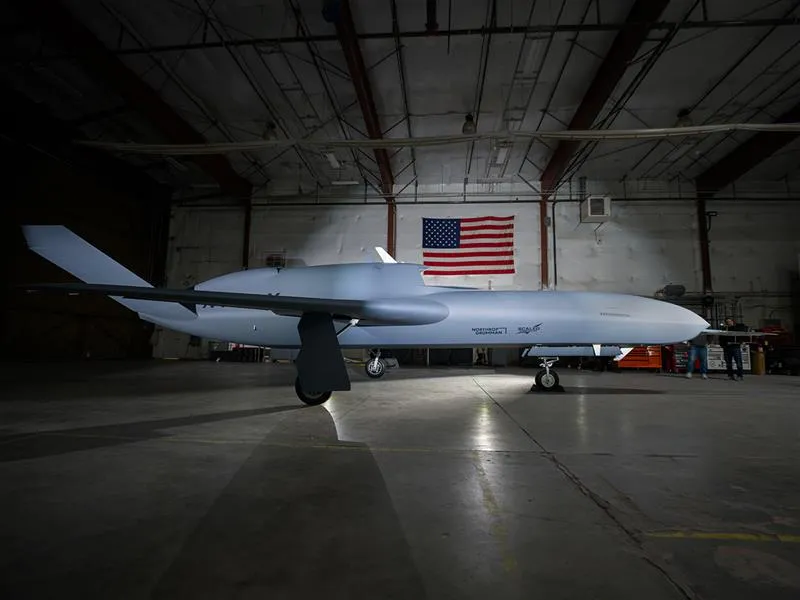
Talon Blue Is The New Name For Northrop Grumman’s YFQ-48A ‘Fighter Drone’
It’s apparently naming season for autonomous air combat drones. Earlier today, we reported that General Atomics had given the name Dark Merlin to its YFQ-42A Collaborative Combat Aircraft (CCA) design. Now Northrop Grumman has stamped a new name on its YFQ-48A: Talon Blue.
Northrop Grumman first unveiled the drone this past December, at which time it was referred to simply as Project Talon, as you can read more about in our initial report here. Later that month, the U.S. Air Force gave it the formal designation YFQ-48A, and described it as “strong contender” to be part of its future CCA fleets. Currently, General Atomics’ YFQ-42A and Anduril’s YFQ-44A are the designs formally in development as part of the first phase, or Increment 1, of the Air Force’s CCA program. Northrop Grumman may now be under contract for the program’s Increment 2, but this remains unconfirmed.

The “YFQ-48A Talon Blue’s designation within the Air Force’s Collaborative Combat Aircraft program underscores the strategic alignment between Northrop Grumman’s manufacturing agility and the Air Force’s acquisition goals for low-cost, cutting-edge technology,” according to a press release the company put out today. “The aircraft’s design provides mission versatility through advanced modular manufacturing techniques that reduce part count and overall weight – shortening production timelines without sacrificing capability.”
The release does not offer a clear explanation of the significance of the new Talon Blue name. Northrop Grumman previously told TWZ and other outlets that the Project Talon moniker was a callback to the T-38 Talon jet trainer, as both had been designed with high performance, high maneuverability, and affordability in mind.
“And it’s got a cool sound to it, too,” Tom Jones, President of Northrop Grumman’s Aeronautics Systems sector, at the time of the drone’s official unveiling.
As for the new Blue addition to its name, this could be another callback, this time to Northrop’s hugely successful Tacit Blue demonstrator, aka the ‘Whale,’ which revolutionized America’s understanding of stealth technology at the dawn of the stealth age. Lockheed’s stealth demonstrator that led to the F-117 Nighthawk stealth combat jet was also called Have Blue. As TWZ has noted previously, the YFQ-48A is clearly optimized with low-observable (stealthy) characteristics. It also shares many similar features and a general layout with Tacit Blue. You can read more about what else is known about the Talon Blue design so far here.


Regardless, the Talon Blue name is welcome. As we noted with the announcement of the Dark Merlin name for General Atomics’ YFQ-42A, the nomenclatures and terms associated with the U.S. Air Force’s CCA program can often be obtuse to the general public. Being able to use specific names for the different drones helps. Anduril’s YFQ-44A has carried the nickname Fury from the very start, which traces back to its origins as a ‘red air’ training drone.
Beyond the YFQ-48A, Northrop Grumman is now also describing Project Talon as an entire “portfolio of modular, cost-effective and rapidly deployable aircraft that meet the customers’ autonomy needs.” That portfolio includes Talon IQ, formerly called Beacon, a “next-generation autonomous testbed ecosystem” that has been leveraging the Prism autonomy suite and Scaled Composite’s Model 437 Vanguard jet. Scaled Composites is a wholly-owned subsidiary of Northrop Grumman that was also involved in the development of Talon Blue.

Digital Ecosystem Takes Flight
Northrop Grumman has also now released a picture of the YFQ-48A flanked by the Model 437 and one of Scaled Composites’ earlier Model 401 jets, also known as the ‘Son of Ares,’ but it is not immediately clear if the latter is also part of the Project Talon portfolio. The Model 437 evolved from the Model 401. Concepts for uncrewed versions of the Model 401 and Model 437 have been shown in the past.

In December, Northrop Grumman said it was targeting a first flight for YFQ-48A about nine months down the road, or sometime in August of this year.
In terms of the Air Force’s CCA program, the service still has yet to make a decision about which Increment 1 CCA design, or both, it wants to buy in larger numbers. Nine companies are also now under contract to refine concepts under Increment 2. To date, the Air Force has not disclosed the names of any of the Increment 2 awardees, which, as noted, could include Northrop Grumman.
When it comes to the YFQ-48A, the company could also pitch it to prospective foreign customers. The marketspace for CCA-type drones, like what is now dubbed the Talon Blue, is steadily growing globally.
Contact the author: howard@thewarzone.com

JoJo Siwa set to rake in a fortune as she relaunches business that made £300MILLION
JOJO Siwa’s bank balance is set for a major boost as she relaunches a business venture that once raked in an estimated £336million.
The Celebrity Big Brother star, 22, struck a licensing deal with JennZ and Thomas Global Media to release more JoJo’s Bows, the popular hair accessory.
And there’s a new twist for the latest version of the popular brand; the introduction of Joelle Bows, a host of new shapes and designs named after JoJo’s birth name.
“JoJo’s Bows were never just about what you wore, they were about how you felt,” said JoJo.
“Coming back as creative director means I get to personally shape every detail, making sure the heart, energy, and message behind the bows evolve with me and with the fans. This relaunch is for the fans who grew up with me, and for the next generation discovering their voice and confidence.”
JennZ founder and creative director Jennifer Saad added: “The JoJo Bow isn’t just an accessory it’s a symbol of confidence, creativity, and style.


“Reintroducing it for a new generation is about celebrating the magic that made it iconic and evolving it for who those fans have grown to be.”
Some 80 million JoJo Bows have been sold to date as fans flocked to replicate the dancer star’s iconic look.
The bows previously retailed between $5 to $16.
Since shooting to fame on Dance Moms as a young girl, through to a lucrative partnership with Nickelodeon as a teen, JoJo has released a huge assortment of merch.
Most of which has flown off the shelves from T-shirts and toys to shoes and accessories.
She previously told Forbes: “Early on, Nickelodeon wanted to have a meeting, where they discussed big business, and they wanted to do it without me. My Mom and I said, ‘That’s not how it works. We’ve been in this together since day one.’
“And in that meeting Pam, who is the head of consumer products, said, ‘Just so you know, if this t shirt doesn’t sell then it’s all over. That was why I didn’t want you here.’
“Now, every time I see her I laugh and say, ‘How’d that t-shirt sell?’”
Both JoJo’s business and personal life are thriving.
After meeting Chris Hughes, 33, on CBB last year, she already has one eye on marriage and kids.
But their transatlantic romance isn’t entirely smooth sailing.
She recently told fans online: “The hard part for me is like the hours that we do communicate we’re at very very different phases of our day.
“Just as I’m getting up excited to talk to him you know text him or call him he’s in the middle of his day and he’s working or he’s doing something and he’s occupied. So I find that part difficult.”
She continued: “And then the same thing like when he’s going to bed I’m in the middle of my day now occupied… so it’s a little more difficult.”
However, the pair will soon be back together to celebrate their first anniversary.

Snoop Dogg: Rap legend and Swansea City – the story behind football’s unlikeliest link-up
It’s certainly done that.
Responsible for selling 35 million records worldwide, Snoop Dogg can now add record ticket sales to his resume.
The club have opened up sections of the away end because of the spike in interest, meaning not only have the ‘sold out’ signs gone up for the visit of Preston North End, the game is also set to see more Swansea fans in the ground than ever before.
It’s a short term hit of buzz for a club that lost its way after relegation from the Premier League in 2018.
Eyes, however, are now on a return – with the involvement of Snoop part of a longer-term plan that Swansea chief executive Tom Gorringe says has “no limits”.
Brought on board by the club’s US owners Brett Cravatt and Jason Cohen in July, Snoop’s minority stake didn’t mean a large injection of cash.
But it did mean a huge boost to its ability to sell itself.
“The reality is that if we operated within our natural resources we couldn’t compete financially,” says Gorringe, speaking just after helping show Snoop around the club’s training base on Monday afternoon where he met players and staff.
“PSR (profit and sustainability rules) is our biggest constraint. We are up against sides with parachute payments and we have one of the lowest turnovers.
“We have to think of new ways to generate income. We are an underdog and part of the attraction for him is the difference he can make with the pull he naturally has.”
That pull includes more than 100 million social media followers – more than Wrexham’s ownership combined – that Swansea have already looked to make the most of.
Beyond growing the brand and the wider fan base, which Gorringe admits “takes time”, there have already been tangible benefits.
Income has been tie-ins including clothing collaborations with Snoop’s own publishing label, the iconic Death Row Records that was once the home of Dr Dre and Tupac Shakur.
“By December, our retail business surpassed last year’s revenue,” says Gorringe, who has previously suggested that sponsorship deals for next year are set to be bigger and better than any previous agreement.
Heavy rains, deadly floods hit southern Peru; thousands seek shelter | Climate News
Torrential downpours cause deadly mudslides in southern Peru, while more than 300 districts across the country declare states of emergency.

Published On 24 Feb 2026
Peruvian authorities say they have recovered the bodies of a father and son who died in a mudslide triggered by heavy rains, which have battered the country’s southern regions of Ica and Arequipa, affecting an estimated 5,500 homes and forcing many people to evacuate.
Authorities in Arequipa have called on the country’s interim president to declare a state of emergency in the region as the governor announced that multiple shelters were being opened to house those fleeing the floods.
Recommended Stories
list of 4 itemsend of list
Peru’s Council of Ministers said on Monday that more than 700 districts nationwide have been declared in emergency status.
In Cayma, Arequipa, a vehicle was seen semi-buried under mud, and homes teetered on the verge of collapse after flash floods swept away the earth and destroyed roadways, the Reuters news agency reported.
According to the Associated Press news agency, the bodies of a father and son were recovered after being swept away by a landslide.
The recovery came a day after 15 people were killed when a military helicopter crashed while providing rescue services during the flooding.
Rescue teams found the wreckage of the helicopter in the Chala district, officials said. Seven children were among the 11 passengers and four crew members who died, according to the AFP news agency.
Torrential downpours have caused widespread damage across southern Peru, affecting about 5,500 homes and forcing many residents to evacuate.
Images shared by Peruvian media showed streets torn up in the affected areas and vehicles buried deep in the mud slides as rescue workers attempted to clear streets using mechanical earth movers.
The El Niño Costero (coastal) climate phenomenon has been the cause of the recent weeks of heavy rain in Peru, weather forecasters report, and is expected to strengthen slightly next month, threatening more heavy rain.
While El Niño is a natural cycle that has existed for millennia, scientists increasingly link its severity to climate change. Rising global temperatures provide a warmer “baseline” for the ocean, making it easier for these extreme heating events to reach record-breaking thresholds and increasing the atmosphere’s capacity to hold the moisture that fuels torrential rain and catastrophic flooding.

When the Strong Decide: Diego Garcia, Raw Power, and the Illusion of Conditional Access
On 18 February 2026, reports emerged that Britain was withholding American permission to use Diego Garcia in any hypothetical strike against Iran. The following day, Trump posted “DO NOT GIVE AWAY DIEGO GARCIA” on Truth Social, linking the base directly to potential operations against Tehran in terms that left no room for diplomatic interpretation. The sequence lasted forty-eight hours and revealed what months of careful legal construction had obscured: that the architecture of conditional access Britain had built around a strategically significant military installation was worth precisely what the decisive power chose to make it worth. Whether the intervention also carried tactical signalling toward Tehran is a legitimate question, and intra-alliance friction of this kind sometimes functions as maximalist positioning before settlement. What matters analytically, however, is not the post itself but what the post revealed when operational pressure arrived. It was also, for anyone who had read Washington’s December 2025 National Security Strategy carefully, entirely predictable.
Power Does Not Ask
There are two ways to understand how military power operates in the international system, and the Chagos episode forces a choice between them. The first holds that great powers are meaningfully constrained by the frameworks they inhabit, alliance structures, legal agreements, and diplomatic settlements, and that these frameworks produce stable, predictable behavior even when the underlying interests they were designed to manage come under pressure. The second holds that frameworks are expressions of power relationships at a given moment rather than independent constraints upon them, so that when power shifts or decides to assert itself, the frameworks adjust to reflect the new reality rather than containing it. The first is the language of liberal internationalism. The second is the language of realism, and what February produced was an unambiguous realist moment.
The December 2025 National Security Strategy had already committed this diagnosis to paper. The document did not describe Europe as weak through circumstance. It described Europe as having chosen weakness, identifying a “loss of national identities and self-confidence” as the continent’s defining condition and stating openly that it is “far from obvious whether certain European countries will have economies and militaries strong enough to remain reliable allies.” The strategy framed European concerns about Russia as evidence of that same condition, noting that this lack of self-confidence was most evident in Europe’s relationship with Russia, despite the fact that European allies enjoy a significant hard power advantage over Russia by almost every measure save nuclear weapons. Washington’s reading of its European partners, formalized two months before the Diego Garcia friction became public, was of states that had systematically preferred institutional solutions over sovereign ones, legal arrangements over unconditional control, and managed conditionality over the exercise of will. Britain’s handling of Chagos was, in that context, not an anomaly. It was a confirmation.
What is analytically significant about Trump’s intervention is not simply that he rejected the deal but that he did not engage it at all, did not address the ICJ ruling that gave it legal foundation, did not contest the lease terms that were its operational expression, and did not enter the diplomatic logic that had produced it over months of negotiation. A decision of this kind does not derive its authority from the framework it overrides, because it precedes that framework, and the framework itself only ever existed on the sufferance of the power now choosing to move against it. When Trump asserted that leases are “no good when it comes to countries,” he was not making a legal argument that could be answered within the same register. He was stating a principle about the nature of sovereign will: that when it moves, it moves prior to and above whatever conditional arrangements were constructed in the period of its dormancy.
This is realism in its purest operational form, in which states pursue interests, great powers pursue interests with the capacity to enforce them, and legal architecture functions as an instrument of power when it serves those interests and an obstacle to be displaced when it does not. The Chagos deal did not alter the underlying power relationship between Washington and London, but it did create a layer of conditionality over an asset Washington considers operationally essential, and when operational pressure arrived, that conditionality became intolerable, not because Mauritius is hostile, not because Britain is an adversary, but because no great power conducting military projection at a global scale can accept that a weak state sits structurally inside the chain of its operational decisions, regardless of how that state arrived there or how benign its intentions are understood to be.
Beneath the realist logic sits a transactional one, and the two reinforce each other in ways that matter for how Britain should read what happened. Trump does not evaluate alliance relationships by their historical depth or their institutional architecture. He evaluates them by what they yield in the current moment, and every asset is a leverage point to be maximized. Diego Garcia represents unconditional American operational value. The Chagos deal reduced that value by inserting a condition. From a transactional perspective, that insertion was not a diplomatic nuance to be managed but a concession to be reversed, because Trump’s governing principle across every alliance relationship is maximum American gain, and conditionality is by definition a reduction of gain. The decisionism explains how he responded. The transactionalism explains why.
The Geography of Decision
Diego Garcia is not incidental to American power projection in the region, though its significance is that of an enabler rather than a prerequisite. The base sits at the center of the Indian Ocean, within operational reach of the Persian Gulf, the Strait of Malacca, and the East African littoral, and it has supported American military operations across that entire arc for half a century through bomber rotations, logistics chains, and a sustained forward presence that no other installation in the basin fully replicates at the same scale and permanence. It does not make American power projection possible in any absolute sense, but it makes it faster, cheaper, and more sustained, which in the context of time-sensitive operational planning against a target like Iran is not a marginal difference but a meaningful one.
The Iran dimension exposes the conditionality problem with particular clarity because the operational context in which Diego Garcia’s value is most acute is precisely the context in which conditional access is most dangerous. American military assets have accumulated across the Middle East, talks are active, and a base capable of projecting strategic airpower directly into the Persian Gulf theater is not a background consideration but a variable whose availability, or unavailability, shapes what options exist and on what timeline. Britain’s reported reluctance to grant operational clearance, under a deal still unratified and still contested in domestic courts, still legally dependent on Mauritius’s continued cooperation, revealed that the conditionality embedded in the arrangement had already entered the operational calculus before any of the stabilizing assumptions behind the deal had time to establish themselves. Strategic friction did not arrive at the end of a long maturation period. It arrived in weeks, because operational pressure does not wait for diplomatic frameworks to consolidate.
That compression of the timeline is itself the most realistic lesson. Power does not defer to the developmental logic of legal arrangements, and when the operational moment arrives, whatever sits between a great power’s will and its objective is reclassified from a framework to be respected into a problem to be solved.
The Structural Position of the Weak
The analytical core of the Chagos case is not about Mauritius’s intentions, which by all available evidence are not hostile, but about the structural position that the deal assigned to it within the architecture of American operational planning, because in the logic of great power competition, it is position rather than intention that determines strategic relevance. By inserting itself, or being inserted, into the chain of conditions governing a great power’s operational freedom, a weak state acquires a form of leverage it could never achieve through military means, and the Chagos deal gave Mauritius exactly that position, not through hostility but through legal standing, not through power but through presence within a conditional architecture that a great power now had reason to find constraining.
For Washington operating within a decisionist strategic logic, that presence is categorically unacceptable regardless of Mauritius’s intentions. The relevant question is not whether Mauritius would obstruct American operations but whether, under the terms of the arrangement, it structurally could, and the answer is yes in a way that no amount of diplomatic goodwill can fully neutralize. Sovereignty transferred to Mauritius is not sovereignty parked with a neutral party but sovereignty that now sits within reach of Chinese economic leverage, meaning the lease does not merely introduce conditionality but introduces conditionality whose future content Washington cannot determine or guarantee. A great power conducting global military projection cannot organize its operational planning around the sustained goodwill of a small state whose strategic orientation it cannot guarantee. That such goodwill is required at all is the problem the deal created.
Weak states do not constrain great powers through legal arrangements in any durable sense, because the constraint only holds when the great power chooses to honor it, and great powers choose to honor constraints only when the cost of non-compliance exceeds the cost of compliance, a calculation that shifts decisively once operational necessity enters the equation and the framework reveals itself to be dependent on tolerance rather than grounded in power.
Conclusion
Britain converted unconditional sovereign control over a strategically significant military installation into a conditional leasehold arrangement whose operationalization depended on a small state’s legal cooperation and presented that conversion as a resolution of vulnerability rather than the creation of a new one. Britain was not being naive. It was an attempt to preserve the base’s long-term legal viability against mounting international pressure, a calculation that the alliance relationship would absorb any friction that followed. What Britain did not account for was that its ally evaluates arrangements not by their legal durability but by whether they constrain American will, and a solution sophisticated enough to satisfy international law was simultaneously insufficiently decisive to satisfy Washington.
From the perspective of the December 2025 National Security Strategy, that conversion was not a surprise. It was the predictable output of a European strategic culture that Washington had already formally diagnosed: one that reaches instinctively for institutional solutions when strong states would resolve through will, that mistakes legal legitimacy for strategic security, and that has internalized the habits of the post-Cold War order to the point where it can no longer easily distinguish between a framework and the power that makes frameworks real.
Trump’s response was the most realistic verdict on that presentation, not an argument against the deal’s legal coherence, which was never in question, but a decision that the framework was insufficient for the operational reality it was meant to serve, delivered in terms that made the underlying logic unmistakable. The framework did not collapse under the pressure. It was revealed, under pressure, to have rested entirely on the assumption that the decisive power would continue to choose not to decide otherwise, an assumption that realism has always identified as the central fragility of arrangements built on consent rather than grounded in power.
The strong do not negotiate with the architecture of constraint, and for Europe, February was less a shock than a reminder that the rules it has built its strategic identity around have always depended on the continued willingness of a decisive power to operate within them.

Tourettes campaigner breaks silence after racist Bafta slur as he’s left ‘deeply mortified’ following audience shout
TOURETTES campaigner John Davidson said he was mortified after sparking a race row by shouting out the N-word at the Baftas.
John later voluntarily left the ceremony amid shock at his swearing as Delroy Lindo and Michael B. Jordan were on stage presenting an award.
But the slur by John — whose life inspired the double gong-winning film I Swear — wasn’t cut from the BBC’s two-hour ceremony coverage at London’s Royal Festival Hall.
Yesterday, bosses apologised and removed the episode from iPlayer.
Last night John insisted he was “mortified if anyone considers my involuntary tics to be intentional or to carry any meaning”.
And Bafta confirmed he left the room before the awards ended.


In statement the organisation said: “Early in the ceremony a loud tic in the form of a profoundly offensive term was heard by many people.
“Michael B. Jordan and Delroy Lindo were on stage at the time, and we apologise unreservedly to them, and to all those impacted.
“We would like to thank Michael and Delroy for their incredible dignity and professionalism.
“John chose to leave the auditorium and watch the rest of the ceremony from a screen and we would like to thank him for his consideration of others on what should have been a night of celebration for him.”
I Swear saw Robert Aramayo, 33, pick up Best Actor. It also won Best Casting.
Scottish-born John, 54, is a campaigner for Tourette sufferers and aged 16 was the subject of a BBC documentary, John’s Not Mad, about living with the condition, which leads some to shout swear words.
The Sun understands that Sunday night’s audience was not told a person with Tourette Syndrome was present.
Previously, at the Bafta TV awards, people have been warned in similar situations.
A source said: “Neither host Alan Cumming nor any of the Bafta team warned people — the apology and comments came after the outbursts.”
Cumming had said: “Tourette Syndrome is a disability. We apologise if you’re offended tonight.”
Hannah Beachler, the production designer on movie Sinners, said: “What made the situation worse was the throwaway apology of, ‘if you were offended’. Of course we were.”
It was reported BBC production staff did not hear the N-word — which meant it was left in the coverage.
However, a source added: “It was as loud and as clear as day.”
The corporation said: “Some may have heard strong and offensive language.
“This arose from involuntary verbal tics associated with Tourette’s and, as explained during the ceremony, it was not intentional.
“We apologise that this was not edited out prior to broadcast.”
The reality of living with Tourette syndrome
TOURETTE syndrome is a condition that causes a person to make involuntary sounds and movements called tics.
It usually starts during childhood, but the tics and other symptoms often improve after several years, and sometimes go away completely.
There’s no cure for Tourettes, but treatment can help manage symptoms.
The most common physical tics include:
- Blinking
- Eye rolling
- Grimacing
- Shoulder shrugging
- Jerking of the head or limbs
- Jumping
- Twirling
- Touching objects and other people
Examples of vocal tics include:
- Grunting
- Throat clearing
- Whistling
- Coughing
- Tongue clicking
- Animal sounds
- Saying random words and phrases
- Repeating a sound, word or phrase
- Swearing
Swearing is rare and only affects about 1 in 10 people with Tourettes.
Some people can control their tics for a short time in certain social situations, like in a classroom.
But this can be tiring, and someone may have a sudden release of tics when they return home.
Aidy Smith, who was diagnosed with Tourettes aged nine, said these are the most common misconceptions about the condition:
- It is a ‘swearing disease’ characterised by repeated bad language
- People with Tourette’s can’t succeed in the workplace
- It’s impossible to control your tics
- ‘Tourettes’ is a ‘dirty’ word
- It’s OK to make jokes about the condition because it isn’t serious
Source: NHS and Aidy Smith

QAnon-backed former politician sentenced for campaign fraud
A Republican from the South Bay who raised hundreds of thousands of dollars running unsuccessfully against Rep. Maxine Waters four times while promoting QAnon conspiracy theories was sentenced to four years in federal prison for misusing campaign funds, the Department of Justice announced Monday.
Omar Navarro, 37, pleaded guilty in June to a single count of wire fraud for defrauding his own election campaign. The perennial candidate had raised hundreds of thousands of dollars over the years from prominent right-wing figures while promoting QAnon conspiracy theories but never cracked 25% of the vote.
He was sentenced by U.S. District Judge Mark C. Scarsi, who ordered Navarro immediately remanded into federal custody. A restitution hearing will be scheduled at a later date to determine how much money Navarro must pay to compensate victims.
Narvarro ran to represent Los Angeles County residents in California’s 43rd Congressional District in the 2016, 2018, 2020 and 2022 election cycles.
From July 2017 to February 2021, he funneled tens of thousands of dollars in donations to his campaign committee back to himself through his mother, Dora Asghari, and friend Zacharias Diamantides-Abel, prosecutors said. In total, his scheme diverted around $266,00 in campaign funds, more than $100,000 of which went directly into his pocket, prosecutors said.
“Defendant could have used that money to buy radio advertisements, purchase billboard space, or send a mailer to aid him in the election,” prosecutors wrote in their sentencing memorandum. “He chose instead to steal his donors’ dollars and fund his lavish lifestyle, including using it to pay for Las Vegas trips, fancy dinners, and even criminal defense attorneys for his criminal stalking charge after he had the audacity to use his campaign money to pay a private investigator to stalk her.”
He set up a sham charity called the United Latino Foundation to embezzle additional funds for his personal use. He also wrote thousands of dollars’ worth of checks to Brava Consulting, a company owned by his mother. This money was allegedly payment for campaign work, but the bulk of it was simply funneled back to him.
Initially, Navarro denied the allegations publicly, writing on X last year that the claims were “baseless” and suggested Waters herself was behind the investigation. He pleaded guilty months later.
Prosecutors argued that a significant sentence was necessary given the “prolonged and pervasive” nature of his fraud and to discourage others from engaging in similar behavior “that undermines the very fabric of the campaign finance system, a system designed to promote trust in government.”
The other two people connected to the case were also criminally charged.
Navarro’s mother pleaded guilty in June 2025 to one count of making false statements after lying to the FBI when questioned about receiving funds from her son’s campaign. She will face up to five years in federal prison at her April 13 sentencing hearing.
Diamantides-Abel pleaded guilty in May 2025 to one count of conspiracy and awaits sentencing.

Organizers of the Winter Games made clean energy a priority. Here’s how
CORTINA D’AMPEZZO, Italy — It takes an immense amount of energy to power venues and make snow for the Winter Olympics and, for the 2026 Milan-Cortina Games, organizers pledged that virtually all of the electricity would be clean.
The organizing committee said that electricity use was where it could make the most meaningful impact, since it has been one of the main drivers of planet-warming emissions at major events. And Italy’s largest electricity company, Enel, guaranteed the supply of entirely certified renewable electricity for event venues.
Here’s a look at what that meant:
To guarantee 100% renewable energy, Enel bought certificates
The organizing committee said in its sustainability report from September that its Games-time electricity would be 100% green, fed by certified renewable sources. In rare cases where temporary power generation is required, hydro-treated vegetable oil would be substituted for traditional diesel fuels, it said.
“This is also an opportunity to contribute to a broader shift — showing athletes, spectators and future host cities that cleaner energy solutions are increasingly viable for events of this scale,” the committee said Friday in a statement to the Associated Press. “We hope the steps taken for these Games can support ongoing progress across major events.”
Enel said it was supplying 85 gigawatt-hours of power for the Olympic and Paralympic Winter Games. It bought “guarantee of origin,” or GO, certificates on the market from renewable energy plants to cover the entire Games’ energy demand.
GO certificates are a European mechanism created in 2001. Each certificate corresponds to 1 megawatt hour of electricity produced using a certified renewable source.
Certificates are a way to prove your energy is green
These certificates are traded on the power market, in negotiations between companies or through brokers.
Once used, they are canceled to prevent the same megawatt hour from being claimed twice. This system is meant to support the development of renewable sources by helping companies meet their green energy targets.
Enel told the AP in a statement that its commitment to cleanly lighting up the events “translates the values of sustainability and inclusion inherent in the Games into concrete terms, combining technological innovation and environmental protection.”
Although many say GOs are vital to promote the Earth’s decarbonization, the system has its detractors. Matteo Villa, who leads the data lab at the Italian Institute for International Political Studies, said it is a “great way to promote your event,” but it’s not making Italy cleaner or more renewable.
The Games can only be as clean, or as sustainable, as the whole of Italy, Villa added.
Enel says it produces a lot of clean electricity in Italy
Nearly three-quarters of the electricity Enel produced in Italy in 2025 was carbon-free, according to its preliminary full-year operational data. About 50% came from hydropower, followed by 17% geothermal and less than 10% from wind, solar and other renewables. The remainder was mostly from gas-fired power plants.
Many power plants that use water to produce electricity are in northern Italy, where mountains and rivers make for highly productive facilities. But Italy’s national grid is still largely reliant on fossil fuels, according to country-specific data from the International Energy Agency.
Enel built new primary substations in Livigno and Arabba, so electricity could be distributed throughout the territory. It also built and upgraded distribution infrastructure in the Livigno, Bormio and Cortina areas, which will benefit residents after the Games.
Enel has a spot in the fan village in Cortina, where events are livestreamed.
Another challenge: emissions from spectators and athletes traveling
Sustainability was a major focus of the Games, as the organizers and the International Olympic Committee sought to model how to cut carbon pollution while running a major event. Researchers say the list of locales that could reliably host a Winter Games will shrink substantially in coming years.
“Every Games we strive to push innovation in sustainability, reduce the overall impact and the carbon footprint,” Julie Duffus, the IOC’s head of sustainability, told the AP on Friday. She highlighted the use of clean power, upgrades to the energy system and the way these Games were designed so that most venues would be existing or temporary.
Matteo Di Castelnuovo, a professor of energy economics at the SDA Bocconi School of Management in Milan, said he expected the Olympics to stay committed to clean energy, and that “the challenge lies somewhere else to make them greener.” The thornier issue for Olympic organizers, and for any business, is figuring out how to reduce the emissions stemming from transportation, he added.
The amount of greenhouse gases estimated to be released into the atmosphere as a result of the Games was similar to the emissions of 4 million average-sized, gasoline-fueled cars driving from Paris to Rome, the organizing committee said in its greenhouse gas management strategy. The largest share of the carbon footprint were activities indirectly related to the Games, such as accommodations and spectator travel. Air travel is a significant contributor because burning jet fuel releases carbon dioxide.
Karl Stoss, who chairs the Games’ Future Host Commission, has said they may need to eventually reduce the number of sports, athletes and spectators who attend.
Many skiers, including Team USA members Lindsey Vonn and Mikaela Shiffrin, expressed concern during the Games about climate change accelerating melt of the world’s glaciers.
McDermott writes for the Associated Press. AP writer Colleen Barry and video journalist Brittany Peterson in Milan contributed to this report.

South Korea to monitor markets after U.S. tariff ruling

Finance Minister Koo Yun-cheol, who also serves as deputy prime minister for economic affairs, speaks during a meeting of economy-related ministers on price controls affecting household livelihoods at the government complex in Seoul, South Korea, 11 February 2026. File. Photo by YONHAP / EPA
Feb. 23 (Asia Today) — South Korea’s government said Sunday it would maintain round-the-clock market monitoring after the Supreme Court of the United States ruled reciprocal tariffs invalid, adding that the immediate impact on global markets appeared limited.
U.S. and European equities rose on the day of the ruling, while the dollar index remained stable, officials said. Still, Seoul warned that trade uncertainty persists amid signals from Washington about possible new tariff measures and the continuation of sector-specific duties.
First Vice Minister of Economy and Finance Lee Hyung-il chaired an emergency market review meeting in Seoul attended by officials from the central bank and financial regulators.
Participants said global markets reacted calmly on Thursday, when the U.S. court issued its decision. The S&P 500 rose 0.69%, while the Euro Stoxx 50 gained 1.18%. The dollar index fell 0.2%, and yields on 10-year and two-year U.S. Treasury notes each climbed 2 basis points.
Officials said improved risk appetite contributed to broadly stable trading conditions.
However, they cautioned that policy uncertainty remains after the U.S. government signaled it could impose a 10% tariff on goods from all countries, with a possible increase to 15% the following day. Ongoing geopolitical tensions in the Middle East and Ukraine were also cited as potential risks.
The government said it would continue operating a 24-hour joint monitoring system among relevant agencies and strengthen coordination to respond quickly if volatility increases.
Separately, officials noted that tariffs on automobiles and steel imposed under Section 232 of the Trade Expansion Act remain in place, and that a new investigation under Section 301 of the Trade Act has been launched.
Participants agreed to closely track follow-up measures by Washington and responses from major trading partners, and to work to ensure that South Korea’s export conditions to the United States are not adversely affected.
— Reported by Asia Today; translated by UPI
© Asia Today. Unauthorized reproduction or redistribution prohibited.
Original Korean report: https://www.asiatoday.co.kr/kn/view.php?key=20260223010006557

‘Fairytale’ waterfall ‘especially beautiful’ in winter right here in the UK
The waterfall is hidden at the end of a woodland trail through birch, beech and oak trees – and it comes alive in winter

It may not be the biggest waterfall compared to the highlands but in autumn it’s surroundings are like no other(Image: Getty)
There’s something uniquely enchanting about winter in Britain that transforms an ordinary walk into something truly special.
Wandering through a forest filled with crisp frost making the trees look like their coated in fairy dust feels like stepping straight into the pages of a storybook.
But when this splendour meet the sight of cascading water, it creates a spectacle that’s utterly mesmerising and simply unmissable.
Fortunately for British adventurers, nestled amongst misty hillsides and tranquil footpaths lies a hidden treasure that seems almost otherworldly, where moments appear to drift by at a gentler pace.
That enchanting location is Craigie Linn waterfall, tucked just beyond Paisley near Glasgow. The pathway and waterfall sit within Glen Park, which forms part of the wider Gleniffer Braes Country Park.
Best UK holiday cottage deals
This article contains affiliate links, we will receive a commission on any sales we generate from it. Learn more

From £27 per night
Sykes Cottages
Sykes Cottages offers a wide range of handpicked holiday homes across the UK and Ireland, from cosy countryside retreats to stunning coastal escapes. Prices start from £27 per night
While it might not be amongst the world’s most colossal waterfalls, Craigie Linn’s setting makes it genuinely captivating. The natural wonder was created by and continues to be nourished by the Glen Burn, tumbling approximately eight metres, around 26 feet.
It may not compete with the towering waterfalls of the Highlands in scale. Yet, regarding ambience, particularly during autumn, it truly comes into its own.
The waterfall itself lies concealed at the conclusion of a compact trail, which guides you through birch, beech, and oak woodland.
Spotlighting this hidden treasure, Experience Scotland’s Wild on TikTok unveiled the waterfall to thousands of followers. The video opens: “Hidden near Paisley, there’s a magical little spot called Craigie Linn.
“It’s just a short stroll through the woods, and you’ll find this waterfall. It’s especially beautiful in autumn when the colours make it feel like a fairytale escape. It’s definitely worth checking out.”
The video has sparked considerable interest amongst potential visitors. One said: “Looks fabulous in colour. I love how it changes with the seasons.”
Another added: “Stunning. Added to the list!”.
Visitors should also remain alert for spectral apparitions and supernatural encounters.
Gleniffer Braes previously provided refuge for Scottish rebels, and local legend suggests their spirits can still be glimpsed on foggy evenings.
Getting to the waterfall is remarkably straightforward. Most people begin their journey from the “Car Park in the Sky”, officially known as Robertson Car Park in Gleniffer Braes, before following the marked woodland trails down towards the burn.
The route is brief and picturesque, with some steeper stretches as you make your way through the woodland.
For those relying on public transport, Paisley is readily accessible by train from Glasgow, and from the station, local bus services or taxis can bring you nearer to Glenburn or Glen Park.
Entry to the area is complimentary, though parking spaces can become scarce on pleasant weekends, making an early start advisable.
The trails can become boggy or treacherous following wet weather, so robust, waterproof boots are essential – and following rainfall, the waterfall reaches its most spectacular state, with water cascading over the rocks in a foaming torrent.