



Who is Leonardo DiCaprio’s new girlfriend Vittoria Ceretti, and when did couple start dating?
LEONARDO DiCaprio has been romantically involved with some of the most beautiful women on the planet.
And his current girlfriend is no exception. Here’s everything you need to know about Italian supermodel Vittoria Ceretti.


Who is Leonardo DiCaprio’s girlfriend Vittoria Ceretti?
Vittoria Ceretti was born in Brescia, in northern Italy, on June 7, 1998, making her 23 years younger than Leonardo DiCaprio.
The Italian model is one of the most sought-after figures in the fashion industry.
She first caught the fashion world’s attention as a teenager, going on to walk the runway for major brands including Chanel, Valentino, Louis Vuitton and Versace.
Vittoria has also appeared on dozens of Vogue covers in numerous countries all over the globe.
read more on Vittoria Ceretti


Her relationship with Leo first made headlines in the summer of 2023, when they were spotted together in Santa Barbara.
Dates in Santa Barbara, Paris and Milan followed, and by November of the same year they were reportedly exclusive.
Speaking to Vogue France in March 2025, Vittoria said preserving a private life was “a luxury” she intended to hold onto.
She also opened up about how “annoying” being referred to as someone else’s partner can be.
Vittoria said: “As soon as you’re in a relationship with someone more famous, you become ‘so-and-so’s girlfriend. That can be extremely annoying.”
She has been welcomed into Leo’s inner circle, having met his mum Irmelin Indenbirken, with whom the actor is famously close.
Who else has Leonardo DiCaprio dated?
The Oscar-winning actor has been romantically linked to many beauties over the years, including:
- Bridget Hall (1994): Leo was briefly linked to the American model, who became one of the most recognisable faces of the early 1990s as a Sports Illustrated Swimsuit Issue cover star and Victoria’s Secret model.
- Naomi Campbell (1995): They were rumoured to be romantically involved in 1995, when Leo would have been 21.
- Kristen Zang (1996–1998): His first serious relationship was with the American model and actress.
- Gisele Bundchen (1999–2005): Leo spent five years with the Brazilian supermodel, who went on to marry NFL superstar Tom Brady in 2009, before the pair divorced in 2022.
- Bar Refaeli (2005–2011): For the best part of six years, he dated the Israeli model and television presenter.
- Blake Lively (2011): The Gossip Girl star and Leo enjoyed a brief five-month romance in 2011, before Blake went on to marry Ryan Reynolds later that same year.
- Erin Heatherton (2011–2012): He dated the American model and Victoria’s Secret Angel from Illinois for around a year.
- Toni Garrn (2013–2014 & 2017): Leo was involved with the German model and humanitarian activist twice.
- Kelly Rohrbach (2015–2016): He was linked to the American model and actress, who went on play CJ Parker in the 2017 Baywatch film alongside Dwayne Johnson.
- Nina Agdal (2016–2017): The actor dated Danish model and influencer Nina Agdal, who is now engaged to YouTube star Logan Paul.
- Camila Morrone (2017–2022): Leo was in a relationaship with the Argentine-American actress and model for five years.
- Gigi Hadid (2023): He was spotted getting cosy with Zayn Malik’s ex, but the romance was never confirmed.

Support for Clinton Is Up in Iowa Poll
DES MOINES — A new poll found support for Arkansas Gov. Bill Clinton among Iowa Democrats on the upswing as the state’s residents prepare for their presidential caucuses Monday night.
Clinton was backed by 16% of the likely Democratic caucus-goers surveyed by the Des Moines Register. That is more than triple the support he received in the newspaper’s last survey in December.
The poll, published Saturday, also found support for native-son Sen. Tom Harkin dropping to 54%–down 14 percentage points since December.
Clinton was second in the new poll, ahead of Nebraska Sen. Bob Kerrey, who dropped two points to 8%. Former California Gov. Edmund G. (Jerry) Brown Jr. and former Massachusetts Sen. Paul E. Tsongas both had 5%.
“We’re amazed,” said Craig Smith, Clinton’s deputy campaign manager. “If the result from Iowa is different from the conventional wisdom, it will have an impact on the race.”
Despite the large margin Harkin maintained in the poll against his rivals, his Iowa race is more against high expectations than other candidates. His own campaign had said he would exceed Jimmy Carter’s record score of 59% in 1980.
Except for Harkin, who launched a three-day campaign blitz in Iowa on Saturday, the other candidates have ignored the state because of his native-son candidacy.

Commentary: Yoshinobu Yamamoto might not wear a cape, but he has super powers
PHOENIX — Wait, what? That’s me whenever I see a list of the best pitchers in Major League Baseball that doesn’t include the Dodgers’ Yoshinobu Yamamoto in the top three — or not until No. 7, like MLB Network’s did.
It’s hard to believe there are professional ball-watchers who want us to believe there are a handful of pitchers better than the Dodgers’ righty who’s steadily filling the fingers on his hand with championship rings.
Respectfully, the Philadelphia Phillies’ Zack Wheeler and Atlanta Braves’ Chris Sale are great. So are the Philadelphia Phillies’ Christopher Sánchez and Boston Red Sox’s Garrett Crochet.
But they’re not greater than Yamamoto.
I’m not saying criminally underrating someone like Yamamoto should be prosecutable, I’m just wondering why anyone would?
“It could have something to do with him not throwing 100 like some other guys,” Dodgers pitcher Ben Casparius said. “But just in terms of pure pitching and what he’s able to do and where he’s able to locate certain pitches and how he’s able to read the hitters?”
Elite.
“In our eyes, I would for sure say Yamamoto is very underrated,” catcher Dalton Rushing said. “I think what goes into your role as a player is your willingness to win, whatever you’ll do to win. I don’t have to go back to the World Series and bring anything up, everyone watched those games, everyone saw what he did.”
Maybe it was a power outage at some folks’ homes during the World Series? Or a subtle form of protest against the Dodgers, champions of capitalism? Maybe Yamamoto’s unassuming everyman act is just that good?
We’ve all marveled at Shohei Ohtani’s Superman quick change, how he’ll go from dynamite pitcher to fearsome hitter in a few bats of an eye. But the truly superheroic character on the Dodgers’ roster is their 5-foot-10, 176-pound ace, Yamamoto.
His Clark Kent-esque transformation, from unimposing nice guy — “the nicest guy in the entire world,” Casparius said — to smirking menace whenever the day needs saving is the stuff of comic book legends.
In last season’s World Series against the Toronto Blue Jays that went the distance and beyond, Yamamoto earned MVP and three of the Dodgers’ four wins.
He had a 1.02 ERA. Got the Dodgers squared away with nine innings of one-run baseball in Game 2. Staved off elimination in Game 6, giving up just one run in six innings. And closed the deal in Game 7 when he pitched 2 ⅔ innings of scoreless relief in the Dodgers’ 5-4, 11-inning victory.

Dodgers pitcher Yoshinobu Yamamoto is all smiles as he’s hugged by a teammate following the Game 7 win over the Blue Jays in the World Series.
(Robert Gauthier / Los Angeles Times)
Oh, and of course Yamamoto was warming in the bullpen when Freddie Freeman hit his walk-off home run to end the 18-inning Game 3 epic at Dodger Stadium.
Yamamoto also showed up for Japan in the World Baseball Classic. He tossed 2 ⅔ scoreless innings in one pool-play start and started again in a knockout game Saturday in Miami, striking out five in four innings and leaving with the lead before Venezuela roared back to win 8-5.
“Part of being a gamer and being a great competitor in big moments is the preparation,” Dodgers manager Dave Roberts said. “And when you prepare the right way, that eliminates a lot of doubt and fear. And that, for me, that’s the core of who Yoshinobu is.”
Hyper-competitive and exceptionally nimble, Yamamoto is also super strong — in body and mind.
Bruce Wayne had Alfred Pennyworth; Yamamoto has Yada Sensei, personal trainer Osamu Yada, a 60-something Japanese judo therapist whose unique training regimen has helped turn his star pupil into a world-beater.
So while the Pittsburgh Pirates’ Paul Skenes and Detroit Tigers’ Tarik Skubal are baseball’s kings of the hill, if you had to pick one arm to decide the fate of the universe, whose would it be?
Cue the Yoshinobu Yamamoto anthem.
“He’s probably the best pitcher I’ve ever seen live,” Casparius said. “He’s definitely the guy I’m taking in a must-win game.”
Said pitcher River Ryan: “Yoshi, he is just a natural freak athlete” with a “routine that’s incredible to watch.”
And it isn’t merely the pitcher’s willingness to go to bat for his team and country, all the metrics make his case, too.
Last season, Yamamoto had the fourth-best ERA in the big leagues (2.49) and gave up two or fewer runs in 20 of his 30 starts. He was also tied for first in barrel rate (5.7%), fifth in strikeout rate (29.4%) and seventh in FIP (2.94).
Pick a category, and it paints the picture almost as well as Yamamoto does corners.
I’m not asking people to put some respect on Yamamoto’s name, I’m asking them to put mad respect on it.
“I would say yes, I don’t think he’s fully appreciated for what he’s done,” third baseman Max Muncy said. “Not just yet. He will.”
Eventually even people around Clark Kent have to catch on: This guy might not walk around like he’s a superhero, but he is one.

Israel, Iran trade strikes as world seeks to reopen Hormuz Strait

1 of 2 | Iranians stand inside their damaged residential building in southern Tehran, Iran, on Sunday. Photo by Abedin Taherkenareh/EPA
March 15 (UPI) — Israel said it launched a wave of airstrikes on Iran on Sunday as Iran carried out its own attacks on U.S. military sites and against U.S. allies in the Gulf region at large.
The Israeli military said its airstrike hit the Hamedan area of western Iran, hitting multiple military headquarters, The Times of Israel reported. The Israeli military said it plans to expand its attacks on western and central Iran “with the aim of broadly and systematically damaging the regime’s command and control capabilities.”
Israeli officials, meanwhile, said at least five people in the country were injured Sunday by Iranian missiles. Iran’s state-run Mehr news agency reported that the Iranian military has pledged to “pursue and kill” Israeli Prime Minister Benjamin Netanyahu “with force.”
The United Arab Emirates said it has seen a drop in Iranian attacks within its borders. The defense ministry said it intercepted four ballistic missiles and six drones Sunday.
Since the start of the war, it has faced more than 1,900 attacks by Iran.
Bloomberg reported that a key oil port on the UAE’s east coast — Fujairah — was back in operation Sunday after it was targeted by an Iranian drone Saturday. The port is about 70 nautical miles away from the Strait of Hormuz, which Iran closed earlier in the month to put pressure on its enemies’ abilities to transport oil. About one-fifth of the world’s oil passes through the strait.
Fujairah is situated at one end of a pipeline that allows the UAE to bypass use of the Strait of Hormuz entirely. The site exported an average of more than 1.7 million barrels of crude and refined fuels per day in 2025, about 1.7% of the world’s demand, The Guardian reported.
Officials said they intercepted a drone attack near the site, causing a fire there briefly.
British Energy Secretary Ed Miliband said his country was examining ways to reopen the Strait of Hormuz and keep oil flowing. In an appearance on Sky News’ Sunday Morning with Trevor Phillips, Miliband said Britain was in talks with allies.
“There’s different ways in which we can make maritime shipping possible. We are intensively looking with our allies at what can be done, because it’s so important that we get the strait reopened.”

Strategic oil release may calm markets but cannot fix Hormuz disruption | Conflict News
Hundreds of tankers sit idle on both sides of the Strait of Hormuz as Iran has effectively closed the waterway, pushing oil prices above $100 – the highest since 2022, after the start of the Russia-Ukraine war.
Oil tanker traffic in the strait, through which one-fifth of global oil passes, has plunged after Israel and the United States launched attacks on Tehran on February 28. Asian countries, including India, China and Japan, as well as some European countries, source large portions of their energy needs from the Gulf. A disruption in supply will rattle the global economy.
With an aim to cushion from the shock, the International Energy Agency (IEA) has decided to release 400 million barrels of oil from emergency reserves, the largest coordinated drawdown in the agency’s history. But it has failed to push the prices down.
The agency had released about 182 million barrels after Russia’s invasion of Ukraine to stablise the oil prices.
According to the agency, oil shipments through the strategic waterway have fallen to less than 10 percent of pre-war levels, threatening one of the most critical arteries in the global energy system.
IEA members collectively hold about 1.25 billion barrels in government-controlled emergency reserves, alongside roughly 600 million barrels in industry stocks tied to government obligations.
A large number in a massive market
The figure may appear vast, but it shrinks quickly against the scale of global energy demand.
“This feels like a small bandage on a large wound,” energy strategist Naif Aldandeni said, describing the world’s largest coordinated emergency oil release as governments scramble to steady markets shaken by war.
The US Energy Information Administration (EIA) estimates world consumption of petroleum and other liquids will average 105.17 million barrels per day in 2026. At that rate, 400 million barrels would theoretically cover just four days of global consumption.
Even when compared with normal traffic through the Strait of Hormuz – around 20 million barrels per day – the released oil equals only about 20 days of typical flows.
Aldandeni told Al Jazeera that emergency reserves can calm panic in markets but cannot replace the lost function of a disrupted shipping corridor.
“The release may soften the shock and calm nerves temporarily,” he said, “but it will remain limited as long as the fundamental problem — the freedom of supply and tanker movement through Hormuz – remains unresolved.”
Oil prices reflect those anxieties. Brent crude ended trading on Friday at $103.14 per barrel, after surging to nearly $120 earlier as fears of disrupted production and shipping intensified.
Geopolitical risk premium
Oil expert Nabil al-Marsoumi said the price surge cannot be explained by supply fundamentals alone.
“The closure of the Strait of Hormuz added roughly $40 per barrel as a geopolitical risk premium above what market fundamentals would normally dictate,” he told Al Jazeera.
From that perspective, releasing strategic reserves serves primarily as a temporary tool to dampen that premium rather than fundamentally rebalance the market.
Prices above $100 per barrel are uncomfortable for major consuming economies already struggling to curb inflation and protect economic growth.
Recent EIA projections suggest global demand has not yet declined significantly because of the war, remaining close to 105 million barrels per day. The market pressure, therefore, stems less from falling consumption and more from fears of supply shortages and delays in deliveries to refineries and consumers.
Threats to oil infrastructure
The latest escalation could deepen those fears.
United States President Donald Trump said on Friday that the US Central Command (CENTCOM) had “executed one of the most powerful bombing raids in the History of the Middle East and totally obliterated every MILITARY target in Iran’s crown jewel, Kharg Island”.
He added that “for reasons of decency” he had “chosen NOT to wipe out the Oil Infrastructure on the Island”, but warned Washington could reconsider that restraint if Iran continues to disrupt shipping through the Strait of Hormuz.
CENTCOM confirmed the operation, stating US forces had struck “more than 90 Iranian military targets on Kharg Island, while preserving the oil infrastructure”.
Iranian officials have meanwhile warned they would target energy facilities linked to the US across the region if Iranian oil infrastructure comes under direct attack.
Kharg Island is not simply a military location. It serves as the primary export terminal for Iranian crude, making it a critical node in the country’s oil supply network.
If attacks move from obstructing shipping to targeting export infrastructure itself, the crisis could shift from a chokepoint disruption scenario to one involving direct losses of production and export capacity.
In such circumstances, the oil released from emergency reserves would act only as a temporary bridge rather than a lasting solution to lost supply.
Major oil companies such as QatarEnergy, the world’s largest producer of liquefied natural gas (LNG), Kuwait Petroleum Corporation and Bahrain state oil company Bapco have shut production and declared force majeure, while Saudi Aramco, the world’s largest oil producer, and UAE state oil company ADNOC have shut down their refineries.
Limits of emergency reserves
Even under a less severe scenario – where maritime disruption persists but infrastructure remains intact — the ability of strategic reserves to stabilise markets remains constrained by logistics.
The US Department of Energy said the US Strategic Petroleum Reserve held 415.4 million barrels as of 18 February 2026. Its maximum drawdown capacity is 4.4 million barrels per day, and oil requires about 13 days to reach US markets after a presidential release order.
That means even the world’s largest emergency stockpile cannot flood the market with crude immediately. The release must move through pipelines, shipping networks and refining capacity before reaching consumers.
Aldandeni said the current intervention would likely produce only a temporary stabilising effect, while al-Marsoumi warned that prolonged disruption in the Strait of Hormuz – or the spread of threats to other chokepoints such as the Bab al-Mandeb Strait in the Red Sea could quickly send prices further higher.

Oscars 2026 winners: The complete list
If April is the cruelest month, per T.S. Eliot, the Oscars surely must be the cruelest (and longest) season. Other awards shows push their way into the queue for moments of borrowed red carpet glory, but the Academy Awards are what the buildup is all about and the one people remember.
Thankfully, the countdown can now be measured in hours and minutes rather than months, with the 98th Academy Awards slated to start Sunday at 4 p.m. at the Dolby Theatre at Ovation Hollywood. Conan O’Brien is back to host the awards for the second straight year.
Best picture is expected to come down to “Sinners,” which broke the record for most nominations with 16, and “One Battle After Another,” with 13. Paul Thomas Anderson and “One Battle” have dominated the precursor awards, but Ryan Coogler and “Sinners” have gained momentum in recent weeks. The films also expect to vie in the newly added and long-anticipated casting category.
Last year’s acting winners, Adrien Brody (“The Brutalist”), Kieran Culkin (“A Real Pain”), Mikey Madison (“Anora”) and Zoe Saldaña (“Emilia Pérez”), will return to the Oscars stage to present.
Other announced presenters include Javier Bardem, Chris Evans, Chase Infiniti, Demi Moore, Kumail Nanjiani, Maya Rudolph, Will Arnett, Priyanka Chopra Jonas, Robert Downey Jr., Anne Hathaway, Paul Mescal, Gwyneth Paltrow, Rose Byrne, Nicole Kidman, Jimmy Kimmel, Delroy Lindo, Ewan McGregor, Wagner Moura, Pedro Pascal, Bill Pullman, Lewis Pullman, Channing Tatum and Sigourney Weaver.
The 2026 Oscars will air on ABC, and those with cable subscriptions can also watch the show by logging in to the ABC app or abc.com. The telecast will stream live on Hulu, YouTube TV, AT&T TV and FuboTV. Internationally, the ceremony will be broadcast in more than 200 territories.
Beginning in 2029, the show will stream exclusively on YouTube.
Follow along live as we wait to hear the words “And the Oscar goes to … ”
Best picture
“Bugonia”
“F1”
“Frankenstein”
“Hamnet”
“Marty Supreme”
“One Battle After Another”
“The Secret Agent”
“Sentimental Value”
“Sinners”
“Train Dreams”
Actress in a leading role
Jessie Buckley, “Hamnet”
Rose Byrne, “If I Had Legs I’d Kick You”
Kate Hudson, “Song Sung Blue”
Renate Reinsve, “Sentimental Value”
Emma Stone, “Bugonia”
Actor in a leading role
Timothée Chalamet, “Marty Supreme”
Leonardo DiCaprio, “One Battle After Another”
Ethan Hawke, “Blue Moon”
Michael B. Jordan, “Sinners”
Wagner Moura, “The Secret Agent”
Actress in a supporting role
Elle Fanning, “Sentimental Value”
Inga Ibsdotter Lilleaas, “Sentimental Value”
Amy Madigan, “Weapons”
Wunmi Mosaku, “Sinners”
Teyana Taylor, “One Battle After Another”
Actor in a supporting role
Benicio del Toro, “One Battle After Another”
Jacob Elordi, “Frankenstein”
Delroy Lindo, “Sinners”
Sean Penn, “One Battle After Another”
Stellan Skarsgård, “Sentimental Value”
Directing
Chloé Zhao, “Hamnet”
Josh Safdie, “Marty Supreme”
Paul Thomas Anderson, “One Battle After Another”
Joachim Trier, “Sentimental Value”
Ryan Coogler, “Sinners”
Adapted screenplay
“Bugonia,” Will Tracy
“Frankenstein,” Guillermo del Toro
“Hamnet,” Chloé Zhao and Maggie O’Farrell
“One Battle After Another,” Paul Thomas Anderson
“Train Dreams,” Clint Bentley and Greg Kwedar
Original screenplay
“Blue Moon,” Robert Kaplow
“It Was Just an Accident,” Jafar Panahi
“Marty Supreme,” Josh Safdie and Ronald Bronstein
“Sentimental Value,” Joachim Trier and Eskil Vogt
“Sinners,” Ryan Coogler
Documentary feature
“The Alabama Solution”
“Come See Me in the Good Light”
“Cutting Through Rocks”
“Mr. Nobody Against Putin”
“The Perfect Neighbor”
Documentary short
“All the Empty Rooms”
“Armed Only with a Camera: The Life and Death of Brent Renaud”
“Children No More: ‘Were and Are Gone’”
“The Devil Is Busy”
“Perfectly a Strangeness”
Animated feature
“Arco”
“Elio”
“KPop Demon Hunters”
“Little Amélie or the Character of Rain”
“Zootopia 2”
Animated short
“Butterfly”
“Forevergreen”
“The Girl Who Cried Pearls”
“Retirement Plan”
“The Three Sisters”
Cinematography
“Frankenstein,” Dan Laustsen
“Marty Supreme,” Darius Khondji
“One Battle After Another,” Michael Bauman
“Sinners,” Autumn Durald Arkapaw
“Train Dreams,” Adolpho Veloso
Costume design
“Avatar: Fire and Ash,” Deborah L. Scott
“Frankenstein,” Kate Hawley
“Hamnet,” Malgosia Turzanska
“Marty Supreme,” Miyako Bellizzi
“Sinners,” Ruth E. Carter
Film editing
“F1,” Stephen Mirrione
“Marty Supreme,” Ronald Bronstein and Josh Safdie
“One Battle After Another,” Andy Jurgensen
“Sentimental Value,” Olivier Bugge Coutté
“Sinners,” Michael P. Shawver
International feature
“It Was Just an Accident” (France)
“The Secret Agent” (Brazil)
“Sentimental Value” (Norway)
“Sirāt” (Spain)
“The Voice of Hind Rajab” (Tunisia)
Live-action short
“Butcher’s Stain”
“A Friend of Dorothy”
“Jane Austen’s Period Drama”
“The Singers”
“Two People Exchanging Saliva”
Makeup and hairstyling
“Frankenstein,” Mike Hill, Jordan Samuel and Cliona Furey
“Kokuho,” Kyoko Toyokawa, Naomi Hibino and Tadashi Nishimatsu
“Sinners,” Ken Diaz, Mike Fontaine and Shunika Terry
“The Smashing Machine,” Kazu Hiro, Glen Griffin and Bjoern Rehbein
“The Ugly Stepsister,” Thomas Foldberg and Anne Cathrine Sauerberg
Original score
“Bugonia,” Jerskin Fendrix
“Frankenstein,” Alexandre Desplat
“Hamnet,” Max Richter
“One Battle After Another,” Jonny Greenwood
“Sinners,” Ludwig Göransson
Original song
“Dear Me” from “Diane Warren: Relentless”
“Golden” from “KPop Demon Hunters”
“I Lied to You” from “Sinners”
“Sweet Dreams of Joy” from “Viva Verdi!”
“Train Dreams” from “Train Dreams”
Production design
“Frankenstein”
“Hamnet”
“Marty Supreme”
“One Battle After Another”
“Sinners”
Sound
“F1”
“Frankenstein”
“One Battle After Another”
“Sinners”
“Sirāt”
Visual Effects
“Avatar: Fire and Ash”
“F1”
“Jurassic World Rebirth”
“The Lost Bus”
“Sinners”
Casting
“Hamnet”
“Marty Supreme”
“One Battle After Another”
“The Secret Agent”
“Sinners”

Five things every mum wants for Mother’s Day: A guide for shit sons
ARE you a terrible, inconsiderate son who doesn’t know what to get his mum for Mother’s Day? Try these safe gifts.
A phone call
Doesn’t have to be long. A quick two-minute chat will make your mum happy, even though she carried you for nine months and spent 15 agonising hours pushing you out. Try to make the conversation about her for once though, and how much she means to you. Your usual calls where you beg her for money can wait.
Breakfast in bed
Don’t actually know anything about your mum? Don’t panic. While she would’ve definitely enjoyed a thoughtful present related to one of her interests you’re oblivious too, some burnt toast on a plate presented to her in bed is an adequate alternative. Push the boat out and include a cup of tea that isn’t made to her liking.
Some flowers
If you were an attentive son, you would’ve already pre-ordered a bunch of your mum’s favourite flowers to be delivered to her on the big day. Seeing as you’re not even sure if she likes flowers, you’ll have to make do with a handful of daffodils yanked out of her garden. They’re definitely a step up from a bouquet of forecourt flowers, due to not being completely shrivelled yet.
A nice meal
You’ve left it too late to book a table at Wetherspoons, so you’ll have to cross your fingers that there’s a space at a fancy restaurant. Failing that, anywhere your mum can sit in peace for five minutes and sip on an elderflower cordial will do. You have to accompany her to whatever you settle on as well, otherwise she’ll look tragic.
For you to move out
Your mum may say that she wants chocolates or a trip to the spa, but this is really what she’s holding out for. She already knows how she wants to redecorate the childhood bedroom you still live in, so get her the ultimate treat this Mother’s Day by moving all of your crap into a storage unit. If you need help, your dad will be all too happy to lend a hand.
How Congress became an afterthought in the war with Iran
WASHINGTON — Secretary of State Marco Rubio had some explaining to do when he arrived on Capitol Hill for a classified briefing with lawmakers in early March.
Members of Congress wanted to know why, two days earlier on Feb. 28, the United States and Israel had attacked Iran and killed its supreme leader — without notifying them first. After the briefing, Rubio told reporters the U.S. preemptively struck Iran to get ahead of an Israeli attack. A day later, he tried to clarify his remarks.
“The bottom line is this: The president determined we were not going to get hit first,” Rubio said. “It’s that simple, guys.”
For members of Congress, the moment underscored how marginal a role Congress has been able to play in a war that, two weeks in, has spread into more than a dozen neighboring countries, led to the deaths of at least 13 American service members and cost billions of dollars.
In the two weeks since the war began, Congress has largely been sidelined. Lawmakers have cycled through classified briefings, TV interviews and hallway scrums with reporters, but have taken little formal action related to Trump’s war efforts — just two unsuccessful votes aimed at limiting the conflict.
Most of the debate has taken place online, where some GOP lawmakers have drawn rebukes from colleagues for saying America “needs more Islamophobia” and other Islamophobic rhetoric about Iran and its people.
At the same time, Trump has pressed Congress to focus instead on a controversial voting law, signaling to the Republican-led Congress that he wants their focus on the election rather than a historic moment abroad. The president, meanwhile, has offered shifting explanations on how much longer he intends to be at war in the Middle East, telling Fox News’ Brian Kilmeade on Friday that he will conclude the hostilities when “I feel it in my bones.”
Taking Trump’s statements at face value, Democrats and some Republicans have begun to worry that more American troops could be deployed inside Iran to complete the mission — and lawmakers are still trying to understand the war’s threat to the global energy markets as fighting encroaches on the Strait of Hormuz and Americans face soaring gas prices.
The Republican majorities have for the most part rallied behind President Trump, and have blocked measures in both the House and Senate that would have halted the war against Iran and forced him to seek congressional approval for additional hostilities.
House Speaker Mike Johnson (R-La.) likened efforts to rein in Trump’s war efforts to siding “with the enemy.” Sen. Lindsey Graham (R-S.C.) was even more effusive, arguing there is a precedent for presidents using military force without congressional authority.
“The norm in this country is not to declare war by Congress, but for the military to be used by the commander in chief. Sometimes authorization from the Congress is requested, sometimes it is not,” Graham said during a Senate floor speech. “More than not, it is not requested.”
Presidents have frequently used military force without a formal declaration of war — including in Korea, Vietnam and Iraq — but experts argue there is a difference between bypassing a formal declaration and sidelining Congress altogether.
Former Defense Secretary Leon Panetta, who served under President Obama, pointed to the 2011 raid that killed Osama Bin Laden, the mastermind behind the Sept. 11, 2001, attacks, as an example of how the process once worked.
Even though it was a covert Special Forces operation, Panetta said, he personally briefed key congressional leaders before Bin Laden’s killing took place.
That kind of consultation, he said, no longer happens. Instead, lawmakers learn about military operations the same way ordinary Americans do — by watching the news — and then demand to be briefed, he said.
“By that time, the country is pretty much committed to war,” Panetta said.
Presidents of both parties have expanded their power to wage war unilaterally, but Panetta said he believes Trump has crossed a new threshold by dispensing not just with congressional approval but with the courtesy of a briefing.
“It’s not good for our democracy. It’s not a good process,” he said. “It’s not what our forefathers would have wanted.”
Rubio, however, has argued the administration has kept congressional leaders apprised. He told reporters there is no legal requirement to notify all members of Congress and that he briefed the Gang of Eight — a group made up of the top Republicans and Democrats in the House and Senate, as well as the leaders of the respective intelligence committees — within 48 hours of the attack against Iran.
“We notified congressional leadership,” Rubio said. “The law says we have to notify them 48 hours after beginning hostilities. We’ve done that.”
In the statement issued Friday, the White House defended the president’s approach to the war in relation to how its involved Congress, adding that Trump and administration officials “continue to keep bipartisan lawmakers in Congress apprised of the operation as the United States continues to dominate.”
“Past presidents have talked about this for 47 years — but only President Trump has had the courage to do something about it,” White House spokesperson Olivia Wales said.
Democrats say they’re ‘flying blind’
Democratic lawmakers, including some who have been included in classified briefings, have accused administration officials of keeping them “in the dark” and are beginning to demand public congressional hearings.
“I want this administration to testify in public, under oath, regarding a bunch of questions we have in order for the American people to see for themselves,” said Rep. Jimmy Gomez (D-Los Angeles). “I do believe this administration has lied to the American public and Congress.”
Gomez, a member of the House Permanent Select Committee on Intelligence, said he never expected that he would have to spend so much time trying to discern if the administration is lying to lawmakers.
“I think it’s that’s what makes the job harder,” he said.
Democrats, who are in the minority, have limited power to call those briefings, but have continued to put pressure on the administration in a public way.
Senate Democrats last week sent a letter to Defense Secretary Pete Hegseth, demanding answers by Wednesday about reports that a U.S. airstrike hit an Iranian elementary school.
Iranian officials said the explosion killed at least 175 people, most of them children. The U.S. has not taken responsibility for the attack, and Hegseth has said the matter is under investigation. Trump, without providing evidence, has claimed Iran was responsible for the attack.
Seeking answers has been a common theme among Democrats since the start of the war. Sen. Richard Blumenthal (D-Conn.), for instance, said after a classified briefing last week that he had “left with more questions than answers” and a real concern about the possibility of deploying American troops to Iran.
Power of the purse
If the war continues, Congress still retains some leverage.
Under the War Powers Resolution passed by Congress in 1973, unauthorized deployments into hostile situations must end after 60 days unless Congress votes to declare war or passes legislation authorizing the use of the military.
Rep. Brad Sherman (D-Sherman Oaks), who sits on the House Foreign Affairs Committee, said he has told Hegseth and Rubio that if they violate that provision it will be like “stealing money” for actions that are not approved by Congress and warned they could be held civilly liable.
The 60-day deadline will be a key moment for Congress to step in, Sherman said; otherwise there will be growing concern about Trump having “unchecked power.”
So far, he thinks Republicans in control view their job as “butler to the president,” and that the Constitution already gives Trump “too much power over the military.”
“If Congress is controlled by people who want to be servants to the president, it’s going to do an incredibly bad job of being a check on the president,” he said.
Beyond the War Powers Resolution, lawmakers also have power over the appropriations process and could deny the administration’s request to boost military funding.
“The Congress can stop military action by cutting off funding. If you don’t like the war in Iran, say we won’t pay for it. We have the constitutional power of the purse,” Graham said in a Senate floor speech early in March.
The Trump administration’s war with Iran cost $11.3 billion during its first six days, according to the Associated Press.
But Rep. Mike Levin (D-San Diego), who sits on the House Appropriations Committee, says he is aware of the figure only because of news reports — not because the Pentagon has been transparent.
“We are flying blind in the sense that we just don’t know. We don’t know how much is being spent or what it’s being spent on,” Levin said.
Levin says the military will probably need to bolster its munitions stockpile at the rate the conflict is going.
If the Pentagon does request more money, Levin said, he would try to ensure that “not one more dollar goes toward any of this without clear answers and a clear plan.”

Chinese GP: The conflict which shows up F1’s best and worst sides
F1’s bosses are caught in the middle of this debate, recognising the superficial appeal of the back-and-forth racing, but concerned about what the new cars are doing to the sport they grew up loving because they were attracted by its essence as the ultimate test of driver and machine.
Andrea Stella, team principal of world champions McLaren, said: “In qualifying, there’s some aspects of driving that could be counterintuitive.
“Like, occasionally there are comments from our drivers that once they make a mistake, actually save some energy, you go faster overall in a sector, because the energy you saved with the delay on the throttle because you had a problem is going to reward you at the end of the straight.”
Mercedes F1 team principal Toto Wolff said: “From an entertainment perspective, I believe that what we’ve seen today between Ferrari and McLaren was good racing. Many overtakes.
“We were all part of Formula 1 where there was no overtake, literally. Sometimes we’re too nostalgic about the good old years.
“But I think the product is good in itself. We saw quite some racing in the midfield also. And that is, I think, the positive.
“Now, from a driver’s standpoint, when it comes to the qualifying lap, that is different. Clearly, lift and coast in the qualifying, I’m sure for someone like Max, who is a full-attack guy, it’s difficult to cope and digest.
“Qualifying flat-out would be nice. But when you look at the fans and the excitement that is there, live, the cheering when there’s overtakes and also on social media, the younger fans, the vast majority, through all the demographics, like the sport at the moment.
“So, yes, we can always look at how we’re improving it. But at the moment, all the indicators and all the data say people love it. And I spoke with Stefano (Domenicali, the F1 president). He says that, too.”
The cancellation of the Bahrain and Saudi Arabia Grands Prix gives the sport a little more breathing space to consider all this.
There is a meeting of team bosses with F1 and governing body the FIA this week, and another race in Japan in two weeks’ time before a five-week break before the next Grand Prix in Miami at the beginning of May.
A number of ideas to reduce the degree to which the purity of the driving experience has been polluted are already in the mix, such as removing a lower limit for energy recovery currently in force in a certain phase of the straights. And others may yet emerge.
Stella says: “Do we want to be faithful to the DNA of racing in a traditional sense? Do we accept that this counterintuitive situation belongs to the business or not? This is a high-level philosophical question.”

Captain of Iran’s women’s team withdraws Australia asylum bid: State media | Football News
The captain of the Iranian women’s football team has withdrawn her bid for asylum in Australia, Iran’s state media says, making her the fifth member of the delegation to change her mind after her team’s participation in the Asian Cup.
Zahra Ghanbari will fly from Malaysia and travel to Iran within the next few hours, the IRNA news agency said on Sunday.
Three players and one backroom staff member had already withdrawn their bids for asylum and travelled to Malaysia from Australia, where the team participated in the AFC Women’s Asian Cup.
Australia’s Home Affairs Minister Tony Burke said his country had offered asylum to all players and support staff members prior to their departure over fears they might be punished upon their return home after the team refused to sing Iran’s national anthem at the tournament.
Iranian state broadcaster IRIB reported on Saturday that the three had “given up on their asylum application in Australia and are currently heading to Malaysia”, posting a picture of the women allegedly boarding a plane.
The news was confirmed by Burke a few hours later.
“Overnight, three members of the Iranian women’s football team made the decision to join the rest of the team on their journey back to Iran,” Burke said.
“After telling Australian officials they had made this decision, the players were given repeated chances to talk about their options.”
Five players took up the offer and signed immigration papers last week, with one more player and a member of staff joining them a day later. It leaves two Iranian players in Australia, where they have been promised asylum and an opportunity to settle.
Iran played their three group games of the Asian Cup at the Gold Coast Stadium in Queensland on March 2, 5 and 8, after the United States and Israel launched their war on Iran on February 28.
The initial attacks killed Iran’s Supreme Leader Ayatollah Ali Khamenei and other leaders.
Overall, an estimated 1,444 Iranians have been killed since the war began, including more than 170 people, mostly schoolgirls, who were inside a primary school in the city of Minab.
After refusing to sing the Iranian national anthem at their first match, players on the Iranian women’s football team were branded “traitors” by an IRIB presenter.
When Iran played their second game of the tournament against Australia three days later, not only did the players sing the national anthem, but they also saluted it, prompting fears that they may have been forced to change their stance after receiving backlash in Iranian media.
While neither the players nor the team management explained why they refrained from singing before the first match, fans and rights activists speculated that it may have been an act of defiance against the Iranian government.
On the day of the team’s departure from Australia, Burke announced his government had offered all players and staff members the chance to stay back in the country.
On Tuesday, Burke told reporters that five Iranian players had decided to seek asylum in Australia and would be assisted by the government.
“They are welcome to stay in Australia, they are safe here, and they should feel at home here,” he said.
A day later, Burke confirmed that an additional player and a member of the team’s support staff had received humanitarian visas in the hours before their departure.
However, one player, who previously chose to stay behind, changed her mind and decided to return to Iran.
The player, who was later identified as Mohadese Zolfigol, changed her decision on the advice of her teammates, Burke told the Parliament of Australia.
“She had been advised by her teammates and encouraged to contact the Iranian embassy,” he said.
The players who managed to escape with the help of Iranian rights activists were taken away by Australian police officials to a safe house, where they met immigration officials and signed the paperwork.
“Our understanding is that every single member of the squad was interviewed independently by the Australian Federal Police,” Beau Busch, the Asia/Oceania president of players’ welfare body FIFPRO told Al Jazeera last week.
“[The players] were made aware of their rights and the support available to them. They certainly weren’t rushed through that process.”
Spain v Argentina ‘Finalissima’ match in Qatar cancelled amid conflict | Football News
The fixture, part of the Qatar Football Festival, has been cancelled amid the ongoing US-Israeli war on Iran.
Published On 15 Mar 2026
The ‘Finalissima’ match between Spain and Argentina that was scheduled to be held in Qatar later this month has been cancelled due to the conflict in the Middle East, UEFA said in a statement.
“It is a source of great disappointment to UEFA and the organisers that circumstances and timing have denied the teams of the chance to compete for this prestigious prize in Qatar,” UEFA said in a statement on Sunday.
The US-Israeli strikes on Iran have affected countries throughout the Gulf, disrupting travel in some of the world’s busiest transit hubs and forcing several sporting events to be cancelled due to safety concerns.
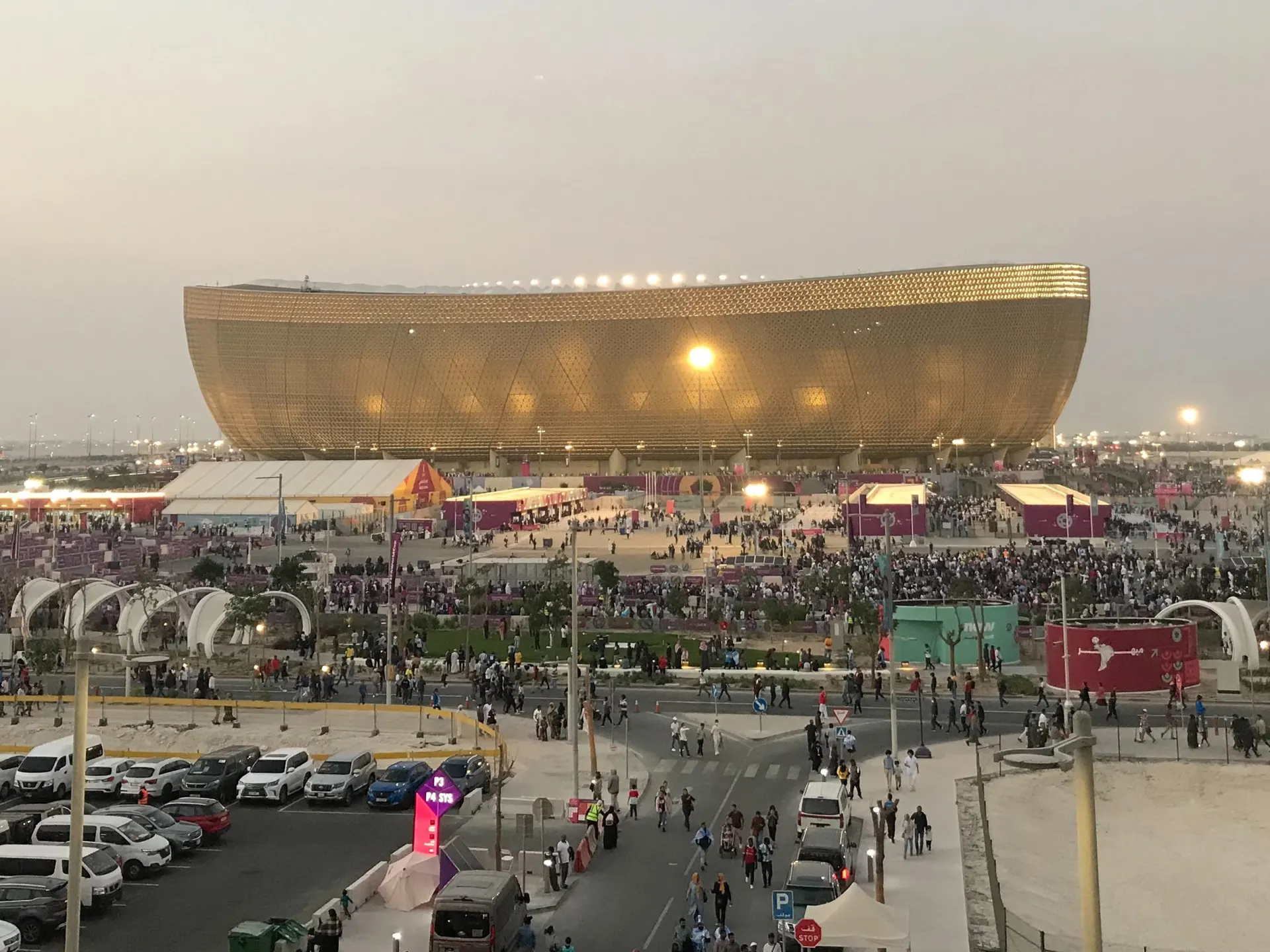
The contest between European champions Spain and Copa America winners Argentina was scheduled for March 27 at Doha’s Lusail Stadium, where fans would have had the opportunity to watch Lionel Messi go head-to-head with Lamine Yamal.
UEFA said they held discussions with the organising authorities in Qatar and concluded that the match could not take place due to the “current political situation” in the region.
The Spain vs Argentina game was part of the Qatar Football Festival, as promoted by local organisers.
The five-day festival also included Egypt vs Saudi Arabia and Qatar vs Serbia on March 26; Egypt vs Spain and Saudi Arabia vs Serbia on March 30 and Qatar vs Argentina on March 31.
Serbia will now play Spain away instead.
“Serbia will face the current European champions, Spain, on away turf on March 27, and four days later they will host the Saudi Arabian national team,” the Football Association of Serbia said in a statement.
UEFA said they explored other feasible alternatives to play the Finalissima but they proved to be ‘unacceptable’ to the Argentinian Football Association (AFA).
UEFA first offered to stage the match at the Santiago Bernabeu with a 50:50 split of supporters in the stadium.
A second option was to stage the Finalissima over two legs – at the Bernabeu on March 27 and the second leg in Buenos Aires during an international window before the next Euros and Copa America.
However, the AFA rejected both options. UEFA said Argentina made a counter offer to play the game after the World Cup but Spain had no available dates.
“Ultimately, UEFA sought a commitment from Argentina that, if a neutral venue in Europe could be found, the game could go ahead on 27 March… or on the alternative date of 30 March. This proposal was also rejected,” UEFA added.
The 2022 edition of the Finalissima was held at Wembley Stadium in London where Argentina beat Italy 3-0.

Hollywood’s biggest night is full of intrigue, predictions
All the predictions, drama and pageantry of Hollywood’s biggest night will play out at the Dolby Theatre this afternoon as the 98th Academy Awards get underway.
How many awards will “Sinners,” directed by Ryan Coogler, win from its record-setting 16 nominations? And will Coogler win best director? Our critic says, “no.”
Tonight is also a big evening for our entertainment team, which has been producing features, previews, explainers, predictions and so much more.
Let’s jump into some of that work.
How and when to watch
My colleague Katie Simons provided some show basics, like it’s 4 p.m. Pacific start time.
The 2026 Oscars will air on ABC, and those with cable subscriptions can also watch by logging into the ABC app or abc.com.
The telecast will also stream live on Hulu, YouTubeTV, AT&T TV and FuboTV. Internationally, the ceremony will be broadcast in more than 200 territories. You can check your local listings here.
When the red carpet viewing gets underway
“Chicken Shop Date” host Amelia Dimoldenberg will return, for a third-straight year, as social media ambassador and correspondent for the official red carpet, which will kick off at 3:30 p.m. on ABC and Hulu.
For extended coverage, E! will begin its red carpet broadcast at 1 p.m. ABC’s coverage begins at 12:30 p.m., followed by “The Oscars Red Carpet Show,” hosted by Tamron Hall and Jesse Palmer.
“Sinners” is picking up steam heading into the show
My colleague Greg Braxton wrote about how award prognosticators believe Sinners gained positive press after its stars — Delroy Lindo and Michael B. Jordan — were called a racial slur at the BAFTAs.
Jordan’s and Lindo’s handling of the BAFTA incident, along with warmly received victories for the “Sinners” cast at the Actor Awards on March 1, has given the Warner Bros. release unexpected momentum leading up to Sunday’s Oscars ceremony.
Although it received a record-breaking 16 nominations, the film has been largely overshadowed through much of awards season by Paul Thomas Anderson’s political thriller “One Battle After Another.”
And Timothée Chalamet of “Marty Supreme” had been considered for months as an almost-certain lock for lead actor. But the events in past weeks have seemingly positioned “Sinners” for upset wins in the picture race and lead actor for Jordan.
Who’s going to win?
Our critic Amy Nicholson and our expert Glenn Whipp believe they know the winners and the snubs.
Nicholson believes “Sinners” should win for best picture.
Nicholson wrote that the Jim Crow-era murder musical is the best kind of smart filmmaking, a barn-burner about religion and art and race that ditches the speeches for scenes of action and romance.
Every character — from Miles Caton’s rebellious guitarist and Jack O’Connell’s lilting vampire to Wunmi Mosaku’s soulful witch and Michael B. Jordan’s bootlegging twins Smoke and Stack — has been scarred by life in 1930s Mississippi.
She also said the film “Eddington” should’ve been a contender (perhaps a nod to “On the Waterfront”). Ari Aster’s merciless black comedy drags us back to May 2020 when tempers, temperatures and misinformation were heating up across America.
Dueling civic leaders Sheriff Joe (Joaquin Phoenix) and Mayor Ted (Pedro Pascal) agree that COVID has yet to arrive in their New Mexican hamlet.
Whipp wrote that “One Battle After Another” vs. “Sinners” is very much a 1A/1B situation, with Anderson’s epic having the slight edge.
But with the Oscars, quality is often secondary to an awards narrative. Both movies have cultural relevance.
Both won critical acclaim and, to a degree, commercial success. (Though “One Battle” wasn’t the blockbuster “Sinners” was, it still grossed more than any other movie in Anderson’s career.) “Sinners” scored 16 Oscar nominations, the most in history; “One Battle” was close behind with 13.
There’s much more to read in the above links. Enjoy them and the Oscars.
The week’s biggest stories

(Chris Putnam/FiledIMAGE – stock.adobe.com)
Election news
Oil and the Iran War
Crime, courts and policing
What else is going on
Must reads
Other meaty reads
For your downtime

(Illustrations by Lindsey Made This; photograph by Richard Shotwell / Invision / AP)
Going out
Staying in
L.A. Affairs
Get wrapped up in tantalizing stories about dating, relationships and marriage.
Have a great day, from the Essential California team
Jim Rainey, staff reporter
Hugo Martín, assistant editor, fast break desk
Kevinisha Walker, multiplatform editor
Andrew J. Campa, weekend writer
Karim Doumar, head of newsletters
How can we make this newsletter more useful? Send comments to essentialcalifornia@latimes.com. Check our top stories, topics and the latest articles on latimes.com.

Trump’s delay of wheelchair rule frustrates disabled flIers
WHITE SALMON, Wash. — Seth McBride’s life was forever changed on a snowy mountainside in British Columbia.
McBride was — and is — a thrill-seeker. Growing up in Juneau, Ala., with the untamed outdoors as his stomping ground, he loved to rock climb, mountain bike and, especially, strap on his skis and fly, soaring headlong off heart-pounding cliffs, crags and cornices.
A few months before his senior year in high school, McBride was at a terrain park at Whistler Blackcomb resort. He was 17. He launched a maneuver he’d completed many times before, a back flip off a steep jump. Only this time, he over-accelerated, over-rotated and came down on his neck. Right away he knew something was wrong.
“As soon as I landed,” McBride recalled more than 25 years later, “I lost all sensation in my legs and my lower back.”
The prognosis was grim; doctors told McBride he probably would never walk again, and he hasn’t.
But that’s scarcely slowed him down.

Views of the 47th president, from the ground up
Before they had kids, McBride and his wife biked 6,500 miles — McBride using a special, hand-cranked cycle — from Portland, Ore., to the southern tip of Argentina. He’s traveled the world as a wheelchair rugby player, winning gold, silver and bronze medals at Paralympic Games in Beijing, Rio de Janeiro and London.
McBride — adventurer, daredevil — appears unflappable. Until it comes to air travel.
It’s not the hassles and aggravation that most people put up with. Every trip requires McBride, 43, to undergo a special regimen, dehydrating himself so he won’t have to use the bathroom in flight. Every excursion includes the likelihood of being uncomfortably jostled or, worse, dropped as he’s being transferred to his seat. He can never be certain his wheelchair, his lifeline, won’t be damaged or missing once his plane lands.
“There are very few places or in my life that I feel less independent” than an airport, said McBride, who still plays competitive rugby at the club level. “None of the systems are set up for wheelchair users to be able to manage things on their own.”

Wheelchairs at Portland International Airport. The all-purpose equipment can’t serve the various needs of disabled travelers.
(Will Matsuda / For The Times)
For a time, as the Biden administration was winding down, it looked as though that was about to change somewhat. The federal government issued a set of regulations that would require airlines, among other things, to assume liability for damaged and delayed wheelchairs and improve training for staff working with passengers facing mobility issues.
But the Trump administration, which has made deregulation one of its highest imperatives, put those requirements on hold while a trade association and several major airlines sue to keep the changes from taking effect.
For McBride and others like him, it’s a disappointing setback that follows years of pressing Washington to make air transit just a bit more decent and humane.
“It sucks,” McBride said of the dignity-deflating status of a wheelchair traveler. “I know quite a few people who simply won’t fly anymore.”
::
When the Biden administration published new airline regulations in the Federal Register, it spelled out its reasoning.
Passengers forced to surrender their wheelchairs “must rely on airline staff and contractors to properly handle a wheelchair or scooter and return it in a timely manner in the condition it was received. Advocates have stressed … that, when an individual’s wheelchair or scooter is damaged by an airline, the individual’s mobility, health and freedom are impacted until the device can be returned, repaired or replaced.”
What’s more, “Advocates note that wheelchairs are often custom fitted to meet the needs and shapes of each user. Spending time in an ill-fitting chair can cause serious injury, such as pressure sores, and even death because of a subsequent infection.”
The Department of Transportation estimated that, in 2024, 1 of every 100 wheelchairs or scooters placed on a domestic flight was lost, damaged or delayed. Which may not seem like a terribly large number, unless you’re the person whose well-being, and even survival, depends on their wheelchair or scooter being at the ready and operational upon arrival.
Mia Ives-Rublee directs the Disability Justice Initiative at the Center for American Progress, a left-leaning think tank. She said airlines, which cater to luxury travelers and treat everyone else like sardines, have long put profit and expedience ahead of the needs of their disabled passengers.
“We’ve seen this tension continue to build as disabled people become more active and the world becomes more accessible. They want to travel, or have jobs that require travel,” said Ives-Rublee. While discrimination is plainly illegal, “Airlines aren’t doing enough to protect our devices,” which has the effect of making it “very difficult for disabled people to travel.”
Ives-Rublee has had nearly a half dozen wheelchairs broken by airlines in the last 20 years, which can be costly as well as life-threatening. A manually operated wheelchair can run as much as $2,000, Ives-Rublee said. A mechanized wheelchair can cost as much as a used car.

McBride mainly travels from Portland’s airport. “There are few places in my life” he feels less independent.
(Will Matsuda / For The Times)
(McBride said he’s suffered nicks and scrapes on his “everyday chair.” Worse, was the damage done to wheelchairs he uses in rugby competition, which “is obviously a big deal” when he’s traveling for a match.)
In their lawsuit opposing the rules change, airlines and their trade group said the Biden administration overstepped its authority and the new requirements were too burdensome. Strict liability for wheelchair damage also could expose air carriers to “unreasonable financial risk,” the suit claimed.
The wheelchair rules were supposed to take effect just before Biden left office. The Trump administration postponed them until March 2025, then pushed implementation to August 2025. Now, the Department of Transportation says it will issue a new rule this coming August, with a 60-day comment period to follow — meaning no change will come until at least 2027.
Ives-Rublee hasn’t much hope for relief.
“Given the nature of the administration right now, I doubt they’re putting much effort into protecting” the Biden-era regulations, she said
::
The last thing McBride wants is anyone feeling sorry for him. He’s no victim.
“It was something s— that happened to me,” he said of the accident that left him paralyzed. “But s— stuff happens to people all the time. What matters is how you move forward and what you can do with your life after that happens.”
McBride was seated at the kitchen table of his custom-built home, two miles above the Columbia River in rural Washington state. The house — one level, bright and airy, with concrete floors to smooth the path of his wheelchair — perches at the end of a steep dirt road. A forest in the backyard gives his children, ages 4 and 8, the same freedom to romp through nature he enjoyed growing up in Alaska. There’s also a climbing wall in his son’s bedroom.
Working remotely, McBride writes for New Mobility, a magazine for wheelchair users, and heads communications and marketing for the United Spinal Assn., a nonprofit advocacy group.
His politics run to the left side of the spectrum. (On a cold, drizzly morning, McBride wore a black Oregon Ducks hoodie, honoring his alma mater, the University of Oregon, and its home in liberal Eugene.) Yet while he’s no Trump fan, McBride doesn’t consider making life easier for wheelchair users to be a partisan issue. After all, he pointed out, it was a Republican president, George H. W. Bush, who signed into law the landmark Americans
With Disabilities Act.
“We’ve made a lot of progress as a community working with Republicans, working with Democrats,” he said, as the sun made a brief appearance, illuminating the Douglas firs outside his door. “The basic issues of people being able to access the same services and the same experiences as everyone else shouldn’t be political. … It’s a safety thing.”
He’s not unalterably opposed to deregulation, per se.
“I think it’s a huge issue within systems when it’s overly complex for companies or people to do anything,” McBride said. “But lots of time regulations are there for a reason. It’s when private companies aren’t necessarily doing a good enough job protecting the safety or the rights of all people within a society.”
Given a chance to address Trump or the head of his Transportation Department, Sean Duffy, McBride would say this: Come, let’s take a plane ride.
“Go on a trip with my rugby team and see what it’s like when you have multiple wheelchair users on the same plane,” he said, “and how difficult it is and why we feel like regulations are needed so we can have a modicum of safety and dignity when we’re flying.”
The cost of accommodation might take away some from the airlines’ bottom line. But certain things can’t be priced in dollars and cents.

The pretty town on Mamma Mia! island with ‘glowing’ cave and barely any crowds
ISLAND destinations are often whimsical, but one spot in particular is a crowd-free gem.
Vis Island in Croatia is just over an hour on the ferry from Split.
And it was recently named among Intrepid’s annual ‘Not Hot’ list for 10 overlooked destinations you should visit this year.
Though if you want to head to a seaside town without the crowds, the Croatian Tourism Board recommends visiting Komiza on the island, which according to the board is where fishing on the eastern coast of the Adriatic was born.
The town dates back to the 12th century and is surrounded by pretty villages to discover as well.
Stiniva Beach is just an 18 minute drive from the town and is the number one thing to do on the island of Vis, according to TripAdvisor.
Read more on travel inspo


The cove has crystal clear waters and pebbles, like many other beaches across the island.
From the road, it is about a 20 minute hike down to the beach, though many visitors note it isn’t easy, so sturdy shoes are recommended.
Boat tours go to the beach too, though, which is probably a better option for the more elderly.
One recent visitor said: “Stiniva Beach is hands down the most beautiful beach I’ve ever seen in my life.
“Tucked away in a secluded cove with crystal-clear water and beautiful high cliffs surrounding you, it feels like stepping into a hidden paradise.
“The atmosphere is peaceful and almost surreal, especially in the early morning when the light is soft and the crowds haven’t arrived yet.”
If you want to head to a more accessible beach, opt for Gusarica Beach which is right by the town centre.
The beach features small pebbles and it is a great spot to go paddleboarding.
The island and Komiža more specifically, was also used as a filming destination for Mamma Mia! Here We Go Again.
In the second film, Harry and Bill have dinner in a Greek tavern.
In reality, the tavern is a restaurant called Jastožera and does have the amazing view that you see in the film.
The restaurant is located by a 15th century fortress that connects two cliffs and created an open air sea pool used for lobster breeding.
Since 1883, the restaurant has been owned by the Komizan family Marinkovic-Mestrezane and today you can visit to try fresh lobster dishes.
Komiža is a great base for visiting the Blue Cave on Bisevo island as well, which is an even smaller island.
The “island of peace and purity”, according to BlueCave-Bisevo.com, is known for its Blue Cave, which was revealed by Viennese painter Eugen Baron Ransonnet in 1884.
Since, tourists flock to the cave which has since become protected as a geomorphological natural monument.
What makes the cave so special is that it captures an unusual light phenomenon which gives everything in the cave a blue glow.
In 2019, research revealed that the blue glow is created by morning light hitting the yellow sandy bottom and illuminating the interior of the cave.
Visitors can only head to the cave on an organised trip, which are available between April 1 and November 1.
Tickets to the cove can be purchased in the gift shop in Mezuporat Cove, near the cave entrance.
They cost 75 Croatian kuna (£8.67) per adult and 35 kuna (£4.05) for children, but in the peak season rise to 100 kuna (£11.56) per adult and 50 kuna (£5.78) per child.
If you book a Blue Cave tour from Split, your entrance will be included in your ticket.
The best way to get to Komiža is by flying to Split, with flights usually costing from £24 one-way.
Once in Split, hop on the ferry to Vis which usually costs between €6.50 (£5.66) and €26 (£22.63) per person.
For more inspiration on holidays to Croatia, there’s a tiny island which bans cars that tourists say ‘feels like being in a fairytale’.
Plus, the little-known Mediterranean hotspot Brits are moving to for super-low taxes, 97p beer and 31C summers.

Finalissima: Argentina v Spain match set for Qatar cancelled because of Middle East war
BBC Sport has contacted the Argentine FA for comment.
Uefa said: “Argentina made a counter suggestion to play the game after the World Cup but, as Spain has no available dates, that option had to be ruled out.”
The Spanish FA said, external it had “worked intensively” to get the game on in any format possible, whether in Spain or at a neutral venue.
It said: “Spain was prepared to play as it has always been stated. They set no conditions.
“Spain, together with Uefa, has offered all possibilities.”
On Saturday the Bahrain and Saudi Arabian Formula 1 Grands Prix due to be held in April were cancelled.
Formula 1 said it is not safe to stage the races because of the conflict across the region.
The Finalissima, which is staged every four years and is organised by Uefa and the South American Football Confederation (Conmebol), was last won by Argentina at Wembley in 2022.

I went to one of the world’s fastest F1 race tracks with 230mph top speeds and insane attractions
“LIGHTS out and away we go!”, the famous F1 cry rang out as we were about to take off from Vegas to fly back to London.
It was a nice touch by the Virgin flight attendant and brought an approving chuckle from a plane packed with motorsport fanatics who had just enjoyed one of the most memorable weekends of their lives.
Every year, the streets of Sin City echo to the sound of F1’s elite machines roaring round a 3.8-mile circuit that takes in the iconic Strip and winds round the jaw-dropping Sphere.
Where else in the world is a more fitting home for the supercharged glam of the F1 circus?
Petrolheads may not be fans of the circuit for its racing quality, but if you want spectacle, well, this is THE place to be.
Whether you’re in one of the many stands dotted around the Sphere or watching the cars whizz by at 230mph on the Strip, it’s an experience like no other.


Those with deeper pockets can take pit lane walks and tours of the track.
For most, however, the only way to get a racer’s eye view of the circuit is at the F1 Arcade in Caesars Palace — one of several worldwide — where you can go wheel-to-wheel with your mates as you blast past all the Vegas landmarks.
If you’re lucky enough to be in town for race week, you can down a beer — or a tequila shot — at the Bellagio Hotel’s legend-ary Shoey Bar.
Named in tribute to Aussie driver Danny Ricciardo’s infamous celebration, when he downed champagne from his shoe, the pop-up bar serves drinks in footwear on a terrace overlooking the hotel’s famous fountains.
One of the best track-side points to watch race action is opposite the Sphere, Las Vegas’s enormous ball of fun that’s become a global phenomenon.
On the inside, it’s currently showing a specially adapted version of The Wizard Of Oz on its 160,000sq ft screen that makes you feel like you’re IN the movie.
As well as the expected special effects like blasts of wind when the hurricane blows in, there are animatronic flying monkeys, apples falling from the ceiling and flurries of snow.
With tickets from $104 (£78), it’s booking until the end of 2026, so there’s plenty of time for you to become the fifth member of Dorothy’s gang of misfits.
Away from the Sphere, another Vegas institution is the gravity-defying Cirque du Soleil — and there are six resident productions to choose from.
Of these, I recommend “O”. It has all the death-defying acrobatics, but with a £100million stage that transforms into a 25ft deep pool in seconds.
With a daredevil cast featuring former Olympic athletes, it’s just another way for Vegas to take your breath away.
For a classy dinner after all this fun, head to High Steaks, atop the Rio hotel.
Fifty floors up with 180-degree views from an outdoor terrace, as well as sumptuous steaks, you can gorge on extravagant seafood towers and smoked prime rib.
For something a little more relaxed, how about Pinky’s By Vanderpump at the Flamingo?
It’s no less Instagrammable, due to its sexy Art Deco greenhouse vibe, but with more affordable food.
And I urge you to try the Daddy Issues cocktail (make sure you stir in the candyfloss once you’ve taken a picture!).
For a classier speakeasy experience, The Vault — hidden deep within the sprawling Bellagio casino floor — oozes sophistication. But make sure you book to avoid disappointment.
Then on to a nightclub? Make it Omnia in Caesars Palace. You’ll be captivated by its famous kinetic chandelier that pulsates in time to the music above a dancefloor packed with beautiful people.
Away from the bright lights of the casinos and nightclubs, there is a little gem just off the Strip in karaoke bar Smelly Cat, where you can belt out your chosen anthem with a live backing group.
The resident band can play any tune their super-duper AI gadget can find. They’d never heard of Mardy Bum by Arctic Monkeys when it was requested, but they smashed it out of the park.
You can jump the queue to get up on stage by paying a $100 fee. Depending on how much you would love to sing with your own backing band, that could be an absolute bargain.
After the high-octane fun of casinos, the Strip and all those Daddy Issues, the Arts District is the place to head.
South Main Street, a 15-minute taxi ride from the Strip, is home to chilled bars and cafes, cool vintage stores, antique markets and art galleries.
It’s like an anti-Vegas if you need to decompress, and cafe/bakery 1228 Main is the ideal place to have a relaxed lunch mid-mooch — check out the breakfast burrito. A pit stop, if you will, after all that racing around.
But in Sin City — as in a Grand Prix — pit stops are very much temporary.
Cocktails await, followed by the casino, followed by a club . . .
Lights out and away we go, people!
GO: LAS VEGAS
GETTING THERE: Virgin Atlantic flies direct from London Heathrow to Las Vegas from £835pp return.
See virginatlantic.com or call 0344 8747 747.
STAYING THERE: Rooms at Nobu Hotel at Caesars Palace cost from £178 per night, excluding taxes.
Pentagon identifies six service members killed in refueling mission
March 15 (UPI) — The Department of Defense has identified the six U.S. service members killed during a refueling mission as part of the Iran war as three members of an Air Force refueling wing and three from the Ohio Air National Guard.
The six crew members were aboard a Boeing KC-135 Stratotanker — a refueling aircraft — when it crashed Thursday in western Iraq, which was considered friendly airspace.
Among the dead were four airmen assigned to the 6th Refueling Wing at MacDill Air Force Base in Tampa, Fla.: Maj. John A. Klinner, 33, of Auburn, Ga.; Capt. Ariana G. Sabino, 31, of Covington, Wash.; and Tech Sgt. Ashley B. Pruitt, 34, of Bardstown, Ky. The three were part of the 99th Air Refueling Squadron based out of Sumpter Smith Joint National Guard Base in Birmingham, Ala.
Shortly after their identities were made public, Alabama Gov. Kay Ivey offered her condolences on X.
“Three of the service members who lost their lives in duty to our nation were stationed at the 117th in Birmingham,” she posted. “They were not only outstanding Airmen. They were our neighbors — our fellow Alabamians. May their service and that of their families never be forgot.
Three others were assigned to the 121st Refueling Wing at Rickenbacker Air National Guard Base in Columbus, Ohio: Capt. Seth R. Kobal, 38, of Mooresville, Ind.; Capt. Curtis J. Angst, 30, of Wilmington, Ohio; and Tech Sgt. Tyler H. Simmons, 28, of Columbus, Ohio.
Ohio Gov. Mike DeWine and his wife, Fran DeWine, were mourning the loss of the three airmen who operated out of Ohio and were trained to do work that was “critical in long-distance missions in defense of our nation.”
“Every mission they undertook involved risks that they were willing to take and the courage to put the lives of others above their own,” he wrote in a post on X.
“They served with honor.”
The Pentagon said the crash that led to the service members’ deaths was under investigation. A second Boeing Stratotanker involved in the incident declared an emergency before landing in Tel Aviv with no one on board injured.
Thirteen U.S. service members have died in connection to the Iran war, which began in late February.

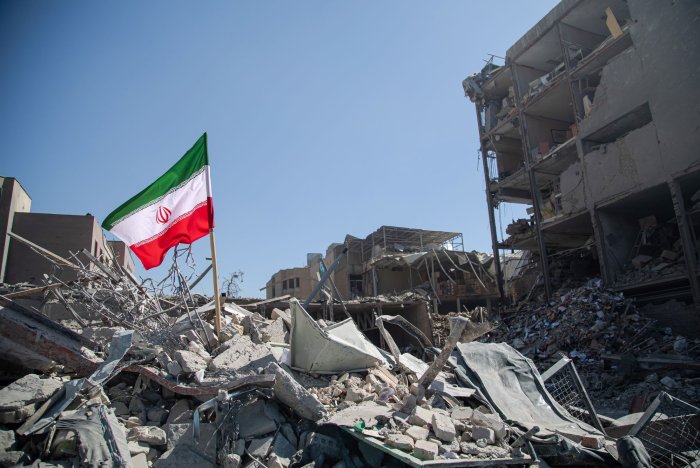
An Iranian flag stands amid the destruction in Enghelab Square following the attacks carried out by the United States and Israel on Tehran, Iran, on March 4, 2026. Photo by Nahal Farzaneh/UPI | License Photo
Keisuke Honda loses US advertising deal over Iran support at World Cup | World Cup 2026 News
Japanese football legend says his opinion prompts a US company to cancel an advertising campaign before the FIFA World Cup.

Published On 15 Mar 2026
Former Japanese footballer Keisuke Honda says he has lost an advertising deal in the United States after voicing support for the Iranian national team’s participation in the upcoming FIFA World Cup.
Without naming the sponsor, Honda revealed on Saturday that an advertisement from a US-based company had been “put on hold” after he posted on X that he wants Iran to compete in the tournament cohosted by the US, Mexico and Canada.
Recommended Stories
list of 3 itemsend of list
“I know it’s a very sensitive thing, but I personally want them to participate in the World Cup,” the 39-year-old wrote in a tweet on Thursday, a day after Iran’s sports minister said the country cannot take part in the World Cup after the US and Israel launched a war on it and killed its supreme leader.
Honda, who represented Japan from 2008 to 2018 and scored 38 international goals for his country, posted a follow-up tweet in which he indicated that the advertisement, which had been expected to be finalised in time for the World Cup, had been shelved due to his earlier post.
“Apparently, this statement caused a US company to cancel an advertisement that was about to be finalised to coincide with the World Cup,” he wrote.
“We don’t want anything to do with companies that ignore the essence of things and make decisions based on rotten thinking.”
Iran’s place at the 48-team tournament is in doubt even after they qualified because of the US-Israeli attacks that began on February 28, following which Tehran responded by launching waves of missiles and drones at Israel, several military bases in the Middle East where US forces operate and infrastructure in the region.
The 23rd edition of the FIFA World Cup will be held in the three host nations from June 11 to July 19, and all of Iran’s group games have been scheduled at venues on the US West Coast.
The former Samurai Blue represented his country at the 2010, 2014 and 2018 World Cups and is among the top 10 most capped players and top five goal scorers for the Asian giants.
Honda was named the most valuable player in Japan’s title-winning run at the Asian Cup in 2011. After representing 11 clubs across five continents, the attacking midfielder hung up his boots in 2024 and switched to coaching.
The golden-haired player enjoys a hero-like status in his home country and is one of Japan’s most recognised international footballers.
He expressed his opinion on Team Melli’s participation amid heightened tensions between the host nation US and Iran.

US President Donald Trump said on Thursday that it would not be appropriate for Iran to participate in the World Cup.
“The Iran National Soccer Team is welcome to The World Cup, but I really don’t believe it is appropriate that they be there, for their own life and safety,” Trump wrote in a social media post without elaborating.
The Instagram account for the Iranian national team quickly responded to Trump’s remarks, questioning whether the US president should be commenting on team participation.
“The World Cup is a historic and international event, and its governing body is FIFA – not any individual country,” it wrote.
The account also criticised Trump for failing to provide adequate security for Iran’s national football players.
“Certainly, no one can exclude Iran’s national team from the World Cup,” the message continued. “The only country that could be excluded is one that merely carries the title of ‘host’ yet lacks the ability to provide security for the teams participating in this global event.”
Trump later posted another message on his social media platform to emphasise that the event would be safe for players and spectators from around the world.

Inside Chase Infiniti’s life off-screen as fans left cofused over movie star ‘parents’
Chase Infiniti has only been in the spotlight for two years but she has already brushed shoulders with Hollywood greats like Leonardo DiCaprio and Jake Gyllenhaal

Chase Infiniti is presenting an award at the 2026 Oscars(Image: Getty )
Rising star Chase Infiniti has already become one of Hollywood’s most talked-about stars after just two big roles.
It’s hardly a surprise considering her unique name and stellar leading performance in One Battle After Another alongside industry giant Leonardo DiCaprio.
While Leo and other cast members managed to bag nominations at this year’s Oscars, Chase didn’t receive a nod.
However, she is set to present an award during the ceremony, which airs on ITV1 tonight (Sunday, March 15) at 10.15pm.
As viewers tune into the long-awaited award show, we’re certain many will be curious to learn more about Chase’s background.
How did Chase Infiniti get her name?
The 25-year-old actress was born Chase Infiniti Payne in Indiana, America. Her name was inspired by legendary films Batman Forever and Toy Story.
She shared in an interview with the Today Show that her parents “had watched Batman Forever and they were obsessed with Nicole Kidman as Chase Meridian”. They decided to name their child, whether it would be a boy or girl, Chase.
When the couple were searching for a middle name, they landed on Buzz Lightyear’s iconic catchphrase from the Toy Story series: “To infinity and beyond!”
Chase has reflected on her parents seemingly predicting she would have a career in movies, telling the Today Show: “It’s really crazy. I’m like ‘How did [they] predict that!'”
Are Chase Infiniti’s parents movie stars?
Chase’s parents are not movie stars. However, new fans may be confused by chatter on the internet suggesting that she is Kerry Washington and Tony Goldwyn’s daughter.
It is actually a running joke on the internet that Chase is the love child of Kerry and Tony’s characters in Scandal.
The hit political drama followed Tony as President Fitzgerald Thomas Grant III. He sparks a heated affair with former White House Communications Officer Olivia (played by Kerry), which he is determined to hide from the public.
The online joke came after viewers noticed a striking resemblance between Tony and upcoming actor Tyriq Withers, with others later bringing Chase into the conversation.
It went even more viral when leading star Kerry unexpectedly played into the social media discussion last month, sharing a playful selfie with her ‘Scandal children’.
She tagged her co-star in the caption, writing: “It’s a family reunion at the @naacpimageawards (Missing you @tonygoldwyn).”
What else has Chase Infiniti starred in?
The rising star is building an impressive career, having featured in Apple TV’s Presumed Innocence alongside Jake Gyllenhaal in 2024.
She then appeared in One Battle After Another in 2025, and has been nominated for a BAFTA, Critics Choice Award and Golden Globe for her part as Leo’s on-screen daughter, Willa.
Her recognition throughout awards season left film fans stunned when she didn’t earn an Oscar nominations, with many arguing she was ‘snubbed’.
The Gen Z star is also set to feature in The Handmaid’s Tale sequel, The Testaments, premiering on April 8.
The Oscars will air on ITV1 and ITVX tonight (March 15) at 10.15pm.
For the latest showbiz, TV, movie and streaming news, go to the new **Everything Gossip** website
Trump seeks to close $1.6-trillion revenue gap with new tariffs
WASHINGTON — The Trump administration is stepping up its ambitious effort to replace about $1.6 trillion in lost tariff revenue that was eliminated by the Supreme Court’s decision to strike down a range of the president’s import taxes.
Recovering that lost revenue, which the White House was counting on to help offset the steep, multitrillion-dollar cost of its tax cuts, is possible but will be challenging, experts say. The administration has to use different legal provisions to impose new import taxes, and those provisions require longer, complex processes that U.S. companies can use to seek exemptions. It could be months or more before it is clear how much revenue the replacement tariffs will yield.
“I wouldn’t bet against this administration being able to get back on paper the same effective tariff rate they had before,” said Elena Patel, co-director of the Urban-Brookings Tax Policy Center. But the new approach will “make it easier for people to contest the tariffs, which is going to put a big asterisk on the revenue until all that is settled.”
On Wednesday, U.S. Trade Representative Jamieson Greer said the administration will investigate 16 economies — including the European Union — over whether their governments are subsidizing excessive factory capacity in a way that disadvantages U.S. manufacturing. The investigation will also cover China, South Korea and Japan, Greer said.
In addition, he said, there would be a second investigation of dozens of countries to see whether their failure to ban goods made by forced labor amounts to an unfair trade practice that harms the United States. That investigation will also cover the EU and China, as well as Mexico, Canada, Australia and Brazil.
Both investigations are being conducted under Section 301 of the 1974 Trade Act, which requires the administration to consult with the targeted countries, as well as hold public hearings and allow affected U.S. industries to comment. A hearing as part of the factory capacity investigation will be held May 5, while a hearing on the forced labor investigation will occur April 28.
It’s a far cry from the emergency law that President Trump relied on in his first year in office, which allowed him to immediately impose tariffs on any country, at nearly any level, simply by issuing an executive order.
Moments after the Supreme Court’s ruling, Trump imposed a 10% tariff on all imports under a separate legal authority, but that duty can only last for 150 days. The president has said he would raise it to 15%, the maximum allowed, but has yet to do so. Some two dozen states have already challenged the new taxes. The administration is aiming to complete its Section 301 investigations before the 10% duties expire.
The effort underscores the importance that the Trump White House has placed on tariffs as a revenue-raiser at a time when the federal government is facing huge annual budget deficits for decades into the future. Previous administrations, by contrast, used tariffs more sparingly to narrowly protect specific industries.
Erica York, vice president of federal tax policy at the Tax Foundation, noted that the first investigation covers roughly 70% of imports, while the second would cover nearly all of them.
“That breadth suggests the goal isn’t to address the issues at hand, but instead to re-create a sweeping tariff tool,” she said.
Trump portrays tariffs as a way to force foreign countries to essentially help pay the cost of U.S. government services, even though all recent economic studies find that American companies and consumers are paying the duties, including analyses by the Federal Reserve Bank of New York and economists at Harvard University. In his State of the Union address last month, Trump even touted his tariffs as a potential replacement for the income tax, which would return the United States’ tax regime to the late 19th century.
Trump also wants tariffs to help pay for the tax cuts he extended in key legislation last year. The tax cut legislation is expected, according to the most recent estimates by the nonpartisan Congressional Budget Office, to add $4.7 trillion to the national debt over a decade, while all Trump’s import taxes, including ones not struck down by the court, were projected to offset about $3 trillion — or two-thirds of that cost.
The high court’s ruling Feb. 20 that he could no longer impose emergency tariffs eliminated about $1.6 trillion in expected revenue over the next decade, according to the CBO.
Some of Trump’s import taxes remain place, including previous tariffs on China and Canada that were imposed after earlier 301 investigations. The administration has also imposed tariffs on some specific products, including steel, lumber and cars. Those, combined with the 10% tariff for part of this year, should yield about $668 billion over the next decade, the Tax Foundation estimates.
“It’s going to take a really big patchwork of these other investigations to make up for the [lost] tariffs,” York said.
The administration’s efforts are also unusual because they reflect an overreliance on tariffs to bring in more government revenue. Trump has also said the import taxes are intended to return manufacturing to the United States — manufacturing jobs, however, are down since he returned to office — and he has used the tariffs to leverage trade deals.
“What makes this really different,” said Kent Smetters, executive director of the Penn Wharton Budget Model, “it is really the first time tariffs have been mainly used as a revenue raiser.”
Patel, meanwhile, argues that raising revenue can be done more reliably and straightforwardly by Congress. Laws like Section 301 are traditionally intended to be used to address specific trade policy concerns in particular countries.
“It’s not supposed to be there to raise revenue,” she said. “If we want to raise revenue through tariffs, then Congress should impose a broad based tariff.”
Rugaber writes for the Associated Press.
How Gabriela Jaquez became a breakout shooting star for No. 2 UCLA
In late November, Gabriela Jaquez scored 29 points against Tennessee. It wasn’t her career high; that came when she tallied 30 points two years prior.
But that game, when Tennessee had no answers for a player who was then the UCLA women’s basketball team’s fifth offensive option, felt like Jaquez’s coming-out party after years as a quieter cog in the Bruins’ rotation. It changed the way teams had to defend her. Previously known more for attacking the rim than for shooting from outside, Jaquez showcased a different dimension.
Against the Volunteers, Jaquez made five three-pointers, her most ever.
Suddenly, one of the best teams in the nation had one of the best breakout stars. Entering the NCAA tournament, the 31-1 Big Ten champion Bruins are relying on Jaquez as one of their super seniors to guide them back to the Final Four.

UCLA guard Charlisse Leger-Walker hugs teammate Gabriela Jaquez, who led the Bruins in scoring during a win over Tennessee on Nov. 30 at Pauley Pavilion.
(Luiza Moraes / Getty Images)
“I do think she’s always been that player,” said senior guard Kiki Rice, who has played four seasons with Jaquez. “But I do think she’s had a lot more opportunity to demonstrate that, and you saw that in the beginning of the year. She just started off such a hot shooter, and the way that she’s developed every single year, gotten better and just found a way to impact the team.”
Though she hasn’t reached that same scoring peak again, Jaquez has quietly buoyed UCLA’s dominant run this season as the Bruins have emerged as one of the favorites to win a national title. She ranks second on UCLA (among players with at least 30 attempts) in field-goal percentage at 54.3%, second in three-point shooting at 41.1% and third in scoring.
Jaquez has gotten attention for being part of a family legacy at UCLA and spending an offseason with the Bruins’ softball team. But in the background, even when she hasn’t been the leader for the UCLA women’s basketball team, Jaquez has honed herself into one of just 25 Power Four conference players shooting better than 40% from deep this season.
Jaquez, who tallied her 1,000th career point early this season, is having a career-best season with 13.6 points per game, has added double-digits in 25 of her 31 games this season.
“There’s so much depth to her,” said guard Charlisse Leger-Walker, who often dances alongside Jaquez in videos posted on social media and Leger-Walker’s YouTube video series. “Getting to understand her off the court, I think has really helped our connection on the court, and kind of how her personality is so outgoing. She likes to bring people along. You can see that on the court.”
Jaquez came in as a 5-foot-11 freshman who played primarily as an undersized forward and would crash the net and collect rebounds.
The shooting, though, has been the biggest change this season.
“I think of her as someone who, especially early on, like she doesn’t need to have the ball on hand, she doesn’t need to have plays run for her to impact the game,” Rice said. “But then she’s been shooting so well too.”
Early in the season, teams doubled Lauren Betts, who leads the team with 16.4 points per game as a center, which opened Jaquez to shoot from deep, establishing herself as someone who needed to be keyed on.

UCLA’s Gabriela Jaquez shoots the ball under pressure from Oregon’s Katie Fiso on Dec. 7 at Pauley Pavilion.
(Luke Hales / Getty Images)
Her 107 three-point attempts are a career-high this season, with her shot selection jumping to 32.4% coming from behind the arc. That’s come with a career-high 2.2 assists per game and an 85.2 defensive rating, ranked in the top 20% of the nation.
“She can shoot the ball, she can finish, she defends,” shooting guard Gianna Kneepkens said. “I love playing with Gabs. Sometimes I get caught watching her because she’s just so amazing.”
Now, Jaquez projects as a first-round WNBA pick, in large part because of her versatility on offense. She is listed as a guard on the Bruins’ roster, but often starts at forward, where she can stretch the floor. Her 5.4 rebounds per game are third on the team, thanks in large part because of her ability to fill positions one through five.
During UCLA’s Big Ten semifinal win over Ohio State, Jaquez shot four for 12 but Bruins coach Cori Close noted Jaquez’s importance when her shooting isn’t on target.
“What I liked about that the most is that she struggled a little bit in the middle of the second half,” Close said. “It just showed a lot of her mental toughness that, when we needed her the most, she was going to be there for us on the defensive end and on the rebounding end.”
While all five starters have been mentioned as possible WNBA first-rounders, Jaquez has perhaps made the biggest leap, two WNBA scouts not authorized to publicly discuss prospects said.

UCLA senior Gabriela Jaquez celebrates with the Big Ten tournament trophy after the Bruins beat Iowa in the finals on March 8 in Indianapolis.
(Michael Conroy / Associated Press)
When Rice and Leger-Walker are on the bench, Jaquez has taken on point guard duties.
“She does all those little hustle plays,” Leger-Walker said. “She will score if you need her to, she’ll cut, she’ll rebound, like, she’s so versatile. You know what you’re getting from her, and she’s kind of that person who’s the engine of our team.”
Jaquez hasn’t thought much about what happens after this season. This year’s mantra of joy has resonated after last year’s crushing Final Four loss to Connecticut.
“It’s been fuel,” Jaquez said. “That started [last] spring and into the offseason, knowing exactly what to work on, how to prepare…. But I just love the team aspect of basketball, I love this group of girls specifically and I think having so much fun out there has [been the most important thing] and winning has made it even better.”
The night Jaquez hit five three-pointers against Tennessee may have felt like her arrival. But for the teammates who have watched her develop for four years, it looked less like a breakthrough and more like the rest of the country finally catching up.
The rest of the country may have only noticed this season. But inside UCLA’s locker room, Jaquez has been that player all along.
“Gabs is an extremely confident person, so I feel like if you’d asked her this freshman year, she would have believed that she’d become just the incredible player that she is,” Rice said. “Just the opportunity, her experience at this level these past few years has really helped her develop into what she is.”
How Trump’s unchecked power has changed the world | US-Israel war on Iran News
The decision by United States President Donald Trump to launch a war on Iran has left many international law experts questioning if the world order established after World War II is actually working.
In his second presidential term, Trump seems to be wielding total power without restraint, and the system of checks and balances enshrined in the US Constitution appears to be failing to limit his power.
Recommended Stories
list of 4 itemsend of list
Since Trump was sworn in in January 2025, he has ordered two unprovoked attacks on independent states, Venezuela and Iran; threatened to annex Greenland; strained traditional alliances with Europe; undermined the United Nations; and rattled international trade with his sweeping tariffs.
Previous constraints set by the UN system and international law appear supplanted by what Trump told reporters in January was a vision of power limited only by his “own morality”.

So what checks are there on Trump? Is he really free to attack states, set tariffs at will and, as leader of the world’s most powerful state, essentially dictate global policy? And if so, why are so many observers now saying his war on Iran is faltering?
Has international law put any checks on Trump?
Not so far.
According to analysts, both his attacks on Venezuela and Iran were in clear breach of international law and the UN Charter, principally the prohibition on the use of force under Article 2(4).
Debates about international law, how it has been geared over the decades to underpin the interests of the West and the US specifically, are hardly new. However, experts said, the Trump presidency has seen even the notional restraints of international law trampled underfoot.
Trump himself has brushed aside international law, saying in January that it would be up to him to decide when and how much international law applied to the US and his actions.
“In many respects, international law has historically served US interests, and self-interest should continue to generate US support for a rules-based order organised around the core principles enshrined in the UN Charter,” Michael Becker, a professor of international human rights law at Trinity College in Dublin who previously worked at the International Court of Justice in The Hague, told Al Jazeera, “But finding value in international law often requires adopting a long-term outlook that does not sit easily with short-term political agendas.”
“In the current geopolitical climate, the capacity of international law to provide a meaningful constraint on US action under Donald Trump has proven negligible,” Becker added. “That seems unlikely to change, especially given the failure by other states to strike a united front against Trump’s gangsterism.”
What about the UN?
Not so much.
From its founding, the role of the UN has been to promote dialogue instead of conflict and provide a global response to international challenges. However, Trump’s relationship with the body, like so many of the president’s associations, has rarely been so straightforward. On the one hand, while appearing to try to supplant the body with his members-only Board of Peace as well as sidelining UN aid efforts in Gaza, he has on occasion sought the legitimacy of the UN for a number of his projects, such as his calls in August for the UN to establish a Support Office in Haiti, to help limit migration to the US.
However, while the support of the UN may be helpful, it is clear that Trump has no intention of abiding by its charter, Richard Gowan, the Crisis Group’s UN director from 2019 to 2025, said.
“While other UN members see the US is breaking international law on a regular basis, they often hold back from criticising Washington too loudly in forums like the Security Council because they fear blowback from Trump,” Gowan said. “So Trump is learning he can sidestep the UN when he wants to and get away with it while occasionally using it for instrumental purposes.”
What about other powers?
Up to a point.
Many countries known as “middle powers”, such as Canada, the United Kingdom, France, and other Western and European states, have proven successful so far in pushing back against Trump’s efforts to unilaterally annex Greenland. But European powers have failed to condemn Trump’s unprovoked war on Venezuela and Iran, exposing their double standards in conflicts in the Middle East and the Global South.
Many analysts expect that a withdrawal of investments in the US by Gulf states, which are bearing the brunt of Iran’s retaliation to US and Israeli attacks, may also hasten the war’s end.
“Middle powers can generate friction but not a veto,” HA Hellyer of the Royal United Services Institute for Defence and Security Studies in London said. “Collective action – European governments, Gulf states – can raise costs and extract tactical adjustments. The structural imbalance remains: The US retains decisive military, financial and institutional primacy.”
Smaller states often hedge their bets, follow Washington or look to regional alliances for protection, Hellyer added, continuing that while pressure was strongest in Europe, where the US is no longer seen as a reliable security guarantor, the idea of establishing an alternative continues to be a hurdle. “The logic of an alternative model is accepted; the capacity to execute it quickly is not. A prolonged interregnum follows. The Gulf Arab states are in an analogous position,” he said.
In the meantime, Trump and the US are free to act as they choose. “These are exposure-management strategies, pursued until structural dependence on the US security umbrella can be reduced,” he said.
China and Russia have so far criticised the breaches of international law while avoiding clear escalation, and India and other members of the BRICS bloc have largely stayed silent, suggesting a preference for strategic ambiguity over confronting Washington directly.

What about domestic restraints?
Not really.
The US Supreme Court was able to block Trump’s use of tariffs to manage large parts of his foreign policy by rewarding allies with lower tariffs and punishing critics with punitive import duties.
But none of the other traditional guardrails – such as Congress; the Department of Justice, which has provided unwavering support to the president; and even the news media – has contained the president’s ambitions. This isn’t entirely new. Previous presidents have ordered wars without congressional approval. However, with Trump, analysts suggested, it has been systematic.
Powerful US institutions have largely failed to hold the Trump administration accountable, analysts, such as Kim Lane Scheppele, a professor of international affairs at Princeton University, said.
“His base of strong supporters are saying that they are willing to experience short-term increases in gasoline prices if it leads to a friendly government in Iran in the long term. His opponents have been his opponents on everything, so he simply ignores and threatens them,” Scheppele told Al Jazeera.
“Trump pays more attention to market performance than to public opinion, so he started saying that he was minimising costs and saying that the Iran war is short term to boost markets again.”
“What the US is spectacularly missing is leadership to oppose Trump. Congress is not doing its constitutional job to constrain him. The Supreme Court is in his pocket because he packed the court in his first term. Lower court judges are heroic and have done amazing work under serious pressures, but they don’t get foreign policy questions, given the difficulty of anyone getting ‘standing’ … in the area of international matters,” she said, referring to the requirement that parties to a lawsuit must show actual or future direct harm to themselves to bring a case to court.
She noted that lower federal courts, although limited on foreign policy, have repeatedly checked executive overreach on immigration, sanctions designations and emergency powers, often under intense political pressure.

So why are so many people saying Trump’s war is faltering?
In the eyes of many observers, Trump, with no clear war aims or a defined resolution, is in danger of losing control of a conflict that appears to be both growing and reaching into economic areas apparently unforeseen by his administration, so while traditional restraints don’t apply, market forces, like gravity, always do.
Trump has repeatedly said the war would be over soon despite none of his claimed war aims being achieved.
Oil prices have surged due to his attacks on Iran, Tehran’s counterstrikes and threats to shipping in the Strait of Hormuz, through which about 20 percent of the world’s oil and liquefied natural gas passes.
The International Energy Agency’s decision on Wednesday to release 400 million barrels of oil from international petroleum reserves has failed to tame the prices. Iran has warned that oil could hit $200 a barrel as it continues its stranglehold of the waterway.
“Ultimately, the factors that might be most likely to constrain Donald Trump’s neoimperialist impulses – or his willingness to pursue the policy goals of those who have his ear – are the economic fallout from disrupting global energy markets and a broader disenchantment among US voters with his globe-trotting militarism, his rampant self-dealing and his callous disregard for the human costs of war,” Becker said.