



Packaging costs surge as shortages hit small businesses

Song Chi-young, chairman of small business association, left, and Small and Medium Business Minister Han Sung-sook pose for a photo at a meeting on the impact of the Middle East war in Seoul on Tuesday. Photo by Asia Today
April 1 (Asia Today) — South Korean small businesses are facing sharp increases in packaging costs and supply shortages, with some warning they are struggling to operate as disruptions linked to the Middle East conflict ripple into the domestic economy.
At a government meeting held in Seoul on Tuesday, business owners described severe difficulties securing basic materials, including packaging containers and even pay-as-you-throw garbage bags.
“I can’t even find trash bags, let alone packaging materials,” one participant said, describing the situation as a direct impact of global disruptions reaching local businesses.
Officials and industry representatives said prices for key materials have surged in recent days. The cost of plastic egg trays rose from 81 won to 131 won, a 61.7% increase, while plastic capsules for smaller packaging climbed 46.9%. Supplies of plastic wrap and binding materials have also dropped to about half of normal levels, creating what participants described as a “supply shock.”
The impact is spreading across sectors. A business owner operating both a factory and a restaurant said waste disposal has been disrupted due to shortages of garbage bags, raising hygiene concerns. An interior industry official warned that rising raw material costs could lead to monthly losses of about 10 million won (approximately $7,400) once existing contracts expire.
Song Chi-young, head of a small business group, said plastic bag prices have doubled within a week and called for stronger government action against hoarding and broader support measures.
In response, Small and Medium Business Minister Han Sung-sook said the government would strengthen emergency response systems and expand support for small businesses. Plans include prioritizing liquidity assistance in a supplementary budget and launching a nationwide consumption campaign beginning April 11.
Delivery platform companies were also urged to share the burden. Representatives from major food delivery firms said they are reviewing additional support measures, including expanding eco-friendly packaging initiatives and exploring ways to reduce plastic use.
Han said the crisis requires coordinated action across the economy, stressing that businesses and platforms must work together alongside the government to mitigate the impact of rising costs and supply disruptions.
The developments highlight how global geopolitical tensions are increasingly affecting everyday business operations, particularly for smaller firms with limited capacity to absorb sudden cost increases.
— Reported by Asia Today; translated by UPI
© Asia Today. Unauthorized reproduction or redistribution prohibited.
Original Korean report: https://www.asiatoday.co.kr/kn/view.php?key=20260129010013458

A year on: Four ways Trump's tariffs have changed the global economy
US tariffs stand at the highest rate in decades. But what has the impact been?
Source link
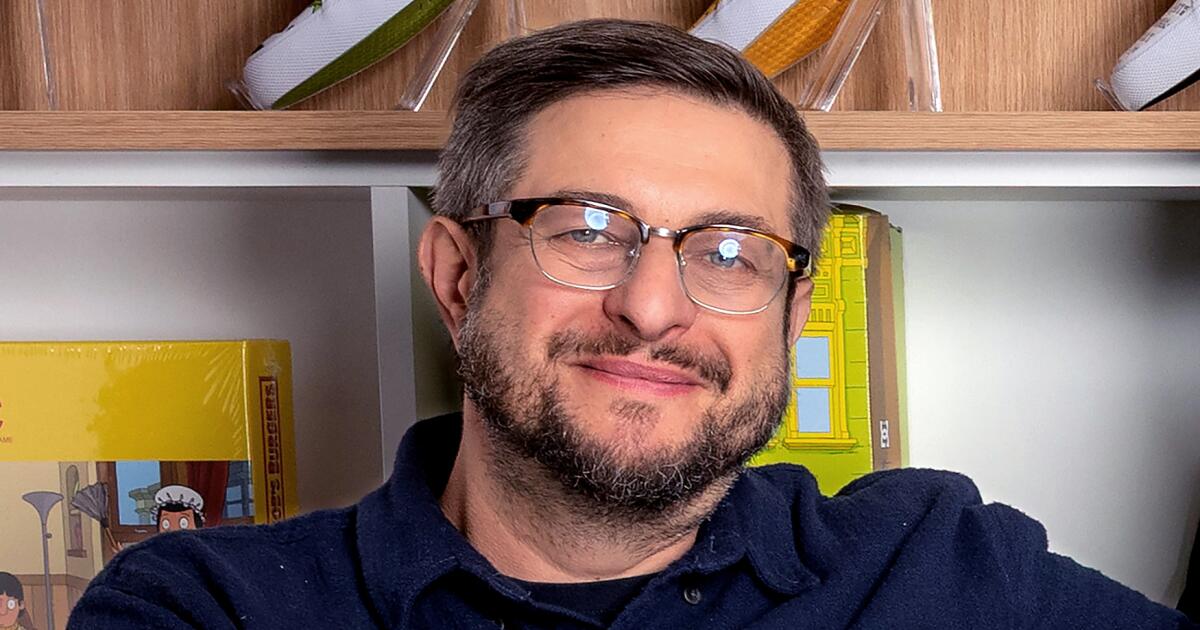
‘Bob’s Burgers’ actor Eugene Mirman hospitalized after fiery crash
“Bob’s Burgers” voice actor and comedian Eugene Mirman was pulled from a fiery car crash and hospitalized with serious injuries.
Before noon on Tuesday, Mirman’s Lucid Gravity struck the Bedford Toll Plaza in New Hampshire as he was traveling northbound on the F.E. Everett Turnpike. Callers reporting the crash said the vehicle had caught fire and the driver appeared to be trapped inside. New Hampshire State Police said that while units were responding to the 911 calls, Gov. Kelly Ayotte and her security detail came upon the crash and stopped to help.
A trooper assigned to the governor’s detail and two others pulled Mirman from the burning car through a window before first responders arrived. Gov. Ayotte retrieved a fire extinguisher, according to State Police Col. Mark Hall.
“Certainly, their actions were heroic in what they did,” Hall said. “Without hesitation, they put themselves in danger to render aid to someone who was in need of it.”
The actor was transported by ambulance to a nearby hospital with serious injuries. Videos of the incident show the vehicle badly damaged and engulfed in flames.
“Eugene was in a very scary car accident,” Mirman’s agent, Jay Glassner, confirmed in a statement Wednesday. “He wants to thank the bystanders, state police, first responders and hospital staff who saved him. He is grateful to be on the mend. At this time, we kindly ask for privacy for Eugene and his family as he focuses on recovering from his injuries.”
The crash remains under investigation.
The animated series “Bob’s Burgers,” which centers on a family that runs a restaurant, celebrated its 300th episode, titled “Grand Pre-Pre-Pre-Opening,” when the Fox favorite premiered its 16th season in the fall.
Often referred to as a “comfort show,” the series features Mirman as kid brother Gene Belcher.
“It’s just a mix of warmhearted and funny and sort of grounded,” the actor told The Times last year.
“There’s a sibling camaraderie that is really lovely,” Mirman continued. “It reminds me of the camaraderie on TV and movies in the ’80s. That era of the stuff I grew up watching.”
The Associated Press and Times staff writer Tracy Brown contributed to this report.
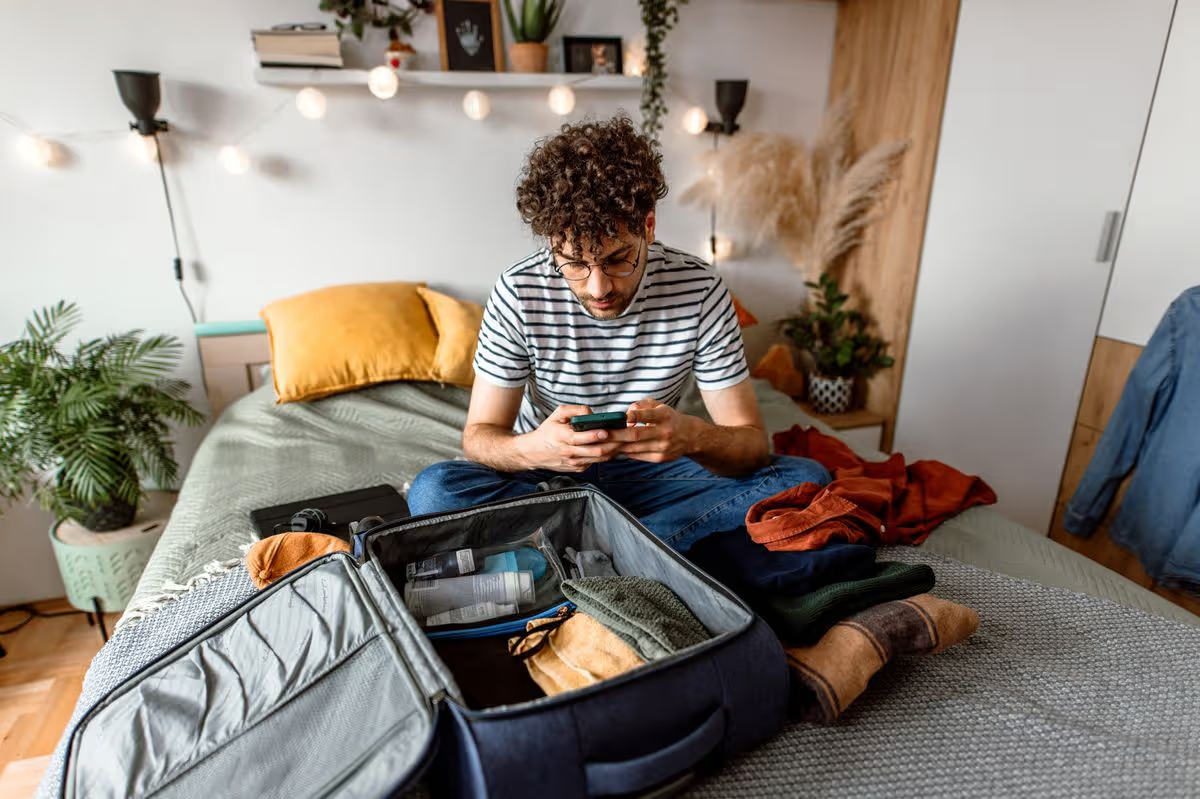
Expert says you will regret not packing these 4 items for your holidays
A backpacker’s viral TikTok reveals four items she deeply regretted not packing on a six-month trip – and why travellers keep making the same mistake.

It’s easy to forget things when packing for a trip abroad(Image: Getty Images)
A holidaymaker’s worst nightmare – aside from a cancelled flight – is realising they’ve forgotten to pack something important. One backpacker has gone viral on TikTok after revealing four items she deeply regretted not taking on a six-month trip across Asia.
Dill, an adventurer with more than 11,000 followers and 1.5 million likes, has spent months travelling between countries. But she admitted her packing mistakes in a recent video that has racked up thousands of views and sparked plenty of discussion.
Packing light has become a major trend among travellers, especially backpackers. According to a 2023 survey by Statista, around 40 per cent of holidaymakers aim to travel with carry-on luggage only to save money and avoid hassle.
That often means tough choices about what to bring, and what to leave behind. Here are four items she says she wishes she’d packed, after they caused repeated frustration during her travels.
Jean shorts
Obviously this one depends on the type of holiday you’re packing for. After all, there’s not a chance jean shorts would be of much use in places with colder climates like Iceland and Switzerland.
Nevertheless, Dill admitted one of her biggest regrets was not taking her favourite pair. She wished she had them “two or three times a week”.
Clothing comfort plays a huge role in travel satisfaction, with research from Condé Nast Traveler suggesting packing versatile clothing reduces travel stress. In warmer climates, staple items like shorts can be worn repeatedly, making them more valuable than expected.
Headphones
Another item Dill missed utilising during her Asian adventure was a reliable pair of wired earphones. After relying on Bluetooth and buying a low-quality replacement abroad, she struggled with poor sound and audio issues.
Tech experts at CNET say wired headphones are often more reliable for travel, particularly when it comes to battery-free use and consistent audio quality. This can also be crucial during long journeys or remote trips where charging options are limited.
Journal
Dill also regretted bringing a journal that was too small. She said limited space meant she couldn’t properly document her experiences, leaving pages feeling incomplete.
Travel psychology research shows that journaling can enhance memory and emotional processing during trips, helping people retain experiences more vividly. A larger journal allows for more detailed reflections and creativity.
iPad
Last but not least, it appears an iPad was one of Dill’s biggest missed opportunities during her holidays. Perfect for those who enjoy unwinding with shows or videos on-the-go, she says it’s worth bringing if you own one already.
Streaming habits remain a key part of downtime, with Ofcom reporting that over 70% of UK adults regularly watch streaming content. Having a device like an iPad can make long flights and quiet evenings far more enjoyable.
Trump signals Iran war offramp while administration reexamines NATO
WASHINGTON — President Trump signaled Wednesday that the United States is eyeing an offramp in its war with Iran, as he also raised the possibility of a major shift in U.S. alliances, including the potential withdrawal from NATO.
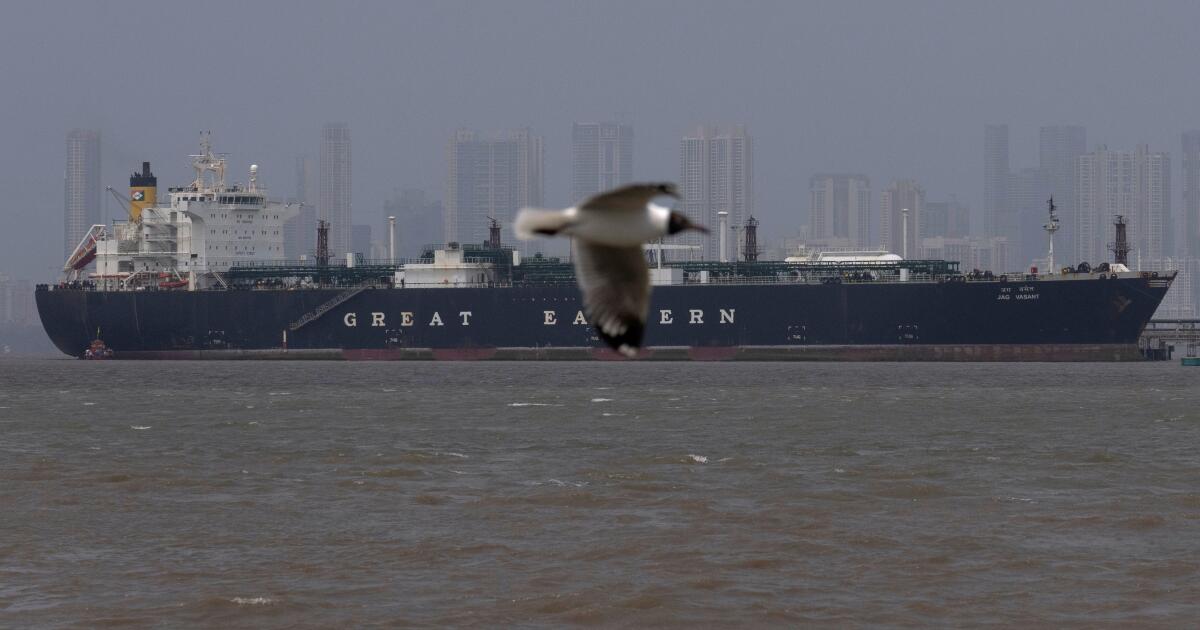
Trump indicated in a social media post that Iran’s president wanted a ceasefire, and that the United States would be open to doing so, if Iran agrees to reopen the Strait of Hormuz, a vital oil shipping route that has been affected during the monthlong conflict.
“Until then, we are blasting Iran into oblivion or, as they say, back to the Stone Ages!!!” Trump wrote.
The remarks appeared to outline a possible diplomatic opening with Tehran, but hours later Iranian officials said that Trump’s claims about being close to a deal were “false and baseless” and that the waterway remained “firmly and decisively under the control” of the Islamic Republic’s forces.
“The strait will not be opened to the enemies of this nation through the ridiculous spectacle by the president of the United States,” the paramilitary Islamic Revolutionary Guard Corps wrote in a statement.
Iranian President Masoud Pezeshkian on Wednesday also wrote a public letter denouncing what he described as a “flood of distortions and manufactured narratives” about the war from the U.S., arguing that Iran is not a threat and had only defended itself against American aggression.
He called on the American people to “look beyond the machinery of disinformation” to reach their own conclusions about the war and its purpose.
“Is ‘America First’ truly among the priorities of the U.S. government today?” he wrote, echoing recent complaints from Trump’s own base about the president’s commitments to his campaign promises.
The dueling messages underscored the uncertainty about how much longer the conflict in the Middle East will last and whether the United States will be able to achieve its main goal of preventing Iran from ever producing a nuclear weapon.
Trump, who on Tuesday said he expects the U.S. will leave Iran within three weeks, was poised to address the nation Wednesday night about the war. The White House said the president’s address would formally outline the objectives of Operation Epic Fury, whose mission has at times been convoluted even as Trump administration officials maintain their explanations for waging the war have been “clear and unchanging.”
White House Press Secretary Karoline Leavitt announced Trump’s speech late Tuesday, after Trump downplayed remarks made by Defense Secretary Pete Hegseth about Iran’s lingering military capabilities.
In the lead-up to those remarks, Trump told Reuters that he was looking to pull American forces from the region “quickly” with the possibility of returning to Iran periodically for “spot hits” when necessary.
The president, who said he believed the U.S. military is close to ensuring Iran loses its ability to possess a nuclear weapon in the future, did not seem too worried about Iran having highly enriched uranium in its stockpiles.
“That’s so far underground, I don’t care about that,” he told Reuters, adding that the U.S. military will be “watching it by satellite.”
Trump, however, remained focused on having Iran reopen the Strait of Hormuz, an oil route through which a fifth of the world’s oil flows.
He said this week that he may pull American forces from the region and leave other countries to deal with the hurdles of reopening the waterway. But on Wednesday, he seemed to walk back that stance, and said a key part of the ongoing negotiations hinged on Iran ending the de facto blockade on the strait.
It remains unclear whether Israel, which began bombing Iran alongside the U.S. on Feb. 28, would agree to the same terms as Trump and stop hostilities against Iran.
Talks about the potential end of the conflict led stocks to rise Tuesday, but it remains unclear whether higher food prices could persist for months or longer. It is also uncertain when U.S. gas prices — which jumped past an average of $4 a gallon this week for the time since 2022 — would go lower.
NATO becomes a factor in the war
As Trump considers pulling out of Iran, he is also weighing a withdrawal from NATO, telling Reuters that fellow member states’ lack of support during the war has him “absolutely” considering withdrawing from the security alliance, which was ratified by the Senate in 1949.
In an interview with Fox News on Tuesday night, Secretary of State Marco Rubio said the U.S. is planning to “reexamine” its relationship with the North Atlantic Treaty Organization and whether it makes sense to be part of a “one-way-street” alliance.
“Why are we in NATO?” Rubio said. “Why do we send trillions of dollars and have all of these Americans stationed in the region, if in our time of need, we are not going to be allowed to use those bases?”
Rubio’s comment marks a notable evolution from his position in Congress. As senator in 2023, Rubio helped spearhead legislation that said the president “shall not suspend, terminate, denounce, or withdraw the United States” from NATO unless the Senate agrees by a two-thirds vote to do so.
On Wednesday, Rubio told CBS that he maintains Congress should play a role on whether the U.S. should withdraw from NATO. He added that he does not believe Trump “will remove us from NATO,” but he does believe the president will demand that NATO allies “do more.”
In a joint statement Wednesday, Sens. Mitch McConnell (R-Ky.) and Chris Coons (D-Del.) said that the United States will remain in the treaty and that the Senate “will continue to support the alliance for the peace and protection it provides America, Europe and the World.”
Although Trump has previously threatened to end U.S. membership in NATO, his most recent remarks have put added pressure on European allies to revisit the terms of their relationship.
In a post on X, Finnish President Alexander Stubb said he had a “constructive discussion” with Trump on Wednesday about NATO.
“Problems are there to be resolved, pragmatically,” Stubb wrote.
Their conversation came after Trump and Hegseth complained that European countries have been hesitant to help the U.S. in its war against Iran. Just this week, Italy and Spain refused to allow U.S. warplanes from landing at their military bases before flying to the Middle East.
Britain’s prime minister, Keir Starmer, defended NATO on Wednesday, saying it was the “single most effective military alliance the world has ever seen” and, more broadly, said he would not cave to pressure to join the Iran war.
“Whatever the pressure on me and others, whatever the noise, I’m going to act in the British national interest in all the decisions that I make,” Starmer told reporters. “That’s why I’ve been absolutely clear that this is not our war, and we’re not going to get dragged into it.”
As diplomatic efforts continue, the Trump administration has increased its military presence in the Middle East, with thousands of U.S. troops arriving in the region as ground operations in the war remain an option.
The U.S. military buildup in the Mideast came as fighting continued to escalate in the Persian Gulf region on Wednesday.
Iran hit an oil tanker off Qatar’s coast, prompting the evacuation of 21 crew members. In Bahrain, there were alerts for incoming missiles, while Kuwait’s state-run news agency KUNA reported that a drone hit a fuel tank at Kuwait International Airport. Meanwhile, Jordan’s military intercepted a ballistic missile and two drones fired by Iran, and an airstrike in Tehran appeared to have hit the former U.S. Embassy compound.
Additionally, Israeli strikes killed at least five people on a Beirut neighborhood. Israel invaded southern Lebanon in March after the Iran-linked militant group Hezbollah began launching missiles into northern Israel.
This article includes reporting from the Associated Press.
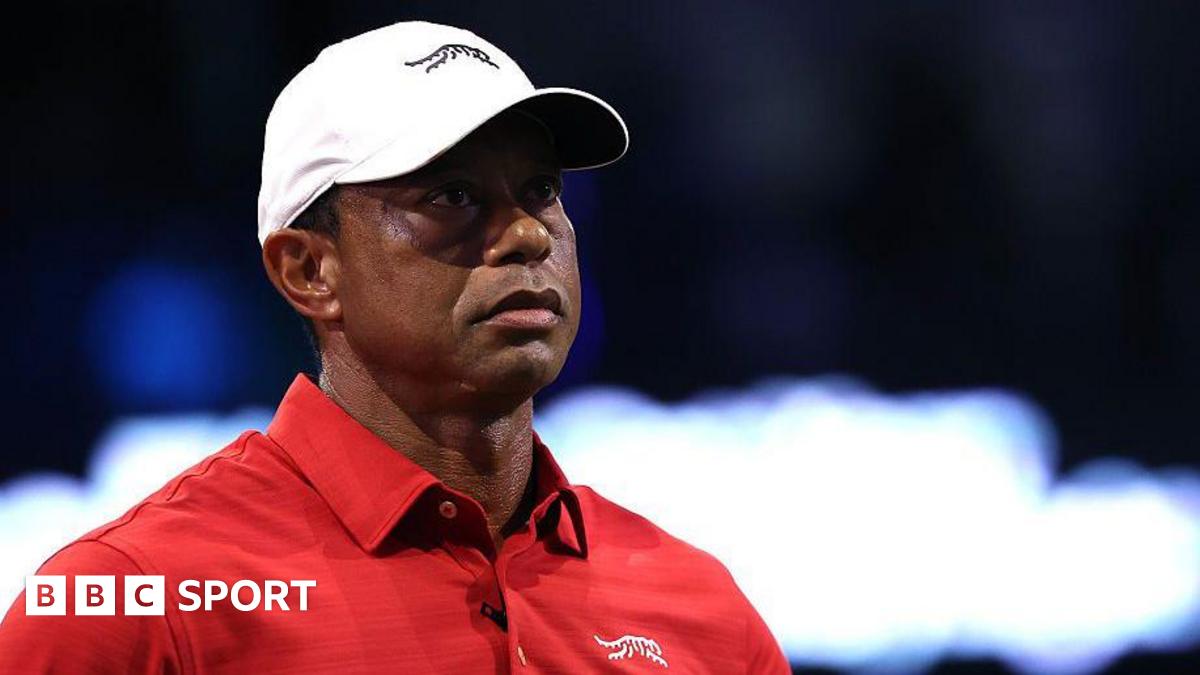
Tiger Woods turns down US Ryder Cup captaincy in 2027, PGA of America says
Following last week’s crash, authorities found two white pills in Woods’ pocket, which were identified as hydrocodone – an opioid used to treat pain.
Officers also reported he appeared “lethargic and slow” while “sweating profusely” with “extremely dilated” pupils, and that his “normal faculties were impaired”.
Woods has had multiple surgeries following a serious road accident in 2021 and has played only a limited schedule.
A Florida judge on Wednesday approved Woods’ request to leave the United States to seek treatment at a comprehensive inpatient treatment facility.
Woods’ attorney Douglas Duncan said doctors have recommended an “intensive, highly individualised and medically integrated programme” for the golfer, away from the media and public scrutiny.
Duncan said the urgent level of care Woods needs cannot be safely done within the US, “as his privacy has been repeatedly compromised”.
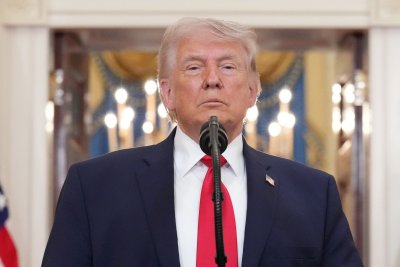
White House address: Trump says Iran war goals nearing completion

April 1 (UPI) — President Donald Trump told the nation Wednesday night that the U.S. military was close to achieving its goals in the war against Iran and would bomb the nation “back to the stone ages where they belong” over the next two weeks to finish the job.
In the nearly 20-minute, prime-time address to the nation, Trump repeated claims of military successes in the war, while offering little new information about the progress of Operation Epic Fury.
He said U.S. forces “have delivered swift, decisive, overwhelming victories on the battlefield” and “never in the history of warfare has an enemy suffered such clear and devastating large-scale losses in a matter of weeks.”
“Our enemies are losing and America, as it has been for the five years under my presidency, is winning and now winning bigger than ever before,” he said.
Trump offered no specifics on how or precisely when the war will end, while claiming the military objectives he announced shortly after the war began in late February were “nearing completion.”
“We’re going to finish the job. And we’re going to finish it very fast. We’re getting very close,” he said.
In his early Feb. 28 address, he said the military goals were to defend the American people by eliminating threats posed by Iran; ensure its proxy militias no longer destabilize the region and attack U.S. forces; destroy its missile capabilities, missile industry and navy; and ensure the Iranian regime does not obtain a nuclear weapon.
His first address notably encouraged regime change, urging Iranians to “take over your government.”
In his address Wednesday night, Trump claimed regime change had occurred, though there has been no clear indication Iran is under fundamentally different leadership.
Democrats were quick to criticize Trump over what they called shifting military objectives and for failing to lay out an exit plan.
“This war of impulse & illusion is plagued by confused, chaotic & contradictory objectives — none seem to have been achieved,” Sen. Richard Blumenthal of Connecticut said in a statement.
Trump also said the U.S. military was fighting the war to help its allies, while calling on those who receive oil that transits through the important Strait of Hormuz chokepoint to “take care of that passage.”
Iran has been maintaining a blockade of the important trade route through which 20% of global oil and liquefied natural gas flow by attacking tankers that attempt passage.
The near halt in energy deliveries through the route has drive up gas prices at pumps in the United States and across the world but also the price of oil on the markets to $106.05 a barrel for Brent crude, compared to about $72 before the war.
He instructed those nations reliant on the Hormuz Strait to seize it from Iran.
“They must cherish it. They must grab it and cherish it,” he said. “They can do it easily. We will be helpful, but they should take the lead in protecting the oil that they so desperately depend on.”
But even if they do not act, “when this conflict is over, the strait will open up naturally,” he said. “It’ll just open up naturally.”
While briefly touching on the economic effects of the war on Americans, he blamed Iran for attacking tankers and Persian Gulf countries while assuring them that the economic situation would have been worse if they hadn’t attacked Iran and allowed it to secure a nuclear weapon.
“This is yet more proof that Iran can never be trusted with nuclear weapons. They will use them and they will use them quickly,” he said. “It would lead to decades of extortion, economic pain and instability worse than you can ever imagine.”
Threats against Iran were also made. Despite ssaying the U.S. military will “hit them extremely hard over the next two weeks,” American forces will attack key oil and electric generating plants if Iran does not reach an agreement with the United States, seemingly to end the war.
Trump late last month offered Iran an ultimatum to reach an agreement with the United States to reopen the Strait of Hormuz or have its energy facilities obliterated. He gave them an April 6 deadline.
On Tuesday, the president told reporters that a deal with Iran was unnecessary.
In concluding his address Wednesday night, he referred to the war as “a true investment in your children and grandchildren’s future.”
“Tonight, every American can look forward to a day when we are finally free from the wickedness of Iranian aggression and the specter of nuclear blackmail,” he said.
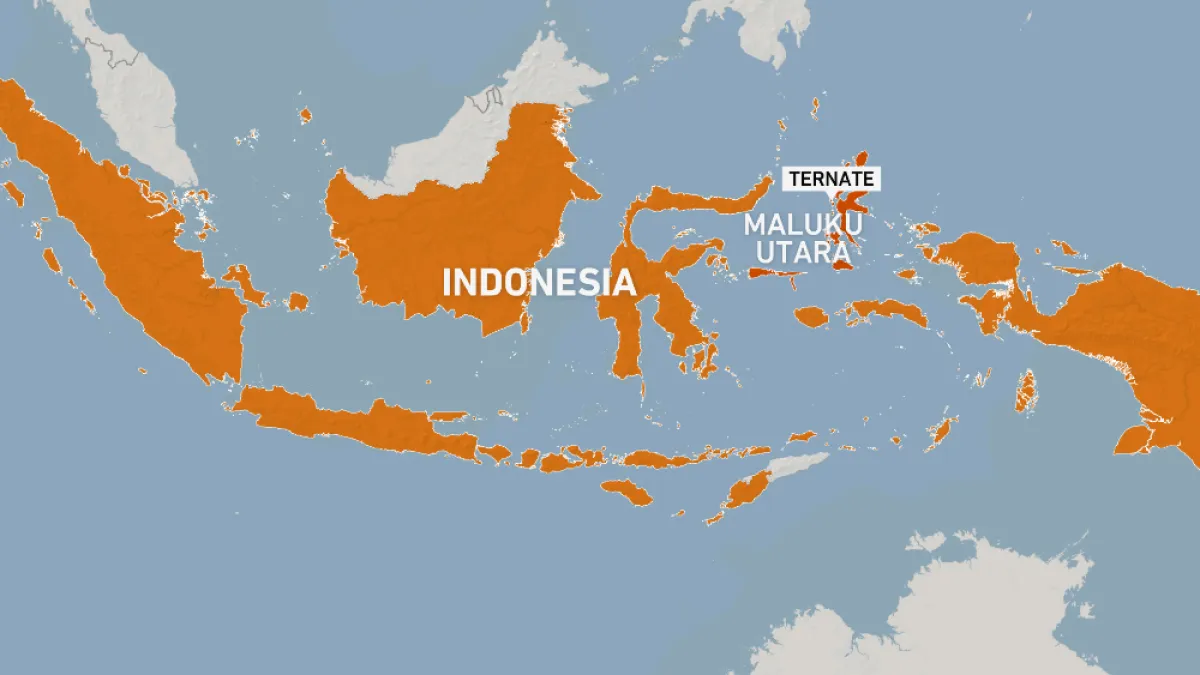
Magnitude 7.4 quake hits off Indonesia’s Ternate, tsunami warning lifted | Earthquakes News
The epicentre of the earthquake was about 120km (75 miles) from Ternate, in Indonesia’s North Maluku province.
Published On 1 Apr 2026
A magnitude 7.4 earthquake has hit the Northern Molucca Sea off the coast of the city of Ternate, in Indonesia, killing at least one person and triggering a tsunami warning that was subsequently lifted.
The United States Geological Survey (USGS) said Thursday’s quake, which was initially recorded at a magnitude of 7.8, struck at a depth of 35km (22 miles), greater than the early figure of 10km (six miles). There were no immediate reports of injuries.
The epicentre of the earthquake was about 120km (75 miles) from Ternate, in Indonesia’s North Maluku province.
Local authorities in some cities, such as Ternate and Tidore, were urged to prepare citizens for evacuation, while news channel Metro TV broadcast images of damaged buildings.
One person was killed when a building collapsed in the city of Manado in North Sulawesi province, a local search and rescue official told AFP news agency.
“The quake was felt strongly and around Manado … one person died and one person had a leg injury,” George Leo Mercy Randang told AFP by telephone. The victim was “buried under the rubble” of a collapsed building, he said.
The Hawaii-based Pacific Tsunami Warning Center (PTWC) initially said hazardous tsunami waves were possible within 1,000 kilometres (621 miles) of the epicentre along the coasts of Indonesia, the Philippines and Malaysia.
Within half an hour of the quake, waves up to 75 centimetres were recorded in North Minahasa and 20 centimetres in Bitung, both in the north of Sulawesi island, according to Indonesia’s BMKG geological agency.
Thirty-centimetre waves were also logged in North Maluku province.
The PTWC lifted its warning just over two hours after the tremor, saying the tsunami threat “has now passed”.
Indonesia straddles the so-called Pacific Ring of Fire, an area of high seismic activity where tectonic plates meet and earthquakes are frequen

Taylor Swift drops ‘Elizabeth Taylor’ video, is hit with ‘Showgirl’ lawsuit
The life of a showgirl wouldn’t be complete without a few lawsuits, and who knows that better than Taylor Swift and Elizabeth Taylor?
On Monday, the “Bad Blood” singer was hit with a trademark infringement lawsuit regarding her most recent album, “The Life of a Showgirl.” Real-life Las Vegas showgirl and writer Maren Wade, born Maren Flagg, alleges that Swift knowingly disregarded her claim to a similar name.
According to the lawsuit, Wade launched the column “Confessions of a Showgirl” in the Las Vegas Weekly in 2014. The column eventually became a live show, which became a touring production. “Over the course of a decade, Confessions of a Showgirl grew into a brand encompassing performances, writing, and digital media — built by one person, city by city and show by show,” reads the lawsuit, which adds that Wade took the show across the country, and used the brand when appearing on television and podcasts.
Wade as a performer herself respects Swift’s right to creative expression, according to the suit, “and nothing in this action challenges it.” The filing argues that “whatever [legal] protection might attach to creative expression, it does not immunize Swift’s separate decision to adopt a confusingly similar designation as a trademark, affix it to goods, and deploy it as a source identifier in commerce.”
In 2015, the U.S. Patent and Trademark Office registered “Confessions of a Showgirl” and named Maren Flagg as the owner. And according to the suit, in November 2025, the office refused an attempt by Swift’s team to register “The Life of a Showgirl” based on a likelihood of confusion with Wade’s established brand.
Patent attorney JD Harriman told The Times in a statement that although the trademark office did reject Swift’s mark, she voluntarily suspended the “Life of a Showgirl” application while a separate trademark application for “Showgirl” moved forward.
“This case isn’t about the music, and it may not even be about confusion,” Harriman said. “Wade’s own complaint concedes she’s not challenging the album itself — only merchandise. And before filing, she was publicly hashtagging Swift’s album and calling herself a fan.”
Jaymie Parkkinen, an attorney for Wade, told The Times in an emailed statement that Maren spent more than a decade building Confessions of a Showgirl.
“She registered it. She earned it. When Taylor Swift’s team applied to register The Life of a Showgirl, the Trademark Office refused, finding Swift’s mark confusingly similar,” Parkkinen said. “We have great respect for Swift’s talent and success, but trademark law exists to ensure that creators at all levels can protect what they’ve built. That’s what this case is about.”
Wade’s team argues that since Swift’s 12th album dropped last year, search results are dominated by Swift, and even though Wade established her own showgirl brand a decade ago, her brand is now seen as affiliated with Swift’s.
“The Life of a Showgirl is one designation among more than 170 active or pending trademark registrations managed by Defendant TAS on behalf of Swift, spanning names, phrases, and commercial designations across one of the most extensive trademark portfolios in the entertainment industry,” reads the suit.
Swift’s broader enterprise “does not depend on the continued use of any single designation,” the suit continues. “By contrast, Confessions of a Showgirl is the sole trademark under which [Wade] has built her professional identity for more than a decade. It is not one mark among hundreds. It is the only one she has. The continued erosion of that mark threatens the entirety of Wade’s brand.”
In other Swift news, the Grammy winner dropped the music video for “Elizabeth Taylor” on Tuesday.
The video features archival film clips of the latter starlet — also known for high-profile legal battles, media scrutiny aimed at her love life and larger-than-life fame — rather than the songstress herself, who does not appear in the video.
The video, which has been exclusively released via Spotify Premium and Apple Music, includes scenes from “Father of the Bride,” “Rhapsody,” “Cat on a Hot Tin Roof,” “Cleopatra,” and “Who’s Afraid of Virginia Woolf?” among other classic films starring Taylor. The homage also has old press footage of the Oscar winner.
Back in October, Swift told BBC radio that if she mentions a real person in her songs, she warns them ahead of time, and in the case of someone like the late movie star, she asked the Taylor estate for permission to pay homage with the song.
“If it’s Elizabeth Taylor,” she said, “we go to their family and her estate and let them know, and they were lovely about it.”
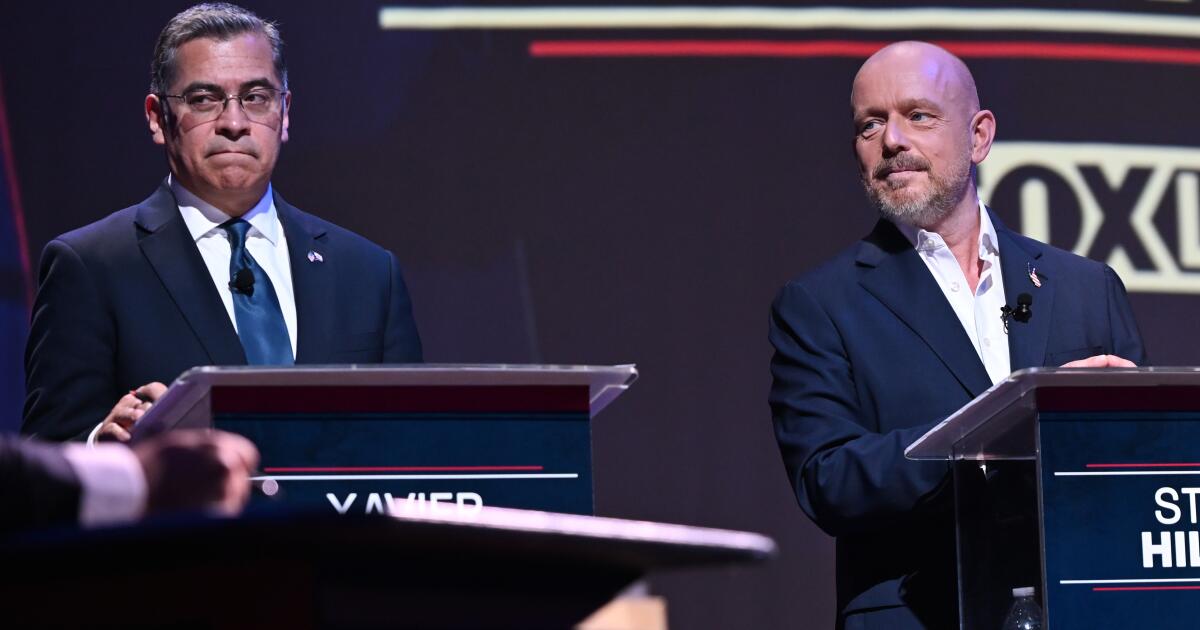
Anti-regulation Democrats? Top takeaways from governor’s race forum in Fresno
FRESNO — Four of the top Democrats running for California governor on Wednesday told a agriculture-friendly Central Valley audience that the left-leaning state’s restrictions on business and the environment have made life more difficult for farmers and should be rolled back.
The candidates onstage at the Fresno State political forum, including two Republicans, did their best to appeal to voters in the midsection of California who often feel neglected by a state government dominated by big-city politicians from Southern California and the Bay Area.
“I’m here today because for far too long, the interests of our ag economy and our rural towns and cities and communities have been second tier, if they’ve even been on the agenda in Sacramento,” said San José Mayor Matt Mahan, a moderate Democrat whose campaign has yet to live up to the high expectations it initially received.
Mahan and five others invited to the forum focused on the state’s affordability crisis, water, government regulations and other issues facing the agricultural hub — all doing their best to play up any ties to the farmers and farmworkers who are so essential to providing food to California and the nation.
Mahan recalled growing up in Watsonville, an agricultural community that is the home of Driscoll’s berries and Martinelli’s apple cider. Fellow Democrat and former U.S. Health and Human Services Secretary Xavier Becerra noted his family’s personal ties to the valley. His father picked crops along State Route 99 as a young man, he grew up in Sacramento, and his wife is from Hanford and Fresno.
Former conservative commentator Steve Hilton said his family had a small farm in Hungary, which they fled because of communism. Former Democratic Orange County Rep. Katie Porter, who grew up in Iowa during the farming crisis of the 1980s, spoke of being the descendant of generations of farmers and being a member of 4-H as well the Future Farmers of America.
“I’m not a farmer today, but I thought I would be. … I believe in the future of agriculture with a faith born not of words, but of deeds,” Porter said, repeating FFA’s creed.
The event marked the first gathering of gubernatorial hopefuls since USC pulled the plug on its debate last week. USC officials canceled the event less than 24 hours before it was scheduled to begin after facing criticism for excluding the top candidates of color. The university said it used opinion polls and financial viability to determine which candidates were invited.
Organizers of the Fresno State event invited candidates who have earned at least an average of 3% in recent polls compiled by RealClearPolitics. Along with Mahan, Becerra, Hilton and Porter, the candidates invited included former Los Angeles Mayor Antonio Villaraigosa and Riverside County Sheriff Chad Bianco. State Supt. of Public Instruction Tony Thurmond and former state Controller Betty Yee, both Democrats, were not invited.
Two leading Democratic candidates were not at the Fresno State forum: billionaire Tom Steyer was scheduled to tour the polluted Tijuana River Valley in San Diego County. Rep. Eric Swalwell’s campaign cited a scheduling conflict but did not elaborate. Swalwell (D-Dublin) appeared to be doing media interviews in San Francisco on Tuesday.
Cutting gas taxes and other ways to save
California’s high cost of living is one of the most visible and pressing issues in the race to replace termed-out Gov. Gavin Newsom, and candidates pitched their plans to address it, primarily by lowering housing and energy costs.
Bianco, Hilton, Villaraigosa and Mahan have floated plans to cut oil industry regulations and suspend the state’s 61-cent-per-gallon gas tax. Bianco went further, saying he would completely eliminate the gas tax. Hilton said he would cap vehicle registrations at $71 per year no matter the type of car. Porter said her top priority is to lower housing costs by “building housing faster, building more housing, changing how we permit housing and innovating in construction and design and materials.”
Republican candidates blamed Democratic policies for the state’s high cost of living and argued that it would not be solved under a new governor of the same party. Both Bianco and Hilton pledged to gut state agencies responsible for regulating air and water quality.
“We’re never going to reduce the cost of groceries or anything else until we abandon the climate dogma that has got us to this point,” Hilton said, invoking the state’s goal to reach carbon neutrality by 2045 as a major cost driver.
According to a recent UC Berkeley IGS/L.A. Times poll, lowering the state’s cost of living was the top issue that likely voters want the state’s next governor to address. It was followed by cutting government waste and corruption — the top priority for Republican voters — and addressing homelessness.
Republicans take their shots
Wednesday’s forum was among the rare instances when Hilton and Bianco appeared before the same crowd. The Republicans have led polls for months, raising the specter of two Republicans and no Democrats appearing on the November general election ballot under California’s top-two primary system.
On Wednesday, they each tried to appeal to a more conservative-leaning audience than many other gubernatorial forums by blasting their Democratic opponents and statewide leaders.
”I think every single Democrat on this stage today should start with an apology,” Hilton said. “An apology for what their party has done to this area and this industry, stealing your water, piling on the regulations — 1,000% increase in the last decade or so, cutting the pay of agricultural workers, on and on.”
The Democrats onstage were repeatedly challenged and at times interrupted by Republican candidates who argued that electing another Democratic governor would bring more of the same problems to the region.
“You can’t just believe what’s on this stage,” Bianco said. “You have to listen to what they say in front of groups that don’t think like you, because everything that they’re saying here contradicts what they say in those groups with more cap-and-trade, more regulation, more everything else.”
Democrats talk up their experience
Democrats largely concurred on issues such as reducing regulations and increasing water supply to farmers. So they sought to differentiate themselves based on their experience and records in office.
Mahan painted himself as a pragmatist who led to San José being named the safest large city in the nation, reducing homelessness by one-third and spurring the construction of housing by reducing regulatory restrictions and fees.
“I’m accountable every day for making people’s lives better. I don’t get to make excuses and blame another party,” Mahan said. “You deserve better from Sacramento, and I’ll work with you to make sure we deliver it.”
Villaraigosa pointed to his eight-year tenure as mayor of Los Angeles, saying the city went from being the most violent big city in the country when he took office to being the safest by the time he left. He also said he took on the teachers union, which he once worked for, resulting in a 60% increase in the graduation rate.
Becerra pointed to his experiences leading the sprawling federal health agency in the Biden administration, including dealing with the COVID-19 pandemic, the wildfires that devastated Maui, Hawaii, avian flu and monkey pox.
“We do not need someone who needs training wheels,” he said.
Porter highlighted that she was the only candidate on the stage who refuses to take money from corporations and corporate PACs. The former congresswoman, who gained fame for her aggressive questioning of chief executives and Trump administration officials while in Congress, also pointed to her longtime focus on oversight.
“There are too many regulations that we are passing,” she said. “That is why I’m running for governor, to make sure that when things come to my desk, the first question is going to be, why did we need this?”
Water is for fighting
Nearly half of the forum was dedicated to questions about water policy, a complicated and politically thorny issue for Central Valley farmers and California as a whole. Most agreed the state should fast-track new reservoirs, raise some existing dams and increase water recycling to boost supply.
“We need an ‘all of the above’ solution,” Villaraigosa said. “That means we need recycling, we need [groundwater] recharge. We need dams. We need underground aquifers.”
Some Democrats, along with Hilton, continued to distance themselves from the proposed Sacramento-San Joaquin River Delta tunnel, a huge project to transport water to the Central Valley and Southern California that has been tied up by legal challenges.
Bianco lambasted “environmental regulation[s] that makes weeds and bugs more important than your life,” and Hilton slammed “ridiculous bureaucracy” created by environmental laws such as the 2014 Sustainable Groundwater Management Act.
Fourth-generation tomato and pepper farmer Briana Giampaoli described herself as moderate and said she hasn’t decided whom to support for governor yet, but she was impressed by the candidates’ breadth of knowledge on water and the regulatory hurdles farmers face, particularly Hilton.
“That was really surprising, and I’m glad that both parties seem to understand that there needs to be a change in California, that something is not working,” she said. “The industry is changing as a whole across the country, and the regulations here continue to make it harder and harder to farm.”
Democrats on immigration
Democratic candidates faced a friendlier audience at the Fresno City College forum later in the day, where they unanimously expressed support for immigrant communities and said the state should fully fund Medi-Cal coverage for undocumented people. To close a budget deficit, Newsom and state lawmakers froze enrollment and raised premiums for undocumented adults on the program.
Porter and Thurmond called for Immigration and Customs Enforcement to be abolished but said, short of that, the state should monitor the federal agency’s operations in the state to protect civil liberties. The other candidates agreed; Villaraigosa pledged to ensure federal detention centers comply with all health and safety rules.

Women’s Champions League: Arsenal beat Chelsea 3-2 on aggregate to reach semi-finals – Kim Little reaction
Arsenal captain Kim Little says she believes her side are “getting better and better” as they reach the semi-finals of the Women’s Champions League, after beating Chelsea 3-2 on aggregate to close in on successfully defending their title.
READ MORE: Arsenal hold off Chelsea to reach Champions League last four

Shoppers rush for half-price deals amid high inflation

1 of 2 | Shoppers crowd the cooking oil section at an E-Mart store in Seoul as daily necessities are sold at half price during the 2026 Landers Shopping Festa. Photo by Asia Today
April 1 (Asia Today) — Large crowds gathered at discount stores across Seoul on Tuesday as consumers rushed to take advantage of steep price cuts, highlighting growing pressure from persistent inflation.
At an E-Mart store in Seoul’s Yongsan district, shoppers lined up before opening, with many heading straight to discounted meat and fresh produce sections as doors opened.
“Prices are so high these days. If not for chances like this, when else would I buy?” said a woman in her 60s, who said she arrived 30 minutes early to secure discounted items.
E-Mart launched its largest discount event of the first half of the year, running through April 12, offering up to 50% discounts on groceries and household essentials. The campaign involves affiliates across Shinsegae Group, including department stores, online platforms and shopping malls.
Fresh food items drew the biggest crowds. Pork belly and pork shoulder were sold at 1,490 won ($1.10) per 100 grams with membership discounts, while whole watermelons were priced at 11,900 won (about $8.80) for the day. Discounted Korean beef also attracted heavy demand, with some shoppers buying multiple packages.
Store employees said traffic during promotional events can be more than triple normal levels, as customers stock up on essentials.
In contrast, snack aisles were relatively quiet, reflecting a shift in consumer behavior toward necessities such as eggs, cooking oil and other basic goods. Analysts say prolonged inflation has led households to prioritize essential spending over discretionary purchases.
The retailer said it prepared its largest-ever promotion focused on everyday items, including discounts on detergents, diapers, batteries and processed foods when purchased in bulk. A special promotion also offers select products for 1,000 won (about $0.70).
The event, first launched in 2021, has grown rapidly, surpassing 1.3 trillion won (about $960 million) in sales last year. Shinsegae Group aims to expand it into a major national shopping festival comparable to global events such as Black Friday in the United States and Singles’ Day in China.
Company officials said this year’s extended promotion period and expanded product lineup are expected to drive record sales.
The surge in turnout underscores how rising prices are reshaping consumer behavior, with discount events becoming key opportunities for households to manage everyday expenses.
— Reported by Asia Today; translated by UPI
© Asia Today. Unauthorized reproduction or redistribution prohibited.
Original Korean report: https://www.asiatoday.co.kr/kn/view.php?key=20260401010000280
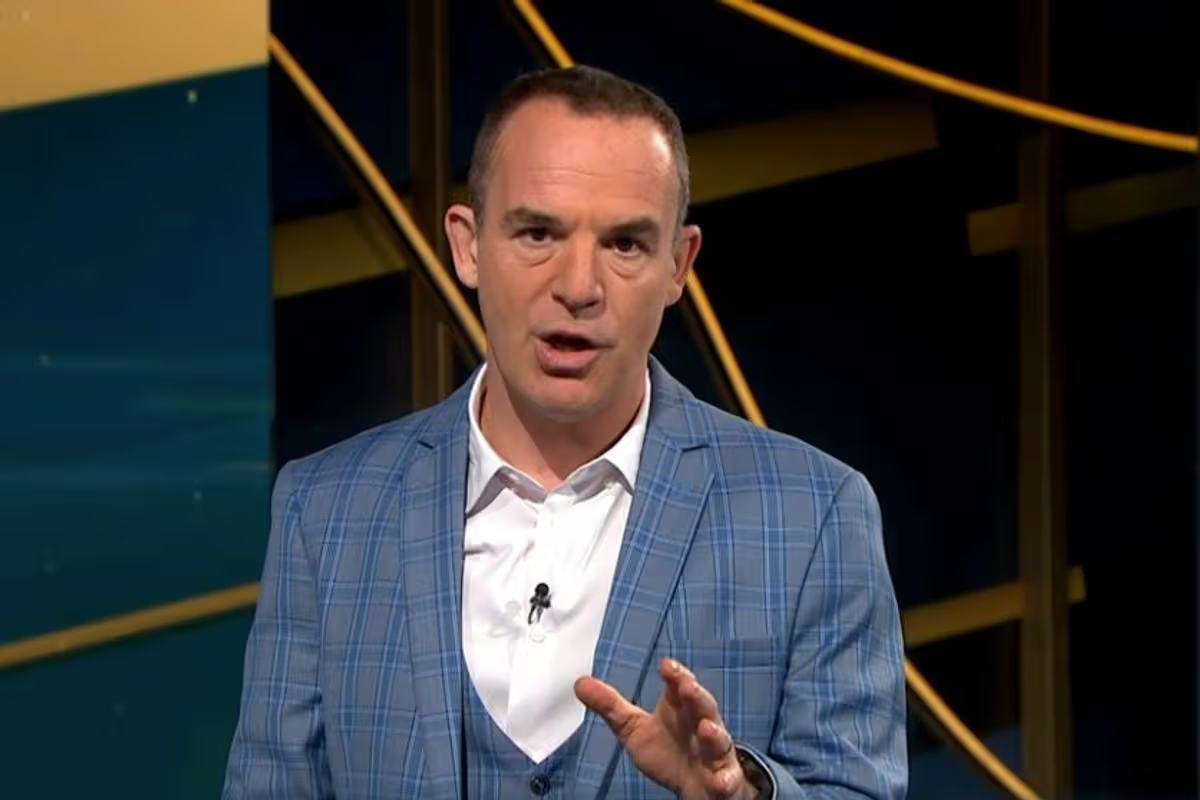
MSE Martin Lewis urges holidaymakers follow rule ‘right now’
The MSE team and Martin Lewis said to do this quickly

Martin Lewis urges people to follow the ‘ASAB’ rule(Image: ITV)
If you’re planning a holiday this year, there’s one crucial item on your checklist that should be ticked off first before you begin planning where to go and what to wear.
The Money Saving Expert (MSE) News team and Martin Lewis have emphasised the importance of securing travel insurance as soon as possible after booking a holiday. Many people tend to leave it until the last minute, but as Martin Lewis recently explained on The Martin Lewis Money Show Live, without insurance, you may not be able to recoup your costs if something prevents you from travelling, potentially losing thousands.
According to MSE, during the show, Martin Lewis said: “Travel insurance is not just to cover you while you’re away. It’s also very important to cover you in case something happens before you go that stops you going.
“I have a rule: you should get your travel insurance ASAB – as soon as you book. ASAB.”
The financial expert added: “Right now, many people have already booked. If you don’t have your travel insurance and if your holiday’s booked, do it right now.
“The reason I do this is every year, someone asks me a question something like, ‘I’ve been diagnosed with cancer. We can’t go on the holiday. They’re saying we can’t have our money back. What do I do?’ And I’m impotent.
“Because the answer is, you get on your travel insurance. And they say, ‘Well, I haven’t got my travel insurance yet’. Do not get your travel insurance the day before you go. You get your travel insurance ASAB.”
Speaking to his co-host Jeanette Kwakye, who is also a former Olympic sprinter, she revealed that a viewer had contacted the programme regarding a difficult predicament they were facing.
Jeanette shared their message, reading: “I booked a holiday for Christmas last year, but I was then medically advised not to fly. The holiday was already paid for and I hadn’t taken out any travel insurance. I’m now being told I’ve lost all the money for the holiday. Is there anything that can be done?”
READ MORE: Travel expert Simon Calder issues Spain airport strike updateREAD MORE: Simon Calder predicts Easter ‘disruption’ with millions set to travel
Martin said: “Please don’t be the person this summer who asks me that question. If you’re going to get travel insurance, ASAB.
“The answer [to whether something can be done] is no. I mean, look, very simply, just think about it for a second. If you bought a tennis racket and you broke your arm, you can’t say to them, I want a refund because my arm’s broken.
“The tennis racket still works. The flights still work, the hotel still works. It’s not them that’s got the problem. It’s you. That’s the logic. That’s what you have insurance for.”
Foreign Office and travel insurance
While you can take out travel insurance, it is worth noting that it could be invalidated, even if you take it out when you book. For example, if you are planning on heading to Dubai, the Foreign Office has said on its GOV.UK website: “Your travel insurance could be invalidated if you travel against advice from the Foreign, Commonwealth & Development Office (FCDO).”
At present, it states: “FCDO advises against all but essential travel to United Arab Emirates.”
For detailed information and advice on Foreign travel insurance, visit the GOV.UK website online here. It also advises: “You should buy your travel insurance as soon as possible after booking your trip. Read the small print and familiarise yourself with any exclusion clauses for the policy.”
Alongside insurance, it is recommended that you review FCDO travel advice and register for alerts for your destination. GOV.UK confirms: “If you travel to a destination where FCDO advises against all but essential travel or all travel, your insurance may be invalidated.”
Plateau Communities Confront Kidnap-for-Ransom Crisis
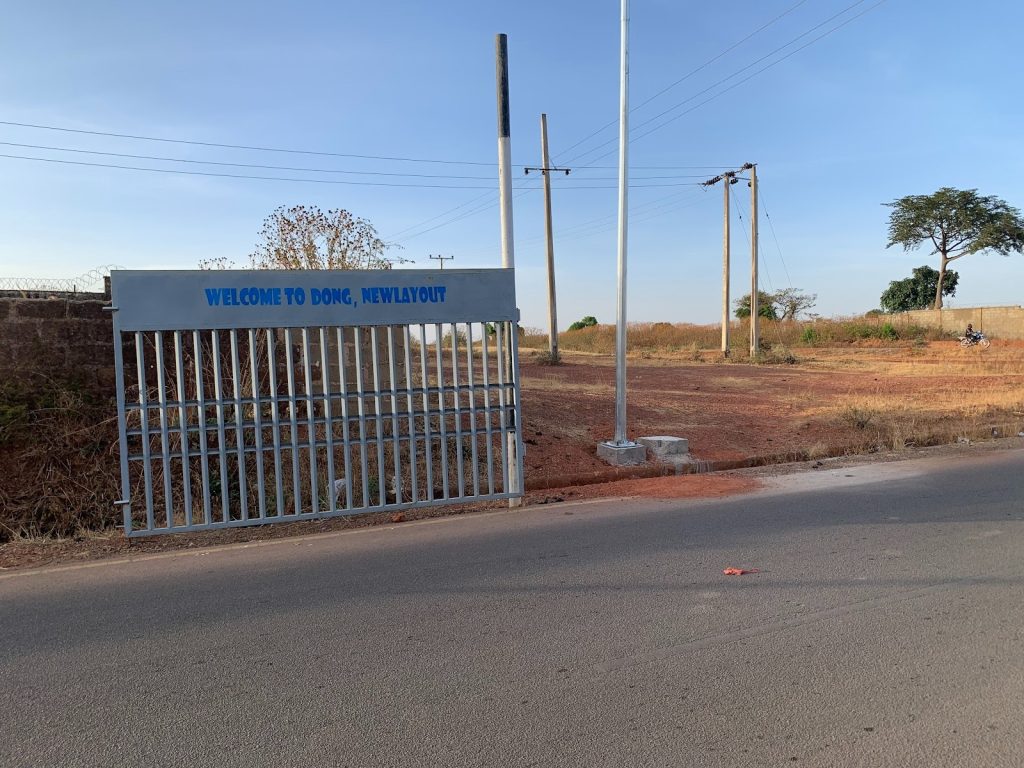
It was just past 10:30 p.m. on Sunday, Sept. 14, 2025, when Allwell Nelson was abducted from her family residence in Dong, a community in Jos North Local Government Area (LGA), Plateau State, North Central Nigeria.
She and her niece had just finished bathing and were in their pyjamas, settling down to watch a film before bed, when her brother-in-law burst into the room.
“Armed robbers! Armed robbers! Call the police!” he shouted.
Her heart leapt. She grabbed her phone and called a friend who works at a nearby police station, barely ten minutes away, then tried to alert the neighbours. No one came out. Outside, the attackers struggled to break the front doors.
At the time, Allwell was serving with the National Youth Service Corps (NYSC) in Bauchi, northeastern Nigeria. She had returned home to prepare for her wedding, scheduled for the following Saturday.
The attackers, armed with handguns, cutlasses, an axe, and a digger, operated for over 45 minutes, she recounted. They first went to the master bedroom, which was empty. Her brother-in-law had fled through the back door, jumping over the fence to get help. From there, they moved to the children’s room, where the children were sleeping, before arriving at Allwell’s room.
“We were five in my room,” she said. “Me, my sister, my one-year-old niece, my older niece, and my cousin. We ran into the bathroom and locked ourselves in.”
When the attackers found them, they asked after her brother-in-law, insisting they had heard his voice, but they told them that he wasn’t around. After firing a gunshot, the four kidnappers moved the family to the living room and continued questioning them. “They eventually asked my cousin and me to follow them,” Allwell said.
Before leaving, they went to the kitchen and packed foodstuffs such as noodles and garri. One of them never spoke; his face was covered, and he carried the food. They forced the victims through the fence and across a nearby river, pausing at one point to make a phone call.
“The question here is, who were they calling?” she asked. “The person who sent them [informant], or the security agency?”
A spreading pattern across Jos

Dong is a fast-growing neighbourhood, bordering the conflict-hit Bassa Local Government Area and the Jos Wildlife Park. Despite nearby security posts and military checkpoints positioned at both ends of the route into the community, kidnappings have continued. Notably, these measures were already in place as the attacks persisted.
But the pattern seen in Dong is not confined to a single neighbourhood. Across the Jos-Bukuru metropolis, which includes Jos North and Jos South LGAs, similar incidents have emerged, suggesting a far-reaching threat.

On March 24, Sunday Agang, chairperson of the Board of Trustees of Evangelical Church Winning All (ECWA), was abducted from his residence in the Faringada area of Jos North. Earlier, in January 2026, three daughters of the Managing Director of the Plateau State Water Board, Apollos Samchi, were abducted during an attack on his residence in Rantya, in Jos South, about a fifteen-minute drive away from Dong.
In the same month, a retired Nigerian Army colonel was kidnapped in Rukuba Road, not far from Dong, and he was later rescued by security operatives. Barely weeks after Allwell’s abduction, Laven Jacob, a member of the Plateau State House of Assembly, was abducted in Dong.
These incidents, alongside others that often go unreported, reinforce the sense that kidnapping in Jos has evolved into a citywide crisis rather than a series of isolated events. Between September 2025, when Allwell was abducted, and March 2026, at least four reported kidnapping incidents were recorded in the Jos-Bukuru metropolis.
Similar incidents stretch back years. For instance, in 2022, a retired naval officer, Hellen Godos, was killed in her home in Dong by kidnappers, who were attempting to abduct her son.
The role of informants
Many of these incidents, residents and officials say, are driven by insiders within the communities themselves.
“The people work with informants,” said Peter, a community elder in Dong who gave only his first name. “They target specific people, who they believe are doing well.”
He added that during a security meeting held in the community in December 2025, the role of informants was discussed as one of the major factors responsible. “These criminals don’t know the communities; they depend on people from within.”
Generally, kidnappers often rely on information from inside communities to identify their targets, quietly shaping who is taken and when. A recent HumAngle investigation in Kano State found how kidnappers targeted a man after local knowledge of his movements and finances was passed on to criminals.
In December 2025, troops of the Joint Task Force, Operation ENDURING PEACE, neutralised a suspected kidnapper and arrested three alleged informants who were targeting Dong. In October 2025, the Plateau Police Command also arrested suspected kidnappers, including an informant who supplied foodstuffs to kidnappers in the mountainous Mazah community in Jos North.
Even so, the sense that local knowledge is being used to enable abductions persists.
Chris Iyama, an influential civil society leader in the state, described a similar pattern after he was abducted on March 8 in front of his residence in Rayfield-Guratopp.
“One of them, I presumed to be the leader of the [kidnappers], called my name and wanted to be sure if my name was Chris. I immediately affirmed. That was the beginning of my ordeal as we walked through different forests, mountains…,” he said.
He added that they took him to a forest somewhere between Bokkos and Barkin Ladi.
Captivity, ransom, and survival
A fact-finding committee set up by the Plateau State government reported that at least 420 communities across 13 local government areas – particularly in Bokkos, Barkin Ladi, and Riyom – were attacked between 2001 and 2025, with more than 11,000 people killed.
“They have been taken over, renamed, and people are living there conveniently on lands they pushed people away to occupy,” said Governor Caleb Mutfwang. “For those who think that the current situation is a farmer-herder issue, let me disabuse your mind from that perception; it is a product of organised crime by malicious elements who do not want peace to reign in the state.”
Allwell’s abduction unfolded within that wider landscape. She and her cousin were taken towards Bassa LGA, another hotspot. In April 2025, terrorists killed 52 people overnight in Zike village, in the Kimakpa/Kwall District of Bassa.
She said they were forced to walk through nearby Dong Kassa towards the Rafiki-Miango axis in Bassa. Along the way, they saw a police truck, and the kidnappers made them squat in the bush. “We trekked for over an hour,” she said.

When they arrived in Bassa, the abductors, who she said did not speak Hausa properly but Fulfulde, led them towards an area where herders kept cattle. At the time, she was serving in the country’s North East, and she said she was able to identify the language.
“When we got nearby, the people tending the cattle started shining torchlights at us and asked who we were and why we were in their territory,” she said. The kidnappers shot two of the herders who questioned them. “At that point, I felt like I was dying.”
Hannah Silas, a development worker in the region, said incidents like this can feed into cycles of violence. “For instance, when the herders wake up and see someone dead, they will assume it was the locals who killed them, and it will lead to reprisals that should not happen,” she said.
The Miyetti Allah Cattle Breeders Association of Nigeria (MACBAN) has stated that “bad elements” and criminals have infiltrated their ranks, masquerading as herders to commit kidnappings and violent crimes. Misidentification, in this context, risks reinforcing the very cycles of violence residents are trying to survive.
They continued walking until they reached the captors’ den.
Allwell and her cousin spent more than three nights in captivity. Unlike Chris Iyama, who said he “was beaten black and blue and at some point they wanted to pull the trigger on my head”, Allwell told HumAngle that they were not physically assaulted and were given food, but she described intense fear and psychological pressure.
“I remember I was sick at that time, and one of them went to town to get medication for me,” she recounted. “I couldn’t take it because I was scared.”
The abductors demanded ₦50 million. “I told them that I am a civil servant and I don’t have [such an amount of money],” said Solomon Dansura, her brother-in-law.
As the incident gained attention on social media, NYSC officials visited the family.
“The authorities knew about the incident, but nothing was done,” Allwell said.
While negotiations continued, the abductors threatened to kill her cousin if the ransom was not paid. The family tried to raise funds without assistance from authorities.
A ransom was eventually paid, and they were released on Wednesday, Sept. 14, 2025.
Allwell does not know the exact amount, but the last figure she overheard was about ₦5 million. “The security did not rescue us,” she said.

Chris Iyama also said his family paid a ransom, and that his release was arranged in a forested, mountainous area in Bokkos.
Security gaps and fading trust
For residents, these experiences are rarely reflected in official communication.
Kidnap-for-ransom remains one of Nigeria’s most persistent security crises. Although ransom payments are illegal, families often treat them as the only viable option, citing slow responses from authorities. In some cases, influential public figures, including government officials, have openly crowdfunded ransom payments.
Between July 2024 and June 2025, at least 4,722 people were abducted across nearly 1,000 incidents nationwide, according to SBM Intelligence. Kidnappers demanded about ₦48 billion in ransom during that period, while families paid an estimated ₦2.57 billion. At least 762 people were killed in abduction-related violence.
Earlier in January, the Jos North Local Government Council launched a police outpost in Dong to improve security.
“This police outpost is not just a structure of blocks and mortar; it is a symbol of our resolve to protect lives and property,” said John Christopher, the local government chairperson, at the launch. “For the people of the Dong community who have endured the trauma of insecurity and kidnapping, this facility represents hope, reassurance, and a renewed sense of safety.”

When HumAngle visited the facility, which is five minutes on foot from the main entrance to Dong, in March, it was deserted. Dry weeds filled the compound, the gate was locked, and no officers were present.
An 8 p.m. curfew imposed in Dong in 2025 was later relaxed in January, according to a security officer at a local church. “But once it is 10 p.m., you will not see people outside,” he said. “Some of the local hunters, who protect the community, recently engaged in a gun battle and killed a suspect, so the incidents have reduced.”
Even with that, some residents say they still feel unsafe.
I Love LA star reveals very famous dad’s hidden link to co-star
EXCLUSIVE: I Love LA has landed in the UK with the launch of HBO Max and it features the daughter of a Hollywood star.

I Love LA is now available to watch on HBO Max(Image: HBO MAX)
An I Love LA actress has shared the unexpected familial link her father has with one of her co-stars.
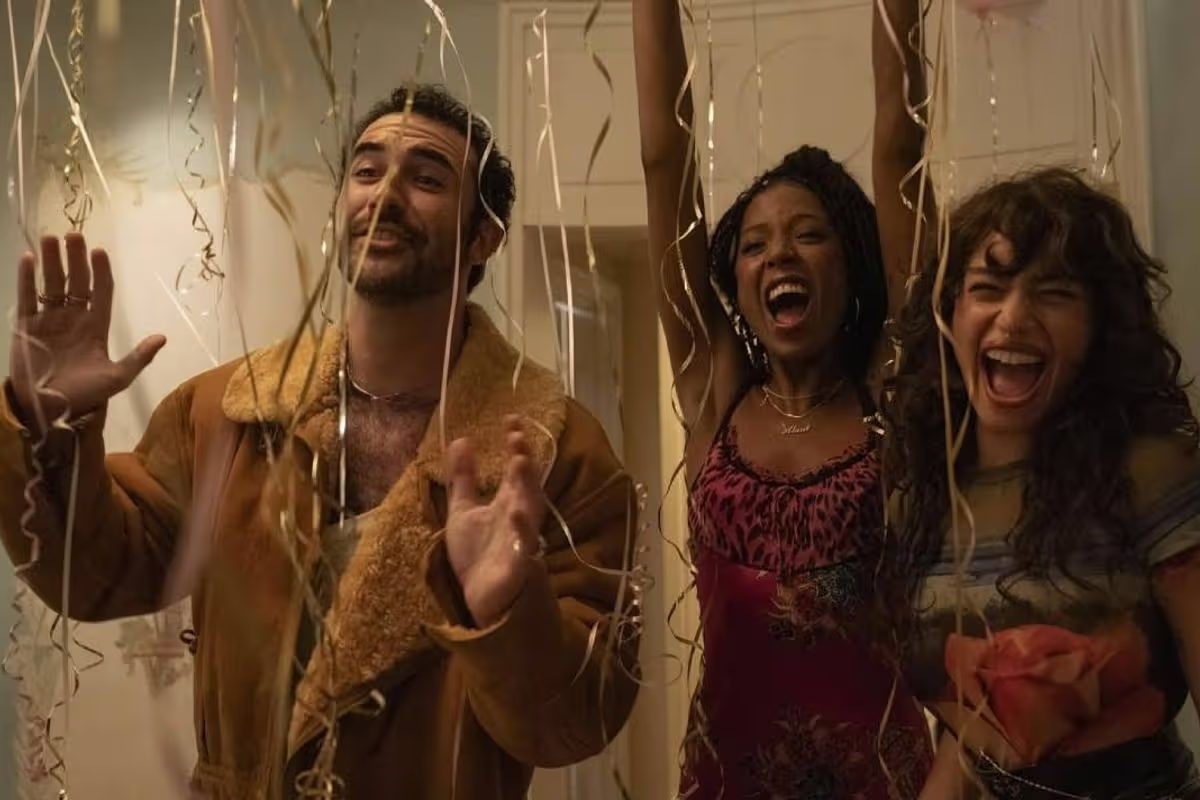
HBO Max has finally made its way to the UK, dropping an abundance of hit shows, including I Love LA, a sitcom about Maia (played by Rachel Sennott) whose life becomes chaotic with the return of her influencer friend Tallulah (Odessa A’zion).
They are joined by other stars such as Jordan Firstman, Gossip Girl’s Leighton Meester, as well as actress True Whitaker as Maia and Tullulah’s close friend Alani Marcus.
Film buffs may best recognise Whitaker though as the youngest daughter of actor Forest Whitaker, famed for movies such as The Last King of Scotland, The Butler and Rogue One: A Star Wars Story.
But it wasn’t until True got to the set of I Love LA that she discovered that her dad was already very well acquainted with one of her co-stars.
Speaking to Reach Plc, Whitaker explained: “My dad in the show, Keith David, is a friend of my dad’s.
“When I was on set shooting the last episode, I Facetimed my dad being like ‘Hey, do you know this guy? This is my dad.’
“And he [Forest Whitaker] was like ‘Keith?!’ and Keith was like ‘Forest!’
“And apparently my dad is the reason Keith moved to LA. They did Platoon together when they were in their 20s so it was kind of cute to see them reminisce.”
Also starring actors William Dafoe and Charlie Sheen, 1980s film Platoon followed the story of a young American volunteer as he deals with the horrors of warfare in Vietnam.
While Whitaker was behind the role of supporting character Big Harold, actor Keither David played veteran soldier King.
True also shared her famous father’s pride at her landing a major role in I Love LA after first featuring in his drama Godfather of Harlem.
She explained: “He’s extremely proud of me. Even his assistant pulled me aside and was talking to me and got emotional and was like ‘you have no idea.’
“My dad apparently had just been gloating to everybody and was stoked to see me in this light.
“And for me to be able to use my comedic skills, because obviously in the house I’m annoying and loud and funny but now I can actually utilise it.”
I Love LA is available to watch on HBO Max.
In major speech, Trump says Iran war will be over ‘shortly’ but offers little clarity
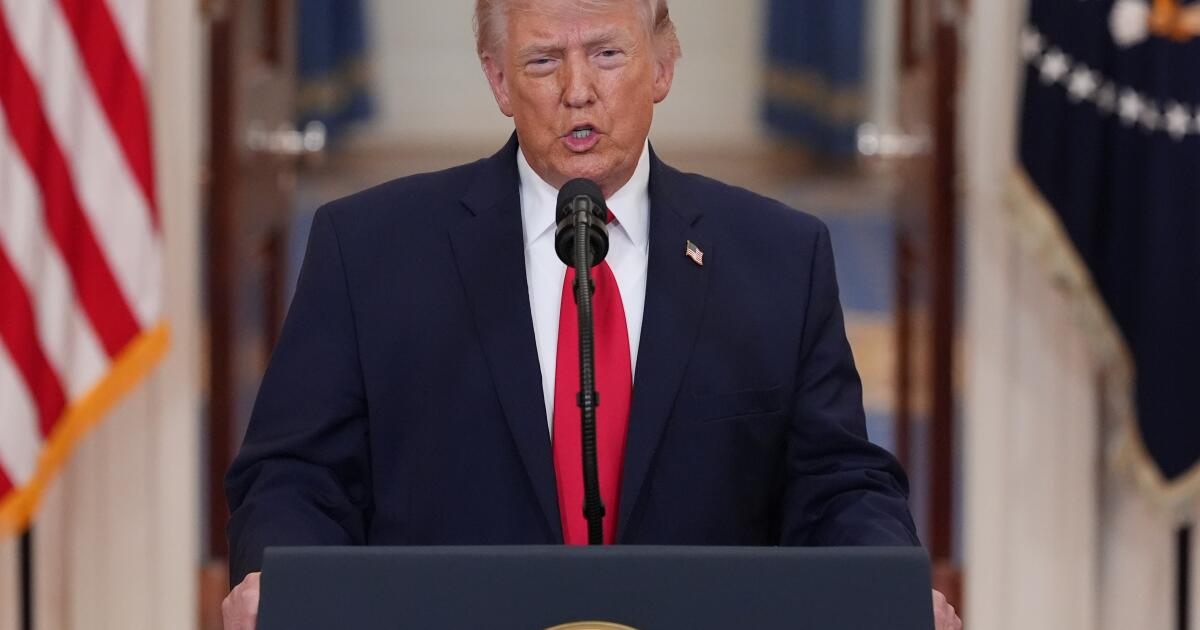
WASHINGTON — In his first formal address to the nation since launching a war on Iran more than a month ago, President Trump on Wednesday night repeated a familiar list of claimed successes — and brushed aside setbacks — while providing little clarity on a clear path to ending the conflict.
“We are going to finish the job, and we’re going to finish it very fast. We are getting very close,” the president said from the White House.
Trump said Iran is “no longer a threat,” yet spoke of potentially needing to escalate the conflict and increase bombings on Iran’s energy and oil infrastructure if it continues to fight back.
“If there is no deal, we are going to hit each and every one of their electric generating plants, very hard and probably simultaneously,” he said. “We have not hit their oil, even though that’s the easiest target of all, because it would not give them even a small chance of survival or rebuilding. But we could hit it, and it would be gone, and there’s not a thing they could do about it.”
Trump earlier this week said he expects to pull American forces from Iran within three weeks, and emphasized that the United States does not have to be in the Middle East but that it is only there to “help our allies.”
In his speech, Trump did not lay out a specific timeline for an exit strategy, but said the the U.S. is “on track to complete all of America’s military objectives shortly, very shortly.”
“We are going to hit them extremely hard over the next two to three weeks. We are going to bring them back to the Stone Ages, where they belong,” he said. “In the meantime, discussions are ongoing.”
He also repeated his assertions, made for weeks, that the U.S. has basically already defeated Iran and won the war, which he characterized as a “decisive, overwhelming victory.”
He also stressed that it is “very important that we keep this conflict in perspective,” before listing out — by month and day — the length of World War I, World War II, the Korean War, the Vietnam War and the Iraq War.
Prior to Wednesday night’s formal address, Trump had only spoken of the war — which U.S. and Israel launched against Iran on Feb. 28 — in less formal settings, during media gatherings and other public events.
The speech was a key messaging moment for the president, who, 33 days into the war, has struggled to clearly explain the scope and objectives of a conflict that has killed thousands of people in Iran and neighboring countries and disrupted global markets.
Trump repeatedly insisted that the U.S. is doing great, is “in great shape for the future,” and doesn’t need the oil that Iran has put a stranglehold on in the Strait of Hormuz, ignoring the clear effects of the war and those disruptions on the U.S., including on gas prices.
Those effects are already contributing to fractures within Trump’s base. Some have expressed frustration with the administration’s decision to enter a new conflict in the Middle East, concerns that could become a political liability for Republicans ahead of the high-stakes midterm elections in November.
In his remarks, Trump appeared to be speaking to those who have criticized him for deviating from his campaign promises by entering the war, saying he had promised to never allow Iran to have a nuclear weapon “from the very first day” he announced his first presidential campaign in 2015.
Trump has repeatedly downplayed the economic pressure the war has placed on Americans, including rising gas prices, arguing that the short-term financial strain is necessary for national security. He has also promised that gas prices will “come tumbling down” when the conflict ends.
“Gas prices will rapidly come back down,” Trump repeated on Wednesday. “Stock prices will rapidly go back up. They haven’t come down very much. Frankly, they came down a little bit, but they’ve had some very good days.”
Trump appeared less energetic during his evening speech than during some of his previous daytime events, where he has consistently maintained an upbeat tone about the war, while offering inconsistent accounts of what his administration aimed to achieve, or how long and what it would take to meet those objectives.
Those inconsistencies were evident even hours ahead of the address. In an interview with Reuters, he said he was not concerned about the enriched uranium held by Tehran — a statement that appeared to undercut a central justification for the war.
“That’s so far underground, I don’t care about that,” Trump said, adding that the U.S. military will be “watching it by satellite.”
In public remarks ahead of the address, Trump said the war was launched to prevent Iran from developing a nuclear weapon, but also that the U.S. had completely obliterated Iran’s nuclear capabilities months prior, in separate attacks over the summer. He also said he was worried about Iran’s enriched uranium, wanted the U.S. to take it, and would even consider sending U.S. forces inside Iran to collect it.
There have also been mixed messages about the U.S.’s intentions for Iran’s leadership since Iran’s Supreme Leader Ayatollah Ali Khamenei was killed at the start of the conflict, leaving a leadership vacuum that was filled by his son, Mojtaba Khamenei, a 56-year-old hard-line cleric who Trump initially called an “unacceptable choice.”
As Iran’s clerical rulers maintained a firm grip on the country, Trump administration officials, such as Secretary of State Marco Rubio, argued that U.S. war objectives had “nothing to do” with Iran’s leadership. But Trump in recent days has repeatedly talked about how “regime change” was achieved.
On Wednesday, Trump said a deal remained within reach with Iran’s new leaders, who he called “less radical and much more reasonable.”
Hours before Trump was to deliver his speech, Rubio posted a video which he began by saying, “Many Americans are asking, ‘Why did the United States have to attack Iran now?’” — an apparent acknowledgment that Trump’s own answers to that question in recent days may have failed to resonate.
Rubio also pushed another rationale for the war that the administration has floated on and off for the past month — saying Iran was building up an arsenal of missiles and drones to shield its nuclear ambitions, and that the war was the “last best chance” for the U.S. to eliminate those weapons capabilities before it was too late.
“We were on the verge of an Iran that had so many missiles and so many drones that nobody could do anything about their nuclear weapons program in the future,” Rubio said. “That was an intolerable risk.”
Others also tried to frame the war narrative Wednesday.
Prior to Trump’s speech, Iran President Masoud Pezeshkian issued a public letter denouncing what he described as “a flood of distortions and manufactured narratives” from the U.S., and arguing Iran is not a threat and has only ever defended itself against U.S. aggression.
He called on the American people to “look beyond the machinery of misinformation” from the Trump administration and reach their own conclusions about the war and its purpose, at one point echoing a question also being asked by some in Trump’s base: “Is ‘America First’ truly among the priorities of the U.S. government today?”
He noted Iran was in the midst of nuclear negotiations with the U.S. when the U.S. attacked it “as a proxy for Israel,” and accused U.S. leaders of committing a “war crime” by targeting Iran’s energy and industrial facilities.
“Exactly which of the American people’s interests are truly being served by this war?” he asked.

Five-run third inning sinks Angels in series finale loss to Cubs
CHICAGO — Matthew Boyd struck out 10 while pitching into the sixth inning, and the Chicago Cubs beat the Angels 6-2 on Wednesday.
Nico Hoerner had three hits for Chicago on a chilly and windy afternoon at Wrigley Field. Matt Shaw had two hits and two RBIs, and Alex Bregman reached three times in the rubber game of the three-game series.
Boyd (1-1) yielded two runs, one earned, and two hits over 5 2/3 innings in his second start of the season. The left-hander was tagged for six runs in 3 2/3 innings in a 10-4 loss to Washington on opening day.
Zach Neto had two of the Angels’ four hits. Yusei Kikuchi (0-1) was charged with five runs and six hits in 5 1/3 innings.
Chicago grabbed control with five runs in the third inning. Miguel Amaya walked and scored from first on Hoerner’s double into the gap in left-center. Bregman singled in Hoerner, and Dansby Swanson drove in Ian Happ with a sacrifice fly. Shaw and Pete Crow-Armstrong contributed two-out RBI singles.
It looked as if first-year Angels manager Kurt Suzuki wanted a replay review of the play at the plate when Amaya scored but was denied because he took too long to decide on the challenge.
The Angels chased Boyd while scoring two runs in the sixth. Jo Adell singled in Neto, and Mike Trout scampered home on an error on Bregman at third.
The Cubs tacked on an unearned run in the seventh. Trout dropped Carson Kelly’s leadoff fly ball to center for an error, and Kelly scored on Shaw’s one-out single.

Up next
Angels: Following an off day, LHP Reid Detmers (0-0, 5.79 ERA) starts for the Angels in their home opener on Friday night. RHP Bryan Woo (0-0, 3.00 ERA) takes the mound for Seattle.
Cubs: RHP Cade Horton (1-0, 2.84 ERA) starts the opener of a weekend series at Cleveland on Friday. LHP Joey Cantillo (0-0, 4.91 ERA) gets the ball for the Guardians.
Iran war live: Trump claims goals nearing completion, vows to ‘finish job’ | US-Israel war on Iran News
Live updatesLive updates,
Iran denies seeking a truce and keeps up counterattacks, as US-Israeli raids cause deaths and damage across the country.


Published On 2 Apr 2026

‘I’m a travel expert and always avoid booking seat 11A on any flight due to awkward reason’
Choosing the right seat on the plane can determine a lot for your overall flight experience, and a travel expert has revealed exactly why you should avoid booking 11A

You might want to think carefully about choosing your seat on the plane(Image: Getty Images/Stock Image)
We all have a preferred window or aisle seat when flying, but one travel expert has revealed the exact seat you should always avoid.
Choosing the right seat on a plane can certainly come with its bonuses. Whether that’s more legroom, closer to the bathrooms, being the first row to be served refreshments, or a quieter spot near the back, away from babies. Yet some seats can be a disadvantage.
Window seats are popular among travellers, particularly for those wanting to enjoy the view during take-off or landing, for a little more privacy, or to take a little snooze against the cabin. One favoured window seat on planes has been 11A, due to its positioning near or over the wing, which is thought to offer less disruption from turbulence.
READ MORE: ‘It took 7 years to get my British passport but I still do 1 thing at EU airports’READ MORE: Spain airport strikes warning as Easter travellers face severe delays
While it may sound appealing, 11A might not be as relaxing as it sounds. Andrea Platania, operations manager at airport transfer platform Transfeero, said that this specific seat often leaves passengers disappointed.
“Seat 11A might sound ideal because it’s by the window, but it can quickly become frustrating, especially on anything longer than a short hop,” the travel expert said. “You’re quite far from the toilets, which isn’t ideal, and getting in and out of that seat can be awkward.”
Andrea also explained that this seat can prove tricky for those who want to move around and stretch during the flight. “If you’re in 11A, you’re relying on the people next to you to move every time you want to get up. That might be fine once or twice, but over a longer journey it becomes inconvenient very quickly.”
It’s a seat that can also feel a little cut off from the rest of the cabin. “You’re not close to the aisle, so you don’t have that easy access, and you’re not in a premium position either. It ends up being a seat that looks better when you book it than it feels when you sit in it,” he outlined.
But that’s not the only seat you might want to think twice about booking. The expert said that seats 11A and 11F are among the “least rewarding seats” on a flight.
“Seats like 11A and 11F are often overlooked when people are booking, but they’re right in that middle section of the aircraft where you lose a lot of the small conveniences. They don’t seem bad on paper, but in practice, they’re some of the least rewarding seats to be in, Andrea said.
Yet one of the biggest disadvantages of these seats is during food and drink service. “On most short and mid-haul flights, cabin crew will begin service from both the front and the back of the plane, then work their way towards the centre. If you’re sitting in rows like 11, you’re effectively last in line from both directions.”
It can become even more of a drawback during busy flights. He said: “Passengers in seats like 11A and 11F are far more likely to find that popular snacks, meals, or even drinks have already run out by the time the trolley reaches them. It’s something people don’t think about when booking, but it becomes very obvious once you’re in the air.”
If that wasn’t enough to deter you from seats 11A and 11F, Andrea noted that they are inconveniently positioned on board. “You’re not particularly close to the toilets, and you’re not near the exits either, so you don’t get the benefit of convenience in either direction.
“You’re just in that middle zone where everything takes a bit longer.” So next time you book your plane seat, have a think about where you’d rather sit, whether that’s to ensure you’re one of the first to be served your meal or somewhere to ensure little disruption during your flight.
Do you have a travel story to share? Email webtravel@reachplc.com
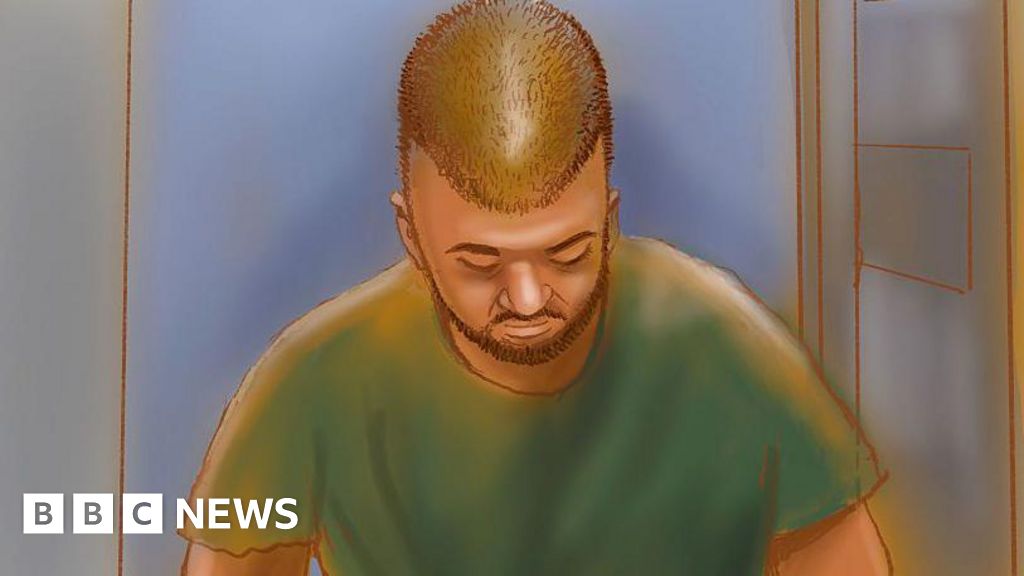
Alleged Bondi gunman loses court bid to suppress names of his family
Lawyers for Naveed Akram had argued his mother, brother and sister live in ‘constant fear’.
Source link
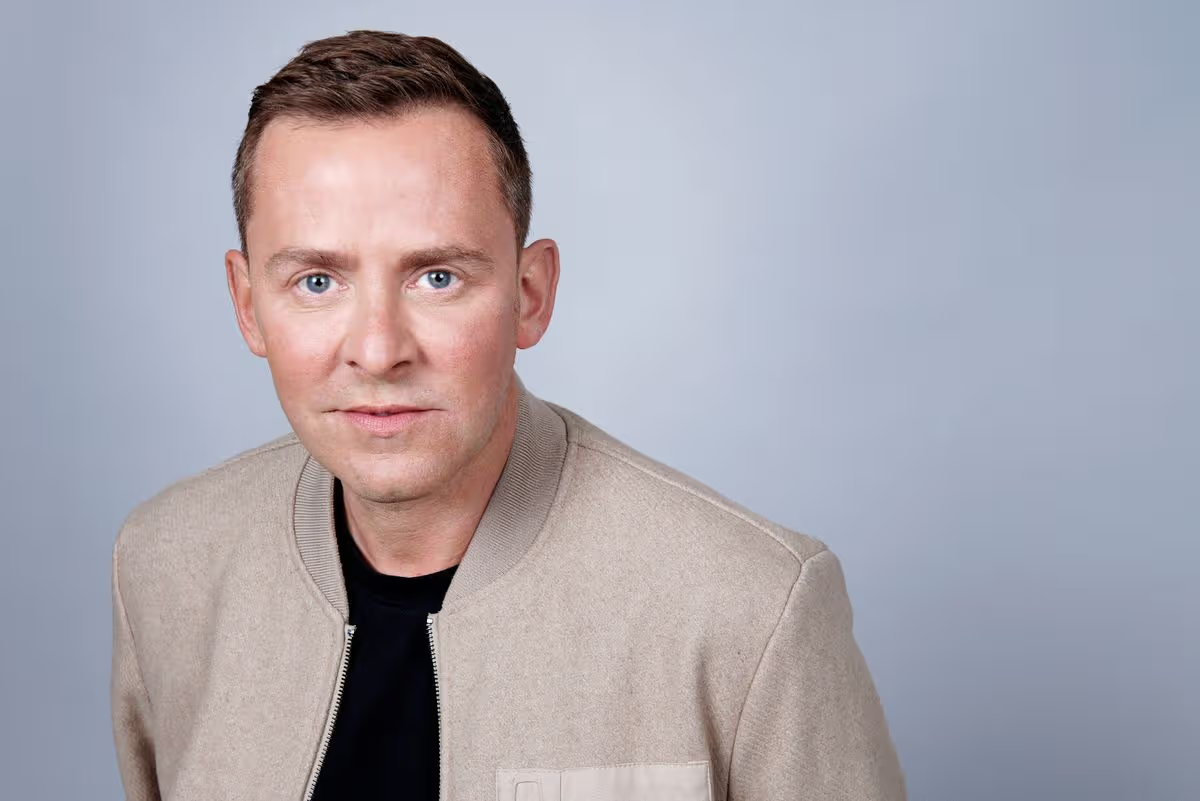
Scott Mills’ BBC sacking update as bosses ‘unaware’ boy was under 16
Sources claim that the current senior management took swift action after finding out for the first time that Mills’ accuser was under 16

Scott Mills has been axed by the BBC(Image: CREDIT LINE:BBC/Ray Burmiston)
The BBC was unaware of the full extent of the police investigation into Scott Mills including the accuser’s age, sources claim. The presenter – who today broke his silence to thank his former listeners – was interviewed by police in 2018 under caution after being accused of serious sexual offences against a boy under the age of 16. Mills and his agent spoke to some senior BBC figures about the claims at the time. Mills was never charged with any crime because of a lack of evidence.
At the time, Director general Tony Hall was not aware of the “full picture” including the accuser’s age., although it’s unclear if other managers did. However after learning about the age in the last week, the newer management took swift action.
It comes as the BBC admitted yesterday they had known about the police investigation in 2017 but were “doing more work to understand the detail of what was known by the BBC at this time.”
Insiders say it was also difficult for the BBC to have made their own inquiries into the investigation, and that they were “limited” in what the police would tell them. Last night Mills issued a statement via his lawyers in which he thanked well-wishers.
He said: “I wish to thank from the bottom of my heart all those who have reached out to me with kindness, my former colleagues, and my beloved listeners, who I greatly miss.”
He also opened up about the police investigation. He said: “The recent announcement that I am no longer contracted to the BBC has led to the publication of rumour and speculation. In response to this the Metropolitan Police has made a statement, which I confirm relates to me. An allegation was made against me in 2016 of a historic sexual offence which was the subject of a police investigation in which I fully cooperated and responded to in 2018. As the police have stated, a file of evidence was submitted to the Crown Prosecution Service, which determined that the evidential threshold had not been met to bring charges.
“Since the investigation related to an allegation that dates back nearly 30 years and the police investigation was closed 7 years ago, I hope that the public and the media will understand and respect my wish not to make any further public comment on this matter. The BBC had hours earlier issued their own statement, confirming our story yesterday that it “acted decisively” after receiving “new information” in the weeks prior to his sacking.
A BBC spokesperson said: “Scott Mills had a long career across the BBC, he was hugely popular and we know the news this week has come as a shock and surprise to many. We also recognise there’s been much speculation in the media and online since Monday. We hope people understand that there is a limit to what we can say because we have to be mindful of the rights of those involved. What we can confirm is that in recent weeks, we obtained new information relating to Scott and we spoke directly with him. As a result, the BBC acted decisively in line with our culture and values, and terminated his contracts on Friday March 27.”
The BBC added that iit “made a significant commitment to improve its culture, processes and standards”, and added that it set out “behavioural expectations for everyone who works with or for the BBC” and was “clear action would be taken” if they were not met last year, following an independent culture review.
Mills last hosted Radio 2’s Breakfast Show on Tuesday March 24 and signed off with “see you tomorrow”, before being replaced by Gary Davies. In an email sent to staff on Monday, Lorna Clarke, the BBC’s director of music, acknowledged the news was “sudden and unexpected, and therefore must come as a shock”. It has also been announced that children’s cancer charity Neuroblastoma UK has decided to “part ways” with Mills, who had been a patron since 2021.
A statement from the charity said: “Following his dismissal from the BBC, Neuroblastoma UK have taken the decision to part ways with Scott Mills and he is no longer a patron of our charity.” We have gone to Mills’ team for comment.
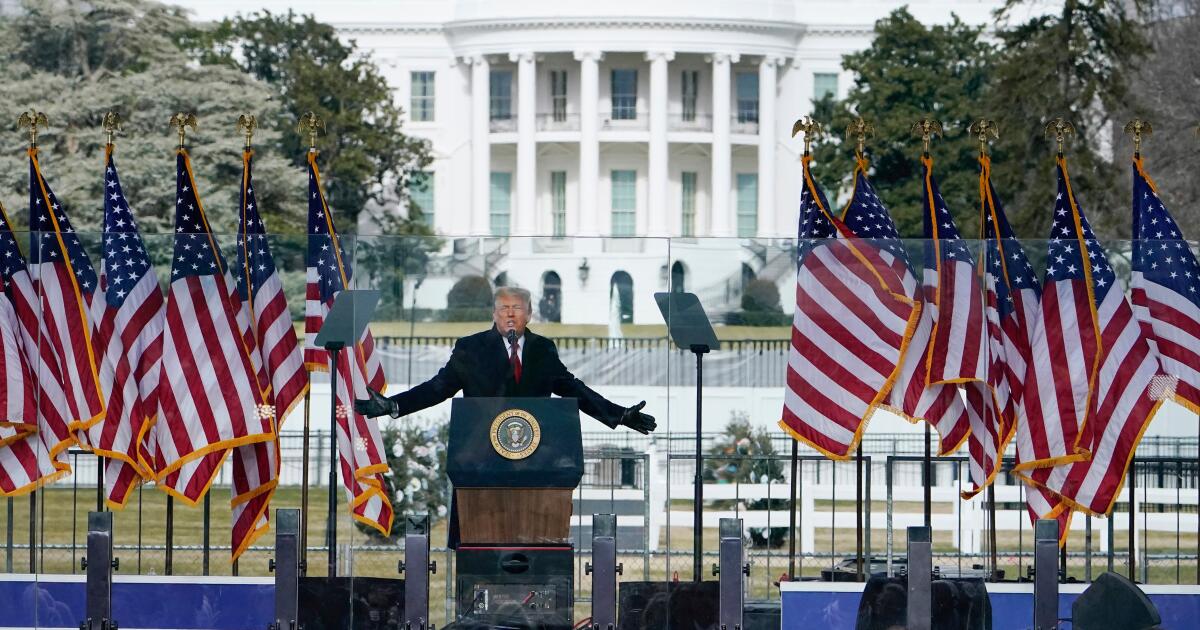
Trump isn’t immune from civil claims his Jan. 6 rally speech incited riot, judge says
WASHINGTON — President Trump is not immune from civil claims that he incited a mob of his supporters to attack the Capitol on Jan. 6, 2021, a federal judge has ruled in one of the last unresolved legal cases stemming from the riot.
U.S. District Judge Amit Mehta ruled Tuesday that Trump’s remarks at his “Stop the Steal” rally, held on the Ellipse near the White House shortly before the siege began, “plausibly” were inciting words that are not protected by the 1st Amendment right to free speech.
The Republican president is not shielded from liability for much of his Jan. 6 conduct, including that speech and many of his social media posts that day, according to the judge. But Mehta said Trump cannot be held liable for his official acts that day, including his Rose Garden remarks during the riot and his interactions with Justice Department officials.
“President Trump has not shown that the Speech reasonably can be understood as falling within the outer perimeter of his Presidential duties,” Mehta wrote. “The content of the Ellipse Speech confirms that it is not covered by official-acts immunity.”
Not the first court ruling on presidential immunity
The decision is not the court’s first ruling that Trump can be held liable for the violence at the Capitol and it is unlikely to be the last given the near-certainty of an appeal. But the 79-page ruling sets the stage for a possible civil trial in the same courthouse where Trump was charged with crimes for his Jan. 6 conduct, before his 2024 election ended the prosecution.
Mehta previously refused to dismiss the claims against Trump in a February 2022 ruling that Trump was not entitled to presidential immunity from the claims brought by Democratic members of Congress and law enforcement officers who guarded the Capitol on Jan. 6. In that decision, Mehta also concluded that Trump’s words during his rally speech plausibly amounted to incitement and were not protected by the 1st Amendment.
The case returned to Mehta after an appeals court ruling upheld his 2022 decision. He said Tuesday’s ruling on immunity falls under a more “rigorous” legal standard at this later stage in the litigation.
Mehta, who was nominated by Democratic President Obama, said his latest decision is not a “final pronouncement on immunity for any particular act.”
“President Trump remains free to reassert official-acts immunity as a defense at trial. But the burden will remain his and will be subject to a higher standard of proof,” the judge wrote.
Official capacity vs. office-seeker
Trump spoke to a crowd of his supporters at the rally before the mob’s attack disrupted the joint session of Congress for certifying Democrat Joe Biden’s 2020 electoral victory over Trump. Trump closed out his speech by saying, “We fight. We fight like hell and if you don’t fight like hell, you’re not going to have a country anymore.”
Trump’s lawyers argued that Trump’s conduct on Jan. 6 meets the threshold for presidential immunity.
The plaintiffs contended that Trump cannot prove he was acting entirely in his official capacity rather than as an office-seeking private individual. They also said the Supreme Court has held that office-seeking conduct falls outside the scope of presidential immunity.
Rep. Bennie Thompson, D-Miss., who at that time led the House Homeland Security Committee, sued Trump, Trump’s personal attorney Rudolph Giuliani and members of the Proud Boys and Oath Keepers extremist groups over the Jan. 6 riot. Other Democratic members of Congress later joined the litigation, which was consolidated with the officers’ claims.
‘Victory for the rule of law’
The civil claims survived Trump’s sweeping act of clemency on the first day of his second term, when he pardoned, commuted prison sentences and ordered the dismissal of all 1,500-plus criminal cases stemming from the Capitol siege. More than 100 police officers were injured while defending the Capitol from rioters.
The plaintiffs’ legal team includes attorneys from the Lawyers’ Committee for Civil Rights Under Law. Damon Hewitt, the group’s president and executive director, praised the ruling as a “monumental victory for the rule of law, affirming that no one, including the president of the United States, is above it.”
“The court rightly recognizes that President Trump’s actions leading to the January 6 insurrection fell outside the scope of presidential duties,” Hewitt said in a statement. “This ruling is an important step toward accountability for the violent attack on the Capitol and our democracy.”
Kunzelman writes for the Associated Press.