


Who is Ali Shamkhani, Iran official reportedly killed in US-Israel attacks? | Explainer News
EXPLAINER
The former defence minister and secretary of Iran’s Defence Council was involved in US-Iran nuclear negotiations.
Published On 28 Feb 2026
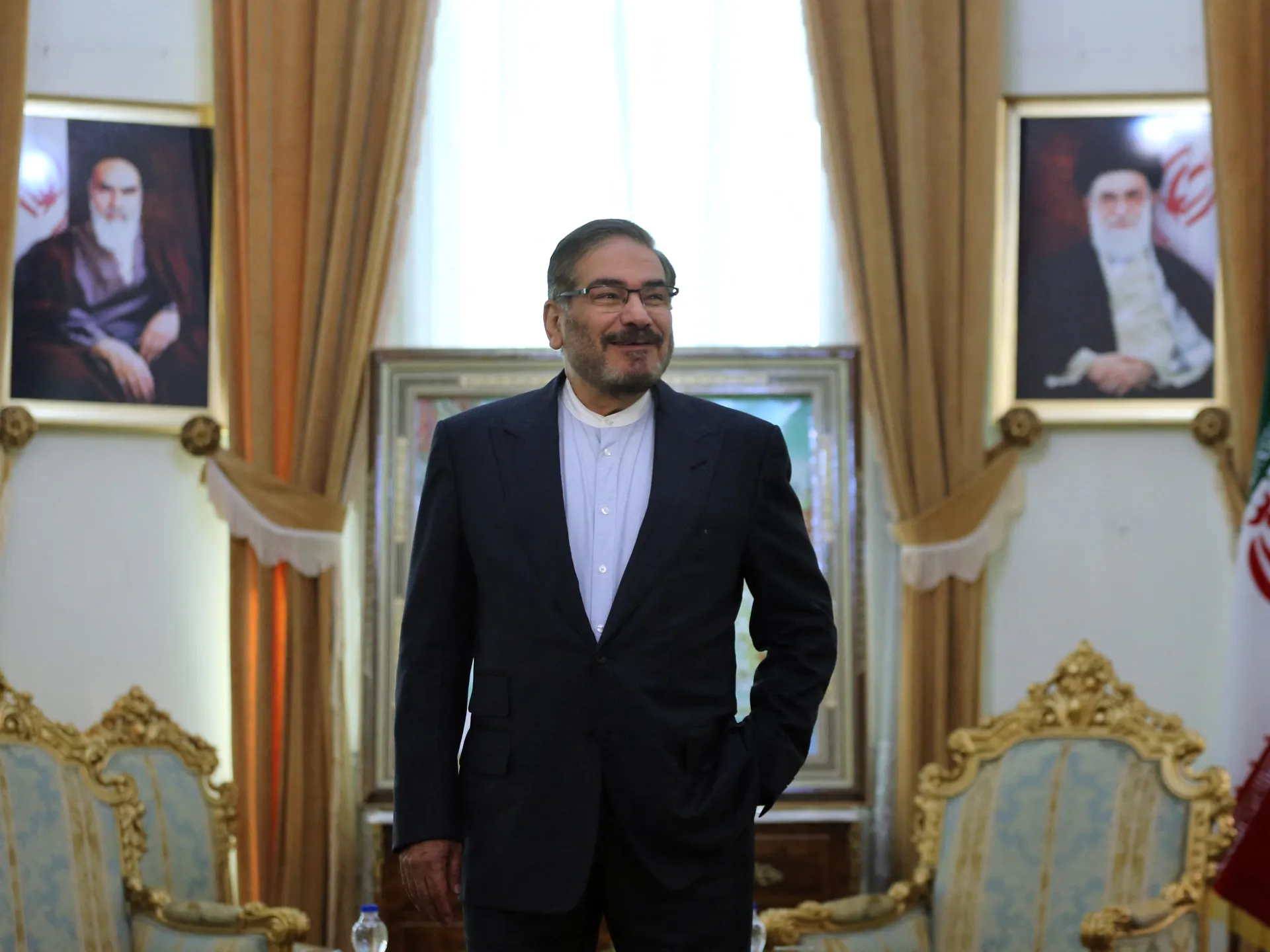
Ali Shamkhani, the secretary of Iran’s Defence Council and close adviser to Supreme Leader Ayatollah Ali Khamenei, has reportedly been killed in Israeli and US strikes on Iran.
An Israeli military spokesperson said he was among several top Iranian officials killed on Saturday.
Recommended Stories
list of 3 itemsend of list
There was no immediate comment from Tehran on his fate.
The 70-year-old was overseeing the negotiations between the US and Iran over the Iranian nuclear programme, the latest round of which concluded on Friday.
“If the main issue of the negotiations is not making nuclear weapons by Iran, this is in compliance with a religious decree issued by Iran’s leader and the country’s defence doctrine, and an immediate agreement is within reach,” Shamkhani said on Thursday.
Shamkhani had also been targeted in an Israeli strike in June 2025, during the 12-day war between Iran and Israel. There were reports that he had been killed in the attack, but he was later confirmed to have survived. He was pulled from the rubble of his home, and had sustained severe injuries.
He was recently appointed the secretary of Iran’s Defence Council, which was created after the war and coordinates Iran’s defence and national security policies, while mobilising resources to address threats.
In January, he warned that Iran’s response to any US military action would be “immediate, all out, and unprecedented, targeting the heart of Tel Aviv and all those supporting the aggressor”.
He led the Supreme National Security Council (SNSC) for a decade until 2023, making him the second-longest-serving security chief since 1979 after former President Hassan Rouhani, who was SNSC secretary for nearly 16 years.
Born in Ahvaz in Iran’s Khuzestan, Shamkhani and his family moved to Los Angeles in the United States when he finished school. He later returned to Iran, where he studied engineering.
During the Iran-Iraq war in the 1980s, Shamkhani was a commander in Iran’s Revolutionary Guard Corps (IRGC), and went on to be a commander of both of Iran’s navies, the IRGC Navy and the Iranian Navy.
He was the minister of defence between 1997 and 2005, and was the first Iranian defence official to visit Saudi Arabia since the revolution. He also came third in the 2001 presidential elections before returning to his role as defence minister.
Nationwide members issued good news by BBC expert – what you should know
Need to know
Nationwide customers have been given some good news ahead of summer

Nationwide is the world’s largest building society and has over 16 million members(Image: Peter Dazeley/Getty Images)
Need to know: Nationwide customers could save on travel insurance
- Nationwide customers could save money on travel insurance by checking if they already have cover through their bank account.
- Travel expert Rebecca Wilcox appeared on BBC Morning Live to highlight that many people overlook existing travel insurance benefits. She described not having travel insurance as “astonishing” but revealed some may already be covered.
- Wilcox asked: “Are you already covered? You could have it with your bank account.”
- Nationwide’s FlexPlus current account costs £18 per month and includes Worldwide Family Travel Insurance from Aviva. The account provides comprehensive coverage including emergency medical expenses up to £10 million and missed departure cover up to £1,000.
- The FlexPlus account also covers trip cancellation up to £5,000 and alternative travel arrangements for disruptions.
- Other banks including Monzo, Virgin Money and Halifax also offer travel insurance with their packaged accounts.
- Customers are advised to check their existing bank account benefits before purchasing separate travel insurance to avoid paying twice.
- READ THE FULL STORY: Nationwide has good news for certain customers heading on holiday

Britain’s tiniest church holds just 6 people and overlooks peaceful beach
The idyllic Welsh seaside town of Rhos-on-Sea is home to a remarkable landmark – a tiny chapel that holds the title for being the smallest in the British Isles

It can only seat six people inside(Image: mpphotos via Getty Images)
This picturesque seaside town in Conwy, Wales provides a far more tranquil coastal retreat for those seeking respite by the shore – whilst also being home to a remarkable UK landmark.
Nestled discreetly along a coastal path boasting breathtaking vistas of the Welsh coastline, sits a diminutive chapel in Rhos-on-Sea, so minute that it claims the distinction of being the smallest throughout the entire British Isles.
St Trillo’s Chapel is so compact that it can accommodate merely six worshippers at once, and astonishingly, communion services continue to be held there.
The chapel takes its name from St Trillo, a 6th-century saint who is believed to have constructed his cell on this very site.
Best holiday cottage deals in Wales
This article contains affiliate links, we will receive a commission on any sales we generate from it. Learn more
Wales is renowned for its stunning mountains, picturesque coastline and rich Celtic history. Sykes has a wide and varied collection of holiday cottages, houses and apartments across the country. Prices start from £35 per night with current deals.
History
When St Trillo established his cell, research indicates it was probably fashioned from timber and wattle, with the possibility that the saint collected and erected a stone barrier to shield it from harsh winds.
However, it was the natural spring within the chapel, furnishing the saint with fresh water, which rendered this location ideal for his dwelling. The well persists to this day, positioned before the altar, and is believed to possess considerable historical significance.
This very spring subsequently provided water for countless baptisms throughout the mediaeval parish of Llandrillo and is regarded as possessing curative properties.
The water is thought to flow westward underneath the floor straight from the well, which ‘carries the blessed soul’ from the altar towards the congregation.
While we have a good understanding of its structure today, there’s no specific date attributed to the chapel due to numerous repairs carried out over the centuries. Despite its diminutive size and stone roof, it retains the essence of the saint’s original space.
Present day
St Trillo’s Chapel is nestled next to Marine Drive, a scenic route that stretches from Colwyn Bay along the tranquil seafront. From the road, the chapel is almost hidden from view, but a small signpost will guide you to its location.
The most convenient place to park would be Trillo Avenue, located on the inland side of Marine Drive. From here, you can stroll back to Marine Drive and make your way towards the chapel. It’s just a few metres north of the junction and is accompanied by a small garden, overlooking the sea.
One visitor shared their experience on TripAdvisor, writing: “Stumbled across this as I was walking along the promenade. It was so cute, and I was surprised to see it was open.
“It was quite cold outside, so it was a relief to get out of the wind. Very peaceful inside with two candles burning, and it was well kept. Useful sign nearby detailing its history.”
Another visitor added: “I have been fascinated with this tiny little chapel ever since I read about it on TripAdvisor. Took ages to find but so worth it.
“I could of sat there for ages as it had a comforting and peaceful atmosphere. It is wonderful that it’s kept open for visitors and so well looked after. The little garden is beautifully kept. A magical place on the beach.”
The beach
Beyond the iconic chapel, visitors find themselves surrounded by the stunning scenery of Rhos-on-Sea Beach. A well-loved promenade for walkers and cyclists curves along the golden sands, dotted with numerous cafes, pubs and other establishments perfect for enjoying refreshments whilst overlooking the ocean.
The beach sits within easy reach of the town centre and forms part of the considerably longer three-mile Colwyn Bay coastline. Boasting sweeping sea vistas, it proves particularly popular with families during the summer months who flock here to sunbathe, paddle in the waves or enjoy various water sports.
One recent visitor described it as a “traditional seaside town”. They wrote: “Lovely traditional seaside resort. Clean beach, plenty of car parking, plenty of little cafes and little ice cream and gift shops, like seaside resorts used to be.”
Bear in mind that whilst parking spaces line the promenade, charges do apply. Additionally, dog walking restrictions are enforced on specific sections of the beach during the period between May and September.
Ensure our latest headlines always appear at the top of your Google Search by making us a Preferred Source. Click here to activate or add us as your Preferred Source in your Google search settings.
How have US politicians reacted to the attack on Iran? | Donald Trump News
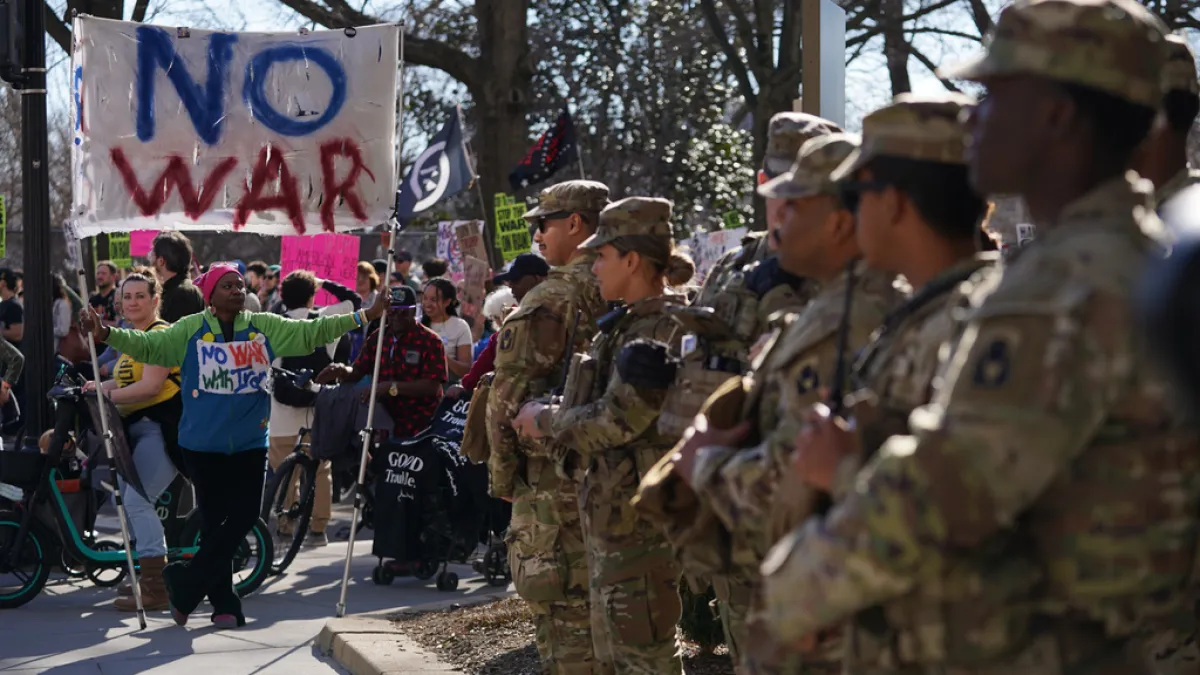
Figures from across the United States political spectrum have reacted to President Donald Trump’s joint attack with Israel on Iran, with Republicans largely expressing support and Democrats failing to offer a robust and unified response.
The attacks have reportedly killed at least 201 people, including more than 80 in a school in southern Iran, many of them children.
Recommended Stories
list of 3 itemsend of list
Iran has launched retaliatory strikes on Israel as well as US bases across the region, located in countries such as Bahrain, Qatar, the United Arab Emirates, Saudi Arabia, Jordan, and Kuwait, prompting fears that the conflict could spiral out of control and plunge the region into violence.
An initial YouGov poll conducted on February 28, after the strikes, suggested that 33 percent of US adults approved of the US attacking Iran, while 45 percent disapproved. Among Democrats and Independents, approval was just 10 percent and 21 percent, respectively, while 68 percent of Republicans expressed support.
Here’s how some of the US’s most prominent elected representatives and political figures have reacted.
President Donald Trump: “A short time ago, the United States military started major combat operations in Iran. Our objective is to defend the American people by eliminating imminent threats from the Iranian regime, a vicious group of very hard, terrible people. Its menacing activities directly endanger the United States, our troops, our bases overseas, and our allies throughout the world.”
Republican House of Representatives Speaker Mike Johnson: “Today, Iran is facing the severe consequences of its evil actions. President Trump and the Administration have made every effort to pursue peaceful and diplomatic solutions in response to the Iranian regime’s sustained nuclear ambitions and development, terrorism, and the murder of Americans—and even their own people.”
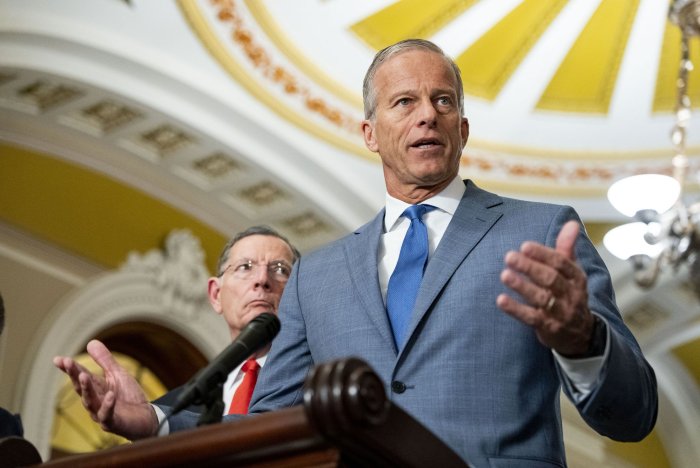
Republican Senate Majority Leader John Thune: “For years, Iran’s relentless nuclear ambitions, its expanded ballistic missile inventory, and its unwavering support for terror groups in the region have posed a clear and unacceptable threat to U.S. servicemembers, citizens in the region, and many of our allies. Despite the dogged efforts of the president and his administration, the Iranian regime has refused the diplomatic off-ramps that would peacefully resolve these national security concerns. I commend President Trump for taking action to thwart these threats.”
Democratic House Minority Leader Hakeem Jeffries: “Donald Trump failed to seek Congressional authorization prior to striking Iran. Instead, the president’s decision to abandon diplomacy and launch a massive military attack has left American troops vulnerable to Iran’s retaliatory actions. We pray for the safety of the men and women of the US military as they have been put into harm’s way in a dangerous theatre of war.”
Democratic Senate Minority Leader Chuck Schumer: “The administration has not provided Congress and the American people with critical details about the scope and immediacy of the threat. Confronting Iran’s malign regional activities, nuclear ambitions, and harsh oppression of the Iranian people demands American strength, resolve, regional coordination, and strategic clarity. Unfortunately, President Trump’s fitful cycles of lashing out and risking wider conflict are not a viable strategy.”
Democratic Representative Rashida Tlaib: “The American people do not want a war with Iran. Trump is acting on the violent fantasies of the American political elite and the Israeli apartheid government, ignoring the vast majority of Americans who say loud and clear: No More Wars.”
Democratic Representative Alexandria Ocasio-Cortez: “The American people are once again dragged into a war they did not want by a president who does not care about the long-term consequences of his actions. This war is unlawful. It is unnecessary. And it will be catastrophic. Just this week, Iran and the United States were negotiating key measures that could have staved off war. The president walked away from these discussions and chose war instead.”
New York City Mayor Zohran Mamdani: “Today’s military strikes on Iran — carried out by the United States and Israel — mark a catastrophic escalation in an illegal war of aggression. Bombing cities. Killing civilians. Opening a new theatre of war. Americans do not want this. They do not want another war in pursuit of regime change. They want relief from the affordability crisis. They want peace.”
Democratic Senator Bernie Sanders: “This Trump–Netanyahu war is unconstitutional and violates international law. It endangers the lives of U.S. troops and people across the region. We’ve lived through the lies of Vietnam and Iraq. No more endless wars. Congress must pass a War Powers Resolution immediately.”
Democratic Senator Chris Van Hollen: “Trump is lying to the American people as he launches an illegal, regime-change war against Iran. This is endangering American lives and has already resulted in mass civilian casualties. This is not making us safer & only damages the US and our interests. The Senate must immediately vote on the War Powers Resolution to stop it.”
Republican Senator Lindsey Graham: “I fervently pray that the long-suffering people of Iran will have their oppression ended soon. I also fervently pray that we’re on the verge of a new dawn in the Middle East, with historic opportunity for lasting peace and prosperity. As to our allies in Israel, President Trump and all under his command, your bravery has set in motion the end of evil and darkness, and the beginning of the light. Well done.”
Democratic Representative Ro Khanna: “Trump has launched an illegal regime change war in Iran with American lives at risk. Congress must convene on Monday to vote on Representative Thomas Massie and my WPR [War Powers Resolution] to stop this. Every member of Congress should go on record this weekend on how they will vote.”
Republican Representative Thomas Massie: “I am opposed to this War. This is not “America First.” When Congress reconvenes, I will work with Representative Ro Khanna to force a Congressional vote on war with Iran. The Constitution requires a vote, and your Representative needs to be on record as opposing or supporting this war.”
Republican Senator Tom Cotton: “Iran’s missile program poses an imminent threat to the United States and our allies. I’m thankful President Trump is taking necessary action to protect our homeland.”
Democratic Senator Adam Schiff: “Trump is drawing our country into yet another foreign war that Americans don’t want and Congress has not authorised. The Iranian regime is a brutal and murderous dictatorship. But that does not give Trump the authority to unilaterally initiate a war of choice.”
Democratic Senator John Fetterman: “Operation Epic Fury. President Trump has been willing to do what’s right and necessary to produce real peace in the region. God bless the United States, our great military, and Israel.”
Former Democratic Presidential Nominee Kamala Harris: “Donald Trump is dragging the United States into a war the American people do not want. Let me be clear: I am opposed to a regime-change war in Iran, and our troops are being put in harm’s way for the sake of Trump’s war of choice.”
Former Republican Representative Marjorie Taylor Greene: “We said “No More Foreign Wars, No More Regime Change!” We said it on rally stage after rally stage, speech after speech. Trump, Vance, basically the entire admin campaigned on it and promised to put America FIRST and Make America Great Again. My generation has been let down, abused, and used by our government our entire adult lives and our children’s generation is literally being abandoned.”

Nail-biting BBC drama that ‘gripped the UK’ has confirmed a new season after 9 years
Suranne Jones returns in a beloved BBC psychological drama’s third and final series, nine years after the show gripped the nation in 2017.

Nail-biting BBC drama that ‘gripped the UK’ has confirmed a new season after 9 years
If you were amongst the millions of viewers who tuned into the finale of Doctor Foster’s second series back in 2017, you’d be forgiven for thinking that was the end. Yet, following an extended nine-year break, the much-loved BBC psychological drama that kept audiences gripped is returning with a thrilling third chapter.
The forthcoming five-part television series will see Suranne Jones reprising her role as Gemma Foster, alongside Bertie Carvel, who returns as Simon, and Tom Taylor portraying their son Tom. Penned by Mike Bartlett, the synopsis for the new season states: “10 years ago, on discovering her husband Simon was having an affair, Gemma Foster enacted a masterful revenge.
“But the fallout was devastating when her 15-year-old son Tom disappeared. Now, in series three, Gemma is still a GP, still in the same house, but on the brink of a fresh start: she has met someone new and is getting married. But as the wedding day draws closer, and friends and family gather, shadows from the past begin to re-emerge, threatening both her happiness and her reputation.
“As Gemma fights to protect those she loves and expose whoever’s intent on hurting her, will she be able to put the past to bed, dispense justice, and claim the future she deserves, before it is too late?”
Lindsay Salt, Director of BBC Drama, described it as “a privilege to welcome Doctor Foster back to the BBC after almost a decade away”.
She continued: “The extent to which the first two series gripped the nation is a credit to Mike’s writing, the talented team at Drama Republic and our magnificent cast – and now we’re ready do it one more time in this epic final chapter. Bring it on!”
Based on IMDb reviews, audiences of the programme have expressed their views on the opening two seasons. One viewer branded the show a “BBC winner” and a “treasure”.
They commented: “Have found myself watching the BBC less over the years, there are, though, a fair share of treasures like Doctor Foster. It is very well made visually, stylish and audaciously with a fluid way of how it’s shot.”
Ensure our latest lifestyle and travel headlines always appear at the top of your Google Search by making us a Preferred Source. Click here to activate or add us as Preferred Source in your Google search settings.
Another remarked: “One of the greatest BBC shows with strong Shakespearean drama elements of personas and duplicity, betrayal, obsession, jealousy, revenge, conniving and plotting, and distrust.
“An amazing and gripping show that makes an intense and horrific portrayal of something as domestic as marriage and its complications (an understatement). Carrying strong tones of paranoia, calculated revenge, depiction of ‘natural’ misogyny, and with undertones of misanthropy, this show will give you knots and chills and keep you hooked.”
Another viewer remarked: “I don’t normally write reviews, but if you like nail-biting drama, watch this. Block out five hours of your life and get comfy. You won’t want to leave the telly!”.
A third person observed: “This program is engrossing, well-written and well-acted. It walks a fine line between being utterly disgusting and completely relatable, making me hate it and love it all at once. You definitely have to be patient to watch all the incendiary acrimony!”.

Sierra Canyon takes 2026 Open Division title in boys basketball
There are All-Star teams. Then there’s Sierra Canyon’s boys’ basketball team, made up of two McDonald’s All-Americans, a former Trinity League MVP, a star guard from North Carolina and several other newcomers that complete a nine-man rotation that no one in Southern California has been able to beat.
Coach Andre Chevalier pushes the buttons and has so much depth that it gives him the kind of options any coach would welcome. About the only question regarding the Trailblazers has been with so many top players, would they be unselfish enough to share the ball with teammates?
The answer is a resounding yes. The Trailblazers (27-1) won their first Southern Section Open Division title since the pandemic season of 2020 on Saturday night, defeating Mission League rival Harvard-Westlake 59-53 at Toyota Arena in Ontario.

Maxi Adams of Sierra Canyon celebrates the Open Division championship.
(Steve Galluzzo)
Harvard-Westlake kept battling despite trailing by 11 points at halftime. They trailed 56-53 with 19 seconds left after a three by Joe Sterling. The Trailblazers were able to clinch victory thanks to one free throw from JJ Sati-Grier and two from Brannon Martinsen. Martinsen finished with 18 points, Brandon McCoy had 13 points and Maxi Adams had 12 points.
“This group has been amazing,” Chevalier said. “It’s been one of the best seasons, maybe ever.”
Said Harvard-Westlake coach David Rebibo: “I thought they made some big shots in big moments, but I’m incredibly proud of our fight.”
No opponent had finished within 13 points of Sierra Canyon over the last month, and Chevalier gave credit to Rebibo and the Wolverines for taking them to the brink.
“David Rebibo is a heck of a coach,” he said. “No matter what roster we have, he always manages to have an elite team every year.”
Sterling finished with 18 points and Pierce Thompson scored 15 points.
Sierra Canyon has reached peak form. One curiosity was seeing how well the Trailblazers would fare leaving their comfortable home court in Chatsworth to play in an arena setting. But there was little difference.
More important is Sierra Canyon’s depth, which was put on display with seven minutes left in the fourth quarter after McDonald’s All-American McCoy picked up his fourth foul and went to the bench with a 45-39 lead. Over the next 2½ minutes, Sierra Canyon’s lead expanded to 12 points, aided by threes from Sati-Grier, a sophomore guard from North Carolina, and Martinsen, who was the Trinity League MVP two years ago at Mater Dei. That’s the challenge in trying to topple the Trailblazers — there’s always someone ready to step forward to deliver.
Now the Trailblazers can get ready to be the No. 1 seed in the Southern California Open Division regional playoffs, with an opportunity to advance to the state championship game in Sacramento in two weeks. The team looks focused, and even if one or two top players are off their games, the magic of being nine deep is knowing there’s always someone ready to come to the rescue.
Chevalier, though, wondered, “Can we stay hungry?”
McCoy answered that he’s “starving” for a state championship in the postgame news conference, which made his coach smile.
It’s been pretty clear for more than a month that Sierra Canyon has separated itself, and it will take a major upset to halt the Trailblazers’ clear path to Sacramento.
Trump bans U.S. government use of Anthropic AI products
Feb. 27 (UPI) — President Donald Trump announced he was directing all federal agencies to stop using Anthropic’s artificial intelligence solutions even as it’s the only one being used in the military’s classified systems.
Trump lashed out on his social media network Truth Social Friday.
“THE UNITED STATES OF AMERICA WILL NEVER ALLOW A RADICAL LEFT, WOKE COMPANY TO DICTATE HOW OUR GREAT MILITARY FIGHTS AND WINS WARS! That decision belongs to YOUR COMMANDER-IN-CHIEF, and the tremendous leaders I appoint to run our Military,” he posted.
“The Leftwing nut jobs at Anthropic have made a DISASTROUS MISTAKE trying to STRONG-ARM the Department of War, and force them to obey their Terms of Service instead of our Constitution. Their selfishness is putting AMERICAN LIVES at risk, our Troops in danger, and our National Security in JEOPARDY,” he wrote.
But an unnamed source told Axios that despite the president’s post, Anthropic and the Pentagon were still negotiating ahead of the 5:01 p.m. deadline that Defense Secretary Pete Hegseth set.
Undersecretary of Defense for Research and Engineering Emil Michael called Anthropic CEO Dario Amodei a liar on X. “It’s a shame that @DarioAmodei is a liar and has a God-complex. He wants nothing more than to try to personally control the U.S. Military and is OK putting our nation’s safety at risk,” he posted on X. “The @DeptofWar will ALWAYS adhere to the law but not bend to whims of any one for-profit tech company.”
Trump’s post continued: “Therefore, I am directing EVERY Federal Agency in the United States Government to IMMEDIATELY CEASE all use of Anthropic’s technology. We don’t need it, we don’t want it, and will not do business with them again! There will be a Six Month phase out period for Agencies like the Department of War who are using Anthropic’s products, at various levels. Anthropic better get their act together, and be helpful during this phase out period, or I will use the Full Power of the Presidency to make them comply, with major civil and criminal consequences to follow,” the president said.
“WE will decide the fate of our Country – NOT some out-of-control, Radical Left AI company run by people who have no idea what the real World is all about.”
Anthropic’s AI model Claude was used to capture Venezuelan president Nicolas Maduro and could be used in Iran, if needed. Axios reported that defense officials praised Claude’s abilities and one admitted that it would be a “huge pain in the ass” to stop using it.
Anthropic faced a 5 p.m. EST deadline to comply with the Pentagon and allow it to use the company’s artificial intelligence system without restraint.
If Anthropic declines, Hegseth has said he will have the company labeled a “supply chain risk” or invoke the Defense Production Act to force it to agree.
In July, Anthropic signed a $200 million contract with the Pentagon, but Amodei insists that its AI model Claude not be used for mass surveillance in the United States or for autonomous weapons without human approval.
The Defense Department has said it doesn’t plan to use the tools in that manner, but that Anthropic doesn’t get to make those decisions. It says the U.S. government can use tools “for all lawful purposes.”
“Legality is the Pentagon’s responsibility as the end user,” a senior Pentagon official told NPR.
On Thursday, Amodei said the company wouldn’t agree to the Pentagon’s terms.
“I believe deeply in the existential importance of using AI to defend the United States and other democracies and to defeat our autocratic adversaries,” he wrote in a statement. “Anthropic understands that the Department of War, not private companies, makes military decisions. We have never raised objections to particular military operations nor attempted to limit use of our technology in an ad hoc manner.
“However, in a narrow set of cases, we believe AI can undermine, rather than defend, democratic values. Some uses are also simply outside the bounds of what today’s technology can safely and reliably do. Two such use cases [domestic surveillance and autonomous weapons] have never been included in our contracts with the Department of War, and we believe they should not be included now.”
Amodei acknowledged Hegseth’s threats to blacklist the company or force it to comply.
“These threats do not change our position: we cannot in good conscience accede to their request,” Amodei wrote. “But given the substantial value that Anthropic’s technology provides to our armed forces, we hope they reconsider.”
Pentagon spokesperson Sean Parnell said on X Thursday: “Here’s what we’re asking: Allow the Pentagon to use Anthropic’s model for all lawful purposes. This is a simple, common-sense request that will prevent Anthropic from jeopardizing critical military operations and potentially putting our warfighters at risk. We will not let ANY company dictate the terms regarding how we make operational decisions. They have until 5:01 p.m. ET on Friday to decide. Otherwise, we will terminate our partnership with Anthropic and deem them a supply chain risk for DOW [Department of Defense].”
Geoffrey Gertz, a senior fellow at the Center for a New American Security, told NPR that both measures the Pentagon threatened are unusual and contradictory.
“It’s this funny mix where they both are such a risk that they need to be kicked out of all systems, and so essential that they need to be compelled to be part of the system no matter what,” he said.
Lauren Kahn, a senior research analyst at Georgetown’s Center for Security and Emerging Technology, told CNBC: “There are no winners in this. It leaves a sour taste in everyone’s mouth.”

Senate Majority Leader John Thune, R-S.D., speaks during a press conference after the weekly Republican Senate caucus luncheon at the U.S. Capitol on Wednesday. Photo by Bonnie Cash/UPI | License Photo

10 European destinations that are the cheapest to book over Easter holidays
The cheapest European city breaks have been revealed for a serene and sun-soaked escape over the Easter holidays, and many have pristine beaches to lap up the balmy rays

There are plenty of European destinations that offer an affordable escape during the Easter holidays(Image: Getty Images)
Heading on holiday during the peak travel season can be notoriously expensive, but some beautiful European destinations offer an affordable escape over Easter.
As we inch closer to Spring, thoughts turn to the Easter holidays and how we intend to spend the welcoming long weekend, or weeks, while the kids are off school. With the British weather somewhat unpredictable, a trip to a sun-soaked city destination might be top of the list, or a city packed with charm for a day of exploring.
In a bid to help travellers book their Easter escape, Which? compared more than 3,000 package holidays across Europe during the busy travel period, to reveal where you can get the best bang for your buck. The travel experts outlined the price, per person, for a seven-night stay, with flights and accommodation included, and some beautiful cities came out on top.
READ MORE: Five sunny destinations where you can get a drink from £1.30READ MORE: Spain holiday island warning as threat of plague grows worse
1. Marmaris, Turkey
Ranked as the cheapest for an escape was the resort town of Marmaris, situated along the Turkish Riviera, often known as the ‘Turquoise Coast’ or the ‘King of the coast’. It’s a haven for those looking to soak up the balmy rays, with highs of 25C in April and stretches of golden-sand beaches. Which? found that a trip to the sun-soaked city would cost an average of £594 per person for a seven-night package – half the cost of a trip to Paris!
2. Krakow, Poland
Following close behind is the city of Krakow, Poland, with its fascinating medieval architecture, market square, and iconic landmarks, including Wawel Castle and the Cathedral. Its scenic backdrop will feel as though you’ve stepped into a fairy tale, and while the weather offers a cooler 14C in April, you’ll barely notice as you lose yourself among the enchanting streets. A seven-night package getaway to Krawkow will cost around £628 per person, as outlined by the experts at Which?
3. Albufeira, Portugal
Offering a blend of city and beach escapes is the Albufeira, nestled along the picturesque coast of the southern Algarve of Portugal. Along with its sprawling beaches and turquoise waters, there’s the Old Town with cobbled streets lined with shops and restaurants, and its museums to explore. With highs of around 19C predicted over the Easter period, it might just be the best time to visit, that alongside its reasonable cost of around £638 per person.
4. Las Palmas de Gran Canaria, Spain
The Canary Islands are a popular hotspot among Brits seeking some sunny rays, and the city of Las Palmas de Gran Canaria, also known as Las Palmas, is a great, affordable option. As the largest city of the Canary Islands, Las Palmas has a historic charm, with its Vegueta district brimming with landmarks, and its golden sands at the lengthy Playa de Las Canteras, which also boasts a vibrant promenade. A trip to the city will bring a warming 21C, and cost around £671 per person for that escape this April.
5. Benidorm, Spain
It’s no surprise that Benidorm on Spain’s Costa Blanca in Alicante secured a spot on the Which? list, with its promise of cheap drinks, affordable hotels, bustling nightlife and balmy rays along its stretching beaches. It’s famed for boasting more than 320 days of sunshine a year, and in April is expected to welcome temperatures of around 19C – ideal for a cocktail in one of the bars that line the beachfront. According to Which?, a seven-night stay will set you back on average, £682 per person – that’s a reasonable £97 a day with flights and accommodation included.
6. Prague, Czech Republic
It’s long been hailed as a stag-do destination or beer capital, but Prague has much more to offer away from its cheap pints, although that is a bonus. The city is surrounded by Gothic, Baroque, and Renaissance-style architecture, alongside its stunning Prague Castle and striking Charles Bridge. Making it even more appealing is the prospect of paying £753 per person for a seven-night package stay, as well as its warming rays of 14C to wander around the city in.
7. Budapest, Hungary
Securing a place on the list is the capital of Hungary, characterised by its Danube River, majestic Hungarian Parliament Building, ruin bars and thermal baths. Its most famous is the Széchenyi Thermal Bath, the largest medicinal bath in Europe, along with the Art Nouveau Gellért. A trip to the vibrant city with sunny scenes of 17C in April will cost around £770 per person on a package holiday.
8. Porto, Portugal
While it’s a little further down on the list, the coastal city of Porto deserves its time in the spotlight. Located on the Douro River, the walkable city is brimming with character, with its steep, colourful streets, restaurants, shops, landmarks, and plenty of bars and cellars to taste its famous port wine. A seven-night package holiday is around £780 per person, and during that time you can expect to bask in a warming 18C in April.
9. Milan, Italy
Renowned as one of Europe’s biggest fashion capitals, Milan is an elegant city with its Gothic cathedral, Duomo di Milano, taking centre stage and its historic shopping centre, Galleria Vittorio Emanuele II, a standout spot, whether you’re a fashionista or not. There are meandering streets to explore, you’ll never be short of things to do, and with a package holiday setting you back around £795 per person, and rays of 17C, perhaps Easter is the best time to explore the Italian city.
10. Dubrovnik, Croatia
Known as the ‘Pearl of the Adriatic’, Dubrovnik is characterised by its 16th-century city walls, its main street, Stradun, lined with boutiques and cafés, and its Old Town with Baroque churches and the Rector’s Palace. There are some breathtaking coastal views to marvel at, and Game of Thrones locations to explore. A cooler temperature of 14C is expected during Easter, making it a prime time to wander around the charming city, and a package holiday could cost around £796 per person.
Do you have a travel story to share? Email webtravel@reachplc.com
Ensure our latest lifestyle and travel stories always appear at the top of your Google Search by making us a Preferred Source. Click here to activate or add us as your Preferred Source in your Google search settings.
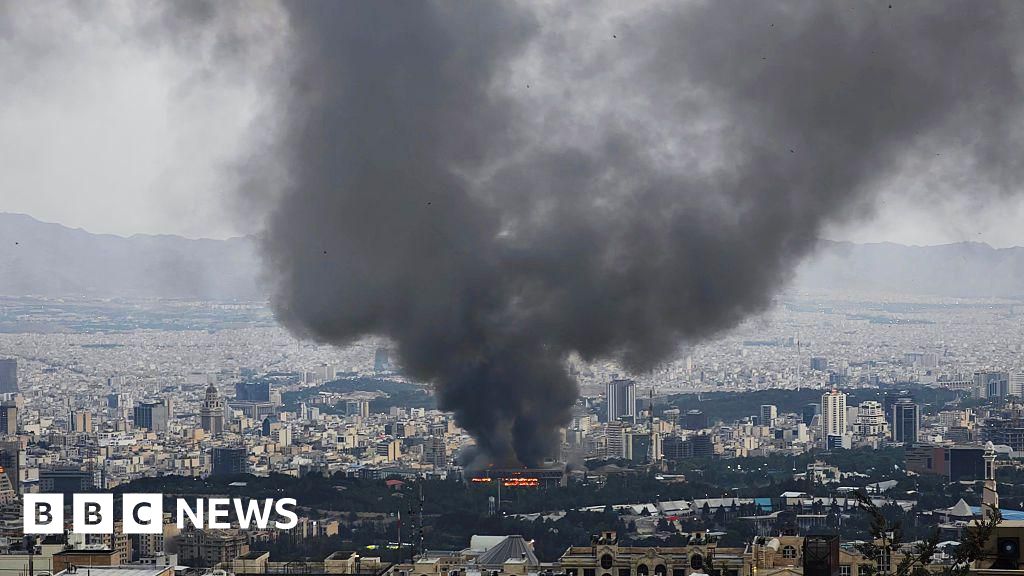
How the world has reacted to US and Israeli strikes on Iran
At an emergency UN Security Council meeting in New York on Saturday afternoon, US Ambassador Mike Waltz said the strikes were “directed toward specific and strategic objectives: to dismantle missile capabilities that threaten allies, to degrade naval assets used to destabilise international waters, and to disrupt the machinery that arms proxy militias and to ensure the Iranian regime, never ever can threaten the world with a nuclear weapon”.

NAACP Image Awards: ‘Sinners’ dominates, BAFTA incident addressed
“Sinners,” the blockbuster film that has been a major contender during awards season, was the dominant winner at the 57th NAACP Image Awards.
The film scored trophies for outstanding motion picture and most of the acting awards, including breakthrough performance, awarded to Miles Caton. Michael B. Jordan, who won for actor in a motion picture, also won entertainer of the year.
Before the ceremony, Ryan Coogler won writing and directing honors, while Wunmi Mosaku and Delroy Lindo won the supporting actress and actor awards, respectively.
But the ceremony was not only about honoring Black excellence in entertainment. The event was also flavored by several remarks from celebrities addressing the divisive political climate and recent events that have targeted and affected Black entertainers.

Viola Davis received the chairman’s award during the 57th NAACP Image Awards on Saturday.
(Chris Pizzello / Chris Pizzello/invision/ap)
Host Deon Cole kicked off the ceremony by welcoming the audience to “the Trump Image Awards. Because you know he wants his name on everything.”
Asking permission to “buy a curse word,” he made a joke that was bleeped out during the live stream, but was apparently aimed at federal ICE agents. The comment sparked a standing ovation from the predominantly black-tie audience, many of whom wore anti-ICE pins.
“I don’t want to see no ICE ever again,” he said. “When I looked at the guest list, I took off Ice Cube, Ice-T, Ice Spice. I don’t want no ice cream, I don’t want no ice in my drink.”
Samuel L. Jackson said in a tribute to the late Jesse Jackson, who died earlier this month, that President Trump’s attacks on diversity and his quest to remove references to slavery and Black history from museums would not succeed.
Utilizing one of Jackson’s trademark slogans, Jackson said, “We will not be erased from this country’s history because I am somebody.”
And in accepting the award for actor in a drama series for “Paradise,” Sterling K. Brown added, “Like Sam said, they can’t erase us because there is no country without us.”
The event also continued to put a spotlight on the uproar surrounding the shouting of a racial slur during the BAFTA Awards last week.
Jordan and Lindo were presenters during the BAFTA Awards, which took place at London’s Royal Festival Hall. As they were introducing the visual effects category, a member of the audience shouted the N-word. The two actors paused momentarily before continuing.

Director Ryan Coogler, left, and actor Delroy Lindo presenting the award for actress in a motion picture. The pair addressed the incident at the BAFTAs in their remarks.
(Chris Pizzello / invision/AP)
Later, awards host Alan Cumming addressed the outburst, referencing the nominated film “I Swear,” which is about Scottish campaigner John Davidson, who has Tourette syndrome and shouted the racist slur from the audience. Cumming apologized, while Davidson, an executive producer for the BAFTA-nominated film, left his seat midway through the ceremony. BAFTA later issued an apology to the actors.
Cole delivered a comic prayer referencing the incident: “Lord, if there are any white men out there with Tourette’s, I advise you to tell them to read the room tonight, Lord. It might not go the way they think.”
Actor Rebecca Hall early in the awards show said she wanted to pay tribute to “two kings. Thank you for your grace.”
Lindo later in the ceremony said, “We appreciate all the support we’ve been shown in the aftermath of what happened last weekend. It is an honor to be here among our people this evening … It’s a classic case of something that could have been very negative becoming very positive.”
Here is a list of the night’s winners:
Entertainer of the year
Michael B. Jordan
Outstanding motion picture
“Sinners”
Actor in a motion picture
Michael B. Jordan, “Sinners”
Actress in a motion picture
Cynthia Erivo, “Wicked: For Good”
Breakthrough performance in a motion picture
Miles Caton, “Sinners”
Drama series
“Reasonable Doubt”
Actor in a drama series
Sterling K. Brown, “Paradise”
Actress in a drama series
Angela Bassett, “9-1-1”
Comedy series
“Abbott Elementary”
Actress in a comedy series
Quinta Brunson, “Abbott Elementary”
Actor in a comedy series
Cedric the Entertainer, “The Neighborhood”
Chairman’s Award
Viola Davis
Hall of Fame Award
Salt-N-Pepa
President’s Award
Colman Domingo
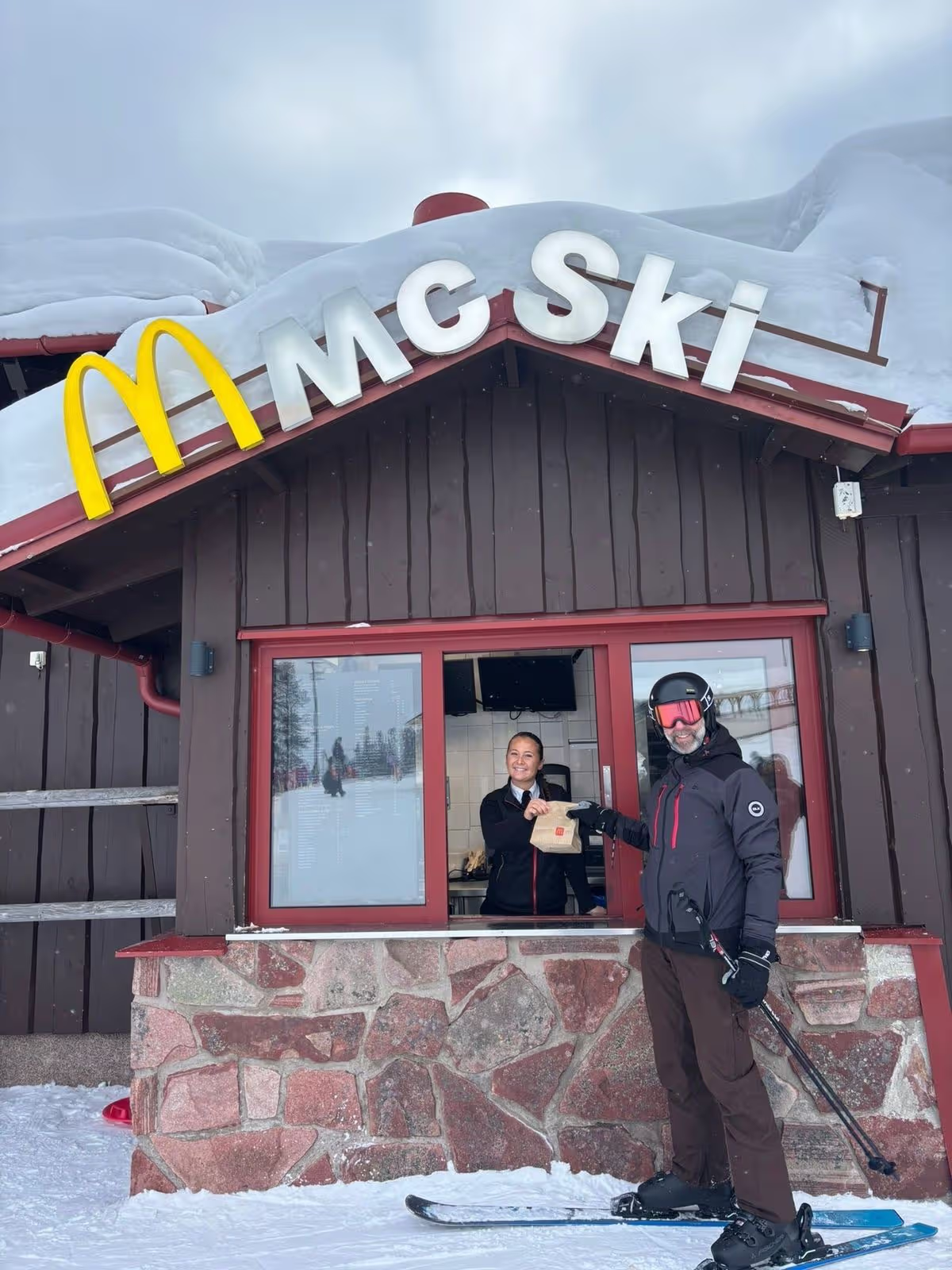
I visited world’s only ski-thru McDonald’s with surprising menu and heated ski lift
This resort has a taste-tempting trick up its sleeve that Jeff never imagined seeing during a recent trip up the mountains – a McDonald’s with the world’s first and only ski-thru window
Visit to the world’s only ski-thru McDonald’s (McSki)
A Swedish ski resort has come up with an unexpectedly unique way to top up your tummy while sliding down the slopes – with the unlikely help of a fast food giant.
Everyone who has been lucky enough to give it a go knows skiing is hungry work. And in minus double-digit Scandinavian temperatures, just the shivering burns enough calories to have you scouring the wintry landscape for lunch, a warm snack or hot drink.
Of course, there are all manner of options and temptations in the cosy or cavernous cafeterias and restaurants up and down the mountain. As I found out during a recent Crystal Ski trip, Lindvallen in western Sweden has another taste-tempting trick up its sleeve that I never imagined seeing during a recent trip up the mountains – a McDonald’s with the world’s first and only ski-thru window. Yes, really.
It might not seem a natural combination, and certainly looks odd. If you didn’t know it was there, you could well do a double-take as you ski down Valletorget’s central slope, look past the Experium Express chair lift, to the right of the vast Experiumtorget base building, and spot that unmistakably familiar structure.
READ MORE: Sun-soaked country just four hours from UK is 2026’s top trending destination for Brits
It’s curious enough to see the famous Golden Arches rising incongruously out of the snow, a dark wood-clad, multi-branded, single-story outlet of the worldwide chain, with full wraparound windows and the unusual addition of foot-deep snow covering the whole roof and rows of ski racks out front.
But the real surprise comes when you clock the outside service window. They’ve even given it a special, slightly tongue-in-cheek name – McSki. Opened in the resort in Sälen in western Sweden 30 years ago, even if you’re not a Maccies fan, it’s surely impossible to resist having a go.
The vast area linking several resorts has just got a lot closer after TUI launched flights direct to Scandinavian Mountains Airport, just a 20-minute transfer away. You don’t get the full drive-thru sister experience – no menu board with speaker station to place your order. But the full menu is available, seen through the glass on the left, when you ski or snowboard up to the sliding window, greeted by the familiarly uniformed McD’s employee smile from their significantly warmer surroundings.
Within minutes, you’re away with anything from just a McCafé coffee and pastry to a full Big Mac meal deal. There are outside tables, or if you don’t want to miss any more time on the piste than necessary, you can jump right back onto the heated seated lift a few yards away and enjoy your snack or lunch on your way back to the top for more.
To be honest, it’s not ideal or as attractive an option in February. When it’s minus 12 to minus 15, little is more welcome than a break indoors with your hands around a steaming coffee, tea or mug of hot chocolate.
But I’d wager a stack of McDonald’s Monopoly pieces that it comes into its own in March and April, when the weather is more suited to dining on the go.
READ MORE: Five beautiful countries that will pay Brits up to £70,000 to move thereREAD MORE: Unspoilt English town with cobbled lanes and independent shops is like stepping back in time
As well as hungry work, skiing is also a pricey pastime (which reminds me, the outlet’s prices roughly match the hike at motorway services in the UK).
So when you want to squeeze every run out of your time on the slopes and not spend ages stripping off multiple layers of garb – or in fact even stepping out of your skis – to satiate your thirst and replenish those calories, a quick stop at McSki might be just the order.
Offered alongside the full normal eat-in experience, McSki certainly brings a whole new meaning to the term fast food – and the Swedes and skiers are clearly lovin’ it.
If a snow-style McDonald’s is not your thing then there are other unique chains around the world. Customers can sit at sophisticated tables by a stunning fireplace while enjoy lobster rolls and McNuggets at this McDonald’s McMansion, in the Maine.
And there is another posh McDonald’s in New York. Fans have been wowed by this old mansion that has been restored and turned into a fancy fast-food eatery with a grand staircase, a glass conservatory, and posh booths to eat in. The historic property was previously home to other restaurants and was also used as a funeral home.
Book it
Crystal Ski Holidays (020 8610 3123) offers a bed and breakfast holiday in Högfjället, Sälen in Sweden, staying at the Sälens Högfjällshotell from £818 per person when booked online. Based on two adults sharing a Superior Twin Room, including flights from London Gatwick to Scandinavian Mountains Airport, transfers and 20kg hold luggage per person.

High school girls water polo: Regional final scores
High school girls water polo scores for the Southern California regional finals on Saturday.
Source link

Watch: 2 rescued after hot air balloon crashes, dangles from Texas cell tower

A hot air balloon crashed and became snagged on a cell phone tower Saturday morning in Longview, Texas. Photo courtesy the Longview Fire Department
Feb. 28 (UPI) — Firefighters in East Texas rescued two people after the hot air balloon they were traveling in struck a cell phone tower and left them stranded, local officials said.
In a Facebook post, the Longview Fire Department said the incident happened around 8:15 a.m. in north Gregg County. Neither of the occupants were injured.
After the balloon hit the cell tower, it became stuck about 920 feet in the air.
“Climbing operations began around 8:50 a.m. using multiple rope systems due to the extreme height and complexity of the incident,” the post said.
The rescuers reached the balloon occupants around 10 a.m. and both were brought to the ground.
Longview is about 130 miles east of Dallas and 65 mile west of Shreveport, La.

Dubai airport chaos: Emirates confirms when flights will resume as Brits scramble to flee
Airlines serving the Middle East cancelled or diverted a large number of flights on Saturday in the wake of US and Israeli airstrikes against on Iran – Emirates have issued an update

Many passengers are facing delays or cancelled flights to UAE(Image: Anadolu via Getty Images)
Thousands of holidaymakers have been left stranded after aviation giant Emirates axed all flights in and out of Dubai on Saturday.
The ongoing situation in Iran and the Middle East has lead to multiple regional airspace closures over Dubai.
Emirates issued a “red alert” suspension lasting until at least 3pm local time Sunday. The carrier is “actively monitoring” the high-stakes situation as authorities scramble to manage the unfolding crisis. While safety remains the “highest priority,” the move has sparked travel mayhem for those caught in the crossfire.
Airlines serving the Middle East cancelled or diverted a large number of flights on Saturday in the wake of US and Israeli airstrikes against on Iran. British Airways, Virgin Atlantic and Wizz Air were among carriers to scale back their schedules to destinations in the Middle East, citing safety concerns.
READ MORE: WW3 mapped as US and Israel launch strikes on IranREAD MORE: Ayatollah Ali Khamenei’s daughter, son-in-law, and grandchild reportedly killed in airstrikes
Ensure our latest headlines always appear at the top of your Google Search by making us a Preferred Source. Click here to activate or add us as your Preferred Source in your Google search settings.
Taking to X an Emirates spokesperson said: “Due to multiple regional airspace closures, Emirates has temporarily suspended all operations to and from Dubai, up until 1500hrs UAE time on Sunday, 1 March. If you are booked to travel in the next 72 hours, your options are:
“Rebook on an alternate flight. You can rebook on another flight to your intended destination up to 10 days from your original date of travel. If you booked your flight with a travel agent, please contact them. If you booked with us directly, contact us.
“Request for refund. You can request for a refund of your ticket by completing the refund form if you booked with us directly. If you booked your flights with a travel agent, please contact them. We urge all customers to check flight status before proceeding to the airport. Customers impacted by flight cancellations must contact their travel agency for rebooking.
“If booked directly with Emirates, please contact us. Customers are requested to ensure their contact details are correct by visiting http://emirat.es/managebooking to receive updates We are actively monitoring the situation and engaging with relevant authorities. We apologise to customers affected by disruptions for any inconvenience caused. The safety and security of our passengers and crew remain our highest priority.”
The update comes in the wake of confirmation from Iran’s state broadcaster that Supreme Leader Ali Khamenei was killed in the early hours Sunday local time in US and Israeli aristrikes.
Follow our live blog for the latest travel updates by clicking here.
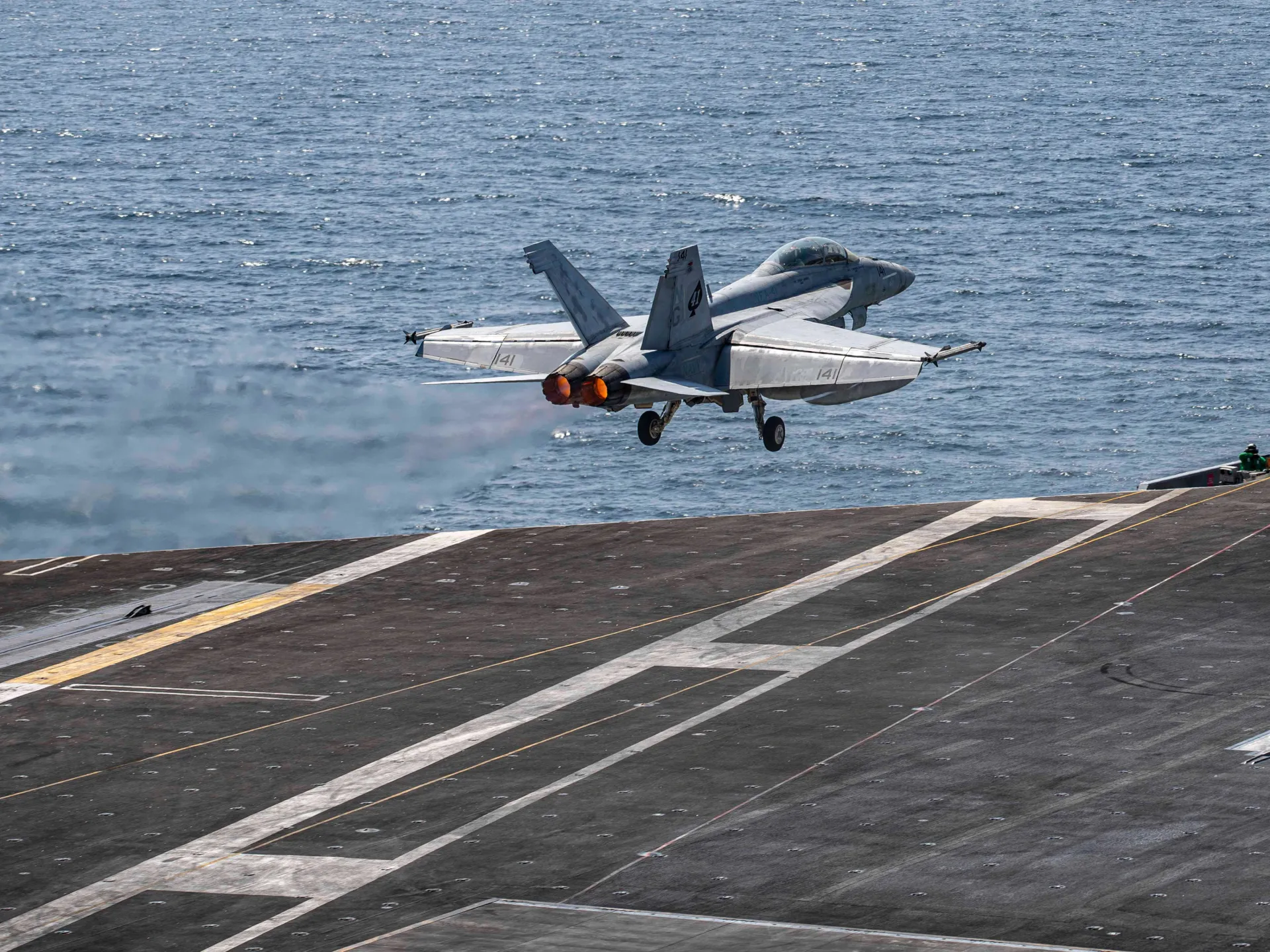
Netanyahu’s war? Analysts say Trump’s Iran strikes benefit Israel, not US | Donald Trump News
President Donald Trump stood in front of regional leaders during a visit to the Middle East in May and declared a new era of US foreign policy in the region, one that is not guided by trying to reshape it or change its governing systems.
“In the end, the so-called nation-builders wrecked far more nations than they built, and the interventionists were intervening in complex societies that they did not even understand themselves,” the US president said in rebuke of his hawkish predecessors.
Recommended Stories
list of 3 itemsend of list
Less than a year later, Trump ordered an all-out assault on Iran with the stated goal of bringing “freedom” to the country, borrowing language from the playbook of interventionist neoconservatives, like former President George W Bush, whom he spent his political career criticising.
Analysts say the war with Iran does not fit with Trump’s stated political ideology, policy goals or campaign promises.
Instead, several Iran experts told Al Jazeera that Trump is waging a war, together with Israel, that only benefits Israel and its prime minister, Benjamin Netanyahu.
“This is, once again, a war of choice launched by the US with [a] push from Israel,” said Negar Mortazavi, a senior fellow at the Center for International Policy in Washington, DC.
“This is another Israeli war that the US is launching. Israel has pushed the US to attack Iran for two decades, and they finally got it.”
Mortazavi highlighted Trump’s criticism of his predecessors, who had waged regime-change wars in the region.
“It is ironic, because this is a president who called himself the ‘president of peace‘,” she told Al Jazeera.
History of warnings of the Iranian ‘threat’
Netanyahu, who promoted the 2003 US invasion of Iraq, has been warning for more than two decades that Iran is on the cusp of acquiring nuclear weapons.
Iran denies seeking a nuclear bomb, and even Trump administration officials have acknowledged that Washington has no evidence that Tehran is weaponising its uranium enrichment programme.
After the US bombed Iran’s main enrichment facilities in the 12-day war in June last year – an attack that Trump says “obliterated” the country’s nuclear programme – Netanyahu pivoted to a new supposed Iranian threat: Tehran’s ballistic missiles.
“Iran can blackmail any American city,” Netanyahu told pro-Israel podcaster Ben Shapiro in October.
“People don’t believe it. Iran is developing intercontinental missiles with a range of 8,000km [5,000 miles], add another 3,000 [1,800 miles], and they can get to the East Coast of the US.”
Trump repeated that claim, which Tehran has vehemently denied and has not been backed by any public evidence or testing, in his State of the Union address earlier this week.
“They’ve already developed missiles that can threaten Europe and our bases overseas, and they’re working to build missiles that will soon reach the United States of America,” he said of the Iranians.
Trump has been building the case for a wider war with Iran since the June conflict, repeatedly threatening to bomb the country again.
But the US president’s own National Security Strategy last year called for de-prioritising the Middle East in Washington’s foreign policy and focusing on the Western Hemisphere.
Meanwhile, the US public, wary of global conflict after the wars in Iraq and Afghanistan, has also been largely opposed to new strikes against Iran, public opinion polls show.
Only 21 percent of respondents in a recent University of Maryland survey said they favoured a war with Iran.
The first day of the war saw Iran fire missiles against bases and cities that host US troops and assets across the Middle East in retaliation for the joint US-Israeli strikes, plunging the region into chaos.
Trump acknowledged that US troops may suffer casualties in the conflict. “That often happens in war,” he said on Saturday. “But we’re doing this not for now. We’re doing this for the future. And it is a noble mission.”
‘Ignoring the vast majority of Americans’
The Trump administration had appeared to step back from the brink of conflict earlier this month by engaging in diplomacy with Tehran.
US and Iranian negotiators held three rounds of talks over the past week, with Tehran stressing that it is willing to agree to rigorous inspections of its nuclear programme.
Omani mediators and Iranian officials had described the last round of negotiations, which took place on Thursday, as positive, saying that it yielded significant progress.
The June 2025 war, initiated by Israel without provocation, also came in the middle of US-Iran talks.
“Netanyahu’s agenda has always been to prevent a diplomatic solution, and he feared Trump was actually serious about getting a deal, so the start of this war in the middle of negotiations is a success for him, just like it was last June,” Jamal Abdi, the president of the National Iranian American Council (NIAC), told Al Jazeera.
“Trump’s embrace of regime change rhetoric is a further victory for Netanyahu, and loss for the American people, as it suggests the US may be committed to a long and unpredictable military boondoggle.”
While announcing the strikes on Saturday, Trump said his aim is to prevent Iran from “threatening America and our core national security interests”.
But US critics, including some proponents of Trump’s “America first” movement, have argued that Iran – more than 10,000km (6,000 miles) away – does not pose a threat to the US.
Earlier this month, US Ambassador to Israel Mike Huckabee told conservative commentator Tucker Carlson that “if it were not for Iran, there wouldn’t be Hezbollah; we wouldn’t have the problem on the border with Lebanon”.
Carlson said, “What problem on the border with Lebanon? I’m an American. I’m not having any problems on the border with Lebanon right now. I live in Maine.”
On Saturday, Congresswoman Rashida Tlaib stressed that the US public does not want war with Iran.
“Trump is acting on the violent fantasies of the American political elite and the Israeli apartheid government, ignoring the vast majority of Americans who say loud and clear: No More Wars,” Tlaib said in a statement.
Brit Awards 2026 is slammed by viewers over ‘pathetic’ In Memoriam segment
BRIT Award viewers were left fuming after the show’s In Memoriam segment – blasting it as “a pathetic attempt”.
On Saturday night’s show, The Charlatans musician Tim Burgess was brought on stage to lead the In Memoriam tributes, leading on the loss of his close friend, Gary ‘Mani’ Mounfield of The Stone Roses and Primal Scream, who died in November.
However, the artist struggled to say his speech, simply referring to “Mani” which some viewers thought to mean Manchester, or not recognising who he was referring to.
A videotape then played, showing the name of dozens of stars who have passed across the past year, flashing on screen briefly as a select number of artists were played in the background.
But fans were left less-than-pleased at how quickly the segment ran, before the show cut to an ad break.
Complaining to X (formerly Twitter), one fan wrote: “What a pathetic memoriam to artists who had passed away last year.


“Surely you could have made more time to show Mike Peters (a Welsh Brit) and also Rick Buckler of The Jam (another Brit) and a great drummer of his generation.”
“That tribute to all artists that have passed over this year was laughable,” wrote another.
“Wow! One of the worst ‘In Memoriam’ I have ever seen,” noted a third.
“What on earth was that all about #Brits2026 ?” complained a fourth. “I’m talking about those who lost their lives in the last year – that was disrespectful to many of those who passed.”
While a fifth wrote :”Putting the In Memorial names up quicker than anyone can read them. Poor show Brits, poor show #Brits2026″
“Whose idea was that In Memorial section? Blink and you’ve missed it – must get the adverts in….” wrote a sixth.
While on stage, Sturgess told the crowd at Manchester’s Co-Op Arena: “Hi everyone, I’m here tonight to pay tribute to my good friend. Mani changed music and inspired generations ahead of him. These songs he recorded will be his legacy.
“He was truly one of the phenomenal ones. I’d like you to think about Mani for a moment and we can cherish the thought that we got to experience our time and his time together.
“Let’s take a few moments to remember Mani.”
While the In Memoriam segment may have been lacking, the awards show was filled with tributes to artists loved and lost.
Most notably, Ozzy Osbourne was posthumously awarded the Lifetime Achievement Award, with wife Sharon and daughter Kelly collecting the award on his behalf.
Robbie Williams then led a performance of Black Sabbath track No More Tears, joined by Ozzy’s Black Sabbath bandmates.
Mark Ronson also dedicated his award of Outstanding Contribution to Music to the late Amy Winehouse, without whom “noone would know who he is.”
His performance medley of his tracks also included recordings of the singer, who died in July 2011 at the age of 27.
He also commented that March marks the 20th anniversary of he and Amy working together on her iconic album, Back to Black.
The Brit Awards are available to watch now on ITVX.
USC men routed by Nebraska after building halftime lead
Another winnable game was slipping away, another frustrating performance by USC unraveling in painfully familiar fashion, when Jaden Brownell lifted up from the corner for a wide-open three-pointer, offering a split-second of hope in an otherwise hopeless second half.
But the shot clanked away. A collective sigh from the cardinal-and-gold faithful rippled through Galen Center, only to be swallowed up seconds later when Nebraska’s Pryce Sandfort, who finished with 32 points, knocked down a three-pointer of his own. That’s when USC’s own arena exploded with a deafening Big Red roar, loud enough to make you forget you were in Los Angeles — or that these lifeless Trojans had once looked like a real NCAA tournament team.
There were still more than nine minutes remaining after that in Saturday’s brutal 82-67 loss, though that roar from the Nebraska faithful might as well have been the exclamation point. Whether it becomes the punctuation mark on a frustrating second season for USC under coach Eric Musselman was still to be determined.
The Trojans have lost five consecutive games as of Saturday and sit in a tie for 11th in the Big Ten. They still have two regular-season games remaining to bolster their middling tournament resume, both of which they can ill afford to lose.
A midweek matchup at Washington looms especially large. A loss to the Huskies, who are 14-15, would make climbing back from the bubble brink especially harrowing. A rivalry rematch awaits after that against UCLA.
“I still think we could have a successful season,” forward Terrance Williams II said Saturday . “I had that positive mindset coming into the season. I still have that positive mindset. The season’s not over. … We can change the trajectory of the season very quickly.”

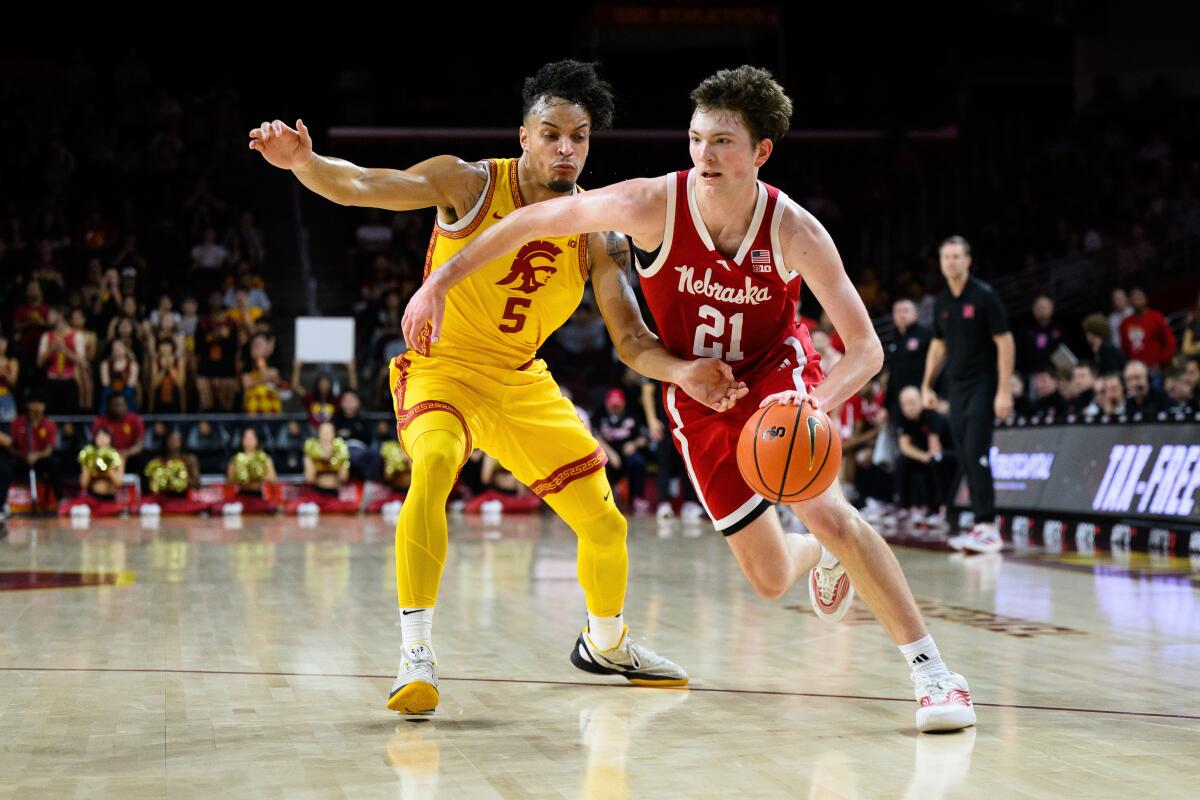
Nebraska forward Pryce Sandfort (21) drives past USC forward Terrance Williams II (5) during the first half Saturday.
(William Liang / Associated Press)
Nothing, though, about Saturday’s second half suggested USC was poised for positive change.
The Trojans positioned themselves in the first half to make a very different statement Saturday. They took advantage of foul trouble from Nebraska point guard Sam Hoiberg and led by five points at halftime. Chad Baker-Mazara had already poured in 14 points, and they barely needed freshman Alijah Arenas, who was left out of the starting lineup and played only nine minutes.
“They had belief,” Musselman said.
Yet after shooting 52% from the field in the first half, the Trojans were suddenly unable to find the target in the second. For the first five minutes of the half, a dunk from Jacob Cofie was USC’s only basket. During another five-minute stretch in the second half, USC couldn’t even manage a dunk.
Its issues only got worse when Baker-Mazara fell hard trying to block a lay-in. He didn’t play the rest of the game, as Musselman said Baker-Mazara told the staff he was unable to go.
“They played great in the second half,” Musselman said, “and we did not play very good.”

The Trojans didn’t fare much better on the glass, either, as Nebraska more than doubled USC’s total rebounds (22 to 10) after halftime.
The defense followed suit, with Nebraska piling up points in the paint at will. Sixteen of the Huskers’ first 20 points in the second half came on either dunks or lay-ins as USC’s defense lacked any semblance of urgency.
“I feel like they came out with more energy to be honest,” Williams said. “The first couple possessions, you could see it. They wanted it more than we did.”
How that’s still the case, after several similarly frustrating second halves this season, is still unclear.
“Second halves, they’re hard,” Brownell said. “We have to accept that and get ready quicker in the locker room, get our mental right and then come in and be ready.”
But with the Trojans on the very brink of the tournament bubble, time is quickly running out on that possibility.
Iranian Ambassador to UN calls US-Israeli attacks a ‘war crime’ | Israel-Iran conflict
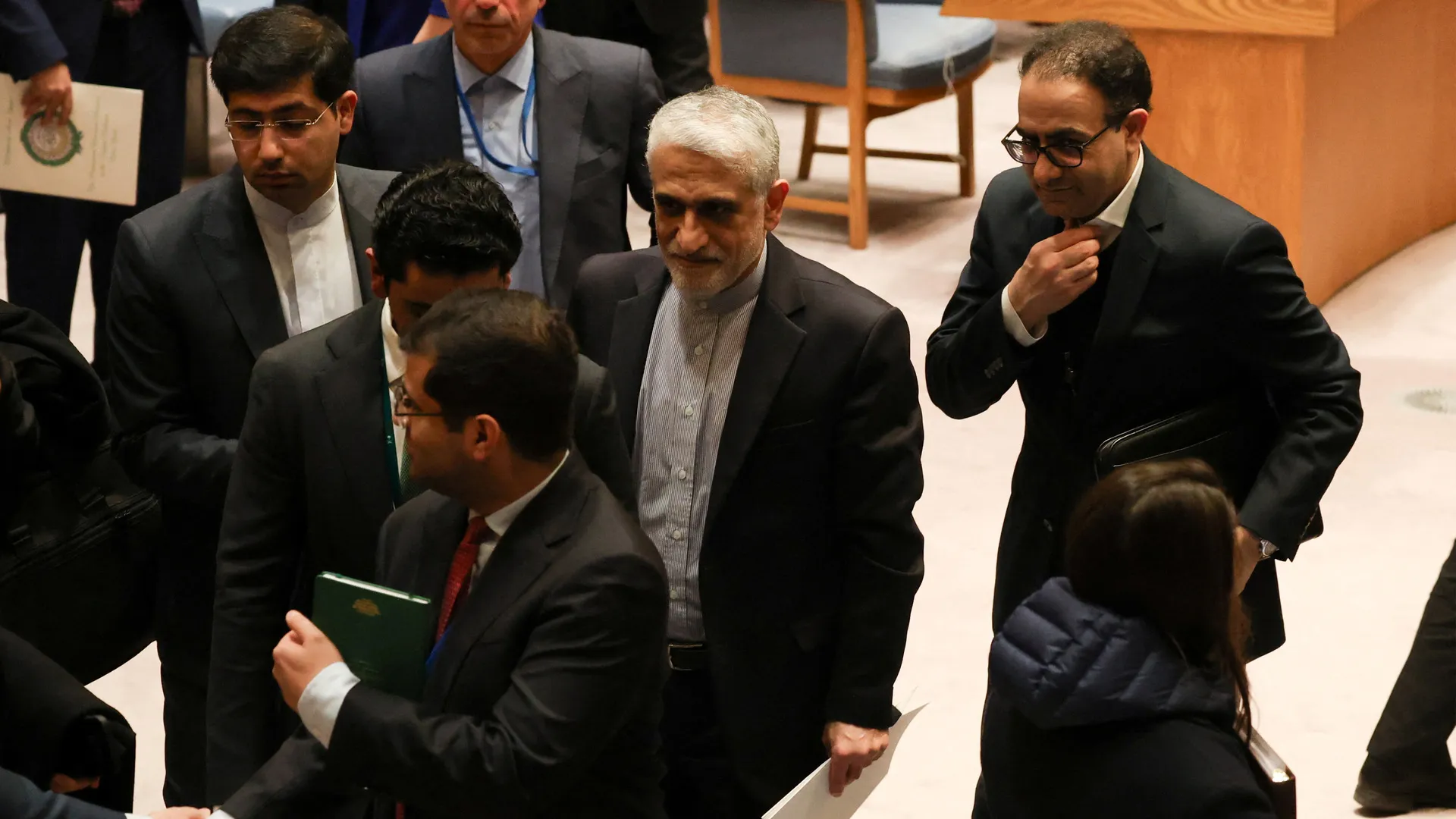
Iranian Ambassador to the United Nations, Amir-Saeid Iravani denounced US-Israeli military strikes across the country, decrying the deaths and injuries of hundreds of civilians as a war crime.
Published On 1 Mar 2026
US strikes on Iran lead to renewed demands for war powers legislation | Donald Trump News
Democratic lawmakers have largely condemned the strikes on Iran, emphasizing the lack of congressional approval.

Published On 1 Mar 2026
Lawmakers from the Democratic Party have condemned the US attacks on Iran as a “dangerous” and “unnecessary” escalation, and called on the Senate to immediately vote on legislation that would block the president’s ability to take further military action without congressional approval.
Senator Tim Kaine, a member of the Senate Armed Services and Foreign Relations Committees and the primary author of the war powers resolution, called President Donald Trump’s order to attack Iran a “colossal mistake”.
Recommended Stories
list of 3 itemsend of list
“The Senate should immediately return to session and vote on my War Powers Resolution to block the use of US forces in hostilities against Iran,” Kaine said in a statement on Saturday. “Every single Senator needs to go on the record about this dangerous, unnecessary, and idiotic action.”
House of Representatives Minority Leader Hakeem Jeffries echoed Kaine, saying that House Democrats are committed to forcing a floor vote on a measure to restrict Trump’s war powers regarding Iran.
“Donald Trump failed to seek Congressional authorisation prior to striking Iran. Instead, the President’s decision to abandon diplomacy and launch a massive military attack has left American troops vulnerable to Iran’s retaliatory actions,” he said in a statement. “The Trump administration must explain itself to the American people and Congress immediately.”
The push for a legislative check on Trump’s executive power has gained significant bipartisan momentum in the Senate, of which the Republican Party maintains a slim majority.
Senate Minority Leader Chuck Schumer demanded on Saturday that Congress be briefed immediately about the Iran attacks, including an all-senators classified session and public testimony, criticising the administration for not providing details on the threat’s scope and immediacy.
“The administration has not provided Congress and the American people with critical details about the scope and immediacy of the threat,” he said in a statement.
Senator Mark Warner, vice chairman of the Senate Select Committee on Intelligence, described the strikes in a statement posted on X as “a deeply consequential decision that risks pulling the United States into another broad conflict in the Middle East”.
He questioned the urgency and intelligence behind the attack, warning of repeating “mistakes of the past”, like the Iraq war.
“The American people have seen this playbook before – claims of urgency, misrepresented intelligence, and military action that pulls the United States into regime change and prolonged, costly nation-building,” he said.
Not just Democrats
While the push to curb executive military authority is largely driven by the Democratic caucus, a growing contingent of Republican lawmakers has signalled a rare break from the White House to join the effort.
Republican representative Thomas Massie, one of the most outspoken critics, described the strikes as “acts of war unauthorised by Congress”.
“I am opposed to this War. This is not America First,” he wrote on X.
In the Senate, Republican Senator Rand Paul, who also co-sponsored the war powers resolution, said his opposition to the war is based on constitutional principles.
“My oath of office is to the Constitution, so with studied care, I must oppose another Presidential war,” he said on X.

Gorillaz’s new album ‘The Mountain’ focuses on death. Here’s why
It’s a Wednesday afternoon in West Hollywood, one day after the city was blanketed in a light coating of rain. The midday sun has only just begun to peek through the overcast sky.
Its beams are slightly more vivid through the large windows of the Edition, which sit at the edge of a secluded area of the hotel. Jamie Hewlett sits at a wooden table stirring a cappucino with a black straw.
“I mean, who drinks out of a straw when you get past the age of 10, right?” he says, jokingly. After 25 years of bouncing around the globe with Gorillaz, he’s still longing for a jet lag cure. Coffee can only do so much.
Leaning back in his chair, in a suave, all-beige outfit, he starts to grin while recounting his day in Los Angeles.
“We’ve been walking around the streets having a very rare morning off together. We bought some weed, which is always one of the most wonderful things about this state,” he recalls.
He also finds humor in L.A.’s obsession with driver-less food delivery.
“Every time we saw a post-bot driving down the road, we stopped and doffed our caps. … In the future, when robots take over and destroy us all, they’ll remember me for being nice to the post-bot!”
It’s been a long few weeks for Hewlett and bandmate Damon Albarn as they roll out the group’s latest endeavor, “The Mountain,” out Friday. Just one day prior, “House of Kong” opened at Rolling Greens in downtown L.A. The exhibition, initially intended as a Gorillaz 25th anniversary event, has landed on the West Coast.
“I think with this album, we were both quite happy with what we’ve done … and feeling like it was an honest, genuine adventure that was taken, and what we’ve given is something that we’re proud of,” Hewlett says.
He and Albarn are also artists at heart and in nature. It’s why Gorillaz continues to look and sound the way it does, and why the group is consistently pushing the agenda of how a nonexistent band can still resonate with a group of fans who are very much alive.
“The process, the research, the putting it together, the making of it is really fun, and the delivery of it is kind of like a mini death syndrome,” he says. “What you’re required to do is get straight on to the next thing, and you won’t have any time to waste thinking about the fact that the completion of that left you feeling numb, because then you’re excited about the next project.”
He adds that Albarn, similarly, is like a “kid in a sweet shop” when he’s making music: “The moment it’s finished, there’s no interest in discussing it.”
Even so, the album is undeniably their most intimate in recent history.
Perhaps it’s something to do with the experience of grief that the two lived through, losing their fathers only 10 days apart and just before a trip to India. Or maybe it’s a testament to the process behind “The Mountain,” which saw Hewlett and Albarn travel the country, spending more time together there than during previous album productions.
“It’s weird, because I’m born 10 days after Damon… the idea presented itself, and at that point we were going down that road, and there was no avoiding it… It wasn’t even necessarily going to be a Gorillaz project; ‘Let’s go together and see what happens.’ ”

“I completely fell in love with the place and got into their whole concept of death,” Hewlett says of India.
(Blair Brown)
Hewlett says the album was also inspired by his late mother-in-law, Amo, who was diagnosed with cancer in 2010 and opted for Eastern medicine instead of chemo.
“She said, ‘No, I’m going to India.’ … She was into Ayurveda medicine and knew this doctor, and she spent three months in India [being treated]. When she came back, her cancer had gone. In France, they call her in for a checkup, and they give her a scan. They say, ‘Where’s your cancer gone?’ She said, ‘I’ve been in India,’ and they say, ‘We don’t believe in that.’ ”
It wouldn’t be until 2022 when Jamie visited India himself, under unfortunate circumstances. He was in Belgrade with Albarn shooting the second video from “Cracker Island” when he received a call from his brother-in-law, who said that Amo had just had a stroke.
“They said they saved her, but she went into a coma. I was on a plane to India as quickly as I could get a visa, which wasn’t easy at the Indian Embassy in London,” he said. “I spent eight weeks with my wife, Emma, in Jaipur, dealing with that, in a public hospital during a pneumonia epidemic… having that experience that was traumatic; it should have been a reason for me to never go back to India ever again.”
But during his time there, it became clear that being in the country had the opposite effect on him.
“I completely fell in love with the place and got into their whole concept of death. … We met a lot of families who became friends of ours because we were at the hospital every day,” he continued.
“A loved one who was dying, who was in tears because they knew they were going to die, but also there was a celebration about the fact that they were coming back,” he said. “Their understanding of the cycle of life is a lot more appealing to me.”
Shortly after, Hewlett returned to Europe and went straight to Albarn with an idea: “I said, ‘We have to go to India, it’s so amazing,’ and of all the places he’d been around the world, that was the place he still hadn’t been. So we decided to go.”

Albarn first visited India in May 2024 alongside Hewlett.
(Blair Brown)
“The Mountain” is, as expected, heavily doused with notions on the concept of death. Inevitably, the question arose: “How can we make an album about death that would leave the listener feeling optimistic?”
But Gorillaz has always been a group entwined with different, equally heavy topics. On “Plastic Beach,” they tackle the climate crisis and human extinction. The enchanting and rhythmic “Dirty Harry” also examines war and soldiers, with its single cover even giving a nod to Stanley Kubrick’s “Full Metal Jacket.”
The tone Gorillaz achieved on “The Mountain” is an extension of that.
“The Happy Dictator,” released as the lead single in September, parodies megalomaniac Saparmurat Niyazov’s approach to governing in Turkmenistan. As Sparks produce stunning vocals, singing “I am the one to give you life again,” Gorillaz fictional frontman 2-D (voiced by Albarn) breaks in to pronounce, “No more bad news!”
Equally as enjoyable is “The God of Lying,” the third single released, featuring Idles. Joe Talbot hauntingly asks, “Do you love your blessed father? / Anoint by fear of death / Do you feel the lies creep on by? / As soft as baby’s breath.” It’s a bouncy song that could have been pulled straight out of the band’s self-titled debut, all the way back from 2001.
Even so, it feels criminal to compare it with the band’s earlier catalog, given that Hewlett and Albarn are artists in “perpetual motion.” This has resulted in some of their most sonically and visually impressive work — with styles and genres consistently shifting — but also asks the listener to be willing to evolve with them.
“I think art has to be an evolution,” Hewlett explains. “I know what David Hockney does at 88 years old, still smoking and drinking his red wine. He wakes up every day … and he does something new, and then the next day he does something new, and that promotes longevity. He’s never bored.”
Gorillaz’s exhibition in “House of Kong” seems to be contradictory in its existence, more or less serving as a retrospective from a band that not only doesn’t like to look in the rearview, but likely has it taped over altogether.
But it’s also an organic experience, teeming with originality, despite its familiar marketing as an “immersive experience.” It’s more comparable to something out of a Disney or Universal theme park than another gallery that merely projects video onto a wall.

“Down here at Kong, we are creating something that … only really existed in Jamie’s drawings and animations and in the minds of the fans of Gorillaz,” says Stephen Gallagher of Block9. He served as creative director on the project but has worked with the band since 2018 and previously collaborated with Banksy for his “The Walled Off Hotel” and “Dismaland.”
“I’d had this idea already: ‘What about if we built a film studio, and then you could do a backstage tour, and you’re seeing behind the scenes of the making of all of these music videos?’ ” he continued. “Then that evolved, and it became the ‘House of Kong.’ ”
As for why the exhibition landed in L.A. for its second showing, Hewlett compares the city to Shanghai when it was “still free and decadent and swinging.”
“I love L.A. … I love it. I’ve been coming here since I was 19 years old. … L.A. might be the last one [showing], to be honest,” he says. “All that stuff in the exhibition belongs to me; this is part of my lifelong collection of weird s—!”
“I’d love to get it back at some point,” he jokes.

How Guehi & Dias partnership shone against Leeds
Match of the Day pundits Alan Shearer and Ashley Williams look at Marc Guehi’s impressive partnership with Ruben Dias in Manchester City’s 1-0 win at Leeds.
Source link

New Yorkers protest US strikes on Iran | Newsfeed
New York City residents converged on Times Square on Saturday hours after US President Donald Trump ordered a wave of deadly strikes on Iran. Mayor Zohran Mamdani called the strikes “a catastrophic escalation in an illegal war of aggression”.
Published On 1 Mar 2026