



Ian Ellis-Jones Has Touched Down At TWZ
I wanted to give an official welcome and formally introduce Ian Ellis-Jones (@ianellisjones) to our audience!
Ian is coming on as our head of audience development, a critical position for the present and the future of TWZ. This will include executing a full-spectrum social media strategy, being master of ceremonies for our incredible comments section, and bringing his fantastic interpretive graphics skills to our editorial team. The latter will include establishing a new section on TWZ’s homepage under a segment called Actionable Intel.
Actionable Intel will feature short-form content that will be graphic-driven. This will include charts of deployed forces, such as our new capital ship tracker, as well as satellite imagery analysis and more. In other words, Ian will be bringing a whole new kind of storytelling to TWZ that is quicker to consume and visually focused.
To give you an idea of how talented Ian is at graphical representations of complex things, check out his Epic Fury battle map:
A little bit about Ian:
Ian is a social media strategist and OSINT analyst and researcher. Before joining TWZ, he was the creator of IEJ Media, a national security-focused media brand, where his work appeared in various publications including The Wall Street Journal, The Economist, Fox News, Newsweek, Task and Purpose, and more. Prior to entering the defense media space, he was an investment banker at Goldman Sachs where he worked with Technology, Media, and Telecom clients.
Ian is replacing Kyle Gunn for the social media and commenting section moderation side of things. Kyle is now the host of Task and Purpose‘s YouTube channel. He is an incredible guy, and we will miss him.
Also, just as a programming note, we are continuing to expand our YouTube operation with a mix of new content, the flagship of which is our Special Access series of on-location, hands-on reporting, hosted by our Jamie Hunter. We hope to transition this out of the pilot stage and into serialized production soon. Please be sure to follow us on YouTube. There is a lot of great content over there and much more impressive additions coming, including entirely new segments that could feature some of the names you see around here daily.

Private F-5 Adversaries Take The Fight To Navy Fighter Pilots
In addition to X and Facebook, where TWZ has always been, be sure to also check out our Instagram, LinkedIn, and Bluesky accounts, where Ian will be sharing more of our stories.
We are also in the process of making some other key hires as TWZ continues to expand and evolve. A subscription option is also finally on the horizon. More to come on all this and more soon.
Finally, I am so busy that I am not able to interact as much as I would like. This is one drawback of the growth we have seen while still maintaining a small and agile team that has been absolutely crushed by the wave after wave of major news events. But it is important for me to tell you how thankful I am to all of you for reading, sharing, commenting, and reaching out to us directly. On my worst, most tired day doing this crazy job in this place we all built together, I pinch myself. That I am able to do this, with this team, with this level of editorial independence, and in our unique voice, is truly unprecedented in the modern media landscape.
Thank you all for your continued support.
Contact the author: Tyler@twz.com

Kanye West’s comeback show at SoFi Stadium: Here’s what happened
On the first night of Passover, Ye — the superstar rapper, the artist formerly known as Kanye West, the man who once threatened in a tweet to go “death con 3 On JEWISH PEOPLE” — performed for what looked like a full house at Inglewood’s SoFi Stadium.
The first of a pair of Ye concerts this week at the gigantic NFL palace, Wednesday’s show came two months after the 48-year-old musician apologized for his past antisemitic comments, attributing his behavior to injuries he sustained in a 2002 car crash.
More to the point, perhaps, the gig came on the heels of last week’s release of “Bully,” Ye’s first solo LP since 2022’s “Donda 2,” which the trade journal Hits predicts will enter the album chart at No. 2, right behind the latest from BTS.
In other words, Ye’s trying to get a comeback going — and, to judge by the very warm reception he got at SoFi, he might prove successful.
Wednesday’s concert — Ye’s first full live performance in Los Angeles since a 2021 gig at the L.A. Memorial Coliseum — lasted about two hours and featured guest appearances by Don Toliver and Ye’s 12-year-old daughter, North.
The rapper performed atop an enormous dome set up on the stadium’s floor; for much of the night, a spinning globe was projected onto the dome so that Ye looked to be — well, on top of the world is how he might’ve put it.
Early in the set, Ye asked his technical crew to “make the earth move slower,” which somebody made happen.
Accompanied by what sounded like prerecorded backing tracks, Ye opened with a handful of songs from “Bully,” which seeks a middle ground between the soulful, sample-heavy sound of his early work and the gloomier, synthed-up vibe of more recent records like “Donda” and his and Ty Dolla Sign’s “Vultures 1” and “Vultures 2.”
After an extended version of the new album’s “All the Love,” he reached back for an assortment of oldies, including all-timers like “Father, Stretch My Hands, Pt. 1,” “Mercy,” “Black Skinhead” and “Can’t Tell Me Nothing,” which he stopped and restarted after telling the crew to mute the music during the song’s line about getting his money right so that he could hear the crowd join in.
He also did his and Jay-Z’s collaborative 2011 hit — the one whose title contains the N-word — which made you think about how he and his old frenemy are both mounting comebacks at the same time, Jay-Z as a kind of retiree’s victory lap and Ye in hopes of moving past a mess of his own making.
Other classics Ye performed included “Bound 2” and “Heartless,” to name two of his most emotionally potent songs, though thick smoke in the stadium made it hard to feel a sense of connection with him as he moved back and forth atop the dome.
Ye brought out Don Toliver to perform “Moon” and Toliver’s “E85,” then cycled again through the “Bully” tracks he’d done earlier. North West came out to perform “Talking” and “Piercing on My Hand,” after which Ye did his and Ty Dolla Sign’s “Everybody,” which prominently samples the Backstreet Boys’ “Everybody (Backstreet’s Back).”
Then he finished with a sprint through some of his most beloved hits: “All Falls Down” into “Jesus Walks” into “Through the Wire” into “Good Life,” which he restarted several times because he said the lights were “corny.”
“Is this like an ‘SNL’ skit or something?” he asked when nobody made the changes he was looking for.
Ye ended the show with “All of the Lights,” which got a huge pryo display, and “Runaway,” his epic 2010 warning to anyone foolish enough to consider falling in love with him.
“Run away fast as you can,” he sang, and the crowd roared right along.

Cornwall’s ‘most beautiful’ village with unmatched views and Michelin Guide food
This stunning Cornish village is a must-visit destination with breathtaking views, award-winning Michelin Guide dining, and a vibrant community spirit

This stunning Cornish village is a must-visit destination with breath-taking views, award-winning Michelin Guide dining, and a vibrant community spirit(Image: GordonBellPhotography via Getty Images)
We won’t describe this village as a ‘hidden gem’ because its gloriously stylish existence is hardly a secret – in fact, its appeal among the wealthy and well-known only adds to its elusive allure. Nestled snugly at the very tip of a breathtaking peninsula, when we say the vistas stretching out from this hamlet are unrivalled – we mean every word.
If the promise of extraordinary views isn’t sufficient to tempt you into paying a visit, there’s a wealth of further attractions to consider: fresh locally-sourced produce, Michelin guide restaurants serving world-class cuisine, a spectacular waterfront setting and a vibrant community spirit in abundance. All of this and more make the fishing village of St Mawes in Cornwall a certified must-visit destination.
Situated at the furthest point of the Roseland Peninsula, this jewel in South Cornwall ranks among Britain’s most coveted holiday spots, frequently earning the nickname ‘the St Tropez of England ‘. It has everything you could possibly desire in a short break – a crystal-clear cove with waters reminiscent of the Caribbean, charming and colourful cottages brimming with seaside character, eateries impressive enough to leave you in a food coma, and the ribbon topping off an already remarkable package – a castle.
It comes as little shock, then, that The Times recently named it among the ‘most beautiful places to visit’ in England. What is shocking is that it hasn’t yet been completely swamped with tourists – unlike St Ives or Padstow – and that’s likely due to its remote location, which takes time to reach.
Getting to this Cornish village isn’t impossible by any stretch, though – a picturesque car ferry or 40-minute journey from St Austell or Truro will transport you there with ease, reports the Express.
What makes the seaside village special
St Mawes boasts a rich maritime history, having been constructed around a beautiful sheltered harbour on the eastern side of the Fal Estuary – undoubtedly one of Britain’s finest sailing locations.
Upmarket waterfront eateries enhance this hamlet’s irresistible charm, with one of the hotels (Hotel Tresanton) even providing its own yacht, Pinuccia, for charter.
If you need convincing, look to the royals. St Mawes has become a certified Royal Family favourite, with King Charles and Queen Camilla regularly visiting the village during their yearly trips to the area as the Duke and Duchess of Cornwall.
St Mawes appeared to have won over the previous generation of royals, too, with the village described as one of Queen Elizabeth II and the Queen Mother’s preferred destinations during their journeys aboard the Royal Yacht Britannia. The appeal is universal (and spans the generations), it seems, as in recent years, Prince William and Princess Kate have also been spotted bringing their family to this coastal gem.
Foodie heaven
For a village with a population of roughly 700 people, give or take, St Mawes punches well above its weight when it comes to dining options, enough to make even the most food-obsessed cities envious.
Dishing up gloriously fresh seafood using locally sourced Cornish produce alongside stunning harbour views, The Idle Rocks is a Michelin Guide restaurant that’s guaranteed to leave a lasting impression if you pay it a visit.
Another waterfront treasure, Hotel Tresanton, was awarded one of the inaugural Michelin Keys in 2024, celebrating extraordinary hotels worldwide. The cocktails and ambience of the venue are frequently described by guests as ‘top-tier,’ and the spectacular view of St. Anthony’s Lighthouse is the cherry on top.
St Mawes Bakery is another essential stop, particularly for lunch, while the neighbouring St Mawes Seafood Bar serves… well, unrivalled seafood. Evening drinks can be savoured at The Rising Sun or the more traditional Victory Inn, while the St Mawes Hotel is equally brilliant for a sit-down meal. Cafe Chandlers is a fantastic spot for coffee and delectable, freshly baked goodies. Harbourside dining at The Watch House in St Mawes is, quite simply, a no-brainer.
Things to do in the seaside haven
Top of the agenda is exploring St Mawes’ distinctive, clover leaf-shaped St Mawes Castle – a magnificent example of Tudor craftsmanship and engineering. Nearly circular in design, this stunning historical landmark was constructed by Henry VIII.
Children, in particular, will be captivated by the numerous cannons positioned across the castle’s terraced lawns, which command views over the beautiful bay. Boutiques and galleries add an artistic flair that any prosperous village needs to truly distinguish itself, and the Waterside Gallery is an excellent destination.
Summers Beach offers a wonderful sheltered location for swimming (not always guaranteed in Cornwall), while Tavern Beach, nearer to the castle, is ideal for some traditional rock-pooling.
Harbour Beach, situated right in the heart and only reachable at low tide, is the spot to visit with your four-legged friends. It’s worth noting that there are no lifeguards on duty in St Mawes. Be sure to visit Lamorran House Gardens, featuring its charming bridges and cascading waterways.
There’s no shortage of activities in this Cornish village, making it the perfect choice for your next UK break.

Trevor Moore scores in overtime to lift Kings past Blues and into wild-card spot
Trevor Moore scored 1:56 into overtime to lift the Kings to a 2-1 victory over the St. Louis Blues on Wednesday night.
Adrian Kempe also scored for the Kings, who moved into the second wild-card spot in the Western Conference — one point ahead of San José and Nashville. Anton Forsberg made 23 saves, including one in overtime, for the Kings, who stopped a four-game losing streak at home.
Robert Thomas scored the only goal for the Blues on a deflection with 3:53 left in the third period to send it to overtime. Jordan Binnington stopped 24 shots in the loss, including two in the extra period. St. Louis is four points behind the Kings for the second wild-card spot.
Moore sped up the right side, outskated Jonatan Berggren, centered the puck and snapped a shot past Binnington for the victory. Anze Kopitar and Drew Doughty assisted on the goal.
With the Kings leading 1-0, Thomas went to the front of the net and Philip Broberg’s shot deflected off Thomas’ skate and past Forsberg to tie it.
After a scoreless first period, Jared Wright nearly put the Kings ahead midway through the second, but his goal was waved off for goaltender interference.

The Kings got one that counted on Kempe’s power-play goal on a wrister with 3:01 left in the second period to put them up 1-0.
Up next for the Kings: vs. Nashville at Crypto.com Arena on Thursday night.
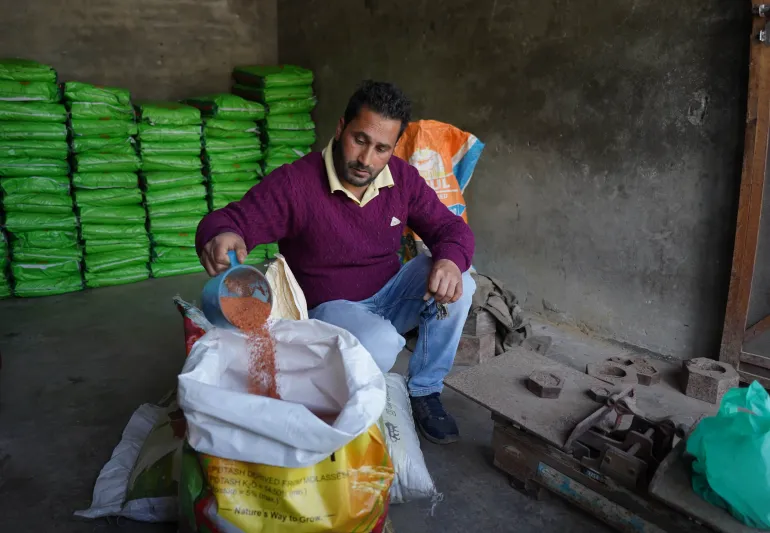
‘It all depends on the crop’: Gulf crisis hits South Asia farmers | Agriculture News
Gurdaspur, Punjab, India – Ramesh Kumar, 42, is anxiously doing the calculations for his crops this year.
Standing at the edge of his wheat field in northwest Punjab’s Gurdaspur, he runs through the numbers in his head, totting up fertiliser costs, expected yield, and market prices.
Then he shifts to more personal concerns: School fees, household expenses, loan repayments and the money he has been saving for his daughter Varsha’s wedding.
“I don’t know if we can afford it this year,” he says. “Everything depends on the crop.”
The uncertainty has crept in quietly.
Fertiliser, once a fairly predictable staple in farming, has become more expensive and harder to secure in time. For Kumar, it is not so much a question of cost as it is the difference between stability and strain.
“If prices go up more, we will have to cut somewhere,” he says. “Maybe delay the wedding. If things get worse … even children’s education becomes difficult.”
School fees for his eldest son, Amit, 12, are due in the coming weeks, and Kumar has been setting aside money for his younger daughter Varsha’s future wedding.
It’s never easily affordable, even in good times. “We somehow manage,” Kumar says. “But if the harvest is weak, then we have to think about what to prioritise, what to delay.”
For farmers like him across South Asia, the United States-Israel war on Iran – unfolding thousands of kilometres away – is not just a matter of distant geopolitics.
It is shaping decisions inside their homes.

A distant crisis with local consequences
At the centre of the unfolding crisis is the Strait of Hormuz, a narrow shipping lane more than 2,000km (1,240 miles) from India’s northern plains. It lies between Iran and Oman, linking the Gulf and its oil producers to the open ocean and, from there, to global markets.
About one-fifth of the world’s oil and liquefied natural gas (LNG) supplies pass through this body of water, which Iran closed down shortly after the first US-Israeli strikes on Tehran on February 28.
Vast volumes of LNG, essential for manufacturing nitrogen-based fertilisers, are transported from Gulf producers to Asia via this route. Any disruption can delay shipments, push up freight and insurance costs and place a stranglehold on supply.
Interruptions to the supply of fertiliser can ripple quickly, reducing crop yields, increasing costs and raising food prices.
The risks are already being felt thousands of kilometres away.
South Asia, home to nearly two billion people, relies heavily on fertiliser-intensive farming to produce staple crops such as wheat and rice. Over the past few decades, the increasing use of fertilisers – which can hugely boost crop yields – has played a key role in agricultural productivity across the region.
The agriculture sector now employs about 46 percent of the workforce in India, about 38 percent in Pakistan, nearly 40 percent in Bangladesh, and more than 60 percent in Nepal.

The degree to which countries in the region depend on the Strait of Hormuz varies, but all rely heavily on the trade in fertilisers that this shipping route facilitates.
In India, the agriculture sector is worth $400bn, according to Indian government and World Bank data, and supports the livelihoods of more than half the population, either directly or indirectly. More than 100 million farming families are directly dependent on the sector.
The country imports a substantial share of its fertiliser requirements and other key raw materials, particularly phosphates and potash, as well as natural gas used to manufacture fertiliser, with about 30–35 percent of these supplies moving through or originating from routes that pass via the Strait of Hormuz.
In Pakistan, the agriculture sector contributes close to 20 percent of gross domestic product (GDP), according to Pakistan government estimates, and employs millions. About 20-25 percent of Pakistan’s fertiliser imports, particularly DAP (diammonium phosphate), pass through the Strait of Hormuz at some point in transit. Additionally, the sector relies on domestic natural gas for the production of urea, a key nitrogen-based fertiliser and, with Gulf natural gas supplies held up in the Strait of Hormuz, the price of natural gas everywhere – even at home – is on the rise.
In Bangladesh, where millions of smallholder farmers rely heavily on imported fertilisers, the agricultural sector accounts for about 12-13 percent of GDP, according to government data. The country’s farming industry relies heavily on imported fertilisers to sustain crops, meaning farmers are highly exposed to international supply shocks and price swings.
Furthermore, roughly 25-30 percent of Bangladesh’s imported fertiliser is shipped via routes passing through the Strait of Hormuz.
Nepal, where agriculture contributes about 24 percent of GDP, imports nearly all of its fertiliser needs, with about 25-30 percent of arriving via India, via the Gulf and the Strait of Hormuz.

Livelihoods at stake
Overall, even minor disruption in the Gulf – let alone the complete closure of the critical Strait of Hormuz – can have dire consequences for hundreds of millions of people.
The Indian government has sought to reassure farmers that supplies remain secure – for now.
Prime Minister Narendra Modi told Parliament on March 23: “Adequate arrangements have been made for fertiliser supply for the summer sowing season…The government has diversified options for oil, gas and fertiliser imports… Domestic production of urea, DAP and NPK [nitrogen, phosphorus and potassium fertilisers] has been expanded… Farmers now have access to Made in India Nano Urea and are encouraged to adopt natural farming…”
He added: “Under the PM Kusum scheme, more than 22 lakh (2.2 million) solar pumps have been provided, reducing dependence on diesel… I am confident that through joint efforts, India will manage these challenges effectively and continue to support our farmers.”
On the ground, however, confidence is low. Farmers say uncertainty is already influencing decisions.
In Pampore, in the south of Indian-administered Kashmir, 53-year-old mustard farmer Ghulam Rasool says price signals travel faster than supply disruptions.
“We hear about war, about shipping problems,” he tells Al Jazeera. “Even before shortages happen, fertiliser becomes expensive.”
Rasool says farmers often respond early by cutting down on the amount of fertiliser they are using, even before actual shortages emerge.
“If we use less, production will fall,” he says. “But sometimes we have no choice.”
In Pakistan’s South Punjab, wheat farmer Muneer Ahmad, 45, is preparing for the next sowing cycle.
“If fertiliser becomes expensive, it will affect everyone here,” he says.
Government officials have expressed confidence in Pakistan’s fertiliser supply amid the Middle East conflict, and claim the government is fully prepared to ensure adequate supplies during the region’s peak sowing period, which typically begins between April and June, depending on the crop.
According to a statement by Pakistan’s federal secretary for agriculture to Al Jazeera, Federal Minister Rana Tanveer Hussain told a meeting on March 25 that the government has started proactive monitoring, is expanding domestic urea and DAP production and taking steps to ensure fertilisers reach farmers at affordable prices.
However, urea production requires supplies of natural gas, meaning global energy price shocks can still translate into rising production costs.

For farmers, even small increases matter
“We already have loans and expenses,” Ahmad says. “If costs go up, we feel it immediately.”
In Rangpur, northwestern Bangladesh, farmer Mohammad Ibrahim, 41, says fertiliser supplies are already becoming unpredictable.
“Sometimes it is available, sometimes not,” he says. “And when it comes, the price is higher.”
Meanwhile, in Nepal’s Gulmi district, farmer Meghnath Aryal, 38, worries that crops will be reduced if a major supply problem does appear.
“If fertiliser does not arrive on time, the crop suffers,” he says. “If it becomes expensive, we reduce use.”
Bangladesh’s Agriculture Secretary Rafiqul Mohammad told Al Jazeera the government is “closely monitoring the situation” and officials have tried to reassure farmers that fertiliser supplies are sufficient for the coming months.
The government has finalised plans to import about 500,000 tonnes of urea in the near term, while also exploring alternative suppliers such as China and Morocco to secure additional supplies in the longer term.
There is no immediate shortage at present, the Agriculture Ministry says.
Ram Krishna Shrestha, joint secretary at Nepal’s Ministry of Agriculture and Livestock Development, told Al Jazeera that fertiliser distribution within the country remains largely stable for now, with supplies already secured for the upcoming rainy season, particularly for paddy crops such as rice.
However, he warned that there may be delays to contracted shipments as a result of the Middle East crisis.
“We have managed fertilisers for the upcoming season, but there could be challenges in timely supply because of the current situation,” he said, pointing to global price increases and logistical disruptions, including those caused by the closure of the Strait of Hormuz.
Shrestha added that as companies report shortages and rising prices in international markets, the government has asked suppliers to expedite deliveries.
“Authorities are also advising farmers to increase the use of traditional nutrient sources such as farmyard manure, compost, green manuring and azolla [a natural fertiliser] to offset any potential shortfall in chemical fertilisers,” he said.
No immediate new fertiliser subsidies have been announced, he said, though adjustments remain under discussion as the situation evolves.

Rising food prices on the horizon
The implications extend beyond individual farmers.
Across South Asia, fertiliser use has been central to maintaining crop yields – and keeping large populations fed. Any reduction in availability or increase in costs can quickly lower production. That, in turn, pushes up food prices, a sensitive issue in a region where households spend a large proportion of their income on food.
For governments, the challenge is complex.
In the past, subsidies have kept fertilisers affordable for farmers, but this becomes a fragile balancing act if global prices rise, placing additional pressure on public finances.
In India, Ramesh Kumar is already making adjustments – but he is walking a tightrope.
He has decided to use less fertiliser this season, even though he knows it could reduce yields.
“It is a risk,” he says. “But what choice do we have?”
Lower production will mean less income and harder decisions at home.
“School fees have to be paid,” he says. “Household expenses cannot stop.” He looks across his field.
“And the wedding… we will see.”
Ultimately, sacrifices will have to be made in his household.
Across borders, the same uncertainty is unfolding.
In Pakistan, Ahmad is worried about rising costs. In Bangladesh, Ibrahim is mostly concerned about the availability of fertiliser and, in Nepal, Aryal fears delays in supply.
For Ramesh Kumar, the stakes are clear.
“For others, this is about war,” he says. “For us, it is about whether we can take care of our family.”
Iran war: What is happening on day 34 of US-Israel attacks? | US-Israel war on Iran News
EXPLAINER
As the war enters day 34, US President Donald Trump said Washington was close to achieving its objectives.

Published On 2 Apr 2026
Iran has launched a new wave of missiles at Israel after United States President Donald Trump said Washington had “destroyed the Iranian military” and was close to achieving its war objectives.
Trump’s address to the nation came hours after he said Tehran had asked for a ceasefire, a claim Iran denied.
Meanwhile, Iran’s President Masoud Pezeshkian said his country held no hostility towards the people of the United States, Europe or neighbouring countries.
Here is what we know:
In Iran
- War intensifies: The US-Israel war on Iran continues to escalate, with US-Israeli bombing campaigns causing casualties and damage across the country, while Iranian forces continue missile and drone counterattacks.
- Stalled diplomacy: Iranian Foreign Minister Abbas Araghchi said that while Iran has received messages from the US, trust remains “at zero” for any potential negotiations.
- Appeals to Americans: Iran’s President Masoud Pezeshkian has called on the US public to question Washington’s motives for continuing the war. In an open letter shared by state broadcaster PressTV, he asked whether Trump’s “America First” policy was “truly among the priorities of the US government today”.
- Iran calls US demands ‘irrational’: Iran said on Thursday that Washington’s demands were “maximalist and irrational” and denied any negotiations were under way on a ceasefire to end the war.
- Senior Iranian politician wounded in strike: Former Iranian foreign minister Kamal Kharazi was seriously wounded when a strike hit his Tehran home, killing his wife, Iranian media reported. Kharazi has reportedly been involved in the back-channel communication involving Pakistan, aimed at bringing Tehran and Washington back to the negotiating table.
In the Gulf
- Intercepted missiles: The United Arab Emirates said it has been intercepting incoming missiles and drones launched by Iran.
- Trump thanks Gulf allies: During his speech, Trump specifically thanked the Gulf states, acknowledging that they have come under fire from Iran in retaliation for the strikes. He praised their support and pledged that the US “will not let them get hurt or fail in any way, shape or form”.
- Tanker struck off Qatar: A tanker has been hit by a projectile off the coast of Qatar’s capital Doha, a British maritime security agency said, reporting damage but no casualties.
In the US
- Trump’s address to the US: Trump gave a speech claiming that the core strategic objectives of the US in the war are “nearing completion” and pledged to “finish the job”.
- Disputed ceasefire claims: The US president said that Iran requested a ceasefire, a statement that Tehran was quick to deny.
- Trump speech shows ‘no clear plan’: Trita Parsi of the Quincy Institute for Responsible Statecraft said Trump’s primetime address offered little new and largely repeated his recent statements. “It was essentially a summary of all the tweets he has issued over the last 30 days,” Parsi said, adding that the lack of new details suggests the president does not have a clear plan.
In Israel
- Israel says Iran launches more missiles: Israel’s military said early on Thursday its air defences were operating to down missiles fired from Iran. “Defensive systems are operating to intercept the threat,” the Israeli military said on its official Telegram account.
- Israel medics say 14 wounded: Israel’s emergency services said 14 people, including an 11-year-old girl, were wounded near Tel Aviv during a missile attack that the military blamed on Iran.
- Trump speech welcomed in Israel: According to Al Jazeera’s Rob McBride in Amman, Trump’s timeline for the war appears to align closely with Israel’s PM Benjamin Netanyahu’s own assessment of the campaign, after the US president said in a televised address that Washington was close to achieving its objectives and that the conflict could end within weeks.
In Lebanon, Iraq
- Strike on Beirut: Israel killed a senior Hezbollah commander in an attack on Beirut that killed at least seven people, according to Lebanon’s Ministry of Public Health.
- Air strike on Iraq base kills seven fighters: An aerial attack on a military base in Iraq’s western Anbar province killed seven fighters and wounded 13 others, according to the country’s Ministry of Defence. The strikes on Wednesday hit a military healthcare clinic at the Habbaniyah base.
World economy
- World Bank raises alarm: The World Bank is “extremely concerned” about the impact the conflict will have on inflation, jobs and food security, and is in talks with member states on how to address immediate needs in the crisis, a top official told AFP on Wednesday.
- Stocks rally, oil falls: Global stocks rallied on Wednesday and oil prices fell after Trump said the war could be over within weeks, despite Tehran pushing back against his comments.
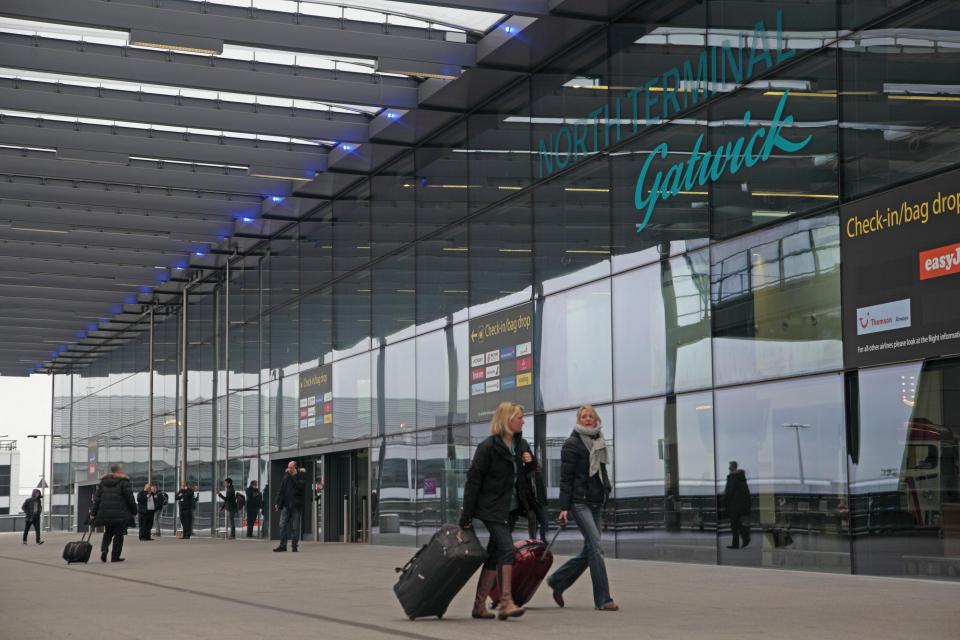
UK airline cancels all London domestic flights for rest of the season due to ongoing fuel crisis
A UK airline has been forced to cancel its London flights due to rising fuel costs.
Skybus operates daily flights between London Gatwick and the seaside town of Newquay.

This started back in November 2025, taking on the route from Eastern Airways which went into administration last year.
The service was due to end on May 31, however it has now said it will be ending now – nearly two months earlier.
The airline’s Managing Director Jonathon Hinkles said it was for a number of reasons.
This includes the increase in fuel costs, as well as lack of passenger bookings.
Read more on cancelled flight


He explained: “At a time of great economic uncertainty and steps being taken to conserve energy worldwide, it is neither environmentally nor economically sound for us to continue flying with vastly reduced passenger numbers.”
Passengers affected will be fully refunded.
The flights between London and Cornwall take around 1hr20 and start from £79.99 each way.
This is not only faster – trains take around five hours and include a change to Newquay – but cheaper than the average train fare which is around £85.
Some passengers use it as a way of travelling further onto Europe as well.
One Brit, who was meant to fly from Newquay to Gatwick, then onto Seville told the BBC: “Gatwick is not the easiest airport to get to so our contingency is probably to use rail.”
In the mean time, Ryanair offers flights between Newquay and London Stansted all year round.
And easyJet is due to start a new flight route to Newquay from June 23, with two a week from London Gatwick on Tuesdays and Thursdays.
A Cornwall Airport Newquay spokesperson said: “We are actively working with airline partners and stakeholders to secure sustainable London connectivity for the future.”
It isn’t the only airline to warn of future flight cancellations due to the ongoing conflict in the Middle East.
Ryanair boss Michael O’Leary has warned of travel chaos this summer if the crisis continues.
He said: “We don’t expect any disruption until early May, but if the war continues, we do run the risk of supply disruptions in Europe in May and June.”
While he said he didn’t see the airline having to cancel flights just yet, he warned that as much as 20 per cent of its jet fuel is costing them nearly $150 a barrel.
Other airlines around the world have already started cancelling flights.
Both Air New Zealand and SAS confirmed that more than 1,000 have been cancelled, mainly affecting domestic routes.
And United Airlines said five per cent of flights would be cancelled in the second and third quarters of 2026 – working out to around 250 a month.


Musk’s path to $1 trillion: SpaceX files for IPO, reports say
A SpaceX IPO promises to be one of the biggest Wall Street events of the year, with several investment banks lining up to help raise tens of billions to fund Musk’s ambitions to establish a base on the Moon, place data centres the size of several football pitches into orbit, and possibly one day send a human to Mars.

ADVERTISEMENT
ADVERTISEMENT
The sources spoke on condition of anonymity because they were not authorised to discuss the confidential registration with the Securities and Exchange Commission publicly.
SpaceX did not immediately respond to a request for comment.
Exactly how much SpaceX plans to raise has not been disclosed, but the figure is reportedly as high as $75bn (€65bn). At that level, the offering would easily surpass the $29bn (€25bn) raised by Saudi Aramco in its 2019 IPO.
The offering, which could come as early as June, may value SpaceX at around $1.5 trillion — nearly double its valuation in December, when some minority shareholders sold their stakes, according to research firm PitchBook, prior to an acquisition that increased the company’s size.
Musk currently owns about 42% of SpaceX, according to PitchBook, although that figure will change after the IPO as new shares are issued. In any case, he is likely to surpass the trillion-dollar mark, as he is already close. Forbes estimates Musk’s net worth at roughly $823 billion.
In addition to building reusable rockets to launch astronauts and equipment into orbit, SpaceX owns Starlink, the world’s largest satellite communications company. The company has also recently brought under its umbrella two other Musk businesses: social media platform X (formerly Twitter) and artificial intelligence firm xAI, in a controversial transaction, as both the buyer and seller were controlled by him.
SpaceX has become the leading commercial launch company in its industry, sending payloads into orbit for customers worldwide. However, it has also benefited from significant public funding, raising concerns about potential conflicts of interest, given that Musk was a major donor to President Donald Trump’s campaign and remains a strong supporter.
Over the past five years, SpaceX has secured $6bn (€5.2bn) in contracts from NASA, the Department of Defense and other US government agencies, according to USAspending.gov.
Among current SpaceX investors is Donald Trump Jr, the president’s eldest son, who owns shares through 1789 Capital. The venture capital firm made him a partner shortly after his father won a second term and has since invested in federal contractors seeking government business.
The White House and Trump have repeatedly denied any conflicts of interest between his role as president and his family’s business dealings.

State court ruling gives cop watchdogs more teeth in records subpoenas
A recent California appellate court ruling will give civilian oversight groups the authority to subpoena the law enforcement agencies they are tasked with monitoring, a decision hailed by local advocates as a step toward greater transparency by the Los Angeles County Sheriff’s Department.
In a unanimous opinion issued Thursday, justices from the state’s first appellate district found that an oversight body in Sonoma County is legally authorized to subpoena the county sheriff’s office while probing whistleblower inquiries. The justices also directed the law enforcement agency to comply with the watchdog’s requests for records.
The Independent Office of Law Enforcement Review and Outreach sued the Sonoma County Sheriff’s Office in 2024 over refusals to comply with a whistleblower complaint subpoena. A lower court initially ruled in favor of the Sheriff’s Office, but the appellate judges reversed that decision.
Hans Johnson, chair of the Los Angeles County Civilian Oversight Commission, called the ruling a “big win” for law enforcement transparency.
“This is one of the most significant court rulings in recent CA history about oversight,” he said in a message to The Times. “It strengthens the powers of Civilian Oversight boards and Inspectors General and upholds our subpoena authority while also showcasing the strong public interest in robust, effective oversight of sheriffs, their departments, and their operations.”
The L.A. County Sheriff’s Department said in a statement that it is “discussing with County Counsel to determine the appropriate path for implementing any lawful authority granted to the Civilian Oversight Commission.”
Angelenos who have long sought records related to alleged misconduct by sheriff’s deputies also cheered the court’s decision.
Vanessa Perez’s son Joseph was badly beaten by deputies in the San Gabriel Valley six years ago. She has been fighting ever since for more clarity about what happened.
Perez said she hopes Thursday’s ruling will result in “some type of justice, some type of fairness” for her son and others who have been stymied by the Sheriff’s Department in efforts to obtain information.
“Hopefully we’ll have effective oversight at the end of this, someone other than LASD looking at Joseph’s case,” Perez said in a phone interview Monday. “Not one deputy, not one sheriff, nobody has ever brought to light what they did to Joseph.”
She has been vocal in her criticism of the agency and the fact that it has only released redacted versions of its “use of force” report from the July 2020 incident involving her son.
Perez’s case is one of several in which the Civilian Oversight Commission has tried unsuccessfully to pry records out of the Sheriff’s Department. Two other cases involved Emmett Brock, a trans man beaten by a deputy in a convenience store parking lot in 2023, and Andres Guardado, an 18-year-old fatally shot in 2020.
The commission subpoenaed unredacted files in the cases in Feburary 2025, but the county counsel’s office has argued they should remain confidential.
“L.A. County voters overwhelmingly approved Measure R in March 2020 to grant the Commission subpoena powers,” the Civilian Oversight Commission wrote in a statement. “However, six years later, it is not yet fully in effect.”
The county counsel’s office said in a statement that it “does not question the Civilian Oversight Commission’s power to issue subpoenas.”
But, it said, court decisions, the county’s Employee Relations Commission and the law “require that the County … meet and confer with labor partners about the impacts before documents are shared. Those discussions are underway.”
Hilda Eke, executive director of the L.A.-based advocacy organization Dignity and Power Now, said in a statement that the ruling is a positive development in the ongoing battle for more transparency.
“It affirms what our communities have always known: You cannot investigate injustice without the power to uncover the truth,” Eke said.
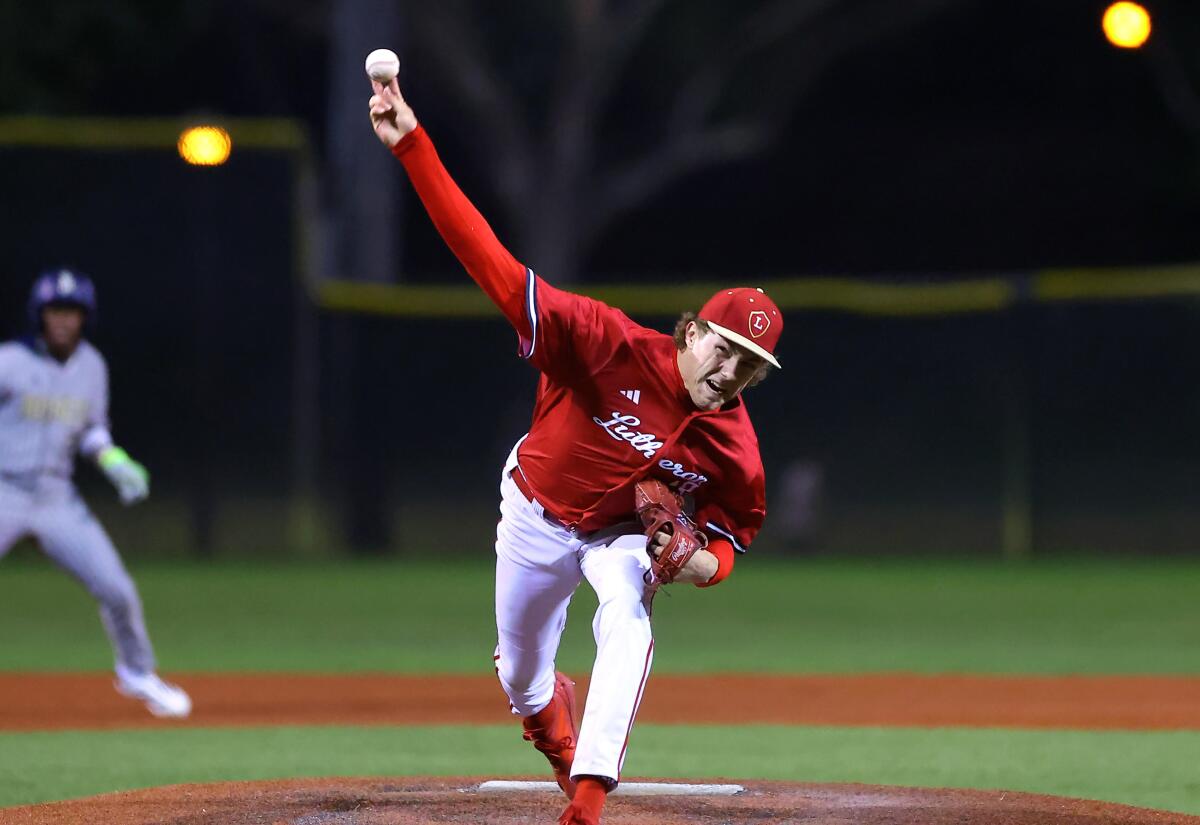
No. 2 St. John Bosco beats No. 1 Orange Lutheran in pitchers’ duel
The much anticipated pitching duel between Gary Morse of Orange Lutheran and Julian Garcia of St. John Bosco on Wednesday under the lights at Hart Park exceeded expectations.
With both hitting 95 mph, Morse gave up two hits in six innings with eight strikeouts. Garcia struck out 10 and also gave up two hits, but one was a leadoff home run by Ricardo Hurtado.
St. John Bosco (11-2, 5-0) broke a 1-1 tie with three runs in the seventh to defeat Orange Lutheran 4-1. It was the second consecutive Braves win. Orange Lutheran, which came into the week ranked No. 1 by The Times after winning the National High School Invitational, dropped to 7-3 overall and 0-2 in the Trinity League.
Closer Jack Champlin came in after a leadoff single in the seventh to pick up the save.
The Braves loaded the bases with two outs in the seventh, then scored two runs on a wild pitch and added a third on James Clark’s single. The teams close out their three-game series in a 1:30 p.m. game Thursday at St. John Bosco.

Gary Morse of Orange Lutheran struck out eight against St. John Bosco in six innings Wednesday.
(Nick Koza)
Concord De La Salle 1, Sherman Oaks Notre Dame 0: Sam Lakey hit a two-out solo home run in the top of the seventh inning to break up a pitching duel and send De La Salle into Thursday’s championship game of the National Classic. It was the third consecutive shutout by De La Salle pitchers. Notre Dame’s Lachlan Clark made no mistakes other than giving up the home run. He struck out 10 in 6⅔ innings. Notre Dame twice had bases-loaded situations but failed to take advantage, including hitting into a double play in the bottom of the sixth.
Corona Centennial 5, Cypress 1: Jacob Torres threw a complete game with nine strikeouts and Aiden Simpson homered to lead the Huskies in a semifinal game of the National Classic. They will face De La Salle on Thursday at 4 p.m. at El Dorado in the tourney final.
Vancouver (Wash.) Union 1, El Dorado 0: The Golden Hawks gave up a run in the bottom of the seventh. Julian Rodriguez gave up three hits in 6⅔ innings.
Fountain Valley 5, Edison 0: Four pitchers combined for the shutout. Ethan Cortez had two doubles.
Harvard-Westlake 7, Loyola 1: James Tronstein homered, Jake Kim had two RBIs and Evan Alexander struck out 10 in 5⅓ innings.
Bell 7, Chula Vista Olympian 3: The Eagles (15-1) received four RBIs from Eric Medina, including a two-run single in the seventh to break a 3-3 tie.
Sylmar 5, San Francisco Lincoln 2: Tim Sepulveda had two hits and three RBIs while Rickee Luevano went three for three to lead Sylmar.
El Camino Real 6, La Costa Canyon 4: Michael Spancer and Shane Bogacz each had three hits while Blake Dubin had a two-run single for the Royals.
Cleveland 9, Marshall 3: The Cavaliers won their eighth consecutive game. Shiloh Wickliffe had two hits and three RBIs.
Quartz Hill 13, Palmdale 0: Parker White had three hits and threw a no-hitter in the Golden League win over Palmdale.
Ayala 4, Bonita 2: Easton Sarmiento struck out seven in 5⅓ innings for Ayala (11-1).
Bishop Alemany 10, Chatsworth 0: Mikey Martinez, a transfer from Crespi, had three hits in his Alemany debut.
Carson 9, Classical 7: Nate Ruan had three hits, including a two-run home run. Skylar Vinson also had a two-run home run.
Foothill 6, Irvine 0: Jackson Phillips threw the shutout, striking out nine and giving up two hits.
Villa Park 5, Arcadia 2: Aidan Young had two hits for Villa Park. Logan Hoppie threw a complete game with six strikeouts.
Mira Costa 13, Torrance 4: Connor Collins drove in four runs for the Mustangs.
Oaks Christian 5, Westlake 1: Dane Disney and Carson Sheffer each had two hits in the Marmonte League win.
Thousand Oaks 3, Newbury Park 1: Jake Ange continued his hot hitting with a home run, single and two RBIs.
Palos Verdes 7, Redondo Union 2: Franco Correa and Jackson Alba each finished with three hits for Palos Verdes.
Huntington Beach 8, Corona del Mar 2: Jared Grindlinger had four hits and four RBIs and Owen Bone homered for the Oilers.
Newport Harbor 7, Los Alamitos 3: Henry Mann was three for three with two RBIs for Newport Harbor.
Norco 17, King 2: The Cougars (12-1) received four hits from Zion Martinez and three hits and three RBIs from Jacob Melendez to stay unbeaten in the Big VIII League. Jordan Ayala struck out seven and gave up one hit in four innings, setting him up to pitch against St. John Bosco on Tuesday in the Boras Classic.
Santa Margarita 6, Mater Dei 0: Tyler Unter struck out nine in six scoreless innings and Andre Owens had two doubles for the Eagles.
Servite 6, JSerra 4: Jaden Liu had two RBIs in Servite’s Trinity League win.
South Hills 5, McClatchy 2: Christian Santoyo threw a complete game for South Hills.
Mission Viejo 1, Tesoro 0: Jackson Krause, Caleb Tucker and Jackson Stonebarger combined for the shutout. Aiden Chapuis had three hits.
Chaminade 4, Granada Hills 3: Nicholas Penaranda had three hits for the Highlanders in the loss. Isaac Hearn had two hits and two RBIs for Chaminade.
Corona Santiago 9, Las Vegas Basic 2: Jonathan Thornton had three hits and Striker Pence struck out six in five innings.
Softball
Orange Lutheran 2, King 1: The Lancers won their first-round game of the Michelle Carew tournament. Rylee Silva struck out seven. Carlie Snyder had two hits.
Garden Grove Pacifica 13, Long Beach Poly 6: Matte Stern had a triple, single and four RBIs for Pacifica.
Sherman Oaks Notre Dame 7, Camarillo 2: Jackie Morales hit a two-run home run for the Knights.
Fullerton 7, Chino Hills 5: Hayley Brock had a home run, double, two singles and four RBIs for 13-1 Fullerton. Malaya Majam-Finch struck out nine. Milena Medyn led Chino Hills with three hits.
Norco 4, Long Beach Millikan 0: Coral Williams struck out nine in the shutout. Angelina Gonzales hit a home run.
Marina 8, Rio Mesa 0: Mia Valbuena threw two no-hitters, first against Rio Mesa, then in a 1-0 win over Los Altos. She had 18 strikeouts against Los Altos.

How long will Artemis II take to reach the moon, and what happens next? | Science and Technology News
NASA has successfully launched the Artemis II mission, marking the first crewed mission to the moon’s vicinity since the Apollo programme ended in 1972.
The 322-foot Space Launch System (SLS) rocket lifted off at 6:35pm ET (22:35 GMT) on Wednesday from Cape Canaveral, Florida, sending the Orion crew capsule on a 10-day journey.
Recommended Stories
list of 3 itemsend of list
While Artemis II will not land on the moon, it will fly a “free-return” trajectory that swings around it to prove the spacecraft can sustain a crew on future missions.
The idea is to descend to the surface of the Earth’s only natural satellite again on Artemis IV in 2028.
“We have a beautiful moonrise,” said Reid Wiseman, the NASA astronaut serving as mission commander, about five minutes after the launch. “We’re heading right at it.”
Here is what we know:
What happened?
The Artemis II mission launched successfully from the Kennedy Space Center in Florida, sending four astronauts on a historic journey around the moon, the first crewed mission beyond low-Earth orbit in more than 50 years.
The launch followed a tense countdown, as engineers worked through several technical issues. Teams closely monitored the rocket during fuelling due to hydrogen leaks that had delayed the mission in the past, but no major leaks were detected on launch day.
Engineers also resolved last-minute problems involving battery sensors and the rocket’s flight termination system, a critical safety system used to destroy the rocket if it goes off course, before clearing the mission for liftoff.
The 32-storey rocket lifted off in the early evening in front of large crowds gathered near the launch site. The crew are now on a mission that will take them around the moon and back to Earth.
The launch had been planned for as early as February 6, and then March 6, until a hydrogen leak prompted NASA to roll the rocket back to its vehicle assembly building for scrutiny.
It had earlier been scheduled for November 2024, but NASA announced a delay due to technical investigations, particularly into the Orion’s heat shield.
Who is part of the Artemis II mission?
All three NASA astronauts are veterans of Earth-orbit science expeditions to the International Space Station, while the lone Canadian joining them on a voyage around the moon and back is a spaceflight rookie.
- Reid Wiseman, 50, commander: The NASA veteran and former International Space Station commander is leading the Artemis II mission. A test pilot-turned-astronaut, he has leadership and deep spaceflight experience.
- Victor Glover, 49, pilot: The US Navy aviator is the first Black astronaut assigned to a lunar mission and flew on SpaceX Crew-1.
- Christina Koch, 47, mission specialist: The record holder for the longest single spaceflight by a woman at 328 days is a veteran of multiple spacewalks and has scientific and deep-space mission expertise.
- Jeremy Hansen, 50, mission specialist: The first Canadian set to travel to the moon is a former fighter pilot. His presence represents international collaboration in deep space exploration.

When will the mission reach the moon?
If the mission goes as planned, the capsule is expected to reach the moon on about April 6, the sixth day of the mission.
The crewed Orion capsule will then fly around the moon, reaching its closest point before beginning the journey back to Earth, with splashdown expected on April 10, 2026.

What is the mission plan for the next 10 days?
The Artemis II mission is expected to last about 10 days and follows this general outline:
Days 1-2 high Earth orbit : The crew will spend their first one to two days in high Earth orbit conducting extensive checks on the spacecraft’s systems.
Once those checks are complete, Orion’s propulsion system will perform a “translunar injection”.
A translunar injection is a critical manoeuvre performed by the Orion spacecraft’s propulsion system. Occurring after the crew completes their initial systems checks in high Earth orbit, this manoeuvre propels the spacecraft out of Earth orbit and sets it onto a direct trajectory towards the moon.
Days 3-4 translunar transit: As they transit to the moon over the next several days, the astronauts will continue monitoring Orion’s systems.
The spacecraft will then pass behind the moon on a “free-return” trajectory, a strategic path that naturally swings the capsule back towards Earth without requiring any additional propulsion.
Day 5 lunar sphere of influence: Orion enters the moon’s gravitational pull, which becomes stronger than Earth’s.
The astronauts will spend the first several hours of the day testing their spacesuits, including practising how quickly they can put them on, pressurising them and strapping into their seats.
Day 6 lunar flyby: This is the day the crew fly by the moon.
The spacecraft reaches its closest approach, approximately 4,000-6,000 miles (6,450-9,650km) above the lunar surface.
Day 7-9 Return journey: Following the flyby, Orion remains on its free-return trajectory. The crew conducts deep-space science, including medical monitoring through programmes like ARCHER.
Day 10 Re-entry and splashdown: Orion separates from the service module and re-enters Earth’s atmosphere at roughly 25,000mph (40,230km/h). The mission concludes with a splashdown in the Pacific Ocean.
What’s NASA’s next mission?
Artemis III is the next mission and is currently planned for 2027.
It will involve the Orion spacecraft docking in Earth orbit with at least one of NASA’s lunar landers, either Blue Origin’s Blue Moon system or SpaceX’s Starship.
The docking manoeuvre is intended to demonstrate how the landers will collect astronauts in orbit before transporting them to the moon’s surface.
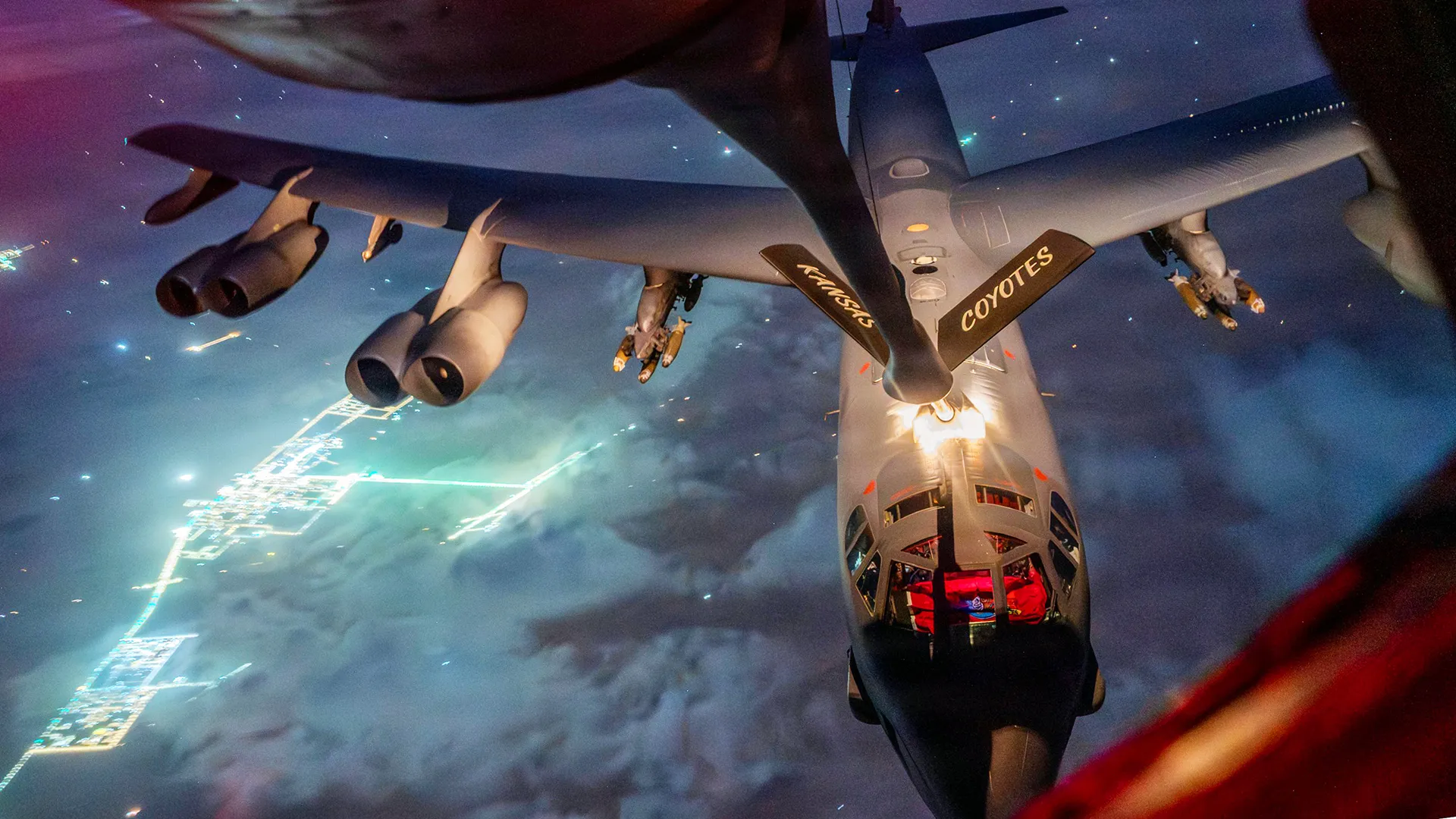
Trump Threatens NATO Departure, Claims Iran Wants A Ceasefire Ahead Of National Address (Updated)

Iran has asked for a ceasefire, U.S. President Donald Trump says. In a statement on Truth Social today, Trump claimed the request came from “Iran’s New Regime President.” Trump added: “We will consider when Hormuz Strait is open, free, and clear. Until then, we are blasting Iran into oblivion or, as they say, back to the Stone Ages!!!”
Trump did not mention the top official by name, but described the individual as “much less Radicalized and far more intelligent than his predecessors.”
Iran still has Masoud Pezeshkian as its president, but he was elected back in 2024. In media appearances — most recently yesterday, according to Iranian sources — Pezeshkian said that Tehran had the “necessary will” to bring the war to an end, while stressing that certain conditions and guarantees would be required for that to happen.
The Iranian foreign ministry says President Trump’s claim that the country has asked for a ceasefire is “false and baseless.”
Trump added, “I didn’t need regime change, but we got it because of the casualties of war. We got it. So we have regime change, and the big thing we have is they’re not going to have a nuclear weapon. Nor do they want one.” Iran, for its part, has always claimed that it has no plans to develop nuclear weapons.
Barak Ravid, global affairs reporter with Axios, writes that three U.S. officials confirmed that discussions are taking place about a possible ceasefire, dependent on the reopening of the Strait of Hormuz.
On Monday, Trump claimed he had already accomplished regime change by killing Iran’s supreme leader, Ayatollah Ali Khamenei, despite the fact that he had been succeeded by his son, Motjaba. While several other senior Iranian officials have been killed since the war began, critics argue that a leadership shift alone does not amount to true regime change.
“What we are seeing in Iran is not a regime change — but a transformation within the regime itself, one that has made it more extreme,” Danny Citrinowicz, the Israeli military’s former top Iran researcher, posted on X.
Overall, there are ongoing questions about whether the United States has met its evolving objectives since launching a joint attack with Israel on Iran more than four weeks ago.
As for the enriched uranium still possessed by Iran, Trump told Reuters today, “That’s so far underground, I don’t care about that… We’ll always be watching it by satellite.”
Speaking last night, Trump said that Operation Epic Fury could be concluded within two to three weeks. Trump added that reaching a deal with Tehran is not required to bring the conflict to an end.
“We will be leaving very soon,” Trump told reporters in the Oval Office last night.
Whatever Trump’s intentions are, we should know more tonight. The White House announced that the U.S. president will deliver “an important update” in a national address this evening at 9:00 p.m. Washington time.
While it remains unclear what new details Trump will share about the claimed ceasefire request, it seems likely that he will voice his opinions about the future of U.S. membership in NATO.
President Trump has said he is seriously weighing the possibility of withdrawing the United States from NATO, once again describing the alliance as a “paper tiger.”
“[NATO] is beyond recognition,” he said in an interview with The Telegraph.
“I was never swayed by NATO. I always knew they were a paper tiger, and Putin knows that too, by the way.”
In recent weeks, the U.S. president has criticized allied nations for their lack of involvement in efforts to reopen the Strait of Hormuz, which Iran has effectively closed amid the escalating conflict in the Middle East.
“Beyond not being there, it was actually hard to believe. And I didn’t do a big sale. I just said, ‘Hey’, you know, I didn’t insist too much. I just think it should be automatic,” Trump said.
He also stated that the United States has supported countries in need, including Ukraine, even though it “wasn’t our problem.”
Trump also directed further criticism at the U.K. government, with which his relationship is increasingly strained. He added, “You don’t even have a navy. You’re too old and had aircraft carriers that didn’t work.”
Soon after, U.K. Prime Minister Keir Starmer provided a press conference on the situation in the Middle East, referring to the growing rift with Washington.
“It is increasingly clear that as the world continues down this volatile path, our long-term national interest requires closer partnership with our allies in Europe and with the European Union,” Starmer said.
The Telegraph interview with Trump followed comments from U.S. Secretary of State Marco Rubio suggesting Washington may need to reassess its ties with NATO once the conflict with Iran concludes.
“We’re going to have to reexamine the value of NATO and that alliance for our country,” Rubio said in an interview with Fox News last night.
“If NATO is just about us defending Europe if they’re attacked, but them denying us basing rights when we need them, that’s not a very good arrangement. That’s a hard one to stay engaged in.”
UPDATES:
Over coverage has now concluded.
UPDATE: 9:54 PM EST –
During his roughly 19-minute speech from the White House about the war in Iran, Trump offered no real concrete details about its future. He made no mention of sending in ground troops and provided no real sense of when it might end. Meanwhile, contrary to earlier reporting that he might announce a U.S. withdrawal from the NATO alliance, he didn’t even mention the word NATO once.
Here are some highlights.
On the goals of Epic Fury being met:
Our objectives are very simple and clear. We are systematically dismantling the regime’s ability to threaten America or project power outside of their borders. That means eliminating Iran’s Navy, which is now absolutely destroyed, hurting their Air Force and their missile program at levels never seen before, and annihilating their defense industrial base. We’ve done all of it.
Their Navy is gone, their Air Force is gone, their missiles are just about used up or beaten. Taken together, these actions will cripple Iran’s military, crush their ability to support terrorist proxies and deny them the ability to build a nuclear bomb. Our armed forces have been extraordinary. There’s never been anything like it militarily. Everyone is talking about it, and tonight, I’m pleased to say that these core strategic objectives are nearing completion.
On Iran no longer being a threat:
We are in this military operation so powerful, so brilliant, against one of the most powerful countries for 32 days, and the country has been eviscerated and essentially is really no longer a threat. They were the bully of the Middle East, but they’re the bully no longer.
On The Strait of Hormuz, the flow of oil and allied involvement:
Remember, because of our Drill, Baby, Drill program, America has plenty of gas. We have so much gas. Under my leadership, we are the number one producer of oil and gas on the planet, without even discussing the millions of barrels that we are getting from Venezuela. Because of the Trump administration’s policies, we produce more oil and gas than Saudi Arabia and Russia combined. Think of that, Saudi Arabia and Russia combined, and that number will soon be substantially higher than that.
There’s no country like us anywhere in the world, and we’re in great shape for the future. The United States imports almost no oil through the Hormuz Strait, and won’t be taking any in the future. We don’t need it. We haven’t needed it, and we don’t need it. We’ve beaten and completely decimated Iran. They are decimated both militarily and economically and every other way. And the countries of the world that do receive oil through the Hormuz Strait must take care of that passage. They must cherish it. They must grab it and cherish it. They can do it easily. We will be helpful, but they should take the lead in protecting the oil that they so desperately depend on. So to those countries that can’t get fuel, many of which refuse to get involved in the decapitation of Iran, we had to do it ourselves. I have a suggestion. Number One, buy oil from the United States of America. We have plenty. We have so much. And Number Two, build up some delayed courage. Should have done it before. Should have done it with us as we ask, ‘go to the Strait and just take it, protect it, use it for yourselves.’ Iran has been essentially decimated. The hard part is done. So it should be easy, and in any event, when this conflict is over, the Strait will open up naturally. It’ll just open up naturally. They’re going to want to be able to sell oil, because that’s all they have to try and rebuild.
On what happens next:
I’ve made clear from the beginning of Operation Epic Fury that we will continue until our objectives are fully achieved. Thanks to the progress we’ve made. I can say tonight that we are on track to complete all of America’s military objectives shortly, very shortly. We’re going to hit them extremely hard over the next two to three weeks. We’re going to bring them back to the Stone Ages, where they belong.
In the meantime, discussions are ongoing. Regime change was not our goal. We never said regime change, but regime change has occurred because of all of their original leaders’ death. They’re all dead. The new group is less radical and much more reasonable. Yet, if during this period of time, no deal is made, we have our eyes on key targets. If there is no deal, we are going to hit each and every one of their electric generating plants, very hard and probably simultaneously. We have not hit their oil, even though that’s the easiest target of all, because it would not give them even a small chance of survival or rebuilding, but we could hit it and it would be gone, and there’s not a thing they could do about it.
UPDATE: 6:30 PM EST –
The New York Times is reporting that “multiple U.S. intelligence agencies have assessed in recent days that the Iranian government is not currently willing to engage in substantial negotiations over ending the U.S.-Israeli war.” The newspaper cited anonymous U.S. officials.
“The assessments say the Iranian government believes it is in a strong position in the war and does not have to accede to America’s diplomatic demands,” the Times proffered. “And while Iran is willing to keep channels open, they said, it does not trust the United States and does not think President Trump is serious about negotiations.”
According to The Wall Street Journal, the Low-Cost Uncrewed Combat Attack System (LUCAS) kamikaze drones were designed not by private industry, but by the Pentagon. The drones were used in combat for the first time during Epic Fury. You can read more about these weapons, which CENTCOM commander Adm. Brad Cooper told us are “indespensible” here.
An image emerged online purporting to show damage to the Tabriz Shahid Madani International Airport control tower. The facility, which also serves as a military airbase, was struck in an attack earlier this week.
The explosive aftermath of an Israeli airstrike on an IRGC missile site can be seen in the following video.
Citing an intelligence firm, The Telegraph is reporting that Iran is using a covert network of front companies in China and Hong Kong to secretly bypass international sanctions and import parts to build its fleet of kamikaze drones.
The Israeli military said a strike in central Iran killed a figure it identified as a senior engineering officer in Iran’s Islamic Revolutionary Guard Corps (IRGC) Quds Force.
The Israel Defense Forces (IDF) said Mahdi Vafaei, head of engineering in the IRGC Quds Force’s Lebanon Corps, was killed in a strike yesterday in Mahallat.
According to the IDF, Vafaei “advanced underground projects across Lebanon and Syria” over the past two decades, including “dozens of underground projects in Lebanon that were used to store advanced weaponry.”
Iran continues to send drones and missiles against different countries in the Gulf region.
According to the Israeli military, Iran launched its biggest ballistic missile salvo against Israel in recent weeks, when it fired 10 of the weapons at targets in the centre of the country today.
A drone strike ignited a major fire at Kuwait International Airport, the state news agency reported, adding that no casualties had been recorded. This morning, Saudi Arabia said it intercepted and destroyed two drones. Bahrain also stated early Wednesday that it was tackling a fire at a commercial facility caused by an Iranian attack. The United Arab Emirates reported five ballistic missiles launched by Iran toward its territory today, as well as 35 drone attacks.
Remarkable footage posted by the IDF shows what it identifies as an Iranian ZU-23-2 anti-aircraft gun positioned on the roof of a high-rise building in Tehran. The gun is struck by an Israeli man-in-the-loop-controlled missile, after which two individuals can be seen hanging from the edge of the burning roof, before one falls. While old, the ZU-23-2 twin-barreled 23mm anti-aircraft gun remains most relevant for engaging helicopters, low-flying drones, and cruise missiles.
QatarEnergy, the world’s largest liquefied natural gas (LNG) producer, said one of its tankers, the Aqua 1, was struck in a missile attack earlier today.
“None of the crew members on board were injured, and there is no impact on the environment as a result of this incident,” the state-owned company said in a statement.
Previously, the U.K. Maritime Trade Operations (UKMTO) had said that a tanker off Qatar’s coast was hit by two projectiles — one sparked a fire that has since been put out, while another remained unexploded in the ship’s engine room.
The vessel was hit roughly 17 nautical miles north of Qatar’s Ras Laffan industrial hub.
In a statement carried by Iranian state media, the IRGC said an oil tanker belonging to the “Zionist regime with the trade name Aqua 1” in the Persian Gulf “was precisely targeted.”
According to Michael Haigh, Global Head of FIC and Commodities Research, the final vessels carrying jet fuel to the United Kingdom will arrive in the next 48 hours, with no more fuel scheduled to arrive after that.
There are more signs that the Iran-backed Houthis are ramping up their strikes on Israel.
Houthi forces in Yemen say they were behind a missile strike on southern Israel earlier today, describing it as a coordinated effort with Iran and Hezbollah.
In a statement, the Houthi movement said it carried out its third missile attack in the conflict “in conjunction with Iran and Hezbollah in Lebanon”.
The Tehran-backed group added that it “carried out the third military operation… targeting sensitive Israeli enemy targets… with a barrage of ballistic missiles”.
It also warned of “further escalation” if Israel continues its attacks on Lebanon, Iran, Iraq, the occupied West Bank, and Gaza.
The statement was issued roughly three hours after the Israeli military reported intercepting a ballistic missile launched from Yemen toward southern Israel, noting that no injuries occurred.
A video has emerged that may show the first documented instance of an interceptor drone being used to bring down an Iranian Shahed-series long-range one-way attack drone in Iraq.
Baxtiyar Goran shared the video on the social media platform X.
According to him, the footage was taken near the city of Erbil in northern Iraq, where pro-Iranian forces have launched various drone strikes against U.S. and allied objectives.
Recent satellite imagery reveals the aftermath of Iran’s missile and drone attacks on Al-Udairi Air Base in northern Kuwait.
Imagery shows destroyed hangars, damaged military vehicles, and affected personnel shelters.
Also known as Camp Buehring, Udairi Air Base is a key strategic hub for the U.S. Army in the Middle East. Situated in the desert near the Iraq border, it functions as a major logistics center for U.S. forces.
Further details have emerged of the movement of U.S. Air Force A-10C Warthog attack jets to England, ahead of a likely move to the Middle East.
RAF Lakenheath in England has now received 12 A-10s from the 107th Fighter Squadron at Selfridge Air National Guard Base, Michigan, which arrived on March 30.
They were followed by another six A-10s from the 190th Fighter Squadron out of Gowen Field Air National Guard Base, Idaho, which touched down at Lakenheath on March 31.
All these aircraft departed for their transatlantic flight from Pease Air National Guard Base, New Hampshire.
CBS News reports that the U.S. military has lost 16 MQ-9 Reaper drones since the war with Iran began, including two more this week near Isfahan.
In its latest Middle East update, the U.K. Ministry of Defense stated that it destroyed 10 Iranian drones overnight.
RFA Lyme Bay, a Bay class auxiliary dock landing ship of the British Royal Fleet Auxiliary (RFA), is seen here headed to port in Gibraltar, where it will reportedly be equipped with autonomous minehunting capabilities. It is unclear if and when the vessel will return to the Gulf region after spending a period on station in the eastern Mediterranean.
Greece is conducting training maneuvers to respond to possible Iranian attacks, according to Al Jazeera. The news agency reported on recent drills by the Greek merchant navy. These are primarily in response to the risk of drone strikes against Cyprus, where the British airbase of RAF Akrotiri has already been hit.
U.S. military commanders voiced concerns about the vulnerability of the bases they were using in Saudi Arabia and other Persian Gulf states to Iranian missile and drone attacks years ahead of Operation Epic Fury. They proposed stationing key aircraft during a conflict in the western part of the kingdom, a safer distance away from Tehran, The Wall Street Journal reports. As we reported yesterday, the Pentagon is now prioritizing more hardened shelters to better protect U.S. forces at bases in the Middle East, according to Secretary of War Pete Hegseth.
The proposal was never adopted, with the Pentagon instead focusing on potential contingencies in the Asia-Pacific region. Last week, Iranian strikes heavily damaged or destroyed U.S. military aircraft at Prince Sultan Air Base, Saudi Arabia, including at least one of the Air Force’s prized E-3 Airborne Warning and Control System (AWACS) aircraft and refueling tankers.
In his address to the nation, Prime Minister of Australia Anthony Albanese said the months ahead “may not be easy” and urged Australians to “think of others in your community, in the bush and in critical industries.”
The pope expressed his hope that President Donald Trump is seeking a way to decrease violence in the Middle East.
“I’m told that President Trump recently stated that he would like to end the war,” Pope Leo XIV said. “Hopefully he’s looking for an ‘off ramp.’ Hopefully, he’s looking for a way to decrease the amount of violence, of bombing, which would be a significant contribution to removing the hatred that’s being created and that’s increasing constantly in the Middle East and elsewhere.”
Contact the author: thomas@thewarzone.com

‘I’m on The Apprentice this year and here’s what BBC viewers don’t see on camera’
EXCLUSIVE: Kieran McCartney has revealed what fans don’t see on The Apprentice including what Lord Alan Sugar, Baroness Karren Brady and Tim Campbell are really like

The Apprentice has been on our screens for over two decades(Image: PA)
Kieran McCartney has revealed what the BBC bosses don’t show on The Apprentice.
The estate agent from East London is one of the eight remaining candidates in the running to become Lord Alan Sugar’s next business partner.
Last week, he put his neck on the line by cutting a dramatic “win or walk” deal with the business tycoon to save himself from being fired.
He’s the first contestant in the BBC show’s 21-year history to make a pact with Lord Sugar that he would lead the next task to victory – or walk away.
As fans wait to see the outcome of the bold move, Kieran’s shared some behind-the-scenes secrets including what Lord Sugar and his aides Baroness Karren Brady and Tim Campbell are really like.
“Those boardroom showdowns are as real as it gets,” he explained, before adding: “Everything is done in one take and they film everything once and once only. It’s all real and raw.
“What you see is what you get. Karren’s [Brady’s] very strong but a big softy and she grows on you.
“[Lord Alan] Sugar had lots of banter and I love that so I was giving it back to him. I don’t think anyone’s ever given back to the way I did and Tim’s just a lovely guy.”
Baroness Brady joined The Apprentice as one of Lord Sugar’s aides in 2010 replacing Margaret Mountford and Tim won the first series of The Apprentice in 2005 taking over Claude Littner in 2022.
Kieran went on to share exactly how much time he spent with Lord Sugar’s trusted advisors during the process.
He added: “When you split into your two teams, you then go into further two teams so there’s four groups overall.
“Karren and Tim spend the morning with one group and the afternoon with the other and then you see them in the boardroom.
“They kind of just sit there but I’m not sure they actually write anything down like you see on camera.”
To remember his ultimatum, Kieran has had a tattoo on his leg of Lord Sugar, Baroness Brady and Tim’s faces with the words “The Apprentice 2026” and catchphrase “win or walk”.
Addressing his thinking process behind his bold offer, he joked: “Lord Sugar will either love my tattoo or send me a legal letter.”
He continued: “I’d love to sit here and say it was all part of a bigger plan but it was a total impulse.
“I thought I was a goner and was going home, it was a last resort and I just came out with it.
“I had to make that deal with Lord Sugar to survive and I put my neck on the line. It was a one-off, never been done and that’s a bit of me.”
Kieran McCartney was speaking to BestBettingSites.co.uk – the leading comparison site for casino sites and The Apprentice airs Thursdays on BBC One and BBC iPlayer at 9pm

Millicom prices reopening of $75M senior notes
Millicom prices reopening of $75M senior notes
Source link
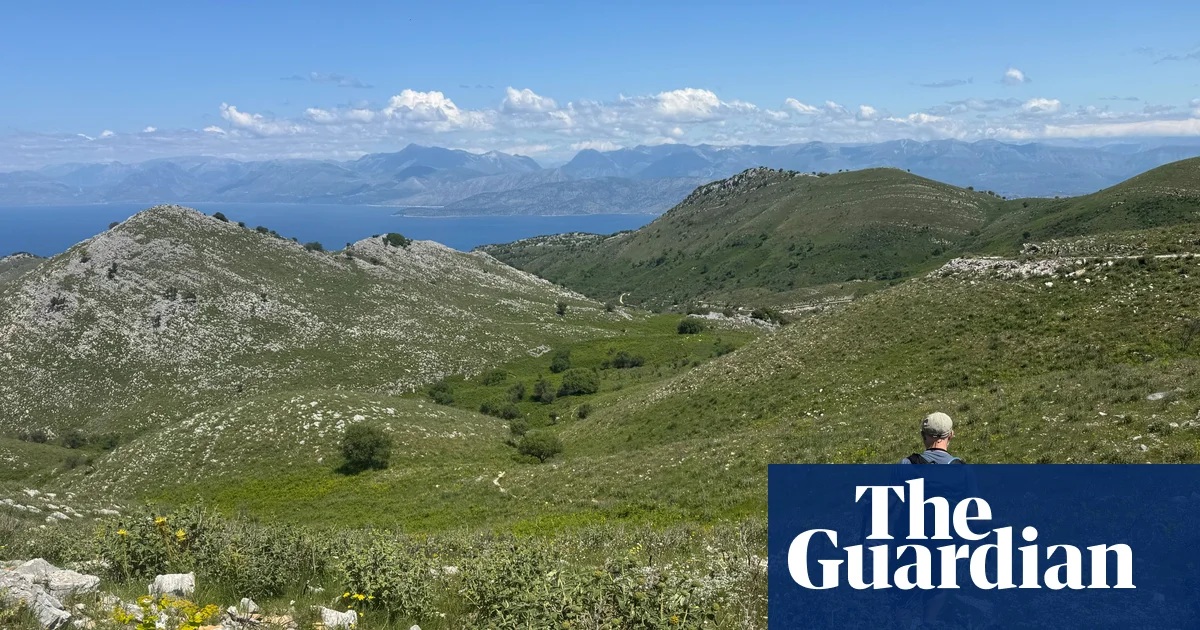
‘Walking is the best way to discover offbeat Corfu’: a spring hike across the Greek island | Corfu holidays
The riverside was heaving. Families spilled from cafes. A marching band trooped on to the bridge, their tasselled metal helmets dazzling in the sun. Priests with bushy beards delivered ageless chants from beneath their cylindrical kalimavkion hats. Men let off shotguns, terrifying the air. Easter Monday in Lefkimmi.
We hadn’t planned this. Simply right place, right time. The capital of southern Corfu, Lefkimmi is a working town, untroubled by tourism. There are Venetian-style houses – variously neat, tatty and decrepit – but no “attractions” to speak of. Just Corfiots doing Corfiot things: chewing the fat in their finest for this religious celebration – Greek Orthodox Easter, which falls on 12 April in 2026 – plus zipping about on scooters, drinking coffee, buying baklava and ice-creams.
“Right place, right time” was my hope for this trip to over-loved Corfu, an island of about 100,000 that, in 2025, was visited by approaching 4 million people. I was returning with fond memories. My first ever foreign holiday was here, in 1986. That was the first time I saw an olive tree, realised water could be that blue, and heard such a cacophony of cicadas it seemed the bushes were electrically charged.
That was 40 years ago. Corfu – the green queen of the Ionian Sea, Gerald Durrell’s “garden of the gods” – was already popular. In the intervening decades, development has been rampant and infrastructure, from roads to water supply, struggles to cope with the summer influx. But how about visiting off-season and off-piste? Winter can be tricky, with many places shut, so my husband and I had chosen to come in spring, exploring largely on foot, via the Corfu trail.
The sun was warm, the land now awake from hibernation as we set out on the 110-mile (180km) route that runs the length of the island, from Kavos to Agios Spyridon. Wriggling along the more rugged, less developed west coast, with deviations into the central hills and wide Ropa valley, it then traverses the mountainous north, always seeking the way less trodden. You could travel by (limited) buses or hire car, but doing some walking is the best way to happen upon Corfu’s offbeat bits.
We covered between 8 and 20 miles a day, though there’s no need to do all that – most walk it much more slowly. But, with our luggage being transported ahead each night to an array of simple pensions, family tavernas and beach hotels, our shoulders were light, so we were keen to roam as much as we could, following the yellow and black signs, arrows daubed on rocks and the GPS files on our phones – the route was largely well marked.
Every day, there were wonders to discover: wizened Mitéra, a 1,500-year-old olive tree near Prasoudi beach; a profusion of wildflowers, in all hues – rosy garlic, hot-purple rock roses, punchy yellow sage; a magical ancient footway between Makrata and Ano Garouna that had fallen out of use until the Corfu trail was blazed 25 years ago. The path traversed a cypress-pierced hillside before plunging into dark, forgotten olive groves that concealed what looked like the remains of a lost city, but was in fact natural rock cloaked in moss.
A few hours after these “ruins”, we arrived in Sinarades and found ourselves at the bottom of a flight of stone steps leading into the Folklore Museum. It couldn’t be open, could it? But yes, Makis beckoned us into this 19th-century farmhouse (entrance a modest €3), empty of visitors but full of the stuff of Corfiot village life: fine costumes, farming paraphernalia, fig cutters, cobblers’ tools.
It was fascinating, getting these glimpses of old Corfu, invariably inland. In the northern mountain village of Sokraki, after the only downpour to spoil our sunny skies, we drank ginger beer at Emily’s cafe, still made the traditional way, using only water, lemon juice, sugar and ginger. Then we wove our way down the narrow streets to the Lithari Olive Oil Museum, where an old family press has been restored.
The following day, we visited Old Perithia, a 14th-century village tucked beneath Mount Pantokrator, the island’s highest point. Like many similar outposts, Perithia was abandoned in the 1960s; unlike many, it has been revived, and is now a lively, living cluster of homes, tavernas, honey shops and a characterful B&B. It was a hot day, so we flopped on to the shady terrace of O Foros cafe and lingered over fresh salad, homemade pie and tsigareli (garlicky wild greens), before descending to the coast via a long-lost path, only rediscovered during the Corfu trail’s creation.
Despite being ravishingly clear and a respectable 16C (60F), there were very few swimmers in the sea. Such was the case at Myrtiotissa, halfway up the west coast – the spot where Odysseus allegedly washed ashore, and widely known as a nudist beach. A steep, skinny track leads to this cliff-backed sliver of sand, a real Instagrammer snarl-up in summer. But when we walked down, road and beach were deserted enough for us to throw off our inhibitions and clothes, and frisk Nereid-like in the waves.
If there’s one stretch of Corfu coast not to miss it’s Erimitis, the “hermit” peninsula at the island’s north-east. There used to be a naval observation post here, keeping an eye on Albania, about 2 miles away. As such, Erimitis escaped tourist development, leaving it the last stand of pristine Corfiot nature: no villas, no olives, just a scrub of oaks, myrtles and strawberry trees, brackish lagoons, butterflies and birds, herbs and wild orchids, plus rare monk seals and seagrass offshore.
But it’s under threat. In 2012, the government sold the rights to develop a portion of Erimitis to foreign investors. Organisations such as Save Erimitis and the Ionian Environment Foundation are fighting to conserve it.
Leaving the Corfu trail for the day, we picked up a footpath linking upmarket Agios Stefanos to the fishing harbour of Kassiopi, via Erimitis’s edges, a walk of about 5.5 miles. Immediately, there was a different feel here; it was a place without human touch, where the water seemed even clearer. We walked through fairytale tunnels of trees and detoured down a trail that ended at a bank, where a rope dangled down to a forest-backed beach. With no one about, it seemed silly to bother putting on swimmers, so we skinny-dipped again, now accustomed to the temperature, and warmed by the smugness of being here, now, alone. Right time, right place.
The trip was provided by Walks Worldwide, whose 15-day, self-guided Corfu Trail costs from £1,129 (shorter itineraries available), including the whole route plus nights in Kalami, near Erimitis; thecorfutrail.com

Will California elect a GOP governor? Democrats are panicked
Today we discuss probability, self-destruction and political bossism.
Wow. California, which is as blue as Lake Tahoe, is about to elect a Republican governor! How crazy is that?
Whoa. Hold up, pony. Let’s not get too far ahead of ourselves.
Well, there’s certainly a lot of Democratic angst out there.
That’s for sure. It’s reminiscent of the panic that followed Joe Biden’s wretched debate performance in Atlanta, the biggest disaster to hit the city since a 2009 flood caused more than half a billion dollars in damage.
In California, the high anxiety is a result of the state’s “jungle” primary, in which all candidates appear on the same ballot, regardless of party, with the top two finishers advancing to a November runoff. With so many Democrats running, there’s the genuine prospect of them splintering partisan support, resulting in the leading GOP candidates — Chad Bianco and Steve Hilton — grabbing both slots and moving past June 2.
How likely is that to happen?
I can’t say. And Nostradamus is away on spring break.
But one of California’s leading political savants, Paul Mitchell, has developed a helpful online tool to suss out the possibilities. Visitors to his site have run tens of thousands of simulations, which right now put the odds of a Democratic freeze-out at about 17% to 20%.
Which suggests it’s unlikely. But it’s also not impossible.
Why don’t some Democrats step aside, for the good of the party?
That’s easy for you to say.
Anyone putting themselves out there by seeking public office has to have a certain amount of faith, in both their capabilities and the prospect of good fortune smiling upon them. (Luck being a greatly undervalued factor in political success.)
To be clear, no one is running away with the gubernatorial contest. For all the talk of Republicans “leading” in the polls, it’s more like a four- or five-way tie for first place, when you factor in the margin of error. And 20% support — which is roughly what the top candidate receives in surveys — is hardly a number to strike fear in the heart of rivals.
There’s also the YOLO factor.
You mean the county just outside Sacramento?
No, that’s Yolo.
I mean, YOLO — as in You Only Live Once
Several of the candidates mired near the bottom of polls — Antonio Villaraigosa, Xavier Becerra, Betty Yee — are probably looking at the end of the line if they lose this race. So you can understand, if not necessarily agree with, their reluctance to drop out and call it a day, in the hope that, just maybe, that proverbial bolt of lightning will strike.
So why doesn’t someone force some candidates to drop out?
Like who? There is no Tammany Hall. This isn’t Chicago under Boss Daley. Modern-day California has never had that kind of all-powerful political machine.
The closest approximations were in San Francisco, where brothers Phil and John Burton held great sway, and Los Angeles, where another pair of siblings, Howard and Michael Berman, exercised enormous clout with their compatriot, Henry Waxman. But their influence was mainly limited to Congress, the Legislature and local politics. They weren’t kingmakers when it came to electing California governors.
And the two major political parties, which never wielded the power they enjoy in other states, have become even less influential in this entrepreneurial age of politics, when candidates raise their money online and boost their profile by going on the political chat shows on TV.
What about Gavin Newsom?
The governor could certainly try to pare the Democratic field. But he’d risk humiliating himself and hurting his presidential prospects in the process.
How so?
It would be embarrassing if Republicans were to seize the governorship on Newsom’s watch. (At least among those political insiders who pay attention to that kind of stuff.) It would also be embarrassing if the governor tried to muscle candidates aside and failed.
It’s not at all clear Newsom would have much clout. He isn’t particularly close to any of the candidates running. No one needed his blessing to enter the race, or his backing to sustain their candidacy. And there isn’t very much the term-limited governor, playing out his final months in office, can offer as incentive to quit.
Newsom also has to consider how it would look if he tried to ease out the laggards — whose ranks happen to include all the prominent candidates of color: Becerra, Villaraigosa, Yee and state Supt. of Public Instruction Tony Thurmond.
We saw how that worked out for USC, which abruptly canceled a scheduled debate after a storm of criticism over its selection process and the exclusion of those four candidates.
Would Newsom care to veto Thurmond et al., then defend his actions in, say, South Carolina, where Black voters typically constitute more than half the Democratic primary electorate?
Sounds like Newsom doesn’t have many good options.
No.
Speaking of options, is there anything Democrats could do if they’re frozen out of the runoff?
Such as?
Waging a write-in campaign in the fall?
Nope. Under California law, write-in candidates are allowed only in the primary.
Hmm. How about a Democrat running as an independent?
Nope. Same rule applies. Only the two candidates getting the most votes in June will be on the November ballot.
So what can Democrats do?
Hope their voters consolidate around a single candidate, or either Bianco or Hilton pull far enough ahead with GOP voters that there’s room for a Democrat to make the top two.
Failing that, get ready for a Democratic-led recall campaign, beginning early in 2027.

Chisora vs Wilder: Deontay Wilder anticipates ‘one of the best fights in history’
American heavyweight Deontay Wilder says his fight against Briton Derek Chisora will be “one of the best in history” – with both men gearing up for their 50th professional bout.
READ MORE: Win or lose, I’d like Chisora to retire – Wardley
Follow live text commentary of Chisora v Wilder from 20:00 BST on Saturday, with BBC Radio 5 Live coverage from 22:00.

Packaging costs surge as shortages hit small businesses

Song Chi-young, chairman of small business association, left, and Small and Medium Business Minister Han Sung-sook pose for a photo at a meeting on the impact of the Middle East war in Seoul on Tuesday. Photo by Asia Today
April 1 (Asia Today) — South Korean small businesses are facing sharp increases in packaging costs and supply shortages, with some warning they are struggling to operate as disruptions linked to the Middle East conflict ripple into the domestic economy.
At a government meeting held in Seoul on Tuesday, business owners described severe difficulties securing basic materials, including packaging containers and even pay-as-you-throw garbage bags.
“I can’t even find trash bags, let alone packaging materials,” one participant said, describing the situation as a direct impact of global disruptions reaching local businesses.
Officials and industry representatives said prices for key materials have surged in recent days. The cost of plastic egg trays rose from 81 won to 131 won, a 61.7% increase, while plastic capsules for smaller packaging climbed 46.9%. Supplies of plastic wrap and binding materials have also dropped to about half of normal levels, creating what participants described as a “supply shock.”
The impact is spreading across sectors. A business owner operating both a factory and a restaurant said waste disposal has been disrupted due to shortages of garbage bags, raising hygiene concerns. An interior industry official warned that rising raw material costs could lead to monthly losses of about 10 million won (approximately $7,400) once existing contracts expire.
Song Chi-young, head of a small business group, said plastic bag prices have doubled within a week and called for stronger government action against hoarding and broader support measures.
In response, Small and Medium Business Minister Han Sung-sook said the government would strengthen emergency response systems and expand support for small businesses. Plans include prioritizing liquidity assistance in a supplementary budget and launching a nationwide consumption campaign beginning April 11.
Delivery platform companies were also urged to share the burden. Representatives from major food delivery firms said they are reviewing additional support measures, including expanding eco-friendly packaging initiatives and exploring ways to reduce plastic use.
Han said the crisis requires coordinated action across the economy, stressing that businesses and platforms must work together alongside the government to mitigate the impact of rising costs and supply disruptions.
The developments highlight how global geopolitical tensions are increasingly affecting everyday business operations, particularly for smaller firms with limited capacity to absorb sudden cost increases.
— Reported by Asia Today; translated by UPI
© Asia Today. Unauthorized reproduction or redistribution prohibited.
Original Korean report: https://www.asiatoday.co.kr/kn/view.php?key=20260129010013458

A year on: Four ways Trump's tariffs have changed the global economy
US tariffs stand at the highest rate in decades. But what has the impact been?
Source link

‘Bob’s Burgers’ actor Eugene Mirman hospitalized after fiery crash
“Bob’s Burgers” voice actor and comedian Eugene Mirman was pulled from a fiery car crash and hospitalized with serious injuries.
Before noon on Tuesday, Mirman’s Lucid Gravity struck the Bedford Toll Plaza in New Hampshire as he was traveling northbound on the F.E. Everett Turnpike. Callers reporting the crash said the vehicle had caught fire and the driver appeared to be trapped inside. New Hampshire State Police said that while units were responding to the 911 calls, Gov. Kelly Ayotte and her security detail came upon the crash and stopped to help.
A trooper assigned to the governor’s detail and two others pulled Mirman from the burning car through a window before first responders arrived. Gov. Ayotte retrieved a fire extinguisher, according to State Police Col. Mark Hall.
“Certainly, their actions were heroic in what they did,” Hall said. “Without hesitation, they put themselves in danger to render aid to someone who was in need of it.”
The actor was transported by ambulance to a nearby hospital with serious injuries. Videos of the incident show the vehicle badly damaged and engulfed in flames.
“Eugene was in a very scary car accident,” Mirman’s agent, Jay Glassner, confirmed in a statement Wednesday. “He wants to thank the bystanders, state police, first responders and hospital staff who saved him. He is grateful to be on the mend. At this time, we kindly ask for privacy for Eugene and his family as he focuses on recovering from his injuries.”
The crash remains under investigation.
The animated series “Bob’s Burgers,” which centers on a family that runs a restaurant, celebrated its 300th episode, titled “Grand Pre-Pre-Pre-Opening,” when the Fox favorite premiered its 16th season in the fall.
Often referred to as a “comfort show,” the series features Mirman as kid brother Gene Belcher.
“It’s just a mix of warmhearted and funny and sort of grounded,” the actor told The Times last year.
“There’s a sibling camaraderie that is really lovely,” Mirman continued. “It reminds me of the camaraderie on TV and movies in the ’80s. That era of the stuff I grew up watching.”
The Associated Press and Times staff writer Tracy Brown contributed to this report.

Expert says you will regret not packing these 4 items for your holidays
A backpacker’s viral TikTok reveals four items she deeply regretted not packing on a six-month trip – and why travellers keep making the same mistake.

It’s easy to forget things when packing for a trip abroad(Image: Getty Images)
A holidaymaker’s worst nightmare – aside from a cancelled flight – is realising they’ve forgotten to pack something important. One backpacker has gone viral on TikTok after revealing four items she deeply regretted not taking on a six-month trip across Asia.
Dill, an adventurer with more than 11,000 followers and 1.5 million likes, has spent months travelling between countries. But she admitted her packing mistakes in a recent video that has racked up thousands of views and sparked plenty of discussion.
Packing light has become a major trend among travellers, especially backpackers. According to a 2023 survey by Statista, around 40 per cent of holidaymakers aim to travel with carry-on luggage only to save money and avoid hassle.
That often means tough choices about what to bring, and what to leave behind. Here are four items she says she wishes she’d packed, after they caused repeated frustration during her travels.
Jean shorts
Obviously this one depends on the type of holiday you’re packing for. After all, there’s not a chance jean shorts would be of much use in places with colder climates like Iceland and Switzerland.
Nevertheless, Dill admitted one of her biggest regrets was not taking her favourite pair. She wished she had them “two or three times a week”.
Clothing comfort plays a huge role in travel satisfaction, with research from Condé Nast Traveler suggesting packing versatile clothing reduces travel stress. In warmer climates, staple items like shorts can be worn repeatedly, making them more valuable than expected.
Headphones
Another item Dill missed utilising during her Asian adventure was a reliable pair of wired earphones. After relying on Bluetooth and buying a low-quality replacement abroad, she struggled with poor sound and audio issues.
Tech experts at CNET say wired headphones are often more reliable for travel, particularly when it comes to battery-free use and consistent audio quality. This can also be crucial during long journeys or remote trips where charging options are limited.
Journal
Dill also regretted bringing a journal that was too small. She said limited space meant she couldn’t properly document her experiences, leaving pages feeling incomplete.
Travel psychology research shows that journaling can enhance memory and emotional processing during trips, helping people retain experiences more vividly. A larger journal allows for more detailed reflections and creativity.
iPad
Last but not least, it appears an iPad was one of Dill’s biggest missed opportunities during her holidays. Perfect for those who enjoy unwinding with shows or videos on-the-go, she says it’s worth bringing if you own one already.
Streaming habits remain a key part of downtime, with Ofcom reporting that over 70% of UK adults regularly watch streaming content. Having a device like an iPad can make long flights and quiet evenings far more enjoyable.
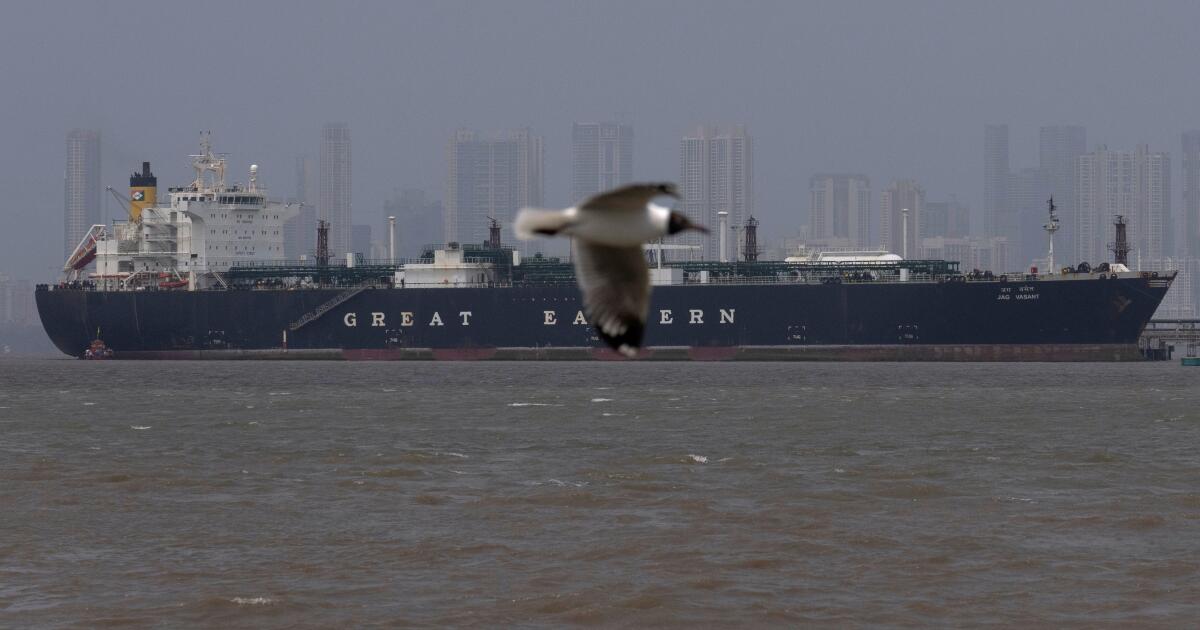
Trump signals Iran war offramp while administration reexamines NATO
WASHINGTON — President Trump signaled Wednesday that the United States is eyeing an offramp in its war with Iran, as he also raised the possibility of a major shift in U.S. alliances, including the potential withdrawal from NATO.
Trump indicated in a social media post that Iran’s president wanted a ceasefire, and that the United States would be open to doing so, if Iran agrees to reopen the Strait of Hormuz, a vital oil shipping route that has been affected during the monthlong conflict.
“Until then, we are blasting Iran into oblivion or, as they say, back to the Stone Ages!!!” Trump wrote.
The remarks appeared to outline a possible diplomatic opening with Tehran, but hours later Iranian officials said that Trump’s claims about being close to a deal were “false and baseless” and that the waterway remained “firmly and decisively under the control” of the Islamic Republic’s forces.
“The strait will not be opened to the enemies of this nation through the ridiculous spectacle by the president of the United States,” the paramilitary Islamic Revolutionary Guard Corps wrote in a statement.
Iranian President Masoud Pezeshkian on Wednesday also wrote a public letter denouncing what he described as a “flood of distortions and manufactured narratives” about the war from the U.S., arguing that Iran is not a threat and had only defended itself against American aggression.
He called on the American people to “look beyond the machinery of disinformation” to reach their own conclusions about the war and its purpose.
“Is ‘America First’ truly among the priorities of the U.S. government today?” he wrote, echoing recent complaints from Trump’s own base about the president’s commitments to his campaign promises.
The dueling messages underscored the uncertainty about how much longer the conflict in the Middle East will last and whether the United States will be able to achieve its main goal of preventing Iran from ever producing a nuclear weapon.
Trump, who on Tuesday said he expects the U.S. will leave Iran within three weeks, was poised to address the nation Wednesday night about the war. The White House said the president’s address would formally outline the objectives of Operation Epic Fury, whose mission has at times been convoluted even as Trump administration officials maintain their explanations for waging the war have been “clear and unchanging.”
White House Press Secretary Karoline Leavitt announced Trump’s speech late Tuesday, after Trump downplayed remarks made by Defense Secretary Pete Hegseth about Iran’s lingering military capabilities.
In the lead-up to those remarks, Trump told Reuters that he was looking to pull American forces from the region “quickly” with the possibility of returning to Iran periodically for “spot hits” when necessary.
The president, who said he believed the U.S. military is close to ensuring Iran loses its ability to possess a nuclear weapon in the future, did not seem too worried about Iran having highly enriched uranium in its stockpiles.
“That’s so far underground, I don’t care about that,” he told Reuters, adding that the U.S. military will be “watching it by satellite.”
Trump, however, remained focused on having Iran reopen the Strait of Hormuz, an oil route through which a fifth of the world’s oil flows.
He said this week that he may pull American forces from the region and leave other countries to deal with the hurdles of reopening the waterway. But on Wednesday, he seemed to walk back that stance, and said a key part of the ongoing negotiations hinged on Iran ending the de facto blockade on the strait.
It remains unclear whether Israel, which began bombing Iran alongside the U.S. on Feb. 28, would agree to the same terms as Trump and stop hostilities against Iran.
Talks about the potential end of the conflict led stocks to rise Tuesday, but it remains unclear whether higher food prices could persist for months or longer. It is also uncertain when U.S. gas prices — which jumped past an average of $4 a gallon this week for the time since 2022 — would go lower.
NATO becomes a factor in the war
As Trump considers pulling out of Iran, he is also weighing a withdrawal from NATO, telling Reuters that fellow member states’ lack of support during the war has him “absolutely” considering withdrawing from the security alliance, which was ratified by the Senate in 1949.
In an interview with Fox News on Tuesday night, Secretary of State Marco Rubio said the U.S. is planning to “reexamine” its relationship with the North Atlantic Treaty Organization and whether it makes sense to be part of a “one-way-street” alliance.
“Why are we in NATO?” Rubio said. “Why do we send trillions of dollars and have all of these Americans stationed in the region, if in our time of need, we are not going to be allowed to use those bases?”
Rubio’s comment marks a notable evolution from his position in Congress. As senator in 2023, Rubio helped spearhead legislation that said the president “shall not suspend, terminate, denounce, or withdraw the United States” from NATO unless the Senate agrees by a two-thirds vote to do so.
On Wednesday, Rubio told CBS that he maintains Congress should play a role on whether the U.S. should withdraw from NATO. He added that he does not believe Trump “will remove us from NATO,” but he does believe the president will demand that NATO allies “do more.”
In a joint statement Wednesday, Sens. Mitch McConnell (R-Ky.) and Chris Coons (D-Del.) said that the United States will remain in the treaty and that the Senate “will continue to support the alliance for the peace and protection it provides America, Europe and the World.”
Although Trump has previously threatened to end U.S. membership in NATO, his most recent remarks have put added pressure on European allies to revisit the terms of their relationship.
In a post on X, Finnish President Alexander Stubb said he had a “constructive discussion” with Trump on Wednesday about NATO.
“Problems are there to be resolved, pragmatically,” Stubb wrote.
Their conversation came after Trump and Hegseth complained that European countries have been hesitant to help the U.S. in its war against Iran. Just this week, Italy and Spain refused to allow U.S. warplanes from landing at their military bases before flying to the Middle East.
Britain’s prime minister, Keir Starmer, defended NATO on Wednesday, saying it was the “single most effective military alliance the world has ever seen” and, more broadly, said he would not cave to pressure to join the Iran war.
“Whatever the pressure on me and others, whatever the noise, I’m going to act in the British national interest in all the decisions that I make,” Starmer told reporters. “That’s why I’ve been absolutely clear that this is not our war, and we’re not going to get dragged into it.”
As diplomatic efforts continue, the Trump administration has increased its military presence in the Middle East, with thousands of U.S. troops arriving in the region as ground operations in the war remain an option.
The U.S. military buildup in the Mideast came as fighting continued to escalate in the Persian Gulf region on Wednesday.
Iran hit an oil tanker off Qatar’s coast, prompting the evacuation of 21 crew members. In Bahrain, there were alerts for incoming missiles, while Kuwait’s state-run news agency KUNA reported that a drone hit a fuel tank at Kuwait International Airport. Meanwhile, Jordan’s military intercepted a ballistic missile and two drones fired by Iran, and an airstrike in Tehran appeared to have hit the former U.S. Embassy compound.
Additionally, Israeli strikes killed at least five people on a Beirut neighborhood. Israel invaded southern Lebanon in March after the Iran-linked militant group Hezbollah began launching missiles into northern Israel.
This article includes reporting from the Associated Press.