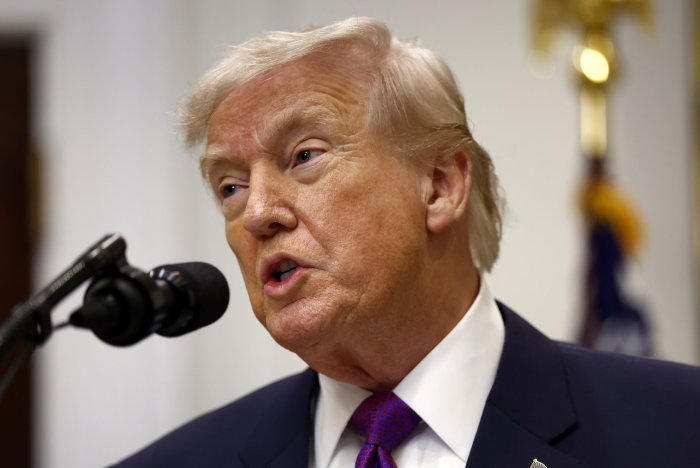
Feb. 23 (UPI) — A meeting on trade negotiations between the United States and India this week has been postponed in light of Friday’s Supreme Court ruling on President Donald Trump‘s tariffs.
Officials representing the United States and India were scheduled to meet for three days in Washington, D.C., to discuss their interim trade deal but the meeting has been delayed, CNBC, the BBC and Hindustan Times reported.
India’s top trade negotiator, Darpan Jain, was slated to travel to the United States for the meeting.
India is under a 25% reciprocal tariff imposed by the United States. It was expected to be reduced to 18% as part of an interim agreement between the countries earlier this month. The sides have continued to discuss future trade plans virtually since reaching the interim deal.
The United States and India were slated to finalize the interim agreement in March with it likely to go into effect in April. The framework for the agreement noted that any changes to the deal would allow the other country to “modify its commitments.”
On Friday, the U.S. Supreme Court ruled that Trump improperly applied the Emergency Economic Powers Act to impose a swath of tariffs. With those tariffs ruled unlawful, Trump announced a 15% global tariff, citing Section 122 of the Trade Act of 1974, which allows a president to impose temporary tariffs.
The act allows for the president to impose tariffs of up to 15% for 150 days.
The Trump administration continues to consider new plans to continue with its tariff policy, exploring other legal routes, U.S. Treasury Secretary Scott Bessent said in a social media post.
“We will immediately shift to other proven authorities — Actions 232, 301, and 122 — to keep our tariff strategy strong,” Bessent wrote.
