US federal prosecutors allege the defendant was in frequent contact with unnamed member of royal family.
Published On 19 Oct 202619 Oct 2026
An ex-OpenAI engineer accused of planting a recording device in an executive conference room at the AI company appears to have received considerable support from the Saudi government, United States prosecutors have said in a court filing.
Federal prosecutors allege that the defendant, Abdulrahman Alfozan, 35, was in frequent communication with an unnamed member of the Saudi royal family and that a Saudi military official paid for a one-way plane ticket for Alfozan’s wife and young son to return to Saudi Arabia after his arrest, according to the court document, made public late on Sunday.
Recommended Stories
list of 4 itemsend of list
Prosecutors made those allegations as they asked a federal judge to keep Alfozan in US custody to await trial, arguing he is a flight risk. Alfozan, a Saudi national and lawful permanent resident in the US, is scheduled to appear in federal court in San Francisco later on Monday.
The case has highlighted security challenges around sensitive AI research as companies and governments compete fiercely for an edge in the transformational technology.
“The defendant went to significant lengths to create customized, encrypted recording devices to secretly record highly sensitive meetings involving senior OpenAI personnel and executives, high-level business counterparts, and government officials, all while communicating with individuals of significance in Saudi Arabia and pursuing opportunities in — and making plans to travel to — Saudi Arabia,” prosecutors wrote in a detention memo.
The Saudi government media office did not immediately respond to a request for comment. A lawyer for Alfozan did not immediately respond to a request for comment.
The lawyer, William Pernik, previously asked for Alfozan to be released from custody, subject to conditions including location monitoring and surrendering his passport, and said Alfozan had spent the last 15 years in the US and had applied to become a citizen.
The lawyer said a planned trip by Alfozan to Saudi Arabia this month was booked before he was under investigation and was for “family and immigration reasons”, according to a court filing.
Investigation remains active
US prosecutors charged Alfozan last week with using an electronic device to intercept oral communications. Alfozan plugged a recording device into the back of a television in an executive conference room at one of OpenAI’s San Francisco buildings, according to a criminal complaint.
Meetings involving government officials took place in the conference room around the time the device was installed, according to the prosecutors’ detention memo.
Prosecutors said the investigation remains active and additional charges could be brought against Alfozan.
A member of the Saudi royal family sought to recruit Alfozan for an AI-focused role in Saudi Arabia, writing in one message, “Saudi needs you more then [sic] the US!” Alfozan replied, “100,” according to messages cited by prosecutors.
Before his arrest, Alfozan was scheduled to fly to Riyadh during a planned two-month parental leave. His wife told investigators that she and their son planned to move permanently to Saudi Arabia and that Alfozan eventually intended to join them, according to prosecutors.
In an Arabic-language interview on the Identity Capital podcast last month, Alfozan said that he visits Saudi Arabia three or four times a year, follows developments there and advises or mentors Saudi startups.
He said meeting Prince Mohammed bin Salman, then deputy crown prince, during a 2016 gathering with young Saudi tech workers in Silicon Valley persuaded him to learn at a top tech company before bringing those skills back home.
While Alfozan was working at Facebook, he and other Saudis in Silicon Valley formed a consulting initiative that linked Saudi public- and private-sector organisations with expertise in big data, the internet of things and machine learning.
OpenAI previously said it discovered the device on September 30 and referred the matter to the FBI.
Al Jazeera has reached out to the Saudi embassy for comment.
GDP growth picks up from Q2 amid AI-driven boom in exports.
Published On 19 Oct 202619 Oct 2026
China’s economy has grown faster than expected in the most recent quarter amid booming exports underpinned by artificial intelligence, according to official figures.
China’s gross domestic product (GDP) expanded 4.5 percent in the July-September period from the same quarter a year earlier, picking up from 4.3 percent growth in the second quarter and beating most analysts’ forecasts, figures released on Monday by the National Bureau of Statistics showed.
Recommended Stories
list of 4 itemsend of list
During the first nine months of the year, GDP grew 4.6 percent year-on-year, according to the preliminary figures.
While China’s technology-related exports have surged during the AI boom, growth in the world’s second-largest economy has been dampened by weak domestic demand and a sagging property market.
China’s ruling Communist Party has set a GDP growth target of 4.5 to 5 percent for 2026, which would be among the slowest expansions in decades, excluding during the COVID-19 pandemic.
Chinese exports surged more than 16 percent in the first three quarters of the year to reach 23.19 billion yuan ($3.47bn), according to the official data, largely due to strong demand for semiconductors and other tech-related goods.
Retail sales, a key measure of domestic consumption, increased 1.1 percent year-on-year in September and 2.6 percent during the first nine months of 2026.
Industrial production, which measures output in sectors such as manufacturing and mining, rose 5.5 percent in September, taking growth in the first three quarters to 5.3 percent.
Investment in fixed assets, which covers spending on real estate, factories and machinery, edged up 0.7 percent last month but contracted 7.2 percent during the January-September period.
Zhiguo He, a finance professor at Stanford University’s Graduate School of Business who studies the Chinese economy, said that while China’s economy is on track to hit official targets, Beijing will be wary of the continuing reliance on export-driven growth.
“I expect Beijing is getting 4.5 percent as wanted,” He told Al Jazeera.
“A managed slow slowdown is the best Beijing can hope for,” he said.
“Real estate is still shrinking. This is what Beijing wanted and a good thing, and China’s households have been adapting their expectations based on this.”
Vibe coding allows people to use AI to build software without writing code themselves. And now, free AI-generated alternatives to popular programmes like Premiere Pro and Excel are emerging, sparking security concerns and hidden costs.
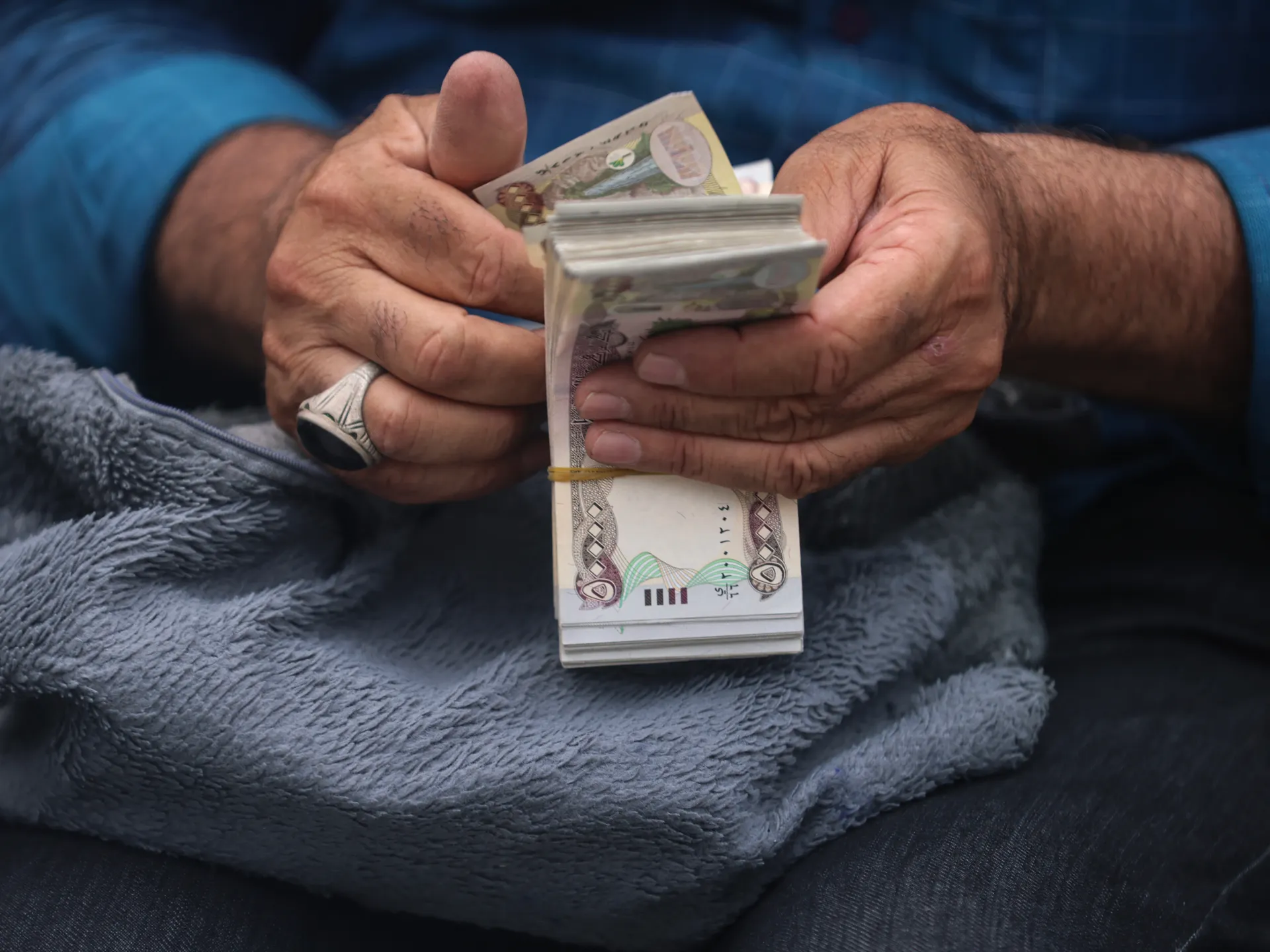
Baghdad, Iraq – Sitting anxiously in his small office in Jameela market, one of Baghdad’s main wholesale markets, food trader Hamza al-Rudayni is waiting to see what the coming days will bring.
A decision by the Iraqi government to devalue the country’s currency, the dinar, against the US dollar has left traders like him facing sudden losses and uncertainty over the prices they should charge for their goods.
Recommended Stories
list of 3 itemsend of list
“I don’t know what to do,” al-Rudayni told Al Jazeera after the devaluation reduced the dollar value of his dinar holdings, leaving him with less money to purchase imported goods.
“All I know is I woke up a few days ago to discover that I had lost 25 million Iraqi dinars (roughly $16,500 at the new exchange rate) because of this decision, while larger merchants lost billions,” he said.
Al-Rudayni entered the wholesale trade market last year after losing his previous job at a private Iraqi bank that he says was sanctioned by the United States Treasury. He sold his car and used his savings to start trading with a larger merchant before recently launching his own business.
With exchange-rate fluctuations making prices unpredictable, al-Rudayni said he and many other traders have chosen to suspend buying and selling until the situation stabilises.
“Market activity has ground to a halt,” al-Rudayni said. “Traders buy goods in dollars but sell them in dinars, as regulations prohibit them from selling in dollars.”
That is the root of the problem for traders: A weaker dinar means they have to pay more in local currency for goods imported in dollars, while making it harder to determine the right price they should charge customers for goods they already have in stock.
Why devalue?
On October 7, the Iraqi government introduced a new official exchange rate against the US dollar, in an attempt to ease a financial crisis triggered by the US-Israeli war on Iran and the disruption of oil exports through the Strait of Hormuz.
Before the war, Iraq exported around 3.5 million barrels of oil per day through the Strait of Hormuz, accounting for 90 percent of Iraq’s government revenue.
The Central Bank of Iraq decision set the rate at 1,520 dinars per US dollar for cash sales to the public. It was previously set at 1,320 dinars per dollar.
Devaluing the Iraqi dinar by almost 15 percent against the dollar allows the government to receive more local currency for every dollar of oil revenue it converts, helping it cover public spending, including government employee salaries.
“It is my decision and I am responsible for it,” Iraqi Prime Minister Ali al-Zaidi said during a meeting with parliamentary leaders on Thursday.
“I was facing three challenging options to cover salaries and other mandatory expenditures,” al-Zaidi added. “The first is to cut salaries by 35 percent … the second is to pay the salaries every 45 days … while the third is to resort to foreign loans.”
Al-Zaidi, a former banker, also said that his government had inherited public debt exceeding 208 trillion Iraqi dinars ($139bn at the new rate) when it took office in May. He said the government needed approximately 10 trillion dinars ($6.7bn) each month to cover salaries and other essential expenditure.
A shortage of liquidity
The crisis in the Strait of Hormuz had caused a severe financial squeeze for the Iraqi government.
Although the situation has eased somewhat in recent weeks after Iraq’s oil exports partially recovered, they have yet to return to their pre-war levels.
Mudher Mohammed Salih, the Iraqi prime minister’s financial adviser, said in August that the Central Bank of Iraq’s foreign currency reserves had declined from $106bn to approximately $80bn.
To make up for the loss of revenue, the Iraqi government has also turned to borrowing from domestic banks to cover salaries and other expenses.
A Finance Ministry official told Al Jazeera that ensuring salaries were paid on time remained the government’s main priority, describing this issue as a matter of domestic economic stability.
“Our hands are tied regarding the revenue and how to maintain enough money to ensure that we can pay the salaries,” the official, who asked to remain anonymous because he was not authorised to speak publicly, said.
Economists have warned that while adjusting the exchange rate could ease some immediate fiscal pressures, it would not address the deeper weaknesses in Iraq’s economy.
“Nothing in economics is sacred, including the exchange rate,” said Nabil al-Marsoumi, professor of economics at Al Maaqal University in Basra. “It can be adjusted, but only after all other options have been exhausted.”
“In any case, the exchange rate shouldn’t be used as a cover-up for failures in the state’s economic and fiscal policies,” he added.
The G20 finance ministers and central bank governors are gathering in Bangkok, Thailand, on Thursday amid an uncertain global outlook shaped by the US-Israel war on Iran.
The meetings are being held in conjunction with the annual meetings of the International Monetary Fund (IMF) and the World Bank, taking place in the Thai capital from October 12 to October 18.
Recommended Stories
list of 4 itemsend of list
Here are some of the key details about the meetings:
What are the G20, the IMF and the World Bank?
The G20 is an economic forum comprising 19 large economies, including the United States, China, the United Kingdom, Australia, Brazil, India, Japan, Indonesia and Saudi Arabia, as well as the European Union and the African Union.
The grouping has an annually rotating presidency, currently held by the US.
Together, the G20 countries account for about 85 percent of global gross domestic product (GDP) and three-quarters of global trade.
The G20 was established in 1999 as a forum for finance ministers and central bank governors to address shared economic concerns in the wake of the Asian Financial Crisis, before expanding into a broader forum for national leaders.
The IMF, based in Washington, DC, is an international financial institution that promotes international cooperation on monetary policy, trade and economic growth.
Its membership includes all but a handful of the world’s sovereign states, including North Korea, Cuba, the Vatican City and Monaco.
The World Bank, also based in Washington, DC, primarily serves as a provider of loans and grants to developing countries. It has 189 member countries.
The IMF and the World Bank were created at the 1944 Bretton Woods conference in the US, convened by the Allied Powers to establish the contours of the post-World War II international financial order.
Who will be attending the meetings?
Most finance ministers and central bank governors of the G20 will be in Bangkok, along with IMF Managing Director Kristalina Georgieva and World Bank Group President Ajay Banga.
US Treasury Secretary Scott Bessent will be a notable absence from the gatherings, as the top economic official of the world’s biggest economy and G20 chair.
US officials have cited “domestic engagements” for Bessent’s decision to skip the events, at which Washington will be represented by Deputy Secretary Francis Brooke and Undersecretary for International Affairs Erin Browne.
The G20 meeting, one of several gatherings of the group’s finance ministers each year, will help shape the agenda for the headline leaders’ summit in Miami, Florida, taking place on December 14-15.
What is on the agenda?
The economic fallout from the US-Israel war on Iran is expected to dominate discussions.
Attacks across the Middle East have upended economic activity across the region, while disruption to shipping in the Strait of Hormuz has driven a surge in energy prices worldwide.
Crude oil prices have exceeded $100 a barrel for much of the past eight months, placing a strain on government coffers and household budgets, particularly in the Gulf region and the rest of Asia.
In advance of the meeting, Australia’s Treasurer Jim Chalmers MP said he would use the discussions to call for an end to the conflicts in the Middle East and the reopening of the Strait of Hormuz “because that’s what the global economy desperately needs”.
“The war in the Middle East is having a devastating economic impact and is pushing up fuel prices, inflation and interest rates around the world,” Chalmers said in a statement.
Other issues likely to feature on the agenda include the ballooning debt levels of many countries, which exceed 100 percent of GDP in the US, Canada, Japan, Italy and France.
In a speech on Wednesday, Georgieva warned that mounting debt posed a threat to the global economy and that there was no “magic” formula that would allow governments to avoid tax hikes or spending cuts.
G20 members will also bring more specific individual concerns to the table based on their economic and geopolitical priorities.
The US, for example, has repeatedly expressed concern about “global imbalances”, a veiled reference to China’s state-driven industrial model that has allowed Chinese exporters to flood overseas markets with cheap goods.
US President Donald Trump has long claimed that China’s large trade surplus, which stood at a cumulative $938bn in September, proves that international trade is stacked against US manufacturers.
In a statement addressed to the IMF on Wednesday, Bessent called for action to address mismatched trade balances.
“This especially includes strengthening its analysis and engagement on the role non-market policies and practices and exchange rates play in driving external imbalances,” Bessent said.
“Policymakers around the world are having difficult discussions about how to sustain market-based systems amid distortionary policies from some economies that skew competition and hurt employment.”
Divisions and competing interests cloud the prospects for coordination, however.
At the last meeting of G20 finance ministers in Asheville, North Carolina, US, held on August 31 and September 1, member countries failed to issue a joint communique after China objected to language to do with trade.
The surge in soccer fans this summer was bad for some businesses in Los Angeles.
World Cup host cities had lofty economic expectations for the summer tournament. But the city’s hotels only got a 1% bump in occupancy, according to a report published this week by Hospitality Education and Research Organization, a project of the Hotel Assn. of Los Angeles.
Seventy-two percent of surveyed hotels said the tournament hurt their 2026 finances, and 48% called the impact “extremely negative.” Just 2% said it met projections.
Downtown occupancy reached 66% in June, down from 71% a year earlier, the report says. Room nights fell between 10% and 12%.
Hotel guests at the Metropole restaurant just opposite the main lobby at the Hotel Indigo in downtown Los Angeles in May.
(Genaro Molina / Los Angeles Times)
Ahead of World Cup tournaments, FIFA holds large blocks of rooms. But FIFA canceled or released up to 70% of the hotel room blocks it had reserved in host cities, including Los Angeles.
“We understood that we were maybe going to be disappointed with attendance going into the World Cup simply by the volume of cancellations that came out of the room block agreement,” said Jackie Filla, president and CEO of the Hotel Assn. of Los Angeles.
The disappointing turnout led to staff reductions. Of the hotels surveyed 82% reduced seasonal staff and more than six in 10 reported reducing employee shifts, scheduled hours, or permanent staff.
Hotels did raise prices, with the average daily rate hitting $228, the highest of any comparable L.A. event in three years. But occupancy was 71%, well below the 83% recorded during Taylor Swift’s Eras Tour.
A visitor walks in the lobby of the Hotel Indigo in downtown Los Angeles.
(Genaro Molina / Los Angeles Times)
The survey drew 58 responses from 210 hotels, and the analysis was done by travel-data firm Rove using CoStar and AirDNA data. International visitors were also scarce, with Los Angeles welcoming 700,000 international arrivals in June and July — roughly 80,000 visitors below 2024 levels for the same period, the report says.
“We particularly didn’t see a lot of foreign visitors and that’s something that was disappointing,” Filla said. “Foreign visitors do spend three times the amount of money as the average domestic traveler.”
Short-term rentals, meanwhile, gained. Their demand rose 23% and revenue 21% versus July 2024, while hotel revenue fell 3.3%. Airbnb, the tournament’s official fan accommodation, offered new hosts $750 incentives.
The city is currently weighing a temporary proposal to ease its short-term rental rules through the end of 2028 to accommodate tourists. “That will really, truly undercut the business of hotels,” Filla added. “We saw some of that with the World Cup.”
The worry is carrying over to the Olympic Games, set to be hosted in Los Angeles in 2028. Six in 10 surveyed hoteliers expect an Olympic rental surge to hurt their bookings and rates, the report says.
The World Cup “gave us false hope to recover from a negative year,” one Los Angeles hotelier said, according to the report. “I also feel [the] same thing will probably happen for [the] Super Bowl and Olympics.”
Iraq, Bahrain, Kuwait and Qatar face double-digit declines in GDP amid the fallout from the US-Israel war on Iran.
Published On 13 Oct 202613 Oct 2026
The economy of the Middle East and Central Asia is set to shrink in 2026 amid the fallout of the US-Israel war on Iran, with countries such as Kuwait and Qatar facing double-digit contractions, according to the International Monetary Fund (IMF).
The region’s gross domestic product (GDP) is forecast to contract by 0.3 percent this year, a sharp downgrade from the 1.9 percent expansion projected in April, the IMF said in its latest economic outlook on Tuesday.
Recommended Stories
list of 4 itemsend of list
The IMF cited the prolonged disruption to shipping in the Strait of Hormuz, a conduit for one-fifth of global oil supplies in peacetime, for the downgraded outlook.
Kuwait, Iraq and Qatar are forecast to have the most severe economic contractions, with their GDPs expected to shrink by 16.7 percent, 16 percent and 15.6 percent, respectively.
Bahrain’s GDP is forecast to contract by 11.3 percent, while Iran’s economy is projected to shrink by 7.6 percent.
Saudi Arabia, which has partially offset the hit to its energy sector by boosting oil exports through the East-West pipeline, is projected to record negative growth of 3.3 percent.
Kyrgyzstan is expected to have the strongest growth in the region, with GDP forecast to expand 9 percent.
The Middle East and Central Asia is the only region that is expected to experience negative growth in 2026.
Emerging and developing Asia’s GDP is forecast to grow 5.1 percent, while the economies of Sub-Saharan Africa and Latin America and the Caribbean are projected to expand 4.5 percent and 2.3 percent, respectively.
The United States and China, the world’s two largest economies, are forecast to register growth of 2.3 percent and 4.5 percent, respectively, while the eurozone’s GDP is estimated to grow 1.1 percent.
The IMF said it expected global GDP to grow 3.1 percent, up from 3 percent in its previous outlook.
The Washington, DC-based institution said while economic activity had proved resilient this year, the global economy faced multiple risks.
“Further escalation in conflicts, a reassessment of expectations surrounding artificial intelligence (AI), renewed trade tensions, and fiscal vulnerabilities could weaken growth,” it said.
“On the upside, stronger momentum in AI investment and productivity gains from AI or a sustained easing of geopolitical and trade tensions could strengthen growth.”
The Swedish academy says the academics’ models are ‘now used by central banks and governments around the world’.
Published On 12 Oct 202612 Oct 2026
The 2026 Nobel Prize in Economic Sciences has been awarded to US academics Robert Hall and Michael Woodford for their work on how monetary and fiscal policy can help stabilise fluctuations in the economy, according to the Royal Swedish Academy of Sciences.
The winners of the prestigious award, formally known as the Sveriges Riksbank Prize in Economic Sciences in Memory of Alfred Nobel and the final prize to be given out this year, were announced on Monday.
Recommended Stories
list of 4 itemsend of list
The two laureates developed new macroeconomic models that improve people’s ability to implement effective stabilisation policies, enabling fiscal and monetary policy measures that can reduce damaging swings in the economy.
“The laureates’ work has provided us with a stable theoretical foundation for the models that are now used by central banks and governments around the world,” John Hassler, chair of the Committee for the Prize in Economic Sciences, said in a statement.
“With them, we are better equipped to deal with shocks in the economy, such as energy crises or sudden changes in how much households consume.”
During the oil crises in the 1970s, the existing Keynesian models used to determine when and how measures should be implemented to tackle recessions or other economic fluctuations stopped working. Hall and Woodford then developed new tools to understand what policy responses could be the most effective.
“Rather than basing the models on statistical links between macroeconomic variables, such as inflation, production and consumption, they chose to build them on a microeconomic foundation,” the academy said. “This encompasses an understanding of how the total mass of individual households and businesses affect the economy through their actions.”
The economics prize, first awarded in 1969, is not part of the five original awards created in the 1895 will of industrialist and dynamite inventor Alfred Nobel, but was instead established by Sweden’s central bank.
The majority of previous laureates have been from the United States. Only three women have ever won, most recently Claudia Goldin in 2023 for her work on how gender has affected pay and employment over time in the US.
Last year’s winners – Joel Mokyr, Philippe Aghion and Peter Howitt – won for their work on “creative destruction” and how new technology and production methods can boost growth and living standards.
Like the other Nobel awards, the economics prize consists of a diploma, a gold medal, and a $1.2m cheque.
Finance officials from around the world will gather in Bangkok this week under the shadow of a widening war in the Middle East, the biggest-ever energy supply shock and rising interest rates that together pose daunting risks to already-sluggish global economic growth.
The US-Israel war on Iran, now in its eighth month, and its inflationary impact are slated to dominate the agenda and sideline conversations during the annual meetings of the International Monetary Fund (IMF) and World Bank, held outside Washington for the first time in three years.
Recommended Stories
list of 4 itemsend of list
IMF Managing Director Kristalina Georgieva told Reuters News Agency that 18,000 people were registered to attend the meetings, 4,000 more than the last off-site meetings held in Morocco in October 2023.
Notably absent will be United States Treasury Secretary Scott Bessent, who dispatched two senior officials in his stead while he handles some “domestic engagements”, a US official said. Federal Reserve Board Chairman Kevin Warsh will attend and is slated to participate in a public event with Georgieva on October 16.
Several other finance ministers were also staying home due to domestic budget and election duties, but most central bankers would attend, Georgieva said.
Bessent’s decision to skip the high-profile gathering and a meeting of the Group of 20 (G20) major economies, which the US leads this year, may frustrate counterparts amid rising tensions over the Iran war, Ukraine’s battle against Russia’s invasion, and the US move to impose sanctions on the International Criminal Court.
Fossil energy reserve release
The Group of Seven (G7) countries have agreed to release 100 million barrels of diesel and crude oil from emergency reserves under pressure from US President Donald Trump, who is keen to see lower petrol prices before November elections that could see his Republican Party lose control of Congress.
Trump on Friday announced a deal with Russia that would provide even more diesel to global markets and a temporary waiver of US sanctions designed to deprive Moscow of revenues for its war on Ukraine. The move drew swift criticism from Ukrainian President Volodymyr Zelenskyy.
More than one billion barrels of oil have been released, mainly from onshore commercial inventories, since the start of the war on February 28. But industry executives say the amount of oil in storage that is accessible to the global market is running low, making the market more fragile and fuelling pressure on prices.
The IMF has signalled little change in its forecast for three percent global growth in 2026, and may edge its forecast for next year slightly higher. But some countries will see downgrades, including Ukraine, now in its fifth year of war against Russia’s invasion, and Gulf countries hit by Iranian strikes and sharply reduced energy exports.
IMF research released on Tuesday showed that sharp spikes in food and energy prices are an increasingly common source of crises that drive inflation expectations higher for longer, worsen poverty and threaten economic stability.
One headache for policymakers is the growing public debt burden that is sapping growth and adding inflationary pressures. The IMF says public debt is at the highest level since World War II and will exceed 100 percent of gross domestic product (GDP) before 2030.
Advanced economies, led by the US, have the highest debt-to-GDP ratios, but emerging markets and low-income countries are particularly vulnerable, given a perfect storm of challenges: capital outflows in search of higher US rates, weather extremes triggered by the El Nino climate phenomenon, and a lack of investment in artificial intelligence (AI), which has mitigated negative supply shocks in the US and other rich countries.
Developing countries are particularly vulnerable given high public debt levels that will have to be renegotiated at higher interest rates. Together, they face $400bn in debt payments to external creditors in 2026, and interest payments already exceed 10 percent of revenue on average.
Many lower-income countries are worried about new IMF recommendations for loan programmes that call for fewer but deeper reforms as a condition for approving lending, a change that many fear will lead to painful austerity measures.
Elon Musk’s latest comments come days before Mukesh Ambani’s low-cost Reliance Jio’s parent launches India’s largest-ever initial public offering.
Published On 11 Oct 202611 Oct 2026
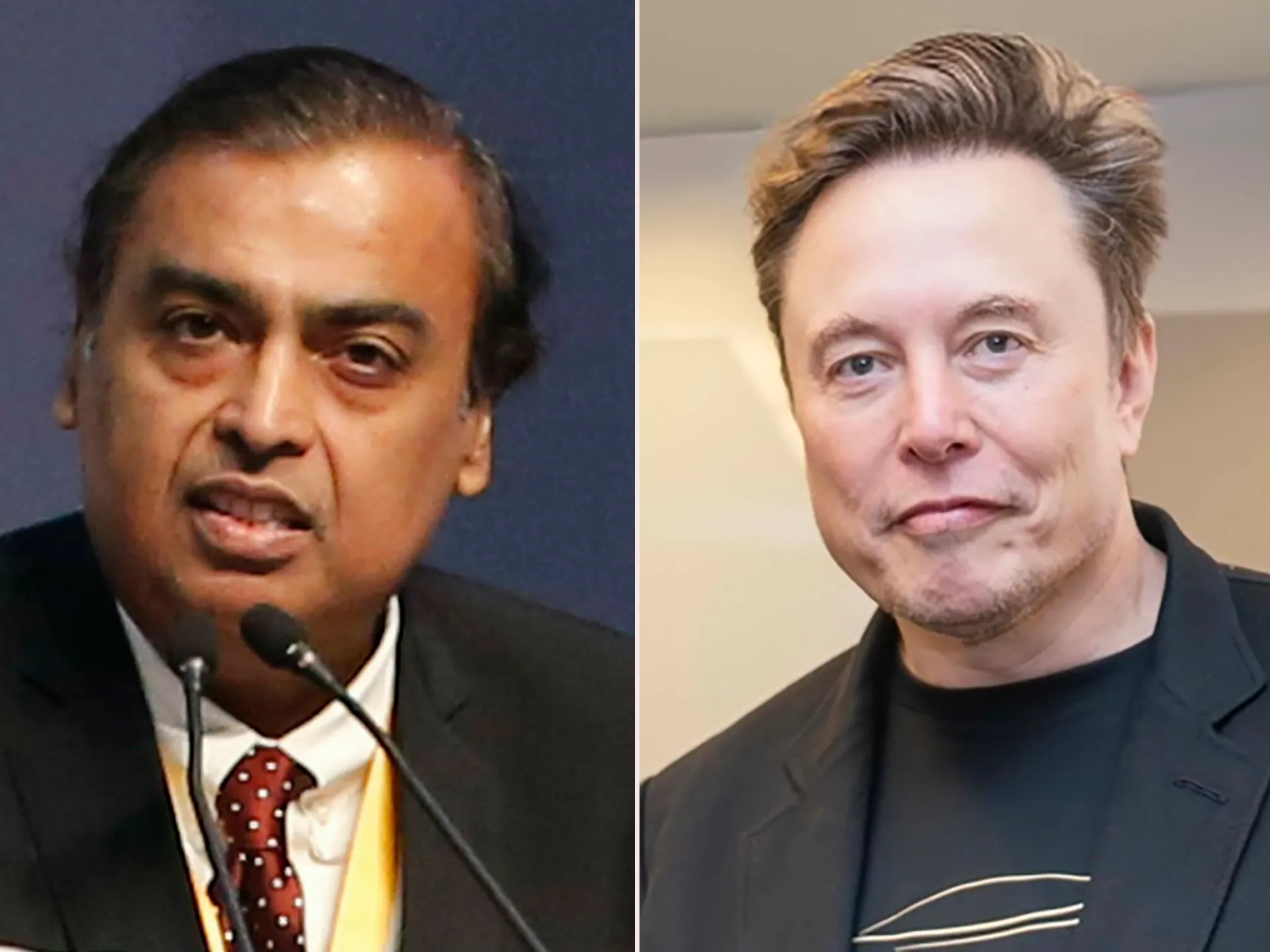
Billionaire entrepreneur Elon Musk has said he would price his Starlink satellite internet service affordably in India to take on Mukesh Ambani’s low-cost Reliance Jio, escalating his attacks on the rival tycoon days before Jio’s parent launches the country’s largest-ever initial public offering (IPO).
Jio Platforms, which owns the telecom arm, is targeting a valuation of $106bn in the offering. Much like SpaceX-owned Starlink, Jio’s satellite venture is also awaiting final security clearance to launch.
Cheap data is the playbook that built Jio in India, and the one Musk has used in markets like Kenya to unsettle local telecom players. SpaceX now plans to enter the mobile carrier market itself, starting in the United States.
Musk did not specify prices for India, where mobile data costs about rupees 7.74 ($0.08) per gigabyte, among the lowest in the world.
“Obviously, if Starlink is too expensive in India, no one will buy it, so SpaceX will need to make pricing affordable,” he said in a post on his social media platform X on Saturday.
“The reality is that competition would greatly benefit the average citizen in India by giving them more choices, as it always does. Ambani’s profits will be lower, but he is not going out of business,” Musk added.
‘Prime Minister Ambani’
Musk’s remarks were the latest in a series of X posts in which he accused Prime Minister Narendra Modi’s government and Ambani of stalling Starlink’s entry into one of the world’s biggest internet markets to favour market leader Jio.
The posts have marked a sharp turn for Musk, who has long enjoyed a warm public rapport with Modi.
India’s government has denied any bias in its approval process, noting that the three satellite ventures seeking to launch, including Starlink’s and Jio’s, are all awaiting final security clearance.
Late on Friday, Musk taunted Ambani directly, addressing him as “Prime Minister Ambani” and asking whether he would “consider allowing Starlink to compete”.
WHEN Ferne McCann said she wanted followers who were “coachable and consistent and quietly sick of where they are” to join her business, nearly 3,000 people replied that they were ready.
The former Towie star, 36, didn’t however say what the opportunity actually was or what it involved – instead claiming it pays for her family’s security and her daughter’s education – and can even be done around a full- time job.
Ferne McCann has worked with Herbalife for the past nine yearsCredit: instagram/fernemccannShe has been encouraging her followers to sign up alongside herCredit: instagram/fernemccann
The business in question? Ferne wants you to join her and become an independent distributor for the controversial company Herbalife.
For nine years Ferne has been encouraging people to sign up for the global multi-level marketing (MLM) corporation that develops and sells dietary supplements.
But behind the glossy facade troubling questions have been asked about the multi-billion pound company.
Herbalife was once regularly pushed by reality stars, but now Ferne is among a handful, alongside Danielle Armstrong, who continues to work with them after a string of concerns.
From the very beginning, Herbalife was a direct-selling company, peddling products to the public through a network of members.
Nothing wrong with that. Plenty of other companies – such as cosmetics giant Avon – have the same model.
Where Herbalife has attracted criticism, however, is in their own particular version of the model.
In the past, members would receive money not just from selling products, but also from bonuses following sales made by new members they had recruited to the brand. New recruits were encouraged to buy a substantial amount of starter ‘inventory’, which meant the person who recruited them earned commission straight away even if the products had not yet sold.
But in 2016 the company was subject to a two-year investigation by America’s Federal Trade Commission.
They concluded that the structure incentivized recruitment over actual retail sales. Herbalife was ordered to pay £147million compensation and told to revamp its compensation structure so that distributors are rewarded for what they sell, instead of fundamentally rewarding recruiting over actual retail sales.
Since the ruling, the recruiter will only get paid commission after the new recruit actually sells those products to real customers and shows receipts.
The ruling did little to quell the fears of some that Herbalife still peddled unrealistic dreams to those who could least afford them.
And despite concerns, last month Ferne was busy recruiting again – sparking outrage and concern amongst ‘victims’ of MLM schemes in the past, who felt she had failed to declare she would be earning money if people signed up and started selling.
A spokesperson for Herbalife confirmed she would not make money just from people being recruited, which appears to be a common misconception about the company.
They said: “Many distributors simply sell products to consumers at a profit. Those who choose to can build their businesses further by coaching their own sales teams of independent distributors and earn a commission on their sales as well as their own. Herbalife distributors are not paid to recruit new members – a practice which is illegal in most countries globally.”
In a surprising move, Ferne admits that MLMs are ‘vague’ but doesn’t explain why – or indeed spell out her business model.
Alongside a series of glam images of herself, Ferne wrote: “Almost 9 years ago I joined a business I didn’t fully understand, with a baby on the way and no plan B.
“Today it pays for my girls’ education, it’s given my family a level of security I didn’t think was an option for me any more.
“I want to be real with you about what this is, because I think the MLM industry does itself no favours by being vague!
“It is flexible. You genuinely can build it from your phone, around school runs, around a full-time job, around whatever your life currently looks like. That part is true and it’s why I’m still here.
“I’m looking for people who are properly ready. People with a work ethic. People who are coachable and consistent and quietly sick of where they are. If that’s you, you already know it.
“I’ll train you, I’ll be in your corner, and I’ll show you exactly what I do.”
There was no direct mention of Herbalife or how anyone signing up, or indeed Ferne, would actually be financially rewarded. I took the plunge and followed the others, who mostly appeared to be women, by writing I was ‘ready’.
I instantly received a DM telling me: “There’s never been a better time to start, it’s exploding…we have such a slick system for anyone who’s ready.”
There was also an invite to watch a 20 minute Information Opportunity Video, hosted by Ferne, which is the point where I got cold feet.
Ferne – and her Towie co-star Danielle Armstrong – work alongside a group of women who have signed up to join themCredit: instagram/fernemccannRonaldo has worked with the brand in the past – it relies heavily on celebrity endorsementCredit: CAPITAL PICTURES
Hundreds will no doubt be desperate to join – tempted by the promise of being able to work around the school run.
There are clearly still some concerns. Many followers were shocked to see Ferne promoting an MLM, with one person remarking: “It’s so disingenuous isn’t it. She knows that her downline won’t be as successful as her, because the only reason she has a decent downline herself is due to her being a celeb and having followers that way.”
Finding someone willing to talk about their experience with Herbalife is tricky – there appears to be a wall of silence surrounding former distributors.
One woman, who didn’t want to be named, told me how there have been issues with the company for decades and she lost around £15k when she signed up back in the nineties.
She explained: “I signed up through an old work colleague who looked like they were making good money.
“Little did I know they were doing it by piling stock onto the people they signed up, encouraging them to get to the next level or event.
“I trusted them and had no experience of MLM before and thought well if she can do it so can I.”
But it was far from an easy ride.
“Hindsight is a great thing isn’t it?” she said. “I lost around £15k I’d say over a two-year period of trying to make it work. I never encouraged customers to do what I did and that’s maybe why it didn’t work as it did for my referrer. I couldn’t sit with people getting into massive amounts of debt so I could earn commission.”
More recently there have been a lot more stories of MLM nightmares.
Laura Whitby, creator of The Nuance Nurse, with several years’ experience in network marketing and direct selling, spoke out after seeing Ferne’s post.
She still works within the direct selling industry but believes the criticism of MLMs is ‘justified’. She has not worked with Herbalife.
She explained: “I spent nearly three years with another company selling thousands of pounds of products every month. But between the money I was spending maintaining rank and trying to qualify for commissions, I barely earned anything.
“Three years of work, thousands of pounds spent, and God knows how many hours. I’ll never get back. And that’s where I want to discuss the difference between network marketing and community commerce. Because in my experience of MLMs, you open your back office and there’s quite literally a group of people with you at the top.
Laura added: “If a business is supposedly about selling products, why is there so much emphasis on recruiting people? And when we’ve got celebrities with enormous platforms promoting these opportunities, I think we need to be asking some serious questions about what they’re actually signing up for.”
Herbalife have denied this is the business model they are using.
The company is a long way from its humble beginnings.
It was founded in 1980 by diet product salesman Mark Hughes who formulated his own protein shake.
The business which he first ran from the boot of his car quickly snowballed and by 2011 its sales had grown to more than £3bn in around 90 countries.
The investigation by America’s Federal Trade Commission in 2016 was a minor setback.
It ruled that it had operated unfairly, cheating hopeful salespeople out of hundreds of millions of pounds with its high-pressure multi-level marketing scheme.
FTC chairwoman Edith Ramirez branded Herbalife’s sale of a “dream” career working from home as “an illusion” and many members “made nothing or lost money on their initial investment”.
And as one bruised former distributor put it: “I would be very wary of something that sounded too good to be true!”
What Herbalife told us:
A Herbalife spokesperson said: “Herbalife is a premier health and wellness company, community and platform that has been changing people’s lives with great nutrition products and a business opportunity for its independent distributors since 1980.
“There are a number of different reasons that people join Herbalife, including to supplement their regular income at a time when household budgets are being stretched. As self-employed individuals, all of our distributors choose how to manage their own independent businesses, and how to attract customers and new distributors.
“Many of them provide tailored one-to-one support to help motivate and coach customers toward their goals at nutrition clubs and fit camps. Other activities include wellness challenges and sports activities that help their customers embrace a healthier, more active lifestyle, as part of a supportive community.
“Our distributors choose how to manage their own independent businesses within the framework of our comprehensive set of rules, policies, and code of conduct designed to promote ethical and responsible business practices. Herbalife works hard to support our distributors with training and practical guidance to help them build their businesses responsibly.
“Herbalife is transparent about what to expect from becoming a Herbalife distributor through our Statement of Typical Distributor Earnings, which is available on our website.”
Visa probe also targets universities for allegedly exploiting international students to reduce US wage costs.
Published On 8 Oct 20268 Oct 2026
The United States government is suspending several major tech companies, including Adobe and Microsoft, from a programme that gives skilled foreign workers a path to permanent residency amid allegations of fraud.
This comes amid pressure by the White House on companies to hire more Americans. “Our message to Microsoft is: You’re a great American company, but you’ve got to hire great American workers,” US Vice President JD Vance said at a news conference on Thursday.
Recommended Stories
list of 4 itemsend of list
Vance added that the Redmond, Washington-based tech giant laid off 6,000 American workers, while obtaining 6,300 H-1B visas and almost 3,000 green cards.
“You cannot lay off American workers and replace them with foreign indentured servants,” Vance said.
“When someone comes in, they are completely subordinate to that company. If they lose that job, they have to leave the country.”
Across the tech sector, there have been more than 131,000 layoffs in 2026 alone, according to Layoffs.fyi, which tracks job cuts across the tech and startup industries.
Neither Adobe nor Microsoft responded to Al Jazeera’s request for comment.
Secretary of Labor Keith Sonderling also said that several major information technology firms will be suspended from the programme as well. Among them are Indian tech giants Infosys and Tata Consultancy Services.
The Department of Labor also said it had uncovered $22bn worth of visa fraud.
“Today we are protecting something far more valuable than any dollar amount. We are protecting the American worker,” Sonderling said.
During the news conference, officials also announced a crackdown on alleged J-1 visa fraud involving nine universities, including MIT, Harvard, Yale, Stanford and Cal State, amid allegations that they brought in international students to undercut US wages. A J-1 visa allows foreign nationals to enter the US temporarily for education or cultural programmes. Universities use these visas to bring in international PhD candidates or scholars.
Vance claimed that when schools employ an American as a researcher, that person earns $20,000 more than someone brought in under a J-1 visa.
Al Jazeera asked for data supporting this claim, but the White House did not respond.
Microsoft’s stock slumped 7.5 percent on the heels of the news, while Adobe was up 4 percent in midday trading on Thursday.
Islamabad, Pakistan – More than 9.5 million people have received subsidised petrol under a special fuel relief scheme launched by Pakistan’s prime minister, Federal Minister Shaza Fatima Khawaja told Al Jazeera on Wednesday.
The initiative, aimed at lower-income citizens, comes as the government attempts to help households deal with fuel price increases tied to the war on Iran.
Recommended Stories
list of 4 itemsend of list
The scheme, launched in September, offers 100 rupees ($0.36) off every litre of petrol to owners of motorcycles, rickshaws and small cars, through a text-message system.
Petrol prices have risen by nearly 50 percent since the war began on February 28, adding to Pakistan’s economic hardship and putting further pressure on consumers already grappling with rising inflation.
How the scheme works
Explaining the process, Khawaja, the minister for information technology and telecommunications, said applicants text their national ID number, vehicle registration, and province to 9771. A second message, sent before each visit to a pump, generates a token redeemable anywhere in the country.
Two- and three-wheelers get 500 rupees ($1.80) a week, capped at four tokens a month. Cars with engines of up to 800cc get 1,000 rupees ($3.60) every 10 days, for three tokens monthly.
After complaints, registration, once a paid service, was made free, and a five-litre minimum purchase was scrapped for the same reason.
Khawaja told Al Jazeera the system had been redesigned based on experiences of users on the ground.
Riders no longer need the vehicle to be registered in their own name, as long as they can supply the exact registration date shown on the documents.
“Even in my own house, there’s a bike registered in our name that our cook uses for daily errands,” Khawaja said, explaining why the ownership requirement for two- and three-wheelers was dropped on September 20.
An earlier cash-transfer scheme in April had reached just over a million bike owners, she said, largely because disbursement required a bank account most riders did not have.
‘The relief is decent’
Government officials say that the scheme has been expanded to include wider sections of society, especially those who depend on their vehicles to generate income.
“There’s a benefit; it’s not like there’s nothing,” Shakeel Ahmed, 45, an electrician in Islamabad, told Al Jazeera. “The relief is decent for people who use it normally, for local trips. But for people like us, who put in 1,000 to 1,500 rupees [$3.60-$5.40] of petrol a day, it’s not enough.”
Safiya Aftab, an economist, told Al Jazeera the scheme has reached the people it was meant to.
“The scheme has indeed reached low-income segments of society, people who typically use two-wheelers and 800cc cars. So yes, it’s a good thing that they are subsidising the poor,” she said.
Aftab, however, also pointed to a levy – 114 rupees ($0.41) for every litre – that the government charges. This, she said, was helping the government raise revenue. She said the government is now earning more than 100 billion rupees ($361m) a month from the levy, which is fuelling inflation.
“The levy was originally meant as a sort of environmental tax, to discourage the use of petrol. Now it has become a full revenue earner for the government, one that helps keep the fiscal deficit down,” the economist said.
What it costs and for how long
The Pakistani government has approved 75 billion rupees ($271m) for the scheme’s first three months, through November.
Petroleum Minister Ali Pervaiz Malik put the running cost at 25-30 billion rupees ($90m-$108m) a month at launch. By late September, he said, it had risen to 35-40 billion rupees ($126m-$144m).
Malik has said the government is prepared to run the scheme for up to 10 months, or “until the end of the war”, if needed.
Pakistan is currently under a $7bn International Monetary Fund programme, and an IMF team is in Islamabad this week for talks with the government as it seeks to keep its fiscal commitments on track while responding to the fuel shock.
Officials familiar with the government’s talks with the IMF say the Fund wants relief capped at three months and routed instead through the Benazir Income Support Programme, the country’s main cash-transfer scheme.
Khawaja said the IMF’s position from the outset was that relief had to be targeted, not universal, which was why the scheme was built around actual token use rather than a blanket price cut.
Who it leaves out
But there are claims that the relief is not reaching all. Cars with engines larger than 800cc, diesel vehicles and public transport are excluded entirely, leading some experts to suggest that the subsidy scheme risks missing the most vulnerable sections of Pakistani society.
“A poor household that uses public transport, walks to work, or relies on diesel-powered transport may receive nothing while still facing higher food and transport costs,” Khaqan Najeeb, a former adviser in Pakistan’s Ministry of Finance, told Al Jazeera.
More than 8.1 million tokens had gone to two- and three-wheelers by late September, compared with fewer than 380,000 for cars, Malik said. A November 2024 Gallup Pakistan survey found that 79 percent of respondents, in rural and urban areas alike, said they use public transport such as buses or wagons.
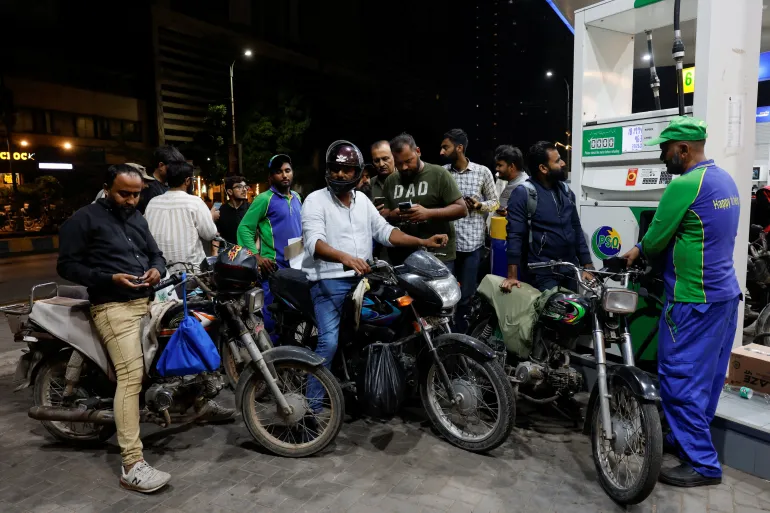
People wait to refuel their motorcycles at a petrol station following the rollout of a fuel relief scheme, which provides a fuel subsidy for eligible motorcycles, rickshaws and vehicles with engines of up to 800cc, in Karachi, Pakistan, September 17, 2026 [Akhtar Soomro/Reuters]
Does the relief go far enough?
At 100 rupees a litre, the maximum monthly saving is 2,000 rupees ($7.20) for a motorcycle user and 3,000 rupees ($10.80) for an eligible car owner, Najeeb said, calling it “useful household relief, but not enough to offset the broader cost-of-living shock”.
Petrol has climbed from 266 rupees ($0.96) a litre before the war to nearly 395 rupees ($1.42), despite a partial rollback in April. Inflation rose to 10.3 percent in September from 7 percent in February, Najeeb said.
Sajid Amin Javed, a senior economist at the Sustainable Development Policy Institute in Islamabad, said the relief was “minimal”, but added that this was understandable given the IMF constraints on Pakistan.
“The relief is minimal, and that is understandable as we are in an IMF programme,” Javed told Al Jazeera, arguing that cutting the petroleum development levy, which still adds 114 rupees to every litre, would deliver broader relief than a capped subsidy.
“The government is using the petroleum development levy to fill its revenue gap, but that comes at a significant cost in terms of inflation, growth and household welfare,” Javed said.
Najeeb, however, argued the scheme should not become a permanent fixture of Pakistan’s energy policy – and should be used only to make oil price shocks “less damaging”.
MINI bars at your seat, fancy amenity kits and the ‘world’s biggest business class’ – British Airways’ latest announcement is transforming the way Brits will fly with the flag carrier.
The airline’s huge new upgrades are part of the A380 retrofit programme.
First look at British Airways’ huge new A380 retrofitCredit: British Airways
Set to cost millions, it will see new seats in every single cabin, including in World Traveller – economy – and its premium economy, World Traveller Plus.
It will also have what they are calling the world’s biggest business class as well, with 106 Club Suite seats which will be on the upper deck.
Sign up for the Travel newsletter
Thank you!
This is alongside 12 seats in First, 84 in World Traveller Plus and 215 in World Traveller.
The new amenity kits have been rolled out as well – First Class passengers will get bags designed by Swaine with Wildsmith toiletries, and Business Class will get unique patterned bags with anatome products.
First passengers will be getting a few other upgrades as well.
This includes new pyjamas with a bespoke tartan pattern design, along with slippers and blankets.
A built in mini bar will also mean First passengers can get their own snacks without having to go to the galley, with chocolates, mints and even electrolytes.
A new dining experience will include onboard Bollinger, and a wide cocktail menu. Even racks of lamb and grilled salmon will be on the menu.
A new food and snack menu is being rolled outCredit: British AirwaysIt will have the world’s biggest business class with the most seats onboardCredit: British AirwaysNew seats are being rolled out across all classesCredit: British AirwaysThere’s new amenity kits tooCredit: British Airways
British Airways boss Sean Doyle said: “This is a major milestone for British Airways and the future of our A380 fleet, marking one of the most significant transformations we’ve ever undertaken on any aircraft.
‘We’ve completely reimagined the customer experience, introducing new and updated seats in every cabin, all carefully considered to deliver greater comfort and an elevated customer experience.
“From redesigned interiors and upgraded dining to new amenities and service delivery, every detail has been thoughtfully designed with our customers front and centre, helping them to have a more seamless and memorable experience when they fly with us.”
Off the plane, new airport lounges are also being introduced.
First class passengers get an in-seat mini barThe airline has teamed up with Swaine and Wildsmith for First Class amenity kits
A new lounge at Heathrow Terminal 5 C will open by the end of 2028, while the Heathrow Arrivals lounge is being redesigned.
Lounges across the US including Boston, Newark and San Francisco are being updated, along with Geneva.
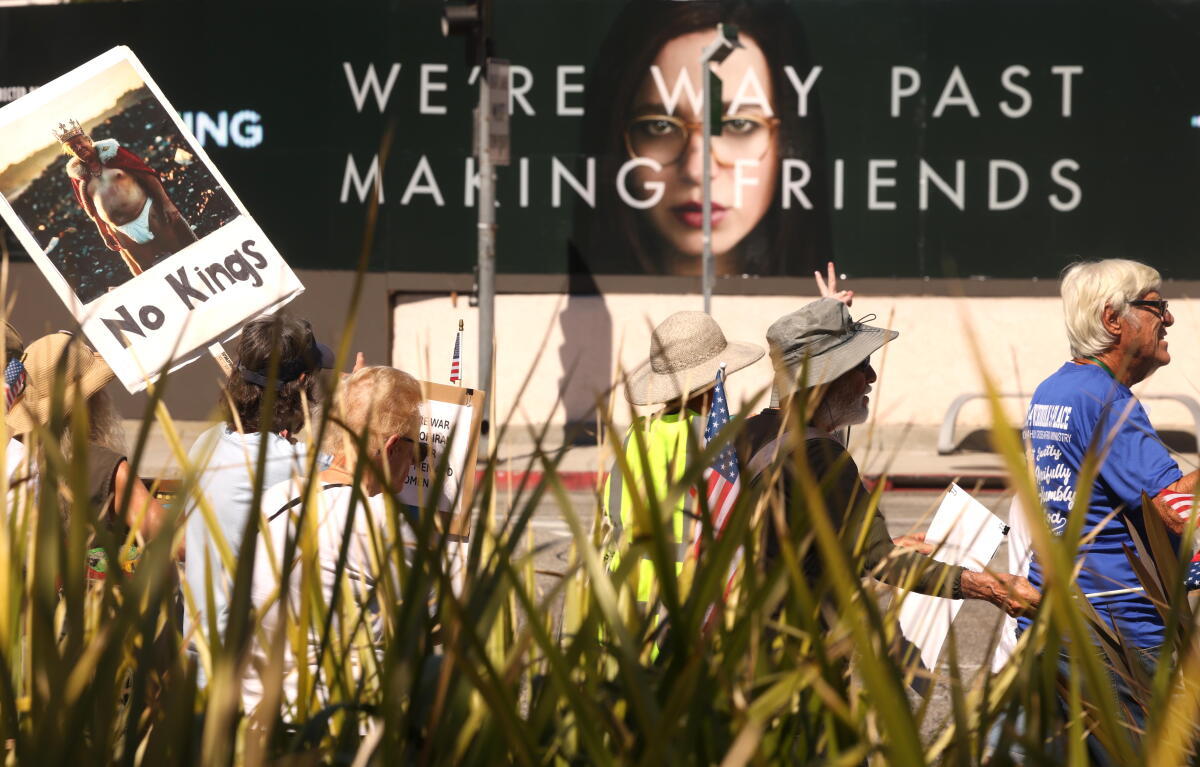
On a sweltering Saturday, around 100 people gathered in Culver City for a rally and march to deliver a message to several major media companies: Help us protect our democracy.
Spotlighting Sony Pictures Studios, Apple, Pinterest and Amazon MGM Studios, all with local offices, protesters demanded that the companies sign on to the “Business for Democracy Pledge” ahead of the elections in November.
After hearing from a few speakers outside Culver City’s City Hall, the band of demonstrators marched a few blocks to the offices of Sony Pictures Studios. From there — walking by posters for the upcoming Sony release “The Social Reckoning” — they made their way back across downtown Culver City to stop outside the historic Culver Studios, now owned by Amazon MGM.
Local groups Culver City and Friends Rising and Keep Showing Up led the protests. This week, they sent letters to the chief executives of all four corporations asking them to sign the pledge. No response has been received. (Messages from The Times to spokespeople for all four companies also were not returned.)
“Businesses and particularly large corporations like Sony, Apple, Pinterest and Amazon, who are our focus today, have a particular role to play in defending democracy,” Phil Ansell, leader of Culver City and Friends Rising, said before the rally. “They have weight, and this administration cares what business says.”
He added, “We’ve seen internationally that in situations where democracy has been under threat, that when the business community stands up for democracy, it can make a huge difference in preventing a full-on shift to authoritarianism.”
Bryan “Bubba” Fish, Vice-Mayor of Culver City, was on hand as a featured speaker and noted how Culver City, a relatively small community that is home to offices for multiple international media companies, is uniquely positioned to help ensure residents’ voices are heard.
“The message of this event is that these major corporations, that are the largest and richest corporations in the history of the planet, benefit from our civilized society,” Fish said before the rally. “…The only reason they’ve been able to grow to the size that they are is because we have stable, legitimate governance, and the bare minimum should be that they commit to defending and speaking out when our elections and our democracy is at risk. That should be the floor.”
Fish added, “We’re here saying you’re a part of our community, stand for free and fair elections and defend democracy alongside us.”
Demonstrators march to the offices of Sony Pictures Studios and past posters for the upcoming Sony release “The Social Reckoning.”
(Genaro Molina/Los Angeles Times)
Reverend Dr. Frances Wattman Rosenau, pastor at Culver City Presbyterian Church, spoke outside of both Sony and Amazon MGM.
“Democracy is one of our core values as a country, and me as a person of faith, I care deeply about giving voice to the voiceless and making sure that no one is marginalized,” Rosenau said while walking from one location to the other. “And calling our business partners to come alongside us is an act of partnership. It’s time for everybody to be in the boat and rowing, affirming what we stand for as a people for the common good.”
The Culver City event is one of a series around the country this week in collaboration with the group May Day Strong. Representatives of other local activist groups, including PowerSwitch Action, National Nurses United and Singing Resistance Santa Monica, were also in attendance on Saturday.
Amy Schur, campaign director with Alliance of Californians for Community Empowerment (ACCE), is involved with coordinating the national campaign for the “Business for Democracy” pledge.
“We’re in a unique moment where people are rising up all across the country of their own accord,” Schur said. “People are seeing what’s at stake. So they’re ready to march, they’re ready to speak out.”
Schur noted that much work remains to harness that energy and turn it into real change.
“The critical question is, can we do it in ways that are strategic and have the impact that we need in this moment?” she said. “Just marches are not enough because it’s kind of easy to ignore those. But when it’s a march with a purpose and calling out big corporations, it has more impact.”
The march in Culver City was one of several nationwide actions this week.
(Genaro Molina/Los Angeles Times)
Ansell noted that companies such as Apple and Amazon spoke out after the insurrection of Jan. 6, 2021 and hopes they will continue in that same spirit.
“We’re here today to say don’t wait for the equivalent of January 6 to happen again,” Ansell said. “Commit yourself now publicly to opposing any efforts to undermine this election. And our view is that to the extent that many large corporations across this country take that public stance, it will significantly reduce the risk of a major effort to subvert this election.”
Organizers see Saturday’s protest as part of an ongoing effort and hope more people will feel empowered to participate.
“People are not alone,” Ansell said. “No one should feel like they have to stay home alone and despair. There are many opportunities for action, and we have to be prepared. Today’s action is one of many to defend this election.”
WASHINGTON — A federal court in Texas on Friday issued a ruling temporarily blocking the Trump administration from building a border wall and other infrastructure across the state’s Big Bend region.
The news marks a major win for landowners, businesses and environmentalists in the region who have united to oppose the planned infrastructure projects, which are part of a $46-billion effort by the Trump administration to line the southern border with a mix of 30-foot steel walls, vehicle barriers, roads and surveillance technology.
Judge Kathleen Cardone said in her ruling that the plaintiffs were “likely to succeed on the merits of at least one of the claims in suit, that there is a likelihood that they will suffer serious, irreparable harm without an injunction, and that the balance of the equities and the public interest weigh in their favor.”
Customs and Border Protection and the Department of Homeland Security did not immediately respond to a request for comment.
Opponents of the border wall project have argued that the Big Bend region is so remote and the landscape so rugged that it serves as its own deterrent to illegal immigration, and that the administration violated the law when it issued a swath of waivers allowing it to bypass numerous regulations in order to speed up border wall infrastructure projects.
Laiken Jordahl, with the Center of Biological Diversity that brought the suit, called Cardone’s ruling a “total victory.”
“The bulldozers are going to be sent packing until she rules on the merits,” Jordahl said. “This is such a historic day for Big Bend and for Texas and the Constitution.”
The court’s decision comes just weeks after the administration erected the first border wall panels in the Big Bend sector in the middle of September.
Job growth in the United States slowed in September, falling short of economists’ expectations as the unemployment rate rose in the final jobs report before the consequential midterm elections.
The US economy added 29,000 jobs in September, according to the Labor Department’s report released on Friday, far below economists’ expectations. Dow Jones had forecast 84,000 jobs, while economists polled by Reuters said they expected 90,000 job additions.
Recommended Stories
list of 3 itemsend of list
The unemployment rate also rose by 0.1 percentage point, from 4.1 percent to 4.2 percent.
The healthcare sector led the gains, accounting for the majority of new jobs. The industry added 17,000 jobs, marking a slowdown from an average of 33,000 jobs per month over the past year. Construction added 11,000 jobs, while manufacturing added 9,000.
Financial activities, which include sectors such as commercial banking and insurance, shed 7,000 jobs.
Most other sectors were largely unchanged, including retail, oil and gas extraction, and leisure and hospitality.
“Today’s disappointing report shows the labour market is grinding to a halt, marked by slow hiring and declining real wages that leave workers with very little leverage,” Kyle Moore, chief economist at the think tank The Century Foundation, said in remarks provided to Al Jazeera.
Previous jobs reports were also revised downward. July was revised from an initial gain of 21,000 jobs to a loss of 10,000 jobs. August was revised down by 29,000 jobs, from 162,000 to 133,000.
Wages grew by 3 percent, marking the slowest annual wage increase in five years.
Friday’s jobs report caps a week of weakening economic data before the consequential midterm election on November 3.
According to an AP-NORC poll released on Thursday, 61 percent of Americans polled said the US economy is worse off now than when Trump took office in January 2025.
“When businesses are barely hiring and raises aren’t keeping up with rising prices, it’s a stalled economy – and working families are stuck in it,” Breyon Williams, chief economist for Groundwork Collaborative, an economic policy think tank, said in a statement.
Trump has been trying to change the narrative on the slumping economy. On Monday, he said in a Truth Social post that “The United States has the BEST Employment Numbers in HISTORY.”
Stalling growth
On Tuesday, the US Labor Department released the Job Openings and Labor Turnover Survey, or JOLTS report, which showed little change, suggesting what economists call a low-hire, low-fire environment. That means those who have jobs are generally not leaving for new ones, while employers are maintaining the status quo rather than expanding.
On the other hand, ADP’s private payroll report, released on Wednesday, showed that 90,000 jobs were created across the private sector. The sheer number of layoffs fell, too, according to Challenger, Gray & Christmas. The report, released Thursday, showed that employers cut more than 43,000 jobs in September, marking an 18 percent decline in layoffs from August.
Friday’s jobs report comes before the Federal Reserve’s final policy decision before the midterm election. During its two-day policy meeting on October 27-28, the central bank will decide whether to raise, cut or maintain interest rates.
The odds increasingly suggest the Fed will hold rates steady in the 3.75-4.00 percent range, according to CME FedWatch, a tool that tracks the likelihood of monetary policy decisions. The FedWatch tool indicates there is currently a 77.3 percent chance that rates will hold steady, up from 35.8 percent this time last week.
US markets are trending upward on the heels of the report. The tech-heavy Nasdaq is up 1.5 percent, the Dow Jones Industrial Average is up 0.6 percent and the S&P 500 is up 1.1 percent in midday trading.
The price of gold, which is largely considered a safe investment during times of economic uncertainty, rose 1.1 percent to $4,223.49 amid the jobs report.
Carney declared the pipeline a project of national interest, smoothening its way to a single federal regulatory review process.
Published On 1 Oct 20261 Oct 2026
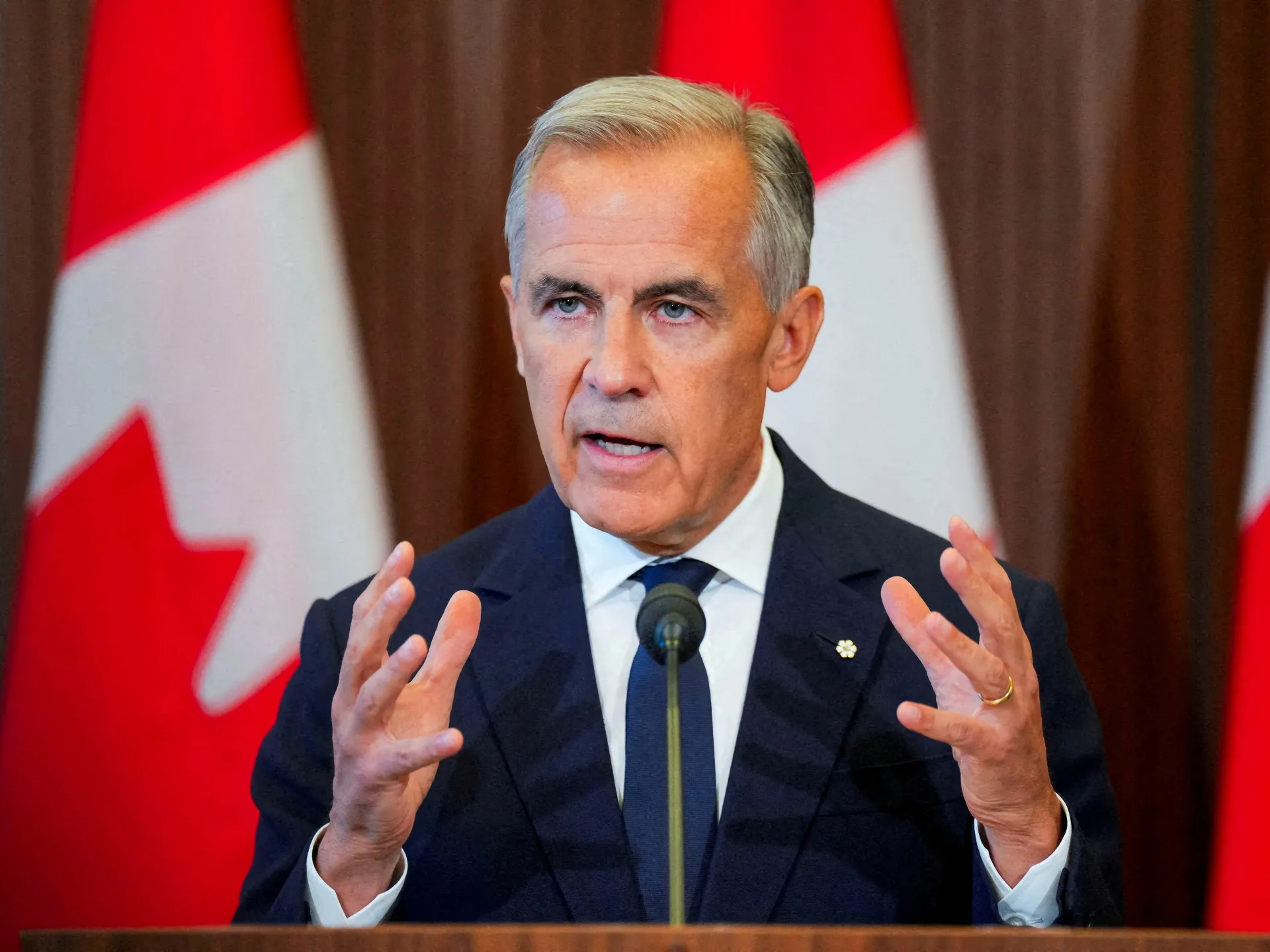
Canada will fast track the approval process for a new proposed crude oil export pipeline to its west coast that could generate billions in revenue and boost economic growth, Prime Minister Mark Carney has said.
Carney made the announcement on Thursday to fast-track the pipeline, which is a crucial part of his bid to diversify the economy away from the United States and help lessen the effect of US President Donald Trump’s tariffs.
Recommended Stories
list of 4 itemsend of list
Carney said Ottawa is officially listing the Pacific Link pipeline, which had been announced in July, as a project of national interest. That will ensure it proceeds through a single federal regulatory review process. He said Ottawa aimed to complete the process by September 1, 2027.
“A pipeline to the west coast is part of our mission to transform our economy, to double our non-US exports over the next decade … [and] to unlock our full potential as a global energy superpower,” he told reporters in Fort McMurray, hub of Alberta’s tar sands industry.
Ottawa says the 1 million barrel a day project would create 140,000 jobs and generate more than 20 billion Canadian dollars ($14bn) in gross domestic product (GDP) per year and 100 billion Canadian dollars ($70bn) in government revenue by 2060.
Canada currently has just one east-west oil export pipeline in Canada, the 890,000-barrel-per-day Trans Mountain pipeline. An expansion of that pipeline was completed in 2024, but it is already running at capacity.
For years, Canada has sent more than 90 percent of its crude oil exports to the US via pipeline. A new oil export pipeline could make Canada a major global energy supplier, as Asia’s top importers seek oil from outside the Middle East in the wake of the Iran conflict.
Filling the pipeline, however, would require new tar sands expansions of the type no company has undertaken in more than a decade.
The pipeline will be built by government-owned Trans Mountain Corp in coordination with Pembina Pipeline Corp. Alberta estimates it could cost between 35.2 billion Canadian dollars and 43.7 billion Canadian dollars ($24.7bn – $30.7bn).
The majority owners will be the federal government and the government of Alberta. Indigenous communities will be offered a minimum of 10 percent ownership interest.
Previous oil pipeline projects in Canada have faced strong opposition from environmentalists and Indigenous groups, resulting in the cancellation of some projects and leading to cost overruns and construction delays with others.
Alberta separatism
Carney made the announcement alongside Alberta Premier Danielle Smith in Fort McMurray in the heart of Canada’s tar sands, a move meant to mend relations with oil-rich Alberta as separatists push for a referendum on leaving Canada.
Alberta is holding a public vote on October 19 on whether to hold a referendum on leaving Canada. Smith has long complained that Carney’s predecessor, Justin Trudeau, hindered Alberta’s energy industry and fuelled separatist sentiment.
Smith said she would vote to keep Alberta in Canada and called the roughly 22 percent support for separation in a recent poll “still too high for my liking”.
“I don’t like the fact that many of our fellow citizens have given up on Canada,” Smith said, adding that the pipeline was an example of how “cooperative federalism can work in action”.
Asked what message Albertans considering separation should take from the announcement, Carney said it demonstrated that “Canada is working” and showed what the country could achieve by acting together.
When Brandon Hurst first decided to sell his plants on TikTok Live in 2023, the 32-year-old Sylmar resident didn’t know what to expect. He said he thought he could sell at least 30 plants, but instead sold 250.
Now, three years later, the internet creator, who goes by Brandon the Plant Guy, sells up to 5,000 plants a week, works out of a 3,000-square-foot greenhouse in Sylmar and has a staff of 13. He credits much of this success to the exposure he’s received on TikTok.
“I’d be out of business if it wasn’t for TikTok,” said Hurst. “I would have ended the business and gone back to working the desk job that I was working prior. I was already on that path, that was where we were headed. And then TikTok really did turn that around.”
Hurst is one of the 920,000 California-based businesses using the social media platform to reach new customers and grow their brands, according to new data from consulting firm PF Global.
In 2025, TikTok helped generate $12 billion in advertising and merchandise sales for those businesses and supported 52,000 jobs in the state, said the PF Global report, which was commissioned by TikTok.
Nationwide, economic activity on TikTok last year helped contribute $81 billion to some 8.5 million U.S. businesses, the report said.
The surge in activity reflects a growing trend toward online commerce, as more small businesses and consumers turn to social media platforms like TikTok to buy and sell goods.
“We enable American culture, American creators, American businesses, to reach an audience around the world,” said Nicole Mason, TikTok’s head of U.S. public policy, said during a presentation on Wednesday morning.
The new report comes as TikTok is increasingly eager to tout its economic impact as a newly formed U.S. joint venture. In January, the company was taken over by three managing investors: Silver Lake, Oracle and Emirati investment firm MGX, each holding 15%, with ByteDance retaining 19.9% of investments. This transition came after TikTok’s Chinese parent company, ByteDance, was under pressure to divest its ownership in the app’s U.S. operations or face a nationwide ban, due to security concerns.
TikTok, which operates its U.S. headquarters in Culver City, where it employs several hundred workers, is mostly known for its viral, short-form vertical videos. But, over the years, the platform has become a hub of curated viral content and a central part of many businesses’ marketing strategies.
The app also has features like TikTok Live, where businesses can host live shopping events, and TikTok Shop, which serves as a direct-to-consumer online marketplace.
For its study, PF Global surveyed more than 11,000 adults in the U.S. and 5,000 businesses. The firm also conducted five case studies with U.S. small businesses and TikTok creators and interviewed over 600 people around the country. The data set combined that survey data with government statistics, industry research and TikTok’s own internal data.
PF Global recently published a similar economic report for the U.K. and is working on reports for 10 other European countries with TikTok.
Neil Ross, a partner at PF Global, said a common global theme is that TikTok users are more likely to see something on the platform and go out and do it.
“People around the world are using it as a kind of digital front door to work out where to go, what to shop, what experiences to have,” Ross said.
The U.S. report states that 27 million Americans “visited an independent shop, cafe or restaurant for the first time after seeing it on the platform.”
The app’s roots date to 2014, when an app called Musical.ly was launched in Shanghai. In 2016, Chinese tech company ByteDance launched a similar platform in China called Douyin.
As the apps grew in popularity, ByteDance picked up on their potential. It purchased Musical.ly in 2017 and combined all these platforms into one, named TikTok. Over the next few years, the app began its rapid ascent, hooking in users with a curated algorithm and viral trends. Today, 200 million Americans use TikTok every month, according to PF Global.
“On a daily basis, TikTok powers real economic impact across the United States, helping entrepreneurs grow their businesses, reach new customers, and create jobs across the country,” said Adam Presser, TikTok’s chief executive in a statement.
Exports jump 83.5 percent to top $120bn for the first time amid ferocious semiconductor demand.
Published On 1 Oct 20261 Oct 2026
South Korea’s exports have surged to a monthly record amid explosive demand for chips used to power artificial intelligence.
Exports jumped 83.5 percent year-on-year to $120.9bn in September, eclipsing the previous monthly record of $102.25bn set in June, preliminary customs figures showed on Thursday.
Recommended Stories
list of 4 itemsend of list
Chip shipments accounted for nearly half of exports, soaring more than 260 percent to $60.3bn, according to data from the Korea Customs Service.
Total exports from January through September hit $814.5bn, exceeding those for all of 2025, when exports reached a record $709.7bn.
During the first nine months of the year, the country recorded a trade surplus of $49.85bn.
“This is a valuable achievement that once again demonstrates the strength of our industries and companies, and is thanks to the sweat and efforts of our entrepreneurs who have competed fiercely in the global market,” said Kim Jeong-kwan, South Korea’s minister for trade and industry, in a statement.
“While we expect to achieve $1 trillion in annual exports, the strengthening of global protectionism and tensions in the Middle East remain major variables affecting our exports,” Kim said.
South Korea’s economy has been running red-hot this year amid a global shortage of memory chips used in AI.
Asia’s fourth-largest economy is home to one of the world’s largest semiconductor industries, led by top memory chip makers SK Hynix and Samsung Electronics.
SK Hynix and Samsung Electronics together control roughly 80 percent of the global market for high-bandwidth memory and 60 percent of the market for dynamic random-access memory, according to Counterpoint Research.
South Korea’s nominal gross domestic product (GDP) growth hit a five-decade high in the April-June quarter, skyrocketing 26.4 percent year-on-year.
South Korea’s Ministry of Finance and Economy has forecast real GDP to grow 3 percent in 2026, which would be the strongest performance since 2017, excluding the outlier years of the COVID-19 pandemic.
The AI boom has also propelled the country’s stock market into the ranks of the best-performing bourses this year, with the benchmark Kospi rising nearly 60 percent.
Manchester City manager Andree Jeglertz did not comment on whether he had received assurances that the women’s team would not be impacted after the club was found guilty of Premier League financial breaches.
Jeglertz, who joined City last summer, said it was “business as usual” and when asked about how the women’s team could be affected, added: “I don’t want to comment more around that.”
There were seven questions in total posed to Jeglertz relating to the charges before Manchester City’s press officer requested the media moved away from it.
The club has been found guilty of all charges related to breaches of Premier League financial rules between the 2009-10 and 2017-18 seasons.
The Premier League said City arranged “sham contracts” with a number of commercial partners as part of a scheme to disguise secret funding of more than £830m.
The club continue to deny any wrongdoing and have until 2 October to submit an appeal.
The women’s team were the first representatives of the club to address the media since the guilty charges were confirmed by the Premier League.
It is still unknown what impact the charges could have on the women’s team, though BBC Sport understands there is no active investigation taking place from WSL Football.
The charges, which were breaches of Premier League rules, are different financial regulations to the WSL and they came at a time when the women’s league was under the governing body of the Football Association.
There is no suggestion so far that any WSL opponents have expressed concern for City’s charges, or whether they believe it has helped the women’s team progress.
City defender Jade Rose said the women’s players had received “the same messaging the public has” from the club.
When asked about the charges raising any concerns for the players, she added: “I’m just here to talk about the football. That’s what we’re focusing on.”
The team took part in an open training session earlier on Wednesday morning and there did not appear to be any changes to their routine or behaviour.
Therese Sjogran, director of women’s football at Manchester City, was in attendance for training, as she often is.
There were a few additional media in attendence for Jeglertz and Rose’s press conference to preview their Women’s Champions League game against Real Madrid.
Jeglertz responded to former men’s manager Pep Guardiola’s statement on social media, which voiced his support for the club.
Asked whether Jeglertz also stood beside the club, he said: “Definitely. I am working at the club now so that’s who I am hired by and working with, so, for sure.”
Jeglertz also said he did not find it more challenging to prepare for Thursday’s game despite the noise surrounding the club.
“I don’t think so. We have been training like normal and doing the work we can do to affect the game,” he said.
“We haven’t changed anything, we have just kept on doing everything we normally do. Definitely the thing the club has been presented, is the information we have inside of our group.
“We can’t talk about anything else and we don’t need to talk about anything else at the moment.”
Jeglertz added that he was not frustrated by the negative media attention despite City’s strong start to their WSL campaign.
The defending champions currently have 12 points from their opening four matches in the WSL and are top of the table.
They face Real Madrid on Wednesday (20:00 BST) in their second Women’s Champions League league phase match, having drawn their opener against Bayern Munich last week.
“This quarter, we crossed the mark that 50% of our revenue now comes from businesses that we generated in the last 3 years that is very different than our traditional business.” (President, CEO & Director Christopher Caldwell)
Seeking Alpha’s Disclaimer:This article was automatically generated by an AI tool based on content available on the Seeking Alpha website, and has not been curated or reviewed by humans. Due to inherent limitations in using AI-based tools, the accuracy, completeness, or timeliness of such articles cannot be guaranteed. This article is intended for informational purposes only. Seeking Alpha does not take account of your objectives or your financial situation and does not offer any personalized investment advice. Seeking Alpha is not a licensed securities dealer, broker or US investment adviser or investment bank.