Business

Sony Pictures Entertainment to cut hundreds of film and TV jobs

Sony Pictures Entertainment plans to lay off a few hundred employees globally in a move to restructure its business.

The cuts, announced Tuesday afternoon, are set to affect employees who work across Sony’s film, TV and corporate divisions the company said, declining to specify how many would lose their jobs.

Sony said the cuts reflect a shift in business strategy under its new chief executive, Ravi Ahuja.

“As we lean into those priorities, we need to operate with greater focus, speed, and alignment to strengthen our differentiated capabilities,” said Ahuja in a statement. “To support our growth, we are aligning our organization with where the business is going — not where it has been. That requires changes to how we are structured and where we invest.”

Ahuja, who was promoted just over a year ago, added that the company is ”reducing roles in certain areas while increasing focus and investment in others that are most critical to our future.”

Sony plans to focus on franchise strategy and brand extension with game shows, as well as develop more anime, experiences and invest in content that will connect with a younger audience. This includes more game adaptations and growing its YouTube capabilities.

One of the studio’s biggest franchises is the “Spider-Man” universe, which includes both live-action films starring actors like Tom Holland and the Oscar-winning animated “Spider-Verse” movies. The studio is set to release the latest live-action installment, “Spider-Man: Brand New Day,” this summer. The previous movie “Spider-Man: No Way Home” was a major win for Sony as it generated $1.9B globally.

Sony Pictures operates under its Japanese parent company Sony Group Corp, alongside other subsidiaries like Sony Music Group and Sony Electronics. The film studio was established in 1987 and maintains a strong presence in Culver City.

Recently, the studio acquired the “Peanuts” comic in a $457-million deal, reupped the “Reading Rainbow” for a YouTube audience and is working on PlayStation adaptations for video games like “Helldivers” and “God of War.”

The company has also combined its game-show group with its nonfiction TV department and is slowing down areas of its business that have low growth, like the VFX and virtual production studio, Pixomondo.

The layoffs are the latest to hit Hollywood, which has been hard hit by the exodus of film and TV jobs to other states and countries, a cutback in the number of films being released and media consolidation. Last year, Paramount cut 10% of its workforce after it was acquired by David Ellison’s Skydance Media.

Source link

Bill Gates to give House oversight interview on Jeffrey Epstein

1 of 2 | Bill Gates, co-founder of Microsoft, attends a dinner hosted by President Donald Trump with U.S. tech leaders at the White House in Washington D.C., on September 4. Gates agreed to an interview with the House Oversight Committee related to its Jeffrey Epstein investigation. File Photo by Will Oliver/UPI | License Photo

April 7 (UPI) — Bill Gates is expected to give testimony to the House Oversight Committee in its investigation of convicted sex offender Jeffrey Epstein, the Microsoft co-founder’s representative said Tuesday.

Gates will appear for a transcribed interview June 10, unnamed sources familiar with the arrangement told Politico, CNBC and CBS News.

A representative for Gates told Politico he “welcomes” the testimony.

“While he never witnessed or participated in any of Epstein’s illegal conduct, he is looking forward to answering all the committee’s questions to support their important work,” the representative said.

Gates’ relationship with the late Epstein has drawn scrutiny after documents released by the Justice Department included email drafts by Epstein implicating Gates. In the drafts, Epstein claims he arranged sexual encounters for Gates.

Gates has denied that Epstein arranged such encounters and said he interacted with Epstein only on philanthropic discussions. He said he also never traveled to Epstein’s island, Little St. James, and “never met any women.”

Lisa Phillips, a survivor of Jeffrey Epstein and Ghislaine Maxwell, speaks out during a rally with other survivors on Capitol Hill in Washington on September 3, 2025. Photo by Anna Rose Layden/UPI | License Photo

Source link

Samsung to end its texting app, tells U.S. users to switch to Google

Samsung announced that it is ending its Samsung Messages texting app in July when it will stop working and become unavailable for download, and is encouraging users to switch to Google Messages for their texting purposes. File Photo by Erdem Sahin/EPA-EFE

April 6 (UPI) — Samsung said on Monday that it will discontinue its messages app and told users to upgrade to Google Messages as their default method for sending texts.

The move is being billed as an upgrade, as Google Messages includes spam and scam filters, RCS-enabled messaging, artificial intelligence features because the app is integrated with Google’s Gemini, and the ability to continue chats across multiple devices without interruption.

The Samsung Messages app will not be available to download and will stop functioning in July, Samsung said in an end-of-service announcement.

Samsung Messages was the pre-installed, default texting app on all the company’s smartphones until 2021, CNET reported.

In 2024, it stopped pre-installing it and gradually started to motivate users to switch to the Google service with the release of its Galaxy Z Flip 6 and Z Fold 6 phones, and the Galaxy S26 — the newest version of its flagship smartphone — is not able to download the app.

“Once the Samsung Messages app is discontinued, sending messages via Samsung Messages on your phone will no longer be possible, except for emergency service numbers or emergency contacts defined on your device,” Samsung said in the announcement.

In the announcement, Samsung said that depending on the operating system on the device, some users may receive a notification in Samsung Messages about migrating to Google Messages, if the user opts for it.

For some users, the company said, Google Messages will not instantly be set as the default texting app and may not appear in the home screen doc, with Samsung providing instructions for accomplishing both.

It also noted in the announcement that watches launched before the Galaxy Watch4 do not support Google’s texting app, and that Samsung devices released before 2022 will require users on both ends of a text conversation to switch to Google Messages for full RCS conversations to be available.

RCS, or Rich Communication Services, is a SMS/MMS standard that has been adopted by most messaging apps, including the iMessage app on iPhones, that provides end-to-end encryption, ensuring a “more dynamic and secure conversation,” according to Google.

President Donald Trump speaks during the annual Easter Egg Roll on the South Lawn of the White House in Washington on April 6, 2026. Photo by Bonnie Cash/UPI | License Photo

Source link

BNY, Robinhood to manage Trump Accounts

April 6 (UPI) — The Department of the Treasury announced Monday that The Bank of New York Mellon Corporation will handle the Trump Accounts program and that Robinhood will be the brokerage and initial trustee.

BNY will manage the initial accounts and develop the Trump Accounts app.

“Together, these partners will support Treasury’s goal of ensuring every eligible child can access a Trump Account quickly and easily,” a press release from the Treasury said.

The accounts are tax-deferred investing accounts for children born between 2025 and 2028. They are scheduled to launch on July 4 with a $1,000 deposit from the Treasury.

BNY and other large employers have pledged to match the government’s deposits for children of their U.S. employees.

“We are honored to be selected as financial agent for Trump Accounts,” BNY CEO Robin Vince said in a statement. “In collaboration with Robinhood, a leading financial technology platform committed to democratizing the markets for investors, we are helping to expand access to financial opportunity for all Americans.”

The Treasury press release said the app is being developed as a custom, white-label product. The National Design Studio, along with Robinhood, is creating an intuitive user interface and user experience that allows “families to explore their Trump Accounts with confidence and ease.”

Vlad Tenev, chair and CEO of Robinhood Markets, said in a statement that the company is “proud to power Trump Accounts with Robinhood’s technology and to work alongside a historic and trusted institution like BNY.”

“Our task is clear: to provide the next generation of Americans with a world-class, intuitive platform to jumpstart their financial future,” Tenev said.

The IRS said that as of March 31, more than 4 million children were signed up for Trump accounts, and more than 1 million were eligible for the $1,000 pilot program.

“The IRS has been working closely with the Treasury Department to make the election process as simple and easy as possible by permitting taxpayers to fill out a one-page form when they file their tax return,” IRS Chief Executive Officer Frank J. Bisignano said in a statement. “Families with eligible children born between 2025 and 2028 just need to check the box on a form to stake their claim for the $1,000 contribution. It’s that simple.”

Parents can sign up for the funds by filing IRS Form 4547 with their tax returns or via TrumpAccounts.gov. There will be an authentication process in May, and the money will be in accounts on July 4, the IRS said.

Parents and others can contribute up to $5,000 a year. Companies can deposit up to $2,500 pre-tax per year for kids of employees, within the $5,000 limit.

“It’s good to see BNY and Robinhood being named, it gives us more clarity,” Madeline Brown, senior policy associate at the Urban Institute, told CNBC.

“There are certainly still questions that remain about what the interface and product will look like for account holders … and how financial planning and coaching may be integrated. Given that at least some participants will be new to long-term savings, there is this need for advisor-type guidance.”

President Donald Trump delivers a prime-time address to the nation from the Cross Hall in the White House on Wednesday. President Trump used the address to update the public on the month-long war in Iran. Pool photo by Alex Brandon/UPI | License Photo

Source link

Colombia’s Petro asks Brazil to extend Pix payment system

Colombian President Gustavo Petro called for regional integration of the Pix system, and he criticized international financial control mechanisms, particularly the U.S. Office of Foreign Assets Control, for enforcing economic sanctions. Photo by Mauricio Duenas Castaneda/EPA

April 6 (UPI) — Colombian President Gustavo Petro asked Brazil to extend its instant payment system Pix to Colombia and questioned U.S. financial sanctions in a message posted on X, amid Washington investigations into the Brazilian system.

In his post, Petro called for regional integration of the Pix system and criticized international financial control mechanisms, particularly the Office of Foreign Assets Control, the U.S. Treasury agency responsible for enforcing economic sanctions.

“I ask Brazil to extend the Pix system to Colombia and hopefully stop considering the OFAC list, which no longer works,” Petro wrote Saturday.

The message comes after the U.S. government last week published the 2026 National Trade Estimate Report on Foreign Trade Barriers, which mentions the Pix system.

The report includes concerns from U.S. companies that the system, operated by Brazil’s central bank, may have regulatory advantages over foreign private competitors such as Visa and Mastercard.

Pix has gained popularity for allowing fast and free transfers, which has generated tensions over its impact on the traditional financial system.

In the same message, Petro criticized the international sanctions system. “OFAC only serves to persecute political opposition and domesticate them around the world. It is an aberrant system of political control,” he said.

He also contended that drug trafficking has managed to evade these mechanisms.

“Drug trafficking mocks it, and they stay in Dubai, where they buy residency for about $4,000 and live in luxury,” he added.

The message also included references to international politics and armed conflicts. Petro said that “no war is good” and said he had asked U.S. President Donald Trump to stop ongoing conflicts.

“His circle wants blood and leads him to make mistakes all the time,” he wrote.

Petro also criticized Israeli Prime Minister Benjamin Netanyahu, whom he accused of committing crimes against humanity in Gaza and Iran, and called for him to be tried.

Petro added that the homicide rate in Colombia has decreased, adding he hopes the trend is not temporary.

So far, the Brazilian government has not publicly responded to the request.


Source link

Circle CEO to visit Korea for meetings with KB Financial, Dunamu

The head office of KB Financial Group in Seoul. Photo courtesy of KB Financial Group

SEOUL, April 6 (UPI) — South Korea’s KB Financial Group said Monday that Jeremy Allaire, founding CEO of U.S. digital currency firm Circle, will visit early next week to meet with its senior executives.

The Seoul-based financial group noted that the meeting would focus on strengthening bilateral collaboration and discussing concrete action plans for innovations in next-generation financial infrastructure.

In the latter part of last year, KB Financial started proof-of-concept tests using Circle Mint, a platform that enables companies to issue and manage stablecoins, primarily Circle’s USD Coin, or USDC.

From the testing, KB Financial said it was able to gain knowledge and capabilities necessary to manage digital assets via such platforms as Circle Mint.

The two firms are exploring joint business opportunities in various areas, including the domestic use of USDC, cross-border transactions and potentially issuing a Korean currency-backed stablecoin.

“The upcoming meeting with Allaire will go beyond a simple one-off event. It will serve as a catalyst to elevate the partnership between the two companies, which have already completed in-depth technical verification,” KB Financial said in a statement.

“Based on the robust cooperation framework established with Circle, we will keep beefing up our leadership in the digital asset markets at home and abroad,” KB said.

Sogang University economics professor Yoon Suk-bin pointed out that competition will intensify sharply in the market, which combines traditional money and digital currency.

“It is a major industry trend for traditional financial institutions to partner with emerging digital asset firms to build integrated platforms,” he told UPI. “Circle CEO’s visit to Seoul can be understood in that context.”

Meanwhile, Dunamu also confirmed that Allaire would meet its executives next week. The digital powerhouse is an operator of South Korea’s leading cryptocurrency exchange, Upbit.

Source link

Billionaire candidate for California governor catching heat for past business interests, wealth

Billionaire hedge fund founder turned environmental warrior Tom Steyer, a leading Democratic candidate for California governor, is facing mounting questions about how he earned his wealth — notably investments in private prisons that are now being used to house undocumented immigrants facing deportation.

Some of the most vicious political attacks come from his Democratic rivals and Sacramento special interest groups as the June 2 primary election fast approaches, but Steyer has been dogged for years about his past, controversial business ventures and how they help fund his unbridled campaign spending.

Steyer, 68, faced that ire during a town hall event in San Diego last week.

“Tom, you’re not going to come to San Diego and ignore this detention center,” Holly Taylor, a 37-year-old Democrat screamed at Steyer, holding signs with QR codes to help detainees at an Otay Mesa private prison that Steyer’s hedge fund backed. “It’s a concentration camp. They’re drinking water out of a toilet.”

Taylor, a crime scene cleaner from Pacific Beach, is among scores of people who gather weekly at the facility to raise money for detained immigrants to provide them some comfort amid the Trump administration’s Immigration and Customs Enforcement raids.

In 1986, Steyer, co-founded Farallon Capital, which had shares valued at $89.1 million in the Corrections Corp. of America in 2005, according to the Securities and Exchange Commission. That company, now known as CoreCivic, operates private prisons around the nation that are housing people picked up by federal immigration agents, including the one in Otay Mesa.

It is not the first time Steyer has faced criticism about the connection with private detention facilities. At the California Democratic Party convention in February, protesters dressed in orange prison jumpsuits sought to draw attention to the controversy.

His Democratic rivals have also seized upon the issue to question the billionaire’s progressive credentials.

“Before he was a progressive, he made millions off of companies that operate ICE detention centers, that operate private prisons that incarcerated young children,” state Supt. of Public Instruction Tony Thurmond said during a recent interview with a political influencer known as Mrs. Frazzled.

“His entire campaign is built on the backs of kids in cages,” Rep. Eric Swalwell, (D-Dublin) wrote Tuesday in a post on X.

People protest outside of a lunch held by California gubernatorial candidate Tom Steyer

People protest outside of a lunch held by California gubernatorial candidate Tom Steyer at the 2026 California Democratic Party State Convention in San Francisco on Feb. 21.

(Jeff Chiu / Associated Press)

Several years earlier, Yale University’s graduate teachers union called upon the school — Steyer’s alma mater — to divest from Farallon because of concerns about how the private prison company treated detainees, notably minorities.

Steyer has repeatedly expressed remorse about his former firm’s ties with the detention company. In 2012, he sold his stake in Farallon, which was named in reference to islands off the coast of San Francisco and was once one of the largest hedge funds in the world.

“I deeply regret that Farallon made that investment, and I personally ordered the investment in CCA to be sold because it did not accord with my values then or now,” Steyer told The Times in 2019 after he launched a short-lived presidential campaign.

Asked to comment about the latest iteration of the controversy, Steyer’s campaign pointed to comments he made in March at a town hall in San Francisco about how among the hundreds of thousands of companies his hedge fund invested in, the private prison company changed the course of his life.

“It was a mistake, and I sold it over 20 years ago, thinking, not that it won’t be profitable, it’s just a mistake. I don’t want to be in that business. But let me say this, it wasn’t just a mistake,” Steyer said. “It was also a big wake-up call that I was in the wrong place, that I was in a business that was taking me to places I absolutely didn’t want to go. And there’s a reason I walked away from that business and walked away from a ton of money, because I felt like that is not the life I want.”

He added that he and his wife, Kat Taylor, have spent the past two decades pushing for rehabilitative justice — treatment instead of mass incarceration except for violent felons.

“Am I a perfect person? No, have I made mistakes? Yes,” Steyer said. “But for those of you who like to read the Bible, there is a moment on the road to Damascus when someone makes a change, and I have made a big change, and I did it a long time ago, and I’ve been pushing very, very hard the other way.”

Farallon also invested in fossil fuel projects, including an Australian coal mine that denuded thousands of acres of koala habitat and generated an enormous amount of carbon emissions.

Steyer, who has a net worth of $2.4 billion according to Forbes, has painted himself as a reformed billionaire who walked away from Farallon because of angst about how he earned his fortune. He has spent hundreds of millions of dollars supporting Democratic causes, notably efforts to fight climate change.

“The truth is that is not where I think there is value, and that is not what I’m seeking in my life,” he said at a Sacramento town hall in March when retired state employee Gina Coates asked how, as a woman of color, she could believe his promises given his privilege as a wealthy white man.

“In terms of trusting me, let me say this, I left my business 14 years ago, and anybody who cared about money would not have done it,” Steyer said.

Steyer later said at the town hall that he left Farallon because he realized that he didn’t want to remain on that path.

“I want to have a meaningful life,” he said. “I want to stand with the people of this state and have actual prosperity. Twelve trillionaires and 40 million people who can’t make rent is not success.”

But Steyer and his wife continue to receive significant income from the hedge fund, including millions of dollars in investments, holdings and various complicated transactions in 2024, according to a statement of economic interest and tax returns he was required to file with the California Secretary of State’s office because of his gubernatorial run.

A Steyer campaign spokesman said Steyer created guardrails to ensure that he does not profit off companies he morally disagrees with.

“Tom has put in place an investment policy to ensure that he does not directly invest in fossil fuels, payday lending, or private prisons,” spokesman Anthony York said. “To the extent he inadvertently incurs exposure to those industries through third-party managers or liquid legacy investments, Tom will donate all profits to charity.”

After leaving Farallon, Steyer became one of the nation’s top Democratic donors. And he has used his wealth to fund his political ambitions. Steyer contributed nearly $342 million of his own money to his short-lived 2020 presidential campaign, according to the Federal Election Commission.

In the 2026 governor’s race, Steyer has donated nearly $112 million to his campaign as of Thursday, according to the California secretary of state’s office. He has been an ubiquitous presence on the airwaves, including local news programs and campaign ads that aired during the “Puppy Bowl” on the Animal Planet channel on Super Bowl Sunday. In the past month, Steyer has aired more than 5,000 ads, according to iSpot, which tracks television commercials.

California, home to 23.1 million registered voters, is home to some of the nation’s most expensive media markets. And candidates, particularly those who are not well known, need to spend heavily on television advertising if they hope to have a successful campaign.

But money is no guarantee of success. Billionaire Meg Whitman, the former eBay chief and formerly a longtime Republican donor, spent $144 million of her money on her 2010 gubernatorial bid. That set a record for a candidate’s contribution in a state race at the time, but Whitman lost to Jerry Brown by nearly 13 percentage points.

In 1998, Democratic multimillionaire Al Checchi who had been the co-chair of Northwest Airlines spent $40 million of his wealth on an unsuccessful run for governor, also a record at the time.

Steyer is one of the top three Democrats in the sprawling field to replace termed-out Gov. Gavin Newsom. And his liberal positions are drawing the ire of powerful forces in Sacramento. On Tuesday , the state’s Realtors donated $5 million to an independent expenditure committee opposing Steyer’s bid.

Taylor, who confronted Steyer at the San Diego town hall, said she had not planned to be so vocal. But as the event unfolded, she decided she had to speak, not only to Steyer but to the attendees. She and her compatriots gather every Sunday outside the Otay Mesa facility to raise money to help detainees buy food in the prison commissary and call their families.

“My main issue is that he has gotten financial gain off of these people suffering,” she said.

Source link

OPEC agrees on another oil production boost as Strait remains blocked

OPEC+ members announced Sunday they would modestly boost production as worldwide oil supplies tighten and prices spike amid the American-Israeli war on Iran. File Photo by Olivier Matthys/EPA

April 5 (UPI) — Members of the Organization of the Petroleum Exporting Countries said Sunday they will again modestly boost oil production as war rages in Iran and the Persian Gulf, although the move is largely symbolic as the Strait of Hormuz remains closed.

As first they did in March, the eight OPEC+ countries — Saudi Arabia, Russia, Iraq, United Arab Emirates, Kuwait, Kazakhstan, Algeria and Oman — on Sunday agreed to a 206,000 barrel-per-day production increase amid attacks by Iran on the oil and gas facilities of several of its members in the Persian Gulf.

Iran has blocked the key Strait of Hormuz shipping lane in response to the American and Israel attacks that started on Feb. 28.

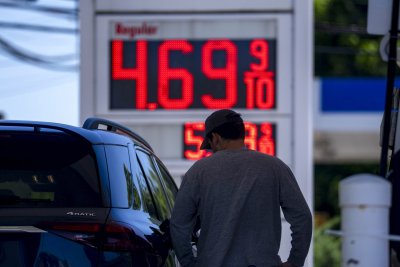
Since then the global price of oil has shot up by close to 60% while gas prices at the pump in the United States have surpassed $4 per gallon.

Although the waterway remains choked off, the OPEC+ move indicated producers will likely ramp up production to help alleviate the worldwide oil shock once the Strait is reopened and production facilities in the Gulf states are secured from Iranian drones and missiles.

U.S. President Donald Trump on Sunday continued to threaten Iran with destruction of civilian and military infrastructure by Tuesday unless Tehran loosens its grip on the Strait.

But Iran has remained defiant, continuing to launch drone attacks against OPEC members who host U.S. military facilities, particularly targeting Kuwait, Bahrain and the UAE, where critical infrastructure again came under attack on Sunday.

Damage was sustained at civilian facilities in all three countries, officials reported.

The Kuwait Petroleum Corp. announced “significant material losses” after Iranian drone attacks on several of its facilities, the KUNA news agency reported.

Meanwhile, Kuwaiti Interior Ministry spokesman Brig. Gen. Nasser Bousleib said officials had registered nine reports of falling shrapnel during the preceding 24 hours, boosting the total of such incidents since the beginning of the Iranian aggression to 678.

An Iranian flag stands amid the destruction in Enghelab Square following the attacks carried out by the United States and Israel on Tehran, Iran, on March 4, 2026. Photo by Nahal Farzaneh/UPI | License Photo

Source link

Vietnam’s gig workers slammed by rising fuel costs amid fallout of Iran war | Business and Economy News

Ho Chi Minh City, Vietnam – After a long day of ferrying passengers to and fro recently, e-hailing driver Nguyen was dejected to find he had spent half of his earnings on fuel.

“I drove for around seven or eight hours, making around 240,000 Vietnamese dong [$9.11] and then I paid 120,000 Vietnamese dong [$4.56] on petrol,” Nguyen, a motorcyclist who connects with passengers via the locally developed super-app Be, told Al Jazeera, asking not to be identified by his real name.

Recommended Stories

list of 4 itemsend of list

“I can’t survive with this amount of money in the city.”

In Vietnam, the ripples of the US-Israel war on Iran are hitting many gig workers hard.

The Southeast Asian country normally sources about 80 percent of its crude oil from Kuwait, but shipments have dried up amid Iran’s effective blockade of the Strait of Hormuz, driving up fuel prices.

Diesel prices have more than doubled, while petrol prices have risen almost 30 percent, making getting from point A to point B an increasingly expensive proposition in cities such as Ho Chi Minh City, home to more than 7 million motorcycles.

“Because the petrol price is so high, so many drivers are turning off the app, going home and just not working,” Nguyen said.

“After today, I will turn off the app and stop working for a few days to see if the price goes down or if the government is helping in any way.”

Govi
A Be driver picks up a passenger at Thu Duc Metro Station in Ho Chi Minh City, Vietnam, on March 30, 2026 [Govi Snell/Al Jazeera]

Vietnam’s government has rolled out a series of emergency measures to cushion the blow for citizens.

Prime Minister Pham Minh Chinh last month announced that an environmental tax on diesel, petrol, and aviation fuel would be suspended until April 15 to help stabilise prices.

Nguyen Khac Giang, a Vietnamese-born visiting fellow at the ISEAS-Yusof Ishak Institute in Singapore, said authorities had been forced to act to stave off rising disgruntlement among citizens.

“There are a lot of complaints and frustrations about rising living costs, because gas prices are everything in Vietnam,” Giang told Al Jazeera.

“It’s not only necessary in terms of making the population feel relief about the rise of gas prices, but at the same time, it will keep the macroeconomic stability intact, given the turbulence outside Vietnam.”

Despite the government sacrificing an estimated $273m in revenue via the tax cut, signs of strain are mounting across the economy.

Public transportation is stretched to capacity in major cities, while domestic carriers such as Vietnam Airlines and Vietjet Air have slashed flights.

“As a very, very open economy, Vietnam is super vulnerable to international shocks,” Giang said.

Gig workers have been particularly exposed due to the double whammy of heavy fuel consumption and minimal labour protections.

“Their income is changeable due to factors beyond their control,” Do Hai Ha, a research fellow at the University of Melbourne who has studied Vietnam’s gig platforms, told Al Jazeera.

“They have no chance to negotiate with the platforms.”

Many drivers have had no choice but to work longer hours as they are “excluded from labour protection, so there’s no guarantee in terms of minimum wages or overtime pay”, Do said.

A commuter refuels at a Ho Chi Minh City petrol station on March 27. Govi Snell _ Al Jazeera_-1775367397
A commuter refuels at a petrol station in  Ho Chi Minh City, Vietnam, on March 27 [Govi Snell/Al Jazeera]

Companies, too, are feeling the crunch.

Anh Dao, who collects fares on Ho Chi Minh City’s bus route 13, said the bus operator has been losing money due to the surge in diesel prices, despite raising ticket prices by 3,000 Vietnamese dong ($0.11).

“As we already signed the contract, we cannot just stop running the buses,” Ahn told Al Jazeera.

For one fisherman in the coastal region of Binh Thuan, about 200km (124 miles) from Ho Chi Minh City, rising fuel costs have prompted a frantic search for cheaper options to power his basket boat.

“Now that fuel prices are rising, it’s having a big impact,” the fisherman told Al Jazeera, asking not to be identified by name. The middlemen he does business with have been citing weak demand to justify offering lower prices for his catch, he said.

“What I was usually able to sell for 800,000 Vietnamese dong [$30] is now only selling for 650,000 Vietnamese dong [$24],” he said.

Families kept apart

For some low-income families, the rising costs are reshaping daily life in other ways.

After a weeklong trip to the Mekong Delta region, Uyen Pham, a communications manager for the Saigon Children’s Charity, said she has seen the strain firsthand.

“Several parents noted that the cost of bottled cooking gas has nearly doubled,” Pham told Al Jazeera.

“Most of our beneficiary families have always relied on wood-fired stoves or a hybrid of wood and gas to save money. With the recent price hike, they are now strictly limiting their gas usage even further, relying almost entirely on wood to cut every possible expense.”

For many parents, the rising fuel costs have also meant less time with family.

“Many parents in remote areas must leave their children with grandparents to work in cities,” Pham said.

“Rising fuel prices directly increase their commuting costs, while manual labour wages remain stagnant. This pinches their take-home pay and, in some cases, reduces how often they can afford to travel home to see their children.”

For the government in Hanoi, the price volatility has intensified the focus on greater energy independence, Giang, the visiting fellow, said.

“The longer-term question this crisis has enacted is a very important question about the strategic autonomy of Vietnam in terms of energy dependencies, especially when we are a net importer of oil,” he said.

Policymakers will need to “more aggressively accelerate Vietnam’s energy independence by building more refineries,” Giang said, “because now we only have two refineries, which is not enough for the Vietnamese market.”

With long-term solutions likely to take years to come to fruition, authorities are scrambling for short-term fixes.

Commuters wait for the train at Thu Duc metro station. Govi Snell_ Al Jazeera. 30_03_-1775367388
Commuters wait for the train at Thu Duc Metro Station, in Ho Chi Minh City, Vietnam, on March 30, 2026 [Govi Snell/Al Jazeera]

Late last month, Vietnam’s prime minister and a delegation from the Ministry of Industry and Trade visited on the Nghi Son Refinery and Petrochemical Complex, the country’s largest refinery, in Thanh Hoa, a coastal city about 1,500km (932 miles) north of Ho Chi Minh City.

During their visit, officials said the refinery, which supplies about 40 percent of Vietnam’s petrol needs, would urgently need to find alternative sources of crude, as current supplies were expected to run out by the end of May.

The war on Iran also appears to be reshaping at least some domestic investment.

Vingroup, Vietnam’s largest conglomerate, last month informed authorities that it wanted to halt plans to build the country’s largest liquefied gas-fired power plant and put the funds towards a renewable energy project instead, according to a letter reported by the Bloomberg and Reuters news agencies.

In the letter, the company cited “the significant risk of high fuel prices for LNG power projects” due to the war.

In the meantime, Duy, who works at a cafe tucked behind a Ho Chi Minh City petrol station, is feeling some relief after the government’s fuel tax cut, which authorities projected would reduce petrol prices by about one-quarter and diesel prices by about 5 percent.

“I usually pay 100,000 Vietnamese dong [$3.80] a week on gas, but at the peak of the high prices a few days ago, it was almost double that,” she told Al Jazeera.

“It affected my income.”

Additional reporting by Nguyen Hao Thanh Thao

Source link

Sports Illustrated is attempting a rebound after layoffs

One of the hottest tickets for the events surrounding Super Bowl LX in February was a party thrown at the Cow Palace in San Francisco by Sports Illustrated, where attendees could hang with Justin Bieber, Kevin Hart and Travis Kelce.

The magazine’s logo and a team of models from its latest annual swimsuit issue were present at another pre-game bash at the Michelin three-star restaurant Quince.

Sports Illustrated journalists were getting requests from peers looking to score invites to the gatherings, which symbolized a turnaround at the 72-year-old title. Just two years earlier, many of its writers were told their jobs were being eliminated.

But Authentic Brands Group, the New York-based company that purchased Sports Illustrated in 2019 for $110 million, says the title is now thriving after reducing its reliance on advertising and circulation revenue. The privately held firm — which expects $38 billion in global retail sales this year, up from $35 billion in 2025 — does not break out the finances for its businesses but says SI is highly profitable after a rocky period. Less than half of SI’s revenue comes from its media business.

“It took us a little while and we had a couple of bumps along the way,” Daniel W. Dienst, executive vice chairman for Authentic, said in a recent interview from his New York office, where a photo of baseball legend Hank Aaron taken by acclaimed SI photographer Neil Leifer hangs on the wall behind his desk.

For decades, SI was where every sports journalist aspired to work, hoping to become the next Frank DeFord or Gary Smith, whose 32-year career at the magazine is highly revered. Cover images of Muhammad Ali, Michael Jordan and other superstars are emblazoned in the memories of fans who eagerly awaited the title to arrive in the mail each week. For athletes and sports institutions, the cover remains a coveted honor.

“You go to LeBron James’ office in Akron, it’s got his 30 covers on the walls,” Dienst said. “You go to USC, they’ve got 21 covers with their athletes and coaches all over their athletic department.”

Now a monthly magazine, the flagship business of Sports Illustrated is no longer the first stop for fans looking for game analysis or profiles of athletes, many of whom have asserted greater control over their images through social media and podcasts.

Like other print magazines, SI has seen a sharp falloff in its circulation, currently at 400,000, down from 3 million in 2010. Authentic says SI has 52 million users a month on its web site and 21 million social media followers. ESPN had 229 million digital users in November.

But the famous SI name still resonates with generations of consumers and Authentic has sought ways to capitalize on it, from selling replica covers to opening branded resort hotels in Chicago and Nashville. International editions of the magazine have been launched in Germany, China and Mexico, with plans to launch in France and the U.K.

In January, Sports Illustrated launched its own free ad-supported streaming TV channel called SITV that features live shows with its journalists and includes films and shows from an archive stocked with documentaries and swimsuit issue specials going back decades.

The channel, which along with the other SI assets is managed by New York-based Minute Media, will also carry live sports coverage including college basketball. While Minute Media did not reveal early viewership figures, the company said the audience for the channel has grown 60% since its launch.

Cincinnati Bengals quarterback Joe Burrow on the cover of Sports Illustrated.

Cincinnati Bengals quarterback Joe Burrow on the cover of Sports Illustrated.

(Clay Patrick McBride)

The streaming channel is a major media initiative for brand that has seen more activity in other sectors.

In 2023, Authentic put the SI name on Lunatix, a sputtering ticket marketplace. Now called Sports Illustrated Tickets, the business has signage deals with 13 venues around the world including a New Jersey-based stadium — the home of the New York Red Bulls soccer team. The service expects to generate $500 million in revenue this year.

Authentic also uses Sports Illustrated-sponsored events such as the ones held at the Super Bowl to entertain clients for its other businesses and makes tickets available to the public. SI will host an event for Authentic at the Masters golf tournament in Augusta this week and has a permanent high-end, track-side hospitality space at Churchill Downs in Kentucky called Club SI.

Authentic specializes in acquiring and investing in famous retail properties that have foundered. The firm has acquired such names as the outerwear retailer Eddie Bauer, Brooks Brothers and Reebok, and in January took a 51% share in the fashion brand Guess.

ABG enlists outside operators to run the brands. Those operators pay an ongoing license fee to ABG, which also takes a cut of the revenues.

That was the plan when Authentic bought Sports Illustrated from Meredith Corp., now known as People Inc.

After the purchase, Authentic entered a $15-million-a-year licensing agreement with Arena Group (at the time known as Maven) to run Sports Illustrated. A New York-based digital media company, Arena operated such well-known titles as Men’s Journal, Parade and TheStreet. But the partnership unraveled when Arena used AI for sponsored content on Sports Illustrated’s website, which sounded alarm bells at the esteemed publication.

Sports Illustrated's 2026 Super Bowl party at the Cow Palace in San Francisco.

Sports Illustrated’s 2026 Super Bowl party at the Cow Palace in San Francisco.

(Sports Illustrated)

The Arena Group acknowledged it hired an outside firm to create product reviews that used fake bylines. The scandal coincided with the termination of its chief executive, Ross Levinsohn, who once held a leadership role at the Los Angeles Times.

The relationship with Authentic worsened when Arena’s majority owner, Manoj Bhargava, took over as interim chief executive. The founder of 5-Hour Energy, Bhargava tried to fire Sports Illustrated’s unionized editorial staff and renegotiate a lower licensing fee from Authentic. He also used the magazine’s editorial pages and website to promote his energy drink business.

The SI media business was unprofitable under Bhargava and Arena missed a payment to Authentic on its licensing deal. In March 2024, Arena announced it was shutting down the print edition of SI.

Around the same time, Authentic hired Minute Media, which runs the digital sites Fansided and Players’ Tribune, to take over Sports Illustrated. Bhargava didn’t go quietly; according to legal filings, he threatened to delete Sports Illustrated’s archive of intellectual property.

Authentic sued Arena for breaching the SI licensing agreement, which was settled. Many of the title’s laid-off journalists were rehired.

The experience with Arena was a harsh lesson for Authentic, which never had owned a media property before.

“The minute I make that phone call or anybody perceives that Authentic could control the newsroom, forget it, game over,” Dienst said, referencing Bhargava. “We had to move on.”

Minute Media has gotten high marks from the SI staff for its repair work on the media side of the business.

“It’s been a long time since we felt like we had an operator and support from the very top to not just grow what we’re doing day to day, but to grow what Sports Illustrated is going to look like 10 years down the road,” said Steve Cannella, editor in chief of Sports Illustrated.

SI’s union representing editorial employees praised Minute Media when it took over, and is close to agreeing on a new contract deal with the company.

Minute Media is aiming to expand the SI brand‘s reach across other media platforms to make up for the time lost under previous regimes.

“I’ve asked, ‘guys, what are all the things you wanted to do that you haven’t been able to do?’ ” said Minute Media President Rich Routman. “If we’re not trying new stuff, we’re failing.”

Some sports media types believe SI is largely a nostalgia play in a landscape where young fans go elsewhere for game highlights and turn to provocative hosts such as Pat McAfee on YouTube. But awareness goes beyond the audience of baby boomers and Gen Xers who grew up with the brand.

Lisa Delpy Neirotti, who leads the sports management program at George Washington University, recently conducted a study with her students on their media consumption habits. She said she was surprised to see high recognition of Sports Illustrated with the Gen Z crowd, and credits SI for Kids, the spin-off publication for younger readers launched in 1989.

“They would remember getting it in the mail, and it was the first thing that got them interested in sports,” Neirotti said. “There are a lot of positive memories that keep the brand alive.”

Dienst said the audience for SI has gotten younger under Authentic’s ownership. But he doesn’t disregard the oldsters who grew up with it.

“They’re very affluent and they’re super loyal,” he said.

Source link

Trump gives Iran 48 hours to open Strait of Hormuz or face ‘hell’

April 4 (UPI) — President Donald Trump on Saturday reminded Iran that his 10-day deadline for it to reopen the Strait of Hormuz is 48 hours away and “all Hell will reign down” if the trade route is not made passable.

Trump said on March 26 that he had given Iran 10 days to start allowing ships to transit the Strait of Hormuz, through which roughly 20% of the world’s oil and gas supply travels, or he would direct the U.S. military to attack the nations energy sites.

Iran on Wednesday requested a ceasefire in the war launched in February by the United States and Israel, which Trump said he would consider when the Strait is “open, free and clear.”

Saturday morning, in a post on Truth Social, Trump reiterated his expected time frame for the Strait to open, the deadline for which is April 6.

“Remember when I gave Iran ten days to MAKE A DEAL or OPEN UP THE HORMUZ STRAIT,” Trump said. “Time is running out — 48 hours before all Hell will reign [sic] down on them. Glory be to GOD!”

U.S. Sen. Lindsey Graham, R-S.C., said later Saturday after speaking with Trump that he is “convinced that he will use overwhelming military force against the regime if they continue to impede the Strait of Hormuz and refuse a diplomatic solution to achieve our military objectives,” Axios reported.

Iran’s Gen. Ali Abdollah Aliabadi in a statement reportedly called Trump’s post “a helpless, nervous, unbalanced and stupid action,” and then Aliabadi returned Trump’s threat that “the gates of hell will open for you.”

In indirect negotiations, Iran has said that it would not accept a temporary ceasefire, and instead wants an end to the war and promises that the United States and Israel will not stage future attacks against it.

President Donald Trump delivers a prime-time address to the nation from the Cross Hall in the White House on Wednesday. President Trump used the address to update the public on the month-long war in Iran. Pool photo by Alex Brandon/UPI | License Photo

Source link

First Western shipping vessel transits Strait of Hormuz since start of Iran war

Many international shipping vessels, such as the one pictured in March, have been anchored and idling in the Middle East after Iran closed the Strait of Hormuz to non-Iranian traffic after the United States and Israel engaged in a war there. Friday, Iran allowed vessels linked to France and Japan to transit the Straight for the first time in weeks. File Photo by stringer/EPA

April 3 (UPI) — A French-owned shipping vessel on Friday was the first Western ship permitted to transit the Strait of Hormuz since the United States and Israel started the war in Iran.

The container ship, owned by the company CMA CGM, is one of several that were permitted to transit the Strait after weeks of Iran permitting few, if any, vessels to pass through it.

The French ship sailed under the flag of Malta and is believed to have been idling in the Persian Gulf since early March, similar to many other vessels, after Iran choked off non-Iranian traffic in response to the war.

The ship switched on its transponder and looked to leave the gulf Thursday afternoon after Iran permitted several ships to transit the Strait, Euronews and The Guardian reported.

The other vessels were three tankers, at least one of which was a liquefied natural gas tanker with a Panamian flag that is owned by a Japanese company.

The Strait of Hormuz is one of the busiest trade routes in the world and, among other things that are shipped through it, sees roughly 20% of the world’s oil and gas supply transit daily under normal circumstances.

The United States has discussed sending U.S. Navy vessels to escort ships through the Strait, although that could be expensive, time consuming and put U.S. troops and assets in danger. Other nations — including Britain — were beginning to look for ways to move vessels through the Strait regardless of the war in Iran.

France, for example, struck a deal with South Korea on Friday to work together to secure safe passage for their vessels through the strait.

Both nations rely on oil and gas from the region, on top of other parts of the global supply chain in which they participate, and said they are working together to deal with the economic and energy crises that have been triggered by the war in Iran.

President Donald Trump delivers a prime-time address to the nation from the Cross Hall in the White House on Wednesday. President Trump used the address to update the public on the month-long war in Iran. Pool photo by Alex Brandon/UPI | License Photo

Source link

Business groups pledge energy savings amid Middle East risks

A car drives past a sign reading ‘cars with even-numbered plates are not allowed to be driven for the day’ in Seoul, South Korea, 17 March 2026. The government invoked emergency measures against severe fine dust, implementing an alternate-day driving system for public agencies and limiting the operation of coal-fired power plants and high-emission state facilities. Photo by YONHAP / EPA

April 3 (Asia Today) — South Korea’s major business groups on Thursday pledged to support government efforts to stabilize energy supply, announcing voluntary measures to reduce consumption as risks grow from instability in the Middle East.

Six economic organizations – including the Korea Economic Association, the Korea Chamber of Commerce and Industry and other industry groups – said in a joint statement they would take part in nationwide conservation efforts.

“We strongly agree with the government’s call to ensure stable energy supply and promote conservation in preparation for a prolonged Middle East conflict,” the groups said. “We will actively participate in efforts to overcome the crisis.”

The statement comes as the government raised its energy security alert level and introduced additional conservation measures, including expanded vehicle restrictions at public institutions.

Business leaders said ensuring stable energy supplies and improving efficiency have become more urgent than ever, pledging to expand private-sector efforts.

Proposed measures include broader use of flexible work arrangements, such as staggered commuting hours, to reduce traffic demand and energy consumption. Companies also plan to improve manufacturing efficiency and optimize facility operations to cut energy use.

Additional steps include turning off office lighting during lunch breaks and after work hours, as well as encouraging employees to use public transportation.

The groups emphasized that coordinated action among the government, businesses and the public will be essential to address the crisis.

“Voluntary participation is key to spreading a culture of energy conservation,” the statement said, adding that the private sector would play an active role in responding to the situation.

— Reported by Asia Today; translated by UPI

© Asia Today. Unauthorized reproduction or redistribution prohibited.

Original Korean report: https://www.asiatoday.co.kr/kn/view.php?key=20260403010001104

Source link

Seoul stocks rebound nearly 3 pct amid hopes for Hormuz Strait reopening

This photo, taken Friday, shows the trading room of Hana Bank in central Seoul as South Korean stocks jumped nearly 3 percent on hopes that the Strait of Hormuz would reopen. Photo by Yonhap

South Korean stocks soared by nearly 3 percent Friday, as Iran’s discussions with Oman on a protocol to monitor traffic through the Strait of Hormuz boosted hopes of easing oil supply disruptions despite heightened tensions in the Middle East. The Korean won strengthened sharply against the U.S. dollar.

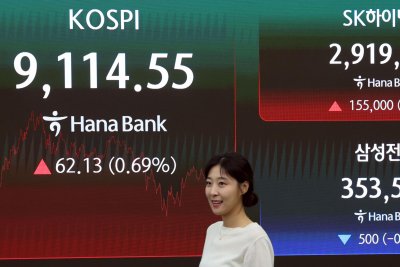
The benchmark Korea Composite Stock Price Index (KOSPI) added 143.25 points, or 2.74 percent, to 5,377.30, rebounding from sharp losses in the previous session.

Trading volume was moderate at 1.12 billion shares, with a total value of 22.13 trillion won (US$14.69 billion), as gainers outnumbered losers 664 to 224.

Foreign and institutional investors bought a net 814.57 billion won and 716.93 billion won worth of shares, respectively, while individuals sold a net 2.09 trillion won worth of shares.

The rebound followed news that Tehran was drafting a protocol with Oman to monitor maritime traffic through the Strait of Hormuz, raising hope of progress toward reopening the waterway.

The strategic waterway has effectively been shut since the outbreak of war in the Middle East in late February, driving up global oil prices due to supply disruptions.

Dozens of countries are also seeking ways to resume shipments through the Strait of Hormuz after U.S. President Donald Trump warned of an “extremely hard” attack on Iran within the next two to three weeks, while urging countries that rely on the key shipping route for energy imports to “take care of” it themselves.

“Iran has said the measure is intended to ensure safety and improve services, suggesting that the blockade of the waterway may be easing,” Seo Sang-young, a researcher at Mirae Asset Securities, said.

Top-cap shares finished mixed.

Market bellwether Samsung Electronics surged 4.37 percent to 186,200 won, while chip giant SK hynix soared 5.54 percent to 876,000 won.

Defense giant Hanwha Aerospace climbed 2.26 percent to 1,449,000 won, and artificial intelligence investment firm SK Square went up 2.88 percent to 483,000 won. Nuclear power plant builder Doosan Enerbility jumped 3.21 percent to 96,600 won.

Shipbuilders gathered ground. Local industry leader HD Hyundai Heavy spiked 9.23 percent to 479,000 won, and its rival Hanwha Ocean went up 7.29 percent to 128,000 won.

Carmakers finished mixed. Top automaker Hyundai Motor advanced 1.18 percent to 471,000 won, while its affiliate Kia fell 0.27 percent to 150,200 won.

Leading battery maker LG Energy Solution fell 1.48 percent to 398,500 won, and bio giant Samsung Biologics lost 1.96 percent to 1,554,000 won. Leading financial firm KB Financial shed 0.68 percent to 145,500 won.

The local currency was quoted at 1,505.2 won against the U.S. dollar as of 3:30 p.m., up 14.5 won from the previous session.

Copyright (c) Yonhap News Agency prohibits its content from being redistributed or reprinted without consent, and forbids the content from being learned and used by artificial intelligence systems.

Source link

Several companies bid for Home Plus Express grocery chain

A store run by Mega MGC Coffee, which reportedly bid for Home Plus Express. Photo by MGC Global

SEOUL, April 1 (UPI) — South Korean discount chain Home Plus said Tuesday that a court has begun to review the sale of its neighborhood grocery store chain, Home Plus Express.

Home Plus, which is under receivership, said the court started the procedure of selecting a preferred bidder after receiving reports from its sales adviser, Samil PricewaterhouseCoopers.

“Prior to the March 31 deadline, multiple companies were confirmed to have participated in the bidding process to acquire Home Plus Express,” the firm said in a statement.

Home Plus did not disclose further details, including the number of bidders and their identities.

However, Mega MGC Coffee has reportedly presented a bid for Home Plus Express. The budget coffee chain, which is owned by MGC Global, operates nearly 4,000 stores across South Korea.

Both MGC Global and Home Plus declined to confirm the reports.

Following unsuccessful attempts to sell Home Plus as a single entity, the divestment of Home Plus Express has emerged as a key pillar of its rehabilitation plan. The unit generated $730 million in revenue in 2024.

The Express division has a network of almost 300 stores and most of them are located in high-density urban areas. Home Plus also runs more than 100 large-format outlets.

In 2015, South Korea’s leading private equity fund, MBK Partners, purchased Home Plus from Tesco in a landmark $5 billion deal. In recent years, the retailer has struggled amid pandemic-related disruptions and the rise of e-commerce giants.

Since early last year, MBK Partners has tried to dispose of Home Plus to little avail. As a result, the company has shifted its focus to the sale of Home Plus Express.

Source link

Orgasm-based wellness company’s founder sentenced to 9 years in prison

March 30 (UPI) — The founder of the orgasm-based wellness company OneTaste, Nicole Daedone, was sentenced on Monday to nine years in jail for forced labor conspiracy.

Daedone was sentenced after being found guilty last year for grooming vulnerable women into working under the guise of helping women heal from various traumas, the New York Daily News reported.

Along with her director of sales, Rachel Cherwitz, who was sentenced to six and 1/2 years in prison on Monday, Daedone recruited women to purchase sexual wellness therapy programs — which included “orgasmic meditation” — and then turned them into “handlers” who would recruit “marks” into the program, ex-employees testified during trial.

Over the course of the decade-long sex abuse scheme, Daedone forced ex-employees to engage in sex acts under the guise of meditation sessions, often forcing them to work for free, the New York Post reported.

Daedone, and her attorneys, have maintained that the company is “rooted 100% in consent.”

“If I talk to you about the practice … you can say yes or no, and no is a perfectly acceptable answer throughout the practice itself,” she told NBC News last year. “It’s all based in consent. We had an ethics committee. This is the antithesis of what this company was.”

Although Daedone was not sentenced to the 20 years in prison that prosecutors sought, she will have to forfeit the $12 million she sold OneTaste for and pay $900,000 to ex-employees who were not paid for their work.

“Ms. Daedone exploited certain women in a calculated way and made money off of that exploitation,” Federal Court Judge Diane Gujarati said at the sentencing.

“What she was doing was not about enlightenment or operating on a different dimension,” Gujarati said. “It wasn’t a game or a show. It wasn’t ‘Harry Potter‘ or ‘The Matrix.’ It was criminal.”

OneTaste operated centers in cities across the United States that offered it’s orgasmic meditation practice, which involved sessions where one person performed a sex act on another for 15 minutes “with no goal except to feel.”

Former employees who testified during the trial called the company a sex cult that was ruled through fear and intimidation, The New York Times reported.

The women said that they were tasked with offering sexual services to clients and investors, as well as care for the company’s communal homes.

One woman testified that she was forced to receive a meditation session and prosecutors alleged that Daedone used the practice as a “means of encouraging productivity,” The Times reported.

After Daedone and Cherwitz were convicted, the Department of Justice said the jury had revealed the duo as “grifters who preyed on vulnerable victims by making empty promises of of sexual empowerment and wellness only to manipulate them into performing labor and services for the defendants’ benefit.”

People who continue to support the company, which has attempted to re-brand itself, have said the trial is prosecuting consenting adults who have chosen to participate in its programs.

While women who testified during the trial said they fell into Daedone’s trap as vulnerable targets — who were referred to internally as marks, according to trial testimony — the company’s current CEO, Anjuli Ayer, called the sentence “a terrifying day for freedom.”

“Once persuasion becomes a crime, anyone can be a defendant, and anyone can be a victim,” Ayer said. “We must correct the record or everyone will suffer.”

Attorney Alan Dershowitz told NBC News earlier this month that he considers the conviction to be “a miscarriage of Justice” based on his reading of the trial materials and plans to help both Daedone and Cherwitz request a presidential pardon.

“With a few changes of words, this indictment could have been directed against Mormon groups, against Hasidic groups, against various Protestant or Catholic sects,” he said. “There’s so many people who join ideological or religious groups, volunteer their time and later become disillusioned.”

Source link

Pentagon denies that Hegseth’s broker sought investment before Iran war | Business and Economy News

US Department of Defense demands retraction of report alleging broker sought multimillion-dollar investment for Hegseth.

The United States Department of Defense has demanded the retraction of a newspaper report alleging that a broker for defence chief Pete Hegseth attempted to make a large investment in weapons companies in the run-up to the war on Iran.

Pentagon spokesman Sean Parnell demanded the “immediate” retraction on Monday after The Financial Times reported that a wealth manager for the defence secretary contacted BlackRock about making a multimillion-dollar investment in a defence-related fund in the weeks leading up to the war.

Recommended Stories

list of 4 itemsend of list

Hegseth’s broker at Morgan Stanley ultimately did not go ahead with the investment in the exchange-traded fund, whose holdings include Lockheed Martin and Northrop Grumman, because it was not yet available for purchase at the time, The Financial Times reported, citing three unnamed sources.

“This allegation is entirely false and fabricated. Neither Secretary Hegseth nor any of his representatives approached BlackRock about any such investment,” Parnell said in a post on social media.

“This is yet another baseless, dishonest smear designed to mislead the public.”

Hegseth and his department “remain unwavering in their commitment to the highest standards of ethics and strict adherence to all applicable laws and regulations,” Parnell said.

Al Jazeera could not independently confirm the Financial Times report.

The Defense Department did not immediately respond to a request for comment sent outside of usual business hours.

The Financial Times and Morgan Stanley also did not immediately respond to inquiries.

BlackRock declined to comment.

The report comes amid scrutiny of well-timed trades in financial and prediction markets that have fuelled speculation that figures with insider knowledge may be profiting off of US President Donald Trump’s war plans.

While The Financial Times reported that the attempted investment by Hesgeth’s broker did not go ahead, the defence chief would not have made money on such a purchase in the month since the war began.

While the iShares Defense Industrials Active ETF has risen more than 25 percent over the past year, it has fallen nearly 13 percent since the US and Israel launched strikes on Iran on February 28.

Source link

Egypt enacts energy saving measures as Iran war affects import costs

March 29 (UPI) — Egypt is ordering stores and malls to close early, asking people to work from home and dimming street lights as energy costs have skyrocketed since since January.

The North African country put energy saving efforts into effect because the U.S. and Israeli war in Iran has sent the cost of importing oil and natural gas — which is how Africa gets the vast majority of its energy supplies — through the roof, The BBC and Anadolu Agency reported.

Many nations globally have seen the cost of fuel and natural gas increase, and several African and Asian nations have enacted efforts similar to Egypt, because Iran has blocked the Strait of Hormuz to attempt to get the two nations to end the airstrikes aimed at regime change there.

Roughly 20% of the world’s oil and natural gas supply moves through the Strait and choking it off has had a significant effect on Egypt.

Egypt imports liquefied natural gas from the United States and Qatar, among others, and recently signed a deal with Israel for gas that will be delivered via a pipeline, the Financial Times reported.

Although Egypt, with Pakistan and Turkey, are involved with talks to end the war, Egyptian Prime Minister Mostafa Madbouly said that because “there is no clarity about the duration of this war,” the energy reduction measures, which go into effect .

“These measures aim to mitigate the effects of energy import costs due to high global oil prices,” Madbouly said during a press conference.

Since January, Madbouly said that natural gas imports tripped from $560 million per month in January to $1.65 billion per month in March and that its petroleum bill more than doubled in the same time period from $1.2 billion per month to $2.5 billion per month.

Among the “exceptional measures” that will go into effect include stores, restaurants, cinemas and gathering places closing by 9:00 p.m. five nights per week; most employees being told to work from one or two days per week; street lighting and street advertisement lighting will be dimmed by 50% and government vehicles will see be required to use 30% less gas.

Despite talks starting to end the war, the price of Brent crude oil on Friday surpassed $111 per barrel as Iran continued to block most ships from passing through the Strait of Hormuz.

Although Iran allowed a handful of oil tankers through the Strait last week, which U.S. President Donald Trump called a show of good faith, global markets have been hit hard, even beyond energy, as a result of limited traffic transiting the passage.,

President Donald Trump stands with U.S. Secretary of Agriculture Brooke Rollins during an event celebrating farmers on the South Lawn of the White House on Friday. Photo by Aaron Schwartz/UPI | License Photo

Source link

Bank of America agrees to $72.5M settlement with Epstein survivors

Bank of America this week settled a class-action lawsuit brought by a victim of the deceased sex predator Jeffrey Epstein, pictured in a photo issued by the New York State Division of Criminal Justice while he was awaiting trial on charges of sex trafficking. Epstein was found dead in his cell in August 2019 before he could be brought to trial. File Photo by New York State Division of Criminal Justice/EPA-EFE

March 28 (UPI) — Bank of America reached a settlement with a survivor of deceased sex predator Jeffrey Epstein that will distribute $72.5 million to his victims.

The survivor, named in the case as “BOA Jane Doe,” and her attorneys told a federal judge on Friday that a settlement had been reached with the bank on a proposed class-action suit over Epstein’s decades of abuse and trafficking of women and teenage girls, The Charlotte Observer reported.

The suit alleged that the bank ignored signals of Epstein’s crimes by continuing to do business with him while he was committing his crimes.

Doe’s attorneys said they are aware of at least 60 women who were abused or trafficked by Epstein, however the settlement covers all women who experienced either at Epstein’s hands or those “connected to or otherwise associated” with him between June 30, 2008, and July 6, 2019, NBC News reported.

Bank of America, which is the largest bank in the United States, denied liability or wrongdoing in providing Epstein banking services but settled in order to avoid a trial.

“While we stand by our prior statements made in the filings in this case, including that Bank of America did not facilitate sex trafficking crimes, this resolution allows us to put this matter behind us and provides further closure for the plaintiffs,” the bank told The Observer and NBC in a statement.

With the settlement filed, a judge will still have to approve it at a hearing, which is scheduled for April 2.

Bank of America now joins JPMorgan, which settled for $290 million, and Deutsche Bank, which settled for $75 million, in paying what is thought to be more than 1,000 women that Epstein abused in his years-long scheme.

President Donald Trump stands with U.S. Secretary of Agriculture Brooke Rollins during an event celebrating farmers on the South Lawn of the White House on Friday. Photo by Aaron Schwartz/UPI | License Photo

Source link

Terror attack on bank thwarted by police in France

March 28 (UPI) — Law enforcement in Paris arrested one person and is pursuing another after they allegedly tried to detonate an explosive device outside a bank there.

The two suspected attackers attempted to detonate the device near Bank of America’s headquarters in France’s capitol, French officials confirmed on Saturday afternoon.

“Bravo for the swift intervention of a prefecture of of police crew that made it possible to thwart a violent action of a terrorist nature last night in Paris,” France’s minister of the interior, Laurent Nunez, said in a post on X.

“The investigation continues … Vigilance remains more than ever at a high level,” he said.

Around 3:30 a.m. early Saturday morning, officers in the area saw two people carrying a shopping bag, out of which came a container of some type of fuel taped to a tube that the duo attempted to light, the French radio station RTL reported.

The suspect who was caught by police told them he had been recruited online and was paid about $700 for the attempted attack.

Attacks have been committed at synagogues, Jewish schools and facilities, and near businesses associated with the United States and Israel in a handful of countries since the start of the war in Iran.

France, in particular, has ramped up security on the lookout for terrorist attacks.

The Iran-linked group Harakat Ashab al-Yamin al-Islamiyya posted video on Telegram of a bank in France last week which included a push to attack Bank of America in Paris because it “is not just a bank, but a shadowy Zionist force,” The Telegraph reported.

“This bank sends vast investments to Israel, while simultaneously strengthening Jewish economy, culture and politics in France,” the group said in the video. “Through its support for Zionist schools, associations, companies and urban development projects, Bank of America has become a ‘financial and strategic force’ in the European Zionist arena.”

Iranians attend a funeral for a person killed in recent U.S.-Israel airstrikes at Behesht-e Zahra cemetery on the southern outskirts of Tehran in Iran on March 9, 2026. Photo by Hossein Esmaeili/UPI | License Photo

Source link

U.S. court overturns ruling against Argentina over YPF expropriation

People gather outside the federal courthouse in New York City in July 2023, when Argentina was to learn how much it owed to investors after nationalizing gas and oil company YPF SA. The award has now been overturned by a U.S. appeals court. File Photo by Sarah Yenesel/EPA

March 27 (UPI) — Argentina’s government praised a U.S. court decision Friday that overturned a ruling ordering the country to pay more than $16.1 billion in a lawsuit tied to the 2012 expropriation of oil company YPF.

“We won the case,” President Javier Milei wrote on X, noting the amount at stake was comparable to key financial obligations, including recent loans from the International Monetary Fund.

According to a statement from the presidential office, the Court of Appeals for the Second U.S. Circuit reversed a lower court’s decision that had ordered Argentina to pay billions in damages over how the state renationalized the company.

“The court fully overturned the ruling against the Argentine state in what represents the best possible outcome, with less than a 15% probability of occurrence, and avoided an estimated payment of approximately $18 billion,” the statement said.

The case stems from Argentina’s 2012 expropriation of a 51% stake in YPF, which was owned by Spanish energy company Repsol, during the second presidential term of Cristina Fernández de Kirchner.

The dispute arose because Argentina did not launch a tender offer to purchase shares held by minority investors, as required under the company’s bylaws.

Following that omission, litigation fund Burford Capital acquired the rights to pursue the claim and sued Argentina in New York, securing a record $16.1 billion judgment in 2023 that has now been overturned.

Argentina’s legal defense, maintained across multiple administrations, including those of Mauricio Macri, Alberto Fernández and Milei, argued that the appropriate jurisdiction for the case was Argentine courts, not U.S. tribunals, local newspaper Ámbito reported.

The country had also appealed a June 2025 order requiring it to transfer YPF shares as partial payment of the judgment. With the ruling now vacated, the U.S. Court of Appeals for the Second Circuit also nullified that order.

The removal of the ruling and its associated payment could improve Argentina’s country risk outlook, ease pressure on international reserves and send a positive signal to investors regarding international litigation, local outlet Perfil reported.

Burford Capital can petition the U.S. Supreme Court for review. If the court takes up an appeal, the final outcome could be moths or years away.

Source link