Gov. Jerry Brown on Tuesday appointed 13 judges to Superior Court seats, including four posts in Los Angeles County. All but one of the appointees are Democrats.
Brown filled the Los Angeles County Superior Court vacancies with Julie Fox Blackshaw, deputy counsel to Los Angeles Mayor Antonio Villaraigosa; H. Jay Ford, currently a commissioner in the county court; Gregorio Roman, a deputy public defender; and private-practice lawyer Douglas Stern of Rancho Palos Verdes.
Blackshaw was a federal court special master from 2002 to 2010, and before that served as legal counsel for a Los Angeles police review commission. She takes the seat being vacated by the retirement of Judge Joan Comparet-Cassani.
In a 1992 story in The Times, Blackshaw was credited with winning the then-largest criminal fine ever levied in a defense contracting fraud case, while working part-time as an assistant U.S. attorney and taking care of her infant daughter.
Brown also named Tracie L. Brown, Harry M. Dorfman and Rochelle C. East to judgeships in the San Francisco County Superior Court, and Erin Alexander and Lisa Rogan to judgeships in the San Bernardino County Superior Court.
He appointed Patricia Guerrero and Michael Popkins to the San Diego County Superior Court.
WASHINGTON — The Trump administration has imposed sweeping new sanctions on the International Criminal Court as part of its campaign to dismantle the tribunal over investigations into the United States and its allies, including Israel.
Secretary of State Marco Rubio announced the sanctions Friday, after the Nobel Peace Prize was awarded to South African jurist Navi Pillay, a former judge at the ICC and other international courts whose selection was condemned by Israel. President Trump has coveted that prize for himself.
“We will ban transactions with this rogue court, cutting off their resources and crippling its ability to operate against us,” Rubio said in a video address posted to social media. “The United States and the American people are not subject to the jurisdiction of this fake ICC.”
The sanctions cut the court off from U.S.-based financial services, technology companies and even using U.S. dollars. They set a six-month timeline for U.S. companies and individuals that have business with the court to wind that business down.
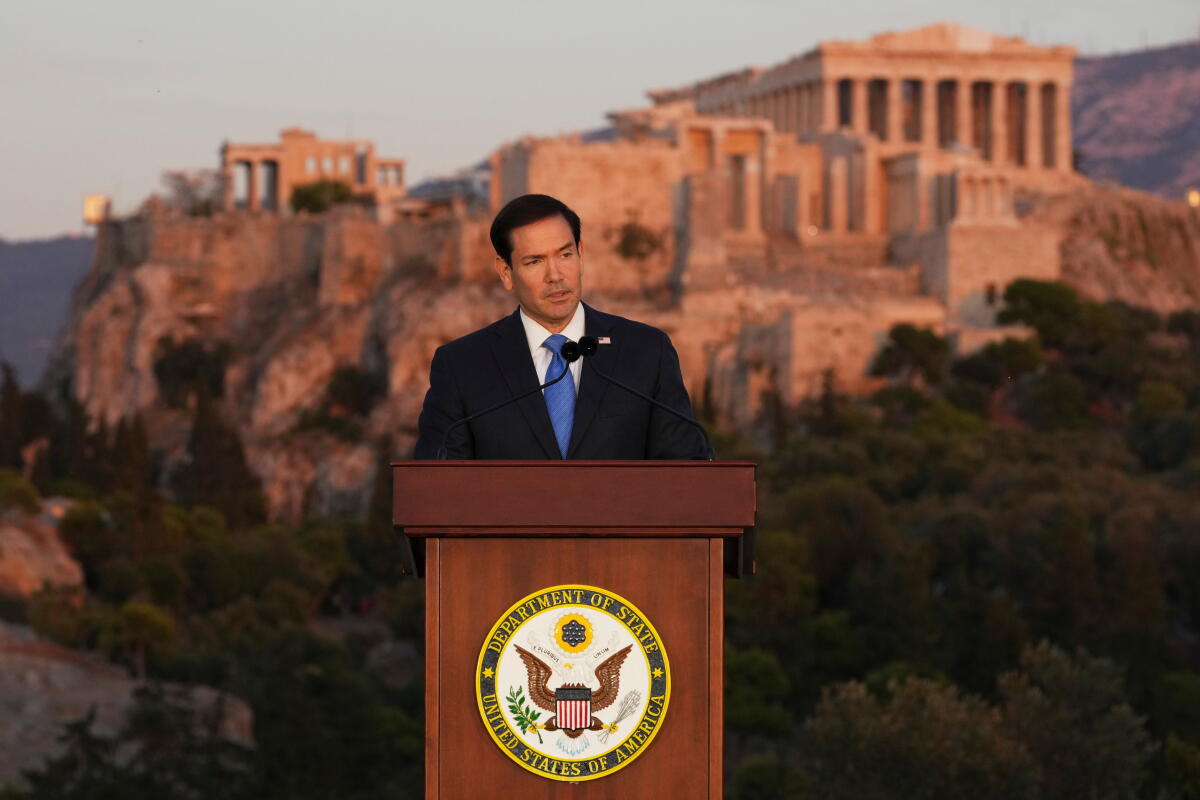
U.S. Secretary of State Marco Rubio speaks at the Pnyx hill, where ancient Athenians held democratic assemblies, with the ancient Parthenon temple atop the Acropolis in the background, in Athens,Wednesday, Oct. 7, 2026.
(Mark Schiefelbein / Associated Press)
The ICC denounced the step as an attack on the rule of law and the foundations of international order, themes that Rubio had appeared to embrace only two days ago in a speech in front of the Acropolis in Athens.
“It is an attempt to obstruct the course of justice and to prevent the court from doing what it was created to do,” the court said in a statement. “It is an assault on the rule of law and on the very foundations of the international legal order which strikes at the simple principle that no one stands above the law.”
ICC President Tomoko Akane, a citizen of U.S. ally Japan, said the court would “continue to fully discharge its mandate, with independence and impartiality, acting only on the basis of the law and the evidence, for the sake of the countless victims of grave crimes.”
She also appealed to other ICC members for support. “This is not just about defending a single institution, but about safeguarding the international order grounded upon the rule of law.”
Rights groups also denounced the sanctions.
“This existential attack must fail,” said Erika Guevara Rosas, an Amnesty International senior director. “States must take concrete action to resist the imposition of these measures and actively protect the Court.”
A view of the International Criminal Court in The Hague, Netherlands, on August 22, 2026.
(Karolina Janik/NurPhoto via Associated Press)
The court’s host country of the Netherlands has been preparing for weeks for the move. One possible measure to mitigate sanctions is the EU “blocking statute,” which could be used to protect European court staff by preventing European companies from complying with the U.S. measures. Dutch Foreign Minister Tom Berendsen has called the blocking statute the “nuclear option” in countering possible sanctions, but said the Netherlands has been in talks with the European Commission to ensure that if it is necessary it can be quickly enacted.
In a joint statement, Canada, Denmark, Germany, France, Italy, Japan, the Netherlands and the United Kingdom expressed strong disagreement with the U.S. sanctions.
“We will continue to work together to support the court’s vital work, uphold the rules-based international system, and advance accountability,” the statement said.
“If put into effect, these sanctions will have a significant impact on the court’s work, its dedicated staff and their families. They work every day to bring those accused of the most serious international crimes to justice and to support their victims.”
Rubio said U.S. allies should join in the U.S. actions. “If they do not, the United States will continue its campaign to dismantle the ICC, piece by piece, until Americans are threatened no longer,” he said.
A number of countries have withdrawn from the court this year, including Venezuela and Chad. The South Pacific island nation of Naoero was the most recent to announce it would quit.
Lee and Quell write for the Associated Press. Quell reported from The Hague, Netherlands. AP writer Mike Corder contributed to this report from The Hague.
KATIE Price told social services she feared her then husband Kieran Hayler had groomed and sexually abused his alleged child rape victim, a court has heard.
The 39-year-old is accused of three counts of rape and one count of sexual assault against the girl between June and October 2016, when she was 13.
Katie Price told social services she feared her then husband had groomed and sexually abused his alleged child rape victim, a court has heardCredit: GettyKieran Hayler, arriving at Lewes Crown Court for trial, is accused of three counts of rape and one count of sexual assaultCredit: Darren Fletcher
Katie told a social worker in 2018 that Hayler, 39, had been grooming the girl since she was 13 in a list of agreed facts read in Lewes Crown Court yesterday.
She alleged that Hayler had been grabbing the teen’s bottom, trying to kiss her and said he was falling in love with the girl, jurors heard.
Sign up for the Showbiz newsletter
Thank you!
The social worker then informed Sussex Police about the allegations.
Authorities contacted the mother soon after but she told police her daughter did not want to talk about it or take the allegations any further.
Katie alleged Hayler had been touching and trying to kiss the girl and was falling in love with her, jurors were toldCredit: PAKatie Price and Kieran Hayler in 2017Credit: Getty
Defence barrister Arlette Piercy asked the mother if she had betrayed her daughter’s trust by going to Katie Price with her allegations in 2017 – nearly a year before she reported them to social services.
She asked: “You said you felt you had to tell Katie Price. “You went behind your daughter’s back?
The mum – who cannot be named for legal reasons – responded: “Yes, she probably didn’t want anyone to ever know.
“It probably did cause arguments. We did have a big fall out.”
Asked if the girl was “OK” about her telling Ms Price, the mum said: “No, she wasn’t OK about it.
“But I said to (the girl) because the marriage situation (with Kieran) had broken down, it was only fair that I let Katie know.”
The child told her mum that Hayler had “done everything” to her during a conversation in 2017 – almost a year after his last alleged attack, jurors were told.
The woman then informed former glamour model and mum-of-five Ms Price, 48, weeks after she was told.
Speaking about when she told Ms Price, the woman said she told her: “I think Kieran has done something to (the girl).”
She told the court: “She was shocked and probably swore.”
The mum said she felt “like I have to” tell Ms Price, who was having marriage problems with Hayler at the time.
She added: “She was quite angry and I didn’t feel that she was particularly upset for (the girl).
“I just felt that she was angry and feeling revengeful towards Kieran for the situation they were in.
“And she said, ‘Well, you could get him into trouble if you told somebody’.”
The woman – who said her daughter did not want to tell authorities about the allegations – continued: “I said we have to respect her wishes, she doesn’t want anybody to know, we have to just look after (the girl).”
The girl – now aged in her 20s – denied making up the claims and became emotional, leaving the courtroom at one point as she faced questions from Hayler’s legal team.
The court was shown a video of her police interview from 2021 where she recalled the alleged abuse, sobbing as she said “I thought it was my fault for ages”.
Jurors previously heard Hayler allegedly begged the girl to not tell anyone and told her to “take it to the grave”.
The court also heard previously that before the first alleged rape, Hayler told the schoolgirl he really liked her and began speaking to her about sex – he is accused of raping the girl again on two further occasions.
The girl, who is not a member of Hayler or Katie’s family, contacted the NSPCC in December 2021 when she was aged 18, which prompted an investigation, it was said.
Former stripper Hayler denies all the allegations, which are said to have happened at an address in West Sussex.
The NFL is urging the Supreme Court to rule on the regulation of prediction markets, arguing in an amicus brief filed Thursday that states — which already regulate legal sports books — are better positioned to oversee sports-related contracts “given the current landscape.”
The NFL is supporting New Jersey’s request for the Supreme Court to rule on the governing authority for prediction markets, which provide an opportunity to trade — or wager — on the result of future events. The Commodity Futures Trading Commission has maintained it has exclusive federal jurisdiction, while states have argued that the array of typically yes-or-no questions is akin to gambling and falls under their purview.
“Absent the clarity that only this Court can provide, (prediction market) operators will continue exploiting the gap between state and federal regulation, endangering consumers and the integrity of sports events across the country,” lawyers for the NFL wrote.
According to the NFL’s brief, on the first Sunday of this season, more than half of the trading volume on prediction markets — $1.8 billion out of $3.3 billion total — was related to the league.
“Any delay from the Court will result in increasing consumer harm and risk to game integrity,” the NFL wrote in its brief.
Kalshi spokeswoman Elisabeth Diana said its top priority is market integrity, and she pointed to its partnerships with the NHL, Major League Baseball and other sports organizations as evidence.
“Contrary to the NFL’s statements, the CFTC is actively policing sports-related markets, which are now listed on nearly every U.S. commodities exchange,” Diana said. “The CFTC’s ongoing rulemaking addresses many of the NFL’s supposed concerns. And those rules sit atop the same comprehensive system of federal enforcement that protects trillions of dollars of transactions in U.S. markets.”
A Polymarket spokesperson said the operator “shares the NFL’s commitment to preserving the integrity of the game,” and it is working on “a harmonized federal framework that delivers a stronger, more consistent form of integrity compared to a patchwork of disconnected state laws built for a bygone era.”
Ohio filed a brief on Wednesday urging the high court to side with New Jersey and preserve the power of all states to regulate prediction markets, as they do casino gambling and sports betting. The filing was backed by 38 states, including Republican and Democratic attorneys general from states including Arkansas, California, Illinois, Missouri, New York, South Carolina and Pennsylvania.
Roughly 20 states are involved in litigation over prediction markets, and a split has formed between appeals courts, making it more likely that the Supreme Court will take up the issue. The 6th and 9th U.S. Circuit Courts of Appeals have ruled in favor of states seeking to regulate prediction markets, while the 3rd U.S. Circuit Court of Appeals agreed with Kalshi in a ruling earlier this year.
“As between the two approaches, the NFL believes the Sixth and Ninth Circuits got it right, given the current landscape,” lawyers for the league wrote in their brief.
The NFL also is questioning the CFTC’s enforcement capabilities. In its filing, the league writes that the commission has 543 employees and their responsibilities include a range of derivatives beyond event contracts.
“Without adequate staff engaged in oversight and enforcement, even the best regulations cannot meaningfully ensure game integrity and consumer protection,” lawyers wrote in the NFL brief.
A message was left by the AP seeking comment from the CFTC.
The NFL has urged the CFTC and prediction markets to adopt a list of prohibited wagers that it feels pose the greatest threats to game integrity, according to the brief, but they have declined thus far. It also has asked the commission to adopt an age limit of 21 for trading on prediction markets, up from the current 18.
Diana said Kalshi has tried to collaborate with the NFL on market integrity, but it has received no response.
Cohen writes for the Associated Press. Associated Press writer Marc Levy contributed to this report.
The next stage in this legal dispute will be a behind-closed-doors hearing over whether the police can still retain material seized from Mountbatten-Windsor’s homes under alternative powers designed for situations like this.
The error that has led to Thames Valley Police accepting the search warrants were unlawful relates to the particular power the judge permitted the force to use when its officers raided the properties.
Strict legal safeguards on searches bar the police from automatically seizing sensitive material without thinking through in advance the need to take it.
Examples of that material include advice from a suspect’s lawyer or material which does not really belong to them, such as copies of confidential work-related papers from an employer.
In practice, if the police find such material during a search, they should return it rather than use it in their investigation.
The category of search warrant that was granted by the court in this instance did not take into account the possibility of such protected material being seized.
However, the law says police can in fact seize that kind of material – or potentially retain it in the event of an error – providing they pass some extra tests.
Thames Valley Police must now convince a judge that the material is likely to be of “substantial value” to their investigation into Mountbatten-Windsor and, ultimately, potential evidence to present to a court.
So while the force has conceded the search warrant was unlawful, a judge will have to decide whether this alternative search power, with its extra safeguards, justifies them keeping and using the material after all.
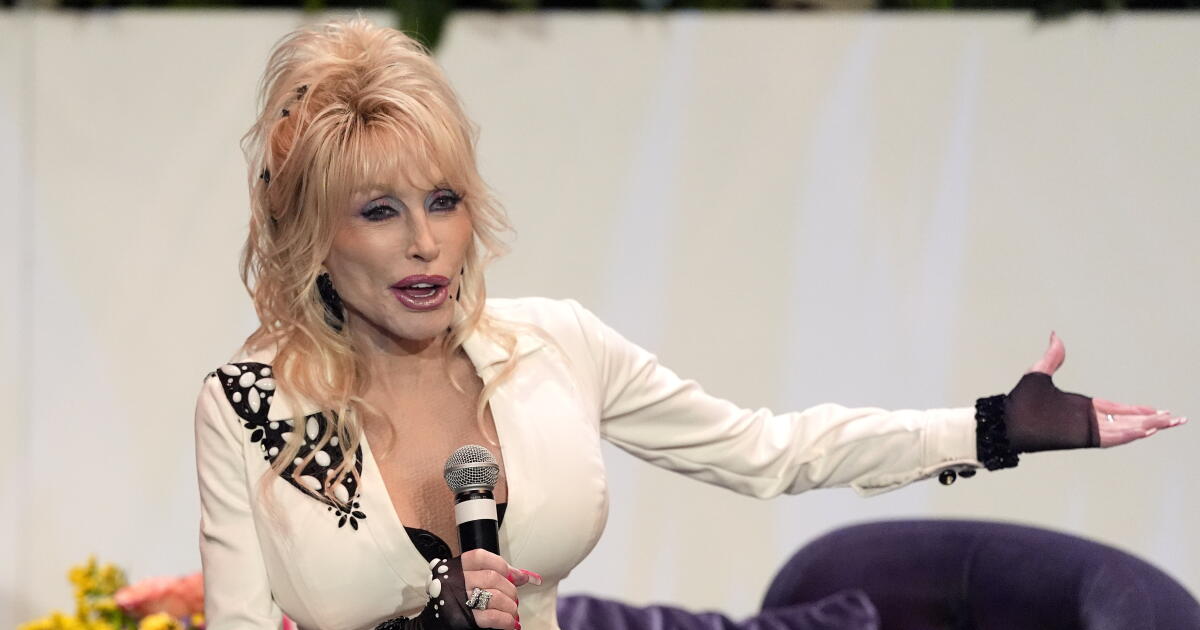
Dolly Parton’s estate is alleging that Bryan Seaver, the country icon’s nephew and former head of security, used a “no trespassing” sign and barbed wire to avoid being served legal documents.
There is an active restraining order and lawsuit against Seaver by Parton’s company, She’s Alive LLC, which is run by Parton’s former manager, Danny Nozell, for allegedly threatening and extorting her estate.
Seaver served as Parton’s head of security for more than 20 years and, on Aug. 25, delivered the news of his aunt’s death via a video on her Instagram account.
Legal troubles for Seaver first came to light on Sept. 22 when a case was filed by She’s Alive in Davidson County Chancery Court in Nashville on the heels of Seaver’s termination as head of security. Both Seaver and his company, Squadron Augmented Protection Services LLC, are the defendants in the lawsuit.
In documents reviewed by the New York Times, Seaver is accused of mounting “an obscene, deliberate and escalating campaign of threats” to acquire money from the Parton estate, including a profane threat made toward at least one Dollywood business partner.
Seaver filed a motion last week to delay a hearing scheduled for Friday, saying he needed time to meet with his preferred legal counsel.
The following day, lawyers for She’s Alive asked the court to deny this motion, arguing that Seaver “attempted to evade service of process” and that the “court should not reward that behavior.”
According to court filings obtained by ABC News, a process server tried to issue court documents to Seaver for the third time but encountered a “no-trespassing sign in the front yard and barbed wire draped across the handrails leading to the front door.”
The new hearing date is set for Oct. 20.
The legal complaint includes text messages in which Seaver wrote that he would become “the hand of retribution for my entire family.” According to the complaint, in other text exchanges between him and a longtime lawyer of Parton, he described himself as a “killer,” a term he would later argue was taken out of context.
There are also claims that Seaver began making financial demands before Parton’s death, including in a text to Nozell where he said he would launch a podcast “dedicated to ruining Dolly’s brand partnerships and telling the violations these people have done on us” if demands were not met, the New York Times reported.
Nozell was Parton’s longtime manager and is credited with reviving the “I Will Always Love You” singer’s international touring career.
The Times reached out to Seaver, Nozelle and She’s Alive LLC but did not hear back.
Coco Gauff is calling out the racist abuse she’s received online after following the rules during her latest match at the China Open.
The two-time Grand Slam champion defeated 16-year-old Sun Xinran 7-5, 6-1 on Monday to move on to the round of 16 at the Beijing event. After the match, Gauff took to social media to address the racist comments and messages she’d received for halting a point mid-rally and explained the point in question.
“[H]ey everyone, you can dislike me or disagree about what happened without being racist,” Gauff wrote in a post on X, replying to a user who directed profanity and a racist slur toward her. “[T]he amount of racist comments/dms I’ve received in the last few hours is insane. Lastly, I’m not a cheater or a thief.”
The tennis star then shared a screenshot of the lengthy explanation she posted to Instagram explaining the rules and why she stopped play when she did.
The point in question occurred during the first set, when Gauff was serving and down 4-5. She raised her hands to halt the point toward the end of a lengthy rally, just before Sun returned a volley that could have put her just two points shy of winning the first set.
But just as Sun closed into position to take her shot, the electronic advertising boards around the court flickered as it changed what was displayed.
“I saw it flicker in the beginning of the point but was not sure if that is what I actually saw,” Gauff wrote in her explanation. “[W]hen it flickered again I raised my hands before she hit her shot because this is when I was sure I saw the light flicker and it wasn’t my mind doing tricks.”
The chair umpire then conducted a video review of what happened, and ruled that the flickering ad constituted a “hindrance” outside of the control of the players, like some paper getting blown onto the court. According to the WTA rules, a point should be replayed from the beginning in such instances.
In her Instagram post, Gauff also explained that players are told that they can keep playing a point and challenge once it is over. Both Sun and Gauff would have been permitted to challenge the point regardless of who won it.
She called it an “unfortunate situation” and added that “it’s weird” that she’s “getting hate for following the rules.” Gauff also praised Sun and her talents, saying “it was an honor to share the court in front of her home crowd.”
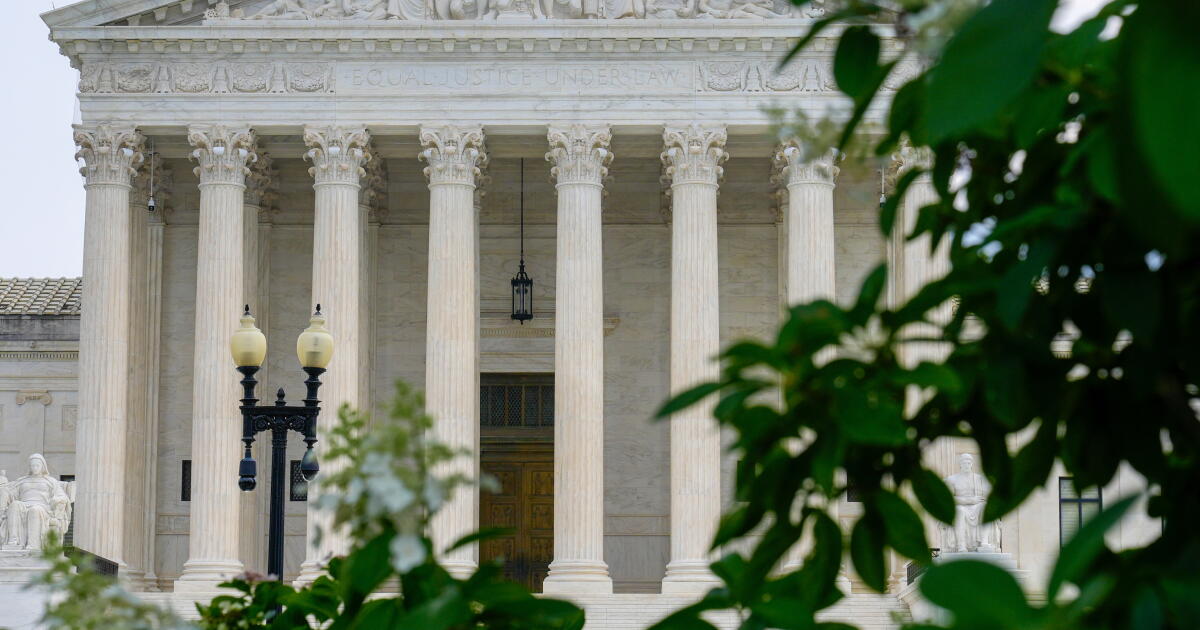
WASHINGTON — The Supreme Court justices sounded wary Monday of state-by-state lawsuits that could impose huge damage verdicts on energy producers for the impact of global climate change.
Instead, several of them suggested these local and state claims may be blocked by the federal Clean Air Act.
“Interstate air and water pollution are matters for federal law,” said Justice Brett M. Kavanaugh. “We don’t have to reinvent the wheel. This kind of pollution is a federal matter unless Congress says otherwise.”
Justice Elena Kagan appeared to agree. State-by-state lawsuits “get in way of how Congress decided to regulate greenhouse gases,” she said.
At issue before the court was the question of whether cities and states may sue oil and gas producers for the damages inflicted by climate change.
California and nearly three dozen states and municipalities have filed such claims, but none have gone to trial.
Last year, the Colorado Supreme Court ruled that Boulder County may sue for damages in a local court.
The Supreme Court agreed to hear an appeal from the oil industry backed by the Trump administration. Its lawyers argued that the Constitution and federal law do not allow for such claims to be resolved in local courts.
Chief Justice John G. Roberts sounded skeptical of opening the door to a wave of climate change lawsuits. “There will be 50 different cities. How would that work out?” he asked a lawyer representing Boulder.
For much of the two-hour argument, the justices struggled over whether federal law imposes a limit on such lawsuits, or instead whether states and their judges are free to seek damages for the harm they have suffered.
They did not signal a clear outcome but most of them sounded as though they leaned toward saying that federal law governs such far-reaching damage claims.
The energy producers turned to the Supreme Court after losing in state court.
They hope the high court will shut down more than three dozen lawsuits seeking damages for the impact of climate change.
So far, judges across the nation have been divided. Some have ruled that federal law preempts or blocks states and counties from suing under state law.
But others, including the Colorado Supreme Court, ruled the lawsuits may proceed under state law.
Justice Samuel A. Alito, a staunch conservative, said he is sitting out the case, presumably because he owns stock in oil companies that would be affected by a ruling.
If the court splits 4-4 and cannot rule, it would be major disappointment for the oil industry because it would allow all the climate-change suits to proceed, at least for now.
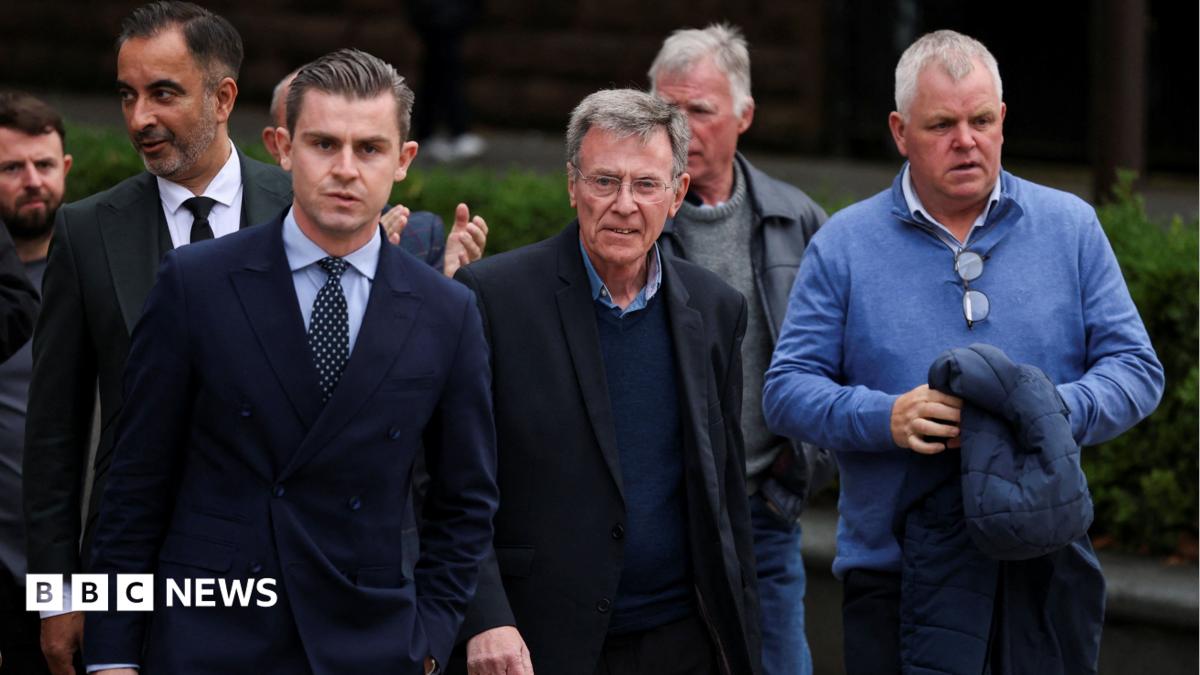
A challenge to the decision to allow a controversial Orange Order parade to go down a predominantly nationalist road is being heard in court.
The deadlock over the proposed march in Portadown – opposed by residents of the Garvaghy Road – has lasted since last Sunday morning.
The stalemate has reopened what was once the most bitter parading dispute in Northern Ireland, with stand-offs in the mid-to-late 90s accompanied by riots, roadblocks and killings.
The fresh Court of Appeal application argues that the Parades Commission, the organisation that approved the march, had “materially misdirected itself” on the police assessment of the potential for disorder.
The application also said the commission had not given an “accurate representation” of PSNI evidence in its decision.
The Garvaghy Road Residents Coalition (GRRC) and their legal representatives arrived at the court on Monday morning.
Loyalist activist Jamie Bryson, who has been acting as legal advisor to the Portadown District, Democratic Unionist Party (DUP) MP Carla Lockhart and Orange Order legal representatives also arrived.
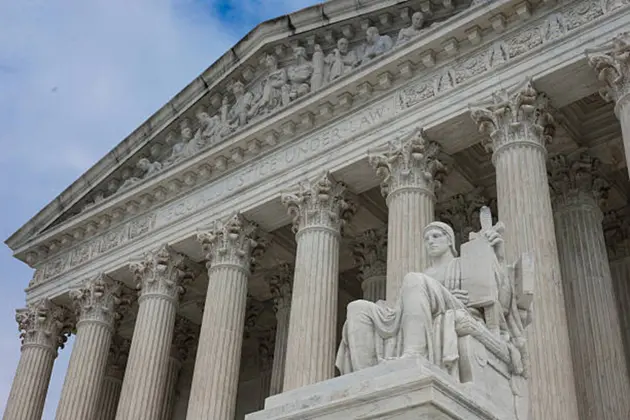
WASHINGTON — The Supreme Court will open its new term Monday by hearing arguments on whether the oil and gas industry may be forced to pay damages for the scorching heat waves, wildfires and droughts that are blamed on climate change.
It’s a momentous question the justices have put off deciding for nearly a decade — and may do so again.
California joined more than two dozen blue states and municipalities in 2023 when it sued the five largest oil companies, alleging “decades of deception” over the danger of a warming climate.
They have “privately known the truth for decades but have fed us lies and mistruths to further their record-breaking profits at the expense of our environment,” California Atty. Gen. Rob Bonta said.
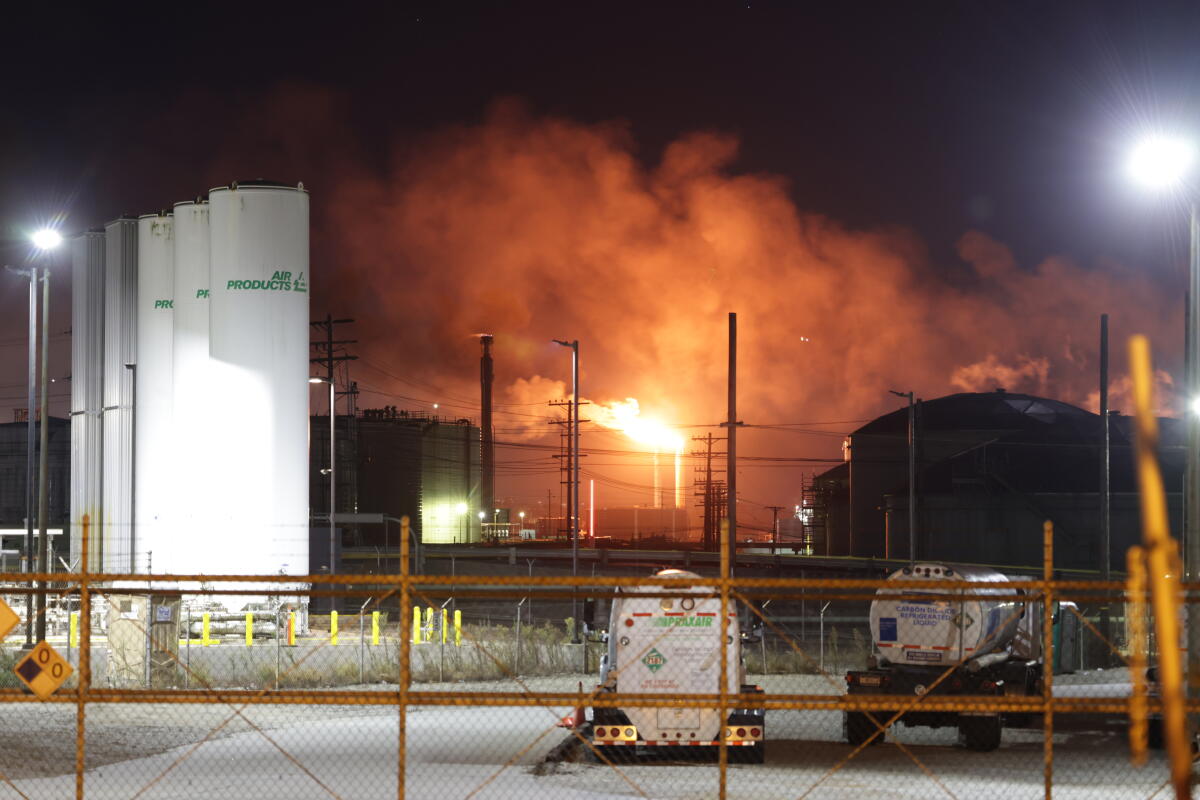
Fire and smoke rise at the Chevron Refinery in El Segundo in October 2025.
(Robbin Goddard/Los Angeles Times)
Such climate-change lawsuits were patterned after the mass claims against the tobacco and opioid industries. Both were accused of concealing the dangers of their very profitable products.
But the climate suits have stalled. Judges have been divided over whether these potentially huge claims should be decided in federal or state court, and if so, under what law.
Last year, Boulder County, Colo., won a 5-2 ruling in the state Supreme Court that allowed its 2018 suit to proceed as a claim of a public nuisance, an unjust enrichment or a civil conspiracy. These are referred to as “common law” claims that are long-standing and traditional but do not rely on a measure approved by the Legislature.
The Colorado judges also said the climate-change suits are not “preempted” or blocked by federal anti-pollution laws because the suit for damages did not regulate greenhouse gas emissions.
The dissenters said the state court was giving Boulder a “green light to act as its own republic” to punish the Exxon Mobil Corp. for the impact of “global climate change.”
“Boulder, Colorado cannot make energy policy for the entire country,” they said. A ruling for the county would “authorize all 50 states and tens of thousands of municipalities” to ask their local juries to “impose ruinous liability” on the fossil fuel industry, they told the court.
The Trump administration joined in support of the industry’s appeal.
“Our federal system would disintegrate if each state could tackle inherently national or international problems by forcing its regulatory prescriptions on the other 49,” the administration’s lawyers wrote.
In February, the justices voted to hear the case and decide whether federal law blocks state law claims for the “effects of interstate and international greenhouse-gas emissions.”
The court scheduled the case of Suncor Energy and Exxon Mobil vs. Boulder County as the first of the new term.
Legal experts say the industry’s claim to be shielded by federal law is weak.
UCLA law professor Alejandro Camacho described the “preemption arguments as the latest and perhaps most ambitious effort to weaponize federal law to prevent polluters and fraudsters from paying for the harms they cause.”
Neither the Constitution nor the Clean Air Act provides such a shield, he said.
Legal experts on the other side question the notion that a public nuisance can be defined so broadly to include both the sale of a legal product and the impact on carbon pollution, much of it coming from China and India.
The outcome in the Supreme Court remains in doubt.
Supreme Court Justice Samuel Alito, left, shown with Justices Clarence Thomas and Brett Kavanaugh in 2025, withdrew from involvement in the climate case being argued Monday, when the court term begins.
(Chip Somodevilla / Getty Images)
Last week, Justice Samuel A. Alito, a reliable conservative, announced he was withdrawing from the case. He did not say why, but he owns stock in other oil companies that could be affected by the court’s decision.
A broad ruling for Boulder would send a shock through the fossil-fuel industry and clear the wave of climate-change suits to proceed in state courts.
The industry may turn to Congress. Republicans in the House and Senate have introduced bills that would shield energy companies from such liability claims.
Similarly, a broad ruling shielding the oil companies probably would block all of the climate change suits, including California’s.
The justices may opt out of ruling, however.
When they granted review of the case, they asked the lawyers on both sides to weigh in on whether the high court had “jurisdiction” to decide the Boulder case.
Usually the U.S. Supreme Court reviews only final judgments handed down by state courts, and the Boulder case did not result in a final ruling.
And without Alito, the court could split 4 to 4.
A decision based on a tie vote would affirm Boulder’s early stage victory but would not set a precedent that would govern other cases.
In its new term, the court also will hear major cases on immigration and guns.
Two of the cases test the Trump administration’s strict deportation policies. One denies bond hearings to people who entered the country illegally and may be deported.
In the past, the government usually offered bond hearings to those who could be held for months or even years while their claims were pending, so long as they could show they were not a flight risk or danger to the public.
But the Trump administration said it plans to detain tens of thousands of such persons indefinitely, even if they have no criminal record and pose no risk.
Government lawyers pointed to a provision of the 1996 immigration law that said people who entered the country illegally “shall be detained.” Previous administrations applied the mandatory-detention rule only to migrants who entered the U.S. illegally and were arrested near the border.
The other case involves so-called “third-country removals.”
The administration is determined to deport immigrants who have “final orders of removal,” many of whom have criminal records. But in some cases, they may not be sent back to their country of origin.
The policy of sending them to a third country has been condemned as harsh and cruel. Thousands of these people have been flown to impoverished countries that are dangerous and where they may be subjected to abuse.
The administration says it seeks assurances from those countries that the deported persons will not be not be abused or persecuted, but it refuses hearings for individuals.
U.S. District Judge Brian Murphy in Boston has ruled these deportees are entitled to a “meaningful notice” of where they are being sent and “meaningful opportunity” to contest this if they have a reasonable fear they will face persecution and torture.
Trump administration lawyers filed emergency appeals at the Supreme Court to set aside Murphy’s orders. They argued that the judge had gone beyond his authority, and the court’s conservatives agreed.
In December, however, the court will hear arguments from both sides on what the law calls for in such deportation cases.
Meanwhile, on Dec. 2, the court will hear a potential landmark on gun rights and and decide whether states may prohibit possession and sale of semiautomatic AR-15 rifles.
California and 11 other blue states have adopted such laws, often in response to mass shootings.
Gun rights advocates say these rapid-fire rifles are among the most popular weapons nationwide and should be protected as lawful under the 2nd Amendment’s right “to keep and bear arms.”
WASHINGTON — A federal court in Texas on Friday issued a ruling temporarily blocking the Trump administration from building a border wall and other infrastructure across the state’s Big Bend region.
The news marks a major win for landowners, businesses and environmentalists in the region who have united to oppose the planned infrastructure projects, which are part of a $46-billion effort by the Trump administration to line the southern border with a mix of 30-foot steel walls, vehicle barriers, roads and surveillance technology.
Judge Kathleen Cardone said in her ruling that the plaintiffs were “likely to succeed on the merits of at least one of the claims in suit, that there is a likelihood that they will suffer serious, irreparable harm without an injunction, and that the balance of the equities and the public interest weigh in their favor.”
Customs and Border Protection and the Department of Homeland Security did not immediately respond to a request for comment.
Opponents of the border wall project have argued that the Big Bend region is so remote and the landscape so rugged that it serves as its own deterrent to illegal immigration, and that the administration violated the law when it issued a swath of waivers allowing it to bypass numerous regulations in order to speed up border wall infrastructure projects.
Laiken Jordahl, with the Center of Biological Diversity that brought the suit, called Cardone’s ruling a “total victory.”
“The bulldozers are going to be sent packing until she rules on the merits,” Jordahl said. “This is such a historic day for Big Bend and for Texas and the Constitution.”
The court’s decision comes just weeks after the administration erected the first border wall panels in the Big Bend sector in the middle of September.
Israel’s top court has overturned an election panel’s ban on Arab parties contesting parliamentary elections this month, saying the decision had not met the legal requirements for excluding them, according to Israeli media.
The Supreme Court justices ruled unanimously on Friday to undo the Central Elections Committee’s disqualification of the country’s two main Arab-majority political lists – Ra’am, also called the United Arab List, and the Joint List, which is an alliance of Hadash, Ta’al and Balad.
Recommended Stories
list of 3 itemsend of list
The decision keeps Palestinian citizens of Israel, who make up about 20 percent of the population, in the race after critics accused the committee of double standards ahead of the October 27 Knesset vote.
The court also voted 7-2 to reinstate Ofer Cassif, a sitting Jewish member of the Knesset from the Arab-Jewish Hadash party and an outspoken critic of Israel’s treatment of Palestinians, media reports said.
The two dissenting justices said Cassif backs “armed struggle against the state of Israel”, which is grounds for his disqualification.
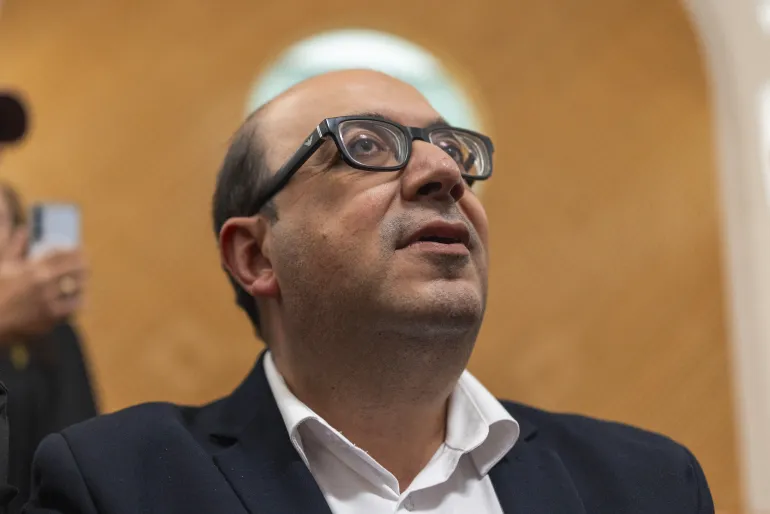
In September, the elections committee voted to disqualify the Joint List and Ra’am as parties, as well as Cassif and Sami Abu Shehadeh, head of the Balad party, as individuals.
Sami Abu Shehadeh, leader of the Balad party, attends a hearing at the Supreme Court in Jerusalem on October 1, 2026 [AFP]
Balad leader withdraws
The Supreme Court has nearly always overruled the committee when it votes to ban candidates.
However, at a hearing on Thursday, Supreme Court President Yitzhak Amit told Abu Shehadeh that a majority of the nine justices favoured disqualifying him from the election.
They gave him until Friday to withdraw, saying that if he did not, he would be disqualified, according to the Israeli Public Broadcasting Corporation.
National Security Minister Itamar Ben-Gvir, a far-right ally of Prime Minister Benjamin Netanyahu, led the push to bar him over an article written after the Hamas attacks on October 7, 2023. Abu Shehadeh described the attack as “an important historical event” in the piece, but denies supporting it.
Balad said in a statement that a court-ordered removal, rather than a voluntary one, would have had “grave consequences for the country’s political and parliamentary life” as it would set a precedent around the removal of Arab candidates.
Double standards
The Ra’am party made history after the 2021 election, becoming the first Arab party to join an Israeli government when it took part in a disparate coalition that briefly removed Prime Minister Benjamin Netanyahu from power. Most Palestinian citizens of Israel had stayed out of coalition politics until then.
In this election, Ra’am is also fielding a Jewish Zionist candidate for the first time, Yoav Segalovitz, who won popularity in Arab communities for his work to curb crime as deputy minister for internal security.
The election committee’s September vote drew accusations of a double standard, as Palestinian-led parties faced exclusion while parties led by far-right ministers, some of whom have been sanctioned internationally, stayed on the ballot.
Speaking to Al Jazeera on Friday, Abu Shehadeh said he withdrew because he “didn’t have any other choices”.
Although the Supreme Court has restored the Arab parties to the ballot, Abu Shehadeh said the reversal did not make the original disqualifications acceptable.
“In the end, what happened yesterday was a historical catastrophe for democracy, or the very narrow margins of democracy in the State of Israel,” he said. “I was disqualified because I think differently, because I have a different narrative on how to read history, the present, and the future in the place that we live today.”
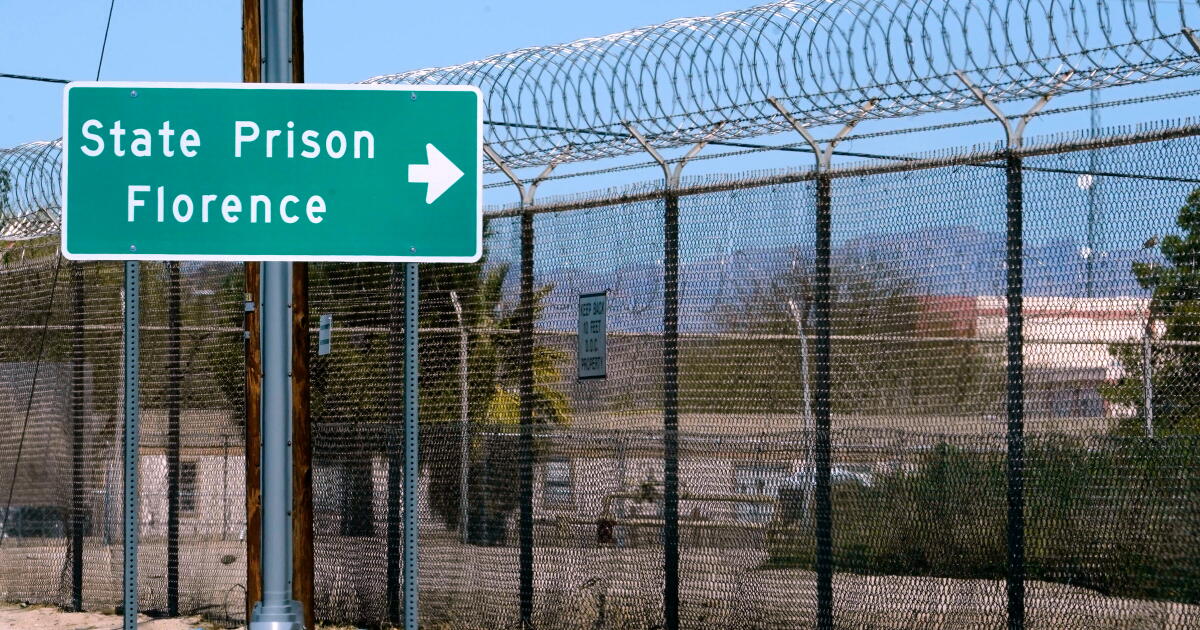
PHOENIX — The U.S. Supreme Court has rejected Arizona’s eleventh-hour bid to block the upcoming start of a court-ordered takeover of healthcare operations in its prisons after the state was found to have provided constitutionally inadequate care to incarcerated people and dragged its feet for over a decade in making required improvements. Justice Elena Kagan denied the state’s request Thursday, leaving an outside corrections professional set to take over healthcare management for 25,000 incarcerated people on Oct. 19.
Arizona had asked the courts to delay the takeover while it appealed that decision and the appointment of former Ohio corrections director Annette Chambers-Smith to lead the effort. The state sought the delay from the Supreme Court after lower courts rejected by the request.
Over the past 14 years, Arizona has been dogged by complaints that its prison healthcare system was run shoddily and callously and that it repeatedly failed to improve a system found to have exposed prisoners to harm and preventable deaths.
Under a 2014 settlement, the state pledged to overhaul medical and healthcare services for prisoners but was soon accused of failing to make promised improvements. That led to more than $2 million in contempt-of-court fines and the eventual revocation of the agreement by U.S. District Judge Roslyn Silver, who said corrections officials had shown little interest in making required changes.
After a 2021 trial, Silver ruled against the state, issuing an injunction that required corrections authorities to address the constitutional violations. Earlier this year, she ordered the takeover after concluding the state hadn’t gotten a semblance of compliance with court-ordered changes and the U.S. Constitution after more than a decade of litigation. Silver found that prisoners remained exposed to grave threats of harm and suffering because of systematic deficiencies in their health care.
The Arizona Department of Corrections, Rehabilitation and Re-entry did not immediately respond to a request for comment on Thursday’s decision.
In a statement, Corene Kendrick, an American Civil Liberties Union attorney who represents prisoners in the lawsuit, applauded the court’s refusal to delay the takeover, also known as a receivership. She said Arizona fought accountability at every turn while prisoners suffered. “Today’s decision clears the way for a receiver to do what the state has failed to do for more than a decade,” Kendrick said.
In seeking a delay, Arizona’s attorneys said Silver adopted a drastic takeover remedy without first trying intermediate fixes to speed compliance. They also said the judge hadn’t given the corrections department enough time to continue making progress and argued that the official appointed to run healthcare operations wouldn’t be politically accountable. They said the agency is committed to improving health care in prisons, has made significant progress since 2023 and that the prisoners won’t suffer harm if the start of the takeover were delayed by a few months.
Lawyers for prisoners said the state was minimizing its noncompliance, disputed its claim it had not been given enough time to comply after 14 years of litigation and said Silver had already tried less-intrusive remedies. They also said the state’s proposal of a months-long delay in the takeover “grievously minimizes” the harm prisoners face from the state’s inability to provide adequate care.
Complaints about health care in Arizona’s prisons have spanned both Republican and Democratic administrations.
The lawsuit was filed in 2012 during Republican Gov. Jan Brewer’s administration and continued under Republican Gov. Doug Ducey, when both contempt fines against the state were issued. Under Ryan Thornell, the corrections director in Democratic Gov. Katie Hobbs administration, the department has complained that its progress in overhauling health care operations in recent years hasn’t been acknowledged.
The lawsuit over healthcare for incarcerated people covers Arizona’s nine state-run prisons but not the nearly 10,000 Arizona inmates held in private prisons.
Justin Allen Clayton, L.A. County deputy public defender
Bar rating: Qualified
Clayton is a Los Angeles native who attended public schools, earned a bachelor’s degree in criminology and passed the bar in 2012. He joined the public defender’s office two years later and since 2023 has served as deputy in charge of the Inglewood branch.
Clayton describes himself as a “working supervisor” who conducts arraignments and represents clients at preliminary and other hearings. He has completed dozens of trials, including three with life sentences, according to his website.
The position involves overseeing and training attorneys, as well as law clerks and summer interns, on misdemeanor and felony case preparation and trial strategy.
Clayton said a priority is improving court efficiency through pretrial preparation and “firm but fair enforcement of deadlines.”
Time as a candidate, he said, has shown him the importance of effective communication within the court system in bridging language and cultural differences. He called that a guiding principle, particularly for clients who lack counsel.
“Sometimes, one additional question, or one additional statement, can make all the difference in resolving an issue,” he said.
Clayton said running a public defender branch office, which brings him in contact with judges, sheriffs, court clerks, interpreters and others, combined with 14 years as a trial attorney, gives him a “comprehensive understanding” of the courtroom.
“That combination of courtroom experience, leadership and daily interaction with the many people who make our justice system work has uniquely prepared me to serve as a Superior Court judge,” he said.
Anna Slotky Reitano, L.A. County deputy county counsel
Bar rating: Qualified
Reitano spent the early part of her career in criminal defense, contract law and other sectors. In 2014, she joined the L.A. County public defender’s office. A decade there included three years in juvenile court, where she primarily handled felony cases, and five years at the San Fernando Courthouse, where she represented indigent clients facing felony charges.
Reitano focused on mental health diversion and treatment, aiming to support rehabilitation when possible. Having a brother with schizophrenia and witnessing how families navigate the legal system when dealing with mental illness has informed her approach.
“This has given me a deeper understanding of both the challenges individuals and families face and the ways in which the system can fall short in addressing those needs,” she said.
This is not her first bid for office. She lost a campaign for a judgeship in 2022 and two years later assumed her position in the county counsel’s justice and safety division, where she supervises litigation and advises county departments.
Reitano, a former child actor, volunteers with local schools and, according to her website, mentors “future lawyers” through moot court competitions.
Campaigning, Reitano said, has shown her that constituents, no matter how different, uniformly want “a judge who is experienced, prepared, fair and willing to listen.”
“My experience across criminal, juvenile, civil, administrative and government law has uniquely prepared me to serve wherever the court needs me,” she said.
Brazilian president and opposition candidate snub the final debate ahead of the presidential election.
Published On 2 Oct 20262 Oct 2026
Brazilian President Luiz Inacio Lula da Silva and his main opponent Flavio Bolsonaro have snubbed a chance at a final debate ahead of the first round of the presidential election on Sunday, while police ruled out a bomb threat outside the country’s Supreme Court.
Lula, instead of taking part in the debate, opted to appear on a popular podcast with millions of YouTube subscribers while his rival Bolsonaro accused the electoral court of “censorship” as a reason for his withdrawal.
Recommended Stories
list of 3 itemsend of list
Bolsonaro, son of the former Brazilian President Jair Bolsonaro, said during a live broadcast on Thursday on his social media channels that his decision not to participate in the debate was due to “censorship imposed by the electoral court”.
The right-wing candidate was referring to a decision that barred the debate broadcaster from keeping President Lula’s empty seat on stage.
The debate organised by TV Globo, the country’s most popular broadcaster, was set for Thursday and offered a final opportunity for the two presidential frontrunners to face off before polls open.
TV Globo said in a statement that the debate was cancelled because two rulings, one from the country’s electoral court and the other from the Supreme Court, had created “legal uncertainty” about the event.
Lula, 80, will face off against Bolsonaro in a first-round vote on Sunday, with polls giving him a slight advantage.
The pair are neck and neck in projections for a potential runoff on October 25, however.
Bomb scare
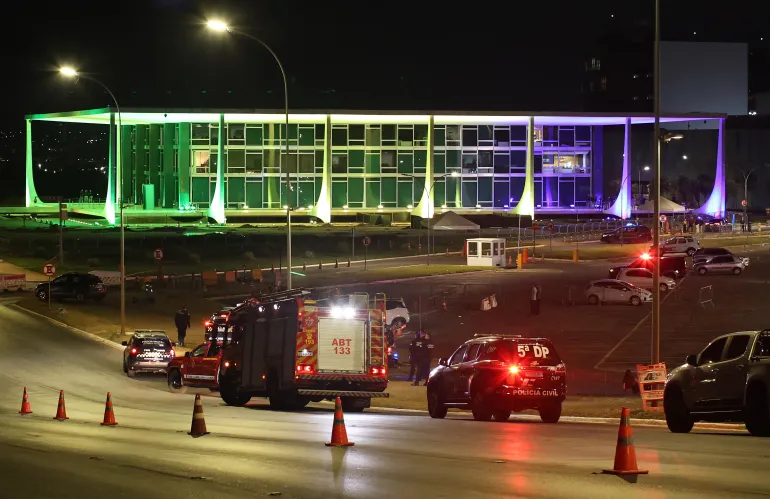
On the same day of the cancelled debate, Brazilian police ruled out a bomb threat outside the Supreme Court.
A suspect who “tried to jump the court’s fences” and “threw a backpack on top of a bus stop” had been arrested, the court said in a statement.
Authorities examined the backpack, which ultimately contained “only personal belongings,” military police spokesperson Raphael Broocke told AFP.
The suspect will remain in custody while the investigation continues, he added.
Brazilian police and firefighters inspect the area of a possible bomb in a backpack outside the Supreme Court headquarters in Brasilia on October 1, 2026 [AFP]
The Supreme Court has been criticised by the political right, notably for the 2025 conviction of ex-leader Jair Bolsonaro over a coup plot.
It has also become embroiled in a fraud scandal that has dominated the final weeks of the presidential campaign.
WASHINGTON — The Supreme Court on Thursday agreed to review a Trump administration policy denying bond hearings for immigrants as the government carries out a sweeping crackdown.
The justices will consider whether immigrants who have been living in the U.S. have a right to a hearing to determine if they should remain detained while challenging their possible deportation.
The case will test a key pillar of the Trump administration’s hard-line immigration agenda.
Most appeals courts to have considered the issue have found that it violates federal law to detain immigrants, including those living in the U.S. illegally, without a bond hearing. Those decisions conflict with rulings by the 5th and 8th circuits, which held that immigrants accused of illegally entering and remaining in the U.S. must be detained while their deportation cases are pending.
The high court agreed to hear the case of Ricardo Aparecido Barbosa da Cunha, a citizen of Brazil. Authorities say he entered the United States illegally two decades ago and applied for asylum in 2016. He sought a bond hearing after an immigration judge determined that his detention was mandatory following his September 2025 arrest.
He has never been charged or convicted of a crime, his attorneys said. The court is expected to hear the case in the coming months.
President Trump’s administration had urged the high court to take up a different but related case that involves the broader constitutional implications of the new policy.
Attorneys from the Republican administration argue the circuits’ split is “disrupting the orderly administration of immigration law.” They say the nation’s courts have been inundated with thousands of petitions filed by immigrants challenging the government’s legal interpretation.
“The result is an unworkable patchwork of inconsistent immigration enforcement, where aliens present without admission are subject to mandatory detention in some circuits but are entitled to bond hearings and often released in others,” lawyers for the administration wrote.
The plaintiffs are immigrants represented by the American Civil Liberties Union, which says hundreds of district court judges have joined most circuits in rejecting the Trump administration’s new reading of the statutes. Plaintiffs’ lawyers say the administration is trying to deny bond hearings for immigrants apprehended anywhere in the U.S. — no matter how long they’ve lived in the country — rather than limiting the restriction to noncitizens stopped at the border.
“Millions of noncitizens could be affected by the government’s new interpretation,” ACLU attorneys wrote.
The Trump administration says its new mandatory detention policy is legal under a 1996 immigration law. The policy change departs from the practices of prior administrations, which typically allowed most noncitizens without criminal records to request a bond hearing if they were arrested away from the border.
The case is the latest dispute over US President Donald Trump’s sweeping immigration crackdown.
Published On 1 Oct 20261 Oct 2026
The United States Supreme Court has agreed to hear a case focused on the Trump administration’s policy requiring millions of undocumented immigrants to remain in detention while they fight deportation.
The case, accepted on Thursday by the justices, is the latest dispute over US President Donald Trump’s sweeping immigration crackdown to reach the nation’s highest court.
Recommended Stories
list of 3 itemsend of list
At issue is whether migrants already living in the US have a legal right to a hearing where a judge can decide whether they should be released on bond from Immigration and Customs Enforcement (ICE) detention while their deportation cases are pending.
In July 2025, the administration introduced new guidance directing federal immigration authorities to detain undocumented immigrants without a bond hearing for the duration of their deportation proceedings, which can last for years.
The new policy, which has divided lower courts, reverses a decades-old interpretation that allowed some immigrants in the US to be released while their cases were pending in immigration court, according to Reuters news agency.
Most US federal appeals courts have ruled that immigrants cannot be detained without a bond hearing. But the 5th and 8th US Circuit Courts of Appeals have found that immigrants accused of illegally entering and remaining in the country must remain detained while their deportation cases proceed.
Trump administration attorneys told the Associated Press the split is “disrupting the orderly administration of immigration law”.
“The result is an unworkable patchwork of inconsistent immigration enforcement, where aliens present without admission are subject to mandatory detention in some circuits but are entitled to bond hearings and often released in others,” the lawyers wrote.
Millions could be affected
The Supreme Court case stems from a 2nd US Circuit Court of Appeals ruling involving Ricardo Aparecido Barbosa da Cunha, a Brazilian national who entered the US around 2004 or 2005.
Immigration officers arrested him in September 2025 while he was driving to work in the US state of Massachusetts. He was initially denied a bond hearing under the administration’s policy but was later released on bond, according to court documents cited by Reuters.
The American Civil Liberties Union (ACLU), which is representing the plaintiffs, told the Associated Press the Trump administration is trying to deny bond hearings for immigrants apprehended within the US rather than limiting the restriction to noncitizens stopped at the border.
“Millions of noncitizens could be affected by the government’s new interpretation,” ACLU attorneys wrote.
The Supreme Court is expected to hear arguments on Monday, when its new term starts.
A U.S. district court in Delaware overturned a jury decision to award $22.7M to the plaintiffs in a case against Gogo Inc. (GOGO), ruling that SmartSky Networks failed to present sufficient evidence that it suffered legally recoverable damages and
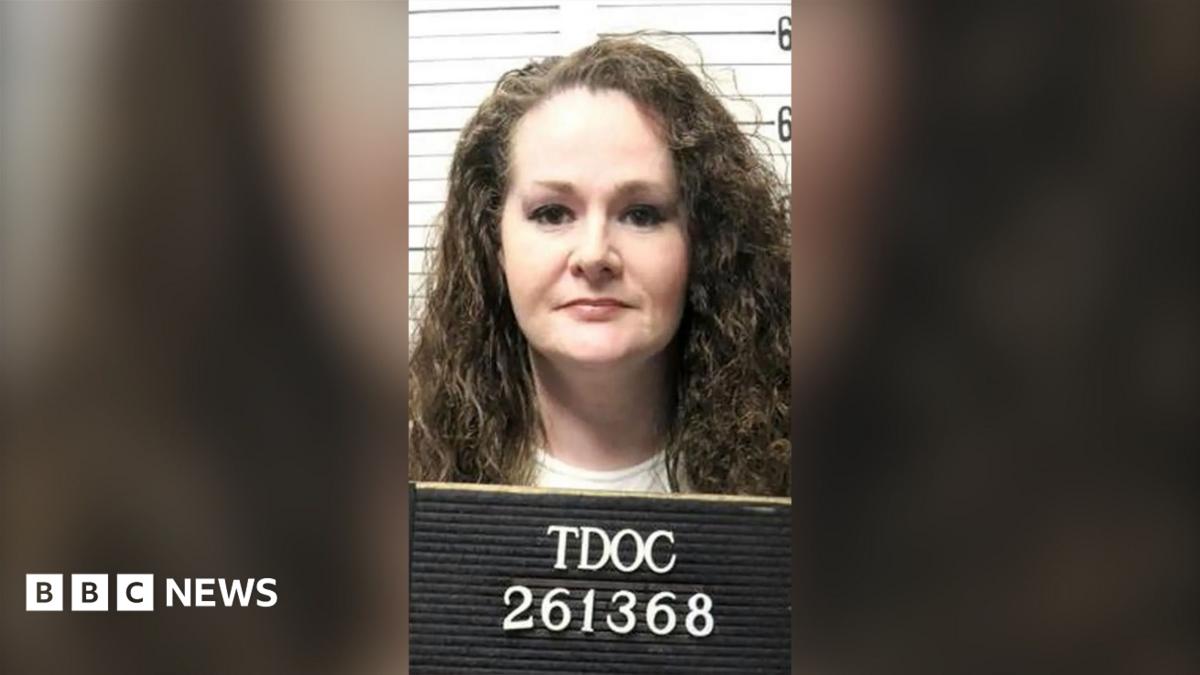
The US Supreme Court has cleared the way for Tennessee inmate Christa Pike to be executed, overturning a last-minute reprieve.
The killing by lethal injection was scheduled for Wednesday morning before judges from the Sixth Circuit Appeals court halted the execution. Tennessee’s attorney general then immediately requested the Supreme Court to overrule the lower court’s stay.
Pike, 50, has been awaiting execution since she was convicted and sentenced to death in 1996 for the murder of Colleen Slemmer.
If the execution proceeds, Christa Pike will be the first woman to be executed in Tennessee in more than 200 years. It was not immediately clear when the execution would take place.
Supreme Court Justice Brett Kavanaugh granted the application to vacate the stay of the execution. No explanation for lifting the stay was provided in the order.
The top court’s three liberal justices – Justices Sonia Sotomayor, Elena Kagan and Ketanji Brown Jackson – dissented in Wednesday evening’s order.
Sotomayor wrote that she dissents because the decision cleared the way for Tennessee to execute Pike before her pending legal challenges to her conviction “can be properly considered”.
“Tennessee’s desire to expedite Pike’s execution by a few days or even weeks cannot outweigh her ‘fundamental interest in [her] own life,” she said.
In a ruling earlier on Wednesday, judges from the Sixth Circuit Appeals court paused the execution saying they needed more time to consider the arguments in Pike’s case.
Pike’s lawyers said that for years, the state of Tennessee argued in court that she had lied about being sexually abused as a child.
But at a recent hearing about her execution method, the state said it did not dispute she suffered sexual abuse and rape.
Pike’s legal team asked the appeals court to send her motion back to the district court, arguing that if the federal courts based their ruling on the state’s earlier claim that she was lying, then the federal review was affected.
Earlier this week, the Supreme Court refused to hear a different appeal from Pike.
Tennessee governor also denied a clemency request this week from the death row inmate.
Pike was 18 when she and her then-boyfriend, Tadaryl Shipp, beat, tortured and murdered Colleen Slemmer, a 19-year-old they met at a job training camp for troubled teens.
The high court grants an emergency petition ahead of expected arguments in the case, slated for December.
The United States Supreme Court has allowed President Donald Trump’s administration to continue third-country deportations, halting a lower-court ruling that paused such removals over questions of due process.
On Tuesday, the high court granted the administration’s emergency request to resume the deportations, which involve sending immigrants to countries they may have no connection to.
Recommended Stories
list of 3 itemsend of list
The court’s order was unsigned, as is typical for an emergency petition. It also does not include an explanation or a list of how the justices voted.
But at the bottom of Tuesday’s order, the court’s three left-leaning justices – Sonia Sotomayor, Ketanji Brown Jackson and Elena Kagan – indicated they would have denied the Trump administration’s petition.
The Supreme Court’s decision to pause the lower court ruling is temporary. The order calls for arguments to be heard in December.
That hearing comes as Trump administration continues its appeal against the lower court’s ruling, handed down by Judge Brian Murphy in Boston, Massachusetts.
Murphy had ruled that immigrants must be given a “meaningful” chance to raise safety concerns before their removal to third-party countries.
In pausing such deportations, Murphy indicated that some immigrants may have been denied the opportunity to challenge their deportations as part of their due process rights.
Tuesday, however, is not the first time the Supreme Court justices have weighed in on the practice of forcibly sending people to third countries, which Trump dramatically stepped up since his return to office in 2025.
Trump campaigned on a pledge to implement the “largest deportation operation in American history”, and his officials have argued that third-country deportations are a means of removing individuals whose home countries may not accept them.
In June 2025, the Supreme Court also issued an unsigned order allowing such removals to proceed.
That cleared the way for eight men, including nationals of Cuba, Myanmar and Vietnam, to be deported to South Sudan, a country the US State Department advises against visiting because of “crime, kidnapping, and armed conflict”.
The Department of Homeland Security at the time called the removals “a win”, while rights groups said the move flouted basic legal protections.
Critics have expressed concern that many of the governments receiving third-country deportations have a record of human rights abuses.
Third-country deportations have been used to bypass court protection orders that prevent immigrants from being sent back to their home countries due to fears of persecution.
But advocates say that some of those third-party countries have ultimately sent deportees, including asylum seekers, back to the places where they feared they would be at risk of torture or other harms.
At least 35 countries have signed agreements with the Trump administration to take in the third-country nationals, according to a tally by the nonprofits Refugees International and Human Rights First.
The groups estimate that more than 25,000 people have been subject to third-country deportations so far.
On Monday, human rights experts at the United Nations wrote to the US government urging a halt to such removals, warning they were putting deportees at heightened risk of abuse.
“At gravest risk are children, women, persons with disabilities, victims of trafficking, LGBT persons, human rights defenders, stateless persons and other people in extremely vulnerable situations,” the experts said.
On Tuesday, Burundi became the latest country to enter an agreement with the US to take non-citizen deportations.
Officials said the country would only take in people who were not facing prosecution and had no links to “terrorism”.













![Sami Abu Shehadeh, leader of the Balad party, attends a hearing at the Supreme Court in Jerusalem on October 1, 2026 [AFP]](https://i0.wp.com/www.aljazeera.com/wp-content/uploads/2026/10/afp_6abfdbdd04ed-1790958557.jpg?w=640&ssl=1)

![Brazilian police and firefighters inspect the area of a possible bomb in a backpack outside the Supreme Court headquarters in Brasilia on October 1, 2026 [AFP]](https://i0.wp.com/occasionaldigest.com/wp-content/uploads/2026/10/afp_6abf3303edf8-1790915331.jpg?w=640&ssl=1)