court

Trump loses across courts in bruising week of immigration and legal setbacks

President Trump spent much of last week railing against the courts. The courts, in turn, spent it ruling against him.

While Trump made history as the first sitting president to attend oral arguments at the Supreme Court, where he stared down justices as they questioned his bid to end birthright citizenship, quieter courtrooms across the country were challenging his agenda.

The challenges came in on immigration, on his White House ballroom project, on his own liability in the run-up to Jan. 6.

“Dumb Judges and Justices will not a great Country make!” he wrote on Truth Social on Monday.

By Friday, judges had served him loss after loss, each finding the administration had taken executive authority too far, too fast.

Immigration rulings

On immigration, the keystone of Trump’s policy platform, he faced a number of setbacks.

On Monday, a federal judge in California took a step that would allow a class-action lawsuit against the administration’s handling of certain asylum claims. The case concerns thousands of asylum seekers who had made appointments with immigration officials by using a Biden administration phone app called CBP One.

In many cases, migrants from around the world had waited months in Mexico for their turn to speak with border agents after securing appointments through the app.

Those appointments were suddenly canceled after Trump took office. The judge certified those asylum seekers as a class that can challenge the administration’s action in court.

In a similar case, a federal judge in Boston ruled Tuesday that the administration had unlawfully terminated the temporary legal status of as many as 900,000 immigrants who entered the country after using the phone app. Tens of thousands of those told by the administration to leave the U.S. “immediately” have since left or been deported.

It was an awful week for Donald Trump. It’s not that the courts are anti-Trump. In fact, he wins a lot.

— Adam Winkler, constitutional law professor

The judge ordered the administration to reinstate the legal status and work authorization of those remaining.

“Today’s ruling is a clear rejection of an administration that has tried to erase lawful status for hundreds of thousands of people with the click of a button,” said Skye Perryman, president and CEO of Democracy Forward, a legal organization that represented the migrants.

Sanctuary laws

Also Tuesday, a federal judge threw out a Justice Department lawsuit that accused Denver and Colorado of interfering with immigration enforcement and claimed that the city and state’s “sanctuary” laws violated the Constitution.

The ruling found that the federal government had not shown it could override state and local decisions about how to use their own resources. The Constitution, the judge said, does not let Washington commandeer local governments.

“Colorado gets to make a choice: How will our law enforcement operate in Colorado. The federal government, they don’t get to make that choice for us,” Colorado Atty. Gen. Phil Weiser said.

Birthright citizenship

The next day, the Supreme Court justices appeared skeptical of Trump’s claim that birthright citizenship doesn’t apply to babies born in the U.S. to parents who are here unlawfully or temporarily.

Conservative and liberal judges alike questioned the arguments of Solicitor Gen. John Sauer, who represented the administration, saying he relied on “some pretty obscure sources,” including precedents that dated back to Roman law.

Trump, sitting feet from the proceedings, left the Supreme Court building halfway through.

“We are the only Country in the World STUPID enough to allow ‘Birthright’ Citizenship!” he wrote shortly after departing.

Austin Kocher, a Syracuse University professor who studies immigration enforcement, wrote on Substack after the Supreme Court hearing that, on immigration policy, there is always a gap between what an administration says it will do and what the government can actually deliver. That gap, he argued, is particularly evident in the second Trump administration.

“The White House has built its political identity around the promise of mass deportation, and the rhetoric has been relentless: record arrests, expanded detention, military flights, the spectacle of enforcement as governance,” Kocher wrote.

“But over the past several days,” he added, “developments from multiple fronts suggests that the operational foundations of the mass deportation campaign are more fragile than the administration would like anyone to believe.”

Defying judicial orders

In some cases, the Trump administration has been undeterred by judicial orders to stop certain practices. In a March ruling unsealed Thursday, a federal judge found that Border Patrol agents had continued making illegal arrests in California’s Central Valley without reasonable suspicion.

The government’s explanations for the arrests, wrote Judge Jennifer Thurston in Fresno, “rely on unsupported assumptions, hunches and generalizations about the relationship between a person’s apparent status as a day laborer and their immigration status.”

White House ballroom

Trump had kicked the week off March 29 by touting his 90,000-square-foot ballroom project, showing designs to reporters on Air Force One.

“I think it’ll be the greatest ballroom anywhere in the world,” he said. Two days later, U.S. District Judge Richard Leon ordered a temporary halt to construction.

Leon stated that the president is the “steward” of the White House, not its “owner,” and ruled that he cannot proceed with such a massive structural change without express authorization from Congress.

In response, Trump raged on Truth Social: “In the Ballroom case, the Judge said we have to get Congressional approval. He is WRONG! Congressional approval has never been given on anything, in these circumstances, big or small, having to do with construction at the White House.”

His administration filed a motion Friday to block the judge’s ruling.

Jan 6. liability

On the same day, a judge ruled that Trump remains personally liable in a civil lawsuit tied to the Jan. 6, 2021, attack on the Capitol, allowing those claims to move forward.

It is among the most consequential legal threats he faces.

Trump entered the presidency on the heels of a major Supreme Court win that found former presidents have criminal and civil immunity for official acts during their term.

But Tuesday, U.S. District Judge Amit Mehta deemed Trump’s Jan. 6 speech — in which he directed supporters to march to the Capitol and “fight like hell” — was a political act, not a presidential one, and therefore not shielded by immunity.

“President Trump has not shown that the speech reasonably can be understood as falling within the outer perimeter of his Presidential duties. The content of the ellipse speech confirms that it is not covered by official-acts immunity,” Mehta wrote.

The week ended with yet another setback for Trump when a federal judge on Friday blocked the administration from forcing universities to submit extensive data on applicants and students to prove they don’t illegally consider race in admissions.

Reading the losses

For Adam Winkler, a constitutional law professor at UCLA who has tracked the administration’s legal battles closely, the losing streak had a clear through line.

“It was an awful week for Donald Trump,” he said. “It’s not that the courts are anti-Trump. In fact, he wins a lot. It’s really that he takes such an aggressive approach to policy making that he runs afoul of existing precedents.”

Taken together, last week’s rulings signaled that the courts are insisting that the president is as accountable for his actions as anyone, and that states have constitutional powers he alone cannot override.

“The Trump administration’s recent court losses illustrate that there is still much that the other branches of government can do — in connection with civil society — to uphold the rule of law and mitigate the harms of the administration’s destructive agenda,” said Monika Langarica, deputy legal director at the Center for Human Rights and Constitutional Law.

“They are one more reminder,” she added, “that the administration will not always have the last word with respect to its unlawful and unconstitutional actions.”

Source link

Justice Alito fell ill at a March event and was treated for dehydration, Supreme Court says

Supreme Court Justice Samuel A. Alito Jr. fell ill at an event in Philadelphia last month and was treated for dehydration before returning home to suburban Washington, the court’s spokeswoman said Friday.

Alito’s illness did not require an overnight hospital stay and he was back on the bench the following Monday, spokeswoman Patricia McCabe said in a statement.

Alito was an active questioner during arguments that day in an important case about mailed ballots and participated in all the court’s hearings over the ensuing two weeks.

Alito, who turned 76 on Wednesday, is the second-oldest member of the court, after 77-year-old Justice Clarence Thomas.

The episode was first reported by CNN, which also said the treatment was administered at a Philadelphia hospital. The court did not say where Alito had been taken.

The incident is the latest example of the justices’ reticence to discuss their health, at least until the news somehow leaks.

In 2020, the court confirmed that Chief Justice John G. Roberts Jr. had spent a night in the hospital after a fall that required stitches in his forehead, only after the Washington Post reported it first.

Alito was driven by his security detail from Washington to what CNN said was a dinner following a Federalist Society panel that looked at his 20 years on the court.

When he didn’t feel well in the evening, “he agreed with his security detail’s recommendation to see a physician before the three-hour drive home” to northern Virginia, McCabe said. He was given fluids for dehydration, she said.

While the justice has not said anything about retirement, speculation has swirled that Alito might soon step down, which would give President Trump the chance to appoint a fourth justice, after the three who were confirmed during his first term.

While Alito is young by Supreme Court standards, he might not want to stay around and gamble on the possibility of Democrats flipping the Senate in the November elections and seeing a Democrat capture the White House two years later.

Retiring in the summer would allow Trump to name a similarly conservative but much younger replacement who would almost certainly win confirmation from the Republican-led Senate.

Sherman writes for the Associated Press.

Source link

Trump appeals court ruling halting his ballroom construction

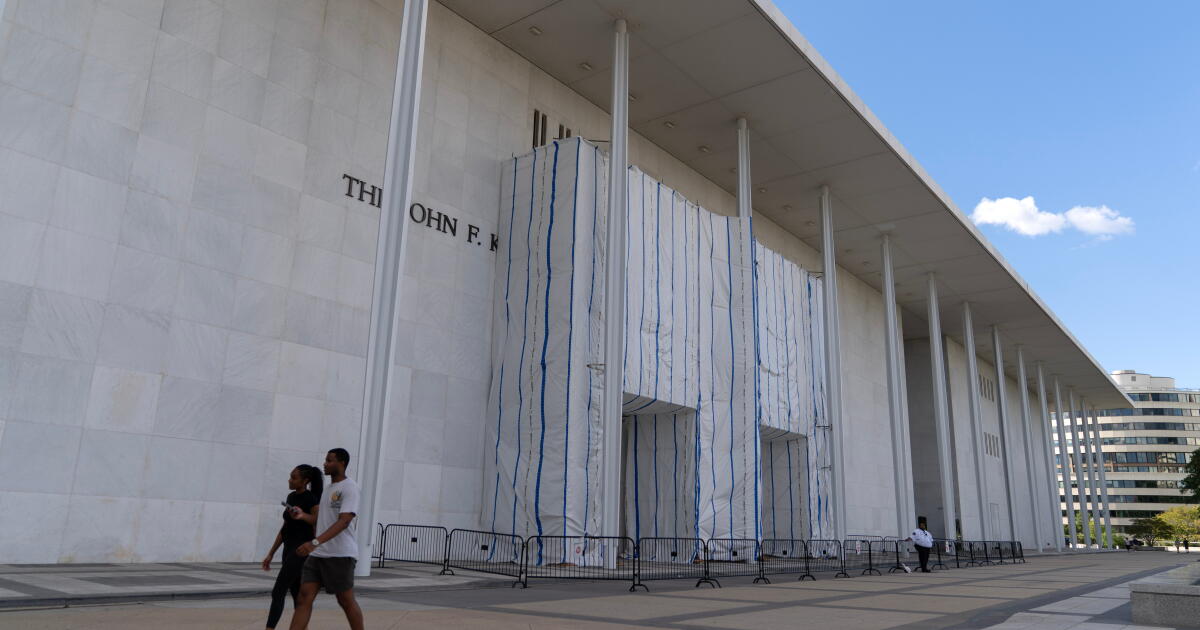
The Trump administration is arguing that a judge’s order to halt construction of a $400-million ballroom creates a security risk for President Trump as it asks a federal appeals court to pause the ruling.

In a motion filed Friday, National Park Service lawyers say that the federal judge’s order to suspend construction of the East Wing ballroom is “threatening grave national-security harms to the White House, the President and his family, and the President’s staff.”

“Time is of the essence!” the lawyers write, citing materials that will be installed to make a “heavily fortified” facility. The ballroom construction also includes bomb shelters, military installations and a medical facility, according to the filing. The ballroom is part of Trump’s plans to remake public buildings and institutions in Washington during his remaining years in office.

U.S. District Judge Richard Leon in Washington on Tuesday ordered the temporary pause of the construction project that has included demolishing the East Wing of the White House. He concluded that unless Congress approves the project, the preservationist group suing to stop it is likely to succeed on the merits of its claims because “no statute comes close to giving the President the authority he claims to have.”

The White House is owned by the federal government, not the president. Even the website of the National Park Service, which filed the motion, makes clear that “the White House is owned by the American people.”

The judge suspended enforcement of his order for 14 days, acknowledging that the administration would appeal his decision.

Leon’s ruling and the appeal come the same week a key agency tasked with approving construction on federal property in the Washington region gave final approval to the project.

In his ruling, Leon, who was nominated by Republican President George W. Bush, suspended enforcement of his order, recognizing that “halting an ongoing construction project may raise logistical issues.”

Leon also addressed national security in his ruling, saying that he reviewed information that the government privately submitted to him and concluded that halting construction wouldn’t jeopardize national security. He exempted any construction work that is necessary for the safety and security of the White House from the scope of the injunction.

Trump lashed out at the ruling, while noting that it would allow work on underground bunkers and other security measures around the White House grounds to continue — even though those will be paid for by taxpayers. Trump has pledged that he, along with private donors, will cover the costs for the ballroom itself.

But the National Park Service argues in its motion that the president has “complete authority to renovate the White House” and the current state of the grounds, which is an open construction site, make it harder to protect the White House.

“Canvas tents, which are necessary without a ballroom, are significantly more vulnerable to missiles, drones, and other threats than a hardened national security facility,” the motion says.

The Trump administration is asking the appeals court to make a decision on its request by Friday. It also asked that the 14-day suspension of Leon’s order be extended by two weeks so the case can be taken to the Supreme Court.

Groves writes for the Associated Press.

Source link

Supreme Court Justice Samuel Alito hospitalized last month

Supreme Court Justice Samuel Alito and his wife, Martha Bomgardner, attend inauguration ceremonies in Washington, D.C., on Jan. 20, 2025. Pool photo by Chip Somodevilla/UPI | License Photo

April 3 (UPI) — Supreme Court Justice Samuel Alito was taken to a Philadelphia hospital after a Federalist Society dinner in his honor last month, the court confirmed Friday.

Alito “felt ill during an event in Philadelphia” on March 20, a Supreme Court spokesperson said in a statement to the media.

“Out of an abundance of caution, he agreed with his security detail’s recommendation to see a physician before the three-hour drive home,” spokeswoman Patricia McCabe said. “After that examination and the administration of fluids for dehydration, he returned home that night, as previously planned. Justice Alito was thoroughly checked by his own physician, and he returned to work the following Monday for oral argument.”

Alito, 76, is the court’s second-oldest justice. He was nominated by President George W. Bush in 2005.

Sources told ABC News that those who saw him at the event said he looked tired and was not as engaging as usual. They said he stayed seated when people came by to greet him during the dinner.

The dinner capped off a daylong symposium by the society titled, “An Examination of the Jurisprudence of Samuel Alito,” which featured several of his former law clerks, law professors and attorneys who practice before the court. It was at the University of Pennsylvania law school.

Alito was not there during the day, as he was driving from Washington. The court was in session to hand down opinions, but Alito was on the road.

President Donald Trump delivers a prime-time address to the nation from the Cross Hall in the White House on Wednesday. President Trump used the address to update the public on the month-long war in Iran. Pool photo by Alex Brandon/UPI | License Photo

Source link

Florida and Mississippi enact voter citizenship checks, sparking a lawsuit in the Sunshine State

Governors in Florida and Mississippi signed into law measures that require officials to verify the citizenship of voters, just as similar legislation being pushed by President Trump has stalled in Congress.

The law signed Wednesday by Florida Gov. Ron DeSantis was immediately challenged in court by civil rights organizations that said it will make it harder for Floridians to vote.

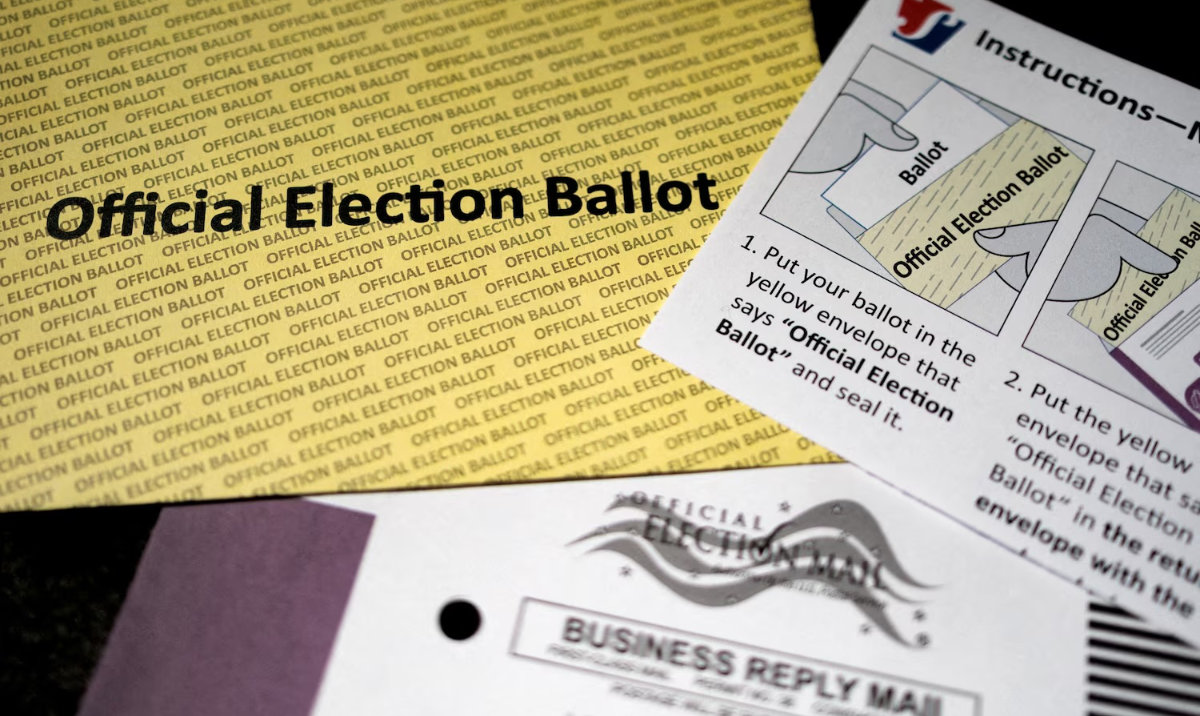
The citizenship provision of the law goes into effect Jan. 1. It requires voters to provide a birth certificate, passport or naturalization certificate as proof of citizenship if their eligibility to vote is challenged by government officials through cross-referencing voter registration applications with motor vehicle records.

“Many eligible voters do not have these documents and cannot obtain them for a variety of reasons — including because they were born without a birth certificate in the segregated South, because their documents were destroyed in a hurricane, or because they cannot afford the hundreds of dollars it costs to replace them,” the civil rights groups said in a lawsuit filed in federal court in South Florida.

The voting legislation being pushed aggressively by Trump in Congress would mandate that people provide documentary proof of citizenship to register to vote in federal elections, such as a U.S. passport, citizen naturalization certificate or a combination of a birth certificate and government-issued photo identification. It passed the House but was stalled in the Senate before lawmakers took a spring recess.

Under the Florida law, credit cards, student IDs and retirement community identifications can no longer be used as IDs when voting, and the citizenship status of a driver must be reflected on driver’s licenses starting in July 2027.

DeSantis said the law improves the security and transparency of Florida’s election system.

“In Florida, we will always stand up for election integrity,” the Republican governor said.

The new Mississippi law signed Wednesday requires local officials registering people to vote to run additional citizenship checks if applicants don’t have or can’t provide driver’s license numbers on their voter application. The law, which takes effect July 1, also requires the secretary of state to run annual checks of the voter rolls against an online database from U.S. Immigration and Customs Enforcement to flag any potential noncitizens who could be asked to provide proof of their eligibility.

“This is another win for election integrity in Mississippi [and America],” Mississippi Gov. Tate Reeves, a Republican, said in a social media post. “We will continue to do everything in our power to make it infinitely harder — with a goal to make it impossible — to cheat in our elections!”

The Southern Poverty Law Center has said that the law could disenfranchise hundreds of thousands of Mississippians who don’t have a passport, lack a birth certificate or whose last names don’t match their birth certificates because of name changes due to marriage.

Four Republican-led states — Florida, Mississippi, South Dakota and Utah — have enacted laws this year to strengthen proof-of-citizenship requirements for voters. In Michigan, supporters of voter citizenship documentation have submitted 750,000 petition signatures in a bid to get a constitutional amendment on the November ballot.

The Republican-led Kansas Legislature also has passed legislation, though it still must go before the Democratic governor. Gov. Laura Kelly has until next week to decide whether she’ll sign the bill and hasn’t said publicly what she will do, though she has regularly vetoed past GOP-election bills. Supporters would need a two-thirds majority to override a veto — and thanks to Republican dissenters, the bill appeared to be a few votes short of that in the House.

Any efforts in Kansas to prevent noncitizens from registering to vote are shadowed by one of the state’s biggest political fiascos in recent memory — a requirement imposed in 2013 that people registering to vote in the state for the first time provide documentation of their U.S. citizenship.

That law ended up blocking the voter registrations of more than 31,000 U.S. citizens who were otherwise eligible to vote, or 12% of everyone seeking to register in Kansas for the first time. Federal courts ultimately declared the law an unconstitutional burden on voting rights, and it hasn’t been enforced since 2018.

Schneider writes for the Associated Press. AP writers David A. Lieb in Jefferson City, Mo., and John Hanna in Topeka, Kan., contributed to this report.

Source link

Lakers’ Luka Doncic sustains hamstring injury, leaves vs. Thunder

The score wasn’t the only thing that made this the Lakers’ worst loss of the season.

Even more concerning than the Lakers’ 139-96 blowout loss to the Oklahoma City Thunder on Thursday was superstar guard Luka Doncic’s health after the 27-year-old hobbled off the court with a left hamstring injury in the third quarter.

Doncic attempted to drive into the lane at the 7:39 mark of the third quarter but pulled up suddenly in the midrange. He stopped as the ball bounced out of bounds. He grabbed at the back of his left leg and hobbled to the baseline, where he lowered himself to the court, rolled over to his back and covered his face. Concerned teammates surrounded him. Coach JJ Redick offered a hand to pull him off the court.

Doncic, who was just named Western Conference player of the month after scoring 600 points in March, was limited to 12 points, seven assists and six turnovers before the injury. It was the second Lakers injury scare in a game that was supposed to be a marquee matchup between the hottest teams in the league.

Austin Reaves was hobbling through the first quarter, grabbing at his left lower back at nearly every sudden movement. He appeared to get hurt while chasing down a loose ball with 6:23 remaining.

The Lakers had eight turnovers in the first quarter. Lu Dort had two steals and hit all four of his three-pointers as the Thunder were seven for 11 from three-point range. Reaves, who returned from the locker room with 9:40 left in the second quarter, was the only Laker player with multiple made field goals in the first quarter.

He had two.

Source link

US court orders resentencing for Colorado clerk involved in election scheme | Courts News

Former clerk Tina Peters has become a cause celebre for the election denial movement and President Donald Trump.

An appeals court in the state of Colorado has ordered the resentencing of Tina Peters, a former county clerk convicted of involvement in an election meddling scheme in the United States.

The court overturned Peters’s nine-year prison sentence on Thursday, but not her conviction for helping to tamper with voting machines after the 2020 presidential race.

Recommended Stories

list of 3 itemsend of list

Her case has become a cause celebre for President Donald Trump and the election denial movement, after it emerged that she was seeking evidence to support Trump’s false claim that his 2020 loss was due to massive fraud.

In Thursday’s decision, the three-judge appeals panel ruled that a lower court had considered Peters’s personal beliefs when deciding upon a punishment, thereby rendering the sentence improper.

“The trial court’s comments about Peters’s belief in the existence of 2020 election fraud went beyond relevant considerations for her sentencing,” the appeals court wrote.

The panel cited comments from Judge Matthew Barrett, who blasted Peters as a “charlatan” promoting “snake oil” claims.

“Her offence was not her belief, however misguided the trial court deemed it to be, in the existence of such election fraud,” the appeals court said. “It was her deceitful actions in her attempt to gather evidence of such fraud.”

Peters was convicted in August 2024 for helping someone from outside the government gain access to the Mesa County election system and make copies.

That person was affiliated with efforts to overturn Trump’s 2020 loss, and the copies they obtained were then shared on social media.

False claims that the 2020 election was marred by massive fraud have been a persistent fixation for Trump and his allies, even after his successful re-election in 2024.

Trump’s efforts to remain in office after his 2020 defeat were the subject of a 2023 criminal indictment brought by former special counsel Jack Smith.

He alleged that Trump led a criminal conspiracy to undermine the election process and rally supporters to overturn the results. Those charges, however, were ultimately dropped when Trump took office again in 2025, as the US Justice Department has a policy against prosecuting sitting presidents.

Since his inauguration, Trump has continued to push the claims he won the 2020 race. He has also used his allegations of fraud to demand greater control over the country’s election infrastructure in advance of the upcoming 2026 midterm elections.

In December, the president pardoned Peters, even though she was not in federal custody, and the presidential power of pardon does not extend to state crimes.

The appeals court panel confirmed on Thursday that Trump’s pardon had no impact on state offences.

“We have found no instance where the presidential pardon power has been stretched in such a way as to invade an individual state’s sovereignty,” the panel said.

State Governor Jared Polis suggested last month that he could consider clemency for Peters.

Source link

Colorado court orders resentencing for former county clerk in election fraud scheme

A Colorado appeals court ruled Thursday that a former county clerk convicted in a scheme that sought to prove fraud in the 2020 presidential election should be resentenced because a judge wrongly punished her for statements protected as free speech.

Tina Peters is serving a nine-year prison term after being convicted of state crimes for sneaking in an outside computer expert to make a copy of her county’s election computer system during a software update in 2021. A photo and video of confidential voting system passwords were later posted on social media and a conservative website.

Calls for Peters’ release have become a cause celebre in the election conspiracy movement. President Trump has sought unsuccessfully to pardon Peters and pressured Colorado to set her free.

Judges on the Colorado Court of Appeals upheld her conviction in a 74-page ruling that rejected the notion that Trump has authority to pardon her state crimes. But they said a lower court judge should not have considered Peters’ continued promotion of election fraud conspiracies when he sentenced her in 2024.

One of Tina Peters’ lawyers, John Case, said the court’s ruling affirmed the importance of free speech.

“Tina Peters was punished for words that she used to criticize our insecure and illegal voting system,” Case said. “The decision affirms that people are free to speak what they believe in Colorado as well as the rest of the United States of America.”

Case said he would likely ask at resentencing for Peters to receive the approximately 540 days she’s served already. That would allow her to be freed.

Democratic Colorado Gov. Jared Polis, who has been considering granting clemency to Peters, praised the court’s decision for rejecting Trump’s pardon but upholding her free speech rights.

“This case has been very challenging and a true test of our resolve as a state to have a fair judicial system, not just for people we agree with but a fair system for Coloradans that we vehemently disagree with,” Polis said in statement.

Peters was the former clerk in Mesa County, in the far western part of Colorado, and convicted by jurors in the Republican stronghold that has supported Trump.

She was unapologetic when she was sentenced by Judge Matthew Barrett and insisted that she tried to unearth what she believed was fraud for the greater good. He ripped into her, calling her a “charlatan” who had used her position to “peddle snake oil.”

The appeals court found that Barrett violated her rights to free speech by punishing Peters for persistently alleging fraud in the 2020 election. They noted that because Peters is no longer serving as an election clerk, she can no longer engage in the conduct that led to her conviction.

“The trial court obviously erred by imposing sentence at least partially based on Peters’ protected speech,” Judge Ted Tow wrote in Thursday’s ruling.

The court sent Peters’ case back to a lower court for a judge to issue a new sentence.

Trump has threatened to take “harsh measures” against Colorado unless the state releases Peters. In February, Trump said Colorado was “suffering a big price” for refusing to release her.

Colorado Atty. Gen. Phil Weiser, a Democrat who is running for governor, has accused the Trump administration of waging a revenge campaign by choking off funds and ending federal programs over the state’s refusal to free Peters.

Weiser said in response to the ruling that the original sentence had been “fair and appropriate.”

“Whatever happens with her sentence, Tina Peters will always be a convicted felon who violated her duty as Mesa County clerk, put other lives at risk, and threatened our democracy. Nothing will remove that stain,” Weiser said in a statement.

The Justice Department inserted itself into Peters’ bid to be released while her state appeal was considered. The federal Bureau of Prisons also tried to get Peters moved to a federal prison. After both efforts failed, Trump in December announced a pardon for Peters.

However, the appeals court judges said they could find no prior example of a president pardoning someone for a state crime. And they rejected her attorney’s claims that Peters actions had been carried out while “defending a federal interest.”

“We have found no instance where the presidential pardon power has been stretched in such a way as to invade an individual state’s sovereignty,” they said, adding that the president’s pardon has “no impact” on the state’s case against Peters.

The Associated Press left messages with the White House for comment.

She was convicted of three counts of attempting to influence a public servant and one count each of conspiracy to commit criminal impersonation, first-degree official misconduct, violation of duty and failure to comply with the requirements of the secretary of state.

Peters’ lawyers didn’t deny that she used the security badge of a local man she pretended to hire to allow an associate of MyPillow CEO Mike Lindell to make a copy of the Dominion Voting Systems election computer server during an annual software update in 2021.

But they said she only wanted to preserve election data and find out whether any outside actor had accessed the system while ballots were being counted. They said she didn’t want the information made public.

Slevin and Brown write for the Associated Press.

Source link

Appeals court tosses sentence of Colorado elections clerk Tina Peters

April 2 (UPI) — A Colorado appeals court on Thursday threw out the sentence of Tina Peters, a former elections clerk, who was convicted in an election data case.

Peters was sentenced to nine years in prison in August 2024 on seven of the 10 counts for which she was charged.

She allowed an unauthorized person to make copies of voting machine hard drives that included classified information. The data from those drives was then leaked online by conspiracy theorists who falsely said it proved President Donald Trump correct in his assertion that the 2020 election was “stolen.”

Trump later pardoned Peters, but Colorado officials said he has no power to do so because she was convicted by the state. He has since pressured Colorado Gov. Jared Polis to pardon her.

The judges of the Colorado Court of Appeals ruled that District Judge Matthew Barrett wrongfully used Peters’ beliefs and promotion of election fraud conspiracy theories in his sentencing.

“We reverse her sentence because it was based in part on improper consideration of her exercise of her right to free speech,” the court wrote, sending her case back to the trial judge. Now Barrett must re-sentence Peters without using her beliefs to make the decision, the appeals judges said.

At the sentencing, Barrett said Peters had no remorse and called her a “charlatan” who abused her position to “peddle snake oil.”

“I am convinced you would do it all over again if you could,” The Hill reported Barrett said. “You’re as defiant as any defendant this court has ever seen.”

In its decision, the appeals court said her beliefs shouldn’t color the sentencing.

“Her offense was not her belief, however misguided the trial court deemed it to be, in the existence of such election fraud; it was her deceitful actions in her attempt to gather evidence of such fraud. Indeed, under these circumstances, just as her purported beliefs underlying her motive for her actions were not relevant to her defense, the trial court should not have considered those beliefs relevant when imposing sentence.”

The appeals court did not overturn Peters’ conviction and formally said Trump doesn’t have the power to pardon a person for state law offenses.

“The crux of Peters’ argument is that the phrase ‘Offences against the United States’ includes an offense against any of the states in the union,” the court wrote. “We join what appears to us to be every other appellate court that has addressed the issue and reject such an expansive reading of the phrase.”

Peters served as a clerk in Mesa County, Colo., whose county seat is Grand Junction, in western Colorado.

She was convicted on three counts of attempting to influence a public servant and one count each of conspiracy to commit criminal impersonation, first-degree misconduct, violation of duty and failure to comply with the requirements of the secretary of state.

Source link

State court ruling gives cop watchdogs more teeth in records subpoenas

A recent California appellate court ruling will give civilian oversight groups the authority to subpoena the law enforcement agencies they are tasked with monitoring, a decision hailed by local advocates as a step toward greater transparency by the Los Angeles County Sheriff’s Department.

In a unanimous opinion issued Thursday, justices from the state’s first appellate district found that an oversight body in Sonoma County is legally authorized to subpoena the county sheriff’s office while probing whistleblower inquiries. The justices also directed the law enforcement agency to comply with the watchdog’s requests for records.

The Independent Office of Law Enforcement Review and Outreach sued the Sonoma County Sheriff’s Office in 2024 over refusals to comply with a whistleblower complaint subpoena. A lower court initially ruled in favor of the Sheriff’s Office, but the appellate judges reversed that decision.

Hans Johnson, chair of the Los Angeles County Civilian Oversight Commission, called the ruling a “big win” for law enforcement transparency.

“This is one of the most significant court rulings in recent CA history about oversight,” he said in a message to The Times. “It strengthens the powers of Civilian Oversight boards and Inspectors General and upholds our subpoena authority while also showcasing the strong public interest in robust, effective oversight of sheriffs, their departments, and their operations.”

The L.A. County Sheriff’s Department said in a statement that it is “discussing with County Counsel to determine the appropriate path for implementing any lawful authority granted to the Civilian Oversight Commission.”

Angelenos who have long sought records related to alleged misconduct by sheriff’s deputies also cheered the court’s decision.

Vanessa Perez’s son Joseph was badly beaten by deputies in the San Gabriel Valley six years ago. She has been fighting ever since for more clarity about what happened.

Perez said she hopes Thursday’s ruling will result in “some type of justice, some type of fairness” for her son and others who have been stymied by the Sheriff’s Department in efforts to obtain information.

“Hopefully we’ll have effective oversight at the end of this, someone other than LASD looking at Joseph’s case,” Perez said in a phone interview Monday. “Not one deputy, not one sheriff, nobody has ever brought to light what they did to Joseph.”

She has been vocal in her criticism of the agency and the fact that it has only released redacted versions of its “use of force” report from the July 2020 incident involving her son.

Perez’s case is one of several in which the Civilian Oversight Commission has tried unsuccessfully to pry records out of the Sheriff’s Department. Two other cases involved Emmett Brock, a trans man beaten by a deputy in a convenience store parking lot in 2023, and Andres Guardado, an 18-year-old fatally shot in 2020.

The commission subpoenaed unredacted files in the cases in Feburary 2025, but the county counsel’s office has argued they should remain confidential.

“L.A. County voters overwhelmingly approved Measure R in March 2020 to grant the Commission subpoena powers,” the Civilian Oversight Commission wrote in a statement. “However, six years later, it is not yet fully in effect.”

The county counsel’s office said in a statement that it “does not question the Civilian Oversight Commission’s power to issue subpoenas.”

But, it said, court decisions, the county’s Employee Relations Commission and the law “require that the County … meet and confer with labor partners about the impacts before documents are shared. Those discussions are underway.”

Hilda Eke, executive director of the L.A.-based advocacy organization Dignity and Power Now, said in a statement that the ruling is a positive development in the ongoing battle for more transparency.

“It affirms what our communities have always known: You cannot investigate injustice without the power to uncover the truth,” Eke said.

Source link

Trump isn’t immune from civil claims his Jan. 6 rally speech incited riot, judge says

President Trump is not immune from civil claims that he incited a mob of his supporters to attack the Capitol on Jan. 6, 2021, a federal judge has ruled in one of the last unresolved legal cases stemming from the riot.

U.S. District Judge Amit Mehta ruled Tuesday that Trump’s remarks at his “Stop the Steal” rally, held on the Ellipse near the White House shortly before the siege began, “plausibly” were inciting words that are not protected by the 1st Amendment right to free speech.

The Republican president is not shielded from liability for much of his Jan. 6 conduct, including that speech and many of his social media posts that day, according to the judge. But Mehta said Trump cannot be held liable for his official acts that day, including his Rose Garden remarks during the riot and his interactions with Justice Department officials.

“President Trump has not shown that the Speech reasonably can be understood as falling within the outer perimeter of his Presidential duties,” Mehta wrote. “The content of the Ellipse Speech confirms that it is not covered by official-acts immunity.”

Not the first court ruling on presidential immunity

The decision is not the court’s first ruling that Trump can be held liable for the violence at the Capitol and it is unlikely to be the last given the near-certainty of an appeal. But the 79-page ruling sets the stage for a possible civil trial in the same courthouse where Trump was charged with crimes for his Jan. 6 conduct, before his 2024 election ended the prosecution.

Mehta previously refused to dismiss the claims against Trump in a February 2022 ruling that Trump was not entitled to presidential immunity from the claims brought by Democratic members of Congress and law enforcement officers who guarded the Capitol on Jan. 6. In that decision, Mehta also concluded that Trump’s words during his rally speech plausibly amounted to incitement and were not protected by the 1st Amendment.

The case returned to Mehta after an appeals court ruling upheld his 2022 decision. He said Tuesday’s ruling on immunity falls under a more “rigorous” legal standard at this later stage in the litigation.

Mehta, who was nominated by Democratic President Obama, said his latest decision is not a “final pronouncement on immunity for any particular act.”

“President Trump remains free to reassert official-acts immunity as a defense at trial. But the burden will remain his and will be subject to a higher standard of proof,” the judge wrote.

Official capacity vs. office-seeker

Trump spoke to a crowd of his supporters at the rally before the mob’s attack disrupted the joint session of Congress for certifying Democrat Joe Biden’s 2020 electoral victory over Trump. Trump closed out his speech by saying, “We fight. We fight like hell and if you don’t fight like hell, you’re not going to have a country anymore.”

Trump’s lawyers argued that Trump’s conduct on Jan. 6 meets the threshold for presidential immunity.

The plaintiffs contended that Trump cannot prove he was acting entirely in his official capacity rather than as an office-seeking private individual. They also said the Supreme Court has held that office-seeking conduct falls outside the scope of presidential immunity.

Rep. Bennie Thompson, D-Miss., who at that time led the House Homeland Security Committee, sued Trump, Trump’s personal attorney Rudolph Giuliani and members of the Proud Boys and Oath Keepers extremist groups over the Jan. 6 riot. Other Democratic members of Congress later joined the litigation, which was consolidated with the officers’ claims.

‘Victory for the rule of law’

The civil claims survived Trump’s sweeping act of clemency on the first day of his second term, when he pardoned, commuted prison sentences and ordered the dismissal of all 1,500-plus criminal cases stemming from the Capitol siege. More than 100 police officers were injured while defending the Capitol from rioters.

The plaintiffs’ legal team includes attorneys from the Lawyers’ Committee for Civil Rights Under Law. Damon Hewitt, the group’s president and executive director, praised the ruling as a “monumental victory for the rule of law, affirming that no one, including the president of the United States, is above it.”

“The court rightly recognizes that President Trump’s actions leading to the January 6 insurrection fell outside the scope of presidential duties,” Hewitt said in a statement. “This ruling is an important step toward accountability for the violent attack on the Capitol and our democracy.”

Kunzelman writes for the Associated Press.

Source link

Hundreds rally outside Supreme Court to defend birthright citizenship against Trump’s executive order

Inside the Supreme Court, as justices heard oral arguments in the case over birthright citizenship, President Trump became the first sitting president to attend such a proceeding.

Outside the court, the great-grandson of Wong Kim Ark — the San Francisco man whose landmark Supreme Court case affirmed birthright citizenship in 1898 — addressed a crowd of hundreds of people.

“Wong Kim Ark’s victory ensured that people like me and millions of others would be recognized as fully American, not outsiders in the country of our birth,” said Norman Wong. “This case transformed the 14th Amendment from words on paper into living promise. Today, that promise is still being tested.”

Surrounded by protesters in favor of birthright citizenship was a lone counter-protester. The woman, who wore a red baseball cap and a sweatshirt stating “Chicago flips red,” yelled into a megaphone as speakers addressed the crowd.

“Freedmen stand with Donald Trump,” she said as the Rev. William Barber II spoke. “America first. Americans first.”

The Rev. William Barber II speaks during a rally on protecting birthright citizenship outside the Supreme Court on Wednesday.

The Rev. William Barber II speaks during a rally on protecting birthright citizenship outside the Supreme Court on Wednesday.

(Al Drago / Getty Images)

Undaunted, Barber noted that the 14th Amendment, ratified in 1868, makes clear that anyone born in the U.S. is a citizen.

“The 14th Amendment protects babies from a caste system,” Barber said. “They didn’t allow evil in 1868, and we’re not going to allow evil in 2026.”

“Stop lying, pastor,” the woman taunted him.

After Barber finished his remarks, the woman was drowned out by Aretha Franklin’s “Respect” playing over the speakers.

Inside the building, justices heard arguments over a Trump executive order which aimed to end birthright citizenship. The administration has argued that children born of parents who are in the country illegally or temporary visas should be denied citizenship.

A man from Cameroon said he chose to speak out because he doesn’t want future generations to become stateless and feel what he has felt. The man said he had been authorized to work in the United States Temporary Protected Status until the Trump administration terminated it last year.

“I know what it feels like to have your sense of belonging taken from you overnight,” he said.

Nancy Jeannechild, 69, traveled from Baltimore with a handwritten sign asking the justices to “Do your job.” She said Trump has amassed too much power and that the Supreme Court hasn’t stood up to him enough.

“This is another opportunity for them to do the right thing, and I hope that they will,” she said. “Just because Trump doesn’t like it doesn’t mean it’s not what’s in the Constitution.”

Araceli Hernandez, 29, attended the rally with her 1-year-old son. She said she immigrated from Honduras five years ago and that her son being born here means he has better opportunities to study, access to healthcare and a safe environment to live in.

“We came to represent the children who are not yet born because they also have a right to have a better future in this country,” she said.

Sen. Alex Padilla (D-Calif.) said he was confident birthright citizenship would prevail because the Constitution is clear. The fight is personal, he said, as the a proud American and son of immigrants.

“The moment I was born on U.S. soil I was born a citizen, and I’ll be damned if Donald Trump tries to take that away from me,” he said. “What’s on the line isn’t just a question about citizenship — it is about upholding the Constitution, respecting the rule of law and keeping the promise that the 14th Amendment has held for more than 150 years.”

After the arguments wrapped up, Cecilia Wang, who led the defense of birthright citizenship for the American Civil Liberties Union, addressed the crowd. She said she was confident that the Trump administration would lose the case.

“Whether you’re an indigenous American, whether you are descended from African Americans who were enslaved and free, whether you are the descendant of someone who came on the Mayflower or someone who arrived just before your birth, we all are Americans alike,” she said. “That is the principle that we stood up for together, all of us, in the Supreme Court of the United States today.”

Source link

Judge rules that HUD effort to change criteria for homeless funding is unlawful

A federal judge in Rhode Island ruled on Tuesday that the Trump administration’s effort to dramatically change the criteria to get tens of millions of dollars in funding to aid homeless people was unlawful.

Several nonprofits filed a lawsuit last year accusing the U.S. Department of Housing and Urban Development of changing the rules for receiving $75 million to build housing for homeless families and individuals. The plaintiffs accused the Trump administration of issuing a new Notice of Funding Opportunity, or NOFO, for the Continuum of Care program to better align with its social policies.

U.S District Judge Mary McElroy, nominated by President Trump, said the department’s “slapdash imposition of political whims” was unlawful and she ordered it to scrap the new policy.

“Once again, this Court is faced with a case in which an executive agency has made a last-minute decision to make major, disruptive changes to grants within its purview, all for the express purpose of accomplishing the current administration’s policy objectives,” McElroy said in her ruling that the NOFO violated the Administrative Procedure Act, a law governing how federal agencies develop and issue regulations.

A spokesperson for HUD did not immediately respond to a request for comment.

Advocates for plaintiffs welcomed the ruling.

“For more than three decades, the federal government has supported housing providers and communities through HUD’s programs to help people experiencing homelessness move into stable housing,” Skye Perryman, president and chief executive of Democracy Forward, co-counsel for the plaintiffs, said in a statement. “We are pleased that the court has stopped the Trump-Vance administration from holding life-saving funding hostage to a political agenda.”

Ann Oliva, chief executive of the National Alliance to End Homelessness, said the ruling was “a victory for people across this nation who have overcome homelessness and stabilized in HUD’s permanent housing programs.”

“Today’s news reinforces a fundamental truth: that the work to end homelessness is not partisan, and never should be interfered with for political means,” Oliva said in a statement.

Plaintiffs argued the Trump administration was aiming to upend polices in place for decades to satisfy its political considerations, including whether jurisdictions “support sanctuary protections, harm reduction practices, or inclusive policies for transgender people.”

The Alliance and the Women’s Development Corporation argued that HUD lacked the authority to make the changes, adding that the new award process was “shockingly unlawful” and would “irreparably injure qualified applicants for these funds and the communities they serve.”

In its court filings, HUD argued the new criteria was an effort “to ensure the availability of funding to protect our Nation’s most vulnerable individuals and families from the trauma of homelessness while simultaneously promoting self-sufficiency.”

“Defendants acted reasonably and prudently because the NOFO conditions, focusing on public safety, cooperation with law enforcement and prohibitions on illegal drug use, are sufficiently related to the funding goals of self-sufficiency and reduction of trauma,” HUD wrote.

Casey writes for the Associated Press.

Source link

Trump arrives at Supreme Court to attend birthright citizenship arguments

President Trump on Wednesday became the first sitting president to attend oral arguments at the Supreme Court, inserting himself directly into a high-stakes legal battle over one of the most consequential orders of his administration.

Trump arrived at the court Wednesday morning by limousine for arguments over whether the president has the authority to effectively rewrite the Constitution by ending birthright citizenship for children born in the United States to parents who are in the country unlawfully or temporarily.

In the run-up to Wednesday’s arguments, Trump suggested that Supreme Court justices appointed by Republicans who have ruled against his agenda are “so stupid.”

“Some people would call it stupidity; some people will call it disloyal,” Trump told reporters in the Oval Office on Tuesday.

“Dumb Judges and Justices will not a great Country make!” the president wrote on Truth Social on Monday.

The unprecedented appearance highlights how high Trump believes the stakes are, according to Adam Winkler, a constitutional law professor at UCLA.

“It’s not clear why Trump is attending,” Winkler said. “Maybe he is just interested in the unusual drama of a Supreme Court argument. Or perhaps he is trying to intimidate the justices, like the scene in ‘The Godfather Part II’ where the mob boss shows up at a hearing to scare the witness into recanting his testimony.”

Regardless, Trump’s presence probably won’t change any minds on the bench, Winkler said.

The justices prize their independence, including many who share Trump’s judicial philosophy. Still, it will likely change the mood, Winkler said — most hearings are quiet and academic.

The birthright citizenship order, which Trump signed on the first day of his second term, is a keystone of his administration’s broad immigration crackdown.

Trump has framed the policy as a necessary step to curb what he describes as abuse of the immigration system.

“Birthright Citizenship is not about rich people from China, and the rest of the World, who want their children, and hundreds of thousands more, FOR PAY, to ridiculously become citizens of the United States of America. It is about the BABIES OF SLAVES!”

Every lower court that has considered the issue has found the order illegal and prevented it from taking effect. A definitive ruling by the nation’s highest court is expected by early summer.

This is a developing story and will be updated.

Source link

The week’s bestselling books, April 5

Hardcover fiction

1. The Night We Met (Indie Exclusive Edition) by Abby Jimenez (Hachette Book Group: $30) Friendship, missed connections and life-altering split-second decisions converge after one fateful night.

2. The Correspondent by Virginia Evans (Crown: $28) A lifelong letter writer reckons with a painful past.

3. Kin by Tayari Jones (Knopf: $32) The bond between two lifelong friends in the South is tested as they take different paths in life.

4. Heart the Lover by Lily King (Grove Press: $28) A woman reflects on a youthful love triangle and its consequences.

5. Vigil by George Saunders (Random House: $28) A spirit guide must shepherd the soul of a dying, unrepentant oil tycoon into the afterlife as he confronts his legacy of corporate greed all while supernatural visitors demand a reckoning.

6. Brawler by Lauren Groff (Riverhead Books: $29) A collection of short stories tackling the relentless battle between humanity’s dark and light angels.

7. Judge Stone by James Patterson and Viola Davis (Little, Brown & Co.: $32) The bestselling author and Oscar-winning actor team up for a small-town legal thriller.

8. Half His Age by Jennette McCurdy (Ballantine Books: $30) A teenager embarks on a secret relationship with her teacher.

9. Once and Again by Rebecca Serle (Atria Books: $27) A family of women have an astonishing gift: the ability to redo one moment in their lives.

10. Daughter of Egypt by Marie Benedict (St. Martin’s Press: $29) A young woman in the 1920s unearths the truth about a forgotten pharaoh, rewriting both of their legacies forever.

Hardcover nonfiction

1. A World Appears by Michael Pollan (Penguin Press: $32) An exploration of consciousness and a meditation on the essence of our humanity.

2. Strangers by Belle Burden (The Dial Press: $30) A woman explores her marriage, its end and the man she thought she knew.

3. The Best Dog in the World by Alice Hoffman (editor) Fourteen authors celebrate the life-changing bond with their canine companions in a collection of essays. (Scribner: $22)

4. Young Man in a Hurry by Gavin Newsom (Penguin Press: $30) The California governor tells his origin story.

5. You with the Sad Eyes by Christina Applegate (Little, Brown & Co.: $32) The actor opens up about her tumultuous childhood, her five-decade-long career and the MS diagnosis that upended it all.

6. Kids, Wait Till You Hear This! by Liza Minnelli (Grand Central Publishing: $36) The entertainment legend shares her story.

7. One Day, Everyone Will Have Always Been Against This by Omar El Akkad (Knopf: $28) Reckoning with what it means to live in a West that betrays its values.

8. Lessons From Cats for Surviving Fascism by Stewart Reynolds (Grand Central Publishing: $13) A guide to channeling feline wisdom in the face of authoritarian nonsense.

9. History Matters by David McCullough (Simon & Schuster: $27) A posthumous collection of essays from the Pulitzer-winning historian.

10. Writing Creativity and Soul by Sue Monk Kidd (Knopf: $29) A look at the mysteries, frustrations and triumphs of being a writer.

Paperback fiction

1. Project Hail Mary by Andy Weir (Ballantine: $22)

2. Theo of Golden by Allen Levi (Atria Books: $20)

3. Dungeon Crawler Carl by Matt Dinniman (Ace: $20)

4. Martyr! by Kaveh Akbar (Vintage: $20)

5. I Who Have Never Known Men by Jacqueline Harpman (Transit Books: $17)

6. Remarkably Bright Creatures by Shelby Van Pelt (Ecco: $20)

7. Heated Rivalry by Rachel Reid (Carina Press: $19)

8. Tomorrow, and Tomorrow, and Tomorrow by Gabrielle Zevin (Vintage: $19)

9. Parable of the Sower by Octavia E. Butler (Grand Central: $20)

10. The God of the Woods by Liz Moore (Riverhead Books: $19)

Paperback nonfiction

1. The Beginning Comes After the End by Rebecca Solnit (Haymarket Books: $17)

2. The Artist’s Way by Julia Cameron (TarcherPerigee: $24)

3. The Wager by David Grann (Vintage: $21)

4. I’m Glad My Mom Died by Jennette McCurdy (Simon & Schuster: $20)

5. All About Love by bell hooks (William Morrow Paperbacks: $17)

6. The Demon of Unrest by Erik Larson (Crown: $22)

7. Raising Hare by Chloe Dalton (Vintage: $21)

8. Slouching Towards Bethlehem by Joan Didion (Farrar, Straus & Giroux: $18)

9. Braiding Sweetgrass by Robin Wall Kimmerer (Milkweed Editions: $22)

10. When the Going Was Good by Graydon Carter (Penguin Books: $22)

Source link

Supreme Court weighs Trump’s bid to end birthright citizenship

The Supreme Court on Wednesday will hear President Trump’s claim that he has the power to revise the Constitution and to end birthright citizenship for babies born in this country to parents who were here unlawfully or temporarily.

Trump proposed this potentially far-reaching change in an executive order. It has been blocked by judges across the country and has never been in effect.

His lawyers contend they seek to correct a 160-year misunderstanding about the Constitution’s promise that “all persons born” in this country are deemed to be citizens.

The president’s executive order “restores the original meaning of the citizenship clause” and would deny “on a prospective basis only” citizenship to the “children of temporarily present aliens and illegal aliens,” Solicitor Gen. D. John Sauer wrote in his appeal.

But the first hurdle for Trump and his lawyers may concern the powers of the president.

In February, the court blocked Trump’s sweeping worldwide tariffs on the grounds the Constitution gave Congress, not the president, the power to impose import taxes.

By comparison, the president has even less power to set the rules for U.S. citizenship. The Constitution gives Congress the power to “establish a uniform rule of naturalization.”

After the Civil War, Congress adopted a civil rights act in 1866 that said “all persons born in the United States and not subject to any foreign power, including Indians not taxed, are hereby declared to be citizens of the United States … of every race and color.”

To make sure that rule stood over time, it was added to the Constitution in the 14th Amendment. Its opening line says: “All persons born or naturalized in the United States and subject to the jurisdiction thereof are citizens of the United States and of the State wherein they reside.”

In 1898, a conservative Supreme Court upheld that rule and affirmed the citizenship of Wong Kim Ark. He was born in San Francisco to Chinese parents who later returned to China.

“The 14th Amendment affirms the ancient and fundamental rule of citizenship by birth within the territory,” the court said. “In clear words and in manifest intent, [it] includes the children born, within the territory of the United States, of all other persons, of whatever race or color.”

In 1952, when Congress revised the immigration laws, it added the same provision without controversy. Lawmakers set multiple rules for deciding disputes over American parents who live abroad, but the first rule was simple and undisputed.

“The following shall be nationals and citizens of the United States at birth: a person born in the United States and subject to the jurisdiction thereof,” the law said.

Critics say Trump’s plan could replace a clear and simple rule with a confusing and complicated one. States would have to look into the history and legal status of a newborn’s parents to decide whether they met the new qualifications.

Until now, a valid birth certificate had been sufficient to establish a person’s U.S. citizenship.

Last week, Trump was urging Senate Republicans to pass a new election law that would require millions of Americans to present a birth certificate as proof of their citizenship if they register to vote or move to a new state.

“Proving citizenship to vote is a no brainer,” the White House said.

This week, however, Trump’s lawyers are urging the court to rule that their birth in this country is not proof of their citizenship.

There is a “logical inconsistency” here,” said Eliza Sweren-Becker, a voting rights expert at the Brennan Center.

In the legal battle now before the court, the key disputed phrase is “subject to the jurisdiction.” That has been understood to mean that people within the United States are subject to the laws here, except for foreign diplomats and, for a time, Native Americans who lived on tribal reservations.

But Sauer contends it excludes newborns who are “not completely subject to the United States’ political jurisdiction” because their parents are in this country unlawfully.

Lawyers for the American Civil Liberties Union called this a “radical rewriting” of the 14th Amendment, which says nothing about the parents of a newborn child.

If upheld, this order could apply to “tens of thousands of children born every month, “ they said, “devastating families around the country.” But worse yet, they said, the outcome “would cast a shadow over the citizenship of millions upon millions of Americans, going back generations.”

Some legal experts predict the court may rule narrowly and reject Trump’s executive order because it conflicts with federal immigration laws. Such a ruling would be a defeat for Trump, but it could allow Congress in the future to adopt new provisions, including a limit for expectant mothers who enter this country to give birth.

Source link

Supreme Court to hear arguments in birthright citzenship case

April 1 (UPI) — The U.S. Supreme Court is hearing oral arguments in a case on Wednesday that could reshape what it means to be a U.S. citizen.

The case, Trump vs. Barbara, is over President Donald Trump‘s Jan. 20, 2025, executive order “Protecting the meaning and value of American citizenship,” which seeks to change the application of the Citizenship Clause, ending birthright citizenship.

In his executive order, Trump argued that the 14th Amendment of the U.S. Constitution “has never been interpreted to extend citizenship universally to everyone born within the United States.”

The law of the land, as it has been recognized since the ratification of the 14th Amendment in 1868, has been that “all persons born or naturalized in the United States, and subject to the jurisdiction thereof, are citizens of the United States and of the State wherein they reside.”

Trump’s executive order remains blocked from taking effect, with lower courts affirming that his attempt to end birthright citizenship is unconstitutional. In December, the Supreme Court agreed to take up the case, beginning with oral arguments starting on Wednesday.

U.S. Solicitor General John Sauer will argue on behalf of the Trump administration.

“If the Trump executive order is upheld, it would mark an enormous change in how the United States understands who is a citizen and who is not,” Kate Masur, John D. MacArthur Professor of History at Northwestern University, told UPI.

Masur filed an amicus brief supporting a challenge to Trump’s executive order.

“There’s certainly never been a president who issued an executive order trying to undermine birthright citizenship in this way,” Masur said. “Congress has repeatedly, through legislation, affirmed birthright citizenship and the Supreme Court has also affirmed birthright citizenship.”

The Trump administration’s argument against birthright citizenship hinges on its interpretation of the term “jurisdiction” in the context of the clause “subject to the jurisdiction thereof.”

In an amicus brief by Sen. Ted Cruz, R-Texas, Sen. Lindsey Graham, R-S.C., and other Republican lawmakers, they contest that the authors of the 14th Amendment could have written “subject to the laws.” Instead, the use of the term “jurisdiction” requires “allegiance” to the United States.

“Allegiance is also a reciprocal relationship. The person must be present with the consent of the sovereign, a factor on which this Court extensively relied in United States v. Wong Kim Ark,” the Republican lawmakers argue. “But illegal aliens and their children are present in the United States without consent, i.e., only by defying its laws.”

The lawmakers also argue that their interpretation of total allegiance looks to “early English caselaw.”

The challenges to birthright citizenship by Republicans are not new, Masur said.

The Wong Kim Ark case that the Republican lawmakers referred to affirmed birthright citizenship under the 14th Amendment. The case was brought on when the U.S. government denied the son of Chinese Immigrants, Wong Kim Ark, re-entry into the United States.

Ark, who was born in San Francisco, had taken a trip to China and was detained upon his return to the United States. The case took place in 1898, more than a decade after the passage of the Chinese Exclusion Act, which prohibited Chinese workers from seeking citizenship in the United States.

Since Wong Kim Ark, there have continued to be opponents of birthright citizenship, though the immigrant groups their movements targeted have changed. Since the 1990s, immigrants from Spanish-speaking countries have largely been the central focus of those seeking to end birthright citizenship.

Former Sen. Steve King, R-Iowa, repeatedly introduced legislation on Capitol Hill trying to end birthright citizenship. His most recent effort was in 2015. In 2019, King was removed from all committee assignments after defending white supremacy and white nationalism, following years of racist comments throughout his 17-year career.

“The thing that these movements have in common over time is their desire to limit who among people born in the United States gets to be a citizen,” Masur said. “Usually it is driven by various anti-immigrant sentiments.”

Daisy Hernandez, author of Citizenship: Notes on an American Myth, told UPI that there are modern examples of what happens when birthright citizenship is taken away.

The Dominican Republic amended its constitution in 2010 to remove birthright citizenship for Haitians in the country. In 2013, it made the law retroactive to 1929, removing the citizenship of an estimated 200,000 people overnight.

“That is an example of what would happen in the United States. However, for us it would happen in terms of millions of people,” Hernandez said.

Children of immigrants who have their citizenship revoked become stateless, Hernandez explained. With no country to call home, they are left adrift without the right to exist anywhere.

“Statelessness means that you have no government which you can turn to in any way,” she said. “It means you do not have any documentation of any kind. You don’t have documentation that you have a right to be anywhere. The philosopher Hannah Arendt said ‘citizenship is the right to have rights.’ You need a government to recognize that you have rights.”

There are more than 4 million children in the United States who have parents who are undocumented immigrants.

If Trump’s executive order is allowed to stand by the Supreme Court, Hernandez and Masur said the United States could return to an era of the 19th century when citizenship varied from state to state.

“It is really jarring to remember once upon a time certain states within the United States recognized the citizenship and humanity of Black Americans and we had other states that did not,” Hernandez said. “So are we going to end up in a situation where a child born to an undocumented parent is recognized as a citizen as long as they stay within the state of New York or of Massachusetts but would then become stateless if they crossed into Connecticut or further south or further west?”

Most countries in the Western Hemisphere recognize birthright citizenship. The Dominican Republic and Colombia are rare exceptions.

“We have always understood being American as being very closely tied with birthright citizenship,” Hernandez said. “It would be a collapse of how we understand American identity in the United States.”

President Donald Trump stands with U.S. Secretary of Agriculture Brooke Rollins during an event celebrating farmers on the South Lawn of the White House on Friday. Photo by Aaron Schwartz/UPI | License Photo

Source link

Justices uphold life, no parole for some juvenile offenders

The Supreme Court on Thursday upheld a life term in prison without parole for a defendant who was 15 when he fatally stabbed his grandfather in Mississippi, ruling that a sentencing judge need not decide that the young person was “permanently incorrigible.”

The 6-3 decision retreats somewhat from a pair of earlier rulings, which said that such life sentences for minors convicted of murder should be extremely rare and limited to cases in which there was no reason to hope the young person could be rehabilitated.

California and 24 other states have abolished life terms with no hope for parole for offenders under 18. But Justice Sonia Sotomayor said such prison terms remain shockingly common in parts of the Deep South, particularly for young people of color.

As of last year, “Louisiana had imposed LWOP [Life Without Parole] on an astonishing 57% of eligible juvenile offenders” since 2012, when the court called for restricting such sentences, she said. In 2016, the court gave these inmates a chance to seek a new sentence with possible parole, but the Mississippi courts have rejected one-fourth of such appeals, she said.

“The harm of from these sentences will not fall equally,” Sotomayor added. “The racial disparities in juvenile LWOP sentencing are stark: 70% of all youth sentenced to LWOP are children of color,” she said, citing a study from the Juvenile Law Center.

Five years ago, the court gave new hope to the more than 2,000 inmates who had been sentenced to life terms for crimes they committed as minors. The justices said they had a right to seek a new sentencing hearing and possible parole in the future. But the court’s opinion did not say precisely what judges must consider in deciding such cases.

At issue Thursday was whether the defendant’s life term with no parole should be set aside unless the judges concluded he was “incorrigible” and could not be rehabilitated.

The justices divided along ideological lines, with the six conservatives in the majority and the three liberals in dissent.

Justice Brett M. Kavanaugh, speaking for the court in Jones vs. Mississippi, said judges are required to weigh the defendant’s age as a mitigating factor before imposing a punishment for a homicide. “The court’s decision today carefully follows” the earlier rulings, which did not prohibit such life terms, he said. Kavanaugh added that the sentencing decision remains in the hands of the judge who heard the case, and the judge need not go further and decide the defendant was beyond redemption.

“Today the court guts” its earlier rulings restricting such life terms, Sotomayor said in a sharp dissent for three liberals. She noted that one of the decisions held that “a lifetime in prison is a disproportionate sentence for all but the rarest children, those whose crimes reflect ‘irreparable corruption.’”

The outcome reflects the retirement of Justice Anthony M. Kennedy and the death of Justice Ruth Bader Ginsburg. Kennedy had repeatedly spoken out against harsh punishments for juvenile offenders, and he wrote the court’s ruling that ended capital punishment for them, as well as those that limited the circumstances for imposing life prison terms on those under 18.

Sotomayor said Thursday’s ruling means that even if a “juvenile’s crime reflects ‘unfortunate yet transient immaturity’, he can be sentenced to die in prison,” quoting a passage from Kennedy’s earlier opinion. Justices Stephen G. Breyer and Elena Kagan joined the dissent.

The case before the court began in 2004 when Brett Jones, age 15, was living with his grandparents Bertis and Madge in a small town in northern Mississippi. He and his grandfather exchanged angry words when it was learned that Jones’ girlfriend was in a bedroom upstairs. The two later fought in the kitchen, and the teenager stabbed his grandfather and fled.

He was convicted of the murder and at the time, state law mandated a sentence of life in prison without parole.

The Supreme Court overturned such mandatory sentences in 2012 and ruled in 2016 inmates may seek a new and lesser sentence. But a judge decided the life term was the proper sentence for Jones, and that decision was upheld by the state courts.

In upholding the sentence, Kavanaugh said such sentencing decisions should remain in the hands of judges who can weigh all the facts. Moreover, “our holding today does not preclude the states from imposing additional sentencing limits in cases involving defendants under 18 convicted of murder,” he said. “States may categorically prohibit life without parole for all offenders under 18. Or states may require sentencers to make extra factual findings before sentencing an offender under 18 to life without parole.”

Source link

Supreme Court lifts state bans on ‘conversion therapy’ on free speech grounds

The Supreme Court ruled Tuesday that state laws forbidding “conversion therapy” for minors may violate the free speech rights of licensed counselors.

The 1st Amendment ruling is likely to undercut similar laws in California and 23 other states.

In an 8-1 decision, the justices said Colorado’s ban on “talk therapy” may prevent Christian counselors from helping teens work through their feelings about sexual attractions or their gender identity.

State lawmakers passed the new measures in response to healthcare professionals who said that efforts to change a teenager’s sexual orientation were both ineffective and harmful.

Kaley Chiles, a licensed counselor in Colorado Springs, sued and argued the state’s law violated her rights to free speech and the free exercise of religion.

She said she does not seek to “cure” young clients of same-sex attractions or to “change” their sexual orientation. Instead, she said she is guided by their goals.

“As a talk therapist, all Ms. Chiles does is speak with clients; she does not prescribe medication, use medical devices or employ any physical methods,” Justice Neil M. Gorsuch said for the court.

But she could run afoul of the state’s law because she said she may help some of her clients “reduce or eliminate unwanted sexual attractions or change sexual behaviors.”

If so, the law “censors speech based on viewpoint” and is therefore unconstitutional, he said.

“Colorado may regard its policy as essential to public health and safety. But the 1st Amendment stands as a shield against any effort to enforce orthodoxy in thought or speech in this country,” Gorsuch wrote.

Justice Ketanji Brown Jackson dissented alone in a 35-page opinion. She said the issue was one of regulating medical practice.

“The 1st Amendment cares about government efforts to suppress ‘speech as speech’ (based on its expressive content), not laws, like [Colorado’s] that restrict speech incidentally, due to the government’s traditional, garden-variety regulation of such speakers’ professional conduct,” Jackson wrote. “States have traditionally regulated the provision of medical care through licensing schemes and malpractice regimes without constitutional incident.” she continued.

The Trevor Project, a crisis intervention organization for LGBTQ+ young people, condemned the ruling.

“The Supreme Court’s decision to treat the dangerous practice of conversion therapy as constitutionally protected speech is a tragic step backward for our country that will put young lives at risk. These efforts, no matter what proponents call them, no matter what any court says, are still proven to cause lasting psychological harm,” Chief Executive Jaymes Black said in a statement.

The conservative First Liberty Institute called the ruling a “great victory for religious liberty.”

“Americans should never have their professional speech censored simply because the government disfavors that speech,” said Kelly Shackelford, the group’s president.

The ruling is the third significant defeat for LGBTQ+ rights advocates in the last year.

The conservative majority upheld state laws that prohibit puberty blockers and other “gender affirming” care for minors. And last month, the justices said parents in California have a right to know about their child’s gender identity at school.

They said California’s student privacy policy violated parents’ rights, including the free exercise of religion.

The Alliance Defending Freedom appealed her case to the Supreme Court and described her as “a practicing Christian [who] believes that people flourish when they live consistently with God’s design.”

Her clients “seek her counsel precisely because they believe that their faith and their relationship with God establishes the foundation upon which to understand their identity and desires,” they said. “But Colorado bans these consensual conversations based on the viewpoints they express.”

The state law defines “conversion therapy” as “any practice or treatment by a licensee that attempts or purports to change an individual’s sexual orientation or gender identity, including efforts to … eliminate or reduce sexual or romantic attraction or feelings toward individuals of the same sex.”

Violators may be fined up to $5,000, but no one had been fined, the state says.

The challengers had lost in the lower courts.

A federal judge and the 10th Circuit Court of Appeals in Denver rejected the free speech claim. By a 2-1 vote, the appeals court said the state law was not a ban on free expression. Rather, it regulated the conduct of licensed medical professionals. States have the authority to regulate the practice of medicine.

In their appeal to the high court, lawyers for Chiles said the state was “censoring” voluntary conversations and forbidding speech on only one side of a controversy.

The Trump administration supported the 1st Amendment challenge because the state seeks “to suppress a disfavored viewpoint.”

In response, the state said its law “safeguards public health” by prohibiting “a discredited practice” that was shown to be harmful. It stressed the law regulates licensed professionals only and does not extend to religious ministers or others who provide private counseling to young people.

In 2012, California was the first state to ban licensed counselors from using conversion therapy for minors.

Then-Gov. Jerry Brown said these “change” therapies “have no basis in science or medicine and they will now be relegated to the dustbin of quackery.”

Equality California condemned the court’s ruling and said it “has weakened the ability of state licensing boards to intervene if clinicians use unproven, misleading, or coercive techniques.”

The group urged support for a pending bill in Sacramento that would “extend the statute of limitations for survivors to pursue civil claims against licensed mental health providers who subjected them to these harmful practices.”

Tuesday’s ruling was also criticized for undercutting state regulations of medical practice a year after taking the opposite view in a Tennessee case.

In June 2025, the court in a 6-3 decision upheld laws in Tennessee and 24 other red states that prohibit “gender affirming” puberty blockers and hormone treatments for minors.

The majority said then it was deferring to the state and their lawmakers who decided to prohibit such medical treatments for minors.

But in the Colorado case, the court majority did not defer to the state’s judgment that conversion therapy was harmful and potentially dangerous.

The decision is also the third victory for the Arizona-based Alliance Defending Freedom in its free speech challenges to Colorado laws. A maker of custom wedding cakes and the designer of websites won suits seeking an exemption from the state law that required them to provide equal service for same-sex weddings.

Source link

Trump signs executive order limiting mail-in ballots; California leaders say they’ll fight

President Trump signed an executive order Tuesday purporting to place new federal controls on voting by mail in states such as California, repeating his long-held but unsubstantiated claim that mail-in ballots are a source of widespread fraud in U.S. elections.

California leaders immediately responded with promises to fight the order in court. They said mail ballots are a safe and secure method for voting relied on by millions of Californians, that Trump’s order infringes on the state’s constitutional right to administer elections as it sees fit, and that it amounts to an “illegal power grab” ahead of midterm elections in which his party is poised to suffer substantial losses.

The order directs the United States Postal Service to take control of mail balloting by designing new envelopes with special bar codes that will allow the federal government to ensure that such ballots go out only to eligible voters, and that only eligible voters return such ballots.

It requires states to submit to the USPS process if they plan to use the federal mail system for sending or receiving ballots, and to submit to the USPS lists of eligible voters in advance of such ballots passing through the mail system.

It also requires the Department of Homeland Security, U.S. Citizenship and Immigration Services, and the Social Security Administration to “compile and transmit to the chief election official of each State a list of individuals confirmed to be United States citizens who will be above the age of 18 at the time of an upcoming Federal election and who maintain a residence in the subject State.”

Those lists will be drawn from federal citizenship and naturalization records, Social Security records and “other relevant Federal databases,” and the USPS will be barred from transmitting ballots that do not match those lists, the order says.

“Secure ballot envelope identifiers provide a reliable, auditable mechanism to enforce Federal law without unduly burdening or infringing on the rights of eligible voters,” the order reads. “Unique ballot envelope identifiers, such as bar codes, enable confirmation that only citizens receive and cast ballots, reducing the risk of fraud and protecting the integrity of Federal elections.”

Trump — who recently voted by mail himself in Florida — framed the order as a solution to “massive cheating” in U.S. elections currently, which he did not back up with evidence.

“The cheating on mail-in voting is legendary. It’s horrible what’s going on,” Trump said.

“He’s going to make sure that mail-in ballots are safe secure and accurate,” said Commerce Secretary Howard Lutnick, who appeared alongside Trump and whose agency the order requires to be involved in the coordination of the new voting measures.

California officials blasted the president for attacking and undermining election integrity, rather than shoring it up, and said they would fight the order from taking effect.

“President Trump’s Executive Order marks a dangerous and unprecedented escalation in his ongoing attacks on our elections. The power to regulate elections belongs to the States and to Congress — he has no role to play. We blocked his previous Executive Order on elections in court, and we are prepared to stop him again,” said California Atty. Gen. Rob Bonta.

“The reality is that President Trump and Congressional Republicans see the writing on the wall — that they are likely to lose in the upcoming midterms — and they are pushing to make it harder for people to vote,” Bonta added. “We won’t stand idly by.”

Sen. Alex Padilla (D-Calif.), in a statement to The Times, said Trump’s actions were “a clear and present threat to our democracy,” that he will “use every tool I can to stop him,” and that he expects “immediate legal challenges in order to protect our free and fair elections.”

“Instead of focusing on lowering the cost of energy, groceries, and health care, Donald Trump is desperately attempting to take over and rig our elections and avoid accountability in November. This executive order is a blatant, unconstitutional abuse of power,” said Padilla, the ranking Democrat on the Senate Committee on Rules and Administration.

“The President and the Department of Homeland Security have no authority to commandeer federal elections or direct the independent Postal Service to undermine mail and absentee voting that nearly 50 million Americans relied on in 2024,” he said. “A decade of lies about election fraud does not change the Constitution.”

“In the middle of an unauthorized war abroad and an escalating authoritarian crackdown by ICE here at home, Trump is attempting another illegal power grab,” Padilla said.

A vast majority of Californians vote by mail. In the state’s 2025 special election on Proposition 50, the state’s mid-decade redistricting measure, nearly 89% of votes were cast by mail, according to California Secretary of State Shirley Weber’s office — or nearly 10.3 million out of about 11.6 million votes cast.

Trump has long criticized mail-in ballots — without evidence — as a source of fraud and a factor in his losing the 2020 election to President Biden, which he still contends was illegitimate.

Election experts, voting rights advocates, local elections officials and other California leaders have all dismissed those claims as unfounded and inaccurate. They have also been preparing for Trump to act to curtail such voting.

Padilla previously warned colleagues that he would force a vote on any effort by Trump to declare a national emergency in order to seize control of this year’s midterm elections from the states, forcing them to either co-sign on the power grab or resist it.

Critics of mail ballots have also been actively working to end or curtail the practice. Just last week, the U.S. Supreme Court heard arguments in a case in which the Republican Party challenged a Mississippi law that allows ballots to be accepted and counted if they arrive up to five days after election day.

During those arguments, the court’s six conservatives sounded ready to rule that federal law requires ballots to be received by election day in order to be counted as legal.

Weber, California’s top elections official, has warned that attacks on mail-in voting risked undermining a system the state has spent years building around universal mail voting.

Trump’s executive order is the latest front in a years-long campaign he has led attacking the integrity of U.S. elections — which has contributed to a steep decline in voter trust in U.S. elections.

On Tuesday, Trump said his order was drafted by “great legal minds,” and will survive any legal challenges unless “rogue” judges rule against it inappropriately.

“We want to have honest voting in our country,” he said.

Rick Hasen, an election law expert and director of the Safeguarding Democracy Project at UCLA Law, argued otherwise in a post Tuesday, noting that an earlier executive order purporting to place new federal controls on elections was blocked in court, and “this one is likely to fare no better.”

“To put this in plain terms: the order would use the USPS, which is not under the direct control of the President, to interfere with a state’s lawful transmission of ballots. If the state does not comply with these rules, federal law would purport to interfere with a state’s conduct of its own elections,” Hasen wrote. “The President does not have the authority to do this.”

Source link

Court dismisses wrongful termination suit by former Fox News producer

A U.S. District Court judge dismissed a wrongful termination suit filed by a Fox News producer who claimed he was fired in retaliation for calling out the network’s reporting on President Trump’s erroneous charges of 2020 election fraud and the riot at the U.S. Capitol on Jan. 6, 2021.

Jason Donner, who worked at the network’s Washington bureau as a reporter and producer was fired on Sept. 28, 2022, two days after calling in sick. He was told he had been terminated for his absence.

In 2023, Donner filed a lawsuit in a Washington, D.C., court that contended his dismissal was linked to several instances in which he challenged the veracity of the network’s coverage.

But U.S. District Judge Amir Ali determined in his ruling issued Monday that Donner failed to meet the company rules and that his conduct was not protected by the District of Columbia’s sick leave law.

Donner’s attorney did not immediately respond to a request for comment.

The lawsuit noted that Fox News bosses criticized the network’s journalists for not considering the feelings of its pro-Trump audience following the election that sent Joe Biden to the White House.

Those comments are supported by the depositions and evidence collected for the Dominion Voting Systems defamation suit against Fox News, which was settled in April for $787.5 million.

But Ali also said Donner was an at-will employee and that his case failed to identify “a public policy that precluded Fox from firing him over his ardent objections to the network’s programming, no matter their validity.”

The same point was raised when U.S. District Judge Christopher Cooper dismissed that portion of Donner’s claim in 2024.

“As we have maintained, this lawsuit was entirely without merit, and we are pleased with the court’s ruling on the matter,” a Fox News representative said in a statement.

Source link