WASHINGTON — The Supreme Court will open its new term Monday by hearing arguments on whether the oil and gas industry may be forced to pay damages for the scorching heat waves, wildfires and droughts that are blamed on climate change.
It’s a momentous question the justices have put off deciding for nearly a decade — and may do so again.
California joined more than two dozen blue states and municipalities in 2023 when it sued the five largest oil companies, alleging “decades of deception” over the danger of a warming climate.
They have “privately known the truth for decades but have fed us lies and mistruths to further their record-breaking profits at the expense of our environment,” California Atty. Gen. Rob Bonta said.
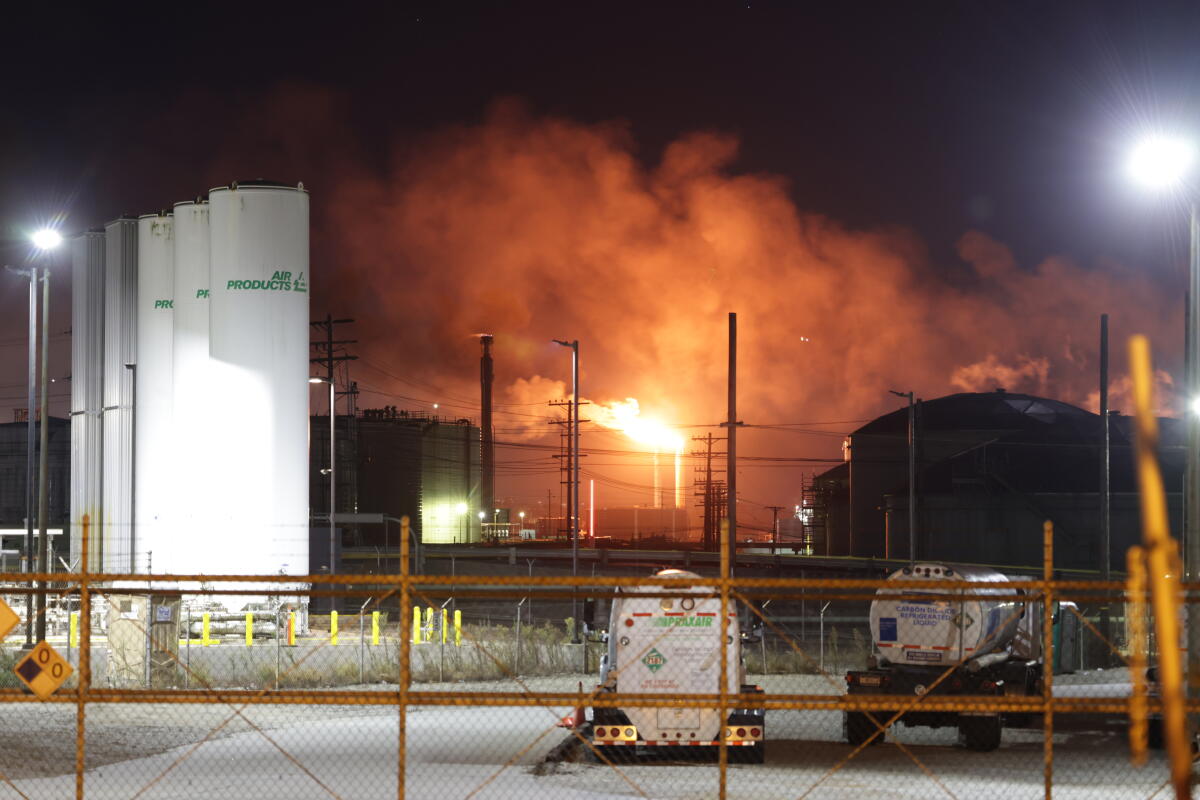
Fire and smoke rise at the Chevron Refinery in El Segundo in October 2025.
(Robbin Goddard/Los Angeles Times)
Such climate-change lawsuits were patterned after the mass claims against the tobacco and opioid industries. Both were accused of concealing the dangers of their very profitable products.
But the climate suits have stalled. Judges have been divided over whether these potentially huge claims should be decided in federal or state court, and if so, under what law.
Last year, Boulder County, Colo., won a 5-2 ruling in the state Supreme Court that allowed its 2018 suit to proceed as a claim of a public nuisance, an unjust enrichment or a civil conspiracy. These are referred to as “common law” claims that are long-standing and traditional but do not rely on a measure approved by the Legislature.
The Colorado judges also said the climate-change suits are not “preempted” or blocked by federal anti-pollution laws because the suit for damages did not regulate greenhouse gas emissions.
The dissenters said the state court was giving Boulder a “green light to act as its own republic” to punish the Exxon Mobil Corp. for the impact of “global climate change.”
“Boulder, Colorado cannot make energy policy for the entire country,” they said. A ruling for the county would “authorize all 50 states and tens of thousands of municipalities” to ask their local juries to “impose ruinous liability” on the fossil fuel industry, they told the court.
The Trump administration joined in support of the industry’s appeal.
“Our federal system would disintegrate if each state could tackle inherently national or international problems by forcing its regulatory prescriptions on the other 49,” the administration’s lawyers wrote.
In February, the justices voted to hear the case and decide whether federal law blocks state law claims for the “effects of interstate and international greenhouse-gas emissions.”
The court scheduled the case of Suncor Energy and Exxon Mobil vs. Boulder County as the first of the new term.
Legal experts say the industry’s claim to be shielded by federal law is weak.
UCLA law professor Alejandro Camacho described the “preemption arguments as the latest and perhaps most ambitious effort to weaponize federal law to prevent polluters and fraudsters from paying for the harms they cause.”
Neither the Constitution nor the Clean Air Act provides such a shield, he said.
Legal experts on the other side question the notion that a public nuisance can be defined so broadly to include both the sale of a legal product and the impact on carbon pollution, much of it coming from China and India.
The outcome in the Supreme Court remains in doubt.
Supreme Court Justice Samuel Alito, left, shown with Justices Clarence Thomas and Brett Kavanaugh in 2025, withdrew from involvement in the climate case being argued Monday, when the court term begins.
(Chip Somodevilla / Getty Images)
Last week, Justice Samuel A. Alito, a reliable conservative, announced he was withdrawing from the case. He did not say why, but he owns stock in other oil companies that could be affected by the court’s decision.
A broad ruling for Boulder would send a shock through the fossil-fuel industry and clear the wave of climate-change suits to proceed in state courts.
The industry may turn to Congress. Republicans in the House and Senate have introduced bills that would shield energy companies from such liability claims.
Similarly, a broad ruling shielding the oil companies probably would block all of the climate change suits, including California’s.
The justices may opt out of ruling, however.
When they granted review of the case, they asked the lawyers on both sides to weigh in on whether the high court had “jurisdiction” to decide the Boulder case.
Usually the U.S. Supreme Court reviews only final judgments handed down by state courts, and the Boulder case did not result in a final ruling.
And without Alito, the court could split 4 to 4.
A decision based on a tie vote would affirm Boulder’s early stage victory but would not set a precedent that would govern other cases.
In its new term, the court also will hear major cases on immigration and guns.
Two of the cases test the Trump administration’s strict deportation policies. One denies bond hearings to people who entered the country illegally and may be deported.
In the past, the government usually offered bond hearings to those who could be held for months or even years while their claims were pending, so long as they could show they were not a flight risk or danger to the public.
But the Trump administration said it plans to detain tens of thousands of such persons indefinitely, even if they have no criminal record and pose no risk.
Government lawyers pointed to a provision of the 1996 immigration law that said people who entered the country illegally “shall be detained.” Previous administrations applied the mandatory-detention rule only to migrants who entered the U.S. illegally and were arrested near the border.
The other case involves so-called “third-country removals.”
The administration is determined to deport immigrants who have “final orders of removal,” many of whom have criminal records. But in some cases, they may not be sent back to their country of origin.
The policy of sending them to a third country has been condemned as harsh and cruel. Thousands of these people have been flown to impoverished countries that are dangerous and where they may be subjected to abuse.
The administration says it seeks assurances from those countries that the deported persons will not be not be abused or persecuted, but it refuses hearings for individuals.
U.S. District Judge Brian Murphy in Boston has ruled these deportees are entitled to a “meaningful notice” of where they are being sent and “meaningful opportunity” to contest this if they have a reasonable fear they will face persecution and torture.
Trump administration lawyers filed emergency appeals at the Supreme Court to set aside Murphy’s orders. They argued that the judge had gone beyond his authority, and the court’s conservatives agreed.
In December, however, the court will hear arguments from both sides on what the law calls for in such deportation cases.
Meanwhile, on Dec. 2, the court will hear a potential landmark on gun rights and and decide whether states may prohibit possession and sale of semiautomatic AR-15 rifles.
California and 11 other blue states have adopted such laws, often in response to mass shootings.
Gun rights advocates say these rapid-fire rifles are among the most popular weapons nationwide and should be protected as lawful under the 2nd Amendment’s right “to keep and bear arms.”
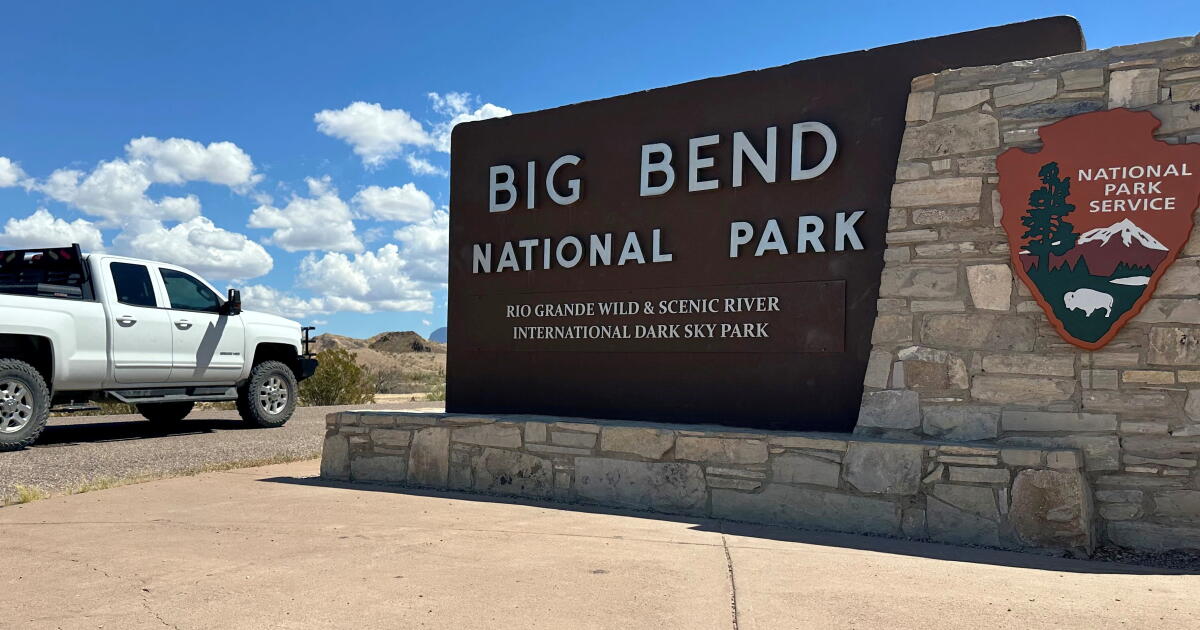
WASHINGTON — A federal court in Texas on Friday issued a ruling temporarily blocking the Trump administration from building a border wall and other infrastructure across the state’s Big Bend region.
The news marks a major win for landowners, businesses and environmentalists in the region who have united to oppose the planned infrastructure projects, which are part of a $46-billion effort by the Trump administration to line the southern border with a mix of 30-foot steel walls, vehicle barriers, roads and surveillance technology.
Judge Kathleen Cardone said in her ruling that the plaintiffs were “likely to succeed on the merits of at least one of the claims in suit, that there is a likelihood that they will suffer serious, irreparable harm without an injunction, and that the balance of the equities and the public interest weigh in their favor.”
Customs and Border Protection and the Department of Homeland Security did not immediately respond to a request for comment.
Opponents of the border wall project have argued that the Big Bend region is so remote and the landscape so rugged that it serves as its own deterrent to illegal immigration, and that the administration violated the law when it issued a swath of waivers allowing it to bypass numerous regulations in order to speed up border wall infrastructure projects.
Laiken Jordahl, with the Center of Biological Diversity that brought the suit, called Cardone’s ruling a “total victory.”
“The bulldozers are going to be sent packing until she rules on the merits,” Jordahl said. “This is such a historic day for Big Bend and for Texas and the Constitution.”
The court’s decision comes just weeks after the administration erected the first border wall panels in the Big Bend sector in the middle of September.
A federal appeals court on Friday ruled in favor of Ohio and Tennessee that they can regulate sports-related event contracts from Kalshi (KALSHI) under their existing gambling laws.
The 6th U.S. Circuit Court of Appeals in Cincinnati ruled that Kaslhi did
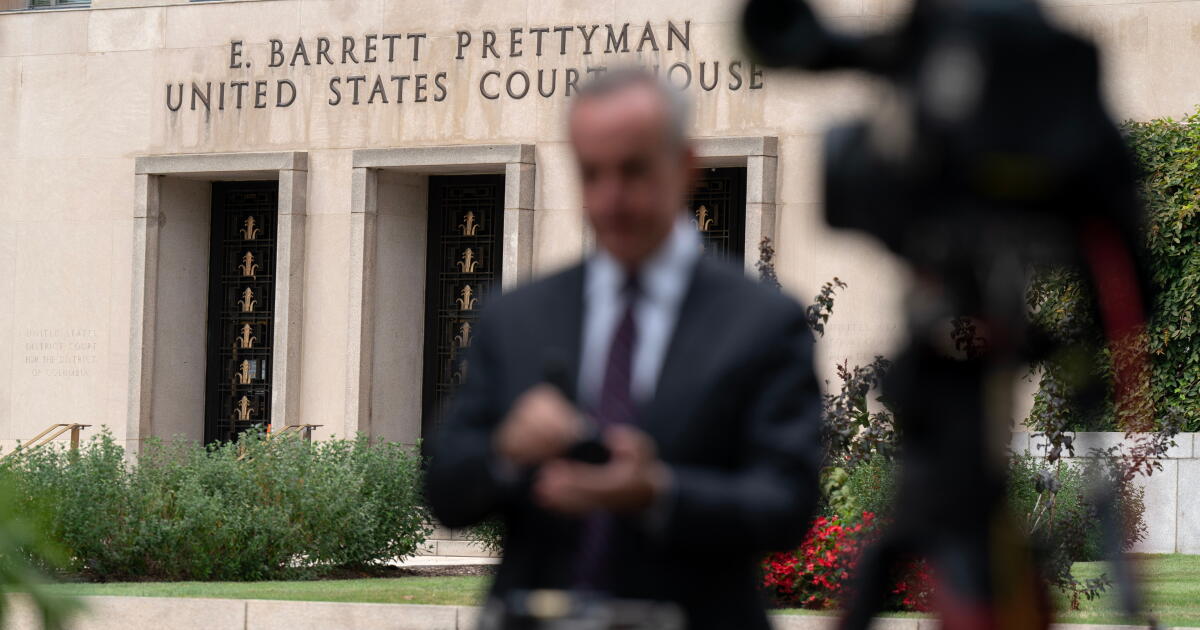
A federal judge declined Thursday to rule immediately on a proposed settlement between Paramount Skydance and 12 state attorneys general, leaving the last major legal hurdle to the studio’s $111-billion acquisition of Warner Bros. Discovery unresolved for now.
U.S. District Judge Araceli Martínez-Olguín did not indicate how she would rule, but said she wanted more information before deciding whether to approve the proposed consent decree, a court-enforceable agreement that would allow the merger to proceed under certain conditions..
“I’m not the only one who has some questions for you all. There’s lots of interest,” said Judge Martínez-Olguín. “I appreciate people are interested, but I also want to make sure that I have everything that I’m going to consider in front of me.”
The judge said she would issue a ruling “in due course.”
The hearing comes three days after California Atty. Gen. Rob Bonta announced that the two sides had reached an agreement.
It requires the combined company to release at least 30 films in theaters each year, commit at least an additional $1.5 billion to domestic film production and set aside $47.5 million for workers affected by the merger.
“When theater owners have publicly said that supply is the problem, those are voices that carry weight because they’re in the market,” said Paula Blizzard, an attorney for California, during the hearing. “They are the people we’re trying to protect — the businesses and the competition that we are trying to protect.”
The settlement proposal also includes stipulations on how basic cable channel negotiations must proceed, creates a board intended to protect the editorial independence of CBS News and CNN, and bars Paramount from selling or closing its Melrose Ave. lot or Warner Bros.’ Burbank lot while requiring the company to operate them “in a manner consistent with past practices.”
An independent monitor will oversee the settlement implementation. The agreement, if approved by the judge, will be in effect for five years.
“Paramount wants to get to work. Paramount is doing this deal because it wants to compete. Netflix, Amazon, Disney are far larger streaming undertakings,” said Josh Holian, an attorney for Paramount, during the hearing. “Paramount believes that a transaction like this can be transformative in fueling its ability to compete in that market.”
Before ending the hearing, Judge Martínez-Olguín assigned the parties several tasks, which included addressing a letter from U.S. Senator Cory Booker (D-N.J.) who echoed some concerns about the proposal.
Booker, the top Democrat on the Senate Judiciary Subcommittee on Antitrust, Competition Policy, and Consumer Rights, asked the judge to conduct an “independent public-interest review” before approving the settlement agreement. Because the U.S. Justice Department closed its investigation of the Paramount-Warner Bros. merger without seeking any remedies, Booker argued, the proposal is “the only enforceable instrument that will govern” the combined company.
Martínez-Olguín asked the parties to submit their responses to Booker’s letter by Monday, Sept. 28 at noon.
Warner Bros. Discovery Chief Executive David Zaslav had told staff earlier this week that he expected the deal to close no later than early October.
The settlement has divided Hollywood, with some saying Bonta bowed to political pressure from Los Angeles Mayor Karen Bass and California Gov. Gavin Newsom. During negotiations, Paramount threatened to move its studio out of state, which Newsom said he took seriously.
After the proposed settlement was announced, Paramount Chief Executive David Ellison said the combined company would remain in L.A.
Many in Hollywood are concerned about the threat of layoffs from the merger. Paramount has told Wall Street it plans to make more than $6 billion in cost cuts. A recent report commissioned by L.A. County estimated that 4,500 jobs could be lost over three years.
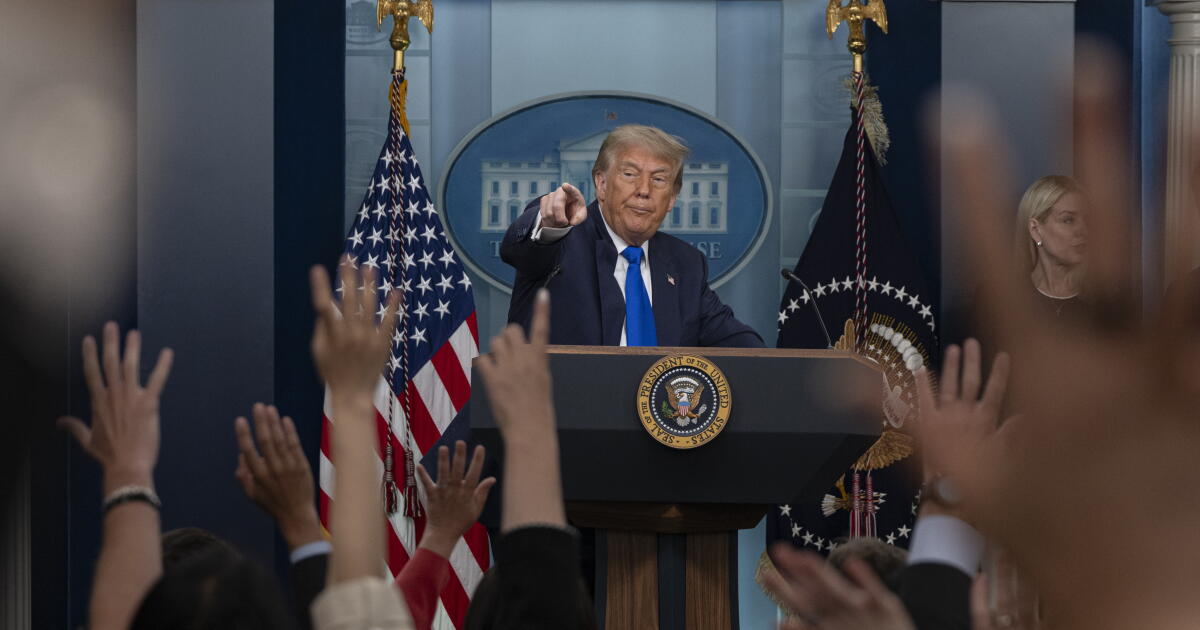
A federal judge issued a temporary restraining order Thursday that removes President Trump’s ban on three news outlets from White House grounds, a rebuke of the administraton’s most severe attack yet on the Washington press corps.
U.S. District Judge Timothy Kelly said in his ruling that the administration’s ban is likely unconstitutional and that the outlets affected — CNN, MS NOW and Politico — were not given due process before the action was taken. Kelly also rejected the White House’s court argument that the ban was motivated by national security concerns. The restraining order will be in effect for 14-days as the litigation proceeds.
Kelly, appointed by Trump during his first term, made a similar ruling in 2018 after the White House tried to ban journalist Jim Acosta, then working for CNN. Acosta’s credentials were restored.
The three outlets jointly filed a lawsuit Monday alleging that the ban violates the 1st Amendment by retaliating against protected newsgathering as punishment for unfavorable coverage, amounting to viewpoint discrimination.
Trump announced the ban Friday in a Truth Social post, describing CNN, MS NOW and Politico as “fake news.” He claimed the outlets have long been unfair to him and that their negative coverage was a danger to the country.
Journalists from the three organizations were barred from White House grounds on Saturday, the day after Trump announced the ban in a Truth Social post.
CNN, MS NOW and Politico all reported Thursday that their access has not been restored despite the judge’s ruling. Politico reported that one of its journalists had a credential confiscated by Secret Service.
Whether the confiscation was a security snafu or a defiance of the court order remains to be seen.
In a emergency court hearing Wednesday, the White House shifted away from Trump’s initial stated reasons for the ban and argued that the three outlets engaged in reporting that threatened national security.
The administration went on to detail letters sent to each outlet that provided examples of such reporting. One was a background briefing set up by the White House, where an official briefed reporters on condition of anonymity under ground rules set by the White House itself.
In response to the ban, ABC, CBS, NBC and Fox News, suspended pool coverage of President Trump this week as he traveled to New York for the General Assembly at the United Nations.
The four networks along with CNN rotate the coverage which is shared with other news organizations. While the networks that aren’t banned have sent reporters to cover President Trump’s activities, they are not shooting video.
Some right wing outlets sympathetic to Trump such as One America News have been providing video coverage, but they lacked the technical capabilities of the larger networks. Another outlet, Real America’s Voice, posted video that showed President Trump’s detail traveling through New York City.
Keven Tripp, the Los Angeles correspondent for NBC News Radio posted on X that the “Press is NEVER supposed to reveal operational aspects of security detail,” calling the move by Real America’s Voice “stupid and unprofessional.”
WASHINGTON — A federal judge early Thursday temporarily blocked President Trump’s move to ban three news outlets from the White House grounds and said CNN, MS NOW and Politico must have their access restored.
It’s the latest development in an escalating showdown between Trump and media outlets whose coverage he dislikes. The president announced he was banning the outlets Sept. 18, assailing what he called “fake news.” More recently, Trump has said negative coverage is dangerous for the country.
The outlets argued that they were singled out because of the content of their coverage — in other words, viewpoint discrimination — and called the ban a “blatant violation” of the 1st Amendment.
In an order posted shortly after midnight Eastern time, U.S. District Judge Timothy Kelly said the media outlets had met the legal thresholds needed to obtain a temporary restraining order, which include the likelihood of succeeding on the merits of the case and of suffering irreparable harm without an order.
“This is a high bar, but Plaintiffs have met it,” he wrote.
Kelly — whom Trump nominated in 2017 and who ordered a CNN journalist’s access restored in a similar case in 2018 — heard arguments Wednesday and ended the hearing without ruling.
On Thursday, he issued the temporary restraining order, which will be in effect for 14 days. Such orders are typically designed to preserve the status quo pending a closer review of the case by the court.
During the hearing, Kelly questioned whether the administration had met its legal responsibilities and provided CNN, MS NOW and Politico with adequate due process before banning them.
The rulings in two prior cases over press access, including one that went to the U.S. Supreme Court, made it clear that journalists are entitled to an opportunity to be heard before they have their press passes revoked.
Justice Department attorney Michael Velchik argued that the rulings in the earlier cases were wrong.
The judge noted that his decision would be guided by prior rulings in comparable 1st Amendment cases, even if the government disagrees with them.
Russian President Vladimir Putin has cast the vote as a test of support for his ongoing war in Ukraine.
Published On 20 Sep 202620 Sep 2026
Polls have closed in Russia’s first wartime parliamentary elections, with the ruling United Russia party on course to win the tightly controlled vote.
The Kremlin wants the elections, the first parliamentary vote since the start of the full-scale invasion of Ukraine in 2022, to showcase popular support for the war and legitimise its action.
Recommended Stories
list of 3 itemsend of list
Russian government officials accused Ukraine of trying to disrupt voting after Kyiv launched hundreds of drones at Moscow and other regions in what the TASS state news agency said was the biggest attack of its kind since the war began.
The drone strikes on Sunday killed at least three people in the Moscow region and two more in the Russian-held part of Ukraine’s Kherson region, including an election official, according to the region’s governor and the election commission.
Initial results showed the United Russia party comfortably ahead, and Russia’s Central Election Commission said turnout at the close of polls stood at 56.66 percent.
The first official results and turnout are expected on Monday morning.
Voting in Russian-held Ukrainian areas
The vote, which began on Friday for 111 million eligible voters, included residents of four Ukrainian regions that Moscow illegally annexed after the war began, but still doesn’t fully control, as well as those in Crimea, the Black Sea peninsula that was illegally annexed by Russia in 2014.
Authorities in Kyiv denounced the voting in the Russian-held areas as illegal and urged foreign governments not to recognise the result. The European Union on Friday called the action a “blatant violation of international law”.
Voters cast two separate ballots, filling half of the lower house’s 450 seats by selecting political parties listed on the ballot. The rest are contested in single-seat constituencies, with voters choosing individual candidates.
The main Kremlin party, United Russia, is widely expected to retain its overwhelming control of the State Duma. Several smaller parties of the “systemic opposition” that vote in sync with Putin’s views on all key issues are also expected to maintain their presence.
A massive state media campaign and tight control over the elections in the absence of genuine opposition all but assure the Kremlin will keep tight control of Russian politics amid mounting economic costs and increasing Ukrainian drone attacks deep inside the country.
The liberal Yabloko party, the only registered political entity that dared to publicly criticise the war, was removed from the ballot last month by Russia’s Supreme Court. It only has a few dozen candidates in the single-constituency races.
Additionally, some anti-war politicians were imprisoned or forced to flee abroad ahead of the campaign.
Russia didn’t invite election observers from the Organization for Security and Cooperation in Europe. The Russian Foreign Ministry has accused the body of “double standards” for its criticism of Russia.