tariff

Trump’s Tariff Strategy Crumbles Before High-Stakes Xi Summit

Legal defeats at home leave the White House with dwindling leverage as trade talks begin in Beijing.

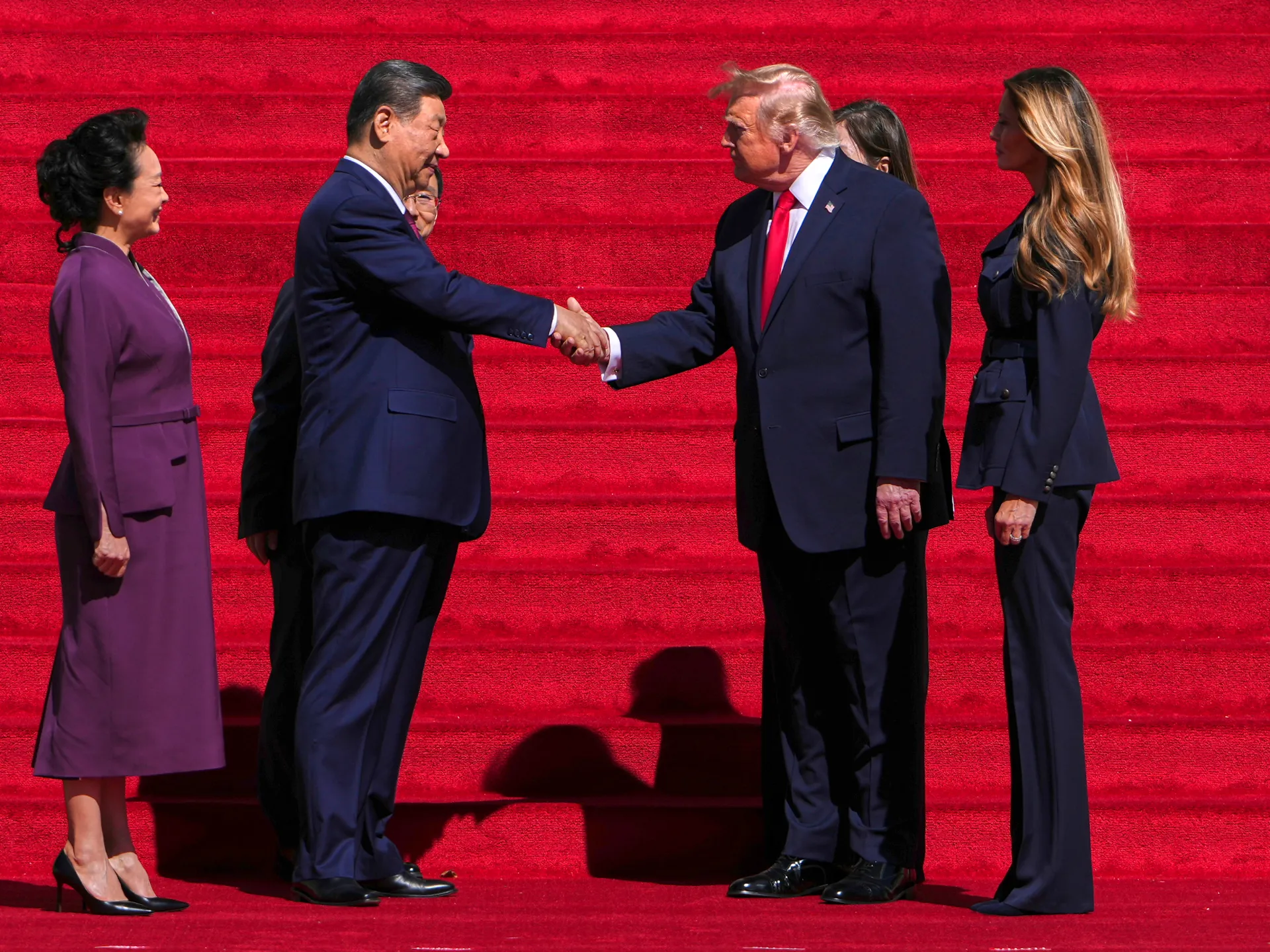
President Donald Trump heads into this week’s summit with Chinese President Xi Jinping with a major embarrassment back home: the legal foundation of his aggressive tariff strategy is rapidly eroding.

Trump expects to meet Xi in Beijing from May 14 to May 15 to discuss trade, the war in Iran and, possibly, Taiwan. But the meeting comes as federal courts rule against Trump’s sweeping tariff measures, including the 10% global duties and triple-digit levies on Chinese goods that the White House once promoted as a key source of leverage over Beijing.

The rulings, the most recent of which was on May 7, weaken one of Trump’s most aggressive economic weapons just as Washington, D.C., tries to navigate an increasingly fragile geopolitical landscape.

Trump has refused to concede defeat. In March, he defended the tariffs on his social platform, Truth Social. He argued that Section 122 of the Trade Act of 1974 “fully allowed” and “legally tested” the levies. Trump is the first president to invoke Section 122.

Now, his administration is looking to Section 301 of U.S. trade law as a potential path to impose tariffs with fewer legal vulnerabilities.

What’s Section 301?

Section 301 is a provision of the Trade Act of 1974 that empowers the U.S. president to impose tariffs or other penalties on countries accused of unfair trade practices.

But analysts warn that the strategy may also face significant legal and procedural obstacles — worse than Section 122.

“Section 301 tariffs involve a more cumbersome investigatory process before they can be imposed. That is why Trump has preferred other statutes such as [The International Emergency Economic Powers Act] and Section 122, which he attempted to implement by simple executive order,” said Phillip Magness, senior fellow at the Independent Institute.

With Section 122 of IEEPA, the Trump administration sought to revive a long-dormant statutory provision and reinterpret Congress’s definition of “balance of payments” to justify using it against modern trade deficits. If Trump pivots to Section 301 as his next option, his powers are more restricted and must meet more onerous regulatory requirements.

Magness expects this will potentially trigger another wave of lawsuits.

“Trump will attempt to stretch the language of Section 301 as well, in which case there will probably be court challenges to some of his weaker Section 301 findings,” Magness said.

Since April of last year, hundreds of companies have challenged the tariffs in court, including Costco Wholesale Corp., Prada SpA, Staples Inc. and Bumble Bee Foods, along with foreign firms such as BYD Co., Kawasaki Motors and Yokohama Rubber Co.

Iran and Taiwan

The summit also unfolds against a dramatically altered geopolitical backdrop from the leaders’ last meeting in South Korea in October, when both sides agreed to temporarily pause an escalating trade war after China threatened restrictions on rare earth exports.

Since then, Trump has become increasingly consumed by the conflict with Iran — one of China’s closest Middle Eastern allies — a war that has contributed to a global energy crunch and redirected U.S. military resources away from Asia.

The conflict has also strained U.S. munitions stockpiles, fueling speculation among some Chinese analysts about Washington’s ability to defend Taiwan in a prolonged regional confrontation, according to reports from The New York Times.

Source link

Trump’s latest 10% tariffs found unlawful by U.S. trade court

President Trump’s 10% global tariffs were declared unlawful by a federal trade court in a fresh blow to the administration’s economic agenda, several months after the U.S. Supreme Court vacated earlier levies he’d imposed.

A divided three-judge panel at the U.S. Court of International Trade in Manhattan on Thursday granted a request by a group of small businesses and two dozen mostly Democrat-led states to vacate the tariffs. Trump imposed the 10% duties in February under Section 122 of the Trade Act of 1974, which had never previously been invoked.

The court for now only immediately blocked the administration from enforcing the tariffs against the two companies that sued and Washington state, making clear that it was not issuing a so-called universal injunction. The panel found that the other states that sued lacked standing because they aren’t direct importers, instead arguing that they were harmed by having to pay higher prices for goods when businesses passed on tariff costs.

It wasn’t immediately clear what the ruling would mean for now for other importers that had been paying the contested levies.

The majority of the panel rejected the administration’s stance that “balance-of-payments deficits” — a key criterion for imposing the Section 122 tariffs — was “a malleable phrase.” They concluded that Trump’s proclamation imposing the levies failed to identify that such deficits existed within the meaning of the 1974 law, instead using “trade and current account deficits to stand in the place.”

The decision is the latest setback for the president’s effort to levy tariffs without input from Congress. Earlier duties — overturned by the Supreme Court on Feb. 20 — were issued under a different law, the International Emergency Economic Powers Act, or IEEPA. In that case, the justices ruled Trump had exceeded his authority, kicking off a legal scramble by importers for almost $170 billion in refunds.

The U.S. Justice Department could challenge the trade court’s latest ruling by taking the case to the U.S. Court of Appeals for the Federal Circuit, which ruled against the Trump administration during the last tariff fight.

Section 122 allows presidents to impose duties in situations where the U.S. faces what the law defines as “fundamental international payments problems.” Even before Trump issued the tariffs, economists and policy experts debated whether the president would be able to build a solid legal framework using the statute.

In a proclamation declaring the use of Section 122, Trump said that tariffs were justified because the U.S. runs a “large and serious” trade deficit. He also pointed to the negative net flows of income from investments Americans have overseas and other things that showed the U.S. balance-of-payments relationship with the rest of the world was deteriorating.

Under the law, presidents have the ability to impose tariffs on goods imported into the U.S. on a short-term basis to address concerns about how money is flowing in and out of the country. Those concerns include “large and serious United States balance-of-payments deficits” and an “imminent and significant depreciation of the dollar.”

Unlike other legal options Trump might pursue to impose tariffs, Section 122 can be invoked without waiting for a federal agency to conduct an investigation to determine whether the levies are justifiable. But they can still be challenged in court.

The small businesses and states that sued argued that Section 122 became outdated when the U.S. ditched the gold standard decades ago. They say Trump improperly conflated “balance-of-payments deficits” with U.S. trade deficits in order to justify using the law.

They also allege that Trump’s order announcing the Section 122 tariffs was “riddled with omissions and mischaracterizations” around the meaning of a balance-of-payments deficit. The trade deficit cited by Trump is just one part of calculating the country’s balance of payments position, the states say.

Under Section 122, the president can order import duties of as much as 15%. The executive action can last 150 days, at which point Congress would have to extend it. Trump has said he would aim to increase the rate to 15% from 10%.

The states argue that Trump’s new tariffs violate other requirements in Section 122, including that such duties not be discriminatory in their application. The states argue that Trump’s new tariffs improperly exempt some goods from Canada, Mexico, Costa Rica, the Dominican Republic, El Salvador, Guatemala, Honduras and Nicaragua.

According to the complaint, the Trump administration conceded during the previous litigation over his IEEPA tariffs that trade deficits “are conceptually distinct from balance-of-payments deficits.”

The clash over Section 122 emerged just as the legal fight over refunds from Trump’s IEEPA tariffs began to heat up. A different judge in the Court of International Trade, U.S. Judge Richard Eaton, is overseeing the massive refund effort and ordered Customs and Border Protection to give him regular updates on a largely automated process the government will use to issue most refunds.

Larson and Tillman write for Bloomberg.

Source link

EU trade chief urges US to ‘swiftly’ restore 15% tariff arrangement

Published on

EU Trade Commissioner Maroš Šefčovič on Tuesday urged the US to honour its side of the EU-US trade deal during a meeting in Paris with US Trade Representative Jamieson Greer.


ADVERTISEMENT


ADVERTISEMENT

Tensions have escalated in recent days over the implementation of the EU-US trade deal reached almost a year ago in Turnberry, Scotland, after US President Donald Trump threatened to impose 25% tariffs on EU cars, in breach of the agreement capping US tariffs on EU goods at 15%.

The agreement was further shaken in February after the White House introduced new tariffs following a US Supreme Court ruling declaring the 2025 tariffs illegal.

A European Commission spokesperson said Tuesday that during the 90-minute meeting with Greer, Šefčovič called for a “swift return” to the agreed Turnberry terms, meaning “a 15% all-inclusive tariff rate.”

The US currently imposes a 10% tariff on EU goods on top of duties already in place before Trump’s return to the White House in 2025, with rates varying across EU products. Combined duties can now reach as much as 30% on certain EU exports, such as cheese, exceeding the 15% cap established in the EU–US agreement.

During the meeting, Šefčovič also updated his counterpart on the EU’s implementation of the agreement, the spokesperson said, “to clarify” where the EU “stands.”

Washington wants Brussels to accelerate the EU legislative process needed to implement the deal, including the bloc’s commitment to cut tariffs on US industrial goods to zero.

But negotiations between EU governments and members of the European Parliament remain tense.

MEPs want to add safeguards that would make EU tariff cuts conditional on the US implementing its side of the agreement. They are also pushing for a “sunset clause” that would terminate the deal in March 2028 unless renewed.

The European Parliament’s position is backed by France, while Germany and other member states want to preserve the original agreement struck in July 2025 by Trump and European Commission President Ursula von der Leyen.

A round of negotiation is scheduled for Wednesday evening.

Source link

EU and US trade chiefs to meet as tariff tensions escalate

Published on

The EU Trade Commissioner Maroš Šefčovič is scheduled to meet his US counterpart Jamieson Greer on Tuesday amid rising tensions between the bloc and the US following President Donald Trump’s announcement of a potential 25% tariff on EU automobiles.


ADVERTISEMENT


ADVERTISEMENT

The discussions, scheduled ahead of a G7 trade ministers’ meeting in Paris, were planned before President Trump’s latest tariff threat, Euronews has learned.

But they now give both sides an opportunity to ease tensions after Trump signalled measures that would breach the EU-US trade deal agreed last summer in Turnberry, Scotland, between Trump and Commission President Ursula von der Leyen, which caps US tariffs on EU goods at 15%.

On Monday, the Commission sought to project a sense of calm.

“It’s not the first time we have seen threats,” Commission spokesperson Thomas Regnier said, adding: “We remain very calm, focused on enforcing the joint statement in the interests of our companies, of our citizens.”

Trump’s threat came after German Chancellor Friedrich Merz criticised the US approach to the war in Iran, and after Washington announced the withdrawal of 5,000 US troops from Germany, further straining transatlantic relations.

German MEP Bernd Lange (S&D), chair of the European Parliament’s trade committee, told Euronews on Monday that Trump’s threats were aimed specifically at German car manufacturers.

“All options remain open”

The US president also accused the EU of moving too slowly to implement the agreement.

“Since day one we are implementing the Joint Statement [the EU-US deal] and we are fully committed to delivering on our shared commitments,” Regnier said, adding that the EU was seeking predictability in the EU-US trade relation.

The Turnberry deal is currently being negotiated between EU governments and lawmakers before it can enter into force on the EU side. Co-legislators must still agree on the modalities for cutting EU tariffs on US goods to zero, as outlined in the agreement.

MEPs have nonetheless introduced safeguards to ensure the EU is not the only party adhering to its commitments and to protect the bloc from future US threats.

The Commission reiterated Monday that if the US takes measures that are “inconsistent” with the trade deal, all “options” remain open.

Last year, during the trade dispute that followed Trump’s return to power, the EU executive prepared a package targeting €95 billion worth of US products, though the measures were later suspended.

At the time, several EU countries also urged the use of the bloc’s anti-coercion instrument, which enables the EU to respond to economic pressure from third countries with a wide range of trade defence tools, including restrictions on licences and intellectual property rights.

Source link

Trump lifts whiskey tariff after visit from King Charles III

President Donald Trump dropped tariffs on whiskey coming out of the United Kingdom — scotch, in particular — after King Charles and Queen Camilla concluded their trip to the United States this week. File Photo by Billie Jean Shaw/UPI

April 30 (UPI) — President Donald Trump on Thursday lifted tariffs that he had levied but limited business between bourbon makers in Kentucky and Scotland.

Trump announced he was scrapping the tariffs after King Charles III and Queen Camilla were starting to wrap up their visit to the United States this week, which included the king addressing a joint session of Congress, a state dinner at the White House and a trip through Virginia before they head home.

King Charles and Queen Camilla have just wrapped up a four-day trip to the United States, which Trump scheduled and invited them for after a state dinner in the United Kingdom last year.

“In honor of the King and Queen of the United Kingdom … I will be removing the Tariffs and Restrictions on Whiskey having to do with Scotland’s ability to work with the Commonwealth of Kentucky on Whiskey and Bourbon, two very important Industries within Scotland and Kentucky,” Trump said in a post on Truth Social.

“People have wanted to do this for a long time, in that there had been great Inter-Country Trade, especially having to do with the Wooden Barrels used,” he said.

Trump reinstituted a tariff on whiskey and other spirits coming out of the European Union in March 2025 that he had instituted during his first term in the White House that had been discontinued by the Biden administration in 2021.

Some whiskey distilleries in Kentucky age their bourbon in barrels that have been used to age Scotch and the tariff had increased costs for U.S. whiskey manufacturers — and in the absence of a U.K. tariff on American spirits — had been a problem, USA Today reported.

In the reverse, bourbons that are sold as “Kentucky bourbon” — a specific product unique to Kentucky, and which includes brands such as Jim Beam, Woodford Reserve and Buffalo Trace, among many others — are required to be aged in new, charred oak barrels that are later sold to some scotch distillers who use them to age their spirits, Politico reported.

Artemis II pilot Victor Glover (L) and mission specialist Christina Koch meet with President Trump in the Oval Office of the White House on Wednesday. Photo by Graeme Sloan/UPI | License Photo

Source link

Tariff refund portal to go live on Monday

April 19 (UPI) — U.S. Customs and Border Protection is expected to launch a website on Monday to process refund requests for some Trump administration tariffs, although there are limits to which ones will be processed.

The first phase of tariff refunds comes after the Supreme Court ruled in February that President Donald Trump could not use the International Emergency Economic Powers Act (IEEPA) to generate revenue by imposing tariffs.

Although Trump decided to use Section 122 of the Trade Act of 1974 to justify new tariffs after the Court’s decision, the administration still is required to refund duties collected under the now-nullified tariffs.

CBP has estimated that it owes about $166 billion in refunds, with the agency’s announcement of phase 1 expected to take care of the vast majority of expected claims, NPR reported.

The website is specifically aimed at letting businesses request refunds, and experts have said that consumers are unlikely to be affected by the refunds, CBS News reported.

“[The Consolidated Administration and Processing of Entries] is being deployed in phases, and CBP will launch the first phase of CAPE on April 20,” the agency said in an update last week.

“Phase 1 is limited to certain unliquidated entries and certain entries within 80 days of liquidation,” the agency said.

The refunds are linked to lawsuits filed in December by Costco and other companies — more than 50 companies brought filed suit for refunds — asking for duties to be returned to them if the Supreme Court ruled against the administration.

In March, CBP raised concern in court that it could not immediately handle refunding the duties based on 53 million entries from 330,000 importers who had paid tariffs as of March 4.

Secretary of Health and Human Services Robert F. Kennedy, Jr. speaks during a House Appropriations Subcommittee on Labor, Health and Human Services, Education, and Related Agencies hearing on the budget for the Department of Health and Human Services in the Rayburn House Office Building near the U.S. Capitol on Thursday. Photo by Bonnie Cash/UPI | License Photo

Source link