I AM admiring green rolling hills as the sun beats down on Italian terracotta roofs.
There’s just one twist. I’m not IN Italy.
I’m in San Marino — the tiny, landlocked microstate completely surrounded by its famous neighbour, and officially the fifth-smallest country on the planet.
Set atop Mount Titano, 700 metres above sea level, San Marino is the oldest republic in the world but is still relatively undiscovered by British tourists who remain in the surrounding regions of its bigger neighbour instead.
One of the easiest ways to reach the centre is via cable car and once you step out you’re welcomed by centuries-old streets, the Basilica of Saint Marinus and the incredible Three Towers of Mount Titano.
Built in the 11th century, the towers formed the medieval defences and while the steep incline to get to them is not for the faint-hearted, it’s worth it.


You can visit the two main towers — Guaita and Cesta — linked by a 13th century stone walkway the locals nicknamed The Witches Path.
But there’s another reason to visit.
San Marino is virtually a duty-free haven with taxes around five percentage points lower than in Italy.
I had to be dragged away from all the beautiful handbags and shoes in the cute boutiques dotted throughout the city.
San Marino also produces an array of products including olive oil and wine, which I had a chance to sample over lunch at Ristorante Titano.
Alongside the light and fresh local wine, I devoured a bowl of cappellacci; the traditional stuffed pasta with a distinctive “big hat” shape originating from the Emilia-Romagna region that San Marino sits within.
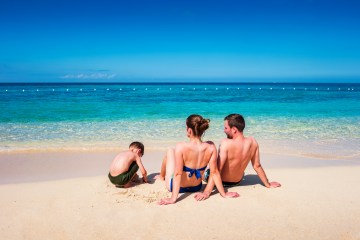
While San Marino is landlocked, it is only 30 minutes drive from Rimini’s wide, 15km-long beaches, so close it is visible from the top of the city on a clear day.
Rimini has been a popular seaside destination for decades and I could see why as I gazed out of my balcony room at the 4* Hotel Savoia across the golden sandy beach and the newly redeveloped waterfront.
The hotel itself has the celeb factor — it featured in Italian classic La Dolce Vita and the film’s director Federico Fellini was born in Rimini.
But the hotel isn’t the only place where the famous director has left his mark.
There is a museum dedicated to his work split across three spaces, one of which is housed in Castel Sismondo, a medieval castle.
He and his most famous characters are also immortalised in a mural in Borgo San Giuliano, an ancient fisherman district full of pastel-coloured little houses.
And it was history that had me star-struck when I moved on to another Italian city, ravishing Ravenna.
Stunning mosaics from the early Christian and Byzantine periods can be found in Basilica of San Vitale and the Mausoleum of Galla Placidia.
Ravenna is also home to Dante’s Tomb, the resting place of Dante Alighieri, the famous poet known for Dante’s Inferno and as the father of the Italian language.
Another bard with links to the city is Lord Byron, and the Byron Museum is housed in Palazzo Guiccioli, where he pursued an intense love affair with the wife of aristocrat Alessandro Guiccioli in 1819.
After exploring the brilliant interactive displays, I enjoyed an incredible alfresco lunch of lasagne at Taverna Byron at the Palazzo.
All these attractions were just a short walk from my cosy, family-run hotel, Villa Noctis, which has its own peaceful courtyard overlooked by the traditional-style breakfast room.
Ravenna has its own glorious stretch of golden sand and selection of beach clubs to enjoy.
I settled on Singita Marina Beach and I have to say, a cocktail, sun lounger and a delicious plate of tuna tartare on potato croquettes — they don’t scrimp on the portions either — was the perfect way to end the day.
Now that’s La Dolce Vita.