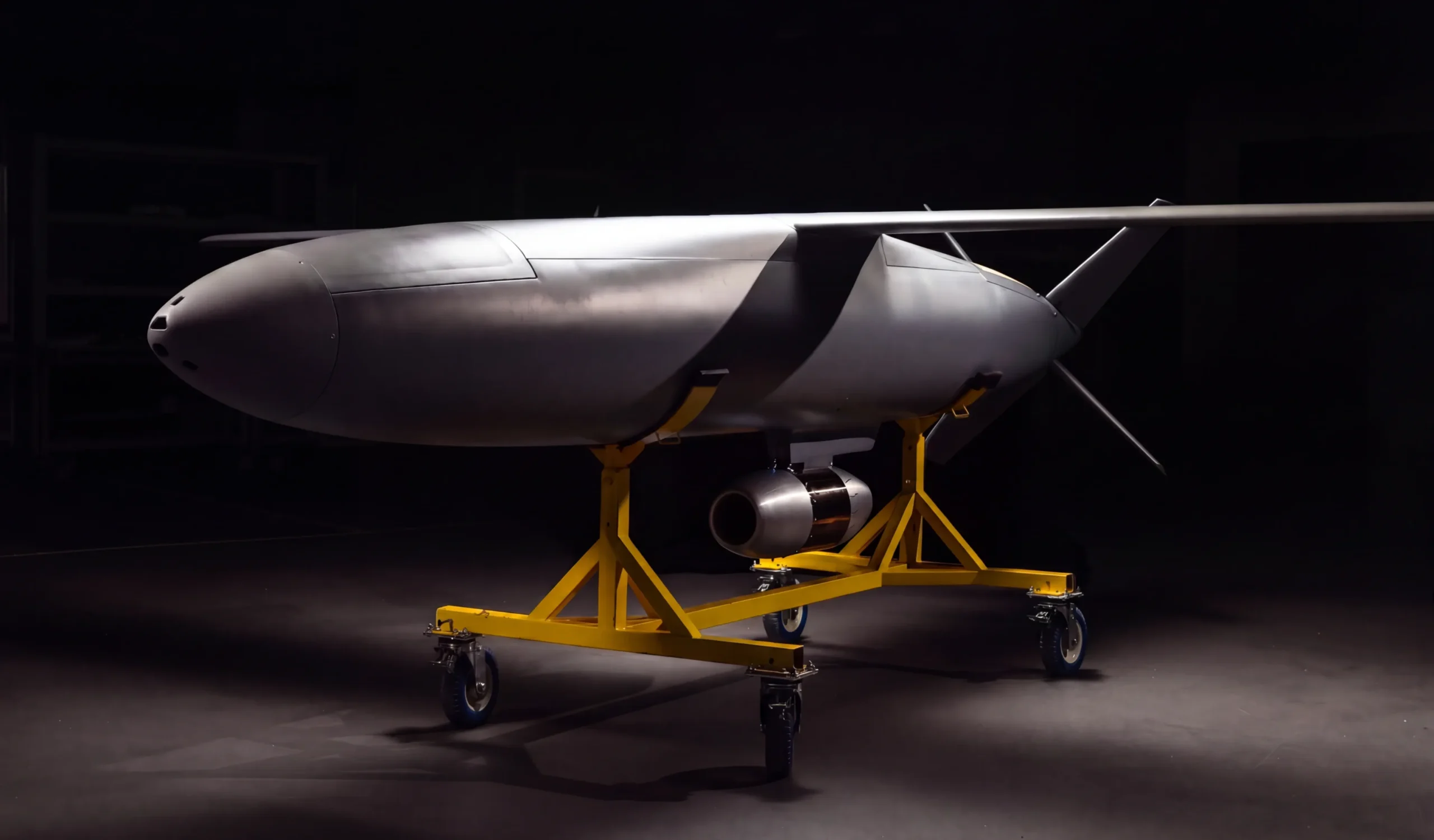
Denmark is set to acquire Anthem long-range strike weapons from U.S.-based defense startup Covenant, as well as Joint Strike Missile (JSM) cruise missiles from Norway’s Kongsberg Defense & Aerospace. The twin-track approach by the Nordic NATO member will give it all-new options for launching long-range strikes from the ground and air. Furthermore, Denmark’s move reflects a broader European push to acquire longer-range strike options, especially by NATO allies seeking to deter Russia.
Danish Defense Minister Jeppe Bruus announced the planned purchases yesterday. He said the new weapons would strengthen Denmark’s ability to respond to an attack and strike targets “behind enemy lines,” according to Reuters. Copenhagen has not disclosed the number of missiles involved, the value of the purchases, or expected delivery dates.

“We’re in a serious and deteriorating security situation, and that is why we are building up the defense and strengthening our combat power,” Bruus told reporters. The planned acquisitions are a “strong signal that we have the ability to strike back,” he added, without explicitly naming any particular adversary.
The Danish government did say last year that it would pursue new long-range offensive precision weapons, in general, in response to the growing security concerns in Europe amid Russia’s ongoing war against Ukraine. Bruus’ announcement comes amid a new surge in geopolitical friction between Russia and members of the NATO alliance.

The two new acquisitions will provide Denmark with important complementary strike options. Anthem is a ground-launched weapon, while JSM is designed to be air-launched, including by stealthy F-35 fighters just like those in Danish Air Force service today. Together, the weapons are set to expand the range of platforms from which Denmark can deliver stand-off precision strikes and give its armed forces additional options for attacking high-value military targets.

Anthem is being developed by Covenant, a U.S.-based defense company that has also outlined plans to establish missile production in Germany and Israel. The system’s selection by Denmark gives the company an important European customer as NATO members seek to expand their inventories of long-range weapons.
Covenant’s Anthem is in a category of munitions that increasingly blurs the line between long-range kamikaze drones and traditional cruise missiles. It is designed to offer a lower-cost, longer-range strike capability that can be produced more easily and at greater scale than many existing systems. Covenant has not publicly disclosed the weapon’s range. Still-unconfirmed reports put it at roughly 740 miles (1,200 kilometers). It is also said to carry a warhead weighing more than 200 kilograms (441 pounds). It also uses a solid rocket motor to provide an initial boost at launch before transitioning to a heavy-fuel jet engine for cruise flight.
Currently, it is unclear how exactly Anthem is launched. It has already undergone testing with the U.S. Army, and images from those trials show the weapons being handled on the ground using a tricycle undercarriage. This may point to rocket-assisted takeoffs from runways.

Last month, Covenant announced it had already conducted more than 200 test flights of Anthem and had secured roughly $150 million in orders. It also disclosed that an unidentified international customer was expected to begin receiving German-built weapons before the end of this year. This may well be Denmark, though there could also be other customers that have yet to emerge publicly. Meanwhile, U.S. Army deliveries are expected in 2027, under an accelerated qualification contract.
Anthem reflects a broader push, globally, for new long-range strike weapons that can be manufactured rapidly and in large quantities, potentially trading some of the performance and sophistication of more expensive, ‘exquisite’ weapons for affordability, scalability, and mass availability. Recent conflicts in the Middle East, as well as the war in Ukraine, have underscored the challenges of bolstering stockpiles of critical munitions and replenishing them during prolonged fighting.
JSM, developed by Kongsberg in cooperation with U.S. defense contractor Raytheon, is a traditional air-launched cruise missile capable of being employed against targets on land and at sea. It is capable of being carried internally and externally on the A and C variants of the F-35. The design has also been fit-checked for external carriage on a variety of other tactical jets. As already mentioned, JSM will provide an entirely new stand-off precision-strike option for Denmark’s F-35As. These are the only tactical jets in Danish service today following the retirement of the country’s F-16 Vipers in January.

Kongsberg has identified Denmark as the seventh country to select JSM, although the final contract scope and value remain subject to negotiations. JSM is an enlarged derivative of the surface-launched Naval Strike Missile (NSM), which has also seen growing worldwide sales in recent years, including to the U.S. military. Since 2025, Denmark has also been fielding NSM on its Iver Huitfeldt class frigates and as part of a ground-based coastal defense system.
Since JSM is designed to be air-launched, its maximum range is dependent in part on the altitude at which the missile is released, as well as the speed of the aircraft carrying it. Kongsberg has said in the past the missile can fly out to a range of more than 300 nautical miles, but also that its reach is significantly cut back when it is employed in its low-altitude penetration mode.

The JSM carries a 260-pound warhead and uses a combination of GPS, inertial navigation (INS), and terrain mapping to guide it toward its target. The terrain-mapping capability provides an additional means of navigation, helping the missile maintain its course even in environments where GPS connectivity is degraded or unavailable.
The missile switches over to an imaging infrared seeker to provide precise target discrimination during the terminal phase of flight. Because the seeker operates passively, it does not rely on emitting radiofrequency signals, reducing the risk of detection and making it immune to conventional radiofrequency jamming. The agile JSM’s overall design also includes reduced-signature features to help limit its detectability and improve its survivability on the way to the target.

A two-way datalink also allows the missile to receive updated targeting information while en route, or to be redirected toward an entirely different target during the mid-course phase of flight.
The dual purchases build on a broader Danish effort to field new options for holding targets at extended ranges at risk. Denmark previously operated eight M270 Multiple Launch Rocket Systems (MLRS), but retired them in 2004. The country is now introducing Israel’s PULS rocket artillery system, which can employ different rocket and missile types depending on the mission. Presently, the Danish military looks to be fielding PULS just with artillery rockets.
In terms of Denmark’s current and future ground-based capabilities, PULS – which stands for Precise and Universal Launch System – and Anthem will serve different. In Danish service, PULS provides a flexible rocket artillery capability, while Anthem will offer a cruise-missile-like option for longer-range precision attacks.
The acquisition of JSM also reflects the importance of Denmark’s F-35 fleet to its future combat capability. Air-launched weapons offer mobility and flexibility, but their employment depends on available aircraft. In this context, Denmark’s planned expansion of its F-35 fleet from 27 to 43 aircraft, announced in October 2025, will provide a larger platform base for its emerging long-range strike capability.

Følg en dansk F-35 pilot i aktion på amerikansk himmel
There could be some overlap here between Denmark’s growing array of air- and ground-based strike capabilities, as well. Dutch F-35As demonstrated their ability to provide targeting data to PULS launchers during a NATO exercise last year. A ground-launched weapon like Anthem also provides an alternative long-range strike option that does not require a fighter to carry it aloft, creating additional operational flexibility.
For Denmark, acquiring JSMs and Anthems also offers the appeal of adding a capable higher-end munition alongside a more affordable, readily available long-range strike weapon. Reuters has reported that Covenant expects Anthem to eventually cost in the mid-six-figure range, although a final unit price has not been disclosed. Meanwhile, the JSM has a reported unit cost of approximately $2.8 million.
As mentioned, the announcement of the Anthem and JSM purchase is fully in line with prior statements from the government in Copenhagen about acquiring new long-range strike options. Danish Prime Minister Mette Frederiksen previously urged the military to accelerate procurement across the board after years of comparatively limited defense spending.

The long-range strike acquisitions also fit into a broader NATO effort to strengthen deterrence across the Baltic region and the alliance’s northeastern flank.
Denmark occupies a strategically important position linking the Baltic Sea to the North Sea, while its forces contribute to NATO’s regional presence and reinforcement plans. The ability to strike targets deep behind enemy lines will provide a new ability for Denmark to threaten an adversary’s military infrastructure, command facilities, and other critical targets.
Denmark is far from alone in pursuing new long-range strike capabilities. In September, Latvia moved to acquire Anduril’s Barracuda family of long-range strike missiles, building on its earlier order for Army Tactical Missile System (ATACMS) short-range ballistic missiles. Poland is expanding its own layered strike capabilities, while France, Germany, Italy, Poland, Sweden and the United Kingdom are working on the European Long-Range Strike Approach (ELSA) initiative to accelerate the development and procurement of next-generation weapons. The efforts reflect a wider shift across Europe toward restoring deep-strike capabilities that have been relatively scarce among NATO’s European members since the end of the Cold War.
All of this is happening while the Baltic states, in particular, increasingly voice their concerns that Russia could seek to exploit vulnerabilities along NATO’s northeastern flank. Estonia, Latvia, and Lithuania have all warned about the risks posed by Russian force expansion, airspace incursions, sabotage, and other potential provocations. In response, NATO has stepped up its regional posture through initiatives, including Operation Eastern Sentry.

The news about Denmark’s new long-range strike plans has already drawn a heated reaction from Moscow. Russia’s embassy in Copenhagen accused Denmark of pursuing confrontation with Russia and warned of “inevitable disastrous consequences,” Reuters reported.
Many details about the planned Anthem and JSM acquisitions still remain to be learned. However, the announcement yesterday is a clear signal of Copenhagen’s intention to give its armed forces a more substantial ability to threaten targets at distance, and reflects still-growing trends elsewhere in Europe.
Contact the author: thomas@thewarzone.com