The Trump administration has repeatedly pushed back on reports of shortages of both offensive and defensive weapons.
United States President Donald Trump has vowed to hunt down “leakers” after several news reports detailing a dangerous depletion of munitions stockpiles amid the US-Israeli war on Iran.
While several reports had previously documented munitions depletions since the war began on February 28, the latest reports painted a more dire picture.
Recommended Stories
list of 3 itemsend of list
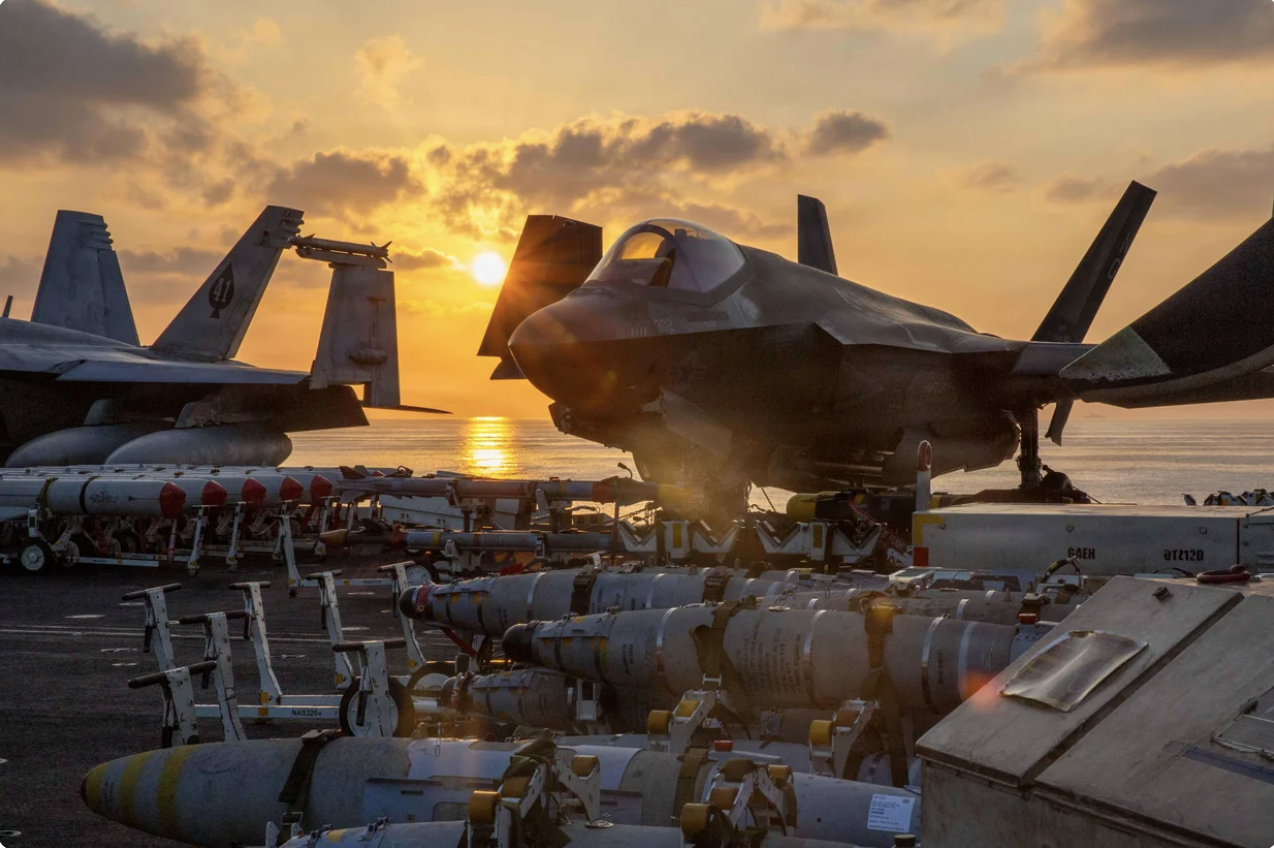
Reuters news agency and CBS News reported that the military had burned through nearly all of its offensive Army Tactical Missile Systems (ATACMSs) and Precision Strike Missiles (PrSMs), which experts said could require relying on more perilous close-range and aerial attacks in the event of a renewed escalation.
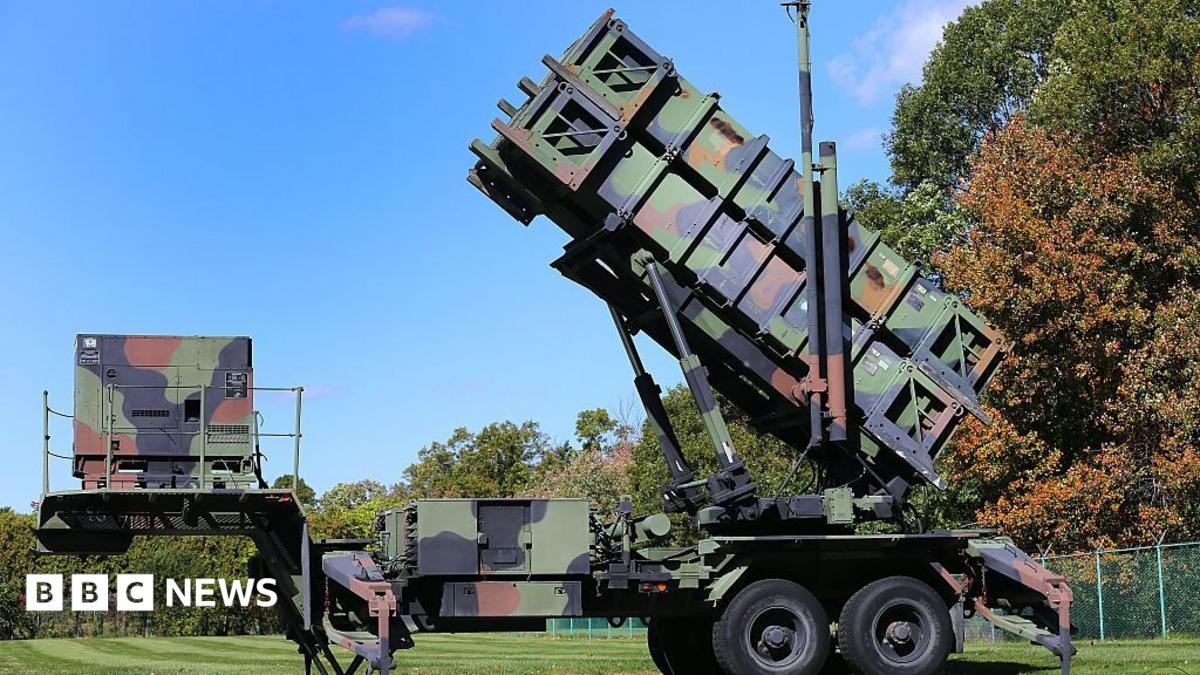
A CNN report showing low levels of Patriot and Terminal High Altitude Area Defense (THAAD) interceptors has caused greater concern, with experts noting there is no viable short-term alternative to the air defence missiles. Replenishments of pre-war stockpiles are expected to take years.
Still, Trump on Thursday again denied that the US faced any strategic disadvantage when it came to weapons stores after five months of war.
“The US has massive amounts of ‘munitions,’ especially of certain types,” Trump wrote on his Truth Social account.
He added that “large amounts are being manufactured and shipped to the U.S. as needed” and that defence contractors are “building the largest number of plants and factories in our country’s history”.
“The ‘leakers’ of these treasonous statements are being hunted down. Long-term jail sentences will be sought!”
The US president did not provide further details on the claims, although experts have warned that even with an influx of funding, it will likely take at least three years to restore Patriot and THAAD interceptors to pre-war levels.
Only Japan and Germany currently have licences to produce Patriot interceptors. No other country produces THAAD interceptors.
CNN’s report, released on Tuesday, said that the US military had depleted 80 percent of the THAAD interceptors it had prior to the war and about half of its Patriot interceptors. Sources described the levels as “dangerously low”.
US Defence Secretary Pete Hegseth described the information as “not true”.
Separately, the Washington, DC-based Center for Strategic and International Studies (CSIS) on July 27 calculated that, as of that date, the military had just more than a third of its Patriot interceptors left and about half of its THAAD interceptors.
Speaking to Al Jazeera on Wednesday, one of the authors of that analysis, retired US Marine Corps colonel Mark Cancian, said current levels of interceptors are already hurting US deterrence capabilities against military powers like China.
A shortage of interceptors has also reportedly led to the military taking a more judicious approach to missile interceptions, increasing the likelihood of miscalculations, he noted. The killing of three US soldiers in an Iranian strike on a military base in Jordan on July 17 has further underscored those concerns.
“We don’t have that many left, and there are no good substitutes,” Cancian said of the interceptors. “If we run out of Patriots, then the missiles get through.”
Despite the latest rhetoric, the Washington Post on Thursday reported that Trump confronted Hegseth during a cabinet meeting at Camp David last week, accusing the Pentagon chief of misleading him on munitions shortages.
White House spokesperson Karoline Leavitt dismissed the report as “100 percent fake news”.
President Donald Trump is shown Monday in the Oval Office at the White House in Washington, D.C. On Thursday, Trump denied U.S. muntions shortage due to the attacks on Iran. Photo by Allison Robbert/UPI | License Photo
Aug. 6 (UPI) — President Donald Trump on Thursday dismissed reports of munitions shortages due to U.S. attacks on Iran, saying those who leaked the information are being “hunted down.”
“The U.S. has massive amounts of ‘munitions,’ especially of certain types,” Trump wrote in a social media post. “Additionally, large amounts are being manufactured and shipped to the U.S. as needed. Defense companies are building the largest number of plants and factories in our country’s history.”
“The ‘leakers’ of these treasonous statements are being hunted down,” he continued. “Long-term jail sentences will be sought!”
Multiple news outlets, including CBS News, reported this week that the United States has used almost all its stockpile of long-range precision missiles in the attacks on Iran. This includes most of its Army Tactical Missile Systems and Precision Strike Missiles.
Officials have also said the most pressing shortage is that of Patriot and Terminal High Altitude Area Defense interceptors, which the country has used faster than manufacturers can replace them.
The Pentagon on Monday announced deals with defense contractors Lockheed Martin and Northrop Grumman to escalate production of parts for missile interceptors, The Hill reported.
“America’s military is the most powerful in the world and has everything it needs to execute at the time and place of the president’s choosing,” Pentagon spokesman Sean Parnell said in a statement to CBS News. “We have executed multiple successful operations across combatant commands while ensuring the U.S. military possesses a deep arsenal of capabilities to protect our people and our interests.”
White House Press Secretary Karoline Leavitt on Wednesday denied a Washington Post report that Trump “demanded answers” on extreme munitions shortages from Defense Secretary Pete Hegseth last week. Trump reportedly said he’d been misled on the shortages.
The White House has vowed to find and prosecute those leaking information to the press before. In July, the Trump administration issued subpoenas to New York Times journalists, demanding they testify in front of a federal grand jury “in regard to an alleged violation of federal criminal law.” The Times had reported, using anonymous sources, about security concerns involving President Donald Trump’s new Air Force One, which was donated by Qatar. The probe was later dismissed.
Senate Majority Leader John Thune, R-S.D., speaks during a press conference after weekly Senate caucus luncheons at the U.S. Capitol on Tuesday. With the August recess approaching, Senate Republicans are looking to confirm Acting Attorney General Todd Blanche as Attorney General and pass a budget bill to prevent a shutdown before the midterms. Photo by Bonnie Cash/UPI | License Photo
The Department of War is challenging the U.S. defense industrial base to transform the way it builds and supplies weapons for the military – stimulating manufacturers to find new ways to enable faster and more efficient procurement. It’s a necessary move, particularly when it comes to weapons stockpiles, as some have been placed on red alert due to high consumption in crisis abroad. Efforts to create a so-called “Arsenal of Freedom” involve shoring-up critical supply chains, injecting predictable long-lead funding, lowering costs, and increasing competition.
Lockheed Martin’s Missiles and Fire Control (MFC) division is reacting by investing in production capacity to accelerate some of its most important munitions facilities – a reflection of how many of its missiles are in high demand. Speaking at a groundbreaking event at the company’s Troy, Alabama, site in May 2026, at which TWZ was present, Lockheed Martin chairman, president and CEO Jim Taiclet addressed employees about a “first landmark framework agreement” that will dramatically accelerate production of PAC-3 MSE (Missile Segment Enhancement) air defense interceptors, which are designed to destroy adversary tactical ballistic missiles, cruise missiles, drones and aircraft.
THAAD interceptors on the production line. Lockheed Martin
Taiclet said the “agreement represented a new model for how government and industry could work together with greater speed, accountability and shared commitment to the mission’s execution.” In addition to PAC-3 MSE, Lockheed Martin is also boosting production of its Terminal High-Altitude Area Defense (THAAD) and Precision Strike Missile (PrSM) lines to meet the urgent demand for more missiles.
The company says it’s planning an $8-9-billion investment through 2030 to expand this munitions footprint across the U.S.. Lockheed Martin has invested more than $7 billion since President Donald Trump’s first term to expand capacity for priority systems, including approximately $2 billion dedicated to accelerating munitions
production. Investment is being channeled into MFC facilities, tooling, suppliers, as well as its workforce. “This effort reflects the power of a commercially-inspired partnership between government and industry,” Taiclet said, endorsing this approach as an obvious method to expand capacity for priority systems.
Paving the way for acceleration
The Department of War’s Acquisition Transformation Strategy is designed to create long-term stability that gives industry the confidence to make necessary investments to change the way it produces equipment. Lockheed Martin was the first in the defense industry to announce a framework agreement like this for munitions acceleration under the new government initiative – initially committing to the tripling of production capacity of the PAC-3 MSE interceptor and then quadrupling the production capacity of THAAD interceptors.
“We’re rapidly ramping up a number of munitions. It’ll probably [expand to] include all the munitions that we build here at Lockheed Martin Missiles and Fire Control,” explained Tim Cahill, president of the company division. “We are working in partnership with the Department of War to identify go-quick contract actions that we can put in place, the suppliers we need and what investment is needed, and then determine what we call the enablers to make that happen.”
“It’s not just a case of let’s just go faster, it’s about what we fundamentally have to change across the entire business and in the technical process to go quickly to replenish stocks at a higher level than we ever have before,” Cahill added. “Ultimately, I would expect that we’re going to see all the munitions that we build in some sort of heads of agreement, some sort of a contract to increase the level of production.”
Lockheed Martin’s Master Plan For Accelerating Munitions Production
In addition to PAC-3 MSE, THAAD, and PrSM, the AGM-158 Joint Air-to-Surface Standoff Missile (JASSM) and AGM-158C Long-Range Anti-Ship Missile (LRASM) programs are also ramping up, and Cahill added that the AGM-179 Joint Air-to-Ground Missile JAGM and Javelin shoulder-launched anti-armor weapon are expected to follow suit. “We have been ramping some of these munitions for several years already. Javelin production has increased, as has GMLRS [Guided Multiple Launch Rocket System] and GMLRS Extended-Range, but I would expect they’re going to ramp up beyond those numbers in the next few years.”
The manufacturing process for these advanced weapons is a complex business. It has typically taken as long as three years from contract signature to the delivery of a PAC-3 MSE. Lockheed Martin aims to dramatically cut timelines like this. “Lockheed Martin is not waiting – we have been taking proactive steps to ramp up production and secure materials well in advance,” explained Jason Reynolds, vice president and general manager for integrated air and missile defense. “It takes time for each of those suppliers to actually create those individual subcomponents and ship them to places like our plants in Troy, Alabama, or Camden, Arkansas. Then we do the final assembly. Once we’ve completed that, we have to go through testing and qualification, packaging and signing off, then delivering them to the U.S. government or to our partners and allies that have placed that order. It’s a time consuming process, but we’re doing everything possible to shorten that in the near term.”
A PrSM being launched during exercise Valiant Shield 24. U.S. Marine Corps photo by Cpl Kyle Chan
One of the critical keys to the change lies in contracting. Cahill says companies have become used to annual contracts, with incremental follow-on options. He says this drove industry to commit to a year’s worth of production at a time, with no real certainty over what the ensuing years would bring. The new government approach presents a commitment of between five and seven years, which provides far greater confidence and predictability for manufacturers to invest in long-lead items to help prevent bottlenecks in the complex production cycle, and ultimately streamlines and expedites the production process.
The long-term approach to procurement has an additional benefit of being able to secure lower prices for components and materials, enabling the prime contractor to invest in a supplier’s capacity with greater confidence. Keeping a production line moving and not having to pause to wait for components to arrive is a significant factor. Securing larger quantities of parts with plenty of lead time enables cost savings and production acceleration.
PAC-3 MSE in production. Lockheed Martin
“For all of us, there’s also economic value there,” explains Cahill. “There is real money in being able to drive efficiencies, knowing what the next seven years will be like. We can take those efficiencies and effectively apply them into self-investment up front, so the U.S. government gets better value in the price of the munitions. They’re ordering more and business gets the opportunity for increased revenue and increased capability.”
“We have thousands of suppliers, particularly underneath our key suppliers all across this nation and in many cases across the world. It’s about what they need all the way down to raw materials. For example, one thing that’s held us up over the years is titanium. Titanium goes into a lot of things, including golf club shafts! So you’re out there competing on the commercial market for materials. Being able to get ahead of that curve and aggregate demand, first of all, increases our priority and allows us to deal with the lead times and plan for that so those don’t become bottlenecks. What we are doing with our suppliers is in effect addressing all those elements.”
It’s not just the contracting that is being overhauled, changing the way these complex systems are actually built is equally important. Lockheed Martin is now increasing both its workforce and the use of robotics, plus it’s bringing in additive manufacturing techniques such as 3D printing to reduce reliance on costly and time-consuming traditional tooling.
A THAAD interceptor is fired from its mobile launcher. Lockheed Martin
“Building missiles faster is a key priority for us, and we can do that a couple of different ways,” added Jason Reynolds. “You can shorten the span time and the lead times of all the different components, and you can actually increase the factory floor [footprint] to increase throughput. We’re doing all of that. We’re working with suppliers to reduce the individual span times, whether it be a rocket motor, a seeker, or a section that we make internally like the guidance section, so that we can build these things faster using automation and advanced manufacturing technologies at the same time. We’re increasing the actual capacity. We’re making additional tooling and test equipment, hiring additional people both here at Lockheed Martin and at our suppliers around the world.”
License production is another means to share the load and unlock expanded production capacity. Lockheed Martin has already licensed PAC-3 MSE production to Japan, which operates a final assembly and checkout facility. “That’s something we’re going to be looking at, because if we can expand our supply base in Europe, for example, where we have potential co-production in Europe, there are some great possibilities there,” says Tim Cahill. “We’re looking at all the elements, everything that might be a methodology to bring those numbers up and make sure that our nation and our allies have the capacity they need. Licensed production could very well be part of that.”
Rapid prototyping and speed to field
New start-up companies and industry “disruptors” are playing a fundamental role in changing the government’s expectations when it comes to driving down costs and rapidly developing and then producing new capabilities. Tim Cahill pulls no punches when acknowledging this and emphasizing how Lockheed Martin is similarly evolving its approach.
MFC has set-up a Rapid Fielding Center at its Grand Prairie facility in Dallas, Texas, designed to promote the use of latest in production and prototyping technologies. “We are looking at how we can apply some of the emerging technologies to do things quickly, like using Artificial Intelligence and Machine Learning to make our production more adaptive and able to build in mass quantities that we couldn’t build before. We are competing in that space.”
THAAD interceptors in production. Lockheed Martin
The use of commercial off the shelf products is a recognized means to accelerate, but Cahill cautions that it’s not always a suitable solution. “You’re looking for the most capable parts to meet the requirements and get you there fast. That’s always been part of the dynamic for Lockheed Martin. We always look at commercial parts. Some systems are more conducive to it than others. If you’re building a low-cost drone or a counter-drone system, you’re looking for something that’s treatable – it’s great for those kinds of systems. But as these become more complex – when they have to operate in environments that range from the Arctic to the high desert in the Middle East in the middle of summer – or if they have to go through extreme launch environments or whether they have to survive in the presence of our adversaries trying to counter them. As the requirements get harder and harder, commercial off-the-shelf parts just don’t meet those requirements. They fail because they’re not designed for that.”
“You can’t take an automotive guidance system and run it at Mach 5, run it through the atmosphere at high temperature and have somebody try and disrupt it. In most cases we have to make them more robust and capable, or build parts that are unique to those particular products. We always start with the questions of how we accomplish the mission? How do we give our warfighters what they need to prevail, and we will use commercial off-the-shelf if that fits what is necessary for that mission – sometimes it does and sometimes it doesn’t. Any technology that you can imagine, we are looking for, how might we apply that just like all the new entrants and frankly all the traditional companies are doing much the same. We get the sense of urgency and that’s what we intend to do.”
Lockheed Martin is also involved in deep research around low cost weapons. “There’s a lot of people competing in that space,” Cahill acknowledges. “Sometimes for us when we’re applying our investment, our expertise, it’s more effective to focus on some of the other capability areas. For example, we have introduced a counter-UAS [unmanned aircraft system] called MORFIUS™ X-Rotor, a newly-released airborne high power microwave system that can neutralize more than 50 enemy drones in a single flight.”
MORFIUS is designed for field recovery and reuse and Lockheed Martin says it offers a very low cost-per-kill ratio.
Lockheed Martin has released this image of MORFIUS in action. Lockheed Martin
Lockheed Martin is also ready to move ahead with a lower-cost Patriot missile interceptor. “Our PAC-3 Adapted Capability Effector, or PAC-3 ACE, answers the call,” Cahill told TWZ, adding that it will probably be less than half as expensive as the current PAC-3 MSE, but that it would still retain a lot of the capability. “They’re never going to have that full capability because you’ve got to fundamentally remove parts, some of the things that are most expensive.”
An artist’s rendition of PAC-3 ACE. Lockheed Martin
Cahill says that PAC-3 ACE is built on the PAC-3 fire-control system and will be fully linked to the Patriot weapon system and the Integrated Battle Command System. “There isn’t magic here and when you take some of those things off, they become less capable, but that’s absolutely part of the dynamic. This rapidly fielded, complementary PAC-3, will be deployed quickly and enhance the resilience of the U.S. defense industrial base worldwide.”
Weekly insights and analysis on the latest developments in military technology, strategy, and foreign policy.
As the U.S. continues to expend offensive and defensive munitions in the fight against Iran, the Pentagon’s top leaders are testifying before the Senate today about how to pay for the war, including to replace $21 billion in strike weapons and air defense interceptors already used. The appearance of War Secretary Pete Hegseth and Joint Chiefs Chairman Dan Caine comes as resumed hostilities have entered an 11th day and President Donald Trump renewed threats to attack Iran’s deeply buried Pickaxe Mountain facility.
Hegseth and Caine are appearing before the Senate Appropriations Committee to explain why the extra money is needed. It is included in a nearly $90 billion supplemental budget request made by the White House last month. Of that, the administration is seeking $67.1 billion to address “operational costs incurred by the Department of War (DoW) during OEF [Operation Epic Fury], including funding for military personnel and readiness expenses, operational costs to rebuild stocks expended by DOW, classified programs, and other key expenses,” the White House stated.
The Pentagon is seeking $21 billion in emergency funds to make up for the munitions, like Patriot air defense interceptors, expended in the war with Iran. (DoW) Department of Defense
An official told The Washington Post that “the expansion of U.S. operations will be limited by dwindling stockpiles of air defense and long-range munitions and constraints on the ability to surge more troops and aircraft into the area because of battle damage.
Meanwhile, the money being used to fund the conflict is having a cascading downstream effect on the U.S. military.
“The funding crunch is already leading the Pentagon to limit training and maintenance that help maintain military readiness,” The Washington Post reported, citing four current and former officials.
As Hegseth and Caine head to Congress, Iran is continuing to hit targets in Jordan, Kuwait and Bahrain, as well as ships transiting the Strait of Hormuz.
Jordanian air defense systems “intercepted and shot down three Iranian missiles targeting the Kingdom’s territories,” the Jordanian military stated on X. “The interception and downing operation resulted in no human injuries or material damage, and that Royal Engineering Corps teams handled the shrapnel impact sites, securing them in accordance with established procedures. The source indicated that the Jordanian Armed Forces – Arab Army continues to monitor the Kingdom’s airspace and maintains its readiness to address any threat to its security and sovereignty.”
بيان صادر عن القوات المسلحة الأردنية – الجيش العربي
صرّح مصدر عسكري مسؤول في القيادة العامة للقوات المسلحة الأردنية – الجيش العربي، بأن منظومات الدفاع الجوي اعترضت وأسقطت ظهر اليوم الثلاثاء، ثلاثة صواريخ إيرانية استهدفت أراضي المملكة.
— المركز الوطني للأمن وإدارة الأزمات (NCSCM) (@NCSCMJordan) July 21, 2026
Jordan’s Muwaffaq Salti Air Base (MSAB) has been particularly hard hit of late, including an attack that killed three U.S. troops and wounded many others. 1st Lt. Tyler James Feehan, 25, of Ewa Beach, Hawaii, and Pvt. Isabella Gonzales, 19, of Carrollton, Texas, were identified while officials are waiting to identify the remains of a third servicemember.
The Pentagon this morning also announced that Sgt. Michael Emmanuel Swinton, 30, of Fayetteville, North Carolina, was killed in action during a controlled detonation of a downed One-Way Unmanned Aerial System on July 19, 2026, at Erbil Air Base, Iraq. The incident is under investigation.
Speaking to reporters at the White House on Tuesday, Trump seemingly blamed Jordan for the casualties at MSAB.
“They did slip something through in Jordan and if we had other operators, you know, it would have — would not have happened, unfortunately,” Trump said during a press conference with Lebanese President Joseph Aoun. “But we, because we have the best equipment in the world, you know, we’ve stopped almost everything. But when you let other people do your job with the United States, we let other people do the job, and sometimes it doesn’t work out so well.”
JUST IN: President Trump acknowledges that Iranian forces “did slip something through in Jordan” before announcing he will travel to Dover Air Force Base to pay his respects to fallen U.S. service members killed by the regime’s recent attacks.
“Kuwaiti air defenses are currently confronting hostile missile and drone attacks, following the sinful Iranian aggression,” the Kuwaiti Army announced on X. “The General Staff of the Army notes that if explosion sounds are heard, they are the result of the air defense systems intercepting the hostile attacks.”
تتصدى حالياً الدفاعات الجوية الكويتية لهجمات صاروخية وطائرات مسيرة معادية ، إثر العدوان الإيراني الاثم.
تنوه رئاسة الأركان العامة للجيش أن أصوات الانفجارات إن سمعت فهي نتيجة اعتراض منظومات الدفاع الجوي للهجمات المعادية.
— KUWAIT ARMY – الجيش الكويتي (@KuwaitArmyGHQ) July 21, 2026
Kuwaiti officials say Iran had been specifically targeting the country’s water and power infrastructure for days.
“In light of the continued Iranian aggression against the State of Kuwait, several power and water desalination plants were attacked yesterday evening – for the fourth consecutive day – resulting in fires breaking out in a number of their facilities,” the Kuwaiti government announced on X Tuesday. “The Ministry’s emergency teams, in coordination with the General Fire Force and security authorities, immediately responded to the incidents and were able to control and extinguish the fires. The damage caused by the attacks has been assessed, and the teams are working on implementing plans to repair the damage and rehabilitate the facilities.”
As a result, “a number of generating units have been taken out of service in accordance with the precautionary operational procedures followed, and in order to ensure the safety of equipment and the stability of the electrical and water systems,” Kuwaiti officials explained.
Officials in Bahrain said that country also came under attack again on Tuesday.
“The siren has been sounded,” the Bahrain Interior Ministry announced on X. “Citizens and residents are urged to remain calm and head to the nearest safe place.”
The siren has been sounded,Citizens and residents are urged to remain calm and head to the nearest safe place.
The Islamic Revolutionary Guard Corps (IRGC) claimed that it struck an Amazon data center in Bahrain, according to the IRGC-connected Tasnim news agency post on X. TWZ cannot independently verify that claim.
In addition to attacks on land, Iran is continuing operations against vessels transiting the Strait of Hormuz.
July 20-21: Three tankers struck in Hormuz.
In two cases, the crew had to abandon ship.
The U.S. military cannot adequately protect tankers. Iran can continue to harass shipping indefinitely, because it is dirt cheap for them to do so.
Meanwhile, ships are reacting to the Houthis’ declaration of a blockade of the Bab al-Mandeb Strait (BAM). Lloyd’s List reported on X that a Cosco Shipping vehicle carrier heading toward the BAM turned around in the Gulf of Aden to avoid it.
A Cosco Shipping vehicle carrier has become the first vessel tracked making a U-turn in response to the Houthi blockade on Saudi Arabia, signalling that even China-linked ships may not be exempt from the Iran-backed group’s new maritime embargo pic.twitter.com/2Ubwzl19j2
Several other ships already in the Red Sea, including Saudi oil tankers, also opted to avoid crossing the Strait.
First Red Sea diversions emerge
According to #MarineTraffic data, the first operational response to heightened security risks in the Red Sea is now visible. Two laden crude tankers, the Singapore flagged XIN LONG YANG and the Liberia flagged RODOS, have altered their planned… pic.twitter.com/TDAnltqzek
As we reported yesterday, the Houthi blockade of the BAM threatens to add further pressure on oil exports from the Middle East, already drastically affected by the Iranian closure of the Strait of Hormuz and the resumption of the U.S. blockade on Iranian ports. Saudi Arabia has diverted millions of barrels of oil per day through pipelines to its Yanbu port on the Red Sea in an effort to minimize the energy shortages due to the hostilities in the Persian Gulf. This also raised the specter of the U.S. having to get as involved as it did during the previous Houthi campaign against shipping that ended last September, which could pull resources away from Iranian-focused operations.
On Tuesday, Trump addressed the issue of the Houthi blockade.
“I want to see what happens,” he told reporters. “So far, it hasn’t happened. Might happen, but we take care of things. If something like that happens, we take care of it. You know, we’ve done that with the Houthis before, and we haven’t heard from them in a while since we did what we did originally. That was about 45 days of very powerful action we took against the Houthis, and we’ve had no problem with the Houthis. They’ve had no problem with us for a long period of time, including during this conflict. I think that if there is something like that, we’ll just have to take care of it.”
“What is your level of concern of a blockade of the Red Sea by the Houthi rebels…?”@POTUS: “So far, it hasn’t happened—it might happen, but we take care of things. If something like that happens, we take care of it.” pic.twitter.com/bu9RvaiQCQ
— Rapid Response 47 (@RapidResponse47) July 21, 2026
Trump, as we noted earlier in this story, also repeated his threat to strike the very hardened Iranian facility known as Pickaxe Mountain.
“We follow the material,” the president added. “That’s where the action is, and we’ll be hitting that area very probably pretty soon. There’s not a thing they can do about it. You know, normally I wouldn’t say that. If I thought they could do something about it, I would never say that. But we’ll be hitting that area pretty soon, and very heavily.”
Reporter: Do you believe that Iran has moved nuclear centrifuges into Pickaxe Mountain?
Trump: We don’t have it on record. All we do is read the fake news, you know, we see the news is so wrong so many times. So, you know, maybe, maybe this one they have right. We’ll be hitting… pic.twitter.com/upQJkN7qgi
Meanwhile, there are still attempts to find an off-ramp.
An Iranian official “began meetings with mediators in Pakistan as diplomats seek to salvage the collapsed interim deal between Iran and the United States,” the Times of Israel reported on Tuesday. “The visit by Iran’s Interior Minister Eskandar Momeni comes as Pakistan has intensified diplomatic efforts in recent days to resuscitate the deal. However, it remains unclear just what new arrangement could be reached to end the fighting.”
Speaking to reporters at the White House, Hegseth said: “Iran’s been given every opportunity to negotiate, to show that they’re reasonable on the Strait of Hormuz—but if they’re going to shoot at commercial shipping, then we’re going to hit them, as the president said, 10 times harder. Every night, we’re degrading them further and further.”
.@SecWar: “Iran’s been given every opportunity to negotiate, to show that they’re reasonable on the Strait of Hormuz—but if they’re going to shoot at commercial shipping, then we’re going to hit them, as @POTUS said, 10x harder. Every night, we’re degrading them further and… pic.twitter.com/FNpUMnNZOx
— Rapid Response 47 (@RapidResponse47) July 21, 2026
As we have often pointed out, there is tremendous global and domestic pressure on Trump not to expand the war. The shutdown of the Strait of Hormuz, exacerbated now over concerns about the BAM, has increased energy prices around the world. Meanwhile, the U.S. midterm elections are rapidly approaching and this conflict is extremely unpopular among voters. How much these factors will come into play over the next days and weeks remains to be seen.
UPDATE: 4:29 PM EDT –
New British Prime Minister Andy Burnham “has approved the use of British military bases by the U.S. for what the U.K. calls defensive strikes against Iran,” Bloomberg News reported.
Senior ministers decided to continue the existing policy that “bases at Diego Garcia in the Indian Ocean and RAF Fairford in Gloucestershire, England could be used by U.S. planes flying missions aimed at countering the Iranian missile threat and sites used to target the Strait of Hormuz,” the outlet added.
As we noted in the past in a story about a previous debate over the use of these bases, they are important to any American plans to use long-range bombers against Iran.
Newly appointed UK Prime Minister Andy Burnham has approved the use of British military bases for select U.S. strikes against targets in Iran, according to Bloomberg News.
The Department of War announced “the believed to be death of an active-duty Soldier who was supporting overseas operations in Jordan.”
Rampersad was assigned to 1st Battalion, 57th Air Defense Artillery Regiment, 52nd Air Defense Artillery Brigade, 10th Army Air & Missile Defense Command, Ansbach, Germany.
CENTCOM announced on X that its forces “began striking military targets in Iran at 7 p.m. ET today for the 11th consecutive night. The strikes are designed to continue degrading Iran’s ability to threaten commercial shipping in the Strait of Hormuz.”
CENTCOM forces began striking military targets in Iran at 7 p.m. ET today for the 11th consecutive night. The strikes are designed to continue degrading Iran’s ability to threaten commercial shipping in the Strait of Hormuz.
CENTCOM announced that it completed its latest round of attacks on Iran at 8:15 PM ET.
Assets from the command “targeted Iranian military operations centers, maritime capabilities, aircraft hangars, drone storage facilities, and military logistics infrastructure to further degrade Iran’s ability to threaten commercial shipping in the Strait of Hormuz,” CENTCOM stated on X.
“Over the past three months, Iran has attacked more than 30 commercial vessels transiting the international waterway vital for regional and global trade,” the command added. “The unwarranted attacks have endangered hundreds of innocent mariners and undermined freedom of navigation.”
“Despite Iranian aggression, the Strait of Hormuz remains open for commercial vessel transit,” CENTCOM proffered. “Since early May, CENTCOM forces have helped facilitate the transit of approximately 900 commercial vessels and 450 million barrels of crude oil.”
North Korea has released photos of Kim Jong Un inspecting huge munitions at a weapons factory ahead of Chinese president Xi Jinping’s visit. Pyongyang has ordered missile production capacity to be doubled in the next five years.