Danish Defense Minister Jeppe Bruus announced the planned purchases yesterday. He said the new weapons would strengthen Denmark’s ability to respond to an attack and strike targets “behind enemy lines,” according to Reuters. Copenhagen has not disclosed the number of missiles involved, the value of the purchases, or expected delivery dates.
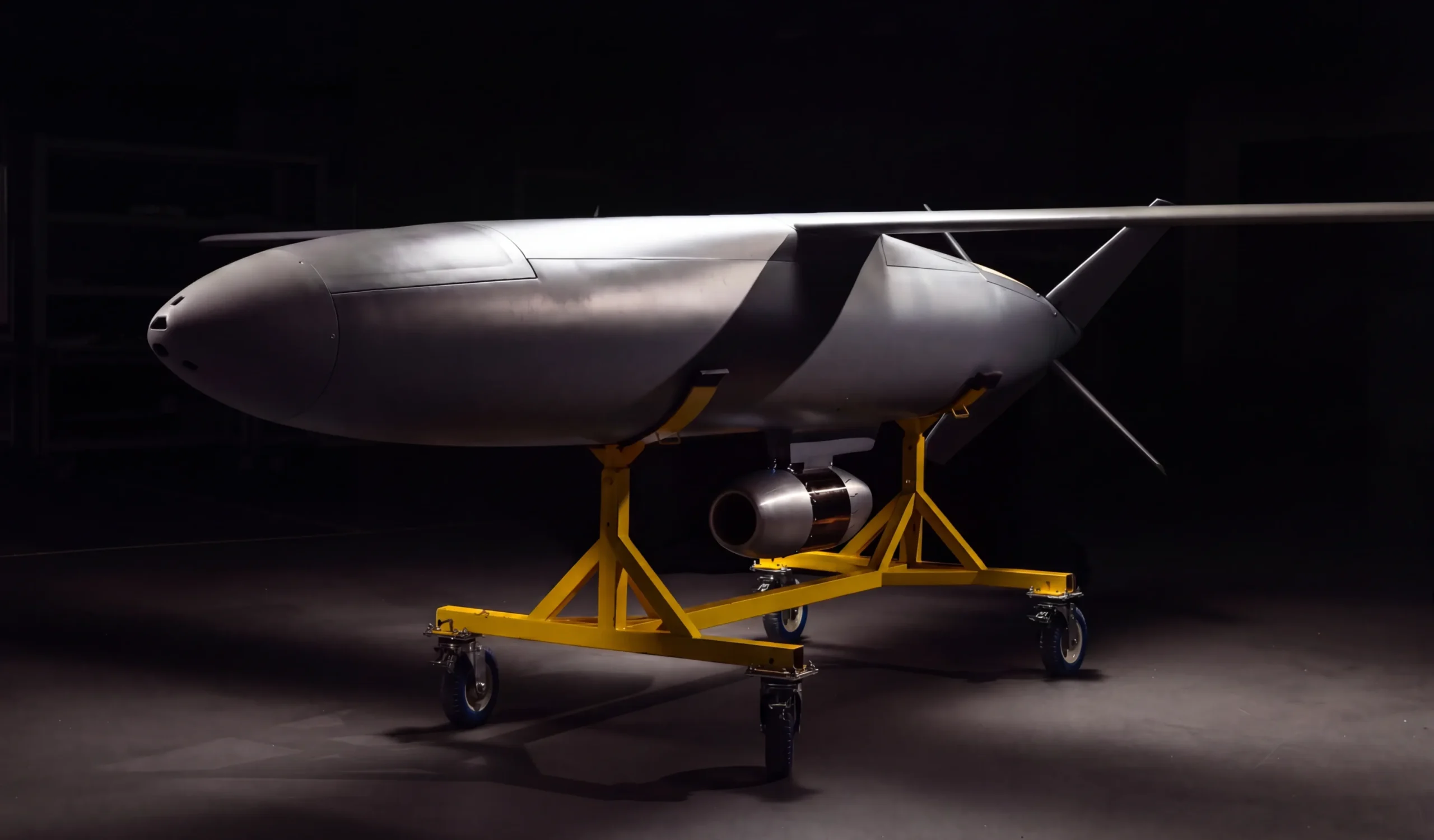
A stock picture of Covenant’s Anthem long-range strike weapon. Covenant
“We’re in a serious and deteriorating security situation, and that is why we are building up the defense and strengthening our combat power,” Bruus told reporters. The planned acquisitions are a “strong signal that we have the ability to strike back,” he added, without explicitly naming any particular adversary.
The Danish government did say last year that it would pursue new long-range offensive precision weapons, in general, in response to the growing security concerns in Europe amid Russia’s ongoing war against Ukraine. Bruus’ announcement comes amid a new surge in geopolitical friction between Russia and members of the NATO alliance.
A stock picture of a Joint Strike Missile (JSM), seen here being loaded onto a US Air Force F-16 Viper during a test in 2018. USAF
The two new acquisitions will provide Denmark with important complementary strike options. Anthem is a ground-launched weapon, while JSM is designed to be air-launched, including by stealthy F-35 fighters just like those in Danish Air Force service today. Together, the weapons are set to expand the range of platforms from which Denmark can deliver stand-off precision strikes and give its armed forces additional options for attacking high-value military targets.
A Royal Danish Air Force F-35A takes off for a Red Flag-Nellis 24-2 mission at Nellis AFB, Nevada, on March 13, 2024. U.S. Air Force photo by William R. Lewis William Lewis
Anthem is being developed by Covenant, a U.S.-based defense company that has also outlined plans to establish missile production in Germany and Israel. The system’s selection by Denmark gives the company an important European customer as NATO members seek to expand their inventories of long-range weapons.
Covenant’s Anthem is in a category of munitions that increasingly blurs the line between long-range kamikaze drones and traditional cruise missiles. It is designed to offer a lower-cost, longer-range strike capability that can be produced more easily and at greater scale than many existing systems. Covenant has not publicly disclosed the weapon’s range. Still-unconfirmed reports put it at roughly 740 miles (1,200 kilometers). It is also said to carry a warhead weighing more than 200 kilograms (441 pounds). It also uses a solid rocket motor to provide an initial boost at launch before transitioning to a heavy-fuel jet engine for cruise flight.
Currently, it is unclear how exactly Anthem is launched. It has already undergone testing with the U.S. Army, and images from those trials show the weapons being handled on the ground using a tricycle undercarriage. This may point to rocket-assisted takeoffs from runways.
A Covenant cruise missile is prepared for a live-fire demonstration at the Africa Multidomain Training and Experimentation Center in Tan-Tan, Morocco, August 5, 2026. U.S. Army photo by Capt. Jordan Beagle
Last month, Covenant announced it had already conducted more than 200 test flights of Anthem and had secured roughly $150 million in orders. It also disclosed that an unidentified international customer was expected to begin receiving German-built weapons before the end of this year. This may well be Denmark, though there could also be other customers that have yet to emerge publicly. Meanwhile, U.S. Army deliveries are expected in 2027, under an accelerated qualification contract.
JSM, developed by Kongsberg in cooperation with U.S. defense contractor Raytheon, is a traditional air-launched cruise missile capable of being employed against targets on land and at sea. It is capable of being carried internally and externally on the A and C variants of the F-35. The design has also been fit-checked for external carriage on a variety of other tactical jets. As already mentioned, JSM will provide an entirely new stand-off precision-strike option for Denmark’s F-35As. These are the only tactical jets in Danish service today following the retirement of the country’s F-16 Vipers in January.
Pictures showing work on integrating the Joint Strike Missile on all three variants of the F-35 Joint Strike Fighter, as well as the F-16. Kongsberg
Since JSM is designed to be air-launched, its maximum range is dependent in part on the altitude at which the missile is released, as well as the speed of the aircraft carrying it. Kongsberg has said in the past the missile can fly out to a range of more than 300 nautical miles, but also that its reach is significantly cut back when it is employed in its low-altitude penetration mode.
A briefing slide with various details about the JSM’s capabilities. Kongsberg
The JSM carries a 260-pound warhead and uses a combination of GPS, inertial navigation (INS), and terrain mapping to guide it toward its target. The terrain-mapping capability provides an additional means of navigation, helping the missile maintain its course even in environments where GPS connectivity is degraded or unavailable.
The missile switches over to an imaging infrared seeker to provide precise target discrimination during the terminal phase of flight. Because the seeker operates passively, it does not rely on emitting radiofrequency signals, reducing the risk of detection and making it immune to conventional radiofrequency jamming. The agile JSM’s overall design also includes reduced-signature features to help limit its detectability and improve its survivability on the way to the target.
A U.S. Air Force F-35A releases a Joint Strike Missile (JSM) during a test. Norwegian Defense Materiel Agency
A two-way datalink also allows the missile to receive updated targeting information while en route, or to be redirected toward an entirely different target during the mid-course phase of flight.
The dual purchases build on a broader Danish effort to field new options for holding targets at extended ranges at risk. Denmark previously operated eight M270 Multiple Launch Rocket Systems (MLRS), but retired them in 2004. The country is now introducing Israel’s PULS rocket artillery system, which can employ different rocket and missile types depending on the mission. Presently, the Danish military looks to be fielding PULS just with artillery rockets.
In terms of Denmark’s current and future ground-based capabilities, PULS – which stands for Precise and Universal Launch System – and Anthem will serve different. In Danish service, PULS provides a flexible rocket artillery capability, while Anthem will offer a cruise-missile-like option for longer-range precision attacks.
The acquisition of JSM also reflects the importance of Denmark’s F-35 fleet to its future combat capability. Air-launched weapons offer mobility and flexibility, but their employment depends on available aircraft. In this context, Denmark’s planned expansion of its F-35 fleet from 27 to 43 aircraft, announced in October 2025, will provide a larger platform base for its emerging long-range strike capability.
Følg en dansk F-35 pilot i aktion på amerikansk himmel
There could be some overlap here between Denmark’s growing array of air- and ground-based strike capabilities, as well. Dutch F-35As demonstrated their ability to provide targeting data to PULS launchers during a NATO exercise last year. A ground-launched weapon like Anthem also provides an alternative long-range strike option that does not require a fighter to carry it aloft, creating additional operational flexibility.
For Denmark, acquiring JSMs and Anthems also offers the appeal of adding a capable higher-end munition alongside a more affordable, readily available long-range strike weapon. Reuters has reported that Covenant expects Anthem to eventually cost in the mid-six-figure range, although a final unit price has not been disclosed. Meanwhile, the JSM has a reported unit cost of approximately $2.8 million.
As mentioned, the announcement of the Anthem and JSM purchase is fully in line with prior statements from the government in Copenhagen about acquiring new long-range strike options. Danish Prime Minister Mette Frederiksen previously urged the military to accelerate procurement across the board after years of comparatively limited defense spending.
Danish Prime Minister Mette Frederiksen meets conscripts during a visit to Air Base Karup, the main air base of the Royal Danish Air Force, in Jutland, Denmark on March 7, 2024. (Photo by Mikkel Berg Pedersen / Ritzau Scanpix / AFP) / Denmark OUT MIKKEL BERG PEDERSEN
The long-range strike acquisitions also fit into a broader NATO effort to strengthen deterrence across the Baltic region and the alliance’s northeastern flank.
Denmark occupies a strategically important position linking the Baltic Sea to the North Sea, while its forces contribute to NATO’s regional presence and reinforcement plans. The ability to strike targets deep behind enemy lines will provide a new ability for Denmark to threaten an adversary’s military infrastructure, command facilities, and other critical targets.
Denmark is far from alone in pursuing new long-range strike capabilities. In September, Latvia moved to acquire Anduril’s Barracuda family of long-range strike missiles, building on its earlier order for Army Tactical Missile System (ATACMS) short-range ballistic missiles. Poland is expanding its own layered strike capabilities, while France, Germany, Italy, Poland, Sweden and the United Kingdom are working on the European Long-Range Strike Approach (ELSA) initiative to accelerate the development and procurement of next-generation weapons. The efforts reflect a wider shift across Europe toward restoring deep-strike capabilities that have been relatively scarce among NATO’s European members since the end of the Cold War.
All of this is happening while the Baltic states, in particular, increasingly voice their concerns that Russia could seek to exploit vulnerabilities along NATO’s northeastern flank. Estonia, Latvia, and Lithuania have all warned about the risks posed by Russian force expansion, airspace incursions, sabotage, and other potential provocations. In response, NATO has stepped up its regional posture through initiatives, including Operation Eastern Sentry.
Danish Defense Minister Jeppe Bruus (right) speaks with military personnel during a visit to the Antenna Park in Nuuk, Greenland, on August 26, 2026. Photo by Thomas Traasdahl / Ritzau Scanpix / AFP THOMAS TRAASDAHL
The news about Denmark’s new long-range strike plans has already drawn a heated reaction from Moscow. Russia’s embassy in Copenhagen accused Denmark of pursuing confrontation with Russia and warned of “inevitable disastrous consequences,” Reutersreported.
Many details about the planned Anthem and JSM acquisitions still remain to be learned. However, the announcement yesterday is a clear signal of Copenhagen’s intention to give its armed forces a more substantial ability to threaten targets at distance, and reflects still-growing trends elsewhere in Europe.
A drone strike near a market in Abyei has killed at least 150 people. Fighting between Sudan and the paramilitary Rapid Support Forces (RSF) has intensified in recent days, as Khartoum accuses the RSF of hiding in the disputed region near South Sudan.
A Russian drone strike on a park in Ukraine’s north-eastern Kharkiv region has killed six people, including three children. The attack comes amid growing concerns over Ukraine’s air defences and Donald Trump’s moves to import Russian diesel.
WASHINGTON — The Supreme Court agreed Monday to consider outlawing school diversity policies that limit Asian American students at magnet programs and selective high schools.
Three years ago, the court ruled that Harvard and other universities may not discriminate on whom they admit based on the race of their applicants. Evidence in that case showed that Asian applicants with very high test scores were often turned down.
But the justices have been divided over admissions rules for highly selective high schools in Boston, New York and Fairfax County, Va., as well as magnet programs for gifted middle school students.
In most instances, judges have said school officials may use “race-neutral” policies to achieve racial diversity. For example, giving an automatic admission to the top 5% of the students in all of a big city’s high schools or its middle schools could achieve greater racial and ethnic diversity.
But the court’s conservatives, led by Justices Clarence Thomas and Samuel A. Alito, have condemned such policies as thinly disguised racial discrimination.
Magnet programs exist across the country, including in California and Los Angeles, and were conceived as a form of voluntary integration — a way to get white students to attend the same schools as nonwhite students, without having to resort to forced busing.
The idea was that a special school program would be attractive enough to serve as a “magnet” for white students to enroll at a school they might not otherwise attend. A mix of white and nonwhite students was seen as a benefit to the nonwhite students, because white students would be sharing the fate of the nonwhite students.
Asian students were frequently part of that original equation on the nonwhite side of the ledger and counted with other students classified as nonwhite, such as Black or Latino students. But in terms of student achievement, Asian students have performed more like white students, frequently surpassing white students academically.
One subset of magnet schools requires a selective admissions process, and these are at the center of the current dispute.
The court agreed to hear an appeal from parents in Montgomery County, Md., who were upset by a sharp drop in Asian students at its four magnet schools for gifted students.
For a decade, the school board had been troubled that fewer than 15% of the students at its magnet schools were Black or Latino, even though they made up about half of the student population.
In contrast, Asian students were less than 15% of the county’s student population but made up about half of the enrolees at the magnet programs.
After several years of debate, school officials dropped the use of a countywide competitive test and chose top performing students at all of its middle schools using a lottery.
That prompted a lawsuit that reached the U.S. 4th Circuit Court of Appeals.
Fairfax County in northern Virginia had adopted a somewhat similar policy for the Thomas Jefferson High School for Science & Technology. A federal judge ruled for Asian parents and said their students had been deprived of a “level playing field” in competing for admission.
But the 4th Circuit, by a 2-1 vote, disagreed and said Asian American students were still winning more seats than their percentage of the school population.
The Assn. for Education Fairness, the parents group in Montgomery County, lost for the same reason in the 4th Circuit. The number of admitted Asian students had declined, but their percentage remained well above their share of school population.
“School districts across the country have overhauled admissions criteria for competitive public schools after concluding that existing systems produced undesirable racial enrollment patterns,” they said.
They said the court should end this type of racial discrimination against Asian students.
However, a longtime champion of admissions policies that rely on social and economic fairness said he hoped the court would side with Montgomery County.
“The Supreme Court has long disfavored racial preferences and pointed to race-neutral programs that look at factors like socioeconomic disadvantage as the right way to do affirmative action,” said Richard D. Kahlenberg, director of the American Identity Project at the Progressive Policy Institute.
He said the Maryland school board followed that rule.
“It essentially provided an admissions break to students based not on race, but on the economic disadvantage of the elementary school they attended. The question now opened is whether the court will stand by precedent or move the goal posts. Is the court opposed to racial preferences, or to racial diversity itself?”
Los Angeles Unified, the nation’s second-largest school system, has an extensive magnet system, with 66 whole-school magnets and 268 magnet centers within a larger campus.
At this point, many of the magnets provide no discernible integration benefit and are viewed instead as inducements for any student to enroll. Many magnets are nearly all students of color because few white students apply.
A few schools, however, have more applicants than spaces, and the district relies on “the Magnet Priority Point System and the need to maintain a racially balanced enrollment, and by available space.”
Parents must mark one federally recognized race or ethnicity on the application, or it won’t be processed. A family gets points, for example, if a student applied unsuccessfully for a magnet in the past.
In L.A. Unified, 53 schools are designated for students rated as “gifted,” and there are four campuses with programs for highly gifted students, typically identified by a professional evaluator.
Available recent data for the highly gifted program at North Hollywood High indicated that the largest percentage of students, about 38%, were Asian. Overall, the district’s enrollment is about 3.5% Asian.
The justices will hear arguments in the case early next year.
Savage reported from Washington and Blume from Los Angeles.
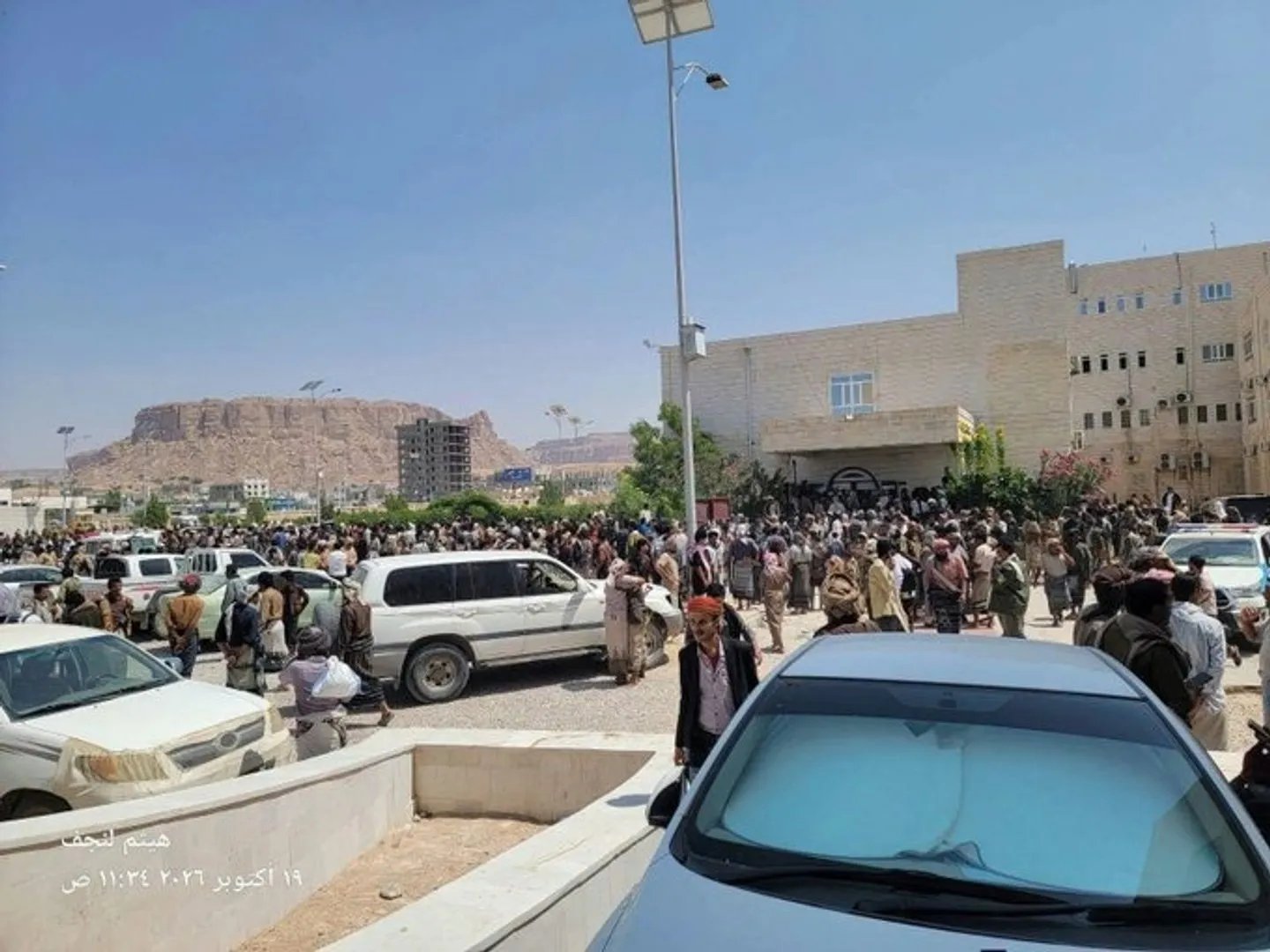
Dozens of Yemenis are feared dead after a Houthi strike targeted a military camp in Yemen’s Shabwa governorate.
The spokesman for the Yemeni army said the Houthis targeted Shabwa with 3 ballistic missiles.
Sudan’s army says it struck RSF command centres in South Darfur, but the RSF and its allies say a crowded livestock market was hit. The UN says drone strikes are now the leading cause of civilian deaths in Sudan, as Al Jazeera’s Almigdad Alruhaid reports from Khartoum.
The woman’s young daughter was rescued from a large fire inside the apartment caused by the attack.
Published On 14 Oct 202614 Oct 2026
An Israeli air strike on an apartment block in Gaza has killed a woman and wounded two other people, hospital officials said.
Reem Asaad Awad, 33, was killed in the attack early on Wednesday in the Al-Rimal neighbourhood of Gaza City, the Turkish state news agency Anadolu reported, quoting a source at Al Shifa hospital.
Recommended Stories
list of 3 itemsend of list
The source said the strike caused extensive destruction to the targeted apartment and nearby buildings.
The daughter of the woman who was killed was rescued from a large fire that broke out after the attack.
Israel says it is investigating the strike and claims it targeted a member of Hamas, without providing evidence.
Reporting from Gaza City, Al Jazeera’s Ibrahim al-Khalili said the strike happened at 4am (01:00 GMT).
Israel has killed 1,501 Palestinians in Gaza since it agreed a “ceasefire” with the Palestinian group Hamas last October. The truce was part of a wider United States-backed proposal to end Israel’s genocidal war against Palestinians in Gaza.
Talks aimed at advancing to the second phase of the US plan, which includes the withdrawal of Israeli forces and the disarmament of Hamas, have stalled.
The agreement states that 600 trucks of humanitarian aid are to be allowed into Gaza each day, but Israeli authorities have continued to impose severe restrictions on supplies entering the enclave, and reconstruction of the war-shattered territory has not begun.
The Rams delivered some thrills — but not a victory.
Tyler Bass kicked a 45-yard field goal with 1:55 left in overtime, sending the Rams to a 37-34 loss before 73,882 at SoFi Stadium.
Special teams miscues and penalties once again hampered the Rams in a game that featured three touchdown passes by Matthew Stafford and a career-best 17 catches by Puka Nacua.
Just as they did two years ago, when the Rams outlasted the Bills for a 44-42 victory, the teams put on a show.
But the Rams’ record dropped to 2-3, the fourth time in the last five seasons the Rams are 2-3 or worse after five games.
In 2022, when the Bills blew out the Rams in the opener at SoFi Stadium, the Rams were 2-3 en route to a 5-12 finish, the worst Super Bowl hangover in NFL history.
In 2023, the Rams were 2-3 before rallying to finish 10-7. The Detroit Lions eliminated the Rams in the NFC wild-card round. The next season, the Rams started 1-4, finished 10-7 again and lost to the Philadelphia Eagles in the divisional round.
Monday’s game was a matchup between the two previous NFL most valuable players, Bills quarterback Josh Allen in 2024 and Stafford in 2025. It was the first game between consecutive MVPs who play in separate conferences since 2015 when Peyton Manning went against Aaron Rodgers.
Stafford completed 40 of 54 passes for 383 yards, including two touchdown passes to Davante Adams and another to Nacua, who had 138 receiving yards.
Allen, who accounted for six touchdowns in a 44-42 loss to the Rams two years ago, completed 12 of 19 passes for 210 yards and a touchdown, and he rushed for 121 yards and a touchdown as the Bills improved to 4-1.
This was supposed to be a special season for the Rams.
But it has turned into a special teams nightmare.
Harrison Mevis failed to convert two field-goal attempts, including a winning kick in overtime that was blocked by Buffalo linebacker Greg Rousseau. The Rams also gave up a 70-yard return on the opening kickoff.
Tyler Bass kicks a 45-yard field goal in overtime to seal the Bills’ 37-34 win over the Rams at SoFi Stadium on Monday night.
(Eric Thayer / Los Angeles Times)
The Rams continued their penalty-filled foibles: They were flagged 11 times for 84 yards, many of the pre-snap variety that drives coach Sean McVay crazy.
Special teams miscues and penalties hampered the Rams in the first half, and they trailed 13-7 at halftime.
The Rams took the lead early in the second half when Stafford engineered a 60-yard drive that ended with Blake Corum’s one-yard touchdown run.
But late in the third quarter, the Bills took the lead on Allen’s touchdown pass to receiver Keon Coleman. The Bills missed the extra-point attempt, leaving them with a 19-14 lead.
The Rams immediately answered, Stafford connecting with tight end Tyler Higbee for 28 yards before Corum caught a pass and turned it into a 34-yard gain. That set up Stafford’s two-yard touchdown pass to Nacua early in the fourth quarter, but Stafford was sacked on a two-point conversion attempt, leaving the Rams with a 20-19 lead.
Rams linebacker Nate Landman punches the ball out of Bills running back James Cook III’s arms during the third quarter Monday.
(Eric Thayer / Los Angeles Times)
Allen then directed an 80-yard drive that he capped with a one-yard sneak, and his two-point conversion pass to tight end Dalton Kincaid gave the Bills a 27-20 lead with 11:28 left.
But the Rams tied the score on the next possession off a five-yard touchdown reception by Adams.
Allen, however, got the ball with just over seven minutes left, and had 15- and 21-yard scrambles during a drive that ended with James Cook III scoring on a five-yard run for a 34-27 lead with 1:39 left.
On the ensuing possession, Stafford completed a 14-yard pass to Adams and, one play later, found Nacua for 16 yards and then Adams for 15. A one-handed catch for nine yards by Kyren Williams moved the ball to the one-yard line, and Williams scored on the next play with five seconds left in regulation. Mevis’ extra-point tied the score.
Rams quarterback Matthew Stafford passes during the first half against the Bills on Monday.
(Eric Thayer / Los Angeles Times)
The Bills got the ball first in overtime, and appeared on their way to a field goal or touchdown when Khalil Shakir gained 57 yards on a catch-and-run to the Rams’ 22. Rams safety Kamren Kinchens prevented Shakir from scoring when he just barely managed to trip up the Buffalo receiver.
But on the next play, linebacker Nate Landman punched the ball from Cook’s grasp and Aaron Donald recovered the fumble with 7:54 left.
Stafford drove the Rams to the Bills’ 30, but the Bills blocked Mevis’ attempt, setting the stage for the Bills’ winning drive.
Palestinians attended funerals Monday of three people killed in an Israeli airstrike on a tent in Khan Younis a day earlier, as well as victims of other attacks. The latest strikes come amid mounting tensions over the Gaza ceasefire.
A MAJOR UK airport that sees millions of passengers through its doors each year could come to a complete halt this week.
A strike at Leeds Bradford Airport may mean that no flights will be able to land or depart across two days.
Leeds Bradford Airport is set to come to a complete standstill this weekCredit: GettyAlmost 130 members of staff are staging a walkout over payCredit: Alamy
If it does go ahead as planned, then it will mean no flights will be able to land, depart and passengers won’t be able to pass security.
Nearly 130 workers are staging a walkout at Leeds Bradford Airport in a dispute over pay.
Sign up for the Travel newsletter
Thank you!
Those striking includes a mix of air traffic control workers, security, customer service and cleaners.
The industrial action is set to start on October 16 and last until 6am on Sunday 18.
There have been ongoing talks over pay since December 2025 but Unite members involved said it “didn’t go far enough”.
Unite regional officer Neil Whitaker said they had “no choice but to strike,” and what would be needed to call of the action is a “fair pay rise”.
In a statement from the airport, it said: “Leeds Bradford Airport acknowledges the proposed industrial action due to take place between 16-18 October involving a group of operational colleagues.
“We respect the right of employees to participate in lawful industrial action. However, we are disappointed by this and do not believe strike action is the right way to resolve the issues still under discussion.
“The airport has made what we believe is a fair and responsible offer that is significantly above inflation and reflects both current economic conditions and the need to ensure the long-term sustainability of the business.
“Our priority now is to minimise disruption for customers, many of whom have worked hard and saved for important holidays, family visits and business travel. At this stage we anticipate running near-normal operations during the period.”
Leeds Bradford Airport is set to handle around 4.5million passengers every yearCredit: Getty
“Leeds Bradford Airport plays a vital role in connecting Yorkshire to the world. Industrial action has the potential to cause inconvenience for thousands of customers and local businesses who rely on those connections.
“We remain committed to constructive dialogue with Unite and would welcome continued discussions aimed at reaching a resolution.
“It is important to recognise that any profits generated by Leeds Bradford Airport are reinvested back into the airport and has been for a number of years. Those funds support improvements to facilities, infrastructure, operations and customer experience including the ongoing LBA:REGEN project which saw the opening of a new central search zone and staff welfare facilities this week.”
The terminal was renovated with a modern arrivals process with 83 per cent more seating and two premium lounges.
Flight compensation rules
A look at your rights if a flight is delayed or cancelled, when your entitled to compensation and if your travel insurance can cover the costs.
What are my rights if my flight is cancelled or delayed?
Under UK law, airlines have to provide compensation if your flight arrives at its destination more than three hours late.
If you’re flying to or from the UK, your airline must let you choose a refund or an alternative flight.
You will be able to get your money back for the part of your ticket that you haven’t used yet.
So if you booked a return flight and the outbound leg is cancelled, you can get the full cost of the return ticket refunded.
But if travelling is essential, then your airline has to find you an alternative flight. This could even be with another airline.
When am I not entitled to compensation?
The airline doesn’t have to give you a refund if the flight was cancelled due to reasons beyond their control, such as extreme weather.
Disruptions caused by things like extreme weather, airport or air traffic control employee strikes or other ‘extraordinary circumstances’ are not eligible for compensation.
Some airlines may stretch the definition of “extraordinary circumstances” but you can challenge them through the aviation regulator the Civil Aviation Authority (CAA).
Will my insurance cover me if my flight is cancelled?
If you can’t claim compensation directly through the airline, your travel insurance may refund you.
Policies vary so you should check the small print, but a delay of eight to 12 hours will normally mean you qualify for some money from your insurer.
Remember to get written confirmation of your delay from the airport as your insurer will need proof.
If your flight is cancelled entirely, you’re unlikely to be covered by your insurance.
Saudi authorities say a Pakistani national was killed and several people injured in a second strike on Riyadh’s King Khalid International Airport. Sunday’s strike followed an attack on Saturday that killed 12 people and injured more than 300. Al Jazeera’s Malik Traina reports.
CCTV footage released by Al Arabiya shows the moment of a Houthi strike on Riyadh’s international airport on Saturday. The attack killed at least 12 people and injured more than 300. A warning this video contains distressing images.
This means the driver alone oversees both the train’s movement and door operations, rather than having a second conductor on board.
The dispute centres on the first stage of the new railway, serving six stations between Oxford and Milton Keynes.
Trains on this route will stop at Oxford, Oxford Parkway, Bicester Village, Winslow, Bletchley and Milton Keynes Central.
According to RMT general secretary Eddie Dempsey, the proposals would be a “significant risk” to safety and existing train manager roles.
He added: “RMT will not accept the watering down of safety on the rail network.”
However, Chiltern Railways has rejected the claim that the new services would compromise passenger safety.
Interim managing director Tony Baxter said: “We have run most of our trains with the driver in control of the doors for decades, safely and as approved by the independent rail regulator.
“It also means over 100 new permanent jobs at Chiltern, and no changes to the roles of existing colleagues.”
The operator also stressed that every East West Rail train will have two staff members on board – a driver, and a colleague to look after and assist passengers and check tickets.
The company has said it remains committed to working with RMT to solve the dispute.
What changes will be in place over the weekend?
According to Chiltern Railways’ website, the majority of passengers will “experience a near normal train service”.
There will be no services for Stratford-upon-Avon or Leamington Spa for the entire day.
Passengers will instead need to travel via Dorridge, taking a West Midlands Railway service between Stratford-upon-Avon and Dorridge.
Customers have been assured that tickets will be valid via Dorridge at no additional cost.
A further four long distance services will only operate part of their journeys:
0644 Stourbridge Junction to London Marylebone – will start at Banbury
0819 Stourbridge Junction to London Marylebone – will start at Birmingham Moor Street
1802 London Marylebone to Stourbridge Junction will terminate at Birmingham Moor Street
1932 London Marylebone to Stourbridge Junction will terminate at Banbury
Certain trains in and out of London Marylebone will have additional stops at Wembley Arena for passengers heading to the Girlguiding Big Gig pop concert.
A NATIONWIDE strike in Spain is expected to ‘bring the country to a complete standstill’ next month.
The industrial action will affect flights, public transport, shops, restaurants and museums.
Trips to Spain could be affected by a nationwide strike next monthCredit: Getty ImagesFlights are expected to be cancelled or face severe delays on November 11Credit: Getty
The shutdown is due to take place on November 11 when major trade unions in Spain will stage a 24-hour walkout.
The strike is protesting the escalating housing crisis – and it will be the country’s first joint general strike in almost 15 years.
Sign up for the Travel newsletter
Thank you!
While it hasn’t been confirmed, flights across Spain are expected to face cancellations or delays.
Previous general strikes have heavily involved airport ground staff, air traffic controllers, and airline cabin crews causing lots of disruption.
It’s not just flights either – on the ground, public transport will be affected.
The strike is expected to impact trains including high-speed lines, the city metro, and buses which could face severe disruption.
Roads could be closed as well in cities like Madrid and Barcelona which are likely to see large protest marches.
For anyone already on holiday there at the time, the walkout could see some restaurants, museum and shops close too.
If they’re not shut, the opening hours could be reduced to holiday hours.
Advice for those due to travel on November 11 is to keep an eye on any updates from your airline.
Keep an eye on notifications on the airline for those due to fly on that dayCredit: Alamy
Many airlines operate flights from the UK to Spain like BA, EasyJetRyanair, Iberia, TUI, Jet2, Wizz Air and Vueling.
Disruption to flights on this day would be deemed as being an “extraordinary circumstance” which means airlines aren’t required to pay extra compensation.
However, airlines are legally required to rebook you or offer a refund.
A look at your rights if a flight is delayed or cancelled, when your entitled to compensation and if your travel insurance can cover the costs.
What are my rights if my flight is cancelled or delayed?
Under UK law, airlines have to provide compensation if your flight arrives at its destination more than three hours late.
If you’re flying to or from the UK, your airline must let you choose a refund or an alternative flight.
You will be able to get your money back for the part of your ticket that you haven’t used yet.
So if you booked a return flight and the outbound leg is cancelled, you can get the full cost of the return ticket refunded.
But if travelling is essential, then your airline has to find you an alternative flight. This could even be with another airline.
When am I not entitled to compensation?
The airline doesn’t have to give you a refund if the flight was cancelled due to reasons beyond their control, such as extreme weather.
Disruptions caused by things like extreme weather, airport or air traffic control employee strikes or other ‘extraordinary circumstances’ are not eligible for compensation.
Some airlines may stretch the definition of “extraordinary circumstances” but you can challenge them through the aviation regulator the Civil Aviation Authority (CAA).
Will my insurance cover me if my flight is cancelled?
If you can’t claim compensation directly through the airline, your travel insurance may refund you.
Policies vary so you should check the small print, but a delay of eight to 12 hours will normally mean you qualify for some money from your insurer.
Remember to get written confirmation of your delay from the airport as your insurer will need proof.
If your flight is cancelled entirely, you’re unlikely to be covered by your insurance.
A MAJOR airport has been hit by strike action with thousands of passengers facing cancelled strikes.
Ground handling group, Alyzia, are taking part in a national strike which affects airlines like Brussels Airlines, ITA Airways, Air Arabia and United Airlines.
Staff at Brussels Airport is staging a walkoutCredit: Getty
The airport expects only half of the flights handled by Alyzia to operate as planned.
Brussels Airport said that airlines working with Alyzia have contacted passengers directly to inform them about the status of their flight and their options.
Sign up for the Travel newsletter
Thank you!
It added: “We regret the inconvenience caused by this union action.”
The strike action comes as workers protest against governmental policies.
According to FlightRadar which monitors movements of planes, Brussels Airport has had 103 cancellations today and 34 flights have been delayed.
As this strike is outside the control of individual airlines, it will be deemed an ‘extraordinary circumstance’, which means if your flight is cancelled you will not be entitled to compensation.
Public transport is also expected to be disrupted in Brussels today too.
The good news for Brits is that flights handled by Aviapartner will not be affected.
This includes major airlines serving UK destinations such as British Airways, easyJet, Ryanair, Tui, and Wizz Air.
The airport told The Independent that around 400 flights will still operate as usual today.
The strike is expected to affect almost 20 airlinesCredit: AP
Flight compensation rules
A look at your rights if a flight is delayed or cancelled, when your entitled to compensation and if your travel insurance can cover the costs.
What are my rights if my flight is cancelled or delayed?
Under UK law, airlines have to provide compensation if your flight arrives at its destination more than three hours late.
If you’re flying to or from the UK, your airline must let you choose a refund or an alternative flight.
You will be able to get your money back for the part of your ticket that you haven’t used yet.
So if you booked a return flight and the outbound leg is cancelled, you can get the full cost of the return ticket refunded.
But if travelling is essential, then your airline has to find you an alternative flight. This could even be with another airline.
When am I not entitled to compensation?
The airline doesn’t have to give you a refund if the flight was cancelled due to reasons beyond their control, such as extreme weather.
Disruptions caused by things like extreme weather, airport or air traffic control employee strikes or other ‘extraordinary circumstances’ are not eligible for compensation.
Some airlines may stretch the definition of “extraordinary circumstances” but you can challenge them through the aviation regulator the Civil Aviation Authority (CAA).
Will my insurance cover me if my flight is cancelled?
If you can’t claim compensation directly through the airline, your travel insurance may refund you.
Policies vary so you should check the small print, but a delay of eight to 12 hours will normally mean you qualify for some money from your insurer.
Remember to get written confirmation of your delay from the airport as your insurer will need proof.
If your flight is cancelled entirely, you’re unlikely to be covered by your insurance.
Oil prices drop as Trump dismisses speculation of pre-midterm military action against Iran.
Published On 9 Oct 20269 Oct 2026
United States President Donald Trump has said the US will not attack Iran before the November 3 midterm elections.
The US president said late on Thursday: “we are having productive discussions with the Islamic Republic of Iran,” in a post on Truth Social. “We will not be attacking Iran at any time prior to the midterm elections to be held in the United States on November 3rd.”
Recommended Stories
list of 3 itemsend of list
Oil prices fell early on Friday as Middle East supply concerns eased somewhat after tensions in the energy-rich Gulf region had mounted in recent weeks.
The possibility of renewed fighting had appeared to drive up oil prices in trading on Thursday. Some analysts believe Trump’s comments were an attempt to try and bring prices back down.
Iran’s Foreign Minister Abbas Araghchi said Tehran is reviewing the US response to its seven-day plan to reopen the Strait of Hormuz, and that Iran will respond within the “next few days”.
He added that negotiations are continuing through mediators, Iran’s Tasnim news agency reported.
Hormuz explosions
Iranian media reported “massive explosions” in the southern Strait of Hormuz on Friday, with Fars citing unnamed military sources as saying tankers using “unauthorised” routes may have struck sea mines.
On Tuesday, US Vice President JD Vance said Iran must make a “meaningful” reduction in its uranium enrichment capacity as part of an agreement to end the war. Experts say this demand may signal a softening of Washington’s earlier insistence that Tehran abandon enrichment altogether.
On Monday, Iranian President Masoud Pezeshkian said negotiations with Washington were “futile”, accusing the US of using negotiations to attack Iran.
Russian President Vladimir Putin told Pezeshkian that Russia will “do everything” to help end the US-led war on Iran, Russian news agencies reported on Thursday.
WASHINGTON — President Trump told a crowd in Texas on Wednesday night that he would not allow Iran to attack San Diego or Los Angeles, a comment that came two days after he made off-the-cuff remarks suggesting the West Coast cities could be struck.
“You want to see a horror show? You want to see problems? Let them hit San Diego, let them hit Los Angeles,” Trump said at a rally. He then assured the crowd: “We are not going to let that happen. We protect our cities. We protect our country.”
The San Antonio crowd cheered the remarks.
Trump’s decision to return to the subject capped two days in which the White House had been on the defensive, and it appeared aimed at tamping down the fallout from remarks he made Monday night that quickly spread online.
Speaking to a crowd in Nebraska, Trump had said: “They can take out a city, let them take out Los Angeles, let them take out San Diego. This is a very small price to pay.”
The comments drew swift condemnation from California leaders, even as the White House communications director, Steven Cheung, insisted the president’s remarks had been taken out of context.
“The media freakout over President Trump’s comments is not rooted in reality,” Cheung wrote Tuesday. “He was clearly stating U.S. cities would have been threatened if a nuclear Iran hadn’t been stopped. America is safer because of the president. Iran has no nuclear, no navy, no air force, and no money.”
But the remarks were enough to rattle many in California and drew backlash from the state’s leaders, including Republican Jim Desmond, a Navy veteran running in a highly competitive U.S. House race.
“I vehemently disagree with President Trump’s comments,” Desmond wrote on social media. “America must stand up to Iran and defend our interests, but the first responsibility of our Commander in Chief is to protect the American people and our homeland.”
Gov. Gavin Newsom on Tuesday opened the state emergency operations center to assess potential threats following Trump’s remarks. San Diego Mayor Todd Gloria and Los Angeles Mayor Karen Bass also condemned the president for potentially compromising the safety of their cities.
“San Diego is not collateral damage,” Gloria posted on social media. “We are not expendable. And we are never a ‘small price to pay.’ Keep our city out of your reckless war talk.”
Workers at Antofagasta’s (ANFGF) Centinela copper and gold mine in Chile are poised to begin a strike Wednesday after government-mediated negotiations failed to produce an agreement.
The Minera Esperanza and Distrito Centinela unions said the key sticking point is a discrepancy
Rescuers halt operation off the coast with no survivors found, following a Black Sea attack that also damaged a second vessel.
Published On 7 Oct 20267 Oct 2026
Bulgarian authorities have ended search operations after confirming no survivors were found following a drone strike that sank a ship off the country’s coast.
“There is no trace of the sailors,” Rumen Nikolov, the head of the country’s Maritime Search and Rescue Coordination Centre, told reporters on Wednesday.
The search stopped late on Tuesday and would not continue, he added.
Eighteen Turkish and Indian crew members were rescued from the ship that caught fire, but the crew members from the vessel that sank remain missing.
Authorities have not said how many people are missing, but according to the Maritime.bg specialised website, 10 people were on board the ship.
Nikolov said the incident occurred in a so-called “responsible search and rescue zone” and not in the country’s territorial waters, which extend to 12 nautical miles off the coast.
“What was found from the sunken ship was one overturned boat, three life rafts and debris from the ship’s equipment that was floating on the surface of the sea,” he said.
Asked whether any debris from the drones had been recovered, Nikolov said: “I have no information about drone debris.”
Prime Minister Rumen Radev has described the attack as “absolutely unacceptable”.
European Union chief Ursula von der Leyen has also condemned the incident.
Bulgarian authorities have said they are not yet able to determine the origin of the drones.
A distress beacon signal from the ship that sank was received at 2:54am on Tuesday (23:54 GMT on Monday), while the distress signal from the other ship was received at 3:23am (00:23 GMT), Nikolov said.
Both commercial ships were managed by Turkiye-based companies, according to the Equasis merchant shipping database.
They were hit about 80 nautical miles (150km) east of the Bulgarian coastal town of Byala.
The strikes came a day after another ship caught fire and sank off the Romanian coast on Monday, killing two people. Ukraine blamed Russia for the drone attack.
The latest attack brings the death toll from US military boat strikes to at least 235 from 70 maritime strikes across the region.
Published On 5 Oct 20265 Oct 2026
The United States has conducted another strike on an alleged drug trafficking boat in the Caribbean, killing four, according to the US military.
US Southern Command said late Sunday that it struck alleged drug traffickers operating along “established narco-trafficking routes” in the eastern Pacific and Caribbean, following its standard reporting pattern for military operations of suspected cartels across the multinational maritime zones.
The latest attack brings the death toll from US military boat strikes to at least 235 deaths across 70 attacks, since the administration of US President Donald Trump first launched its counter-narcoterrorism campaign, termed Operation Southern Spear, in September of last year.
At the time, Trump characterised the fight against cartels in Latin America as an active “armed conflict” while defending the strikes as a necessary escalation to curb illicit drug trafficking and reduce fatal US overdoses.
The move comes as United Nations experts warn that the strikes violate international law and could amount to crimes against humanity.
Despite releasing footage on X showing the explosion that destroyed the moving vessel, the US military has offered no evidence that the targeted boat was ferrying drugs.
The Trump administration has been actively seeking regional security agreements across Latin America to expand joint military operations against what it has designated as criminal cartels. The deals come under the US-led Shield of the Americas coalition, launched in March. The president has pledged the undertaking will use “unmatched military might” to dismantle drug cartels while simultaneously countering Chinese economic influence in the Western Hemisphere.
During a visit to Panama in August, Defense Secretary Pete Hegseth announced that Colombia, Guatemala and Honduras had agreed to joint counter-crime military operations on their soil, a statement Guatemala quickly disputed to clarify its sovereignty and boundaries within the 19-member alliance.
Unite general secretary Sharon Graham said: “Leeds Bradford Airport is very profitable and can more than afford to come back to the table with an offer that doesn’t fall short of our members’ expectations.
“Our hardworking members should not be paid less than those doing the same jobs at other airports.
“Workers taking action at Leeds Bradford Airport have Unite’s full support in their fight for fairer pay.”
It also previously revealed plans to one day launch long-haul flights, with most routes being to Europe including Spain.
Although the airport is losing all of it’s easyJet flights next year, which will be axed by January 2027.
Unite regional officer Neil Whitaker said they had “no choice but to strike,” citing a “fair pay rise” needed to call it off.
A Leeds Bradford Airport spokesperson told Sun Travel: “Leeds Bradford Airport acknowledges the proposed industrial action due to take place between 16-18 October involving a group of operational colleagues.
“We respect the right of employees to participate in lawful industrial action. However, we are disappointed by this and do not believe strike action is the right way to resolve the issues still under discussion.
“The airport has made what we believe is a fair and responsible offer that is significantly above inflation and reflects both current economic conditions and the need to ensure the long-term sustainability of the business.
“Our priority now is to minimise disruption for customers, many of whom have worked hard and saved for important holidays, family visits and business travel. At this stage we anticipate running near-normal operations during the period.
“Leeds Bradford Airport plays a vital role in connecting Yorkshire to the world. Industrial action has the potential to cause inconvenience for thousands of customers and local businesses who rely on those connections.
“We remain committed to constructive dialogue with Unite and would welcome continued discussions aimed at reaching a resolution.
“It is important to recognise that any profits generated by Leeds Bradford Airport are reinvested back into the airport and has been for a number of years. Those funds support improvements to facilities, infrastructure, operations and customer experience including the ongoing LBA:REGEN project which saw the opening of a new central search zone and staff welfare facilities this week.”
Funeral prayers were held at Gaza City’s Saint Porphyrius Greek Orthodox Church for a Palestinian mother and daughter who were among five killed in an overnight Israeli airstrike on an apartment.