Strike

easyJet warning ahead of major national transport strike starting tomorrow

There could be a knock-on impact across Europe

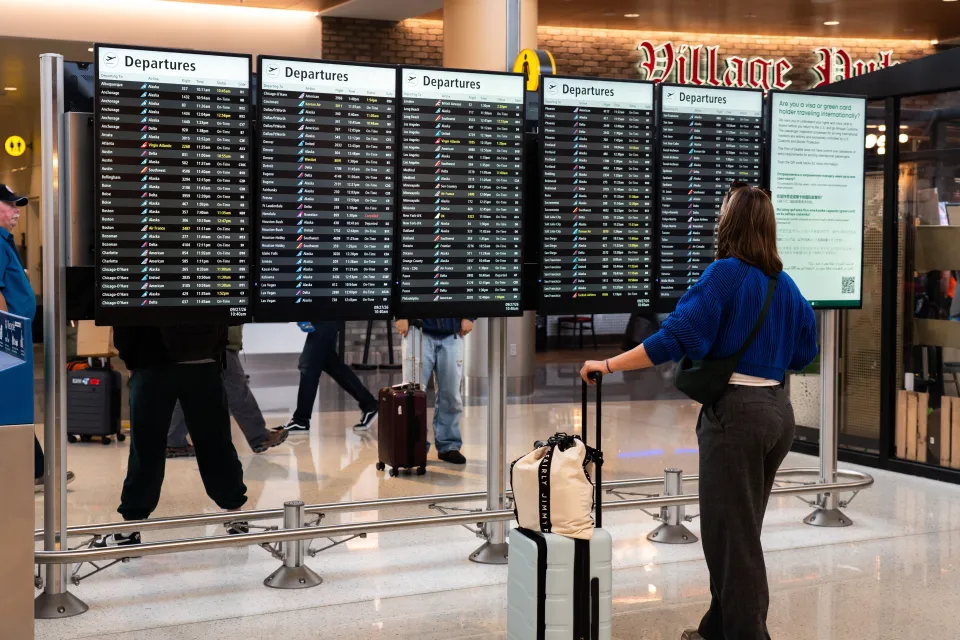
Holidaymakers heading to Italy have been warned to brace for major disruption as a nationwide transport strike threatens chaos across the country. The 24-hour walkout is expected to hit rail services, airports, metro systems, buses and regional transport networks from 9pm on Thursday, May 28, until 9pm on Friday, May 29.

Several unions have confirmed industrial action involving major rail operators including Trenitalia, Trenord and Italo, sparking fears of cancellations and delays on some of Italy’s busiest routes. Long-distance rail services connecting major cities including Rome, Milan, Venice, Florence, Bologna and Naples are expected to be among the worst affected outside protected operating periods.

Italy’s Ministry of Transport has published lists of “guaranteed” services that must continue operating during protected commuter windows between 6am and 9am, and again between 6pm and 9pm. Italy’s Civil Aviation Authority, ENAC, confirmed flights are legally protected during guaranteed operating periods between 7am and 10am and 6pm and 9pm.

The aviation authority has urged passengers to contact airlines directly for the latest updates regarding individual flights. Travel experts have also warned the strike could trigger wider disruption across European airline networks due to aircraft scheduling changes and increased rebooking demand.

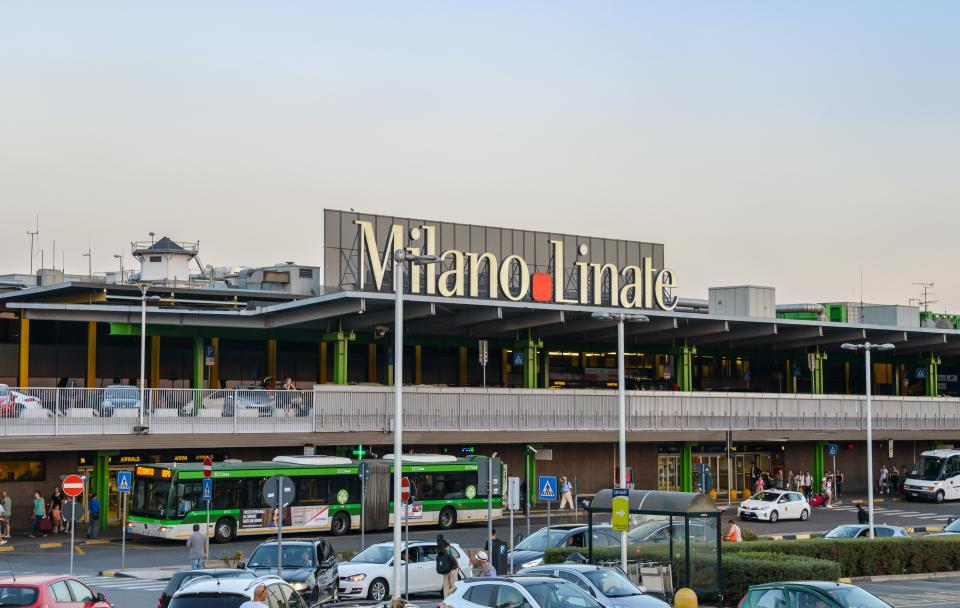
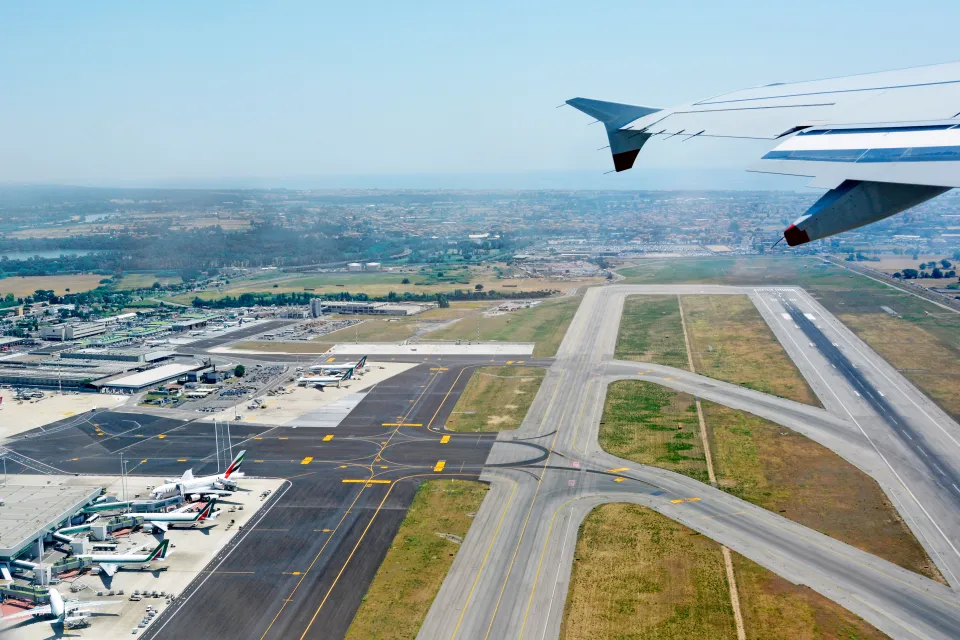
Major travel hubs including Rome Fiumicino Airport, Milan Malpensa Airport, Venice Marco Polo Airport and Naples International Airport are expected to face delays, congestion and possible schedule changes during the strike.

Airport transfers, metro systems, buses and regional rail services may also run at reduced capacity or face temporary suspensions depending on local participation levels. Tourists visiting major attractions including the Colosseum, Vatican City, Venice’s canals and Florence’s historic centre could also experience delays due to disruption on local transport networks.

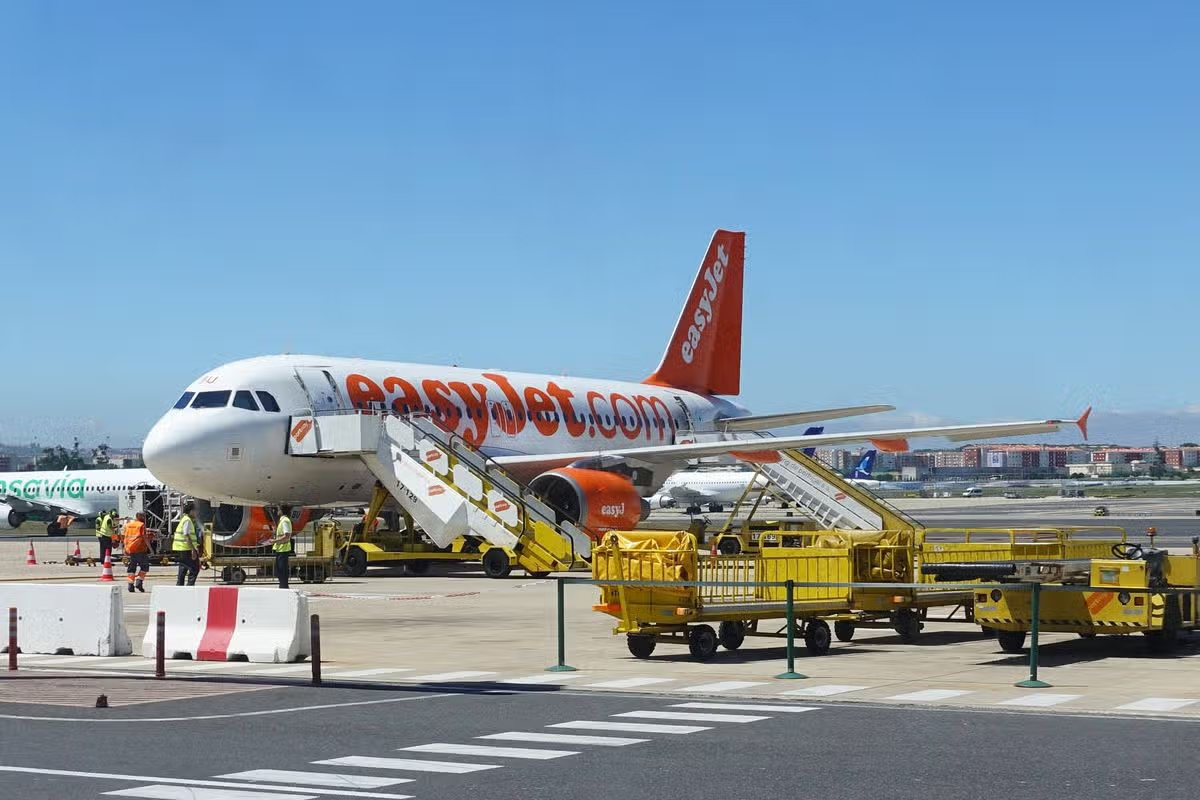
Travel experts are advising passengers to closely monitor airline notifications and rail updates as schedules may change rapidly throughout the strike period. easyJet said it currently plans to operate flights as normal but warned customers to allow extra time when travelling through airports.

A spokesperson for easyJet said: “We would like to reassure customers that we are doing all we can to minimise any disruption caused by national industrial action in Italy tomorrow. We are currently planning on operating our schedule as planned but would advise customers travelling to allow additional time to make their way to and through the airport.

“Should any flights be impacted, we will contact customers directly with their options to help rearrange their plans. We would like to apologise for any inconvenience caused.”

Italy remains one of Britain’s most popular tourist destinations, with millions of UK travellers visiting every year during the spring and summer seasons.

Source link

Israeli forces strike Lebanon as Netanyahu vows to intensify attacks

May 25 (UPI) — Israeli forces launched a renewed wave of strikes targeting Hezbollah on Monday as Prime Minister Benjamin Netanyahu vowed to intensify attacks against the Iran-backed militia.

The strikes came as Israel and Lebanon have been engaged in U.S.-mediated talks, the first in decades between the two nations, aimed at ending hostilities between Israel and Hezbollah. The attacks were expected to further strain the already frayed negotiations.

Israeli warplanes launched more than 85 munitions, striking more than 70 sites across Lebanon, including about 10 Hezbollah headquarters and weapons storage facilities in Tyre, located in southwestern Lebanon on the Mediterranean.

Infrastructure used by Hezbollah to attack Israel was among the targets struck, the IAF said in a statement, adding the Israeli military “eliminated” alleged motorcycle-riding Hezbollah operatives in southern Lebanon where IDF forces were operating.

The IDF said earlier that it had hit sites in the northeastern Beqaa Valley and several other areas in Lebanon, though it was not clear if that was part of a separate operation.

Netanyahu vowed in a video statement on Instagram to intensify strikes targeting the Iran-backed militia, stating that they were in response to Hezbollah firing fiber-optic drones over the last few weeks at northern Israel.

“We are at war. We are not taking our foot off the gas — on the contrary. I said to press the gas in Lebanon. We will strike them,” he said.

In a sign of concern over potential Hezbollah retaliatory strikes, the IDF issued new, tightened restrictions for northern Israel residents on Tuesday, capping outdoor gathering limits from 200 to 50 people and indoors from 600 to 200.

Hezbollah initially attacked Israel a day after the Israel-Hamas war began on Oct. 7, 2023. The conflict halted 13 months later with a fragile cease-fire that was never fully observed.

In early March, Israel launched renewed attacks on Lebanon, involving ground troops. In April, a cease-fire was announced in the larger Iran war, with Israel claiming it did not apply to Lebanon, while Lebanon and Iran said it did.

In mid-April, amid the confusion, Israel and Lebanon held their first diplomatic talks since 1993.


Source link

Russia invites media to view deadly strike on college in Luhansk | Newsfeed

NewsFeed

Russia provided a rare look at damage caused by a Ukrainian strike on a college in occupied Luhansk. Moscow claimed that 21 people were killed in the targeted attack, Ukraine denied the claims saying it struck an elite Russian drone command unit operating in the area.

Source link

Ukrainian strike on dormitory in Russian-occupied Starobilsk kills four | Russia-Ukraine war

NewsFeed

A Ukrainian strike collapsed a five-storey college dormitory in the Russian-occupied city of Starobilsk, killing four people and injuring at least 39 others. Rescue operations continue as more people are believed to be trapped under the rubble.

Source link

New York City hotels avert labour strike threat before FIFA World Cup | World Cup 2026 News

Hotel operators avoid a ‘very real threat’ by signing a deal with 25,000 workers as the city hosts the 2026 tournament.

New York City hotel operators and ⁠unions have reached an eight-year labour deal covering about 25,000 workers, averting a strike over wages, workloads and staffing levels that had threatened to disrupt the city ⁠before the FIFA World Cup, said the head of the Hotel Association of New York City.

Vijay Dandapani, the association’s president and chief executive, said on Tuesday that the mood among owners was “overall positive” after weeks of negotiations, though the industry made significant concessions.

“We came ‌a long way from where things were,” Dandapani said.

The United States will cohost the tournament with Canada and Mexico from June 11 to July 19.

While FIFA, football’s global governing body and tournament organiser, was not involved in the talks, the prospect of an influx of fans raised the stakes.

A union campaign had warned of a possible strike and urged visitors to avoid affected hotels.

The potential walkout was a “very real threat”, Dandapani said, noting recent labour actions in US cities including Los Angeles and ⁠Boston.

Dandapani said a figure of about $200,000 reflected compensation at the end of the agreement, not at the outset.

Hotel owners entered the talks aiming to preserve profitability, arguing New York’s lodging market has not ⁠fully recovered from the pandemic. Occupancy remains below 2019 levels, and inflation-adjusted room rates have yet to catch up, he ⁠said.

He also cited broader pressures, including the US-Israel war on Iran, tariffs and visa issues.

The deal follows the withdrawal of a proposed city measure that operators said would have sharply raised labour costs by limiting room attendants’ workloads and requiring double pay beyond certain ‌thresholds. Owners estimated it could have lifted wage costs by about 40 percent.

The new pact will still add costs, though operators expect tourism demand and major events to ‌support ‌revenue.

Source link

Kenya transport strike paused after deadly protests | Protests News

A nationwide transport strike in Kenya over surging fuel prices, blamed on the United States-Israeli war on Iran, has been suspended for a week after four people were killed in mass protests against the increases.

Kenya, one of many African countries heavily reliant on fuel imports from the Gulf, has raised petrol prices by 20 percent and diesel by almost 40 percent since Iran in effect blocked traffic through the Strait of Hormuz, a key chokepoint that normally handles about a fifth of the world’s oil.

The strike was launched on Monday by transport operators, particularly the “matatu” bus operators who provide most of Kenya’s public transport, in response to the latest sharp fuel price hike.

“The strike that is going on is suspended for a period of one week to provide an avenue for consultations and negotiations between the government and stakeholders,” interior minister Kipchumba Murkomen told reporters on Tuesday.

Albert Karakacha, the president of Matatu Owners Association, confirmed the suspension.

Authorities said four people were killed and more than 30 were injured nationwide on Monday. Police said on Tuesday that more than 700 people had been arrested in connection with the protests over fuel price increases.

Rights groups condemned the use of lethal force by security forces, with Amnesty International calling for “maximum restraint”.

The unrest also disrupted Kenya’s main trade corridor, with local media reporting that truck drivers had refused to move cargo amid fears their vehicles could be attacked and set alight by demonstrators.

The national energy regulator said last week the government had spent $38.5m to cushion consumers from rising diesel and kerosene costs.

In a further emergency measure, Kenyan authorities last month temporarily suspended fuel quality standards in a bid to maintain supplies amid growing shortages.

Despite being one of East Africa’s most dynamic economies, Kenya still has deep structural inequalities: about a third of its roughly 50 million people live in poverty and unemployment remains high.

Source link

Los Angeles World Cup stadium workers threaten strike over ICE deployment | World Cup 2026 News

Workers represented by a local union say ICE presence would create a climate of fear during the FIFA World Cup 2026.

Workers at the SoFi Stadium in Los Angeles have decided to go on strike if federal immigration enforcement agents are deployed at the venue when it hosts FIFA World Cup matches in June and July.

The UNITE HERE Local 11 – a labour union representing some 2,000 hospitality employees – on Monday demanded federal guarantees that Immigration and Customs Enforcement (ICE) would not be used during the matches scheduled at the stadium.

The venue, which will be known as the Los Angeles Stadium during the tournament, will host eight World Cup games, including the opening fixture for the United States on June 12.

Workers at the world’s most expensive sports arena say the ICE presence would create a climate of fear for themselves and for fans.

“ICE should have no role in these games,” said Isaac Martinez, a stadium cook, at a protest outside the venue.

“We do not want to live in fear coming to work, or fear being detained going home.”

“If we do not reach an agreement, my colleagues and I are ready to strike,” Martinez added, speaking on behalf of a workforce composed largely of food and beverage concession staff.

SoFi Stadium workers, belonging to union Local 11, picket outside of the FIFA Los Angeles World Cup 2026 Host Committee headquarters on May Day, Friday, May 1, 2026, in Los Angeles. (AP Photo/Jae C. Hong)
SoFi Stadium workers protest in Los Angeles on May Day [Jae C Hong/AP]

ICE has led the charge in President Donald Trump’s immigration crackdown.

Human rights groups have condemned the agency for its conduct during raids in several US cities, including Los Angeles last year.

In early 2026, ICE agents fatally shot two American protesters in Minneapolis.

Workers on Monday also raised alarms over FIFA’s accreditation process, which requires employees to submit personal data before the tournament, which runs from June 11 to July 19 across the US, Canada and Mexico.

“We ask FIFA not to share our information with ICE agencies, foreign countries, or intelligence services,” worker Yolanda Fierro said.

Protesters carrying plastic balls and signs reading “Kick ICE Out of the World Cup” drew support from Tom Steyer, a Democratic candidate in California’s gubernatorial race.

ICE’s mandate is border control, the financier-turned-politician said.

“Can anyone explain what that has to do with the World Cup? Nothing,” Steyer said.

“How is it possible that this is the agency that is going to be here when we know in fact they’re an absolute threat, a lawless threat, to workers in California?”

Source link

Drone strike sparks fire at Abu Dhabi nuclear plant

Visitors inspect a model for UAE’s Barakah nuclear power plant at the exhibition of World Utilities Congress in Abu Dhabi, United Arab Emirates, on May 8, 2023. File Photo by Ali Haider/EPA

May 17 (UPI) — A drone strike on a nuclear power plant in the United Arab Emirates sparked a fire at the facility Sunday, defense officials said.

The UAE’s Defense Ministry said three drones entered the country from the “western border direction,” two of which were intercepted. The third carried out a strike on an electrical generator at the Barakah Nuclear Power Plant in Abu Dhabi, the BBC reported.

Politico said there were no reports of injuries or a release of radiation at the facility.

No one has claimed responsibility for the attack, but the UAE’s Foreign Ministry described it as an “unacceptable act of aggression.”

“The targeting of peaceful nuclear energy facilities is a flagrant violation of international law, the U.N. charter and the principles of humanitarian law,” the ministry said.

Rafael Grossi, director-general of the International Atomic Energy Agency, said in a statement on X that “military activity that threatens nuclear safety is unacceptable.”

Source link

Zelenskiy Condemns Russia After Deadly Missile Strike on Kyiv Apartment Building

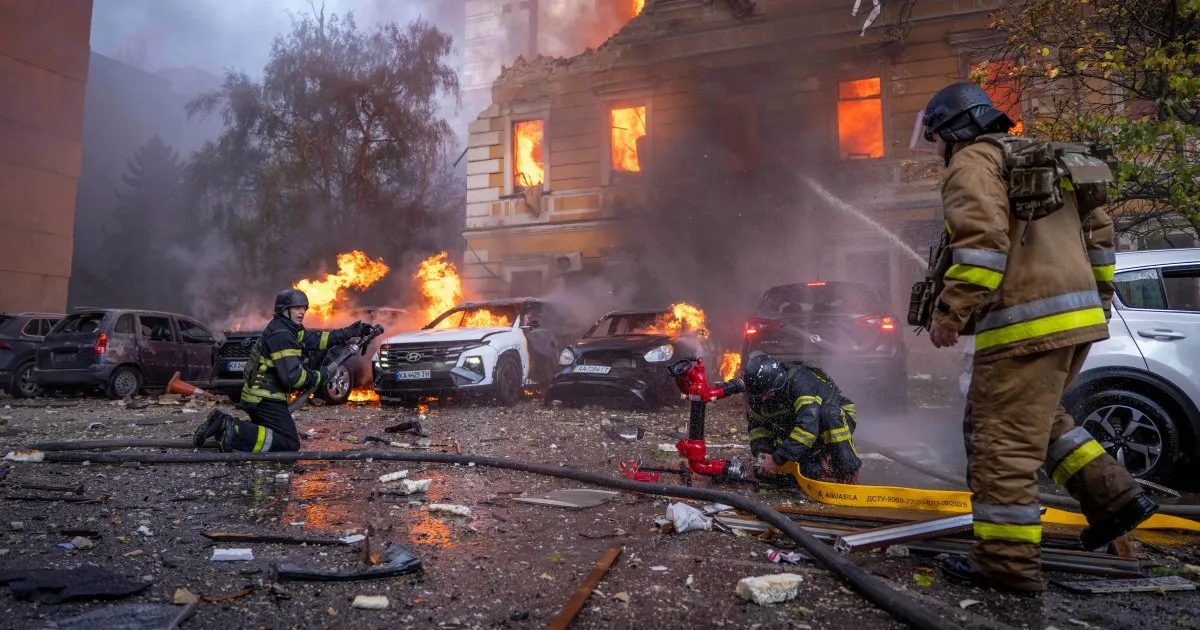
Ukrainian President Volodymyr Zelenskiy strongly condemned Russia after a missile strike on a residential apartment building in Kyiv killed at least 24 people, including three children.

The attack occurred during one of the heaviest aerial bombardments on the Ukrainian capital this year and further intensified international concern over the continuing war between Russia and Ukraine. Rescue operations continued for more than a full day before emergency workers completed searches through the destroyed structure in Kyiv’s Darnytskyi district.

The strike formed part of a broader wave of Russian drone and missile attacks across Ukraine that officials say targeted multiple regions over consecutive days.

Zelenskiy Visits the Site of the Attack

Zelenskiy visited the destroyed apartment building on Friday, laying red roses at the site and meeting rescue workers who had spent more than twenty eight hours searching for survivors beneath the rubble.

In remarks shared through social media, the Ukrainian president praised emergency responders for their continuous efforts and accused Russia of deliberately destroying civilian lives.

According to Zelenskiy, the missile strike effectively destroyed an entire section of the residential building. Ukrainian officials stated that initial analysis suggested the attack involved a recently manufactured Russian Kh 101 cruise missile.

The Ukrainian leader once again appealed to international allies for stronger air defence support and increased pressure on Moscow.

Heavy Civilian Casualties

Kyiv authorities declared Friday a day of mourning in memory of the victims. Flags across the capital were lowered to half mast, and public entertainment events were cancelled or postponed.

The Interior Ministry reported that rescue teams removed approximately 3,000 cubic meters of rubble during the operation. Hundreds of emergency personnel participated in the search efforts.

Officials confirmed that 24 bodies were recovered from the site, while approximately 30 people were rescued alive. Nearly 50 individuals were injured, and hundreds required psychological support following the attack.

The deaths of children among the victims further intensified public grief and anger across Ukraine.

Russia Intensifies Air Campaign

Ukrainian authorities stated that Russia launched more than 1,500 drones along with dozens of missiles during attacks carried out over two consecutive days this week.

The strikes extended beyond Kyiv and affected western regions of Ukraine located far from active frontline combat zones. Officials reported that six people were killed during attacks in western Ukraine on Wednesday.

The scale of the aerial assault highlights Russia’s continuing ability to conduct large coordinated attacks despite prolonged international sanctions and battlefield losses.

Moscow did not immediately comment specifically on the apartment building strike. Russia consistently denies deliberately targeting civilians, although residential buildings, hospitals, schools, and energy infrastructure have repeatedly been damaged throughout the conflict.

Ukraine Also Conducts Cross Border Attacks

The conflict has increasingly involved reciprocal long range attacks by both sides.

Russian regional officials stated that Ukrainian drone strikes killed four people, including a child, in the Russian city of Ryazan. Authorities reported damage to apartment buildings and an industrial facility during the incident.

Ukraine has expanded drone operations against targets inside Russia over the course of the war, aiming to disrupt military infrastructure, industrial production, and logistical operations linked to Moscow’s military campaign.

These developments reflect the increasingly transnational nature of the conflict, with civilian populations on both sides facing growing security risks.

The Continuing Humanitarian Crisis

The attack on Kyiv underscores the severe humanitarian consequences of the war, which began with Russia’s full scale invasion of Ukraine in February 2022.

Millions of Ukrainians have been displaced since the start of the conflict, while repeated strikes on civilian infrastructure have damaged homes, hospitals, schools, transportation systems, and energy networks across the country.

International organizations and human rights groups have repeatedly raised concerns about civilian casualties and the destruction of non military targets during the war.

At the same time, the prolonged conflict has placed enormous economic and psychological pressure on Ukrainian society as cities continue to face the threat of missile and drone attacks.

Analysis

The deadly strike on Kyiv demonstrates how the war between Russia and Ukraine continues to evolve into a prolonged campaign involving large scale aerial warfare and attacks far beyond frontline battle zones.

For Ukraine, the attack reinforces the urgent need for stronger air defence systems capable of intercepting missiles and drones before they reach urban areas. Zelenskiy’s renewed appeals to allies reflect growing concerns that Ukraine’s defensive capabilities remain under intense strain as Russia increases the scale and frequency of aerial assaults.

For Russia, sustained missile and drone attacks appear aimed at weakening Ukrainian morale, exhausting defence systems, and increasing pressure on the government through continued civilian disruption.

However, such attacks also carry significant international consequences. Civilian casualties, especially involving children and residential buildings, strengthen global criticism of Moscow and may encourage additional military and financial support for Ukraine from Western allies.

The conflict additionally illustrates the changing character of modern warfare, where advanced missiles, drones, and long range strikes allow both sides to target infrastructure and urban centers far from traditional battlefields.

Despite ongoing diplomatic discussions in various international forums, there remains little indication of a near term political settlement. Instead, the war increasingly appears locked in a prolonged phase of escalation, attrition, and humanitarian suffering.

The strike on Kyiv therefore stands not only as a tragic individual event but also as a broader symbol of the continuing devastation caused by one of the most consequential conflicts in modern Europe.

With information from Reuters.

Source link

Samsung Electronics’ labor talks break down, raising fears of major strike

Choi Seung-ho, head of Samsung Electronics’ largest labor union, speaks to reporters Wednesday after a hearing on an injunction against a labor strike filed by Samsung at Suwon District Court. Photo by Yonhap

Samsung Electronics Co. and its labor union failed to reach a wage agreement Wednesday, raising concerns over a major strike later this month that could disrupt operations at the world’s largest memory chipmaker.

The breakdown came after two days of government-led mediation talks that had been viewed as a last-ditch effort to avert the strike scheduled for May 21.

Union and management have remained sharply divided over performance-based bonuses tied to the company’s earnings related to artificial intelligence (AI).

The union has demanded performance bonuses equivalent to 15 percent of operating profit, along with the removal of the payout cap and the formal institutionalization of the bonus system.

The management, meanwhile, proposed allocating 10 percent of operating profit to bonuses and offering a one-time special compensation package that it said exceeds industry standards.

“Because the differences between the labor union and management did not narrow, we requested mediation and waited for nearly 12 hours, but the proposal only worsened,” Choi Seung-ho, head of Samsung Electronics’ largest labor union, told reporters after the meeting at the National Labor Relations Commission office in the administrative city of Sejong.

Choi said some 41,000 unionized workers have expressed their intention to take part in the general strike, adding that the number could rise to more than 50,000.

“It is meaningless to wait any longer,” Choi said. “We do not plan to hold an illegal strike. We will proceed in a legitimate way.”

Choi added that the union now will focus on responding to Samsung’s request for an injunction restricting the union’s planned strike.

Later Wednesday, the Suwon District Court concluded a closed-door second hearing attended by about 30 people, including lawyers and officials from both sides.

During the hearing, the union argued that the strike would be carried out lawfully within a limited period and that it had no intention of illegally occupying company facilities, making an injunction unnecessary.

The court is expected to decide by May 20 whether to grant the injunction.

Following the breakdown in talks, Samsung Electronics expressed regret over the suspension of the mediation process, while pledging to continue efforts to engage in dialogue.

“The post-mediation process, which the government worked hard to arrange, unfortunately collapsed after the union declared negotiations broken down,” the company said in a press release. It, however, vowed to continue making sincere efforts until the very end to prevent the worst-case outcome from materializing.

The labor dispute at Samsung Electronics, the world’s largest memory chip maker and South Korea’s most valuable company, has raised concerns that a walkout could disrupt production and upend the semiconductor supply chain, as well as hurt the broader economy overall.

Observers say that if a full-scale strike takes place, losses to the South Korean economy, which is heavily dependent on exports, could exceed 40 trillion won (US$26.8 billion).

South Korea’s exports reached a record $219.9 billion in the first quarter of 2026, driven by strong global demand for AI data centers. Semiconductor exports were a major contributor, surging 139 percent from a year earlier to $78.5 billion as investment in AI-related servers accelerated.

Some observers have speculated that the government could invoke emergency arbitration powers to prevent further escalation.

Under South Korea’s labor laws, the labor minister may order emergency arbitration when industrial action is deemed likely to endanger public welfare or seriously harm the national economy.

If invoked, all strike actions would be prohibited for 30 days while mediation and arbitration procedures are conducted by the commission. Emergency arbitration powers have been exercised only four times in South Korea’s history.

A commission official declined to comment on the possibility, saying, “It is not something we are reviewing.”

Copyright (c) Yonhap News Agency prohibits its content from being redistributed or reprinted without consent, and forbids the content from being learned and used by artificial intelligence systems.

Source link

“Nowhere left to go”: Gaza residents return to rubble after Israeli strike | Genocide News

Al Jazeera’s Tareq Abu Azzoum reports from Al-Shati Refugee Camp, where families search through the rubble after overnight Israeli airstrikes despite a ceasefire. Residents described the attacks as a breach of the truce, saying they lost shelter, belongings and the only places they had left to stay.

Source link

Angels struggle against Dylan Cease and Blue Jays in shutout loss

Dylan Cease struck out 10, reaching double digits for the third time in eight starts this season, and the Toronto Blue Jays stopped a four-game losing streak with a 2-0 win Friday night that sent the Angels to their 14th loss in 18 games.

Angels pitcher Alek Manoah returned from Tommy John surgery that had sidelined him since May 29, 2024, and faced his former team for the first time. The 28-year-old right-hander struck out one in a perfect eighth inning, reaching 93.8 mph with his fastball while throwing seven of 11 pitches for strike.

Cease (3-1) gave up five hits and walked none over seven innings in his 28th double-digit strikeout game.

Toronto (17-21) scored twice in the third on Kazuma Okamoto’s RBI single and Ernie Clement’s sacrifice fly off Reid Detmers (1-2), who gave up two hits and a career-high six walks in 3⅔ innings. The Angels dropped to 15-24.

Louis Varland earned his fifth save with a perfect ninth.

Up next: Angels RHP Jack Kochanowicz (2-1, 3.05) and Blue Jays RHP Trey Yesavage (1-1, 0.96) start Saturday.

Source link

Writers Guild staff union reaches agreement with management

The union representing workers employed by the Writers Guild of America have reached an agreement on their first contract, ending a strike that lasted nearly three months.

The pending contract includes seniority and layoff protections, higher wages and outlines provisions for progressive discipline and a stepped grievance process, the Writers Guild Staff Union said in a statement Friday.

The union represents 116 members, who work in areas including legal, communications and residuals. They will vote on proposed contract in the coming days.

“Once ratified, the WGSU strike will end and Writers Guild staff will return to doing what we do best: defending the writers’ hard-fought gains and helping them build collective power,” the WGSU Bargaining Committee said in a statement.

WGA also said in a statement that they “are pleased to have reached a tentative agreement” with the union for its first collective bargaining agreement.

If ratified, members would see a minimum of 12% increases in pay for all Writers Guild staff over the course of the three year term. The salary floor would rise from $43,000 to $57,000. The staff would also see better protections against AI.

The strike began in February, weeks before the WGA was set to enter negotiations with the major studios, with the workers accusing their employer of bargaining in bad faith.

Over the last several months, tensions have been high between the two unions. In March, WGA had to cancel its Los Angeles-based award show, as it could “not ask our members or guests to cross a picket line.” The staffers also lost access to their healthcare in April, as they were no longer eligible.

Last month, Hollywood writers officially ratified their newest contract with the Alliance of Motion Picture and Television Producers, with more than 90% voting in favor of the deal. The union represents 11,000 members.

Source link

Palestinian boy mourns father killed in Israeli strike on security post | Gaza

NewsFeed

A Palestinian boy mourns his father, one of three people killed in an Israeli strike on a security post in Gaza. The attack is part of ongoing Israeli violence, despite a fragile ceasefire, which has killed at least 846 Palestinians, according to Gaza’s Health Ministry.

Source link

Buses block off roads in Bolivia as transport workers strike over fuel | Labour Rights

NewsFeed

Public workers blocked the streets of El Alto, Bolivia with buses, cars, and trucks during a national transportation strike. Union leaders are demanding the government guarantee clean fuel, end long lines at petrol stations, repair roads, and compensate drivers for repeated engine repairs.

Source link

Israel kills one boy, injures officers in strike on Gaza police station | Newsfeed

NewsFeed

A 15-year-old boy, Mahmoud Sahweil, was killed when Israel struck a Gaza police station.

His aunt says he was out selling bread to support his 15-member family. Israel has killed at least 830 Palestinians in Gaza since the October 2025 “ceasefire”.

Source link

Khartoum drone strike kills five in Sudan, NGO reports | Sudan war News

The attack, the second in a week, follows months of relative calm in the city after government forces regained control last year.

A drone strike carried out by the paramilitary Rapid Support Forces (RSF) has killed five civilians in Khartoum, according to an NGO.

The attack, which Emergency Lawyers, an independent legal group supporting victims of human rights violations in Sudan, reported on Saturday, is the second to take place in the capital within a week. It follows months of relative calm in the city after government forces regained control last year.

Recommended Stories

list of 3 itemsend of list

The NGO said it holds the RSF fully responsible for the strike, accusing the group of breaching international humanitarian law.

Emergency Lawyers said the incident forms part of an ongoing pattern of attacks on civilians. Nearly 700 civilians were killed in drone strikes in the first three months of this year, according to UN figures.

‘Completely free’

On Tuesday, a drone struck a hospital in the Jebel Awliya area, around 40 kilometres (25 miles) south of central Khartoum, a security source and eyewitnesses told the AFP news agency. It was the first such attack in the area in months.

The Sudanese army, which now enjoys a solid grip in the north and east, launched a rapid counteroffensive last year that pushed the paramilitary forces out of the capital.

Following intense fighting around the capital last year, Sudan’s military government declared the Khartoum region “completely free” of RSF.

Since then, the RSF has largely concentrated on expanding its control in its stronghold in the western Darfur region and pushing into neighbouring areas, capturing valuable oil-producing assets.

Violence has also spread to southeastern Blue Nile state near the border with Ethiopia, raising fears of a more prolonged and fragmented conflict.

The RSF carried out a series of drone strikes on Khartoum last year, largely targeting military sites, power stations and water infrastructure.

In recent months, however, the capital has seen relative calm. More than 1.8 million displaced residents have returned, and the airport has resumed domestic flights. That said, much of the city remains without electricity or basic services.

The conflict between the Sudanese government and the RSF – a former ally – began in April 2023. Since then, around 14 million people have been displaced and two-thirds of the population are in urgent need of humanitarian support, according to the United Nations.

Source link

A defiant Iran leaves Trump with few options

More than 60 days into his war with Iran, well past public deadlines he had set for its end, President Trump sat through a briefing from U.S. Central Command outlining yet another set of options for a fresh round of strikes.

On offer Thursday were unpalatable choices for a president eager to move on from the conflict he started. Renewed U.S. attacks risk inflaming the war beyond Trump’s control, undermining a fragile ceasefire for which American allies fought hard. But the very need for such a briefing underscored how difficult a position the president has found himself in.

A legal deadline for congressional authorization arrived Friday that threatens to increase pressure on the administration — and underscore lagging support for the most unpopular U.S. war in modern times. Global oil prices remain above $100 a barrel entering the midterm election season. And a diplomatic breakthrough with Tehran appears nowhere in sight.

Signs pointed to another U.S. military buildup in the region this week that could portend a fresh round of fighting. A U.S. Defense official familiar with the matter said the U.S. military has used the weeks-long pause to replenish its munitions. So, too, have the Iranians, who have reportedly increased their efforts to dig out stockpiles of missiles and drones buried by U.S. and Israeli strikes.

“Amateurs look at strategy; pros look at logistics,” said Robert Pape, a professor of international relations at the University of Chicago. “I have seen more buildup of force — actual firepower, with the addition of a third aircraft carrier, and logistics — than we’ve seen since the beginning of the war in February. So there’s been a notable change in the past week.”

The logistical surge appears to be a stream of Boeing C-17 military transport aircraft making their way to the region, alongside the addition of a third aircraft carrier. Only two carriers were in place when Trump first launched the war Feb. 28.

“That’s a pretty good sign that they’re mobilizing,” Pape added. “These are strategic and operational indicators. I would imagine they’re looking for a sharp knock.”

More than 10,000 Marines from expeditionary units are now in theater, giving Trump the option to launch limited ground operations, such as seizing a small stretch of coastline or initiating an assault on Kharg Island, the hub of Iran’s oil industry.

Occupying Iranian territory could provide the Trump administration with leverage in negotiations with Tehran. But it would also carry significant domestic political risks. A clear majority of Americans — including many Republicans — oppose a ground war.

More troops would be necessary to hold ground for any substantial period of time, experts said.

“I do have the impression, from some of the briefings that I have received as well as other sources, that an imminent military strike is very much on the table,” Sen. Richard Blumenthal, a Democrat from Connecticut, told CNN.

Departing Washington for the weekend, Trump told reporters that a “very disjointed” Iranian government, torn internally over whether to agree to a nuclear deal with the Americans, had put his administration “in a bad position,” uncertain whom to negotiate with or whether any agreement it might strike would be enforced.

“Right now we have negotiations going on. They’re not getting there,” Trump said. “They want to make a deal, but I’m not satisfied with it. So we’ll see what happens.”

And yet, the longer talks continue, the more pain Americans can expect to feel as global energy and fertilizer prices continue to skyrocket over disrupted commercial shipping traffic through the Strait of Hormuz, affecting the costs of pocketbook items ranging from food and fuel to airfare.

Trump hopes a brief new round of powerful strikes, potentially targeting Iranian infrastructure, will force Iran’s hard-liners to support a negotiated settlement — a gambit that could backfire, after an inaugural volley of strikes in the war killed off the government’s moderate voices, empowering the militant leadership of the Islamic Revolutionary Guard Corps.

“Do we want to go and just blast the hell out of them and finish them forever, or do we want to try and make a deal?” Trump asked, speaking with reporters on the South Lawn. “I mean, those are the options.”

In a letter addressed to Congress, Trump dismissed a 60-day deadline for congressional authorization for the war set forth in the War Powers Act, claiming the ceasefire with Iran had effectively stopped the clock on the administration’s legal responsibilities. Democrats argue that an ongoing U.S. blockade of Iranian ports constitutes an act of war that, absent a formal diplomatic agreement, requires congressional approval.

Speaking with reporters, Trump offered a less nuanced explanation.

“It’s never been used, it’s never been adhered to,” Trump said of the act. “Every other president considered it totally unconstitutional, and we agree with that.”

The internal debate over resuming the war comes after Pentagon officials informed Congress this week that the conflict, dubbed Operation Epic Fury, had cost taxpayers $25 billion thus far.

Pete Hegseth, the president’s secretary of Defense, defended the effort at a congressional hearing Wednesday, telling lawmakers that the United States was “absolutely” winning the war.

“Militarily,” Hegseth said, “on the battlefield, it’s been an astounding military success.”

He declined to say whether he had advised the president to launch the war in the first place.

Source link