Joint

US suspends joint defence effort with Canada dating back to World War II | Donald Trump News

The Trump administration has frequently accused US allies of failing to live up to mutual defence obligations.

The United States has said it will not take part in a joint board for continental defence with Canada, depicting the country as failing to live up to its defence obligations.

On Monday, US Undersecretary of Defense Elbridge Colby wrote on social media that his department would halt its involvement in the Permanent Joint Board on Defense to “reassess” the forum’s benefits.

Recommended Stories

list of 3 itemsend of list

The board dates back to World War II and has served as a forum for regional security. But relations with Canada have grown strained since US President Donald Trump returned to office for a second term in 2025.

“A strong Canada that prioritizes hard power over rhetoric benefits us all. Unfortunately, Canada has failed to make credible progress on its defense commitments,” Colby wrote on X.

“We can no longer avoid the gaps between rhetoric and reality. Real powers must sustain our rhetoric with shared defense and security responsibilities.”

The announcement is the latest instance of the Trump administration chiding Western allies for what the president believes is an overreliance on US military power.

Allied countries have largely refuted his claims, arguing that they are ramping up military spending and taking steps to take greater control over regional security.

Just last year, at a NATO summit in The Hague, nearly every member state agreed to increase defence spending to 5 percent of their gross domestic product (GDP). Spain petitioned to be excluded from the agreement, though.

Canada, under Prime Minister Mark Carney, was among the countries committing to the increased spending.

Of the 5 percent earmarked for defence, 3.5 percent would go to bolstering Canada’s “core military capabilities”, Carney’s government said. The rest would go to security-related expenses, including port improvements, emergency preparedness and other resources.

Since taking office as prime minister in March 2025, Carney has been an outspoken supporter of lessening Canada’s dependence on the US’s military and economy.

In a speech this year, he outlined a vision in which “middle powers” like Canada banded together to sidestep the current “era of great power rivalry”, a veiled reference to countries like the US, Russia and China.

While the US and Canada are neighbours, Trump’s second presidency has resulted in fraying bonds between the two countries, even beyond matters of security.

Trump has accused Canada of pursuing unfair trade policies and failing to crack down on the illicit traffic of people and drugs across the border, though critics have questioned the legitimacy of these claims.

To force Canada to comply with his policies, the US president has pursued an aggressive tariff regimen to tax cross-border imports.

Trump has suggested in the past that Canada could avoid such penalties by ceding its sovereignty and becoming the US’s 51st state.

“Cooler and wiser brains are needed to preserve a close alliance w/ our neighbor,” US Republican Representative Don Bacon said in a social media post on Monday, criticising the decision to pull out of the defence forum with Canada.

“This all started w/ taunts of ‘Canada will be the 51st state’ and ‘their Prime Minister will be the 51st governor’. The insults gained us nothing but animosity that cost us economically and now militarily.”

The US, Canada and Mexico are set to negotiate an updated version of a regional free trade agreement, known as the USMCA, later this year.

Source link

BRICS Fails to Reach Joint Statement as Iran War Exposes Internal Divisions

Foreign ministers from the BRICS nations ended a two day meeting in New Delhi without issuing a joint statement, highlighting deep divisions within the bloc over the ongoing conflict involving Iran, the United States, and Israel.

The diplomatic gathering brought together representatives from an increasingly diverse and politically complex alliance that now includes both Iran and the United Arab Emirates, two regional rivals currently on opposite sides of the escalating Middle East crisis.

Because member states could not agree on language regarding the war, host country India released only a chair’s statement summarizing discussions rather than a unified declaration endorsed by all participants.

Iran Pushes for Stronger Condemnation

Iran reportedly sought a stronger collective position condemning the United States and Israel for military operations against it.

Tehran also accused the UAE, a close American partner in the Gulf region, of involvement in military activities linked to the conflict.

Iranian Foreign Minister Abbas Araqchi stated that one BRICS member blocked sections of the proposed statement, although he did not directly name the UAE.

Araqchi attempted to soften tensions publicly by emphasizing that Iran did not view the UAE itself as a direct target in the conflict. He argued that Iranian strikes had focused only on American military facilities located on Emirati territory.

At the same time, he expressed hope that relations inside BRICS could improve before the leaders’ summit later this year.

India’s Carefully Balanced Position

India’s final chair statement revealed the difficulty of managing competing geopolitical interests within the expanded BRICS bloc.

The document acknowledged that member countries held different perspectives regarding the Middle East crisis. According to the statement, discussions included calls for diplomacy, respect for sovereignty, protection of civilian lives, and the importance of maintaining secure maritime trade routes.

However, the absence of a formal joint declaration demonstrated that BRICS members remain divided on critical geopolitical questions.

India’s approach reflected its broader diplomatic strategy of balancing relations with multiple global powers simultaneously. New Delhi maintains close ties with the United States and Gulf countries while also preserving strategic partnerships with Russia, Iran, and China.

Gaza and Palestine Also Cause Disagreement

Divisions were not limited to the Iran conflict.

The chair statement noted that BRICS ministers reaffirmed support for Palestinian self determination and described Gaza as an inseparable part of the occupied Palestinian territories.

The document also supported efforts to unify Gaza and the West Bank under the Palestinian Authority and backed the establishment of an independent Palestinian state.

However, the statement acknowledged that one unnamed member state held reservations regarding aspects of the Gaza section as well.

This further illustrated the challenge of building unified foreign policy positions within a grouping that includes countries with vastly different regional interests and diplomatic alignments.

BRICS and the Global South Narrative

Despite internal disagreements, BRICS members emphasized the importance of cooperation among developing nations.

India’s statement described the Global South as an important force for positive international change during a period marked by rising geopolitical tensions, economic uncertainty, technological disruption, protectionism, and migration pressures.

The expanded BRICS bloc now includes:

  • Brazil
  • Russia
  • India
  • China
  • South Africa
  • Ethiopia
  • Egypt
  • Iran
  • UAE

The expansion of the bloc has increased its global economic and political weight but has also introduced more ideological and strategic divisions.

The Economic Impact on India

The Middle East conflict has had serious economic implications for India.

As one of the world’s largest oil importers, India depends heavily on energy shipments passing through the Strait of Hormuz. The disruption of maritime traffic in the region has increased energy costs and raised concerns about inflation and supply stability.

Indian personnel have reportedly been killed in incidents linked to the regional conflict, while an India flagged vessel was sunk during the recent escalation.

Against this backdrop, Indian Prime Minister Narendra Modi visited the UAE and publicly condemned attacks targeting the Gulf nation.

Modi praised the UAE’s restraint and described attacks against it as unacceptable, signaling India’s effort to maintain strong ties with key Gulf partners despite its participation alongside Iran in BRICS.

Analysis

The failure of BRICS foreign ministers to produce a joint statement highlights the growing contradictions inside the expanded organization.

Originally conceived as an economic coalition of major emerging powers, BRICS increasingly aspires to become a broader geopolitical platform representing the Global South. However, the inclusion of regional rivals and states with conflicting strategic interests makes unified diplomacy increasingly difficult.

The Iran conflict exposed these tensions clearly. Iran sought solidarity against the United States and Israel, while Gulf states inside the bloc maintain close security relationships with Washington and face direct security threats from Tehran.

India’s cautious wording reflected the reality that BRICS currently functions more as a flexible diplomatic forum than a cohesive political alliance.

The episode also demonstrates a larger shift in global politics. As Western led institutions face criticism from many developing nations, alternative groupings like BRICS are gaining visibility. Yet these organizations must still overcome major internal disagreements if they hope to shape global governance effectively.

For India, the situation illustrates the complexity of its foreign policy position. New Delhi seeks leadership within the Global South while simultaneously maintaining relations with competing regional and global powers.

Ultimately, the Delhi meeting showed both the growing importance and the structural limitations of BRICS. The bloc may continue expanding economically and politically, but achieving consensus on major international crises will remain a significant challenge as geopolitical rivalries deepen across the world.

With information from Reuters.

Source link

South Korea stages joint amphibious drill in Pohang

KAAV amphibious assault vehicles and an LSF landing craft carrying Marines moving toward a beach in Pohang, about 270 kilometers southeast of Seoul, South Korea, 26 April 2026 (issued 27 April 2026). The Navy and Marine Corps launched a weeklong regular amphibious landing exercise to maintain combat readiness against evolving threats in future warfare. Photo by ROK MARINE COMMAND YONHAP / EPA

April 27 (Asia Today) — South Korea’s Navy and Marine Corps conducted a major joint amphibious landing drill in Pohang, testing combined operations involving manned and unmanned assets, the military said Monday.

The exercise, held on the coast of Dokseok-ri in Pohang, North Gyeongsang Province, involved about 3,200 troops from the Army, Navy, Air Force and Marine Corps.

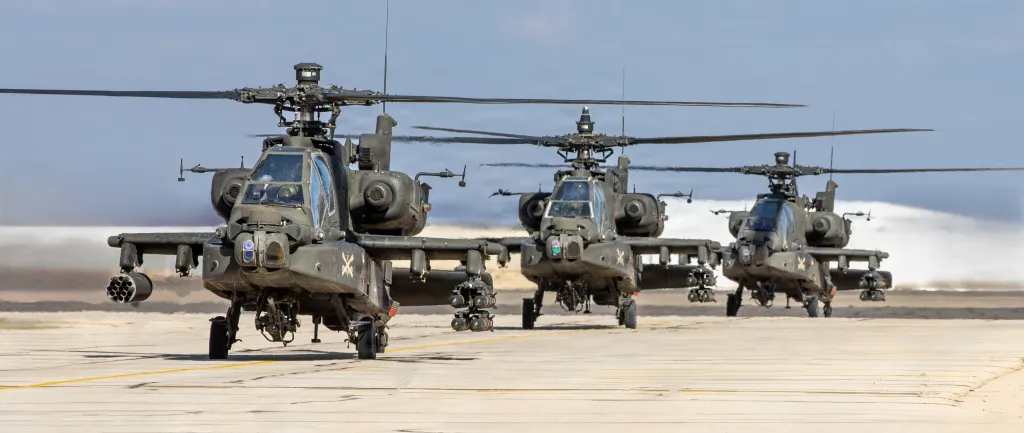
The drill included Korean Amphibious Assault Vehicles, the large transport ship Marado, MUH-1 Marineon helicopters, P-8A maritime patrol aircraft, KF-16 fighter jets, AH-64E attack helicopters and drones operated by the Drone Operations Command.

The exercise focused on “decisive action,” a key phase of amphibious operations in which Marine landing forces secure a beachhead with support from naval gunfire and air power before transitioning to ground operations.

A New Zealand Army platoon joined the landing force for the first time, operating with South Korean Marines. The New Zealand troops trained for two weeks before the landing, including urban operations, combat shooting and boarding and dismounting drills using amphibious vehicles.

The South Korean military said the exercise also tested responses to enemy drones, mine-clearing operations, anti-submarine warfare and air defense procedures.

Logistics drones were used to deliver ammunition, combat rations and medical supplies to units operating deep in enemy territory. U.S. Navy 7th Fleet personnel also took part in mine countermeasure operations.

Special operations forces used first-person-view drones for the first time during advance force operations, collecting real-time intelligence while infiltrating target beaches and clearing obstacles.

“This exercise strengthened the Navy and Marine Corps’ joint operational capability as one team and verified the practicality of manned-unmanned combined forces using advanced science and technology,” said Navy Capt. Hwang Sang-geun, commander of the amphibious task force.

— Reported by Asia Today; translated by UPI

© Asia Today. Unauthorized reproduction or redistribution prohibited.

Original Korean report: https://www.asiatoday.co.kr/kn/view.php?key=20260428010008699

Source link