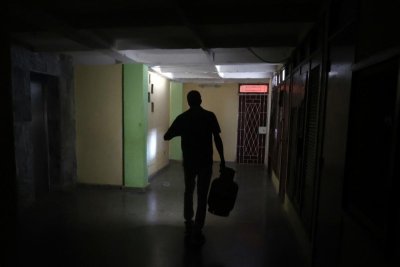

A man walks inside a building during a power outage in Havana in February. Photo by Ernesto Mastrascusa/EPA
March 3 (UPI) — Cuba began March facing a historic energy crisis, with an electricity deficit left 64% of the island in the dark due to fuel shortages and technical failures at its thermoelectric plants.
An electricity deficit is the condition in which demand exceeds the amount of electricity available to supply it. The grid simply doesn’t have enough generation at that moment to meet what homes, businesses and infrastructure are trying to draw.
Cuba’s National Electric System reported a deficit exceeding 2,000 megawatts, resulting in rolling outages lasting up to 20 hours a day, according to figures published on X by the state-run Electric Union, known by its Spanish acronym UNE.
For Tuesday’s peak demand period, UNE forecast maximum consumption of 3,150 megawatts, while available generation capacity was expected to reach only about 1,890 megawatts. The resulting shortfall has forced authorities to disconnect circuits across the country to prevent a total and uncontrolled collapse of the grid.
Eight of Cuba’s 16 thermoelectric plants are offline due to breakdowns and fuel shortages, according to reports. The plants, which process domestically produced and imported crude oil, operate within a system widely considered obsolete and underfunded.
Cuban authorities have blamed U.S. sanctions for worsening the crisis. Government officials have denounced what they call an “energy asphyxiation” by Washington, accusing the United States of restricting oil shipments and limiting access to fuel supplies from abroad.
“The electrical system begins 2026 in worse conditions than it had at the same date in 2025. Thermal plants enter and leave service, oil is scarce and going forward there will barely be diesel and fuel oil for distributed generation,” José Luis Reyes, an analyst specializing in Cuba’s power system, told Diario de Cuba.
“The fragile web of energy production and distribution depends on all kinds of unpredictable factors. Blackouts are guaranteed,” he said.
Independent experts estimate that restoring and modernizing Cuba’s electrical grid would require between $8 billion and $10 billion — a figure seen as out of reach for an economy that has contracted by more than 15% since 2020.
Amid the worsening shortages, Cuban President Miguel Díaz-Canel on Tuesday called for “urgent transformations” to the island’s economic and social model.
During a meeting of the Council of Ministers, Díaz-Canel said the proposed changes include expanding autonomy for state enterprises and municipalities, resizing the state apparatus and boosting domestic food production.
He also urged progress in shifting the country’s energy matrix, promoting exports, easing rules for foreign direct investment and encouraging partnerships between the state and private sectors, including ventures with Cubans living abroad, according to state media outlet Tribuna de La Habana.
The president said the measures must contribute to “macroeconomic stabilization,” increase hard currency revenues and strengthen domestic production, particularly food.
The call for reforms comes amid prolonged economic contraction, high inflation and deteriorating public services, as well as continued political pressure from President Donald Trump, who has advocated for political change on the island.
Trump on Friday raised the possibility of a “friendly takeover” of Cuba, saying the island’s government has been in talks with his administration about the country’s future.
“They are going through major problems and we could very well do something good, I think, something very positive for the people who were forced out, or worse, from Cuba and who live here,” he told reporters at the White House, though he did not specify any potential action against the country.