Europe’s defense transformation is not a spending problem that more money will solve, rather it’s a doctrinal crisis, and the gap between the warfare Europe has been preparing for and the warfare Ukraine has demonstrated reveals that the continent’s most urgent investment is not in platforms but in fundamentally rethinking how its armies plan, target, and fight.
The Wake-Up Call That Came From an Exercise Field in Estonia
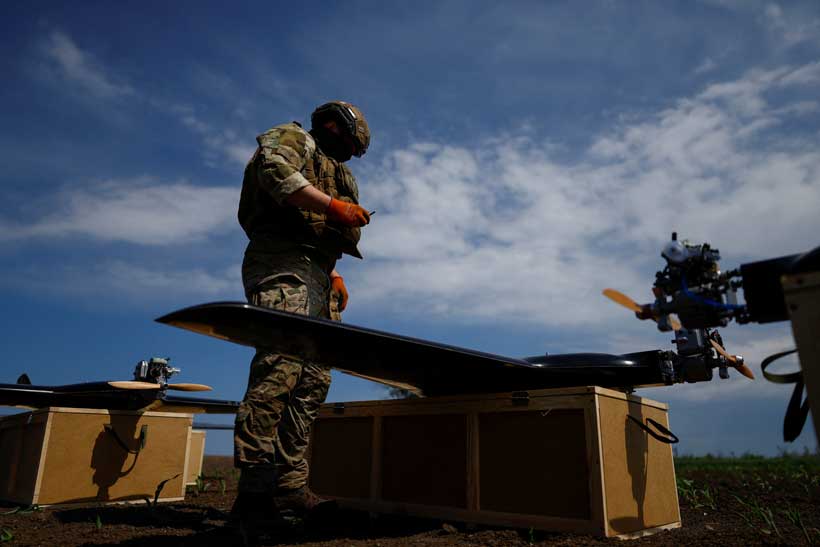
At Exercise Hedgehog 2025 in Estonia, roughly ten Ukrainian drone operators spent a day systematically destroying nearly twenty NATO armored vehicles in a simulated engagement. NATO forces tried to hide under tree lines. They parked armored vehicles in visible positions. They built command stations in exposed terrain. They did everything that Ukrainian soldiers have long since learned will get you killed. The Ukrainian operators, accustomed to battlefields where drone saturation is double what the exercise permitted, found it straightforward.
The exercise was designed to test readiness and interoperability. What it revealed instead was that NATO forces have not been forced by the realities of war to adapt the way Ukraine has. Movement patterns, command structures, and the basic assumptions about how to survive on a modern battlefield, all of it was calibrated for a threat environment that no longer exists. NATO’s deputy supreme allied commander in Europe, Air Chief Marshal Sir Johnny Stringer, said it plainly at a defense conference in London last week: “The threat we face is at 360 degrees.” The German army’s commander, Lieutenant General Christian Freuding, went further, saying that land warfare is “fundamentally changing” and that Europe must “fundamentally adapt how we will fight.” These are not politicians speaking. They are the senior military officials responsible for defending the continent, and they are saying, as clearly as their institutional language permits, that Europe is preparing for the wrong war.
To read the full analysis, please subscribe to our MD Briefing here
Stay ahead of the geopolitical week.
MD Briefing delivers expert analysis across five global fronts — the Indo-Pacific, energy, geoeconomics, European security, and the Middle East — every Monday morning. Free.