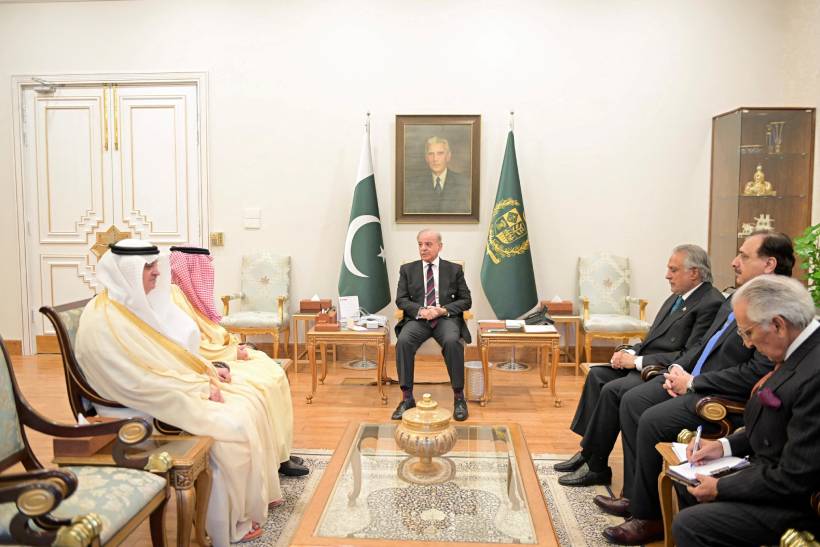
Pakistan has emerged as a key mediator in ceasefire talks between the United States, Iran and Israel, hosting negotiations in Islamabad. The announcement of the initial ceasefire by Shehbaz Sharif signaled Islamabad’s unexpected diplomatic centrality in a high stakes conflict.
This role is not incidental. It reflects Pakistan’s long standing regional ties, security concerns, and strategic positioning between major global and regional powers.
Historical Leverage with Iran
Pakistan’s mediation draws on decades of close ties with Iran, shaped by shared borders, religious linkages, and past strategic cooperation. Since 1947, both states have supported each other in regional disputes, creating a baseline of trust that allows Islamabad to act as a credible interlocutor.
Despite occasional tensions, Iran continues to view Pakistan as a state willing to engage without overt hostility, making dialogue politically feasible.
Security Driven Diplomacy
Pakistan’s involvement is rooted in hard security calculations. Instability in Iran could spill over into Balochistan, where separatist movements already challenge state authority. A fragmented Iran risks amplifying cross border militancy and separatist narratives.
Additionally, Pakistan’s status as a nuclear power makes regional de escalation a priority, as prolonged conflict increases the risk of external pressure on its own strategic assets.
Military Influence and US Access
The central role of the military, particularly Asim Munir, has strengthened Pakistan’s credibility with Donald Trump. Direct engagement between military leadership and Washington has enabled Islamabad to maintain influence within US strategic circles.
This relationship enhances Pakistan’s ability to act as a bridge, especially under an administration that values strong security partnerships.
Emerging Strategic Alignments
Pakistan’s deepening ties with Saudi Arabia and parallel coordination with the United States suggest the emergence of a loose strategic alignment. At the same time, Islamabad maintains close relations with China, which has a vested interest in Gulf stability due to energy dependence.
This dual alignment uniquely positions Pakistan as a mediator acceptable to multiple competing blocs.
Implications
Pakistan’s role signals a shift in regional diplomacy, where mid tier powers can leverage geography and relationships to shape major geopolitical outcomes. Successful mediation could elevate Pakistan’s global standing, while failure risks exposing its strategic vulnerabilities.
The talks also highlight how regional conflicts are increasingly multi layered, involving overlapping alliances and competing security priorities.
Analysis
Pakistan is not acting as a neutral peace broker but as a strategic actor pursuing its own stability. By engaging all sides, it reduces the risk of regional spillover while enhancing its diplomatic relevance.
Its ability to maintain simultaneous ties with Washington, Tehran, Riyadh and Beijing gives it rare flexibility. However, this balancing act is inherently fragile. Any perceived bias could undermine trust and derail negotiations.
Ultimately, Pakistan’s mediation reflects a broader geopolitical reality: influence in today’s conflicts belongs not only to superpowers, but to states that can navigate between them.
With information from Reuters.