Egyptian president pledges ‘any measure’ to help defend Saudi Arabia ‘if it is requested of us’.
Published On 17 Oct 202617 Oct 2026
Egypt’s President Abdel Fattah el-Sisi has called for an emergency parliamentary session to authorise him to approve any requests from Saudi Arabia for defence assistance, if Riyadh were to ask.
Speaking at a graduation ceremony at the Egyptian Military Academy on Saturday, el-Sisi emphasised Cairo’s readiness to back the kingdom.
Recommended Stories
list of 3 itemsend of list
Egypt will “carry out any measure to protect” Saudi Arabia “in accordance with the directives of His Majesty King Salman and the directives of the Crown Prince, Mohammed bin Salman”, he said.
“I know that this matter requires the approval of the Egyptian parliament, and I hope that parliament will convene in an emergency session to give us this authorisation, if it is requested of us,” he said.
“I am not speaking in order for us to fight anyone or attack anyone. I am speaking only for defence.”
Attacks on Saudi Arabia
The request follows a barrage of attacks on the kingdom from Yemen’s Iran-backed Houthis, including airports and oil facilities.
Recent Houthi strikes on Saudi Arabia have mainly targeted key infrastructure on the outskirts of the capital, Riyadh, but they appear to be edging closer to the city centre.
Houthi attacks on Riyadh’s King Khalid International Airport earlier this month killed 14 people and wounded more than 300. Houthi attacks have also been reported on other airports, including Dammam, Abha, Jazan and Najran.
Yemen’s Saudi-backed, internationally recognised government launched a full-scale military campaign against the Houthis this month to recapture territory seized by them.
El-Sisi had backed Saudi calls for secure and unhindered navigation in the Red Sea in a meeting with the Saudi Crown Prince, known as MBS, in Cairo last month.
A statement from the Egyptian presidency then said that “the security of Saudi Arabia and the Gulf states is an integral part of Egypt’s national security”.
Red Sea security
That meeting came just days after the Houthis seized Yemen’s Red Sea coast, gaining significant control over the Bab al-Mandeb strait, the southern gateway to the Suez Canal.
Saudi Arabia already has a defence pact with Pakistan and Turkiye, known as the Mecca Alliance for Defence, which was signed in August.
Earlier this month, the three countries agreed to activate “deterrence measures” under the pact and rapidly deploy forces to the Gulf kingdom to counter attacks by Yemen’s Houthis.
Analysts say Riyadh is looking for help to protect the kingdom and Red Sea shipping and that Egypt, whose Suez Canal revenue depends on the same traffic, is an obvious partner.
They say Egypt is eager to prevent Iran and its allies from imposing control over the region, especially over maritime traffic in the Red Sea, given the direct repercussions for the Suez Canal.
Saudi Arabia has accused Iran of encouraging Houthi attacks against the kingdom, a claim Tehran rejects. Iran has offered assistance to halt the conflict between the two sides.
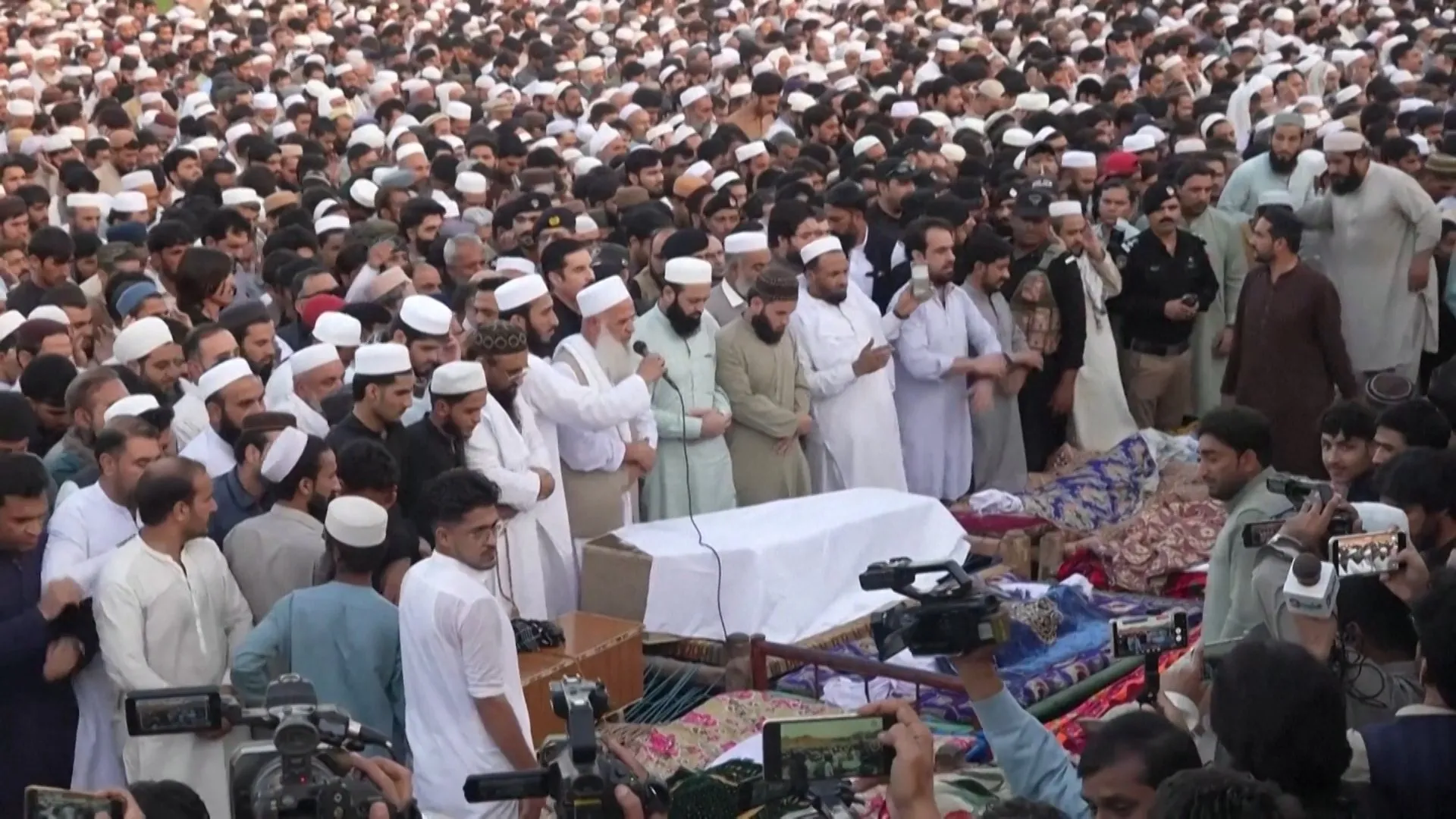
Thousands gather for funeral prayers in Pakistan’s Peshawar after a school rooftop collapse killed at least 34 children and a teacher and injured more than 50 people. Police have attributed the collapse to weak infrastructure.
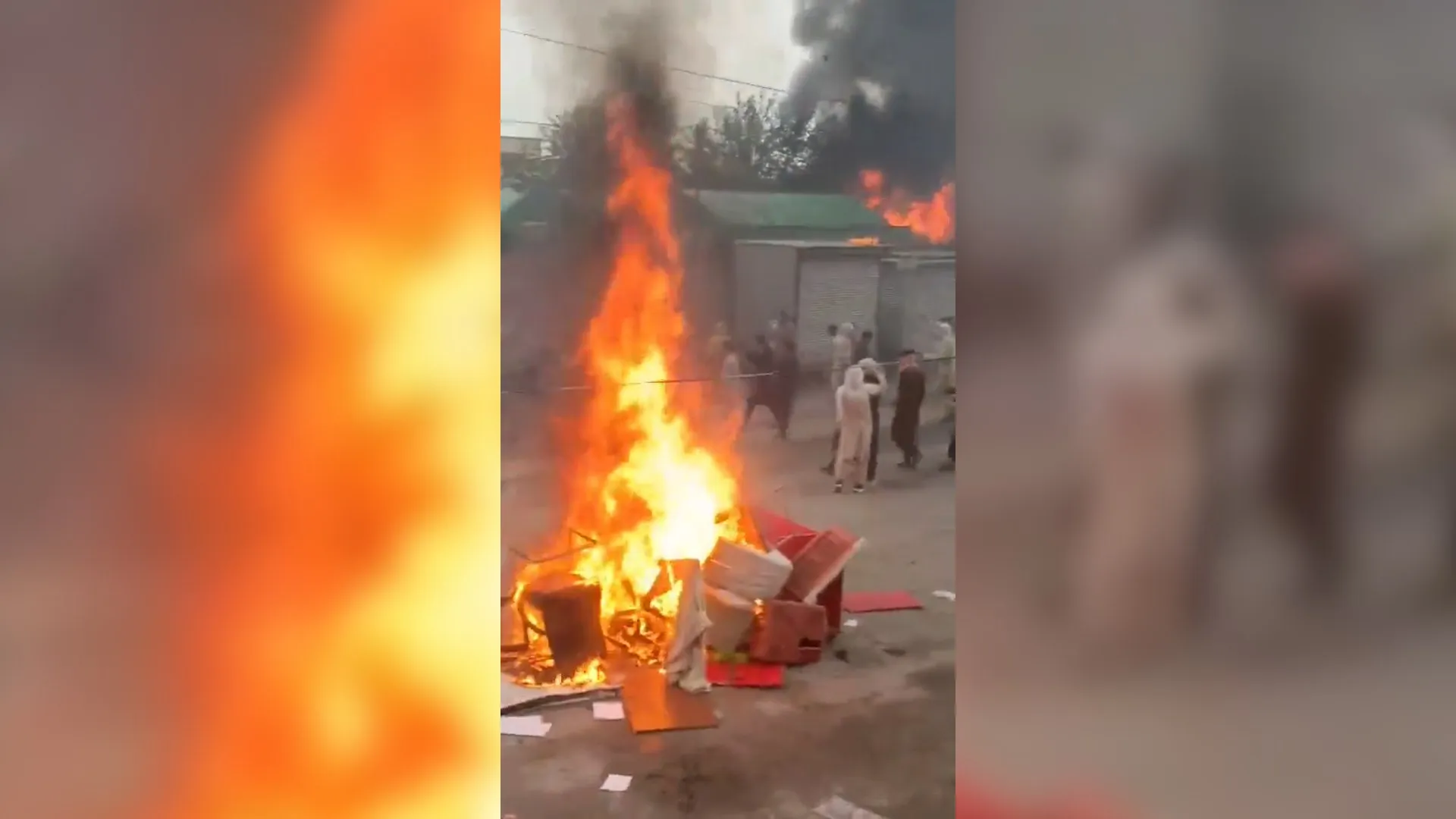
Protesters in Pakistan’s Khyber Pakhtunkhwa province clashed with police over emergency and governor’s rule put in place over the local government’s alleged failure to crackdown on Tehrik-e-Taliban Pakistan fighters. Police fired on protesters, injuring at least five people.
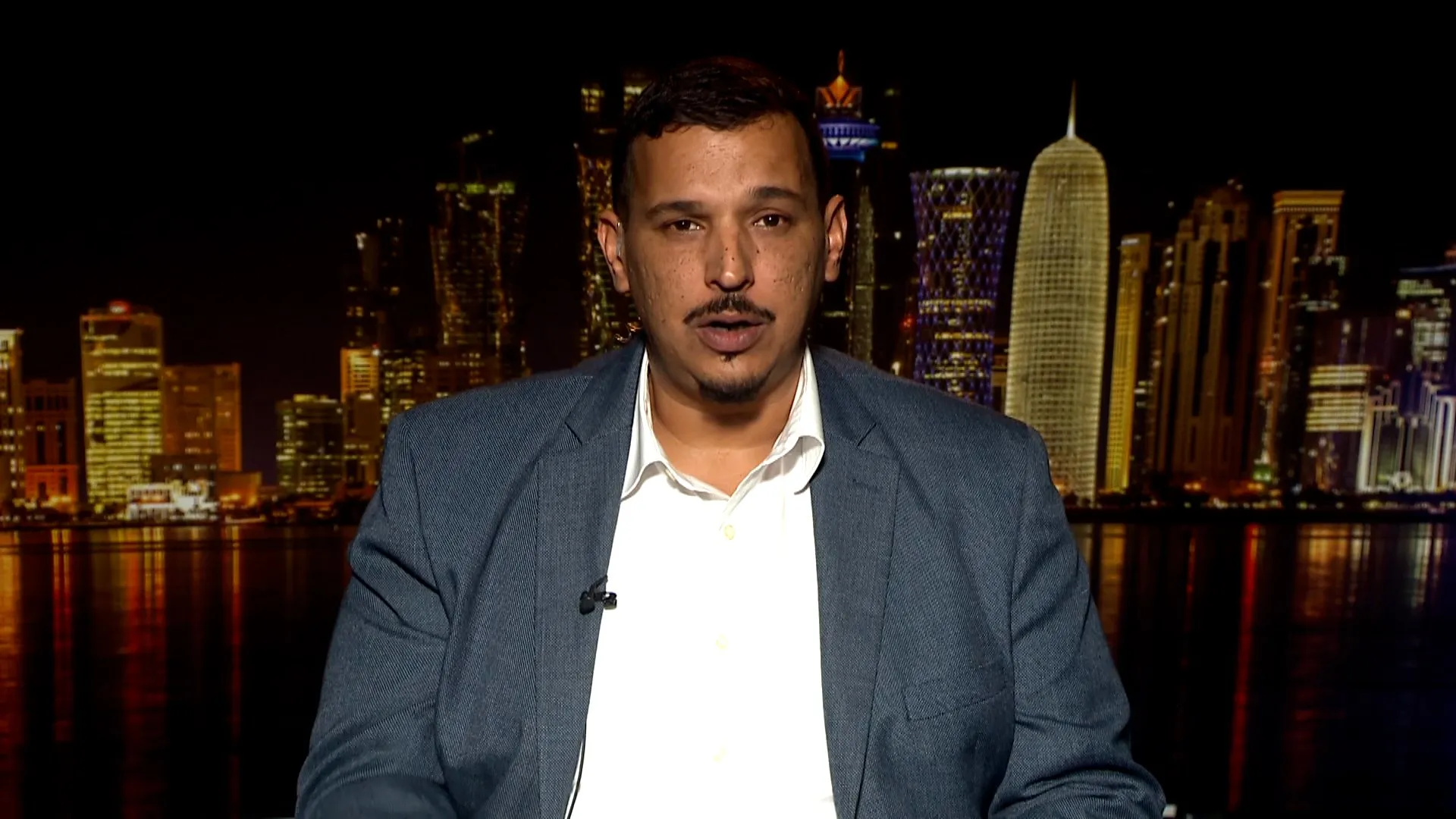
Saudi authorities say a Pakistani national was killed and several people injured in a second strike on Riyadh’s King Khalid International Airport. Sunday’s strike followed an attack on Saturday that killed 12 people and injured more than 300. Al Jazeera’s Malik Traina reports.
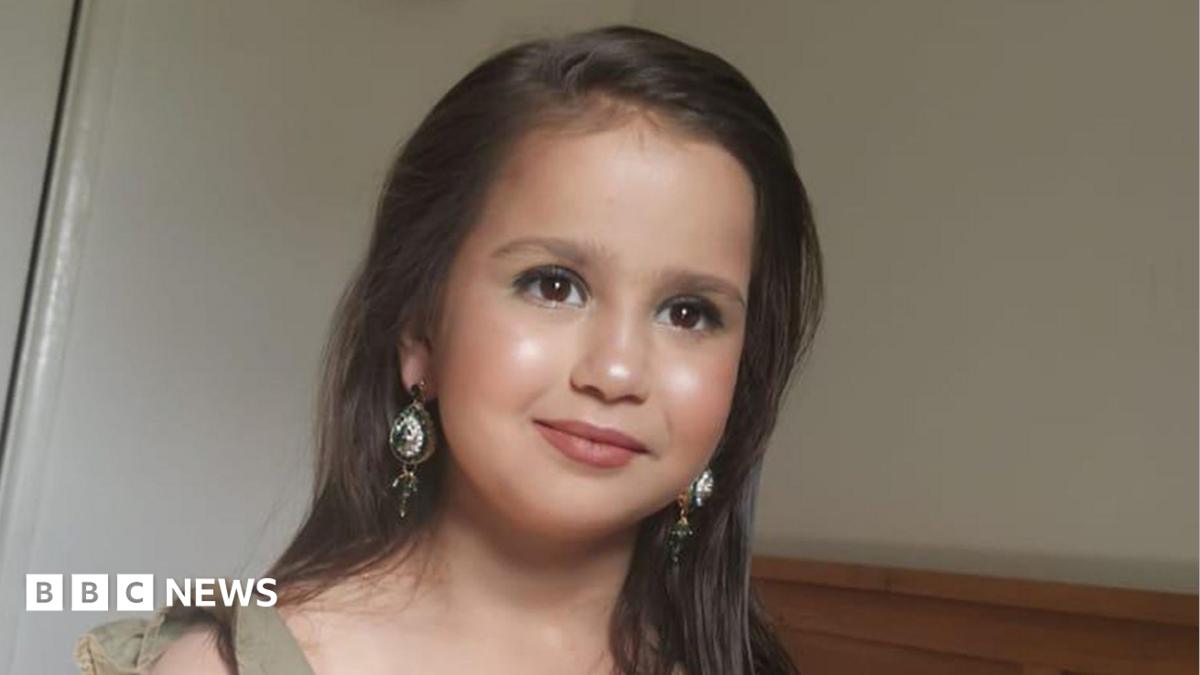
All five children, who are now aged between 16 and four, have been living in Pakistan since 2023. They were asked to speak to the judge in court, where the eldest said they were comfortable and the siblings were settled.
Sara’s grandfather, Muhammed Sharif, told the BBC he was relieved to be granted guardianship after three years of legal battles, saying his hope is that the children “stay healthy” and receive “a good education”.
“It is my responsibility to ensure they get the best possible education and care,” he said.
When told by the judge that the grandfather would become their guardian, the eldest child responded saying “that’s all good”.
The five children have been in Pakistan since August 2023, when they were brought to the country by Sara’s father, stepmother and uncle after Sara was killed.
The family was in hiding for weeks before the children were discovered by police at the grandfather’s house. They were initially put into state childcare.
The adults flew back to the UK and were arrested at the airport. Sara’s father Urfan Sharif and stepmother Beinash Batool were found guilty of Sara’s murder. Sharif was sentenced to a minimum of 40 years in prison and Batool received a minimum of 33 years.
Her uncle, Faisal Malik, was found guilty of causing or allowing her death and given a 16-year sentence.
Sara had been hooded, burned and beaten during a “campaign of torture” that lasted two years before her body was found at the family home in Woking, Surrey.
Islamabad, Pakistan – More than 9.5 million people have received subsidised petrol under a special fuel relief scheme launched by Pakistan’s prime minister, Federal Minister Shaza Fatima Khawaja told Al Jazeera on Wednesday.
The initiative, aimed at lower-income citizens, comes as the government attempts to help households deal with fuel price increases tied to the war on Iran.
Recommended Stories
list of 4 itemsend of list
The scheme, launched in September, offers 100 rupees ($0.36) off every litre of petrol to owners of motorcycles, rickshaws and small cars, through a text-message system.
Petrol prices have risen by nearly 50 percent since the war began on February 28, adding to Pakistan’s economic hardship and putting further pressure on consumers already grappling with rising inflation.
How the scheme works
Explaining the process, Khawaja, the minister for information technology and telecommunications, said applicants text their national ID number, vehicle registration, and province to 9771. A second message, sent before each visit to a pump, generates a token redeemable anywhere in the country.
Two- and three-wheelers get 500 rupees ($1.80) a week, capped at four tokens a month. Cars with engines of up to 800cc get 1,000 rupees ($3.60) every 10 days, for three tokens monthly.
After complaints, registration, once a paid service, was made free, and a five-litre minimum purchase was scrapped for the same reason.
Khawaja told Al Jazeera the system had been redesigned based on experiences of users on the ground.
Riders no longer need the vehicle to be registered in their own name, as long as they can supply the exact registration date shown on the documents.
“Even in my own house, there’s a bike registered in our name that our cook uses for daily errands,” Khawaja said, explaining why the ownership requirement for two- and three-wheelers was dropped on September 20.
An earlier cash-transfer scheme in April had reached just over a million bike owners, she said, largely because disbursement required a bank account most riders did not have.
‘The relief is decent’
Government officials say that the scheme has been expanded to include wider sections of society, especially those who depend on their vehicles to generate income.
“There’s a benefit; it’s not like there’s nothing,” Shakeel Ahmed, 45, an electrician in Islamabad, told Al Jazeera. “The relief is decent for people who use it normally, for local trips. But for people like us, who put in 1,000 to 1,500 rupees [$3.60-$5.40] of petrol a day, it’s not enough.”
Safiya Aftab, an economist, told Al Jazeera the scheme has reached the people it was meant to.
“The scheme has indeed reached low-income segments of society, people who typically use two-wheelers and 800cc cars. So yes, it’s a good thing that they are subsidising the poor,” she said.
Aftab, however, also pointed to a levy – 114 rupees ($0.41) for every litre – that the government charges. This, she said, was helping the government raise revenue. She said the government is now earning more than 100 billion rupees ($361m) a month from the levy, which is fuelling inflation.
“The levy was originally meant as a sort of environmental tax, to discourage the use of petrol. Now it has become a full revenue earner for the government, one that helps keep the fiscal deficit down,” the economist said.
What it costs and for how long
The Pakistani government has approved 75 billion rupees ($271m) for the scheme’s first three months, through November.
Petroleum Minister Ali Pervaiz Malik put the running cost at 25-30 billion rupees ($90m-$108m) a month at launch. By late September, he said, it had risen to 35-40 billion rupees ($126m-$144m).
Malik has said the government is prepared to run the scheme for up to 10 months, or “until the end of the war”, if needed.
Pakistan is currently under a $7bn International Monetary Fund programme, and an IMF team is in Islamabad this week for talks with the government as it seeks to keep its fiscal commitments on track while responding to the fuel shock.
Officials familiar with the government’s talks with the IMF say the Fund wants relief capped at three months and routed instead through the Benazir Income Support Programme, the country’s main cash-transfer scheme.
Khawaja said the IMF’s position from the outset was that relief had to be targeted, not universal, which was why the scheme was built around actual token use rather than a blanket price cut.
Who it leaves out
But there are claims that the relief is not reaching all. Cars with engines larger than 800cc, diesel vehicles and public transport are excluded entirely, leading some experts to suggest that the subsidy scheme risks missing the most vulnerable sections of Pakistani society.
“A poor household that uses public transport, walks to work, or relies on diesel-powered transport may receive nothing while still facing higher food and transport costs,” Khaqan Najeeb, a former adviser in Pakistan’s Ministry of Finance, told Al Jazeera.
More than 8.1 million tokens had gone to two- and three-wheelers by late September, compared with fewer than 380,000 for cars, Malik said. A November 2024 Gallup Pakistan survey found that 79 percent of respondents, in rural and urban areas alike, said they use public transport such as buses or wagons.
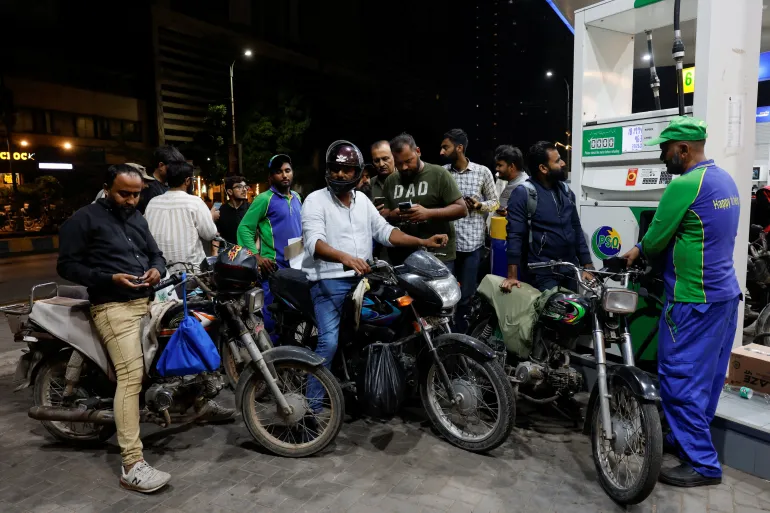
People wait to refuel their motorcycles at a petrol station following the rollout of a fuel relief scheme, which provides a fuel subsidy for eligible motorcycles, rickshaws and vehicles with engines of up to 800cc, in Karachi, Pakistan, September 17, 2026 [Akhtar Soomro/Reuters]
Does the relief go far enough?
At 100 rupees a litre, the maximum monthly saving is 2,000 rupees ($7.20) for a motorcycle user and 3,000 rupees ($10.80) for an eligible car owner, Najeeb said, calling it “useful household relief, but not enough to offset the broader cost-of-living shock”.
Petrol has climbed from 266 rupees ($0.96) a litre before the war to nearly 395 rupees ($1.42), despite a partial rollback in April. Inflation rose to 10.3 percent in September from 7 percent in February, Najeeb said.
Sajid Amin Javed, a senior economist at the Sustainable Development Policy Institute in Islamabad, said the relief was “minimal”, but added that this was understandable given the IMF constraints on Pakistan.
“The relief is minimal, and that is understandable as we are in an IMF programme,” Javed told Al Jazeera, arguing that cutting the petroleum development levy, which still adds 114 rupees to every litre, would deliver broader relief than a capped subsidy.
“The government is using the petroleum development levy to fill its revenue gap, but that comes at a significant cost in terms of inflation, growth and household welfare,” Javed said.
Najeeb, however, argued the scheme should not become a permanent fixture of Pakistan’s energy policy – and should be used only to make oil price shocks “less damaging”.
Salman Agha axed before T20 home series against Sri Lanka, but Shaheen Shah Afridi is retained as ODI captain.
Published On 6 Oct 20266 Oct 2026
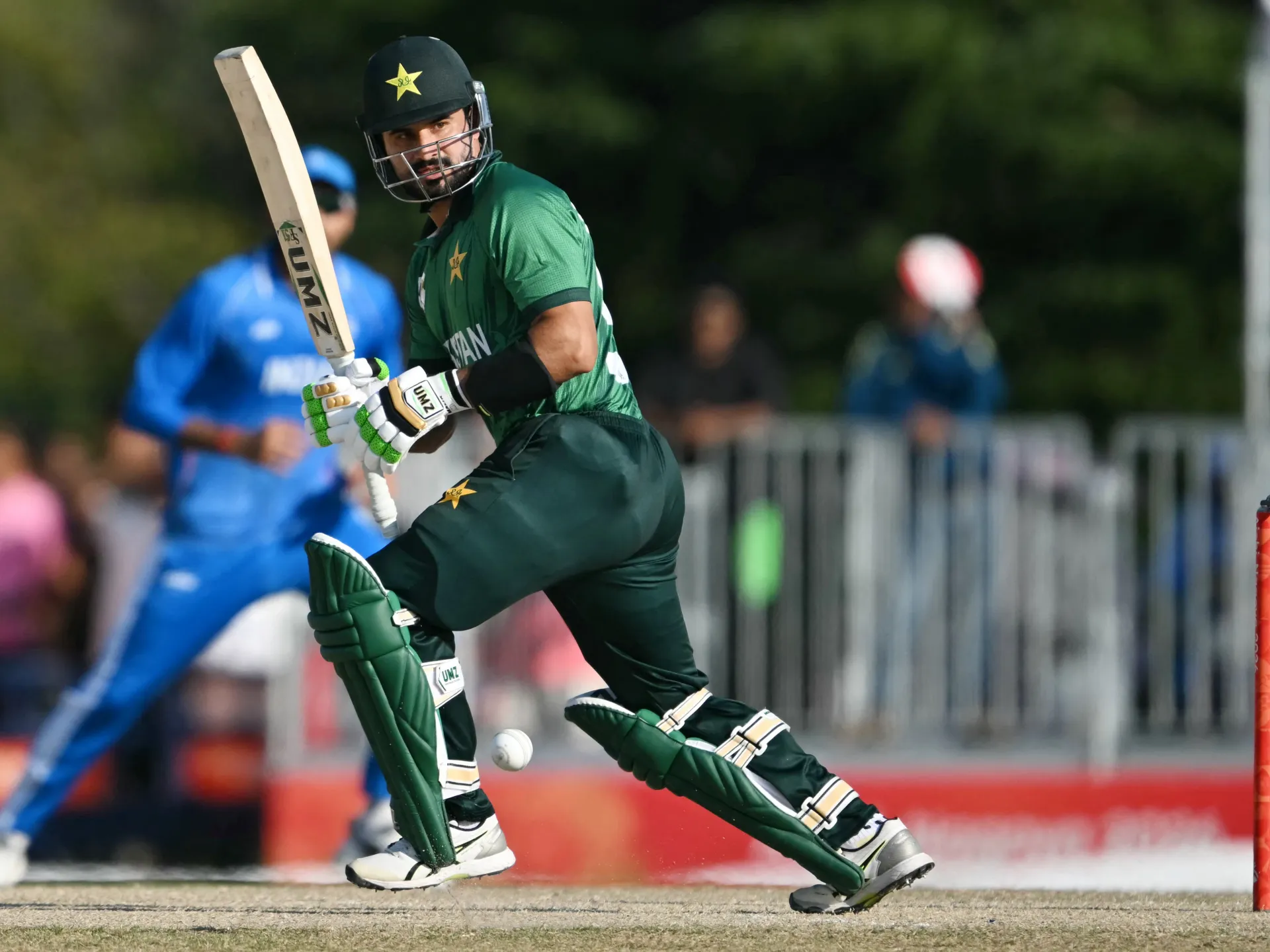
Sahibzada Farhan has replaced Salman Ali Agha as Pakistan’s Twenty20 cricket captain, ushering in changes to the leadership and squad for the upcoming three-match home series against Sri Lanka.
Farhan led Pakistan to a silver-medal finish at the Asian Games, losing to India in the final on Sunday.
Recommended Stories
list of 4 itemsend of list
Batter Hasan Nawaz and fast bowler Naseem Shah were recalled to the T20 squad.
Nawaz had been out of favour since November, but in the Asian Games final he hit 96 and was out off the final ball as Pakistan lost by 19 runs.
Shah last played in the shortest format at the T20 World Cup in February. He was also added to the one-day international squad for the following tri-series with Sri Lanka and England.
Rising star Razaullah was rewarded for his impressive performance on his Test debut against England last month in Birmingham and was included in the T20 and ODI squads. He is yet to make his white-ball debut.
Fast bowler Shaheen Afridi was retained as ODI captain of a team that included Agha and Babar Azam.
But the selectors ignored Mohammad Rizwan because the wicketkeeper was under investigation by the National Cyber Crime Investigation Authority. Rizwan was one of the seven players who were summoned home after Pakistan lost the second Test to England at Lord’s in August.
Khawaja Nafay was the specialist wicketkeeper for the T20s while Ghazi Ghori, who made his Test debut in England, was the first-choice gloveman for the ODIs.
Rawalpindi will host the three Sri Lanka T20s from October 9-13. The tri-series begins on October 18.
Tait back as bowling coach
Former Australian fast bowler Shaun Tait was named as Pakistan’s bowling coach after his recent stint with the Bangladesh team. Under Tait, Bangladesh beat Pakistan 2-0 in the Test series this year.
Tait replaced Ashley Noffke, who has been contracted by the Netherlands.
Pakistan T20 squad: Sahibzada Farhan (captain), Abdul Samad, Abrar Ahmed, Arafat Minhas, Fakhar Zaman, Hasan Nawaz, Muhammad Imran Randhawa, Khawaja Nafay, Maaz Sadaqat, Naseem Shah, Razaullah, Saim Ayub, Mohammad Salman Mirza, Shadab Khan, Sufiyan Moqim.
Pakistan ODI squad: Shaheen Shah Afridi (captain), Abrar Ahmed, Salman Ali Agha, Arafat Minhas, Babar Azam, Faheem Ashraf, Fakhar Zaman, Ghazi Ghori, Haris Rauf, Hasan Nawaz, Naseem Shah, Razaullah, Saad Baig, Saim Ayub, Shadab Khan, Sufiyan Moqim.
During emergency talks in Riyadh, Turkiye and Pakistan agreed to send rapid deployment forces to Saudi Arabia. Yemen’s government forces, which are backed by Riyadh, launched a counter-offensive against the Houthis to regain lost territory.
The Mecca Alliance says it has agreed to trigger collective deterrence measures in response to “heinous attacks” by Yemen’s Houthi group against Saudi Arabia.
In a statement on Monday, the Pakistani Foreign Ministry said Saudi Arabia, Pakistan and Turkiye had decided to “provide the agreed military forces and capabilities and ensure their rapid deployment” to the kingdom.
Saudi Arabia’s Defence Minister, Khalid bin Salman, said the member countries agreed to trigger the alliance in response “to the attacks and all those responsible for them”.
The announcement comes as the Saudi-backed Yemeni government has launched a counteroffensive to push the Iran-aligned Houthis back from territory captured last month.
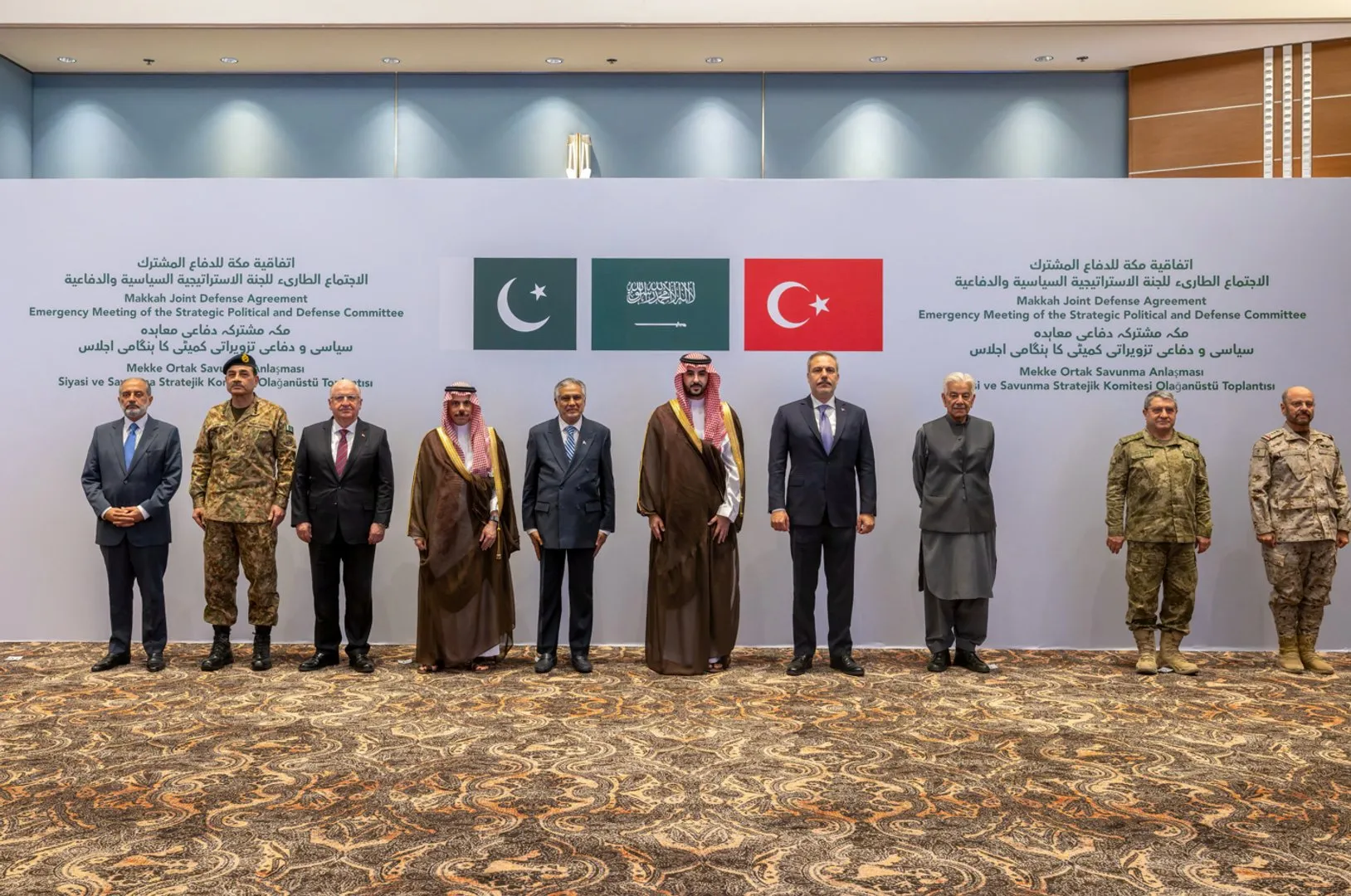
The agreement was reached during an emergency meeting of the Strategic Political and Defence Committee under the Mecca Alliance in Riyadh.
The mutual defence pact was signed in August, shortly before the Houthis launched their offensive in Yemen, which has included attacks against Saudi targets. Questions as to whether Islamabad and Ankara would agree to trigger the agreement have persisted since.
However, with hostilities increasing in Yemen, the committee agreed to “move immediately” to implement the collective defence measures to “ensure their rapid deployment in the Kingdom,” the joint statement reads.
The defence commitments will be executed under “approved arrangements” and the national laws of the three countries, the statement added.
Government warns of crackdown as supporters of jailed former prime set off from northwest Pakistan towards Islamabad.
Supporters of jailed former Pakistani Prime Minister Imran Khan have set off on a protest march from the country’s northwest after talks with the government to call off the demonstration failed.
More than 5,000 were reported to have begun the rally on Sunday. The march, planned by Khan’s Pakistan Tehreek-e-Insaf (PTI) party, was originally scheduled for September 27 but was postponed until October 4 to allow talks between the government and the PTI leadership to take place.
Recommended Stories
list of 3 itemsend of list
However, two rounds of talks over the weekend failed to break the deadlock, and the PTI decided to carry out its plan, which is the latest attempt to pressure the government into releasing Khan, the country’s most popular political figure according to polls, who has been behind bars since August 2023 following a series of convictions that his party calls politically motivated.
All but one of the convictions against the former PM have since been suspended or overturned on appeal.
Videos posted on the PTI’s official social media showed supporters joining the march in different areas of Khyber Pakhtunkhwa (KP) province, which is ruled by the party, and setting off in convoys.
Sohail Afridi, the region’s chief minister, had earlier posted on social media that the demonstration in support of Khan would go ahead.
He said the march will make its way to Khairabad, 80 kilometres (50 miles) west of Islamabad, by Thursday, where the plan for the “next phase” will be announced.
Government warns protesters
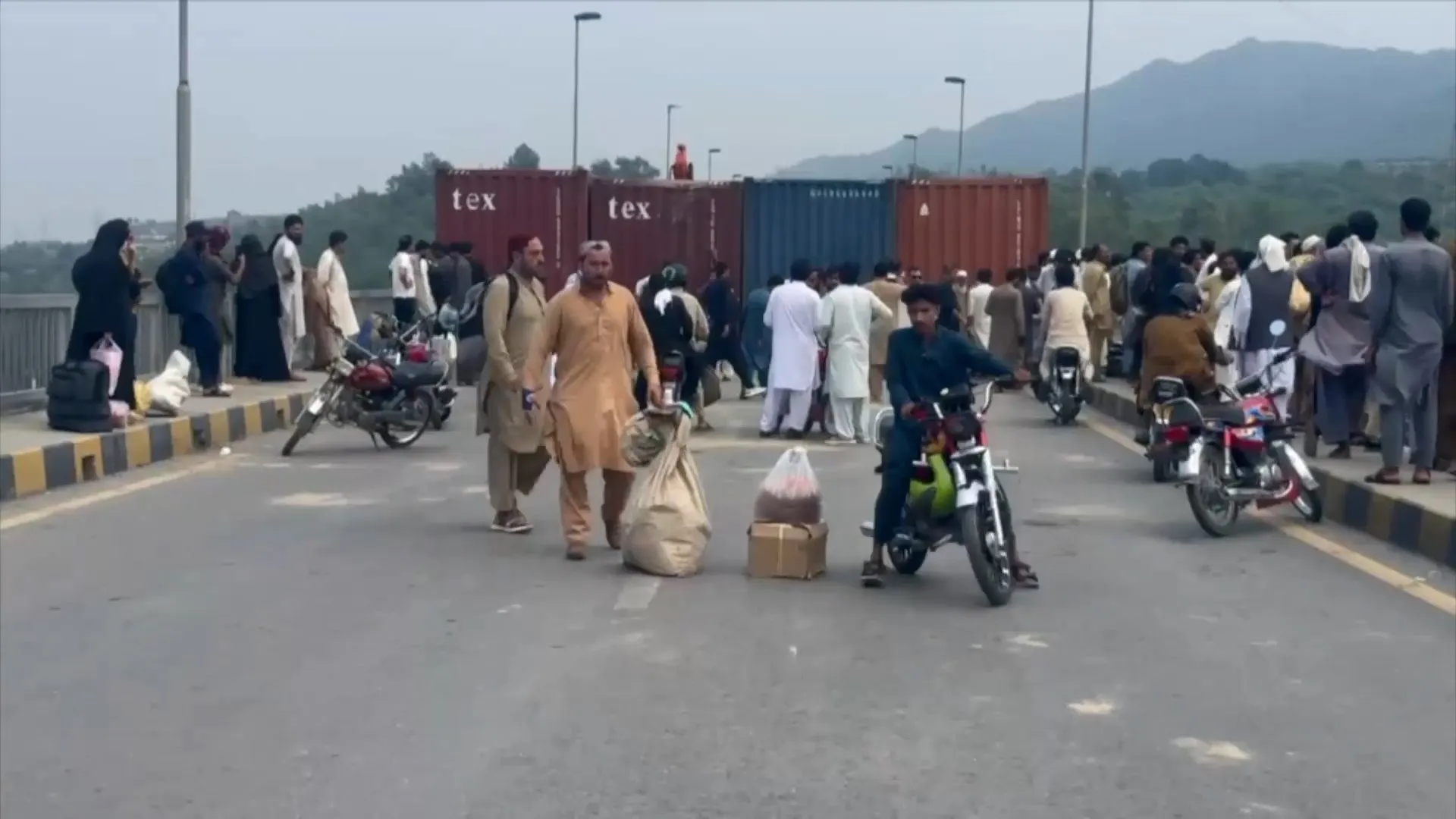
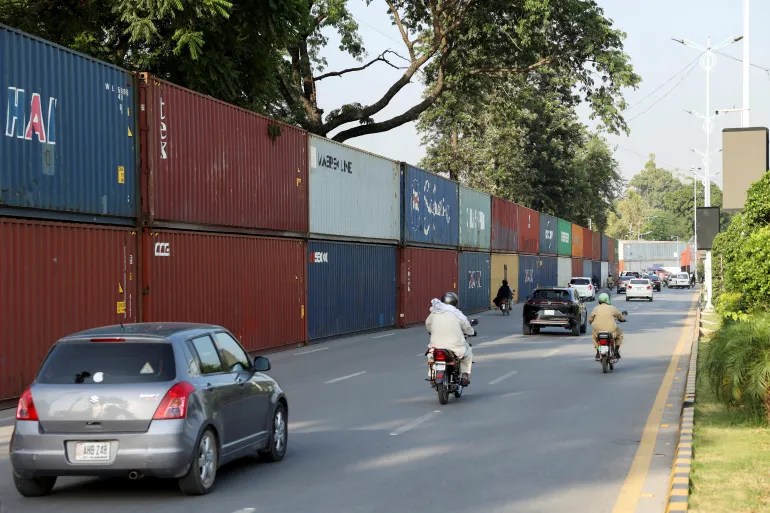
The government has been preparing for weeks for the arrival of PTI demonstrators in Islamabad. It has erected barriers using shipping containers to block main access routes to the capital.
Interior Minister Mohsin Naqvi confirmed earlier on Sunday that the talks between the two sides had failed. He accused Afridi of “sabotaging” the negotiations, and added that the government would not allow the PTI to “create a disturbance”.
He also cited an Islamabad High Court order from September 14, ruling that no political party or its leadership has the “lawful right to occupy public roads, highways, interchanges, toll plazas and buildings in Islamabad”.
“If they violate the orders, whether they are workers or politicians, whether they are protesting within KP or outside KP, we will pursue them one by one. This time, we want to ensure that these repeated episodes of creating disturbance in Islamabad come to an end,” Naqvi said.
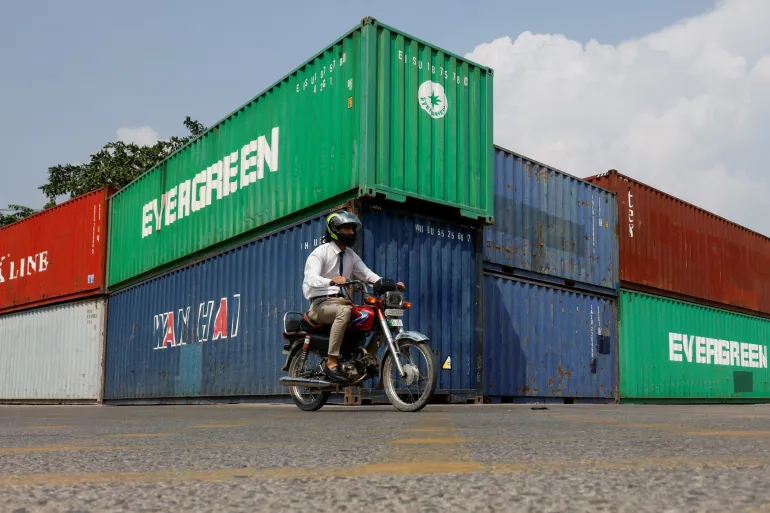
Traffic moves past shipping containers used to block a planned march by former Prime Minister Imran Khan’s Pakistan Tehreek-e-Insaf party, in Islamabad [File: Reuters]
Concerns about the 73-year-old Khan’s health, in particular the condition of his right eye that has required months of specialist treatment, have prompted the PTI’s campaign for his release.
The party has also called for the release of Khan’s three sisters, whose arrests last month further heightened tensions.
James Dorsey, a fellow at the National University of Singapore, said Khan was “essentially a populist leader” with “a genuine popular movement that had broad popular support”.
That is behind the “determination by the government to prevent [the protesters] from entering Islamabad,” he told the AFP news agency.
Given Pakistan’s security concerns, particularly following its unresolved February 2026 conflict with Afghanistan, Islamabad wants to avoid escalation in the face of the protests, he added.
“It’s a problem for the government, but I don’t think it’s an existential threat,” he said.
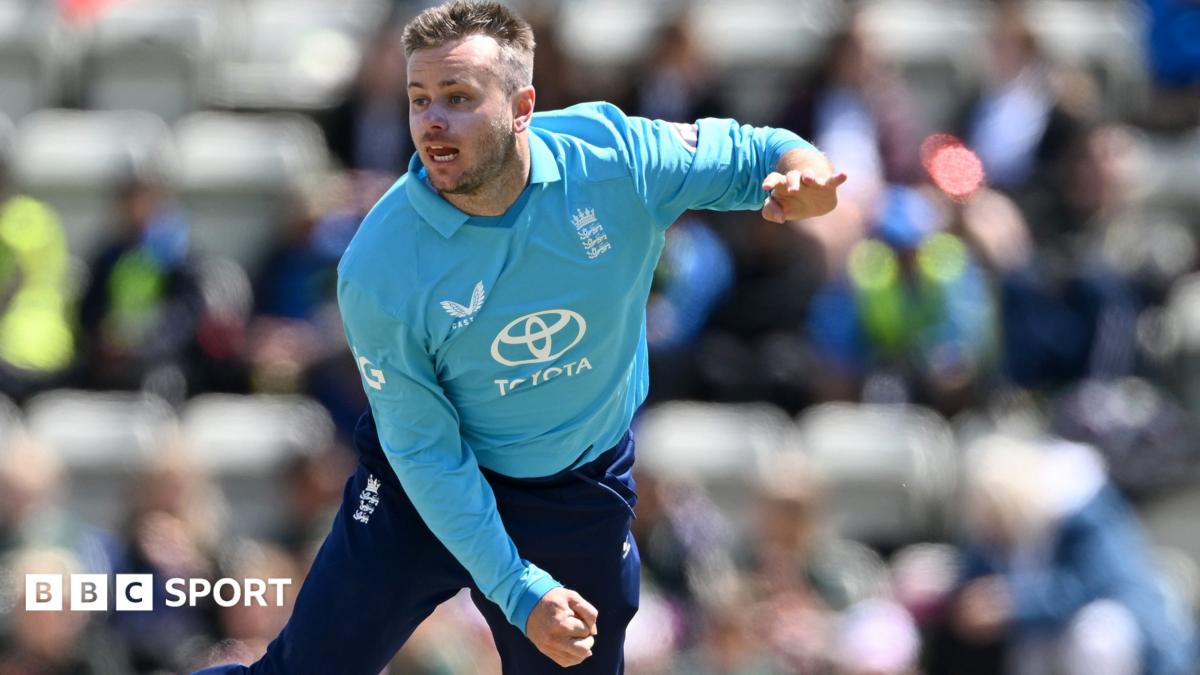
Leg-spinner Mason Crane could play for England for the first time in eight years after being recalled for the one-day international tri-series in Pakistan.
The 29-year-old won his only Test cap against Australia in Sydney in 2018 and is now given an opportunity in the series which also involves Sri Lanka next month.
Crane, who also played two T20 internationals in 2017, could also push his case in the fight to be England’s number one spinner in Test cricket.
Sam Curran and Adil Rashid both return after injuries, and uncapped pair James Coles and Henry Crocombe are included.
Brydon Carse, who is under an investigation from the Cricket Regulator following an incident outside a nightclub in Derby in August, remains absent.
———————————————————
England squad for tri-series in Pakistan: Harry Brook (Yorkshire – captain), Gus Atkinson (Surrey), Sonny Baker (Hampshire), Tom Banton (Somerset), James Coles (Sussex), Jordan Cox (Essex), Mason Crane (Glamorgan), Henry Crocombe (Sussex), Sam Curran (Surrey), Liam Dawson (Hampshire), Ben Duckett (Nottinghamshire), Will Jacks (Surrey), Jamie Overton (Surrey), Adil Rashid (Yorkshire), Joe Root (Yorkshire), Josh Tongue (Nottinghamshire).
The deaths appear to be the first at the hands of Somali pirates in more than a decade.
By Al Jazeera Staff, AFP and Reuters
Published On 30 Sep 202630 Sep 2026
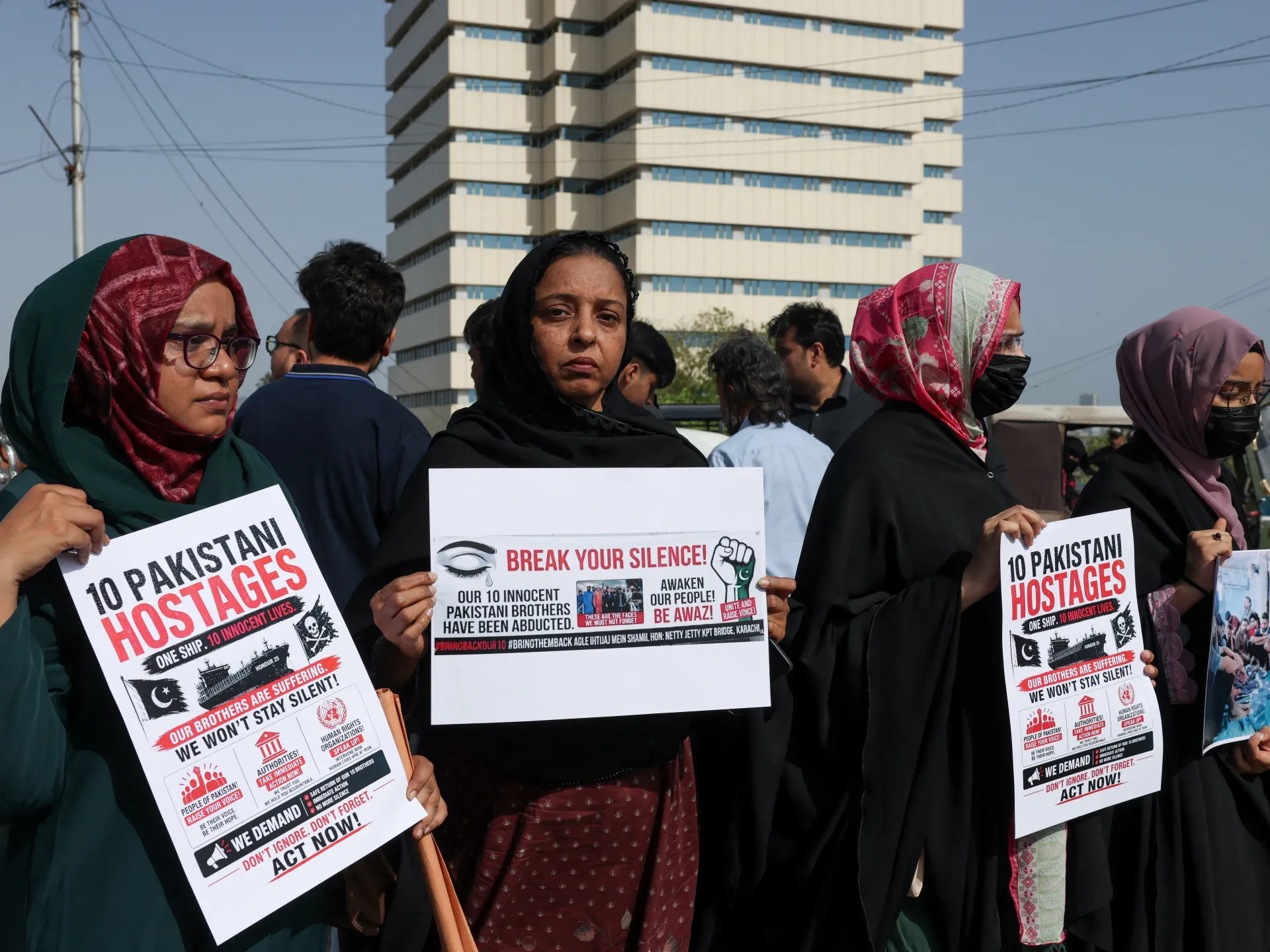
Pirates have killed five crew members on board a Palau-flagged oil tanker off the coast of Somalia before security forces rescued the ship, according to Somali authorities.
The deaths on the tanker, the MT Honour 25, were announced on Tuesday.
Recommended Stories
list of 3 itemsend of list
They appear to be the first deaths at the hands of Somali pirates in more than a decade and come amid a resurgence of Somali piracy that experts have attributed in part to the effects of the United States and Israel’s war on Iran.
The MT Honour 25, which authorities said was carrying 18,500 barrels of oil, was seized by pirates off Somalia on April 21.
The Information Ministry of Puntland, a semiautonomous region of Somalia, said in a statement that a rescue mission had freed the ship and captured 16 suspected pirates.
“Before the operation began, the pirates on board the ship killed five of the crew,” the statement said. “Among those killed were three from Pakistan, one from Myanmar and one from India.”
Four other crew members, three Pakistanis and one Indian, were injured, it said.
In a post on social media, the Puntland Maritime Police Force said the vessel was “safe” and under the government’s control. It said efforts were continuing to find others involved in the hijacking.
The rescue follows another operation last week in which the maritime police freed the Sibu 1, a tanker sanctioned by the US that Somali pirates had hijacked in August.
But 28 of the 41 pirates arrested in that operation later escaped while being transferred to jail, and several Puntland security officials accused local police of complicity.
At least 15 attacks have been reported off Somalia since April, according to officials.
A previous wave of piracy, from 2008 to 2014, disrupted one of the world’s busiest shipping routes, cost the global economy billions of dollars and resulted in hundreds of millions of dollars in ransom payments.
Repeated incidents of organisational failure at the Asian Games have left athletes frustrated, exhausted and disappointed as rain-delayed matches became the latest headache for host nation Japan.
A glitzy opening ceremony did little to overshadow the growing accommodation crisis, logistical gaffes and scheduling issues that have headlined the Games, which opened on September 19 in Aichi-Nagoya.
Recommended Stories
list of 4 itemsend of list
India’s multiple-Olympic medallist PV Sindhu lamented a badminton schedule that saw her play three matches within 18 hours.
“Three matches in 18 hours. Back at 3am, out again at 8:30am. It took a toll,” Sindhu wrote on social media after her quarterfinal exit on Sunday.
Pakistan’s volleyball team was mistakenly taken to the wrong gymnasium an hour before the start of its preliminary round match, forcing its members to change into their kits on the bus and leaving them without enough time for a warm-up.
“Japan has destroyed the dignity and discipline of the Asian Games,” men’s captain Murad Jehan wrote in a now-deleted video on his Instagram account as the team travelled to their match against Uzbekistan, which they won 3-0. “Really disappointing situation.”
He said athletes would often return from training to find their hotel restaurant closed, leaving them unable to eat. “This situation at Asian Games is not acceptable.”
The South Korean men’s basketball team faced a similar incident when they missed a light practice session hours before their final after their shuttle bus did not show up on time. Team officials said they received no explanation.
It was a repeat of what the men’s football team faced when the bus did not arrive at the team’s hotel. A day earlier, the bus took the athletes to a baseball ground instead of the Mizuho Rugby Stadium, causing a 30-minute delay.
‘Rain has ruined everything’
On Monday, persistent rain became the organisers’ latest headache when it disrupted several competitions, including tennis, surfing and cricket.
Both the men’s cricket quarterfinals between Pakistan-Hong Kong and India-Afghanistan were washed out after the playing field was drenched at Korogi Athletic Park on the outskirts of Nagoya.
With no contingency built into the schedule for rained-off matches, Pakistan and India advanced to the semifinals of the T20 tournament by virtue of their higher rankings.
It was a bitter pill for Afghanistan, who saw the gold medal go to India due to the rankings rule three years ago when their Hangzhou Games final was abandoned due to rain.
“The rain started yesterday, so hard luck for us,” Afghanistan opener Mohammed Akram said.
“We would have been happy to play here with India. Our players are in form.
“But unfortunately the rain has ruined everything.”
Typhoon Surigae lashed southern Japan’s Okinawa prefecture on Monday and was projected to track northeast towards central Japan and the Tokyo region by midweek, raising the prospect of strong winds and heavy rain further disrupting the Games.
Typhoon Dujuan hit the Games early in week one, causing equestrian events in Tokyo to be suspended although most competitions were unaffected.
The continental sporting showpiece is mainly based in the city of Nagoya and Aichi prefecture, but Tokyo is also hosting diving events while Osaka is hosting football matches.
The rain saw several tennis matches scrapped on Sunday and caused match delays on Monday.
Fans hoping to catch Filipino headliner Alex Eala’s opening match against Thai opponent Patcharin Cheapchandej were repeatedly frustrated at the Higashiyama Park Tennis Centre.
Eala, the women’s top seed, had her match shifted off centre court amid the scheduling logjam and wrapped it up in 55 minutes with a 6-1, 6-0 win over Patcharin.
Poor wave conditions saw the surfing called off early at the Long Beach venue southeast of Nagoya with medal finals having already been pushed to Tuesday.
India’s Kishore Kumar Anbarasu was able to complete his heat before it was abandoned, beating China’s Ma Wensong to make it into the quarterfinals on the sport’s Asian Games debut.
“It was not the easiest conditions. It was very hard to find the good waves,” Anbarasu said.
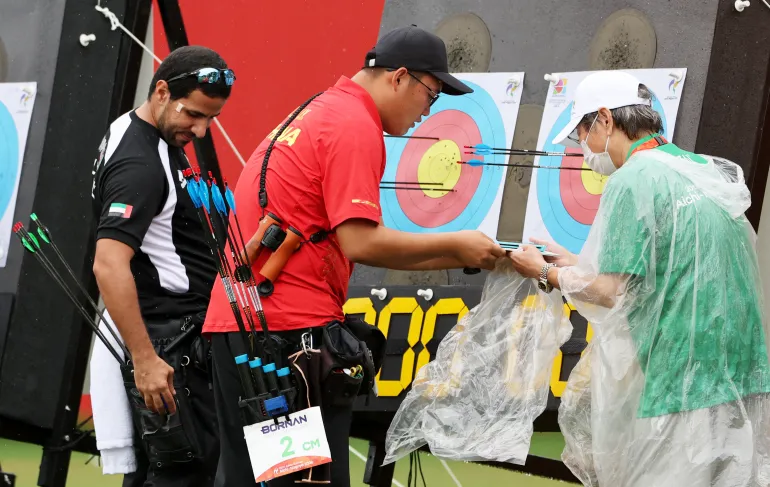
China’s Jinyi Liu puts his targets into plastic bags due to the rain during his compound men’s individual 1/16 elimination match against the United Arab Emirates’s Sultan Almenhali [Anushree Fadnavis/Reuters]
Organisers apologise for logistical chaos at ‘sad’ games
Organisers on Saturday apologised for logistical glitches at the Games that left thousands of athletes with cramped housing conditions and undersized beds that forced several countries to house their athletes elsewhere.
Satoshi Murate, secretary-general of the local organising committee, said a late influx of about 2,000 additional athletes and officials had stretched resources.
“There have been mistakes in accommodation and transport for various reasons,” Murate said.
“Whatever the cause, AINAGOC [the Aichi-Nagoya Asian Games and Asian Para Games Organising Committee] is responsible for providing the service, and I frankly apologise for the mistakes.
“Our staff work every day to identify the causes of each mistake and make sure they don’t happen again. I think you can see that accommodation and transport have improved greatly compared with the early days.”
Organisers chose not to build a traditional athletes village in a bid to save money. Competitors instead are staying in hotels, temporary wooden units and on a cruise ship.
India’s multiple badminton medallist HS Prannoy said that made for a disappointing experience.
“It was sad,” the 34-year-old, who won team bronze, said in a YouTube video published by the Badminton Association of India.
“It never felt like we were playing in an Asian Games, to be honest.”
Relations strain further as Afghanistan and Pakistan trade accusations over terrorism and cross-border violence.
Published On 27 Sep 202627 Sep 2026
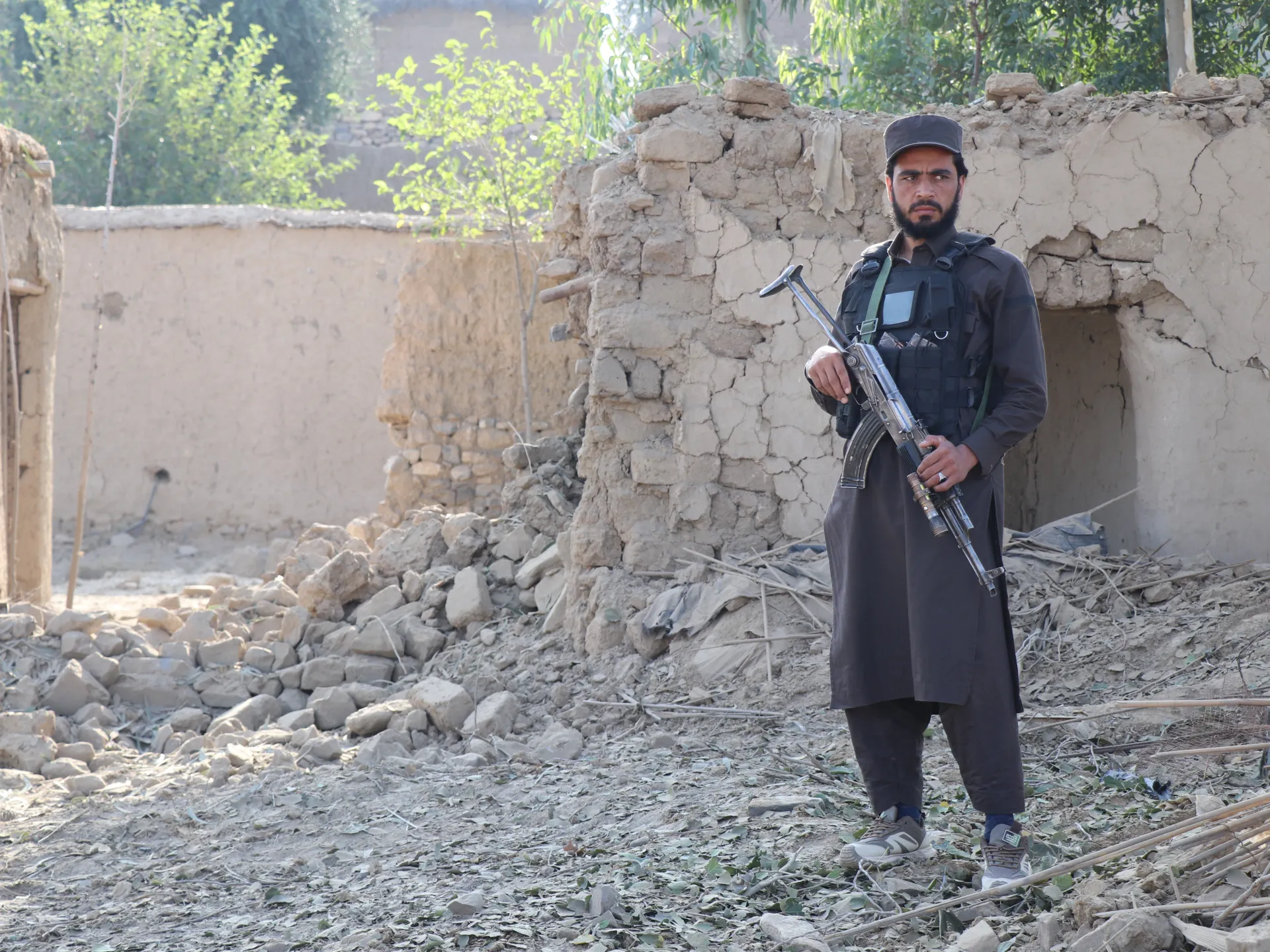
Afghanistan’s Ministry of Defence said its forces killed 28 fighters in the eastern province of Nuristan who had crossed the border from Pakistan.
In a statement posted to X, the Taliban’s defence ministry confirmed it had engaged in clashes with the opposing group on Sunday.
Recommended Stories
list of 3 itemsend of list
The defence ministry alleged that most of the fighters were former Afghan government security personnel recruited by Pakistan’s intelligence services with promises of asylum and well-paid employment in foreign countries.
The defence ministry claimed the fighters included ISIL (ISIS) fighters who were supported by Pakistani militias.
Pakistan’s Ministry of Information and Broadcasting rejected the allegations, describing them in a post on X as “frivolous, baseless and devoid of any truth”.
Pakistan denied that its security forces or intelligence agencies were involved in clashes in Nuristan, had recruited or trained former Afghan security personnel, or had facilitated ISIL (ISIS) or other armed groups in Afghanistan.
Pakistan’s information ministry also said the Taliban “should take credible and verifiable action against terrorist organisations operating from its territory” and fulfil its obligation so that “Afghan soil will not be used for terrorism against Pakistan or any other country rather than attempting to deflect responsibility through fabricated accusations”.
Escalating tensions
The clashes follow increasing tension between the two countries.
Last week, Pakistan launched air strikes on 10 locations in Afghanistan it said were used to store and launch drones, some of which were used in cross-border attacks.
The Pakistani air strikes on Thursday killed at least four people, a spokesman for the Afghan Taliban government said while promising to deliver an “appropriate response”.
Pakistan has repeatedly accused Afghanistan of sheltering fighters who attack its territory, a charge Kabul denies.
Sunday’s incident also follows Pakistani air strikes in Afghanistan on September 21 that Islamabad said killed 28 fighters. Afghan officials said civilians were killed and the U.N. mission in Afghanistan confirmed three civilian deaths.
The top seeds defend their Asian Games squash titles, becoming the first players to qualify for the Los Angeles Games.
Published On 27 Sep 202627 Sep 2026
Malaysia’s Eain Yow Ng and Sivasangari Subramaniam have made history by becoming the first squash players to qualify for the Summer Olympics after winning gold medals at the Asian Games in Aichi-Nagoya, Japan.
The defending champions won the men’s and women’s finals on Sunday and earned a ticket to the 2028 Los Angeles Games, where squash will make its Olympic debut.
Recommended Stories
list of 4 itemsend of list
Squash is among a handful of sports at Aichi-Nagoya where a gold medal serves as automatic qualification for the next Olympics.
Both Eain and Sivasangari successfully defended their titles without dropping a single game in their campaigns. Their victories gave Malaysia its fifth and sixth gold medals.
World number 18 Eain thrashed India’s Abhay Singh 11-9, 11-5, 11-5 in 33 minutes at the Nagoya Kinjo Futo Arena and became the first Malaysian to qualify for the Olympics.
Subramaniam in action during the women’s singles gold medal match [Chalinee Thirasupa/Reuters]
World number five Sivasangari joined her compatriot soon after when she made quick work of the women’s final against India’s Anahat Singh.
She demolished Singh, ranked 17th in the world, 11-4, 11-4, 11-7 in just 23 minutes to clinch gold.
Earlier, Singh, the world junior champion, produced a stellar comeback in the semifinals from two sets down to overpower Japan’s Satomi Watanabe (9-11, 11-13, 12-10, 11-6, 11-3) on Saturday.
“I think it is the best win of my career,” Singh, 18, said after the match. “She’s number six in the world, and that’s the highest win I’ve ever had in my squash career.”
She made history even before Sunday’s match began when her semifinal victory made her the first Indian woman to reach the singles final at the Asian Games.
Earlier in the day, Pakistan picked up two more bronze medals at the games as third seed Noor Zaman toppled compatriot Ashab Irfan 3-0 in the bronze medal match. Watanabe took a 3-1 win over Hong Kong’s Sin Yuk Chan.
Pakistan’s Noor Zaman celebrates after winning his bronze medal match against compatriot Ashab Irfan [Chalinee Thirasupa/Reuters]
Organisers of the pro-Imran Khan protests have postponed their rallies to test the Pakistani government’s resolve in keeping the capital blockaded. Shipping containers have been placed in Islamabad’s streets to stop protests calling for the former PM’s release from prison.
Shehbaz Sharif speaks as Islamabad, Riyadh and Ankara army chiefs meet to discuss Mecca pact, closer military ties.
Pakistan’s prime minister has condemned Houthi attacks on Saudi Arabia, warning that any “threat to the sanctity” of the Muslim holy cities of Mecca and Medina is a “red line that must never be crossed”.
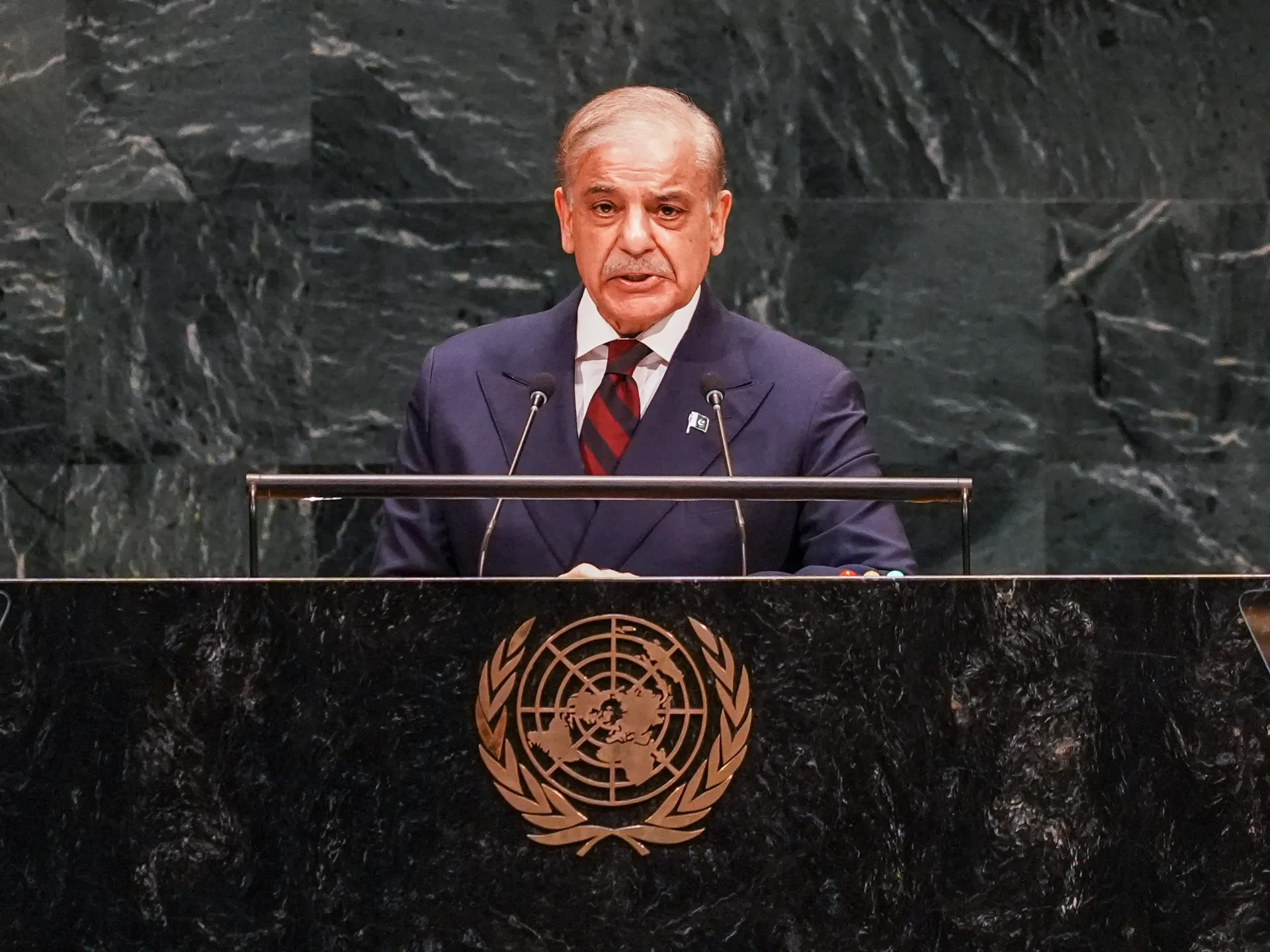
Addressing the United Nations General Assembly in New York on Friday, Shehbaz Sharif denounced recent Houthi attacks as “deplorable”.
Recommended Stories
list of 3 itemsend of list
He added that an attack by the Iran-aligned Yemeni group, which Riyadh says targeted Mecca, “outraged Muslims across the globe”. The Houthis have dismissed the accusations as a “heinous lie”.
Last month, Pakistan, Saudi Arabia and Turkiye signed a trilateral defence pact, formally known as the Mecca Joint Defence Agreement. The pact states that an attack on any member will be treated as an attack on all. However, Islamabad and Ankara have refrained from getting involved in Riyadh’s ongoing fight with the Houthis.
The military chiefs of all three countries met in Riyadh on Friday and discussed enhancing intelligence sharing and military coordination, the Pakistani military said. The chiefs reviewed the security situation and threats facing Saudi Arabia, affirmed a commitment to collective defence and pledged to turn Mecca Agreement commitments into effective cooperation, the army added.
It is not clear what, if any, support Ankara and Islamabad may provide to Riyadh. In a written interview published by the US media outlet Newsweek on Friday, Turkish President Recep Tayyip Erdogan said support could include “intelligence, logistics or ammunition, with more extensive military assistance possible depending on the scale of the threat”.
Iran and Palestine
In Sharif’s UN address, he also referenced the US-Israeli war that was launched against Iran in late February, as well as Islamabad’s role as a co-mediator.
Pakistan’s efforts culminated in the Islamabad Memorandum of Understanding, signed by Washington and Tehran, which was intended to help end the conflict.
The accord has since unravelled while regional countries push for a conclusive end to the war, which has caused a global energy crisis and exacerbated tensions across the Middle East.
“Yet amid the roar of missiles, drones and guns, the voice for diplomacy must echo even louder and stronger,” Sharif said.
He added that the Strait of Hormuz, which Iran has effectively blockaded, and the Bab al-Mandeb waterway, which is now largely under Houthi control, are “arteries of the global economy” that should remain free and safe.
The Pakistani prime minister also denounced what he described as Israel’s “genocidal agenda” in Palestine, while condemning “Israeli aggression against Lebanon and Syria”. These were sentiments echoed earlier in the day by Lebanese Prime Minister Nawaf Salam in his UN General Assembly address.
India, Kashmir, Afghanistan
Closer to home, Sharif’s speech touched on tensions with Pakistan’s neighbours.
Criticising India, he accused New Delhi of weaponising the Indus waters, which both countries have jointly managed for more than six decades. The two neighbours heavily rely on the Himalayan river network.
Sharif warned that “any attempt to stop, impede or divert Pakistan’s share of the waters will be treated as an act of war”.
He also called for what he described as a “just and fair solution” to the Kashmir dispute, which both Pakistan and India claim in its entirety. Sharif alleged that there have been attempts to “alter the legal status” of Kashmir through demographic engineering.
Another pressing issue for Islamabad is the threat posed by the Tehrik-e-Taliban (TTP), or Pakistani Taliban. Sharif said groups operate from “sanctuaries inside Afghanistan, with the aim of destabilising Pakistan”, insisting that attacks launched from Afghanistan “must come to a grinding halt”.
This comes as the latest cross-border fighting left several Afghan Taliban fighters dead on Friday.
Pakistani security forces report ongoing cross-border fire in latest escalation in fighting between the neighbours.
Published On 25 Sep 202625 Sep 2026
Pakistan has foiled an “attempted Afghan aggression” on the Pakistan-Afghan border.
Pakistani security sources said several Afghan members of the Taliban were killed in an intermittent exchange of fire in the Gulistan area of the border on Friday and that fighting was ongoing.
Recommended Stories
list of 3 itemsend of list
There has been no official confirmation from either country involved.
The Afghan government said on Thursday that it would deliver an “appropriate response” to Pakistani air attacks on 10 locations in Afghanistan earlier in the day.
The strikes were in response to a “deliberate and unlawful incursion into Pakistan by drones” on Wednesday, Pakistani Information Minister Attaullah Tarar said on Thursday.
Tarar said in a post on his X account that Pakistan’s aerial and drone attacks hit “terrorist hideouts and support infrastructure including drone launching and storage sites”.
He also posted a video said to show the military strikes on the Afghan sites.
Afghanistan’s government spokesperson Zabihullah Mujahid said the air strikes targeted Kandahar, Paktia and Khost provinces.
Taliban officials denied that their government launched drones against Pakistan on Wednesday.
The air raids on Thursday were carried out amid growing tensions between the former allies over attacks by armed groups in Pakistan, which triggered their worst fighting in years in February.
Islamabad accuses Kabul of harbouring fighters who stage cross-border attacks, but Afghanistan’s government denies harbouring anti-Pakistani armed groups and says the attacks are Pakistan’s internal problem.
The escalation threatens mediation efforts by China, Turkiye, Qatar and Saudi Arabia to broker a lasting peace between the two neighbours.
Islamabad, Pakistan — The motorway linking Pakistan’s capital with Peshawar, about 180km (110 miles) to the northwest, has been closed to all traffic until further notice, according to a police notification.
So have the highway towards Dera Ismail Khan, the Hazara motorway and the Grand Trunk Road at Attock.
Recommended Stories
list of 4 itemsend of list
Each carries traffic between Islamabad and Khyber Pakhtunkhwa, the province governed by the party of jailed former Prime Minister Imran Khan, whose supporters plan to march on the capital on Sunday, September 27, demanding his release.
The motorway from Lahore, about 375km (235 miles) to the southeast, remains open.
Inside Islamabad, workers have welded shipping containers together and filled them with gravel and sand so they cannot be pushed aside. Several schools and colleges have been told to shut so police brought in from Punjab and Sindh can be housed there.
Police expect the march to draw between 20,000 and 25,000 people, according to local media reports.
While two of the country’s main opposition parties announced marches on the capital this month, only Khan’s Pakistan Tehreek-e-Insaf (PTI) has faced measures on this scale.
Jamaat-e-Islami (JI), a religious party, also set out for Islamabad last week to protest against rising fuel prices. On Monday, Prime Minister Shehbaz Sharif telephoned its leader, Hafiz Naeemur Rehman, and by Tuesday afternoon JI had postponed its march, pending a meeting between the two men.
PTI leaders have received no such call.
Instead, Khan’s three sisters, all over the age of 65, have been detained in Lahore and at least six of the party’s legislators in Islamabad, all under a 1960 public order law that allows preventive detention without charge.
PTI says the true figure of those arrested is higher, and that one lawmaker taken from the parliament lodges has not been traced since.
Khan has been in prison since August 2023 and remains Pakistan’s most prominent opposition figure. But his party enters the final stretch before the protest weakened, with no major demonstration outside Khyber Pakhtunkhwa since November 2024, by its own account.
Yet, say analysts, the Pakistani government appears to be treating the protest march as a far bigger threat than a regular political event would warrant.
“While this is undoubtedly a difficult moment for PTI, it is equally exposing the government’s own frustration,” Habib Akram, a Lahore-based political analyst, told Al Jazeera.
“In fact, the government’s conduct suggests something more. It isn’t just afraid of this protest; it has turned this protest into a matter of its own survival.”
A capital behind containers
More than 2,000 containers have been placed across Islamabad and at Attock Bridge, the main crossing between Khyber Pakhtunkhwa and Punjab, according to media reports, with 19,000 police officers on their way from Punjab and Sindh, and thousands more deployed at Attock.
A man rides a motorcycle past shipping containers used to block the road in Islamabad before a planned march by former Pakistani Prime Minister Imran Khan’s party, demanding his release, on September 23, 2026. [Akhtar Soomro/Reuters]
Dawn, the country’s leading English-language newspaper, said in an editorial that the government appeared to be preparing “not for a political event but an invasion”.
Talal Chaudhry, the junior interior minister, rejected the suggestion that the government was shutting down the capital itself.
“Normal life in Islamabad is continuing. Hospitals, offices and essential services are functioning. The containers and security arrangements are precautionary measures, not a shutdown,” he told Al Jazeera.
Rana Ihsaan Afzal, a coordinator to the prime minister and a government spokesperson, was more candid.
“In trying to counter the rhetoric PTI has adopted, we do have to take certain measures, and yes, those measures carry their own consequences too, but we have to look at the bigger picture,” he told Al Jazeera.
It is all being mounted during one of the deadliest weeks for Pakistan’s security forces this year.
An attack on a police compound in Kohat, in Khyber Pakhtunkhwa, killed more than 20 people on September 18, and six soldiers were killed in a gunfight in nearby Hangu two days later.
Interior Minister Mohsin Naqvi set those losses against the march in Lahore on Monday.
“The situation in KP [Khyber Pakhtunkhwa] over the past 10 days is before everyone. There was a suicide attack on a mosque, and two or three other attacks. Our captain was killed, our soldiers were killed, our policemen were killed, and these people are preparing to storm a city,” he said.
The government’s case
Government ministers have seized on a remark by Junaid Akbar, PTI’s chief in Khyber Pakhtunkhwa, who said protesters would turn Islamabad into Somnath, a Hindu temple in India sacked by Mehmood of Ghazni, an 11th-century invader, to try to paint the upcoming protest as a major law and order threat.
“Peaceful people do not leave their homes carrying nail-studded sticks,” Information Minister Attaullah Tarar said in Kohat on Monday.
But the PTI’s Sohail Afridi, the chief minister of Khyber Pakhtunkhwa, who will lead the September 27 march, answered Tarar in Peshawar on Monday.
“We will go there on nothing but two hands and two feet. There will be nothing else in our hands,” he said.
In a September 18 judgement, the Islamabad High Court ruled that no party could block roads into the capital, and barred provincial governments from using state resources for the march.
Days later came the arrests of Imran Khan’s sisters. Aleema Khan was detained in Lahore on Sunday, and her sisters, Uzma Khan and Noreen Niazi, were taken in a predawn raid on their homes the next day, according to a family statement on September 22.
The Lahore High Court has reserved its decision on whether a petition challenging Aleema’s detention is admissible, after the family’s lawyer argued that the order was issued after the arrest.
Chaudhry said the sisters faced several cases, had led confrontational protests in the past, and were being held as a preventive measure.
PTI says the arrests reach far wider, listing five members of the National Assembly, a senator, provincial legislators and more than 1,500 workers.
“We were peaceful, we are peaceful, and we will remain peaceful. We are being punished for being peaceful,” Gohar Ali Khan, the PTI chairman, said in Peshawar on Monday, noting that four women from Khan’s family, including his wife Bushra Bibi, are now in jail.
Supporters welcome Khyber Pakhtunkhwa Chief Minister Sohail Afridi (centre) in Hyderabad, Pakistan on September 6, 2026, during a rally. [Nadeem Khawar/EPA]
‘Long march’ vs ‘permanent plan of action’
But Interior Minister Naqvi suggested that the government is bracing for a confrontation.
“I think this time we will draw up a permanent plan of action. We will not go halfway,” Naqvi said in Lahore on Monday, adding that the matter would be settled “once and for all”.
What he ruled out was a long sit-in of the kind PTI has staged before.
“This time, it will not happen that they come, and the country is shut down for 10 or 20 days. That possibility does not exist,” he said.
Afridi has signalled that he has exactly that in mind.
“The long march is not a T20, it will be a Test match,” he said on Monday, a reference to cricket’s five-day format.
If Naqvi’s comments sound ominous, they also carry a history with them.
On May 9, 2023, after Imran Khan was briefly arrested, his supporters attacked military installations across the country, including burning down a senior commander’s official residence in Lahore. That led to a major crackdown on the PTI’s supporters and leaders, with hundreds placed under arrest for days, and party leaders pressured to leave the group.
Then, on November 26, 2024, a PTI march on Islamabad ended in an overnight crackdown by security forces, in which the party says at least 12 of its supporters were killed. The government denies that, and says four security personnel died — even though Al Jazeera met families of some of the PTI supporters killed.
A contested mandate
PTI was stripped of its electoral symbol before the February 2024 general election, forcing its candidates to run as independents.
They still won 93 seats, more than any other party, but could not form a coalition, and the Pakistan Muslim League – Nawaz took power with other major parties.
A Commonwealth observer group, in its report on the polls released a year later, found that decisions by key institutions had “consistently limited the ability of one particular party” to contest the vote, in a reference to the PTI.
While the Election Commission of Pakistan rejected allegations of rigging, two and a half years on, the popularity scale remains tilted in favour of PTI.
Bilal Gilani, executive director of the pollster Gallup Pakistan, said its unpublished Public Opinion Pulse surveys showed a landscape broadly similar to 2024.
“PTI continues to lead nationally, but faces strong competition from PML-N in Punjab and PPP in Sindh,” he told Al Jazeera, adding that Khan remained the country’s most popular leader.
For Akram, that unresolved argument — over the lack of legitimacy of the 2024 election in the eyes of Pakistanis — is what keeps the pressure on.
“You can hold as much power as you want, but that question never fully goes away. It continues to haunt you, and it continues to be a source of anxiety for the government,” Akram said.
The ‘hard state’
In March 2025, army chief Field Marshal Asim Munir, who now also serves as Pakistan’s chief of defence forces, told a parliamentary security committee that the country must stop acting as a “soft state”.
“How long will we continue to sacrifice countless lives in a manner of a soft state?” he asked, according to state broadcaster PTV.
For Ahmed Ijaz, an Islamabad-based political analyst, the response to the September 27 march is a response to that thinking, rather than the PTI’s strength.
“Behind that confidence lies the thinking of a hard state, one that has decided no one will be granted an unconditional right to protest going forward,” he said.
Supporters of the Islamic political party Jamaat-e-Islami (JI) hold placards and party flags during a protest in Karachi, Pakistan, September 20, 2026 [Shahzaib Akber/EPA]
Akram, however, said that a different factor might also be worrying the government and the military behind it.
The war in the Middle East has pushed petrol to 393.75 rupees ($1.42) a litre ($5.37 per gallon), up about 51 rupees ($0.18) since the start of September. That is what Jamaat-e-Islami was marching against, and it has warned that it will resume its march in October if the prime minister offers no relief.
Akram said the government’s real worry is multiple issues of antigovernment anger — price rises and Imran Khan’s continued incarceration — coming together.
“That merging could then pull other groups out onto the streets too, and that is precisely what worries the government,” he said.

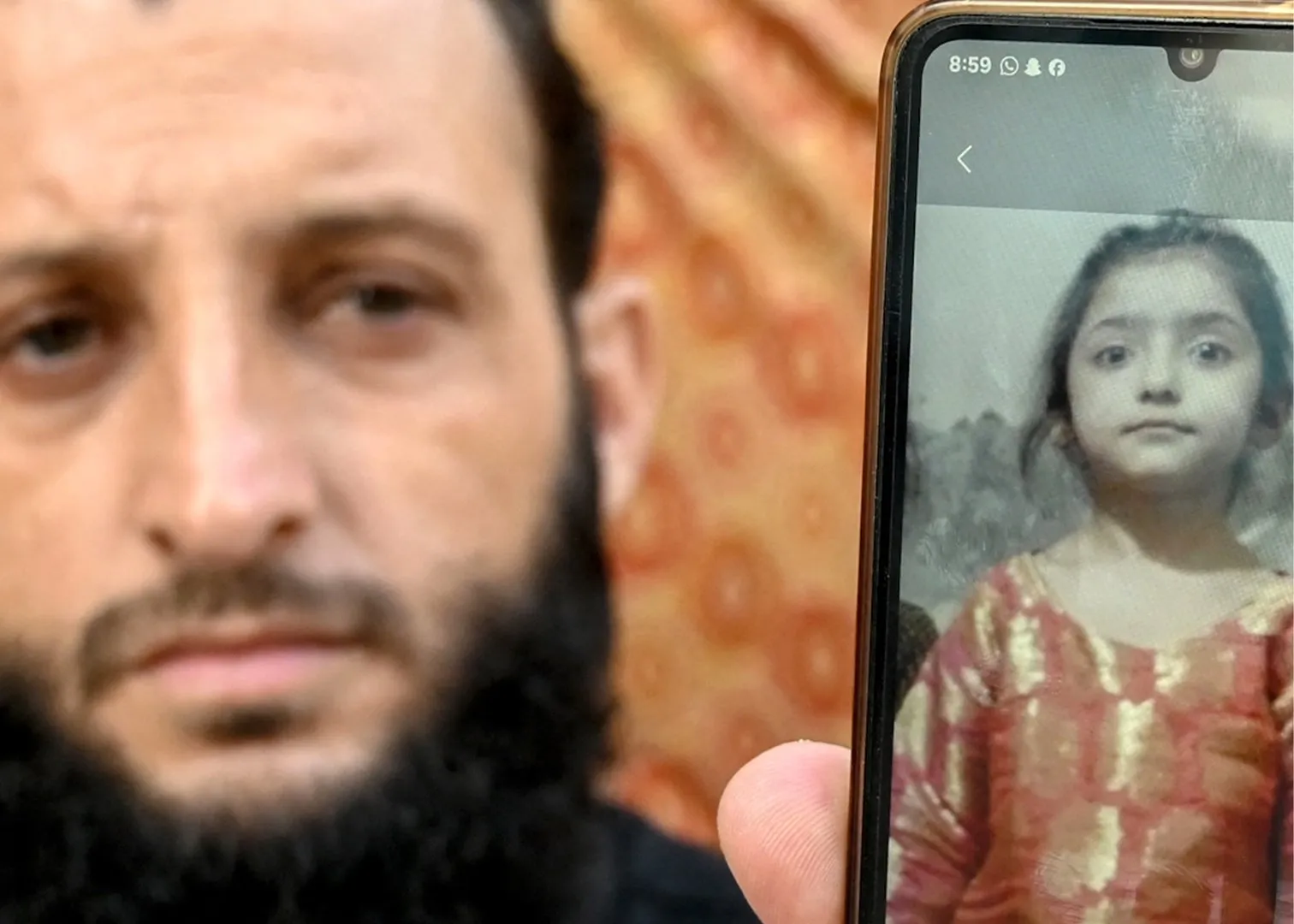

![Traffic moves past shipping containers used to block the area, ahead of a planned march by jailed former Prime Minister Imran Khan's Pakistan Tehreek-e-Insaf (PTI) party, in Islamabad, Pakistan, on September 30, 2026 [Reuters]](https://i0.wp.com/occasionaldigest.com/wp-content/uploads/2026/10/2026-10-02T070015Z_265516849_RC2NTNAKEGKJ_RTRMADP_3_PAKISTAN-PROTESTS-CONTAINERS-1791131201.jpg?w=640&ssl=1)