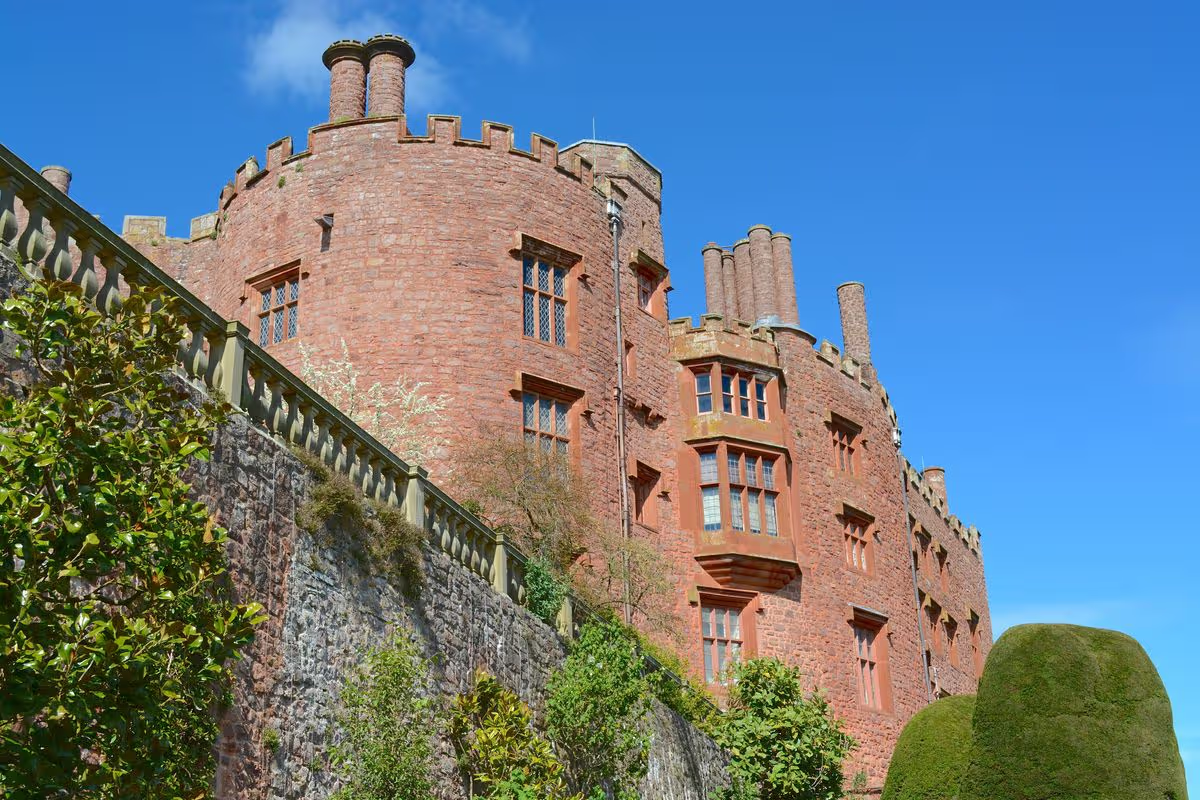
The 13th-century National Trust castle features the UK’s largest private collection of South and East Asian artefacts and Britain’s best baroque terraced gardens

It looks Italian, and inside is a vast Indian collection and yet it’s here in the UK(Image: Tornadoflight via Getty Images)
Nestled close to the English-Welsh border, in the town of Welshpool, stands a genuine fairy-tale fortress which appears straight out of a storybook and provides a vibrant splash of colour against its sprawling green backdrop.
Built in the 13th century, this mediaeval stronghold is brimming with stories and continues to evolve, much to the delight of those who visit.
For the perfect day spent appreciating historic architecture, discovering a different heritage and exploring the most spectacular of gardens, Powis Castle is the destination to seek out.
Its most recent ownership belonged to the same family, who resided in the castle from as early as the 1570s – the Herbert family. This continued until the castle and its grounds were handed over to the National Trust in 1952 by the 4th Earl of Powis.
Best holiday cottage deals in Wales

Wales is renowned for its stunning mountains, picturesque coastline and rich Celtic history. Sykes has a wide and varied collection of holiday cottages, houses and apartments across the country. Prices start from £35 per night with current deals.
One TripAdvisor reviewer said: “This site is stunning. I was blown away by how picturesque the place is.”
Another wrote: “This place really exceeded my expectations. The interior is super detailed and interesting, with some spectacular pieces of furniture.
“The gardens are truly beautiful on a lovely warm hillside and some stupendous giant yew trees. Has to be seen.”
History
The heritage of this fortress stretches back hundreds of years, encompassing numerous owners, as the property expanded and transformed, whilst preserving its original character throughout.
However, it all started in the 13th century when a Welsh prince, Gruffudd ap Gwenwynwyn, established some independence. When he and the remainder of his direct lineage died in 1309, leaving no male heir, the castle passed to an heiress called Hawise. She then married Sir John Charlton from Shropshire.
The fortress came under attack during this period from Hawise’s uncle, who was trying to claim the lordship he believed he was entitled to instead of her, but was unsuccessful.
In response, they chose to repair the damage and constructed two imposing drum towers on either side of the castle’s west entrance. Charlton’s descendants remarkably remained lords of Powis for more than 100 years, until no male heir could be found.
Consequently, in 1421, the castle was split between two daughters, after which the fortress entered a sharp decline, desperately needing restoration following years of abandonment. Before long, it was taken over and lovingly rebuilt before being leased to the Herbert family.
Most significantly since that time, one of the most substantial changes occurred when the Clive family introduced what is now recognised as the Clive collection. A collection teeming with South and East Asian artefacts exhibited in the castle, and the largest private collection of its kind in Britain.
Clive Collection
What makes this fortress particularly unique is its fascinating array of artefacts housed within it. Originally assembled by two generations of the Clive family, comprising Robert and his son Edward, who had wed Henrietta Herbert, the daughter of the 1st Earl of Powis.
The collection was assembled during Britain’s colonial rule of India, when these artefacts were removed from their country of origin and brought to the castle, starting in the 1800s. Today it houses more than 1,000 pieces originating from South and East Asia.
According to its website, visitors can expect to discover an extensive array of ivories, textiles, statues of Hindu deities, decorative silver and gold, weapons and ceremonial armour.
Naturally, this remarkable collection carries with it a troubling past, one which connects the castle to a proprietor who played a role in the invasion of India. Robert Clive was directly employed by the East India Company, which sent armies to both invade and subjugate India.
In doing so, they exploited the nation financially and profited from the natural resources it possessed. This contributed to establishing the British Empire’s presence within India and, consequently, secured a lifetime of riches and prosperity for Clive, which is evident in the castle’s magnificence.
Gardens
Beyond the striking castle itself, the true highlight of the estate lies in its grounds and immaculately-maintained gardens. Part of its impressive display of flowers, plants and trees is attributed to the captivating hedging that encircles the castle.
It covers up to 8,500 square metres of the estate, with the yett, tumps and top terrace contributing an extra 7,000 square metres to that figure. And with this comes some extreme-gardening methods adopted by the National Trust to guarantee it stays in impeccable condition.
To put that into perspective, it states that one skilled gardener can spend up to 10 weeks annually working at height, using a hydraulic cherry picker to trim and sculpt the towering hedges. That represents just one element of these magnificent gardens.
What makes them particularly remarkable is their Italian-influenced design dating back to 1680. The gardens at Powis Castle are regarded as the finest surviving example of a baroque terraced garden in the entire country – blending both Italian and French influences.
Without a National Trust membership, it costs £18 for entry to the castle and gardens for an adult, excluding gift aid. Meanwhile, children will be charged £9, while families can choose a family ticket for a reduced price.
It’s worth noting that ticket prices are reduced during off-peak periods of the year.