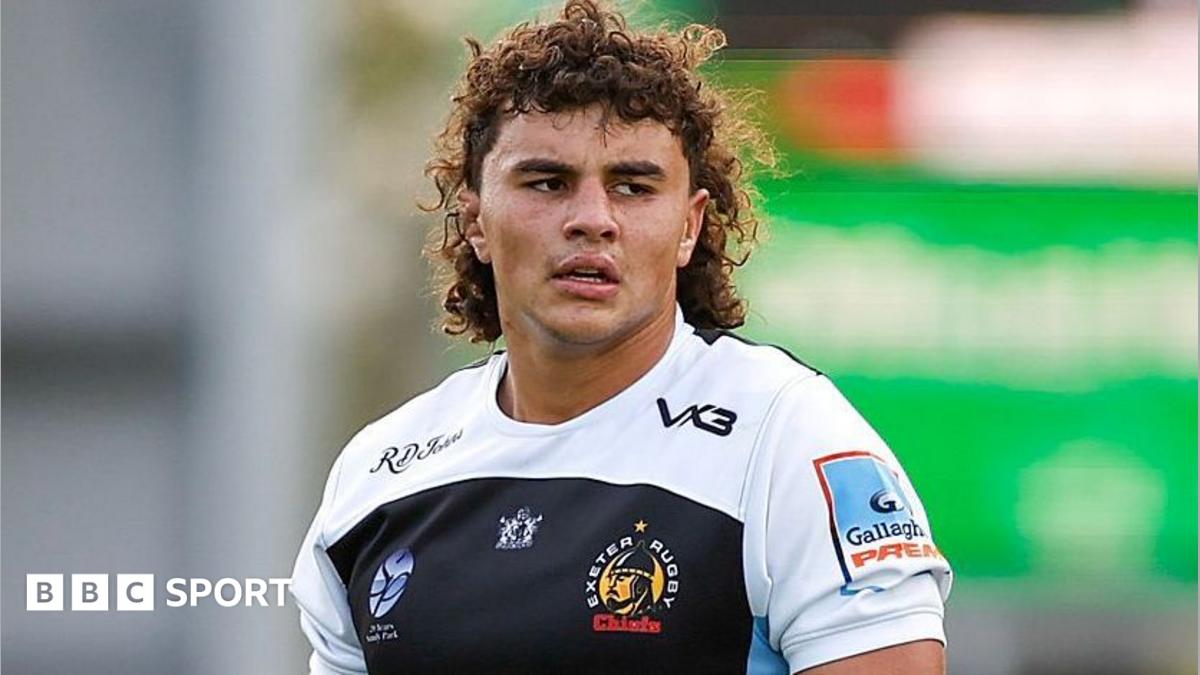
Exeter boss Rob Baxter says he has been impressed with how young Wales back-row Kane James is maturing.
The 21-year-old won his international first cap in July when Wales lost in Argentina in the Nations Championship.
James broke into the Exeter squad last season and has started both of the Chiefs’ Prem games so far this campaign.
“He’s just following that really nice route where he’s improving at a nice rate, he’s having some good impact on games,” Baxter said.
“Kane can be really pleased with the trajectory his game is going in at the minute.”
James’ physical development has also been noted by Baxter, who says the former England Under-20 player – who switched allegiance to the country he grew up in earlier this year – has been working hard off the field.
“He’s getting thicker, that will happen with quality training, making sure he gets his nutrition and all this kind of stuff,” Baxter added.
“He’s such a diligent guy he is going to maximise his strength and his growth, but he is going to get bigger for quite some time, I would say with Kane.
“That obviously is helping him ride the contact, he’s explosive and very quick.
“Kane’s had a really, really good start to the season, we’ve got to just keep working on these little individual bits and pieces – sometimes in his determination to fly around, a little bit of accuracy trips, but that’s the way you want it.
“You want these lads enthusiastic to run around and get in the game and I think there’s a lot more still to come from Kane.”
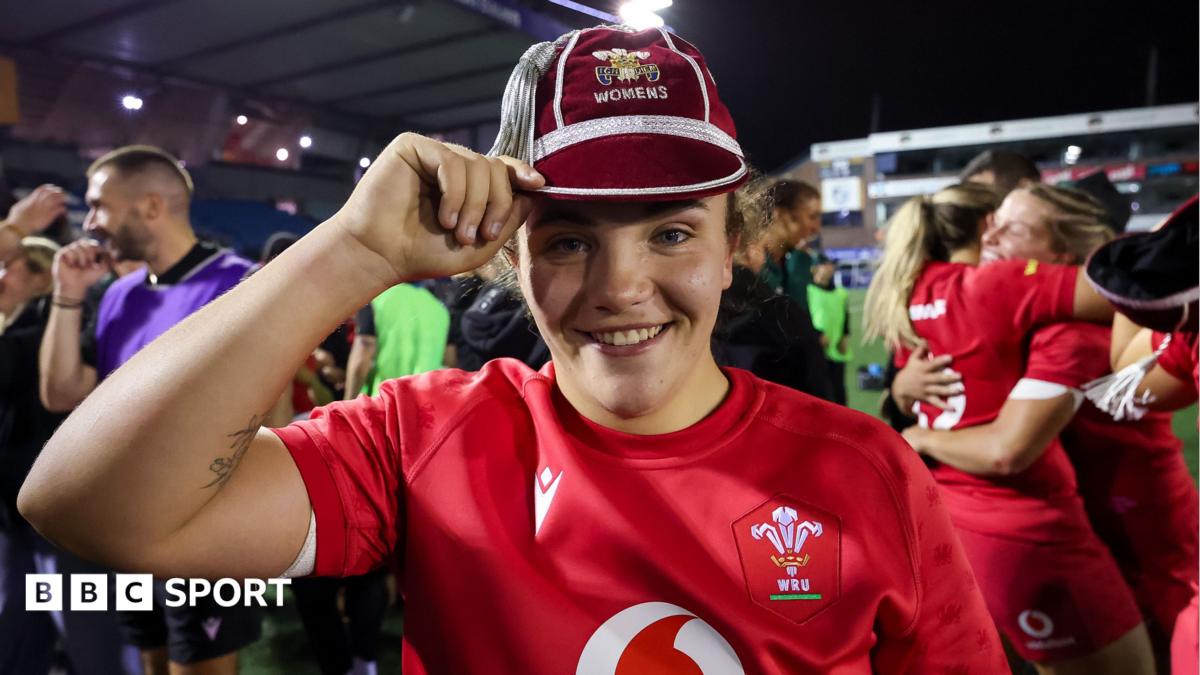
Shanelle Williams has already fulfilled one childhood ambition after making her Wales debut and now she is preparing for another milestone in Japan.
The 19-year-old former Gwernyfed RFC junior came off the bench in Wales’ 50-19 win over South Africa in the WXV Global Series in September.
As a child, Williams had written on her Christmas list that she wanted to play for Wales.
“I didn’t actually know that there was a women’s team,” the hooker said.
“I used to tell my dad that I was going to play for Wales with the boys.
“Then I obviously realised that I actually can play for Wales. Since then, everything I’ve done, rugby’s always been a priority.”
Williams had forgotten about the Christmas list until her older sister reminded her after she won her first Wales Under-18 cap.
“It’s quite a nice reminder that I have been working for this for so long, so it has all been worth it,” she said.
Williams started playing rugby at Gwernyfed aged eight, spending four years there before joining the Red Kites and later moving into the Wales pathway.
She went on to play for Cardiff Quins and Cardiff Rugby before attending Hartpury College.
Her father played a key role, regularly making the journey from home to Cardiff for training.
“Obviously I’m from Gwernyfed, so it was about an hour and a half down to Cardiff,” she said.
“He used to take me for training on Friday nights straight after school.
“I wouldn’t have been able to do it if my dad hadn’t given me that opportunity, so I’m very lucky.”
Traditionally, international sides have played six games across three windows – all of which have featured two fixtures – in September, October and November.
But for the first time this year, the September and October breaks were merged.
Wales’ hopes of coping with the new schedule were not helped by a string of injuries, with stars such as Karl Darlow, Joe Rodon, Dylan Lawlor and Harry Wilson missing the entire camp and David Brooks dropping out of the squad after defeat by Portugal in the opening game.
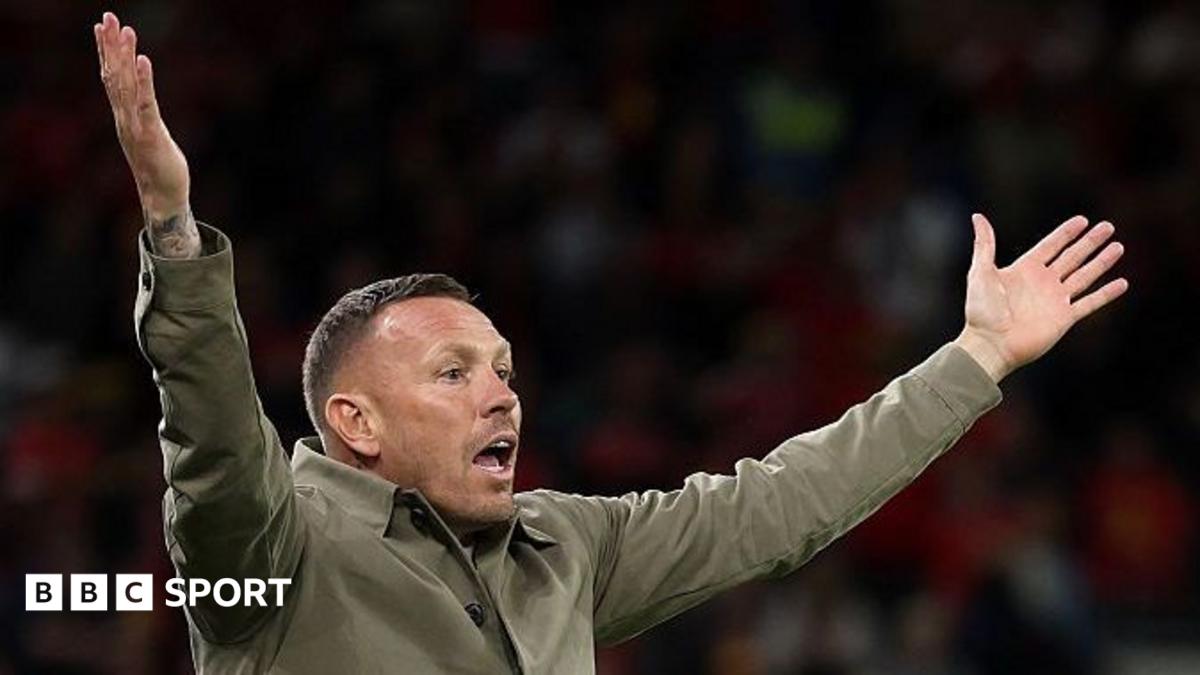
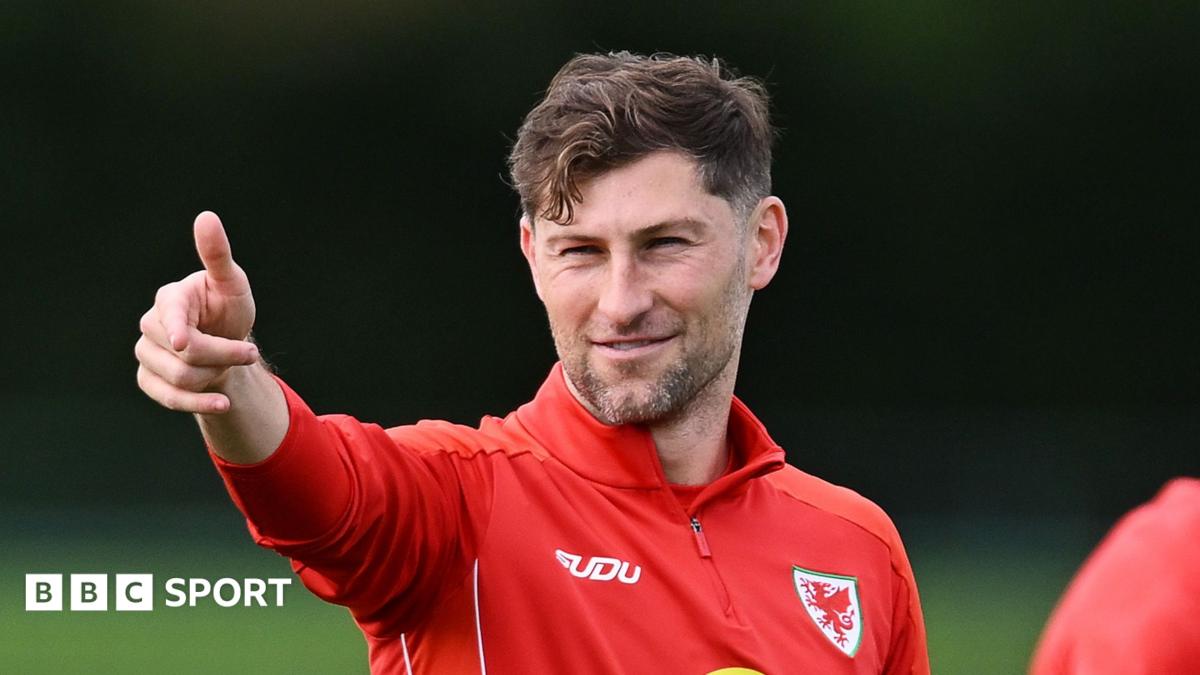
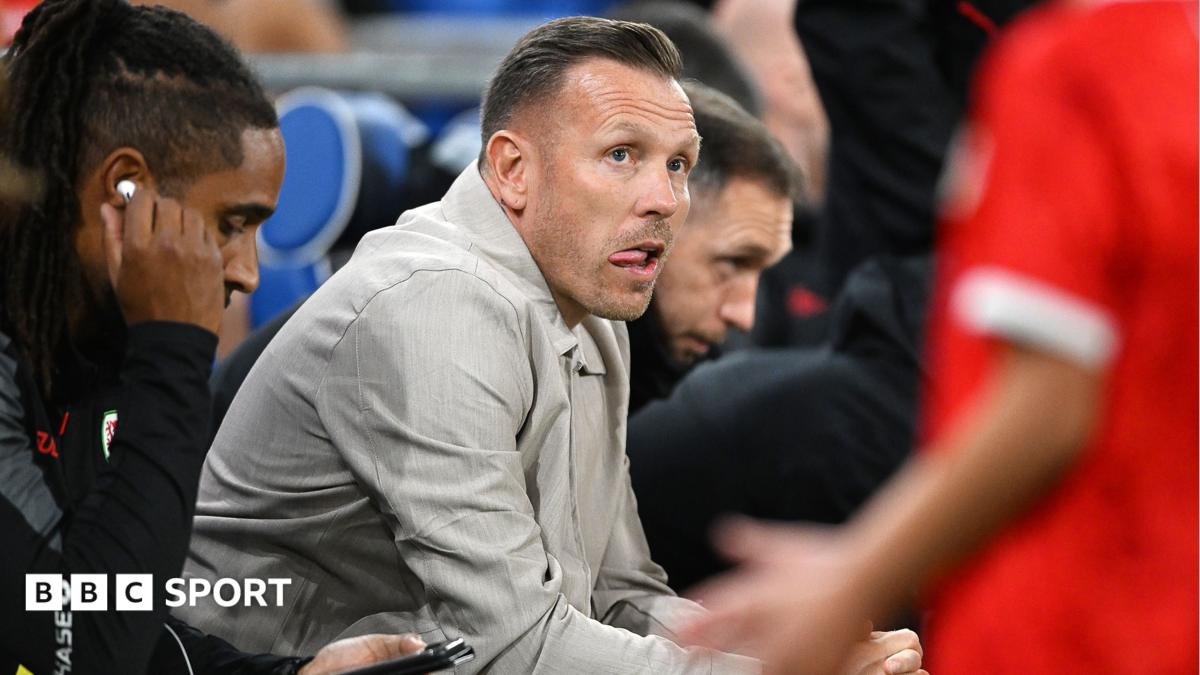
Bellamy said Dan James was not fit enough to play against Denmark after he was left on the bench at the Cardiff City Stadium, and acknowledged Ben Davies probably should have been rested after he was withdrawn late on.
“If we have a few injuries, which we had more than one or two, they miss four games,” said Bellamy.
“We can deal with two, do you understand? And then the squad will get really tested. The intensity of the squad, the athleticism, really I think [the four-game break] is designed for the elites.
“[They can] say, we can go, we can go, we can turn over these games really, really quickly and we can change, we can change [the team] like for like because we have the numbers. So, it puts a real stress on a lot of us.”
Wales will again be without the likes of Karl Darlow, Joe Rodon, Dylan Lawlor, David Brooks and Harry Wilson due to injury as they look to maintain the momentum gained thanks to the Norway triumph.
Bellamy says he has no choice but to make changes to the side which began on Thursday as Wales seek to make amends for last Sunday’s defeat in Denmark.
Having emerged with some credit despite losing their Nations League opener against Portugal 10 days ago, Wales were well beaten on a demoralising evening in Copenhagen.
Davies hopes the Cardiff City Stadium factor will be key as Wales chase victory against a Danish side who, in 21st, are 17 places above them in the Fifa rankings.
“It does make a big difference going away. We didn’t get a grip on the game [in Denmark] whereas when we played Norway in Cardiff, it’s our home, our fans, our atmosphere,” he said.
“It felt like a different game and we had much more control… you just know you have to try to make your home advantage count.”
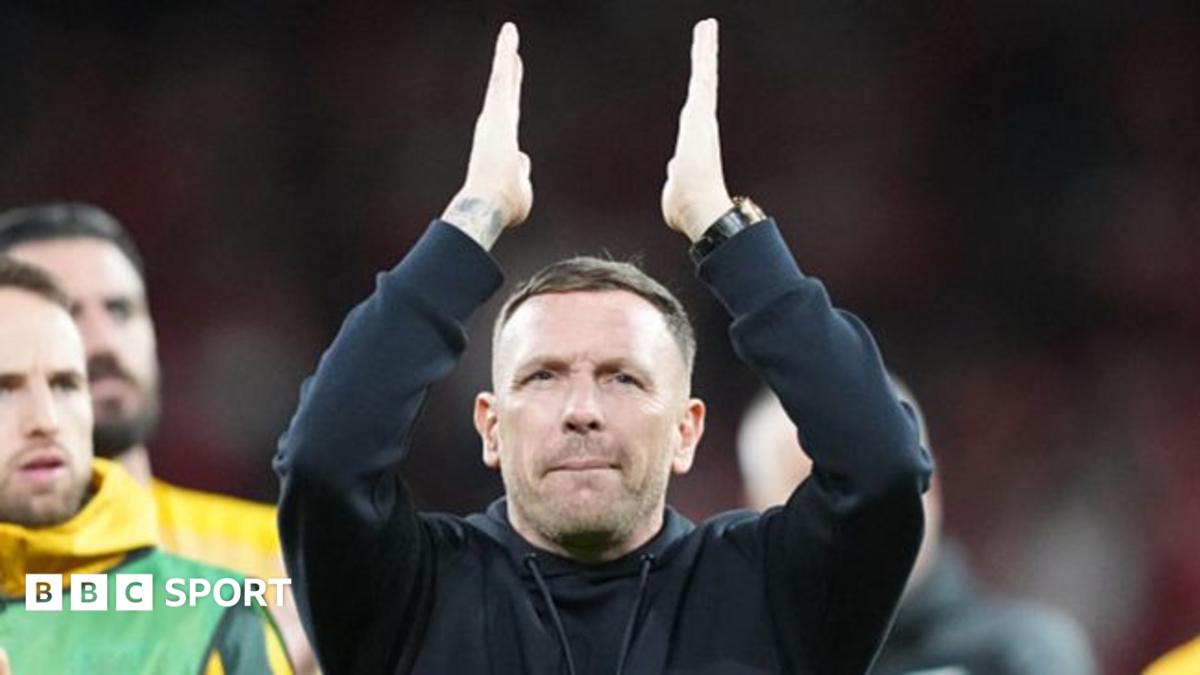
And yet it was the performance perhaps more than the result that appeared to win fans over again and reset the relationship between supporter and head coach.
“If they wanted to turn, that was their chance,” Bellamy said on S4C of the crowd response to Oscar Bobb’s opener after 11 minutes in what was Wales’ first home game since those Burnley links. “But they didn’t, they drove players on.”
Indeed, there had been only a Red Walled-willingness for Wales – and Bellamy – to be better throughout the 90 minutes, the noise lifting as Haaland remained contained and the hosts continued to move forward. They liked what they saw. Action, not words.
Bellamy admitted to having an “identity meeting” with players to try and re-establish what had been the hallmarks of his initial time in charge. It evidently did the trick given the way the tempo and aggression returned.
On the ball there was plenty to please the eye, not to mention the resilience to close a game out – a key criticism of that World Cup campaign.
One win is only one win, but there were red-shirted signs of redemption, from Liam Cullen’s performance – a player Bellamy has been criticised for selecting over others – to Neco Williams’ free-kick following a difficult night in Denmark.
But suddenly the Nations League campaign has new life and the chance of remaining in the top tier, and maybe even a seeding boost for those Euro 2028 qualifiers.
“It felt more like what we saw at the start under Craig,” said former Wales midfielder Joe Ledley.
“I think people have wanted to see it back but they saw it here. Fans don’t always have patience, decision-makers don’t always have patience so I think everyone knew we needed to see a result – but we also saw the performance and things we’ve not seen for a while. That’s a Craig Bellamy side.”
So instead of breaking point, was this a turning point?
“I hope so,” said Robert Earnshaw, another former Wales teammate of Bellamy and now part of the Match of the Day Wales team with Ledley.
“Craig needed it, the team needed it, I think the whole nation needed it,” said Earnshaw.
“Our levels dropped after the disappointment of the World Cup and it was about how could we bounce back – and here we felt that energy and excitement again.
“They had to give the crowd things to be cheerful about, because they were missing that for a while. Against Denmark we were miles away from what we’ve seen.
“This was a statement win.”
And – although the next test fast approaches against Denmark in Cardiff on Sunday – maybe it was also a line drawn.
The body of a newborn baby has been found along a shoreline in north Wales.
North Wales Police have appealed for the mother who maybe “extremely vulnerable” to come forward.
A member of the public found the remains on the Menai Strait shoreline near Siliwen Road on Sunday shortly before 17:00 BST.
During a press conference, Director of Midwifery and Women’s Services for Betsi Cadwaladr health board Fiona Giraud has appealed directly to the mother to come forward.
“I want you to know that our immediate concern is for your health, safety and wellbeing. We recognise that you may be feeling frightened, overwhelmed or unsure about what to do next,” she said.
Giraud said they “have real concerns for the health of the mother”.
“We recognise that she is likely to be extremely vulnerable. She may be fearful of seeking the support she needs through fear of identifying herself.
Speaking directly to the mother, she added: “You may feel you have nowhere to turn, or that you cannot speak to anyone about what has happened. Please do not feel that you have to face this alone.
“We don’t yet know all the circumstances surrounding your baby’s death but what is important right now is that we find you, make sure you are safe, and ensure you receive any medical attention and support you may need.
“I am asking you personally, to please get in touch with us. You can speak to a healthcare professional, approach a police officer or attend a police station.
“If you are watching or listening to this appeal, please know that we want to hear from you. Please take the first step and contact us. There are people to help you.”
This breaking news story is being updated and more details will be published shortly. Please refresh the page for the fullest version.
Lewis was part of the Wales squad at the 2022 union World Cup and was set to play in the inaugural WXV tournament a year later.
But she suffered a serious knee injury as Wales beat Italy in the 2023 Six Nations.
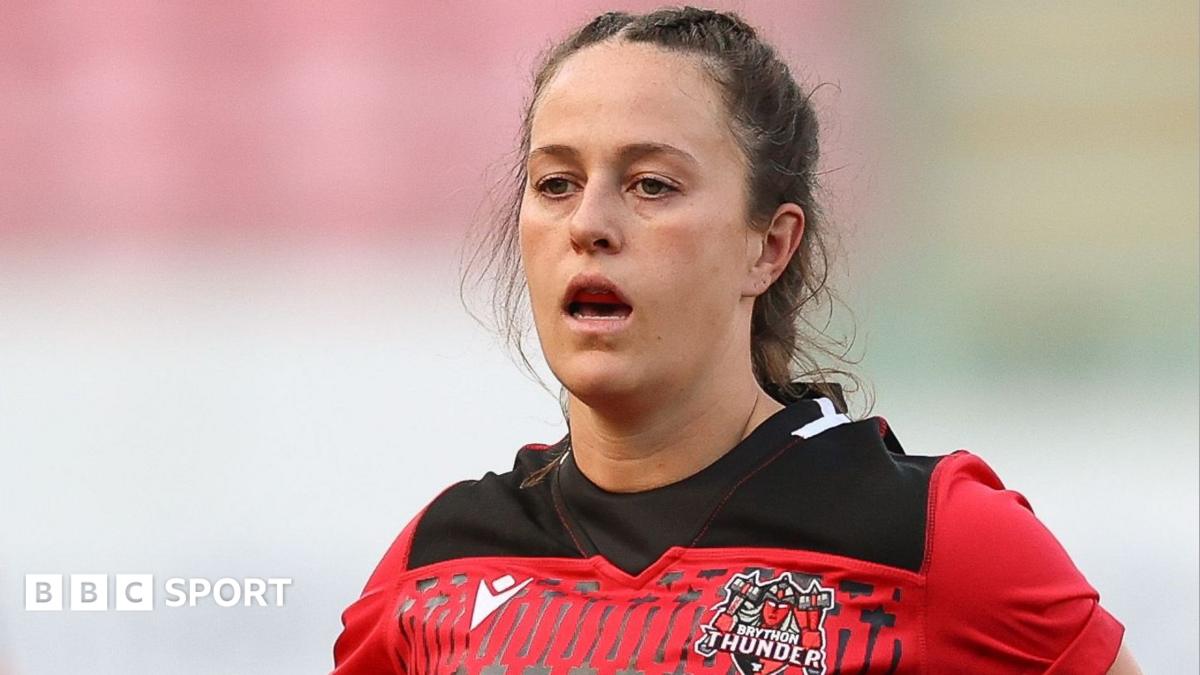
Since her recovery Lewis has played for Brython Thunder in the Celtic Challenge but, with no WRU contract, felt she had unfinished business and “didn’t want any regrets”.
“I could have easily just walked away from rugby at that point. I could have just been like ‘I’m done’,” said Lewis.
“But internally, I knew I wasn’t, and I put so much time and effort into coming back and getting back fit, and I was only 28, and I was like, ‘I’ve still got so much time left’, and I just felt individually I didn’t deserve my time to be done based on someone else’s decision.
“So I took some time, and then I just set a goal to myself. If I got the opportunity to play rugby league, great.
“If I had the opportunity to play union, I wouldn’t say no. But this opportunity came up, and I just grabbed it with two hands, and hopefully now it’s paid off.”
They will at least have home advantage at Cardiff City Stadium as they prepare for the remainder of the current international break, with matches against Norway on Thursday, 1 October, and then Denmark the following Sunday.
Captain Davies felt Wales were being taught some harsh lessons in what is their second stint in the top tier of the Nations League.
“It was a tough game. They are a good team and made it a hard game for us,” the Spurs defender told BBC Match of the Day Wales.
“It was really frustrating to concede from two set-pieces. The Nations League games are against the best teams in Europe, it was always going to be tough.
“If you’re not at 100% then you are going to get punished at this level. We have to regroup and go again on Thursday.”
Despite the setback in the Danish capital, winger Sorba Thomas echoed Bellamy’s sentiments.
“Thankfully we’ve got two games at home still to come. We’ll have home advantage so we need to show a reaction,” he told BBC Match of the Day Wales.
“We are just going to get better. We are a small nation but we’ve got big hearts and beliefs and for us it’s about showing that more on the pitch.”
Wales earned plaudits but Craig Bellamy wants more from his side, after admitting they were forced to suffer in their narrow 1-0 defeat in Portugal.
Joao Felix’s deflected strike proved enough to earn victory in Lisbon for the hosts, who also saw Cristiano Ronaldo’s effort ruled out by VAR.
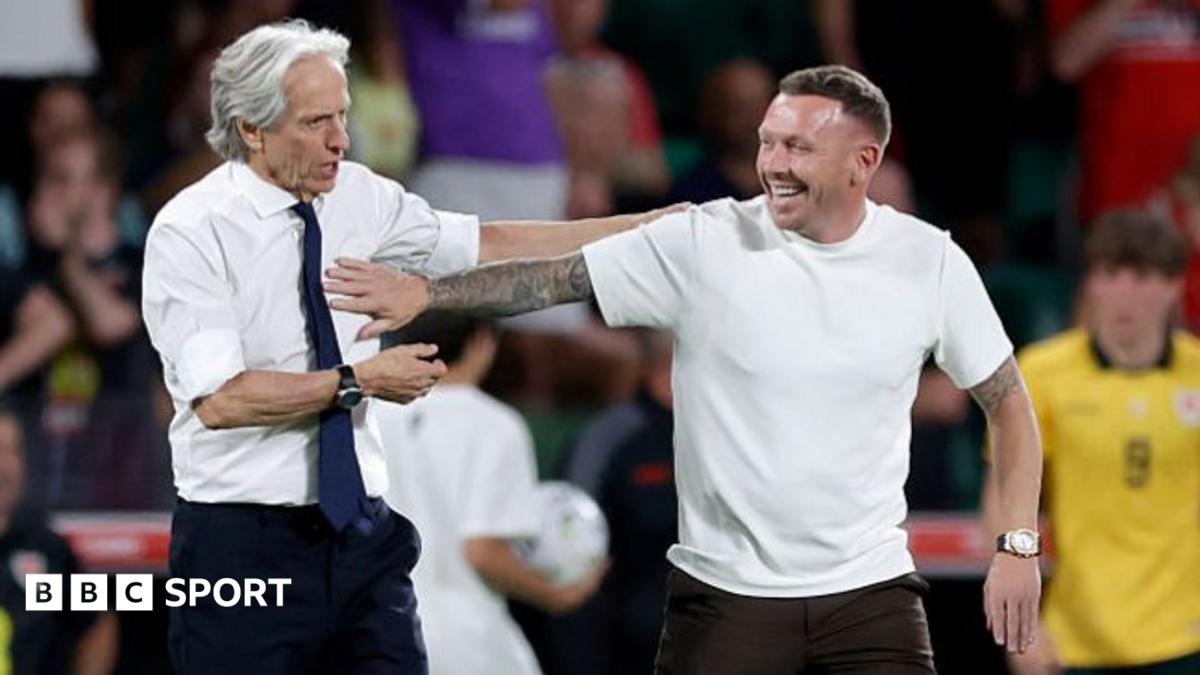
It was a winning start to the Nations League title defence for Portugal and for new manager Jorge Jesus.
Despite being under pressure for long spells in Lisbon, Bellamy’s injury-hit side ended strongly as Brennan Johnson and Lewis Koumas both went close to snatching a draw.
“It was a difficult game for us. We had to suffer a lot,” said Bellamy.
“I think that’s the longest we’ve been in a game without the ball.
“We could have done more with the ball but I’m beyond proud as well.
“We have a lot of players who weren’t here. That’s OK, we can handle it.
“A lot of players who don’t play, week-in, week-out. So for them to use the energy they were able to, we’ve got to have a big heart to be able to do that. They’ve always shown that and they showed that again.”
Scrum-half Seren Lockwood has been ruled out of Wales’ second WXV Global Series fixture, against USA in Cardiff on Saturday, after failing a head injury assessment.
Lockwood was taken off during the first half of Wales’ eight-try victory over South Africa and is now going through World Rugby’s return to play protocols.
It is a blow for Wales with Lockwood and Keira Bevan proving a promising half-back partnership in a new-look backline.
Her absence paves the way for Lleucu George to return at 10, with Bevan reverting to her usual position of nine at Cardiff Arms Park.
“It’s always sad to see an individual coming off, but the HIA is great to have on board, we’re looking after her,” said Wales head coach Sean Lynn.
“She’s not going to be available this weekend, but I’m super excited to see the half-back combination that we’ve got this week.”
The appointments come against the backdrop of Wales’ failure to reach the World Cup and the beginnings of criticism around the side’s openness.
“He’ll bring some unique skills, particularly when you play Nations League A games when you have to defend a lot,” said FAW chief football officer Dave Adams of Williams’ appointment on the Feast of Football podcast.
“Some of the dark arts of defending, he’ll bring some interesting things for the players to think about.”
There is the thought that Williams would also be prepared to challenge Bellamy’s thinking – seen as healthy part of a management team.
But while Bellamy says he is keen to lean on Williams’ defensive know-how, it will still be the former Liverpool, Manchester City and Newcastle forward’s managerial message.
“With his position, sometimes it’s easier coming from a player who’s been in there,” said Bellamy – a former Wales captain himself.
“Now, I’ll lead a lot on the information, but it’s nice for me to be able to ask ‘What would you see with this? If you played there, how did you feel when I asked you to do that? Is that possible? Is that not possible?’ I believe he’ll be a huge asset to me.”
Sheehan’s appointment also suggested a more defensive focus.
The former Republic of Ireland Under-21 international was seen to have a pragmatic style at Swansea.
But it appears Wales will look to benefit from the 40-year-old’s eye for set-piece work, something he has also been responsible for during previous coaching roles at Luton and Southampton.
“We really want someone who is in tune with restarts and set-pieces,” added Adams.
“In these sorts of games they could be the factor that give us a chance to win the game, because they are going to be very hard games to play in.
“We realise the importance of attacking and defending set-pieces in these next six games, and feel Alan and [goalkeeping coach] Martyn Margetson will bring that level of detail to help the team be best prepared for these games.”
Colwill’s boyhood hero, however, was much closer to home. Ever since being raised on recordings of Steven Gerrard he has aimed to emulate the Liverpool great.
“My old man had DVDs and I used to watch loads of Liverpool games of [Gerrard] playing when he was scoring goals,” said Neath-born Colwill.
“So, he’s a player, especially when I was younger, I used to try and model my game on.”
He may not yet have reached the Premier League stage that Gerrard graced but Colwill – the younger brother of Cardiff and Wales team-mate Rubin – broke into Bellamy’s squad in September 2025 making his debut in a friendly against Canada. His second cap came six months later against Northern Ireland.
“When I go on [Wales] camps, I’m trying to learn as much as I can off Craig and the top talent they have there,” Colwill added.
“There’s some top players there, like Harry Wilson and David Brooks, with a lot of them playing in the Premier League, which is every player’s aspiration one day – to play in what some would say is the best league in the world.”
Wales face USA, who like South Africa are ranked above Wales, on Saturday, 26 September, also at Cardiff Arms Park, in their second outing of the new WXV campaign.
And while Wales will enjoy their deserved celebrations, co-captain Kate Williams is already talking about the importance of backing the performance up.
“After all of the tough times we have been through, as a team and Welsh rugby generally, we are going to keep working for the positive feeling to continue,” she said.
“What we want out of this WXV Series is more wins.
“Today just proved that what we’ve been doing works and we’ll be able to change our gameplan for USA next week.”
Lynn will be waiting on the fitness of scrum-half Seren Lockwood after she failed to return to the pitch after a head injury assessment, but he could be boosted by the return of Carys Cox, who gives him another exciting option in the backline.
Until then, he and Wales will enjoy victory before the work starts again on Monday.
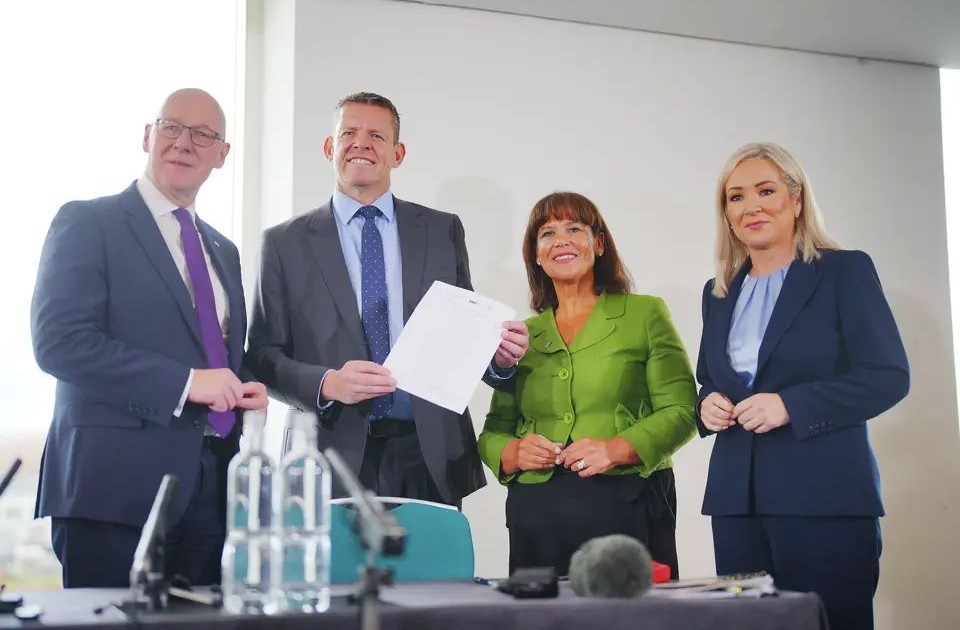
LONDON: The leaders of Wales, Scotland and Northern Ireland signed a pact Monday that threatens to lead to the breakup of the United Kingdom.
The first ministers of the three semiautonomous regions of the U.K. told Prime Minister Andy Burnham and his government to prepare for constitutional change and that their future lies with the European Union.
“For people watching across these islands — for people watching around the world — there could be no clearer sign that Westminster’s time is coming to an end,” they said in a memorandum of understanding, referring to Parliament.
The announcement came about 48 hours after U.S. President Donald Trump waded into the waters of the politically contentious issue when he said he would “ love to see ” a reunified Ireland during a trip to visit his golf course hosting the Irish Open.
It’s the first time the leaders of all three countries are either from pro-independence parties, or pro-unification in the case of Northern Ireland, which was partitioned and remained part of the U.K. when Ireland won independence from Britain over a century ago.
Tensions remain despite devolution of power
Burnham’s spokesperson brushed aside the threat and said the prime minister strongly believes in the union and was more focused on lowering the cost of living than dealing with constitutional debates.
“The United Kingdom is at its best when people come together around our shared values and problem-solving, rather than division,” Tom Wells said.
Nicola McEwen, director of the University of Glasgow Center for Public Policy, said the summit was symbolically important but has no legal significance.
“I don’t see the threat to the union being bigger today than it was yesterday,” McEwen said.
In the late 1990s, the U.K. passed legislative acts that decentralized government through the process of devolution, giving each country except England some level of policy independence and self-governance through their own parliaments. But tensions have remained with the U.K.-wide government in London, which retained control over national issues and those concerning England.
Scotland’s John Swinney and Northern Ireland’s Michelle O’Neill called for independence referendums in their countries, while Rhun ap Iorwerth did not provide a timetable for one in Wales.
The three leaders appeared in their political capacity, rather than their official one, possibly because O’Neill is in a power-sharing government with the Democratic Unionist Party.
Northern Ireland’s Deputy First Minister Emma Little-Pengelly, of the DUP, accused O’Neill, of the Sinn Fein party, of “weaponizing” the role of first minister by signing the agreement.
“I am first minister in the north of Ireland,” O’Neill replied. “This is about historic change happening all around us.”
Scottish nationalists believe support for independence is rising
Scotland tried unsuccessfully to break away in 2014, with voters rejecting a referendum 55% to 45%. But McEwen said support for Scottish independence has grown since Brexit, in which the U.K. formally left the European Union in January 2020, following a referendum in June 2016.
Swinney, leader of the Scottish National Party, said he believed voters would now vote for independence if the U.K. government approved a referendum.
Burnham told Parliament last week he would allow such a vote to be held if there was a “clear consensus” in Scotland, but later sent Swinney a letter saying a vote was “off limits.”
The 1998 Good Friday peace accord that ended three decades of sectarian violence in Northern Ireland known as “The Troubles,” requires a vote on unification if polls there indicate it would likely pass, a threshold the U.K. government says has not been met. Ireland would also have to approve the change in a referendum.
Burnham has made devolution a major theme since taking office less than two months ago, but his focus has been on regional governments across England, a reflection of his years as mayor of Greater Manchester.
Swinney tried to turn Burnham’s ideology to his advantage, saying his frequent talk of devolution “leads you to the logic of recognizing the right of the people of Scotland, in my case, to decide their own future.”
Beyond any threat of departing the union, McEwen said the greatest impact of the three joining forces could be that they agreed to cooperate with each other routinely and that could help to exert more influence on the U.K. government.
“It does keep on the agenda that question about, well, if the United Kingdom is a union based on consent, what is the pathway where it looks like that consent may no longer be there?” McEwen said. “Any U.K. government has been very reluctant to engage in that discussion.”
RAIN has arrived and it seems summer is truly over, but that doesn’t mean you can’t get out in nature – especially if its indoors.
Around the UK are lots of attractions with indoor conservatories and glasshouses full of plants – and we’ve highlighted some of the best to explore this autumn.
The country’s largest indoor rainforest is in the Eden Project and it’s as warm as 35CCredit: Alamy Stock Photo
The Eden Project, Cornwall
Go big or go home, right? The Eden Project has two biomes one of which is home to the world’s largest indoor rainforest.
The Rainforest Biome can be as hot as 35C so make sure to wear layers if you visit this autumn and winter.
Sign up for the Travel newsletter
Thank you!
Inside are beautiful waterfalls, a canopy walkway, wobbly bridges, free-roaming partridges and over 1,000 varieties of plants.
The Mediterranean Biome is slightly cooler but can still get up to 25C with pretty flowers and plants from the Mediterranean, California and even Western Australia.
Make sure to follow the path to the olive trees, stop by the perfume garden for some scented plants and spot the sculptures hidden amongst the greenery.
You can book during events throughout the year too.
Across September 26-27 will be the Celebration of Stories Weekend where children’s authors will read stories from their books, along with workshops and family activities.
From November 20-January 2 will be its Christmas event. General tickets for adults start from £35.50 and tickets for children (5-15) start from £12.50.
Kew Gardens, London
Kew Gardens has some incredible plant displays that are insideCredit: Alamy
Kew Gardens is known for its incredible landscape gardens and lakes – but there’s plenty of it that’s indoors too.
One of its most impressive attractions that’s inside is Palm House which is an indoor rainforest full of endangered plants – some of which are even extinct in the wild.
The Princess of Wales Conservatory at Kew Gardens has 10 different zones with different climates including topical ones – so you can warm up inside.
Discover Venus flytraps, succulents and tropical orchids inside.
Other indoor attractions include Davies Alpine House where plants that thrive in cool, dry and windy conditions live.
There’s also Temperate House which is the world’s largest Victorian glasshouse with around 10,000 different plants from around the world.
If you want to find out more on Kew Gardens, check out Travel Reporter Cyann Fielding’s full guide on it, here.
General admission tickets start from £17 for adults – an offer for £10 tickets starts later this month. Tickets for children (between 4-15) start from £2.
The National Botanic Garden of Wales, Carmarthenshire
The National Botanic Garden of Wales is the biggest of its kind in the worldCredit: Tim Graham
In the heart of Carmarthenshire is the National Botanic Garden of Waleswhich has a claim to fame as being the largest single-span great glasshouse in the world.
It was even designed by Foster + Partners which are behind buildings like The Gherkin.
Inside the raindrop-shaped glasshouse are endangered plants from Mediterranean climate regions like the Canary Islands, Chile and South Africa.
Along with its various species of plants are rocky terraces and sandstone cliffs.
There are places for snacks too at the Caffi Botanica which serves up snacks, sandwiches, hot meals – some ingredients are even grown in the conservatory itself.
Tickets start from £16.49 for adults and £8.44 for children (between 2-17).
The Winter Garden, Sheffield
The Winter Garden in Sheffield is completely free to exploreCredit: Alamy Stock Photo
The Winter Garden in Sheffield is one of the largest temperate glasshouses to be built in the UK in the last 100 years.
The building is so big that it could actually fit 5,000 regular-sized greenhouses inside of it.
It’s full of greenery with over 2,500 plants from around the world inside of it and paths for a relaxing stroll inside.
There’s everything from tall trees to bamboo, bedding plants which change seasonally and flowers.
It might not be a place that you can spend a day in – but it’s attached to connected to the Millennium Gallery and the Peace Gardens which you can explore too.
It’s completely free to walk through The Winter Garden and it’s open Monday to Saturday between 8am-8pm, on Sunday it’s open from 10am to 5pm.
David Welch Winter Gardens, Aberdeen
These indoor gardens are found within Duthie Park in AberdeenCredit: Alamy Stock Photo
David Welch Winter Gardens is found inside Duthie Park in the Ferryhill area of Aberdeen.
The glasshouse was added to the park in the 1900s and is now one of the most visited indoor plant collections in Scotland.
Inside is Europe’s largest indoor plant collection where you can explore the enormous Temperate House.
There’s also the Corridor of Perfumes which is a fragrant zone within the glasshouse, Fern House, Victorian Corridor, Japanese Garden, Tropical House and Arid House.
If its not too cold outside, take a stroll around Duthie Park which has a bandstand, fountains and a boating pond too.
Entry to the David Welch Winter Gardens at Duthie Park is completely free.
The Barbican Conservatory, London
The Barbican Conservatory will close next year so try and pop in nowCredit: Alamy
This one might be slightly harder to visit – but it’s still worth mentioning as the Barbican Conservatory is the second biggest of its kind in London (behind the Princess of Wales Conservatory at Kew Gardens).
The conservatory is part of the Barbican Centre in central London and is full with over 1,500 species of tropical and subtropical plants, trees and even fish.
There’s very much limited time to visit though as the Barbican Conservatory will close to the public and undergo a major restoration in January 2027.
But if you want to see inside before its closure, tickets are released one month in advance online with a number day tickets released from 9.30am on the day that the conservatory opens – entry is completely free.
If you want to find out when new tickets are available, you can join the waiting list.
And if you want to take a rare piece of the Barbican Conservatory home with you, check out the plant adoption event happening later this year.