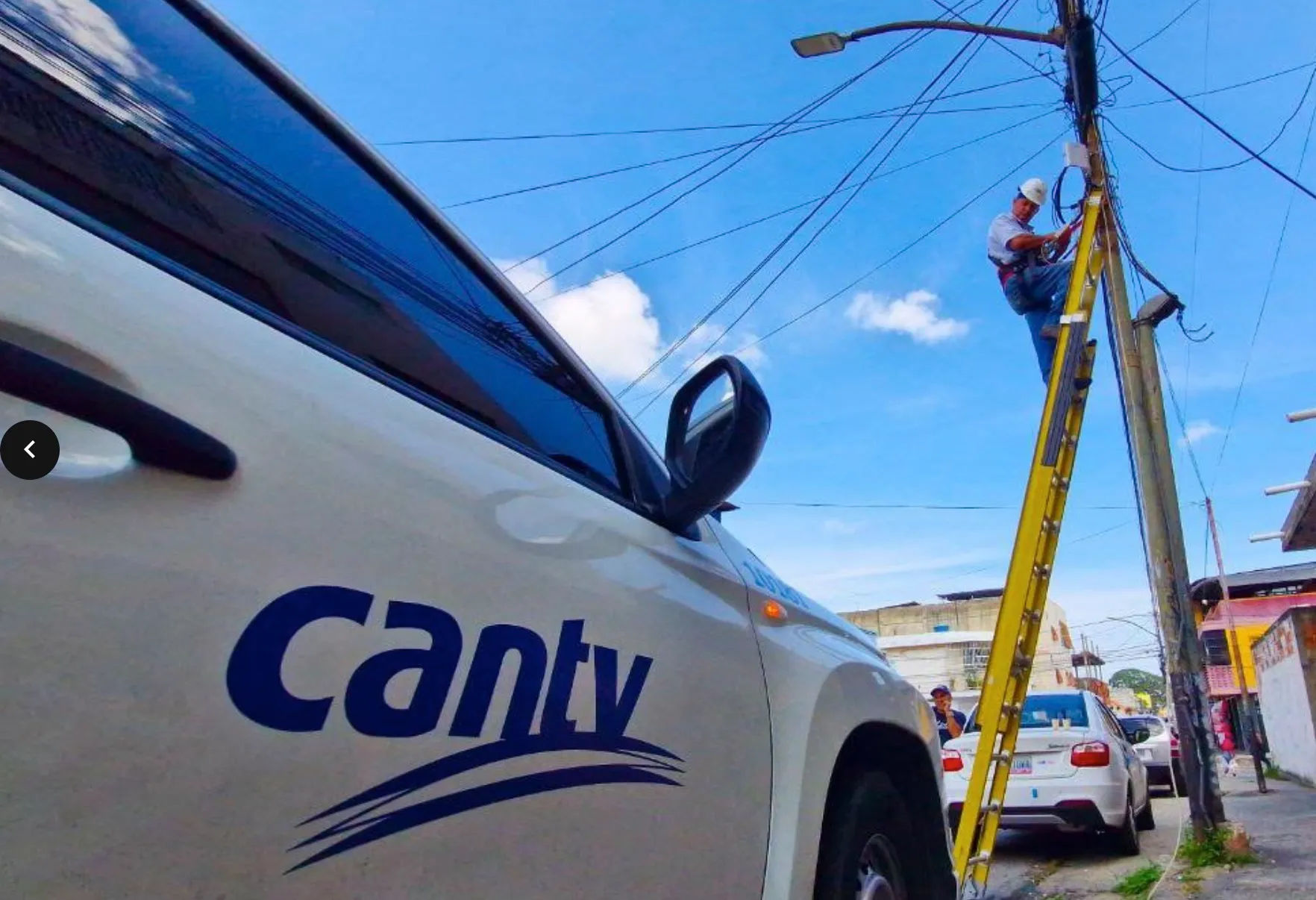
CANTV’s recent cooperation with Chinese counterparts is threatened by US sanctions. (Con-Cafe)
Mérida, August 24, 2026 (venezuelanalysis.com) –The US Treasury Department’s Office of Foreign Assets Control (OFAC) issued two general licenses granting specific permissions for telecommunications operations with Venezuela.
Under General License 61 (GL61), published on Friday, OFAC authorized US companies to provide “technology, software, or services for the installation, maintenance, refurbishment, repair, upgrade, operation, or support of telecommunications” to Venezuela’s state-owned telecommunications company CANTV and National Telecommunications Commission CONATEL.
According to official OFAC definitions, telecommunications services encompass fixed and mobile telephony, data transmission, internet connectivity, radio and television broadcasting, news agency feeds, satellite communications, and submarine cables.
GL61 permits specific operational activities, including payment processing, logistics, air freight, insurance, data storage, server maintenance, roaming agreements, and infrastructure leasing. However, the license specifies that Venezuelan state entities must procure new acquisitions directly from US companies or US citizens.
In addition, the Trump administration published General License 62 (GL62), authorizing negotiations for contracts in Venezuela’s telecommunications sector, though specific agreements remain contingent on a separate specific license,
Both sanctions waivers impose that any contracts be governed by the laws of a state or federal jurisdiction within the United States. Furthermore, the licenses demand that “dispute resolution proceedings relating to the contract occur in the United States, the United Kingdom, France, or Singapore.”
The Treasury licenses maintain bans on debt swaps, physical gold, or digital currencies and tokens issued by or on behalf of the Venezuelan government.
Furthermore, GL61 and GL62 maintain restrictions prohibiting “any transaction involving a person located in the Russian Federation, the Islamic Republic of Iran, the Democratic People’s Republic of Korea, the Republic of Cuba, the People’s Republic of China, or any entity that is owned or controlled by or in a joint venture with such persons”.
Since the January 3 US military strikes and kidnapping of Venezuelan President Nicolás Maduro, Washington has upheld its wide-reaching coercive economic sanctions in areas such as energy and mining, while issuing licenses to favor US and Western corporations.
US sanctions and restrictions on Chinese technology firms present a challenge to CANTV’s recent operational landscape. For the past two decades, the Venezuelan government has forged bilateral agreements with Chinese telecom firms, including ZTE and Huawei, establishing joint projects to manufacture and deploy telecommunications equipment domestically.
Over the last decade, CANTV has worked with Huawei and ZTE to modernize networks, expand fiber-optic infrastructure, and sustain broadband services nationwide. Venezuelan authorities have not commented on the latest US licenses and potential impact on existing agreements.
In addition, CANTV has been identified by analysts as a potential candidate for privatization. The company has recently been mired in controversy after reportedly slashing retired workers’ incomes. Retirees have staged protests in several states in recent days after a US $200 monthly bonus was arbitrarily slashed, while also demanding the restoration of basic medical insurance and health coverage guaranteed by collective bargaining agreements.
In parallel, CONATEL has launched technical and legal working sessions with representatives of SpaceX’s Starlink service to examine radio spectrum allocation, equipment homologation, and regulatory compliance under Venezuela’s Organic Telecommunications Law.
Despite Maduro previously criticizing SpaceX owner Elon Musk for destabilizing politics in Venezuela and Latin America, the acting Delcy Rodríguez government thanked the tech mogul for activating free Starlink services in the wake of the June 24 double earthquake in the Caribbean nation.
Edited by Ricardo Vaz in Caracas.