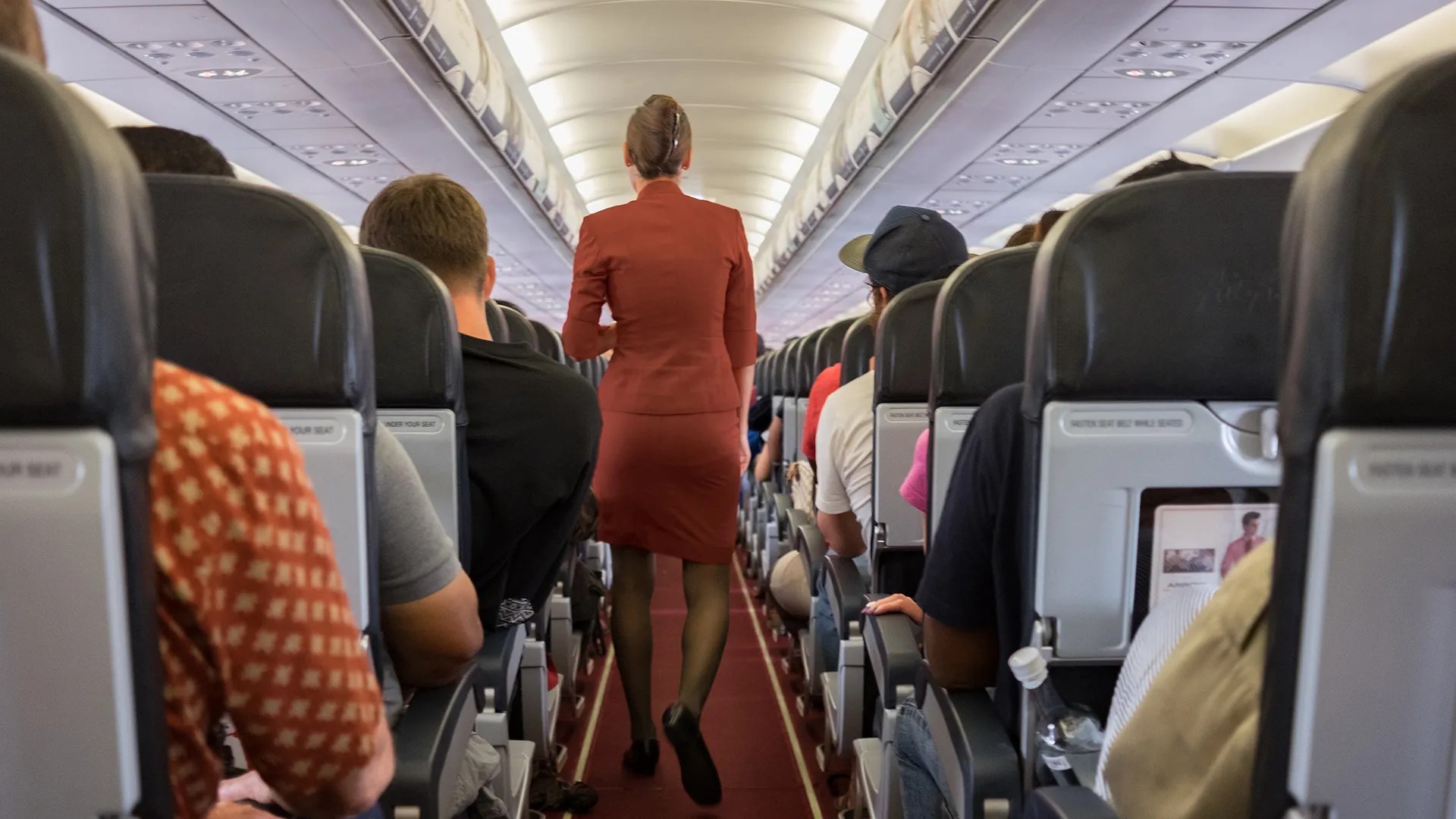

AIRLINE crews use secret code words around unsuspecting flyers – including the bizarre-sounding “crotch watch.”
Here’s what it means, and how it helps improve safety on planes.
Flight attendants can be overheard using their own language on the job.
And chances are you’ll be worried they’re insulting you – especially if you also hear them mention “gate lice,” meaning passengers who crowd around the boarding gate before their flight has even been called.
If they mention “crotch watch,” it is simply alluding to the crew checking that passengers have their seatbelts fastened properly before takeoff and landing.
The Federal Aviation Administration (FAA) recently warned that impatient flyers who unfasten seatbelts before their plane has come to a complete stop at the gate could get hit with $37,000 fines.
Its rule applies during the taxi, takeoff, and landing stages – until the aircraft has safely reached the gate and the illuminated seatbelt sign has been turned off.
The regulation dates back to the 1970s, and was imposed for safety reasons.
Another odd term you might hear is “blue juice.”
This refers to the cleaning liquid used to flush the contents of the plane’s bathrooms.
Other terms, such as ABP, translate to “able-bodied passengers.”
Secret cabin crew codes
Pax – means passengers.
Used in a sentence, it may be: “We have 20 pax on board.”
Gate lice – this term refers to over-eager passengers who gather around the gate before boarding has even been announced.
Briefing – it means crew may be meeting for the first time and discuss the flight ahead.
ABP – translates to able bodied passengers.”
These are individuals that the crew seek out just in case of an emergency.
Runners – Runners are those who sprint from one connecting flight to another because their first flight was late.
Spinner – this term relates to somebody who turns up late without an assigned seat.
Crew dub them ‘spinners’ as they usually look flustered as they search for a seat and space in the overhead lockers.
Sin bin – We may have all been stuck on a plane as we watch others take off.
This is known as the ‘sin bin’ which is the area the plan has to wait in to allow room for another aircraft to pass through.