In the weeks before Justin Bieber’s headlining performance at this month’s Coachella festival — the 32-year-old teen-pop survivor’s first major concert after a lengthy stretch in the celebrity wilderness — speculation began to mount that he planned to play only songs from his recent “Swag” and “Swag II” albums.
And indeed, for 45 minutes or so last Saturday, it seemed like that was what he’d come to do as he sang new song after new song on Coachella’s giant main stage. But then he pulled out a laptop, fired up YouTube and started singing along with some of his old hits — a thrilling subversion of our expectations for a big festival set and a poignant act of self-examination by an artist who’s lived more than half of his life on our screens.
For the singer, Bieberchella was clearly a trip down memory lane. But it also offered the audience a chance to look back on a career that’s encompassed virtually every major shift in pop music over the last two decades.
Ahead of Coachella’s second weekend, then, here’s a list, ranked from worst to best, of every hit that Bieber has put inside the Top 10 of Billboard’s flagship singles chart, the Hot 100. Pop, of course, is an art as much as a science, meaning statistics get you only so far: Some important Bieber songs aren’t here, not least among them “Lonely,” which may be his finest vocal performance but stalled out at No. 12 on the chart. Other throwaways made it on the list thanks to Bieber’s gamesmanship or Billboard’s methodological quirks.
Yet these 27 songs tell a fascinating story about a boy, about a man, about a talent possibly more vital today than ever before.
27. ‘Never Say Never’ (peaked at No. 8 in March 2011)
Co-written and co-produced by the guy who would later top the Hot 100 with “Rude” by the band Magic, this booming kiddie-rap track was introduced as the theme song for Jaden Smith’s 2010 remake of “The Karate Kid” before Bieber used it in a 2011 concert film of the same title. The voice is high; the beat is blah.
26. ‘Monster’ (peaked at No. 8 in Dec. 2020)
Just a month after he dropped “Lonely,” Bieber returned to his teen-idol woes — far less movingly, alas — in this dreary duet with Shawn Mendes.
25. ‘Stuck With U’ (peaked at No. 1 in May 2020)
The nicest thing you can say about the doo-woppy “Stuck With U” is that Bieber and Ariana Grande donated the song’s proceeds to first responders navigating the early months of the COVID pandemic. Do not rewatch the video unless you want to be reminded of the smiley horrors of Zoom life.
24. ‘No Brainer’ (peaked at No. 5 in Aug. 2018)
We’ll get to Bieber’s convivial 2017 hook-up with DJ Khaled and friends. As for this shameless sequel, Khaled’s “another one” tag has never been less necessary.
23. ‘Cold Water’ (peaked at No. 2 in Aug. 2016)
Sleek. Pretty. Forgettable.
22. ‘As Long as You Love Me’ (peaked at No. 6 in Sept. 2012)
How high was Bieber riding as he prepared to release 2012’s “Believe” LP? High enough to swipe the title of the Backstreet Boys’ classic teen-pop ballad for this junior-dubstep jam. Stick around (or don’t) for Big Sean’s guest verse about needing “you” to spell both “us” and “trust.”
21. ‘Holy’ (peaked at No. 3 in Oct. 2020)
In which Bieber and Chance the Rapper preach about marriage like two horny youth pastors.
20. ‘Anyone’ (peaked at No. 6 in Jan. 2021)
What if Phil Collins had recorded “In Your Eyes” instead of Peter Gabriel?
19. ‘10,000 Hours’ (peaked at No. 4 in Oct. 2019)
Timed to commemorate his and Hailey Baldwin’s wedding among the salt marshes of South Carolina, Bieber’s crack at high-gloss country music was warmly welcomed by the Nashville establishment; it even spent two weeks atop Billboard’s Country Airplay chart. No surprise, really: To listen to earlier stuff by Dan + Shay, Bieber’s collaborators on “10,000 Hours,” is to hear how extensively white-soul singing had reshaped country by the early 2010s.
18. ‘I Don’t Care’ (peaked at No. 2 in May 2019)
Has any would-be song of the summer ever song-of-the-summered harder? Bieber and Ed Sheeran’s breezy dancehall bro-down was clearly modeled on the sound — and the success — of Sheeran’s “Shape of You.” (Call it “Shape of II.”) Yet the duo’s chemistry feels real enough to believe that all of these hooks — hey, they just happened.
17. ‘I’m the One’ (peaked at No. 1 in May 2017)
Bieber’s first Khaled collab has a merry bounce that softens the braggadocio from him, Quavo, Chance the Rapper and Lil Wayne, whose verse opens pricelessly like so: “Looking for the one?/ Well, b—, you looking at the one.” Fun chart fact per Billboard: The week after “I’m the One” bowed atop the Hot 100, Bieber became the first artist ever to score new No. 1s back to back when his remix of “Despacito” replaced “I’m the One.”
16. ‘Boyfriend’ (peaked at No. 2 in April 2012)
A decade after Justin Timberlake stepped out from NSYNC, JB blatantly ripped JT’s “Like I Love You” for this heavy-breathing flirtation. “Baby, take a chance or you’ll never, ever know/ I got money in my hands that I’d really like to blow,” Bieber pants over a spacey, Neptunes-style beat. (Later, he suggests fondue.) In an ironic twist, given the song’s all-grown-up-at-18 energy, “Boyfriend” was blocked from No. 1 by “We Are Young” from Jack Antonoff’s old band, Fun.
15. ‘Ghost’ (peaked at No. 5 in April 2022)
A hurtling lost-love lament that doubles as a farewell to a departed grandparent (as in the song’s music video, which stars the late Diane Keaton).
14. ‘Let Me Love You’ (peaked at No. 4 in Oct. 2016)
In the final Top 10 hit of Bieber’s EDM era, a pleading tenderness in the singer’s vocals cuts appealingly against DJ Snake’s strobing Sahara Tent beat.
13. ‘Baby’ (peaked at No. 5 in Feb. 2010)
New puppy, old love.
12. ‘Yummy’ (peaked at No. 2 in Jan. 2020)
“Hop in the Lambo, I’m on my way/ Drew House slippers on with a smile on my face,” Bieber sings — not the last time he’d plug one of his or his wife’s brands in a lyric. A country remix with Florida Georgia Line adds shout-outs to Waffle House and Chick-fil-A.
11. ‘What Do You Mean?’ (peaked at No. 1 in Sept. 2015)
The path to Bieber’s first No. 1 on the Hot 100 was cleared by a better, more interesting song that reframed him as a dreamboat experimentalist. (More on that one in a minute.) But if “What Do You Mean?” deploys a more conventional tropical-house production, it’s still built around one of the singer’s loveliest vocals. And the fake pan flute still hits.
10. ‘Despacito’ (peaked at No. 1 in May 2017)
Luis Fonsi and Daddy Yankee’s pop-reggaeton seduction had already found an enormous audience among Latin music fans when Bieber jumped on a remix after hearing the song in a Colombian nightclub. Yet the star’s presence — in a Spanish-language chorus whose lyrics Bieber learned phonetically over the course of a four-hour recording session — turned “Despacito” into a global juggernaut. In the U.S., the song became the first Spanish-language chart-topper since “Macarena” two decades earlier; it also became something of a protest tune amid the anti-immigrant rhetoric of President Trump’s first term in office. Said Scooter Braun, Bieber’s then-manager, in a 2017 interview with The Times: “A song in Spanish is all over pop radio in an America where young Latino Americans should feel proud of themselves and their families’ native tongue.”
9. ‘Essence’ (peaked at No. 9 in Oct. 2021)
Like “Despacito,” this slinky Afrobeats track was a hit before Bieber got involved. (Among its fans: President Obama, who put it on his best of 2020 list.) What distinguishes the version with Bieber is how gently he slides between the Nigerian singers Wizkid and Tems, who both joined him for a rendition of “Essence” at Coachella.
8. ‘Stay’ (peaked at No. 1 in August 2021)
At a mere 2 minutes and 22 seconds, this breakneck electro-pop duet with Australia’s the Kid Laroi (who also put in a cameo at Coachella) is the shortest of Bieber’s 27 Top 10 singles. Yet with 63 weeks on the Hot 100, it’s also his longest-lived chart hit — and his most-streamed song on Spotify.
7. ‘Intentions’ (peaked at No. 5 in June 2020)
“Stay in the kitchen cooking up, got your own bread/ Heart full of equity, you’re an asset.”
6. ‘Beauty and a Beat’ (peaked at No. 5 in Jan. 2013)
The most fondly remembered of Bieber’s teen-idol hits anticipates the EDM makeover to come even as it stays rooted in his squeaky-clean persona: “We’re gonna party like it’s 3012 tonight” is truly something only a kid would say. Seven months after “Beauty and a Beat” peaked on the Hot 100, Bieber was infamously caught on video urinating in a mop bucket in a New York City restaurant kitchen; this song would be his last Top 10 single for more than two years.
5. ‘Peaches’ (peaked at No. 1 in April 2021)
A sumptuous R&B jam about procuring one’s peaches from Georgia and one’s weed from California, this three-way joint with Daniel Caesar and Giveon was nominated for record and song of the year at the 2022 Grammys. (It lost both prizes to another sumptuous R&B jam in Silk Sonic’s “Leave the Door Open.”) Extra props here for the vivid contrast among the singers’ voices and for the Kool & the Gang-ish synth solo at the end.
4. ‘Love Yourself’ (peaked at No. 1 in Feb. 2016)
A sick burn delivered oh so sweetly.
3. ‘Where Are Ü Now’ (peaked at No. 8 in July 2015)
Behold the dreamboat experimentalist. In search of a fresh sound after Bucketgate, Bieber found it with Skrillex and Diplo, veteran dance-music producers who took a morose piano ballad that Bieber and his frequent accomplice Poo Bear had demoed and turned it into a glimmering boudoir-rave fantasia. “I was like, ‘Diplo, Skrillex — I don’t really know if that’s, like, where I wanna go,’” Bieber later told the New York Times. “They did it, I was like, ‘Oh my gosh, this is blowing my mind.’”
2. ‘Daisies’ (peaked at No. 2 in July 2025)
Is putting a nine-month-old song at No. 2 on this list an act of recency bias? Maybe. But what a song! Against a bracingly lo-fi guitar lick played by his pal Mk.gee, Bieber sings with beautifully understated soul about coming into an emotional maturity he admits he avoided for too long.
1. ‘Sorry’ (peaked at No. 1 in Jan. 2016)
A plea, a flex, a come-on — this delirious pop masterpiece contains multitudes. “Is it too late now to say sorry?” Bieber asks, and the trick of a song born from a branding problem is that it summons the sensation of endless ascent.
At a Monday event during which six Bruins were drafted among the first 18 picks — a WNBA record — the Sparks didn’t have their first pick until No. 20 in the second round.
Two years earlier, they had traded away their first-round pick for the rights to draft the exciting Rickea Jackson.
Whom they recently traded to Chicago for somebody named Ariel Atkins.
You can see where we’re going with this…
One of the WNBA’s founding franchises, the failure-ridden Sparks enter the league’s 30th season attempting to break a five-year playoff drought with an understandable yet unremarkable game plan.
They’re going old. They don’t have a choice. Five years of lottery missteps have produced exactly one current Sparks player, Cameron Brink, a social media star who’s been an injured basketball bust.
While the national champion Bruins spent Monday dancing across the league from Toronto to Chicago, the Sparks didn’t get a chance to acquire any of them, and wound up with three late picks who will raise no eyebrows and play few minutes.
So, yeah, old.
When the Sparks open the season by hosting defending champion Las Vegas May 10, their fans are going to say, “Oh yeah!” followed by a resounding chorus of, “Oh no!”
Oh yeah, they’re bringing back longtime Sparks star Nneka Ogwumike, a bruising inside force for 14 seasons. She played well for Seattle last year, but, oh no, she’ll be 36 during the season, and one wonders when the physicality will take its toll.
Oh yeah, they’re bringing back Erica Wheeler, who played strong minutes here several years ago. But, oh no, she played for three teams in the last four years and will be 35 during the season.
Oh yeah, they’re bringing in Atkins, who once won a WNBA championship with the Washington Mystics. But, oh no, that was seven years ago, and she’s bounced around with six international teams and two WNBA teams since.
Those three veterans will be joining a team with two returning starters — Kelsey Plum and Dearica Hamby — but little else.
The league’s celebrated new CBA made all these players rich, but did little for the Sparks, who were unable to make a dent in the league-wide free agent market and were out of decent draft picks and so must survive for one more season before getting a shot at JuJu Watkins.
So they should tank? No! Not yet! I’ve got season tickets! But you’ve got to wonder. And if this aging band gets off to a slow start, you’ve got to wonder if they’re wondering.
“I’m super excited about the roster we have,” said coach Lynne Roberts on a Zoom call Monday night. “We brought in some tremendous leadership.”
But they also lost some tremendous youth by giving up on Jackson, who averaged nearly 15 points last season and provided much-needed energy to another deadly dull squad. While the Sparks made nice with her publicly, one can read between the lines on the following Zoom quote from general manager Raegan Pebley.
”Loved having her here … she’ll be successful wherever she goes,” said Pebley of Jackson. “But we’re focused on winning a championship and finding that fit and balance and getting all those pieces locked in with each other.”
Here’s guessing Jackson, an independent spirit, was never quite locked in. And now she’s locked out of a new culture that will be solid and steady… but will they be any good?
“You have to have that balance of youth and experience and I think our roster has nailed that,” said Pebley.
Who knows? Will Brink stop trying to be an influencer long enough to be an inside presence? Will Rae Burrell take another step in her fifth season? Can the new veterans stay healthy enough to inspire the kids, who could include draft picks Ta’Niya Latson, Chance Gray and Amelia Hassett? Can Roberts, a relative WNBA newcomer who lost more than half of her games in her debut last season, actually coach?
They’ve already had one win with the ongoing construction of an $150-million El Segundo practice facility, which should open next year and serve to attract the type of stars that a Los Angeles team deserves.
They have another steady win with a Crypto.com Arena fan-friendly game experience that ranks among the best in this city’s sports landscape.
Now they just need wins on the scoreboard, lots of them, enough to restore faith in what was once one of this city’s shining basketball operations.
The odds aren’t good — going old usually means going home early — but what else can they do? No Bruins are walking through that door. For at least one more year, the Sparks have to marinate in their past mistakes and hope that their veterans can somehow lay a foundation for their future..
“This isn’t a slow roll,” said Roberts. “We want to do it.”
The rest of the league, which has greatly benefited from five years of Sparks’ bad basketball decisions, will be waiting.
Their passionate fans, who have loyally kept showing up for the last five years to watch the lousy basketball those decisions have wrought, will be wanting.
The new academic semester kicked off in Gaza in late March. But the mornings no longer carry the familiar vibrance of students waiting for buses, crossing cities towards universities and colleges.
That feeling has instead been replaced by the hardship of displacement.
Recommended Stories
list of 3 itemsend of list
Israel’s destructive campaign has reduced Gaza’s academic institutions to rubble, many now repurposed as crowded shelters for displaced families. With campuses gone, in-person education has largely disappeared, forcing universities to shift to online learning. But for students living in tents, struggling to secure food, water, electricity, and internet, attending a lecture, even online, has become a privilege.
Amid this chaos, a glimmer of hope has materialised.
In the densely crowded area of al-Mawasi in southern Gaza’s Khan Younis, a new academic initiative is taking shape. Scholars Without Borders, a US nongovernmental organisation, has established what it calls “University City”, a makeshift academic space designed to bring students back into lecture halls.
Built from wood, metal sheets, and whatever materials could be sourced locally, the site stands as a modest reconstruction of what Gaza’s academic life once looked like.
“Despite the hardships, our mission is to bring education closer to students in a better environment,” said Hamza Abu Daqqa, the organisation’s representative in Gaza.
“We designed this space to serve multiple academic institutions and as many students as possible,” he added. “There are six halls here, accommodating up to 600 students a day. It may look simple, but it creates a sense of normal academic life, something students have been deprived of.”
The space includes internet access powered by solar panels, improvised green areas, and even a small business incubator aimed at helping students engage on their own prospects.
According to the organisation, University City operates on a rotating weekly schedule, with each day allocated to a different academic institution. This system allows multiple institutions to share the limited space, ensuring the widest possible access for students.
Given the constraints, universities prioritise courses that require in-person instruction the most, such as practical and discussion-based classes.
Gaza’s prominent universities, such as the Islamic University and Al-Azhar University, have begun using the site, alongside other colleges like the Palestine College of Nursing.
But behind this modest structure lies a far heavier reality.
Dr Essam Mughari, a professor at the Palestine College of Nursing, gives a lecture at Gaza’s University City [Courtesy of Scholars Without Borders]
A glimpse of what was lost
Across Gaza, universities have been systematically damaged or destroyed since Israel began its genocidal war in October 2023. In the south, all institutions have been rendered inoperable. A limited number of campuses in northern Gaza have been partially restored, but their capacity remains extremely restricted.
The Palestine College of Nursing, for example, has been surrounded by ruins after falling within the “yellow line” where the Israeli military continues to be based since the October ceasefire, cutting off students from their classrooms entirely.
For a generation of students, university life has simply not existed, as they instead battled to survive.
Each academic year is usually marked by new beginnings, especially for freshmen stepping into a new phase of independence and discovery. But for two consecutive years, thousands of Gaza’s students have been denied that experience.
Now, inside University City, they are encountering it for the first time.
‘It feels like a real university’
Mariam Nasr, 20, a first-year nursing student displaced from Rafah, sat in one of the makeshift halls, reflecting on what the space meant to her.
“Before the genocide, everything we needed to study was available; our homes, electricity, materials, and most importantly, safety,” she said. “But for more than two years, our lives have been completely disrupted.”
Mariam began her final year of high school just as the war started. It took more than a year to complete her exams under difficult conditions before she could finally enrol in the university.
“I always dreamed of studying medicine,” she said. “But the circumstances affected my results. My late grandfather told me that healing people isn’t limited to one path, so I chose nursing.”
Still, her degree requires in-person courses, something she had never experienced until now.
“When I saw this place, I was amazed,” she said. “It was the first time I attended classes in a space that actually feels like a university. We are all excited. It feels different; it feels real.”
For students like Mariam, their first year was spent behind screens, if they were lucky to have one in their tents, disconnected from the academic environment they had hoped for.
Amr Muhammad, 20, another first-year nursing student from al-Magahzi Camp in central Gaza, shared a similar reaction.
“I expected something much simpler, just tents and basic setups,” he said. “But this was different. Being here with other students, discussing and engaging in class makes a huge difference.”
Amr Muhammad, a 20-year-old first-year nursing student at Gaza’s Palestinian College of Nursing [Courtesy of Scholars Without Borders]
Academia under fire and siege
The experience faced by students in this small space reflects a much larger tragedy.
Israel’s destruction of Gaza’s academic sector has been described by UN experts as scholasticide; the systematic dismantling of education through the targeting of institutions, students, and academic life itself. Universities have been destroyed, professors and students killed, and reconstruction efforts obstructed.
More than 7,000 university students and academics have been killed or injured by Israeli attacks, while more than 60 university buildings were completely demolished by Israeli aerial attacks or ground detonations, according to the Euro-Med Human Rights Monitor and information shared by Palestinian officials.
As a result, hundreds of thousands of students have been cut off from formal education, forced into alternatives that are not able to match their former experiences.
And those alternatives, such as University City, face enormous difficulties in just getting their work started.
“All the materials you see here were sourced from inside the Gaza Strip,” Abu Daqqa said, gesturing around the site. “We had to work within what was available, with rising costs and scarcity of resources. But we were determined to create something that gives students a sense of normalcy.”
Under the October ceasefire, Israel is obliged to allow reconstruction materials to help restore shelter, essential services for Palestinians. But Israel has not adhered to that stipulation and has continued to impose restrictions, while carrying out deadly attacks across Gaza.
And for many students, reaching the University City is itself a challenge.
“I am displaced in al-Mawasi, so I’m supposed to be relatively close, but even getting here is difficult,” Mariam said. “My classes start at 9am, and I wake up at 5 just to find transportation.”
With roads damaged and fuel scarce, options for students are limited to worn-out vehicles and donkey or horse carts.
“Getting cash is frustrating. Taxis and carts only accept coins. My father barely got me eight shekels [$2.64] today, but I couldn’t find a ride,” she said. “So I walked nearly four kilometres[2.5 miles] with my friends.”
For Amr, the journey is even longer.
“I left at 6am and waited for two hours before finding a crowded vehicle,” he said. “It was the only way to get here.”
And once the day ends, the challenges resume.
“This space is only for a few hours,” he added. “The rest of the week, we go back to struggling with electricity, internet, and basic needs. We can’t even print materials or access online lectures properly.”
Students rely on shared or damaged devices, unstable connections, and limited resources, making consistent learning difficult.
“Back in the tent, I rely on my father’s old phone just to follow lectures when I can,” Mariam said. “Most days, there’s no stable internet or power. I try to hold on and keep going, but I often wish for something as simple as a steady power source and a better device like an iPad to study properly and not fall behind.”
Holding on to education
Despite everything, a scene of resilience unfolds as students continue.
Inside the halls, discussions resume, notes are taken, and a sense of academic life slowly returns, even if temporarily.
“For medical education, in-person learning is essential,” said Dr Essam Mughari, a professor at the Palestine College of Nursing. “It’s quite hard for online education to replace practical engagement.”
He described the emotional significance of meeting students again.
“After everything they’ve been through, being able to gather, interact, and learn together, it restores something vital,” he said. “We have a responsibility to support them, despite the circumstances, because tomorrow they will be in our place”
For Mariam, that determination is deeply personal.
“Some people might think it’s impossible to study in these conditions,” she said. “But I want to continue. My cousin was a nurse. An Israeli air strike levelled her family’s three-storey house in Gaza City, killing her and several others. I remember her to remind myself why I hold onto this path to heal others and serve my people.”
The University City now serves hundreds of students each day. But thousands more remain without access to similar spaces.
Scholars Without Borders says the initiative is only the beginning of a mission that is still crippled by the Israeli siege.
“Our work is ongoing,” Abu Daqqa said. “We have established dozens of makeshift schools and established this university city, but the need is far greater. This is what we were able to build under blockade,” he said. “Imagine what could be done if the truly needed resources are allowed.”
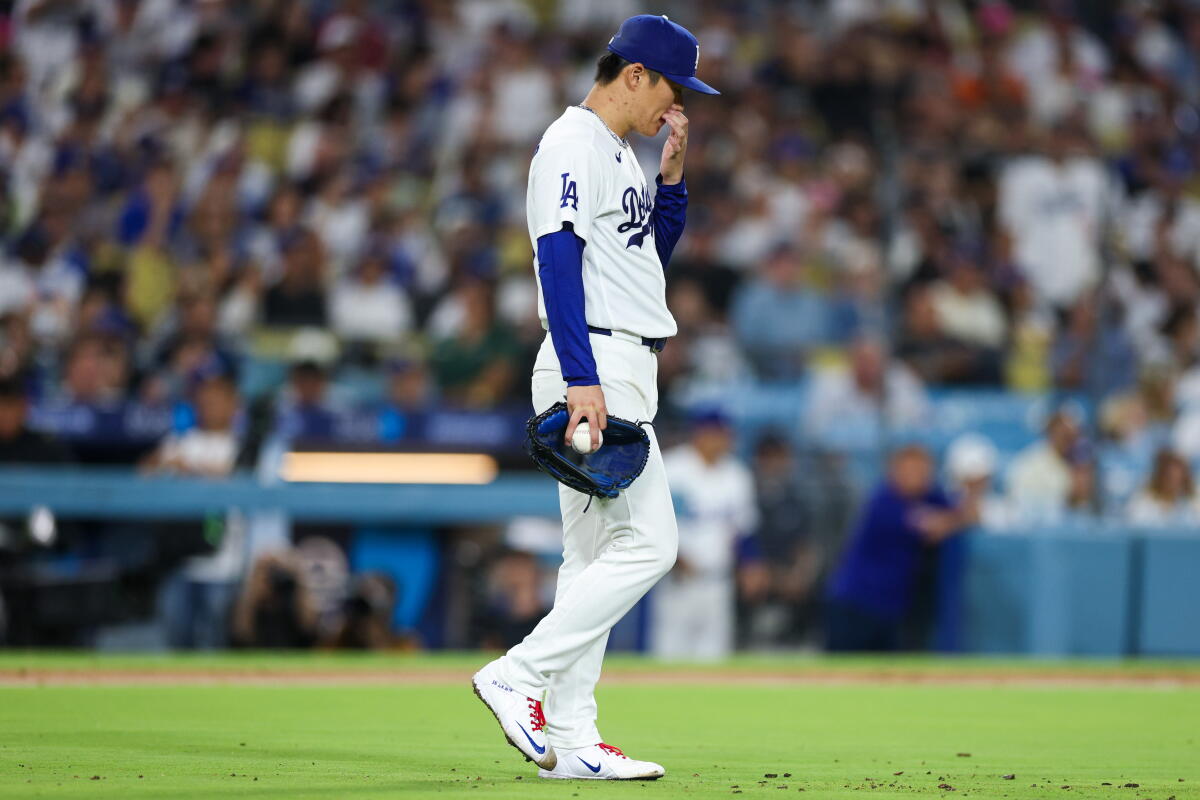
TORONTO — For a couple moments Tuesday afternoon, Dodgers manager Dave Roberts spit out a rapid-fire version of Yoshinobu Yamamoto’s biography, or at least his Baseball Reference page.
World Series winner? Check. World Baseball Classic winner? Check. Olympic Games gold medalist? Check. Sawamura Award winner, presented annually to Japan’s best pitcher? Check.
Is it in their best interest if he does? Or could the numbers he might need to put up to win the award be counterproductive to the Dodgers winning another World Series?
In this century, only two players have won a Cy Young award and a World Series championship in the same season: Randy Johnson, with the 2001 Arizona Diamondbacks, and Justin Verlander, with the 2022 Houston Astros.
The Dodgers include October on their schedule every year. Their regular season consists of priming pitchers for October, not padding their resumes for awards.
No Dodgers pitcher has thrown 200 innings or won 20 games over the past four years, the last two of which have ended with parades. If the Dodgers choose not to mess with team success, they would not afford Yamamoto the chance to hit either of those traditional barometers of excellence.
The last time a Dodgers pitcher won a Cy Young in a year in which the team won the World Series: Hershiser, in 1988. He threw 267 innings that season, then another 42⅔ in the playoffs. The Dodgers are as likely to let Yamamoto throw that much as they are to let him bat cleanup.
“I think he could throw more, but I don’t think he needs to,” Hershiser said. “Every organization is different.
“If Yamamoto was on a .500 club that was hoping to get a wild card, they wouldn’t be planning for October every year like the Dodgers. They would be pitching him more.”
Dodgers pitcher Yoshinobu Yamamoto prepares to deliver in the first inning of a 4-1 win over the Toronto Blue Jays on Tuesday night at Rogers Centre.
(Cole Burston / Getty Images)
Roberts said he did not believe that whatever restraints the Dodgers might put on Yamamoto would spoil his chances for the Cy Young award, if his performance otherwise warrants it. The game has changed, and with it the award voting.
Of the 10 Cy Young winners over the past five years, eight did not throw 200 innings. None won 20 games.
Yamamoto has pitched six innings in each of his first three starts, including Tuesday’s 4-1 victory over the Toronto Blue Jays. He averaged 5.8 innings per start last season, when he pitched 173⅔ innings.
Is a seven-inning pitcher beyond where he is, or where the game is today?
“I purposefully took him out of a lot of games where he had six innings, and I could have pushed him, and I don’t know how it would have played out,” Roberts said before the game. “But there’s a lot of intentionality to kind of banking what you have with him. But could he be? I don’t see why he couldn’t.
“I think he would certainly argue that I’ve probably taken him out too soon at times.”
If Yamamoto is the Dodgers’ best pitcher, then every inning he pitches is an inning that gives the Dodgers their best chance to win. There is no need to extend him beyond his comfort zone, but he pitched 193 innings twice in Japan, averaging 7.4 innings per start. He should be able to handle 200 innings.
“It’s certainly possible,” Roberts said, “but I’m just not going to manage to get him to reach a certain milestone. How he’s pitching in a certain game, to then go to the next game and how it looks, that’s kind of how I do it.”
Yamamoto started 30 games last season. One more inning in each start would have gotten him to 200 innings.
To his credit, Roberts did not take him out after six innings Tuesday. Yamamoto started the seventh inning and faced two batters — the first doubled after an ABS review nullified a strikeout, the second dropped a bunt single — then left after 97 pitches. Alex Vesia, Blake Treinen and Edwin Díaz collected the final nine outs.
That, too, is a plan. Handing the ball to an ace like Yamamoto and asking for nine innings is ancient history.
“You have bullpens that are a lot richer and deeper,” Hershiser said. “You’ve got quality arms in the bullpens, where ballclubs are spending money.
“As far as the workload in the playoffs compared to what they’re doing in the regular season, I think they all could still do what we did. I just think they’re not being trained or asked to do it. I just think it’s a different time and a different culture.
“He’s able to do it. I think (Shohei) Ohtani is able to do it. I think (Blake) Snell is able to do it. I think (Tyler) Glasnow is able to do it. But there is a different way to spend your assets now.”
Yoshinobu Yamamoto pitches against the Arizona Diamondbacks on March 26 at Dodger Stadium.
(Gina Ferazzi / Los Angeles Times)
The concept that a team would give a pitcher an extra start or two to make his case for an award? Not this team, anyway.
“Now they’re saving those 10 or 20 innings for the playoffs,” Hershiser said.
“I think our guys have a chance to win a Cy Young even pitching once a week, if that’s what they ask them to do, until the games mean something more. Then they might bring them back on no days rest, as they have.”
That was a wink and a nod toward Yamamoto, who has won his last four appearances here: Game 2 of the World Series on 10 days rest; Game 6 on five days rest; Game 7 on no days rest, and Tuesday on five days rest.
The Dodgers have made clear that saving an inning for the postseason is preferable to spending it during the regular season. For a pitcher under contract to the Dodgers through 2035, it is certainly defensible in the short and the long term.
But, for a coaching staff and front office that loves the phrase “gives us our best chance to win,” a little more of Yamamoto could do just that.
Young faces lit up with joy as award winners bounced to the podium. But it wasn’t only the elementary school recipients. The Westlake High students who created the ceremony were equally thrilled.
The teens are part of Make Great Plays, a grassroots organization that gives elementary school students a chance to dream, excel and believe they belong in educational echelons that once felt out of reach.
Dhuruv Sankararaman, a Westlake High junior and baseball player, launched Make Great Plays nearly four years ago, starting by collecting and donating sports equipment to the five Title 1 schools in the Conejo Valley Unified School District. (Title I public schools receive federal funding because they have a high percentage of students from low-income families.)
The mission quickly broadened. In the last year, Make Great Plays has conducted backpack and supply drives that outfitted more than 100 students and spent classroom time with students to increase computer literacy.
Maple Elementary in Newbury Park was one of the first schools that Sankararaman and his team helped.
“We picked up 100 backpacks full of supplies,” he said. “They made a huge difference to hand them out to everyone in need.”
‘Make Great Plays’ founder Dhuruv Sankararaman, left, and other Westlake High student-athletes give out awards at Maple Elementary in Newbury Park.
(Sai Krishna)
Next, they identified students who are especially helpful to the large autistic population at Maple and recognized them at an awards assembly. The Make Great Plays staff created five awards, one of each going to students in every grade: Inclusion Hero, Unity Champion, Global Ambassador, Hope Maker and Pathfinder.
“The kids are so excited to have high school students here to run the ceremony,” Maple principal Meghann O’Weger said. “Something feels different when the person giving the award is still a kid, but a bigger one. If adults came in and gave out the awards, it wouldn’t be the same as from peers.”
The 20 Make Great Plays members play soccer, baseball, lacrosse, tennis and volleyball at Westlake High. What began as a way to embellish college entrance applications has become a gratifying life experience for the teens as well as the elementary school students.
Sankararaman plans to expand Make Great Plays to schools in Los Angeles County and rural India, where his parents grew up.
“Some of the kids don’t have a stable home life and are behind in school,” Sankararaman said. “Spending time with them shifts their view a little bit. Many are incredibly smart. All the kids are very respectful. They listen to us as high schoolers and see us as role models.
“It’s cool to see faces light up when they realize how successful they can become, that they have the possibility of a great future.”
This is a daily look at the positive happenings in high school sports. To submit any news, please email eric.sondheimer@latimes.com.
There is bad news and good news to report on the Kings’ push for a fifth straight playoff berth.
First, the bad.
With a chance to move into a playoff position Saturday, the Kings came out flat and were routed 6-2 by the Utah Mammoth at Crypto.com Arena, leaving them a point out of postseason position.
It was the Kings’ most one-sided loss in more than a month, not exactly the way it wanted to start its final sprint to the postseason. And that left coach D.J. Smith with more questions than answers with nine games left in the season.
“We were not sharp in any facet of the game. It’s not good enough,” said Smith, after Utah scored two goals on the power play and three in transition.
“We’re going to ask ourselves why. Why we weren’t ready. What didn’t we do? The excuses really don’t matter. We’ve got to be way better than we were tonight.”
But wait, it gets worse.
Saturday’s game was also the first of a seven-game homestand, matching the Kings’ longest in 15 years. But that’s not the advantage it would appear to be since only the Vancouver Canucks and New York Rangers have been worse at home than the Kings this season.
“I don’t know what it is,” Smith said. “Last year we couldn’t lose here. Right now, we don’t lose very much on the road. That’s in your head. People say it’s luck. You make your own luck.
“We didn’t come ready to play today. And whether it’s our building or the road or wherever we played this game, that isn’t good enough.”
The Kings are also bucking history since 18 of their losses have come in either overtime or a shootout. Just one team — the 2012 Florida Panthers — have lost that many games after regulation and made the playoffs since the shootout was adopted 21 years ago.
Kings forward Quinton Byfield tries to shoot in front of Utah Mammoth defenseman Nate Schmidt during the second period Saturday.
(Jae C. Hong / Associated Press)
If the Kings had won just half those overtime games, they’d be a point back of the Pacific Division-leading Ducks. Instead, they appear to be going backward at the worst possible time, dropping seven of their last 10 games and nine of 14 since Smith replaced Jim Hiller behind the bench.
And suddenly there’s traffic in their rear-view mirror, with four teams bunched no more than three points behind them in the Western Conference standings.
Despite all that, the Kings took the ice against Utah with a chance to control their own playoff destiny, only to play with little urgency, falling behind for good 2½ minutes after the opening faceoff on the first of two goals by fourth-line winger Alexander Kerfoot.
Kerfoot entered with three goals on the season and nearly doubled that in two periods against the Kings. For a team with everything to play for, the Kings looked distracted and disinterested.
“I don’t know what it was,” defenseman Drew Doughty said. “There’s no excuses for the way we performed.”
Now for the good news — and there is some.
Despite the loss, the Kings are still just a point out of the second wild-card berth — with two of their final six regular-season home games coming against Nashville, the team that currently owns that final playoff berth. Win those two, and the Kings are back in the driver’s seat.
“We’re still in the thick of things,” said captain Anze Kopitar, whose career ends when the Kings’ season does. “We’re not out by any means. But we’re going to have to play much better.”
Added Doughty: “Take it one [game] at a time and win every one.”
A wild-card is no longer the Kings’ only — or even clearest — path to the postseason, however. The Vegas Golden Knights, the team directly ahead of the Kings in the Pacific Division standings, have lost six of their last 10, whittling their lead to four points over the Kings in the battle for the division’s third and final postseason berth.
Pass them and the Kings will likely face the Edmonton Oilers — again — in the first round of the playoffs. The opportunities are there for the taking. But the Kings need to play like they want them.
“We’ve got three days to figure it out, and then we’ve got nine games [left],” Smith said. “We’re going to turn the page and find a way to be better for the next one. It’s got to be a playoff mentality.
“You can’t dwell on it. You’ve got to move on. But you’ve got to get better and you have to learn from why we lost the way we lost tonight.”
Marcus Rashford was lively against Uruguay, while Newcastle United’s Anthony Gordon currently appears favourite to start in that position at the World Cup, with Arsenal forward Noni Madueke also comfortable on both flanks.
Tuchel has spoken about Foden as an unorthodox deputy for captain Harry Kane as a central striker, but this would surely be too much of a stretch. The World Cup is no place for wild experiments.
It all leaves Foden as one of the players whose place on the plane to the United States is uncertain, wondering if a big opportunity had passed him by against Uruguay.
England’s struggle to impose themselves on Uruguay meant it was a testing night for those wanting to impress.
“There’s no-one out there in a red shirt that looked over to the bench and said, ‘I’m ready. I’m going to America. I want a ticket for that plane’,” said ex-England goalkeeper Paul Robinson on BBC Radio 5 Live.
Manchester United’s Harry Maguire made the most of his recall in defence with a solid display, capped by two brave, crucial blocks in the closing stages as Uruguay pressed for an unlikely winner.
He is now a serious contender for the squad, especially with fitness doubts continuing to surround John Stones. Tuchel may also find Maguire’s experience at major tournaments crucial.
James Trafford had little to do on his debut in goal, while another making his first full appearance, Everton’s James Garner, was tidy and made a good impression. Whether it is enough for a World Cup place is another matter.
Tottenham Hotspur striker Dominic Solanke worked hard in attack as he pressed his claim to be understudy to Kane, but Leeds United’s Calvert-Lewin – whose last appearance was five years ago – will bitterly regret his missed opportunity with the scoreline goalless.
Nadiya Bychkova has seemingly been handed another chance from the bosses of Strictly Come Dancing just hours after she announced her departure from the series
Nadiya Bychkova is said to be wanted as a choreographer for Strictly Come Dancing(Image: CREDIT LINE:BBC/Ray Burmiston)
Nadia Bychkova has seemingly been handed another chance from the bosses of Strictly Come Dancing. The TV star, 36, confirmed on Wednesday that she had left her role as a professional dancer on the BBC Saturday night favourite after almost a decade of performing with celebrities like Blue singer Lee Ryan, Bros star Matt Goss and Chris Robshaw.
A source said: Nadiya is so recognisable with viewers and bosses felt it would be a real loss to lose her from the Strictly family altogether. After a few conversations, they reportedly offered her a choreography role which she is very open to.
**Ensure our latest headlines always appear at the top of your Google Search by making us a Preferred Source. **Click here to activate** or add us as your Preferred Source in your Google search settings.**
Speaking to The Sun, the source added: “Obviously, she is sad to no longer be dancing but recognises she will have great scope for more lucrative commercial opportunities now, and can explore exciting new projects.”
The news comes after reports of a bloodbath amongst the Strictly professional dancers ahead of the next series. Karen and Nadiya are two of the number of stars rumoured to have been axed by BBC bosses. Gorka Marquez, Luba Mushtuk, and Michelle Tsiakkas have all been said to have been axed in a bid for bosses to get “fresh faces” in the professional line-up.
Nadia gushed: “There is something truly special about being part of a programme that plays such a big part in so many people’s lives and I want to thank all those who have sent beautiful messages over the last few weeks and those who have voted, shouted, supported, celebrated and cheered during every series.
“I also want to take a moment to appreciate all those who have helped me along the way: my partners, my fellow professionals, the judges and brilliant people behind the scenes,” Nadiya wrote. “I joined the show as an athlete and a double world champion. Along the way I have learned so much about myself and other people. I have grown, not only professionally, but personally and creatively.”
Speaking about her time on the BBC show, the dancer continued: “Strictly has allowed me to discover new sides of myself, develop new skills, and evolve as an artist in ways I will always be grateful for.
“This isn’t the end… I look forward to being part of the Strictly world for many years to come in ways I am beginning to explore,” Nadiya insisted. “I’ve changed a lot since I first stepped onto that dance floor, not just as a performer, but as a person and I can honestly say I’ve never felt more like myself.”
Looking ahead Nadiya continued: “I’m excited to have time to focus on new projects, and to spend more precious time with my beautiful daughter. Life feels full of possibilities.” She said: “I danced before Strictly, I loved dancing on the show and I plan to keep dancing for many years to come. Thank you for all the love and support along the way,” before signing the message off with a white heart emoji.
The BBC also released a statement in the wake of Nadiya’s announcement. It read: “We would like to say a huge thank you to Nadiya Bychkova for her incredible contribution to Strictly Come Dancing. Since joining the show nine years ago, Nadiya has brought elegance, artistry, and unwavering dedication to the ballroom, and she will always remain a cherished member of the Strictly family.
“Over the years, Nadiya has delivered countless memorable performances, showcasing not only her exceptional talents as a dancer and choreographer but also her brilliance as a teacher to all her celebrity partners.
“A consummate professional, Nadiya embodies the very best of what Strictly stands for. We are deeply grateful for everything she has given to the show and wish her every success for the future.”
In less than two months, six UCLA women’s basketball players might be working out with WNBA teams. The draft is April 13, a week after the NCAA national championship game, and the season starts less than a month later.
One of the most consequential pieces of the new WNBA collective bargaining agreement for current college players, including the UCLA super senior class, is expanded rosters.
Not only are two new teams — Portland and Toronto — entering the WNBA this season and adding 24 roster spots, but the new CBA will allow each team to have 12 traditional roster spots and two developmental player spots.
The new developmental players will get housing assistance and can practice and travel with their respective WNBA squads.
UCLA’s Charlisse Leger-Walker, left, and Angela Dugalic, back, swarm California Baptist forward Grace Schmidt during an NCAA tournament game at Pauley Pavilion on Saturday.
(Gina Ferazzi / Los Angeles Times)
Across the country during the NCAA tournament, players and coaches have noted how much the new WNBA CBA changes the future for the next generation of players.
South Carolina coach Dawn Staley noted to reporters last week that it’s one of the first times many women’s basketball players will be able to accumulate generational wealth. And they can do so without necessarily having to play in other leagues around the world during the WNBA offseason.
“The WNBA will make you make a choice because you have to be on time in training camp.” Staley said. “It’s worth it now. It’s worth it to actually have your body recover and just play in the WNBA season.”
Last season, just 20 rookies made rosters out of training camp. The fight for those spots might get more competitive for some young players now that the league offers higher salaries and some high-end international players might find it more worthwhile to sign in the WNBA.
Teams are now required to roster 12 players, compared with the option to have 11 instead of 12 under the previous CBA, which allowed franchises to spend more on top players and have less of a cap hit by triming their roster size.
But likely, more players who otherwise wouldn’t have gotten looks or would have been cut during past training camps will now have a realistic shot a developmental player spot.
“I just feel a lot of pride,” said UCLA sixth-year forward Angela Dugalic. “Because of them, I’m able to have a lot of things that they maybe weren’t able to have at the start of their career. And some of them, like, they’re either at the end of their career or they’re even finished right now, they’re still fighting for us.”
Kneepkens or Leger-Walker (though she was recovering from an ACL injury) would have been WNBA draft-eligible after last season. Their rookie salaries would have been around $70,000, depending on where they were selected. This year, the rookie minimum will be $270,000, and top picks, which Betts and Rice are projected to be, will make as much as $500,000.
“Just like the growth we’re even experiencing now in college, we have so many people before us to thank that. [They] fought for better exposure and TV rights … fought for Title IX and resources to be allocated appropriately,” UCLA coach Cori Close said. “I think it’s similar right now in terms of the CBA. We need to really thank the people in that room that fought hard.”
UCLA guard Kiki Rice dribbles up the floor under pressure from California Baptist guard Filipa Barros Saturday at Pauley Pavilion.
(Gina Ferazzi / Los Angeles Times)
UCLA players are understandably locked in on the NCAA tournament, but they haven’t ignored an important moment.
“I think it’s awesome for women’s basketball and the progress going forward,” Leger-Walker said. “I love that we have players who are willing to advocate and really stand on what they believe in. We’re making steps forward.”
Where they all fit on individual teams or in respective mock drafts will all be more clear after free agency begins in the week ahead of the draft. Around 80% of the league are free agents, so there are going to be plenty of new-look teams.
UCLA players will soon get a chance to join those roster makeovers under working conditions past players never enjoyed.
“I’m just grateful for all the women who fought for what they’ve earned,” Kneepkens said. “That’s just super cool for anyone that’s a WNBA fan and anyone that’s part of it. They made this happen.”
CHICAGO — This was hardly a masterpiece of Big Ten basketball, what with the barrage of bricks and busted possessions. Nor was it the sort of night to convince you of UCLA’s chances as a surefire conference contender.
But amid the mess of its 72-59 win over 14th-seeded Rutgers on Thursday night, UCLA showed the sort of mettle it may need to keep its season kicking this March.
It started with Donovan Dent, whose masterful month continued with his first career triple-double — and the first triple-double in Big Ten tournament history. The senior tallied 12 points, 10 rebounds and 12 assists. He and Tyler Bilodeau, who added a game-high 21 points, were the rare bright spots on offense for the Bruins.
Otherwise, UCLA struggled to find any sort of rhythm. It shot just 38% from the floor, worse than it had in any win this season. And still, the Bruins were in control for most of the game after pulling away early in the second half.
None of that will fly against No. 3 seed Michigan State on Friday at 6 p.m. PDT, which beat UCLA by 23 points the last time they met.
But until Thursday it’d been quite some time since UCLA actually managed to win away from home. Not since Jan. 29 had it won outside of L.A., and only once this season had it won outside of the Pacific time zone.
For a while, it didn’t seem like UCLA intended to win Thursday, either. Even as Rutgers gave it every chance to pull away.
The Bruins did shut down Rutgers’ Tariq Francis, who was fresh off a 29-point performance in a first-round win over Minnesota. Francis didn’t score until the nine-minute mark in the second half. He finished with six points on two-of-11 shooting.
The two teams spent most of the first half trading wasted possessions and taking turns with their respective shooting slumps. Four minutes scoreless for Rutgers. Three scoreless for UCLA. Four scoreless for Rutgers. Then three scoreless for UCLA. Back and forth they went in their futility.
The Bruins had plenty of chances to build a lead early. While Rutgers struggled to find rhythm on offense, settling mostly for contested shots inside the arc, UCLA got its share of open shots all around the floor. It just wasn’t able to hit many of them. Both teams shot a meager 31% before halftime.
Those shots fell more frequently in the second half, as UCLA pushed its lead to 15. The Bruins still struggled to put the Knights away, until Dent took matters into his own hands late, pushing UCLA to victory.
Makai Lemon got another chance Thursday to demonstrate his skills for NFL scouts.
About 50 of them — representatives from each of the 32 teams — gathered at USC to spend a few hours evaluating the school’s latest class of draft prospects. Lemon, who won the Biletnikoff Award last fall as college football’s top receiver, had everyone’s attention.
“Running good routes, catching the ball, running fast,” he said of his objectives for the day. “Whatever I showcase, let them know I can do it at a high level.”
It was a more comfortable setting than Indianapolis. At the scouting combine, Lemon’s performance at the podium drew scrutiny — not for anything he said, but for how he said it. He swayed. He was measured, unhurried, visibly unbothered. Some read it as detached. Others saw something else entirely.
“We don’t want a guy who’s phony and coached up,” said one team executive, speaking on condition of anonymity. “We want a guy to be his authentic self. As long as he’s not a jerk, we love it.”
Rams general manager Les Snead, who attended Thursday’s workout of 17 USC players, put it another way. “At the combine you’re usually getting some version of a personality,” he said. “A lot of times it’s, ‘This is my interview personality,’ and that’s not necessarily who they are 365 days a year.”
USC receiver Makai Lemon catches pass during a drill at the NFL combine in Indianapolis last month.
(Julio Cortez / Associated Press)
The other USC prospects who participated in Thursday’s workouts were receivers Ja’Kobi Lane, Jaden Richardson and Jay Fair; running back Eli Sanders; tight end Lake McRee; offensive linemen J’Onre Reed and DJ Wingfield; defensive linemen Anthony Lucas and Keeshawn Silver; linebacker Eric Gentry; cornerbacks DJ Harvey and DeCarlos Nicholson; safeties Bishop Fitzgerald and Kamari Ramsey; punter Sam Johnson; and long snapper Hank Pepper.
Former Trojan linebacker Mason Cobb, who was on the team in 2024, also participated.
Lemon’s credentials are not in dispute. He finished last season with 79 catches for 1,156 yards and 11 touchdowns. At 5-foot-11 and 192 pounds he’s not big for the position, and according to a school release ran the 40 in 4.46 seconds, which is fast but not blistering. But those aren’t his main strengths.
“One of the underrated aspects when you’re watching wide receivers is toughness, and he kind of oozes toughness,” said Daniel Jeremiah, lead draft analyst for NFL Network. “He catches everything. He’s super strong physically and super strong to the ball.”
The technical detail that stands out for Jeremiah: Lemon doesn’t leave his feet to catch unless he has to. He stays grounded, keeps himself in position to do something after the ball arrives. Receivers who lunge and cradle in the air have nowhere to go. Receivers who catch with their feet under them turn completions into more yards.
“He’s got a really good feel for the game,” Jeremiah said. “I think he’s going to be a high-volume guy. I think he’ll catch 90-plus balls every year and be the quarterback’s best friend.”
Snead, who has a history of finding productive receivers that others miss — among them Cooper Kupp and Puka Nacua — is skeptical of the 40 as a measuring stick.
“You rarely see a route in football where the receiver runs straight for 40 yards and then makes his break,” he said. “Even on a go route you’re usually trying to get an edge on the defender, so you’re not running straight. The 40 might tell you how many gears you have in your body. But sometimes you need to run a route in third gear and then shift into fourth or fifth, or decelerate.”
Jeremiah ranks Lemon among the two best receivers in this draft, giving a slight edge to Ohio State’s Carnell Tate, who projects as more of a down-the-field, big-play threat. Comparisons to Detroit’s Amon-Ra St. Brown (also a former USC player) and Tampa Bay’s Emeka Egbuka have circulated. Jeremiah sees those, but also reaches back to Jarvis Landry, the former Louisiana State standout who made five Pro Bowl appearances.
“I actually think Lemon is a better player than Jarvis Landry coming out,” Jeremiah said. “When you’re instinctive, you’re tough and you catch everything, that’s a pretty high floor. Absolute worst case, you’re going to have a steady, dependable, reliable player.”
Watching from the sideline Thursday was Marqise Lee, who won the Biletnikoff in 2012 — the only other USC player to do so — and was a second-round pick of the Jacksonville Jaguars in 2014. He has spent much of the past several months as a mentor to Lemon, and when the combine criticism arrived Lee wasn’t surprised by any of it.
“My biggest thing to him was just enjoy it,” Lee said. “I know he got a lot of backlash about the media stuff and things like that, but when you know the guy, he’s not a big talker. He’s calm, he’s all about business.”
Lee believes Lemon has the skills to thrive at the next level, but knows how much context matters once a player gets there.
“The league is different until you actually get there and get the opportunity to practice and go through it,” Lee said. “Some people have a hard time adapting. Once he gets on a team I’ll be texting him: ‘How’s the comfort level? How’s the offense?’ Because that stuff matters. Offensive coordinator, people loving you — all that matters.”
Lemon, for his part, already sounds like someone who has thought about this.
“I want to go in there and be myself,” he said. “Don’t want to try to be anybody else.”
CHICAGO — The eventual end of the USC men’s basketball season came the same way that it fizzled out during the past month, with yet another second-half collapse that featured the added pain of overtime.
The Trojans led the Huskies by 13 in the second half and had chances to win at the end of regulation and overtime, only to miss all three potential game-winning or game-tying shots and go 2-for-5 from the free-throw line in overtime. For a team that was once in NCAA tournament consideration before stumbling, that failure to finish was a persistent flaw.
USC guard Alijah Arenas talks with coach Eric Musselman during the Trojans’ loss to the Huskies in the Big Ten tournament on Wednesday in Chicago.
(Michael Reaves / Getty Images)
“That’s been the story of our last eight games,” Musselman said. “I think we’ve led at halftime four of our last eight games, and as a group, we haven’t figured out how to close games, the last 20 minutes with a lead. It’s a disappointing last eight games of the season. I thought up until that point we played good basketball.”
With the Trojans likely to decline any postseason invitation, Musselman said, he was headed to the team hotel Tuesday night to get back to work filling out next season’s recruiting class, starting with more freshmen before the transfer portal officially opens next month.
That group already includes two top-30 recruits in the Ratliff twins, Adonis and Darius, but if USC learned anything from the way this season ended, all too similar to the way last season ended, it’s that whatever depth and talent Musselman has assembled in his two years at USC hasn’t been enough, whether that’s freshmen or transfers.
“We want a blend of both,” Musselman said. “It’s early in our tenure, and we’ve got to figure out a way to get better than what we’ve done the last two years.”
Tuesday, the Trojans had no shortage of chances to fend off the end.
They had a double-digit lead with 13 minutes to play. They had the ball at the end of regulation with the score tied. They had a chance to win it in overtime and were gifted a last-chance shot to tie it.
They missed all three pivotal shots — the first two by Kam Woods, the last a 3-pointer by Jordan Marsh — to see a game they once led comfortably slip away again and again.
“On the last one, I feel like I missed Ezra [Ausar] on that cut,” said Woods, a grad transfer who joined the team in midseason. “Coach trusted me with the ball in my hands, and I feel like I let him down.”
Woods finished with 24 points while Jacob Cofie scored 14, Marsh 13 and Ausar and Ryan Cornish 10 each for 13th-seeded USC (18-14) as the 12th-seeded Huskies (16-16) beat the Trojans for the third time this season.
Freshman Alijah Arenas, who led the Trojans in scoring in both games without Baker-Mazara, was held to six points on 3-for-10 shooting and sat out the final six minutes of regulation and all but eight seconds of overtime. Musselman said that was his decision, as was the virtual absence of senior Terrance Williams, who played only one minute.
That left USC with what was essentially a six-player rotation to conclude a season that began without the injured Arenas and ended without Rodney Rice and Amarion Dickerson, both hurt, as well as the departed Baker-Mazara — all of which factored into Musselman’s position on any postseason plans.
“I haven’t had in-depth conversations with the administration yet about that, but I would assume we’re not going to play, just based on the number of bodies and how we played the last eight games,” Musselman said.
It was not all that long ago that USC was thinking about the NCAA tournament. Winners of the Maui Invitational, USC was 18-6 and above .500 in the Big Ten standings after a February 8 win at Penn State, solidly in a workable position on the NCAA tournament bubble.
But as the injuries mounted and momentum waned, second-half struggles just like the Trojans’ on Tuesday became an increasingly fatal flaw as they slumped to their longest losing streak in a decade. The loss to Washington compounded the misery of a second straight frustrating season, in familiar fashion.
“As a team, we faced a lot of adversity,” Cofie said. “I felt like we did a good job sticking with it and trying to play for each other. We had to deal with a lot of injuries. I felt like that played a huge deal in it. We still fought. We tried our best.”