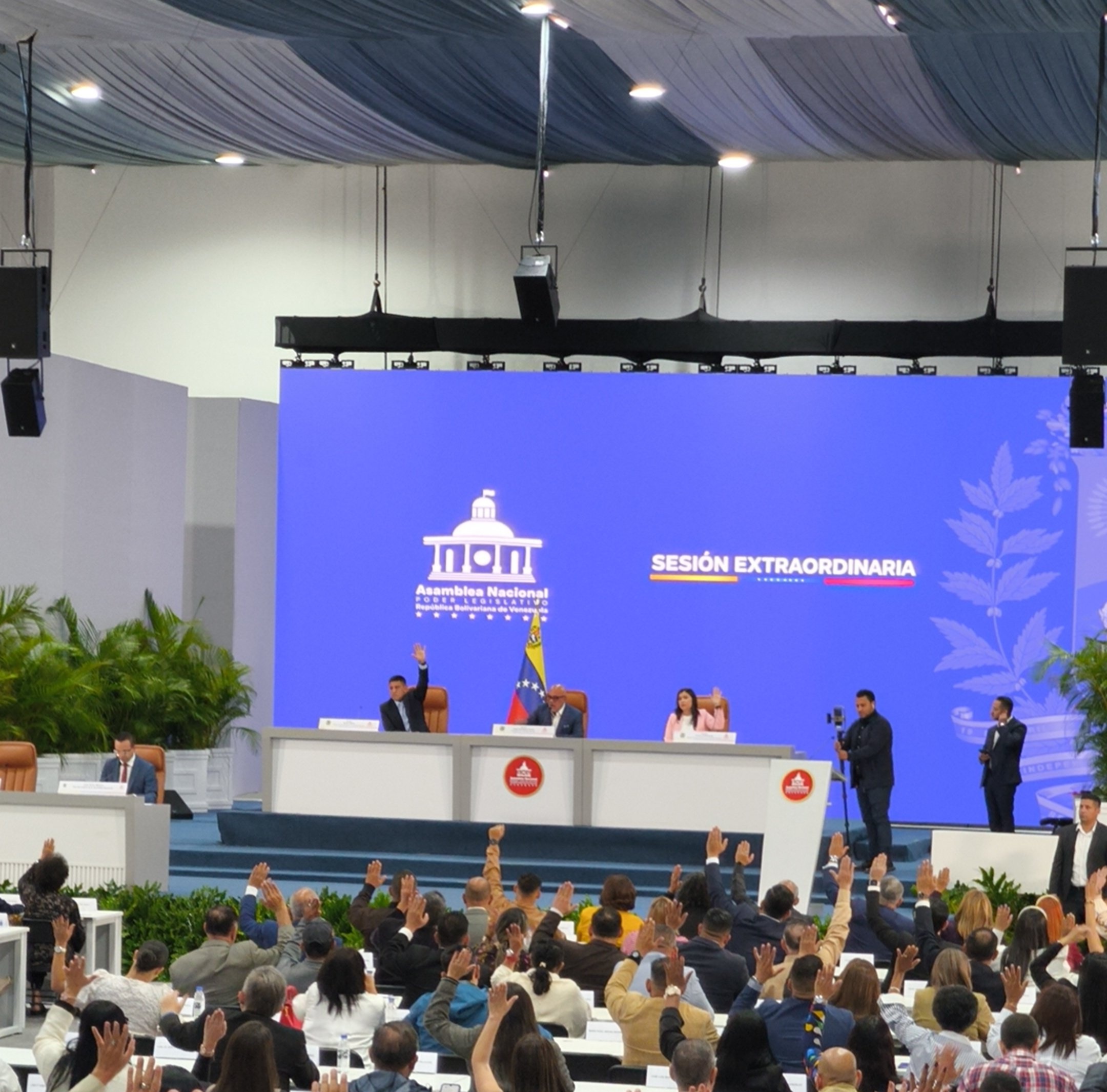
Venezuela’s National Assembly approved, in its first reading on Thursday, August 27, the reform of Article 65 of the Organic Law of the Supreme Court of Justice. Why is a measure like this so important for Venezuela? Because it is the first institutional and legal step taken by the interim authorities that might lead to a genuine transitional process.
On August 12, the first agreement was signed between the delegation of the interim authorities and that of the National Assembly in 2015. But that is a political document, of which the reform of Article 65 of the Organic Law of the Supreme Court of Justice would be the first true institutional implementation, a first legal step in a process that is just beginning and that, eventually, could take us to a transition.
Article 65 of the current law regulates the composition of the Nominations Committee: the body that selects citizens nominated for judgeships, from which the National Assembly chooses the judges. Currently, the Nominations Committee has 21 members: 11 members of the National Assembly and 10 members of civil society. The reform (which must be approved in its second reading in the National Assembly and then become law) would increase the number of Committee members from 21 to 23, but the most significant aspect is that these two additional members would come from civil society.
According to the political agreement of August 12, the National Assembly must appoint all 32 Justices of the Supreme Court.
In short, the reform allows for greater citizen participation in the choosing of the 32 justices, just after the agreement reached on August 12 to completely renew the country’s highest court, a key component of chavista’s hold to power during the 21st century. This shift, along with the other aspects of the August 12 agreement, could generate confidence for prestigious university professors and lawyers to apply in the upcoming process to form the new Supreme Court of Justice.
This reform could be followed by another, also structural in nature, concerning the same Organic Law of the Supreme Court of Justice (LOTSJ) and other laws of the justice system, as announced at the end of the first round of talks between the delegations of the interim authorities and the National Assembly in 2015. Therefore, this first step could be very important for moving toward a political transition.
Naturally, the question that arises from the previous experience of two decades of dialogue between Chavismo and the opposition is how to prevent the regime from controlling the Nominations Committee and ensure that it has a loyal majority among the 12 members of civil society that it would have if this reform is approved.
The answer is the same as it applies to this process: unlike all previous negotiations, here there is a third party that, rather than being a mediator, has the most influence—a Trump administration that theoretically benefits from a safer legal environment for foreign investment, and therefore has incentives to ensure that this reform truly becomes an opening that leads to the restoration, albeit gradual, of Venezuelan institutions.