Manchester City manager Enzo Maresca claims players unfazed by financial breaches verdict ahead of Liverpool showdown.
Published On 8 Oct 20268 Oct 2026
Manchester City manager Enzo Maresca has brushed off the guilty verdict hanging over the club and says he and the players are fully focused on football matters.
City could face a severe points penalty and even expulsion from the Premier League after an independent commission found they used “sham” commercial contracts to inflate revenue and cut costs by over 900 million pounds ($1.2bn) between 2009 and 2018.
Recommended Stories
list of 4 itemsend of list
City, who top the league with five wins in five games, return to action for the first time since the guilty verdict was revealed when they travel to Liverpool on Sunday.
The eight-time Premier League winners, who have appealed the decision, then play their first game in front of their own fans since the verdict, when they entertain back-to-back Champions League holders Paris Saint-Germain on Wednesday.
“I am very calm, the club has been quite calm. We trust completely the club,” Maresca told City’s in-house media on Thursday.
“We understand the noise, but the focus for us is what we control and we control the football side.
“The feeling is fantastic, to be honest.”
Maresca, who was assistant to former manager Pep Guardiola during the 2022-2023 season, addressed the players for the first time since the verdict when they returned to training on Thursday following the international break.
When asked about the reaction of the squad – many of whom have been linked with a move away from City if the club’s appeal fails – Maresca said they were “excited” given their start to the season.
“The players are excited for the next two games, but especially they are excited because in this moment, we are top of the league, so the players they are just focused on that,” he said.
“They know that what we can control is the football side. They are not worried at all about different things. They know they are professionals.
“They know that the noise is there, but they don’t care too much about the noise.
“They are just focused on this moment, how we can beat Liverpool, how we can, together with the fans, try to win at Anfield.”
As part of City’s appeal against the decision they have continued to maintain their innocence, saying the independent commission’s opinion contains “clear material errors” and that they possess evidence supporting their position.
The commission also found the club guilty of charges relating to their failure to cooperate with the investigation.
Premier League holders Arsenal begin the weekend’s action in the top flight on Saturday when they entertain Leeds United with the chance to move level on points with City, who would then hold Sunday’s game in hand.
For aerospace aficionados, it’s like we have entered into an alternate dream reality. The idea that we are seriously talking about the possibility of bringing back the SR-71 Blackbird to flight status is hard to comprehend, but amazingly this is where we are at. The biggest question I am getting about all this is why? We touched on the likely primary answer to that in our original reporting — high-speed is back in tactical vogue, and the Blackbird can sustain it in a realm of great interest, between Mach 3 and 4, and do it over and over again. It can also carry very large things and even launch them off its back at those extreme speeds. But those are not the only potential reasons for taking on such a gargantuan, high-profile, and costly technical challenge. Learning from the journey itself could be just as valuable as the actual flight test data a revived SR-71 produces.
Let me explain.
(NASA)
The Blackbird was as close to alien tech as it gets over 60 years ago, and even today, we have nothing like it in known operation. Yet it has been dormant for nearly three decades. Much of the expertise that built, supported, and operated it is sadly gone. But the exercises of reverse engineering and leveraging breakthroughs in additive manufacturing and rapid prototyping, as well as injecting new material sciences, avionics, propulsion and other technologies where applicable, and above all else, building the digital toolkit to make it all happen as fast and efficiently as it can be done, are all of extreme learning value.
I would not be surprised if a ‘digital twin’ is being created right now of the SR-71 using NASA’s SR-71 tail number 844 — the jet in question that has mysteriously disappeared from its display pad. Once such a model exists, breakthroughs in digital engineering can be brought to bear to see how fast the program can be accelerated, both in terms of development and flight testing. This could include not only getting the SR-71 back in the air, but improving its performance and reliability, possibly substantially, using all the new technologies we have today. It’s even possible a clone of sorts leveraging all these advances could be built using digital engineering tools.
The SR-71 served as an integral part of NASA’s flight test fleet at Dryden Flight Research Center, located on the premises of Edwards AFB. (NASA)
This is not necessarily an unprecedented concept. Just look at similar exploratory engineering programs like the X-55. But when it comes to partially reverse-engineering an airframe you have no support for, and few, if any, spare parts, America’s highly-secretive foreign materiel exploitation (FME) community could potentially lend a hand.
Operating in the shadows, they have been able to not only get totally foreign aircraft divorced from American supply chains pieced back together and flying, but they sustained them for years in total secrecy. They also did this long before the advent of rapid prototyping and digital engineering assets that we have today. Imagine what they can do now. They could be a top source for NASA to pull in to help in its far less sensitive but uniquely similar endeavor. This is just one example of many of how government and industry could come together to support and benefit from the SR-71 resurrection program.
Now, about those supply chains. During its heyday, the SR-71’s logistical tail was one of the most exotic ever created. It supported the Blackbird, as well as its progenitor, the A-12, for the better part of half a century. Reestablishing this supply chain would be a highly challenging, but rewarding exercise that could have major impacts across the aerospace industry, as well as others. So, how can we use all the capabilities we have now to jump-start the sustainment of the highest-performing air vehicle from an era of slide rules and drafting tables?
NASA SR-71 on the ramp in the evening. (NASA)
The idea of putting aircraft out of production back into production is not a foreign one to the U.S. military, either. NASA’s SR-71 program could serve as a pathfinder for better evaluating such proposals and their costs, while pushing the envelope forward on exactly how it can be done efficiently. The same can be said for simply keeping aging aircraft (or any vehicle or system for that matter) operating longer and for cheaper, by applying cutting-edge technologies and practices. NASA can create the playbook for doing so, and that playbook could end up being more valuable than the flight testing a reborn SR-71 does.
I think it’s fairly clear that we have lost something when it comes to aerospace engineering as of late. With all our advances and incredible tools even legendary Skunk Works founder Kelly Johnson could have only dreamed of, it seems like we have to relearn even simple lessons from decades ago, and oftentimes that can be a very expensive, time consuming, and even deadly process. In some ways, it seems like we have gone backward, or at least stalled out in certain engineering areas. The simple things become hard and hard things have become simpler. How did they do so much protractors and pencils way back then? Getting a Blackbird flying again can help explore and possibly answer this and other questions, and help mitigate these deficiencies going forward, as well.
NASA Blackbird tail 844 refueling behind the specialized, JP-7-filled KC-135Qs that supported the program. (NASA)
Even if NASA’s dormant SR-71 never ends up getting back in the air, even attempting such a challenge could be considered a success. Doing so could identify core areas across multiple disciplines that could be improved and areas of existing technology that could be better exploited for a whole array of tasks. It can also develop and refine new technologies in the process. All this sits at the core of NASA’s mission, and there is no vehicle on Earth that could drive people and organizations to give it their all for such a comeback dream as the Blackbird. It’s even possible that we could see corporations or even individuals help foot the bill for it.
And yes, all these benefits need to be weighed against cost. Surely there is a limit to how much the government can invest in such a program. Now corporations and individuals, that’s a different story.
So, yes, the main goal of this effort will likely be high-speed flight testing, but so much can be learned in the journey to get there that it must be quantified in the ‘business case’ for reviving the Blackbird.
At Sibos 2026, Bank of America announced that it had executed its first real-time payment initiated by Bradesco.
Bank of America Corp. has completed its first pilot transaction for a new cross-border real-time payments service, partnering with São Paulo–based Banco Bradesco SA to execute the transfer.
The bank announced the milestone during the annual Sibos conference in Miami on Tuesday. The payment, initiated by Bradesco through its existing connection to Swift, arrived in Hong Kong dollars in a local beneficiary’s account via Hong Kong’s Faster Payment System.
Bradesco did not respond to Global Finance’s request for comment. The transaction’s exact processing time or cost remains undisclosed. However, Bank of America confirmed that the payment was similar to a domestic instant transfer and was completed in near real time.
Need for Speed
Traditional banks are facing stiffer competition from card networks like Visa and fintechs such as Wise, which says 74% of its transfers arrive in under 20 seconds.
There are also stablecoin providers such as Circle, which all promise faster cross-border payments.
Daniel Stanton, Payments Product Head in Global Payments Solutions at Bank of America, is betting that the firm can win on ease of adoption rather than speed alone.
“The solution is designed to work with existing banking infrastructure,” said Stanton in an email. “[The bank’s] clients can gain the benefits of faster cross-border payments without a significant technology build, new connectivity or changes to their existing accounting processes,” he added.
Expanding Global Reach
Bank of America announced the service in June. It is designed for corporate, commercial, and financial-institution clients that send large volumes of small payments, such as remittances, payouts to gig workers, and payments to e-commerce vendors.
The Charlotte, North Carolina-based bank said the service offers real-time tracking, delivers the full principal amount and gives senders certainty that payments will arrive. It also connects to domestic instant-payment networks, including Mexico’s SPEI, the U.K.’s Faster Payments Service and India’s UPI. Clients can connect through their existing APIs or host-to-host channels.
Stanton said Bank of America clients will later be able to start these payments through CashPro, its digital banking platform, beginning in 2027. “We will share additional timing details closer to launch,” he added.
Daniel Stanton, Bank of America
Bank of America first introduced CashPro to corporate and institutional clients in 2009.
“We view this as complementary to our correspondent banking business,” Stanton continued. “It expands the payment options available to financial institutions and helps us meet growing demand for faster, more transparent cross-border payments.”
As for how many payments the firm expects to handle in its first year, it is too early to tell.
“We are seeing strong interest in solutions that can improve cross-border payments without requiring clients to make significant technology investments, establish new connectivity or change their accounting processes,” he said.
Surging Demand for Seamless Payouts
In June, Bank of America cited projections that cross-border person-to-person payment flows could grow 58% by 2032. Business-to-consumer flows could grow 131% by then.
Mark Monaco, head of Global Payments Solutions at Bank of America, touted the firm’s cross-border services earlier this month.
“Corporate treasurers don’t want to manage a patchwork of domestic schemes market by market,” Monaco told Global Finance. “They need banking partners to absorb that complexity.”
Industry Milestones in Miami
Announcements like these have made Sibos the default stage for major cross-border banking breakthroughs. For example, at last year’s event in Frankfurt, Germany, Swift unveiled a shared blockchain-based ledger. Over 30 global institutions backed the initiative—a move aimed at making 24/7 cross-border payments faster and less expensive worldwide.
Swift named Bank of America as one of the 30 firms involved.
The pass looked doomed the moment it left Jayden Maiava’s hands.
It was third-and-long, midway through the second quarter last November in Eugene, Ore. USC was down just a score, and Maiava, the Trojans’ big-armed quarterback, was trying to make something happen. But the receiver he’d locked in on was unavailable and an Oregon edge rusher was charging at him unchecked. So Maiava let one fly down the middle of the field, and the pass sailed into a crowd of Duck defensive backs.
That regrettable interception, one of two for Maiava that day, ended up being one of the turning points in that game — and in a 2025 season that fell one win short of the College Football Playoff. The loss to Oregon last season served as a rude awakening for USC and Maiava, a reminder of how far both still had to go before reaching their potential.
A year later, as the two Big Ten powers meet again on Saturday, Maiava and the No. 12 Trojans (4-0, 1-0 Big Ten) find themselves at another critical mile marker. A win over No. 20 Oregon (2-1, 0-0) would put USC firmly in the conversation for the College Football Playoff. A loss would have folks taking serious stock of where the Trojans stand in their fifth season under coach Lincoln Riley. And at the center of it all is a quarterback who so far seems entirely unfazed by that outside pressure.
USC quarterback Jayden Maiava looks down field to pass against San José State on Aug. 29 at the Coliseum.
(Ronaldo Bolanos/Los Angeles Times)
“He’s playing with great confidence,” running back Waymond Jordan said of Maiava. “We’re going to keep seeing him getting better and better and better.”
Ask anyone at USC about Maiava at the moment, and they will invariably say something similar.
“It’s the most confident Jayden I’ve seen in the three years I’ve been around him,” left tackle Elijah Paige said.
Through four games, the numbers certainly suggest he’s on the cusp of a big season. Maiava leads all of college football with 12 touchdown passes and ranks seventh in completion percentage (75.7%). His name is already being floated in early Heisman Trophy conversations.
But Maiava also hasn’t been tested much through four games this season. His protection has been near-perfect, with just a single sack allowed. According to Pro Football Focus, Maiava has been under pressure on a mere 16 dropbacks — or 13% of the time — and, more often than not, that’s because he held the ball too long. Maiava’s average time to throw while under pressure so far this season is nearly four seconds, which, by Big Ten standards, is an eternity.
All of that’s likely to change this week against Oregon. The Ducks are loaded with talent along the defensive line and in the defensive backfield. While they’ve tallied just five sacks through three games, they’ve forced five interceptions, most of any team in the Big Ten. That’s after finishing second in the conference in that category a year ago.
Maiava hasn’t been quite as sharp the last two games after a dynamite start in which he had as many touchdowns (6) as incomplete passes through two weeks. But he knows Oregon will make him pay for any mistakes he makes Saturday, just as it did last season.
“Definitely a lot to learn from that game coming into the next one,” Maiava said. “Definitely turning the ball over, clean that up. Being stingy with the ball, being able to get the ball in playmakers’ hands and just continue to stay on the same page and move as one.”
He’ll almost certainly be without two of his top playmakers against Oregon, with freshman Trent Mosley unlikely to play and sophomore big-play threat Corey Simms already ruled out. Though, so far this season, Maiava has had no problem overcoming the absence of his two top receivers from a year ago, Makai Lemon and Ja’Kobi Lane.
USC still has standout freshmen Kayden Dixon-Wyatt and tight end Mark Bowman to pace the passing attack. The offense has also barely made use of two receivers who were expected to be at the top of the depth chart, Tanook Hines and Terrell Anderson, both of whom should play more of a part Saturday.
USC coach Lincoln Riley talks with quarterback Jayden Maiava on the sideline during a game against San José State on Aug. 29 at the Coliseum.
(Kevin Terrell / Getty Images)
“He’s done a really nice job with all the new faces around him, which is hard to do at this position,” Riley said of Maiava.
That’s a testament to his development since 2024, when Maiava arrived at USC with a howitzer arm but little polish to his game as a passer. He’d never gotten any individual training as a quarterback. His mechanics and footwork were especially raw.
After taking over at the end of that 2024 season, though, Maiava has continued to get progressively better. Now Riley views him as “one of the best quarterbacks in the country.”
“Of all the guys I’ve been fortunate enough to coach, I don’t know that I’ve had any that have improved from Day One to this point as much as Jayden has,” said Riley, who has coached three Heisman-winning quarterbacks. “It’s been fun to see him grow as a player and leader, starting to embrace what it means to be the starting quarterback at USC. I think a guy that’s just going to get better and better in his prime to play his best football.”
USC will need him at his best Saturday if it hopes to knock off Oregon, which has its own star quarterback in need of a big moment. Dante Moore could have been one of the top picks in the NFL draft a year ago, but returned to the Ducks, only for them to suffer a stunning loss to Oklahoma State.
Oklahoma State’s coach later acknowledged that Moore was tipping whether Oregon was running or passing on a given play by his pre-snap stance.
USC quarterback Jayden Maiava looks to throw a pass against Rutgers on Sept. 19 in Piscataway, N.J.
(Adam Hunger/Associated Press)
“That was a game and that was a moment that helped mold us,” Moore has said since. “I learned from that, and I’m glad it happened.”
Moore will have the benefit Saturday of facing a struggling USC secondary. The Trojans have yielded 10 yards per pass attempt this season and now could be without starter Alex Graham, who’s listed as questionable. It has been especially difficult for USC to get off the field on third and fourth down, which Riley said has been a central focus this week.
“As a secondary, we’ve got to be a little bit tighter in those situations,” Riley said. “We’ve got to make those competitive plays. We have a good defensive line. We have a group that can rush the passer. We’ve got to make guys hold onto that ball, make our pass rush work, and make those plays when we get to the point of attack.”
Not to mention the Trojans have got a great quarterback, one that Riley expects to lean on his experience as USC faces its biggest test of the season.
“He’s just mentally in a really, really good place to go do that,” Riley said of Maiava. “He’s the guy I want taking us into this game, for sure.”
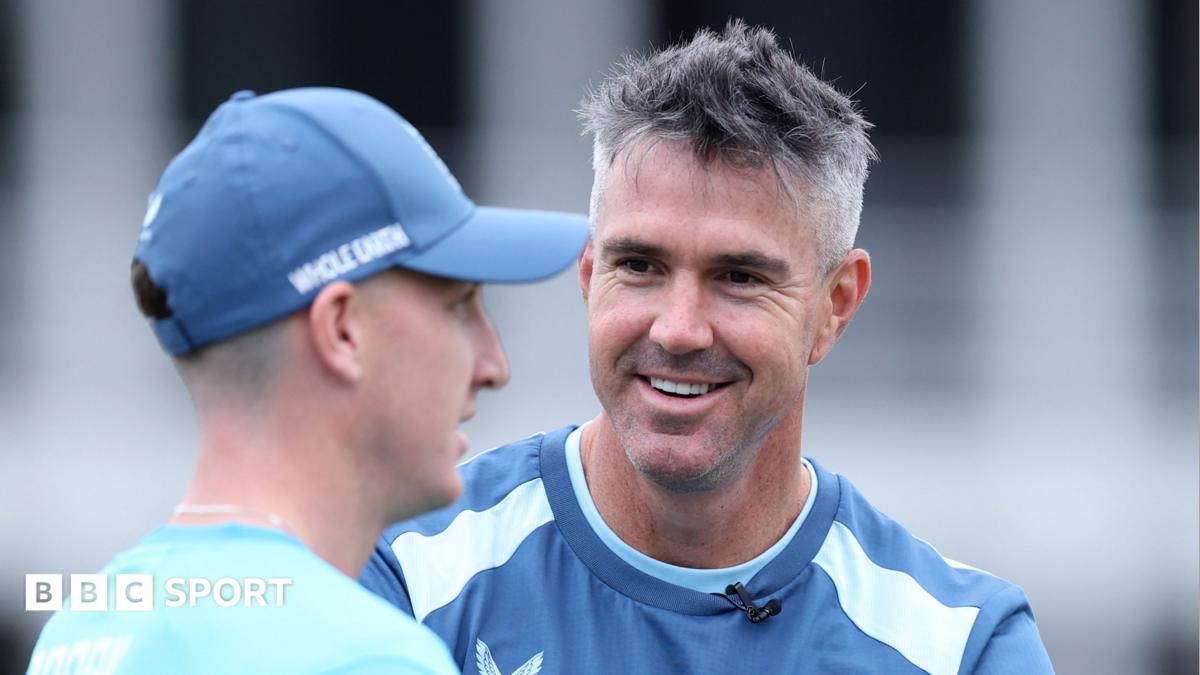
Pietersen’s eyes roll slightly when he is asked about Ben Stokes’ recent comments comparing Harry Brook’s talents to his.
Pietersen, like Brook, was a maverick – a batter capable of incredible highs. Those highs mean the lows come with a disproportionate level of criticism.
“Where I can help him is playing situations, because there was a lot of method in my madness,” Pietersen says.
“Yes, occasionally, I got out to reckless shots and crazy shots in the ’80s and ’90s but there was a lot of structure to the way that I batted.
“I’ve still got notes on my phone on how I played in T20 cricket, one-day cricket, Test match cricket, and about hitting straight back at the stumps, and the techniques, and how I did it, and don’t play certain shots.
“That all-round structure is something I could potentially help him with because he’s so flipping good.
“It’s actually frightening how good he is and how good he can be.”
And Pietersen says he will not limit himself to working purely on white-ball cricket.
He has already spoken to new Test coach Stephen Fleming about how he can help the Test batters during his time with the white-ball squads.
Though he said he would not have time for a full-time role, he suggested he is open to working with the Test side before next summer’s home Ashes series.
“I have got a pretty mad schedule,” he says. “I wouldn’t say no.
“I don’t think that necessarily means I need to be in a dressing room.
“There is a lot of time in the lead up to an Ashes series and a tour of South Africa, when I will be with the Test batters.
“There are conversations I can have there.”
Who knows how long this will last. England may as well make the most of this second chance.
Scrum-half Seren Lockwood has been ruled out of Wales’ second WXV Global Series fixture, against USA in Cardiff on Saturday, after failing a head injury assessment.
Lockwood was taken off during the first half of Wales’ eight-try victory over South Africa and is now going through World Rugby’s return to play protocols.
It is a blow for Wales with Lockwood and Keira Bevan proving a promising half-back partnership in a new-look backline.
Her absence paves the way for Lleucu George to return at 10, with Bevan reverting to her usual position of nine at Cardiff Arms Park.
“It’s always sad to see an individual coming off, but the HIA is great to have on board, we’re looking after her,” said Wales head coach Sean Lynn.
“She’s not going to be available this weekend, but I’m super excited to see the half-back combination that we’ve got this week.”
Football fans were shown a “constant bombardment” of advertisements promoting junk food and drinks during matches at the 2026 Fifa World Cup, according to a new study.
Researchers at the University of Bristol and University of Oxford created an AI tool to analyse ads which were visible to television viewers during live play in the tournament’s 104 matches, mostly displayed on pitchside advertising boards and around stadiums in the USA, Canada, and Mexico.
They found that logos and products for brands that produce junk food and drinks – defined by the UK government as being high in fat, salt or sugar – were displayed 65,722 times in total.
And the study also found that those adverts were visible for 28.1 hours’ time across the tournament, or just over 16% of the total time that matches were being played.
The ads were all shown on the international feed of matches during play – meaning they were visible to every viewer in every country broadcasting matches – and do not include ads shown during pre-match coverage, half-time commercial breaks, or the controversial in-match hydration breaks.
The model used by the researchers estimated that there were an average of 576 visible ads for junk food and drink shown during each individual match.
Coca-Cola had the highest number (21,893), followed by McDonald’s (13,915), Powerade (12,777), and Lay’s – the crisps manufacturer known as Walkers in the UK – (12,087).
All four brands are official partners of world football governing body Fifa, with the Powerade energy drink owned by the Coca-Cola company.
In response to the findings, Fifa argued that the vast majority of its revenue is put back into football, including on projects promoting health and wellbeing in which thousands of people participate.
A Fifa spokesperson said: “Fifa works with a broad, global portfolio of partners, all of which are subject to its governance and compliance frameworks.
“Fifa’s social impact campaigns, including Be Active, delivered messages of unity, inclusion, health and friendship to audiences on an unprecedented scale throughout the World Cup”.
BBC Sport also contacted Coca Cola, McDonald’s and PepsiCo – which owns Lay’s – but did not receive a reply.
UCLA head coach Bob Chesney, offensive coordinator Dean Kennedy and starting quarterback Nico Iamaleava were all in alignment after UCLA’s Week 2 win over San Diego State.
The Bruins’ offense had to get better.
UCLA wasted no time following through on their promises, scoring 21 first-quarter points against Purdue — the most UCLA has scored in the inaugural quarter against a conference opponent since 2016 against Oregon State.
Sign up for UCLA Unlocked
A weekly newsletter offering big game takeaways, recruiting buzz and everything you need to know about UCLA sports — exclusive to L.A. Times subscribers. Free Members receive a partial preview of each edition.
By continuing, you agree to our Terms of Service, which include arbitration and a class action waiver. You agree that we and our third-party vendors may collect and use your information, including through cookies, pixels and similar technologies, for the purposes set forth in our Privacy Policy such as personalizing your experience and ads.
While the Bruins’ offense exploded, their defense imploded, giving up 38 points and 488 yards to the Boilermakers.
But in a homage to “Pac-12 After Dark,” it was only natural that UCLA outpaced Purdue, rumbling to a 52-38 win over the Boilermakers on Saturday night at the Rose Bowl in the Bruins Big Ten opener.
Here are three key takeaways from UCLA’s third win of the season, matching its victory total from last season in just three games.
Running backs are elite
UCLA running back Anthony Woods is hoisted up by offensive lineman Julian Armella after scoring against Purdue at the Rose Bowl on Saturday.
(Ronaldo Bolanos/Los Angeles Times)
UCLA has returned to its roots.
With a rich history of churning out premier tailbacks, including Maurice Jones-Drew, DeShaun Foster and Zach Charbonnet, the Bruin offense has lacked a formidable rushing attack the last few years and finished as the nation’s third-worst ground unit in 2024.
But the Bruins may have struck gold in 2026.
UCLA ranks third in the country in rushing yards, first in rushing scores and fourth in yards per carry. Leading the charge is fifth-year tailback Wayne Knight who has 345 rushing yards and eight touchdowns in just three games — matching the Bruins’ total rushing touchdown mark from last season. Knight finished with his third multi-touchdown game of the season against Purdue, reaching the end zone twice to go alongside 200 all-purpose yards.
Through three games, Knight is exceeding the yardage and touchdown output from Reggie Bush’s 2005 season and Mark Ingram’s 2009 campaign — both of which featured Heisman Trophy wins.
But what makes UCLA’s ground attack so special is that it is a four-headed monster. And the Bruins proved it for the third straight week against the Boilermakers.
All three starting running backs — Knight, fifth-year Anthony Woods and senior Jaivian Thomas — reached the end zone and averaged more than six yards per carry in at least nine rush attempts. And Iamaleava added 55 rushing yards of his own to the 369 total the offense tallied.
After three games of consistent rushing dominance, it is becoming less of a coincidence and more of a pattern — UCLA may have one of the most potent rushing attacks in the country.
And one of its most valuable assets is the ground game’s ability to open up the passing offense.
Iamaleava answers the call
UCLA quarterback Nico Iamaleava hurdles over Purdue defensive back Hudauri Hines during the fourth quarter at the Rose Bowl Saturday.
(Ronaldo Bolanos/Los Angeles Times)
Iamaleava challenged himself to play better after a shaky start to the 2026 season.
After failing to complete a touchdown pass while throwing two red zone interceptions during the first two games, Iamaleava and Chesney knew that the signal caller left plays on the table.
“It’s not his best game, he knows it’s not his best game,” Chesney said after beating San Diego State. “I just think that the grit and the toughness that he played with though when he needed to get a couple first downs that really, really mattered to keep drives alive and put his body on the line and you know peeled himself off that ground and just kept fighting for his teammates, that’s special. But there’s a whole lot we got to do there.”
Iamaleava responded Saturday night, going 19-for-31 through the air for 276 yards and three touchdowns.
Not only did Iamaleava light up the stat sheet, but more important, he also passed the eye test. After looking impatient against San Diego State, consistently leaving the pocket early and failing to let plays develop downfield, he looked like a totally different player Saturday night.
Iamaleava looked poised in the pocket, going through multiple reads and hitting pass catchers across the field in an array of spots and formations. He also protected the ball against a solid Purdue defense.
But what was most impressive from the Bruin signal caller was his resilience and toughness on the field. After taking some bruising hits during the Bruins’ first two games, Iamaleava was fearless on scrambles and designed quarterback runs against Purdue, taking big hits downfield to gain extra yards. He also looked willing to take hits in the pocket to make deep or layered throws.
Although some of the hits led to time off the field — he cut a finger on his throwing hand and later took a crushing hit to his throwing shoulder that left him lying on the turf for some time — he always returned to the game. Chesney said he repeatedly asked Iamaleava whether he was sure he could continue playing and the senior kept insisting on returning to the game once he was cleared by the UCLA medical staff.
“He’s just a straight dog, there really isn’t much to say about that,” Knight said. “He’s battling. He gets hurt and he gets back up. He plays the next play. He’s doing this for his brothers.”
Same defense, different opponent
Purdue quarterback Ryan Browne scrambles out of the pocket while being chased by UCLA players Saturday.
(Ronaldo Bolanos/Los Angeles Times)
Purdue’s offense revealed glaring holes the San Diego State offense could not expose.
Aztec quarterback Jayden Denegal only threw for 45 passing yards against UCLA, consistently missing open receivers downfield that had gained considerable separation on the Bruins’ cornerbacks. And even when he did find them, the receivers were not able to haul in catches.
Boilermakers quarterback Ryan Browne, on the other hand, had no problem picking apart the UCLA secondary. Browne went 19-for-30 for 378 yards and three scores, and while he did throw an interception to cornerback Rodrick Pleasant, it came with less than six minutes remaining when the Bruins were already up two scores.
Purdue’s slot receivers tore through the UCLA secondary, running through multiple layers of coverage. Receivers Asaad Waseem and Xavier Townsend combined for 14 receptions, 311 yards and two touchdowns.
Not only did the Purdue offense score five touchdowns, but the pace at which the team scored illustrated the lack of resistance the Bruins’ secondary gave the Boilermakers. Three of the five touchdown drives took less than two and a half minutes, with the first touchdown coming on one play — courtesy of completely broken coverage.
When asked about the impact of Purdue’s receivers Wednesday, defensive coordinator Colin Hitschler said he would have to wait for the game to answer certain questions.
“When you have 10 personnel and that many receivers that can catch the ball, it can create mismatches, and we play a lot of man, so who’s going to fold first?” Hitschler said. “Are we going to be able to man them up or are we having to play more zone? Those are questions that will play out as the game dictates by who’s winning the one-on-one matchups. It’s the chess match that always happens in any game.”
It was obvious who won the chess match.
Two forced fumbles from linebacker Sammy Omosigho and a formidable run defense that held tailback Fame Ijeboi to 2.8 yards per carry helped mitigate the defense’s problems.
How many games UCLA can win the rest of Big Ten play may rest on the defense’s ability to rebound from a brutal win over Purdue the way the Bruins’ offense did after an ugly win over San Diego State.
Few have felt the transformation quite as deeply as Iamaleava, who was the face of both teams.
“Shoot, it means everything,” Iamaleava said of the team’s 3-0 start. “I think that just speaks to the growth of the team and speaks to Coach Ches, of how he got us to buy into this process and his winning, his winning ways. It feels good to be 3-0, and we’ve got to keep going.”
Women’s soccer scores signature win
The UCLA women’s soccer team has take on grueling schedule, facing off with four teams ranked in the top 25 so far this season.
The No. 21 Bruins (5-3-1, 2-1-0 Big Ten) made the most of their fourth opportunity for a signature win, earning a 1-0 win at No. 5 Ohio State (6-1-1, 2-1-0) on Thursday night. It was the Buckeyes’ first loss this season.
Kara Croone set up Leena Powell for the game winner fired from just outside the box in the 25th minute. UCLA goalkeeper Daphne Nakfoor recorded five saves to maintain the shutout victory.
“Amazing performance for the girls,” UCLA women’s soccer coach Gof Boyoko said. “We needed a solid performance, and they did it. We scored a good goal, we didn’t concede, and we were strong defensively.”
UCLA alum Jordin Canada, who has dealt the ball with expert precision this season, had 11 points and 10 assists for the WNBA-playoff bound Dream.
UCLA alum Gabriela Jaquez, who has enjoyed a strong rookie season with a rebuilding Sky team, finished with 14 points, three rebounds, two steals and one assist. Chicago was eliminated from playoff contention, but Jaquez has been a bright spot for the team all season.
Bruins on deck
Here are all UCLA games scheduled to be played this week across all sports, with all times Pacific:
Monday, Sept. 21
Women’s golf at Canadian Collegiate Invitational, All day
Tuesday, Sept. 22
Women’s golf at Canadian Collegiate Invitational, All day
Do you have a comment or something you’d like to see in a future UCLA newsletter? Email newsletters editor Houston Mitchell at houston.mitchell@latimes.com. To get this newsletter in your inbox, click here.
Sports editor Iliana Limón Romero contributed to this report.
While Purdue is not projected to be a Big Ten juggernaut this season, UCLA coach Bob Chesney and his team expect to be challenged during their first game against Big Ten competition on Saturday at the Rose Bowl.
The Boilermakers’ defensive line features five high-impact players that are at least 6-foot-3, and a nose tackle who weighs in at 301 pounds and anchors a defensive front that ranks second in the Big Ten with 17 tackles for loss.
“They’re talented in who they’re as individual players, there are some game-wreckers in there,” Chesney said. “They are as vertical as can be, they jump out of their stances, they’re jumping snap counts and they’re violent. They pose a giant problem, and we are not going to be able to push them around, and we are not going to be able to find ourselves in a spot where they tire. This is going to be a battle on the inside throughout the entire course of that game.”
While UCLA’s ground attack has dominated through the first two games of the season — rushing for 277 yards and six touchdowns against California and 214 yards and four scores against San Diego State — it might be harder for the Bruins’ running backs to have their way against the Purdue defense.
Purdue held both Indiana State‘s and Wake Forest’s starting running backs to less than four yards per carry, and has conceded just two rushing touchdowns to those starters this season.
“There’s some things that I think Purdue does a really good job defensively, in terms of getting off the ball,” said UCLA offensive coordinator Dean Kennedy. “They have got a lot of length. They’re a very, very big team, it will probably be one of the biggest teams we will face, so we have to be prepared for that.”
However, the Boilermakers have struggled to stop quarterbacks on the run — allowing Indiana State’s Elijah Owens and Wake Forest‘s Gio Lopez to combine for 118 rushing yards and two touchdowns — giving Bruins senior quarterback Nico Iamaleava the opportunity to rely on his legs.
While Iamaleava should have wide receivers Landon Ellis and Brian Rowe Jr. back to full strength, fortifying the aerial attack, the signal-caller will be without Mikey Matthews, after the slot receiver went down with a lower-body injury against San Diego State.
“There’s a fine line. Understanding what the coverage is doing, when is it time to take off and go,” Kennedy said. “If you are going through your read, from a clock standpoint, and it’s not there, it’s a great time to take off and go. It’s our job as an offense to create explosives, whether it’s him taking off or it’s him creating a scramble drill. We look at scramble drills, that we have to create explosives, and that’s something we have to do a better job of.”
Defensively, the “Bruin Bullies” will be tasked with stopping running back Fame Ijeboi, who has run for 201 yards and four touchdowns on 5.3 yards per carry this season. Chesney said that Ijeboi has a “Wayne Knight” feeling to him, where he plays low to the ground, displays proficient body balance and leg drive, allowing him to be influential in the passing game and break tackles.
While UCLA has already faced formidable rushers in Cal’s Adam Mohammed and San Diego State’s Lucky Sutton, Ijeboi could be the most impactful yet. And no one knows that more than Bruin defensive coordinator Colin Hitschler, who went to the same high school as the Boilermaker running back.
“It’s been fun to watch his growth, following him through high school, and watching him earn those scholarships and opportunities,” Hitschler said. “Those first two games, he jumped off the tape. He’s got great potential and he’s going to go a long way. We have to do a good job putting a physical shoulder on him and knocking him down because he’ll run through contact and does a great job of finding the edges.”
If Ijeboi is unable to get it going, it will have to be up to Purdue quarterback Ryan Browne to generate offense.
While the signal-caller struggled last season — throwing nine touchdowns with 10 interceptions — Browne has looked like a new player in 2026, passing for 646 yards and four touchdowns.
Browne has benefited from the addition of two premier slot receivers in Florida Atlantic transfer Asaad Waseem and Iowa State transfer Xavier Townsend. They have combined for 25 receptions, 277 yards and one score.
“What makes them unique is there are a lot of them,” Hitschler said. “When you have 10 personnel and that many receivers that can catch the ball, it can create mismatches, and we play a lot of man, so who’s going to fold first?” Hitschler said. “Are we going to be able to man them up or are we having to play more zone? Those are questions that will play out as the game dictates by who’s winning the one-on-one matchups. It’s the chess match that always happens in any game.”
The Bruins’ defense will look to force turnovers, but that is no easy feat as the Boilermakers have yet to turn the ball over this season.
DELANO, Calif. — The rows of candies and nuts at the Guadalajara Meat Market — tamarindo con chile, seasoned pistachios, spicy paletas — sat mostly untouched as customers filtered through this carniceria in the late afternoon heat.
“You see a lot of people consuming the minimum, what they need to get by through the week,” said owner Carina Murillo, 31, as she checked out customers on a recent weekday. “Instead of buying six items, they’re buying three items.”
While customers bypass extras, like the snacks at the front counter, Murillo’s costs have gone up. Imported goods from Mexico and Canada have become more difficult to source and sometimes carry tariffs, she said. Transportation fees have risen as diesel prices respond to the war in Iran. The market’s insurance costs have risen by about a third. All of it has forced Murillo to increase prices.
“You see a lot of people consuming the minimum,” says Carina Murillo, owner of Guadalajara Meat Market. “Instead of buying six items, they’re buying three items.”
As the area struggles, Murillo, a college graduate who years ago felt motivated enough to door-knock for political causes, is among those who have become disillusioned. Those in Washington, she said, don’t understand the lives of the working people who keep the country running.
There have been “years where I feel completely overpowered to the point where I’m not motivated to take part,” said Murillo, who didn’t vote in 2024 but plans to do so in November. “That’s what happens when you feel discouraged or like nothing’s going to change.”
The economic strife plaguing Americans is clear in this rural, majority-Latino Central Valley congressional district, home to the state’smost competitive House race, the closely watched contest between Republican Rep. David Valadao and Democrat Randy Villegas.
Democrats hope the national economic angst will translate into big turnout in the midterm elections, but some in this region worry that years of financial struggle may depress voters’ desire to participate rather than motivate them.
Rep. David Valadao (R-Hanford) presides over a congressional hearing in March. The Republican is in a race against Democrat Randy Villegas that is considered a toss-up.
(Allison Robbert / Associated Press)
And Republicans, who rely on their party turnout beating that of Democrats in rural areas, also face the risk that frustration with the current political climate could dampen enthusiasm.
“Before they can think about Valadao, before Trump or Gavin Newsom or who’s going to run, families are concerned with the immediate: paying the rent, having the food on the table,” said Eliseo Gamiño, who heads the Central Valley Leadership Round Table, a coalition of Latino community leaders and elected officials. “You can’t be thinking about voting when your kids are hungry.”
Few voters who spoke to The Times in this swing district were decided on which party to support in November — or whether to vote at all. Such undecided voters will likely decide the election outcome, and persuading them is the key challenge for both parties as November nears.
Alexa Lopez sweeps up at closing time on a slower than usual Friday that saw one dress sold at Christina’s Fashion in Delano.
In a district that is the third-youngest in population in the country, the simmering uncertainty among Gen Z and millennial voters in particular could affect turnout or results.
Thirty-one percent of its voting-age population is 29 or younger, according to the Tufts University research center CIRCLE, which tracks youth civic engagement, making it among the top swath of House races in which young people could swing the outcome.
California’s swingiest district
The 22nd District, carved from the state’s agricultural epicenter, is one of fewer than two dozen toss-up races nationwide that will likely determine which party controls the U.S. House in the second half of President Trump’s current term. It is also among several high-stakes races nationwide that will test progressive candidates.
Valadao’s seat has long been considered a vulnerable one; Democrats added about 100,000 Fresno residents to the district under Proposition 50’s new map in a bid to help their chances. The boundaries include swaths of Kern, Kings and Tulare counties, along with a very small piece of Madera County.
“It’s going to be crucial in an area that is more purple, more bipartisan, where it’s very clear it can go either way … that these candidates make an effort to get those voters on their team,” said Brittany Martinez, a California-based Republican strategist.
Valadao, 49, who comes from a dairy farming family, is well known in the district and has repeatedly secured victory in close races, retaking the seat in 2020 after losing it in 2018’s blue wave. He saw a close race in 2022, then won by nearly seven percentage points in 2024, outperforming Trump.
His biggest vulnerability this time around may be his vote for the One Big Beautiful Bill Act, which included steep cuts to Medicaid. Local hospitals are bracing for funding cuts, though a carve-out may keep many valley residents from losing coverage. The district has the highest proportion of Medi-Cal recipients of any in the state, with 67% of residents enrolled as of 2025, according to the California Health Care Foundation.
Valadao spent part of the August recess touring the Central Valley for private meetings with local entities including a hospital, a housing program, a sawmill and a school district, and held a telephone town hall last week. Democrats have criticized him for not holding face-to-face voter events, including public town halls.
Democratic candidate Randy Villegas chats with residents during an August town hall in Hanford.
Villegas, 31, a professor and school board member who was endorsed by Sen. Bernie Sanders (I-Vt.) and is aligned with the Working Families Party, bested a Democrat backed by the party’s House campaign arm to win the nomination.
Villegas has banked on a more public-facing approach to win over swing voters — recently handing out popsicles from a pushcart he wheeled around a Labor Day event in Bakersfield, for instance — a strategy his campaign calls “going everywhere.” Republicans have criticized his record as too far left for the moderate district.
Both candidates have attempted to lean away from partisan narratives. Valadao rarely mentions Trump on social media and did not attend the president’s Republican convention in Dallas last week; Villegas has worked to frame the progressive issues he champions as an effort to help Central Valley voters rather than an ideology.
Trump carried the district as drawn now by less than 2 percentage points in 2024. Since then, residents say they have felt squeezed by housing, gas and grocery prices. The war in Iranhas pinched Central Valley farmers — already struggling withwater supply and other issues — by driving up fertilizer prices.
Ailyn Flores, center, picks up balloons for a party at Big Delano Discount store.
Tyler Stidham, 28, and her husband recently moved back to Lemoore from San José with their 1-year-old in order to live with family because they could no longer afford their own place.
“Rent got too high and having a family is expensive,” she said as the couple waited for their order from a food truck at the Hanford farmers market on a recent Thursday evening. They have cut out family trips and started meal-planning and budgeting to save money.
Stidham said she is planning to vote and hoping government leaders can make life more affordable. Her husband recalled a favorable impression of Valadao after once meeting him. Stidham isn’t sure who she’ll be casting her vote for.
“I haven’t done my research [yet],” she said.
Young voters said they felt frustrated waiting for a better economy that has yet to materialize.
“I feel like the government is playing in our face. I feel like everything is a show,” said Emma Woodward, 23, of Hanford.
The Sierra movie theater has closed down in Delano, Calif.
(Gary Kazanjian / For The Times)
A store manager at a coffee chain, Woodward bought a house last year to avoid throwing money at increasingly high rent payments, but it has been “hard to survive.” She got a roommate to help with costs, but the two of them sometimes find themselves using food drives for groceries. She has cut out “fun spending,” including concerts and travel.
Woodward said she wanted to vote in order to send the message to Congress that the economy needs improvement. She, too, wanted to research the candidates further; she leaned toward Villegas but was not yet convinced.
‘Whatever happens happens’
Valadao and Villegas must also battle to reach apathetic voters — those who may sit the election out or who are fed up with both parties. In one indication of voter fatigue, local organizers have found it a challenge to register new voters this year.
Dresses on display at Christina’s Fashion store after closing time on a quiet Friday night in Delano, Calif.
People who are unregistered often express mistrust in the government and the feeling that “nothing’s going to change,” said Biviana Camacho, 23, civic engagement program manager for Loud for Tomorrow, a youth organizing group based in Delano that runs voter registration events.
“A lot of folks have been in survival mode for such a long time,” she added, as the group worked on planning a fall event series on a recent afternoon. Their goal: 20 to 25 new registrations per event.
The group’s head of membership, Rosanai Paniagua, 28, agreed. “Here, there’s not a lot of hope because people haven’t seen what good policy could do for them,” she said. “A lot of apathy, for sure, because change hasn’t really happened here.”
Marco Estrada, 20, taking a break outside the Main Street barbershop where he works in Delano, said he wasn’t sure he could imagine anything Congress could do for him. He’s never voted and doesn’t plan to in November. His two co-workers said the same.
“Whatever happens happens,” Estrada said.
Valeria Valdez, a College of the Sequoias freshman, said she was planning to vote in her first election and said the government should help lower gas prices. The 18-year-old wasn’t sure, though, whether she would make a decision in the House race.
“It feels pretty far away from me, to be honest,” she said. “I just want to do what I can for our community and not focus on how corrupt the government is.”
That sentiment is part of what Villegas is aiming to target as he meets voters.
“It’s easy to feel cynical and apathetic in a moment where so many things seem stacked against us,” Villegas said in an interview. “But I tell people that … their vote and their voices do matter, otherwise we wouldn’t have billionaires and corporations spending millions of dollars trying to influence these election outcomes.”
A spokesperson for Valadao did not respond to a request for comment. Valadao said on a Washington Sun podcast in January that he “absolutely” worries about Republican voter enthusiasm, but noted it was a problem on both sides of the aisle. Earlier this month, he conveyed confidence about his race.
“I’ve won in these types of races. I can win again,” he told the Associated Press. “I think we should be fine.”
Inside Murillo’s market, business picked up as 5 o’clock neared. Murillo rang up tortillas, cuts of meat, and three-liter Mexican soda bottles. She advised a customer about treating a bug bite, helped a man wire money and cajoled a city worker about getting a sidewalk repair.
Congress should “definitely” be helping communities like hers, she said. She plans to research her voting options so she can participate in November. But trusting political candidates, she mused, can feel like a risk for voters.
“Whether they execute what they promise or not,” she said, “that’s shown with time.”
England overcome early tremors to win third Test against Pakistan by eight wickets, clinching a series whitewash.
Published On 12 Sep 202612 Sep 2026
Joe Root led from the front as England survived a major wobble to beat Pakistan by eight wickets in the third Test at Edgbaston on Saturday, sealing a 3-0 series whitewash.
The home team, chasing just 130 to win, were in deep trouble when openers Ben Duckett and Emilio Gay were dismissed in the first over, bowled by Mohammad Abbas.
Recommended Stories
list of 4 itemsend of list
Root, England’s record runscorer, edged his first ball, bowled by Razaullah, through the slips for four in a nervy start but settled and scored quickly to take the sting out of the situation.
England captain Joe Root bats during day four of the third Test at Edgbaston [Gareth Copley/Getty Images]
The skipper was given a huge reprieve when he chopped onto the stumps off Mohammad Ali, only for the umpire to signal a no-ball, leaving the bowler distraught.
Root, with Jordan Cox at the other end, had another let-off when he edged an Abbas delivery between first and second slip, with neither fielder moving.
But he reached his half-century off 57 balls with a cut for four, and Cox matched him shortly afterwards.
England reached their target in the 25th over, with Root unbeaten on 62 and Cox 59 not out.
Jordan Cox (left) and Joe Root of England leave the field after winning the third Test [Gareth Copley/Getty Images
Root, in his second spell as England skipper after the departure of Ben Stokes, admitted his team were not the finished article but said he was delighted with their series win.
“The amount of uncertainty, noise and I guess chaos there was coming into the series, the way the guys have dealt with that – being so clinical with what we’ve had in front of us – and be stood here with a 3-0 win is really pleasing,” Root told Sky Sports.
“It sets us up nicely looking ahead to the start of a new era with (new head coach) Stephen Fleming coming in.”
Pakistan woes
It is England’s first Test series win since 2024, while Pakistan have now lost 16 of their last 21 games and are bottom of the World Test Championship table.
Root’s men had appeared set for a quickfire win inside three days on Friday before debutant fast bowler Razaullah launched an audacious assault with the bat, clubbing nine sixes as he raced to 81 off 63 balls.
The 21-year-old number nine, who also took four wickets in England’s first innings, put on 121 for the ninth wicket with fellow paceman Abbas (42) as England floundered.
Pakistan’s Razaullah laughs after surviving an LBW on day three [Darren Staples/AFP]
“We had a little bit of pushback yesterday which, in a strange way, was quite a good thing for the group,” said Root.
“Fair play to Razaullah; he made things difficult for us. He played some wonderful shots and made it very difficult to set fields to. He struck the ball nicely – I don’t know how he didn’t pull a muscle, swinging the bat that hard.”
The tourists sent seven players home after their crushing defeat in the second Test at Lord’s and brought in seven replacements, with Razaullah among them.
They also sacked head coach Sarfaraz Ahmed and assistant Umar Gul as their tour plunged into chaos.
The Pakistan team leave the field after bowling out England during the second day of the third Test [Philip Brown/Getty Images]
Pakistan made four changes to their side for the third Test, and they put up a fight despite being dismissed for a paltry 133 in their first innings.
Captain Babar Azam admitted his team would have to take stock after a one-sided series.
“Before we came here, we had to think about different things and to decide our team,” he said.
“We had a couple of changes after losing two matches. Playing in England is very difficult. We were trying to do our best in the third match.
“We need to sit down and look hard at our mistakes, decide our playing XI.”
The 3-0 whitewash is a huge tonic for England, who were in turmoil just weeks ago following a series loss to New Zealand and the exits of head coach Brendon McCullum and captain Stokes.
But tougher challenges lie ahead, starting with a Test series in South Africa in December and January, while a home Ashes looms next year.
Captain Joe Root and Jordan Cox helped England fight back from an early scare as the hosts recovered from 2-2, to successfully chase down 130 and wrap up an eight-wicket win and a 3-0 series clean sweep against Pakistan at Edgbaston.