dialogue

Venezuelan Gov’t, Opposition to Launch US-Supported Dialogue for Electoral Reforms

National Assembly President Jorge Rodríguez had dismissed talks on electoral reforms days ago. (Archive)

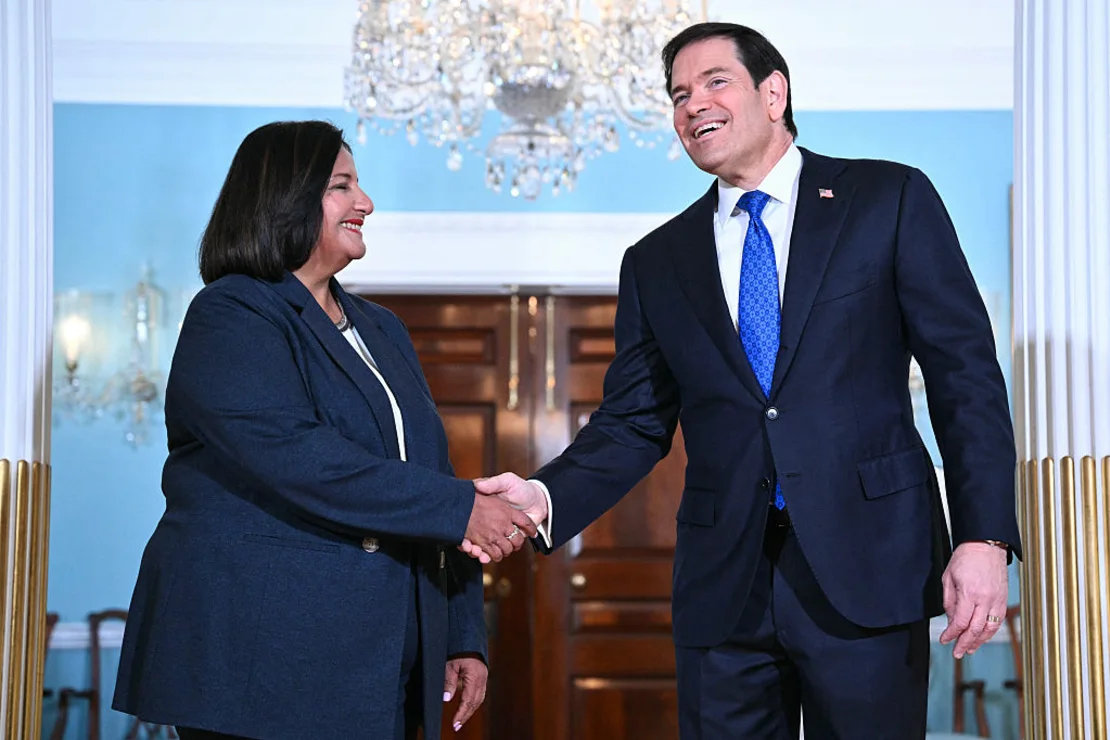
Caracas, July 15, 2026 (venezuelanalysis.com) –  The Venezuelan National Assembly (AN) and a group of former opposition lawmakers who served in the 2015–2020 legislature, led by Dinorah Figuera, announced the launch of a joint working agenda on August 1 aimed at “strengthening democracy” in the country.

National Assembly President Jorge Rodríguez, who is also the Venezuelan government’s lead negotiator, made the announcement on Tuesday via an official statement, reporting that both sides had agreed to “jointly confront the consequences of the twin earthquakes that have plunged the country into mourning.”

“Only in unity can we move forward with the reconstruction while keeping the peace,” the text read.

For its part, the opposition group said in a separate statement that the initiative constitutes a “roadmap to promote stability, democracy, and national recovery,” with the goal of beginning “the construction of a new stage that will lead to a Venezuela of progress and freedoms.” According to the document, the agenda will prioritize “strengthening democratic institutions, reinforcing the electoral system, and restoring guarantees for political participation.”

Figuera told media that the talks will involve 10-team delegations from both sides and claimed that the opposition faction will be involved in choosing new electoral authorities and Supreme Court justices, as well as in reforms to existing electoral laws.

She confirmed that the opposition has already selected several participants, including lawyers Juan Miguel Matheus and Sergio Vergara, businessman Jorge Millán, and former National Assembly Vice President Marco Aurelio Quiñones. No members of the Venezuelan government delegation are presently known.

Figuera took over the opposition-majority 2015–2020 National Assembly in 2023, despite its period having ended two years earlier. The legislature repeatedly renewed its own mandate as it maintained “recognition” from Washington as Venezuela’s legitimate authority. The anti-government group likewise retained control over several Venezuelan state assets frozen by the US and allies.

US Secretary of State Marco Rubio reposted the 2015–2020 National Assembly’s roadmap through his X account. US authorities had endorsed the talks when they were first announced in June. Since the January 3 US military strikes and kidnapping of President Nicolás Maduro, Rubio has insisted on a “three-phase plan” that ends with a political “transition.”

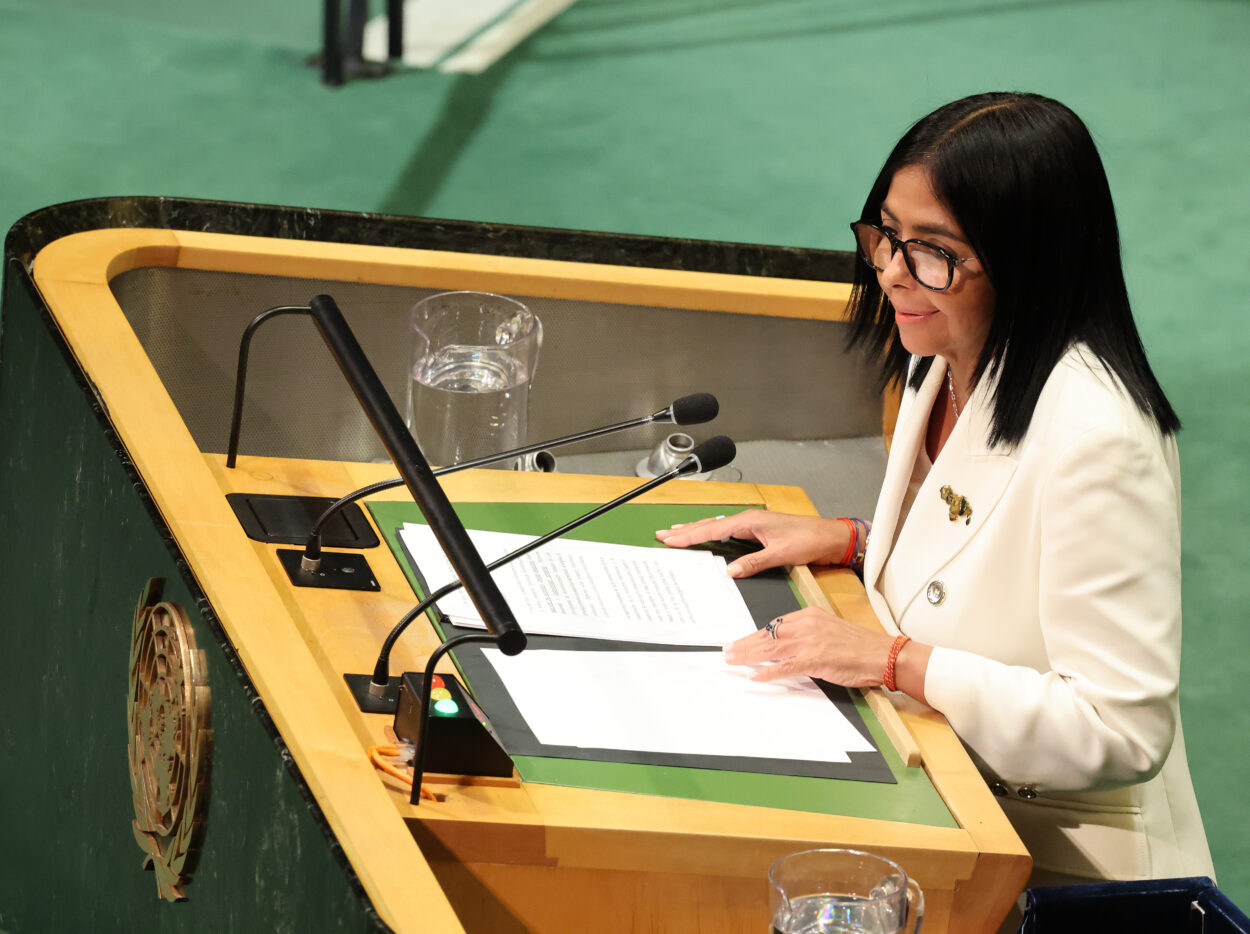
The announcement of impending talks contrasted with Rodríguez stating on Saturday that the country “was not in the right frame of mind” to discuss issues related to the National Electoral Council (CNE), the Supreme Court (TSJ), or elections.

“We are concerned about people who have suffered the unimaginable. It would be disrespectful and insensitive for politicians to meet now to decide who should be appointed to the CNE or the TSJ. There will be time for that,” Rodríguez said.

Instead, he urged opposition leaders to work together on responding to the earthquake emergency, including reforms to the country’s housing laws and identifying land for the new constructions.

Just six days before the devastating earthquakes of June 24, Figuera traveled to Caracas with Washington’s backing to head negotiations with the Venezuelan government. During that June 18 visit, she met with Jorge Rodríguez and opposition leaders before traveling to the United States for additional discussions.

Her return took many opposition figures by surprise, as only weeks earlier María Corina Machado, speaking at a meeting of opposition politicians in Panama, had announced her intention to personally lead negotiations with the government over a future electoral process. The far-right leader announced a closed-door meeting with political allies on Wednesday to discuss the upcoming negotiations between the acting Delcy Rodríguez government and a separate opposition faction.

Amid these political developments, Acting President Rodríguez also appointed Johann Álvarez on July 14 as Venezuela’s new Chargé d’Affaires to the United States, tasking him with “representing the country’s interests and advancing a new stage of dialogue, cooperation, and mutual respect.”

Álvarez most recently served as Venezuela’s Minister of Foreign Trade and Superintendent of the country’s Special Economic Zones (SEZs). He replaces Félix Plasencia, who was chosen by Rodríguez to head the Foreign Ministry after merging it with the Foreign Trade Ministry.

Edited by Ricardo Vaz in Caracas.


Source link

Brussels warns dialogue with China ‘will not suffice’

Published on

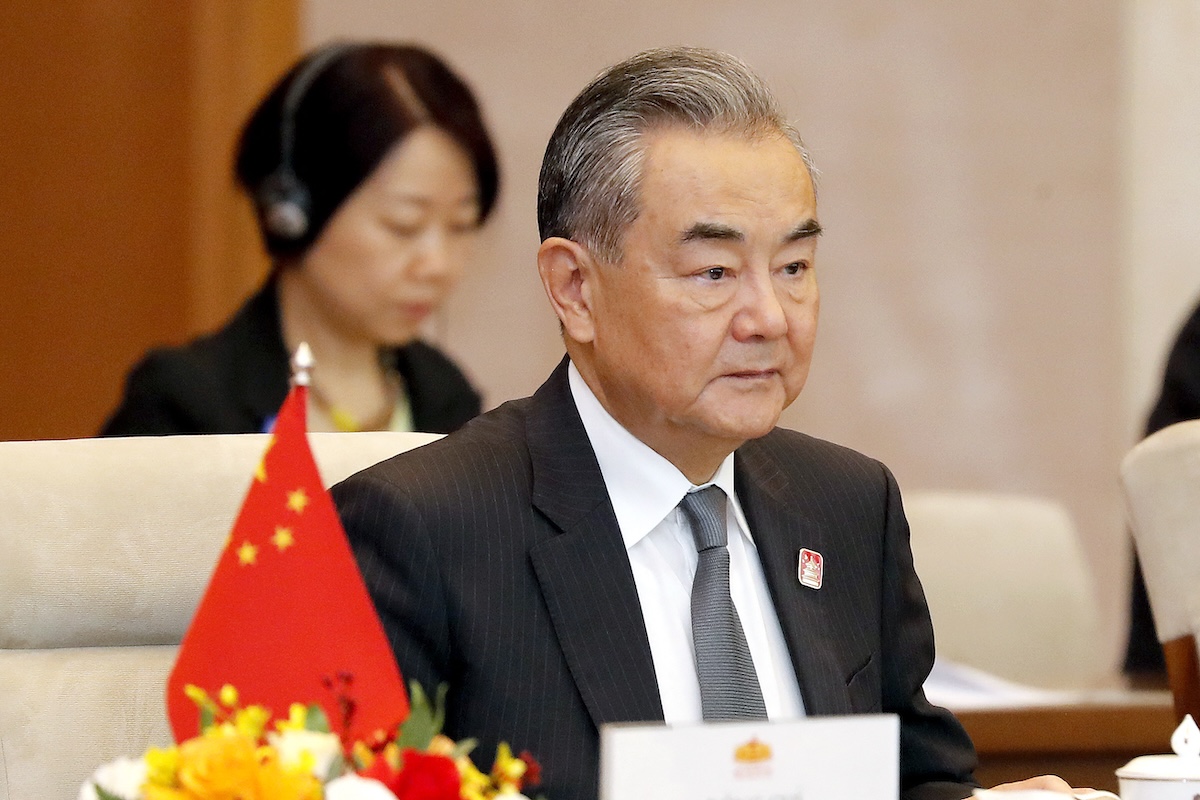
Deputy Director-General for Trade at the European Commission Denis Redonnet told MEPs on Tuesday that the EU will step up measures against Chinese imports before the October deadline it set to protect the bloc’s market from Chinese overcapacity.


ADVERTISEMENT


ADVERTISEMENT

The warning comes as Brussels started negotiations with Beijing last month to reduce its record-high €1 billion-a-day trade deficit with China, setting an October deadline for the two sides to make significant progress.

However, tensions remain high between the two trading partners, as Beijing has repeatedly threatened retaliation if the EU adopts measures closing its market to Chinese exports.

“Dialogue alone will not suffice,” Redonnet told EU lawmakers, adding that the EU needs to decide how “to protect and preserve the European industrial base.”

“We need to look at what the Chinese do. It is more than likely that we’ll have unilateral protection measures adopted atthe European Union level. So we’ll be taking various measures in parallel.”

The EU is fighting low-cost Chinese imports flooding its market and threatening its manufacturing industry in key sectors such as steel, chemicals, machine tools and electronics.

“What can we do ahead of that October deadline? We’ll look at a number of sectors, we’ll try to start rebalancing and rein in the export levels,” Redonnet said.

Quotas and tariffs to protect EU industries

To defend its steel industry, the EU doubled tariffs on certain steel imports on 1 July and reduced quotas for the sector. Similar safeguard measures could be used in other industries in the coming weeks, the senior EU official said.

He added, however, that safeguards require the backing of a majority of member states and that not all EU countries share the same interests. Some have factories directly threatened by Chinese competition, while others have industries that rely on cheap Chinese products.

“If we had to defend European manufacturing in two to three member states, we would need the backing of a majority of all member states. And those other member states may be focused on users’ interests rather than producers’ interests,” he said.

In parallel, to rebalance the situation among EU member states, the Commission is working on a solidarity mechanism to compensate those most affected by a surge in Chinese imports.

The EU executive also plans to defend the EU market product by product as China heavily subsidises its exports to the EU prompting the Commission to resort to anti-dumping and anti-subsidy duties.

Last Thursday, it launched an anti-dumping probe into Chinese Peking duck producers.

Reviewing and adjusting trade defence tools is part of the mandate EU leaders gave the Commission in mid-June, asking the EU executive to engage with China while keeping all options on the table to defend the EU market.

Source link

China stresses dialogue after South Korea flags illegal fishing

Fishing boats drag their nets in the Yellow Sea off Incheon, South Korea, 18 May 2026. Photo by YONHAP / EPA

June 26 (Asia Today) — China said Friday that it remains in close communication with South Korea over fisheries issues after President Lee Jae Myung called for stronger action against Chinese fishing boats accused of operating illegally in the Yellow Sea.

Chinese Foreign Ministry spokesman Guo Jiakun said maintaining stable waters and an orderly fishing environment between the two countries serves their common interests.

China consistently instructs its fishermen to operate in accordance with laws and regulations while also protecting their lawful rights, Guo said at a regular news briefing in Beijing.

“China and South Korea have a relatively mature dialogue mechanism on fisheries issues and maintain close communication on related matters,” Guo said.

He did not directly address whether the Chinese vessels cited by Lee had engaged in illegal fishing.

Lee raised the issue Wednesday during a visit to the Yeonpyeong Peace Observatory, where he received a briefing on waters near the Northern Limit Line, the de facto maritime boundary between South and North Korea in the Yellow Sea.

After being told that Chinese fishing boats had moved south of the maritime line, Lee questioned why they remained there despite being observed by South Korean forces.

He also asked whether South Korea should station enforcement vessels in the area.

“We have officially confirmed that they crossed the NLL,” Lee said. “I do not think we should simply leave this unattended.”

Lee ordered officials to take firm action, saying the visible presence of the boats during daylight hours showed the seriousness of the problem.

The Chinese government’s response largely repeated its previous position, emphasizing lawful fishing, the protection of Chinese fishermen’s rights and continued consultations with South Korea.

— Reported by Asia Today; translated by UPI

© Asia Today. Unauthorized reproduction or redistribution prohibited.

Original Korean report: https://www.asiatoday.co.kr/kn/view.php?key=20260626010009476

Source link

Venezuelan Gov’t Launches US-Backed Dialogue with Hardline Opposition

Rodríguez and Figuera met at the legislative Palace in Caracas on Thursday. (Asamblea Nacional)

Caracas, June 19, 2026 (venezuelanalysis.com) – Venezuelan National Assembly President Jorge Rodríguez held a meeting on Thursday with a US-picked opposition figure to launch a new political dialogue process.

In a statement, Rodríguez, who is also the Venezuelan government’s lead negotiator, disclosed talks with “the representative of the opposition lawmakers from the 2015-2020 period,” Dinorah Figuera, to launch “a joint technical and political working group” with “an agenda containing concrete milestones and timelines” aimed at “strengthening democracy.”

In a separate statement, the expired opposition-controlled 2015 National Assembly explained that the central objective of the process is “the construction of a shared vision for the future.” The communiqué claimed that the dialogue aims to establish a “roadmap for the construction of a democratic scenario” in the country. 

Figuera also met with US Chargé d’Affaires John Barrett in Caracas on Thursday.

For its part, the US State Department welcomed the meeting, describing it as the “first step” toward “a free Venezuela.” The Trump administration has insisted on a “three-phase process” for the Caribbean nation which culminates with a political “transition.”

According to Washington, the proposed agenda includes priorities such as rebuilding democratic institutions, strengthening the National Electoral Council (CNE), restoring guarantees for political participation, and protecting the civil liberties necessary for an open political debate.

“The cornerstone of any transition is inclusive dialogue. We hope that conversations between Venezuelan political parties and the interim government in Caracas continue in the coming weeks so that this work can begin,” stated Thomas Pigott, spokesperson for US Secretary of State Marco Rubio.

Upon arriving at the airport on Thursday, Figuera told reporters that she had traveled to Venezuela at the invitation of the US State Department, with her tasks including the establishment of a “credible” electoral council. She added that her work intends to benefit all political forces while avoiding questions about whether the initiative had been coordinated with far-right leader María Corina Machado.

Figuera was among the lawmakers elected when the opposition won a parliamentary majority in December 2015. Anti-government parties attempted to use the National Assembly to overthrow the Nicolás Maduro government and pushed several laws that were struck down as unconstitutional. It was eventually sidelined after being declared in contempt by the Supreme Court, with the South American country’s legislation taken over by a government-supporting National Constituent Assembly. The ruling United Socialist Party (PSUV) retook control of the legislature in the 2020 and 2025 elections that were boycotted by many opposition sectors.

Though the 2015 National Assembly’s term expired in January 2021, it unilaterally renewed its own mandate for successive one-year periods. The defunct parliament retained US recognition as Venezuela’s legitimate authority, which allowed it to manage Venezuelan assets abroad. Washington’s backing ended in March when Trump recognized Acting President Delcy Rodríguez as Venezuela’s “sole leader.”

Figuera, who has lived in Spain since 2018, took over as president of the opposition-controlled body in January 2023 following the dissolution of the self-proclaimed “interim government” led by Juan Guaidó.

At the time, Venezuelan judicial authorities denounced Figuera’s role in an “illegitimate” parliament that aimed to “plunder Venezuelan assets abroad” and issued an arrest warrant and an Interpol red alert. While several opposition figures have benefited from an amnesty law approved by the present National Assembly in February, it is not known whether Figuera was among those whose legal cases were dropped.

Figuera’s return to Caracas also comes just weeks after the Unitary Platform—the coalition that groups the country’s main opposition parties—agreed during a meeting in Panama that far-right María Corina Machado would “lead negotiations with Chavismo to call elections” and eventually run as a presidential candidate.

Machado and the Unitary Platform have yet to comment on Figuera’s talks with the acting Delcy Rodríguez government, having previously demanded elections within a 40-week timeframe.

Since the January 3 strikes and kidnapping of Maduro, the Trump administration has wielded a strong influence over Venezuelan affairs. US officials have openly participated in legislative initiatives to open the Caribbean nation’s energy and mining sectors to Western companies while also accompanying corporate executives on trips to discuss business opportunities.

US forces likewise conducted an extrajudicial execution in Venezuelan territory earlier this month, with Caracas calling it a “joint operation” against organized crime.

Despite the diplomatic rapprochement and catering to US investment, Venezuelan authorities had previously brushed aside talk of early presidential elections. Maduro’s term, currently held by Delcy Rodríguez in an acting capacity, ends in January 2031. In a February interview with US conservative outlet Newsmax, parliamentary leader Jorge Rodríguez stated that no elections were expected in the short term because the priority was achieving economic stability.

Edited by Ricardo Vaz in Caracas.

Source link

China’s Limited Role at Shangri La Dialogue Seen as Missed Opportunity

China’s decision to send a largely academic delegation instead of senior defence leadership to the Shangri La Dialogue in Singapore has been described by Australia as a missed opportunity for strategic engagement at a time of rising regional tensions.

Australian Defence Minister Richard Marles said the Asia Pacific region needs greater strategic reassurance from Beijing, particularly given China’s ongoing military expansion and its growing influence across the Indo Pacific.

The Shangri La Dialogue is the region’s most prominent defence and security forum, bringing together senior ministers, military leaders, and policymakers from across the world to discuss security challenges and regional stability.

For the second consecutive year, China’s Defence Minister Dong Jun did not attend the meeting, with Beijing instead sending a delegation made up mainly of academics and military experts.

Why It Matters

The absence of senior Chinese defence officials comes at a sensitive moment for regional security dynamics.

Australia and its allies have repeatedly raised concerns about China’s rapid military buildup, which is widely regarded as the largest conventional expansion since the Second World War. Regional governments argue that this military growth has not been matched by sufficient transparency or reassurance about China’s long term intentions.

The lack of direct high level engagement at forums such as the Shangri La Dialogue limits opportunities to reduce misunderstandings, build trust, and manage rising tensions through dialogue.

For countries in the Indo Pacific, especially smaller states, the absence of senior Chinese representation can increase uncertainty about regional security and long term strategic balance.

Key Stakeholders

China

China’s approach reflects a more controlled engagement strategy in defence diplomacy, relying on lower profile participation while continuing to expand military capabilities and regional influence.

Australia

Australia views sustained dialogue as essential for regional stability, while simultaneously strengthening its alliance with the United States and deepening defence cooperation across the Indo Pacific.

United States

The United States remains a central security partner in the region and continues to position itself as a counterbalance to China’s military rise through alliances and defence agreements.

Regional Partners

Countries such as Japan, the Philippines, Malaysia, and others attending the forum are closely watching China’s engagement level as they navigate their own security concerns in a shifting regional order.

Future Outlook

If China continues limiting senior level participation in regional defence forums, diplomatic channels for managing tensions in the Indo Pacific may become more constrained. This could increase reliance on bilateral alliances and military deterrence rather than multilateral dialogue.

At the same time, ongoing military expansion by China will likely keep regional security concerns elevated, particularly among Southeast Asian and Pacific nations.

However, if future editions of the Shangri La Dialogue see higher level Chinese participation, it could open pathways for improved communication and reduced strategic mistrust.

For now, the gap between China’s military rise and its diplomatic engagement remains a key concern for regional powers seeking stability in an increasingly competitive Indo Pacific environment.

With information from Reuters.

Source link

Ex-President Moon urges N. Korean leader to return to dialogue on summit anniv.

Former President Moon Jae-in speaks during a ceremony at the National Assembly in Seoul on Monday to commemorate the eighth anniversary of the Panmunjom Declaration, signed by the leaders of the two Koreas. Pool Photo by Yonhap

Former President Moon Jae-in on Monday urged North Korean leader Kim Jong-un to resume inter-Korean talks, calling it the “fastest and safest” way to overcome the current deadlock.

Moon made the call during a ceremony held at the National Assembly to commemorate the eighth anniversary of the Panmunjom Declaration, a landmark agreement signed by Moon and Kim during their summit at the truce village of Panmunjom in April 2018.

“I ask you to return to the spirit of the April 27 Panmunjom summit and open the door to dialogue, and to work together with the Lee Jae Myung government to once again build a vision of ‘peace and prosperity on the Korean Peninsula’ and to live as a proud member of the international community,” Moon said. “Inter-Korean dialogue is the fastest and safest breakthrough to overcome the current deadlock.”

Moon also stressed that Pyongyang cannot be ensured “genuine security” by continuing to bolster its military capabilities and opting for isolation.

“Engaging in communication and expanding exchanges with the outside world, instead, is the most effective way to safeguard security,” he added.

On U.S.-North Korea relations, Moon expressed hope that Kim will take the “bold step of sitting down” with U.S. President Donald Trump as Trump earlier voiced his willingness to engage in talks with the North.

“I hope you use the improved inter-Korean ties as a bridge toward dialogue between North Korea and the U.S. as you did eight years ago,” he said.

Moon then urged Trump to demonstrate his decisiveness to help bring back the North to the negotiating table, saying the Korean Peninsula issue is a “key national interest” of the United States that must never be pushed down its list of priorities.

“There is no other way but to seek a diplomatic solution to resolve the North Korean nuclear issue and bring peace to the Korean Peninsula,” he added.

Lee has offered to resume stalled talks with the North since taking office in June last year, but Pyongyang has rebuffed his peace overtures.

Copyright (c) Yonhap News Agency prohibits its content from being redistributed or reprinted without consent, and forbids the content from being learned and used by artificial intelligence systems.

Source link

R&A in ‘ongoing dialogue’ with Muirfield over Open Championship return

Chief executive Mark Darbon says the R&A are having “ongoing dialogue” with Muirfield with a view to returning The Open Championship to the Gullane course for the first time since 2013.

Darbon also says there are “challenges” with bringing the event back to Turnberry.

Royal Lytham & St Annes will host The Open in 2028, with this year’s 154th tournament taking place at Royal Birkdale and next year’s staging at The Old Course at St Andrews.

Muirfield, a 16-times Open venue, will host this year’s Women’s Amateur Championship from 22-27 June.

“We’ve got a great ongoing dialogue with Muirfield,” Darbon said.

“There are some things we need to overcome to facilitate a modern Open Championship – the practice ground is one of those, along with a few on-course infrastructural points.”

On US President Donald Trump’s Turnberry, which hosted the last of its four Opens in 2009, Darbon commented: “We really like the golf course.

“But there are challenges around staging a modern Open – primarily road, rail and accommodation infrastructure.”

The Scottish Open has signed a deal to stay at The Renaissance Club in East Lothian until 2030, with the tournament played in the week before The Open to allow players time to adapt to seaside links courses.

Source link