The L.A. Zoo’s elephants are now in Tulsa, and the zoo’s longtime nonprofit partner is now in bankruptcy court.
The litany of woes at the L.A. Zoo grew longer last month as the city’s nonprofit partner, the Greater Los Angeles Zoological Association, filed for Chapter 11 bankruptcy, citing “incessant litigation” from the city of Los Angeles as the cause.
The city won a preliminary injunction in Los Angeles Superior Court that barred GLAZA from keeping the money when its contract with the zoo ended last year. Following the split and lawsuit, GLAZA dwindled in size from 42 full-time employees to just four part-time employees.
Now GLAZA says it owes its creditors, including more than $300,000 that it needs to pay a law firm that has represented the nonprofit in its legal battle with the city.
“The City has designated an army of eight attorneys to overwhelm GLAZA with endless discovery, depositions, and court filings all to run up GLAZA’s legal fees,” the nonprofit said in a statement shared with The Times. “As a result, GLAZA has been left with no options other than to seek protection from the bankruptcy court to ensure the survival of GLAZA and the protection of its donors.”
Following its separation from the city, GLAZA executives hope the nonprofit can work in the animal conservation efforts in Southern California.
On July 1, the City Council approved $250,000 in outside lawyers related to the bankruptcy case.
The zoo is facing headwinds as membership has declined precipitously and facilities have deteriorated, according to an Los Angeles County civil grand jury report.
The city attorney’s office didn’t respond to a request for comment on GLAZA’s bankruptcy.
Pratt’s new frontier
Former mayoral candidate Spencer Pratt was far from Los Angeles as he took a meeting with President Trump in Washington, D.C., a few days ago.
Pratt, who came up short of the Nov. 2 runoff by a few percentage points, met with the president in the Oval Office, posting a photo of the rendezvous to social media Tuesday.
“I will never stop fighting for my community,” he wrote.
Pratt paired the visit with an announcement of a new media endeavor he plans to launch called “WAR.” He said the foundation will fight against political corruption, advocate for transparency in government and “restore common sense.”
The website for the foundation doesn’t have additional details, just a link to contribute and a link to a website selling Pratt merch.
The White House didn’t respond to a request for comment.
Pratt also posted a 9-minute video Wednesday calling out California’s election system, claiming that the results of the June 2 primary were skewed by fraud.
Representatives for Pratt’s campaign didn’t respond to a request for comment.
Phoning it in
After the flag salute and brief comments, L.A. City Council meetings kick off with a public comment period, during which crusading citizens often let loose on city officials as the council members quietly listen, leave the room or chat among themselves.
It’s not always L.A.’s finest hour, as certain commenters often resort to slurs and ad hominem attacks about the council members’ race, ethnicity and even physical appearance.
On July 1, public comment expanded as new state law, SB 707, went into effect, requiring the council to take telephonic public comment.
The council also had to verbally state the amendments they make to motions due to the new law, Council President Marqueece Harris-Dawson noted. Historically, the council has affixed amendments to a bulletin board in council chambers.
After frequent speaker Armando Herman used the N-word at the July 1 meeting, Harris-Dawson noted that the state legislature had done nothing about offensive comments at public meetings.
“Our friends in the state legislature made the decision to require us to have telephonic public comment. They did nothing, zero, about what we just heard. Since they want to intervene in our meetings, I’d call on them to do something about what they just heard,” he said.
The council did ban commenters from using the N-word and C-word last year. Speakers who use those words receive a warning and are booted from the meeting if they do it again.
Harris-Dawson said the new state law was “problematic” and noted another issue.
“We can’t verify if calls are bots or foreign agents, which poses a security risk,” he said in a statement to The Times.
You’re reading the L.A. on the Record newsletter
Sign up to make sense of the often unexplained world of L.A. politics.
By continuing, you agree to our Terms of Service, which include arbitration and a class action waiver. You agree that we and our third-party vendors may collect and use your information, including through cookies, pixels and similar technologies, for the purposes set forth in our Privacy Policy such as personalizing your experience and ads.
State of play
— BOYLE-ING OVER: Mayor Karen Bass, Councilmember Ysabel Jurado and County Supervisor Hilda Solis were roundly booed and heckled by Boyle Heights residents during a town hall Thursday about the Boyle Heights fire. The three officials struggled to speak over the irate audience.
— SOLAR FLARE: Before the Boyle Heights warehouse fire, Lineage representatives lobbied City Hall over the rooftop solar array. The company says it was seeking a safer alternative to rapid shutdown devices.
— FISCAL EDUCATION: The Los Angeles Unified School District is facing “severe” indications it could be insolvent as soon as next year and has 45 days to fix its budget or risk an outside takeover. The Los Angeles County Office of Education has projected a $231 million cash shortfall by 2027.
— HIT THE STREETS: The LAPD is considering shutting down its police academy for part of 2028 to allow hundreds of officers to hit the streets for the Olympics, according to department sources. The move could lead to a drop in police hiring.
— LEGEND GONE: Billy G. Mills, one of the first Black men elected to L.A.’s City Council, died June 27. Mills was a civil rights leader before being elected to the legislative body in 1963, the same year Tom Bradley was elected to be a council member.
— IT TAKES A VILLAGE: Billionaire developer Rick Caruso’s Palisades Village will reopen in August after more than $100 million in renovations following the January 2025 wildfire.
— EVICTION BENEDICTION: Thousands of formerly homeless people whose housing subsidies will expire in December are no longer at risk of eviction, local housing officials announced Thursday. An infusion of new funds approved by Congress this year and a waiver of eligibility procedures have staved off a potential crisis that would have left 4,200 back on the street.
QUICK HITS
Where is Inside Safe? The mayor’s signature program had no operations this week.
On the docket next week: The City Council remains on recess until Aug. 4.
Stay in touch
That’s it for this week! Send your questions, comments and gossip to LAontheRecord@latimes.com. Did a friend forward you this email? Sign up here to get it in your inbox every Saturday morning.
Han Hak-ja, leader of the Family Federation for World Peace and Unification, arrives Thursday at the Seoul Central District Court for the final hearing in her trial over alleged improper ties between religion and politics under the Yoon Suk Yeol government. Photo by Yonhap News Agency
July 10 (Asia Today) — A special counsel team on Thursday sought a 13-year prison term for Han Hak-ja, leader of the Family Federation for World Peace and Unification, commonly known as the Unification Church, over allegations involving improper ties between religion and politics.
The team led by special counsel Min Joong-ki made the request during the final hearing in Han’s trial at the Seoul Central District Court. Han has been charged with violating the Political Funds Act and other offenses.
The special counsel asked the court to sentence Han to five years in prison on the political funds charge and eight years on the remaining charges.
“Han and others used vast financial resources to unlawfully and improperly use public authority in an effort to expand religious interests and influence and realize the integration of religion and politics,” the special counsel team said.
The team said the alleged crimes “directly violated the spirit of the Constitution and damaged representative democracy.”
“Han and others, as top leaders of a religious organization, privately used donations voluntarily made by believers and improperly colluded with political forces in an attempt to influence South Korea,” the team said.
The special counsel also sought prison terms for other defendants being tried with Han.
For a former chief of staff identified only by the surname Chung, the team requested four years in prison on the political funds charge and six years on the remaining charges.
For Yun Young-ho, former head of the church’s world headquarters, the team sought one year and six months in prison on the political funds charge and two years on the remaining charges. The team requested three years in prison for Yun’s wife, identified only by the surname Lee.
Han is accused of conspiring with Yun and others to deliver 100 million won, about $66,000, in political funds to People Power Party lawmaker Kweon Seong-dong in January 2022.
She is also accused of involvement in delivering gifts to former first lady Kim Keon Hee through Jeon Seong-bae, a religious figure known as Geonjin, while seeking favors related to church affairs in 2022.
Han also faces allegations that she embezzled church funds and ordered Yun to destroy evidence in October 2022 in preparation for a police investigation into allegations that she gambled overseas.
Han arrived at the court at about 9:29 a.m. wearing a black jacket and white pants and using a wheelchair. She did not answer reporters’ questions, including whether she had given gifts to Kim.
A guy who owns a beach resort on the coast of Florida, where hundreds of miles of overdeveloped shores are threatened by increasingly severe storms driven by global warming, is trying to tell Californians how best to manage our coast.
Guess who.
It’s not that we needed the help. If there’s any thought to adding an eighth wonder of the world to the current lineup of seven, I’d nominate the 1,100-mile treasure that kisses Oregon on one end and Mexico on the other. And it’s not by accident that coastal habitats are aggressively protected and most of the shoreline is free of mega resorts and architectural clutter.
A half century ago, Californians rose up against the threat of over-development. By the will of the people, the coast was enshrined in state law as a precious public asset accessible to the many, not a private playground fenced off for the few.
This year marks the 50th anniversary of the Coastal Act, and just as we begin the party, President Trump and his minions are scheming to pump some crude oil into the punch bowl.
And here’s how:
Going back to the 1970s, under the Coastal Zone Management Act, California has gotten high marks from the feds for the way in which its coastal regulatory agencies work with D.C. to manage federal projects. But now the state is under attack, which could mean that millions in federal dollars will be clawed back and the state’s voice muted.
It’s just been far too many years of paying attention to water quality and vehicle and industrial emissions and all the rest. Imagine how that comes across to a president who wouldn’t admit to climate change if his putter melted in his hands or Mar-a-Lago became a swim-up hotel.
As penance for our crimes, U.S. Commerce Secretary Howard Lutnick (the one who labeled us environmental extremists) ordered the National Oceanic and Atmospheric Administration, or NOAA, to conduct “a full, formal review” of the state’s coastal management program.
“California has repeatedly and unfoundedly obstructed spaceport development,” Lutnick declared, referencing a dispute over how many rockets Elon Musk’s Space X can launch from the U.S. military’s Vandenberg base. (Per the California Coastal Commission, many of the launches are for private interests rather than military purposes, and even the federal government has noted that the thunderous sonic booms take a toll on sea life and humans.)
We’re also allegedly blind to basic economics and the preferences of the Trump administration when it comes to “offshore oil production, maintenance of pipelines and desalination.” And we need to fall into line in “removing regulatory barriers that hinder U.S. technological and economic leadership while responsibly stewarding coastal resources.”
Where to begin?
I thought California had the world’s fourth-largest economy, with technology as a primary driver. In fact, it’s just been reported that we drew 10 times more venture capital than any other state this year, with AI leading the way. If one or two other states matched our output, imagine the boasting Trump could do, legitimately, about the economy.
If the president’s blowtorch buddies want to call us “environmental extremists” for not burying our heads in the sand, it’s a badge of honor.
And another thing.
If Trump is so intent on keeping the world’s oil supply flowing, maybe he shouldn’t have bungled his way into a senseless war that has handed Iran the keys to the global gas pump, spiking prices for everyone.
By the way, it’s not as if the primary coastal regulatory agency in the state — the California Coastal Commission — has said nothing but “no” over the years to oil projects and desalination plants.
“When you look at the Coastal Act, it doesn’t prohibit offshore oil and gas production and we approved a lot of it,” said Susan Hansch, who retired from a top administrative position in 2021 after 47 years at the Coastal Commission. “It just has to be done correctly.”
A Falcon 9 rocket is launched from Vandenberg Space Force Base on Jan. 25.
(2nd Lt. Andrew Taller / U.S. Space Force)
Not that the Coastal Commission has been infallible over the years. It has worked many a critic into a lather, with complaints that the agency has stood in the way of housing development during the state’s mounting shortage, and that its permitting process is the equivalent of a years-long root canal.
Former Gov. Jerry Brown, who signed the Coastal Act into law in 1976, once called the commissioners “bureaucratic thugs.”
And Trump has feuded with the agency over, among other things, a 70-foot-tall flagpole erected on his Rancho Palos Verdes golf course without a permit. Last year, Trump envoy Ric Grenell said the Coastal Commission was a “disaster” and must “absolutely be defunded,” calling commissioners unelected and “crazy woke left.”
Getting rid of the commission, he said, “is going to make California better.”
They were there when the devastating Santa Barbara oil spill blackened beaches, turned the shoreline into a wildlife graveyard, and galvanized grassroots defense of the coast.
When plans by PG&E to build a nuclear power plant at heavenly Bodega Head triggered an uprising.
When a massive Sonoma Coast residential development pitch sparked fears that beach access would be lost.
In 1972, ordinary Californians circulated petitions, knocked on doors, and rode bicycles down the coast, rallying support for Proposition 20, which aimed to regulate coastal development. It passed despite a massive opposition campaign from corporate, industrial and real estate interests.
That victory led, four years later, to the Coastal Act and creation of the Coastal Commission, whose job was to balance sensible development, habitat protection and conservation, and equitable public access.
Richard Charter, an Ocean Foundation senior fellow, told me in Bodega a decade ago that the California coast is “a public miracle” that was protected by ordinary people who saw it as “a global treasure.”
The Coastal Act has led to the creation of 2,500 public beach access points in the state, and its greatest achievements include wetlands not plowed, habitats not destroyed, and the preservation of countless mesmerizing vistas where land meets sea and California leaves you in speechless, grateful awe.
At Tuesday’s Coastal Commission meeting, Jennifer Savage of the Surfrider Foundation stepped to the microphone and said to commissioners:
“Surfrider sees this federal review as a politically motivated attempt to strip California of the coastal protections that our communities and our marine ecosystems depend on, and Surfrider stands with you, and we will fight this every step of the way.”
If you’d like to join that fight, you can speak in person or remotely when NOAA hosts public hearings Aug. 10-12 in Santa Monica. You can find more details on the Surfrider Foundation website.
One of the early leaders of the Coastal Commission, the late Peter Douglas, anticipated these trials and uttered a phrase I’ve repeated many times over the years. In the year of the 50th anniversary of the Coastal Act, it’s worth repeating once more, and you should think of it as a a clarion call:
“The coast is never saved,” Douglas said. “It’s always being saved.”
Victor Wemnanyama, the NBA’s tallest player, inked the third-largest rookie extension in history.
Published On 11 Jul 202611 Jul 2026
Hours after he told Spurs fans he was “here to stay”, Victor Wembanyama signed a multiyear contract extension with San Antonio that ESPN reported is for five years and $252m.
The deal, which is worth $50.4m per year, is the National Basketball Association’s (NBA) maximum rookie-scale extension and carries a player option for the fifth season.
Recommended Stories
list of 4 itemsend of list
“Spurs family, I’m here to stay,” Wembanyama tweeted Friday. “Whatever it takes.”
The Spurs, who did not confirm financial details, published photos and videos of Wembanyama inking his contract.
Wembanyama has been viewed as one of the elite young players in the sport going back before the Spurs selected him No 1 overall in the 2023 NBA Draft.
The 7ft4in (2.24-metre) centre with an 8-ft (2.44-metre) wingspan has averaged 23.4 points, 11 rebounds, 3.5 assists and 3.5 blocks per game through three NBA seasons.
The Defensive Player of the Year and a first-time All-NBA first-team selection, Wembanyama finished third in Most Valuable Player (MVP) balloting this season after putting up career highs of 25.0 points and 11.5 rebounds per game.
He is a career 34.2% 3-point shooter who has made 2.2 triples per game, and he’s led the league in blocks in every season since his arrival.
The Spurs fell to the New York Knicks in five games last month in Wembanyama’s first NBA Finals.
The current pieces around him include guards De’Aaron Fox, Stephon Castle, Devin Vassell and Dylan Harper, and the Spurs recently signed veteran forward Tobias Harris.
Wembanyama, left, with teammate Stephon Castle during the NBA Finals in June [Ross D Franklin/AP]
John H. Rousselot, the conservative Republican who represented part of the San Gabriel Valley in Congress for 14 years, was an officer of the John Birch Society and who tried to buy Charles H. Keating Jr.’s failed Lincoln Savings and Loan Assn., died Sunday. He was 75.
Rousselot, of Mission Viejo, died at Irvine Medical Center of congestive heart failure, said his son, Craig. He said his father had suffered a heart attack a year ago.
For the record:
12:00 a.m. May 21, 2003 For The Record Los Angeles Times Wednesday May 21, 2003 Home Edition Main News Part A Page 2 National Desk 1 inches; 62 words Type of Material: Correction Rousselot obituary — An obituary of John Rousselot and an accompanying caption in the May 12 California section implied that Rousselot left the John Birch Society after its founder called President Eisenhower a communist agent in 1979. Rousselot left the organization in 1979, but the comment about Eisenhower that he attributed to Birch Society founder John Welch had been made years earlier.
A glad-hander and energetic campaigner, Rousselot was controversial and colorful as he surfed the changing waves of political power as public relations expert, legislator or lobbyist.
He first gained office in 1960 when he ousted incumbent Democratic Rep. George Kasem in the 25th District. But he was so outspoken in defending the right-wing Birch Society, which he had just joined, that he failed to win reelection. In 1970, he was returned to Washington for half a dozen two-year terms in the 26th District, which included his native San Marino.
The congressman’s elective status ended in 1982 after redistricting threw him into a new 30th District, stretching from Bell Gardens to Azusa. Too long out of office and tainted by his association with Keating, Rousselot failed in a 1992 comeback campaign for the 25th District.
In Congress, Rousselot became active on the Banking and Currency Committee, and later the Economic and Budget and Ways and Means committees, where he staunchly opposed spending and tax increases, proposed cuts in the food stamp program, and worked for deregulation of the savings and loan industry. He also advocated U.S. military occupation of Cuba two years before the Cuban missile crisis.
As then-Atty. Gen. Robert F. Kennedy and others criticized the Birch Society in the early 1960s, freshman Congressman Rousselot defended the group: “They are calm, firm, dedicated people who are merely trying to inform themselves about communism.”
If Kennedy read the group’s “blue book,” Rousselot told The Times in 1961, he’d know that “one of the main purposes of each chapter is to keep its members and guests who attend fully informed as to the nature, purpose and intent of the Communist conspiracy in this country.”
First turned out of Congress in 1963, Rousselot was named regional director of the Birch Society — heading the group in California, Oregon, Washington, Arizona, Nevada and Idaho from an office in San Marino. He also served as national Birch Society public relations chairman. In both positions, he continued to insist that the organization’s purpose was to educate rather than advocate or indoctrinate.
But Rousselot resigned from the Birch Society with characteristic drama on April 17, 1979, when he was contemplating running for the U.S. Senate [he didn’t], “to demonstrate to the citizens of California that I am my own man, controlled by no organization or individual.” He also said that he had become disillusioned because Birch Society founder Robert Welch had besmirched President Eisenhower as a Communist agent and Winston Churchill as a traitor.
After Rousselot left Congress, he was in the Reagan White House as special assistant for business matters, then served as Western states coordinator for Reagan’s 1984 reelection campaign.
From 1985 to 1988, Rousselot was president of the National Council of Savings Institutions, a Washington-based lobbying group for banks and savings and loans. In addition to deregulation he worked to enable savings institutions to expand their business beyond mortgage lending.
In 1989, after lobbying for Keating, Rousselot was named the final chairman and chief executive of Lincoln Savings and Loan. With four others, he tried to buy the institution shortly before it was shut down by federal regulators who said that its assets were dissipated. Critics alleged that the attempted purchase was a scheme to delay the federal shutdown in the largest thrift collapse in U.S. history.
“I did nothing illegal, improper or unwarranted,” Rousselot told The Times a few years later.
Nevertheless, in 1993 his former association with the scandal-plagued thrift forced Gov. Pete Wilson to withdraw his appointment to the California Board of Prison Terms when legislators refused to confirm him.
John Harbin Rousselot was born Nov. 1, 1927, in San Marino and majored in political science and business administration at Principia College in Elsah, Ill.
In the 1950s, he established a public relations firm in Los Angeles and became president of the California Young Republicans.
From 1958 to 1960, when he resigned to run for Congress, he was national director of public information for the Federal Housing Administration.
Twice divorced, Rousselot is survived by his son, Craig of Irvine; two daughters, Robin Edwards of Lake Forest and Wendy Sirugo of San Dimas; a brother, Norman of Sonora, Texas; and five granddaughters.
A public memorial service will be planned at a later date.
Tou Lue Vang being deported from the United States by Immigration and Customs Enforcement after Secretary of State Marco Rubio canceled the convicted child rapist’s legal status to remain in the country. Photo by Department of Homeland Security
July 10 (UPI) — Immigration and Customs Enforcement on Friday deported a man who was convicted of repeatedly sexually assaulting a child and ordered removed from the country in 2006.
Tou Lue Vang, who legally entered the United States in 1994, was convicted in 2006 of first-degree criminal sexual conduct for repeatedly sexually assaulting a 10-year-old girl over the course of two years.
Vang was ordered to be deported to Laos in October 2006 but because of that country’s limits on how many deportees it accepts he, like many ethnic Laotians and Hmong, was permitted to stay, The New York Times reported.
Having been in the country legally ever since, Vang applied for a pardon during the Trump administration’s immigration crackdown last year to prevent himself from being deported — which was granted in June.
“ICE deported Tou Vang, an illegal alien convicted child rapist,” Lauren Bis, acting assistant secretary of homeland security, said in a press release.
“This monster repeatedly sexually assaulted a 10-year-old girl,” Bis said.
Vang was convicted repeatedly sexually assaulting the girl between 2002 and 2004, and justified his actions as being “a cultural thing … to marry and have sex with girls as young as 12,” and also suggested that the girl was just as guilty as he was of a crime, ICE said last week.
The Times reported that Vang has not been charged with serious crimes since his conviction and supervised release while awaiting his 2006 deportation.
ICE arrested Vang in December 2025, with plans to deport him, based on his prior conviction, but a Minnesota judge ordered that he be released from custody in February 2026.
Vang’s pardon request, which the Minnesota Clemency Review Commission granted on June 10, could prevent him from being deported, the federal government and legal experts have said.
The State Department said Friday that it had terminated Vang’s legal status in the United States and deported him immediately.
“Americans should never have to live in fear that foreign sex predators — shielded from deportation by their own elected officials — could endanger them or their children,” Secretary of State Marco Rubio said in a statement.
“That’s why I terminated his legal status in the United States,” Rubio said. “Vang has now been removed from our country and will never pose a threat to any American ever again.”
Olympic canoeist David Hearn departs the Moultrie Courthouse after pleading not guilty to damaging the Lincoln Memorial Reflecting Pool on Thursday. Hearn was indicted on July 2 on one count of destruction of property of more than $1,000 for allegedly damaging the Reflecting Pool, carrying a maximum penalty of 10 years in prison if convicted. Photo by Bonnie Cash/UPI | License Photo
July 10 (UPI) — Brazilian labor authorities rescued a 62-year-old woman from conditions they described as analogous to slavery after she spent more than five decades working as an unpaid domestic worker for the same family in the northeastern state of Ceará.
The rescue was carried out by Brazil’s Labor Inspection Office, part of the Ministry of Labor and Employment, after an anonymous complaint came through the government’s hotline for reporting labor abuses.
Labor officials told local media the woman, whose identity was not disclosed, performed household duties and cared for the family’s children. Her daily routine began around 4:30 a.m. as she prepared breakfast and got the children ready for school. She worked for 55 years without receiving a salary.
According to O Globo, the Labor Inspection Office found that the woman began working for the family at age 7 and remained employed continuously across three generations.
Throughout that period, she received no regular wages, had no financial independence and was denied the educational and economic opportunities available to members of the employing family.
Labor inspectors estimated the labor rights owed to the woman exceed 1.5 million Brazilian reais, or about $290,000. The calculation includes unpaid wages, vacation pay, annual bonuses, contributions to Brazil’s severance indemnity fund, overtime and other employment benefits, according to O Dia.
The employers signed a conduct adjustment agreement with the Labor Prosecutor’s Office in an effort to partially compensate the victim. Under the agreement, they committed to paying 50,000 reais, or about $10,000, in severance benefits, purchasing a home worth at least 150,000 reais, or about $29,000, for the worker and covering her social security contributions until retirement., according to Folha de S.Paulo.
The agreement does not fully settle the woman’s labor claims, and she may still seek additional compensation through the courts.
Under a joint decision by oversight agencies and a Brazilian human rights assistance center, the woman will temporarily remain at the family’s home but will no longer perform any work.
Authorities said an immediate separation could cause severe emotional distress because of her long-standing dependency and the abrupt loss of her only source of companionship after more than five decades.
The arrangement is temporary while social workers help her through a gradual process of gaining independence, learning to read and write, rebuilding ties with her biological family and preparing for an autonomous life.
The employers’ legal team challenged the findings authorities issued.
In a statement, the family’s attorneys said there had been no “rescue” and denied any criminal wrongdoing. They argued the decades-long relationship with the woman was based on shared living arrangements, care and mutual affection.
Although forced labor in Brazil has historically been concentrated in rural areas, cases of domestic servitude in urban households highlight what labor authorities describe as a serious structural problem. Labor inspectors reported a 400% increase in inspections involving domestic work in 2025.
The Labor Prosecutor’s Office has found that such cases predominantly involve Black women with limited education who are subjected from childhood to conditions of servitude disguised as “family affection.”
When then England manager Gareth Southgate was asked in 2020 whether there was a chance Haaland might have played for the Three Lions, he shut it down quickly.
“With players like him, they’re quite clear where they want to play,” Southgate said. “He feels that allegiance to the country that he’s playing for now and you’re always very respectful of that.”
Haaland was born in Leeds – where his father Alf-Inge was still based, having just left Leeds United for Manchester City – in 2000.
The family moved to Bryne in Norway three years later following his father’s retirement through injury.
The young Haaland’s talent was spotted early and he quickly moved through the youth teams at Bryne before signing for Molde in 2017, managed by Ole Gunnar Solskjaer.
He helped turn Haaland into an attacking force and has often spoken highly of his former player, expressing regret that he could not sign him when he became manager at Manchester United.
The young forward caught the eye during his time at Red Bull Salzburg before his spell at Borussia Dortmund – where he formed a close friendship with England’s Jude Bellingham – really announced him on the world stage.
His move to Manchester City came in 2022 – a transfer many felt had been inevitable given his father’s history and his own love of English football.
Yet even with his rapid ascension to stardom, Haaland continues to return to Norway frequently where he owns several properties.
“Despite Haaland’s global superstar status, he remains the exact same guy,” Norwegian football journalist Andreas Korssund told BBC Sport.
“He knows exactly where he comes from and regularly visits his small hometown in Rogaland. He is incredibly proud of his roots and always makes himself available to the Norwegian press when representing his country.”
Haaland has discussed his desire to run a farm in his home country when he retires and can frequently be spotted strolling around Oslo, where he owns an apartment.
He has leaned into Norway’s Viking history and is fiercely proud of representing his country, as illustrated by leading his team-mates in the Viking Row after beating Brazil.
It is that affinity with his heritage that has also led to him sporting his full title of Braut Haaland on the back of his national shirt – Braut is his mother’s maiden name and combining that with his father’s name is a Norwegian tradition.
“Haaland means everything to Norway,” says Korssund.
“He has become an unprecedented superstar in the world’s biggest sport. For a nation of just over 5.5 million people to produce one of the absolute greatest footballers on the planet is immense.”
When you think of beautiful bridges, it’s probably the world-famous ones that spring to mind. Marvels of engineering like San Francisco’s Golden Gate, or the rich history of London Bridge. However, according to Time Out magazine, the ‘most beautiful’ bridge in the world is a small stone arch tucked away in Bosnia and Herzegovina.
Stari Most, which translates to ‘Old Bridge’, is located in Mostar, a city that lies on the banks of the Neretva River.
Commissioned by Sultan Suleiman the Magnificent in 1557 and completed in 1566, the bridge is made of local limestone and spans the river without using any central pillars.
In 1993, the original bridge was destroyed by shelling in the Bosnian War.
However, UNESCO aided its reconstruction, with divers recovering the original stones from the river and masons using the same 16th-century tools to re-create the structure as closely as possible.
It’s now a UNESCO World Heritage site, and has recently been named as the ‘most beautiful’ bridge in the world by Time Out.
UNESCO describes Stari Most as “a symbol of reconciliation, international co-operation and of the coexistence of diverse cultural, ethnic and religious communities.”
The bridge is visually stunning, standing 27 metres above the emerald green river below.
There is also a long history of daredevils and athletes jumping from the bridge into the water.
The first recorded leap dates back to 1664, according to Bosnian Voyager.
By the 19th century, it was a tourist attraction, with people from all over the continent flocking to the bridge to watch adrenaline seekers hurl themselves into the river.
Since 2016, the Red Bull Cliff Diving World Series has transformed Mostar’s bridge into an elite global sporting stage that keeps the tradition alive.
The competition takes place in late July, and spectators line the river to watch world-class divers jump from the bridge.
South Sudan became the world’s newest country in July 2011 after nearly 99 percent of voters chose independence from Sudan.
Fifteen years later, most of the major promises that came with independence remain unfulfilled.
Recommended Stories
list of 4 itemsend of list
South Sudan remains one of the world’s most fragile states.
Oil finances nearly 90 percent of the government’s revenue, but the country remains wracked by deep inequality and violence: 82 percent of the population lives below the poverty line, and political jostling between rival groups has left the young nation in a perpetual state of conflict.
A woman poses with her three-year-old daughter in their house which is made out of straw, bamboo and plastic sheeting at the Protection of Civilian site (PoC) in Bentiu, South Sudan, on February 15, 2018 [File: Stefanie Glinski/AFP]
Elections have never been held since independence, millions remain displaced, and the country’s economy depends on pipelines running through Sudan, the very nation it fought to leave.
‘A failed promise’
Jok Madut Jok, 57, a professor and director of graduate studies at Syracuse University, is from Warrap, South Sudan, and still has family in both rural and urban parts of the country.
Jok says he recalls the joy of the time when South Sudan broke away to establish a new beginning. It was a moment of hope. Today, though, he feels as though he has been denied all that was promised at the time.
“South Sudan at the moment is a failed promise,” he says. “South Sudanese who had lived under brutal regimes in Sudan and had been excluded from money and development programmes, and were victims of security operations in the southern part, had hung their hopes on independence.”
Jok says people are now looking towards possibilities of political transitions to hold their government accountable.
Who controls what in South Sudan?
The country is technically governed by a transitional unity government created under the 2018 peace agreement.
But that peace remains fragile.
Violence continues across Jonglei, Upper Nile, Unity and Equatoria states with clashes involving government forces, opposition fighters and other armed groups.
Elections scheduled several times since independence have again been delayed, with the latest vote planned for late 2026.
Main political and armed groups:
Sudan People’s Liberation Movement (SPLM)
The ruling party which led the independence movement.
Led by Riek Machar, it is part of the unity government. It still maintains armed forces in parts of the country.
South Sudan People’s Defence Forces (SSPDF)
The national army, formerly known as the SPLA, it is loyal to President Salva Kiir.
White Army
A loose network of armed youth, mainly from the Nuer ethnic group.
National Salvation Front (NAS)
It remains active, mainly in Equatoria province. The NAS never fully joined the peace agreement.
A South Sudanese military police officer sits on a pickup truck while monitoring the area as troops belonging to the South Sudanese Unified Forces take part in a deployment ceremony at the Luri Military Training Centre in Juba on November 15, 2023 [File: Peter Louis Gume/AFP]
Who runs the government?
Salva Kiir – President since independence.
Leader of the governing SPLM.
Supported largely by influential sections of the Dinka, South Sudan’s largest ethnic community.
FILE – South Sudan’s President Salva Kiir attends the swearing-in ceremony for Kenya’s new president William Ruto, at Kasarani stadium in Nairobi, Kenya on September 13, 2022 [File: Brian Inganga/AP]
Riek Machar – Vice President.
Leader of SPLM-IO.
Historically backed by many Nuer supporters.
His rivalry with Kiir triggered the 2013 civil war after political tensions exploded inside the ruling party.
South Sudan’s rebel leader Riek Machar speaks to the media about the situation in South Sudan following a peace agreement with the government in Addis Ababa, Ethiopia, August 31, 2015 [File: Mulugeta Ayene/AP]
Independence delivered, violence continued
Between 2011 and 2026, according to data compiled by the United States-headquartered Armed Conflict Location and Event Data (ACLED), there were 13,256 attacks in South Sudan, which means 883 attacks per year on average – or more than two a day.
The majority of the attacks have been led by:
Various communal and clan-based armed groups. These constituted 6,168, or just over 46 percent, of all attacks.
The armed forces and police, who were responsible for 3,278 attacks.
Unidentified armed groups, behind 2,276 attacks.
Sudan’s People’s Liberation Movement-in-Opposition, responsible for 900 attacks.
National Salvation Front, behind 269 attacksForeign actors, behind 154 attacks.
Others, responsible for the remaining 184 attacks.
Jan Pospisil, 52, a researcher at the Austria-based Peace and Conflict Evidence Platform, recently conducted a survey of more than 22,000 respondents in South Sudan.
Of them, 98 percent said they were proud of being South Sudanese. At the same time, more than 52 percent of respondents said in 2023 that they didn’t feel safe speaking up politically, and in 2025, the results were approximately the same.
Hunger persists after 15 years of violence
Hunger is worsening across South Sudan, where an estimated 7.8 million people are facing crisis levels of food insecurity between April and July 2026, about 280,000 more than projected last year, according to the Integrated Food Security Phase Classification.
Of those, about 73,000 people are living in catastrophic conditions, facing starvation, extreme food shortages and a heightened risk of death.
Another 2.5 million are in emergency conditions, while 5.3 million more are struggling to meet daily food needs without exhausting what little they have left.
The nutrition crisis is worsening alongside this.
An estimated 2.2 million children under five now require treatment for acute malnutrition, an increase of about 90,000 cases since the previous assessment.
Another 1.2 million pregnant and breastfeeding women also need urgent nutritional support.
The crisis is being fuelled by conflict, displacement and repeated shocks that have destroyed livelihoods, disrupted markets and cut communities off from aid.
“My family is living in rural areas, some in the cities but have no access to quality healthcare, no clean drinking water, no road infrastructure,” Jok says. “Even if they were to farm and raise cattle, and create their own livelihoods, they usually are cut off from markets and from basic services that are the responsibility of the state, especially a state that extracts public resources from underneath the people.”
“It’s a feeling that people are totally excluded from the gains of independence,” he added. “It verges on criminal neglect.”
Villagers collect food aid dropped from a plane in gunny bags at a village in Ayod county, South Sudan, by the World Food Programme (WFP) on February 6, 2020 [File: Tony Karumba/AFP]
Economic inequality
Pospisil says despite the riches of the 150,000 barrels of oil that are extracted, sold and mainly exported every day, broader economic gains are not a reality for most of the public.
In most rankings, South Sudan languishes as the poorest nation in the world.
South Sudan mainly exports crude to China, but also has Chinese and Indian companies invested alongside state-held organisations that own blocks in the oil fields.
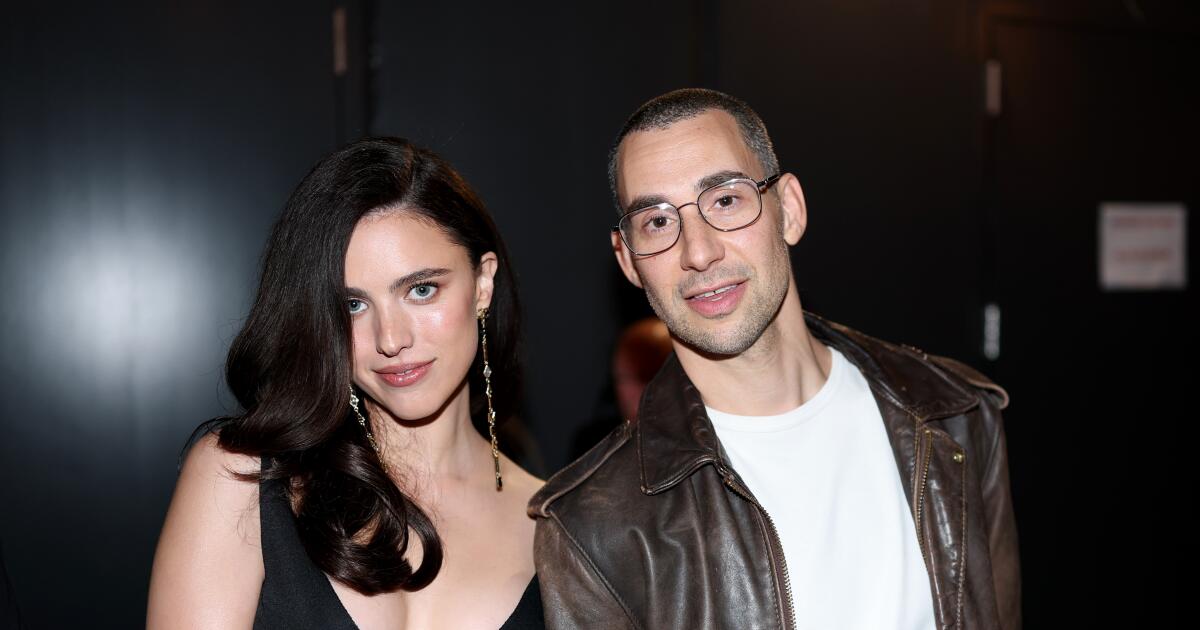
Entertainment power couple Margaret Qualley and Jack Antonoff have reportedly gone their separate ways for now.
“The Substance” and “Maid” star Qualley, 31, and Taylor Swift and Lorde collaborator Antonoff, 42, split and are going through a “rocky” time in their relationship, a source confirmed to People on Wednesday. Neither representatives for Qualley nor Antonoff immediately responded on Wednesday to The Times’ request for comment.
Speculation about the pair’s split began late Tuesday, with internet sleuths noting that Qualley — daughter of actor Andie MacDowell and Paul J. Qualley — apparently scrubbed photos featuring the Bleachers frontman from her Instagram page. Qualley in March shared photos from her A-list marriage to Antonoff to promote his upcoming song “Dirty Wedding Dress,” according to a social media page dedicated to the “Once Upon a Time … in Hollywood” actress. Those intimate black-and-white images are no longer visible on the actor’s page.
Reports of the Qualley-Antonoff split also come less than a week after Antonoff attended Taylor Swift and Travis Kelce’s lavish, but secretive, wedding bash in New York City sans Qualley. In addition to Antonoff, his fashion designer sister Rachel Antonoff and his ex-girlfriend Lena Dunham, models Gigi Hadid and Karlie Kloss, Sabrina Carpenter, Ashanti and Nelly were also in attendance at the Madison Square Garden spectacular.
Notably, Dunham in her latest memoir “Famesick” — released in April — wrote about Antonoff’s alleged romance with a “teen pop star” during their own romance. Many pop fans suspect the pop star, whom Dunham did not identify — to be “Melodrama” artist Lorde. When the rumors of the relationship publicly surfaced in 2018, Antonoff denied “seeing anyone” and dismissed the chatter as “dumb hetero normative gossip.”
Qualley and Antonoff tied the knot in August 2023, a little over a year after they got engaged in May 2022. Their nuptials at Parker’s Garage on Long Beach Island counted Cara Delevingne, Lana Del Rey, then-item Zoë Kravitz and Channing Tatum and Swift among the attendees.
Qualley and former fun. member Antonoff were first romantically linked in August 2021 when they were spotted kissing while on a date in Brooklyn, People reported. Their relationship gradually entered public consciousness, between Instagram posts, joint appearances at red carpet events and tidbits about their romance in various interviews.
“I am so happy that I found my person,” Qualley told Harpers Bazaar in September 2023. “And it’s real. It’s amazing. It’s the best feeling in the world. I’m so excited and so at ease all at once.”
LEIGH-ANNE Pinnock is pregnant with her third child – five years after she and husband Andre Gray welcomed twin daughters.
The Little Mix singer, 34, took to social media to confirm the happy news, sharing a sweet post.
Sign up for the Showbiz newsletter
Thank you!
Leigh-Anne is pregnant with her and husband Andre’s third childCredit: InstagramThe couple are already parents to twin girls who were born in 2021Credit: Instagram
Leigh-Anne wrote: “As one chapter ends, another begins.”
The Don’t Say Love hitmaker and footballer Andre, 34, are fiercely protective of their children and have never shown their faces or revealed their names.
Earlier this year Leigh-Anne opened up on her decision to keep her daughters out of the public eye.
She told People: “I remember when they were born, I was going through this online hate thing and really seeing the toxicity of social media.
Leigh recently opened up about their decision to keep the girls out of the public eyeCredit: Getty Images
“I mean, I probably would’ve still decided to not show their faces anyway, but that just kind of confirmed it for me. I want them to be able to make that decision.
“I want them to be able to [choose] if they want to be famous or not, because once they’re out there, they’re out there.”
Leigh-Anne and Andre tied the knot in 2023 in a beachfront ceremony in Jamaica.
They got engaged in May during lockdown, with Andre presenting Leigh-Anne with a £40,000 ring.
A year after Andre popped the question they revealed Leigh-Anne was pregnant with twins.
Fans refused to believe Tamera is celebrating her 48th birthdayCredit: TikTokThe star insisted she is embracing her age as ‘every year is a gift not everyone gets to unwrap’Credit: TikTok
Today Tamera shared a clip on TikTok revealing the women are celebrating their 48th birthday, and fans refused to believe it.
The clip showed her being presented with a cake decorated with ‘3’ and ‘8’ candles, before someone off camera switched the first for a ‘4’.
After jokingly running away from the cake, Tamera stopped and pulled the candles from the cake before holding them up and smiling at the camera.
She wrote: “We spend so much time running from our age. Well, this year, I’m dancing with it. 48 and grateful, because every year is a gift not everyone gets to unwrap.”
Twins Tia and Tamera starred in Sister, Sister from 1994 until 1999Credit: Alamy Stock PhotoTia recently confirmed there is ‘distance’ between them following long-running rumours of a feudCredit: Variety via Getty Images
Rushing to comment, one fan wrote: “Why did I think she’s actually 38? She looks amazing.”
Another said: “There is no way they’re 48!!!”
Someone else wrote: “Oh baby you look 28.”
And a fourth added: “Excuse me, 48? You don’t look a day over 20.”
When Barack Obama made history as the first African American president, a dichotomy was born: Would Obama showcase his black heritage too much? Or would he, the son of a white mother, prove not to be “black enough”?
The latest speculation comes from Republican presidential candidate Ben Carson, who implied to Politico that he’s more authentically African American than the president.
“He’s an ‘African’ American. He was, you know, raised white. Many of his formative years were spent in Indonesia. So, for him to, you know, claim that, you know, he identifies with the experience of black Americans, I think, is a bit of a stretch.”
Obama has addressed the concept of blackness before.
“The notion that there’s some authentic way of being black, that if you’re going to be black you have to act a certain way and wear a certain kind of clothes, that has to go,” Obama said in 2014.
Conversely, activist Michael Skolnik started #ObamaAndKids this weekend in honor of Black History Month. The hashtag quickly became a top trending conversation on Twitter.
“This would be the last Black History Month celebration at The White House during the presidency of the first African-American in the history of The United States to hold the highest office in the land,” Skolnik wrote in a Medium blog post.
Obama himself has spoken openly about his race in connection with his presidency. Earlier this month, he talked with Los Angeles Times reporter Christi Parsons about his legacy.
“You’ve got a whole generation of kids where the only president they know … is African-American,” Obama said.
On Sunday, the White House released a video of 106-year-old African American Virginia McLauren meeting the president and First Lady Michelle Obama at the White House in a Black History Month celebration.
And last week, the president made a Black History Month joke in reference to black culture.
We’re nine months out from election day and at the start of official retrospection on the 44th presidency. But judging by the past eight years, and even the past month alone, Obama’s race will likely continue to be a topic of debate and conversation even after the torch is passed.
After 52 years of providing the Inland Empire with mini golf, roller skating and go-karting, Fiesta Village Family Fun Park is shutting down.
The Colton amusement park said in a statement Tuesday that it will remain open to the public for its final days this weekend.
“This decision has not been easy. For decades, Fiesta Village has been a place where families gathered, friendships grew and memories were made,” the company said in the statement.
Owner Michelle O’Brien said that rising operation costs and declining attendance were the main reasons behind the closure.
“It’s been a privilege to be the steward at the park. It’s devastating to have to close it, but you get to a point where there are no other options,” O’Brien said. “We’re so grateful that Fiesta Village carried a place in people’s hearts.”
The park first opened in 1974, with a mini golf course, waterslides and go-karts. O’Brien purchased it in 2002 and has operated it ever since. Under her and her husband Patrick’s ownership, the park added attractions such as the Scrambler and Tilt-a-Whirl, along with laser tag and a roller skating rink.
Since the COVID-19 pandemic, the theme park industry has struggled to fully rebound. Rising costs and a lack of tourism have made the business increasingly difficult to sustain.
Last year, California’s Great America, a Silicon Valley park operated by Six Flags Entertainment, had to cut its workforce and shorten its season. Even theme park giants such as Disneyland are seeing slight downturns in attendance. Disney previously said its U.S. theme parks saw a 1% drop in attendance compared with the prior year, which the company attributed to “continued softness” in attendance by international visitors. Disneyland’s Anaheim park also recently began offering $71 tickets to draw more local visitors.
For parks like Fiesta Village, the rising cost of essentials such as food ultimately makes survival harder, said Dennis Speigel, president of International Theme Park Services, a consulting firm. He added that competition from nearby parks is also drawing business away. As a Southern California venue, Fiesta Village sits within driving distance of destinations such as Knott’s Berry Farm and Disneyland.
“It’s hard for smaller parks to compete with the big entities that surround them. Particularly now as we continue to see this amazing growth in technology for rides and attractions,” Speigel said. “Big attractions are very expensive propositions for parks to put in, and parks like Fiesta Village can’t keep up with that.”
Given the current economic uncertainty, Speigel said, theme parks will probably see a “flat year” — meaning no major growth or decline industrywide.
After Fiesta Village’s final celebration with the public on Friday and Saturday, the park will host a private event Sunday before shutting down for good. It’s unclear what will happen to the property afterward.
“Thank you for allowing us to be part of your lives and your family traditions,” the company wrote. “We will always cherish the role Fiesta Village has played in bringing people together.”
Times staff writer Samantha Masunaga contributed to this report.
RAPPER Cardi B pays homage to the late Amy Winehouse with a style just like the Brit singer’s — including her trademark beehive.
The US star, 33, sported winged eyeliner, similar to Amy’s signature look, along with a purple, figure-hugging dress to a party at Paris Fashion Week.
Sign up for the Showbiz newsletter
Thank you!
Rapper Cardi B channels Amy Winehouse with a beehive tribute to the late singer at Paris Fashion WeekCredit: SplashIt has been 15 years since Amy’s tragic death at the age of just 27Credit: Getty
Amy also wore a purple frock to the premiere of the film Psychosis in London in 2010.
During her career, Amy had a string of showbiz spats, including mocking singer Dido and putting an Alexander McQueen dress on a barbecue after a fall-out.
Cardi B on stageCredit: GettySabrina Carpenter was also spotted out attending a Paris Fashion Week eventCredit: Getty
Now Cardi has revealed her own feuds have cost her lucrative brand deals, following ding-dongs with fellow rappersNicki Minaj, Latto and BIA.
The New York-born star told her followers on X: “No lie, last year when I went off, I lost about three deals.
“I lost about three deals when I was bugging out and violating, and giving b*****s the f***ing business.”
Paris Fashion Week will continue until tomorrow evening, with a series of A-listers travelling to the French capital for a schedule of high-end events.
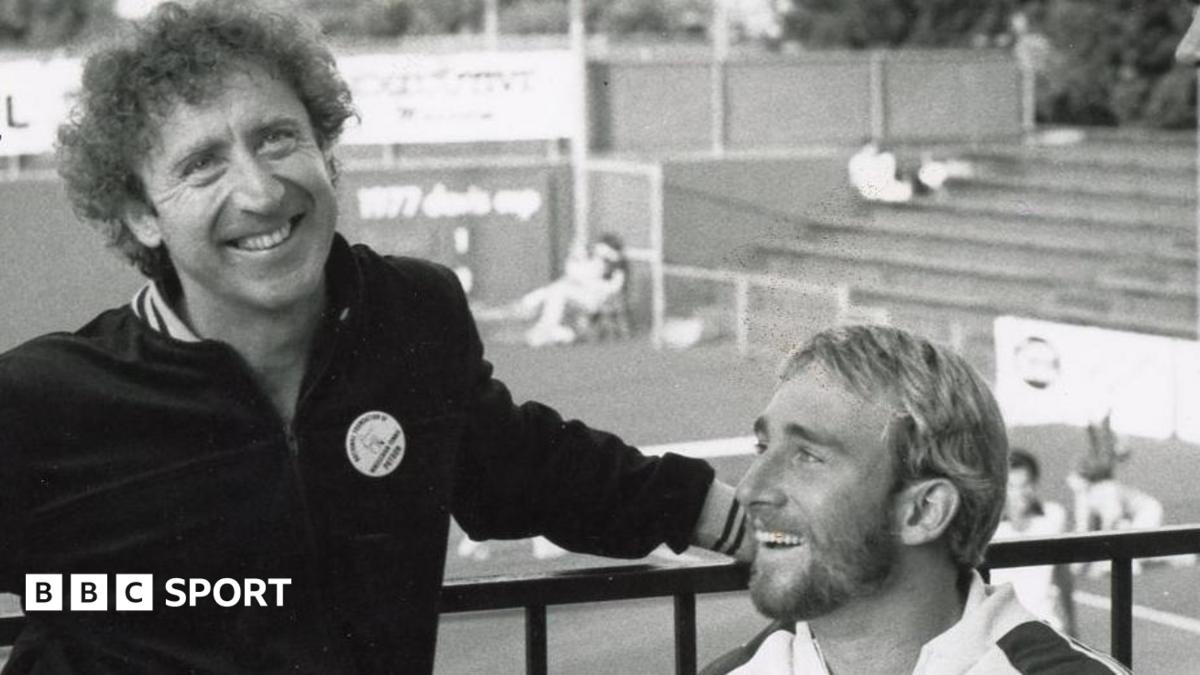
Parks, who had originally given himself a year to see if wheelchair tennis was feasible, is proud but modest about his own role 50 years on.
“I was the head of the organisation, I was the first player to really play the game but it’s hard for me to say Brad, you invented wheelchair tennis, but you know I was part of it,” he said, pointing to others like Minnebraker.
Today’s players, though, do not hold back.
“I think I’m in awe. Absolute awe,” said Britain’s 34-time Grand Slam champion Alfie Hewett.
“It [wheelchair tennis] is not about accolades and the external things. It’s actually just the life it’s given me and the purpose that it’s given me.”
And Gordon Reid, who has won 30 Grand Slam titles, added: “It’s an incredible story and that little idea that he had 50 years ago has turned into a huge worldwide sport now. So yeah, [I’m] very thankful that he had that idea back in the day.”
So much has changed since the early days, not least the chairs which are much lighter and often feature a moulded seat that is more energy efficient for turning.
And the sport continues to grow – the wheelchair event at Wimbledon, which begins on Tuesday, offers a prize pot of more than £1m, with the winners of the men’s and women’s singles earning £82,000.
Its profile is also rising and the finals are now played on the 12,345-capacity Court One, compared to the 276-seat Court 17 that hosted the first wheelchair singles final 10 years ago.
Parks says he is “very happy to see where we’re at”.
“I’m jealous in a way but in a good way because I would have loved to have been able to play in [tournaments like Wimbledon],” he said.
But that was never what his dream was about when he set out.
“I just loved to hit tennis balls, and I wanted to share the feeling of hitting a tennis ball from a wheelchair,” he said.
“The thing that I feel really, really good about is that I really wanted other people to be tennis players.
“I used to get disappointed when I thought that everybody was wheelchair basketball players. Tennis was not their main thing. And today I feel like tennis really stands on its own and they’re tennis players. They just happen to be in a wheelchair.”
Actor Finn Wolfhard has revealed that the ending of Stranger Things, which he had been part of his life for a decade, was ‘depressing’ as he struggled to find himself again
Finn Wolfhard has opened up about Stranger Things ending(Image: Variety via Getty Images)
Finn Wolfhard has revealed he felt “really lost” after the ending of Stranger Things. The Canadian actor, 23, became an international star playing Mike Wheeler in the sci-fi drama on Netflix.
Asked in a new interview if he felt liberated, he said: “For sure, yeah. At first I felt really lost, because that’s your life for so long and so many of the crew and cast were so integral to the person that you are and to your identity.”
He went on to tell The Guardian: “You almost have a kind of withdrawal for a little while. Then you realise all those relationships, all those friendships, they’re around forever.”
Although Finn and his co-stars, including Millie Bobby Brown, knew the programme would be drawing to a close after the fifth series, it took time for the cast and crew to process it.
Finn said: “Every year it was like, OK, I know I’m going to be in Atlanta filming this thing with the same people for the next however long. It was like my school in a really odd way. Everyone was having a great time, hanging out … All the cast lived in the same neighbourhood. We would go to each other’s houses all the time.
“The vibe [during the last season] was almost like, ‘Oh, we’ll back next year’, but once we got about halfway through, everyone started to realise like, ‘Oh, This is it.’ And then everyone just really valued the time we all had together for that last half.”
While he says that the show ended at the right time, he added: “It was pretty depressing for everyone when it ended … but it feels absolutely right that we’ve ended at the time that we did.”
In the past, Finn has spoken about how he wasn’t prepared for such global fame as a child, admitting that if he had the chance to turn back the clock, he would “put himself in therapy”.
Speaking to People magazine, the actor said: “I don’t think I’d ever go back and do something over, but maybe I would go back to when the show first came out and blew up, and I would directly put myself into therapy.
“But it was so crazy and overnight, that there was not really any time to think about that.” He went on to state that he would “probably” make a mistake in other ways, in childhood, adding that life is about “trial and error”.
Finn has also spoken publicly about suffering from panic attacks and struggling with anxiety from around the age of 15. Despite his struggles, Finn said he didn’t speak to anyone about the issues because of his “whirlwind career”.
He said in the past: “Everyone was like, ‘Look at him, he’s fine. He’s having the best time.’ But in reality, I was probably also developing and things were happening in my brain and anxieties were forming and things that I didn’t realize that I had to bury because of how I had to feel at work.”
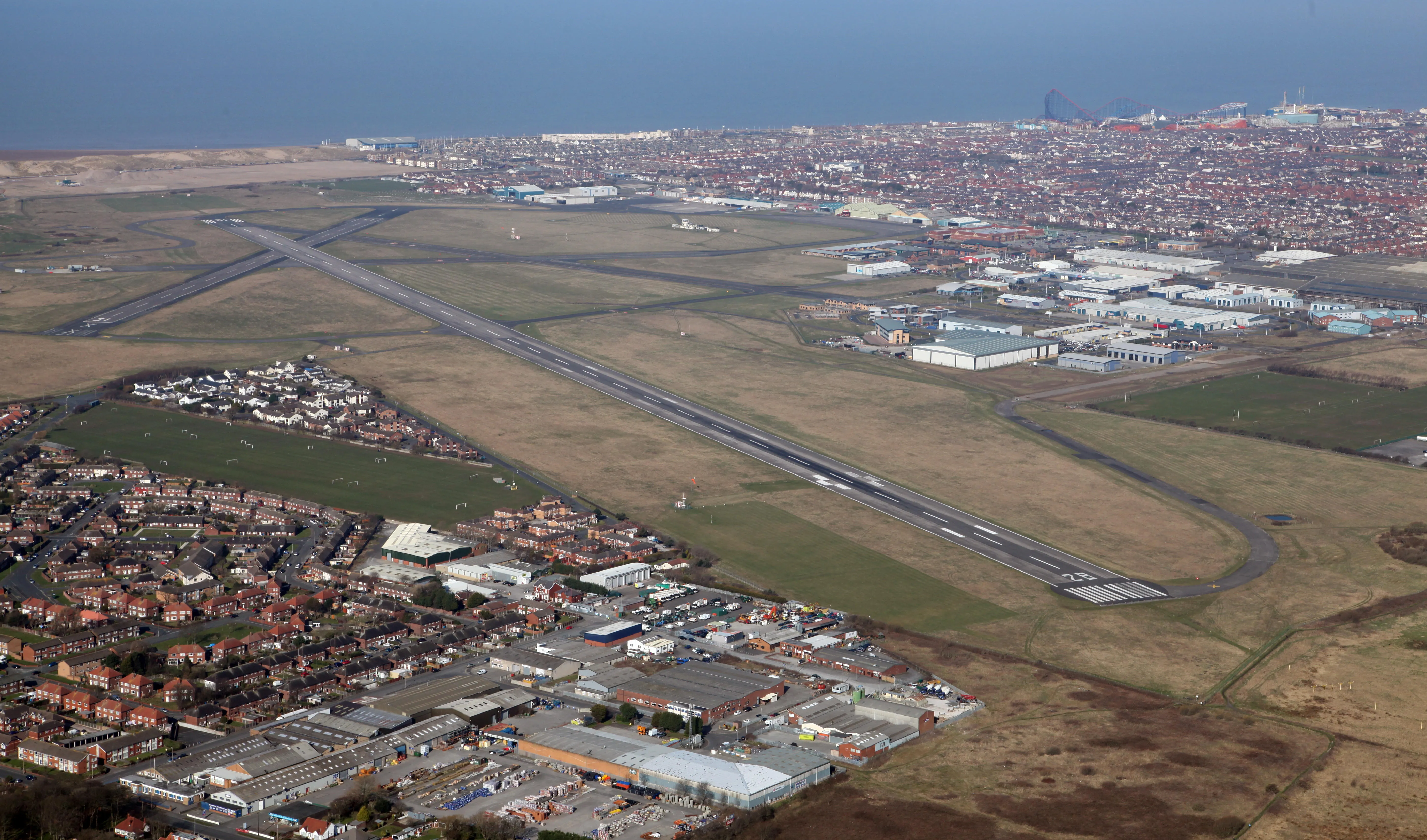
A SMALL airport in the UK could relaunch flights that would take Brits right to the beach.
Blackpool Airport once offered passenger flights to places in Europe such as Spain.
Sign up for the Travel newsletter
Thank you!
Blackpool Airport could get new regional routes – 12 years after passenger flights were axedCredit: Alamy
However, these ended back in 2014 when the airport went into administration.
Now, the airport remains open as a training centre, such as for pilots and helicopter operations.
But there could be hope for relaunching passenger flights from it in the next few years.
Sadly, none of the major airlines have said they would want to launch flights, Blackpool South MP Chris Webb said, which include previously operating ones like Jet2.
He told local media: “I have spoken with all the airlines and they don’t have any interest in flying from Blackpool again.”
Despite this, an anonymous London businessman has suggested the launch of a small-scale airline which would connect London to Blackpool.
If it went ahead this could launch as quickly as two years – and connect the main city to one of the UK’s most iconic beach resorts.
However Mr Webb said a lot of things would have to change first, including “better facilities, bigger passenger lounge and a better building”.
He added: “But it would certainly be viable, if handled correctly.
“Blackpool is one of the biggest tourism destinations in the UK, it is crying out for a properly run airport.”
Airlines like Jet2 have expressed no interest in returningCredit: AlamyBut a new small airline based in London could connect the airport to the cityCredit: Alamy
It isn’t the only airport hoping to relaunch passenger flights in Britain.
A UK city that is often overlooked and at the centre of brutal jokes could welcome back a beloved lido following concerns over open-water deaths amid the balmy heatwaves
A former lido could return to this often overlooked UK city(Image: Getty Images)
A UK city that has often been ridiculed is planning to restore its mega lido after it was demolished almost 40 years ago.
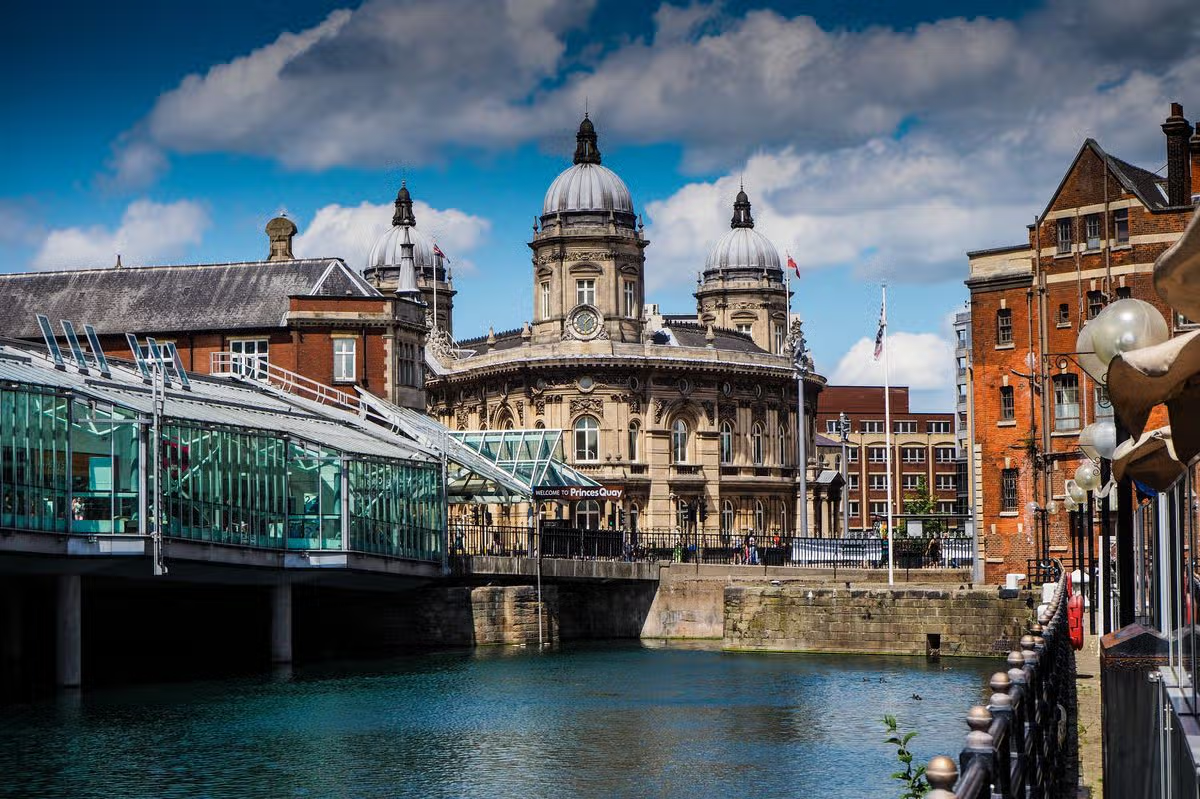
For countless years, Hull has been the subject of mockery, partly due to its previous reputation as one of the ‘UK’s worst places to live’ and its sharp industrial decline in the fishing and shipping industries. Even those who have never visited the East Yorkshire city find themselves going along with the unfair narrative, despite its significant progress.
Today, the city, officially called Kingston upon Hull, boasts lively independent bars, restaurants, art galleries, and hidden gems dotted along the waterside, as well as the mega amphitheatre Stage@TheDock. It’s also home to one of the ‘UK’s best wildlife attractions’, The Deep, a colossal aquarium with more than 3,500 marine animals. It has ahistoric quarter, the Old Town, with cobbled lanes, medieval architecture and museums.
Proving just how far it’s come as a city, Hull was named as one of the ‘best places in the world to travel to in 2026’ by National Geographic, and was the only UK destination to make the acclaimed list. And there’s much more to come from the city, with proposed plans to welcome back its once thriving lido.
During the summer months, the open-air swimming pool in East Park, which opened in 1964, was a haven for locals looking for a refreshing dip. But after 24 years, the lido closed in 1985 and was demolished in 1988.
While East Park maintains a children’s water play area, an Animal Education Centre, the Pavilion Cafe, a boat house, play areas and an outdoor gym today, its former lido is still yearned for. Even more so now, in the hope of providing another safe, outdoor swimming environment after tragic events unfolded during the UK’s recent hot weather, which has seen at least 18 people die in open water.
Now, the local council in Hull has agreed to look into the prospect of restoring the former lido in East Park. According to the BBC, Councillor Jessica Smith said: “As the weather gets warmer, we see the same tragic stories repeated year after year. Open water is unforgiving; it doesn’t matter how confident you are, it doesn’t matter how fit you are.”
The proposal, put forward by Jessica during Drowning Prevention Week, has been supported by Councillor Kalvin Neal, who noted that it might need to be relocated. “Although it is something that could be looked at, potentially that isn’t the best place, it could be somewhere else that might be better,” he commented.
It would undoubtedly be a welcome addition back to Hull, with the city’s only council-run lido located at Albert Avenue Pools and Fitness. This outdoor heated swimming pool, which was opened in 2023 after a £10.5 million refurbishment, is available to use from May to September, and has proven to be a huge success in the city.
On swimming safety, Cllr Jessica previously commented: “As local councillors we have a duty to do our best to provide safe swimming facilities and adequate education to our young people,” as reported by Hull Live.
“In a city surrounded by water and home to many lakes, drains and other bodies of water, this is a crucial issue for our communities this summer.” Councillor George Grozav is seconding the proposal. “Every death in open water is a tragedy, and far too many of these incidents involve children and young people.”
Do you have a travel story to share? Email webtravel@reachplc.com
The former theme park has remained vacant since it closed in 2016, but plans to transform the site into a ‘Center Parcs-by-the-sea’ style holiday resort with a Lidl supermarket have been recommended for approval
The park was shuttered in October 2016(Image: Pleasure Island Archive)
A theme park that was shuttered back in October 2016 and has been left abandoned ever since could be given a new lease of life in new holiday park plans that have been dubbed “Center Parcs-by-the-sea”.
Pleasure Island in the seaside town of Cleethorpes opened in 1993, and in its heyday it was much loved by locals and tourists thanks to its selection of 50 rides, live shows, and family-friendly entertainment.
After being closed, most of the rides were sold off, and the land has lain abandoned, with only a few rotting buildings and rusting structures giving away that this was once a vibrant attraction. However, there are now plans to redevelop the former Pleasure Island site into a £70million complex featuring a Lidl superstore, hotels and holiday park.
The plans have been put forward for approval by council officers. The proposal for the 60-acre location is expected to generate approximately 400 jobs for the local area, with a further 400 during the construction period. An application to overhaul the disused theme park was originally lodged in January 2023. Environmental assessments, flood risk evaluations and ecological impact studies have needed to be completed before councillors could fully consider the scheme.
At North East Lincolnshire Council’s planning committee on Wednesday, July 8, councillors will be urged to support the plan, subject to conditions.
The site changed hands six years ago, with developers unveiling their ambition for a “Center Parcs by the sea” featuring 272 lodges, hotels, restaurants and retail units with car parking. Lidl GB Ltd, YPG Fab2 ltd, Seaside Getaways and Church Lane Humberston Ltd sought permission in January 2023 to demolish the site and establish the new holiday centre, Lidl superstore and hotels, reports Grimsby Live.
The agent, Lichfields, based in Leeds, has put forward plans to clear the theme park site of the remaining structures and replace them with a large Lidl store and garden centre. The total size of the site within the proposal is around 60 acres.
Pleasure Island covered approximately 25 acres. Two hotels are proposed for the site, one boasting 58 rooms and another offering 148 rooms, both standing at five storeys tall. A drive-thru coffee shop, widely expected to be a Costa, features in the application, alongside a reception area serving 272 lodges, which will offer holiday accommodation ranging from two to four bedrooms.
Retail units and a cycle hire centre are also part of the plans. A lake remains at the heart of the site, and developers are keen to build an anglers’ hub beside it, complete with toilets, lockers and changing facilities for fishing enthusiasts.
Councillors gathered at Grimsby Town Hall to consider objections raised by rival retailers Tesco and Aldi, as well as local residents who have flagged concerns over traffic and the potential impact on wildlife. However, a significant number of people have voiced their support for the development, citing job creation, a boost to tourism and the removal of a long-standing eyesore from the area.
In a report presented to councillors, officials said: “It is considered in principle that a large proportion of the scheme, if not all of it, would support tourism and the visitor economy, in line with the policy aims, widening the choice and availability of such uses as a comprehensive scheme.
“The main site and overflow car park have been vacant for many years since the unfortunate closure of Pleasure Island in 2016. The main site has a derelict appearance which is now beginning to degrade the character and appearance on this key route through the resort.”
The comprehensive planning application report examined the ecological impact alongside access and traffic concerns, but found no serious or harmful effects.
Officials also evaluated the impact of expanding the Meridian Showground, situated next to the proposed holiday development. The Showground may soon accommodate crowds of up to 15,000 people and draw more prominent musical acts.
The noise assessment determined there would be no adverse impact on residents of the lodges or hotels. They described the proposal as “an effective use of the land” and stated it would “contribute to the local economy and the vitality of the resort.”
Adrian Smith, Director of Church Lane Humberston Limited, which is spearheading the development, told Grimsby Live: “We’re delighted that the proposal has been recommended for approval and has reached Committee stage.
“Together with our partners Lidl UK, and with great thanks to planning consultants Lichfields and to Cheryl Jarvis who heads NELC’s planning team, we are thrilled that the recommendation for approval of this £70m project, which will create nearly 400 jobs in the local market and provide an unprecedented boost to the local economy is nearer to delivery.”
Have a story you want to share? Email us at webtravel@reachplc.com
The TWA Hotel at New York’s JFK Airport is a luxury plane-themed hotel that was once a disused airport terminal – transformed into a stunning hotel after a $265million (£200m) renovation
08:04, 05 Jul 2026Updated 08:04, 05 Jul 2026
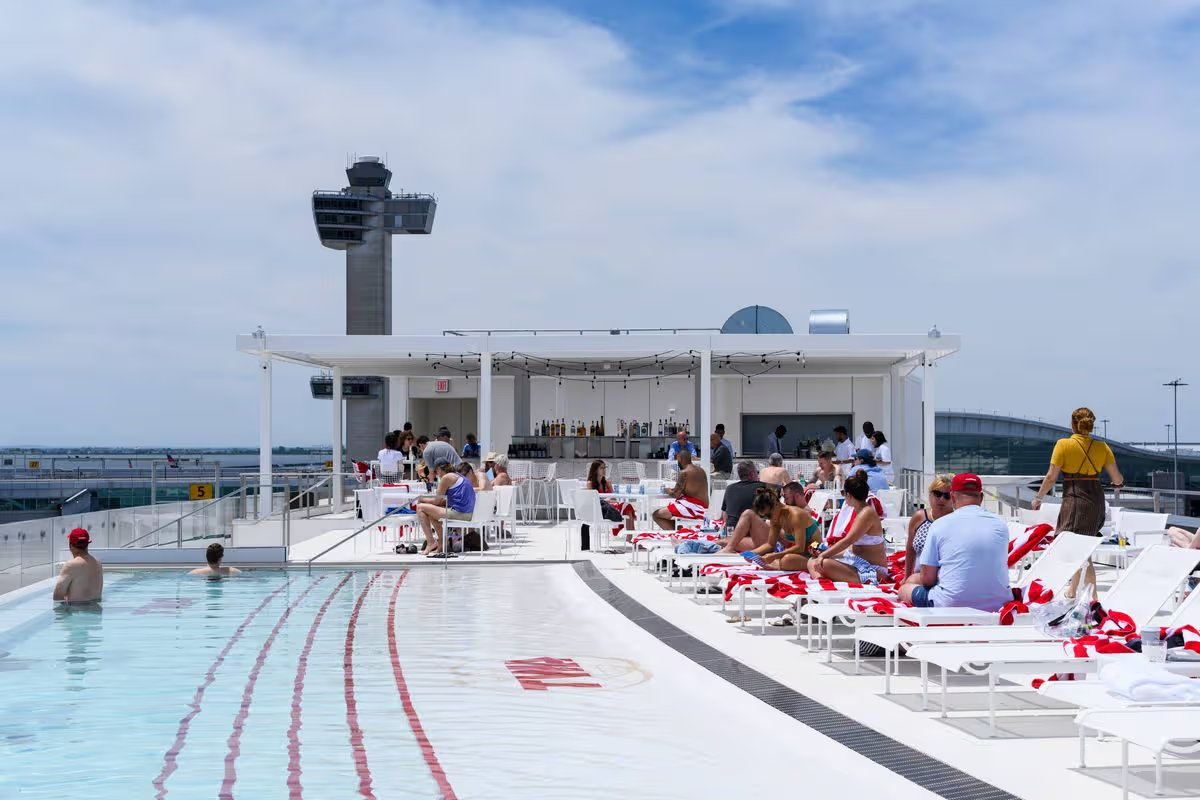
People lounge beside the rooftop pool at the TWA Hotel(Image: The Washington Post via Getty Images)
A former airport terminal that sat abandoned for years has been transformed into a stunning aviation-themed luxury hotel — following a jaw-dropping $265million (approximately £200m) restoration to revive it to its former glory.
The TWA Hotel flung open its doors in 2019, boasting a rooftop infinity pool with breathtaking views over an active runway at New York’s JFK International Airport. Originally serving as a TWA flight terminal, the iconic building was designed by renowned architect Eero Saarinen before it closed its doors in 2001, only to be reborn 18 years later.
The hotel, which occupies the TWA Flight Center, now comprises two buildings at each end of the former terminal, offering 512 rooms for guests to choose from.
Designers painstakingly worked to recreate its appearance when it first opened back in 1962, hailed by the Landmarks Preservation Commission as “one of the great masterpieces of expressionistic modern design”.
Earlier this year, it was recognised as one of the top five best airport hotels on the planet at the prestigious Skytrax World Airport Awards.
The original terminal now serves as the lobby for the four-star hotel, which also features a round-the-clock 10,000 square feet gym — claiming the title of the world’s largest hotel gym — alongside a selection of restaurants.
One of the most striking highlights is a 1958 Lockheed Constellation aircraft that has been cleverly converted into a cocktail lounge, with an aviation history museum also housed within the hotel.
Time magazine previously featured it on their coveted list of “The World’s Greatest Places of 2019”, and one recent visitor was British travel YouTuber Hannah Ricketts.
She explained that she was keen to visit the hotel to get a taste of what the golden era of air travel felt like during the 1950s and 60s.
Upon reaching the lobby, she told her 489,000 subscribers that it was one of the “coolest entrances” she had ever seen.
Spotting a vintage Coca Cola machine, she remarked that it felt like stepping back in time, before adding that the place was far more impressive than she had anticipated.
She went on to reveal that she paid around $400 (approx £300) for a room with a deluxe runway view. Hannah confirmed this included taxes, with standard rooms starting at roughly $200.
Gazing out from her room, she exclaimed: “This looks so much better in person. I feel like the camera isn’t going to do it justice.”
She said it felt like being on the set of Mad Men, describing the building as “utterly stunning”, packed with period details that truly transported you back to the 1960s.
“I’ve never been anywhere like this in my life,” she added. “And it’s obviously pristine where it’s been refurbed. It’s almost surreal. Wow.”
The travel vlogger described the swimming pool as “insane”, though pointed out that it cost $25 (approx £19) to use, even as a guest.
She then savoured a Mile-High Margarita aboard the converted cocktail lounge plane, telling her audience: “Maybe you’re a Brit watching this and you’re going to come back from JFK, back to the UK, back to reality, back to work. If you want to plan this, it’s a really positive end to a trip.”
Her sole gripe was with the food, which she rated a 5/10, though she described the overall experience as immersive and one she would happily repeat.
Summing up her one-night stay, she said: “This is a four-star hotel, I would say this is literally better than quite a lot of the five-star hotels we’ve been looking at.”