years

‘I worked on huge soap opera for years and here’s what really blew me away’

Zoe Markos, who appeared on Neighbours as an extra before landing a speaking role, has revealed what it’s really like working on the soap opera and let slip some backstage secrets

An actress who previously on a huge soap opera has opened up on what it’s really like on set.

Neighbours first aired in 1985 and initially ended in 2022, however, the show was later revived by Amazon before its final cancellation in 2025.

Over its long history, the Australian serial drama launched the careers of global stars like Margot Robbie, Kylie Minogue, Russell Crowe, and Liam Hemsworth but what is it actually like to be on the set of Erinsborough?

Zoe Markos first joined Neighbours in 2012 as an extra before eventually landing a speaking role in 2025 as Louisa Palamountain and she’s now shared some behind-the-scenes secrets that viewers might not know.

Speaking to JoeFortune, Zoe explained: “The studio is literally Erinsborough, built to feel like a real town. Walking around, you genuinely feel like you’re in an actual town because of how well it’s been designed. The sets are much smaller than they look on TV.

“For example, when you’re pretending to make juice or cook something, none of the utensils actually work but it doesn’t matter because the illusion is perfect.

“What really blows me away is how much history is packed into those sets. Especially when I was involved on the production side, I got to see props, furniture, and chairs dating back to the 1980s, all carefully preserved.

“They even have old VHS tapes of episodes that haven’t been digitised yet. It’s incredible. I think most people don’t realise just how much history was made in that studio and on that show. It’s truly remarkable.”

Zoe went on to share some bizarre rules she had to follow on set, revealing: “You can’t actually talk, so you have to mime.

“For example, if you’re opposite someone or asked to have a conversation on set, you just can’t speak. It’s probably common on all shows, but in party scenes, for instance, they don’t play the music, so you have to dance without it. It can feel a bit awkward.

“Another thing is that you really have to be very quiet and not make any noise, which is kind of funny when you think about it. Those would probably be some of the little secrets about being on set that people don’t usually notice.”

Moving on to clothing, Zoe added: “As an extra, it depends on your role. If you are part of the main background, like a work guard or a specific set role, they usually provide your costume. If you are just a regular member of the community in a scene, they might give you clothes or accessories.

“If not, they will send a brief to your manager or directly to you if you do not have one, explaining what you can and cannot wear.

“Generally, they avoid patterns like polka dots or anything too busy. They prefer plain clothing with no logos, and you definitely cannot wear anything that could be copyrighted.”

For the latest showbiz, TV, movie and streaming news, go to the new ** Everything Gossip ** website

Source link

Ghost village where everyone forced to leave 80 years ago when time stopped

The village was evacuated in 1943 when residents were given just one month to leave – now frozen in time, it’s a haunting tourist attraction

A deserted Dorset village stands as a unique place in Britain, a relic from the past that hasn’t been erased from memory. Tragic events forced inhabitants to abandon their cherished homes many decades ago.

Tucked away on Dorset’s breathtaking Jurassic Coast, a visit to Tyneham village feels like travelling through time. Visitors can catch a window into the existence of the residents who were compelled to desert the village during the Second World War.

It was 1943 when the thriving settlement of Tyneham saw their world turned upside down forever. Britain was deep into World War Two when the military commandeered the village for training operations.

This meant heartbroken locals were handed just one month’s warning to evacuate their properties where countless families had resided for centuries.

The wartime government seized Tyneham village and its surrounding territory to establish a training facility for the Allied forces, due to its proximity to the Lulworth firing range.

Residents were convinced they were sacrificing their properties for the nation’s benefit and expected to come back after the war ended.

A message was attached to the church door, which stated: “Please treat the church and houses with care. We have given up our homes where many of us have lived for generations, to help win the war to keep men free. We will return one day and thank you for treating the village kindly.”

Tragically however, the villagers were never able to return to their homes in Tyneham as even after World War Two concluded, the village and surrounding area remained a training ground for military exercises.

Today the village, still preserved in time after more than 80 years, serves as a ‘thought-provoking and interesting’ visitor attraction. It welcomes guests at certain periods throughout the year and tourists praise its ‘fascinating insights into the lives of residents’.

When the village closes to visitors, the gates preventing entry are secured at dusk each evening.

Woolly mammoths will be back in 2028, how you could live to 200, alien signals lost in the weather, could we fight Godzilla, and a creature with 20 arms has been found near the Antarctic – all this and more in our latest weird science newsletter

One TripAdvisor review states: “This deserted village has such an interesting history. The boards within the church detailing the villagers fight to be allowed to return to the village and the current position are very moving.”

Another TripAdvisor user called it ‘a wonderful place – very atmospheric and sad but in a way that keeps drawing you back to visit’.

Tyneham’s final resident, Peter Wellman passed away aged 100 in April this year – the centenarian made one last journey to the village in 2024, to revisit the location where he was born and raised.

During his 2024 visit to Tyneham, Peter recalled his early years, telling the Dorset Echo at the time: “We had no electricity, no mains gas and no running water – we had to pump that from near the church.

“I remember going to the beach and fishing and we often had mackerel. We were happy until we got moved out.”

Tyneham village sits within the Isle of Purbeck, though it’s not truly an island but rather a peninsula surrounded by the English Channel in Dorset.

Source link

Thorpe Park closes popular ride for GOOD after nearly 40 years

A POPULAR ride at Thorpe Park has closed after nearly 40 years.

The Chertsey-based theme park’s Rumba Rapids was a river rapids ride where passengers would board a boat able to carry up to eight people at a time.

The Rumba Rapids ride is closing permanently at Thorpe Park theme parkCredit: Alamy

The ride originally opened back in 1987 as ‘Thunder River’ and was Thorpe Park’s first thrill ride, but has not been running since the end of the 2025 season.

Jack Silkstone, a theme park vlogger, posted a reel on Instagram announcing the news.

The post states: “After 39 years of soaking thrill seekers, Rumba Rapids at @thorpeparkofficial has now permanently closed.

“Join me as I take a trip down memory lane to look back at the history, rethemes and memories of one of Thorpe Park’s longest-running attractions.”

Read more on travel inspo

TAKING OFF

I’ve visited 50 countries & this much-loathed budget airline is the world’s best


GO ON

All the little-known websites for cheap or FREE tickets to gigs, theatre & festivals

Thorpe Park has shared the video to its Instagram story, as well as commenting on the video: “Thank you for helping us pay tribute to such an iconic ride!”

In an official statement, a Thorpe Park spokesperson told Sun Travel: “After nearly four decades of making a splash, Rumba Rapids at Thorpe Park has permanently closed.

“First opening as Thunder River in 1987, the iconic water raft ride has been soaking generations of thrillseekers ever since.

“While we don’t have plans to share just yet on what’s next, we’re always reviewing our line-up of world-class rides and attractions to make sure Thorpe Park remains the UK’s most thrilling theme park.”

Riders would begin at the highest point of the ride on a turntable belt before turning sharply and heading down a curve to make the boat spin.

The boat would then head into a tunnel with a waterfall effect, before exiting the tunnel and entering the wave section of the ride.

The riders would then pass under a bridge and pass a photo opportunity.

The Rumba Rapids was the park’s second-oldest ride at the time of its closure.

Taking to social media, several fans have expressed their sadness at the news.

One person commented: “Sad times. I always enjoyed going on this to have a break and a chill from all the coasters.”

Another person said: “End of an era, the soundtrack alone was ICONIC.”

Over the years the park has been rebranded a few times, including in 2002 becoming Ribena Rumba Rapids with the colour theming changing from yellow to purple and the ride got its own soundtrack.

The ride was Thorpe Park’s first thrill rideCredit: Alamy
The ride originally opened in 1987 at ‘Thunder River’ with yellow boatsCredit: Alamy

In 2007, the partnership with Ribena ended and the ride became Rumba Rapids.

A decade later the ride was re-themed to fit in with the design of the Jungle area of Thorpe Park.

Thorpe Park also recently announced that they would be closing the waterpark after more than 35 years.

Instead, Amity Beach pool will be replaced with a new attraction called The Launchpad, which will be a recharge zone.

In other theme park news, an English seaside theme park has scrapped its entry fees and will soon have a huge new ‘showstopper ride’.

Plus, the European theme park you won’t have heard that’s revealed a huge £78million expansion plan and you can fly there for £14.

Thorpe Park is yet to announce what will replace the rideCredit: Alamy

Source link

Railgun Being Fired By U.S. Navy Again After Abandoning It For Years

The U.S. Navy has conducted at least one new round of live-fire tests of its prototype electromagnetic railgun at the White Sands Missile Range (WSMR) in New Mexico. The service had shelved its railgun effort in the early 2020s, at least publicly, after work that had shown promise ran into technical hurdles. A railgun is now set to be a key feature on the future Trump class “battleships.”

A brief mention of the new railgun testing is included in a document highlighting achievements by the Naval Surface Warfare Center, Port Hueneme Division (NSWC PHD) in 2025. NSWC PHD, which is part of Naval Sea Systems Command (NAVSEA), primarily operates from Port Hueneme in California, but it also maintains a detachment at White Sands. The U.S. Army manages the WSMR, which other branches of the U.S. military also use for a wide variety of research and development and test and evaluation activities.

The “WSD [White Sands Detachment] tested a railgun to collect critical information about high-velocity firing during a three-day campaign at White Sands Missile Range (WSMR) in New Mexico,” the year-in-review document says. “The testing in February [2025] was a joint effort between WSD and NSWC Dahlgren Division in Virginia and conducted for Naval Sea Systems Command (NAVSEA)’s Joint Hypersonics Transition Office.”

A picture showing the prototype railgun being fired at WSMR, which was included in the NSWC PHD’s 2025 year-in-review document. USN

The railgun had originally been installed at a land-based test site belonging to NSWC Dahlgren in Virginia. The Navy announced in 2019 that it had moved the weapon to the WSMR. Plans to conduct at-sea testing of the weapon were repeatedly delayed and never materialized.

TWZ has reached out to NAVSEA for more information about the three-day test campaign last year and its objectives, and to ask whether any other live-fire testing of the prototype railgun at WSMR has occurred since 2021. That year, the Navy had announced its intention to close out work on the railgun and effectively put what was left of the program into storage.

“Railgun hardware will be realigned to maximize its sustainability to facilitate potential future use,” the Navy had said at the time. However, there do not appear to have been any disclosures of further testing of the weapon before now.

The video below shows the prototype railgun being fired at the test site in Virginia in 2016.

Electromagnetic Railgun – First shot at Dahlgren’s new Terminal Range


Without more information, it is hard to say what the purpose of the February 2025 tests may have been. That the testing was done in support of the Joint Hypersonics Transition Office (JHTO) could point to the railgun having been used for work unrelated to the weapon itself. Established in 2020, the JHTO is broadly tasked to facilitate the development of new hypersonic technologies and help transition that work into formats that could lead to operational capabilities. As a pure test asset, the railgun might offer an additional way to launch suitably sized payloads at extremely high speeds, but there are other ways available to do that kind of work, and it is not clear that using the weapon in this way makes sense. The U.S. military has been working to expand various aspects of its hypersonic test infrastructure, in general, in recent years amid a surge in new development efforts in that space.

At the same time, as noted, the Trump class “battleship” effort, also known as BBG(X), has also now breathed new life into the prospect of an operational U.S. naval railgun. President Donald Trump rolled out plans for new large surface combatants, which are expected to displace around 35,000 tons and also be armed with a mix of missiles (including hypersonic types), traditional 5-inch guns, and laser directed energy weapons, as you can read more about here.

A rendering depicting a Trump class “battleship” firing various weapons, including a rail in a turret at the bow. USN

Whether the Navy has any plans to pick up where it left off with the railgun prototype currently at WSMR, which was developed by BAE Systems, or pursue a new design, is unclear. General Atomics, which has done railgun development work for the U.S. Army in the past, has expressed interest in being involved in helping arm the Trump class warships. Construction of the lead ship in the Trump class, to be named USS Defiant, is not expected to begin until the early 2030s.

General Atomics – Multi-Mission Medium Range Railgun Weapon System [1080p]


Railguns, which use electromagnets rather than chemical propellants to fire their projectiles at very high velocities, have historically presented significant technological challenges. They have significant power and cooling requirements, especially if the intent is to be able to fire multiple shots in relatively rapid succession. This, in turn, has generally meant that railgun installations are physically bulky due to the need for large energy storage batteries and cooling systems. Firing projectiles at very high speeds at any kind of sustained rate also imparts significant wear on the barrel. A worn-out barrel reduces range and accuracy, and creates potential safety hazards.

Electromagnetic Railgun Firing Hypervelocity Projectile @ Mach 7


At the same time, a practical operational electromagnetic railgun offers the promise of a very capable and flexible weapon that can be employed against a wide variety of targets at sea, on land, and even in the air, and do so at considerable range. This includes being able to intercept incoming threats, including ones that may themselves be moving at hypersonic speeds. A railgun also offers magazine depth and cost benefits compared to traditional surface-to-air and surface-to-surface missiles, given the smaller size and unit price of its rounds.

A U.S. Navy briefing slide from the service’s abortive railgun program showing how ships armed with the weapons (as well as conventional guns firing the same ammunition) could potentially engage a wide variety of aerial threats, including cruise missiles, as well as surface targets. USN

As an aside, just in the past year, Japan has announced significant progress with its naval railgun program, including the first known instance of a railgun mounted on a ship being fired at sea at a real target vessel. In 2024, it was reported that Japanese authorities had met with U.S. Navy representatives to discuss leveraging the latter’s previous railgun work, which raised the possibility of further collaboration in the future. Japan’s Acquisition Technology & Logistics Agency (ALTA) also has a formal agreement with the Franco-German Research Institute of Saint-Louis (ISL) to cooperate on the development of railgun-related technologies.

A composite image showing, at top left, a Japanese prototype railgun mounted on a test ship being fired during at-sea testing last year, as well as damage to the target vessel. ATLA

The ATLA video below shows previous live-fire testing of a prototype railgun at a facility on land.

試作レールガンの射撃


Other countries have also been pursuing railguns, particularly for naval use. A prototype railgun mounted in a large turret notably appeared on a People’s Liberation Army Navy (PLAN) ship in 2018, though the exact status of that program is now unclear. There has also been a very public naval railgun development program underway in Turkey in recent years.

The Chinese naval railgun that emerged in 2018. Chinese internet

Turkish electromagnetic railgun unveiled to experts – Anadolu Agency


If nothing else, the test firing of the Navy’s prototype railgun at the WSMR last year shows that it remains functional, at least to a degree, as the service now looks ahead to fielding an operational weapon of this type on the Trump class.

Special thanks to user @lfx160219 on X for bringing the railgun entry in the NSWC PHD 2025-year-in-review document to our attention.

Contact the author: joe@twz.com

Joseph has been a member of The War Zone team since early 2017. Prior to that, he was an Associate Editor at War Is Boring, and his byline has appeared in other publications, including Small Arms Review, Small Arms Defense Journal, Reuters, We Are the Mighty, and Task & Purpose.


Source link

Britain’s 3rd busiest airport shuts terminal for good after more than 60 years

BRITAIN’s third busiest airport has shut one of the terminals for good.

The terminal, which first opened in 1962, has closed as part of the airport’s £1.3billion transformation.

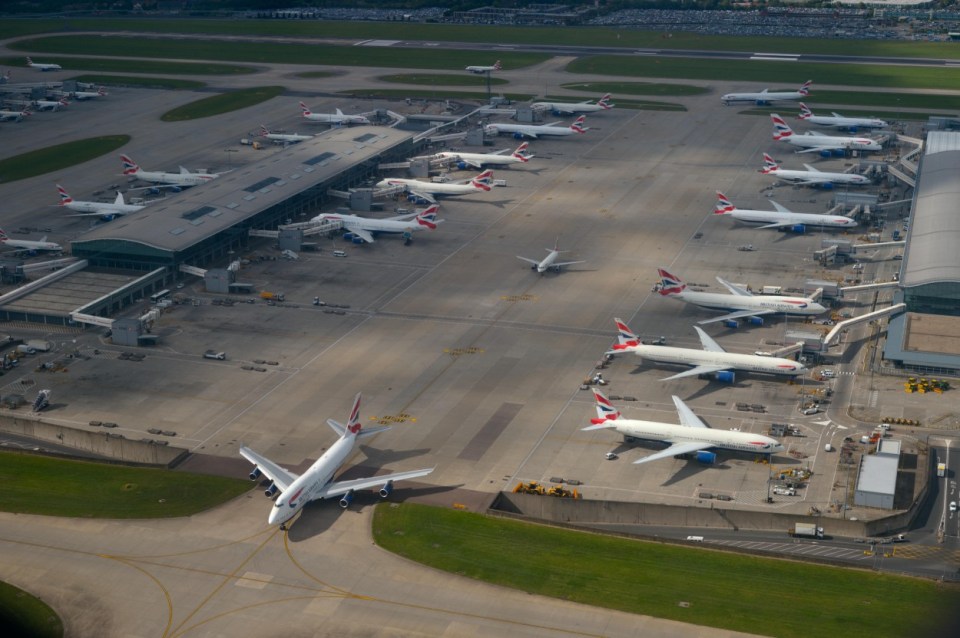
Aerial view of Terminal 2 at Manchester Airport with several airplanes parked.
Manchester airport is closing down its Terminal 1Credit: Alamy

Manchester airport is turning into a two-terminal operation under the new layout.

All airlines have moved into the expanded Terminal 2, which now handles more than 75% of passengers, while Ryanair flights will operate solely from Terminal 3.

Chris Woodroofe, managing director of Manchester Airport, said: “While this is the end of an era for Terminal 1, it’s really the start of a whole new chapter for Manchester Airport.

“We’re proud to connect the North to the world and our £1.3bn investment in Terminal 2 means that we’re now bigger and better than ever – serving our passengers in a setting that rivals any airport Terminal across Europe.

GROUNDED

Major airline to cancel 600 flights across Europe this week


SANDS GREAT

Portugal’s ‘Silver Coast’ that is cheaper than the Algarve with £1.08 beers

“It’s also allowing us to continue our growth and operate more flights to more destinations every single day. And we’ve achieved this at the same as making things more simple and straightforward for our passengers.

The closure also frees up space for new facilities at the airport, including hundreds of extra seats, a new bar called Sporting Chance and an Italian restaurant.

More than 2,000 signs across the airport have been replaced to reflect the changes, alongside a new parking system where all car parks are labelled P1 to P16 to make them easier to find.

The redevelopment forms part of the long-running Manchester Airport Transformation Programme, launched in 2015 to modernise the airport for future growth.

The first phase of the revamped Terminal 2 opened in 2021, with the full expansion completed in 2025, paving the way for Terminal 1 to be decommissioned.

The overhaul comes as Manchester Airport continues to grow, serving a record 32 million passengers in 2025.

This February has become the busiest on record with more than 2.05 million travellers.

Source link