White

White House correspondents’ dinner becomes the news as reporters take cover

A night devoted to celebrating the 1st Amendment and journalism turned into a breaking story of its own.

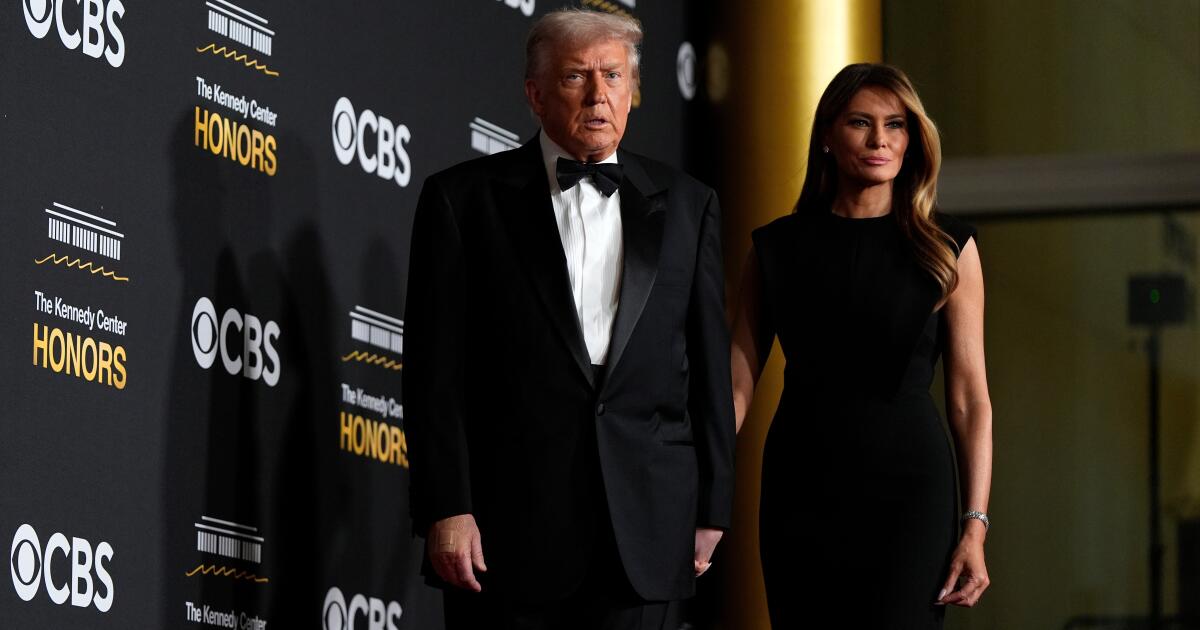
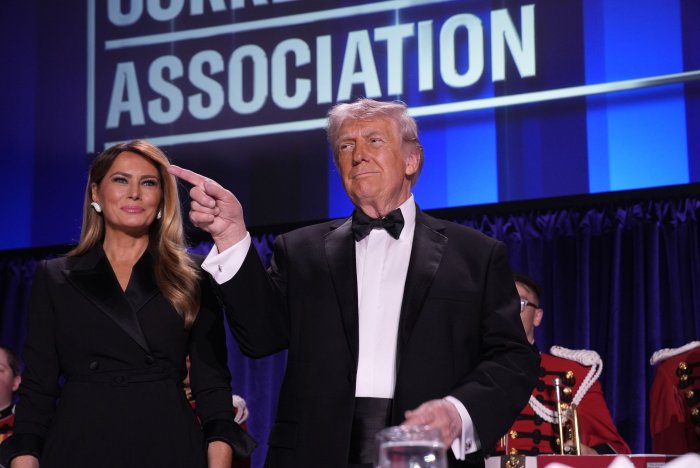
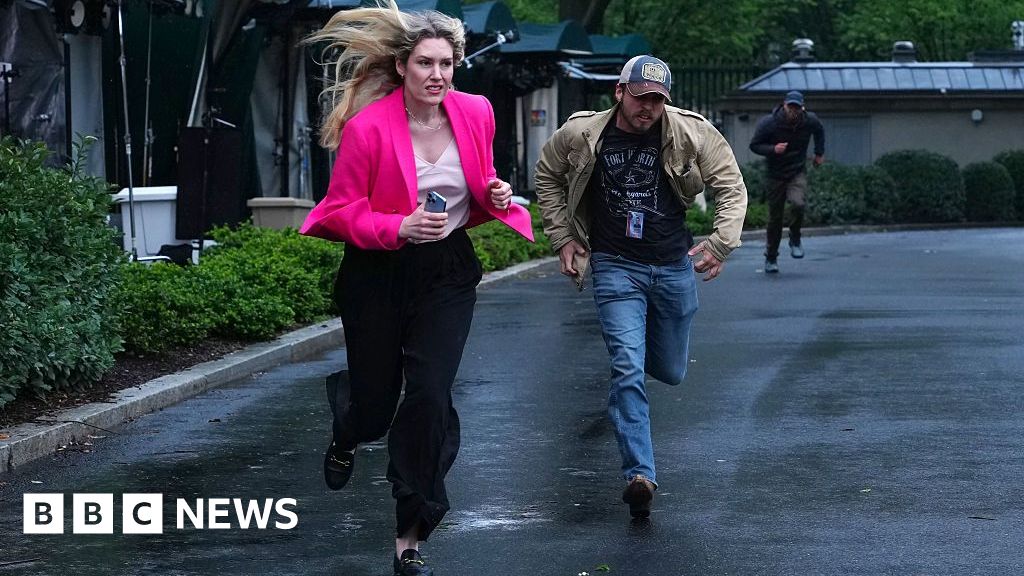
The attendees at the White House Correspondents’ Assn. dinner Saturday took cover under the tables in the Washington Hilton ballroom when they heard gunshots outside, which led to the evacuation of President Trump and many of his Cabinet officials at the gala.

But instinct kicked in swiftly, and many of the journalists in the crowd of 2,600 people were using their phones to capture video. Uploading pictures to social media was a challenge as the internet coverage in the ballroom was poor, but they would eventually provide a detailed chronicle of the night.

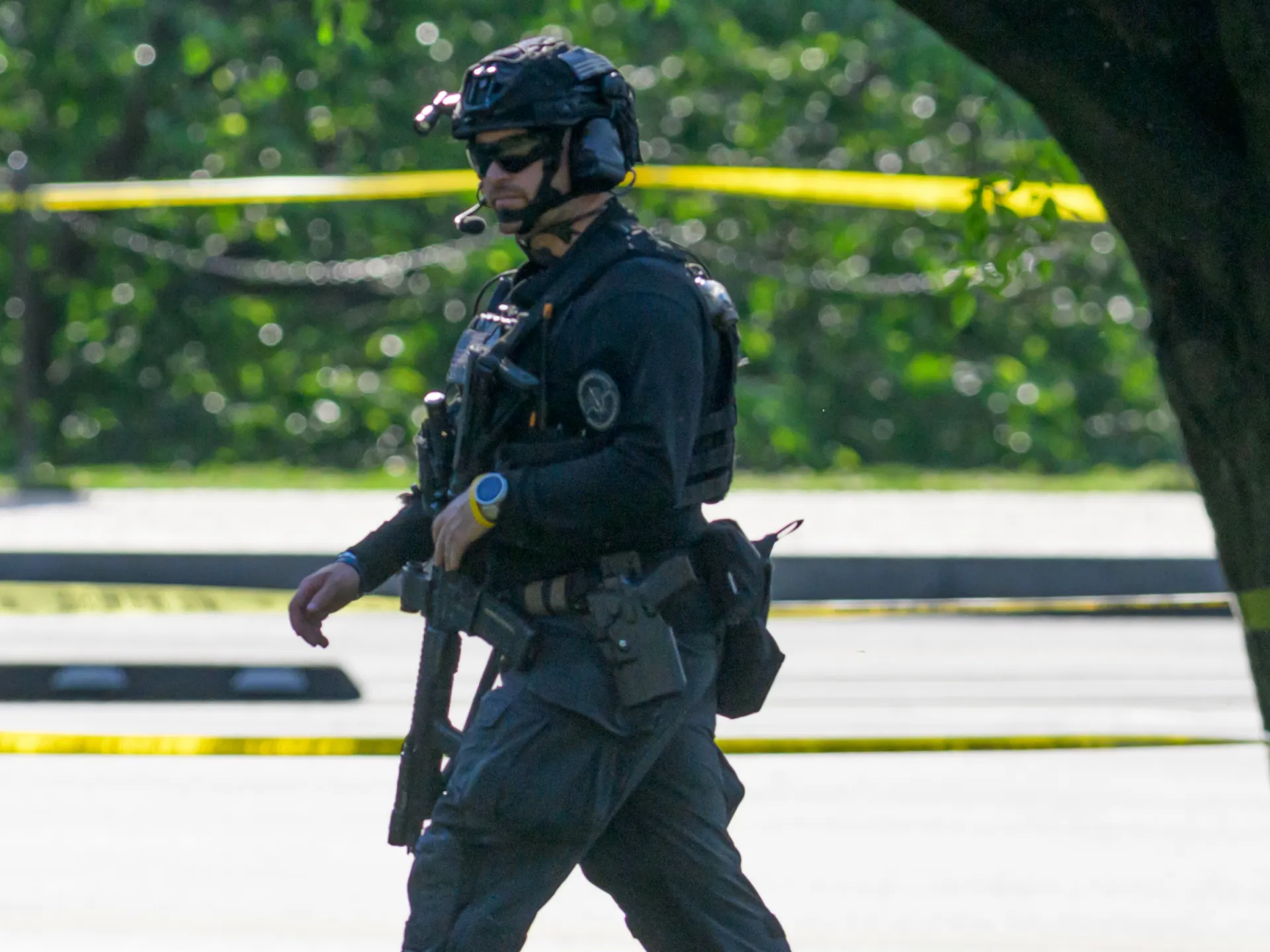
“I reached for my phone as soon as I could and started shooting video to capture as much of the moment as I could,” said Sara Cook, a CBS News producer and press association board member seated on the dais near the president, First Lady Melania Trump and Vice President JD Vance, who were hustled out while a SWAT team swarmed the stage.

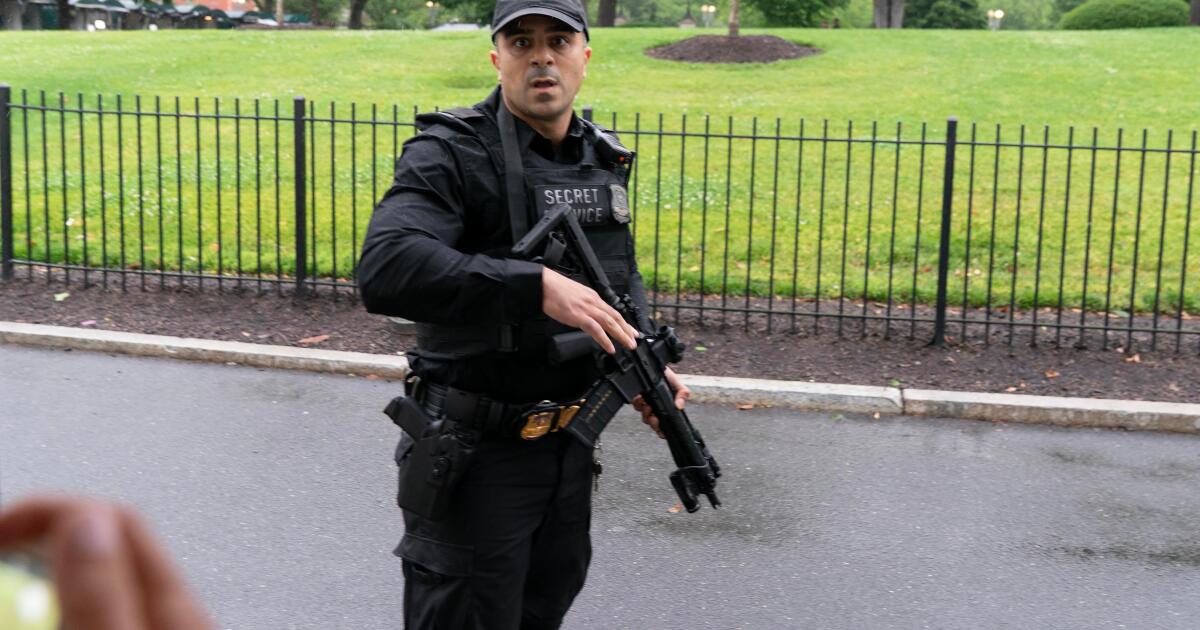
“I could hear Secret Service officers saying, ‘Where is it coming from?’” Cook said. “They seemed to be quite confused onstage about exactly what was happening, where the threat was coming from and if there still was a threat.”

Authorities identified the suspect as Cole Tomas Allen, a 31-year-old teacher from Torrance. He was apprehended after rushing a security checkpoint one floor above the ballroom. Law enforcement officials said Allen was armed with a shotgun, a handgun and multiple knives.

After guests were told the evening program would not proceed, many of the TV anchors and correspondents in the crowd headed to their Washington studios. Many didn’t wait. CNN’s Wolf Blitzer, who was returning from a restroom on the floor where the incident occurred, delivered an eyewitness account from the Hilton lobby using a Webex app on a smartphone.

There was at least one fog-of-war moment as well. CNN anchor Kaitlan Collins reported on air that the armed suspect was killed by the Secret Service, attributing it to security for Education Secretary Linda McMahon. She had to correct the report after Fox News said Allen was alive and detained by agents.

“CBS Evening News” anchor Tony Doukopil and CBS News editor-in-chief Bari Weiss walked several blocks from the Hilton to waiting vehicles that took them to the network’s offices and studios on M Street. (Weiss granted a reporter’s request to go behind the scenes to observe the news-gathering operation.)

Four people around a desk.

Matt Gutman, Nancy Cordes, Tony Dokoupil and Bari Weiss at the CBS News Washington bureau on April 25, 2026.

When Doukopil and Weiss arrived at the bureau, CBS News national correspondent Matt Gutman and Nancy Cordes, chief White House correspondent, were already on the air with a special report, showing video shot by its journalists in the ballroom.

Doukopil joined his colleagues, all still dressed in formal wear, and took over the coverage. The newsroom soon filled with executives and producers arriving from the Hilton, several dressed in long gowns and carrying their high-heeled shoes.

CBS News President Tom Cibrowski stood over a large multiview screen, monitoring his network’s broadcast alongside the competition.

When Cibrowski was on the floor of the ballroom when the commotion began, he texted his family to let them know he was OK. He then called David Reiter, the executive producer of special events for CBS News, to alert him that they would be breaking into regular programming on the network, a rarity lately with so many 24-hour news sources available.

Reiter left his seat at a Broadway show and headed to the CBS News studios on the west side of Manhattan to get the feed on the air.

Weiss walked over to the Washington set and consulted with Doukopil, Cordes and Gutman during a break, providing a bipartisan list of government officials and activists who were subjected to politically motivated violence in recent years. She settled in at a workspace to turn out a memo to staff, acknowledging the rapid work of getting its images from inside the ballroom on the air.

“This is what we do,” wrote Weiss, a digital entrepreneur who has dealt with criticism over her lack of experience in TV news since taking on her high-profile role in October. “Most importantly, we are thankful that everyone is safe.”

Later, she led a lengthy meeting to plan further coverage, which included Norah O’Donnell interviewing Trump for Sunday’s edition of “60 Minutes.”

After Doukopil finished his special report, he was off to prepare a segment to air on “CBS Sunday Morning.”

“It’s very strange to go from drinking wine to drinking coffee,” Dokoupil said as he departed the set.

Every journalist in the ballroom left with a story.

Tom Llamas, anchor of “NBC Nightly News,” was seated next to Secretary of State Marco Rubio when Secret Service agents pulled Rubio and his wife away as White House officials were evacuated. Llamas had to alert the agents that another, less high-profile Cabinet member, Energy Secretary Christopher Wright, and his wife were at the table as well.

Llamas made his way from the hotel to the NBC News bureau with “Meet the Press” moderator Kristen Welker and veteran Washington correspondent Andrea Mitchell. The anchor took over the network’s special report and felt compelled to explain his attire.

A man in a tuxedo and bow tie.

“NBC Nightly News” anchor Tom Llamas reports on the shooting at the dinner on April 25, 2026.

“It is unusual to come on the air in a tuxedo, but this is a very unusual night,” he told viewers.

Llamas praised the performance of his peers who have seen the image of their profession take a beating in recent years.

“There was a while there, we did not know what was going on,” he said. “For all the crap that is written about our industry, I saw people jump into action immediately, and it was incredible. I was proud of all my colleagues.”

The canceled dinner created a predicament for MS NOW and NBC News, which both planned lavish after-parties late Saturday evening. Many of the big-name on-air talent stars and executives expected to attend were working on the story.

After a half-hour of deliberations, both networks decided their parties would go on. But planned stunts for the MS NOW soiree at DuPont Underground — such as a performance by a university drum line — were scrapped.

NBC’s event at the home of the French ambassador was billed as “The After Party.” A text message told attendees to expect a more subdued affair described as “a gathering for people who wanted to convene, eat and drink and be with community.”

Privately, one network executive explained why the festivities moved forward. “Nobody died,” he said.

Source link

Shooter’s path to White House press gala prompts security questions

An attack on the White House correspondents’ dinner by a gunman who came within feet of the ballroom where President Trump sat raised immediate questions about the night’s security protocol — and the future of large, high-profile events in a country with easy access to firearms and increasingly high political tensions.

The man breached metal detectors in front of the Washington Hilton ballroom and sprinted dozens of feet ahead before exchanging fire with federal agents. Shots were fired in an anteroom that had not an hour before seen thousands of guests, including senior government officials, streaming through.

A manifesto allegedly written by the suspect described his targets as members of the Trump administration, ranking from the highest to the lowest — but said he was willing to “go through” any guest standing in his way in order to kill the president’s aides.

The attempted attack on a room full of dignitaries underscored domestic unrest in Trump’s second term and deepened questions about how to effectively create security in a modern era of lone actors, online radicalization and mass shootings. It was the third known time an attempted assassin has come close to Trump since his 2024 presidential campaign began.

Acting Atty. Gen. Todd Blanche on Sunday called the U.S. Secret Service response a “massive security success story.” But within hours of the incident, bipartisan leaders of the House Oversight Committee demanded a hearing on the agency’s security plans for the dinner.

In the manifesto sent to his family, the alleged gunman, Cole Tomas Allen, of Torrance, marveled at a lack of security.

“No damn security. Not in transport. Not in the hotel. Not in the event,” he wrote. “I walk in with multiple weapons and not a single person there considers the possibility that I could be a threat.”

The Hilton, in a ritzy Washington neighborhood, has long hosted the White House correspondents’ dinner. It is the same hotel where President Reagan and three others were shot in 1981.

The shooting caused terror among guests, some of whom noted they had expected more security to enter the event and Trump was whisked offstage within the first minute of shots being fired. While the event has traditionally hosted sitting presidents in the past, Trump’s decision this year to appear for the first time since taking office made the event particularly high profile.

His presence, alongside Vice President JD Vance and much of the Cabinet and line of succession, brought with it added security protocols and personnel — raising questions over whether the storied dinner and its guests of congressional members, diplomats and mid-level officials would have been even more susceptible to attack without Trump in attendance.

Trump on Sunday said it is “tough” to secure a hotel in the middle of a city with “buildings all around and hotel rooms on top,” but praised the Secret Service and law enforcement officers. One officer was shot, not fatally.

Talking to reporters after the incident Saturday night, Trump swiftly likened it to the attempt on his life by a gunman in Butler, Pa., during the 2024 presidential campaign, and suggested that it justified his controversial plans to construct a fortified ballroom on the White House grounds. He called the hotel “not a particularly secure building,” though he later said the room was “very, very secure.”

Plans to reschedule the dinner are under review. White House Correspondents’ Assn. President Wiejia Jiang of CBS News said the organization’s board would meet to assess what had happened.

Blanche said Sunday an investigation into what had happened was ongoing. He had attended a reception before the dinner on the first floor of the hotel hosted by CBS News, one of many that did not require any security check by law enforcement authorities.

“The first takeaway, or the takeaway that should be obvious, is that the system worked. And that we stopped the suspect, and we stopped him as soon as he tried to do what he was trying to do,” Blanche said on NBC’s “Meet the Press.”

But the attack raises a question about whether presidential security protocols are effective for modern tactics, or whether the country is “in a new domain” in which those procedures no longer meet the nature of the possible threats, said Neil Shortland, director of the Center for Terrorism and Security Studies at the University of Massachusetts Lowell.

Federal investigators should examine what the security policies were, what type of attacks they were designed to prevent, and whether that protocol was out of date, Shortland said.

“Did you follow the policy is a great question,” he said. “Was the policy correct in this modern day and for this modern situation is a separate question.”

The country is facing “the most complex threat environment in our nation’s history,” particularly from lone actors who are often radicalized online, Sam Vinograd, a former official at the Department of Homeland Security, said on CBS’ “Face the Nation.”

“It can be true that law enforcement and intelligence professionals prepared exhaustively for last night,” she said Sunday. “But it can also be true that in this moment, in this security environment, the paradigms of the past may not be sufficient to meet the moment.”

That raises the “need to rethink what it is going to take to actually secure these mass gatherings,” she said.

Trump appeared to voice the same idea Saturday evening, telling reporters, “Today, we need levels of security that probably nobody’s ever seen before.” He went on to say that “this is why we have to have” the East Wing ballroom, which he described as drone-proof and having bulletproof glass.

Kris Brown, president of the gun control organization Brady — which is named after Reagan’s press secretary, James Brady, who was shot in the 1981 attack — said lawmakers should instead consider passing legislation to help prevent gun violence.

“Not every public event can take place in the ballroom, in that kind of protection — nor can we afford to live in a society where our solution to gun violence is to barricade our public officials, our children, away in fortresses,” Brown said.

About 2,000 journalists, dignitaries and other guests attended the event, rushing through rain to enter using multiple hotel entrances. They were asked to show their tickets as they walked past security guards, but there was no check-in procedure or ID check. A Times reporter was waved toward the entrance without showing a ticket as she tried to get it out of her purse.

Inside, guests milled about on multiple levels where pre-dinner receptions were occurring. Hotel guests mingled with the crowd, granted full access to the hotel’s amenities, including its boutiques and restaurants.

Two protesters briefly took over a small red carpet where guests were lined up to take professional photos; Times reporters saw a third woman dressed in a formal gown and shouting protest slogans being escorted out by security guards after apparently having entered the event.

Guests were required to flash their tickets to go down an escalator to the ballroom level, then present the ticket before walking through metal detectors and having bags searched ahead of the ballroom entrance.

Allen, who had reserved a room as a hotel guest, said in his manifesto obtained by the New York Post that security was far less stringent than he had expected. Two U.S. officials told The Times that the contents of the manifesto are authentic.

“I expected security cameras at every bend, bugged hotel rooms, armed agents every 10 feet, metal detectors out the wazoo. What I got (who knows, maybe they’re pranking me!) is nothing,” he wrote.

He noted that security guards appeared to be focused on protesters and arrivals outside, writing, “apparently no one thought about what happens if someone checks in the day before.”

It is possible that steps to further restrict access to the ballroom level, keep guests away from the event location and check attendees’ identities outside could have provided additional security, said Erin Kearns, director of law enforcement partnerships at the National Counterterrorism Innovation, Technology and Education Center.

“The lesson that can be taken away is just thinking about how to harden and strengthen security at future events when you have so many high-profile people,” she said.

The hotel was a “soft target” with a makeshift perimeter, and there were “almost zero intervention points” where the shooter could have been apprehended before arriving, Shortland said. That was partly because he traveled by train, which does not have security screenings.

Authorities should also examine whether Allen was known to authorities and, if so, whether intelligence operatives could have pieced together his train travel and arrival in the president’s orbit, Shortland said.

The attempted shooting added to a growing list of instances of political violence in the United States. Last year, one Minnesota state legislator and her spouse were killed by a gunman while another lawmaker and his wife survived; the conservative activist Charlie Kirk — whose wife, Erika, was in attendance Saturday — was shot and killed at a speaking event; an arsonist attacked the residence of Pennsylvania Gov. Josh Shapiro.

Some of that violence has been directed toward Trump, something he frequently talks about. He was injured in the Butler incident, but has used his survival to argue that God saved him so he could become president. Two months later, a Secret Service agent shot at a gunman pointing a rifle on Trump’s golf course as the president golfed.

On Feb. 22, an armed man was shot and killed after entering the secure perimeter around Trump’s Mar-a-Lago home, when the president was in Washington.

“It’s always shocking when something like this happens. It’s happened to me a little bit,” Trump said Saturday.

Source link

White House Correspondents’ Dinner Shooting Puts Trump’s Security Back in the Spotlight

The shooting of a Secret Service agent at the White House Correspondents’ Association dinner on Saturday night has raised concerns about the safety of political leaders amid rising political violence. Despite hundreds of agents from various law enforcement agencies being assigned to secure the event, a suspect armed with a shotgun and other weapons was able to approach just one floor above where prominent figures, including President Donald Trump, Vice President JD Vance, and several cabinet members, were dining.

The alleged gunman, who carried a shotgun, a handgun, and knives, was reportedly staying at the Washington Hilton hotel, where the dinner took place. Trump’s remarks following the incident highlighted the dangers of his role, noting the hotel is “not particularly a secure building. ” This vulnerability is concerning given recent assassination attempts against him during the 2024 presidential campaign.

Attendees had to pass through metal detectors at the ballroom, but only needed tickets to access the hotel, which was open to other guests. Many attendees faced demonstrators protesting the Trump administration’s policies. Video footage showed the gunman rushing past a security checkpoint before shooting the agent, after which he was tackled and arrested by officials.

Inside the ballroom, guests were dining when gunshots were heard. Secret Service agents quickly acted to protect Trump and Vance, while security responses varied for other officials, with some agents forming shields and others reacting differently. The timing for evacuating protectees differed, with some leaving almost immediately and others remaining longer. Trump, who has faced close calls with violence in the past, later acknowledged that carrying on with the event was not feasible after the attack.

With information from Reuters

Source link

Trump returns to White House after shooting at Correspondents Dinner

April 25 (UPI) — President Donald Trump returned to the White House after a shooting incident at the White House Correspondents’ Association Dinner in Washington, D.C.

There was a shooting incident near the main security screening area at the Washington Hilton, with one person in custody as law enforcement assesses the situation, Anthony Guglielmi, chief of communications for the U.S. Secret Service, said in a statement.

All protectees, Guglielmi said, are safe, including the president, first lady and members of the Cabinet who were at the dinner.

Trump said in a post on Truth Social that he wanted to return to the dinner and for the “SHOW TO GO ON,” but security insisted that they leave the hotel and return to the White House.

“Law Enforcement has requested that we leave the premises, consistent with protocol, which we will do immediately,” Trump posted about an hour after the incident.

“The First Lady, plus the Vice President, and all Cabinet members, are in perfect condition,” Trump posted. “I have spoken with all the representatives in charge of the event, and we will be rescheduling within 30 days.”

An announcement in the ballroom mirrored Trump’s announcement about rescheduling the dinner for next month.

The FBI confirmed that the suspect is in custody in a statement.

The suspect has been taken to the hospital, as has a Secret Service agent who was injured, The Washington Post reported.

Trump also said he would give an update from the press briefing room at the White House later this evening.

Dinner was being served at the annual gathering of the Washington press organization when shots could be heard from the ballroom before Trump was evacuated by security, according to video of the event.

President Trump, Melania Trump and other members of the administration on the dais and in the ballroom were evacuated within minutes of shots being heard over C-SPAN and other networks broadcasts.

As the officials were cleared from the room, Secret Service agents swarmed it and ordered other guests to stay in their seats.

Most of the other guests remained in the ballroom after organizers made an announcement that the show would continue shortly.

There was also speculation whether Trump would return to the dinner after the announcement the show would continue and the Presidential Seal was not immediately removed from the podium on the dais.

C-SPAN reported that waiters started to clear the salad portion of dinner as guests started to open wine while waiting for more information about the situation before the announcement that the dinner is going to be rescheduled.

This is a developing story. Please check back for updates.

Source link

Trump rushed off stage at White House Correspondents’ Assn. dinner; reports of gunshots

President Trump was evacuated from the White House Correspondents’ Assn. dinner on Saturday evening after an incident led to a security response and reports that gunshots were fired.

A Times reporter attending the dinner was forced to shelter in a restroom. He said he heard about four to five gunshots around 8:30 p.m. Eastern time. He said security told him that the person may have had a firearm. It was unclear whether the person was dead or wounded.

Guests mingle in a room

Guests at the White House Correspondents’ Assn. dinner mingle while awaiting updates about a shooting during the event at the Washington Hilton Hotel on Saturday.

(Andrea Castillo / Los Angeles Times)

A presidential motorcade was spotted outside the Washington Hilton hotel at about 8:45 p.m., though Trump’s location is yet unknown.

At about the same time, an ambulance arrived on scene as about 100 event attendees were escorted out of the secured event. The bulk of the attendees are still inside the hotel.

This is a developing story and will be updated.

Source link

Trump evacuated from the White House correspondents’ dinner | Donald Trump News

BREAKING,

The US president was escorted out from the event at a Washington DC hotel by his secret service agents.

United States President Donald Trump has been evacuated from the White House correspondents’ dinner at a hotel in Washington, DC, by his secret service agents.

The evacuation on Saturday evening came after loud sounds were heard inside the banquet hall of the Washington Hilton, where the event was taking place.

Footage from the scene showed Trump and attendees taking cover after the loud noise, after which the US president was led away. Heavily armed agents then take over the head table.

More soon…

Source link

After years of avoidance, Trump to attend first White House press dinner | Donald Trump News

Washington, DC – Donald Trump — whose political career has been built, in part, on deriding the United States press — is set to attend his first White House Correspondents’ Dinner as president.

Saturday’s event continues a decades-long tradition, dating back to 1921. Still, the black-tie gala held in Washington, DC, remains a divisive event.

Recommended Stories

list of 3 itemsend of list

For years, detractors have argued its chummy approach to the presidency risks blurring the independence of the press corps.

Trump himself is one of the dinner’s critics. Until this year, Trump had refused to attend, appearing poised to defy a tradition of sitting presidents dining at least once with the press corps during the annual event.

Since he launched his first presidential campaign, Trump has taken a bellicose approach towards the media, issuing both personal attacks on journalists and lawsuits against news organisations for coverage he deems unfair.

His presence at Saturday’s dinner has only heightened questions about the event’s role in the modern era.

Trump has previously declined five previous invitations to attend, across his first and second terms. His inaugural visit on Saturday has been accompanied by changes to the dinner’s format: Most notably, the longstanding practice of having a comedian perform has been nixed.

Journalist organisations and rights groups, meanwhile, have called on the event’s host, the White House Correspondents’ Association (WHCA), to send a “forthright message” to the president about protecting the freedom of the press.

“We also urge the WHCA to reaffirm, without equivocation, that freedom of the press is not a partisan issue,” a coalition of groups, including the Society of Professional Journalists, wrote in an open letter.

A return for Trump?

Saturday is set to be the first time Trump attends the correspondents’ dinner as president, but it is not his first time attending the event.

He was present as a private citizen at the 2011 dinner, years before launching his first successful presidential campaign.

At the time, Trump had begun his foray into national politics, pushing the so-called “birtherism” theory: the racist claim that then-President Barack Obama was born in Kenya and had faked his US birth certificate.

It is tradition for the sitting president to speak at the event, and Obama seized the moment to lob barbs at Trump’s conspiracy theories and his nascent political career.

In one instance, Obama poked fun at Trump’s work hosting the reality television show The Apprentice.

Referring to Trump’s “firing” of actor Gary Busey, Obama mockingly praised his decision-making. “These are the kind of decisions that would keep me up at night,” he quipped. “Well played, sir.”

Obama also envisioned what a future Trump presidency would look like, displaying a mock-up of a “Trump White House Resort and Casino”.

Comedian Seth Meyers, who hosted the night’s event, also took aim at Trump’s birtherism claims and political ambitions.

“Donald Trump has been saying that he will run for president as a Republican,” he quipped at one point, “which is surprising since I just assumed he was running as a joke.”

Trump sat stone-faced in the audience, with several confidants later crediting the night as a major motivator for his 2016 presidential bid.

The White House Correspondents’ Association was launched in 1914, as a response to threats by then-President Woodrow Wilson to do away with presidential news conferences. The organisation has worked to expand White House access for reporters.

Comedians became mainstays of the annual dinner in the early 1980s, with both presidents and journalists often the subject of their pointed jokes.

Defenders of the event have argued that the presence of comedians helps to celebrate free speech and ground the black-tie proceedings, underscoring that no attendee is above ridicule.

But since President Trump first declined to attend the event after taking office in 2017, that norm has shifted.

Michelle Wolf’s no-holds-barred performance in 2018 is often seen as a breaking point.

In her jokes, she seized upon Trump’s past statements appearing to praise sexual assault, and she charged that Trump did not have a “big enough spine to attend” the event. She also mocked the mainstream media’s coverage of the president.

While praised by fellow comedians and some members of the press, her performance divided the White House press corps. Trump and his top officials took particular issue with the material, with the president decrying Wolf as “filthy”.

The following year, the association instead invited historian Ron Chernow to speak at the event. The dinner did not have another comedian until 2022, during the administration of US President Joe Biden.

Last year, during Trump’s first term back in office, the association abruptly cancelled a planned performance by comedian Amber Ruffin, with the board’s then-President Eugene Daniels saying it wanted to avoid “politics of division”.

This year, a mentalist, Oz Pearlman, is set to perform instead of a comedian.

Calls for press freedom

The Society of Professional Journalists, Freedom of the Press Foundation, and The National Association of Black Journalists are among the organisations and hundreds of individual journalists urging their colleagues to use the event to make a statement.

In an open letter, it said the actions by the Trump administration “represent the most systematic and comprehensive assault on freedom of the press by a sitting American president”.

The organisation pointed to a series of hostile actions the Trump administration has taken against journalists.

They include limiting the White House and Pentagon press pools, threats by the Federal Communications Commission against broadcasters, immigration enforcement actions against non-citizen journalists, and an FBI raid of a Washington Post reporter’s home.

The letter also pointed to the White House’s launching of a “hall of shame” page on its website, which highlights news organisations accused of biased coverage, as well as Trump’s repeated verbal attacks on reporters.

But the Trump administration has rejected allegations that it treats journalists unfairly or that it has prevented public access to information.

White House spokesperson Karoline Leavitt, for example, has regularly touted Trump as the “most transparent” president in US history, pointing to his regular media events.

During his second term, Trump has also taken spur-of-the-moment phone interviews from reporters, even amid the US-Israeli war in Iran.

In their letter, the journalists and professional organisations note that some attendees on Saturday plan to wear pocket handkerchiefs or lapel pins with the words “First Amendment”.

The pins reference the section of the US Constitution that protects freedom of speech and freedom of the press.

But the journalists called on the White House Correspondents’ Association to go further and make it clear that it will not “normalise” Trump’s behaviour — “but instead fight back against any officeholder who has waged systematic war against the journalists whose work the dinner celebrates”.

Source link

DeSantis signs Florida law banning local DEI funding, says white men are ‘disfavored’

White men have been discriminated against through diversity, equity and inclusion programs, Florida Gov. Ron DeSantis said Wednesday after signing legislation which prohibits counties and cities from funding or promoting DEI initiatives.

The Republican governor defined DEI at a news conference as “an ideological construct that is designed to promote a particular political agenda, particularly to the detriment of disfavored groups.”

“The disfavored groups, No. 1, obviously, would be white males, and I think they’ve been discriminated against,” DeSantis said in Jacksonville. “And it’s like a lot of people are, ‘Oh that’s fine. That’s fine.’ No, it’s not fine. It’s wrong.”

While the governor is entitled to his opinion, his views differ from “everyone else’s,” said Evelyn Foxx, president of the NAACP branch in Gainesville.

“If you talked to 100 white men, they wouldn’t feel the same way” as DeSantis, Foxx said when asked Wednesday about his comments. “The governor is out of touch with people, and that is the bottom line.”

Supporters say the purpose of DEI is to remedy the effects of long-term discrimination against certain groups. A nationwide push by conservatives to limit diversity programs has led many companies, schools and governments to pull back on those initiatives, particularly during the current Trump administration, and DEI has been a frequent target for the governor.

DeSantis also said Wednesday that Asian Americans had faced discrimination in university admissions and that people should be judged on their merits. During his two terms in office, DeSantis’ administration has championed legislation which prohibits public colleges and universities from spending money on DEI programs and promoted the “Stop WOKE Act,” which restricts how race and sex are taught in schools.

Democratic lawmakers have warned that the legislation was overbroad and potentially unconstitutional.

Under the legislation, residents can sue local governments for violations. If local officials are found to have funded DEI initiatives in violation of the law, they can be removed from office.

“When people know there is accountability, they are much more apt to toe the line,” DeSantis said.

Schneider writes for the Associated Press.

Source link

White House infighting gets very public and very profane

President Trump and his aides frequently complain about back-biting leaks from within the White House. But on Thursday, the infighting was out in the open, live on television.

The incoming communications director, Anthony Scaramucci, in a morning phone call broadcast on CNN, compared the West Wing to a fish that “stinks from the head down,” implying that White House Chief of Staff Reince Priebus is responsible for at least some of the leaks.

“There are people inside this administration who think it’s their job to save America from this president,” Scaramucci said.

Another Trump advisor, Kellyanne Conway, used a prison analogy for the broader backstabbing, telling Fox News that her White House colleagues were using “the press to shiv each other.”

Later, White House Press Secretary Sarah Huckabee Sanders declined to come to Priebus’ defense and say whether Trump has full confidence in his chief of staff.

While the discord might suggest a new level of chaos in a White House known for it, the style is all Trump. As a businessman, he has a history of fostering rivalries among his employees.

“He always did sort of like competition, backstabbing, infighting kind of stuff,” said Barbara Res, who spent nearly two decades as a top executive in Trump’s real estate business. “He set people up to do that.

“He’d pick the winner and blame the loser,” she added.

As president, he hasn’t changed. As Sanders told reporters: “The president likes that kind of competition and encourages it.”

Trump led the charge this week, using his Twitter account and an interview with the Wall Street Journal to ridicule his attorney general, Jeff Sessions, one of Trump’s first and most prominent campaign supporters. By Thursday, both Priebus and Secretary of State Rex Tillerson were seeing their fates publicly deliberated as well, less than a week after Press Secretary Sean Spicer was forced out after months of speculation and presidential slights.

The Priebus intrigue was amplified by Scaramucci on Twitter and in the CNN interview. He blamed Priebus for leaking Scaramucci’s personal financial disclosure forms — forms that are publicly available — and suggested that Trump encouraged his attack on Priebus in a phone conversation the two men had just had before Scaramucci dialed in to CNN.

Later Thursday, New Yorker magazine writer Ryan Lizza reported that Scaramucci, in a profanity-laden phone call to him Wednesday night, referred to Priebus as a “paranoid schizophrenic” who had blocked him from the White House for six months. He accused White House strategist Stephen K. Bannon of seeking to “build [his] own brand off the … strength of the president,” and he claimed to have evidence from the FBI about who in the White House had been leaking information fueling derogatory stories about Trump.

Infuriated that someone had told Lizza about a dinner that night at the White House, Scaramucci demanded to know the reporter’s source and said he would “eliminate everyone in the comms team and we’ll start over,” unless Lizza told him.

Priebus has declined to engage publicly. But hours after Scaramucci first aired his side in the two men’s strife, Sanders called it “healthy competition.”

The result of all the drama is a White House that increasingly resembles the set from the president’s former way of life, as the star of a reality TV show. His aides’ cable television appearances recall the “confessionals” familiar to fans of the genre, in which contestants look directly at the camera to confide their anger or enmity toward others on the show.

“The primary attribute for a successful tenure in the Trump White House is masochism,” tweeted Rick Wilson, a longtime Republican operative and Trump critic.

The repeated evidence of dysfunction and the high level of insecurity among Trump’s core aides help explain the White House’s inability to focus on its agenda.

Trump’s critics suggested the public staff blow-up was a deliberate distraction from several controversies — the struggle in Congress to pass a healthcare bill, ongoing investigations into potential collusion between his campaign and Russia, and the blowback from Republicans and others to Trump’s surprise Twitter announcement on Wednesday that transgender people will be barred from military service.

But those issues also were being heavily covered on cable news. The stories that were overshadowed were those the White House was trying to promote this week: a deal the administration helped strike with Taiwanese tech giant Foxconn to build a production facility in Wisconsin, creating thousands of new jobs, and nascent efforts to craft a tax overhaul plan.

“Right now, the president is operating the White House by himself,” relying on only a few aides, including Scaramucci, said Barry Bennett, a former Trump campaign advisor who maintains contacts in the White House.

It’s Scaramucci’s “natural inclination to go after Reince, and he’s not getting any kind of halt sign,” Bennett added. “One of them is not going to make it.”

The tension between Scaramucci and Priebus was widely known for months behind the scenes, as Scaramucci came to believe Priebus sabotaged his early attempts to join the Trump administration. Priebus, in turn, was miffed as Scaramucci recently edged aside Sean Spicer, his closest ally in the White House, as press secretary.

Trump has given Priebus little comfort. During Wednesday’s White House announcement about the planned Foxconn facility in Wisconsin on Wednesday — a deal that Priebus, a Wisconsin native, helped secure — Trump failed to recognize him even as the president praised the state’s governor, congressional delegation and other members of his Cabinet who came to the East Room event.

Scaramucci joins a cadre seen by some West Wing officials as “enablers” who encourage Trump’s most defiant and often self-defeating impulses, a group that notably includes Bannon.

In many ways Trump is his own chief of staff, and he’s not a very good one.

— David B. Cohen, political science professor, University of Akron

In recent months, on foreign policy in particular, Bannon has taken a step back as a faction of so-called “realists” — or, as Bannon likes to call them, “globalists” — including Trump son-in-law Jared Kushner, daughter Ivanka Trump and economics advisor Gary Cohn have held sway.

But Trump’s surprise announcement on Twitter on Wednesday morning of a ban on transgender troops, which blindsided Pentagon leadership, showed that the “realists” only have so much power to rein in the president.

Sanders defended Trump’s controversial speech at the Boy Scouts national jamboree on Monday night, a campaign-style event that prompted an apology from the organization’s chief executive on Thursday for the partisan tenor of the president’s address.

“I saw nothing but roughly 40,000 to 45,000 Boy Scouts cheering the president on,” Sanders said Thursday.

David B. Cohen, a political science professor at the University of Akron who has studied the role of the White House chief of staff, said many administration problems stem from Priebus’ lack of power to help set Trump’s agenda and manage the staff members competing for his attention.

“In many ways Trump is his own chief of staff, and he’s not a very good one,” Cohen said.

The fact that Scaramucci was hired last week over Priebus’ objections and reports directly to Trump, Cohen said, “shows that Priebus has been effectively neutered in the West Wing.”

Scaramucci seems eager to fill any void. But as other Trump aides have learned, the glow of the president’s affection is seldom permanent.

One Republican in regular contact with the White House, who asked for anonymity to preserve his access, said of Scaramucci, “What got him there was … being an effective counterpuncher. But at a certain point, you become at risk of becoming the punching bag.”

Sessions, who gave up a secure Senate seat to become Trump’s attorney general, learned that lesson over the last week as Trump began openly expressing his frustrations, objecting to Sessions’ recusal from the Russia investigation, which the president believes led to the appointment of special counsel Robert S. Mueller III.

Sessions said again on Fox News on Thursday that he intends to stay in the job if Trump does not fire him. Trump’s humiliation of Sessions lately has aroused more open complaints from congressional Republicans than any presidential action to date.

Sen. Lindsey Graham of South Carolina warned that “there will be holy hell to pay” if Trump fires Sessions. Any attempt to get rid of Mueller, Graham added, could be “the beginning of the end of the Trump presidency.”

brian.bennett@latimes.com | @byBrianBennett

noah.bierman@latimes.com | @noahbierman

ALSO

GOP senators seem ready to pass Obamacare repeal bill – as long as it never becomes law

Chairman of the Joint Chiefs says Pentagon has not banned transgender soldiers — for now

Adam Schiff, President Trump and the serendipity of slander


Source link

I went on a tropical island cruise with rainforest hikes, white sand beaches… and Yorkshire tea on tap

SUNDAY may be a day of rest in Europe, but that’s not the case for Puerto Rico. 

The shops were shut, but the city of Ponce was very much awake.  

St Thomas, one of the US Virgin Islands, where you can snorkel in the crystal-clear water of Magens Bay Credit: Getty
In the city of Ponce men play a leisurely game of dominoes in the main square Credit: Jenny Green
Ponce is an Art Deco delight Credit: Getty

As I wandered the streets, locals cruised past in their vintage cars, music blasted from lively bars and groups of youngsters burst into spontaneous dance on the streets. 

In the main square, families strolled past colourful murals and beautiful yet crumbling Art Deco buildings, while old men put the world to rights over a leisurely game of dominoes in the main square. 

Ponce (pronounced Pon-say) was the last stop on my Tropical Isles cruise onboard the recently refurbished Marella Discovery. 

It’s a new port for Marella so, like ­Christopher Columbus — who discovered the Caribbean island of Puerto Rico back in 1493 — I was excited to be one of the first people to explore. 

BEST BAR NONE

Enjoy the full F1 Grand Prix plus cruise experience for under £2,000


TAKE THE MEDS

Spanish GP and cruise to Ibiza on 11-night adventure from just £2,149pp

Week-long sailings start and finish in La Romana, in the Dominican Republic, calling at the nearby nature reserve of Isla Catalina, the Puerto Rican capital of San Juan and the US Virgin Islands of St Thomas and St Croix. 

Now I’ve been lucky enough to visit the Caribbean a few times before, but I was still surprised by how green these islands were.  

The Marella Discovery Credit: Supplied
Puerto Rico’s El Yunque National Forest Credit: Getty
Dominican Republic’s Isla Catalina Credit: Supplied

And while this itinerary gave me plenty of opportunity to sunbathe on white-sand beaches and sample local rum (I recommend Ron del Barrilito), I was still able to go hiking in the rainforest and kayak through beautiful coves. 

Staying active is something I would definitely recommend on a Marella cruise — not just because you’ll miss out on amazing experiences if you don’t, but because you’ll need to burn off all the extra calories you’re bound to consume on board. 

With nine restaurants and seven bars spread over 11 decks, you certainly won’t go hungry or thirsty — especially as Marella cruises are all-inclusive as standard.  

This means your flights, cabin, transfers to and from the ship, drinks, food and entertainment are all included in the price. 

Even your bags go straight from your home airport to your cabin door so you don’t have to worry about collecting them from a carousel or lugging them around. 

Compared to other cruise ships, Marella Discovery is quite small, accommodating up to 1,800 passengers.  

It’s really set up for British tourists, though, with Yorkshire Tea on tap and dishes such as steak and ale pie readily available in the excellent Islands buffet. 

Passengers can find their way out of an escape room on the ship Credit: Supplied
Jenny pictured at Magens Bay Credit: Jenny Green
Catch a West End style-show at the Broadway Show Lounge Credit: Unknown

Entertainment-wise, passengers can find their way out of an escape room, play a round of mini-golf or enjoy a musical afternoon tea. Plus there are West End-style shows, quizzes and gameshows galore. 

For better-quality booze and speciality ­coffees, you can upgrade to a Premium All Inclusive package, while speciality restaurants, including the Surf & Turf Steakhouse and Sushi Bar, come at an extra charge. 

But be sure to leave room for some traditional Caribbean delicacies when you leave the ship. At Café Manolin, in San Juan, I joined locals queuing to tuck into giant plates of mofongo, a much-loved Puerto Rican dish of fried green plantain stuffed with meat or veggies. 

Coffee is also big business here — and almost as popular as rapper Bad Bunny, who hails from the island.  

Many coffee plantations welcome visitors to sample their wares but I got my caffeine fix at Hacienda Jacana, in the mountainous region of Adjuntas, where owner Jonathan and his ex-cop father proudly showed off their farm while explaining details of the coffee-making process. 

I was buzzing after a few cups of their delicious Latitude 18° coffee — but it couldn’t possibly compare to the buzz I got in St Thomas after snorkelling with a group of green turtles in the crystal-clear water of Magens Bay. 

Granted, I had to keep reminding myself that I wouldn’t die if I tried to breathe ­normally underwater, but I forgot all about breathing when a metre-long turtle paddled right past my face. Just wow. 

As an animal lover, and a keen traveller missing my two dogs back home, I was also thrilled to stumble across the Ruff Night — Hair Of The Dog Bar in St Croix (pronounced Croy), just steps from where Marella Discovery docked in Frederiksted.

The lively bar, in the courtyard of the Victoria House Inn, is run by volunteers from the Ruff Start STX animal charity who love nothing more than mixing super-strong cocktails and bringing in puppies for punters to cuddle.  

And if that’s not reason enough to visit, all money raised from the bar goes directly to local dogs in need, so go armed with plenty of cash in your pocket! 

I’d certainly worked up a thirst after a morning kayaking in the nearby Salt River Bay, and I enjoyed getting back to nature there almost as much as I did at El Yunque National Forest — the jewel in the crown of Puerto Rico. 

The 28,000-acre site is the only tropical rainforest in the US and it has more than 100 miles of walking trails just waiting to be explored. With enormous trees providing canopies of greenery and exotic birds and frogs creating a cacophony of noise, it was just how I imagined a rainforest to be. 

While mosquitoes are rife here after dark, I managed to avoid being savaged by the pesky wee beasties during the daytime. 

One thing was for sure, though — I had definitely been bitten by the Caribbean cruise bug.

GO: TROPICAL ISLES CRUISE

SAILING THERE: A seven-night Tropical Isles round-trip on board Marella Discovery is from £1,573pp, departing from La Romana, Dominican Republic.

Price is based on two adults sharing a Deck 2/3 inside cabin on an all-inclusive basis and includes flights from Gatwick on November 24, 20kg of luggage per person, transfers, tips and service charges.

See tui.co.uk/cruise or call 0203 451 2688.

Source link

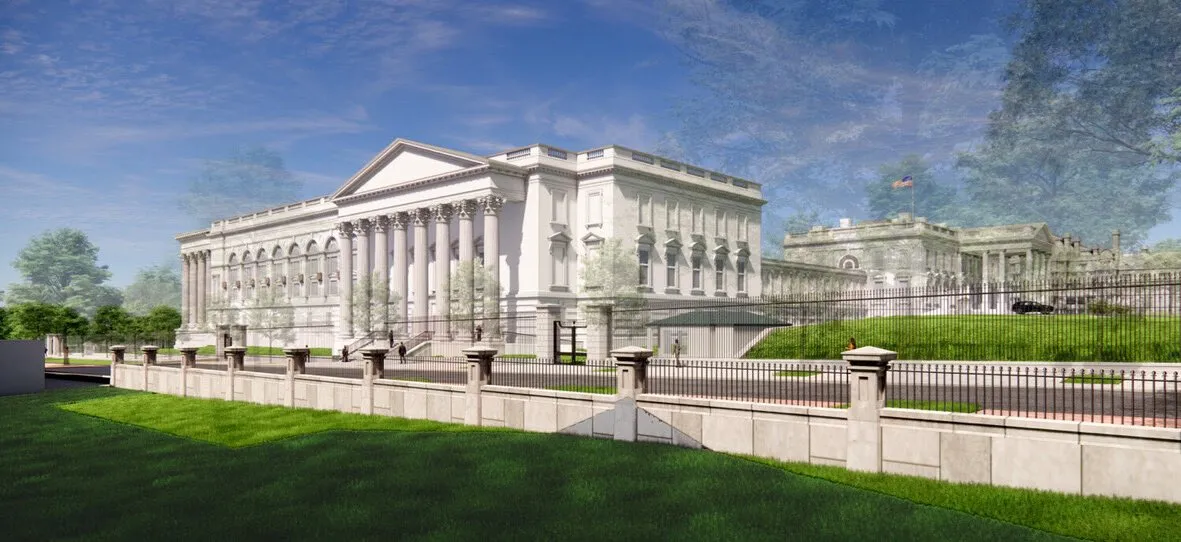
Judge halts above-ground White House ballroom construction

April 17 (UPI) — All above-ground construction of the White House ballroom must be stopped amid litigation, a federal judge ordered Thursday, reprimanding the Trump administration for trying to justify continued work on the building as necessary for national and presidential security concerns.

“National security is not a blank check to proceed with otherwise unlawful activity,” U.S. District Judge Richard Leon said.

The ruling comes almost three weeks after Leon issued a preliminary injunction against the $400 million project, finding that construction at the White House requires congressional approval. While ordering the construction halt amid appeal, Leon carved out an exception for the government to continue underground work deemed necessary for the White House’s safety and security.

That prompted litigation over the scope of the carve-out and the Trump administration argue that construction of the ballroom above ground was needed as security elements ran through the entire facility.

“Defendants argue that the entire ballroom construction project, from tip to tail, falls within the safety-and-security exception and therefore may proceed unabated. That is neither a reasonable nor a correct reading of my order!” Leon said Thursday.

“It is, to say the least, incredible, if not disingenuous, that defendants now argue that my order does not stop ballroom construction because of the safety-and-security exception!”

The federal government has filed an appeal against the Thursday ruling.

“We are pleased the court upheld the preliminary injunction and halted above-ground construction of the White House ballroom until Congress approves the project,” Carol Quillen, CEO and president of the National Trust for Historic Preservation, which filed the initial lawsuit, said in a statement.

Trump has said building a White House ballroom has been his dream since before he was president, and has said its price tag, which has ballooned from an initial $200 million, is to be covered by private donors.

In December, as construction was underway following the October demolition of the East Wing, the National Trust for Historic Preservation sued to stop the project, arguing U.S. law mandates the project be authorized by Congress, resulting in the March 31 injunction and the Trump administration filing an appeal.

After the Thursday ruling, Trump chastised Leon in a series of posts on his Truth Social platform, calling him an “out of control Trump hating” judge whose ruling “severely jeopardizes the lives and welfare of the people who work, and will be working, at the White House.”

“The underground doesn’t work, isn’t necessary and would indeed be useless without the above-ground section,” he said in a Truth Social post.

“This highly political Judge, and his illegal overreach, is out of control, and costing our Nation greatly,” he said in another statement.

“This is a mockery of our Court System! The Ballroom is deeply important to our National Security, and no judge can be allowed to stop this Historic and Militarily Imperative Project.”

Source link

Trump’s budget director defends White House plan for massive boost in military spending

An effort to ramp up U.S. weapons production and build more ships, planes and drones will require a massive upfront investment, President Trump’s budget director told a House committee Wednesday.

The testimony from Russell Vought jump-starts the White House’s push to increase defense spending to nearly $1.5 trillion in the next budget year, up from nearly $1 trillion this year, while cutting health research, heating assistance and scores of other domestic programs by about 10% overall. Such cuts do not cover mandatory spending, which includes such programs as Social Security and Medicare.

The debate over Trump’s proposal underscored the sharp divide that will shape some of the most significant policy debates going into a midterm election that will give voters the ultimate say on the direction of the country.

“For the industrial base to double or triple and build more facilities, not just add shifts, it requires multiyear agreements to purchase into the future,” Vought told lawmakers. “That cost has to be booked in this first year.”

The White House is calling for about $1.1 trillion for defense through the regular appropriations process, which typically requires support from both parties for approval. An additional $350 billion would come through a separate bill that Republicans can accomplish on their own, through party-line majority votes.

Rep. Brendan Boyle of Pennsylvania, the ranking Democratic member of the committee, said he believes in a strong national defense. But he said the idea of increasing defense by more than 40% while cutting programs that people need shows that the Republican administration’s priorities are “out of whack.”

The committee chairman, Rep. Jodey Arrington (R-Texas), predicted the hearing would be more “amped up” than usual, and that proved to be true, beginning with his opening statement focused on criticizing Democrat Joe Biden’s presidency. Arrington said he did not know of any president in his lifetime who “inherited such a complete and utter mess as President Trump did in January of last year.”

Since then, Arrington said, Trump has secured the border, cut taxes and constrained nondefense spending.

It was the beginning of several back-and-forths at the hearing.

“You know how bad this economy is when we hear Joe Biden being invoked, we hear trans people being invoked. I was waiting for Jimmy Carter to be blamed next,” Boyle said in response to Arrington’s opening remarks.

Boyle said consumer confidence is plummeting under Trump and noted a gas station he passed in Philadelphia recently was selling gas at $4.11 a gallon versus less than $3 a gallon some six weeks ago because of Trump’s “war of choice in Iran.”

Rep. Becca Balint (D-Vt.) called the proposed defense spending increase shocking.

“We’ve never in the history of this country seen spending like this, paid for by slashing healthcare, education and housing,” Balint said. “Mr. Vought, yes or no, is $350 billion for the war in Iran lowering costs for Americans?”

“It is certainly not defunding child care. We fully fund child care in this budget,” Vought said, not directly answering the question.

Balint went on to incorporate Trump’s “America first” mantra in her questioning.

She said that $350 billion could pay for an enhanced health insurance tax credit for 10 years and that her constituents are asking how the country can continue to spend money on wars and not find a solution to helping people afford healthcare.

Vought said the president has made clear he was not going to let Iran have nuclear weapons, missiles and a navy that affect U.S. national security.

“He is doing what is necessary to keep us safe, while at the same time trying to pursue diplomacy so that we can get out of wars and lower those costs over time,” Vought said.

Vought said it was unclear how much the administration would seek to fund the war during the current budget year, which ends Sept. 30. That money would be part of an emergency supplemental spending bill and would be on top of the funds the White House is seeking to boost defense spending next year.

“Would it be more than $50 billion?” asked Rep. Veronica Escobar (D-Texas).

“We’re still working on it,” Vought said. “I don’t have a ballpark for you.”

Freking writes for the Associated Press.

Source link

Trump rails against court decision that once again stalls his White House ballroom project

President Trump railed against a federal judge’s decision on Thursday that continues to block above-ground construction of a $400-million White House ballroom, allowing only below-ground work on a bunker and other “national security facilities” at the site.

U.S. District Judge Richard Leon’s latest ruling comes in response to an appeals court’s instruction to clarify an earlier decision on the 90,000-square-foot ballroom planned for the site where the East Wing of the White House once stood.

Trump on social media called Leon, who was nominated to the bench by Republican President George W. Bush, a “Trump Hating” judge who “has gone out of his way to undermine National Security, and to make sure that this Great Gift to America gets delayed, or doesn’t get built.”

The administration filed a notice that it will ask the U.S. Court of Appeals for the District of Columbia Circuit to review Leon’s latest decision, too.

Carol Quillen, president and chief executive of National Trust for Historic Preservation, whose group sued to challenge the project, said in a statement that the group is pleased with the court’s ruling.

Leon said that below-ground work on security measures is exempt from his order suspending above-ground construction. Government lawyers have argued that the project includes critical security features to guard against a range of possible threats, such as drones, ballistic missiles and biohazards.

Leon’s latest ruling comes several days after a three-judge panel from the D.C. appeals court instructed him to reconsider the possible national security implications of stopping construction.

In his previous order, Leon barred above-ground work on the ballroom from proceeding without congressional approval. The judge also ruled on March 31 that any construction work that’s necessary to ensure the safety and security of the White House is exempt from the scope of the injunction. Leon said he reviewed material that the government privately submitted to him before concluding that halting construction wouldn’t jeopardize national security.

Leon had suspended his March 31 order for two weeks. He stayed his latest decision for another week, which gives the administration more time to seek Supreme Court review.

Leon said he is ordering a stop only to the above-ground construction of the planned ballroom, apart from any work needed to cover or secure that part of the project. Otherwise, the Trump administration is free to proceed with the construction of any excavations, bunkers, military installations, and medical facilities below the ballroom.

“Defendants argue that the entire ballroom construction project, from tip to tail, falls within the safety-and-security exception and therefore may proceed unabated,” the judge wrote. “That is neither a reasonable nor a correct reading of my Order!”

On Saturday, the appeals court panel said it didn’t have enough information to decide how much of the project can be suspended without jeopardizing the safety of the president, his family or the White House staff.

Leon said he recognizes the safety implications of the case, but stressed that “national security is not a blank check to proceed with otherwise unlawful activity.” He also said he has “no desire or intention to be dragooned into the role of construction manager.”

On April 2, two days after Leon’s previous ruling, Trump’s ballroom won final approval from the 12-member National Capital Planning Commission, which is charged with approving construction on federal property in the Washington region.

The preservation group sued in December, a week after the White House finished demolishing the East Wing to make way for a ballroom that Trump said would fit 999 people. Trump says the project is funded by private donations, although public money is paying for the bunker construction and security upgrades.

Kunzelman writes for the Associated Press.

Source link