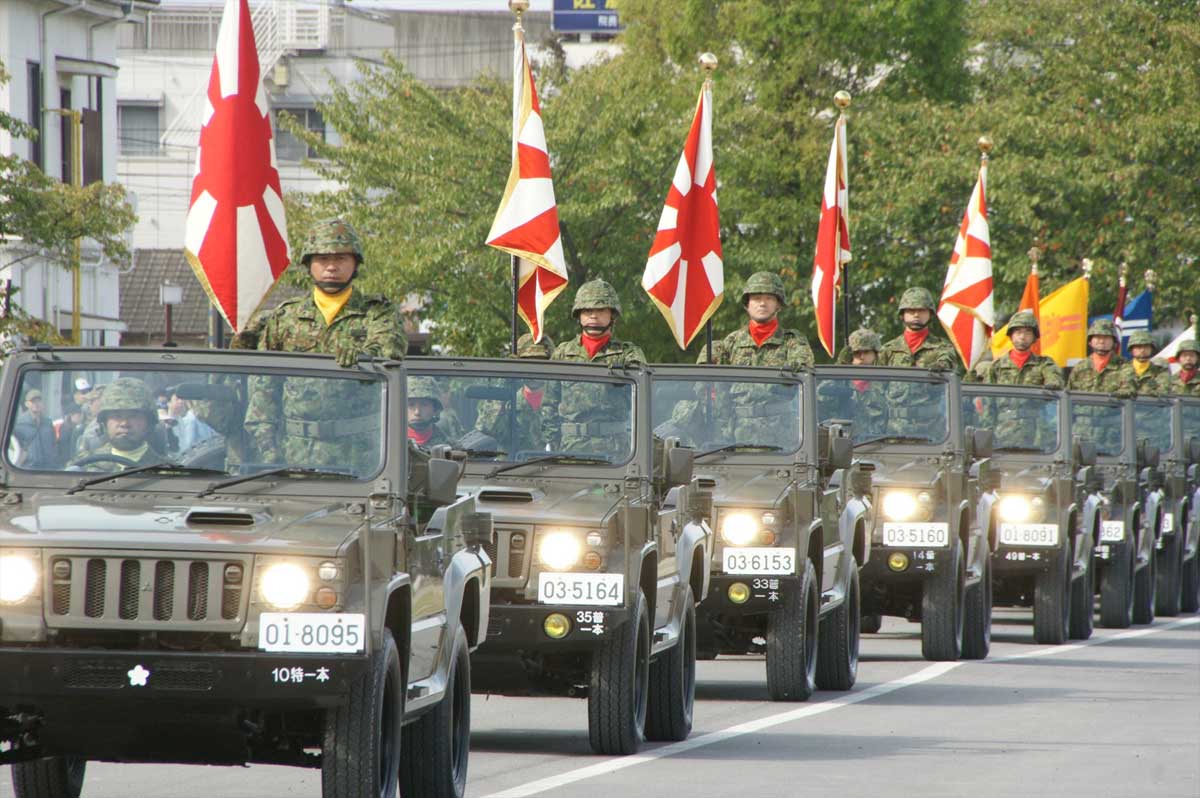
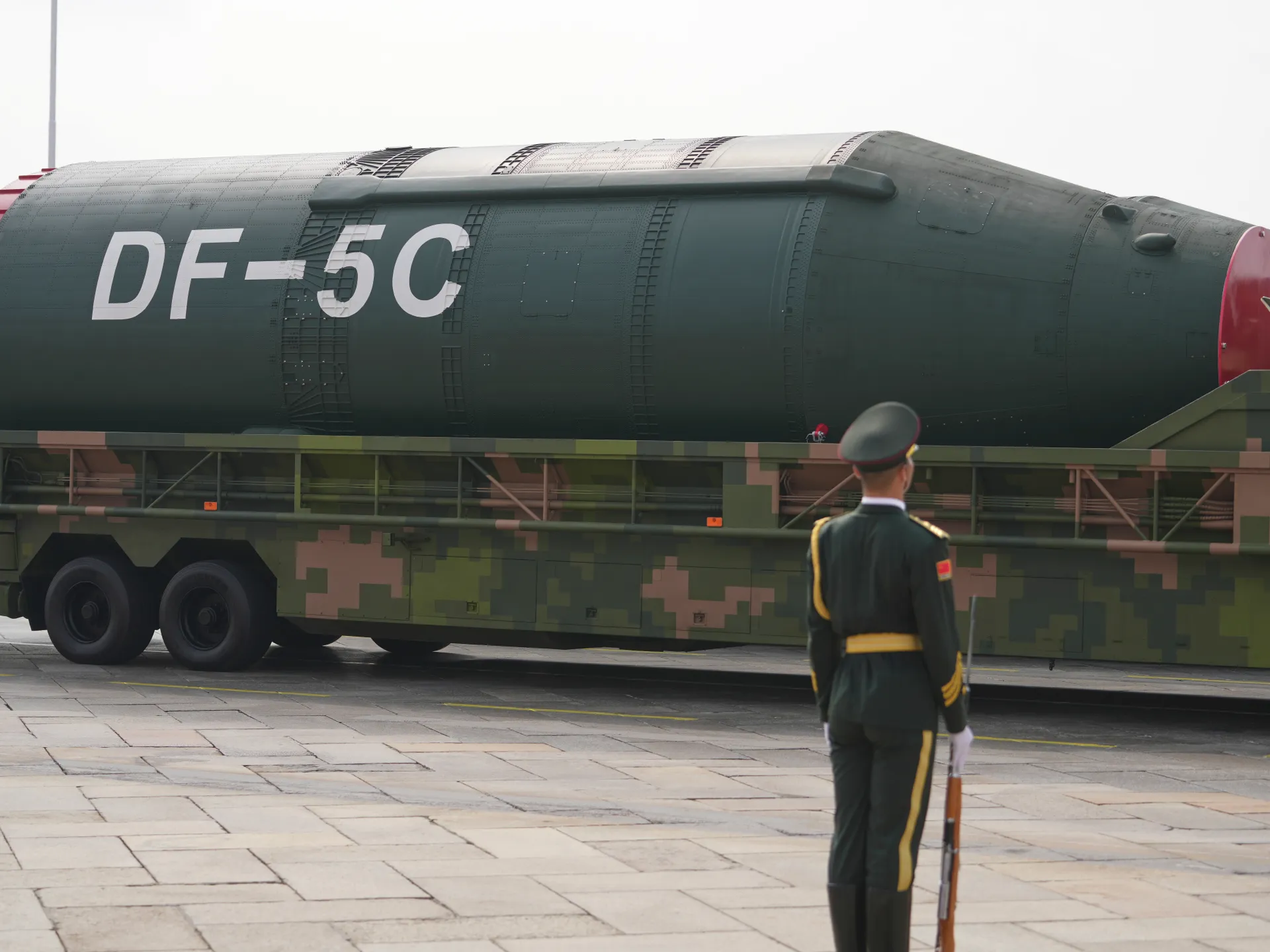
Relations between North Korea and Japan remain deeply strained due to historical grievances, North Korea’s nuclear and missile programmes, and growing regional security tensions. In recent years, Japan has significantly increased defence spending and accelerated military modernisation in response to North Korea’s missile launches and China’s expanding military presence.
Tokyo has adopted a new national security strategy that includes acquiring long range strike capabilities, expanding missile defence and strengthening cooperation with the United States and other regional partners. Japan says these measures are necessary to deter growing security threats, while North Korea and China have criticised them as evidence of Japan moving away from its post World War Two defensive posture.
The latest remarks come as North Korea also continues expanding its own naval capabilities and developing new missile systems.
North Korea accused Japan on Tuesday of transforming its military into an offensive force, claiming Tokyo’s overseas military ambitions are now a reality rather than a hypothetical threat.
Stay ahead of the geopolitical week.
MD Briefing delivers expert analysis across five global fronts — the Indo-Pacific, energy, geoeconomics, European security, and the Middle East — every Monday morning. Free.
A commentary published by the state run Korean Central News Agency criticised Japan’s defence modernisation programme, pointing to plans to develop unmanned submarines, expand long range missile capabilities and acquire advanced weapons from the United States.
The comments come amid growing military activity across East Asia as regional powers continue strengthening their armed forces.
The KCNA commentary argued that Japan is abandoning its long standing policy of maintaining forces solely for self defence.
It claimed Tokyo is developing unmanned submarines capable of carrying torpedoes and naval mines that could be deployed near neighbouring coastlines to conduct pre emptive attacks during a conflict.
The report portrayed these developments as evidence that Japan is shifting toward a more offensive military posture.
Japan’s Foreign Ministry did not immediately comment on the allegations.
North Korea also highlighted Japan’s efforts to strengthen its missile capabilities.
According to the commentary, Tokyo is pursuing domestically developed long range missiles, a new ballistic missile with a reported range of up to 3,000 kilometres, upgraded anti ship missiles and hypersonic glide weapons.
The report also criticised Japan’s acquisition of United States made Tomahawk cruise missiles as part of its broader military modernisation programme.
Japan has argued that these capabilities are intended to strengthen deterrence against growing regional threats.
The criticism comes as North Korea continues expanding its own military capabilities.
State media recently reported that leader Kim Jong Un observed the launch of a strategic cruise missile and inspected weapons systems aboard the newly built 5,000 tonne destroyer Kang Kon.
Kim has instructed that the vessel enter operational service within two months as part of efforts to strengthen North Korea’s naval combat capabilities.
Pyongyang has also commissioned another destroyer, the Choe Hyon, and announced plans to construct additional warships, including larger 10,000 tonne vessels.
The exchange of criticism reflects broader security tensions across Northeast Asia.
Japan has strengthened defence cooperation with the United States and regional partners while increasing military investment in response to North Korea’s expanding nuclear and missile programmes and China’s growing military activities.
North Korea has responded by accelerating weapons development, conducting missile launches and modernising its naval forces, further contributing to regional strategic competition.
The latest comments highlight the increasingly confrontational security environment in Northeast Asia, where military modernisation by one country is often cited by others to justify their own defence expansion.
As Japan strengthens its deterrence capabilities and North Korea continues developing advanced weapons, the risk of heightened regional tensions and military competition is likely to remain elevated.
North Korea
Seeking to strengthen its military capabilities while criticising Japan’s expanding defence posture.
Japan
Modernising its armed forces in response to growing regional security threats.
United States
Supporting Japan’s defence strategy as part of its broader Indo Pacific security framework.
South Korea
Closely monitoring military developments involving both North Korea and Japan.
Regional Neighbours
Watching the evolving security balance as military competition intensifies across Northeast Asia.
Regional attention will remain focused on Japan’s continuing defence modernisation and North Korea’s naval expansion, including the planned deployment of its new destroyers.
Any additional missile tests, military exercises or defence announcements by either country are likely to be closely monitored by neighbouring governments and could further shape the security dynamics of the Indo Pacific region.
Countries raise concerns after Chinese military test-launches ballistic missile from submarine in the Pacific Ocean.
Published On 6 Jul 20266 Jul 2026
China has test-fired a missile from a nuclear submarine that landed in “designated waters” in the Pacific Ocean, state news agency Xinhua reports, drawing criticism and concerns from Japan, Australia and New Zealand.
The Chinese navy test-launched the long-range ballistic missile at 12:01pm (04:01 GMT) on Monday from one of its nuclear-powered submarines in the South Pacific, Xinhua reported.
Recommended Stories
list of 3 itemsend of list
Xinhua said the test was a “routine arrangement” of China’s annual military training and was not directed at any specific target.
Australian Foreign Minister Penny Wong confirmed that China had notified the government of plans to conduct a sea-based missile test into the Pacific but said the action was “destabilising” to the region.
“Australia has been clear that this proposed test is in the context of a rapid military build-up by China, which is lacking in the transparency and reassurance as to intent that the region expects,” Wong told reporters at a news conference in the Fijian capital, Suva.
Japan’s government said it was notified of the missile launch and had urged China to reconsider.
“We expressed our grave concern over the Chinese military’s increased activity,” the government said, adding that Japan’s coastguard had been notified on Sunday by Chinese authorities about falling space debris that could fall within Japan’s exclusive economic zone.
The New Zealand government said it was informed of the planned launch within hours of it taking place.
“New Zealand considers this an unwelcome and concerning development. We, like our neighbours in other Pacific countries, have no interest in China using the South Pacific as a testing site for missile capability,” Foreign Minister Winston Peters said in a statement.
The S&P Global Japan Manufacturing PMI was revised slightly lower to 54.8 in June 2026 from 54.9 in the preliminary estimate. However, the reading comfortably beat May’s 54.5 and marked the sixth consecutive month of expansion, driven by accelerating output and new orders.
The Japanese yen fell to around 162.4 per dollar in Asian trading on Tuesday morning, its lowest level since 1986.
ADVERTISEMENT
ADVERTISEMENT
The drop extends a punishing run for the yen, which has kept weakening despite the Bank of Japan’s efforts to support it, and now revives the prospect that the authorities will step into the market directly.
Japan’s finance minister, Satsuki Katayama, has already responded to the situation by stating that the government was ready to take “appropriate” and even “decisive” action against excessive currency moves, adding that she had confirmed with Washington that such a step remained an option.
Traders are now watching closely for any sign that Tokyo is selling US dollars to prop up the yen, as it did in the spring.
At the heart of the weakness is the current wide gap between Japanese and American interest rates.
Even after the Bank of Japan raised its benchmark to 1% in mid-June, its highest since 1995, Japanese yields remain far below those in the US, where ten-year government bonds have recently paid around 4.5%, compared with roughly 2.6% in Japan.
That gap sustains the so-called carry trade, in which investors borrow cheaply in yen to buy higher-yielding assets elsewhere, continually pushing the currency down.
A robust dollar has compounded the pressure.
The greenback has drawn safe-haven demand from tensions around the conflict involving Iran, while expectations that the US Federal Reserve could raise rates later this year, even as the Bank of Japan moves cautiously, have widened the divide further.
Japan’s heavy reliance on imported energy, which is costlier amid elevated oil prices, has also added to demand for US dollars.
A test for Tokyo
The renewed slide is a headache for policymakers who have already thrown considerable firepower at the problem.
Between April and May, Japan spent a record ¥11.7 trillion (€63.3bn) intervening in currency markets, the largest such effort on record, yet the Japanese yen has continued to weaken.
Domestic politics has not helped, with the big-spending, growth-focused agenda of Prime Minister Sanae Takaichi raising doubts about Japan’s fiscal discipline.
Analysts say the immediate risk of intervention is high, given that speculative bets against the Japanese yen have climbed to multi-year peaks and a fresh four-decade low tends to sharpen political anxiety in Tokyo.
However, many doubt that buying the currency would reverse its course for long, since the underlying rate gap remains firmly against it.
The Bank of Japan’s next policy decision, due on 31 July, is now in sharp focus, with further rate rises seen as the more durable route to stemming the decline.
For now, the Japanese yen remains at the mercy of forces its central bank has struggled to control.
Gabriel Martinelli scored the winner late in injury time to give five-time champions Brazil a 2-1 win over Japan in the World Cup round of 32 in Houston.
Martinelli, who had come on as a second-half substitute, scored in the sixth minute of stoppage time as the match on Monday appeared to be heading to extra time.
Brazil will next face either the Ivory Coast or Norway on Sunday in East Rutherford, New Jersey, in the round of 16.
Casemiro had earlier equalised with a header in the 56th minute off an assist from Gabriel Magalhaes after just missing another chance two minutes earlier. The shot sailed just out of reach of the outstretched hand of Japan goalkeeper Zion Suzuki and into the net.
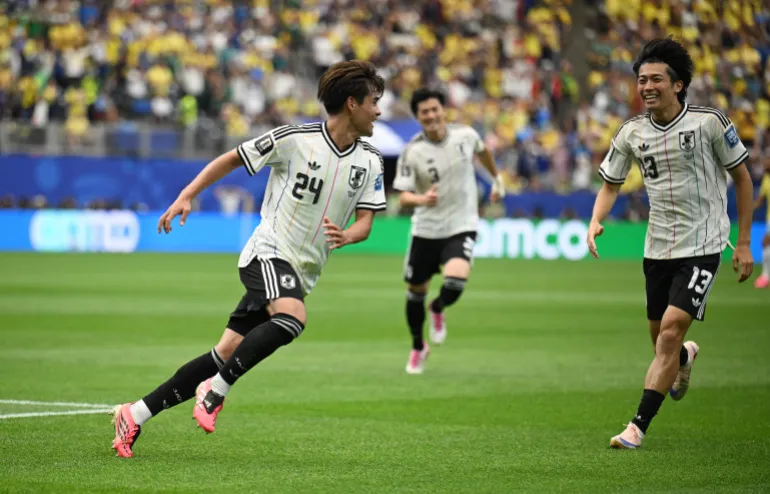
Kaishu Sano stole a misplaced pass in midfield before his right-footed shot from above the half-circle put Japan ahead after 29 minutes.
Kaishu Sano celebrates scoring the first goal [Annegret Hilse/Reuters]
Vinicius Junior, who has scored four goals so far in the tournament, had a chance to put Brazil on top in the 58th minute, but his shot from the left was deflected by goalkeeper Suzuki and went past the far post.
Brazil had two chances to even the score early in the second half before breaking through late on. First, Suzuki blocked a header from Bruno Guimaraes in the 52nd minute. Soon after, Casemiro’s header bounced off a defender’s head and Suzuki’s face.
Japan have never won a World Cup knockout match.
The win was Brazil’s 12th in 15 games against Japan. The teams have also played to two draws, while Japan got their first win in the series in a friendly in Tokyo in October.
This was a match-up between two countries with deep ties, Brazil being home to about 2.7 million Japanese descendants, which is the largest Japanese population outside of Japan.
Those ties extend to football, where Brazil superstar Zico moved to Japan in 1991 to play for Kashima Antlers and help build Japan’s professional football network. He coached the Japan national team from 2002–06, leading the team to the World Cup in 2006.
That team lost to Brazil 4-1 in the only previous meeting between the teams at the World Cup.
Brazil won Group C after a draw with Morocco and victories over Haiti and Scotland.
Monday’s victory came on the anniversary of their first World Cup championship in Sweden in 1958, when a 17-year-old Pele scored two goals in the final against the host country.
Japan reached the round of 32 as runner-up in Group F after draws with the Netherlands and Sweden and a win over Tunisia. The loss snaps a 10-game unbeaten streak dating back to a 2-0 defeat to the United States in September.
Brazil players celebrate after the match [Annegret Hilse/Reuters]
Five wins to go. How can your team reach the final and win World Cup 2026? Click here.
Who: Brazil vs Japan What: FIFA World Cup 2026 – round of 32 Where: Houston Stadium, Houston, United States When: Monday, June 29, at 12pm (17:00 GMT) How to follow: We will have all the build-up on Al Jazeera Sport from 14:00 GMT ahead of our live text commentary stream.
Recommended Stories
list of 4 itemsend of list
Carlo Ancelotti faces his first major test as the Brazil coach when the record five-time world champions take on Japan, arguably the best Asian team at the tournament, in the round of 32.
Monday’s meeting in Houston offers Brazil the chance to exact revenge for their friendly defeat to Japan late last year, as the South American giants lock in on their target of a deep run in North America.
The odds are heavily in Brazil’s favour, but after Japan came out of a tricky group with flying colours, it would be foolish to write them off.
There is also a mutual respect and camaraderie between the nations, given the overwhelming Brazilian influence on professional football in Japan.
Al Jazeera tells you everything about the second game of the round of 32:
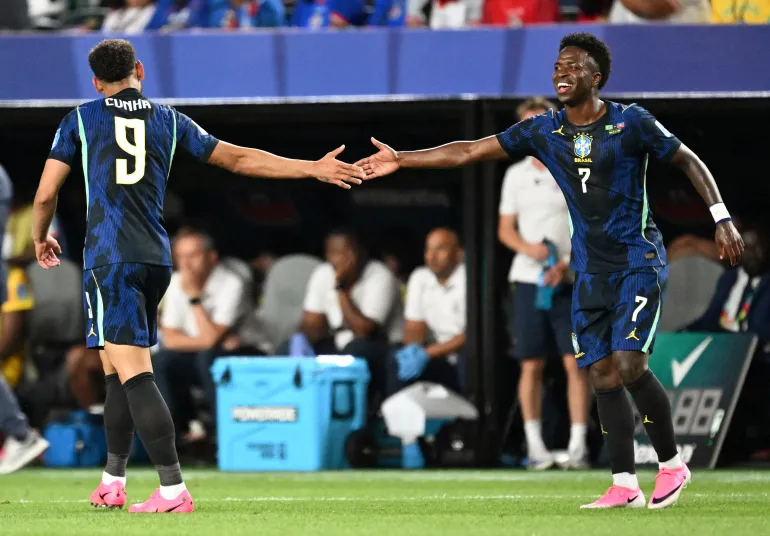
Of all the seven goals Brazil registered across three games, Real Madrid star forward Vinicius Jr scored four of them, while Matheus Cunha netted three. Bruno Guimaraes bagged the most assists (three).
Brazil’s forwards Matheus Cunha, left, and Vinicius Jr are spearheading Brazil’s attack at the World Cup [Roberto Schmidt/AFP]
Ancelotti in relaxed mood ahead of Japan clash
Since their low-key display in the first game, Brazil appear to be growing into the tournament, showing glimpses of their all-round potential, with some of the Selecao stars finding their rhythm.
Ancelotti knows Japan will be no pushovers, describing the record four-time Asian champions as “one of the best teams” in the world.
During Sunday’s pre-match press conference, the Italian was relaxed and betrayed no signs of feeling the pressure, despite Brazil being cast as the clear favourites for the knockout tie.
“We need a lot of things: A strong mind, a strong heart, a clear mind,” he told the media. “I think we have to be ready for anything that might take place in a knockout match, and a lot can happen in a knockout match.
“I think the team is ready. They’re motivated, they’re confident,” added Ancelotti, who is leading Brazil’s charge for a record-extending sixth world title.
How did Japan reach the round of 32?
Japan started their campaign by holding the Netherlands to a 2-2 draw before thrashing Tunisia 4-0 in the second game. They wrapped up the first round with a 1-1 draw with Sweden, which saw them finish with five points, confirming a second spot in Group F.
Ayase Ueda and Daichi Kamada are the joint top scorers for Japan so far, with two strikes each, while Keito Nakamura, Junya Ito and Daizen Maeda have also scored one each.
Japan’s Junya Ito, right, has scored once in the tournament, while Ayase Ueda, left, and Daichi Kamada, centre, have two goals each [Daniel Becerril/Reuters]
Dark horses Japan are ‘united’, says Moriyasu
Japan have lived up to their billing as the “dark horses” at the tournament, holding two formidable European sides – the Netherlands and Sweden – to draws.
After beating Germany and Spain en route to a round of 16 run at the 2022 World Cup, Japan have shown the world they are capable of pulling off upsets, especially on the sport’s biggest stage.
Japan coach Hajime Moriyasu said his side’s collective spirit can fire them into the last 16 again.
“All the players will do what they can for the team and contribute,” Moriyasu said on Sunday. “The team is united, and that feeling is getting even stronger now.”
Japan’s best finish at the World Cup has been reaching the round of 16 on four occasions: 2002, 2010, 2018 and 2022. They have never won a World Cup knockout game.
Brazil vs Japan: master vs the apprentice
Launched in 1993, Japan’s top-flight, the J-League, took much of its inspiration from Brazil and also employed plenty of their players.
Zico, the creative lynchpin of Brazil’s fabled 1982 World Cup team, was enticed out of retirement to join Kashima Antlers, while internationals Bismarck and Elivelton started a run of Brazil national team players making the move to Japan.
By the late 1990s, seven of the Brazil team that won the 1994 World Cup, including captain Dunga, had played or were playing for Japanese clubs and, by extension, lent their influence to a rapidly developing scene.
Brazil vs Japan predictions
Opta’s supercomputer has calculated a 58.3 percent probability of Brazil winning this fixture in regulation time, while Japan is assessed an 18.1 percent chance of victory.
The probability of going to extra time – or potentially penalties – is 23.6 percent.
Who will the winner face in the round of 16?
The winner of Brazil vs Japan will face either Norway or the Ivory Coast in the round of 16.
Brazil vs Japan: Kickoff time, TV channel
Brazil: CazeTV, TV Globo, GETV, Globoplay, sportv (2pm, Brasilia Time)
Japan: NHKBS1, DAZN, Fuji TV (2am on Tuesday, Japan Standard Time)
United Kingdom: ITVX, ITV1, STV Player, STV (6pm, British Summer Time)
To check the TV listings for your country, head to FIFA’s TV listing schedule here.
Brazil vs Japan: head-to-head
In the all-time head-to-head record, Brazil have only lost once to Japan (W11 D2 L1). In their only World Cup contest 20 years ago at Germany 2006, Brazil won 4-1.
Significantly, Japan’s sole victory over Brazil came in their most recent clash, a 3-2 victory in a friendly in October 2025 in which Brazil let a two-goal lead slip in Tokyo, with Ueda scoring the hosts’ winner.
Brazil vs Japan: Team news
Raphinha remains sidelined for Brazil due to a hamstring injury, while Japan’s Takefusa Kubo is out with a sprained knee.
Neymar, who made his first appearance for Brazil since October 2023 when he came off the bench in the last game, will be available to play more minutes against Japan. The star forward is working his way back to full fitness after dealing with a lingering calf injury.
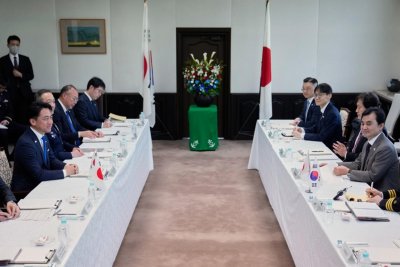
Japan’s Defense Minister Shinjiro Koizumi (L) and South Korea’s Defense Minister Ahn Gyu-back (R) attend their meeting at the headquarters of the Japan Maritime Self-Defense Force Yokosuka District, south of Tokyo, Japan. Photo by EUGENE HOSHIKO / EPA
June 26 (Asia Today) — South Korean Defense Minister Ahn Gyu-back will meet Japanese Defense Minister Shinjiro Koizumi at the Defense Ministry headquarters in Seoul on Sunday morning, the ministry said Friday.
Koizumi will visit South Korea as part of reciprocal ministerial diplomacy following Ahn’s trip to Japan in January.
During the visit, the ministers are scheduled to inspect aircraft operated by the South Korean Air Force’s Black Eagles aerobatic team, hold bilateral talks and take part in a security dialogue with young people from both countries.
They will also discuss ways to strengthen defense exchanges and cooperation between South Korea and Japan.
The meeting will come about one month after Ahn and Koizumi held bilateral talks on May 30 on the sidelines of the 23rd IISS Asia Security Summit, commonly known as the Shangri-La Dialogue, in Singapore.
It will be the first visit to South Korea by a Japanese defense minister specifically for bilateral talks since 2015, according to the ministry.
Koizumi is also scheduled to pay his respects at Seoul National Cemetery during the trip. He is expected to meet South Korean Foreign Minister Cho Hyun on Sunday.
The Palantir logo is displayed on a mobile phone alongside a stock market graph displayed on a laptop screen in Liverpool, Britain, 09 June 2026. Photo by ADAM VAUGHAN / EPA
June 26 (Asia Today) — Japan’s Defense Ministry plans to expand the use of artificial intelligence in the Self-Defense Forces’ command-and-control operations, potentially bringing AI into the process through which commanders assess battlefield conditions and direct military units.
The move would mark a new stage in Japan’s defense transformation, shifting its focus beyond acquiring more weapons and equipment toward digitally supported battlefield decision-making.
The Asahi Shimbun reported Friday, citing multiple government officials, that Prime Minister Sanae Takaichi’s government plans to include the expanded use of command-and-control AI in three revised national security documents expected by the end of the year.
The documents are the National Security Strategy, National Defense Strategy and Defense Buildup Program.
The Defense Ministry is also considering including some related expenses in its fiscal 2027 budget request, according to the report.
Japan has used AI for some defense-related functions, but it has not placed the technology at the center of the Self-Defense Forces’ operational command structure.
A command-and-control system allows commanders to assess enemy threats, friendly forces, unit locations and intelligence assets before planning operations and issuing orders.
AI could rapidly organize and analyze large volumes of surveillance, reconnaissance, communications and sensor data before presenting commanders with possible courses of action.
One system reportedly under consideration is the Maven Smart System developed by U.S. data analytics company Palantir Technologies.
Maven analyzes information from satellites, drones, radar systems, battlefield sensors and intelligence reports. It can identify potential threats and targets and help commanders compare possible operational responses.
The U.S. Defense Department has expanded its use of the system and is moving to establish it as a formal long-term military program.
Adopting Maven could improve interoperability between the Self-Defense Forces and the U.S. military, allowing them to process and share operational information more quickly during joint missions.
The proposal, however, has also raised questions about data control, technological dependence and Japan’s authority over its own military command systems.
Command and control is not an ordinary administrative function. It is the highest-level structure through which a government decides how and when to use military force.
Reliance on software and algorithms supplied by a foreign private company could require Japan to establish clear rules covering military data management, access to source technology, system control, wartime operating authority and alternatives in the event of a malfunction or service disruption.
The introduction of foreign software would not formally transfer command authority to the company or the United States. Japanese commanders would retain responsibility for operational decisions.
The debate instead centers on how much of the information-processing infrastructure behind those decisions should depend on technology that Japan does not fully own or control.
Calls for domestically developed defense AI have consequently grown within Japan’s government and ruling-party circles.
One proposal would allow Japan to use a U.S. system initially while developing an independent platform through Japanese technology companies and the country’s defense industrial base.
Japan could eventually replace the foreign system or operate domestic and U.S. technologies together.
Developing a military-grade AI command system capable of immediate operational deployment would be difficult, however. A combined approach using both American and Japanese technology is therefore considered more likely in the near term.
The Defense Ministry identified seven priority areas for military AI in a policy issued in 2024: target detection and identification, intelligence collection and analysis, command and control, logistics, unmanned systems, cybersecurity and administrative efficiency.
The policy states that AI should assist rather than replace human judgment and that meaningful human involvement must be maintained.
The ministry has since established a team to accelerate AI adoption and has called for greater cooperation with Japanese defense companies and technology startups.
Japan’s consideration of command-and-control AI also carries implications for South Korea.
During a conflict or regional emergency, information sharing and operational coordination among the U.S. military, the Self-Defense Forces and South Korea’s military could become increasingly rapid and automated.
AI-assisted command systems could improve coordination in responding to North Korean missile launches, Chinese military activity or a crisis in the Taiwan Strait.
The same technology could also accelerate errors.
Incorrect intelligence, incomplete data or biased algorithms could cause an AI system to present commanders with misleading threat assessments or inappropriate operational choices.
Human commanders would remain responsible for final decisions, but the speed and complexity of AI-supported operations could make errors more difficult to identify before action is taken.
Japan’s plan therefore represents more than a military technology upgrade. It raises broader questions about who controls defense data, how allied systems should be connected and who bears responsibility when AI influences a military decision.
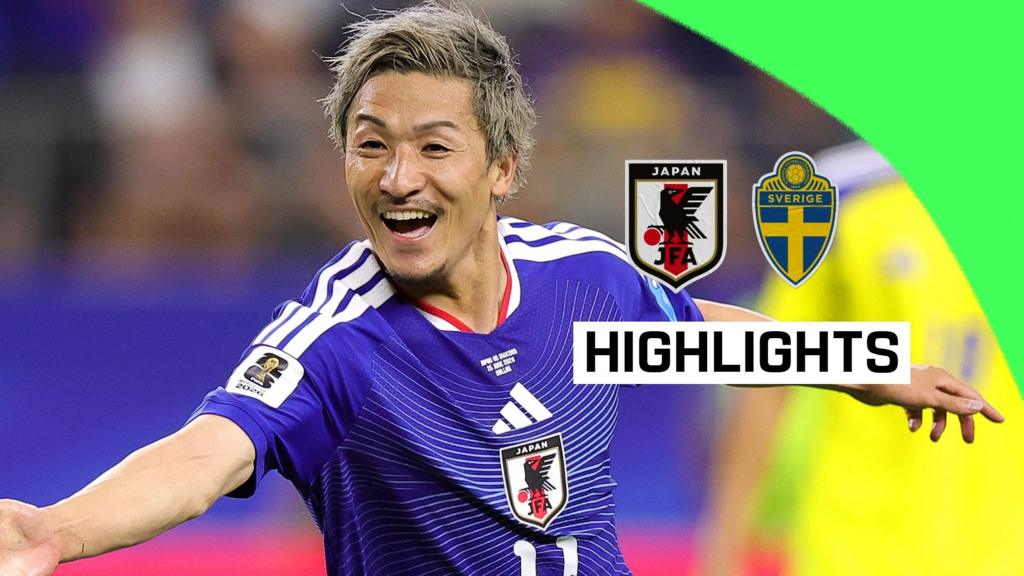
Daizen Maeda’s smart finish to Japan’s team goal is cancelled out by Anthony Elanga’s long-range strike as Sweden fight back to earn a 1-1 draw, ensuring both sides progress to the World Cup knockout stages.
For the first time in 48 years, Japan has changed its visa fee, rising by a staggering five times for foreign nationals, who will need to pay an extra £55 when visiting
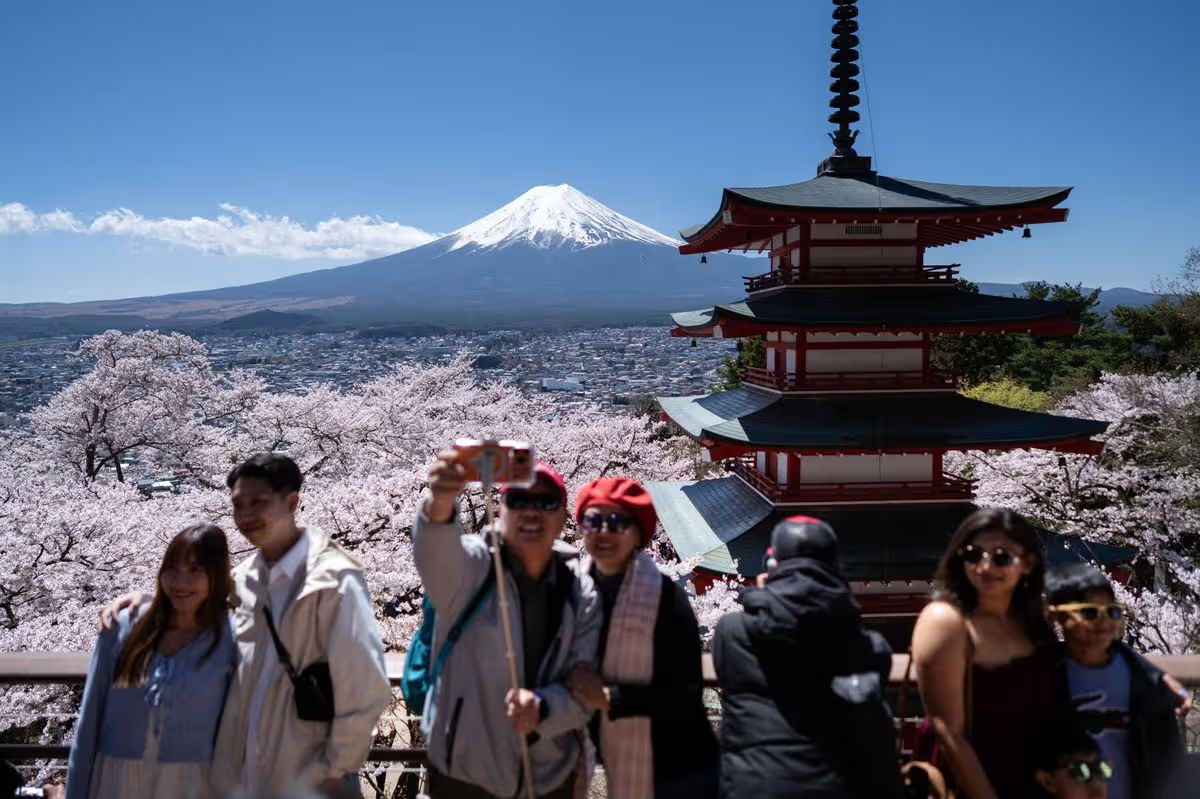
Japan has increased its visa fees for tourists(Image: Getty Images)
Japan has dramatically hiked its visa fees for tourists, with the cost of entry now a whopping five times higher.
From Wednesday, 1 July, many foreign nationals travelling to the country home to Mount Fuji will be required to pay 15,000 yen (£69.99) for a single-entry visa, a sharp rise from the previous 3,000 yen (£14). Meanwhile, multi-entry visas will now set travellers back 30,000 yen (£139.98), jumping up from 6,000 yen (£28).
This represents a staggering fivefold increase, meaning visitors will fork out an additional £55.99 for a single trip, or £111.98 for a multi-entry visa. Remarkably, this marks the first time Japan has raised its visa fees since 1978 — a full 48 years ago.
Foreign Minister Toshimitsu Motegi said the changes were made to “reflect inflation and exchange rate fluctuations”. He added: “We do not anticipate that it will have an immediate impact on inbound tourism.”
The updated visa fees will apply to all applications submitted on or after 1 July, 2026, as the nation continues to experience a surge in visitor numbers. Last year alone, Japan welcomed a remarkable 42.7 million international tourists, with iconic destinations such as Tokyo, Kyoto and Osaka remaining amongst the most sought-after, reports the Express.
The good news for Brits is that Japan has reciprocal visa exemption arrangements with 74 countries and regions, allowing citizens to enter for short-term stays without a visa. UK passport can stay for 90 days visa-free.
Japan’s new visa charge places it among the pricier destinations to enter globally. Other nations with steep tourist visa costs include the UK, where a standard visitor visa costs £135, and Ghana, where travellers from non-African nations pay $260.
Some countries levy per-night charges, with Bhutan ranking among the most expensive. A daily sustainable development levy of $100 is imposed per adult.
The Foreign, Commonwealth & Development Office (FCDO) advises that Brits travelling to Japan must make sure their passport remains valid for the duration of their visit. The FCDO states on its travel advice page: “No additional period of validity is required. You need a blank page for your visa stamp.”
In guidance on obtaining a visit, the Foreign Office adds: “You can get a visa on arrival in Japan for tourism or business for up to 90 days. You do not need to apply before you travel. If you need a multiple-entry visa, you must ask the immigration officials when you arrive. If you want to stay longer, you can apply at your nearest immigration office for an extension for another 90 days. Your passport must be valid for the period of the extension.”
The FCDO adds: “For long-term stays or to work or study, you must meet the Japanese government’s entry requirements. Check which type of visa you need. It is illegal to work in Japan without the correct visa, no matter how informal or temporary the work.
“If you overstay your permission to remain in Japan, you risk arrest, detention and a heavy fine. For residency information, see the Japanese Immigration Services Agency website and read about living in Japan.”
While there is no advice against travelling to Japan, the FCDO has warned about “global travel impacts due to escalation in the Middle East.” They stated: “Escalation in the Middle East has caused widespread travel disruption, including airspace closures, delayed and cancelled flights.
“Your travel plans may be affected, even if your destination is not in the Middle East. Before you travel:
Check travel advice for any countries or territories you are transiting through
Check for the latest updates from your airline or tour operator
Review your travel insurance policy for coverage
Monitor local and international media for the latest information and sign up for travel advice email alerts.”
Remaining group schedule, teams, as well as the best third-round group fixtures at the tournament in North America.
After 48 matches in North America, it’s time for the final round of games in the group stage at World Cup 2026.
Sixteen teams will be eliminated after these fixtures, with 32 nations heading through to the knockout stages.
Recommended Stories
list of 4 itemsend of list
The top two teams from each of the 12 groups – along with the eight best third-placed teams – will proceed to the next phase.
Here are the top five “must-watch” matches in the second round of fixtures from June 24 until June 27.
Neymar could return for Brazil against Scotland [Reuters]
⚽️ Scotland vs Brazil
Miami Stadium – Wednesday, 6pm (22:00 GMT)
These two sides will meet at the World Cup for the fifth time and there’s plenty to play for in an intriguing encounter in Miami.
Brazil are looking to secure their place in the knockout stages as group winners and are currently tied with Morocco on four points at the top of Group C.
Scotland are aiming to escape the group for the first time at a major international tournament and know that a point will almost certainly guarantee a spot in the round of 32.
Expect Group C to change a lot during these final fixtures, with Morocco taking on Haiti at the same time.
If that isn’t enough, Brazil’s Neymar is also set to make his first appearance at this World Cup.
Sweden have been unpredictable at this tournament [Raquel Cunha/Reuters]
⚽️ Japan vs Sweden
Dallas Stadium – Thursday, 6pm (23:00 GMT)
It’s difficult to predict which Sweden will turn up in Dallas on Thursday.
Graham Potter’s side beat Tunisia 5-1 in their opening match of the World Cup, before losing by the same score to the Netherlands.
Japan have been entertaining to watch at this tournament and were in fine form during their 4-0 win over Tunisia at the weekend.
Expect plenty of goals in this match and plenty of drama. The winner will secure a top-two finish in Group F, so there is a lot to play for.
France’s Kylian Mbappe has scored four goals so far [Kyle Ross/Reuters]
⚽️ Norway vs France
Boston Stadium – Friday, 3pm (19:00 GMT)
Norway and France are already through to the knockout stages, but this game looks set to be a blockbuster affair with both sides looking to top Group I.
Erling Haaland and Kylian Mbappe have both scored four goals so far and they’ll be desperate to add to their tally as they chase down Lionel Messi.
France are one of the favourites to lift the World Cup next month and are looking to end the group stage with three wins from three.
But Norway have the opportunity to prove that they truly are dark horses in this tournament and can compete with elite international sides.
Buckle in for a big one in Boston.
Spain’s Lamine Yamal, Nico Williams and Victor Munoz celebrate after the match against Saudi Arabia [Claudia Greco/Reuters]
⚽️ Uruguay vs Spain
Seattle Stadium – Friday, 6pm (00:00 GMT on Saturday)
Group H has been a tight affair following some surprise results in the opening round of fixtures.
Uruguay drew with Saudi Arabia, while Cape Verde shocked the world with a goalless draw against Spain.
La Roja bounced back by thrashing Saudi Arabia and they go into their final game as group leaders, with Uruguay two points behind in second.
Spain will secure top spot with a win in Seattle, ensuring that they avoid Argentina in the round of 32.
Egypt are looking to reach the knockout stages at the World Cup for the first time [Anne-Marie Sorvin/Reuters]
⚽️ Egypt vs Iran
Seattle Stadium – Friday, 8pm (04:00 GMT on Saturday)
Neither of these sides have ever made it out of the group at a World Cup, but on Friday, at least one of them will achieve that feat.
Group G is closely bunched after a number of drawn matches and it sets things up nicely for an intriguing final round of fixtures.
Victory for either Egypt or Iran will guarantee them a spot in the knockout phase, so expect both sides to be up for this one.
Iran have faced numerous challenges at this World Cup, with restrictions on travel and visa issues before the tournament even began.
If Iran progress, there’s also still a chance that they will face the US in the knockout stages.
World Cup 2026: Remaining group-stage full schedule
Wednesday, June 24
Switzerland vs Canada at 12pm PT (19:00 GMT) – BC Place, Vancouver, Canada
Bosnia vs Qatar at 12pm PT (19:00 GMT) – Seattle Stadium, Seattle, US
Scotland vs Brazil at 6pm ET (22:00 GMT) – Miami Stadium, Miami, US
Morocco vs Haiti at 6pm ET (22:00 GMT) – Atlanta Stadium, Atlanta, US
Czechia vs Mexico at 7pm CST (01:00 GMT on Thursday) – Mexico City Stadium, Mexico City, Mexico
South Africa vs South Korea at 7pm CST (01:00 GMT on Thursday) – Estadio Monterrey, Guadalupe, Mexico
Thursday, June 25
Ecuador vs Germany at 4pm ET (20:00 GMT) – New York New Jersey Stadium, New Jersey, US
Curacao vs Ivory Coast at 4pm ET (20:00 GMT) – Philadelphia Stadium, Philadelphia, US
Japan vs Sweden at 6pm CDT (23:00 GMT) – Dallas Stadium, Dallas, US
Tunisia vs Netherlands at 6pm CDT (23:00 GMT) – Kansas City Stadium, Kansas City, US,
Turkiye vs USA at 7pm PT (02:00 GMT on Friday) – Los Angeles Stadium, Los Angeles, US
Paraguay vs Australia at 7pm PT (02:00 GMT on Friday) – San Francisco Bay Area Stadium, San Francisco, US
Friday, June 26
Norway vs France at 3pm ET (19:00 GMT) – Boston Stadium, Boston, US
Senegal vs Iraq at 3pm ET (19:00 GMT) – Toronto Stadium, Toronto, Canada
Cape Verde vs Saudi Arabia at 7pm CDT (00:00 GMT on Saturday) – Houston Stadium, Houston, US
Uruguay vs Spain at 6pm CST (00:00 GMT on Saturday) – Estadio Guadalajara, Zapopan, Mexico
Egypt vs Iran at 8pm PT (03:00 GMT on Saturday) – Seattle Stadium, Seattle, US
New Zealand vs Belgium at 8pm PT (03:00 GMT on Saturday) – BC Place, Vancouver, Canada
Saturday, June 27
Panama vs England at 5pm ET (21:00 GMT) – New York New Jersey Stadium, New Jersey, US
Croatia vs Ghana at 5pm ET (21:00 GMT) – Philadelphia Stadium, Philadelphia, US
Colombia vs Portugal at 7:30pm ET (23:30 GMT) – Miami Stadium, Miami, US
DRC vs Uzbekistan at 7:30pm ET (23:30 GMT) – Atlanta Stadium, Atlanta, US
Algeria vs Austria at 9pm CDT (02:00 GMT on Sunday) – Kansas City Stadium, Kansas City, US
Jordan vs Argentina at 9pm CDT (02:00 GMT on Sunday) – Dallas Stadium, Dallas, US
Tokyo isn’t one city. It’s many cities, and each is its own universe.
Occasionally — at a certain subterranean bar big enough for only seven people, or a sushi counter on the fifth floor of a random office building — I feel as if I’m stepping into another time or dimension.
Finding your way to any of the millions of restaurants, cafes, bars and shops (some are micro-businesses in an alley in a village in the city) can be like figuring out a many-layered puzzle. Like Tokyo, each experience is dense.
Use these handy dining guides for all of your summer travel, near and far.
The Japanese word for hospitality is omotenashi. But its meaning goes far beyond just customer service. Even the translations “wholehearted, selfless hospitality” or “flawless care” don’t cover all of the philosophies that make up omotenashi: magokoro (“true heart” or “sincere feeling”), ichigo ichie (“one time, one meeting”) and kuuki wo yomu (“reading the air”). The last refers to the intuitive ability to anticipate guests’ needs before they ask — an idea rooted in tea ceremony, which is rooted in Buddhism. It’s hard to grasp that level of selflessness.
Here are some of our favorite places to lose yourself in Tokyo. — Betty Hallock
Two goals from Ayase Ueda, and one each from Daichi Kamada and Junya Ito, keeps Asian giants Japan second in Group F.
Published On 21 Jun 202621 Jun 2026
Japan marked the 1,000th game in the history of the World Cup with a 4-0 thrashing of Tunisia on Saturday, to close in on a place in the last 32.
Ayase Ueda scored twice while Daichi Kamada and Junya Ito were also on target as the Asian giants joined the Netherlands on four points at the top of Group F.
Japan’s Junya Ito celebrates scoring their third goal with Ayase Ueda (left) and Daichi Kamada [Daniel Becerril/Reuters]
The Blue Samurai, who held the Netherlands to a 2-2 draw in their Group F opener, were always in control against Tunisia at the Monterrey Stadium.
The result marked a losing start for new Tunisia manager Herve Renard, who was hastily appointed to take over the World Cup campaign after predecessor Sabri Lamouchi was sacked in the wake of the Sweden drubbing.
But Renard’s team never looked like threatening a technically superior Japanese side that were quickly into their trademark, smooth passing game.
Japan’s midfielder #15 Daichi Kamada celebrates after scoring his team’s first goal [Julio Cesar Aguilar/AFP]
Daichi Kamada opened the scoring after just four minutes, finishing from close range after deft interplay from Ao Tanaka and Keito Nakamura.
The Japanese almost scored again moments later, with only a desperate goalline clearance from Dylan Bronn denying the Asian giants a second goal.
Tunisia goalkeeper Aymen Dahmen was also working overtime, and had to claw away a shot that just went agonisingly short of crossing the goal line.
Japan, though, finally added to their tally in the 31st minute, with striker Ueda taking advantage of some hesitant Tunisian defending to surge forward and thunder a low shot into the bottom corner from the edge of the area.
The rout continued in the second half, with Junya Ito latching onto a brilliant through ball to calmly finish on 69 minutes before Ueda scored again with a looping header in the 83rd minute.
After suffering their second defeat of the tournament, against Japan on Saturday, Tunisia are out of the 2026 World Cup [Daniel Becerril/Reuters]
Tunisia goalkeeper Aymen Dahmen makes an “unbelievable save” to prevent Japan from doubling their lead by the finest of margins, in their 2026 World Cup match at Estadio Monterrey.
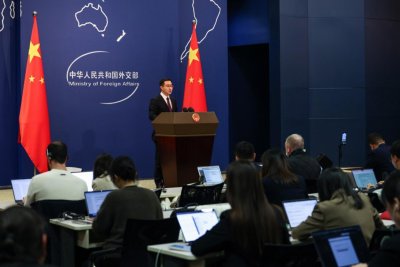
China’s Foreign Ministry spokesperson Lin Jian speaks during a press conference at the Ministry of Foreign Affairs in Beijing, China. Photo by WU HAO / EPA
June 18 (Asia Today) — China expressed strong opposition Thursday to recent U.S. extended deterrence talks with South Korea and Japan, warning that expanded nuclear cooperation could increase the risks of nuclear proliferation and conflict.
Chinese Foreign Ministry spokesman Lin Jian said Beijing was “deeply concerned” about efforts by the United States and Japan to strengthen extended deterrence.
Lin was responding at a regular news briefing to a question about the Japan-U.S. Extended Deterrence Dialogue and the sixth meeting of the U.S.-South Korea Nuclear Consultative Group. Japan and the United States held their talks in Tokyo from June 8 to 9, while Seoul and Washington held their meeting in South Korea.
“Extended deterrence is a product of the Cold War,” Lin said. “Certain countries have strengthened nuclear deterrence cooperation for geopolitical purposes, increasing the risks of nuclear proliferation and nuclear conflict.”
Lin said many countries had expressed serious concern and strong opposition to extended deterrence arrangements during review conferences for the Nuclear Non-Proliferation Treaty.
He reserved his strongest criticism for Japan, which has recently been embroiled in heightened tensions with China.
“Japan has long advocated building a world without nuclear weapons, but in reality, it has continued to increase its dependence on the so-called nuclear umbrella,” Lin said.
He accused Japanese officials of making “dangerous remarks” about potentially acquiring nuclear weapons, saying such discussions pose a serious challenge to the post-World War II international order and the global nuclear nonproliferation system.
Lin urged Japan to reflect on its conduct, fulfill its obligations under the Nuclear Non-Proliferation Treaty, abide by its three non-nuclear principles and refrain from seeking nuclear weapons in any form.
His warnings to the United States and South Korea were less severe.
Lin urged Washington to abandon its “Cold War mentality,” stop what he described as provocative policies and abolish nuclear-sharing and extended deterrence arrangements.
He said the United States should take concrete action to protect regional peace and security and maintain global strategic stability.
Addressing South Korea, Lin said Beijing hoped Seoul would “act cautiously and do more things that contribute to regional stability.”
During the same briefing, Lin also criticized plans by Group of Seven leaders to reduce their dependence on China for rare earth elements and other critical minerals.
He urged the group to follow market economy principles and international trade rules and to stop using the rules of “small groups” to undermine the international economic and trade order.
China has said its export control system is consistent with international practices and intended to protect regional stability and meet its nonproliferation obligations.
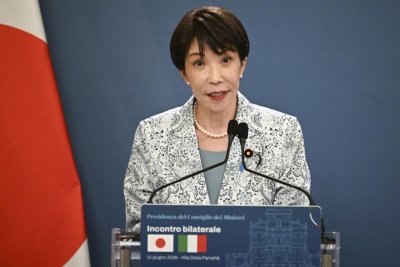
Japanese Prime Minister Sanae Takaichi speaks to the press during her meeting with Italian Premier Meloni at Villa Pamphilij in Rome, Italy, 15 June 2026. Photo by Riccardo Antimiani / EPA
June 18 (Asia Today) — Japanese Prime Minister Sanae Takaichi has left open the possibility of deploying the Self-Defense Forces to the Strait of Hormuz following an agreement between the United States and Iran to end hostilities.
“Nothing has been decided at this point,” Takaichi said Wednesday when asked about a possible deployment during a news conference marking the end of the Group of Seven summit near Évian-les-Bains, France, Japanese media reported Thursday.
Takaichi said Japan must closely examine the U.S.-Iran agreement and conditions in the region before making a decision.
The Strait of Hormuz is a critical shipping route for crude oil from the Middle East. Instability in the waterway could directly affect shipping, energy prices and Japanese industry because the country relies heavily on imported energy.
The U.S.-Iran agreement has shifted Japan’s immediate focus from preventing further fighting to securing freedom of navigation and considering its role in post-conflict efforts.
Even after fighting ends, naval mines and other threats to commercial vessels could remain. Japan would then have to determine whether its involvement should be limited to diplomatic support or include operations by the Maritime Self-Defense Force.
Security in the Strait of Hormuz and other major shipping routes was among the issues discussed at the G7 summit.
Japan faces the challenge of coordinating with its allies and partners while keeping any military involvement within the limits imposed by its pacifist Constitution.
“We will continue every possible diplomatic effort, including those related to reconstruction,” Takaichi said of the situation in the Middle East.
She said Japan would consider necessary measures to secure freedom of navigation through the strait and “steadily carry out what we are capable of doing,” including diplomatic efforts.
Britain, France and other countries have called for the unconditional reopening of the waterway and indicated that mine-clearing operations could be required. Japan has signaled its willingness to participate in a related joint statement.
Takaichi said Japan’s participation in such a statement would remain within constitutional limits.
The central issue is how extensively the Self-Defense Forces could participate.
Article 9 of Japan’s Constitution prohibits the use of force except in circumstances involving the country’s right to self-defense. Mine-clearing operations conducted while fighting continues could therefore be viewed as the use of force against the country that placed the mines.
Clearing mines left behind after a cease-fire, however, may be permitted under Japan’s Self-Defense Forces Act.
Japan deployed Maritime Self-Defense Force minesweepers to the Persian Gulf after the 1991 Gulf War cease-fire. The mission marked the Self-Defense Forces’ first operational deployment overseas and became a turning point in Japan’s debate over its international security role.
Takaichi’s remarks did not amount to an immediate deployment decision. They indicated, however, that Japan could consider participating in maritime security operations depending on implementation of the U.S.-Iran agreement and conditions in the Strait of Hormuz.
Japan’s possible role in the post-conflict Middle East – whether limited to diplomatic and reconstruction support or expanded to include Maritime Self-Defense Force operations – is expected to remain a major foreign and security policy issue.
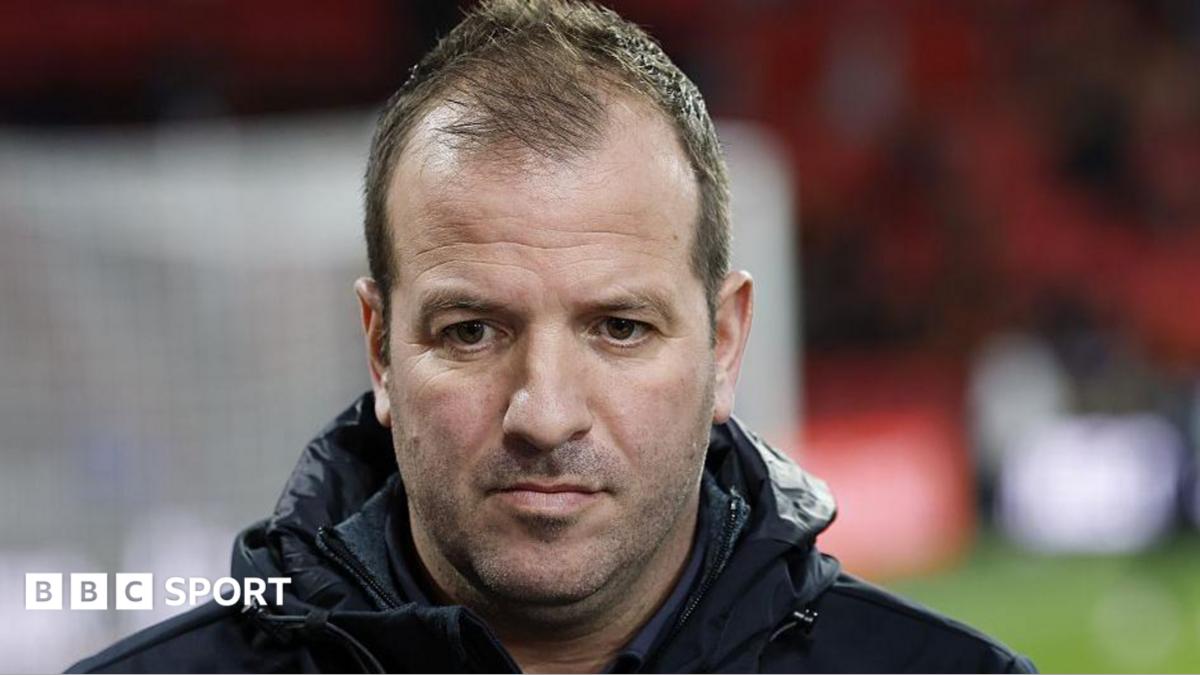
Former Tottenham midfielder Rafael van der Vaart has apologised after saying that Japan players “all look alike” during their 2-2 draw with the Netherlands.
Van der Vaart, 43, was working as a pundit for Dutch broadcaster NOS TV when he made the remark after Micky van de Ven lost Koki Ogawa’s run for Japan’s late equaliser.
“They all look alike, of course, maybe he thought that,” the former Netherlands international said when analysing Van de Ven’s defending.
Van der Vaart, who was capped 109 times and was part of the Dutch team that lost in the 2010 World Cup final, has apologised for causing any offence.
He said: “It was never my intention to offend, hurt, or discriminate against anyone. I oppose racism in all its forms and have respect for people of every background, ethnicity, and culture.
“I understand that some people may have found my words offensive or hurtful. I sincerely regret that.
“If my comment has caused pain or upset, I would like to offer my heartfelt apologies. That was never my intention.”
Anti-discrimination charity Kick It Out criticised Van der Vaart and called for broadcasters to be more careful.
A joint statement from Kick It Out and the Frank Soo Foundation, external, a charity that supports East and South East Asian communities, said: “It’s hugely disappointing to hear former players peddling racist slurs about Japan’s team and then double down by trying to defend the comments as a joke.
“Even if he claims there was no racist intent in what he said, the comments can still have an impact on those involved, and the wider East and South East Asian community, as we have seen with previous examples directed towards players.
“The World Cup attracts massive global TV audiences, so it’s always important that guests are careful with their language and that broadcasters take responsibility for those appearing on their shows, whether that is through additional education or training.”
China officially objected through its Foreign Ministry to the Japanese draft resolution to increase armaments and abandon Japan’s post-World War II commitment not to rearm its military, as approved by the Liberal Democratic Party of Japan during its general council meeting. The draft resolution proposed amending three key security documents, which are the National Security Strategy, the National Defense Strategy, and the Medium-Range Defense Forces Enhancement Plan. It was to be submitted to the Japanese government and parliament for further discussion. Chinese authorities officially rejected and objected to the draft, deeming it a threat to their national security and their spheres of direct influence in Taiwan, the South China Sea, and the Indo-Pacific region. They considered it a radical escalation of Japan’s security strategy, detrimental to Chinese national security and to the global security initiative proposed by Chinese President Xi Jinping.
Here, the revision of Japan’s three security documents, represented in the National Security Strategy, National Defense Strategy, and Defense Force Enhancement Plan, represents a strategic shift away from its post-war pacifist constitution toward more proactive and independent military policies. The nature of this shift is evident in Tokyo’s easing of restrictions on lethal weapons exports and its reorientation of its armament toward counter-offensive capabilities and missile development. Under Prime Minister Sanae Takaichi’s administration, the Liberal Democratic Party of Japan has adopted a proactive approach, reshaping Japanese industries and institutions to address the greatest strategic challenge posed by China. The updated National Security Strategy has already fundamentally altered the country’s pacifist military doctrine by disarming the Japanese military and preventing its rearmament since World War II, a move that has drawn staunch opposition from China, which seeks to protect its own national security. The most significant amendments to the three Japanese security documents included Japan’s acknowledgment of its ability to double and enhance its counter-strike capabilities. This was achieved by allowing Japan to possess long-range missiles capable of striking enemy targets before launch. Simultaneously, Japanese authorities approved doubling defense spending, raising the military budget to 2% of GDP.
China objected to the Japanese draft resolution, which aimed to increase Japanese armament and militarize the region and global supply chains, and threatened to escalate the situation. Beijing strongly condemned these trends, describing them as new militarism. A key point of contention for China was what Chinese intelligence and military circles perceived as a warning of Japanese and foreign interference in Taiwanese affairs, as China considers Taiwan an integral part of its territory. Beijing condemned the Japanese leadership’s statement that any emergency in Taiwan is an emergency for Japan, describing a potential Chinese military intervention in Taiwan as an act of aggression. Here, Beijing rejects Japan’s new military approach, characterized by advanced military deployment. China has officially protested and taken countermeasures against Japan’s plans to deploy defensive missiles on Yonaguni Island, located only about 110 kilometers from Taiwan. China has strongly accused Japan of violating its commitments, arguing that this new Japanese military expansion violates Tokyo’s international obligations and its pacifist constitution. China has warned Japan that it will pay a heavy price if it intervenes militarily in the Taiwan Strait.
Chinese intelligence, military, security, and defense circles link Japan’s armament activities in Taiwan to American interference in Chinese affairs through its network of allies in the Asian region, such as Japan, given its close alliance with Washington. Here, Japan defends its military rearmament against China, with several of its officials sending political and security warnings to China. They argue that, given the uncertainty in Japan stemming from US policies and the fluctuating stance in Washington, Japan seeks to bolster its own capabilities and build regional alliances (with the Philippines, Australia, and NATO) to expand deterrence against Beijing and maintain regional security from a Japanese perspective. Strategic circles in Tokyo view the potential fall of Taiwan to China as a direct and existential threat to Japanese national security and vital shipping lanes, making the protection of the Taiwan Strait a fundamental component of Japan’s updated defense doctrine.
For these reasons, China’s decisive response was seen as a challenge to its national security, especially given Japan’s de facto official classification of Beijing as the greatest and most unprecedented strategic challenge to its security. This classification was further reinforced by Japanese authorities’ approval of developing military production, strengthening domestic defense industries, and easing restrictions on arms exports. This is where the dimensions of China’s official rejection and objection lie, as it is considered a violation of the pacifist principle enshrined in the Japanese military doctrine, which was internationally and regionally agreed upon after World War II for Japan’s disarmament. Beijing believes that Tokyo is abandoning its pacifist constitution and returning to a militaristic path, while Japan exaggerates the narrative of a China threat. Beijing accuses Japan of fabricating flimsy pretexts to justify its military expansion and arsenal, which threatens China’s regional security. Therefore, China warned that these Japanese steps to increase armament undermine peace and stability in the Asia-Pacific region and jeopardize the principles of China’s global security initiative. China also registered its objection to Japan’s exclusionary approaches to its initiative based on shared and sustainable security. Furthermore, China linked this Japanese escalation in its confrontation with China in the region to the sensitive issue of Taiwan and the close alliance between the United States and Japan, while categorically rejecting Japanese interference in Taiwan’s affairs and considering the island’s security an integral part of China’s national security.
The central bank’s increase in the uncollateralised overnight rate, by a quarter of a percentage point from 0.75%, puts it at a three-decade high.
ADVERTISEMENT
ADVERTISEMENT
The Bank of Japan has been trying to normalise monetary policy lately after decades of keeping interest rates near or below zero. It adopted ultralow rates to try to encourage more borrowing and spending to counter deflation and pull the economy out of the doldrums.
Inflationary pressures because of the war in Iran, which has sent oil prices soaring in recent months, have hit Japan hard since it imports almost all its oil and gas.
Low interest rates had added to pressures on the Japanese yen, which has fallen lately to about 160 yen to the US dollar.
BOJ Gov. Kazuo Ueda, who has been hospitalised recently, did not attend Tuesday’s policy board meeting. Deputy Gov. Shinichi Uchida was expected to take his place at the news conference set for later in the day.
Before the BOJ decision, Tokyo’s benchmark Nikkei 225 index briefly topped 70,000 early Tuesday before giving up some of those early gains.
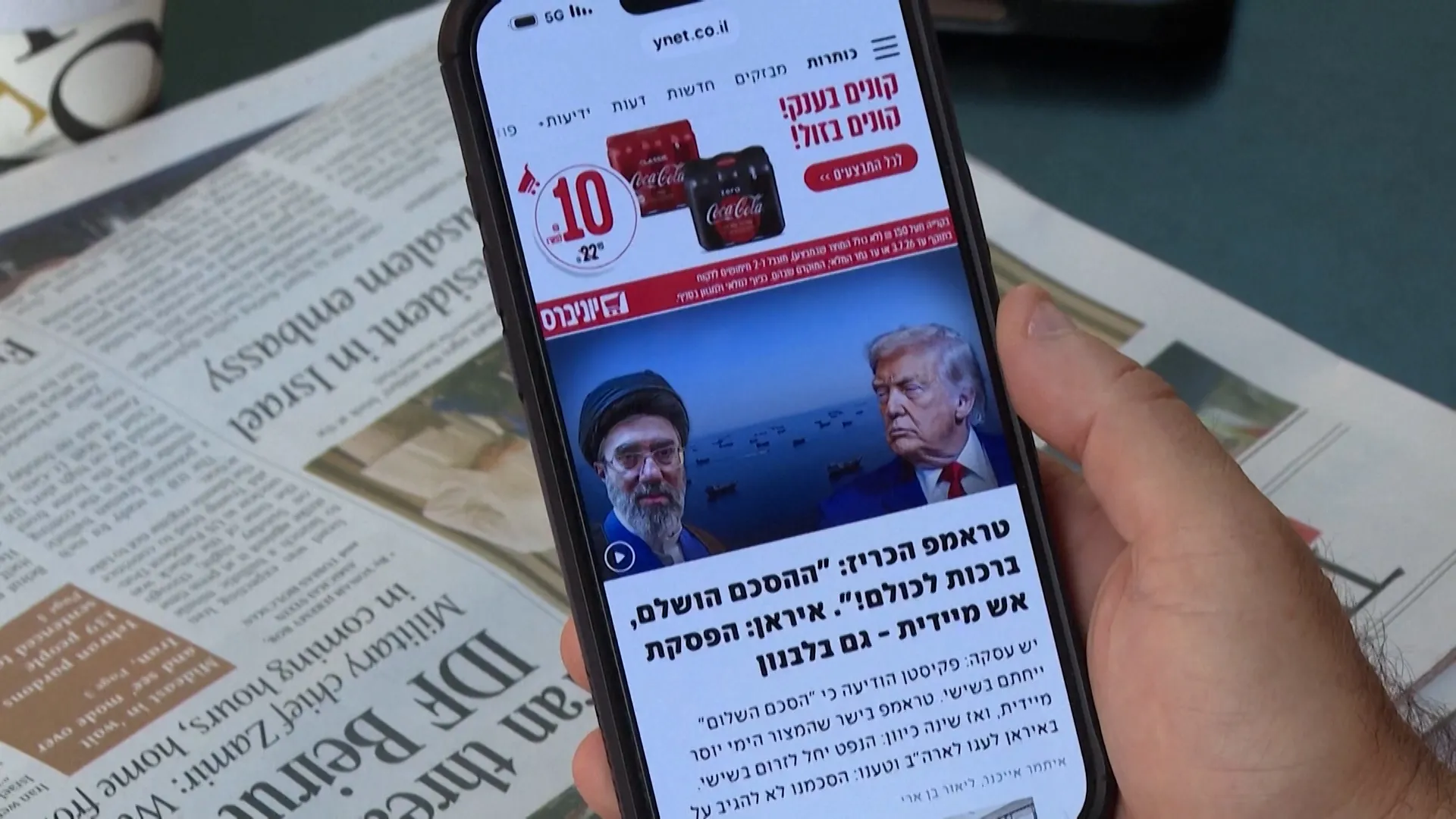
Governments across the world have welcomed the tentative deal between the US and Iran to end the war, calling it a major diplomatic breakthrough. But Israeli politicians have been quick to criticise it, claiming it would undermine Israel’s security.
David Baerwald holds up his most precious possession so that it’s visible on our video conference: a very old violin in a very old, battered case.
Baerwald, an award-winning musician, film composer and songwriter who called Los Angeles home for nearly four decades, doesn’t play the violin. During his years with the Tuesday Music Club (immortalized in the Sheryl Crow album “Tuesday Night Music Club”), he played guitar. But the violin belonged to his grandfather Ernst Baerwald — and it plays an important role in his recently published debut novel, “The Fire Agent.”
Not every successful artist turns to a new medium at age 65 or moves to the opposite coast (Baerwald now lives in Kingston, N.Y.). Then again, not every artist has a family history quite like Baerwald’s, one that includes Germany and Japan, two world wars, a 1920s throuple and Beethoven’s Ninth.
On the Shelf
The Fire Agent
By David Baerwald Spiegel & Grau: 624 pages, $32
If you buy books linked on our site, The Times may earn a commission from Bookshop.org, whose fees support independent bookstores.
The violin in Baerwald’s hands was the one his German-Jewish grandfather played as a Japanese prisoner of war in the Bandō camp at Tokushima during World War I. “It’s a very serviceable violin,” Baerwald notes. “A friend of mine played it for some years in the Long Beach Symphony. When my grandfather was older and wealthy, he bought a better violin, which was lost in a fire. But this is the one that matters.”
It matters because Ernst Baerwald was a founding member of a German POW orchestra that chose Beethoven’s great symphony as their premiere work — a performance so moving that it began a Japanese tradition marking the December holidays that persist to this day. Baerwald’s grandfather not only kept his violin throughout the war in which he fought; when he defected from the Third Reich in 1941, he placed it in an oiled bag and brought it with him via an oceanic escape.
Ernst Baerwald’s odyssey from a cushy childhood in Frankfurt to his final days in a beautiful Berkeley mansion, with a long sojourn in Tokyo along the way, reads like, well, a novel. Sent to an elite boys’ prep school in Germany, then on to a seriously disciplined Milanese dojo where he was trained by a Japanese sensei, Ernst was a prisoner in Japan for four years during World War I.
Those details might have been easy to find, but it wasn’t until David Baerwald went to clear out his parents’ house in Brentwood that he discovered papers showing that his grandfather had not only been the head of the Tokyo office of I.G. Farben, but that he had given a major speech to the nascent Office of Strategic Services (precursor to the Central Intelligence Agency) in 1943 that laid out the plan for the firebombing of Japan.
For the record:
10:56 a.m. June 8, 2026An earlier version of this story said Ernst Baerwald’s 1943 speech to the OSS urged use of the atomic bomb on Japan. It laid out the plan for the firebombing of Japan. It also said Kurt Baerwald joined the CIA. He joined the U.S. Army.
He also urged them not to allow partnerships between large corporations and the military, the way the German scientific community and government did with I.G. Farben and Krupp Armaments and Steel. “Any business that makes peace with Fascism will become Fascist,” he said. “And once Fascism captures economic control, then a Fascist coup will inevitably follow to seize political power. Germany, Italy, Rumania, Japan, Spain the story is the same. We cannot allow it to become the story of America.”
When Baerwald read that, “I was really alarmed, in the moment,” he says, realizing how closely tied his grandfather had been to the bombs dropped on Hiroshima and Nagasaki. “But it gave me a plan.” He wanted to show how deeply his grandfather had become integrated into Japanese culture.
“One of my characters tells Ernst that he has ‘yuyo,’ which might best be described as grace,” says Baerwald. “Its Japanese meaning is closer to the state of a river rock that has been washed over and tumbled thousands of times, so that it’s both distinct, and a meaningful part of its environment.” To some extent, the author understands “yuyo” personally, having lived in Japan and been educated at its International School until age 12, when his family moved back to California, “although I wouldn’t claim it for myself,” he says.
That move, in the early 1970s, may have led to his career in music. “When we got back to the States, I was extremely troubled. Call me a fish out of water, I guess. I went through a period of voluntary mutism — I think they call it selective communication. I didn’t talk to anyone, especially not to my family. My hearing would sort of come and go at will, too.” His mother understood he seemed to like his sister’s acoustic guitar, so she suggested he take some lessons. “At the time, it wasn’t at all a career path, it was a way of reassembling my brain so that I could cope with the reality I was experiencing, finding a way to communicate again.”
Part of what he was experiencing, which he knows a great deal more about now, was feeling “the secrets that were the engine propelling my family.” After Ernst’s long career of service and deception, David Baerwald’s father, Kurt, entered the U.S. Army during WWII and later became a professor of Japanese studies at both in Japan and at UCLA. The effects on their family of five still reverberate. Baerwald’s mother eventually became a clinical psychologist who specializes in trauma. “I had to separate myself completely from my family in order to survive,” he says.
However, what stalled the writing of this first novel were the two decades he initially left out, which included Ernst, Lina and their lover Chizuko being a ménage à trois in a 1923 Tokyo dealing with the aftermath of an earthquake and wildfires.
Although “The Fire Agent” is based on Ernst’s history, not all of the facts are congruent. The wrestling coach at the American school in Tokyo, Ernst’s glamorous courtesan Chizuko, and many of the characters are composites. Speaking of that courtesan, Baerwald says it’s true that his grandfather and grandmother cohabited with a Japanese woman for many years, even after Lina and Ernst had a child together. “I found so many letters between my grandfather and my grandmother and I think they truly loved each other, and I think they truly loved that woman, too.”
That didn’t make it easy for Baerwald to write about that love. “My German grandmother, on whom Lina is partly based, was terrifying,” he says. “It was easier to write about her sex life with my grandfather and their Japanese lover by creating composite characters.”
He didn’t want to leave out their sex life, though, or that of others.
“Every generation of young people thinks they invented sex, right? But nothing is new — and it never gets old. Here’s an example. One of my godfathers, Sam Jameson, was the L.A. Times bureau chief in Tokyo for decades. He was also the doyenne, if you will, of the cross-dressing community in that city. It was this rich world he was a part of that nobody knew anything about. I based the character I call Bünheimer on him.”
Some of the worlds Baerwald has uncovered through his family’s papers are rich and sensual; others, like the POW camp where Ernst was held and the speech he gave to the OSS analysts at the Presidio in the 1940s, are stark and terrible. While he renders all appropriately, he’s aware that his perspective remains that of a white Western man. How did he gain the courage to write about people of other races, cultures and genders? He says it comes from something he did when he was on a swim team in high school. “The psychological trick I would play on myself at each meet was to imagine the water I’d dive into was freezing cold,” he says. “And of course it wasn’t. Which was such a relief and kept me going.”
Like his grandfather’s beloved violin, Baerwald has taken a deep dive into previously unknown waters — and survived. As he works on his second novel, he’s better prepared for airing family secrets and the publishing world. Ever the musician, he likens his first round with it to a Shepard tone, the auditory illusion that can make listeners feel like two notes one octave apart are constantly ascending or descending in pitch (Baerwald has worked with famed composer Hans Zimmer, who used the tone in, for example, “The Dark Knight”).
“A Shepard tone can make you feel like you’re flying. Or sinking,” he says. “At this point in my life and art, I prefer to have my feet firmly on the ground.”
June 13 (UPI) — South Korea had a trilateral meeting with officials from the United States and Japan in Tokyo on North Korean affairs this week, the foreign ministry said Saturday.
The ministry said the talks took place Friday involving Kim Sang-il, head of the ministry’s North Korean Nuclear Affairs Policy Division; David Wilezol, U.S. deputy assistant secretary of state for Northeast Asia; and Kengo Otsuka, deputy director-general for Asian and Oceanian affairs at the Japanese foreign ministry.
The officials shared their views on recent affairs on the Korean Peninsula and in the rest of Northeast Asia, and also reaffirmed their commitment to denuclearize North Korea and to ensure the implementation of U.N. and autonomous sanctions, Seoul’s foreign ministry said.
“We explained our effort in easing tension and building trust in inter-Korean relations, and also exchanged views on trilateral cooperation in ensuring peace and security on the Korean Peninsula,” the ministry added.
In a press release issued Friday, the Japanese foreign ministry noted the three officials “expressed their serious concerns over North Korea’s nuclear and missile development.” They also agreed to work closely on the advancement of Russia-North Korea military cooperation and North Korea’s malicious cyber activities, Tokyo’s ministry said.
Also in Tokyo on Friday, the three countries held their trilateral secretariat managing board meeting. Wilezol and Otsuka were joined by Yi Won-woo, director-general for North American affairs at the South Korean foreign ministry.
These officials reviewed progress on three-way cooperation on issues such as security, the economy and technology, and discussed specific ways that can produce concrete outcomes, the ministry here said.